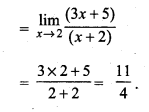
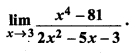
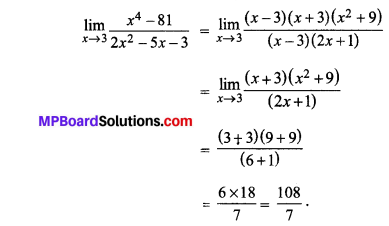
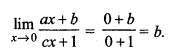
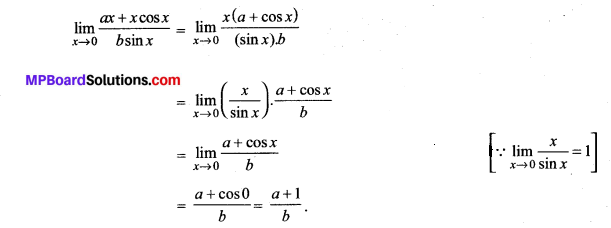
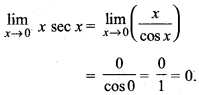
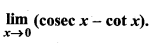
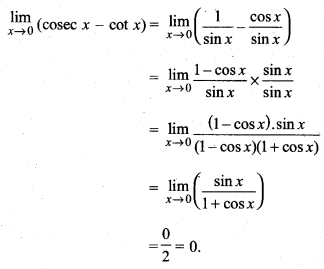
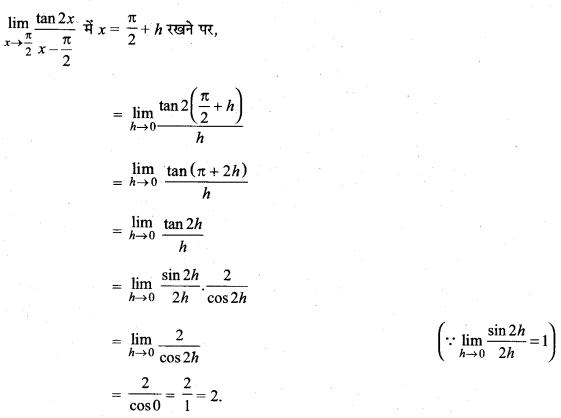
MP Board Class 11th Maths Solutions Chapter 13 सीमा और अवकलज Ex 13.1

MP Board Class 11th Maths Solutions Chapter 13 सीमा और अवकलज Ex 13.1

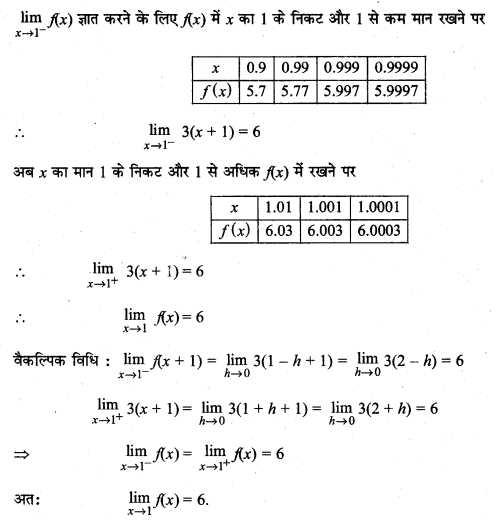
प्रश्न 1 से 22 तक निम्नलिखित सीमाओं के मान प्राप्त कीजिए :
प्रश्न 1.
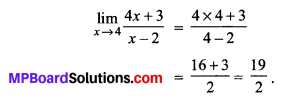
\(\lim _{x \rightarrow 3}\) x + 3.
हल:
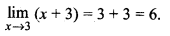
MP Board Class 11th Maths Solutions Chapter 13 सीमा और अवकलज Ex 13.1 img-1

प्रश्न 2.
\(\lim _{x \rightarrow \pi}\) (x – \(\frac{22}{7}\))
हल:
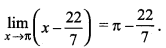
MP Board Class 11th Maths Solutions Chapter 13 सीमा और अवकलज Ex 13.1 img-2

MP Board Solutions

प्रश्न 3.
\(\lim _{r \rightarrow 1}\)(πr2).
हल:
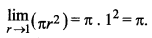
MP Board Class 11th Maths Solutions Chapter 13 सीमा और अवकलज Ex 13.1 img-3

प्रश्न 4.
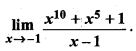
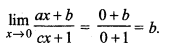
MP Board Class 11th Maths Solutions Chapter 13 सीमा और अवकलज Ex 13.1 img-4
हल:
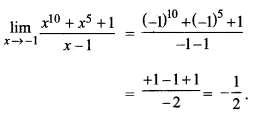
MP Board Class 11th Maths Solutions Chapter 13 सीमा और अवकलज Ex 13.1 img-5

प्रश्न 5.
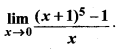
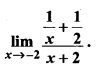
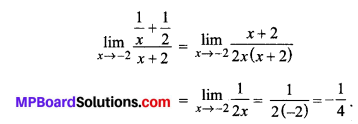
MP Board Class 11th Maths Solutions Chapter 13 सीमा और अवकलज Ex 13.1 img-6
हल:
MP Board Class 11th Maths Solutions Chapter 13 सीमा और अवकलज Ex 13.1 img-7

प्रश्न 6.
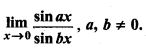
MP Board Class 11th Maths Solutions Chapter 13 सीमा और अवकलज Ex 13.1 img-8
हल:
MP Board Class 11th Maths Solutions Chapter 13 सीमा और अवकलज Ex 13.1 img-9

वैकल्पिक विधि : हम जानते हैं :
MP Board Class 11th Maths Solutions Chapter 13 सीमा और अवकलज Ex 13.1 img-10

प्रश्न 7.
MP Board Class 11th Maths Solutions Chapter 13 सीमा और अवकलज Ex 13.1 img-11
हल:
MP Board Class 11th Maths Solutions Chapter 13 सीमा और अवकलज Ex 13.1 img-12
MP Board Class 11th Maths Solutions Chapter 13 सीमा और अवकलज Ex 13.1 img-13

MP Board Solutions

प्रश्न 8.
MP Board Class 11th Maths Solutions Chapter 13 सीमा और अवकलज Ex 13.1 img-14
हल:
MP Board Class 11th Maths Solutions Chapter 13 सीमा और अवकलज Ex 13.1 img-15

प्रश्न 9.
MP Board Class 11th Maths Solutions Chapter 13 सीमा और अवकलज Ex 13.1 img-16
हल:
MP Board Class 11th Maths Solutions Chapter 13 सीमा और अवकलज Ex 13.1 img-17

प्रश्न 10.
MP Board Class 11th Maths Solutions Chapter 13 सीमा और अवकलज Ex 13.1 img-18
हल:
MP Board Class 11th Maths Solutions Chapter 13 सीमा और अवकलज Ex 13.1 img-19

प्रश्न 11.
MP Board Class 11th Maths Solutions Chapter 13 सीमा और अवकलज Ex 13.1 img-20
हल:
MP Board Class 11th Maths Solutions Chapter 13 सीमा और अवकलज Ex 13.1 img-21

MP Board Solutions

प्रश्न 12.
MP Board Class 11th Maths Solutions Chapter 13 सीमा और अवकलज Ex 13.1 img-22
हल:
MP Board Class 11th Maths Solutions Chapter 13 सीमा और अवकलज Ex 13.1 img-23

प्रश्न 13.
MP Board Class 11th Maths Solutions Chapter 13 सीमा और अवकलज Ex 13.1 img-24
हल:
MP Board Class 11th Maths Solutions Chapter 13 सीमा और अवकलज Ex 13.1 img-25

प्रश्न 14.
MP Board Class 11th Maths Solutions Chapter 13 सीमा और अवकलज Ex 13.1 img-26
हल:
MP Board Class 11th Maths Solutions Chapter 13 सीमा और अवकलज Ex 13.1 img-27

प्रश्न 15.
MP Board Class 11th Maths Solutions Chapter 13 सीमा और अवकलज Ex 13.1 img-28
हल:
MP Board Class 11th Maths Solutions Chapter 13 सीमा और अवकलज Ex 13.1 img-29

MP Board Solutions

प्रश्न 16.
MP Board Class 11th Maths Solutions Chapter 13 सीमा और अवकलज Ex 13.1 img-30
हल:
MP Board Class 11th Maths Solutions Chapter 13 सीमा और अवकलज Ex 13.1 img-31

प्रश्न 17.
MP Board Class 11th Maths Solutions Chapter 13 सीमा और अवकलज Ex 13.1 img-32
हल:
MP Board Class 11th Maths Solutions Chapter 13 सीमा और अवकलज Ex 13.1 img-33
MP Board Class 11th Maths Solutions Chapter 13 सीमा और अवकलज Ex 13.1 img-34

प्रश्न 18.
MP Board Class 11th Maths Solutions Chapter 13 सीमा और अवकलज Ex 13.1 img-35
हल:
MP Board Class 11th Maths Solutions Chapter 13 सीमा और अवकलज Ex 13.1 img-36

प्रश्न 19.
MP Board Class 11th Maths Solutions Chapter 13 सीमा और अवकलज Ex 13.1 img-37
हल:
MP Board Class 11th Maths Solutions Chapter 13 सीमा और अवकलज Ex 13.1 img-38

प्रश्न 20.
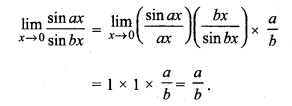
\(\lim _{x \rightarrow 0} \frac{\sin a x+b x}{a x+\sin b x}\), a, b, a + b ≠ 0.
हल:
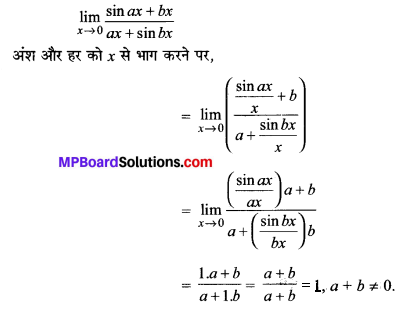
MP Board Class 11th Maths Solutions Chapter 13 सीमा और अवकलज Ex 13.1 img-39

MP Board Solutions

प्रश्न 21.
MP Board Class 11th Maths Solutions Chapter 13 सीमा और अवकलज Ex 13.1 img-40
हल:
MP Board Class 11th Maths Solutions Chapter 13 सीमा और अवकलज Ex 13.1 img-41

प्रश्न 22.
MP Board Class 11th Maths Solutions Chapter 13 सीमा और अवकलज Ex 13.1 img-42
हल:
MP Board Class 11th Maths Solutions Chapter 13 सीमा और अवकलज Ex 13.1 img-43

प्रश्न 23.
MP Board Class 11th Maths Solutions Chapter 13 सीमा और अवकलज Ex 13.1 img-44
हल:
MP Board Class 11th Maths Solutions Chapter 13 सीमा और अवकलज Ex 13.1 img-45
MP Board Class 11th Maths Solutions Chapter 13 सीमा और अवकलज Ex 13.1 img-46
MP Board Class 11th Maths Solutions Chapter 13 सीमा और अवकलज Ex 13.1 img-47

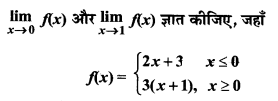
प्रश्न 24.
MP Board Class 11th Maths Solutions Chapter 13 सीमा और अवकलज Ex 13.1 img-48
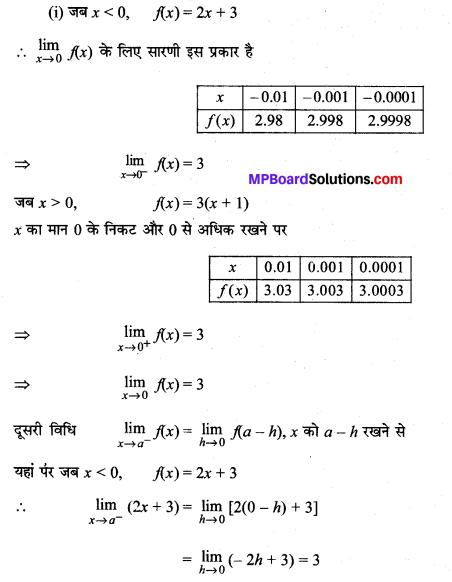
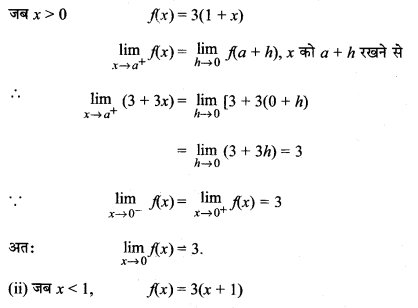
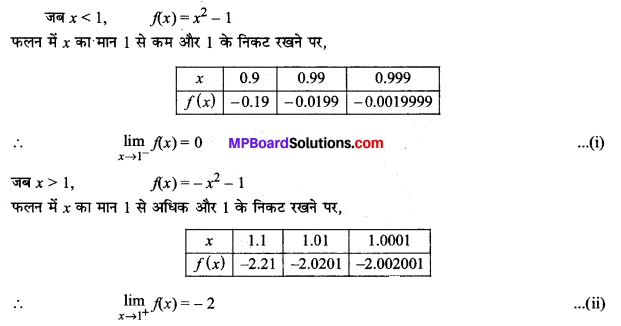
हल:
MP Board Class 11th Maths Solutions Chapter 13 सीमा और अवकलज Ex 13.1 img-49
समी (i) और (ii) से,
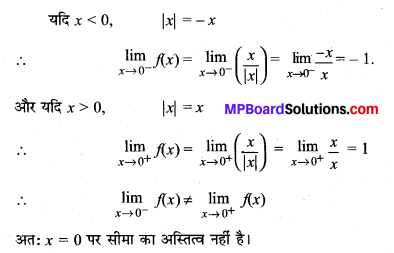
\(\lim _{x \rightarrow 1^{-}} f(x) \neq \lim _{x \rightarrow 1^{+}} f(x)\)
∴ अतः x = 1 पर सीमा का अस्तित्व नहीं है।

MP Board Solutions

प्रश्न 25.
MP Board Class 11th Maths Solutions Chapter 13 सीमा और अवकलज Ex 13.1 img-50
हल:
MP Board Class 11th Maths Solutions Chapter 13 सीमा और अवकलज Ex 13.1 img-51

प्रश्न 26.
MP Board Class 11th Maths Solutions Chapter 13 सीमा और अवकलज Ex 13.1 img-52
हल:
MP Board Class 11th Maths Solutions Chapter 13 सीमा और अवकलज Ex 13.1 img-53

प्रश्न 27.
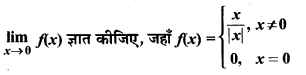
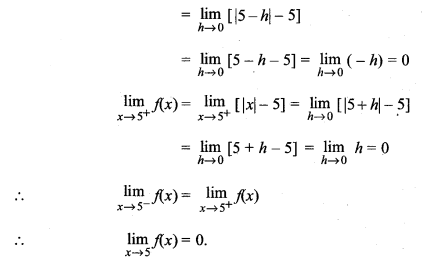
\(\lim _{x \rightarrow 5}\) f(x) ज्ञात कीजिए, जहाँ f(x) = |x|- 5.
हल:
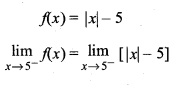
MP Board Class 11th Maths Solutions Chapter 13 सीमा और अवकलज Ex 13.1 img-54
MP Board Class 11th Maths Solutions Chapter 13 सीमा और अवकलज Ex 13.1 img-55

प्रश्न 28.
मान लीजिए f(x) = \(\left\{\begin{array}{ll}{a+b x,} & {x<1} \\ {4,} & {x=1} \\ {b-a x,} & {x>1}\end{array}\right.\)
और यदि \(\lim _{x \rightarrow 1}\) f(x) = f(1), तो a और b के संभव मान क्या हैं?
हल:
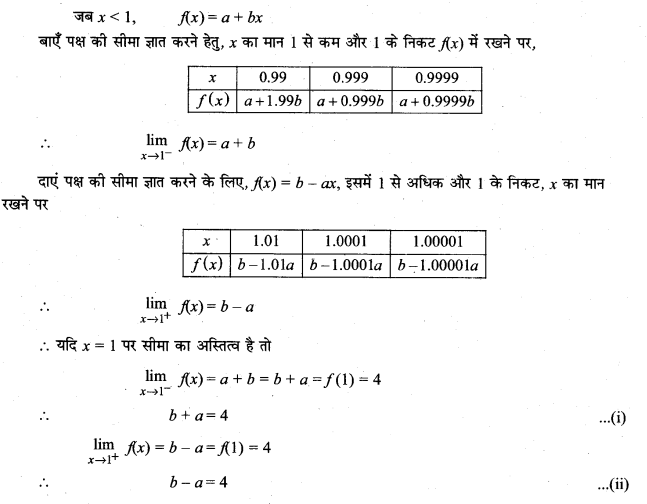
MP Board Class 11th Maths Solutions Chapter 13 सीमा और अवकलज Ex 13.1 img-56
समी (i) और (ii) को जोड़ने पर,
2b = 8 या b = 4
समी (i) में b = 4 रखने पर,
4 + a = 4 या a = 0
अतः a = 0, b = 4.

MP Board Solutions

प्रश्न 29.
मान लीजिए a1,a2,…..an, अचर वास्तविक संख्याएँ हैं और एक फलन f(x) = (x – a1) (x – a2)…..(x – an) से परिभाषित है। \(\lim _{x \rightarrow a_{1}}\) f(x) क्या है? किसी a ≠ a1,a2,…..an के लिए \(\lim _{x \rightarrow a}\) f(x) का परिकलन कीजिए।
हल:
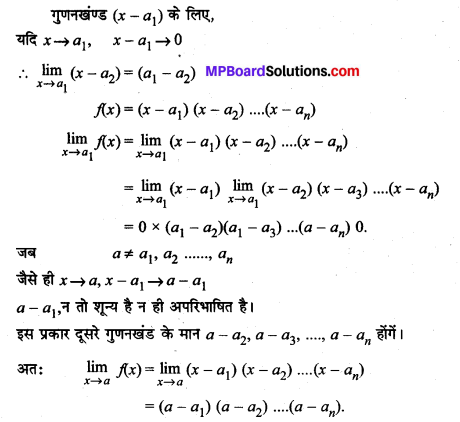
MP Board Class 11th Maths Solutions Chapter 13 सीमा और अवकलज Ex 13.1 img-57

प्रश्न 30.
MP Board Class 11th Maths Solutions Chapter 13 सीमा और अवकलज Ex 13.1 img-58
हल:
दिया गया फलन:
MP Board Class 11th Maths Solutions Chapter 13 सीमा और अवकलज Ex 13.1 img-59
MP Board Class 11th Maths Solutions Chapter 13 सीमा और अवकलज Ex 13.1 img-60
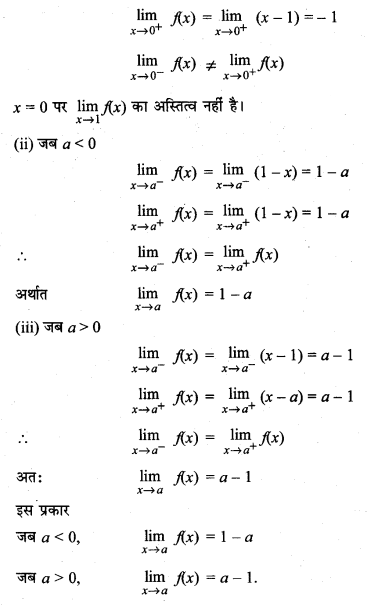
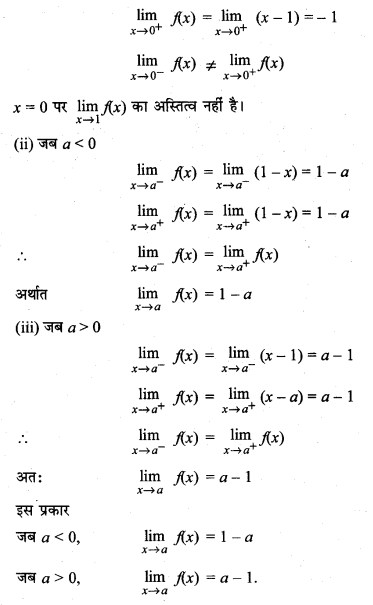
अतः सभी a, a ≠ 0 के लिए \(\lim _{x \rightarrow a}\) f(x) का अस्तित्व है।

MP Board Solutions

प्रश्न 31.
यदि फलन f(x), \(\lim _{x \rightarrow 1}\) \(\frac{f(x)-2}{x^{2}-1}\) = π को संतुष्ट करता है, तो \(\lim _{x \rightarrow 1}\) f(x) का मान ज्ञात कीजिए।
हल:
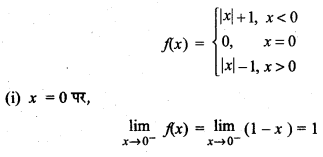
MP Board Class 11th Maths Solutions Chapter 13 सीमा और अवकलज Ex 13.1 img-61
MP Board Class 11th Maths Solutions Chapter 13 सीमा और अवकलज Ex 13.1 img-62

प्रश्न 32.
किन पूर्णांकों m और n के लिए \(\lim _{x \rightarrow 0}\) f(x) और \(\lim _{x \rightarrow 1}\) f(x) दोनों का अस्तित्व है, यदि
f(x) = \(\left\{\begin{array}{ll}{m x^{2}+n,} & {x<0} \\ {n x+m,} & {0 \leq x \leq 1} \\ {n x^{3}+m,} & {x>1}\end{array}\right.\)
हल:
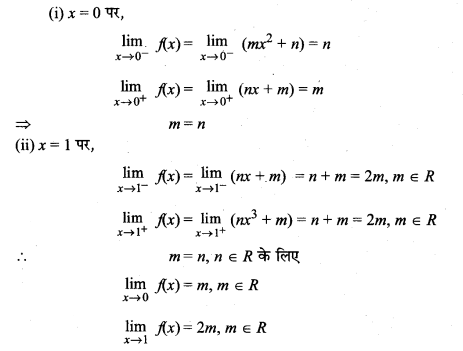
MP Board Class 11th Maths Solutions Chapter 13 सीमा और अवकलज Ex 13.1 img-63
अतः \(\lim _{x \rightarrow 0}\) f(x) के अस्तित्व हेतु m = n अनिवार्य रूप से होना चाहिए; m तथा n के किसी भी पूर्णांक मान के लिए \(\lim _{x \rightarrow 1}\) f(x) का अस्तित्व है।
MP Board Class 11th Maths Solutions

MP Board Class 12th Biology Solutions Chapter 8 मानव स्वास्थ्य तथा रोग

MP Board Class 12th Biology Solutions Chapter 8 मानव स्वास्थ्य तथा रोग

मानव स्वास्थ्य तथा रोग NCERT प्रश्नोत्तर प्रश्न

प्रश्न 1.
कौन-से विभिन्न जन स्वास्थ्य उपाय हैं, जिन्हें आप संक्रामक रोगों के विरुद्ध रक्षाउपायों के रूप में सुझाएँगे।
उत्तर
संक्रामक रोगों की रोकथाम के लिए हम निम्नलिखित उपाय सुझाएँगे

  • संक्रामक रोगों के प्रति टीकाकरण (प्रतिरक्षीकरण) कार्यक्रमों का आयोजन करना।
  • खाने और पानी आपूर्ति के संसाधनों का स्वच्छ रख-रखाव रखने के लिए लोगों एवं प्रशासन को प्ररित करना।
  • रोग और शरीर के विभिन्न प्रकार्यों पर उनके प्रभाव के बारे में जागरूकता लाना।
  • रोगवाहकों (वेक्टर्स) पर नियंत्रण रखने के उपायों जैसे-गंदगी के ढेर और गंदे पानी को इकट्ठा न होने देना।
  • अपशिष्टों का समुचित निपटारा करना ताकि वातावरण स्वच्छ बना रहे।

प्रश्न 2.
जैविकी के अध्ययन ने संक्रामक रोगों को नियंत्रित करने में किस प्रकार सहायता की
उत्तर
जीव विज्ञान में हुई प्रगति से हमें संक्रामक रोगों से निपटने के लिए कारगर हथियार मिल गये हैं। टीका (Vaccine) के उपयोग और प्रतिरक्षीकरण कार्यक्रमों से चेचक, डिफ्थीरिया, न्यूमोनिया और टिटनेस जैसे-अनेक संक्रामक रोगों का काफी हद तक नियंत्रित कर लिया गया है। जैव प्रौद्योगिकी के उपयोग से नए-नए और अधिक सुरक्षित वैक्सीन बनाये जा रहे हैं। प्रतिजैविकों एवं अन्य दूसरी औषधियों की खोज ने भी संक्रामक रोगों का प्रभावी ढंग से उपचार करने में हमें सक्षम बनाया है।

MP Board Solutions

प्रश्न 3.
निम्नलिखित रोगों का संचरण कैसे होता है
(1) अमीबता
(2) मलेरिया
(3) एस्केरिसता
(4) न्युमोनिया।
उत्तर
(1) अमीबता-मानव की वृहत् आंत्र में पाए जाने वाले एंटअमीबा हिस्टोलिटिका नामक प्रोटोजोअन परजीवी से अमीबता (अमीबिएसिस) या अमीबी अतिसार होता है । कोष्ठबद्धता (कब्ज), उदरीय पीड़ा और ऐंठन, अत्यधिक श्लेषमल और रक्त के थक्के वाला मल इस रोग के लक्षण हैं । घरेलू मक्खियाँ इस रोग की शारीरिक वाहक हैं और परजीवी को संक्रमित व्यक्ति के मल से खाद्य और खाद्य पदार्थों तक ले जाकर उन्हें संदूषित कर देती हैं । मल पदार्थ द्वारा संदूषित पेयजल और खाद्य पदार्थ संक्रमण के प्रमुख स्रोत हैं।

(2) मलेरिया- प्लाज्मोडियम नामक एक बहुत ही छोटा-सा प्रोटोजोअन मलेरिया के लिए उत्तरदायी है। प्लाज्मोडियम की विभिन्न जातियाँ (प्ला. वाइवैक्स, प्ला. मेलिरिआई और प्ला. फैल्सीपेरम) विभिन्न प्रकार के मलेरिया के लिए उत्तरदायी हैं। इनमें से प्लाज्मोडियम फैल्सीपेरम द्वारा होने वाला दुर्दम (मेलिग्नेंट) सबसे गंभीर है और यह घातक भी हो सकता है। मादा एनाफीलिज मच्छर मानव में इस रोग का संचारण करती है।

(3) एस्केरिसता-आंत्र परजीवी ऐस्केरिस से ऐस्केरिसता (ऐस्केरिएसिस) नामक रोग होता है। आंतरिक रक्तस्राव, पेशीय पीड़ा, ज्वर, अरक्तता और आंत्र का अवरोध इस रोग के लक्षण हैं। इस परजीवी के अण्डे संक्रमित व्यक्ति के मल के साथ बाहर निकल आते हैं और मिट्टी, जल, पौधों आदि को संदूषित कर देते हैं। स्वस्थ व्यक्ति में यह संक्रमण संदूषित पानी, शाक-सब्जियों, फलों आदि के सेवन से हो जाता है।

(4) न्युमोनिया- स्ट्रेप्टोकोकस न्युमोनी और हीमोफिलस इंफ्लुएंजी जैसे जीवाणु मानव में न्युमोनिया रोग के लिए उत्तरदायी हैं । इस रोग में फुप्फुस के वायुकोष्ठ संक्रमित हो जाते हैं । संक्रमण के फलस्वरूप वायुकोष्ठों में तरल भर जाता है जिसके कारण सांस लेने में गंभीर समस्याएँ पैदा हो जाती हैं। ज्वर, ठिठुरन, खाँसी और सिरदर्द आदि न्युमोनिया के लक्षण हैं।

प्रश्न 4.
जल-वाहित रोगों की रोकथाम के लिए आप क्या उपाय अपनायेंगे?
उत्तर
पानी के द्वारा संचारित होने वाले कुछ मुख्य रोग हैं-टाइफॉइड, अमीबता, ऐस्केरिसता आदि। इन रोगों की रोकथाम के लिए

  • पानी को उबाल कर या फिल्टर करके पीना चाहिए। पीने के पानी को साफ बर्तन में ढंककर रखें।
  • जलाशयों, कुंडों और मलकुंडों और तालाबों की समय-समय पर सफाई करनी चाहिए।
  • मलेरिया और फाइलेरिया जैसे रोगों के रोगवाहकों और उनके प्रजनन की जगहों का नियंत्रण खत्म कर देना चाहिए। इसके लिए आवासीय क्षेत्रों में और उसके आस-पास पानी को जमा नहीं होने देना चाहिए। शीतलयंत्रों (कूलर) की नियमित सफाई, मच्छरदानी का प्रयोग, मच्छर के डिंबकों को खाने वाली गंबुजिया जैसी मछलियाँ डालनी चाहिए।खाइयों, जलनिकास क्षेत्रों और अनूपों (दलदलों) (स्वंप्स) आदि में कीटनाशकों के छिड़काव किए जाने चाहिए। इसके अतिरिक्त दरवाजों और खिड़कियों में जाली लगानी चाहिए ताकि मच्छर अन्दर न घुस सकें।

प्रश्न 5.
डी. एन. ए. वैक्सीन के संदर्भ में ‘उपयुक्त जीन’ के अर्थ के बारे में अपने अध्यापक से चर्चा कीजिए।
उत्तर
जीवाणु या खमीर में रोगजनक की प्रतिजनी पॉलीपेप्टाइड का उत्पादन पुनर्योगज डी. एन. ए. (Recombinant DNA) प्रौद्योगिकी से होने लगा है इसे उपयुक्त जीन (Suitable gene) कहा जाता है। इस विधि से बड़े पैमाने पर उत्पादित टीकों की प्रतिरक्षीकरण की उपलब्धता बढ़ गयी है। उदाहरण के लिए खमीर से बनने वाला यकृतशोथ B(Hepatitis B) इसी प्रकार का टीका है।

MP Board Solutions

प्रश्न 6.
प्राथमिक एवं द्वितीयक लसीकाओं के अंगों के नाम बताइए।
उत्तर

  • प्राथमिक लसिका अंग–अस्थिमज्जा एवं थाइमस ग्रंथि।
  • द्वितीयक लसिका अंग-प्लीहा, लसिका ग्रंथियाँ, टॉन्सिल, परिशेषिका एवं क्षुद्रांत के पेयर पेंच आदि।

प्रश्न 7.
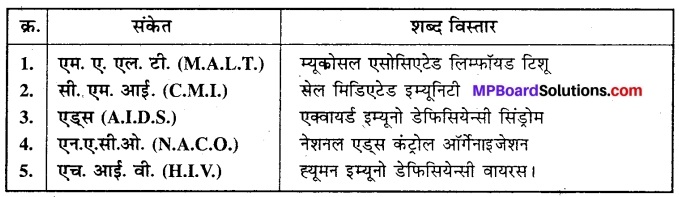
इस अध्याय में निम्नलिखित संकेताक्षर इस्तेमाल किये गये हैं। इसका पूरा रूप बताइए
(1) एम. ए. एल. टी.
(2) सी. एम. आई.
(3) एड्स
(4) एन. ए. सी. ओ
(5) एच. आई. वी।
उत्तर
MP Board Class 12th Biology Solutions Chapter 8 मानव स्वास्थ्य तथा रोग 1

प्रश्न 8.
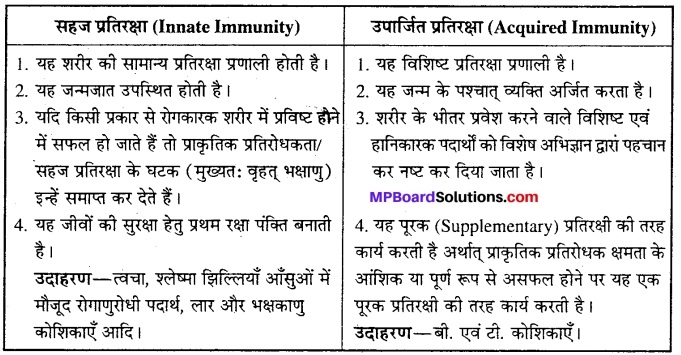
निम्नलिखित में भेद कीजिए और प्रत्येक के उदाहरण दीजिए। (NCERT)
(1) सहज (जन्मजात) और उपार्जित प्रतिरक्षा
(2) सक्रिय और निष्क्रिय (अक्रिय) प्रतिरक्षा।
उत्तर
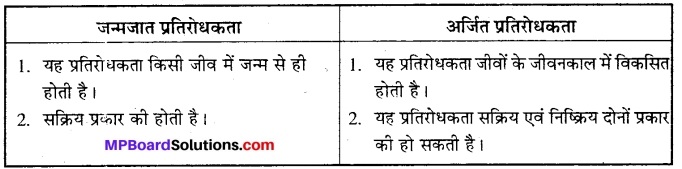
(1) सहज (जन्मजात) और उपार्जित प्रतिरक्षा में अंतर
MP Board Class 12th Biology Solutions Chapter 8 मानव स्वास्थ्य तथा रोग 2

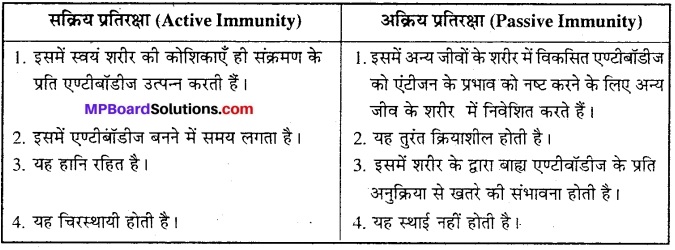
(2) सक्रिय एवं अक्रिय प्रतिरक्षा में अंतर
MP Board Class 12th Biology Solutions Chapter 8 मानव स्वास्थ्य तथा रोग 2a

प्रश्न 9.
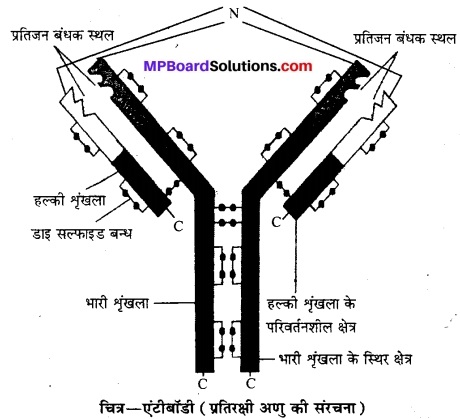
प्रतिरक्षी (प्रतिपिंड) अणु का अच्छी तरह नामांकित चित्र बनाइए।
उत्तर
MP Board Class 12th Biology Solutions Chapter 8 मानव स्वास्थ्य तथा रोग 3


प्रश्न 10.
वे कौन-से विभिन्न रास्ते हैं जिनके द्वारा मानव प्रतिरक्षा न्यूनता विषाणु (HIV) का संचारण होता है।
अथवा
रक्त संचरण से फैलने वाले आज के भयावह रोग का नाम दो लक्षण तथा मुख्य रोकथाम के उपाय लिखिए।
अथवा
एड्स सर्वप्रथम कहाँ पाया गया ? इसके कारण, संचरण, लक्षण एवं रोकथाम के उपाय समझाइए।
अथवा
एड्स क्या है ? इसके फैलने के कारण लिखिए।
उत्तर
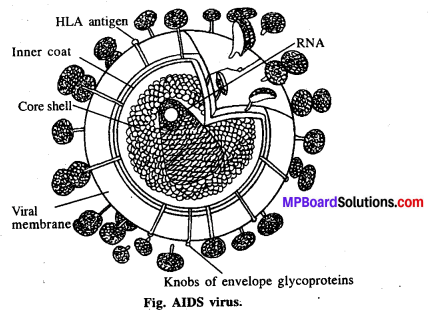
एड्स (AIDS) का पूरा नाम एक्वायर्ड इम्यून डेफीसिएन्सी सिण्ड्रोम (Acquired Immune Deficiency Syndrome) है। इसका पता सर्वप्रथम अमेरिका में सन् 1981 में लगा। यह रक्त संचरण, जननिक संसर्ग एवं माता से शिशु में फैलने वाला लैंगिक संसर्गजन्य रोग है, जिसमें रोगी की रोग प्रतिरोधात्मक क्षमता नष्ट हो जाती है। कारण यह ह्यूमन इम्यूनो विषाणु (HIV = Human Immuno Virus) के कारण होता है। एड्स रोग अथवा HIV का संचरण निम्न प्रकार से होता है

  • एक से अधिक स्त्रियों से सहवास।
  • संदूषित सीरिंज का प्रयोग।
  • दूषित रक्त का आदान-प्रदान
  • अंग प्रत्यारोपण।
  • कृत्रिम वीर्य सेचन तकनीक का उपयोग।
  • गर्भ के समय माता से बच्चे में।

रोग के लक्षण-AIDS के संक्रमण के फलस्वरूप अन्य लिम्फोसाइट्स को सक्रिय करने वाली सहायक “T” कोशिकाओं की संख्या में भारी कमी आती है। उग्र रूप से पीड़ित अधिकांश व्यक्ति तीन वर्ष के भीतर ही अन्य संक्रमणों या कैंसर के कारण मर जाते हैं। इससे मस्तिष्क को भारी क्षति पहुँचती है और वह अपनी स्मृति को खो देता है।

उपचार- अभी तक इस रोग के निवारण के लिए कोई उपचार नहीं है। एक बार यह रोग होने पर उस व्यक्ति का बचना असम्भव है फिर भी प्रतिरक्षा उत्तेजन विधि द्वारा शरीर में इस विषाणु की निरोधक कोशिकाओं की संख्या में वृद्धि की जा सकती है।

नियंत्रण-AIDS को फैलाने से रोकने के लिए निम्नलिखित उपाय काम में लाने चाहिए

  • लोगों को AIDS के घातक परिणामों की जानकारी देना चाहिए।
  • इन्जेक्शन लगाने वाली सीरिंज को एक बार प्रयोग करने के बाद फेंक देना चाहिए।
  • रुधिर देने वाले व्यक्तियों, प्रत्यारोपण के लिए वृक्क, यकृत, नेत्र का कॉर्निया, वीर्य या वृद्धि हॉर्मोन का दान करने वाले व्यक्तियों तथा गर्भधारण करने वाली स्त्रियों का निरीक्षण अनिवार्य रूप से कराना चाहिए।

MP Board Solutions

प्रश्न 11.
वह कौन-सी क्रियाविधि है जिससे एड्स विषाणु संक्रमित व्यक्ति के प्रतिरक्षा तंत्र का ह्रास करता है।
उत्तर
HIV का द्विगुणन एवं रोगजनकता-संक्रमित व्यक्ति के शरीर में आ जाने के बाद विषाणु वृहद् भक्षकाणु (मेक्रोफेज) में प्रवेश करता है जहाँ उसका आर. एन. ए. जीनोम, विलोम ट्रांसक्रिप्टेज एन्जाइम (Reverse transcriptase enzyme) की सहायता से प्रतिकृतीकरण (Replication) द्वारा विषाणु डी. एन. ए. (Viral DNA) बनता है। यह विषाणु DNA परपोषी कोशिका के डी. एन. ए. में समाविष्ट होकर संक्रमित कोशिकाओं को विषाणु कण पैदा करने का निर्देश देता है ।

वृहद् भक्षक विषाणु उत्पन्न करना जारी रखते हैं और एक HIV फैक्टरी की तरह कार्य करते हैं। इसके साथ ही HIV सहायक टी-लसीकाणुओं (TH) में घुस जाता है, प्रतिकृति बनाता है और संतति विषाणु पैदा करता है। यह क्रम बार-बार दोहराया जाता है। जिसकी वजह से संक्रमित व्यक्ति के शरीर में सहायक टी-लसिकाणुओं की संख्या में उत्तरोत्तर कमी होती है।

इस अवधि के दौरान बार-बार बुखार एवं दस्त आते हैं तथा वजन घटता है। अचानक टी-लसिकाणुओं की संख्या में गिरावट के कारण व्यक्ति जीवाणुओं, विशेष रूप से माइक्रोबैक्टीरियम, विषाणुओं, कवकों यहाँ तक कि टॉक्सोप्लाज्मा जैसे परजीवियों के संक्रमण का शिकार हो जाता है। रोगी में इससे प्रतिरक्षा न्यूनता हो जाती है और वह इन संक्रमणों से अपनी रक्षा करने में असमर्थ हो जाता है।

MP Board Solutions

प्रश्न 12.
प्रसामान्य कोशिका से कैंसर कोशिका किस प्रकार भिन्न है ?
उत्तर
हमारे शरीर में कोशिका वृद्धि और विभेदन अत्यधिक नियंत्रित और नियमित है। कैंसर कोशिकाओं में ये नियामक क्रियाविधियाँ टूट जाती हैं। प्रसामान्य कोशिकाएँ ऐसा गुण दर्शाती हैं जिसे संस्पर्श संदमन (कॉन्टेक्ट इनहिबिशन) कहते हैं और इसी गुण के कारण दूसरी कोशिकाओं से उनका संस्पर्श उनकी अनियंत्रित वृद्धि को संदमित करता है। ऐसा लगता है कि कैंसर कोशिकाओं में यह गण खत्म हो गया है। इसके फलस्वरूप कैंसर कोशिकाएं विभाजित होना जारी रख कोशिकाओं का भंडार खड़ा कर देती हैं जिसे अर्बुद (ट्यूमर) कहते हैं।

अर्बुद दो प्रकार के होते हैं- सुदम (बिनाइन) और दुर्दम (मैलिग्नेंट)। सुदम अर्बुद सामान्यतया अपने मूल स्थान तक सीमित रहते हैं, शरीर के दूसरे भागों में नहीं फैलते तथा इनसे मामूली क्षति होती है। दूसरी ओर दुर्दम अर्बुद प्रचुरोद्भवी कोशिकाओं का पुंज है जो नवद्रव्यीय नियोप्लास्टिक कोशिकाएँ कहलाती हैं ये बहुत तेजी से बढ़ती हैं और आस-पास के सामान्य ऊतकों पर हमला करके उन्हें क्षति पहुँचाती हैं।

प्रश्न 13.
मेटास्टैसिस का क्या मतलब है ? व्याख्या कीजिए।
उत्तर
अर्बुद कोशिकाएँ सक्रियता से विभाजित और वर्धित होती है जिससे वे अत्यावश्यक पोषकों के लिए सामान्य कोशिकाओं से स्पर्धा करती हैं और उन्हें भूखा मारती हैं। ऐसे अर्बुदों से उतरी हुई कोशिकाएँ रक्त द्वारा दूरदराज स्थलों पर पहुँच जाती हैं और जहाँ भी ये जाती हैं नये अर्बुद बनाना प्रारंभ कर देती हैं। मेटास्टैसिस कहलाने वाला यह गुण दुर्दम अर्बुदों का सबसे डरावना गुण है।

प्रश्न 14.
ऐल्कोहॉल/ड्रग के द्वारा होने वाले कुप्रयोग के हानिकारक प्रभावों की सूची बनाएँ।
उत्तर
ड्रग और ऐल्कोहॉल के तत्कालिक प्रतिकूल प्रभाव अंधाधुंध व्यवहार, बर्बरता और हिंसा के रूप में व्यक्त होते हैं । ड्रगों की अत्यधिक मात्रा से श्वसन-पात (रेस्पाइरेटरी फेल्योर), हृदय पात (हॉर्ट-फेल्योर) प्रमस्तिष्क रक्तस्राव (सेरेब्रल हेमरेज) के कारण समूर्छा (कोमा) और मृत्यु हो सकती है। ड्रगों का संयोजन या ऐल्कोहॉल के साथ उनके सेवन का आमतौर पर यह परिणाम अति मात्रा होती है।

युवाओं में ड्रग और ऐल्कोहॉल दुरूपयोग के सबसे सामान्य लक्षण शैक्षिक क्षेत्र में प्रदर्शन में कमी, बिना किसी स्पष्ट कारण के स्कूल या कॉलेज से अनुपस्थिति, व्यक्तिगत स्वच्छता के रूचि में कमी, विनिर्वतन, एकाकीपन, अवसाद, थकावट, आक्रमणशील और विद्रोही व्यवहार, परिवार और मित्रों से बिगड़ते संबंध, शौक की रुचि में कमी, सोने और खाने की आदतों में परिवर्तन, भूख और वजन में घट-बढ़ आदि हैं।

ड्रग/ऐल्कोहॉल के कुप्रयोग के दूरगामी परिणाम भी हो सकते हैं। अगर कुप्रयोगकर्ता को ड्रग/ऐल्कोहॉल खरीदने के लिए पैसे नहीं मिलें तो वह चोरी का सहारा ले सकता/सकती है। ये प्रतिकूल प्रभाव केवल ड्रग/ ऐल्कोहॉल का सेवन करने वाले तक सीमित नहीं रहता। कभी-कभी ड्रग/ऐल्कोहॉल अपने परिवार या मित्र आदि के लिए भी मानसिक और आर्थिक कष्ट का कारण बन सकता/सकती है।

जो अंत:शिरा द्वारा ड्रग लेते हैं उनको एड्स और यकृतशोथ-बी जैसे गंभीर संक्रमण होने की संभावना अधिक होती है। गर्भावस्था के दौरान ड्रग एवं ऐल्कोहॉल का उपयोग गर्भ पर प्रतिकूल प्रभाव डालता है। महिला खिलाड़ियों द्वारा उपचयी स्टेरॉइडों के सेवन के अनुषंगी प्रभावों में पुस्त्वन, बड़ी आक्रमकता, भावदशा में उतार-चढ़ाव, अवसाद, असामान्य आर्तव चक्र, मुँह और शरीर पर बालों की अत्यधिक वृद्धि, भगशेफ का बढ़ जाना, आवाज का गहरा होना शामिल हैं। पुरुष खिलाड़ियों में मुँहासे, बढ़ी आक्रामकता, भावदशा में उतार-चढ़ाव, अवसाद, वृषणों के आकार का घटना, शुक्राणु उत्पादन में कमी, यकृत और वृक्क की संभावित दुष्क्रियता, वक्ष का बढ़ना, समयपूर्व गंजापन, प्रोस्टेट ग्रंथि का बढ़ना आदि शामिल है।

MP Board Solutions

प्रश्न 15.
क्या आप ऐसा सोचते हैं कि मित्रगण किसी को ऐल्कोहॉल/ड्रग सेवन के लिए प्रभावित कर सकते हैं? यदि हाँ, तो व्यक्ति इससे कैसे अपने आप को बचा सकता है ?
उत्तर
ड्रग, ऐल्कोहॉल एवं धूम्रपान के प्रति व्यक्ति किशोर अवस्था में आकर्षित होते हैं। ऐसी प्रवृत्ति से किशोरों को रोकना होगा, क्योंकि चिकित्सा से रोकथाम (बचाव) ज्यादा अच्छा होता है। इसके लिए माता-पिता .और अध्यापकों का विशेष उत्तरदियित्व है। यहाँ दिए गए कुछ उपाय किशोरों में ऐल्कोहॉल एवं ड्रग के कुप्रयोग के रोकथाम तथा नियंत्रण के लिए विशेष रूप से कारगर होंगे
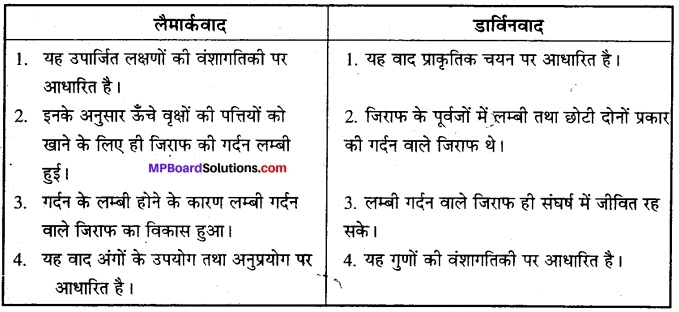
1. माता-पिता/अभिभावकों से सहायता लेना-माता-पिता और समकक्षियों से फौरन मदद् लेनी चाहिए, ताकि वे उचित मार्गदर्शन कर सकें। निकट और विश्वसनीय मित्रों से भी सलाह लेते रहना चाहिए। युवाओं की समस्या को सुलझाने के लिए समुचित सलाह से उन्हें अपनी भावनाओं को अभिव्यक्त करने में सहायता मिलेगी।

2. संकट के लक्षणों की पहचान-माता-पिता और अध्यापकों को चाहिए कि वे बच्चों में खतरों के संकेतों को पहचाने और ध्यान दें। मित्रों को भी चाहिए कि वे ड्रग या ऐल्कोहॉल लेते देखने पर उन्हें रोकें या उनके अभिभावकों को सूचित करें। इसके बाद बीमारी को पहचानने और उसके पीछे छिपे कारणों का पता लगाने के लिए उचित उपाय करने होंगे। यह क्रिया समुचित चिकित्सकीय उपाय करने के लिए उपाय करने होंगे। यह क्रिया समुचित चिकित्सकीय उपाय करने में सहायता प्रदान करेगी।

3. व्यावसायिक और चिकित्सकीय सहायता लेना-जो व्यक्ति दुर्भाग्यवश ड्रग और ऐल्कोहॉल के कुप्रयोग रूपी दलदल में फंस गया है उसकी सहायता के लिए उच्च योग्यता प्राप्त मनोवैज्ञानिकों की उपलब्धता और व्यसन छुड़ाने तथा पुनः स्थापना कार्यक्रमों हेतु काफी सहायता उपलब्ध है।
4. शिक्षा और परामर्श -समस्याओं और दबावों का सामना करने और निराशाओं तथा असफलताओं को जीवन का एक हिस्सा समझकर स्वीकार करने की शिक्षा एवं परामर्श उन्हें देना चाहिए। यह भी उचित होगा कि बालक की ऊर्जा को खेलकूद, पढ़ाई, संगीत और पाठ्यक्रम के अलावा दूसरी स्वस्थ गतिविधियों की दिशा में भी लगाना चाहिए।

प्रश्न 16.
ऐसा क्यों है जब कोई व्यक्ति ऐल्कोहॉल या ड्रलेना शुरू कर देता है तो उस आदत से छुटकारा पाना कठिन होता है ? अपने अध्यापक से चर्चा कीजिए।
उत्तर
सबसे महत्वपूर्ण बात यह है कि ऐल्कोहॉल और ड्रग की अंतर्निहित व्यसनी प्रकृति है, लेकिन व्यक्ति इस बात को समझ नहीं पाता। ड्रगों और ऐल्कोहॉल के कुछ प्रभावों के प्रति लत, एक मनोवैज्ञानिक आशक्ति है। जो व्यक्ति को उस समय भी ड्रग एवं ऐल्कोहॉल लेने के लिए प्रेरित करने से जुड़ी है जबकि उनकी जरूरत नहीं होती या उनका इस्तेमाल आत्मघाती है। ड्रग के बार-बार उपयोग से हमारे शरीर में मौजूद ग्राहियों का सह्य स्तर बढ़ जाता है।
इसके फलस्वरूप ग्राही, ड्रगों या ऐल्कोहॉल की केवल उच्चतर मात्रा के प्रति अनुक्रिया करते हैं, जिसके कारण अधिकाधिक मात्रा में लेने की लत पड़ जाती है। लेकिन एक बात बुद्धि में बिल्कुल स्पष्ट होनी चाहिए कि इन ड्रग को एक बार लेना भी व्यसन बन सकता है। इस प्रकार, ड्रग और ऐल्कोहॉल की व्यसनी शक्ति उन्हें इस्तेमाल करने वाले/वाली को एक दोषपूर्ण चक्रा में घसीट लेते हैं, जिनसे इनका नियमित सेवन (कुप्रयोग) करने लगते हैं और इस चक्र से बाहर निकलना उनके बल में नहीं रहता। किसी मार्गदर्शन या परामर्श के अभाव में व्यक्ति व्यसनी (लती) बन जाता है और उनके ऊपर आश्रित होने लगता |

MP Board Solutions

प्रश्न 17.
व्यसन के प्रमुख कारणों का वर्णन कीजिए।
अथवा
आपके विचार से किशोरों को ऐल्कोहॉल या ड्रग के सेवन के लिए क्या प्रेरित करता है और इससे कैसे बचा जा सकता है ?
उत्तर
व्यसन के प्रमुख कारण-
1. उत्सुकता-संचार माध्यमों के विज्ञापन व्यक्ति को नशीले पदार्थों को जानने की उत्सुकता पैदा करते हैं जिसके कारण सेवन करता है।

2. उत्तेजना एवं अपूर्व आनंद की प्राप्ति-कुछ मादक द्रव्य उत्तेजक प्रकृति के होते हैं। ये उन युवाओं को जिन्हें शारीरिक क्षमता की चाह होती है आकर्षित करते हैं। इसके सेवन से अद्भुत आनंद की प्राप्ति होती है। इसकी वास्तविक धारणा यह है कि इन दवाओं के सेवन से शारीरिक एवं मानसिक दुर्बलता आती है।

3. अधिक कार्यक्षमता की इच्छा-ऐसी भ्रान्ति है कि मादक द्रव्यों के सेवन से व्यक्ति में स्फूर्ति आती है और वह अधिकाधिक शारीरिक एवं मानसिक कार्य कर सकता है, इसी कारण कुछ नशीली दवाओं तथा मादक द्रव्यों का सेवन युवाओं द्वारा किया जाता है, किन्तु वास्तविकता यह है कि इस प्रकार के पदार्थ शारीरिक एवं मानसिक क्षमता को कम करके थकान बढ़ाते हैं।

4. कल्पना लोक की सैर-कुछ मादक द्रव्य वास्तविक दुनिया से व्यक्ति को पृथक् कर देते हैं जिससे इन्हें क्षणिक आनन्द की प्राप्ति होती है और व्यक्ति को नई सौन्दर्य भावना एवं आनन्द का अनुभव होता है। इन क्षणिक सुखों की प्राप्ति के लिए व्यक्ति नशीली दवाओं तथा पदार्थों का सेवन करते हैं जिनकी देखा-देखी परिवार के छोटे सदस्य भी नशीले पदार्थों का सेवन करने लगते हैं।

5. सामाजिक दबाव-कभी-कभी ऐसा भी होता है कि किसी समारोह में नशीली दवाओं के सेवन हेतु किसी नये व्यक्ति पर बार-बार दबाव डाला जाता है। इस दबाव के कारण कमजोर इच्छा शक्ति वाले व्यक्ति इन दवाओं का सेवन कर लेते हैं और आनन्द की अनुभूति होने पर वे बार-बार इनका सेवन प्रारम्भ कर देते हैं।

6. निराशाओं एवं चिन्ता से छुटकारा-चूँकि मादक पदार्थ व्यक्ति को वास्तविक परिस्थिति से दूर कर देते हैं और वह नशे में डूबकर अपने दुःख दर्द को कुछ समय के लिये भुला देता है। इस कारण वह दुःखों को अस्थाई रूप से भुला देने के लिए नशीले पदार्थों का सेवन करने लगता है, लेकिन यह तरीका व्यक्ति को कायर बनाकर उसमें मुकाबला करने की शक्ति को कम करता है।

7. पारिवारिक इतिहास-अनेक परिवारों में बड़े सदस्य खुलेआम नशीले पदार्थों का सेवन करते हैं जिनकी देखा-देखी परिवार के छोटे सदस्य भी नशीले पदार्थों का सेवन करने लगते हैं।

8. व्यापारिक प्रचार एवं असामाजिक तत्व-कई बार दवा कम्पनियों के विज्ञापन भी नशीले पदार्थों के सेवन की ओर किशोरों तथा युवाओं को आकर्षित करते हैं। कुछ असामाजिक तत्त्व भी बालक-बालिकाओं को । फुसलाकर उन्हें नशीले पदार्थों का आदी बना देते हैं और बाद में उनसे गैर-कानूनी कार्य करवाते हैं।

मानव स्वास्थ्य तथा रोग अन्य महत्वपूर्ण प्रश्नोत्तर

मानव स्वास्थ्य तथा रोग वस्तुनिष्ठ प्रश्न

1. सही विकल्प चुनकर लिखिए

प्रश्न 1.
पोलियो, डिफ्थीरिया एवं टिटेनस से बचाव हेतु उपयोगी टीका है
(a) B.C.G.
(b) D.P.T.
(c) M.M.R.
(d) S.T.D.
उत्तर
(b) D.P.T.

प्रश्न 2.
रोग समाप्त हो जाने के बाद शरीर में उत्पन्न रोग प्रतिरोधक क्षमता कहलाती है
(a) सक्रिय प्रतिरक्षण
(b) निष्क्रिय प्रतिरक्षण
(c) (a) और (b) दोनों
(d) उपर्युक्त में से कोई नहीं।
उत्तर
(a) सक्रिय प्रतिरक्षण

प्रश्न 3.
कैंसर का संबंध होता है
(a) ऊतकों की अनियंत्रित वृद्धि से …
(b) बुढ़ापे से
(c) ऊतकों के नियंत्रित विभाजन से
(d) उपर्युक्त में से कोई नहीं।
उत्तर
(a) ऊतकों की अनियंत्रित वृद्धि से

प्रश्न 4.
चेचक के विरुद्ध टीका लगाने का अभिप्राय है
(a) जन्तुओं द्वारा प्राप्त W.B.Cs. का
(b) अन्य जन्तुओं से उत्पन्न प्रतिरक्षियों का
(c) प्रतिरक्षियों का
(d) दुर्बल किये गये चेचक विषाणु का।
उत्तर
(d) दुर्बल किये गये चेचक विषाणु का।

प्रश्न 5.
सिफिलिस एक लैंगिक प्रसारित रोग है, जो उत्पन्न होता है
(a) पैस्टुला द्वारा
(b) लेप्टोस्पाइरा द्वारा
(c) ट्रिपेनिमा पेलाइडम द्वारा
(d) विब्रियो द्वारा।
उत्तर
(c) ट्रिपेनिमा पेलाइडम द्वारा

MP Board Solutions

प्रश्न 6.
प्रतिरक्षी होता है
(a) एक अणु जो एक विशेष प्रतिजन को ही नष्ट करता है
(b) W.B.Cs. जो जीवाणु का भक्षण करते हैं
(c) स्तनी के R.B.Cs. का स्रावण
(d) न्यूक्लियस का घटक।
उत्तर
(a) एक अणु जो एक विशेष प्रतिजन को ही नष्ट करता है

प्रश्न 7.
एलर्जी का एक रूप है
(a) दमा
(b) पीली आँखें
(c) टाइफॉइड
(d) गलफुल्ली
उत्तर
(a) दमा

प्रश्न 8.
मानव में AIDS विषाणु कैसे प्रवेश पाता है
(a) भोजन से
(b) चुम्बन से
(c) जल से
(d) खून से।
उत्तर
(d) खून से।

प्रश्न 9.
टीकों की खोज का श्रेय किसे जाता है
(a) एलेक्जेण्डर फ्लेमिंग
(b) एडवर्ड जेनर
(c) लुई पाश्चर
(d) राबर्ट कोच।
उत्तर
(b) एडवर्ड जेनर

प्रश्न  10.
रुधिर में होने वाला कैंसर है
(a) कार्योनोमा
(b) सारकोमा
(c) लिम्फोमा
(d) ल्यूकेमिया।
उत्तर
(d) ल्यूकेमिया।

MP Board Solutions

प्रश्न 11.
हिपेटाइटिस-B सतह प्रतिजन है
(a) शुद्ध प्रतिजन टीका
(b) आनुवंशिक टीका
(c) पुनर्योगज टीका
(d) उपर्युक्त सभी।
उत्तर
(c) पुनर्योगज टीका

प्रश्न 12.
एड्स परीक्षण जाना जाता है
(a) एलिसा
(b) आस्ट्रेलियन एण्टीजन
(c) HIV परीक्षण
(d) उपर्युक्त में से कोई नहीं।
उत्तर
(c) HIV परीक्षण

प्रश्न 13.
लिवर कैंसर का कारण है
(a) शराब
(b) तम्बाकू
(c) उपर्युक्त दोनों
(d) कोई नहीं।
उत्तर
(a) शराब

प्रश्न 14.
प्रोब का उपयोग है
(a) अंगुली छापन में
(b) जीन के पृथक्करण में
(c) रोगजनकों की पहचान में
(d) उपर्युक्त सभी में।
उत्तर
(d) उपर्युक्त सभी में।

प्रश्न 15.
मोनोक्लोनल एण्टीबॉडीज़ का उपयोग है
(a) रुधिर समूहों की पहचान में
(b) रोगजनकों की विश्वसनीय पहचान में
(c) कैंसर की विश्वसनीय पहचान में
(d) उपर्युक्त सभी में।
उत्तर
(d) उपर्युक्त सभी में।

प्रश्न 16.
भ्रूण संबंधी असमान्यताओं का अध्ययन कहलाता है
(a) ट्राइकोलॉजी
(b) टेरेन्टोलॉजी
(c) ट्रामैटोलॉजी
(d) टर्मिटोलॉजी।
उत्तर
(b) टेरेन्टोलॉजी

प्रश्न 17.
गर्भ के दौरान महिलाओं द्वारा थैलिडोमाइड के उपयोग से भ्रूण में होने वाला रोग कहलाता
(a) वैजाइनल कार्सिनोमा
(b) माइक्रोसिफैली
(c) फोकोमेलिया
(d) वाइरीलिज्म।
उत्तर
(c) फोकोमेलिया

प्रश्न 18.
ऐसा रासायनिक पदार्थ जिसके उपयोग से अनुभव या प्रेरणा ग्रहण करने की शक्ति समाप्त हो जाती है उसे कहते हैं
(a) शामक
(b) एनाल्जेसिक
(c) एस्थेटिक
(d) उत्तेजक।
उत्तर
(c) एस्थेटिक

प्रश्न 19.
अफीम को पौधे के किस भाग से प्राप्त किया जाता है
(a) पत्तियों से
(b) फल से
(c) बीजों से
(d) छाल से।
उत्तर
(b) फल से

प्रश्न 20.
सर्वाधिक घातक हेल्युसिनोजेन है
(a) अफीम
(b) मार्फीन
(c) L.S.D
(d) हेरोइन।
उत्तर
(c) L.S.D

MP Board Solutions

प्रश्न 21.
चाय में पाया जाने वाला उत्तेजक पदार्थ है
(a) टेनिन
(b) कोकीन
(c) कैफीन
(d) फ्रेक।
उत्तर
(c) कैफीन

प्रश्न 22.
निम्न में से कौन एक औपिएट नारकोटिक है
(a) बरबीचुरेट
(b) मार्फीन
(c) एम्फोटेमाइन
(d) L.S.D
उत्तर
(b) मार्फीन

प्रश्न 23.
मन परिवर्तन करने वाली औषधि है
(a) साइकोट्रापिक
(b) हेल्यूसिनोजेन्स
(c) बरबीचुरेट्स
(d) उत्तेजक।
उत्तर
(a) साइकोट्रापिक

2. रिक्त स्थानों की पूर्ति कीजिए

1. रोगों का जर्म सिद्धांत ………………. ने दिया था।
2………………. आनुवंशिक अभियांत्रिकी द्वारा निर्मित प्रथम मानव इंसुलिन है।
3. AIDS……………… संचारित रोग है।
4. गोनोरिया ……………… के द्वारा होता है।
5. कैंसर के लिये उत्तरदायी जीन को ………………. कहते हैं।
6. रक्त के कैंसर को ………………. कहते हैं। मानव स्वास्थ्य तथा रोग
7. हिपेटाइटिस रोग …………….. के द्वारा होता है।
8. आदर्श टीका ………………. नहीं होना चाहिए।
9. …………… में रोग जनक जीवित अवस्था में होते हैं।
10. ………………. रक्त कैन्सर कहलाता है।
11. आसवित पेय में ………….. से अधिक एल्कोहॉल होता है।
12. रोगजनक की श्रेष्ठ जैव तकनीक ………………. है।
13. विश्व रेडक्रॉस दिवस ……………….. को मनाया जाता है।
14. नशीले पदार्थ के मिश्रण को. …………….. कहते हैं।
15. बेंजोडाइएजोपिन्स एक ……………….. औषधि है।
16. विश्व मानसिक स्वास्थ्य दिवस ……………… को मनाया जाता है।
17. एल. एस. डी. नामक औषधि को ………….. नामक कवक से प्राप्त किया जाता है।
18. बिना निद्रा के शारीरिक तनाव एवं व्यग्रता से मुक्त करने वाली औषधियों को …………….. कहते
19. भ्रूण की आकारिकीय असामान्यताओं का अध्ययन ……………….. कहलाता है।
20. महिलाओं की वृद्धि दर ……………….. वर्ष बाद रूक जाती है।
21. मैथुन द्वारा संचारित रोग ……………….. कहलाते हैं।
उत्तर

  1. राबर्ट कोच
  2. ह्यूम्यूलिन
  3. लैंगिक रूप से
  4. निसेरिया गोनोरी
  5. ओन्कोजीन
  6. ल्यूकेमिया,
  7. विषाणु
  8. रोगजनक तथा विषाक्त
  9. जीवित टीकों
  10. ल्यूकेमिया
  11. 20 %,
  12. टीकाकरण
  13. 8 मई
  14. कॉकटेल
  15. सायकोट्रापिक
  16. 10 दिसम्बर
  17. क्लेविसेप्स परप्यूरिया
  18. कुलाइजर्स
  19. टेकैन्टोलॉजी
  20. 20
  21. यौन संबंधी रोग।

3. सही जोड़ी बनाइए

I. ‘A’ – ‘B’

1. विश्व रेडक्रॉस दिवस – (a) इरीथ्रोजाइलॉम कोका
2. विश्व स्वास्थ्य दिवस – (b) पैपावर सोमेनीफेरम
3. विश्व तम्बाकू निषेध दिवस – (c) क्लैवीसेप्स परप्यूरिया
4. कोकेन – (d) 31मई
5. अफीम – (e) 8 मई
6. एल.एस.डी – (f) 7 अप्रैल।
उत्तर
1. (e), 2. (1), 3. (d), 4. (a), 5. (b), 6. (c).

II. ‘A’ – ‘B’

1. एड्स – (a) हापज सिम्प्लेक्स
2. जेनाइटल हीज – (b) हीमोफिलस ड्यूक्रेयई
3. सिफलिस – (c) नैजेरिया गोनोरिया
4. कैन्फ्रॉइड – (d) यौन संक्रमित रोग
5. गोनोरिया – (e) ट्रेपोनेमा पैलीडम।
उत्तर
1. (d), 2. (a), 3. (e), 4. (b), 5. (c).

III. ‘A’ – ‘B’

1. AIDS – (a) विषाणुरोधी प्रोटीन
2. प्रतिजैविक – (b) जैव युद्ध
3. इन्टरफेरॉन – (c) B.C.G
4. एन्थैक्स – (d) S.T.D
5. T.B. – (e) एलेक्जेण्डर फ्लेमिंग।
उत्तर
1. (d), 2. (e), 3. (a), 4. (b), 5. (c).

IV. ‘A’ – ‘B’

1. AIDS – (a) टीकाकरण
2. रोग निरोध – (b) ई. कोलाई से प्राप्त इन्सुलिन (मानव निर्मित इन्सुलिन)
3. किण्वन – (c) एण्टी रेट्रोवायरल
4. ह्यूम्यूलिन – (d) यीस्ट
5. मोतीझरा – (e) जीवाणु रोग।
उत्तर
1. (c), 2. (a), 3. (d), 4. (b), 5. (e).

4. एक शब्द में उत्तर दीजिए

1. रोगों का जर्म सिद्धान्त किसने दिया था ?
2. मलेरिया परजीवी के वाहक का नाम लिखिये।
3. आनुवंशिक अभियांत्रिकी द्वारा निर्मित इन्सुलिन का नाम लिखिये।
4. HIV का पूरा नाम लिखिये।
5. डिप्थीरिया, पोलियो एवं कुकुर खाँसी के वैक्सीन का नाम लिखिए।
6. ओपियम का स्रोत क्या होता है ?
7. उत्तेजक पदार्थ के दो उदाहरण दीजिए।
8. तम्बाकू में पाये जाने वाले हानिकारक रासायनिक यौगिक का नाम लिखिए।
9. L.S.D. के स्रोत का नाम लिखिए।
10. किन्हीं चार शामक औषधियों के नाम लिखिए।
11. ट्रंक्वीलाइजर का एक उदाहरण भी दीजिए।
12. मनुष्य के विचार एवं भावनाओं को परिवर्तित करके भ्रम की स्थिति पैदा करने वाली औषधियों को क्या कहते हैं?
उत्तर

  1. रॉबर्ट कोच
  2. प्लाज्मोडियम
  3. ह्यूम्यूलिन
  4. ह्यूमन इम्यूनोडेफीसिएन्सी वाइरस
  5. DPT वैक्सीन,
  6. पैपावर सोमेनीफेरम
  7. कैफीन, कोकीन
  8. निकोटिन
  9. क्लैवीसेप्स परप्यूरिया (कवक)
  10. (i) हेक्साबार्बिटॉल, (ii) मीथोहेक्सीटॉल, (iii) वेलियम, (iv) ऑक्साजेपाम
  11. फिनोथियोजीनेस
  12. बार्बीचुरेट्स।

मानव स्वास्थ्य तथा रोग अति लघु उत्तरीय प्रश्न

प्रश्न 1.
मलेरिया परजीवी के वाहक का नाम लिखिए।
उत्तर
मादा एनाफिलीज मच्छर।

प्रश्न 2.
HIV का पूरा नाम लिखिए।
उत्तर
ह्यूमन इम्यूनो-डेफिसियेंसी वाइरस।

प्रश्न 3.
डिफ्थीरिया, पोलियो एवं कुकुर खाँसी से बचाव हेतु लगाये जाने वाले टीके का नाम लिखिए।
उत्तर
D.PT. वैक्सीन एवं पोलियो वैक्सीन

MP Board Solutions

प्रश्न 4.
ELISA का नाम लिखिए।
उत्तर
एन्जाइम लिन्क्ड इम्यूनो सॉर्बेन्ट असे।

प्रश्न 5.
कीमोथैरेपी से किस रोग का इलाज किया जाता है ?
उत्तर
कैन्सर का।

प्रश्न 6.
ओपियम का स्रोत क्या होता है?
उत्तर
अफीम।

प्रश्न 7.
उत्तेजक पदार्थों के तीन उदाहरण लिखिए।
उत्तर
कैफीन, कोकीन, एम्फीमाइन्स!

प्रश्न 8.
तम्बाकू में पाये जाने वाले हानिकारक रासायनिक यौगिक का नाम लिखिए।
उत्तर
निकोटिन।

प्रश्न 9.
LSD के स्रोत का नाम लिखिए।
उत्तर
क्लैविसेप्स परप्यूरिया

प्रश्न 10.
ट्रैकुलाइजर का एक उदाहरण भी दीजिये।
उत्तर
फेनोथाइएजीन।

प्रश्न 11.
मनुष्यं के विचार एवं भावनाओं को परिवर्तित करके भ्रम की स्थिति पैदा करने वाली औषधियों को क्या कहते हैं ?
उत्तर
सायकोडेलिक।

प्रश्न 12.
HIV संक्रमण से होने वाली बीमारी कौन-सी है ?
उत्तर
AIDSI

प्रश्न 13.
एड्स का परीक्षण किसके द्वारा किया जाता है ?
उत्तर
ELISA परीक्षण द्वारा।।

प्रश्न 14.
वर्तमान में देश के विभिन्न भागों में चिकनगुनिया रोग की पुष्टि हुई है। इस रोग के लिए उत्तरदायी वाहक (वेक्टर) का नाम लिखिए।
उत्तर
चिकनगुनिया रोग के लिए वेक्टर का नाम एडीज मच्छर है।

प्रश्न 15.
प्रतिरक्षा कितने प्रकार की होती है ? नाम लिखिए।
उत्तर
प्रतिरक्षा दो प्रकार की होती है, जिन्हें क्रमशः सहज तथा उपार्जित प्रतिरक्षा कहते हैं।

प्रश्न 16.
वयस्क कृमि वुचेरिया शरीर में कहाँ पाया जाता है ?
उत्तर
वयस्क कृमि लिम्फ ग्रंथियाँ व लिम्फ मार्ग में पाया जाता है।

प्रश्न 17.
अर्बुद कितने प्रकार के होते हैं ? नाम लिखिए।
उत्तर
अर्बुद दो प्रकार के होते हैं-

  • सुदम (बिनाइन) और
  • दुर्दम (मैलिग्नेंट)।

प्रश्न 18.
एड्स रोग से शरीर को कौन-सी प्रमुख हानि होती है ?
उत्तर
एड्स रोग में शरीर की रोग प्रतिरोधक क्षमता नष्ट हो जाती है।

MP Board Solutions

प्रश्न 19.
गुटका सेवन करने वाले व्यक्ति के जबड़े की मांसपेशियाँ कठोर हो जाने के कारण उसका जबड़ा ठीक से नहीं खुलता है। संभावित रोग का नाम बताइए।
उत्तर
सबम्यूकस फाइब्रोसिस रोग होता है।

प्रश्न 20.
डी. पी. टी. (DPT) टीके का पूरा नाम लिखिए।
उत्तर
डिफ्थीरिया पटुंसिस टिटेनस।

प्रश्न 21.
कैंसर में दी जाने वाली दवाओं व उपचार के पार्श्व प्रभाव (Side effect) बताइए।
उत्तर
बालों का झड़ना एवं एनीमिया ।

प्रश्न 22.
NAC का पूरा नाम बताइए।
उत्तर
नेशनल एड्स कंट्रोल ऑर्गेनाइजेशन।

प्रश्न 23.
मरीजुआना किस पौधे का सत्व (Extract) है ? नाम बताइए।
उत्तर
भांग (केनाविस सेटाइवा)।

प्रश्न 24.
अफीम, मार्फीन, हेरोइन, पेथीडीन तथा मेथेडॉन को सामूहिक रूप से क्या कहते
उत्तर
ओपिमेट नार्कोटिक्स।

प्रश्न 25.
मैरी मैलॉन का उपनाम क्या है ?
उत्तर
मैरी मैलॉन का उपनाम “टाइफॉइड मैरी है।

प्रश्न 26.
मनुष्य के शरीर में प्रवेश करने के बाद HIV जिन दो कोशिकाओं को गुणित करता है, उनके नाम लिखिए।
उत्तर
मैक्रोफेजेज तथा सहायक T-लिम्फोसाइड्स।

प्रश्न 27.
न्यूमोनिया रोग में शरीर के कौन से अंग संक्रमित होते हैं ?
उत्तर
फुफ्फुस (Lungs) के वायुकोष्ठ (Alveoli) संक्रमित होते हैं।

प्रश्न 28.
तीव्र ज्वर, भूख की कमी, पेट में दर्द तथा कब्ज से पीड़ित लक्षणों के आधार पर चिकित्सक किस प्रकार पुष्टि करेगा कि व्यक्ति को टाइफॉइड है, अमीबिसिस नहीं?
उत्तर
टाइफॉइड रोग की पुष्टि विडाल परीक्षण के द्वारा की जाती है।

प्रश्न 29.
एल. एस. डी. (LSD) का पूरा नाम लिखिए।
उत्तर
लाइसार्जिक अम्ल डाइएथिल एमाइड्स।

MP Board Solutions

प्रश्न 30.
कैंसर उत्पन्न करने वाले विषाणु क्या कहलाते हैं ?
उत्तर
कैंसर उत्पन्न करने वाले विषाणु अर्बुदीय विषाणु (ओन्कोजेनिक वाइरस) कहलाते हैं।

प्रश्न 31.
विशिष्ट इम्यूनिटी को प्राप्त करने के लिए आवश्यक दो मुख्य कोशिकाओं के समूहों के नाम लिखिए।
उत्तर

  • T-लिम्फोसाइट्स
  • B-लिम्फोसाइट्स।

प्रश्न 32.
लसीकाभ अंग किसे कहते हैं ?
उत्तर
वे अंग जिनमें लसीकाणुओं की उत्पत्ति, परिपक्वन एवं प्रयुरोद्भवन होता है, लसीकाभ अंग कहलाता है।

मानव स्वास्थ्य तथा रोग लघु उत्तरीय प्रश्न

प्रश्न 1.
मेटास्टेसिस का क्या मतलब है ? व्याख्या कीजिए।
उत्तर
अर्बुद कोशिकाएँ सक्रियता से विभाजित और वर्धित होती हैं जिससे वे अत्यावश्यक पोषकों के लिए सामान्य कोशिकाओं से स्पर्धा करती है और उन्हें पोषण के अभाव में रखती हैं। ऐसे अर्बुदों से उतरी हुई कोशिकाएँ रक्त द्वारा दूरदराज स्थलों पर पहुँच जाती हैं और जहाँ ये भी पहुँचती हैं नये अर्बुद बनाना प्रारंभ कर देती है। मेटास्टेसिस कहलाने वाला यह गुण दुर्दम अबुंदों का सबसे खतरनाक गुण है।

प्रश्न 2.
निम्नलिखित को परिभाषित कीजिए
(1) प्रतिरोधकता
(2) वैक्सीन
(3) इन्टरफेरॉन
(4) टीकाकरण।
उत्तर
(1) प्रतिरोधकता-प्रत्येक जीव में रोगों से लड़ने या बचाव की क्षमता पायी जाती है। जीवों की रोगों से लड़ने की इस क्षमता को प्रतिरोधकता या प्रतिरक्षा कहते हैं।

(2) वैक्सीन-ऐसी औषधि जिसमें किसी रोग के कमजोर रोग कारक जीव होते हैं तथा उसका उपयोग रोग के प्रति प्रतिरोधकता को उत्पन्न करने में किया जाता है, उसे ही वैक्सीन कहते हैं। उदाहरण-पोलियो वैक्सीन।

(3) इन्ट फेरॉन-हमारी कोशाओं से बने ऐसे प्रोटीन जो विषाणुओं तथा कुछ दूसरे पदार्थों के कोशिका में प्रवेश करने से बनते हैं। इन्टरफेरॉन कहलाते हैं। ये रोगाणुओं व विषाणुओं के प्रभाव को नष्ट कर रोगों से बचाते हैं।

(4) टीकाकरण-टीकाकरण वह उपाय है जिसके द्वारा किसी जीव में किसी रोग के प्रति उपार्जित प्रतिरोधकता पैदा की जाती है।

प्रश्न 3.
जन्मजात एवं अर्जित प्रतिरोधकता में अन्तर लिखिए।
उत्तर
MP Board Class 12th Biology Solutions Chapter 8 मानव स्वास्थ्य तथा रोग 4

प्रश्न 4.
स्वप्रतिरोधकता किसे कहते हैं ?
उत्तर
स्व प्रतिरोधकता (Auto-immunity)-वह प्रतिरोधकता जो जीवों में अपनी ही रचनाओं के खिलाफ पैदा हो जाती है, स्व-प्रतिरोधकता कहलाती है। यह प्रतिरोधकता कई बीमारियों को पैदा कर देती है। ये बीमारियाँ इस बात पर निर्भर करती हैं कि शरीर कि रचना के प्रति प्रतिरोधकता विकसित हुई है।

उदाहरणस्वरूपयदि शरीर में R.B.Cs. के प्रति प्रतिरोधकता विकसित हुई है, तो यह अपनी ही R.B.Cs को नष्ट करके ऐनीमिया रोग पैदा करती है, लेकिन यदि पेशी कोशिकाओं के प्रति प्रतिरोधकता विकसित हो जाए तो यह पेशी कोशिकाओं को नष्ट करके शरीर में कमजोरी पैदा करती है। इसी प्रकार यदि यकृत कोशिकाओं के प्रति प्रतिरोधकता विकसित होती है, तो यह यकृत कोशिकाओं को नष्ट करके हिपेटाइटिस रोग पैदा करती है, अतः स्व-प्रतिरोधकत. डिजनरेटिव बीमारियों को पैदा करती है।

प्रश्न 5.
एलर्जन क्या है ? एलर्जी किस प्रकार उत्पन्न होती है ?
उत्तर
एलर्जी उत्पन्न करने वाले पदार्थों को एलर्जन कहते हैं। एलर्जन का प्रारम्भिक उद्भासन शरीर में अति संवेदनशीलता उत्पन्न करता है लेकिन एलर्जी उत्पन्न नहीं करता है। शरीर बाद में प्राथमिक प्रतिरक्षित अनुक्रिया विकसित कर लेता है, जिसमें B कोशाएँ प्रतिरक्षा उत्पन्न करती हैं किन्तु लगातार आक्रमण से कई बार प्रतिरक्षियाँ परास्त हो जाती हैं। इस संघर्ष मे हिस्टामाइन नामक रसायन शरीर में उत्पन्न होकर द्वितीयक प्रतिरक्षित अनुक्रिया अथवा एलर्जी उत्पन्न करता है, इसे वीभत्स खुराक कहते हैं। इससे त्वचा पर खुजली, दरारें, आँखों से पानी निकलना, हाँफना, छींकना, सूजन आदि लक्षण दिखायी पड़ते हैं।

प्रश्न 6.
B-कोशिका एवं T-कोशिका क्या है ?
अथवा
T-कोशिका क्या है?
उत्तर
श्वेत रुधिर कोशिकाएँ (लिम्फोसाइट्स) शरीर प्रतिरक्षात्मक तन्त्र की मुख्य कोशिकाएँ होती हैं। शरीर प्रतिरक्षात्मक तंत्र की लिम्फोसाइट्स दो प्रकार की होती हैं, जिन्हें B-कोशिका एवं T-कोशिका कहते हैं। ये दोनों कोशिकाएँ भ्रूणीय अवस्था में यकृत कोशिकाओं और वयस्क अवस्था में अस्थिमज्जा की कोशिकाओं द्वारा बनती हैं। रे दोनों कोशिकायें परिपक्व होने के बाद शरीर के रुधिर एवं लसीका के साथ परिसंचरित होती रहती हैं । T-कोशिकाएँ कोशिकीय प्रतिरक्षा तथा B-कोशिकाएँ प्रतिरक्षियों के निर्माण करने का कार्य करती हैं।

प्रश्न 7.
D.P.T. का टीका किन-किन रोगों से बचाव करता है ? प्रत्येक बीमारी के रोग कारक का नाम लिखिये।
उत्तर
यह टीका निम्नलिखित तीन बीमारियों से बचने के लिए लगाया जाता है

  • डिफ्थीरिया
  • कुकुर खाँसी
  • टिटेनस।

रोगकारक का नाम जीवाणु

  • डिफ्थीरिया – कोर्नीबैक्टीरिया डिफ्थेरी
  • कुकुर खाँसी – बोर्डेटेला पुर्टसिस (जीवाणु)
  • टिटेनस – क्लॉस्ट्रीडियम टिटैनी।

प्रश्न 8.
सुजननिकी किसे कहते हैं ?
उत्तर
सुजननिकी (Eugenics)-सुजननिकी वह विधि है, जिसके द्वारा भावी मानव पीढ़ी को आनुवंशिक आधार पर सुधारने का प्रयास किया जाता है। आजकल यह जीव विज्ञान की एक शाखा का रूप ले चुकी है। सुजननिकी में मानव सुधार के लिए दो कार्य किये जाते हैं। पहले कार्य द्वारा शारीरिक तथा मानसिक रूप से स्वस्थ व्यक्तियों को प्रजनन के लिए प्रोत्साहित किया जाता है।

प्रश्न 9.
एलर्जी क्या है ? इसके कारणों को समझाइए।
अथवा
एलर्जी का प्रतिरक्षात्मक तन्त्र से क्या संबंध है ?
उत्तर
जब हमारे शरीर में ऐसा पदार्थ प्रवेश करता है, जिसके प्रति उच्च प्रतिरोधक क्षमता का विकास हो गया है, तब अचानक तीव्रता से हमारे शरीर में प्रतिरोधात्मक क्रियाएँ होने लगती हैं, जो पूरे शरीर में शोथ, जलन, खुजली या दाने के रूप में दिखाई देती हैं, इन्हीं सभी क्रियाओं को एक साथ एलर्जी कहते हैं। अतः एलर्जी हमारे शरीर में उच्च प्रतिरोधकक्षमता का प्रतीक है। धूल तथा परागकणों, सौन्दर्य प्रसाधनों, विविध रसायनों तथा रोगकारकों के कारण एलर्जी के लक्षण दिखाई देते हैं।

प्रश्न 10.
टीकाकरण प्रतिरक्षा में किस प्रकार उपयोगी है ?
उत्तर
टीकाकरण वह उपाय है जिसके द्वारा किसी जीव में किसी रोग के प्रति प्रतिरोधकता को पैदा किया जाता है। इस तकनीकी में कमजोर रोगकारक जीव को शरीर में प्रवेश करा दिया जाता है तब शरीर का प्रतिरक्षात्मक तंत्र प्रेरित होकर इस रोगकारक के प्रति प्रतिरक्षियों का निर्माण करके रोगप्रतिरोधात्मक क्षमता का विकास कर लेता है, और जब वास्तविक रोगाणु शरीर में प्रवेश करते हैं तब ये प्रतिरक्षी उसे नष्ट कर देते हैं और रोग से जीव की रक्षा हो जाती है। रोगकारकों या रोगाणुओं के कृत्रिम रूप से प्रवेश कराने वाले कारक को टीका कहते हैं। आजकल बच्चों को पोलियो, टिटेनस, डिप्थीरिया, कुकुर खाँसी, चेचक आदि के टीके लगाये जाते हैं।

MP Board Solutions

प्रश्न 11.
औषधि व्यसन क्या है ? इसके क्या कारण होते हैं ?
उत्तर
शारीरिक तथा मानसिक रूप से नशीली दवाओं एवं नशीले पदार्थों पर निर्भरता व्यसन (Addition) कहलाता है।
सामाजिक दबाव या उत्सुकतावश नशीले पदार्थों का सेवन करके उत्तेजन तथा रोमांच का अनुभव होता है। व्यक्ति तीव्र इच्छा शक्ति के अभाव में लगातार सेवन करता है और एक समय ऐसा आता है कि वह चाहकर भी नहीं छोड़ पाता इस स्थिति को व्यसन कहते हैं। इसके प्रमुख कारण हैं-

  • उत्सुकता
  • उत्तेजना एवं अपूर्व आनन्द की प्राप्ति
  • अधिक कार्यक्षमता की इच्छा
  • कल्पना लोक की सैर
  • सामाजिक दबाव
  • निराशाओं और चिन्ता से छुटकारा
  • पारिवारिक इतिहास
  • व्यापारिक प्रचार एवं असामाजिक तत्व
  • दर्द से आराम
  • स्वर्गलोक की सैर।

प्रश्न 12.
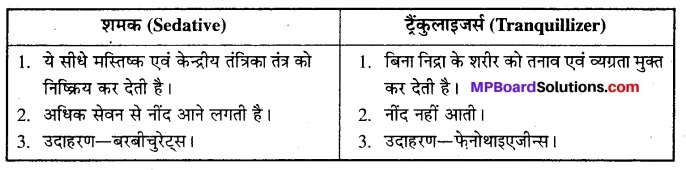
शामक एवं ट्रैकुलाइजर्स में क्या अन्तर है ?
उत्तर
शामक एवं ट्रैकुलाइजर्स में अन्तर.
MP Board Class 12th Biology Solutions Chapter 8 मानव स्वास्थ्य तथा रोग 5

प्रश्न 13.
L.S.D. के स्रोत का नाम लिखिए। इसके कुप्रभावों का भी उल्लेख कीजिए।
उत्तर
लाइसर्जिक एसिड डाइएथिलेमाइड (L.S.D.) हल्का नशीला पदार्थ जो मस्तिष्क पर अस्थायी असर डालता है। इसे क्लेविसेप्स परप्यूरिया नामक कवक के वर्धा भाग से प्राप्त किया जाता है। ये कवक राई के पौधे में एर्गाट (Ergot) नामक बीमारी पैदा करता है। इससे राई के बाल के दानों में इस कवक के तन्तु गुच्छे के रूप में विकसित होते हैं इसे एर्गाट कहते हैं। एर्गाट को एकत्रित कर इसके अर्क से L.S.D. प्राप्त करते हैं।
प्रभाव-मनुष्य के मस्तिष्क पर प्रभाव डालता है जिससे उसके व्यवहार तथा रहन-सहन के तरीकों में काफी परिवर्तन आ जाता है। रक्त चाप बढ़ जाता है। गर्भवती महिला ज्यादा प्रयोग करें तो गर्भपात भी हो सकता है।

प्रश्न 14.
मानव शरीर एवं समाज पर ऐल्कोहॉल के प्रभावों का वर्णन कीजिए।
उत्तर
मानव शरीर व समाज पर ऐल्कोहॉल के प्रभाव-

  • मस्तिष्क नियंत्रण की शक्ति समाप्त हो जाती है।
  • गलत-सही सोचने की क्षमता खत्म हो जाती है। मस्तिष्क की अक्रियता में सारे संबंध भूल जाता है।
  • ज्यादा सेवन से आमाशय, हृदय, यकृत, वृक्क एवं अन्य अंगों की पेशियाँ कमजोर हो जाती हैं।
  • रोग प्रतिरोधक शक्ति समाप्त हो जाती है ।
  • ऐल्कोहॉल के आदी व्यक्ति की पुतलियाँ फैल जाती हैं ।
  • कुछ दिनों बाद प्रायः व्यक्ति अपराधिक प्रवत्ति का हो जाता है।

प्रश्न 15.
व्यसन के प्रत्याहारी लक्षणों का संक्षिप्त में वर्णन कीजिए।
उत्तर
व्यसन के प्रत्याहारी लक्षण इस बात का संकेत देते हैं कि व्यक्ति औषधि/एल्कोहॉल व्यसन के अंतिम दौर में है तथा अब उसकी शरीर और अधिक औषधि सेवन/ऐल्कोहॉल के उपयोग के लायक नहीं रह गया है। ये लक्षण हैं

  • शरीर में कंपकपी होनी (Tremois)
  • मिचली आना (Nausea)
  • उल्टी होना (Vomiting)
  • कमजोरी लगना (Weakness)
  • अनिद्रा (Insomnia)
  • उत्कंठा (Anxiety)

प्रश्न 16.
साइकोट्रापिक औषधि किसे कहते हैं ?
उत्तर
साइकोटापिक औषधियाँ-ऐसी औषधियाँ मुख्यत: मनुष्य की चिन्तन शक्ति एवं मानसिक प्रक्रिया को प्रभावित करती हैं। इनके सतत् उपयोग से व्यक्ति के व्यवहार, होशो-हवाश एवं बोधगम्यता में परिवर्तन हो जाता है। अतः इन्हें मनोदशा परिवर्तक औषधि भी कहा जाता है। इन औषधियों के लगातार सेवन से व्यक्ति उनका आदी हो जाता है, वह इन औषधियों पर पूर्ण रूप से निर्भर हो जाता है तथा इनके उपयोग के बिना नहीं रह पाता है।

प्रश्न 17.
शामक औषधियाँ क्या हैं ये कितने प्रकार की होती हैं ? इनके प्रभाव लिखिए।
उत्तर
शामक औषधियाँ- इसके अंतर्गत ऐसी औषधियों को सम्मिलित किया गया है जो सीधे मस्तिष्क अर्थात् केन्द्रीय तंत्रिका तंत्र को निष्क्रिय कर देती हैं। ये शरीर को निश्चिन्त, सुस्त तथा स्वतंत्र कर देती है। इनकी अधिक मात्रा में सेवन से नींद आने लगती है। निद्रा उत्पन्न करने वाली इन औषधियों को हिप्नोटिक्स भी कहा जाता है। उदाहरण-बरबीचुरेट्स एवं बेन्जोडाइएजोपिन्स।

1. बरबीचुरेट्स- यह संश्लेषित औषधि होती है जिसे बरबीचुरिक अम्ल से तैयार किया जाता है। इनके प्रयोग से व्यक्ति हतोत्साहित हो जाता है तथा उसे नींद आ जाती है। इसी कारण इन्हें निद्राकारी पिल्स भी कहते हैं। ये व्यक्ति की क्रियात्मक सक्रियता तथा चिन्ता या उत्कंठा को कम करती है। यह निद्रा लाती है। इनके लगातार उपयोग से व्यक्ति इनका आदी हो जाता है। व्यक्ति को इनकी आदत से छुटकारा दिलाना कठिन हो जाता है। लम्बी अवधि तक इसके प्रयोग से व्यक्ति की याददाश्त कम होने लगती है। हकलाकर बोलने लगता है। उदाहरण-हेक्साबारबिटॉल, मीथोहेक्सीटॉल।

2. बेन्जोडाइएजोपिन्स-ये प्रति उत्कंठात्मक या एन्टी-एन्जाइटी औषधियाँ होती हैं। इनके उपयोग से नींद आती है। उदाहरण–वेलियम, डाइएजोपॉम आदि।

प्रश्न 18.
इन्टरफेरॉन क्या है ?
उत्तर
इन्टरफेरॉन जन्तु की जीवित कोशाओं द्वारा उत्पन्न वे शक्तिशाली विषाणु प्रतिरोधी पदार्थ हैं जो वाइरल रोगों के कारण उत्पन्न होते हैं। ये विषाणु के प्रथम संक्रमण के बाद उत्पन्न होते हैं तथा विषाणु के द्वितीय आक्रमण से जीव की रक्षा करते हैं। ये विषाणु रोगों की रोकथाम ठीक उसी तरह करते हैं जिस प्रकार प्रतिजैविक जीवाणु रोगों की रोकथाम करते हैं लेकिन जन्तु इन्टरफेरॉन मानवों पर प्रभावी नहीं है। जैव तकनीकी को सहायता से इन्हें मानव शरीर से बाहर भी व्यवसायिक स्तर पर प्राप्त किया जा सकता है।

मानव स्वास्थ्य तथा रोग दीर्घ उत्तरीय प्रश्न

प्रश्न 1.
कैंसर क्या है ? कैंसर के प्रकार लिखिए तथा कैंसर रोग के प्रमुख कारण लिखिए।
अथवा
कैंसर रोग होने के कारण प्रस्तुत करते हुए इस रोग के लक्षण लिखिए।
उत्तर
जब कोशिका विभाजन एवं कोशिका वृद्धि असामान्य होती है, तो इसके कारण ट्यूमर का निर्माण होता है, जिसे कैंसर कहते हैं। अत: कैंसर एक प्रकार की असंगठित ऊतक वृद्धि की बीमारी है, जो कोशिकाओं में अनियन्त्रित विभाजन तथा विकास के कारण होती है। जिन कोशिकाओं की अनियन्त्रित वृद्धि के कारण कैंसर होता है, उन्हें नियोप्लास्टिक (Neoplastic) कोशिकाएँ कहते हैं। कैंसर के प्रकार (Types of Cancer)-कैंसर को निम्नलिखित भागों में विभाजित किया गया है1. सार्कोमास (Sarcomas).-संयोजी ऊतक का कैंसर है। 2% व्यक्तियों में यह रोग होता है।

2. कासनोमास (Carcinomas)-यह कैंसर एपिथीलियम कोशिकाओं में होता है। स्तन ग्रन्थि, फेफड़ा, आमाशय एवं अग्नाशय कैंसर। 85% कैंसर इसी प्रकार का होता है।

3. लिम्फोमास (Cancer of Lymphatic Tissue)-यह लसीका ऊतकों में पाया जाने वाला कैंसर है। इस प्रकार के कैंसर में लसीका गाँठे (Lymph nodes) तथा प्लीहा (Spleen) अधिक मात्रा में (Lymphocytes) बनाती है।

4. ल्यूकेमियास (Leukemias)–यह रुधिर कोशिकाओं में पाया जाता है। इसे रुधिर कैंसर भी कहते हैं। उपर्युक्त प्रकारों के अलावा भी कुछ विशेष प्रकार के कैंसर पाये जाते हैं, जो निम्नलिखित हैं

(a) मेलेनोमास (Melanomas)–वर्णक कोशिकाओं का कैंसर।
(b) ग्लियोमास (Gliomas)-तंत्रिका कोशिका का कैंसर।
(c) टीरेटोमास (Teratomas)-यह कोशिका विभाजन एवं भ्रूणीय विकास से संबंधित है। कैंसर के कारण-कैंसर उत्पन्न करने वाले भौतिक व रासायनिक कारकों को कार्सिनोजेन कहते हैं। कैंसर के प्रमुख कारक या कारण निम्नानुसार हैं

  • धूम्रपान के कारण मुख व फेफड़ों का कैंसर होता है। इसी प्रकार सुपारी तथा कुछ दूसरे रसायन भी कैंसर पैदा करते हैं।
  • ज्यादा उम्र में हॉर्मोनल सन्तुलन बिगड़ने के कारण भी कैंसर होता है।
  • कुछ विषाणुओं के संक्रमण के कारण भी कैंसर होता है।
  • उत्परिवर्तन के कारण भी कैंसर पैदा होता है।
  • सूर्य की अल्ट्रावायलेट किरणें, प्रदूषक तथा रेडियोऐक्टिव किरणें भी कैंसर पैदा करती हैं।

कैंसर के लक्षण-कैंसर के प्रमुख लक्षण निम्नानुसार होते हैं

  • किसी घाव का 7 भरना तथा असाधारण और बार-बार रक्तस्राव का होना या अन्य स्राव का निकलना। विशेषकर स्त्रियों में मासिक धर्म बन्द हो जाने के बाद प्रायः ऐसा होना
  • बिना दर्द के असाधारण गाँठ या शरीर के किसी भी भाग का बढ़ जाना विशेषकर स्त्रियों के स्तन में गाँठ पड़ जाना या असाधारण वृद्धि होना।
  • गले की खराबी या गले का रोग जो ठीक होने तथा भरने का नाम न ले।
  • ‘पाखाने तथा मूत्र विसर्जन की आदतों में परिवर्तन होना।
  • बार-बार अपच होना तथा खाने की चीजों को निगलने में परेशानी होना
  • मस्सों एवं तिल (Wart and mole) के रंग तथा आकार में अचानक परिवर्तन का होना ।
  • किसी भी अल्सर का इलाज के बाद भी ठीक न होना।

MP Board Solutions

प्रश्न 2.
प्रतिरक्षात्मक तंत्र क्या है ? मनुष्य के प्रतिरक्षात्मक तंत्र के विभिन्न घटकों एवं उनकी भूमिकाओं का वर्णन कीजिए।
उत्तर
प्रतिरक्षात्मक तंत्र–एक विशेष श्वेत रुधिर कोशिकाएँ या ल्यूकोसाइट्स जिन्हें लिम्फोसाइट्स कहते हैं, शरीर प्रतिरक्षात्मक तन्त्र की मुख्य कोशिकाएँ होती हैं। प्रतिरक्षात्मक तन्त्र की लिम्फोसाइट्स दो प्रकार की होती हैं, जिन्हें B-कोशिका और T-कोशिका कहते हैं। ये दोनों कोशिकाएँ भ्रूणीय अवस्था में यकृत कोशिकाओं और वयस्क अवस्था में अस्थिमज्जा की कोशिकाओं द्वारा बनती हैं। इनमें से T-कोशिकाएँ कोशिकीय प्रतिरक्षा और B-कोशिकाएँ प्रतिरक्षियों के निर्माण के लिए जिम्मेदार होती हैं। दोनों ही कोशिकाएँ ऐण्टिजनों से प्रेरित होकर ही अपने-अपने कार्यों को करती हैं।

(1) B-calfahratti a fucsaiti ho ufar ufafchal (Mechanism or Action of B-cells to Antigens)-जब कोई ऐण्टिजन शरीर द्रव (रुधिर एवं लसीका) में प्रवेश करता है तब B-कोशिकाएँ इससे प्रेरित होकर प्रतिरक्षियों का निर्माण करती हैं। मानव शरीर में हजारों प्रकार के ऐण्टिजन के लिए अलग-अलग हजारों प्रकार की विशिष्ट B-कोशिकाएँ पाई जाती हैं। जब कोई B-कोशिका ऐण्टिजन के संपर्क में आती है, तो यह प्रेरित होकर तेजी से गुणन करके बहुत-सी एक क्लोन (Clone) प्लाज्मा कोशिकाओं का निर्माण करती हैं, इस एक क्लोन की अधिकांश कोशिकाएँ लगभग एक सेकण्ड में 2000 प्रतिरक्षी अणुओं का निर्माण करती हैं। B-कोशिकाओं में प्रतिरक्षियों के उत्पादन की यह क्षमता इन कोशिकाओं के विकास एवं परिपक्वन के दौरान उपार्जित लक्षणों के एकत्रित होने के कारण भ्रूणीय अवस्था में ही बनती है।

(2) T-calforcatuit on tfucwatato ufà ufaisher (Mechanism or Action of T-cells to Antigens)-T-कोशिकाएँ भी B-कोशिकाओं के ही समान एक क्लोन T-कोशिकाओं के उत्पादन के द्वारा ऐण्टिजनों के प्रति प्रतिक्रिया व्यक्त करती हैं। प्रत्येक T-कोशिका एक विशिष्ट ऐण्टिजन से संबंधित होती है। इसलिए हमारे शरीर में विशिष्ट प्रकार के ऐण्टिजनों के लिए अलग-अलग T-कोशिकाएँ 4-5 वर्ष या इससे अधिक समय तक जीवित रहती हैं। T-कोशिकाओं द्वारा उत्पादित एक क्लोन कोशिकाएँ, एण्टिजन की प्रतिक्रिया की दृष्टि से जनक T-कोशिका के समान होती हैं, लेकिन ये विभिन्न कार्यों को करती हैं। ये निम्न प्रकार की हो सकती हैं

(i) मारक T-कोशिकाएँ (Killer T-cells = KT-cells)-ये ऐण्टिजन को सीधे आक्रमण के द्वारा नष्ट करती हैं। इसके लिए ये कुछ ऐसे रसायनों का स्राव करती हैं, जो भक्षकाणुओं (Phagocytes) को आकर्षित करके इन्हें ऐण्टिजनों के तेजी से भक्षण के लिए प्रेरित करती हैं। ये दूसरी T-कोशिकाओं को आकर्षित करने के लिए भी कुछ रसायनों का स्राव करती हैं। T-कोशिकाएँ ऐण्टिजनों के प्रति इन क्रियाओं को व्यक्त करने के लिए शरीर के उन स्थानों पर जाती हैं, जहाँ पर ऐण्टिजनों का आक्रमण होता है।

(ii) सहायकT-कोशिकाएँ (Helper T-cells = HT-cells)-ये वेT-कोशिकाएँ हैं, जो B-कोशिकाओं को प्रतिरक्षियों के निर्माण के लिए प्रेरित करती हैं।

(iii) दाबक T-कोशिकाएँ (Suppressor T-cells = ST cells)-ये वे T-कोशिकाएँ हैं, जो प्रतिरक्षात्मक तन्त्र द्वारा अपने ही शरीर की कोशिकाओं पर आक्रमण करने से रोकती हैं। इनमें से कुछ कोशिकाएँ एक निश्चित ऐण्टिजन के लिए याददाश्त कोशिकाओं का भी काम करती हैं।

प्रश्न 3.
तंबाकू धूम्रपान के हानिकारक प्रभावों का वर्णन कीजिए।
उत्तर-
तंबाकू धूम्रपान के हानिकारक प्रभाव

(1) यह केन्द्रीय तंत्रिका तंत्र तथा तंत्रिकीय आवेग के संचरण के मार्ग को प्रभावित करता है। कम मात्रा में इसका उपयोग मस्तिष्क के विभिन्न केन्द्रों को उत्तेजित करता है, परन्तु इसका लम्बा उपयोग तन्त्रिका-तन्त्र की क्रियाशीलता को कम करता है।

(2) यह एड्रीनेलीन के स्राव को प्रेरित करके रक्त दाब तथा हृदय गति को बढ़ाता है। रक्त दाब को बढ़ाकर यह हृदय की बीमारियों को उत्तेजित करता है।

(3) गर्भवती महिलाओं में धूम्रपान, भ्रूण के विकास को रोकता है।

(4) तम्बाकू के धुएँ में कार्बन मोनोऑक्साइड (CO), एरोमैटिक हाइड्रोकार्बन तथा सार भी पाया जाता है। CO रुधिर की O2, संवहन क्षमता को कम करती है। हाइड्रोकार्बन कैन्सर को प्रेरित करते हैं । इस कारण तम्बाकू चबाने वालों में मुँह तथा धूम्रपान करने वालों में गले एवं फेफड़ों का कैन्सर अधिक होता है।

(5) तम्बाकू का किसी भी रूप में प्रयोग लार तथा आमाशयी रसों के अधिक स्रावण को प्रेरित करता है, जिससे आमाशय में अम्लीयता बढ़ जाती है, फलत: आहार नाल में अल्सर का खतरा बढ़ जाता है और श्लेष्मा की अवशोषणशीलता कम हो जाती है। व्यक्ति अल्पपोषण, भूख एवं कब्ज का शिकार हो जाता है।

(6) धूम्रपान वृक्कों की क्रियाशीलता पर प्रतिकूल प्रभाव डालता है। यह पेशियों एवं कंकाली ऊतकों को शिथिल करके व्यक्ति को दुर्बल बनाता है। इसके सेवन से व्यक्ति की उम्र घटती जाती है। इसके प्रयोग से ब्रोंकाइटिस तथा एम्फीसेमा (Emphysema) नामक रोग भी होता है।

(7) तम्बाकू के लगातार सेवन से स्वादेन्द्रीय कम संवेदनशील हो जाती है तथा मुँह व गला हमेशा सूखा रहता है। इससे घ्राण शक्ति भी कमजोर हो जाते हैं, क्योंकि श्लेष्मा के ऊपर लार की एक स्तर जमा हो जाती है।

प्रश्न 4.
पुनर्वासन पर टिप्पणी लिखिए।
उत्तर
औषधि एवं ऐल्कोहॉल व्यसन से ग्रसित व्यक्ति का अपनी पूर्व अवस्था, अर्थात् स्वस्थ अवस्था या सामान्य स्वास्थ्य वाली अवस्था में वापस आ जाना ही पुनर्वासन कहलाता है। पुनर्वासन हेतु व्यक्ति की नशाखोरी की आदत को धीरे-धीरे समाप्त करने का प्रयास किया जाता है। व्यक्ति में औषधि व्यसन के प्रत्याहारी लक्षणों (Withdrawal symptoms) के उपचार हेतु प्रारंभ में उन्हें निस्तब्धकारी औषधियाँ (Tranquillizers) देकर ठीक किया जाता है, परन्तु यह औषधि निर्भरता का अल्पावधि उपचार (Short term treatment) ही होता है।

व्यसन से ग्रसित व्यक्ति के दीर्घकालीन उपचार (Long term treatment) हेतु औषधि उपचार के साथसाथ व्यवहारात्मक शिक्षा भी देना आवश्यक होता है, ताकि व्यक्ति इन औषधियों के कुप्रभावों को समझ सके तथा स्वयं ही औषधि निर्भरता छोड़ने का प्रयास करने लगे। इस कार्य हेतु सम्बन्धियों (Relatives), दोस्तों एवं चिकित्सकों के द्वारा उनका मनोवैज्ञानिक (Psychological) एवं सामाजिक उपचार (Therapy) आवश्यक होता है। लोगों को ऐसे व्यक्तियों के साथ सहानुभूति रखते हुए उन्हें इनके कुप्रभावों की जानकारी देनी चाहिए तथा उनकी औषधि निर्भरता को धीरे-धीरे समाप्त करना चाहिए।

औषधि व्यसन से ग्रसित व्यक्ति के पुनर्वासन के दौरान व्यक्ति को पर्याप्त मात्रा में भोजन, विटामिन्स, इलेक्ट्रोलाइट्स (Electrolytes) आदि पदार्थ भी देने चाहिए। चूँकि सामान्यतः यह देखा गया है कि व्यसन से ग्रसित कोई व्यक्ति अचानक औषधि सेवन बन्द कर देता है तो उसके मस्तिष्क में CAMP (Cyclic adenosine monophosphate) का स्तर बढ़ जाता है जो कि एक प्रत्याहारी लक्षण (Withdrawal symptom) है। ऐसे रोगी को विटामिन-C देने से CAMP का स्तर नियंत्रित रहता है तथा व्यक्ति में प्रत्याहारी लक्षण उत्पन्न नहीं हो पाते हैं।

MP Board Class 12th Biology Solutions

MP Board Class 12th Biology Solutions Chapter 13 Organisms And Population

MP Board Class 12th Biology Solutions Chapter 13 Organisms And Population

Organisms And Population NCERT Text Book Questions and Answers

Question 1.
How is diapauses different from hibernation?
Answer:
Diapauses is a stage of suspended development to cope with unfavorable conditions. Many species of zooplankton and insects exhibit diapauses to tide over adverse climatic conditions during their development. On the other hands hibernation or winter sleep is a resting stage where in animals escape winters (cold) by hiding themselves in their shelters. They escape the winter season by entering a state of inactivity by slowing their metabolism. The phenomenon of hibernation is exhibited by bats, squirrels, and other rodents.

Question 2.
If a marine fish is placed in a fresh water aquarium, will the fish be able to survive? Why or why not?
Answer:
If a marine fish is placed in a freshwater aquarium, then its chances of survival will diminish. This is because their bodies are adapted to high salt concentrations of the marine ‘ environment. In freshwater conditions, they are unable to regulate the water entering then- body (through osmosis). Water enters their body due to the hypotonic environment outside. This results in the swelling up of the body, eventually leading to the death of the marine fish.

Question 3.
Define phenotypic adaptation. Give one example.
Answer:
Phenotypic adaptation involves changes in the body of an organism in response to genetic mutation or certain environmental changes.These responsive adjustments occur in an organism in order to cope with environmental conditions present in their natural habitats For example, desert plants have thick cuticles and sunken stomata on the surface of their leaves to prevent transpiration. Similarly, elephants have long ears that act as thermoregulators.

MP Board Solutions

Question 4.
Most living organisms cannot survive at temperature above 45° C. How are some microbes able to live in habitats with temperatures exceeding 100° C ?
Answer:
Archaebacteria (Thermophiles) are ancient forms of bacteria found in hot water springs and deep sea hydrothermal vents. They are able to survive in high temperatures because their bodies have adapted to such environmental conditions. These organisms contain specialized thermo-resistant enzymes, which carry out metabolic functions that do not get destroyed at such high temperatures unlike other enzymes.
Most living organism can not survive above 45° because :

  • Above 45° C enzymes get denatured
  • Protoplasm precipitates at high temperature.

Question 5.
List the attributes that populations but not individuals possess.
Answer:
A population has the following attributes that an individual does not possess :

  • Birth rates and death rates
  • Sex ratio
  • Population density
  • Age distribution
  • Population growth.

Question 6.
If a population growing exponentially double in size in 3 years, what is the intrinsic rate of increase (r) of the population?
Answer:
A population grew exponentially if sufficient amounts of food resources are available to the individual. Its exponential growth can be calculated by the following integral form of the exponential growth equation:

Nt = N0 en
Where,

Nt = Population density after time t.
N0 = Population density at time zero.
r = Intrinsic rate of natural increase.
e = Base of natural logarithms (d-434).

From the above equation, we can calculate die intrinsic rate of increase (r) of a population. Now, as per the question,
Present population density = x
Then, Population density after two years = 2x
t = 3 years
Substituting these values in the formula, we get:
⇒ 2x=xe3r
⇒  2 = e3r
Applying log on both sides :
⇒ log 2 = 3r log e
\(\frac { log 2 }{ 3 log e }\)=r

\(\frac { 0.301 }{ 3X0.434 }\)=r

\(\frac { 0.301 }{ 1.302 }\)=r

0.2311=r
Hence, the intrinsic rate of increase for the above illustrated population is 0.2311.

MP Board Solutions

Question 7.
Name important defence mechanisms in plants against herbivory.
Answer:
Several plants have evolved various mechanisms both morphological and chemical to protect themselves against herbivory.
(1) Morphological defence mechanisms :

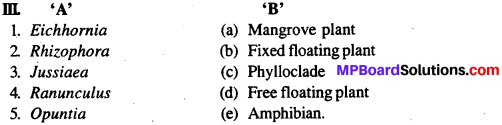
  • Cactus leaves (Opuntia) are modified into sharp spines (thorns) to deter herbivores from feeding on them.
  • Sharp thorns along with leaves are present in Acacia to deter herbivores.
  • In some plants, the margins of their leaves are spiny or have sharp edges that prevent herbivores from feeding on them.

(2) Chemical defence mechanisms :

  • All parts of Calotmpis weeds contain toxic cardiac glycosides, which can prove to be fatal in ingested by herbivores.
  • Chemical substances such as nicotine, caffeine, quinine and opium are produced in plants as a part of self-defense.

Question 8.
An orchid plant is growing on the branch of mango tree. How do you describe this interaction between the orchid and the mango tree ?
Answer:
An orchid growing on the branch of a mango tree is an epiphyte. Epiphytes are plants growing on other plants which however, do not derive nutrition from them. Therefore, the relationship between a mango tree and an orchid is an example of commensalisms, where one species gets benefited while the other remains unaffected. In the above interaction, the orchid is benefited as it gets support while the mango tree remains unaffected.

Question 9.
What is the ecological principle behind die biological control method of managing with pest insects ?
Answer:
The ecological principle behind the biological control method of managing with pest insects is to keep their population in check by using their natural predators and parasites.

Question 10.
Distinguish between the following:
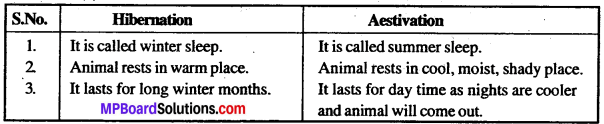
(a) Hibernation and Aestivation
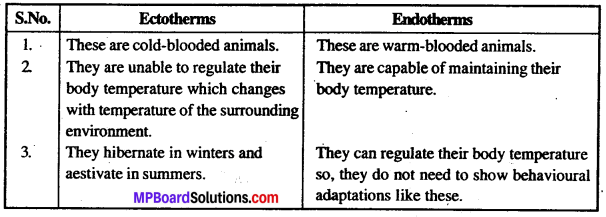
(b) Ectotherms and Endotherms.
Answer:
(a) Differences between Hibernation and Aestivation:
MP Board Class 12th Biology Solutions Chapter 13 Organisms And Population 1

(b) Difference between Ectotherms and Endotherms.
MP Board Class 12th Biology Solutions Chapter 13 Organisms And Population 2

Question 11.
Write a short note on:
(a) Adaptations of deserts plants and animals
(b) Adaptations of plants to water scarcity
(c) Behavioural adaptations id animals
(d) Importance of light to plants
(e) Effect of temperature or water scarcity and the adaptations of animals.
Answer:
(a) Adaptations of desert plants and animals :

1. Adaptations of desert plant : Plants have an extensive root system to tap underground water. They bear thick cuticles and sunken stomata on the surface of their leaves to reduce transpiration. In Opuntia, the leaves are entirely modified into spines and photosynthesis is carried out by green stems. Desert plants have special pathways to synthesize food, called CAM (C4 pathway). It enables the stomata to remain closed during the day to reduce the loss of water through transpiration.

2. Adaptations of desert animals : Animals found in deserts such as desert Kangaroo rats, Lizards, Snakes, etc. are well adapted to their habitat. The Kangaroo rat found in the deserts of Arizona never drinks water in its life. It has the ability to concentrate its urine to conserve water. Desert lizards and snakes bask in the sun during early morning and burrow themselves in the sand during afternoons to escape the heat of the day. These adaptations occur in desert animals to prevent the loss of water.

(b) Adaptations of plants to water scarcity :
Plants found in deserts are well adapted to cope with water scarcity and scorching heat of the desert. Plants have an extensive root system to tap underground water. They bear thick cuticles and sunken stomata on the surface of their leaves to reduce transpiration. In Opuntia, the leaves are modified into spines and the process of photosynthesis is carried out by green stems. Desert plants have special pathways to synthesize food, called CAM (C4 pathway). It enables their stomata to remain closed during the day to reduce water loss by transpiration.

(c) Behavioural adaptations in animals :
Certain organisms are affected by temperature variations. These organisms undergo adoptions such as hibernation, aestivation, migration, etc. to escape environmental stress to suit their natural habitat. These adaptations in the behaviour of an organism are called behavioural adaptations. For example, ectothermal animals and certain endosperms exhibit behavioural adaptations. Ectotherms are cold blooded animals such as fish, amphibians, reptiles, etc. Their temperature varies with their surroundings. For example, the desert lizard basks in the sun during early hours when the temperature is quite low.

However, as the temperature begins to rise, the lizard burrows itself inside the sand to escape the scorching sun. Similar burrowing strategies are exhibited by other desert animals. Certain endotherms (warm blooded animals) such as birds and mammals escape cold and hot weather conditions by hibernating during winters and aestivating during summers. They hide themselves in shelters such as caves, burrows, etc. to protect against temperature variations.

(d) Importance of light to plants :
Sunlight acts as the ultimate source of energy for plants. Plants are autotrophic organisms, which need right for carrying our the process of photosynthesis. Light also plays an important role in generating photoperiodic responses occurring in plants. Plants respond to changes in intensity of light during various seasons to meet their photoperiodic requirements for flowering. Light also plays an important role in aquatic habitats for vertical distribution of plants in the sea.

MP Board Solutions

(e) Effects of temperature or water scarcity and the adaptations of animals :
Temperature is the most important ecological factor. Average temperature on the Earth varies from one place to another. These variations in temperature affect the distribution of animals on the Earth. Animals that can tolerate a wide range of temperature are called eurythermals. Those which can tolerate’a narrow range of temperature are called stenothermal animals. Animals also undergo adaptations to suit their natural habitats.

Animals found in polar regions have thick layers of fat below their skin and thick coats of fur to prevent the loss of heat. Some organisms exhibit various behavioural changes to suit their natural habitat. These adaptations present in the behaviour of an organism to’ escape environmental stresses are called behavioral adaptations. For example, desert lizards are ectotherms. This means that they do not have a temperature regulatory mechanism to escape temperature variations.

These lizards bask in the sun during early hours when the temperature is quite low. As the temperature begins to increase, the lizard burrows itself inside the sand to escape the scorching sun. Similar burrowing strategy is seen in other desert animals.Water scarcity is another factor that forces animals to undergo certain adaptations to suit their natural habitat. Animals found in deserts such as desert kangaroo rats, lizards, snakes, etc. are well adapted to stay in their habitat.

The kangaroo rat found in the deserts of Arizona never drinks water in its life. It has the ability to concentrate its urine to conserve water. Desert lizards and snakes bask in the sun during early morning and burrow in the sand as the ‘ temperature rises to escape the heat of the day. Such adaptations can be seen to prevent the loss of water.

Question 12.
List the various abiotic environmental factors.
Answer:

  • Atmospheric factors: Light, temperature, wind and water.
  • Lithosphere: Rock, soil.
  • Hydrosphere: Pond, river, lake and ocean.
  • Edaphic factors: Soil texture, soil water, soil air, soil microorganism, soil pH, minerals.
  • Topographic factors: Slope, altitude, valley.

MP Board Solutions

Question 13.
Give an example for:
(a) An endothermic animal .
(b) An ectothermic animal
(c) An organism of benthic zone.
Answer:
(a) An endothermic animals : Birds such as crows, sparrows, pigeons, cranes, etc. and mammals such, as bears, cows, rats, rabbits etc. are endothermic animals.

(b) An ectothermic animals : Fishes such as sharks, amphibians frogs, and reptiles, tortoise, snakes, and lizards are ectothermic animals.

(c) An organism of benthic zone : Decomposing bacteria is an example of an organism found in the benthic zone of a water body.

Question 14.
Define population and community.
Answer:
Population : Population is a group of individuals of same species, which can reproduce among themselves and occupy a particular area in a given time.

Community : It is an assemblage of several population in a particular area and time and exhibit interaction and interdependence through trophic relationship.

Question 15.
Define the following terms and give one example for each:
(a) Commensalism
(b) Parasitism
(c) Camouflage
(d) Interspecific competition.
Answer:
(a) Commensalism :
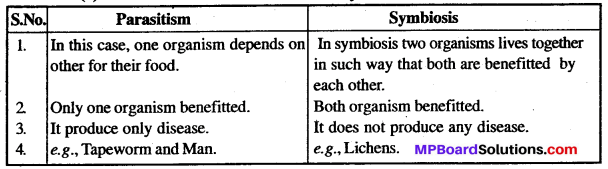
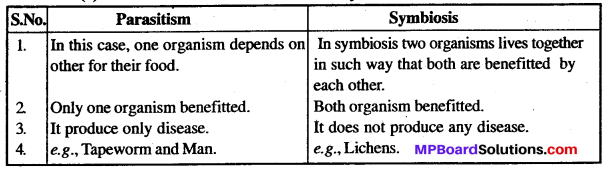
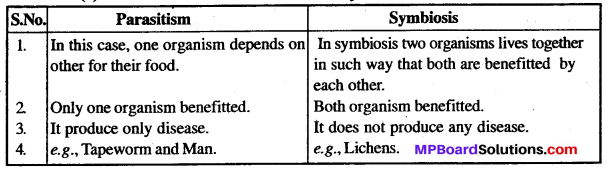
(a) Difference between Parasitism and Symbiosis:
MP Board Class 12th Biology Solutions Chapter 13 Organisms And Population 3
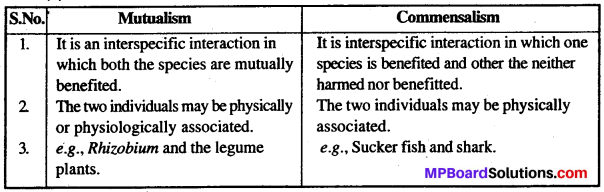
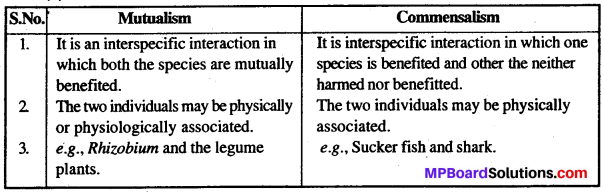
(b) Differences between Mutualism and Commensalism:
MP Board Class 12th Biology Solutions Chapter 13 Organisms And Population 7
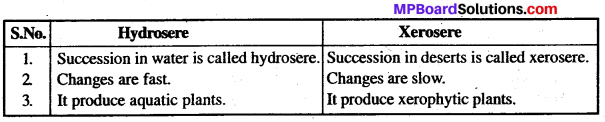
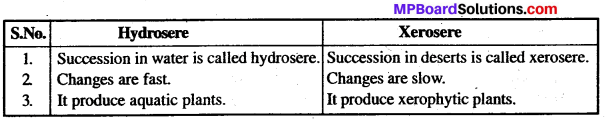
(c) Differences between Hydrosere and Xerosere:
MP Board Class 12th Biology Solutions Chapter 13 Organisms And Population 8

Odum (1971) distinguished interactions into two broad categories:
(A) Positive interactions and
(B) Negative interactions.

(A) Positive Interactions :
In this type, those type of interactions are considered in which both interacting species are mutually involved to help each other. Here, one interacting species helps the other either one way or on reciprocal terms and may be in the form of nutrition or shelter or substratum or transport. Here interaction may be obligatory or facultative. The positive interactions include three types of interactions. They are :

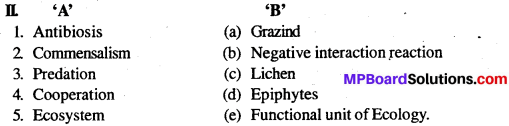
1. Commensalism : This type of interaction occurs in between two organisms of two different species in which one species benefits and the other is neither benefited nor harmed. e.g., Lichens.

2. Protocooperation : The type of interaction where both population are benefited but not obligatory i.e., not essential for the survival of either population is called protocooperation. This is also known as non-obligatory mutualism. The relationship between hermit crab and sea anemone is an example of proto-cooperation. The crab pses the gastropod (mollusc) shell as a portable shield and the sea anemone eats the leftover food of the crab, which is protected from its predators by the stinging cells of the sea anemone.

3. Mutualism or Symbiosis : When two different species grow together and are mutually benefited, the plants are known as symbiotic plants and the phenomenon is called symbiosis or mutualism. It is a sort of obligatory association. This type the organisms are dependent upon each other for survival. In this type of association, two types of species are physiologically related. This type of relationship may exist in between two plants or in between one plant and one animal or in between two animals.

(B) Negative Interactions :
Those interaction of two different species in which both are harmed or one organism is benefited while other is more or less harmed is referred to as negative interaction. In this type of interaction one population eats the other type of population or one organism does not allow other organisms to grow near it by using the food supply of the other or producing toxic substances. The negative interactions be categorised into following types :

  1. Competition,
  2. Parasitism,
  3. Predation and
  4. Antibiosis.

1. Competition : When interaction occurs between two species for the use of same resources and when resources are in short supply is referred to as competition. It is a relationship which involves struggle amongst the organisms for food, shelter, water, sunlight and climate.

2. Parasitism : Parasite is an organism which is dependent upon other living organism for their food and other requirements. Parasitism is an interspecific interrelation in which the individual of one species lives at the cost of the individual of another species, its host which it harms and eventually kills. In this case host is always larger than the parasite. The parasite that is seen on the surface of host plant is called ectoparasite or external parasite and if a parasite is found inside the plant body is said to be an endoparasite or internal parasite.

MP Board Solutions

Examples:

(i) Parasitic bacteria : Parasitic bacteria cause several diseases in plants and animals. For example, the citrus canker disease of lemon is caused by Xanthomonas citri, black rots of vegetables of Cruciferae group is caused by Xanthomonas campestris. The common diseases caused by bacteria in human beings are diarrhoea, pneumonia, tetanus, leprosy, plague etc.

(ii) Predation : To obtain food by hunting is predation. A predator is an animal or plant that kills and feeds on another organism, its prey. It represents a generalised carnivorous habit. Commonly predators are larger than their prey but this is not always true but predator is in any case always occur as a naturally better equipped hunter than its prey. Most of the predatory organisms are animals but there are some plants (carnivores) also especially fungi which feed upon other animals.

(b) Parasitism :
(a) Difference between Parasitism and Symbiosis:
MP Board Class 12th Biology Solutions Chapter 13 Organisms And Population 6
(b) Differences between Mutualism and Commensalism:
MP Board Class 12th Biology Solutions Chapter 13 Organisms And Population 15
(c) Differences between Hydrosere and Xerosere:
MP Board Class 12th Biology Solutions Chapter 13 Organisms And Population 16

(a) Parasitism : Parasite is an organism which is dependent upon other living organism for their food and other requirements. Parasitism is an interspecific interrelation in which the individual of one species lives at the cost of the individual of another species, its host which it harms and eventually kills. In this case host is always larger than the parasite. The parasite that is seen on the surface of host plant is called ectoparasite or external parasite and if a parasite is found inside the plant body is said to be an endoparasite or internal parasite.

Examples:

(i) Parasitic bacteria : Parasitic bacteria cause several diseases in plants and animals. For example, the citrus canker disease of lemon is caused by Xanthomonas citri, black rots of vegetables of Crticiferae group is caused by Xanthomonas campestris. The common diseases caused by bacteria in human beings are diarrhoea, pneumonia, tetanus, leprosy, plague etc.

(b) Species dominance : Presence of any biotic community or presence of more population of any species biosphere shown its dominance and it is called species dominance which has capacity to reduce other species in population. The effect of dominant speeds is more upon environment or other species.

(c) Biotic potential  : Biotic potential is the ability of a population of living species to increase under ideal environmental conditions sufficient food supply, no predators and a lack of disease. An organisms rate of reproduction and the size of each litter are the primary determining factors for biotic potential.

Odum (1971) distinguished interactions into two broad categories:
(A) Positive interactions and
(B) Negative interactions.

(A) Positive Interactions:
In this type, those type of interactions are considered in which both interacting species are mutually involved to help each other. Here, one interacting species helps the other either one way or on reciprocal terms and may be in the form of nutrition or shelter or substratum or transport. Here interaction may be obligatory or facultative. The positive interactions include three types of interactions. They are :
1. Commensalism : This type of interaction occurs in between two organisms of two different species in which one species benefits and the other is neither benefited nor harmed. e.g., Lichens.

2. Protocooperation : The type of interaction where both population are benefited but not obligatory i.e., not essential for the survival of either population is called protocooperation. This is also known as non-obligatory mutualism. The relationship between hermit crab and sea anemone is an example of proto-cooperation. The crab pses the gastropod (mollusc) shell as a portable shield and the sea anemone eats the leftover food of the crab, which is protected from its predators by the stinging cells of the sea anemone.

3. Mutualism or Symbiosis : When two different species grow together and are mutually benefited, the plants are known as symbiotic plants and the phenomenon is called symbiosis or mutualism. It is a sort of obligatory association. This type the organisms are dependent upon each other for survival. In this type of association, two types of species are physiologically related. This type of relationship may exist in between two plants or in between one plant and one animal or in between two animals.

(B) Negative Interactions :
Those interaction of two different species in which both are harmed or one organism is benefited while other is more or less harmed is referred to as negative interaction. In this type of interaction one population eats the other type of population or one organism does not allow other organisms to grow near it by using the food supply of the other or producing toxic substances. The negative interactions be categorised into following types :

  1. Competition,
  2. Parasitism,
  3. Predation and
  4. Antibiosis.

1. Competition : When interaction occurs between two species for the use of same resources and when resources are in short supply is referred to as competition. It is a relationship which involves struggle amongst the organisms for food, shelter, water, sunlight and climate.

2. Parasitism : Parasite is an organism which is dependent upon other living organism for their food and other requirements. Parasitism is an interspecific interrelation in which the individual of one species lives at the cost of the individual of another species, its host which it harms and eventually kills. In this case host is always larger than the parasite. The parasite that is seen on the surface of host plant is called ectoparasite or external parasite and if a parasite is found inside the plant body is said to be an endoparasite or internal parasite.

Examples:

(i) Parasitic bacteria : Parasitic bacteria cause several diseases in plants and animals. For example, the citrus canker disease of lemon is caused by Xanthomonas citri, black rots of vegetables of Cruciferae group is caused by Xanthomonas campestris. The common diseases caused by bacteria in human beings are diarrhoea, pneumonia, tetanus, leprosy, plague etc.

(ii) Predation : To obtain food by hunting is predation. A predator is an animal or plant that kills and feeds on another organism, its prey. It represents a generalised carnivorous habit. Commonly predators are larger than their prey but this is not always true but predator is in any case always occur as a naturally better equipped hunter than its prey. Most of the predatory organisms are animals but there are some plants (carnivores) also especially fungi which feed upon other animals.

(c) Camouflage : It is a strategy adapted by prey species to escape their predators. Organisms are cryptically coloured so, that they can easily mingle in their surroundings and escape their predators. Many species of frogs and insects camouflage in their surroundings and escape their predators.

(d) Mutualism :

Odum (1971) distinguished interactions into two broad categories:
(A) Positive interactions and
(B) Negative interactions.

(A) Positive Interactions :
In this type, those type of interactions are considered in which both interacting species are mutually involved to help each other. Here, one interacting species helps the other either one way or on reciprocal terms and may be in the form of nutrition or shelter or substratum or transport. Here interaction may be obligatory or facultative. The positive interactions include three types of interactions. They are :
1. Commensalism : This type of interaction occurs in between two organisms of two different species in which one species benefits and the other is neither benefited nor harmed. e.g., Lichens.

2. Protocooperation : The type of interaction where both population are benefited but not obligatory i.e., not essential for the survival of either population is called protocooperation. This is also known as non-obligatory mutualism. The relationship between hermit crab and sea anemone is an example of proto-cooperation. The crab pses the gastropod (mollusc) shell as a portable shield and the sea anemone eats the leftover food of the crab, which is protected from its predators by the stinging cells of the sea anemone.

3. Mutualism or Symbiosis : When two different species grow together and are mutually benefited, the plants are known as symbiotic plants and the phenomenon is called symbiosis or mutualism. It is a sort of obligatory association. This type the organisms are dependent upon each other for survival. In this type of association, two types of species are physiologically related. This type of relationship may exist in between two plants or in between one plant and one animal or in between two animals.

(B) Negative Interactions :
Those interaction of two different species in which both are harmed or one organism is benefited while other is more or less harmed is referred to as negative interaction. In this type of interaction one population eats the other type of population or one organism does not allow other organisms to grow near it by using the food supply of the other or producing toxic substances. The negative interactions be categorised into following types :

  1. Competition,
  2. Parasitism,
  3. Predation and
  4. Antibiosis.

1. Competition : When interaction occurs between two species for the use of same resources and when resources are in short supply is referred to as competition. It is a relationship which involves struggle amongst the organisms for food, shelter, water, sunlight and climate.

2. Parasitism : Parasite is an organism which is dependent upon other living organism for their food and other requirements. Parasitism is an interspecific interrelation in which the individual of one species lives at the cost of the individual of another species, its host which it harms and eventually kills. In this case host is always larger than the parasite. The parasite that is seen on the surface of host plant is called ectoparasite or external parasite and if a parasite is found inside the plant body is said to be an endoparasite or internal parasite.

Examples:

(i) Parasitic bacteria : Parasitic bacteria cause several diseases in plants and animals. For example, the citrus canker disease of lemon is caused by Xanthomonas citri, black rots of vegetables of Cruciferae group is caused by Xanthomonas campestris. The common diseases caused by bacteria in human beings are diarrhoea, pneumonia, tetanus, leprosy, plague etc.

(ii) Predation : To obtain food by hunting is predation. A predator is an animal or plant that kills and feeds on another organism, its prey. It represents a generalised carnivorous habit. Commonly predators are larger than their prey but this is not always true but predator is in any case always occur as a naturally better equipped hunter than its prey. Most of the predatory organisms are animals but there are some plants (carnivores) also especially fungi which feed upon other animals.

(e) Interspecific competition : It is an interaction between individuals of different species where both species get negatively affected. For example, the competition between flamingoes and resident fishes in South American lakes for common food resources i.e., zooplankton.

Question 16.
With the help of suitable diagram describe the logistic population growth curve.
Answer:
Logistic Growth:

  1. The resources become limited at certain point of time so, no population can grow exponentially.
  2. This growth model is more realistic.
  3. Every ecosystem or environment or habitat has limited resources to support a particular maximum number of individuals called is carrying capacity (K).
  4. When N is plotted in relation to time t, the logistic growth show sigmoid curve and is also called Verhulst-Pearl logistic growth. It is given by the following equation:

MP Board Class 12th Biology Solutions Chapter 13 Organisms And Population 9
Where, N = Population density at time t
R = Intrinsic rate of natural increase
K = Carrying capacity.
MP Board Class 12th Biology Solutions Chapter 13 Organisms And Population 10
a = When resources are not limiting the growth, plot is exponential
b = When resources are limiting die growth. Plot is logistic, k is carrying capacity.

Question 17.
Select the statement which explains best parasitism:
(a) One organism is benefited
(b) Both the organism are benefited
(c) One organism is benefited, other is not affected
(d) One organism is benefited, other is affected.
Answer:
(d) One organism is benefited, other is affected.

Question 18.
List any three important characteristics of a population and explain.
Answer:
The three important characteristic of a population are:

1. Population density : The number of individuals of a species per unit area, or a volume is called population density.
PD=\(\frac { N }{ s }\)

Where, PD = Population density
N = Number of individuals in a region
S = Number of unit area in a region.

2. Birth rate : It is expressed as the number of births per 1000 individuals of a population per year.

3. Death rate : It is expressed as the number of deaths per 1000 individuals of a population per year.

MP Board Solutions

Organisms And Population Other Important Questions and Answers

Organisms And Population Objective Type Questions

1. Choose the Correct Answer:

Question 1.
Unit, easily subjected for identification at level of organisation is:
(a) Cell
(b) Tissue
(c) Organ
(d) Individual organism.
Answer:
(d) Individual organism.

Question 2.
Useful chemical compound in interspecific communication is:
(a) Allochemix
(b) Caromones
(c) Auxin
(d) Pheromones.
Answer:
(d) Pheromones.

Question 3.
Study of one species and its inter-relation with environment is called:
(a) Community ecology
(b) Autecology
(c) Ethology
(d) Forest ecology.
Answer:
(b) Autecology

Question 4.
The factor which does not effect the magnitude of population is:
(a) Migration
(b) Emigration
(c) Imigration
(d) Natality.
Answer:
(a) Migration

Question 5.
Availability of two various forms of an organism of a species is called:
(a) Dimorphism
(b) Trimorphism
(c) Polymorphism
(d) None of these.
Answer:
(a) Dimorphism

Question 6.
Birth of 1000 persons/annually in unit time is called:
(a) Death rate
(b) Biotic rate
(c) Birth rate
(d) Growth rate.
Answer:
(c) Birth rate

Question 7.
The permanent stage of succession is known as:
(a) Ecosere
(b) Climax stage
(c) Successive stage
(d) Ecotone.
Answer:
(b) Climax stage

Question 8.
The plant groups present in between two communities are called:
(a)Ecad
(b) Ecotype
(c) Ecotone
(d) None of these.
Answer:
(c) Ecotone

Question 9.
Xerosere starts from:
(a) Water
(b) Rock
(c) Marshy place
(d) All of the above.
Answer:
(b)Rock

Question 10.
The successive development of plant communities is called:
(a) Aggregation
(b) Succession
(c) Reaction
(d) None of these.
Answer:
(b) Succession

Question 11.
Which one is the example of mangrove:
(a) Rhizophora
(b) Eichhomia
(c) Avicennia
(d) Both (a) and (b).
Answer:
(d) Both (a) and (b).

Question 12.
Pneumatophores are the characteristic feature of:
(a) Mangrove plants
(b) Mesophytes
(c) Hydrophytes
(d) Xerophytes.
Answer:
(a) Mangrove plants

MP Board Solutions

Question 13.
Vascular bundles are feebly developed in:
(a) Hydrophytes
(b) Xerophytes
(c) Psammophytes
(d) Halophytes.
Answer:
(a) Hydrophytes

Question 14.
Phyllode is a modification of:
(a) Root
(b) Stem
(c) Leaf
(d) None of these
Answer:
(c) Leaf

Question 15.
Phyllodade is a modification of:
(a) Root
(b) Stem
(c) Leaf
(d) Petiole.
Answer:
(b) Stem

Question 16.
Rootless plant is:
(a) Wolffia
(b) Eichomia
(c) Lenina
(d) Jussiaea.
Answer:
(a) Wolffia

Question 17.
Free floating plant is:
(a) Pistia
(b) Eichomia
(c) Azolla
(d) All of the above
Answer:
(d) All of the above

Question 18.
Vivipary is found in:
(a) Hydrophytes
(b) Xerophytes
(c) Epiphytes
(d) Mangrove plants.
Answer:
(d) Mangrove plants.

MP Board Solutions

2. Fill in the Blanks:

  1. …………………………… is a rootless free floating aquatic plant.
  2. Respiratory roots are found in ……………………………. plants.
  3. The germination of seeds over parent plants is called ……………………………..
  4. Stem become flattened leaf like and succulent is called ………………………….
  5. In Pistia …………………………. is present in place of root cap.
  6. The relation between root of pinus and fungus is known as ……………………………….
  7. Refflesia is ……………………………… parasite.
  8. The part of earth where organism live is known as ………………………….
  9. The organisms which feed on other dead organisms are known as …………………………..
  10. …………………………………. are known as woody climbers.
  11. Orchid is …………………………… plant.
  12. The offspring of male donkey and female horse is known as ………………………………….
  13. Santhalum is a ………………………………. parasitic plant.

Answer:

  1. Wolffia
  2. Mangrove
  3. Vivipary
  4. Phylloclade
  5. Root pocket
  6. Mutualism
  7. Total root
  8. Lithosphere
  9. Saprophytes
  10. Lianas
  11. Epiphytes
  12. Mule
  13. Partial root.

3. Match the Following:

MP Board Class 12th Biology Solutions Chapter 13 Organisms And Population 11
Answer:

  1. (d)
  2. (e)
  3. (a)
  4. (b)
  5. (c)

MP Board Class 12th Biology Solutions Chapter 13 Organisms And Population 12
Answer:

  1. (b)
  2. (d)
  3. (a)
  4. (c)
  5. (e).

MP Board Class 12th Biology Solutions Chapter 13 Organisms And Population 13
Answer:

  1. (d)
  2. (a)
  3. (b)
  4. (e)
  5. (c).

4. Answer in One Word/Sentence:

  1. Give the term for scientific study of human population.
  2. Name any animal which lays egg in the nest of other animal.
  3. What is the name of woody climbers ?
  4. Give an example of species polymorphism.
  5. Give an example of sexual dimorphism.
  6. Name two symbiotic partners of lichen.
  7. Which type of association is found between two partners of lichens ?
  8. Give an example of proto-cooperation.
  9. How many groups of plants are given by warming on the basis of water relations ?
  10. Name any rootless angiospermic plant.
  11. Name any two free floating plants.
  12. Name any two amphibian plants.
  13. Name the adaptations found in the plants of Eichhomia and Trapa due to which their plants become able to float on water.
  14. Name any one mangrove plants.
  15. Name the plant in which pneumatophores are found.
  16. Name any plant in which stem is modified into leaf like structure and leaves are modified into spines.

Answer:

  1. Demography
  2. Cuckoo
  3. Liana
  4. Honeybee
  5. Honeybee
  6. Algae and Fungi
  7. Mutualism
  8. Lichen
  9. Three groups
  10. Wolffia
  11. Hydrilla, Salvia
  12. Ranunculus, Sagittaria
  13. Aquatic
  14. Rhizophora
  15. Marshy
  16. Opuntia.

MP Board Solutions

Organisms And Population Very Short Answer Type Questions

Question 1.
Howmany groups of plants are given by warming on the basis of water relations?
Answer:
Three group.

Question2.
Name any rootless angiospermic plant.
Answer:
Wolffia.

Question 3.
Name any four free floating plants.
Answer:
Pistia, Trapa, Lemna and Echinus.

Question 4.
What is called the flattened leaf like structure of Opuntia?
Answer:
Phylloclade.

Question 5.
Name any two mangrove plants.
Answer:
Rhizophora, Avicennia.

Question6.
Name the vegetation found in sundarban delta.
Answer:
Mangrove vegetation.

Question 7.
Name the plant in which pneumatophores are found.
Answer:
Rhizophora.

Question 8.
Give the term for scientific study of human population.
Answer:
Demography.

Question9.
What is sex ratio of India according to 2001 census?
Answer:
933 females per 1000 of males.

Question 10.
Name any animal which lays egg in the nest of other animal.
Answer:
Koyal.

Question 11.
Give the name of larva of frog, salamander and moths.
Answer:
Tadpole, Axolotal, Catterpillar.

Question 12.
Give the reason for increase in population.
Answer:
Decrease in death rate.

Question 13.
Give example of species polymorphism.
Answer:
Honeybee.

Question 14.
Name the species found in different geographical areas.
Answer:
Allopatric.

Question 15.
Write the name of any saprophytic angiospermic plant
Answer:
Monotropa.

Question 16.
What is called the relationship between hermit crab and sea-anemone ?
Answer:
Protocooperation.

Question 17.
Why insectivores eat insects ?
Answer:
To fulfill the need of nitrogen.

Question 18.
Which are main abiotic factor ?
Answer:
Temperature, water, light, soil.

Question 19.
Give the name of one insectivores plant.
Answer:
Utricularia.

MP Board Solutions

Organisms And Population Short Answer Type Questions

Question 1.
What is ecological competition ?
Answer:
Ecological competition is the struggle between two organisms for the same resources within an environment.

Question 2.
Name the speciality of any population.
Answer:
Any population has some speciality these are :

  1. Population density
  2. Growth rate
  3. Death rate
  4. Age distribution
  5. Biotic capacity
  6. Population growth form
  7. Changes of population
  8. Populatidn dispersion.

Question 3.
Give definition of:

  1. Population
  2. Population density
  3. Biotic potential
  4. Growth rate
  5. Birth rate.

Answer:
1. Population : A community of animals, plants or humans among whose members inbreeding occurs.

2. Population density : Population density is a measurement of population per unit area or unit volume.

3. Biotic potential : Biotic potential is the ability of a population of living species to increase under ideal environmental conditions sufficient food supply, no predators and a lack of disease. An organisms rate of reproduction and the size of each litter are the primary determining factors for biotic potential.

4. Growth rate : Human population growth is the increase in the number of individuals in a population. Global human population growth amounts to around $5 million annually.
Growth rate=\(\frac { Annually birth }{ Mid year population }\)X100

5. Death rate : The death rate is the number of people per thousand who die in a particular are during a particular period of time.
Death rate=\(\frac { Annual death }{ Mid year population }\)X100

Question 4
What suggestions will you give for awakening people towards population control ?
Answer:
Following things can be done for controlling the population:

  • Promotion of education : Misunderstanding can be avoided by promotion of education such as:
    • Children are gift of god,
    • More income from the more children
  • To introduce for reality of population growth.
  • Uses of family planning techniques
  • Restriction of more than one marriage.
  • To decrease birth rate.

MP Board Solutions

Question 5.
Give two examples of each:
Symbiotic, commensal, phytoplankton, zooplankton and rooted floating plant
Answer:

  • Symbiotic – (i) Escherichia, (ii) Triconimpha
  • Commensal – (i) Orchid and Trees, (ii) Hermit crab
  • Phytoplankton – (i)Nostoc, (ii) Anabaena
  • Zooplankton – (i) Paramocium, (ii) Euglena
  • Rooted floating plant – (i)Wolffia,(ii)Lemna.

Question 6.
Write the differences:

  1. Species and Population
  2. Population growth and Population density
  3. Mono-specific and Polyspecific Population
  4. Competition and Scattering.

Answer:
1. Species and Population : Population on defined as organisms that belong to the identical species and identical geographical niche or area. The said area should enable these species to interbreed with each other.

2. Population growth and Population density : In biology, Population growth is the increase in the number of individuals in a population but population density is a measurement of population per unit area, it is a quantity of type number density.

3. Monospecific or Polyspecific population : Monospecific population is the population of individuals of only one species but polyspecific or mixed population is the population of individuals of more than one species and it is generally referred to as a community.

4. Competition and Scattering : Competition is in general a contest between two or j more rivalry between two or more entities, organisms, animals, economic groups or social groups etc. Population scattering is a method which shows equilibrium by interaction of population. In population, scattering seeds away from the parent plant.

Question 7.
Give four reasons ofpopulation growth in India.
Answer:
Four reasons of population growth in India are as follows :

  1. Increasing growth rate.
  2. Decreasing death rate.
  3. No importance of education and promotion of education is less.
  4. Conservative.

Question 8.
Explain, The formation of New species.
Answer:
Although all life on earth shares various genetic similarities, only certain organisms combine genetic information by sexual reproduction and have offspring that can than successfully reproduce. Scientists call such organisms members of the same biological species.

Question 9.
What do you mean by population equilibrium?
Answer:
Population equilibrium : When growth pattern of any population is observed then it becomes clear that any population increases at faster rate in the beginning in a new area and reaches to a maximum limit and then remain constant for long time.This phase is called as population equilibrium. At equilibrium birth and death rate of any population become equal.

Question 10.
Write cooperative interactions between the members of a species.
Answer:
The cooperative intraspecific interactions involve help to other members. The co-operative interaction amongst the individuals of a species is necessary for reproduction, perpetuation, parental care of young ones, social organization, territoriality, protection and food, etc.

1. Cooperation for protection and food : For protection and food, members of a species may form groups. Such organisms which live in group are called as gregarious.

2. Cooperation for reproduction : It is necessary for reproduction in which adult male and female comes together for mating,

3. Social organization : Active association for mutual benefits amongst the individuals of same species often bring social organization. Success of these organizations is measured in the terms of the survival or colony. Honey-bees, ants, wasps and termites, etc. form well-organized societies showing division of labour and polymorphism. In these social insects, a large number of individuals of different kinds live together in the colony aftd vyprk collectively for the benefit of the group.

The insect societies are formed of different castes such as workers, drones (male) and queen which are specialized for the different kind of work. The workers collect and store food, build houses of complicated design and pay special attention to the queen. The drones (male) and queen (female) are mainly concerned with reproduction.

MP Board Solutions

Question 11.
Explain population dispersal in brief.
Answer:
Population dispersal: The movement of individuals of a population from a particular place to another is known as population dispersal. Dispersal of members of population may occur for search of food, escape from enemies or for breeding purpose. There are three types of population dispersal:

1. Immigration : Inward movement of members of other population and settle with local population. It causes increase in population.

2. Emigration : Outward movement of individuals of a population to shift in some other place. It causes decrease in population.

3. Migration : It can be observed in birds. It is periodic departure of organism and returning back to its original place, e.g., Siberian cranes visit India during winters and go back to north during summer.

Question 12.
Write short note on population growth form or pattern.
Answer:
Population growth pattern: The way of growth of population is known as population growth pattern. Population growth shows two patterns :

  • J-shaped form : In some organisms the population increases very fast in the beginning because of some environmental factors, the growth is checked abruptly.
  • S-shaped form : In this pattern, the increase in population is very slow in the beginning, then there is a fast growth rate and then becomes stable.

Question 13.
Give only five examples of communication of informations in animals.
Answer:
Communication of information within a species: Communication may be defined as an act which influences the activity of one individual by some behaviour of another. Most of the animal Species have some mechanism of exchanging information among their members through sight, sound, touch or chemicals. The evolution of the techniques of communication in the animal kingdom is progressive but complex.
Following are few examples:

  • The honeybee gives the information to the other worker bees of the hive regarding availability of nectar in the vicinity by dancing in a special manner on the surface of the hive. Through the round dance they communicate that the availability of the food is very near to the hive and the waggle dance (by moving abdomen) shows the direction and the distance of the food source from the hive.
  • Croaking of male frog attract female frog during breeding season.
  • The dogs express their various intensions by facial expressions and movement of the tail and by making typical sound.
  • Rabbits inform their group members about any sort of danger by tapping their tails.
  • Certain chemical compounds called pheromones are secreted by animals to transmit message to other members of the species. Pheromones are detected by smell or taste.

Question 14.
Write distinguish between:
(a) Parasitism and symbiosis.
(b) Parasitism and Symbiosis.
(c) Mutualism and Commensalism.
Answer:
(a) Difference between Parasitism and Symbiosis:
MP Board Class 12th Biology Solutions Chapter 13 Organisms And Population 14
(b) Differences between Mutualism and Commensalism:
MP Board Class 12th Biology Solutions Chapter 13 Organisms And Population 15
(c) Differences between Hydrosere and Xerosere:
MP Board Class 12th Biology Solutions Chapter 13 Organisms And Population 16

MP Board Solutions

Question 15.
Write short notes on:
(a) Parasitism
(b) Species dominance
(c) Biotic potential.
Ans
(a) Parasitism : Parasite is an organism which is dependent upon other living organism for their food and other requirements. Parasitism is an interspecific interrelation in which the individual of one species lives at the cost of the individual of another species, its host which it harms and eventually kills. In this case host is always larger than the parasite. The parasite that is seen on the surface of host plant is called ectoparasite or external parasite and if a parasite is found inside the plant body is said to be an endoparasite or internal parasite.

Examples: (i) Parasitic bacteria: Parasitic bacteria cause several diseases in plants and animals. For example, the citrus canker disease of lemon is caused by Xanthomonas citri, black rots of vegetables of Crticiferae group is caused by Xanthomonas campestris. The common diseases caused by bacteria in human beings are diarrhoea, pneumonia, tetanus, leprosy, plague etc.

(b) Species dominance : Presence of any biotic community or presence of more population of any species biosphere shown its dominance and it is called species dominance which has capacity to reduce other species in population. The effect of dominant speeds is more upon environment or other species.

(c) Biotic potential : Biotic potential is the ability of a population of living species to increase under ideal environmental conditions sufficient food supply, no predators and a lack of disease. An organisms rate of reproduction and the size of each litter are the primary determining factors for biotic potential.

Question 16.
Explain population fluctuation.
Answer:
Population is generally a group of individuals of a particular species occupying a particular area at a specific time.
Population fluctuation: Any increase or decrease in number of individuals in a population from its equilibrium state is known as population fluctuation. It may occur due to various reasons, such as due to change in climate or due to change in physical environment or due to predators.

Question 17.
Give an example for:

  • Heliophytes
  • Sciophytes
  • Viviparous.

Answer:

  • Heliophytes: Sunflower, AmranthuS.
  • ciophytes: Java moss, Lycopodium, Polytrichus.
  • Viviparous : Rhizophora, Salicomia, Sonneratia.

MP Board Solutions

Organisms And Population Long Answer Type Questions

Question 1.
Write characteristic features of aquatic plants.
Answer:
Characteristic features of aquatic plants (Hydrophytes):

  • The cuticle is either absent or very thinly deposited on the epidermis.
  • Usually stomata are absent, if present they are non-functional.
  • Many air chambers or large intercellular spaces are present inside the plant body of hydrophytes.
  • The whole body of the plant helps in the absorption of water and minerals.
  • Root system is feebly developed and usually non-branched or less branched. Some hydrophytes like Wolffia lack roots.
  • The mechanical tissues are less distributed.
  • The vascular tissues are either absent or feebly developed in the case of hydrophytes.

Question 2.
Describe the anatomical adaptation of xerophy tic plants.
Answer:
The anatomical adaptations of xerophytic plants are :

1. The epidermis of xerophytic plant organs is covered by thick cuticle. It protects plants against heavy transpiration and also provides mechanical strength to some extent.

2. Epidermis may be multiple layered which also reduces the rate of transpiration. Examples: Banyan, Nerium etc.

3. Except some monocotyledonous plants the stomata are restricted to the lower surface of the leaves. The stomata are generally sunken and surrounded by many hairs.

4. Hypodermis in xerophytes is multilayered and sclerenchymatous which checks evaporation of water.
Example: Pinus needle.
MP Board Class 12th Biology Solutions Chapter 13 Organisms And Population 17

5. Mesophyll tissue is well differentiated into palisade and spongy parenchyma but palisade parenchyma is more in number than spongy parenchyma.
Examples: Pinus needle, Nerium leaf.

6. Vascular bundles are well developed and differentiated into xylem and phloem. Vascular bundles are comparatively more in number. Besides vascular bundles, mechanical tissues are well developed.

7. Leaves of some xerophytes have some rolling devices due to presence of motor cells of bulliform cells in the epidermal zone.
Examples: Poa pratensis, Agropyron, Ammophila etc.

8. Stomata in certain desert plants such as Capparis spirwsa and Aristida ciliata may sometimes get blocked due to deposition of resinous matter or wax. This adaptation is also known to reduce the loss of water during transpiration.

Question 3.
Describe the morphological adaptations of aquatic plants.
Or
Describe morphological adaptations found in the stem and leaves of xerophytic plants.
Or
Explain in brief, xerophytic plants along with examples.
Answer:
The morphological adaptations of aquatic plants are :

1. Adaptations in roots :

1. Root system is feebly developed and unbranched. Some floating plants like Wolffia, Utricularia etc. and submerged plants like Ceratophyllum lack roots.

2. Root hairs are absent except rooted floating hydrophytes. In most of the hydrophytes roots are meaningless as the entire surface of the plant body is in direct contact with water and acts as absorptive surface. This may probably be the reason why roots in hydrophytes are reduced or absent.

3. True root caps are absent in some free floating hydrophytes and in lieu of that they develop root pockets or root sheaths which protect their tips from injuries.

4. If roots are present they are always of adventitious type e.g., Nymphaea, Nelumbo etc. In Jussiaea modified spongy negative geotrophic floating roots are present whifch provide buoyancy to the plants and also do the job of gaseous exchange.

2. Adaptations in stems :

1. In submerged hydrophytes like Hydrilla, Potamogeton etc. stems are long, slender and flexible.

2. In free floating hydrophytes, stems are modified as thick, stout, stoloniferous or as offset and occur horizontal on the water surface. It bears vegetative bud at their apex and helps in vegetative propagation.

3. In rooted floating hydrophytes or rooted submerged hydrophytes or in marshy plants, stem may be modified as runner or rhizome.

4. The stem may be modified as runner, stolon, tuber to perform vegetative propagation effectively. Usually stems are of perennial nature.

3. Adaptations in leaves :

1.Leaves are thin, long, ribbon shaped in the submerged forms.
Example : Vallisneria, Ceratophyllum etc. or they are finely dissected as found in Ranunculus aquatilis.

2. In rooted floating plants, like Nymphaea, Nelumbo etc. the petioles of leaves show indefinite power of growth and they keep the laminae of leaves always on the surface of water.

3. In free floating plants like Eichomia, Trapa etc. the petioles become characteristically swollen and develop sponginess which keep the plant afloat.

4. Occurrence of two or more than two different types of leaves in a plant is called heterophylly. Examples are Limnophila, Heterophylla, Sagittaria, Ranunculus aquatilis etc. They bear leaves of many types viz., submerged leaves, floating leaves, aerial leaves, linear, ribbon shaped leaves or dissected leaves. Floating leaves are entire and lobed. The ’ broad leaves found on the surface of water transpire actively and regulate the hydrostatic pressure in the plant body. The submerged leaves act as water absorbing orgAnswer: Hetero- phylly is also associated with quantitative reduction in transpiration.

5. In the amphibious or marshy plants, the leaves that are exposed to air show typical mesophytic features. They are leathery and more tough than the submerged and floating hydrophytes.

MP Board Solutions

Question 4.
What do you mean by biotic community ? Describe characteristic features of any biotic community.
Answer:
Biotic community : A biotic community is a localized association of several populations of different species living in a given geographic area of habitat. It represents heterogeneous assemblage of different groups of organisms both plants and animals. Biotic community is composed of smaller units of intimately associated members belonging to different species.

The different species of a community share common environment and their relationships are based on direct or indirect functional interactions. The nature or relationship is determined by the requirements of the members of a community.

Characteristics of a community: Each community has its own characteristics which are not shown by its individual component species.

1. Species diversity : Each community is made up of much different organisms: Plants, animals, microbes, which differ taxonomically from each other. The number of species and population abundance in community also vary greatly.

2. Growth form and structure : Each community have a definite growth form. This different growth form determines the structural pattern of a community.

3. Dominance : In each community, all the species are not equally important. There are relatively only a few of these, which determine the nature of community. These few species exert a major controlling influence on the community. Such species are known as dominants.

4. Succession : Each community has its own development history. It develops as a result of a directional change in it with time.

5. Trophic structure (Self-sufficiency) : Nutritionally, each community, a group of autotrophic plants as well as heterotrophic animals exists as a self-sufficient, perfectly balanced assemblage of organism.

Question 5.
Write cooperative interactions between the members of a species.
Answer:
The cooperative intraspecific interactions involve help to other members. The co-operative interaction amongst the individuals of a species is necessary for reproduction, perpetuation, parental care of young ones, social organization, territoriality, protection and food, etc.

1. Cooperation for protection and food : For protection and food, members of a species may form groups. Such organisms which live in group are called as gregarious.

2. Cooperation for reproduction : It is necessary for reproduction in which adult male and female comes together for mating.

3. Social organization : Active association for mutual benefits amongst the individuals of same species often bring social organization. Success of these organizations is measured in the terms of the survival or colony. Honey-bees, ants, wasps and termites, etc. form well- organized societies showing division of labour and polymorphism. In these social insects, a large number of individuals of different kinds live together in the colony and work collectively for the benefit of the group.

The insect societies are formed of different castes such as workers, drones (male) and queen which are specialized for the different kind of work. The workers collect and store food, build houses of complicated design and pay special attention to the queen. The drones (male) and queen (female) are mainly concerned with reproduction.

Question 6.
Explain interrelationship between various species of a biotic community along with examples.
Answer:
Odum (1971) distinguished interactions into two broad categories:
(A) Positive interactions and
(B) Negative interactions.

(A) Positive Interactions :
In this type, those type of interactions are considered in which both interacting species are mutually involved to help each other. Here, one interacting species helps the other either one way or on reciprocal terms and may be in the form of nutrition or shelter or substratum or transport. Here interaction may be obligatory or facultative. The positive interactions include three types of interactions. They are :
1. Commensalism : This type of interaction occurs in between two organisms of two different species in which one species benefits and the other is neither benefited nor harmed. e.g., Lichens.

2. Protocooperation : The type of interaction where both population are benefited but not obligatory i.e., not essential for the survival of either population is called protocooperation. This is also known as non-obligatory mutualism. The relationship between hermit crab and sea anemone is an example of proto-cooperation. The crab pses the gastropod (mollusc) shell as a portable shield and the sea anemone eats the leftover food of the crab, which is protected from its predators by the stinging cells of the sea anemone.

3. Mutualism or Symbiosis : When two different species grow together and are mutually benefited, the plants are known as symbiotic plants and the phenomenon is called symbiosis or mutualism. It is a sort of obligatory association. This type the organisms are dependent upon each other for survival. In this type of association, two types of species are physiologically related. This type of relationship may exist in between two plants or in between one plant and one animal or in between two animals.

(B) Negative Interactions :
Those interaction of two different species in which both are harmed or one organism is benefited while other is more or less harmed is referred to as negative interaction. In this type of interaction one population eats the other type of population or one organism does not allow other organisms to grow near it by using the food supply of the other or producing toxic substances. The negative interactions be categorised into following types :

  1. Competition
  2. Parasitism
  3. Predation and
  4. Antibiosis.

1. Competition : When interaction occurs between two species for the use of same resources and when resources are in short supply is referred to as competition. It is a relationship which involves struggle amongst the organisms for food, shelter, water, sunlight and climate.

2. Parasitism : Parasite is an organism which is dependent upon other living organism for their food and other requirements. Parasitism is an interspecific interrelation in which the individual of one species lives at the cost of the individual of another species, its host which it harms and eventually kills. In this case host is always larger than the parasite. The parasite that is seen on the surface of host plant is called ectoparasite or external parasite and if a parasite is found inside the plant body is said to be an endoparasite or internal parasite.

Examples:

(i) Parasitic bacteria : Parasitic bacteria cause several diseases in plants and animals. For example, the citrus canker disease of lemon is caused by Xanthomonas citri, black rots of vegetables of Cruciferae group is caused by Xanthomonas campestris. The common diseases caused by bacteria in human beings are diarrhoea, pneumonia, tetanus, leprosy, plague etc.

(ii) Predation : To obtain food by hunting is predation. A predator is an animal or plant that kills and feeds on another organism, its prey. It represents a generalised carnivorous habit. Commonly predators are larger than their prey but this is not always true but predator is in any case always occur as a naturally better equipped hunter than its prey. Most of the predatory organisms are animals but there are some plants (carnivores) also especially fungi which feed upon other animals.

MP Board Class 12th Biology Solutions


MP Board Class 12th Biology Solutions Chapter 7 विकास

MP Board Class 12th Biology Solutions Chapter 7 विकास

विकास NCERT प्रश्नोत्तर

प्रश्न 1.
डार्विन के चयन सिद्धांत के परिप्रेक्ष्य में जीवाणुओं में देखे गये प्रतिजैविक प्रतिरोध का स्पष्टीकरण कीजिए।
उत्तर
डार्विन के चयन सिद्धांत के अनुसार, प्राणी अपने को वातावरण के अनुकूल बनाकर ही जीवित रहते हैं तथा संतान उत्पन्न करते हैं । इसके विपरीत जो जीव अपने को वातावरण के अनुकूल बनाने में असमर्थ हात हे, नष्ट हो जाते हैं। संक्रामक रोगों के उपचार के लिए ऐसी औषधियों का प्रयोग किया जाता है जो रोगजनक जीवाणुओं की वृद्धि रोक दे अथवा उन्हें मार डाले।

इन औषधियों में प्रतिजैविकों (Antibiotics) का काफी प्रयोग किया जाता है। पेनिसिलिन, स्ट्रेप्टोमाइसीन, ओरियोमाइसिन आदि कुछ प्रमुख प्रतिजैविकों के उदाहरण हैं। काफी समय तक यह समझा जाता रहा कि प्रतिजैविकों के प्रयोग से रोगजनक जीवाणु इत्यादि पर पूर्णत: नियंत्रण संभव हो गया है, परंतु धीरे-धीरे पता चला कि जो प्रतिजैविक कुछ समय पूर्व किसी रोगजनक पर नियंत्रण कर सकते थे, वे अब निरर्थक हो गये हैं। इन प्रतिजैविकों का रोगजनक जीवाणुओं पर कोई विशेष प्रभाव नहीं पड़ता। दूसरे शब्दों में, ये जीवाणु प्रतिजैविकों के लिए प्रतिरोधी हो गये हैं।

MP Board Solutions

प्रश्न 2.
समाचार पत्रों और लोकप्रिय वैज्ञानिक लेखों से विकास संबंधी नये जीवाश्मों और मतभेदों की जानकारी प्राप्त कीजिए।
उत्तर
जीवाश्मों (Fossils) के अध्ययन को जीवाश्म विज्ञान कहते हैं। लाखों करोड़ों वर्षों पूर्व के जीव-जंतु एवं पौधों के अवशेष या चिन्ह चट्टानों में दबे हुए हैं, जीवाश्म कहलाते हैं । जीव श्मों के अध्ययन से जीवों के विकासक्रम या जाति वंश (Phylogeny) का ज्ञान होता है। हजारों जीवाश्मों का अध्ययन अब वैज्ञानिकों द्वारा हो चुका है। जीवाश्म अभिलेखों की सहायता से जीव वैज्ञानिकों को जैविक विकास के इतिहास का पता लगाने में काफी सहायता प्राप्त हुई है। सन् 1952 में निओपिलना (Neopilina) के जीवाश्म कोस्टारिका के पेसीफिक तट से 3500 मीटर की गहराई से प्राप्त किये गये। इसमें मोलस्का व ऐनेलिडा संघ दोनों के लक्षण पाये जाते हैं। जीवाश्मों में सबसे प्रचलित उदाहरण आर्किओप्टेरिक्स तथा डायनोसोर है। डायनोसोर विशालकाय सरीसृप थे।

इथोपिया तथा तंजानिया से कुछ मानव जैसी अस्थियों के जीवाश्म प्राप्त हुए हैं। इस शताब्दी के तीसरे व चौथे दशकों में चीन में चाऊकाऊटीन नामक स्थान के समीप मानव की भाँति अनेक जावाश्म प्राप्त हुए हैं जिन्हें बाद में पेकिंग मानव के नाम से जाना गया। मिस्र देश में कैरो (Cairo) के पास सन् : 961 में एक पुरानी दुनिया का एक जीवाश्म प्राप्त हुआ है। इसमें 32 दाँत थे। प्रोप्लियोपिथिकस के जीवाश्म मित्र के फैयूम प्रांत से प्राप्त हुए। एजिप्टोपिथिकस के जीवाश्म 1980 में काहिरा में खोजे गये। 1858 में ओरियोपि थकस का जीवाश्म इटली में एक कोयले की खान में इसका पूरा कंकाल प्राप्त हुआ इस प्रकार जीवाश्मों से जैव विकास प्रमाणित होता है।

प्रश्न 3.
‘प्रजाति’ की स्पष्ट परिभाषा देने का प्रयास करें।
उत्तर
जाति (Species) अन्तर्प्रजनन करने वाले जीवों का समूह होती है। परन्तु जाते के वे छोटे समूह जिनके मध्य आनुवंशिक समानता होते हुए अन्तर्प्रजनन सम्भव होता है पर भौगोलिक रूप से पृथक् होती है इन्हें डीम्स (Demes) कहा जाता है। इसी प्रकार आनुवंशिक असमानता वाले जाति के छोटे छोटे समूह जिनमें भौगोलिक पृथक्कता हो तो उन्हें प्रजाति (Race) कहा जाता है। जब दो जातियाँ आकारिन्ली में समान हों पर अन्तर्जनन नहीं कर सके तो उन्हें सिबलिंग (Sibling) जातियाँ कहते हैं।

MP Board Solutions

प्रश्न 4.
मानव विकास के विभिन्न घटकों का पता कीजिए। (संकेत-मष्तिष्क ) साइज और कार्य, कंकाल-संरचना, भोजन में पसंदगी आदि।)
उत्तर
लगभग 15 मिलियन वर्ष पूर्व ड्रायोपिथिकस तथा रामापिथिकस नामक नर वानर विद्यमान थे। रामापिथिकस अधिक मनुष्यों जैसे थे जबकि ड्रायोपिथिकस वन मानुष (Ape) जैसे थे। लगभग 2 मिलियन वर्ष पूर्व आस्ट्रेलोपिथिकस (आदि मानव) सम्भवत: पूर्वी अफ्रीका के घास स्थलों में रहता था चेहरा सीधा परन्तु बिना ठोढ़ी का था परन्तु मस्तिष्क की माप केवल 350-450 घन सेमी. थी। साक्ष्य प्रकट करते हैं कि आस्ट्रेलोपिथिकस प्रारंभ में पत्थरों के हथियारों से शिकार करते थे, किन्तु प्रारंभ में फलों का ही भोजन करते छ । इसमें बुद्धि और मस्तिष्क का विकास होने लगा।

जीवाश्मों के अध्ययन से पता चलता है कि वर्तमान मानव का विकास होमो श्रेणी की कुछ जातियों के क्रमिक विकास से हुआ है । खोजी गई अस्थियों में से कुछ अस्थियाँ बहुत ही भिन्न थी। इस जीव को पहला मानव जैसे प्राणी के रूप में जाना गया और होमो हैबिलिस (Homo habilis) कहा गया था। इसकी दिमागी क्षमता 650-80) घन सेमी. के बीच थी। वे संभवत: मांस नहीं खाते थे। यह पैरों पर सीधा चलता था । दन्त विकास मानव सदृश्य था। यह हथियारों का निर्माण करने वाला प्रथम मानव था। इस जीव को मनुष्य के समान जीवों का सीधा पूर्वज समझा जाता है। 1981 में जावा में खोजे गये

जीवाश्म के अगले चरण के बारे में भेद प्रकट किया। यह चरण था होमो इरेक्टस (Homo erectus) का जो 1.5 मिलियन वर्ष पूर्व हुआ। इसके बाद इनके जीवाश्म पीकिंग, हीडालबर्ग तथा अल्जीरिया आदि स्थानों से प्राप्त हुए हैं। होमो इरेक्ट्स (जावा कपि मानव) का मस्तिष्क बड़ा था जो लगभग 900 घन सेमी. का था। कपियों की तरह इनकी भौंहें मोटी, नाक चपटी तथा जबड़े भारी और सामने की ओर लटके हुए थे। इनमें भोजन के रूप में एक-दूसरे को खा जाने अर्थात् नरभक्षिता (Cannibalism) का व्यसन था। पैकिंग मानव, जावा मानव से काफी बुद्धिमान एवं सभ्य थे। इनकी नाक चौड़ी तथा चपटी थी। जबडा भारी तथा ठोढ़ी नहीं के बराबर थी। कपालीय क्षमता (Cranial capacity = c.c.) 1075c.c. थी। निएण्डर्थल मानव (Neanderthal man) 1400c.c. आकार वाले मस्तिष्क लिए हुए 1,00,000 से 4,00,000 वर्ष पूर्व लगभग पूर्वी एवं मध्य एशियाई देशों में रहते थे। यह मानव 150 से 156 सेमी. लम्बा तथा शक्तिशाली सीधे खड़े होकर तेज चलने में समर्थ था।

इसका मस्तिष्क अधिक विकसित था। यह अपने द्वारा बनाये गये अच्छे किस्म के हथियार से शिकार करते थे। यह अग्नि का प्रयोग जानता था। गुफाओं में रहने के कारण इसे प्रारंभिक गुफा मानव कहा जाता है। वे अपने शरीर की रक्षा के लिए खालों का प्रयोग करते थे और अपने मृतकों को जमीन में गाड़ते थे।
होमो सैपियन्स (मानव) अफ्रीका में विकसित हुआ और धीरे-धीरे महाद्वीपों से पार पहुँच गया तथा विभिन्न द्वीपों में फैला था। इसके बाद वह भिन्न जातियों में विकसित हुआ। 75, 000 से 10, 000 वर्षों के दौरान हिम युग में यह आधुनिक मानव पैदा हुआ। कृषि कार्य लगभग 10, 000 वर्ष पूर्व आरम्भ हुआ तथा मानव बस्तियाँ बननी शुरू हुई। बाकी जो भी कुछ हुआ वह मानव इतिहास या वृद्धि का भाग और सभ्यता की प्रगति का हिस्सा है।

प्रश्न 5.
इंटरनेट (अंतरजाल-तंत्र ) या लोकप्रिय विज्ञान लेखों से पता करें कि क्या मानवेत्तर किसी प्राणी में आत्म संचेतना थी।
उत्तर
हाँ, बहुत से जीव वैज्ञानिकों के अनुसार बहुत से प्राणियों में मानवेत्तर आत्म संचेतना थी।

प्रश्न 6.
इन्टरनेट (अंतरजाल तंत्र ) संसाधनों का उपयोग करते हुए आज के 10 जानवरों और उनके विलुप्त जोड़ीदारों की सूची बनाइए (दोनों के नाम दें)।
उत्तर
आधुनिक एवं विलुप्त जोड़ीदार प्राणी
MP Board Class 12th Biology Solutions Chapter 7 विकास 1

प्रश्न 7.
विविध जंतुओं और पौधे के चित्र बनाइये।
उत्तर
MP Board Class 12th Biology Solutions Chapter 7 विकास 2

MP Board Class 12th Biology Solutions Chapter 7 विकास 3

प्रश्न 8.
अनुकूलनी विकिरण के एक उदाहरण का वर्णन कीजिए।
उत्तर
एक विशेष भू-भौगोलिक क्षेत्र में विभिन्न प्रजातियों के विकास का प्रक्रम एक बिन्दु से प्रारम्भ होकर अन्य भू-भौगोलिक क्षेत्रों तक प्रसारित होने को अनुकूली विकिरण (Adaptive radiation) कहा जाता है। जैसे-आस्ट्रेलियाई मार्सपियल (शिशुधानी प्राणी) । अधिकांश मा पियल जो एक-दूसरे से बिल्कुल भिन्न थे, इस पूर्वज प्रभाव से विकसित हुए और वे सभी आस्ट्रेलियाई महाद्वीप के अंतर्गत हुए हैं।

MP Board Solutions

प्रश्न 9.
क्या हम मानव विकास को अनुकूलनी विकिरण कह सकते हैं ?
उत्तर
नहीं, मानव विकास एक अनुकूलनी विकिरण नहीं है।

प्रश्न 10.
विभिन्न संसाधनों जैसे कि विद्यालय का पुस्तकालय या इंटरनेट (अंतरजाल तंत्र) तथा अध्यापक से चर्चा के बाद किसी जानवर जैसे कि घोड़े के विकासीय चरणों को खोजें।
उत्तर
जीवाश्मों के अध्ययन के आधार पर घोड़े का विकास (Evolution of horse based on the study of fossils)-घोड़े की जीवाश्म कथा जैव विकास होने का एक बहुत उपयुक्त, ठोस तथा ज्वलन्त प्रमाण है।
MP Board Class 12th Biology Solutions Chapter 7 विकास 4
घोड़े के विभिन्न जीवाश्मों से पता चलता है कि इसका उद्भव (Origin) लगभग 60 करोड़ वर्ष पूर्व उत्तरी अमेरिका में इओसीन (Eocene) काल में हुआ था। इस जन्तु को इओहिप्पस (Eohippus) का नाम दिया गया।

1. इओहिप्पस (Eohippus)-
इसको ‘Tiny dwarf horse’ या हाइरैकोथीरियम (Hyracotherium) भी कहते हैं। इओहिप्पस लगभग 30 सेमी. ऊँचा तथा लोमड़ी के आकार का था। इसका सिर तथा गर्दन काफी छोटा था। यह जंगलवासी. था और पत्तियाँ तथा टहनियाँ खाता था। इसके अगले पैरों में चार क्रियात्मक पादांगुलियाँ थी किन्तु पिछले पैरों में केवल तीन पादांगुलियाँ थी। पिछली टाँगों की पहली तथा पाँचवीं पादांगुलियाँ पृथ्वी तक नहीं पहुँचती थी। इओसीन काल के बाद घोड़े के जीवाश्म ओलीगोसीन (Oligocene) काल में मिले। इनको मीसोहिप्पस (Mesohippus) का नाम दिया गया। यह अनुमान लगाया गया कि मीसोहिप्पस का विकास इओहिप्पस से हुआ।

2. मीसोहिप्पस (Mesohippus)-
यह इओहिप्पस से कुछ बड़ा लगभग भेड़ के आकार का था। इसकी अगली तथा पिछली टाँगों में तीन-तीन अंगुलियाँ थी। इनमें से बीच वाली अंगुली सबसे बड़ी थी और ऐसा प्रतीत होता है कि शरीर का बोझ इसी अंगुली पर रहता था। इसके मोलर दाँत अपेक्षाकृत थे। ओलीगोसीन काल के घोड़ों से मायोसीन काल के घोड़ों का विकास हुआ और विकास की कई दिशाएँ दिखायी देने लगी, जैसेपैराहिप्पस (Parahippus), मेरीचिहिप्पस (Merichihippus) इत्यादि। ये घोड़े घास भी खाते थे तथा हरी पत्तियाँ और टहनियाँ भी।

3. मेरीचिहिप्पस (Merichihippus)-मेरीचिहिप्पस की ऊँचाई लगभग आज के टट्ट के बराबर थी। इसके आगे तथा पीछे दोनों टाँगों में तीन-तीन पादांगुलियाँ थीं, लेकिन इनमें से केवल कीच वाली ही पृथ्वी तक पहुँचती थी। एक अंगुली के कारण यह घोड़ा तेज दौड़ सकता था।

MP Board Solutions

4. प्लिस्टोसीन काल में आधुनिक घोड़े इक्कस (Equus) का विकास उत्तरी अमेरिका में हुआ। इसकी ऊँचाई लगभग 1.50 मीटर थी। यह घोड़ा बाद में सभी द्वीपों में (ऑस्ट्रेलिया को छोड़कर) प्रसारित हुआ। प्लिस्टोसीन काल में उत्तरी अमेरिका में ही करीब 10 जातियाँ पाई जाती थीं। ये सभी जातियाँ धीरे-धीरे वातावरण में समन्वय न होने के कारण लुप्त हो गई। लेकिन जो जातियाँ यूरेशिया में आई थीं, वे जीवित रह गई और उनका विकास धीरे-धीरे होता रहा। इस प्रकार हमने देखा कि आज के घोड़े का इतिहास 60 करोड़ वर्ष पुराना है और किस तरह से एक लोमड़ी के आकार के घोड़े से 1.50 मीटर ऊँचाई का घोड़ा विकसित हुआ। यह ज्ञान संभव हुआ, केवल घोड़े के जीवाश्मों के अध्ययन से। इन अध्ययनों के आधार पर हम निश्चिततापूर्वक कह सकते हैं कि अन्य जीवधारियों का विकास भी इसी प्रकार हुआ होगा।

विकास अन्य महत्वपूर्ण प्रश्नोत्तर

विकास वस्तुनिष्ठ प्रश्न

1. सही विकल्प चुनकर लिखिए

प्रश्न 1.
जीवन के विकास के पहले पृथ्वी के वायुमंडल में पाये जाते थे
(a) जलवाष्प, CH4, NH3 एवं ऑक्सीजन
(b) CO2, NH3, H2 एवं जलवाष्प
(c) CHA4, NH3, H2,एवं जलवाष्प
(d) CHA4,O3. O2, तथा जलवाष्प।
उत्तर
(c) CHA4, NH3, H2,एवं जलवाष्प

प्रश्न 2.
जीवन की उत्पत्ति के समय वायुमंडल में कौन-सा गैस अनुपस्थित था।
(a) NH3
(b) H2
(c) O4,
(d) CH4.
उत्तर
(c) O4,

प्रश्न 3.
मिलर ने ताप एवं बिजली का उपयोग करके किस गैस के मिश्रण से अमीनो अम्ल प्राप्त किया।
(a) मेथेन, अमोनिया, हाइड्रोजन एवं जलवाष्प
(b) मेथेन, अमोनिया, नाइट्रोजन तथा जलवाष्प
(c) मेथेन, नाइट्रोजन, हाइड्रोजन तथा जलवाष्प
(d) अमोनिया, कार्बन डाई-आक्साइड, नाइट्रोजन एवं जलवाष्प।
उत्तर
(a) मेथेन, अमोनिया, हाइड्रोजन एवं जलवाष्प

प्रश्न 4.
श्रेष्ठतम का जीवत्म का सिद्धांत किसके द्वारा प्रतिपादित किया गया
(a) चार्ल्स डार्विन
(b) हरबर्ट स्पेन्सर
(c) जीन बैपटिस्ट लैमार्क
(d) ह्यूगो डी-व्रीज।
उत्तर
(b) हरबर्ट स्पेन्सर

प्रश्न 5.
उपार्जित लक्षणों की वंशागति का सिद्धान्त किसने दिया
(a) वैलेस
(b) लैमार्क
(c) डार्विन
(d) डी-व्रीज।
उत्तर
(b) लैमार्क

प्रश्न 6.
ओरिजीन ऑफ स्पीशीज” नामक पुस्तक किसके द्वारा लिखी गई
(a) ओपेरिन
(b) बिजगैन
(c) लैमार्क
(d) डार्विन।
उत्तर
(d) डार्विन।

प्रश्न 7.
डार्विन ने किस जहाज पर विश्व भ्रमण किया
(a) गंगोत्री
(b) बीगल
(c) अटलांटिक
(d) सीगुल।
उत्तर
(b) बीगल

MP Board Solutions

प्रश्न 8.
वातावरण जीवों में बदलाव या भिन्नता उत्पन्न करता है यह सिद्धांत किसने दिया
(a) मेंडल
(b) डार्विन
(c) लैमार्क
(d) लाप्लास।
उत्तर
(c) लैमार्क

प्रश्न 9.
डार्विनवाद व्याख्या करता है
(a) लक्षण वंशागति द्वारा उत्पन्न होते हैं
(b) समय के साथ जातियाँ संरचनात्मक रूप से परिवर्तित होते हैं
(c) प्रकृति उस जीव का चयन करता है जो अनुकूलित हो सकते हैं
(d) विकास वातावरण के प्रभाव के कारण उत्पन्न होता है।
उत्तर
(c) प्रकृति उस जीव का चयन करता है जो अनुकूलित हो सकते हैं

प्रश्न 10.
लेडरबर्ग के रेप्लिका प्लेटिंग प्रयोग में उपयोग किया गया एन्टीबायोटिक था
(a) पेनिसिलिन
(b) स्ट्रेप्टोमाइसिन
(c) इरिथ्रोमाइसिन
(d) नियोमाइसिन।
उत्तर
(a) पेनिसिलिन

प्रश्न 11.
प्राकृतिक चयन या श्रेष्ठ का जीवात्म अवधारणा इकाई क्या है
(a) जाति
(b) समष्टि
(c) कुल
(d) एकाकी जीव।
उत्तर
(c) कुल

प्रश्न 12.
प्राकृतिक वरण का सिद्धान्त किसके द्वारा प्रतिपादित किया गया
(a) लैमार्क
(b) डी-व्रीज
(c) डार्विन
(d) मेण्डल।
उत्तर
(d) मेण्डल।

प्रश्न 13.
डार्विनवाद किस पर आधारित है
(a) पृथक्करण
(b) स्वतंत्र अपव्यूहन
(c) मात्रात्मक वंशागति
(d) प्राकृतिक वरण।
उत्तर
(b) स्वतंत्र अपव्यूहन

प्रश्न 14.
अंगों के उपयोग तथा अनुप्रयोग का सिद्धांत किसने प्रतिपादित किया
(a) वैलेस
(b) लैमार्क
(c) डार्विन
(d) डी-व्रीज।
उत्तर
(a) वैलेस

प्रश्न 15.
प्राकृतिक वरण की इकाई है
(a) एकाको जीव
(b) कुल
(c) समष्टि
(d) जाति।
उत्तर
(d) जाति।

प्रश्न 16.
खच्चर किसका उत्पाद है
(a) उत्परिवर्तन
(b) जनन
(c) अंतराजातीय संकरण
(d) अन्तरजातीय संकरण।
उत्तर
(b) जनन

MP Board Solutions

प्रश्न 17.
स्पीशीज शब्द का प्रयोग सर्वप्रथम किसने किया
(a) लिनियस
(b) जॉन
(c) अरस्तु
(d) इन्गरेलर।
उत्तर
(b) जॉन

प्रश्न 18.
समजात अंग होते हैं
(a) उत्पत्ति में असमान एवं संरचना में समान
(b) उत्पत्ति में असमान एवं कार्य में भिन्न
(c) उत्पत्ति में समान परन्तु कार्य में असमान
(d) उत्पत्ति में समान एवं कार्य में असमान।
उत्तर
(c) उत्पत्ति में समान परन्तु कार्य में असमान

प्रश्न 19.
डायनासोर या सरीसृप का स्वार्णिमकाल किसे कहा जाता है
(a) मीसोजोइक
(b) सीनोजोइक
(c) पैलियोजोइक
(d) साइकोजोइक।
उत्तर
(a) मीसोजोइक

प्रश्न 20.
डायनोसोर्स किस काल में विलुप्त हुए
(a) जुरैसिक
(b) ट्राइएसिक
(c) क्रस्टेसियस
(d) पर्मियन
उत्तर
(c) क्रस्टेसियस

प्रश्न 21.
मनुष्य में अवशेषी अंग होते हैं
(a) अक्ल दाँत, कोक्साई, नाखून, पलक तथा वर्मिफार्म अंपेडिक्स
(b) अक्ल दाँत, कोक्साई, वर्मिफार्म अपेंडिक्स, पैन्क्रियाज एवं एल्बो जोड़
(c) अक्ल दाँत, कोक्साई, वर्मिफार्म अपेंडिक्स, निक्टेटिंग झिल्ली
(d) कोक्साई, अक्ल दाँत, नाखून, ऑरिकुलर पेशी।
उत्तर
(c) अक्ल दाँत, कोक्साई, वर्मिफार्म अपेंडिक्स, निक्टेटिंग झिल्ली

प्रश्न 22.
जीवाश्म कैसे बनते हैं
(a) जन्तु प्राकृतिक रूप से दफनाए जाए
(b) जन्तुओं को परमार्जित नष्ट कर दें
(c) जन्तुओं को उसकी शिकारी जातियाँ खा लें
(d) जन्तु वातावरण की परिस्थितियों द्वारा नष्ट हो जाएँ।
उत्तर
(d) जन्तु वातावरण की परिस्थितियों द्वारा नष्ट हो जाएँ।

प्रश्न 23.
आकृति में समान किन्तु जनन में पृथक्कृत जाति कहलाती है
(a) उपजाति
(b) सहोदर जाति
(c) समस्थानिक जाति
(d) एलोपेट्रिक जाति ।
उत्तर
(c) समस्थानिक जाति

प्रश्न 24.
उस जहाज का नाम बताइए जिसमें चार्ल्स डार्विन यात्रा के लिए गए थे
(a) सिलोर
(b) बीगल
(c) सीगल
(d) एटलांटिक।
उत्तर
(b) बीगल

प्रश्न 25.
नव-डार्विनवाद के अनुसार कौन-सा कारक जैव विकास के लिए जिम्मेदार है
(a) उत्परिवर्तन
(b) लाभदायक विभिन्नताएँ
(c) संकरण
(d) उत्परिवर्तन एवं प्राकृतिक चयन
उत्तर
(d) उत्परिवर्तन एवं प्राकृतिक चयन

प्रश्न 26.
किस कल्प में जीवन नहीं था
(a) मीसोजोइक
(b) पैलीयोजोइक
(c) सीनोजोइक
(d) एजोइक।
उत्तर
(d) एजोइक।

प्रश्न 27.
जीवन की उत्पत्ति किस कल्प में हई
(a) प्रोटीरोजोइक
(b) मीसोजोइक
(c) प्रोकैम्ब्रियन
(d) एजोइक।
उत्तर
(c) प्रोकैम्ब्रियन

प्रश्न 28.
भारत की शिवालिक पहाड़ियों से प्राप्त आदिमानव का जीवाश्म किसका था
(a) ओलाइ गोपिथिकस
(b) परेन्थ्रापस
(c) रामापिथकस
(d) प्लायोपिथिकस।
उत्तर
(c) रामापिथकस

MP Board Solutions

प्रश्न 29.
जीवाश्मों की आयु का पता लगाया जाता है
(a) कैल्सियम अवशेष की मात्रा से
(b) रेडियोधर्मी कार्बन, यौगिक की मात्रा पर
(c) अन्य स्तनियों के संघर्ष से
(d) अस्थियों की रचना से।
उत्तर
(b) रेडियोधर्मी कार्बन, यौगिक की मात्रा पर

प्रश्न 30.
निम्न में कौन सबसे सरल एवं आदिस्तनी है
(a) कण्टक चींटीखोर
(b) स्केली चींटीखोर
(c) आर्मेडिलो
(d) सभी पूर्वज।
उत्तर
(a) कण्टक चींटीखोर

प्रश्न 31.
पुनरावृत्ति नियम किसने प्रतिपादित किया
(a) विजमैन
(b) वान बेयर तथा हैकेल
(c) डार्विन
(d) माल्थस।
उत्तर
(b) वान बेयर तथा हैकेल

प्रश्न 32.
जातिवृत्ति में किस चीज की व्याख्या की गयी है
(a) प्रत्येक जीव अण्डे से आरम्भ होता है
(b) नष्ट हुए शरीर के भाग पुनः बन जाते हैं
(c) सन्तान अपने माता-पिता के समान होते हैं
(d) भ्रूणीय परिवर्धन में विकास के इतिहास को दोहराया जाता है।
उत्तर
(d) भ्रूणीय परिवर्धन में विकास के इतिहास को दोहराया जाता है।

प्रश्न 33.
निम्न में से कौन-सा क्रम मानव के विकासीय इतिहास का सही क्रम है
(a) पैकिंग मानव, होमो सेपियन्स, निएन्डरथल मानव, क्रोमैग्नन मानव
(b) पैकिंग मानव, निएन्डरथल मानव, होमो सेपियन्स, क्रोमैग्नन मानव
(c) पैकिंग मानव, हिडेलबर्ग मानव, निएन्डरथल मानव, क्रोमैग्नन मानव
(d) पैकिंग मानव, निएन्डरथल मानव, होमो सेपियन्स, हिडेलबर्ग मानव।
उत्तर
(c) पैकिंग मानव, हिडेलबर्ग मानव, निएन्डरथल मानव, क्रोमैग्नन मानव

प्रश्न 34.
निम्न में से कौन-सा मानव का सर्वप्रथम पूर्वज था जिसके जीवाश्म प्राप्त हुए हैं
(a) पिथिकेन्थ्रोपस
(b) जिन्जेनथ्रॉपस
(c) ऑस्ट्रेलोपिथिकस
(d) निएन्डरथल मानव।
उत्तर
(c) ऑस्ट्रेलोपिथिकस

2. रिक्त स्थानों की पूर्ति कीजिए

1. पृथ्वी …………… का एक सदस्य है।
2. …………. जीवन की उत्पत्ति के धार्मिकवाद के प्रवर्तक थे।
3. ‘ओरिजिन ऑफ लाइफ’ नामक पुस्तक ………… नामक वैज्ञानिक ने लिखी।
4. प्रकाश संश्लेषी जीव की उत्पत्ति के कारण पृथ्वी पर ऑक्सीजन के आगमन की घटना को ……………..कहते हैं।
5. ……….. सरीसृप तथा पक्षियों के बीच की कड़ी है।
6. ………… घोड़े का प्राचीनतम पूर्वज है।
7. पक्षियों एवं स्तनियों का विकास ……………. युग में हुआ।
8. डायनासोर का स्वर्णिम युग …………… कल्प था।
9. ……………. मत ‘व्यक्तिवृत जातिवृत की पुनरावृत्ति करता है।’ की व्याख्या है।
10. चार्ल्स डार्विन की पुस्तक “जाति की उत्पत्ति” में ………… की व्याख्या है।
11. आनुवंशिक गुणों में परिवर्तन ………….. है।
उत्तर

  1. सौर मंडल
  2. फादर सारेज
  3. ओपेरिन
  4. ऑक्सीजन क्रांति
  5. आर्कियोप्टेरिस
  6. इओहिप्पस,
  7. जुरैसिक
  8. मीसोजोइक
  9. पुनरावर्तन सिद्धान्त
  10. प्राकृतिक चयनवाद व योग्यतम की उत्तरजीविता
  11. उत्परिवर्तन।

MP Board Solutions

3. उचित संबंध जोडिए

I. ‘A’ – ‘B’

1. जीवात् जनन सिद्धान्त – (a) वायरस
2. सजीव निर्जीव के बीच की कड़ी – (b) मिलर यूरे प्रयोग
3. आवेशित कणों का समूह – (c) लुई पाश्चर
4. मांस का शोरबा – (d) फ्रांसिस्को रेड्डी
5. ओपेरिनवाद – (e) कोएसरवेट्स।
उत्तर
1. (d), 2. (a), 3. (e), 4. (c), 5. (b).

II. ‘A’ _ ‘B’

1. द्विनाम पद्धति – (a) इलेक्ट्रॉन सूक्ष्मदर्शी
2. हरित क्रांति – (b) पेलियोबॉटनी
3. अचानक हुई खोज – (c) वनीकरण
4. नील तथा रस्का – (d) जेनेरिक तथा विशिष्ट नाम
5. पादप जीवाश्म – (e) सिरेण्डिपिटी
6. डीव्रीज़ – (f) उत्परिवर्तन।
उत्तर
1. (d), 2. (c), 3. (e), 4. (a), 5. (b), 6. (f).

4. एक शब्द में उत्तर दीजिए

1. आदि पदार्थ का नाम लिखिए जिससे 15 बिलियन वर्ष पूर्व ब्रह्माण्ड की उत्पत्ति हुई।
2. जैव विकास के क्रम में सजीव तथा निर्जीव के बीच की कड़ी का नाम लिखिए।
3. एक समान पूर्वज से संरचनात्मक तथा क्रियात्मक रूप से भिन्न लक्षणों वाले जीवों के विकास को क्या कहते हैं ?
4. रचना तथा उत्पत्ति में भिन्नता तथा क्रियात्मक समानता प्रदर्शित करने वाले अंग क्या कहलाते हैं ?
5. भ्रूणावस्था से प्रौढ़ावस्था तक के विकास की प्रक्रिया को क्या कहते हैं ?
6. किसी जाति के संपूर्ण विकास की घटना को क्या कहते हैं ?
7. डार्विन द्वारा प्रस्तावित विकासवाद के सिद्धांत का नाम लिखिए।
8. जीवों में अचानक होने वाले तथा वंशानुगति प्रदर्शित करने वाले परिवर्तन को क्या कहते हैं ?
9. चट्टानों में दबे प्राचीन जीवों के अवशेष को क्या कहते हैं ?
10. मानव के उस पूर्वज का नाम लिखिए जो सबसे पहले दो पैरों पर सीधा खड़ा हुआ।
उत्तर

  1. इलेम
  2. कोएसरवेट्स
  3. एडेप्टिव रेडिएशन
  4. समवृत्ति अंग
  5. ओन्टोजेनी
  6. फायलोजेनी,
  7. प्राकृतिक वरणवाद
  8. उत्परिवर्तन
  9. जीवाश्म
  10. रामापिथेकस।

विकास अति लघु उत्तरीय प्रश्न

प्रश्न 1.
अधिक कार्बनिक पदार्थ वाली कम गहरी झील को क्या कहते हैं ?
उत्तर
पूर्ण-जैविक सूप।

प्रश्न 2.
अकोशिकीय जीव का नाम लिखिए।
उत्तर
विषाणु (Virus)।

प्रश्न 3.
आकाशगंगा तथा सितारों के निर्माण की परिकल्पना का नाम लिखिए।
उत्तर
बिग-बैंग।

प्रश्न 4.
आदि समय में प्रकाश-संश्लेषण के विकास द्वारा O2, के वातावरण में मुक्त होने की घटना क्या
कहलाती है ?
उत्तर
ऑक्सीजन क्रांति।

प्रश्न 5.
जीवन की उत्पत्ति की प्रबल संभावना पृथ्वी के अलावा सौर मण्डल के और किस ग्रह में
उत्तर
मंगल।

प्रश्न 6.
वह जिसमें जीव या उसकी कोई रचना अपनी संरचना को किसी जीव या स्वतंत्र रचना जैसा परिवर्तन कर शत्रुओं से रक्षा करता है। क्या कहलाता है ?
उत्तर
अनुहरण (mimicry)

MP Board Solutions

प्रश्न 7.
कभी-कभी वातावरणीय अनुकूलताओं के कारण एक ही जाति के जीवों में इतनी भिन्नता आ जाती है कि अपनी जाति के दूसरे जीवों से प्रजनन संबंध नहीं रख पाते। क्या कहलाता है ?
उत्तर
प्रजनन-प्राथक्कय।

प्रश्न 8.
जीवों के शरीर में जीनों की व्यवस्था, संरचना एवं संख्या में परिवर्तन के कारण पैदा हुआ आकस्मिक परिवर्तन क्या कहलाता है ?
उत्तर
उत्परिवर्तन।

प्रश्न 9.
किसी समष्टि में उपस्थित जीनों की कुल संख्या क्या कहलाती है ?
उत्तर
जीन-पूल।

प्रश्न 10.
ओरिजिन ऑफ स्पीसीज़ नामक पुस्तक किसने लिखी है ?
उत्तर
चार्ल्स डार्विन ने।

प्रश्न 11.
जीवात् जीवोत्पत्ति का सिद्धान्त किसने दिया था ?
उत्तर
जीवात् जीवोत्पत्ति का सिद्धान्त हार्वे तथा हक्सले ने दिया था।

प्रश्न 12.
तारकीय दरियों को किसमें मापा जाता है ?
उत्तर
तारकीय दूरियों को प्रकाश वर्ष (Light year) में मापा जाता है।

प्रश्न 13.
ब्रह्माण्ड की उत्पत्ति में कौन-सा महाविस्फोटक का सिद्धान्त बताने का प्रयास करता है?
उत्तर
बिग बैंग (Big-Bang) नामक महाविस्फोट।

प्रश्न 14.
जीवाश्म की परिभाषा दीजिए।
उत्तर
“पूर्व जीवों के चट्टानों से प्राप्त अवशेष जीवाश्म कहलाते हैं।”

प्रश्न
15. उत्परिवर्तन को परिभाषित कीजिए।
उत्तर
जीवों के आनुवंशिक संगठन में अचानक वंशागत होने वाले परिवर्तन उत्परिवर्तन (Mutation) कहलाते हैं।

प्रश्न 16.
उस वैज्ञानिक का नाम बताइए जिसने स्वतः जननवाद (Spontaneous generation theory) को गलत सिद्ध किया ?
उत्तर
लुईस पाश्चर (Louis Pasteur)

प्रश्न 17.
कौन-से युग (काल) को डायनोसौर का स्वर्णिम युग कहते हैं ?
उत्तर
मीसोजोइक काल को डायनोसौर का स्वर्णिम युग कहते हैं।

प्रश्न 18.
किस समुद्री जहाज पर डार्विन ने प्रकृति का अध्ययन किया ?
उत्तर
बीगल नामक समुद्री जहाज पर डार्विन ने प्रकृति का अध्ययन किया।

प्रश्न 19.
दो कशेरुकी शरीर के अंगों के नाम लिखिए जो मनुष्य की अग्रपाद के समजात अंग होते
उत्तर

  • व्हेल का फ्लिपर
  • पक्षी का पंख।

प्रश्न 20.
आधुनिक मानव का वैज्ञानिक नाम क्या है ?
उत्तर
होमो सैपियन्स (Homo sapiens)।

प्रश्न 21.
वर्तमान मानव के सबसे निकट संबंधी मानव का नाम बताइए।
उत्तर
क्रोमैग्नान मानव वर्तमान मानव का सबसे निकटतम संबंधी है।

प्रश्न 22.
अध: मानव (Sub human) व आदि मानव किसे माना गया है ?
उत्तर
रामापिथिकस को अध: मानव तथा आस्ट्रेलोपिधिकस को आदि मानव माना गया है।

MP Board Solutions

प्रश्न 23.
मानव के किस पूर्वज ने सर्वप्रथम दो पैरों पर चलना आरंभ किया था ?
उत्तर
आस्ट्रेलोपिथिकस ने सर्वप्रथम दो पैरों पर चलना आरंभ किया।

प्रश्न 24.
क्रोमैग्नॉन मानव भोजन ग्रहण करने के आधार पर किस प्रकार का प्राणी था ?
उत्तर
मासाहारी प्रकार का प्राणी था।

प्रश्न 25.
मानव विकास के क्रम में कौन-से मानव के मस्तिष्क का आकार 1400 घन सेमी. था?
उत्तर
निएंडरथल (Neanderthal) मानव के मस्तिष्क का आकार 1400 घन सेमी. था।

प्रश्न 26.
महाकपियों तथा मानव के पूर्वज के नाम लिखिए।
उत्तर
महाकपियों तथा मानव के पूर्वज का नाम ड्रायोपिथेकस (Dryopithecus) है।

प्रश्न 27.
ड्रायोपिथिकस तथा रामापिथिकस नर वानरों में अंतर बताइए।
उत्तर
ड्रायोपिथिकस वन मानुष (Ape) जैसे थे जबकि रामापिथिकस अधिकार मनुष्य के समान थे।

विकास लघु उत्तरीय प्रश्न

प्रश्न 1.
वायरस क्या है ? जीवन की उत्पत्ति में इसका क्या महत्व है ?
उत्तर
वायरस (Virus)-विषाणु अकोशिकीय, परासूक्ष्मदर्शीय, मात्र प्रोटीन की खोल में स्थित केन्द्रकीय अम्लों की बनी ऐसी रचनाएँ हैं, जो केवल जीवित कोशिका के बाहर केवल एक रासायनिक अणु के रूप में रहती हैं। सम्भवतः ये पृथ्वी के प्रथम जीव हैं, क्योंकि ये जीवन के सरलतम रूप में पाये जाते हैं। जीवन की उत्पत्ति में विषाणुओं का महत्व-वाइरस अर्थात् विषाणुओं में जीवों तथा निर्जीवों दोनों के समान लक्षण पाये जाते हैं इस कारण इन्हें जीव तथा निर्जीव के बीच की कड़ी अर्थात् पृथ्वी का प्रथम जीव माना जाता है। जीवों के समान इनमें वृद्धि, जनन, DNA, RNA तथा उत्परिवर्तन पाया जाता है, जबकि निर्जीवों के समान इनमें जीवद्रव्य, पोषण एवं उपापचयी क्रियाओं का अभाव होता है और ये क्रिस्टल रूप में भी प्राप्त किये जा सकते हैं।

प्रश्न 2.
ऑक्सीजन क्रान्ति क्या है ? इसका आदि वातावरण पर क्या प्रभाव पड़ा?
अथवा
ऑक्सीजन क्रान्ति क्या है ? समझाइए।
उत्तर
ऑक्सीजन क्रान्ति-पृथ्वी के आदि वातावरण में स्वतन्त्र,नहीं थी। नीले हरे शैवालों में
प्रकाश-संश्लेषण के विकास के बाद वातावरण में स्वतंत्र O2, बनी। O2, निर्माण की यह घटना उस समय आदि जीवों के विकास एवं वातावरण में परिवर्तन के लिए महत्वपूर्ण थी। इस कारण स्वतंत्र O2, की मुक्ति की घटना को ऑक्सीजन क्रान्ति (Oxygen revolution) कहा गया। इसके कारण वातावरण में निम्नलिखित परिवर्तन सम्भव हो सके-

  • O2 की मुक्ति के कारण उस समय का वातावरण जो H2, के कारण अपचायक था ऑक्सीकारक हो गया, जिससे पुनः रासायनिक विकास की सम्भावना समाप्त हो गयी।
  • पृथ्वी से 16 किमी ऊपर परत बन गयी, जिसने सूर्य की हानिकारक किरणों को पृथ्वी पर आने से रोक दिया। फलतः रासायनिक विकास की सम्भावना समाप्त हो गयी।
  • आदि वायुमण्डल के CH2, को O2, ने H2O व CO2, में विघटित कर दिया,जिससे CO2, प्रकाश– संश्लेषण के लिए उपलब्ध हो गयी।
  • NH2, को O2, ने जल तथा N, में विघटित कर दिया जिससे जीवों का विकास और तेज हो गया।

प्रश्न 3.
पृथ्वी की उत्पत्ति को लगभग 50-75 शब्दों में समझाइए।
उत्तर
पृथ्वी की उत्पत्ति-आधुनिक मतानुसार लगभग 200 खरब वर्ष पूर्व ब्रह्माण्ड अस्तित्व में आया। इस ब्रह्माण्ड में सूर्य और पृथ्वी सहित अन्य ग्रहों (सौरमण्डल) का निर्माण आज से लगभग 45 से 50 खरब वर्ष पूर्व घूमते हुए धूल एवं गैस के गोले अथवा बादल से हुआ। इन पदार्थों के संघनन से अत्यधिक दाब एवं ताप पैदा हुआ। जिसमे इसमें तापनाभिकीय (Thermonuclear) क्रियाओं के होने से गैसें सूर्य के आकर्षण बल के क्षेत्र में होने के प्रभाव से अनेक ग्रहों में बदल गयीं, हमारी पृथ्वी भी उन्हीं में से एक थी। गैसों के ठण्डा होने से पृथ्वी ठोस हो गयी, जिसके मध्य में भारी तथा बाहर की ओर हल्के तत्व आ गये। सबसे हल्के तत्व जैसे-H2, He एवं अन्य गैसों ने एकदम बाहर आकर पृथ्वी का बाहरी वातावरण बना दिया।

MP Board Solutions

प्रश्न 4.
निम्नलिखित वैज्ञानिकों द्वारा की गयी खोज एवं दिये गये सिद्धान्त के नाम लिखिए
(i) लुई पाश्चर
(ii) ए. आई. ओपेरिन
(iii) स्टेनले मिलर एवं यूरे
(iv) फॉक्स
(v) फ्रान्सिस्को रेड्डी।
उत्तर
(i) लुई पाश्चर-इन्होंने अपने प्रयोगों द्वारा अजीवात् जनन को गलत सिद्ध करके, जीवात् जीवोत्पत्ति के मत का समर्थन किया।
(ii) ए. आई. ओपेरिन-इन्होंने जीवोत्पत्ति के आधुनिक सिद्धान्त का प्रतिपादन अपनी पुस्तक “The Origin of Life’ में किया।
(iii) स्टेनले मिलर एवं यूरे-इन्होंने अपने प्रयोगों द्वारा ओपेरिनवाद का समर्थन किया।
(iv) फॉक्स-इन्होंने ओपेरिन के अनुसार बनने वाले कार्बनिक पदार्थों के निर्माण का अपने प्रयोगों द्वारा समर्थन किया।
(v) फ्रान्सिस्को रेड्डी-फ्रांसिस्को रेड्डी ने अपने प्रयोगों द्वारा अजीवात् जीवोत्पत्ति के सिद्धान्त को गलत सिद्ध करके जीवात् जीवोत्पत्ति के मत का समर्थन किया।

प्रश्न 5.
निम्नलिखित में अन्तर स्पष्ट कीजिए
(i) कोएसरवेट बूंदें एवं प्रोटीनॉइड माइक्रोस्फीयर
(ii) अपचायक एवं ऑक्सीकारक वातावरण
(iii) लघु एवं दीर्घ अणु
(iv) न्यूक्लियोटाइड एवं न्यूक्लिक ऐसिड
(v) ओजोन एवं ऑक्सीजन।
उत्तर
(i) कोएसरवेट बूंदें एवं प्रोटीनॉइड माइक्रोफीयरकोएसरवेट बूंदें
MP Board Class 12th Biology Solutions Chapter 7 विकास 5

(ii) अपचायक एवं ऑक्सीकारक वातावरण
MP Board Class 12th Biology Solutions Chapter 7 विकास 6

(iii) लघु एवं दीर्घ अणुलघु अणु
MP Board Class 12th Biology Solutions Chapter 7 विकास 7

(iv) न्यूक्लियोटाइड एवं न्यूक्लिक ऐसिड
MP Board Class 12th Biology Solutions Chapter 7 विकास 8

(v) ओजोन एवं ऑक्सीजन
MP Board Class 12th Biology Solutions Chapter 7 विकास 9

प्रश्न 6.
समजात अंग से आप क्या समझते हैं ? समझाइए।
उत्तर
जन्तुओं तथा जीवों के वे अंग (या संरचनाएँ) जो रचना तथा उत्पत्ति में समानता रखते हैं, लेकिन अलग-अलग कार्य के कारण बाह्य रूप में अलग दिखाई देते हैं समजात अंग कहलाते हैं तथा अंगों की यह समानता समजातता (Homology) कहलाती है। मेढक के अग्रपाद, सीलफ्लिपर, चमगादड़ के पंख, मनुष्य के हाथ, घोड़े के अग्रपाद तथा मोल के अग्रपाद समजात अंगों के उदाहरण हैं, क्योंकि ये समान उपस्थिति को दर्शाने वाले जीव इस बात को प्रमाणित करते हैं कि वे विकास की दृष्टि से आपस में जुड़े हैं।

प्रश्न 7.
समवृत्तिता क्या है ?
अथवा
समवृत्ति अंग किसे कहते हैं ?
उत्तर
जीवों के इन अंगों या संरचनाओं को जो रचना तथा उत्पत्ति में भिन्न होते हुए भी कार्य में समानता प्रदर्शित करते हैं, समवृत्ति अंग कहलाते हैं । इस प्रकार की समानता समवृत्तिता (Analogy) कहलाती है। तितली के पंख, पक्षी के पंख तथा चमगादड़ के पंख समवृत्तिता प्रदर्शित करते हैं। इनमें रचना तथा उत्पत्ति की दृष्टि से पर्याप्त अन्तर पाया जाता है। तितली के पंख काइटिन, पक्षियों के पंख अग्रपाद पर लगने से तथा चमगादड़ के पंख उँगलियों के बीच त्वचा से बनते हैं। ये अंग इस बात को प्रमाणित करते हैं इनकी उपस्थिति को दर्शाने वाले जीव जैव विकास की दृष्टि से सम्बन्धित नहीं हैं।

MP Board Solutions

प्रश्न 8.
समजात तथा समवृत्ति संरचनाओं में उदाहरण सहित अन्तर लिखिए।
अथवा
समजात तथा समवृत्ति रचनाओं में क्या अन्तर है ? प्रत्येक के दो उदाहरण भी दीजिए।
उत्तर
समजात तथा समवृत्ति रचनाओं में अन्तर
MP Board Class 12th Biology Solutions Chapter 7 विकास 10

प्रश्न 9.
अवशेषी अंग क्या हैं ? मनुष्य के दो अवशेषी अंगों के नाम बताइए।
उत्तर
जीवों के शरीर में कुछ ऐसे अंग पाये जाते हैं, जिनकी शरीर में कोई आवश्यकता नहीं होती। इन अंगों को अवशेषी अंग (Vestigeal organ) कहते हैं। ऐसा माना जाता है कि पूर्व में ये सक्रिय रहे होंगे लेकिन वातावरण अनुकूलनों के कारण कालान्तर में निष्क्रिय हो गये। मनुष्य की अपेण्डिक्स, पूँछ कशेरुकाएँ, आँख की कन्जक्टाइवा इसके उदाहरण हैं । इन अंगों की उपस्थिति यह दर्शाती है कि जीवों में क्रमिक परिवर्तन हुआ है।

प्रश्न 10.
संयोजक कड़ी किसे कहते हैं ? इसके महत्व को समझाइए।
उत्तर
प्रकृति में कुछ ऐसे जीव जातियाँ पायी जाती हैं, जिनमें अपने समीप के दो जीव समूहों (वर्गों) के समान लक्षण पाये जाते हैं, जिनमें से एक वर्ग के जीव कम तथा दूसरे वर्ग के जीव अधिक विकसित होते हैं, इन जीव जातियों को संयोजक कड़ियाँ (Connecting linkes) कहते हैं। प्रकृति में कुछ जीवाश्म जैसेआर्कियोप्टेरिक्स भी संयोजी कड़ियों के रूप में पाये जाते हैं, जिन्हें जीवाश्मीय संयोजक कड़ियाँ कहते हैं। नियोपिलाइना, पेरिपेटस, प्लेटीपससंयोजी कड़ियों के दूसरे उदाहरण हैं । नियोपिलाइना एक प्राचीन मोलस्क है, जिसमें मोलस्क के समान कवच, मेण्टल तथा पाद पाये जाते हैं, लेकिन गलफड़ नेफ्रिडिया तथा जनन ऐनेलिडा के समान होते हैं । अतः यह मोलस्क एवं ऐनेलिडा के बीच की संयोजक कड़ी है।

प्रश्न 11.
डार्विन के प्राकृतिक वरणवाद की कोई तीन प्रमुख आलोचनाएँ लिखिए।
अथवा
डार्विन के प्राकृतिक वरणवाद की चार आलोचनाएँ लिखिए।
उत्तर
डार्विनवाद की चार प्रमुख आलोचनाएँ निम्नलिखित हैं

  • इनके अनुसार छोटी-छोटी विभिन्नताएँ पीढ़ी-दर-पीढ़ी प्रबल होती हैं फलतः नयी जातियाँ पैदा होती हैं, लेकिन आधुनिक वैज्ञानिकों के अनुसार छोटी विभिन्नताओं के कारण नयी जातियाँ पैदा नहीं हो सकतीं।
  • डार्विनवाद योग्यतम की उत्तरजीविता की बात तो करता है, लेकिन इनकी उत्पत्ति के बारे में कुछ नहीं बताता।
  • डार्विनवाद जीनों के कुछ अंगों के अतिविशिष्टीकरण की व्याख्या नहीं करता कि इसके कारण कुछ जातियाँ क्यों नष्ट हुई। जैसे-आइरिस हिरण की मृत्यु उनकी बड़ी सींगों के कारण हुई। यदि प्राकृतिक वरणवाद सही है, तब प्रकृति ने उन अंगों की अतिविशिष्टीकरण कैसे होने दिया।
  • डार्विनवाद ह्यसी (Degeneration) विकास का कोई उल्लेख नहीं करता।
  • डार्विनवाद अवशेषी अंगों के बारे में कोई प्रमाणिकता प्रस्तुत नहीं करता।

प्रश्न 12.
डार्विन को विकासवाद की प्रेरणा देने वाली दो घटनाओं को लिखिए।
उत्तर

  • डार्विन ने भ्रमण के दौरान गैलापैंगों द्वीप पर पायी जाने वाली एक प्रकार की चिड़िया (Linch) तथा दूसरे जन्तुओं में एक वातावरण में रहने के बाद भी कई विभिन्नताएँ देखीं, जिससे उन्हें विभिन्नता की उत्पत्ति के महत्व का ज्ञान हुआ।
  • कबूतरबाजों द्वारा खराब गुणों वाले कबूतर को मारकर पीढ़ी-दर-पीढ़ी स्वस्थ कबूतर पैदा करते देखकर उन्हें प्राकृतिक चयन के महत्व का ज्ञान हुआ। उपर्युक्त दोनों घटनाओं ने प्राकृतिक चयनवाद को प्रस्तुत करने में मुख्य भूमिका निभायीं।

प्रश्न 13.
लैमार्कवाद तथा डार्विनवाद की तुलना कीजिए।
उत्तर
लैमार्क तथा डार्विन दोनों ने जिराफ के माध्यम से अपने-अपने सिद्धान्तों की व्याख्या की है। जिसकी तुलना निम्नलिखित प्रकार से कर सकते हैं-
MP Board Class 12th Biology Solutions Chapter 7 विकास 11

प्रश्न 14.
जैव विकास के लैमार्कवाद को संक्षिप्त में समझाइए।
उत्तर
जीव बैप्टिस्टेडी लैमार्क प्रथम ऐसे व्यक्ति थे जिन्होंने विकास को विस्तारपूर्वक समझाया जिसे हम लैमार्कवाद के नाम से जानते हैं। अपने सिद्धांत का उल्लेख इन्होंने अपनी पुस्तक ‘फिलॉसफीक जूलॉजिक’ में किया। जिसे लैमार्किज्म अथवा उपार्जित लक्षणों की वंशागति के सिद्धांत के नाम से जानते सके।
लैमार्क के इस वाद को संक्षिप्त में क्रमबद्ध ढंग से निम्न प्रकार से व्यक्त कर सकते हैं

  1. परिवर्तित वातावरण के प्रभाव के परिणामस्वरूप जीवों में नयी आवश्यकताएँ पैदा होती हैं।
  2. इन नयी आवश्यकताओं के कारण जीवों में नयी आदतें आती हैं।
  3. नयी आदतों के अनुसार शरीर के कुछ अंगों का उपयोग या उसका अनुप्रयोग होता है।
  4. अंगों के उपयोग या अनुप्रयोग के फलस्वरूप जीव की शारीरिक रचनाओं में कुछ परिवर्तन होता है अर्थात् नये उपार्जित लक्षण बनते हैं।
  5. इन उपार्जित लक्षणों की वंशागति होती है।
  6. इस तरह उपार्जित लक्षणों की वंशागति के कारण नयी जातियाँ पैदा होती हैं।

विकास दीर्घ उत्तरीय प्रश्न

प्रश्न 1.
जीवोत्पत्ति के सन्दर्भ में जैव-रासायनिक सिद्धान्त के मिलर एवं हैराल्ड के प्रयोग का सचित्र वर्णन कीजिए।
उत्तर
मिलर तथा यूरे के प्रयोग का नामांकित चित्र स्टेनले मिलर तथा हैराल्ड यूरे ने सन् 1953 में जीवन की उत्पत्ति के सम्बन्ध में जैव-रासायनिक सिद्धान्त (ओपेरिन वाद) के समर्थन में एक प्रयोग किया जिसे मिलर यूरे का प्रयोग कहते हैं। उन्होंने बड़े काँच के एक ना फ्लास्क में अमोनिया, मेथेन, हाइड्रोजन गैसों का
2 : 1: 2 के अनुपात में भर दिया, क्योंकि ये गैसें उस समय के वातावरण में इसी अनुपात में थीं। एक अन्य फ्लास्क को काँच की नली द्वारा बड़े फ्लास्क से जोड़ दिया। इस छोटे फ्लास्क में पानी भरकर इसे निरन्तर उबालते रहने का प्रबन्ध भी कर दिया ताकि जलवाष्प पूरे उपकरण में घूमती रहे आदि वातावरण में कड़कती बिजली का वातावरण उत्पन्न करने के लिए बड़े फ्लास्क में टंगस्टन के बने दो इलेक्ट्रोड लगाये। इन इलेक्ट्रोडों के बीच 60, चित्र-मिलर तथा यूरे का प्रयोग 000 वोल्ट की विद्युत् धारा को सात दिन तक प्रवाहित करके विद्युत् चिंगारियाँ उत्पन्न की।
MP Board Class 12th Biology Solutions Chapter 7 विकास 12
फ्लास्क में बने गैसीय मिश्रण को ठण्डा करने के लिए संघनित्र का प्रयोग किया तथा प्राप्त द्रव को ‘U’ नली में एकत्र किया। प्रयोग के अन्त में ‘U’ नली में गहरा लाल रंग का द्रव बना, जिसका विश्लेषण करने पर इसमें ग्लाइसिन, ऐलेनिन तथा ऐस्पार्टिक अम्ल जैसे अमीनो अम्ल सहित शर्करा, वसीय अम्ल तथा अन्य कार्बनिक यौगिक पाये गये। ये सभी पदार्थ जीवद्रव्य में पाये जाते हैं। इस प्रयोग के आधार पर मिलर तथा यूरे ने ओपेरिनवाद या आधुनिकवाद का समर्थन करते हुए कहा कि आदि पृथ्वी पर जीवन की उत्पत्ति के लिए अनुकूल वातावरण (अपचायक) था। चूँकि आज का वातावरण ऑक्सीकारक है। अतः जीवन की उत्पत्ति वर्तमान में सम्भव नहीं है। इस प्रयोग से इस बात की पुष्टि हुई कि C, H, O तथा N के रासायनिक संयोग से महत्वपूर्ण विभिन्न जटिल कार्बनिक यौगिकों का निर्माण आदि पृथ्वी पर हुआ होगा जो जैविक विकास की दृष्टि से महत्वपूर्ण है।

MP Board Solutions

प्रश्न 2.
जीवन की उत्पत्ति के आधुनिक सिद्धान्त पर एक निबंध लिखिए।
उत्तर
जीवन की उत्पत्ति के आधुनिक सिद्धान्त का प्रतिपादन रशियन वैज्ञानिक ओपेरिन ने किया। इस मत के अनुसार जीवन की उत्पत्ति आदि पृथ्वी के समुद्री जल में उपस्थित रासायनिक पदार्थों के विशिष्ट ढंग से संगठित होने के कारण निम्नलिखित चरणों में हुई

(i) पृथ्वी तथा उसके वातावरण का निर्माण-सबसे पहले पृथ्वी वायु के एक गोले के रूप में बनी जो ठण्डी होकर ठोस रूप में बदल गयी। इसके भारी तत्व केन्द्र में तथा हल्के तत्व बाहर की तरफ व्यवस्थित हुए। सबसे बाहर चार तत्व H, C,O तथा N थे। इनमें O, मुक्त रूप में नहीं थी। इन चार तत्वों से
H2, H2O2,CH4, NH3, CO2, एवं HCN आदि पदार्थ बने।

(ii) लघु कार्बनिक अणुओं का निर्माण- ऊपर वर्णित यौगिक व्यवस्थित होकर सरल कार्बनिक पदार्थों में परिवर्तित हो गये
MP Board Class 12th Biology Solutions Chapter 7 विकास 13

(iii) बहुलकों का निर्माण-उपर्युक्त प्रकार से बने सभी पदार्थ जल में घुले थे। इन सभी ने बहुलीकरण द्वारा जटिल रसायनों का निर्माण किया

  • शर्कराएँ + शर्कराएँ → पॉलिसैकेराइड
  • वसीय अम्ल + ग्लिसरॉल → वसाएँ
  • नाइट्रोजनी क्षार + शर्करा + फॉस्फेट → ऐडीनोसीन फॉस्फेट
  • अमीनो अम्ल + अमीनो अम्ल → प्रोटीन
  • नाइट्रोजनी क्षार + शर्करा → न्यूक्लियोसाइड
  • न्यूक्लियोटाइड + न्यूक्लियोटाइड → न्यूक्लिक ऐसिड।

(iv) अणु समूहों एवं प्राथमिक कोशिका का निर्माण-इनमें प्रोटीन अणुओं ने व्यवस्थित होकर दीर्घाणु बनाये, जिन्हें माइक्रोस्फीयर्स कहा गया। माइक्रोस्फीयर्स ने संगठित होकर कोएसरवेट का निर्माण किया। इसके बाद कोएसरवेट तथा न्यूक्लिक ऐसिड ने मिलकर ऐसी इकाई का निर्माण किया, जिसमें स्व-द्विगुणन तथा आनुवंशिक नियन्त्रण पाया जाता था। इसके चारों ओर प्लाज्मा झिल्ली बनी। यह पृथ्वी आरम्भिक कोशिका थी, जिसमें जल में उपस्थित दूसरे रसायन भी संयुक्त हो गये। कार्बोहाइड्रेट, वसा, प्रोटीन, न्यूक्लिक ऐसिड, ऐडीनोसीन फॉस्फेट , लवण-प्रथम कोशिका

(v) आरम्भिक जीवों में जैव-रासायनिक क्रियाओं का विकास-प्रारम्भिक जीव वातावरण में उपस्थित रासायनिक पदार्थों को ही भोजन के रूप में लेते थे अर्थात् ये विषमपोषी थे। इनसे उत्परिवर्तन तथा प्राकृतिक चयन के द्वारा रसायन संश्लेषी जीव बने जिनसे नीले हरे शैवालों का उत्परिवर्तन तथा चयन द्वारा विकास हुआ। जिसके कारण वातावरण में O2, बनी, जिसे ऑक्सीजन क्रान्ति कहा गया। स्वतंत्र O2, बनने से ऑक्सी-श्वसन का विकास हुआ और जीवों को पर्याप्त ऊर्जा मिली जिसके कारण इनके विकास दर में वृद्धि हुई। इनसे ही यूकैरियोटिक जीव विकसित हुए।

(vi) विकसित जीवों का निर्माण-यूकैरियॉटिक कोशिका वाले जीव जैव विकास के द्वारा विकसित जीव जातियों में बदल गये।

प्रश्न 3.
मिलर तथा यूरे द्वारा किये गये प्रयोग के आधार पर पृथ्वी के समुद्री जल में विभिन्न कार्बनिक अणुओं के निर्माण की प्रक्रिया लिखिए।
उत्तर
मिलर तथा यूरे ने प्रयोग द्वारा ओपेरिनवाद को प्रमाणित किया। उन्होंने प्राथमिक पृथ्वी जैसा वातावरण बनाकर देखा कि ओपेरिन के बताये अनुसार ही जल में कार्बनिक पदार्थों का संश्लेषण निम्नलिखित प्रकार से हुआ
(i) आदि पृथ्वी पर उपस्थित चार तत्व H, C, O, (O, स्वतन्त्र नहीं) एवं N ने मिलकर H2, H2O, CH4, NH3, CO2, एवं HCN बनाये।
(ii) उपर्युक्त तत्वों से पृथ्वी के समुद्री जल में निम्न प्रकार से कार्बनिक अणु बने
MP Board Class 12th Biology Solutions Chapter 7 विकास 14
(iii) उपर्युक्त प्रकार से बनने वाले सभी कार्बनिक पदार्थों ने बहुलीकरण के द्वारा कार्बनिक पदार्थों के दीर्घ अणुओं का संश्लेषण किया

  • शर्करा + शर्करा = पॉलिसैकेराइड (कार्बोहाइड्रेट)
  • वसीय अम्ल + ग्लिसरॉल = वसाएँ
  • अमीनो अम्ल + अमीनो अम्ल = प्रोटीन
  • नाइट्रोजनी क्षार + शर्करा = न्यूक्लियोसाइड
  • न्यूक्लियोसाइड + PO4 = न्यूक्लियोटाइड
  • न्यूक्लियोटाइड + न्यूक्लियोटाइड = न्यूक्लिक ऐसिड
  • नाइट्रोजनी क्षार + शर्करा + PO4 = ऐडीनोसीन फॉस्फेट।

(iv) उपर्युक्त कार्बनिक पदार्थ तथा लवणों ने संगठित होकर प्रथम जीव का निर्माण किया।

प्रश्न 4.
सरीसृप तथा पक्षी वर्ग की संयोजक कड़ी किसे कहते हैं ? इसके लक्षण लिखिए।
उत्तर
आर्कियोप्टेरिक्सको सरीसृप तथा पक्षी वर्ग की संयोजक कड़ी माना जाता है । यह लगभग 140 मिलियन वर्ष पूर्व पाये जाने वाले एक जीव का जीवाश्म है । जिसे एण्ड्रियास बेगनर ने सन् 1861 में प्राप्त किया था। इसमें सरीसृप तथा पक्षियों के निम्नलिखित लक्षण पाये जाते हैं

1. सरीसृपों के लक्षण-

  • अस्थियाँ सरीसृपों के समान वायु रहित।
  • कशेरुक युक्त पूँछ।
  • जबड़ों में दाँत तथा शरीर पर शल्क उपस्थित ।
  • मेटाकार्पल्स स्वतंत्र तथा पेल्विक गर्डिल सरीसृपों के समान।

2. पक्षियों के लक्षण-

  • शरीर पर परों (Feathers) की उपस्थिति
  • अग्रबाहु पंख में रूपान्तरित।
  • करोटि बड़ी तथा एककन्दीय (Monocondylic)
  • जबड़े बढ़कर चोंच में रूपान्तरित
  • Hallix पीछे की ओर मुड़ा तथा नुकीला।

प्रश्न 5.
डार्विन के प्राकृतिक वरणवाद को समझाइए।
अथवा
जीवधारियों की विभिन्न जातियों के उद्भव के सम्बन्ध में डार्विन के क्या विचार हैं ?
उत्तर
डार्विन के प्राकृतिक वरणवाद के अनुसार जीव, विविधता, अनुकूलन की वंशागतिकी तथा प्राकृतिक वरण द्वारा नयी जातियों को निम्नलिखित चरणों में पैदा करते हैं

1. अति उत्पादन क्षमता-जीवधारियों में सन्तान उत्पत्ति की अत्यधिक क्षमता होती है। कुछ जीवों में यह क्षमता करोड़ों, अरबों वर्षों तक होती है, परन्तु वातावरण में परिवर्तन, रोग, भोजन, जल, वायु, प्रकाश के लिए प्रतियोगिता के कारण संख्या सीमित बनी रहती है।

2. जीवन संघर्ष-अधिक सन्तानोत्पत्ति के बावजूद किसी सीमित क्षेत्र में भोजन, वायु, प्रकाश, जल की एक निश्चित मात्रा ही उपलब्ध होती है। अत: नये उत्पादित जीवों में जीवन के चीजों के लिए आपस में संघर्ष होता है। यह संघर्ष एक जाति के सदस्यों के बीच, दूसरी जातियों से तथा वातावरणीय कारकों से भी होता है।

3. विभिन्नताएँ एवं आनुवंशिकता-एक ही जाति के जीवों में पाये जाने वाली भिन्नताओं या अन्तर को विभिन्नता कहते हैं। विभिन्नताएँ जीवन संघर्ष के दौरान विविध परिस्थितियों के अनुकूलन के कारण पैदा होती हैं। उपयोगी विभिन्नता वाले जीवों में अधिक सामर्थ्य होने के कारण जीवन बना रहता है, जबकि अनुपयोगी भिन्नताएँ जीवों को क्रमशः समाप्त कर देती हैं। उपयोगी विभिन्नता वाले जीव अपना गुण संततियों में पहुँचाये रहते हैं। इस वंशागति से ही नयी जातियों का उद्भव होता है।

4. समर्थ का जीवत्व-जीवन संघर्ष में योग्यतम अर्थात् उपयोगी विभिन्नताओं वाले जीव सफल होते हैं। प्रकृति इन जीवों का संरक्षण करती है तथा इन सन्ततियों में भिन्नताएँ एकत्रित होती जाती हैं, जबकि जो जीव प्रकृति के अनुरूप और अनुकूल अपने आप को नहीं रख पाते हैं धीरे-धीरे नष्ट हो जाते हैं। समर्थ का जीवत्व तथा असमर्थ की मृत्यु को ही प्राकृतिक वरण कहा जाता है।

MP Board Solutions

5. वातावरण के प्रति अनुकूलन-वातावरण निरन्तर परिवर्तनशील है। इस परिवर्तन के अनुकूल या अनुरूप जो जीव अपने आपको योग्य नहीं बना पाता उसमें विकृतियाँ जन्म लेती हैं और वह नष्ट हो जाती है, जबकि जो जीव प्रकृति के अनुरूप योग्य बना रहता है वह जीवित रहता है। मीसोजोइक युग के विशालकाय सरीसृपों का साम्राज्य वातावरण की बदली परिस्थितियों के प्रति अपने अनुकूल न बना पाने के कारण समाप्त हो गया।

6. नयी जातियों की उत्पत्ति-डार्विन के मतानुसार वातावरण के प्रति अनुकूलन से पैदा हुई विभिन्नताएँ धीरे-धीरे पीढ़ी-दर-पीढ़ी एकत्रित होती जाती हैं, जिससे एक जाति के जीव अपने पूर्वजों से भिन्न होते जाते हैं। धीरे-धीरे भिन्नताएँ इतनी बढ़ जाती हैं कि नये जीव एक अलग जाति के रूप में बदल जाते हैं।

प्रश्न 6.
जैव-विकास एक निरन्तर चलते रहने वाली प्रक्रिया है, समझाइए। जैव विकास के पक्ष में कोई तीन प्रमाण दीजिए।
उत्तर
जैव विकास अत्यन्त धीमी गति से अनवरत चलने वाली अदृष्टव्य (नहीं दिखने वाली) प्रक्रिया है, जिसका अध्ययन जीव इतिहास के अध्ययन से ज्ञात होता है। यदि हम भूगर्भीय चक्र के द्वारा घोड़े के विकास का अध्ययन करें तो पता चलता है कि करोड़ों वर्ष पूर्व घोड़ा, बकरी के बराबर था, लेकिन धीरे-धीरे आज के घोड़े में रूपान्तरित हो गया। जैव विकास के प्रमाण-जैव विकास के पक्ष में तीन प्रमाण निम्नानुसार हैं-

1. भ्रूणिकी से प्रमाण (Evidences from embryology)-किसी जीव के भ्रूणीय विकास को व्यक्तिवृत्ति (Ontogeny) कहते हैं, जबकि किसी जाति के विकास को जातिवृत्ति (Phylogeny) कहते हैं। हीकल के अनुसार, व्यक्तिवृत्ति जातिवृत्ति की पुनरावृत्ति करती है अर्थात् किसी जीव के भ्रूणीय विकास में वे सभी अवस्थाएँ पायी जायेंगी जिनसे होकर उसकी जाति का विकास हुआ है। अगर हम मनुष्य, पक्षी तथा मछली के भ्रूणीय विकासों का अध्ययन करें तो उनमें समानताएँ पायी जाती हैं, जो इस बात को प्रमाणित करते हैं कि मानव जाति का विकास मछली तथा पक्षी से होकर हुआ होगा अर्थात् भ्रूणिकी का अध्ययन जैव विकास को प्रमाणित करता है। .

2. जीवाश्मों से प्रमाण (Evidences from fossils)-यदि पुराने जीवों के अवशेषों अर्थात् जीवाश्मों का अध्ययन किया जाता है, तो यह देखने को मिलता है कि जो जीवधारी इस पृथ्वी पर एक समय प्रभावी रूप में उपस्थित थे वे आज नहीं हैं अथवा यदि हैं, तो उस रूप में नहीं हैं। उनमें काफी परिवर्तन हो चुका है। यह परिवर्तन सरल से जटिल की ओर दिखाई देता है जो इस बात को प्रमाणित करता है कि जैव विकास हुआ है। जीवाश्मों के सूक्ष्म अध्ययन से जैव विकास होने के प्रमाण के रूप में निम्नलिखित तथ्य सामने आते हैं-

  • समय के साथ पृथ्वी की सतह एवं इसके बाद अकशेरुकी ओर सबसे अन्त में कशेरुकी जन्तु बने ।
  • पुराने जीवाश्म रचना में सरल थे, जिनमें क्रम से जटिलता आती गयी इससे यह सिद्ध होता है कि विकास सरलता से जटिलता की ओर हुआ।
  • सबसे पहले प्रोटोजोअन इसके बाद अकशेरुकी और सबसे अन्त में कशेरुकी जन्तु बने।
  • कई जीवाश्म संयोजक कड़ी बनाते हैं। ये कड़ियाँ विकासात्मक सम्बन्धों को दर्शाती हैं ।
  • कुछ जीव बनने के बाद पृथ्वी में हुए बड़े परिवर्तनों के प्रति अनुकूलित न होने के कारण विलुप्त हो गये।
  • जन्तुओं में स्तनी तथा पादपों में आवृत्तबीजी सबसे विकसित एवं आधुनिक जीव हैं।
  • जीवाश्मों का अध्ययन कई जीवों जैसे-घोड़े, हाथी, पक्षी एवं मनुष्य के पूर्ण विकास को समझकर जैव विकास होने को प्रमाणित करता है।

3.शरीर रचना से प्रमाण (Evidences from anatomy)-शरीर रचना से जैव विकास को निम्नलिखित अंगों के उदाहरण द्वारा समझाया जा सकता है

  • समजात अंग-जीवों के वे अंग जो रचना उत्पत्ति में समान होते हैं, समजात अंग कहलाते हैं जैसेमनुष्य का हाथ, घोड़े का अग्रपाद, व्हेल के फ्लिपर, चमगादड़ के पंख आदि समजात अंग इस बात को प्रमाणित करते हैं कि इन जीवों में विकासात्मक सम्बन्ध है अर्थात् जीवों में जैव विकास हुआ है।
  • समवृत्ति अंग-वे अंग जो रचना उत्पत्ति में भिन्न-भिन्न होते भी एकसमान कार्य करते हैं समवृत्ति अंग कहलाते हैं, जैसे-‘चमगादड़ तथा तितली के पंख। ये अंग इस बात को प्रमाणित करते हैं कि इन अंगों को धारण करने वाले जीव विकासात्मक दृष्टि से भिन्नता प्रदर्शित करते हैं।
  • अवशेषी अंग-वे अंग जो जीव शरीर में तो होते हैं, लेकिन कोई कार्य नहीं करते अवशेषी अंग कहलाते हैं। इस को दर्शाते हैं कि क्रियाशील रहे होंगे, लेकिन अनुकूलन के कारण निष्क्रिय या कम विकसित हो गये। अर्थात् ये जीवों में होने वाले परिवर्तन या जैव विकास को प्रमाणित करते हैं।

प्रश्न 7.
जीवों के अन्तर्सम्बन्ध जैव विकास की प्रक्रिया को समझने में कहाँ तक सहायक हैं ? विवेचना कीजिए।
उत्तर
ऊपर से भिन्न दिखने वाले जीव कई रूपों में समानता प्रदिर्शित करते हैं, उसे ही जीवों का अन्तर्सम्बन्ध कहते हैं। जीवों के बीच अन्तर्सम्बन्ध इस बात को प्रमाणित करते हैं कि ये जीव आपस में घनिष्ठतापूर्वक जुड़े हैं और उनका विकास एक समान जीवों से हुआ है। जीवों के बीच पाये जाने वाले अन्तर्सम्बन्ध को निम्नलिखित उदाहरणों से समझा जा सकता है

  • चाहे जीवों में कितनी ही विविधता हो, लेकिन सभी जीव अपने पर्यावरण से ऊर्जा एवं पदार्थ ग्रहण करते हैं ।
  • सभी जीव जीवन को बनाये रखने के लिए पदार्थ एवं ऊर्जा का उपयोग करते हैं ।
  • सभी जीव गुणन एवं प्रजनन करते हैं, जिसके ढंग में मूलभूत समानता पायी जाती है।
  • सभी जीव समान सिद्धान्तों के अनुसार ही आनुवंशिक गुणों का संचरण करते हैं ।
  • सभी जीव राइबोसोम में प्रोटीन का संश्लेषण करते हैं, जिनके चरण भी समान होते हैं ।
  • सतही तौर पर एकदम अलग दिखने वाले जीवाणु, पादप तथा विकसित जन्तु श्वसन करते हैं, जिनके चरण भी एक जैसे होते हैं।
  • सभी जीवो की कोशिकाओं में सूचनाओं का प्रवाह केन्द्रकीय अम्लों तथा ऊर्जा का प्रवाह ATP के द्वारा ही होता है।
  • सभी जीवों में DNA का द्विगुणन एक जैसा ही होता है।

MP Board Class 12th Biology Solutions

MP Board Class 11th Maths Solutions Chapter 12 त्रिविमीय ज्यामिति का परिचय विविध प्रश्नावली

MP Board Class 11th Maths Solutions Chapter 12 त्रिविमीय ज्यामिति का परिचय विविध प्रश्नावली

प्रश्न 1.
समांतर चतुर्भुज के तीन शीर्ष A(3, – 1, 2), B(1, 2, – 4) व C(- 1, 1, 2) हैं। चौथे शीर्ष D के निर्देशांक ज्ञात कीजिए।
हल:
शीर्ष A और C क्रमशः (3, – 1, 2), (- 1, 1, 2) हैं।
MP Board Class 11th Maths Solutions Chapter 12 त्रिविमीय ज्यामिति का परिचय विविध प्रश्नावली img-1
अतः बिन्दु D के निर्देशांक (1, – 2, 8) हैं।

MP Board Solutions

प्रश्न 2.
एक त्रिभुज ABC के शीर्षों के निर्देशांक क्रमशः 4(0, 0, 6), B(0, 4, 0) तथा C(6, 0, 0) हैं। त्रिभुज की माध्यिकाओं की लंबाई ज्ञात कीजिए।
हल:
बिन्दु B(0, 4, 0) और C(6, 0, 0) को मिलाने वाला रेखाखण्ड का मध्य बिन्दु D\(\left(\frac{0+6}{2}, \frac{4+0}{2}, \frac{0+0}{2}\right)\) या (3, 2, 0) हैं।
∴ बिन्दु A के निर्देशांक (0, 0, 6) हैं।
MP Board Class 11th Maths Solutions Chapter 12 त्रिविमीय ज्यामिति का परिचय विविध प्रश्नावली img-2

प्रश्न 3.
यदि त्रिभुज PQR का केन्द्रक मूल बिन्दु है और शीर्ष P(2a, 2, 6), Q(- 4, 3b, – 10) और R(8, 14, 2c) हैं तो a, b और c का मान ज्ञात कीजिए :
हल:
दिया है: त्रिभुज PQR के शीर्ष P(2a, 2, 6), Q(- 4, 3b, – 10), R(8, 14, 2c)
∴ ∆PQR का केंद्रक\(\left(\frac{x_{1}+x_{2}+x_{3}}{3}, \frac{y_{1}+y_{2}+y_{3}-z_{1}+z_{2}+z_{3}}{3}\right)\)
MP Board Class 11th Maths Solutions Chapter 12 त्रिविमीय ज्यामिति का परिचय विविध प्रश्नावली img-3

MP Board Solutions

प्रश्न 4.
y-अक्ष पर उस बिन्दु के निर्देशांक ज्ञात कीजिए जिसकी बिन्दु P(3, – 2, 5) से दूरी 5\(\sqrt{2}\) है।
हल:
y-अक्ष पर किसी बिन्दु के निर्देशांक A(0, y1, 0) है। A से P(3, – 2, 5) के बीच की दूरी = 5\(\sqrt{2}\)
∴ AP2 = (3 – 0)2 + (- 2 – y1) + (5 – 0)2
∴ = 9 + (- 2 – y1) + 25
= (y1 + 2)2 + 34
AP = \(\sqrt{\left(y_{1}+2\right)^{2}+34}\) = 5\(\sqrt{2}\) (दिया है)
∴ (y1 + 2)2 + 34 = 50
∴ (y1 + 2)2 = 50 – 34 = 16
y1 + 2 = ± 4
+ ve चिन्ह लेने पर, y1 = 4 – 2 = 2
– ve चिन्ह लेने पर, y1 = – 4 – 2 = – 6
∴ y-अक्ष पर अभीष्ट बिन्दु (0, 2, 0) और (0, – 6, 0) है।

प्रश्न 5.
P(2, – 3, 4) और Q(8, 0, 10) को मिलाने वाली रेखाखण्ड पर स्थित एक बिन्दु R का x-निर्देशांक 4 है। बिन्दु R के निर्देशांक ज्ञात कीजिए।
हल:
माना बिन्दु R, PQ को k : 1 में विभाजित करता है जबकि P और Q के निर्देशांक P(2, – 3, 4) और ए(8, 0, 10) हैं।
∴ बिन्दु R के निर्देशांक \(\left(\frac{8 k+2}{k+1}, \frac{-3}{k+1}, \frac{10 k+4}{k+1}\right)\)
परन्तु x- निर्देशांक 4 के समान है।
MP Board Class 11th Maths Solutions Chapter 12 त्रिविमीय ज्यामिति का परिचय विविध प्रश्नावली img-4
अतः R के निर्देशांक (4, – 2, 6) हैं।

MP Board Solutions

प्रश्न 6.
यदि बिन्दु A और B क्रमशः (3, 4, 5) तथा (- 1, 3, – 7) हैं। चर बिन्दु P द्वारा निर्मित समुच्चय से संबंधित समीकरण ज्ञात कीजिए जहाँ PA2 + PB2 = k2 जब कि k अचर है।
हल:
माना बिन्दु P के निर्देशांक (x, y, z) हैं।
बिन्दु A(3, 4, 5) है।
PA2 = (x – 3)2 + (y – 4)2 + (z – 5)2
बिन्दु B(- 1, 3, 7) है।
∴ PB2 = (x + 1)2 + (y – 3)2 + (z + 7)2
दिया है, PA2 + PB2 = k2
∴ [(x – 3)2 + (y – 4)2 + (z – 5)2] + [(x + 1)2 + (y – 3)2 + (z + 7)2] = k2
या (x2 + y2 + z2 – 6x – 8y – 10z + 9+ 16 + 25) + (x2 + y2 + z2 + 2x – 6y + 14z + 1 + 9 + 49)
∴ 2(x2 + y2 + z2) – 4x – 14y + 4z + 50 + 59 – k2 = 0
या 2(x2 + y2 + z2) – 4x – 14y + 4z + 109 – k2 = 0 .
या x2 + y2 + z2 – 2x – 7y + 2z = \(\frac{k^{2}-109}{2}\).

MP Board Class 11th Maths Solutions

MP Board Class 11th Maths Solutions Chapter 12 त्रिविमीय ज्यामिति का परिचय Ex 12.3

MP Board Class 11th Maths Solutions Chapter 12 त्रिविमीय ज्यामिति का परिचय Ex 12.3

प्रश्न 1.
बिन्दुओं (- 2, 3, 5) और (1, – 4, 6) को मिलाने से बने रेखाखण्ड को अनुपात
(i) 2 : 3 में अंतः
(ii) 2 : 3 में बाह्यतः विभाजित करने वाले बिन्दु के निर्देशांक ज्ञात कीजिए।
हल:
(i) माना बिन्दु A(- 2, 3, 5) और B(1, – 4, 6) को मिलाने से बने रेखाखण्ड AB को
P(x, y, z), अनुपात 2 : 3 में अंतः विभाजित करता हो, तब
बिन्दु P के निर्देशांक इस प्रकार
MP Board Class 11th Maths Solutions Chapter 12 त्रिविमीय ज्यामिति का परिचय Ex 12.3 img-1
(ii) जब बिन्दु P(x, y, z) रेखाखण्ड AB के बाह्यतः विभाजित करता हो, तो निर्देशांक इस प्रकार होंगे
x = \(\frac{2 \times 1-3 \times(-2)}{2-3}=\frac{2+6}{-1}\) = – 8
y = \(\frac{2 \times(-4)-3 \times 3}{2-3}=\frac{-8-9}{-1}\) = 17
z = \(\frac{2 \times 6-3 \times 5}{2-3}=\frac{12-15}{-1}\) = 3
अतः बिन्दु P के निर्देशांक (- 8, 17, 3) होंगे।

MP Board Solutions

प्रश्न 2.
दिया गया है कि बिन्दु P(3, 2, – 4), Q(5, 4, – 6) और R(9, 8, – 10) सरेख हैं। वह अनुपात ज्ञात कीजिए जिसमें Q, PR को विभाजित करता है।
हल:
माना बिन्दु Q, रेखाखण्ड PR को k : 1 के अनुपात में विभाजित करता है।
MP Board Class 11th Maths Solutions Chapter 12 त्रिविमीय ज्यामिति का परिचय Ex 12.3 img-2
अतः बिन्दु P, Q, R, सरेख हैं और Q, PR को 1 : 2 के अनुपात में विभाजित करता है।

प्रश्न 3.
बिन्दुओ (- 2, 4, 7) और (3, – 5, 8) को मिलाने वाली रेखाखण्ड, YZ- तल द्वारा जिस अनुपात में विभक्त होता है, उसे ज्ञात कीजिए।
हल:
मान लीजिए बिन्दु P पर तल YZ रेखाखण्ड AB को k : 1 के अनुपात में प्रतिच्छेद करता है, तब
YZ – तल पर प्रत्येक बिन्दु (0, y, z) के रूप में होगा।
A, B के निर्देशांक क्रमशः (- 2, 4, 7) और (3, – 5, 8) हैं।
∴ 0 = \(\frac{k \times 3+1 \times(-2)}{k+1}=\frac{3 k-2}{k+1}\)
∴ 3k – 2= 0 या k = \(\frac{2}{3}\)
अत: AB को YZ – तल 2 : 3 के अनुपात में विभक्त करता है।

MP Board Solutions

प्रश्न 4.
विभाजन सूत्र का प्रयोग करके दिखाइए
A(2, – 3, 4), B(- 1, 2, 1) तथा C(0, \(\frac{1}{3}\), 2) संरेख हैं।
हल:
माना A, B, C, सरेख हैं B, रेखाखण्ड AC को k : 1 में विभाजित करता है।
MP Board Class 11th Maths Solutions Chapter 12 त्रिविमीय ज्यामिति का परिचय Ex 12.3 img-3
अतः बिन्दु A, B, C सरेख हैं।

प्रश्न 5.
P(4, 2, – 6) और Q(10, – 16, 6) के मिलाने वाली रेखाखण्ड PQ को सम-त्रिभाजित करने वाले बिन्दुओं के निर्देशांक ज्ञात कीजिए।
हल:
माना बिन्दु A, B रेखाखण्ड PQ को 3 समान भागों में विभाजित करती है।
MP Board Class 11th Maths Solutions Chapter 12 त्रिविमीय ज्यामिति का परिचय Ex 12.3 img-4
बिन्दु A, रेखाखण्ड PQ को 1 : 2 के अनुपात में विभाजित करता है।
MP Board Class 11th Maths Solutions Chapter 12 त्रिविमीय ज्यामिति का परिचय Ex 12.3 img-5
अत: A तथा B के निर्देशांक क्रमशः (6, – 4, – 2) और (8, – 10, 2) हैं।

MP Board Class 11th Maths Solutions

MP Board Class 12th Biology Solutions Chapter 9 Strategies for Enhancement in Food Production

MP Board Class 12th Biology Solutions Chapter 9 Strategies for Enhancement in Food Production

Strategies for Enhancement in Food Production NCERT Textbook Questions and Answers

Question 1.
Explain in brief the role of animal husbandry in human welfare.
Answer:

  • Animal husbandry evolves new techniques and technologies for the management of livestock like buffaloes, cows, pigs, horses, cattle, sheep, camels, goats, etc., that are useful to humans.
  • These methods can also be applied rearing animals like bees, silkworm, prawns, crabs, fishes birds, pigs, cattle, sheep and camels for their products like milk, eggs, meat, wool, silk, honey, etc.

Question 2.
If your family owned a diary farm, what measures would you undertake to improve the quality and quantity of milk production?
Answer:
Dairy farm management deals with processes which aim at improving the quality and quantity of milk production. Milk production is primarily dependent on choosing improved cattle breeds, provision of proper feed for cattle, maintaining proper shelter facilities and regular cleaning of cattle. Choosing improved cattle breeds is an important factor of cattle management. Hybrid cattle breeds are produced for improved productivity. Therefore, it is essential that hybrid cattle breeds should have a combination of various desirable genes such, as high milk production and high resistance to diseases, Cattle should also be given healthy and nutritious food consisting of roughage, fibre concentrates and high levels of proteins and other nutrients.

Cattle’s should be housed in proper cattle-houses and should be kept in well ventilated roofs to prevent them from harsh weather conditions such as heat, cold and rain. Regular baths and proper brushing should be ensured to control diseases. Also, time-to-time check-ups by a veterinary doctor for symptoms of various diseases should be undertaken.

MP Board Solutions

Question 3.
What is meant by the term ‘breed’? What are the objective of animal breeding?
Answer:
Breed refers to the group of animals having same ancestral characters, general appearance, size, etc.

Objectives of animal breeding :

  • To increase the quantity of yield.
  • To improve the desirable qualities of the produce.

Question 4.
Name the methods employed in animal breeding. According to you which of the methods is best ? Why ?
Answer:
The methods employed in animal breeding are :

  • Natural methods: These can be carried out by inbreeding and outbreeding methods.
  • Artificial methods: These are carried out by artificial insemination and multiple Ovulation embryo transfer (MOET).

The artificial method of animal plant breeding is best as it ensures good quality of progeny. It is also economic and time saving process to obtain the desirable progeny.

Question 5.
What is apiculture ? How is it important in our lives?
Answer:
Apiculture is the practice of bee-keeping for the production of various products such as honey-bee’s wax, etc. Honey is a highly nutritous food source and is used as an indigenous system of medicines. Other commercial products obtained from honeybees include bee’s wax and bee pollen. Bee’s wax is used for making cosmetics, polishes and is even used inseveral medicinal preparations. Therefore, to meet the increasing demand of honey, people have started practicing bee-keeping on a large scale. It has become an income generating activity for farmers since it requires a low investment and is labour intensive.

Question 6.
Discuss the role of fishery in enhancement of food production.
Answer:
Fishery is an industry which deals with catching, processing and marketing of fishes and other aquatic animals that have a high economic value. Some commercially important aquatic animals are Prawns, Crabs, Oysters, Lobsters and Octopus.

Fisheries play an important role in the Indian economy. This is because a large part of the Indian population is dependent on fishes as a source of food, which is both cheap and high in animal protein. A fishery is an employment generating industry especially for people staying in the coastal areas.

Question 7.
Briefly describe various steps involved in plant breeding.
Answer:
The major steps in breeding a new genetic variety of a crop are as follows :

  1. Collection of variability.
  2. Evaluation and selection of parents.
  3. Cross-hybridization among the selected parents.
  4. Selection and testing of superior recombinants. ;
  5. Testing, release and commercialization of new cultivars.

MP Board Solutions

Question 8.
Explain what is meant by biofortification.
Answer:
Biofortification is a process of breeding crops with higher levels of vitamins, minerals, proteins and fat content. This method is employed to improve public health. Breeding of crops with improved nutritional quality is undertaken to improve the content of proteins, oil, vitamins, minerals and micro-nutrients in crops. It is also undertaken to upgrade the quality of oil and proteins. An example of this is a wheat variety known as Atlas 66, which has high protein content in comparison to the existing wheat. In addition, there are several other improved varieties of crop plants such as rice, carrots, spinach etc. which have more nutrious value and more nutrients than the existing varieties.

Question 9.
Which part of the plant is best suited for making virus free plant and why?
Answer:
The terminal bud having apical meristem are the.best suited parts of plant for making virus-free plant because they are not infected by virus.

Question 10.
What is the major advantages of producing plants by micropropagation ?
Answer:
Major advantages of producing plants by micropropagation are :

  • Large number of plants can be grown in short-time.
  • Disease-free plants can be obtained.
  • Plants that have lost the capacity to produce seeds can be grown.
  • The plants where sexual reproduction is absent, may be hybridised by tissue culture.
  • Plants produced are genetically similar to the parent and have all its characteristics.

Question 11.
Find out what the various components of the medium used for propagation of an explant in vitro are?
Answer:
The major components of the medium for in-vitro propagation are :

  • Water
  • Agar-agar
  • Surcrose
  • Inorganic salts
  • Vitamins
  • Amino acids
  • Growth hormones like Auxin, Cytokinins.

Question 12.
Name any five hybrid varieties of crop plants which have been developed in India.
Answer:

  • Cauliflower varieties — Pusa shubhra and Pusa snowball K-1
  • Brassica varieties — Pusa swamim (Karan rai)
  • Wheat varieties — Himgiri
  • Rice varieties — Jaya and Ratna
  • Chilli varieties — Pusa Sadabahar.

Strategies for Enhancement in Food Production Other Important Questions and Answers

Strategies for Enhancement in Food Production Objective Type Questions

1. Choose the Correct Answers:

Question 1.
In cattles anthrax disease is caused by:
(a) Bacteria
(b) Fungi
(c) Virus
(d) Ticks.
Answer:
(a) Bacteria

Question 2.
The causal organism of haemorrhagic septicaemia as:
(a) Brucella avartus
(b) Bacillus sp.
(c) Pasterella boviseptica
(d) Clostridium.
Answer:
(c) Pasterella boviseptica

Question 3.
Foot and Mouth disease of cattles is caused by :
(a) Fungi
(b) Bacteria
(c) Virus
(d) Mycoplasma
Answer:
(c) Virus

Question 4.
The disease caused after rainy season is:
(a) Black fever
(b) Haemorrhagic septicaemia.
(c) Ponkni
(d) Anthrax.
Answer:
(c) Ponkni

MP Board Solutions

Question 5.
The vaccination for galghontu animal is :
(a) January and February
(b) March – April
(c) May – June
(d) October – November.
Answer:
(c) May – June

Question 6.
The cause of plague disease of animals is :
(a) Fungi
(b) Bacteria
(c) Virus
Answer:
(c) Virus

Question 7.
Example of cereal plant is :
(a) Wheat
(b) Rice
(c) Maize
(d) All the above
Answer:
(d) All the above

Question 8.
Botanical name of common wheat is :
(a) Triticum aestivum
(b) T. vulgare
(c) T. durum
(d) T. monococcum
Answer:
(b) T. vulgare

Question 9.
Wheat and rice belongs to family :
(a) Gramineae
(b) Papillionaceae
(c) Euphorbiaceae
(d) Compositeae.
Answer:
(a) Gramineae

Question 10.
Padma and Jaya are the improved varieties of:
(a) Wheat
(b) Rice
(c) Gram
(d) Groundnut.
Answer:
(b) Rice

Question 11.
Botanical name of Rataiyot is :
(a) Pongamia pirmata
(b) Ricinus communis
(c) Jatropha curcus
(d) None of these
Answer:
(c) Jatropha curcus

Question 12.
Triticum aestivum wheat is :
(a) Haploid
(b) Diploid
(c) Tetraploid
(d) Hexaploid.
Answer:
(c) Tetraploid

Question 13.
Man-made cereal is :
(a) Potato
(b) Triticale
(c) Triticum
(d) Sugarcane.
Answer:
(b) Triticale

Question 14.
Wheat grain is a:
(a) Fruit
(b) Seed
(c) Embryo
(d) Glume.
Answer:
(b) Seed

Question 15.
Removal of stamens from the flower during hybridization is called:
(a) Cutting
(b) Self-fertilization
(c) Emusculation
(d) Topnin.
Answer:
(c) Emusculation

Question 16.
New crop is :
(a) Triticale
(b) Rye
(c) Winged bean
(d) Wheat.
Answer:
(a) Triticale

Question 17.
Wheat used in bread is:
(a) Triticum aestivum
(b) Triticale
(c) All species of triticum
(d) Secale.
Answer:
(a) Triticum aestivum

Question 18.
Sonera-64 and Lerma roja-64 A are the varieties of:
(a) Wheat
(b) Rice
(c) Pea
(d) Maize.
Answer:
(a) Wheat

Question 19.
Haploid male plants can be produced by the culturing of:
(a) Filament
(b) Pollen grains
(c) Stamens
(d) Androecium.
Answer:
(b) Pollen grains

2. Fill in the Blanks:

  1. The process of separating animals with desired characters for breeding purpose is called ………………………
  2. Breeding between two genetically different animals is called ………………………
  3. Anthrax fever of cattles is caused by bacterium ………………………
  4. Ranikhet disease of fowls was first observed in ……………………… district.
  5. Fowl pox disease is caused by ………………………
  6. Number of chromosomes in Triticum vulgare is ………………………
  7. Ground nut belongs to family ………………………
  8. Botanical name of Karanj is ………………………
  9. ……………………… is the first genetically engineered food.
  10. Undifferentiated and unorganised mass of cells is called ………………………
  11. Removal of anthers or stamens from a diploid flower is called ………………………
  12. In tissue culture selected plants are called ………………………
  13. ……………………… discovered totipotency.
  14. Botanical name of Wheat is ………………………
  15. Regeneration capacity of cells is called ………………………
  16. Callus cells are differenciate to other cells is called ………………………
  17. ……………………… is known as the rice bowl of India.
  18. ……………………… is the process of interbreeding between individuals of different species.
  19. The best biotechnique of disease resistant is ………………………
  20. Harmfull insects of plants are called ………………………

Answer:

  1. Selection
  2. Outbreeding
  3. Bacillus anthraxis
  4. Ranikhet (Kumau)
  5. Virus
  6. 42
  7. Papillionaceae
  8. Pongamia pinnata
  9. Flavr Savr Tomato
  10. Callus
  11. Emasculation
  12. Elite
  13. Steward
  14. Triticum vulgare
  15. Totipotency
  16. Cell differentiation
  17. Chhattisgarh
  18. Hybridization
  19. Disease resistance variety
  20. Pests.

MP Board Solutions

Question 3.
Match the Following:
I.
MP Board Class 12th Biology Solutions Chapter 9 Strategies for Enhancement in Food Production 1
Answer:

  1. (d)
  2. (e)
  3. (a)
  4. (c)
  5. (b).

II.
MP Board Class 12th Biology Solutions Chapter 9 Strategies for Enhancement in Food Production 2Answer:

  1. (c)
  2. (d)
  3. (e)
  4. (a)
  5. (b).

III.
MP Board Class 12th Biology Solutions Chapter 9 Strategies for Enhancement in Food Production 3
Answer:

  1. (e)
  2. (d)
  3. (a)
  4. (b)
  5. (c).

4. Answer in One Word/Sentence:

  1. When did green revolution start in India ?
  2. Name the type of vegetative propagation in the plants having bulb.
  3. Give two examples of cereal
  4. Write the name of any man-made crop.
  5. Name the product of hybridization of two different species.
  6. What is the name of the method for the removal of anthers from flower before maturity ?
  7. What we called rearing of bees ?
  8. What we called rearing of fishes ?
  9. What we called undifferentiated and unorganized mass of cells ?
  10. What is operation flood ?

Answer:

  1. 1960
  2. Artificial vegetative propagation
  3. Wheat, Rice
  4. Triticale
  5. Hybrid
  6. Emasculation
  7. Apiculture
  8. Fishery
  9. Callus
  10. Milk production.

Strategies for Enhancement in Food Production Very Short Answer Type Questions

Question 1.
What is hissardale ?
Answer:
Hissardale is a breed of sheep.

Question 2.
Name the species of honeybee is used in apiculture.
Answer:
Apis Indica.

Question 3.
What should be effect on plant when honey camp is put in the center of farm in the time of pollination ?
Answer:
Pollination should be increase in plants.

Question 4.
What is inbreeding ?
Answer:
Inbreeding is the production of offspring from the mating of individuals that are closely related genetically.

Question 5.
What is the benefits of animal reproduction ?
Answer:
Advantages of animal reproduction are good quality animals produce and production level increased it.

Question 6.
Name the pathogens of bird flu.
Answer:
The pathogens is Influenza-A virus.

Question 7.
Name any two plant which are genetical modified.
Answer:

  1. Golden Rice
  2. Flavr Savr.

Question 8.
Name two plant which are produce by artificially.
Answer:

  1. Kalyan Sona
  2. Shining mung.

Question 9.
Name the organism which is used in one of the most potent nutrient (Single cell protein) in industrial production.
Answer:
Spirulina is used as single protein in industries.

Question 10.
Whose management is called dairy management ?
Answer:
Animal management.

MP Board Solutions

Question 11.
What do you mean by Animal husbandary ?
Answer:
Animal husbandary is the branch of agriculture concerned with animals that are raised for meat, fiber, milk and egg. •

Question 12.
Name the varieties of rice from which semidwarf varieties have been developed.
Answer:
IR-8 and Taichung Native-I

Question 13.
Give an example of somatic hybrid produced.
Answer:
Pomato is a somatic hybrid of potato and tomato.

Question 14.
Name any two diseases which are caused by virus in plants.
Answer:

  1. Tobacco mosaic
  2. Himip mosaic.

Question 15.
Give the full form of SCP.
Answer:
Single Cell Protein is the full form of SCP.

Question 16.
Name any two fishes found in freshwater.
Answer:

  1. Catla,
  2. Rohu.

Question 17.
What is the economic value of Spirulina ?
Answer:
Spirulina can serve as food rich in protein and decrease the pollution.

Question 18.
Name the type of vegetative propagation in the plants having bulb.
Answer:
Scaling.

Question 19.
Name the product of hybridization of two different species.
Answer:
Hybrid.

Question 20.
Name the first man-made crop.
Answer:
Triticale.

Question 21.
Give one example of millet.
Answer:
Rye.

Question 22.
What is called breeding between two closely related animals ?
Answer:
Inbreeding.

Question 23.
Name the causal organism of anthrax disease of cows:
Answer:
Bascillus anthracis.

Question 24.
What is the cause of piro plasmosis or chicbadi jwar in cattles ?
Answer:
Babasia bovis.

Question 25.
Write the name of two diseases of dogs.
Answer:
Rabies and Dermatitis.

Question 26.
Name the causal organism of ranikhet disease of fowls.
Answer:
Through virus.

Question 27.
In which animals ranikhet disease occur ?
Answer:
Fowls.

MP Board Solutions

Question 28.
What is the cause of bacillary white disease ?
Answer:
Bacteria.

Strategies for Enhancement in Food Production Short Answer Type Questions

Question 1.
What is scaling ? What are its importance ?
Answer:
Scaling: It is a method of vegetative propagation which is applicable for growing plants having bulbs, (e.g., Onion, Garlic). In this method, all the scales of bulb are separated and planted in the field (Soil) having all the necessary conditions for their growth: Here scales develops to produced small bulblets. About 3 to 5 bulblets developing from one scale. This method is applicable for the plants belonging to the family Liliaceae. e.g., Garlic, Onion, Lilium, etc.

Question 2.
What is tissue culture ? What are its objectives ?
Answer:
“Tissue culture is an experimental process through which a mass of cells (callus) is produced from an explant tissue and the callus produced in this way can be used directly either to regenerate plantlets or to extract to some primary and secondary metabolites’v

When appropriate culture conditions were provided, cell masses could then proceed along various developmental pathway, to regenerate shoot and root organs and eventually whole plants.

Aims of Plant Tissue Culture

  • To develop new plants from the plant organ other than seeds.
  • To produce hybrid varieties of plants.
  • To produce disease free plants from diseased plants.
  • To reduce the period of reproductive cycle.
  • Development of haploid plants.
  • To develop stress resistance plants.

Question 3.
What is callus culture ? Give its technique.
Answer:
Callus culture : Callus is the unorganised and undifferentiated mass of tissue. The plant body of higher plants is made of multicellular, well organised differentiated structures like root, stem, leaves etc. Sometimes the cells of these differentiated structures proliferate to form large mass of unorganized and undifferentiated cells which is called as callus and this process is called callus culture. In this method the isolated plant cell, tissue to organs are cultured in nutrient medium in glass culture tubes or in petridishes under aseptic conditions. The cultured part is called as explant. The growth responses depends upon the source of the explant, composition of the nutrient medium and the suitable growth conditions.

Technique of Callus culture: Callus culture involves the following steps:

1. First it is necessary to sterilize the plant organ from which an explant is taken. Sterilizing agents commonly used are mercuric chloride solution (0.1 w/v), sodium hypochloride (1.6 available chlorine) and a solution of bromine in water (1 % w/v).
Explants can be taken from seedlings (cotyledon, hypocotyl or root) or mature organs or from wood stem parts.

2. Wash the explant with distilled water, cut small pieces of it and transfer it on suitable culture medium. Agar-agar is used for making culture medium. The culture media was supplemented with amino acids, vitamins, kinetin or other growth factor. An auxin and usually a cytokinin promote high growth rate of callus.

MP Board Solutions

Question 4.
Why aeration is essential in the process of Tissue culture ?
Answer:
For any living being, respiration is a must. Through respiration only it can perform various activities. Oxygen is necessary for respiration. Tissue culture also needs oxygen, then only it can grow. Aeration provides oxygen to the plant parts, thus aeration is essential in the process of Tissue culture.

Question 5.
What is inbreeding ? Give its advantages.
Answer:
The mating of more closely related individuals within the same breed for 4-6 generation is called inbreeding. It may lead to inbreeding depression i.e„ the loss of fertility, vigour and productivity of the hybrid.

Question 6.
How foot and mouth disease of cattles spreaded ? Write symptoms and control measures of this disease.:
Answer:
Foot and Mouth Disease: This disease is also known to be as paka, khongua, khaira, khura, roda and Athus fever. It is caused by virus A, O and C.

Symptoms:

  • High fever.
  • Blue appearance of mucosa of mouth and tongue.
  • Severe depression.
  • Erosions in mouth, on the lips, tongue, in the nostrils, etc.

Prevention :

  • Diseased cattles should be kept in isolation.
  • Vaccination before rainy season.
  • The legs of cattles should be washed with copper sulphate or red medicine soultion.

Treatment : (i) The mouth of cattles should be washed with alum, potassium permagnet, boric acid or carbonic acid twice or thrice in a day.

Question 7.
List the components which are present in honey. Name the three species of honeybee and write the chemical compositions of honey.
Answer:
There are three species of honeybee :

  1. Apis indica
  2. Trigona species
  3. Malinopa species.

Uses of honey:

  • In the form of medicine.
  • In the form of nutritive food material.

Chemical composition:

Fructose — 41%
Glucose — 35%
Sucrose — 1-9%
Dextrine — 1-5%
Protein — 0-18%
Mineral salts — 3-3%
Water — 17-25%.

Some amount of vitamins B, B6, Coline, Vitamin C and D.

Question 8.
What precautions should be kept in the process of incubation ?
Answer:
Incubatary period is 21 days in fowl precautions of incubation of hens are as follows:

  • The eggs chosen should be of good quality.
  • Egg size should be medium.
  • Colour of egg should be white.
  • Eggs should be washed in water.
  • Eggs should not be shaken.
  • In summers eggs should not be kept more than 30 days.
  • At night, the fowl should be fed before incubation. Incubation of egg should be done by Indian fowl.

Question 9.
Give four significance of poultry farming.
Answer:

  • Poultry provide humans with companionship, food and fiber in the form of eggs, meat and feathers.
  • Poultry rearing and poultry farming is a good source of income.
  • It provides additional income and job opportunities.

MP Board Solutions

Question 10.
Give the characteristics of meat providing chickens and give two examples of these.
Answer:
Characters of meat providing chickens are as follows :

  • Size is big.
  • They intake large quantity of nutrition.
  • Their feathers are loose.
  • Their growth rate is low.

Question 11.
Write the examples of three freshwater and three marine water fishes and give its significance.
Answer:
Examples of three fresh water fishes :

  1. Rohu,
  2. Catla,
  3. Singhala.

Significance of Freshwater fishes:

  • Rohu (Labio rohita): Its brain is rich in phospho protein which improve eye sight.
  • Catla (Catla-catla): Its brain is rich in phospho protein which improve eye sight.
  • Singhala (Mystus singhala) : It is rich in Iron and Copper which is good for circulatory system.

Examples of three marine water fishes :

  1. Hilsa
  2. Pomfret
  3. Bombayduck.

Significance of Marine water fishes :

  • Hilsa (llishaa species): It is rich in omega-3 fatty acid.
  • Pomfret (Stromatus niger): High in vitamin D
  • Bombayduck (Harpodon): It is the source of calcium.

Question 12.
Fish meat is better than other animals why ?
Answer:

  • Fish meat is better because it is rich in protein.
  • Iodine is found in it which protects goiter disease.
  • It has low fat so, it protect our heart.
  • Fat soluble vitamin A and D are found in much quantity.
  • It is digestive so, it is better for children.

MP Board Solutions

Question 13.
Name the developed breed of cow and buffalo. Explain why buffalo milk is better than cows milk. .
Answer:
Developed varieties of Cow:

  • Holstein friesian
  • Jersey
  • Ayer Shayer
  • Brown swiss.

Developed varieties of Buffalo :

  • Murra
  • Surti
  • Bhadavari

Nagpuri. Buffalo’s milk is better than Cows milk because :

  • Buffalo gives triple qunatity of milk than cow.
  • Buffalo milk is rich in fat.
  • It has much resistance power.

Question 14.
What is the significance of sheep and goat ? Give the name of three indian species of each.
Answer:
Zoological name of sheep is Ovis ones. It gives wool, meat and leather its species are:

  • Lohi: It gives carpet quality of wool and meat production.
  • Bakharwal.
  • Patanwadi.

Zoological name of goat is Capra aegagrus It gives us both meat and milk. The three species are as follows :

  1. Cashmere goat.
  2. Sirohi.
  3. Jamunapari.

Question 15.
Name the five species of chicks.
Answer:

  1. Rhode Island Red
  2. New Hampshired
  3. Light Sussex
  4. Australorps
  5. White Leghorn.

Question 16.
What is single cell culture ? Explain paper raft technique and its application.
Answer:
Single Cell Culture : The culturing of a single cell on suitable sterilized culture media under controlled and aseptic conditions is called single cell culture. Establishment of a single cell culture provides an excellent opportunity to investigate the properties and potentialities of plant cells. Several workers have successfully isolated single cell division and even raised complete plants from single cell cultures.

Paper raft technique of single cell culture :

  • In this technique, the single cells are isolated with the help of micropipette and transferred on to the upper surface of filter paper resting on nurse callus. These active nurse callus and the culture medium provides growth factors to the single cells.
  • The single cells then divides and as a result of proliferation in them, the colonies develop.
  • Colonies formed in nutrient medium are transferred to the subcultured fresh nutrient media. The callus developing from such single cells are called as single cell clones.
    MP Board Class 12th Biology Solutions Chapter 9 Strategies for Enhancement in Food Production 4

Strategies for Enhancement in Food Production Long Answer Type Questions

Question 1.
Write the name of causal organism, symptoms of disease and control measures of Ranikhet disease of fowls. .
Answer:
Ranikhet Disease: This disease was first discovered from the hills of Ranikhet (Kumau), hence called Ranikhet disease.
Causal organism: Virus.

Symptoms:

  • Difficulty in breathing.
  • Diarrhoea.
  • Head, neck and legs are paralyzed.
  • Loss of appetite.
  • Increase in the temperature of the body.
  • Secretion of mucilagenous substance from the mouth and nostrils.
  • The colour of the body become voilet.
  • Laying of egg is inhibited and eggs become ruptured.

Control and Treatment:

  • Isolation.
  • Died individuals should be immediatly burned.
  • Water should be disinfected.
  • Vaccination by ranikhet vaccine:
    (a) F strain vaccine given to 1 to 3 days old chicks.
    (b) Freeze dried chick embryo vaccine is given to 6 to 8 months old chicks.

Question 2.
Write the method and advantages of artificial breeding in cattles.
Or
What is artificial insemination ? Write its importance.
Answer:
Artificial Hybridization : It is a method in which sperms of male are injected into the reproductive tract of female ones. Where they fertilize egg to produce individuals with new characters.
Artificial hybridization involves the following steps : ‘

1. Selection of Parents: It is the first step of natural hybridization in which male and female individuals with desired characters are selected. Usually healthy animals with desired characters are selected.

2. Collection of Semen : It is the second step of artificial hybridization. In this step male individuals are stimulated mechanically or electrically so, that they release semen. This semen is collected in vials.

3. Preservation of Semen : Collected semen is diluted with appropriate diluting liquid and is stored in refrigerators.

4. Introduction of Semen into vagina (= Insemination): In this step, the desired semen is injected into the vagina of female individuals when they are heated. This technique was used for the first time by Spallanzani in 1780 in dogs. In India, this technique was used for the first time by Animal Research Institute, Eta Nagar (U.P.). More than 10-70% species of cattles are developed by this technique.

Precaution taken during insemination :

  • Insemination should be done in appropriate period.
  • Only high quality semen should be used.
  • Correct technique of insemination should be used.
  • The animals should be healthy during insemination.

Advantages of Artificial Insemination:

  • Few semen of healthy males are used for inseminating many female individuals.
  • The transportation of semen in ampules is easier.
  • The problem of availability of suitable males is solved by the development of this technique.
  • Cattles with desired characters should be used.

MP Board Solutions

Question 3.
How can we provide high living standards for poultry farming ?
Answer:
The steps for providing high living standards are as follows :
(1) Protection, (2) Provide proper places, (3) Necessary facility, (4) Cheap and comfortable, (5) Clean, (6) Facility of water and light, (7) Nearness from market, (8) Protection from parasites and other insects.
While the construction of poultry farms see that they are made of low prices and keep in mind the following things :

  • There is no moisture left in the farm.
  • Farm should be in a place where there is proper sunlight because microorganism can not grow in this situation.
  • There should be proper aeration facility because there are no sweat glands present in fowls as they release moisture by the process of breathing.
  • There should be cleanliness in farm.
  • Fowl is a feable bird who has lots of enemies this is the reason they should be defended.

Question 4.
How can crop varieties be made disease resistant to overcome food crisis in India ? Explain, Name some disease resistance variety in India. Give the method of breeding for disease resistant variety.
Answer:
Crop varieties can be made disease-resistant by conventional breeding methods or by mutation breeding. The germplasm is screened for resistance source or mutations are introduced followed by hybridization of selected parents. The resulting hybrids are evaluted and tested finally, disease resistant varieties are released.

Disease-resistant variety of:

  • Wheat to leaf and stripe rust-Himgiri.
  • Brassica to white rust-Pusa swamim.

Methods to breeding for disease resistance:

  • Hybridization.
  • Selection.

These steps are involved it:

  • Selections of breed from resistant source.
  • Hybridization of selected breed.
  • Selection of Hybrid.
  • Evaluation.
  • Testing of new variety and its production.

By hybridization and selection some fungi, bacteria and viruses can be disease resistant. These varieties given below :
MP Board Class 12th Biology Solutions Chapter 9 Strategies for Enhancement in Food Production 5

Question 5.
How is plant breeding helpful to provide resistance forwards pastes ?
Answer:
Plant breeding for developing resistance to Insect pests :
(1) The host crop plants may be resistant to insect pests due to the morphological,
biochemical or physiological characteristics.
(2) Some characteristics that lead to pest resistance are :

  • Hairy leaves in plant e.g., resistance to Jassids in cotton and cereal leaf beetle in wheat.
  • Solid stem in wheat exhibits non-preference by stem sawfly.
  • In cotton, smooth leaf and absence of nectar repel bollworms.
  • In maize, high aspartic acid, low nitrogen and sugar content protects them from stem borers.

(3) The steps of breeding method is same as for the other agronomic traits.
(4) Some varieties developed by hybridization and selection are as follows :
MP Board Class 12th Biology Solutions Chapter 9 Strategies for Enhancement in Food Production 6

MP Board Class 12th Biology Solutions

MP Board Class 11th Maths Solutions Chapter 12 त्रिविमीय ज्यामिति का परिचय Ex 12.2

MP Board Class 11th Maths Solutions Chapter 12 त्रिविमीय ज्यामिति का परिचय Ex 12.2

प्रश्न 1.
निम्नलिखित बिन्दु-युग्मों के बीच की दूरी ज्ञात कीजिए :
(i) (2, 3, 5) और (4, 3, 1)
हल:
दो बिन्दु (x1, y1, z1) और (x2, y2, z2) के बीच की दूरी
= \(\sqrt{\left(x_{2}-x_{1}\right)^{2}+\left(y_{2}-y_{1}\right)^{2}+\left(z_{2}-z_{1}\right)^{2}}\)
बिन्दु (2, 3, 5) और (4, 3, 1) के बीच की दूरी
MP Board Class 11th Maths Solutions Chapter 12 त्रिविमीय ज्यामिति का परिचय Ex 12.2 img-1

(ii) (- 3, 7, 2) और (2, 4, – 1)
हल:
बिन्दु (-3, 7, 2) और (2, 4, -1) के बीच की दूरी
MP Board Class 11th Maths Solutions Chapter 12 त्रिविमीय ज्यामिति का परिचय Ex 12.2 img-2

(iii) (- 1, 3, – 4) और (1, – 3, 4)
हल:
बिन्दु (- 1, 3, – 4) और (1, – 3, 4) के बीच की दूरी
MP Board Class 11th Maths Solutions Chapter 12 त्रिविमीय ज्यामिति का परिचय Ex 12.2 img-3

(iv) (2, – 1, 3) और (- 2, 1, 3).
हल:
बिन्दु (2, – 1, 3) और (- 2, 1, 3) के बीच की दूरी
MP Board Class 11th Maths Solutions Chapter 12 त्रिविमीय ज्यामिति का परिचय Ex 12.2 img-4

प्रश्न 2.
दर्शाइए कि बिन्दु (- 2, 3, 5), (1, 2, 3) और (7, 0, – 1) सरेख हैं।
हल:
मान लीजिए बिन्दु A(- 2, 3, 5), और B(1, 2, 3) के बीच की दूरी
MP Board Class 11th Maths Solutions Chapter 12 त्रिविमीय ज्यामिति का परिचय Ex 12.2 img-5
MP Board Class 11th Maths Solutions Chapter 12 त्रिविमीय ज्यामिति का परिचय Ex 12.2 img-6
यहाँ AB + BC = AC
अतः बिन्दु A, B, C सरेख हैं।

MP Board Solutions

प्रश्न 3.
निम्नलिखित को सत्यापित कीजिए :
(i) (0, 7, – 10), (1, 6, – 6), और (4, 9, – 6) एक समद्विबाहु त्रिभुज के शीर्ष हैं।
हल:
माना त्रिभुज ABC के शीर्ष A(0, 7, – 10), B(1, 6, – 6) और C(4, 9, – 6) हैं।
MP Board Class 11th Maths Solutions Chapter 12 त्रिविमीय ज्यामिति का परिचय Ex 12.2 img-7
अतः दिए गए शीर्ष समद्धिबाहु त्रिभुज के हैं।

(ii) (0, 7, 10), (- 1, 6, 6) और (- 4, 9, 6) एक समकोण त्रिभुज के शीर्ष हैं।
हल:
माना त्रिभुज PQR के शीर्ष P(0, 7, 10), Q(- 1, 6, 6) और R(- 4, 9, 6) हों, तब
PQ2 = (- 1 – 0)2 + (6 – 7)2 + (6 – 10)2
= 1 + 1 + 16 = 18
QR2 = (- 4 + 1)2 + (9 – 6)2 + (6 – 6)2
= 9 + 9 + 0 = 18
PR2 = (- 4 – 0) + (9 – 7) + (6 – 10)2
= 16 + 4 + 16
= 36
PQ2 + QR2 = 18 + 18 = 36
अब PR2 = 36
∴ PQ2 + QR2 = PR2
अतः दिए गए शीर्ष समकोण त्रिभुज के हैं।

(iii) (- 1, 2, 1), (1, – 2, 5), (4, – 7, 8) और (2, – 3, 4) एक समांतर चतुर्भुज के शीर्ष हैं।
हल:
माना चतुर्भुज ABCD के शीर्ष A(- 1, 2, 1), B(1, – 2, 5), C(4, – 7, 8) और D(2, – 3, 4) हों, तब
AB2 = (1 + 1)2 + (- 2 – 2)2 + (5 – 1)2
= 4 + 16 + 16 = 36
BC2 = (4 – 1)2 + (- 7 + 2)2 + (8 – 5)2
= 9 + 25 + 9 = 43
CD2 = (2 – 4)2 + (- 3 + 7)2 + (4 – 8)2
= 4 + 16 + 16 = 36
AD2 = (2 + 1)2 + (- 3 – 2)2 + (4 – 1)2
= 9 + 25 + 9 = 43.
AB2 = CD2 और BC2 = AD2
AB = CD और BC = AD
अतः दिए गए बिन्दु एक समांतर चतुर्भुज के हैं।

प्रश्न 4.
ऐसे बिन्दुओं के समुच्चय का समीकरण ज्ञात कीजिए जो बिन्दु (1, 2, 3) और (3, 2, -1) से समदूरस्थ हैं।
हल:
माना कोई बिन्दु P(x, y, z) बिन्दु A(1, 2, 3) और बिन्दु B(3, 2, – 1) से समान दूरी पर है।
अर्थात् PA = PB
या PA2 = PB2
(x – 1)2 + (y – 2)2 + (z – 3)2 = (x – 3)2+ (y – 2)2 + (z + 1)2
(x2 – 2x + 1) + (z2 – 6z + 9) = (x2 – 6x + 9) + (z2 + 2z + 1)
– 2x + 6x – 6z – 2z + 10 – 10 = 0
या 4x – 8z = 0
अंत: अभीष्ट समीकरण x – 2z = 0.

MP Board Solutions

प्रश्न 5.
बिन्दुओं P से बने समुच्चय का समीकरण ज्ञात कीजिए जिनकी बिन्दुओं A(4, 0, 0) और B(- 4, 0, 0) से दूरियों का योगफल 10 है।
हल:
माना बिन्दु P के निर्देशांक (x, y, z) हैं।
या
दिए गए बिन्दु A(4, 0, 0) और B(- 4, 0, 0) इस प्रकार हैं कि PA + PB = 10
MP Board Class 11th Maths Solutions Chapter 12 त्रिविमीय ज्यामिति का परिचय Ex 12.2 img-8

MP Board Class 11th Maths Solutions

MP Board Class 11th Maths Solutions Chapter 12 त्रिविमीय ज्यामिति का परिचय Ex 12.1

MP Board Class 11th Maths Solutions Chapter 12 त्रिविमीय ज्यामिति का परिचय Ex 12.1

प्रश्न 1.
एक बिन्दु x-अक्ष पर स्थित है। इस के y-निर्देशांक तथा z-निर्देशांक क्या हैं ?
हल:
x-अक्ष पर किसी बिन्दु के निर्देशांक (x, 0, 0) होते हैं जिसमें
∴ y = 0, z = 0.

MP Board Solutions

प्रश्न 2.
एक बिन्दु XZ तल में है। इसके y-निर्देशांक के बारे में आप क्या कह सकते हैं?
हल:
XZ तल में y- निर्देशांक 0 होता है। इस तल का बिन्दु (x, 0, z) के रूप में होता है।

प्रश्न 3.
अष्टांशों के नाम बताइए, जिनमें निम्नलिखित बिन्दु स्थित हैं :
(1, 2, 3), (4, – 2, 3), (4, – 2, – 5), (4, 2, – 5), (- 4, 2, – 5), (- 4, 2, 5), (- 3, – 1, 6), (2, – 4, – 7)
हल:
दिए हुए बिन्दुओं के अष्टांश हैं:
(i) (1, 2, 3) – XOYZ – पहला
(ii) (4, – 2, 3) – XOYZ – चौथा
(iii) (4, 2, – 5) – XOYZ’ – आठवाँ
(iv) (4, 2, – 5) – XOYZ’ – पाचवाँ
(v) (- 4, 2, – 5) – X’OYZ’ – छटा
(vi) (- 4, 2, 5) – (X’OYZ) – दूसरा
(vii) (- 3, – 1, 6) – (XOYZ) – तीसरा
(viii) (2, – 4, – 7) – (XOYZ’) – आठवाँ

MP Board Solutions

प्रश्न 4.
रिक्त स्थानों की पूर्ति कीजिए :
(i) x-अक्ष और y-अक्ष दोनों एक साथ मिल कर एक तल बनाते हैं, उस तल को ……….. कहते हैं।
(ii) XY- तल में एक बिन्दु के निर्देशांक …….. रूप के होते हैं।
(iii) निर्देशांक तल अंतरिक्ष को ………… अष्टांश में विभाजित करते हैं।
हल:
(i) x-अक्ष और y-अक्ष दोनों एक साथ मिलकर एक तल बनाते है उस तल को XY-तल कहते हैं।
(ii) XY- तल में एक बिन्दु के निर्देशांक (x, y, 0) रूप के होते हैं।
(iii) निर्देशांक तल अंतरिक्ष को 8 क्षेत्र में विभाजित करते हैं।

MP Board Class 11th Maths Solutions

MP Board Class 12th Biology Solutions Chapter 10 Microbes in Human Welfare

MP Board Class 12th Biology Solutions Chapter 10 Microbes in Human Welfare

Microbes in Human Welfare NCERT Text Book Questions And Answers

Question 1.
Bacteria cannot be seen with the naked eyes, but these can be seen with the help of a microscope. If you have to carry a sample from your home to your biology laboratory to demonstrate the presence of microbes under a microscope, which sample would you carry and why?
Answer:
Curd can be used as a sample for the study of microbes. Curd contains numerous Lactic Acid Bacteria (LAB) or Lactobacillus. These bacteria produce acids that coagulate and digest milk proteins. A small drop of curd contains million of bacteria, which can be easily observed under a microscope.

Question 2.
Give example to prove that microbes release gases during metabolism.
Answer:
The examples of bacteria that release gases during metabolism are:

  • Bacteria and fungi carry out the process of fermentation and during this process, they release carbon dioxide.
  • The dough used for making idli and dosa gives a puffed appearance. This is because of the action of bacteria which releases carbon dioxide. This CO2 released from the dough gets trapped in the dough, thereby giving it a puffed appearance.

Question 3.
In which food would you find lactic acid bacteria ? Mention some of their useful applications.
Answer:
Lactic acid bacteria can be found in curd. It is this bacterium that promotes the formation of milk into curd. The bacterium multiplies and increases its number, which converts the milk into curd. They also increase the content of vitamin B12 in curd.

Lactic acid bacteria are also found in our stomach where it keeps a check on the disease-causing microorganisms.

MP Board Solutions

Question 4.
Name some traditional Indian foods made of wheat, rice and Bengal gram (or their products) which involve use of microbes. .
Answer:

  • Wheat product: Bread, Cake etc.
  • Rice product: Idli, dosa.
  • Bengal gram Product: Dhokla, Khandvi.

Question 5.
In which way have microbes played a major role in controlling diseases caused by harmful bacteria ?
Answer:
Several microorganisms are used for preparing medicines. Antibiotics are medicines produced by certain microorganisms to kill other disease-causing microorganisms. These medicines are commonly obtained from bacteria and fungi. They either kill or stop the growth of disease causing microorganisms.

Streptomycin, tetracycline and penicillin are common antibiotics. Penicillium notatum produces chemical penicillin, which checks the growth of staphylococci bacteria in the body. Antibiotics are designed to destroy bacteria by weakening their cell walls.

Question 6.
Name any two species of fungus, which are used in the production of the antibiotics.
Answer:
Antibiotics are medicines that are produced by certain microorganisms to kill other disease-causing microorganisms. These medicines are commonly obtained from bacteria and fungi. The species of fungus used in the production of antibiotics are :
MP Board Class 12th Biology Solutions Chapter 10 Microbes in Human Welfare 1

Question 7.
What is sewage ? In which way can sewage be harmful to us ?
Answer:
Sewage is the municipal waste-water collected from city or town homes, that contains toilet, bathroom and kitchen waste.

It contains large amounts of organic matter and many pathogenic microbes which are harmful to humans as they can cause many diseases like cholera, typhoid, polio.

Question 8.
What is the key difference between primary and secondary sewage treatment ?
Answer:
Differences between Primary and Secondary sewage treatment:
MP Board Class 12th Biology Solutions Chapter 10 Microbes in Human Welfare 2

Question 9.
Do you think microbes can also be used as source of energy ? If yes, how ?
Answer:
Yes, microbes can be used as a source, of energy. Bacteria such as; Methane bacterium is used for the generation of gobar gas or biogas. The generation of biogas is an anaerobic process in a biogas plant, which consists of a concrete tank (10-15 feet deep) with sufficient outlets and inlets. The dung is mixed with water to form the slurry and thrown into the tank.

The digester of the tank is filled with numerous anaerobic methane-producing bacteria, which produce biogas from the slurry. Biogas can be removed through the pipe which is then used as a source of energy, while the spent slurry is removed from the outlet and is used as a fertilizer.

Question 10.
Microbes can be used to decrease the use of chemical fertilizers and pesticides. Explain how this can be accomplished.
Answer:
Microbes play an important role in organic farming which is done without the use of chemical fertilizers and pesticides. Bio-fertilizers are living organisms which help increase the fertility of soil. It involves the selection of beneficial microorganisms that help in improving plant growth through the supply of plant nutrients. Bio-fertilizers are introduced in seeds, roots or soil to mobilize the availability of nutrients. Thus, they are extremely beneficial in enriching the soil with organic nutrients.

Many species of bacteria and cyanobacteria have the ability to fix free atmospheric nitrogen, Rhizobium is a symbiotic bacteria found in the root nodules of leguminous plants. Azospirillium and Azotobocter are free living nitrogen fixing bacteria, whereas Anabena, Nostoc and Oscillitoria are examples of nitrogen-fixing cyanobacteria. Bio-fertilizers are cost effective and eco-freindly.

Microbes can also act as bio-pesticides to control insect pest in plants. An example of bio-pesticides is Bacillus thuringiensis, which produces a toxin that kills the insect pests. Dried bacterial spores are mixed in water and sprayed in agricultural fields. When larvae of insects feed on crops, these bacterial spores enter the gut of the larvae and release toxins, thereby it. Similarly, Trichoderma are free living fungi. They live in the roots of higher plants and protect them from various pathogens. Baculoviruses is another bio-pesticides that is used as a biological control agent against insects and other arthropods.

MP Board Solutions

Question 11.
Three water samples namely river water, untreated sewage water and secondary effluent discharged from a sewage treatment plant were subjected to BOD test The samples were labelled A, B and C; but the laboratory attendant did not note which was which. The BOD values of the three samples A, B, and C were recorded as 20mg/L, 8 mg/L and400mg/L, respectively, which sample of the water is most polluted ? Can you assign the correct label to each assuming the river water is relatively clean ?
Answer:
The BOD values of the three samples A, B and C were recorded as 20 trig/L 8 mg/L and400mg/L.

Greater the BOD of waste water more is its polluting potential. So, sample C is more polluting as compared to sample A.

Hence, sample A is the secondary effluent, sample B is river water and sample C is untreated sewage water.

Question 12
Find out the name of microbes from which cyclosporine(animmuno-suppressive drug) and statins (blood cholesterol-lowering agents) are obtained.
Answer:

  • Cyclosporin A is produced by the fungus Trichoderma polysporum.
  • Statins are produced by die yeast Monascus purpureus which acts as a blood cholesterol-lowering agent.

Question 13.
Find out the role of microbes in die following and discuss it with your teacher,
(a) Single Cell Protein (SCP)
(b) Soil.
Answer:
(a) Single Cell Protein (SCP) refers to harmless microbial cells that can be used as an alternate source of good protein.

Just like mushrooms (a fungus) is eaten by many people and yeast is used by athletes as a protein source; similarly, other forms of microbial cells can also be used as food rich in protein, minerals, fats, carbohydrate and vitamins.

Microbes like SpiruMna and Methylophilus methylophus are being grown on an industrial scale on materials containing starch like waste water from potato processing plants, straw, molasses, animal manure and even sewage. These single cell microbes can be used as source of proteins.

(b) Microbes play an important role in organic farming which is done without the use of chemical fertilizers and pesticides. Bio-fertilizers are living organisms which help increase the fertility of soil. It involves the selection of beneficial microorganisms that help in improving plant growth through the supply of plant nutrients. Bio-fertilizers are introduced in seeds, roots or soil to mobilize the availability of nutrients. Thus, they are extremely beneficial in enriching the soil with organic nutrients.

Many species of bacteria and cyanobacteria have the ability to fix free atmospheric nitrogen, Rhizobium is a symbiotic bacteria found in the root nodules of leguminous plants. Azospirillium and Azotobocter are free living nitrogen fixing bacteria, whereas Anabena, Nostoc and Oscillitoria are examples of nitrogen-fixing cyanobacteria. Bio-fertilizers are cost effective and eco-freindly.

Microbes can also act as bio-pesticides to control insect pest in plants. An example of bio-pesticides is Bacillus thuringiensis, which produces a toxin that kills the insect pests. Dried bacterial spores are mixed in water and sprayed in agricultural fields. When larvae of insects feed on crops, these bacterial spores enter the gut of the larvae and release toxins, thereby it. Similarly, Trichoderma are free living fungi. They live in the roots of higher plants and protect them from various pathogens. Baculoviruses is another bio-pesticides that is used as a biological control agent against insects and other arthropods.

Question 14.
Arrange the following in the decreasing order (most important first) of their importance, for the welfare of human society. Give reasons for your answer. Biogas, Citric arid, Penicillin and Curd.
Answer:
The order of arrangement of products according to their decreasing importance is:
Penicillin—Biogas—Citric acid—Curd

Penicillin is the most important product for the welfare of human society. It is an antibiotic, which is used for controlling various bacterial diseases. The second most important product is biogas. It is an eco-friendly source of energy. The next important product is citric acid, which is used as a food preservative. The least important product is curd, a food item obtained by the action of lactobacillus bacteria on milk Hence, the products in the decreasing order of their importance are as follows:

Penicillin—Biogas—Citricacid—Curd.

Question 15.
How do biofertilizers enrich the fertility of the sofl?
Answer:
Bio-fertilizers are living orgainsms which help in increasing the fertility of soil. It involves the selection of beneficial microorganisms that help in improving plant growth through the supply of plant nutrients. These are introduced to seeds, roots, or soil to mobilize the availability of nutrients by their biological activity. Thus, they are extremely beneficial in enriching die soil with organic nutrients.

Many species of bacteria and cyanobacteria have the ability to fix free atmopheric nitrogen. Rhizobium is a symbiotic bacteria found in the root nodules of leguminous plants. Azospirillium and Azotobocter are free living nitrogen-fixing bacteria, whereas Anabena, Nostoc and Oscillitoriasie. examples of nitrogen-fixing cyanobacteria. Bio-fertilizers are cost effective and eco-friendly.

MP Board Solutions

Microbes in Human Welfare Other Important Questions And Answers

Microbes in Human Welfare Objective Type Questions

1. Choose the Correct answers:

Question 1.
A milk product which is sours as butter milk:
(a) Paneer
(b) Curd
(c) Yoghurt
(d) None of these.
Answer:
(b) Curd

Question 2.
Tetracydineisfoundin:
(a) From Strepto ramosus
(b) From Strepto oreofashion
(c) From Strepto freddy
(d) From Strepto nodosum.
Answer:
(a) From Strepto ramosus

Question 3.
Clostridium, Azotobacter, Rizobium increase the fertility through:
(a) From nitrogen fixation
(b) From denitrogenation
(c) From imulsification
(d) From vitamin.
Answer:
(a) From nitrogen fixation

Question 4.
The vitamin obtained from Streptomyces olivaceus and Bacillus megaterium:
(a) Vitamin C
(b) Vitamin D
(c) Vitamin E
(d) Vitamin B12
Answer:
(a) Vitamin C

Question 5.
Which of the following is used in the treatment of T.B. leprosy pneumonia:
(a) Bacteriophage
(b) Only virus
(c) Only bacteria
(d) Fungi.
Answer:
(d) Fungi.

Question 6.
How is virus used in biotechnology and microbiology:
(a) In form of medicine
(b) In form of vector
(c) In water treatment
(d) All of these.
Answer:
(b) In form of vector

Question 7.
Which of the following is usefuH in bakery product like Indian bread, biscuit and other product:
(a) Virus
(b) Bacteria
(c) Yeast
(d) Protozoan.
Answer:
(c) Yeast

Question 8.
Which vitamin is found in yeast:
(a) Vitamin C
(b) Vitamin D
(c) B complex
(d) Vitamin A.
Answer:
(c)B complex

Question 9.
Which medicine is obtained from Strepto ramosus:
(a) Terramycine
(b) Niomycine
(c) Erythomycine
(d) Actidine.
Answer:
(a) Terramycine

Question 10.
Nitrosomonas and Nitrobacter bacteria is:
(a) Denitrifying
(b) Nitrifying
(c) Azotobactor
(d) Haimoneproduces.
Answer:
(b) Nitrifying

Question 11.
Through lactic acid bacteria the transformation from milk to curd increases the amount of which vitamin:
(a) Vitamin C
(b) Vitamin D
(c) Vitamin B12
(d) Vitamin E.
Answer:
(c) Vitamin B12

Question 12.
Methanogen is not found in:
(a) Rhumen of cattles
(b) Biogas plant
(c) Bottom of paddy farm
(d) Cell wall of the bacteria.
Answer:
(d) Cell wall of the bacteria.

Question 13.
Water is free from this primary treatment of sewage:
(a) Dissolve impurities
(b) Suspended particle
(c) Harmfull substance
(d) Harmfull Bacteria.
Answer:
(b) Suspended particle

Question 14.
B.O.D. ofwaste water is calculated by:
(a) Total organic matter
(b) Bio-digradable organic matter
(c) Releasing of oxygen
(d) Consumption of oxygen.
Answer:
(d) Consumption of oxygen.

MP Board Solutions

Question 15.
Technique of biogas production in India developed by the help of these:
(a) Gas Authority of India V
(b) Oil and Natural Gas Aayog
(c) Indian Agricultural Statistics Research Institute.
(d) Indian Oil Corporation.
Answer:
(c) Indian Agricultural Statistics Research Institute.

Question 16.
Free living fungus Try coderma should be used in:
(a) Kill pests
(b) Biological control of plant diseases.
(c) In control of catterpillar of butterfly
(d) Formation of Antibiotics.
Answer:
(b) Biological control of plant diseases.

Question 17.
Mycorrhiza does not help the host plant in:
(a) Increasing the phosphorus capturing capacity in host plant
(b) Increasing dryness capturing capicity in host-plant
(c) Increase the immunity of root from pathogen
(d) Increase the immunity from insect in host-plant.
Answer:
(a) Increasing the phosphorus capturing capacity in host plant

2. Fill in the blanks:

  1. The branch of biology dealing with the structure and modes of existence of microscopic organisms is called ………………………
  2. The bacteria of …………………….. species is used by making paneer.
  3. Nitrosomonas and Nitrobacter is ……………………….. bacteria.
  4. ……………………. bacteria is used in vinegar industry.
  5. Pectinase enzyme is made by ……………………….. species.
  6. Size of microorganism is lesser than ……………………………. mm.
  7. Curd is made by …………………………… bacteria.
  8. By the adding of fruit or fruit essence into cheese which is made from milk. The substance is called ………………………..
  9. The curdled milk which is made from milk is called ………………………
  10. Antibiotics that are active chiefly against gram negative bacteria is called ………………………………

Answers:

  1. Microbiology
  2. Lactobacillus
  3. Nitrifying
  4. Acetobacteraceti
  5. Clostridium
  6. 0.1
  7. Lactobacillus
  8. Yoghurt
  9. Raw curded milk
  10. Polymyxin.

3. Match the Following:

MP Board Class 12th Biology Solutions Chapter 10 Microbes in Human Welfare 3
Answers:

  1. (d)
  2. (a)
  3. (b)
  4. (c)

MP Board Class 12th Biology Solutions Chapter 10 Microbes in Human Welfare 4
Answers:

  1. (c)
  2. (d)
  3. (e)
  4. (a)
  5. (b)

MP Board Class 12th Biology Solutions Chapter 10 Microbes in Human Welfare 5
Answers:

  1. (d)
  2. (a)
  3. (b)
  4. (c)

4. Answer in One Word/Sentence:

  1. Name the fish used to control mosquitoes.
  2. Name the two free living bacteria found in soil.
  3. What is called the control of insects and weeds ?
  4. Name symbiotic and non-symbiotic nitrogen fixing bacteria.
  5. Write full name of IPM.
  6. Give the name of one pesticide.
  7. How does biofertilizer act as fertilizer? (CBSE2004)
  8. What is yoghurt?
  9. What is sufu?
  10. Name the enzyme which is used to dissolve blood clot.
  11. What is interferon ?

Answers:

  1. Gambusia
  2. Azotobacter, Clostridium
  3. Pest control and weed control
  4. Rhizobium, Azotobacter
  5. Integrated pest management
  6. D.D.T.
  7. By nitrogen fixing
  8. Milk product
  9. Chinese food
  10. Streptokinase
  11. Antiviral protein

MP Board Solutions

Microbes in Human Welfare Very Short Answer Type Questions

Question 1.
Name useful microorganisms.
Answer:
Some useful microorganisms are bacteria, fungi and viruses.

Question 2.
Name the fungus which gave gibberellins hormone.
Answer:
Gibberellin is found by Gibberella fujikuroi.

Question3.
Which products are found by bacteria in dairy farms?
Answer:
Curd, paneer, butter, yoghurt, butter are milk are found in dairy farms in the help of Lactobacillus species and Streptococcus species.

Question 4.
Which microbes are gave antibiotics ?
Answer:
Generally bacteria and fungus gives us antibiotics.

Question 5.
What is microbiology ?
Answer:
The branch of science that deals with microorganisms.

Question 6.
Name the fungus which produce these products:

  1. Cytric acid,
  2. Vitamin B2

Answer:
MP Board Class 12th Biology Solutions Chapter 10 Microbes in Human Welfare 6

Question 7.
What is yoghurt ?
Answer:
Yoghurt is a semi-solid sourish food prepared from milk fermented by added bacteria.

Question 8.
Why does the river Ganga water not spoil even kept for long-time ?
Answer:
Bacteriophages are present in Ganga river’s water, they feed bacteria which are spoil water. So, this water does not spoil in long-time.

Question 9.
Who discover Penicilline ?
Answer:
Alexander Fleming.

Question 10.
Name the microorganism/fungi which gave penicillin.
Answer:
Penicillium notatum.

Question 11.
Which organism is used for making citric acid in industries ?
Answer:
Aspergillus niger.

Question 12.
Write the name of methanogen bacteria.
Answer:
Methano bacterium species.

Question 13.
What bacteria is found in anaerobic sludge.
Answer:
Methanogene.

Question 14.
What is lady bird ?
Answer:
It is an insect which is used as biocontroler for Aphid control.

Question 15.
What is the full form of IPM ?
Answer:
Integrated Pest Management.

Question 16.
Give the name of autotrophic nitrogen fixing microbes.
Answer:
Anabaena.

MP Board Solutions

Question 17.
Which mineral is absorbed by mycorhiza, this mineral is not should be absorbed by plant roots?
Answer:
Phosphorus.

Question 18.
Name the microorganism which is changed to milk in curd.
Answer:
Lactobacillus spp.

Question 19.
Which fungi is used in treatment of plant due to biological control ?
Answer:
Trichoderma spp.

Question 20.
Which bacteria is used in swiss paneer ?
Answer:
Propionibacterium shermanii.

Question 21.
Which paneer is completed by the growth of fungus?
Answer:
Roquefort cheese.

Question 22.
Name two alcoholic drink which is formed by without distillation.
Answer:
Bear and Wine.

Question 23.
Name two alcoholic drink which are formed by distillation.
Answer:
Whiskey and Rum.

Question 24.
What is the full form of BOD?
Answer:
Biochemical or Biological Oxygen Demand.

Question 25.
Name the bacteria which play an important role in N2 fixation in the soil.
Answer:
Spirullina.

Question 26.
Name an infectious agent which has neither DNA nor RNA.
Answer:
Prion.

MP Board Solutions

Microbes in Human Welfare Short Answer Type Questions

Question 1.
What is paneer ? Give its preparation method.
Answer:
Paneer is a milk product, which has 20-30% protein first filtered and the milk in thin cloth than heat on 60°C at 30 minutes and heat on 75°C at 15 second later it cold till 30°C. Add some quantity of lactic acid bacteria Streptococcus lactis, Streptococcus cremoris and enzyme renin. By this fat and casein protein is detached from milk after 45 minutes this mixture became solid. Now, they are cut into small pieces and boild in hot water, when it starts floating, they are separated and squeezed. Then they areput in salt water for treating. Paneer is now ready.

Question 2.
What is the utilization of Bacteria in agriculture ?
Answer:
Uses of Bacteria: Uses of bacteria for agriculture are as follows:

  1. They increase soil fertility due to decomposition of dead organisms.
  2. They increase soil fertility through nitrogen fixation in soil. ‘
  3. Green-blue algae is used the form of fertilizers.
  4. They are balance the quantity of mineral salts.

Question 3.
How are the bacteria used in vinegar industry ?
Answer:
Fermentation of sugar by yeast in vinegar industry. Due to this manner, wine is prepare. This ethyl alcohol abandoned in direct air for much time now, it is changed in vinegar.
MP Board Class 12th Biology Solutions Chapter 10 Microbes in Human Welfare 7

Question 4.
Name five fungi which are gave antibiotics.
Answer:
Name the fungi are as follows:
MP Board Class 12th Biology Solutions Chapter 10 Microbes in Human Welfare 8

Question 5.
Name five bacteria which produce antibiotics.
Answer:
Name the bacteria are as follows:
MP Board Class 12th Biology Solutions Chapter 10 Microbes in Human Welfare 9

MP Board Solutions

Microbes in Human Welfare Long Answer Type Questions

Question 1.
Write seven useful activities of Bacteria.
Answer:
Useful activities of bacteria:

1. N2 fixation : Some bacterias play an important role in nitrogen fixation e.g., Azotobacter, Clostridium, Rhizobium. These bacterias increase the fertility of soil by the fixation of atmospheric nitrogen.

2. Lactic acid synthesis: Lactobacillus lacti converts the milk sugar into lactic acid.

3. Acetic acid synthesis : Acetobacter aceti takes part in synthesis of acetic acid or vinegar.

4. Rating of fibres: Isolation of wood fibres from the stem of plants is called rating. Clostridium butyricum is used in rating of fibres.

5. Tobacco and Tea industry : Some bacteria like Micococcus candisens is used to increase the flavour of the leaves of tobacco and tea. This process is called as seasoning.

6. Medicine production: Bacteria are the chief source of antibiotics, hence, they are used to extract antibiotics, e.g., Streptomyces gresius (Streptomycine).

7. As symbionts: Bacteria presents in our body, helps in the various metabolic reactions e.g, E.coli.

Question 2.
Write economic importance of Fungi.
Answer:
Following are the economic importance of fungi:

1. As food : Mushrooms like Agaricus, Lycoperdon, Romaria, Clavasia are used as food. These mushrooms contain about 50% protein. Morchella is also used as food.

2. As medicine: Fungi provides various types of antibiotics as for example Penicillin, Griseofulvine, Citrinine, Clavicine, Gliotoxine, etc. Which are used in the treatment of disease.

3. Fertility of soil: Many fungi species increase the soil fertility by decomposition of dead organic matter.

4. Nitrogen fixation : Many fungus like Rhodotorula increases the soil fertility by nitrogen fixation.

5. In bakery industry : Yeast cells are used in bakery to produce spongy breads.

6. In wine industry : Yeast cells contain enzyme zymase which ferment sugar into alcohol.

7. In chemical industry : Many fungi species are used in the production of various types of acid like citric acid.

8. In cheese industry : Fungus Penicillium roqueforti is used in the preparation of camembert type of cheese from milk.

Question 3.
Explain the uses and types of virus.
Answer:
Uses of Viruses :

  • As it forms a link between non-living and living thus, it helps us to understand organic evolution.
  • Cyanophage (Blue-green algae viruses) are used to destroy blue-green algae grown in different areas.
  • Bacteriophages are used as biocides to destroy many harmful bacterias present in polluted area.

For example : Water of the river Ganga always remain pure and dean in bottles year after year due to presence of bacteriophage’ in it.
Nucleic acids of viruses: Viruses generally contain only one type of nucleic acid DNA or RNA. DNA is found in animal viruses, whereas RNA is found in plant viruses.
MP Board Class 12th Biology Solutions Chapter 10 Microbes in Human Welfare 10
Human Immuno Virus (HIV)
It causes AIDS disease in human. Full form of AIDS is Acquired Immuno Deficiency Syndrome. This virus destroys immune system of the body, thus, the patient of AIDS suffers from number of diseases at a time and at last he dies.
This virus is found surrounded by protein and a ring of RNA is found at the centre. Whole body of virus is surrounded by a covering of glycoprotein.
Type of Viruses: On the basis of host infected, viruses are grouped into following four groups :

  1. Animal viruses : Viruses which infect animals are called animal viruses. These viruses contain DNA as genetic material.
  2. Plant viruses: Viruses which infect plants are called plant viruses. These viruses contain RNA as genetic material.
  3. Cyanophages: Viruses that infect blue-green algae are called cyanophages. These viruses contain RNA as genetic material.
  4. Bacterial viruses or Bacteriophages : Viruses that infect bacteria are called as bacteriophages. They contain DNA as genetic materials.

MP Board Class 12th Biology Solutions