MP Board Class 9th Special Hindi Sahayak Vachan Solutions Chapter 6 सिपाही का पत्र

MP Board Class 9th Special Hindi सहायक वाचन Solutions Chapter 6 सिपाही का पत्र (कविता, शिवमंगल सिंह ‘सुमन’)

सिपाही का पत्र अभ्यास

बोध प्रश्न

प्रश्न 1.
सिपाही ने अपना पत्र किसको सम्बोधित करते हुए लिखा है?
उत्तर:
सिपाही ने अपना पत्र देशवासियों को सम्बोधित करते हुए लिखा है।

प्रश्न 2.
पंचायत का रेडियो किसका सहारा है?
उत्तर:
पंचायत का रेडियो सैनिक की माता का सहारा है।

प्रश्न 3.
सिपाही अपना पत्र कहाँ से लिख रहा है?
उत्तर:
सिपाही अपना पत्र गंगा, यमुना और ब्रहापुत्र के मुहाने से लिख रहा है। वह वहाँ अपने देश की सीमा की सुरक्षा के लिए तैनात है।

प्रश्न 4.
सिपाही युद्ध को राम-राज के रूप में क्यों स्वीकार करता है?
उत्तर:
सिपाही युद्ध को राम-राज के रूप के रूप में इसलिए स्वीकार करता है क्योंकि वह जीवन मूल्यों तथा मानवता की रक्षा के लिए लड़ रहा है। उसका मानना है कि राम-काज की सिद्धि में यदि यह क्षणभंगुर शरीर चला भी जाए तो यह पुण्य का काम होगा।

प्रश्न 5.
अपनी माँ को विश्वास दिलाते हुए सिपाही क्या कहता है?
उत्तर:
अपनी माँ को विश्वास दिलाते हुए सिपाही कहता है कि हे माँ! तू धीरज मत खो। मेरे सिर पर तुम्हारे आशीषों की छाया है। मैं तुम्हारा ही नाम ले लेकर इन नरभक्षी दुष्टों से उलझ रहा हूँ। मैं तेरे दूध की शपथ खाकर कहता हूँ कि मैं वीरमाताओं के यश को कलंकित नहीं करूँगा और इन शत्रुओं को छठी का दूध याद दिला दूंगा। मैं जब भी युद्ध क्षेत्र से विजय प्राप्त कर लौहँगा तो अपने माथे पर तेरी चरणरज लगा-लगाकर आनन्दित हो उलूंगा। मैं किसी भी दशा में तेरी कोख को कलंकित नहीं होने दूंगा।

MP Board Solutions

प्रश्न 6.
सिपाही अपने बच्चों को क्या सिखाना चाहता है?
उत्तर:
सिपाही अपने बच्चों को यह सिखाना चाहता है कि वे अपने पिता की भाँति देशभक्त एवं कर्त्तव्यपरायण व्यक्ति बनें। नन्हें-मुन्ने आग से खेलना सीखें। वह उन बच्चों को वीरता, धैर्य एवं आत्म बलिदान का पाठ पढ़ाना चाहता है।

प्रश्न 7.
“ऐसा सौभाग्य बड़ी मुश्किल से मिलता है।”-इस पंक्ति का आशय स्पष्ट कीजिए।
उत्तर:
ऐसा सौभाग्य बड़ी मुश्किल से मिलता है-यह कथन कवि ने मातृभूमि की सुरक्षा में तैनात सिपाही की आन्तरिक भावनाओं को व्यक्त किया है। सिपाही का कथन है कि वह अपनी मातृभूमि की आजादी की सुरक्षा के लिए बलिदान होने का इच्छुक है। मातृभूमि उसकी माँ है और वह उसका पुत्र है।

सिपाही का कथन है कि देश की सेवा के लिए समर्पण करने का अवसर सौभाग्यशाली व्यक्ति को ही मिलता है। वह अपने बलिदान को कभी भी कलंकित नहीं होने देगा।

प्रश्न 8.
सिपाही अपनी उदास पत्नी के प्रति क्या भावना व्यक्त करता है?
उत्तर:
सिपाही अपनी उदास पत्नी के प्रति इस प्रकार की भावना व्यक्त करता है-“मुझे ऐसा लग रहा है कि तुम बहुत दुर्बल हो रही हो। बार-बार हिचकी भरती हुई एवं पीपल के पत्ते के समान झकझोरी-सी लग रही हो।

मुझे यह कदापि उम्मीद नहीं थी कि तुम अपने मन में कायरता के भाव उत्पन्न करोगी। इस मंगलमय बेला में चण्डी का द्वार खोल उपासना में जुट जाओ। यह अकेला मेरा प्रश्न नहीं है यह तो राष्ट्र की सुरक्षा का प्रश्न है। देश पर संकट आया हुआ है, ऐसे में देश हितार्थ अपना-अपना उत्सर्ग करने की सबमें होड़ लगी हुई है। तुम धैर्य धारण करो, अपनी सन्तानों को कर्तव्य निष्ठा एवं देश प्रेम का पाठ पढ़ाओ। बलिदान ही मानव का गौरव है। मातृभूमि स्वर्ग से बढ़कर है।

प्रश्न 9.
इस कविता के आधार पर युद्ध क्षेत्र का वर्णन अपने शब्दों में कीजिए।
उत्तर:
सीमा पार से शत्रु सेना ने देश पर आक्रमण कर दिया है। देश के वीर सैनिक सीमाओं की रक्षा के लिए बहुत ऊँचे दुर्गम पर्वतों पर अपनी जान की बाजी लगाकर शत्रु से संघर्ष कर रहे हैं। देश के सैनिकों का एकमात्र लक्ष्य अपने देश की सुरक्षा करना है। वे सरहदों पर रहकर न माँ की चिन्ता करते हैं, न पत्नी की और न बच्चों की। वे तो देश की रक्षा हेतु अपने प्राणों को बलिदान करने को तैयार हैं। वे यह मानते हैं कि युद्ध क्षेत्र में बलिदान देने से भारत माता की अनुपम सेवा होगी।
MP Board Class 9th Hindi Solutions

MP Board Class 11th Business Studies Important Questions Chapter 11 International Business

MP Board Class 11th Business Studies Important Questions Chapter 11 International Business

International Business Important Questions

International Business Objective Type Questions

Question 1.
Choose the correct answer:

Question 1.
Which document is not necessary for getting license –
(a) IPC number
(b) Credit letter
(c) Registration cum membership certificate
(d) Bank account number.
Answer:
(b) Credit letter

Question 2.
Which document is not required for import –
(a) Shipping builty
(b) Shipping bill
(c) Certificate of origin
(d) Loading information.
Answer:
(a) Shipping builty

Question 3.
Which is not related to money refund policy –
(a) Refund of production expenses
(b) Refund of excise duty
(c) Refund of export duty
(d) Duty at loading port
Answer:
(d) Duty at loading port

Question 4.
Which is not a part of custom documentation process –
(a) Shipping bill
(b) Export license
(c) Insurance letter
(d) Proforma invoice.
Answer:
(d) Proforma invoice.

Question 5.
Which is not a part of export related documents –
(a) Commercial invoice
(b) Certificate of origin
(c) Entry bill
(d) Mate’s receipt
Answer:
(c) Entry bill

Question 6.
When goods are loaded on the ship, then the captain of the ship issues a receipt which is called –
(a) Shipping receipt
(b) Mate’s receipt
(c) Loading receipt
(d) Receipt of rent of bill.
Answer:
(b) Mate’s receipt

Question 7.
Which document is made by the exporter which contains details of the goods to be sent by ship like name of the sender, number of packages, shipping bill, destination port, name of ship, etc –
(a) Shipping bill
(b) Packaging list
(c) Mate’s receipt
(d) Bills of exchange.
Answer:
(c) Mate’s receipt

MP Board Solutions

Question 8.
The document in which the bank gives guarantee to make the payment of exporter’s bill:
(a) Mortgage letter
(b) Credit letter
(c) Shipping builty
(d) Bills of exchange.
Answer:
(b) Credit letter

Question 9.
Which is not a member of World Bank group:
(a) International Bank of Development and Reconstruction
(b) Multiple Investment Guarantee Agency
(c) International Development Union
(d) International Monetary Fund.
Answer:
(d) International Monetary Fund.

Question 10.
TRIP is one of the WTO agreements that deals with –
(a) Agricultural trade
(b) Service trade
(c) Trade related investment measures
(d) None of these.
Answer:
(d) None of these.

Question 11.
In which of the following modes of entry, does the domestic manufacturer give the right to use intellectual property such as patent and trade mark to a manufacturer in a foreign country for a fee –
(a) Licensing
(b) Contract manufacturing
(c) Joint venture
(d) None of these.
Answer:
(a) Licensing

Question 12.
Outsourcing a part of or entire production and concentrating on marketing operations in international business is known as –
(a) Licensing
(b) Franchising
(c) Contract manufacturing
(d) Joint venture.
Answer:
(c) Contract manufacturing

Question 13.
When two or more firms come together to create a new business entity that is legally separate and distinct from its parents it is known as –
(a) Contract manufacturing
(b) Franchising
(c) Joint ventures.
(d) Licensing.
Answer:
(c) Joint ventures.

Question 14.
Which of the following is not an advantage of exporting –
(a) Easier way to enter into international markets
(b) Comparatively lower risks
(c) Limited presence in foreign markets
(d) Less investment requirements.
Answer:
(c) Limited presence in foreign markets

Question 15.
Which one of the following modes of entry requires higher level of risks –
(a) Licensing
(b) Franchising
(c) Contract manufacturing
(d) Joint venture.
Answer:
(d) Joint venture.

Question 16.
Which one of the following modes of entry permits greatest degree of control over overseas operations –
(a) Licensing/franchising
(b) Wholly owned subsidiary
(c) Contract manufacturing
(d) Joint venture.
Answer:
(d) Joint venture.

Question 17.
Which one of the following modes of entry brings the firm closer to international markets –
(a) Licensing
(b) Franchising
(c) Contract manufacturing
(d) Joint venture.
Answer:
(d) Joint venture.

Question 18.
Which one of the following is not amongst India’s major export items –
(a) Textiles and garments
(b) Gems and jewellery
(c) Oil and petroleum products
(d) Basmati rice.
Answer:
(c) Oil and petroleum products

Question 19.
Which one of the following is not amongst India’s major import items –
(a) Ayurvedic medicines
(b) Oil and petroleum products
(c) Pearls and precious stones
(d) Machinery.
Answer:
(a) Ayurvedic medicines

Question 20.
Which one of the following is not amongst India’s major trading partners –
(a) USA
(b) UK
(c) Germany
(d) New Zealand.
Answer:
(d) New Zealand.

Question 21.
Which is related to World Bank –
(a) ICICI
(b) Ex – Im Bank
(c) IDA
(d) Asian Development Bank.
Answer:
(c) IDA

Question 22.
Which is not correct –
(a) India is not primary member of World Bank
(b) UNCTAD is organization of UNO
(c) UNCTAD Secretariat is at Geneva
(d) India became member of GATT in 1947.
Answer:
(a) India is not primary member of World Bank

MP Board Solutions

Question 23.
GATT was implemented on –
(a) 30 October, 1947
(b) 15 March, 1947
(c) 26 April, 1945
(d) 12 May, 1947.
Answer:
(a) 30 October, 1947

Question 24.
GATT came to an end in the year –
(a) 1944
(b) 1997
(c) 1995
(d) 1985.
Answer:
(c) 1995

Question 25.
The scope of WTO as compared to GATT is –
(a) Wide
(b) Narrow
(c) Equal
(d) None of these.
Answer:
(a) Wide

Question 26.
India became member of World Bank in the year –
(a) 1950
(b) 1948
(c) 1945
(d) 1949.
Answer:
(c) 1945

Question 27.
For membership of World Bank it is necessary to be the member of –
(a) Member of IMF
(b) Member of UNCTAD
(c) Member of WTO
(d) Member of UNO.
Answer:
(a) Member of IMF

Question 28.
In international trade CIF includes –
(a) Cost
(b) Cost and insurance
(c) Cost and rent
(d) Cost, rent and insurance.
Answer:
(d) Cost, rent and insurance.

Question 29.
Characteristics of EPZ –
(a) Established in special region
(b) Established by government
(c) Entry in good industrial units
(d) All the above.
Answer:
(d) All the above.

Question 2.
Fill in the blanks:

  1. The trade which is undertaken within two country is called as …………….
  2. Goods sending by a country to other country is called as …………….
  3. Goods purchased by a country from another country is called as …………….
  4. The documents which is related to ownership is in International business is called as …………….
  5. The World Bank is established in ……………. year.
  6. The trade which exist in within the boundary of a country is called …………….
  7. The head office of World Trade Center in …………….
  8. The head office of I.M.F. is in …………….
  9. The number of members in world trade organisation is …………….
  10. Indent is system of importing of …………….
  11. International invoice is prepared by …………….
  12. Shipping receipt is ……………. document of bills of exchange.
  13. GATT organisation converted in …………….
  14. The world trade organisation held ……………. ministerial conference up to 2013.

Answer:

  1. External trade
  2. Export,
  3. Import
  4. Shipping receipt
  5. 1945.
  6. Internal trade
  7. Geneva
  8. Washington
  9. 151
  10. Indirect
  11. Importer
  12. Half
  13. World Trade Organisation
  14. 9

MP Board Solutions

Question 3.
Write true or false:

  1. Shipping receipt is contract.
  2. Indent is sent to direct producer.
  3. Captain gives shipping receipt to captain.
  4. Indent is also called demand draft.
  5. Export promotion means import is more then export.
  6. Charter party contract is two types.
  7. Mates receipt is used in export.
  8. External trade give foreign exchange.
  9. In external trade the payment is easy.
  10. Nav Bhatak and charter party are different document.
  11. For promoting export business India start devaluation of money in 1991.
  12. Shipping receipt is issued by captain.
  13. Indent send to producers.
  14. The head office of World Trade Organisation is in Geneva.
  15. Number of member in World Trade Organisation is 164.

Answer:

  1. True
  2. False
  3. True
  4. True
  5. False
  6. False
  7. True
  8. True
  9. False
  10. False
  11. True
  12. False
  13. False
  14. True
  15. True.

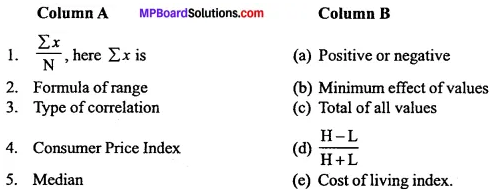
Question 4.
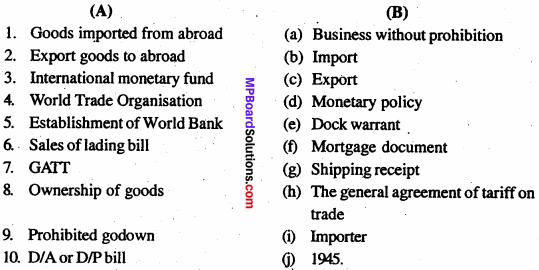
Match the columns:
MP Board Class 11th Business Studies Important Questions Chapter 11 International Business 1
Answer:

1. (b)
2. (c)
3. (d)
4. (a)
5. (j)
6. (i)
7. (h)
8. (g)
9. (e)
10. (f).

Question 5.
Give answer in one word / sentence:

Question 1.
Trade between two countries.
Answer:
Foreign trade.

Question 2.
When World Bank was established?
Answer:
1945.

Question 3.
Sending of goods from one country to another country.
Answer:
Export trade.

Question 4.
Document related to ownership in foreign trade?
Answer:
Shipping builty.

Question 5.
Establishment of WTO?
Answer:
1995.

Question 6.
Office at port for collection of tax?
Answer:
Custom house.

Question 7.
Order for goods in foreign trade?
Answer:
Indent.

Question 8.
When one country purchases goods from other country then it is called?
Answer:
Import.

Question 9.
The document which contains information of the imported goods?
Answer:
Entry bill.

Question 10.
The document which contains incomplete details of the imported goods?
Answer:
Sight bill.

MP Board Solutions

Question 11.
Number of copies made of shipping builty?
Answer:
4 (four).

Question 12.
When the whole ship is hired for the export then by which name it is called?
Answer:
Charter party.

Question 13.
Write other name of charter party?
Answer:
Travel or time charter.

Question 14.
Write different types of foreign trade?
Answer:
Import, export, entreport.

Question 15.
WTO stands for?
Answer:
World Trade Organization.

Question 16.
Objective of WTO?
Answer:
Implementation of new trade policy.

Question 17.
Headquarter of WTO is situated at?
Answer:
Geneva (Switzerland).

Question 18.
One function of WTO?
Answer:
Working for business liberalization.

Question 19.
Two MNC’s in India?
Answer:
LG, Samsung.

Question 20.
WTO members meeting is held after every year?
Answer:
2 year.

International Business Very Short Answer Type Questions

Question 1.
What is international trade?
Answer:
The exchange of goods and services for money’s worth among different countries is known as foreign trade.

Question 2.
Why there is need of international trade?
Answer:
Division of labour and specialization, depending of one country on other country for goods and services so the economies have now got working on global level leading to the need of international trade.

Question 3.
What is Dead Rent?
Answer:
The exporter for exporting goods hire the shipping company by means of con-tract, but it due to some reason, if the exporter is not able to send the goods, then also the shipping company get the claim of the transportation charges which is called as Dead Rent.

Question 4.
What is certificate of origin?
Answer:
Some importing countries provide tariff concessions or other exemptions to the goods coming from a particular country. If such benefits are available, the importer may ask the exporter to send a certificate of origin.

Question 5.
What is bill of entry?
Answer:
Bill of entry is a form filled by the importer for assessment of customs import duty. One appraiser examines the document carefully and gives the examination order.

Question 6.
What do you understand by shipping order?
Answer:
The forwarding agent arranges for obtaining order for loading the goods on the ship. Hie shipping order is an order to the captain of the ship directing him to accept and load the goods on the ship.

Question 7.
What is Mate’s Receipt?
Answer:
The shipping order, shipping bill, insurance policy, dock receipt, etc., are given to the captain of the ship. After verification, he orders that the goods may be loaded into the ship. He also issued a receipt to this effect. This is known as Mate’s Receipt.

Question 8.
What is Shipping bill?
Answer:
After entering into contract with the shipping company, the forwarding agent prepares a shipping bill. Three copies of this bill are prepared. These copies are of different colours. One copy is kept by the customs department and the remaining two copies are given to the exporters.

Question 9.
Write about the documents which are used in the import business?
Answer: Following are the documents used in the import business:

  1. Import license
  2. Delivery of indent
  3. Foreign B/E
  4. Delivery of entry bill
  5. Dock challan
  6. Dock warranty
  7. Order
  8. Railway/Motor Receipt.

MP Board Solutions

Question 10.
How many types of Mate’s Receipt are there? Why it is received?
Answer:
There are two types of Mate’s Receipt:

  1. Clean Mate’s Receipt
  2. Foul Mate’s Receipt.

It is received as the consent of the captain of the ship or his assistant.

Question 11.
What are bonded warehouses?
Answer:
If the import duty is not paid on the imported goods they are kept in the special warehouses and they are called as ‘bonded warehouses’.

Question 12.
Write the meaning of foreign trade?
Answer:
Legal trade between two or more countries is called as foreign trade.

Question 13.
What is Indent?
Answer:
When any exporter send order for the purchaser of goods then this demand letter is called as indent.

Question 14.
Explain Charter Party?
Answer:
The exporter can hire the whole vessel or a large part of the ship for shipping the goods to the importer. The agreement made by the hirer with the ship owner for such an arrangement is known as ‘Charter Party’.

Question 15.
What is dock challan?
Answer:
Like railway platform, there is a platform at ports which is called dock and where the goods are dumped before loading them on the ship. For this purpose, a dock challan is i filled up in duplicate by the forwarding agent and submitted to the dock officer enclosing one copy of shipping order and one copy of shipping bill.

Question 16.
Name the act passed by the government to check the quality of goods to be exported?
Answer:
Export Quality Control and Inspection Act, 1963.

Question 17.
Under which act the payment of the excise duty is done on the goods used for the reconstruction?
Answer:
As per central excise duty.

Question 18.
What is Bitty?
Answer:
After delivering the good the receipt issued by the officer certifying it called as Bilty.

Question 19.
Name the document on the basis of which the custom office give permission of export?
Answer:
Shipping bill.

Question 20.
How many copies of shipping bill is submitted to the custom officer?
Answer:
Five copies.

MP Board Solutions

Question 21.
What is Air – way bill?
Answer:
When the goods are to be sent by the air route then the shipping company is required to sent the goods upto the required destination is called as Air – way bill.

Question 22.
From where the exporters/importers get the Exam code?
Answer:
Ministry of Foreign Trade.

Question 23.
For ensuring die quality control in the export, what step has been taken by the government?
Answer:
Establishment of Export Quality Control and Inspection Act, 1963.

International Business Short Answer Type Questions

Question 1.
List the items which are exported by the India?
Answer:
The items which are exported by the India are:

  1. Cloths and ready made clothes
  2. Pearls and ornaments
  3. Engineering products and chemical items
  4. Agricultural and its equipment’s.

India share 0 – 8% of world export.

Question 2.
List the country to which India trade?
Answer:
The countries which India trade are: America, England, Belgium, Germany, Japan, Switzerland, Hong Kong, UAE, China, Singapore, Malaysia.

Question 3.
Write three profits of international trade?
Answer:
Profits from international trade is as under:

1. Indifferent distribution of natural resources:
Each and every country is not gifted by the nutural resources. This indifference is solved by having trading with different nations.

2. Division of labour and specialization:
Due to difference in availability of natural resources, use of these also differs from place to place. Each and every country produces those goods which have favourable condition in their country through the labour and its specialization.

3. Different in currency:
Due to difference in currency, it is only possible through the foreign or international trade.

Question 4.
Write limitation of manufacturing through the contract
Answer:
Followings are the limitations of manufacturing through the contract:

  1. Local firms do not produce standard goods.
  2. Other country local manufacturers do not have any control on production process.

Question 5.
Differentiate between the International trade and international business?
Answer:

  1. International trade have narrow scope and international business have wide scope.
  2. International trade include export import of goods and services while in international business along with trading other factors are also included.

Question 6.
Why it is called that licensing is a simple path to global expansion? Clarify.
Answer:
Licensing is a simple path to global expansion because under it there is no need of any firm or businessmen to invest any capital also they are not required to take risk. By means of licensing a firm gives right to other firm either in country or abroad to work and against that they get the royalty from it. If the goods are not produced as per order then the license can be cancelled. But under this the businessmen need not required to suffer any loss.

MP Board Solutions

Question 7.
Why country do trade ? Explain.
Answer:
Because of following reason country do business:

  1. Comparative cost principle – As per this principle every country should try to produce that commodity which is skilled because of this specialization production will increase and it can exchange it with other goods and services.
  2. Increase in national income – Through the trading people get profit and also profit is available for the country also.
  3. Profit of geographical location – Each and every country have own internal and external geographical location.

Question 8.
Differentiate between contract manufacturing to foreign countries and full ownership production subsidiary company.
Answer:

  1. Contract manufacturing:
    Under it contract is given to other country producer for production.
  2. Full ownership production subsidiary company:
    Under it goods and services are produced under self supervision by the company.

Question 9.
What are the reasons of trade between two countries?
Answer:
The reasons of trade between two countries are:

  1. Export of die extra production.
  2. Labour division and supervision.
  3. Increase in the living standard
  4. Facility of trade education.

Question 10.
Differentiate between licensing and franchising?
Answer:
Licensing:
Related to purchase and sale of goods and it is flexible to operate.

Franchising:
Related to purchase and sale of services and it is complicated to operate.

Question 11.
Write limitations of contract manufacturing?
Answer:
Followings are the limitations of contract manufacturing:

  1. Local firms do not produce goods as per international standards.
  2. No control on production process.
  3. Manufacturing firm can not sell the commodity produced as per their will.

Question 12.
Differentiate between contract manufacturing and setting up wholly owned production subsidiary abroad?
Answer:
Contract manufacturing refers to a type of international business where a firm enters into a contract with one or a few local manufacturers in foreign countries to get certain components or goods produced as per its specifications while in a wholly owned subsidiary the parent company acquires full control over the foreign company by making 100% investment in its equity capital.

Question 13.
Explain the procedure of getting payment under export?
Answer:
Importer writes a bill on exporter in order to receive the payment. Bills of exchange is an order of payment of certain amount to the certain person. It is of two types:

  1. Sight bill
  2. Time bill.

Question 14.
What is shipping bill?
Answer:
The bill which is prepared after entering into contract with the shipping company, the forwarding agent prepare it which is called as shipping bill. It is prepared in 3 copies of different colour.

Question 15.
What is World Bank? Write its functions.
Answer:
The International Bank for Reconstruction and Development (IBRD), commonly known as World Bank, emerged from the Bretton Woods Conference. The main objectives of World Bank were to aid the task of reconstruction of the war-affected economies of Europe and assist in the development of the underdeveloped nations of the world. At present, the World Bank is a group of five international organizations responsible for providing finance to different countries. Its headquarters is situated at Washington DC.

World Bank is entrusted with the task of economic growth and widening the scope of international trade. During its initial years of inception, it placed more emphasis on developing infrastructure facilities like energy, transportation and others but the results were not found to be very satisfactory due to poor administrative structure, lack of institutional frame work and non – availability of skilled labour in under developed countries.

World Bank also extends assistance to different countries for raising cash crops so that their incomes rise and they may export the same for earning foreign exchange. The bank has also been providing resources for education, sanitation, health care and small scale enterprises.

Question 16.
Why it is necessary to get registered in Export Promotion Council?
Answer:
It is necessary to get registered in Export Promotion Council in order to get the profit which made available by the government.

Question 17.
What is Export – Import code number?
Answer:
Export – Import code number is that number which every export firm should have in order to deal in foreign trade which is generally issued by DGFT or regional export import licensing authority.

Question 18.
Write the names of main organization related to World Bank.
Answer:
The names of main organization related to World Bank are:

  1. IBRD
  2. IFC
  3. EDA
  4. MIGA
  5. ICSID.

Question 19.
What is letter of credit? Why this document is necessary for the exporter?
Answer:
Letter of credit is a guarantee letter issued by the bank in which the payment to the exporter bank guarantee is given. It is required by the exporter because:

  1. It is safe method of payment in foreign trade.
  2. Exporters do not have to wait for the payment.

MP Board Solutions

Question 20.
Why there was need of making WTO?
Answer:
After first and second world war almost all the economics got affected due to large destruction of.life and assets. Due to faulty currency system of different economies also led to adverse effect on the international trading system. Under these conditions almost 40 countries under the chairmanship of J.M. Keynes made 3 international organizations.

  1. (1) IMF
  2. IBRD
  3. ITO.

Question 21.
Discuss the formalities to be fulfilled in getting the export license.
Answer:
Following formalities are to be performed in getting the export license:

  1. Getting account opened and receiving of account number in any bank authorized by RBI.
  2. Getting license from DGFT and receiving IEC code.
  3. Submission of documents to export council.
  4. Registration with ECGL for non-receipt of payment risks.
  5. For get IEC number applying to the DGFT.

Question 22.
Write different steps of import?
Answer:
Different steps of import are as under:

  1. Trade enquiry
  2. Procurement of import license
  3. Obtaining foreign exchange or currency
  4. Placing order or indent
  5. Acknowledgement of indent
  6. Dispatching letter of credit
  7. Obtaining shipping documents
  8. Appointment of clearing agent
  9. Endorsement of shipping bill
  10. Payment of custom duty
  11. Payment of dock charges
  12. Taking delivery of goods.

Question 23.
Write different steps of export?
Answer:
The steps of export are:

  1. Receipt of letter of enquiry
  2. Sending quotation
  3. Receipt of order/indent
  4. Acknowledgement of indent
  5. Obtaining export license
  6. Collection of goods
  7. Packing of goods
  8. Appointment of forwarding agent
  9. Preparation of invoice
  10. Information to importer
  11. Payment.

Question 24.
Differentiate between the following:

  1. Sight and usance drafts
  2. Bill of lading and airway bill
  3. Pre – shipment and post – shipment finance.

Answer:

1. Sight and usance drafts:
In the case of sight draft, the drawer instructs the bank to handover the relevant documents to die importer against payment But in the case of usance draft, the drawer instructs the bank to handover the relevant documents to the importer against acceptance of the bill of exchange.

2. Bill of lading and airway bill:
Bill of lading is a document prepared and signed by the master of the ship acknowledging the receipt of goods on board. It contains terms and conditions on which the goods are to be taken to the port of destination. On the other hand, Airway Bill is a document wherein an airline/shipping company gives its official receipt of the goods on board its aircraft and at the same time gives an undertaking to carry them to the port of destination.

3. Pre – shipment and post – shipment finance:
Pre – shipment finance is provided to an exporter for financing the purchase, processing, manufacturing or packaging of goods for export purpose while the post-shipment finance is provided to the exporter from the date of extending the credit after the shipment of goods to the export country.

Question 25.
What is pre – shipment finance?
Answer:
Pre – shipment finance is provided to an exporter for financing the purchase, processing, manufacturing or packing of goods for export purpose.

Question 26.
Why it is important for a export firm to get pre – shipment inspection?
Answer:
In order ensure that only quality goods should be export the country to the other country.

Question 27.
Discuss the procedure related to excise clearance of goods?
Answer:
The exporter has to apply to the concerned Excise Commissioner in the region with an invoice because according to the Central Excise Tariff Act, excise duty is payable on the materials used in manufacturing goods. If the Excise Commissioner is satisfied, he may issue the excise clearance.

Question 28.
Explain briefly the process of customs clearance of export goods.
Answer:
The goods must be cleared from the customs before these can be loaded on the ship. For obtaining customs clearance, the exporter prepares the shipping bill which contains particulars of the goods being exported, the name of the vessel, the port at which goods are to be discharged, country of final destination, exporter’s name and address, etc. Five copies of the shipping bill along with the following documents are submitted to the Customs . Appraiser at the Customs House for clearance:

  1. Export Contract or Export Order
  2. Letter of Credit
  3. Commercial Invoice,
  4. Certificate of Origin
  5. Certificate of Inspection, where necessary
  6. Marine Insurance Policy.

After submission of these documents the superintendent of the concerned port trust is approached for carting order and after obtaining it, the Cargo is physically moved into the port area and stored in shed.

Question 29.
What is Multinational Investment Guarantee Agency?
Answer:
It is established in 1988 in order to help in functions of World Bank and I. L. C.

MP Board Solutions

Question 30.
Write the important agreements of WTO?
Answer:
The WTO officially commenced on 1 January, 1995 under the Marrakesh Agreement signed by 123 nations on 15 April, 1994. Following agreement were made:

  1. ATC – This was made on 1 January, 2005 to regulate the clothing trade.
  2. AA – It was made to have proper trading in the agricultural sector.
  3. GATS – It is made to regulate the services which cannot seen but only can be felt.

Question 31.
What is bill of lading? How does it differ from bill of entry?
Answer: Bill of lading is issued by the shipping company after the receipt of freight, it serves as an evidence that the shipping company has accepted the goods for carrying to the designated destination. In case the goods are being sent by air, this document is referred to as airway bill.

On the other hand “Bill of entry” is filled by the importer for assessment of customs import duty. One appraiser examines the document carefully and gives the examination order. The importer procures the said document prepared by the appraiser and pays the duty, if any. After payment of the import duty, the bill of entry has to be presented to the dock superintendent.

International Business Long Answer Type Questions – I

Question 1.
Explain the meaning of the following documents used in connection with import transactions:

  1. Trade enquiry
  2. Import licence
  3. Shipment of advice
  4. Import general manifest

Answer:

1. Trade enquiry:
A trade enquiry is a written request by an importing firm to the exporter for supply of information regarding the price and various terms and conditions on which the letter is ready to exports goods.

2. Import licence:
Licence which permits the import of goods that cannot be im-ported freely is called an import licence. The importer needs to consult the Export – Import (EX – IM) policy in force to know whether the goods that he or she wants to import are subject to import licensing. In case goods can be imported only against the licence, the importer needs to procure an import licence.

3. Shipment of advice:
Shipment advice contains information about the shipment of goods. The information provided in the shipment advice includes details such as invoice number, bill of lading/airways bill number and date, name of the vessel with date, the port of export, description of goods and quantity, and the date of sailing of vessel. The overseas supplier dispatches the shipment advice to the importer after loading the goods on the vessel.

4. Import general manifest:
Import general manifest is a document that contains the details of the imported goods. It is a document on the basis of which unloading of cargo takes place. It is provided by the person in charge of the carrier (ship or airway) to the officer in charge at the dock.

Question 2.
Write short notes on the following:

  1. UNCTAD
  2. MIGA
  3. World Bank
  4. ITPO
  5. IMF.

Answer:
1. UNCTAD:
The United Nations Conference on Trade and Development (UNCTAD) was established in 1964 as a permanent intergovernmental body. It is the principal organ of the United Nations General Assembly dealing with trade, investment and development issues.

The organization’s goals are to “maximize the trade, investment and development opportunities of and developing countries and assist them in their efforts to integrate into the world economy on an equitable basis”. UNCTAD was created to address the concerns of developing countries over the international market, multinational corporations, and the disparity between developed nations and developing nations.

The primary objective of the UNCTAD is to formulate policies relating to all aspects of development including trade, aid, transport, finance and technology. The conference ordinarily meets once in four years. UNCTAD has 194 member states and has its permanent secretariat in Geneva.

2. MIGA:
The Multinational Investment Guarantee Agency (MIGA) was established in April, 1988 to supplement the functions of the World Bank and IfC with the fol-lowing objectives:

  1. To encourage flow of direct foreign investment into the less developed member countries.
  2. To provide insurance cover to investors against political risks.
  3. To provide guarantee against non – commercial risks (like currency transfer risk, war and civil disturbances and breach of contract).
  4. To insure new investments, expansion of existing investments, privatisation and financial restructuring.
  5. To provide promotional and advisory services.
  6. To establish credibility.

3. World Bank:
The International Bank for Reconstruction and Development (IBRD), commonly known as World Bank, emerged from the Bretton Woods Conference. The main objectives of World Bank were to aid the task of reconstruction of the war – affected economies of Europe and assist in the development of the underdeveloped nations of the world. At present, the World Bank is a group of five international organizations responsible for providing finance to different countries. Its headquarter is situated at Washington DC.

World Bank is entrusted with the task of economic growth and widening the scope of international trade. During its initial years of inception, it placed more emphasis on developing infrastructure facilities like energy, transportation and others but the results were not. found to be very satisfactory due to poor administrative structure, lack of institutional frame¬work and non-availability of skilled labour in under developed countries.

4. TPO:
Indian Trade Promotion Organization (ITPO) was set up on 1st January, 1992 under the Companies Act. 1956 by the Ministry of Commerce, Government of India. Its headquarter is at New Delhi. ITPO was formed by merging the two erstwhile agencies viz Trade Development Authority and Trade Fair Authority of India. ITPO is a service organization and maintains regular and close interaction with trade, industry and government.

It serves the industry by organizing trade fairs and exhibitions within the country as well as abroad. It helps export firms in participating in international trade fairs and exhibitions, developing exports of new items and providing support and updated commercial business information. ITPO has five regional offices at Mumbai, Bengaluru, Kolkata, Kanpur and Chennai and four international offices at Germany, Japan, UAE and USA.

5. IMF:
International Monetary Fund (IMF) came into existence in 1945 and has its headquarters located in Washington DC. In 2005 it had 191 countries as its members. The major idea underlying the setting up of the IMF is to evolve an orderly international monetary system to facilitate the system of international payments and adjustments in exchange rates among national currencies.

Some of the important functions of IMF include:

  1. Acting as a short – term credit institution.
  2. Providing machinery for the orderly adjustment of exchange rates.
  3. Acting as a reservoir of the currencies of all the member countries from which a borrower nation can borrow the currency of other nations.
  4. Acting as a lending institution of foreign currency and current transaction.
  5. Determining the value of a country’s currency and altering it, if needed, so as to bring about an orderly adjustment of exchange rates of member countries.
  6. Providing machinery for international consultations.

Question 3.
Write advantages of foreign trade?
Answer:
Advantages of Foreign Trade:

1. Advantages of geographical facilities:
Every country has different natural and geographical facilities. Their production, minerals, agriculture and industries are different. Foreign trade helps to obtain goods which are not produced.

2. Specialization and efficiency in production:
Foreign trade enables a country to produce only such goods which can be most efficiently and economically produced. As a result the cost of production will be reduced.

3. Availability of goods not produced in the country:
Foreign trade enables a country to enjoy the possession of goods which it is not producing.

4. Ability to face natural calamities:
The production in a country is affected due to draught, earthquake, flood, epidemic, war and such other natural calamities. Such calamities are faced by importing goods from other countries.

5. Advantage to agricultural and industrial countries:
Agricultural countries can easily exchange their raw materials with finished goods or machinery from other countries.

MP Board Solutions

Question 4.
Explain the nature of Indian foreign trade. Which goods are traded by India with the foreign countries?
Answer:
India had very small percentage of the total foreign trade. Due to fast development in the Indian economy since few years there had been tremendous growth in the foreign trade. As a result the share of foreign trade in GDP in 1990 – 91 was 14-6% which rised to 24.1% in 2003 – 04. The level of export in 1950 – 51 was Rs. 606 crore which rosed to Rs. 293367 in 2003 – 04. Import has also raised from Rs. 608 crore (1950 – 51) to Rs. 359108 in 2003 – 04. Now GDP is 20% of the foreign trade which include the trade of cloth, ornaments, chemical and agricultural products.

Question 5.
Explain:

  1. IDA
  2. IFC
  3. MIGA
  4. IMF.

Answer:
1. IDA:
IDA is agency working under the World Bank. It provides finance on easy terms, help in poverty alleviation, provides help in economic development programmes and also extend macro economic management services.

2. IFC:
It was established in July 1956 for providing the finance to the private sector. It is also separate organization related to World Bank having its separate existence with legal entity, fund and functions. All the member of World Bank can also be the member of IFC.

3. MIGA:
The Multinational Investment Guarantee Agency (MIGA) was established in April, 1988 to supplement the functions of the World Bank and IfC with the following objectives:

  1. To encourage flow of direct foreign investment into the less developed member countries.
  2. To provide insurance cover to investors against political risks.
  3. To provide guarantee against non – commercial risks (like currency transfer risk, war and civil disturbances and breach of contract).
  4. To insure new investments, expansion of existing investments, privatisation and
    financial restructuring.
  5. To provide promotional and advisory services.
  6. To establish credibility.

4. IMF:
International Monetary Fund (IMF) came into existence in 1945 and has its headquarters located in Washington DC. In 2005 it had 191 countries as its members. The major idea underlying the setting up of the IMF is to evolve an orderly international monetary system to facilitate the system of international payments and adjustments in exchange rates among national currencies.

Question 6.
Write a detailed note on features, structure, objectives and functioning of WTO?
Answer:
GATT was transformed into World Trade Organisation (WTO) with effect from 1st January 1995. The headquarter of WTO is situated at Geneva, Switzerland.

Features of WTO:

  1. WTO is a permanent organisation created by an international treaty ratified by the governments and legislatures of member states.
  2. It governs trade not only in goods,”but also in services and intellectual property rights.
  3. It is a‘member driven rule based organisation in the sense that all the decisions are taken by the member governments on the basis of a general consensus.
  4. It is the principal international body concerned with solving trade problems between countries and providing a forum for multilateral trade negotiations.
  5. It has a global status similar to that of the IMF and the World Bank.
  6. As on 11th December 2005, there were 149 members in WTO.

Structure of WTO:

1. WTO comprises of The Ministerial Conference, which is composed of international trade ministers from all member countries and is responsible for setting the strategic direction of the organization and making all final decisions on agreements under its wings. The Ministerial Conference meets atleast once every two years.

2. The General Council is composed of senior representatives of all members responsible for overseeing the day – to – day business and management of the WTO.

3. The Trade Policy Review Body is also composed of all the WTO’members. It periodically reviews the trade policies and practices of all member states.

4. The Dispute Settlement Body is also composed of all the WTO members and over – sees the implementation and effectiveness of the dispute resolution process for all WTO agreements.

5. The Councils on Trade in Goods and Trade in Services operate under the policy of the General Council and are members. They provide a mechanism to oversee composed the details of all of the general and specific agreements on trade in goods and services.

Major Objectives of WTO:

  1. To ensure reduction of tariffs and other trade barriers imposed by different countries.
  2. To engage in such activities which improve the standards of living, create employment, increase income and effective demand and facilitate higher production and trade.
  3. To facilitate the optimal use of the world’s resources for sustainable development.
  4. To promote an integrated, more viable and durable trading system.

Functions of WTO:

  1. Promoting an environment that is encouraging to its member countries to come forward to WTO in mitigating their grievances.
  2. Laying down a commonly accepted code of conduct with a view to reducing trade barriers including tariffs and eliminating discriminations in international trade relations.
  3. Acting as a dispute settlement body.
  4. Ensuring that all the rules and regulations prescribed in the Act are duly followed by the member countries for the settlement of their disputes.

Question 7.
Discuss the principal documents used in exporting?
Answer:
Following are the principal documents used in exporting:

1. Documents Related to Goods:

(a) Export Invoice:
Export invoice is a sellers’ bill for merchandise and contains information about goods such as quantity, total value, number of packages, marks on packing, port of destination, name of ship, bill of lading number, terms of deli very and payments, etc.

(b) Packing List:
A packing list is a statement of the number of cases or packs and the details of the goods contained in these packs. It gives details of the nature of goods, which are being exported and the form in which these are being sent.

(c) Certificate of Origin:
This is a certificate which specifies the country in which the goods are being produced which entitles the importer to claim tariff concessions or other exemptions on goods originating from certain pre – specified countries.

(d) Certificate of Inspection:
For ensuring quality, the government has made it compulsory for certain products to be inspected by some authorised agency like Export Inspection Council of India (EICI) which issues the certificate that the consignment has been inspected as required under the Export (Quality Control and Inspection) Act 1963, and satisfies the conditions relating to quality control and inspection as applicable to it, and is export worthy.

2. Documents Related to Shipment:

(a) Mate’s Receipt:
The mate’s receipt indicates the name of the vessel, berth, date of shipment, description of packages, marks and numbers, condition of the cargo at the time of receipt on board the ship, etc. and is given by the commanding officer of the ship to the exporter after the cargo is loaded on the ship.

(b) Shipping Bill:
The shipping bill contains particulars of the goods being exported, the name of the vessel, the port at which goods are to be discharged, country of final destination, exporter’s name and address, etc. It is the main document on the basis of which customs office grants permission for the export.

(c) Bill of Lading/Airway Bill:
Bill of lading is issued by the shipping company after receipt of the freight, which serves as an evidence that the shipping company has accepted the goods for carrying to the designated destination. In the case the goods are being sent by air, this document is referred to as airway bill.

(d) Marine Insurance Policy:
It is a certificate of insurance contract whereby the insurance company agrees in consideration of a payment called premium to indemnify the insured against loss incurred by the latter in respect of goods exposed to pennies of the sea.

3. Documents Related to Payment:

(a) Letter of Credit:
A letter of credit is a guarantee issued by the importer’s bank that it will honour up to a certain amount the payment of export bills to the bank of the exporter letter of credit is the most appropriate and secure method of payment adopted to settle international transactions.

(b) Bill of Exchange:
Bill of exchange is a written instrument drawn by exporter on the importer asking the tatter to pay a certain amount to a certain person or the bearer of the bill of exchange. The documents giving title to the export consignment are passed on to the importer only when the importer accepts die order contained in die bill of exchange.

(c) Bank Certificate of Payment:
Bank certificate of payment is a certificate that the necessary documents relating to the particular export consignment has been presented to the importer for payment and the payment has been received in accordance with the exchange control regulations.

MP Board Solutions

Question 8.
Explain the procedure of Export trade?
Answer:
Procedure of Export Trade:
The procedure of export trade commences with the receipt of inquiry letter following procedure is followed in export trade:

1. Receipt of letter of inquiry:
The export receives a letter of inquiry from the importer inquiring about die availability of goods, quantity and of goods, price, delivery time, other terms and conditions, etc.

2. Sending quotation:
In response to the inquiry letter the export sends a letter of quotation containing all details inquiry about the goods and other terms and conditions.

3. Receipt of order / indent:
The exporter either receives order directly from the importer or receives an indent through indent house agent. The order / indent is received in response to the quotation letter sent by the exporter.

4. Acknowledgement of indent:
The exporter acknowledges the receipt of indent which enables the importer to know that the procedure of export is going to start.

5. Obtaining export licence:
The next step is to obtain export licence from the authority concerned. For instance, if the exporter belong to India, he would receive permission from the controller of export, Ministry of Finance Government of India. He will have to submit an application in a prescribed form along with requisite fee mentioning the type, quality and quantity of goods, name of importing country, etc. The export licence is valid for three months which is extendable for a period of 1 month more.

6. Collection of goods:
As per the indent, the exporter starts collecting the goods. If the goods are not available in sufficient quantity in his inventory, he arranges the goods from the various suppliers of his country. Emphasis is levied on quality and quantity of goods as per the indent.

7. Packing of goods:
Goods are packed according to the instructions maintained in the indent or as per the prevalent methods. The name of sender and receiver is written along with the precautions. The trade symbol is to be compulsorily printed on the packed goods in order to facilitate easy identification of goods and their proper arrangement on the ships by the shipping personnels.

8. Appointment of forwarding agent:
The job of sending goods is performed by the forwarding agent on behalf of the exporter. He has to perform the following tasks:

  • Accepting goods from trader.
  • Obtain permit from custom officials.
  • Arrangement of ship.
  • Obtain shipping order.
  • Obtain shipping bill.
  • Payment of export duty.
  • Obtain dock challan.
  • Loading goods on ship.
  • Obtain mates receipt.
  • Insurance of goods.
  • Obtaining certificate of origin and consular invoice.

9. Preparation of invoice:
After receiving the various documents and expenditure details, the exporter prepare invoice of the goods. It is prepared in triplicate. It is most important document and base of all other expenses and final payment

10. Information to importer:
The exporter inform is the importer regarding sending of goods. It is informed in two ways:

  • Through a letter known as letter of advice other documents are also sent.
  • The invoice is sent along with the letter of advice through post and other documents are sent through the bank of exporter to the bank of importer.

11. Payment:
If the documents are sent through bank, the payment is received through bank itself else the payment is done according to other terms and conditions mentioned in the indent.

Question 9.
Write the difficulties which comes in path of foreign trade?
Answer:
Difficulties of Foreign Trade:

1. Difficulties relating to language:
Language of every country is different, therefore it is difficult for businessmen of various countries to understand each other.

2. Distance:
Due to long distance between the countries goods take long time to reach from one country to another and payment for the goods may also be delayed.

3. Difficulties of payment:
Each country businessman wants to get payment of goods in the currency of his own country. Thus, there are lot of difficulties in making payments.

4. Difficulty to get right type of goods:
It is often difficult to get the right type of goods because of the absence of personal contact and inspection.

5. Difficulty of sea – perils:
There are various hazards in sea routes. The cyclone or sea winds overturn the ships, which may lead to the loss of ship and goods both.

6. Local and foreign duties:
Many local and foreign duties are imposed on foreign goods. It increases the cost of goods. Therefore, the markets are spoiled.

Question 10.
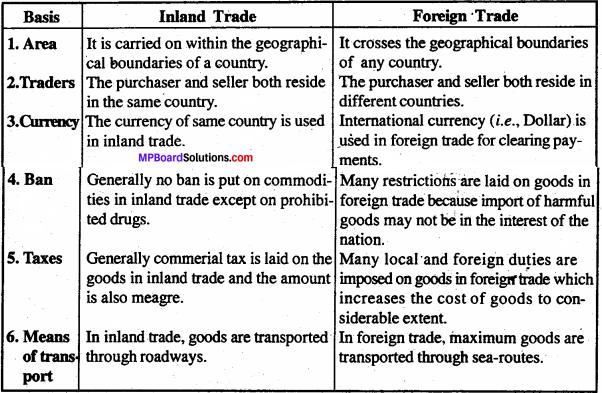
Differentiate between Inland trade and Foreign trade?
Answer:
Differences between Inland and Foreign trade:
MP Board Class 11th Business Studies Important Questions Chapter 11 International Business 2

International Business Long Answer Type Questions – II

Question 1.
Your firm is planning to import textile machinery from Canada. Describe the procedure involved in importing?
Answer:
Following is the procedure involved in importing textile machinery from Canada:

1. Trade Enquiry:
The importing firm approaches the textile machinery export firms in Canada with the help of trade enquiry they collecting information about their export prices and terms of exports. After receiving a trade enquiry, the exporter will prepare a quotation called proforma invoice and send it to our firm.

2. Procurement of Import Licence:
We will consult the Export Import (EXIM) policy in force to know whether the textile machinery imports are subject to import licensing. In case, it can be imported only against the licence, we will procure an import licence.

3. Obtaining Foreign Exchange:
As payment for imports will be made in Canadian dollars, our firm will have to make an application to a bank authorised by RBI to issue foreign exchange.

4. Placing Order or Indent:
After obtaining the import licence, our firm will place an import order or indent with the exporter for supply of the specified products containing information about the price, quantity, grade and quality of machinery and the instructions relating to packing, shipping, ports of shipment and destination, delivery schedule, insurance and mode of payment.

5. Obtaining Letter of Credit:
If the payment terms agreed between us and the overseas supplier then our firm should obtain the letter of credit from its bank and forward it to the overseas supplier.

6. Arranging for Finance:
Our firm would make arrangements in advance to pay to the exporter on arrival of goods at the port.

7. Receipt of Shipment Advice:
After loading the ordered textile machinery on the vessel, the overseas supplier will dispatch the shipment advice to our firm which contains information about the shipment of goods.

8. Retirement of Import Documents:
After shipping the machinery, the overseas supplier will prepare a set of necessary documents including bill of exchange, commercial invoice, bill of lading/airway bill, packing list, certificate of origin, marine insurance policy, etc. and will hand it over to his or her banker for their onward transmission and negotiation to our firm.

The acceptance of bill of exchange for the purpose of getting delivery of the documents is known as retirement of import documents after which the bank handover the import documents to the importer.

9. Arrival of Goods:
Goods will be shipped by the overseas supplier as per the contract. The officer in charge at the dock will provide the document called import general manifest on the basis of which unloading of cargo will take place.

10. Customs Clearance and Release of Goods:
Textile machinery imported into India will have to pass through customs clearance. Firstly, our firm will have to obtain a delivery order, pay dock dues and obtain port trust dues receipt and then fill in a form ‘bill of entry’ for assessment of customs import duty. After payment of the import duty, the bill of entry has to be presented to the dock superintendent.

The examiner will give his report on the bill of entry and we will present the bill of entry to the port authority who will issue the release order after receiving necessary charges.

MP Board Solutions

Question 2.
List and explain various incentives and schemes that the government has evolved for promoting the country’s export.
Answer:
Major export promotion measures are as follows:

1. Duty Drawback Scheme:
Excise and customs duties paid on export goods are refunded to exporters on production of proof of exports of these goods to the concerned authorities.

2. Export Manufacturing Under Bond Scheme:
This facility entitles firms to produce goods without payment of excise and other duties if the firms give an undertaking (i.e. bond) that they are manufacturing goods for export purposes and will export such products on then production.

3. Exemption from Payment of Sales Taxes and Income Tax Goods Meant for Export Purposes are not Subject to Sales Tax: Exemption from income tax is available only to 100% Export Oriented Units (100% EOUs) and units set-up in Export Processing Zones (EPZs)/Special Economic Zones (SEZs) for select years.

4. Advance Licence Scheme:
It is a scheme under which an exporter is allowed to duty free supply of domestic as well as imported inputs required for the manufacture of export goods.

5. Export Promotion Capital Goods Scheme (EPCGS):
The main objective of this scheme is to encourage the import of capital goods for export production. This scheme allows export firms to import capital goods at very low rates of customs duties subject to actual user condition and fulfilment of specified export obligations.

6. Scheme of Recognising Export Finns as Export House, Trading House and Superstar Trading House:
The government grants the status of export house, trading house, star trading house to select export finns based on achieving a prescribed average export of performance in past select years and assistance is given to them in marketing their products globally.

Question 3.
What is international trade? How it is different from internal trade?
Or,
What is international business? How is it different from domestic business?
Answer:
Manufacturing and trade beyond the boundaries of one’s own country is known as international business. International business is defined as those business activities that take place across the national frontiers. It involves not only the international movements of goods and services, but also of capital, personnel, technology and intellectual property like patents, trademarks, and copyrights.

Differences between Domestic and International businesses:

1. Nationality of Buyers and Sellers:
In the case of domestic business, both the buyers and sellers are from the same country but in international business buyers and sellers come from different countries and their languages, attitudes, social customs and business goals and practices are not identical as in case of domestic business. This makes relatively more difficult for them to interact with one another and finalize business transactions.

2. Nationality of Other Stakeholders:
The other stakeholders such as employees, suppliers, shareholders/partners and general public associated with firms doing international business have different nationalities while in the case of domestic business all such factors belong to one country. Therefore, decision making in international business becomes much more complex due to wider set of values and aspirations of the stakeholders belonging to different nations.

3. Mobility of Factors of Production:
The degree of mobility of factors like labour and capital is generally less between countries than within a country due to legal restrictions and variations in socio – cultural environments, geographic influences and economic conditions.

4. Customer Heterogeneity:
Across markets since buyers in international markets hail from different countries, they differ in their socio -cultural background. Differences in their tastes, fashions, languages, beliefs and customs, attitudes and product preferences cause variations in not only’their demand for different products and services, but also in variations in their communication patterns and purchase behaviors. Such variations greatly complicate the task of designing products and evolving strategies appropriate of customers in different countries.

5. Differences in Business Systems and Practices:
The differences in business systems and practices are considerably higher among countries than within a country as countries differ from one another in terms of their socio – economic development, availability, cost and efficiency of economic infrastructure and market support services, etc. which make it necessary for firms interested in international business to adapt their production, finance, human resource and marketing plans as per the conditions prevailing in the international markets.

Question 4.
Differentiate between internal trade and foreign trade.
Answer:
Differences between Inland and Foreign trade:
MP Board Class 11th Business Studies Important Questions Chapter 11 International Business 2

Question 5.
How entry in foreign trade for export is more beneficial than the establishment of full owned and controlled companies in the foreign countries?
Or,
Write advantages of foreign trade.
Answer:
Advantages of Foreign Trade:

1. Advantages of geographical facilities:
Every country has different natural and geographical facilities. Their production, minerals, agriculture and industries are different. Foreign trade helps to obtain goods which are not produced.

2. Specialization and efficiency in production:
Foreign trade enables a country to produce only such goods which can be most efficiently and economically produced. As a result the cost of production will be reduced.

3. Availability of goods not produced in the country:
Foreign trade enables a country to enjoy the possession of goods which it is not producing.

4. Ability to face natural calamities:
The production in a country is affected due to draught, earthquake, flood, epidemic, war and such other natural calamities. Such calamities are faced by importing goods from other countries.

5. Advantage to agricultural and industrial countries:
Agricultural countries can easily exchange their raw materials with finished goods or machinery from other countries.

Question 6.
Discuss the elements for entry in foreign trade?
Answer:
Following elements are required for entry in the foreign trade:

1. Import and Export:
The process of purchasing goods from the foreign countries is called as import and the process of sending or selling goods to foreign countries is called as export

Profits:

  • It is very simple method which can be handled singly, jointly without opening any unit in foreign countries.
  • No much investment is required and also time.
  • Risk in this is also zero.

Limitations:

  • Goods are purchased and sold physically. Only packaging, transport and insurance expenditure is incurred.
  • When in any country import is restricted then export cannot be done. Then only in such conditional unit is to be setup in those countries for trade.
  • Manufacturing is done in home country and then it is send to the other country for
    sale.

2. Contract manufacturing:
It is that mode when one company makes contract with other foreign company for manufacturing of goods in other country as per the need and benefit of the both companies and the country.

Profits:

  • Some items like upper part of car or upper portion shoes is done under contract manufacturing.
  • Then those items are assembled into complete goods and sold.
  • Some goods are manufacture fully.

Limitations:

  • Under its international firm get manufacturing on large scale without much investment.
  • Less capital is invest and production is done.
  • Manufacturing on contract make costing less.

3. Joint venture establishment.

4. Fully owned and controlled unit can be established.

Question 7.
How business units gets profit from the international trade?
Answer:
Advantages of Foreign Trade:

1. Advantages of geographical facilities:
Every country has different natural and geographical facilities. Their production, minerals, agriculture and industries are different. Foreign trade helps to obtain goods which are not produced.

2. Specialization and efficiency in production:
Foreign trade enables a country to produce only such goods which can be most efficiently and economically produced. As a result the cost of production will be reduced.

3. Availability of goods not produced in the country:
Foreign trade enables a country to enjoy the possession of goods which it is not producing.

4. Ability to face natural calamities:
The production in a country is affected due to draught, earthquake, flood, epidemic, war and such other natural calamities. Such calamities are faced by importing goods from other countries.

5. Advantage to agricultural and industrial countries:
Agricultural countries can easily exchange their raw materials with finished goods or machinery from other countries.

MP Board Solutions

Question 8.
Identify various organisations that have been set – up in the country by the government for promoting country’s foreign trade?
Answer:
Various organisations that have been set-up in the country by the government for promoting country’s foreign trade are as follows:

1. Department of Commerce:
Department of Commerce in the Ministry of Commerce, Government of India is the apex body responsible for formulating policies in the. sphere of foreign trade, increasing commercial relations with other countries, state trading, export promotional measures and the development and regulation of certain export oriented industries and commodities.

2. Export Promotion Councils (EPCs):
Export Promotion Councils are non-profit organisations registered under the Companies Act or the Societies Registration Act, as the case may be. Their basic objective is to promote and develop the country’s exports of particular products falling under their jurisdiction.

3. Commodity Boards:
Commodity Boards are the boards which have been specially established by the Government of India for the development of production of traditional commodities and their exports and supplement the EPCs. At present there are seven commodity boards in India : Coffee Board, Rubber Board, Tobacco Board, Spice Board, Central Silk Board, Tea Board, and Coir Board.

4. Export Inspection Council (EIC):
Export Inspection Council of India was set – up by the Government of India under Section 3 of the Export Quality Control and Inspection Act – 1963. The council aims at sound development of export trade through quality control and pre – shipment inspection.

5. Indian Trade Promotion Organisation (ITPO):
Indian Trade Promotion Organisation was set – up on 1st January 1992. ITPO is a service organisation which serves the industry by organising trade fairs and exhibitions within the country and abroad and helps export firms in participating in international trade fairs and in developing exports of new items.

6. Indian Institute of Foreign Trade (HFT):
Indian Institute of Foreign Trade is an institution that was set – up in 1963 by the Government of India as an autonomous body. It has recently been recognised as Deemed University. It provides training in international trade, conduct researches in areas of international business and analysing and disseminating data relating to international trade and investments.

Question 9.
What is World Bank? Discuss its various objectives and role of its affiliated agencies?
Answer:
The World Bank was established in 1945, the International Bank for Reconstruction and Development (EBRD) is the common name of World Bank, which was formed as a result of the Bretton Woods Conference.

The main objectives behind setting up this international organisation were to aid the task of reconstruction of the war affected economies of Europe and assist in the development of the underdeveloped nations of the world. Till late 1950s, the World Bank remained preoccupied with the task of restoring war tom nations in Europe after which it turned its attention to the development of underdeveloped nations.

Various objectives and roles of its affiliated agencies are given below International Development Association (EDA). The main objectives of IDA are:

  1. It provides finance on easy terms.
  2. It provides help in poverty alleviation.
  3. It provides help in economic development programmes.
  4. Extend macro economic management services.

The Multinational Investment Guarantee Agency (MIGA) Major objectives of MIGA
are:

  1. To encourage flow of direct foreign investment into the less developed member countries.
  2. To provide insurance cover to investors against political risks.
  3. To provide guarantee against non – commercial risks (like, dangers involved in currency transfers, war and civil disturbances and breach of contract).
  4. To insure new investments, expansion of existing investments, privatisation and financial restructuring.
  5. To provide promotional and advisory services.
  6. To establish credibility.

We can conclude that the World Bank is no longer confined to simply providing financial assistance for infrastructure development, agriculture, industry, health and sanitation  and is involved in areas like removal of rural poverty through raising productivity, providing technical support, and initiating research and co – operative ventures.

MP Board Solutions

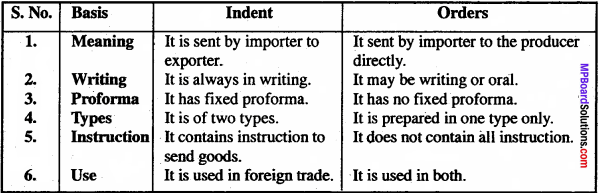
Question 10.
Differentiate between Indent and Order?
Answer:
MP Board Class 11th Business Studies Important Questions Chapter 11 International Business 3

Question 11.
Give suggestion to increase foreign trade in India?
Answer:
Following suggestions should be implemented for increasing foreign trade:

  1. Reforms in production – Quality of production should be increased in order to growth in the foreign trade.
  2. Tax rebate – Export units should be given tax reforms so that, the exporter may get benefit of it.
  3. Widespread market – Along with structural, there should be bi-agreement among the different nations for its spread.
  4. Quality control – The goods which are used for foreign trade should go on strict inspection to enhance its quality.
  5. Distribution research – There should be proper reach made for the new commodities also so that it can be dealt with.
  6. Export subsidy – Government should give subsidy in order to promote the foreign

MP Board Class 11 Business Studies Important Questions

MP Board Class 9th Special Hindi Sahayak Vachan Solutions Chapter 5 विश्व मन्दिर

MP Board Class 9th Special Hindi सहायक वाचन Solutions Chapter 5 विश्व मन्दिर (सामाजिक निबन्ध, वियोगी हरि)

विश्व मन्दिर अभ्यास

बोध प्रश्न

प्रश्न 1.
लेखक अपना विश्व मन्दिर कहाँ निर्मित करना चाहता है?
उत्तर:
लेखक अपना विश्व मन्दिर भारत की तपोभूमि पर ही निर्मित करना चाहता है।

प्रश्न 2.
परमेश्वर का महामन्दिर किसे कहा गया है?
उत्तर:
परमेश्वर का महामन्दिर इस समस्त विश्व को कहा गया है। यह समस्त विश्व उसी घट-घट व्यापी का घर है जब हम उसे अपने दिल के मन्दिर में बैठा लेंगे तो सर्वत्र हमें सुख शान्ति एवं आनन्द मिलेगा। उसके आने से अविद्या की अँधेरी रात समाप्त हो जाएगी और प्रेम का आलोक सर्वत्र बिखर जाएगा। यह महामन्दिर सर्वजन हिताय सर्वजन सुखाय होगा। यह महामन्दिर किसी एक धर्म सम्प्रदाय का न होकर सर्व धर्म सम्प्रदायों का समन्वय मन्दिर होगा।

प्रश्न 3.
विश्व मन्दिर हमें कब दिखाई देगा?
उत्तर:
यह विश्व मन्दिर हमें प्रेम के प्रकाश में दिखाई देगा।

प्रश्न 4.
समन्वय मन्दिर किसके लिए होगा?
उत्तर:
समन्वय मन्दिर सभी धर्म एवं सम्प्रदायों के लिए होगा। यह किसी विशेष धर्म या सम्प्रदाय के लिए नहीं होगा।

प्रश्न 5.
विश्व मन्दिर की दीवारों पर किन-किन धर्म ग्रन्थों के महावाक्य खुदे होंगे? धर्म ग्रन्थों के नाम लिखिए।
उत्तर:
विश्व मन्दिर की दीवारों पर वेद के मन्त्र, कुरान की आयतें, अवेस्ता की गाथाएँ, बौधों के सुत्त, इंजील के सरमन, कन्फ्यू शियस के सुवचन, कबीर के सबद और सूर के भजन आप उस मन्दिर की पवित्र दीवारों पर पढ़ सकेंगे।

MP Board Solutions

प्रश्न 6.
इस काल्पनिक विश्व मन्दिर में “मैं-तू न होगा।” इस वाक्य का भाव स्पष्ट कीजिए।
उत्तर:
उपर्युक्त कथन का भाव यह है कि उस काल्पनिक विश्व मन्दिर में साधकगण लोक सेवा एवं विश्व प्रेम का प्रचार-प्रसार करेंगे। धार्मिक झगड़े से ऊबे हुए या घबराये हुए शान्ति प्रिय साधक वहाँ बैठकर दिव्य प्रेम की साधना किया करेंगे। उस मन्दिर में ‘मैं’ और ‘तू’ का झगड़ा नहीं होगा। वहाँ तो वही एक प्रभु होगा जो सबका होगा।

प्रश्न 7.
काल्पनिक विश्व मन्दिर के भव्य और दिव्य रूप को देखकर विपक्षियों के मन में कौन-से भाव जाग्रत होंगे?
उत्तर:
काल्पनिक विश्व मन्दिर के भव्य और दिव्य रूप को देखकर विपक्षियों के मन में प्रेम एवं सत्य की भावनाएँ जन्म लेंगी। चारों ओर स्नेह ही स्नेह होगा। सभी एक साथ मिलकर स्नेह का प्रसाद वितरित कर रहे होंगे। विपक्षियों का भी प्रवेश मन्दिर में वर्जित नहीं होगा।
प्रश्न 8.
समन्वय मन्दिर में बैठकर लोग क्या करेंगे?
उत्तर:
समन्वय मन्दिर में किसी विशेष धर्म या सम्प्रदाय का प्रवेश न होगा अपितु वहाँ तो सर्वधर्म सम्प्रदायों के लोगों का वास रहेगा। वह सबके लिए होगा, सबका होगा। यहाँ बैठकर लोग सत्य, प्रेम एवं करुणा का सन्देश दुनिया को सुनायेंगे। उसमें आपसी मन-मुटाव तथा तू-तू, मैं-मैं का झगड़ा नहीं होगा।

प्रश्न 9.
विश्व मन्दिर पाठ का उद्देश्य क्या है?
उत्तर:
‘विश्व मन्दिर’ पाठ का प्रमुख उद्देश्य है कि समस्त विश्व में धर्म, जाति देश एवं दिशा के आधार पर भेद-भाव को समाप्त करके सर्वत्र एकता, सहानुभूति एवं सह-अस्तित्व की भावना को जाग्रत करना है। इसी बन्धुत्व भाव से रहते हुए हमें जगत् पिता के दर्शन हो जाएँगे।

प्रश्न 10.
लेखक ने काल्पनिक विश्व मन्दिर के निर्माण की कल्पना किस उद्देश्य से की है? लिखिए।
उत्तर:
लेखक ने काल्पनिक विश्व मन्दिर के निर्माण की कल्पना सब धर्म एवं सम्प्रदायों में आपसी सहमति एवं सहृदयता जगाने की भावना से की है। उसकी दीवारों पर संसार के सभी प्रचलित धर्म ग्रन्थों के समन्वय सूचक महावाक्य दीवारों पर खुदे होंगे। किसी भी धर्मवाक्य में भेद न दिखाई देगा। सबका एक ही लक्ष्य एक ही मतलब होगा। उसकी दीवारों पर खुदे हुए प्रेम मन्त्र मानवों के मन से संशय और भ्रम का पर्दा उठायेंगे तथा उनसे अनेकता में एकता की झलक दिखाई देगी।
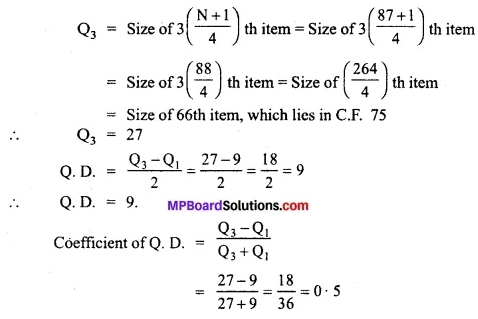
प्रश्न 11.
विश्व मन्दिर की स्थापना की आवश्यकता लेखक क्यों अनुभव करता है?
उत्तर:
विश्व मन्दिर की स्थापना की आवश्यकता लेखक इसलिए अनुभव करता है क्योंकि इससे यह समस्या समाप्त हो जाएगी कि यह राम का निवास स्थल है या नहीं। ईश्वर की सार्वभौमिकता प्रश्नों की परिधि से बाहर रहेगी। सर्वसामान्य के हितों की रक्षा हो पाएगी। इसकी स्थापना से संशय, नास्तिकता एवं भेदभाव की भावना समाप्त हो जाएगी। इसमें सभी धर्म, वर्ण एवं जातियों के लोग प्रवेश पाने में समर्थ होंगे। इसमें पापी-पुण्यात्मा तथा ऊँचा-नीच का भेद नहीं होगा।

MP Board Class 9th Hindi Solutions

MP Board Class 9th Special Hindi Sahayak Vachan Solutions Chapter 4 वैद्यराज जीवक

MP Board Class 9th Special Hindi सहायक वाचन Solutions Chapter 4 वैद्यराज जीवक (वैज्ञानिक निबन्ध, घनश्याम ओझा)

वैद्यराज जीवक अभ्यास

बोध प्रश्न

प्रश्न 1.
जीवक किस शास्त्र के विद्वान थे?
उत्तर:
जीवक आयुर्वेदिक चिकित्साशास्त्र के विद्वान थे।

प्रश्न 2.
जीवक के मन में किनके दर्शन की इच्छा थी?
उत्तर:
जीवक के मन में बौद्ध धर्म के प्रवर्तक महात्मा बुद्ध के दर्शन की इच्छा थी।

प्रश्न 3.
राजकुमार अभय के प्रति जीवक ने अपनी कृतज्ञता कैसे व्यक्त की?
उत्तर:
अयोध्या नगरी में एक सेठ की बीमार पत्नी के सफल इलाज के फलस्वरूप सेठ द्वारा जीवक को सहस्र स्वर्ण मुद्राएँ दी गयीं। राजगृह पहुँचकर जीवक ने अपने प्रतिपालक राजकुमार अभय को सेठ द्वारा दी गयी सारी स्वर्ण मुद्राएँ देकर कृतज्ञता ज्ञापित की।

प्रश्न 4.
अवंती नरेश से तेज चलने वाला हाथी माँगने के पीछे जीवक का क्या उद्देश्य था?
उत्तर:
अवन्ती नरेश पीलिया रोग से पीड़ित थे और इस रोग का इलाज गाय के घी के सेवन से ही हो सकता था पर अवन्ती नरेश को घी से उल्टी आती थी। बिना घी के सेवन के उपचार नहीं हो सकता था। जीवक इसी समस्या से उलझे हुए थे तभी उन्होंने अवन्ती नरेश से तेज चलने वाला हाथी माँगा। हाथी मिल जाने पर जीवक ने घी के साथ राजा को औषधि देने का ऐसा समय बताया जबकि वे हाथी पर सवार होकर अवन्ती राज्य की सीमा पार कर चुके होते। यदि दवाई का अनुकूल प्रभाव उनकी उपस्थिति में न होता तो उन्हें दण्ड का भागी होना पड़ता। इसी भय से उन्होंने राजा से तेज गति से चलने वाला हाथी माँगा।।

प्रश्न 5.
जीवक के खाली हाथ लौटने पर भी आचार्य ने उन्हें परीक्षा में उत्तीर्ण क्यों कहा?
उत्तर:
तक्षशिला के आचार्य ने जीवक की परीक्षा लेने के लिए यह प्रश्न दिया था कि वत्स संसार में ऐसी किसी वनस्पति को खोजो जिसमें औषधीय गुण न हो। जीवक ने अनेक दिनों तक अथक परिश्रम किया पर उसे एक भी वनस्पति ऐसी न मिली जिसमें औषधीय गुण न हों। यद्यपि जीवक अपने आचार्य के प्रश्न का उत्तर नहीं ढूँढ़ सका था। पर फिर भी आचार्य ने उसे परीक्षा में उत्तीर्ण कह दिया। क्योंकि आचार्य जी जानते थे कि मेरे द्वारा प्रस्तुत किया गया प्रश्न वास्तव में गलत था।

प्रश्न 6.
जीवक ने कौन-सा संकल्प लिया था?
उत्तर:
जीवक ने यह संकल्प लिया था कि वे कठिन परिश्रम और तप से योग्यता हासिल करेंगे तथा कभी भी किसी पर आश्रित बनकर नहीं रहेंगे और अपनी सामर्थ्य के अनुसार सबकी सहायता करेंगे।

MP Board Solutions

प्रश्न 7.
सम्राट बिम्बसार के पुत्र ने ‘जीवक’ नाम क्यों दिया?
उत्तर:
महाराज बिम्बसार के पुत्र राजकुमार ‘अभय’ को यह नवजात शिशु एक मिट्टी के ढेर पर पड़ा हुआ मिला था। इतनी विषम परिस्थिति में भी वह जीवित था इसलिए उसका नाम ‘जीवक’ रख दिया गया।

प्रश्न 8.
आचार्य द्वारा जीवक को विदा करते समय कौन-सी सीख दी गई थी? अपने शब्दों में लिखिए।
उत्तर:
जीवक को जब कोई भी वनस्पति औषधीय गुणों से हीन नहीं दिखाई दी तथा सभी में उन्हें सजीवता के दर्शन हुए तो इस बात से प्रसन्न होकर तक्षशिला के आचार्य ने उसे उसकी अन्तिम परीक्षा में उत्तीर्ण कर दिया तथा उसे आशीर्वाद दिया। जीवक को विदाई देते समय आचार्य ने उन्हें शिक्षा दी कि तुम्हें ऋग्वेद में जो रोग एवं उनके उपचार बताए हैं, उन्हें तुम्हें आगे बढ़ाना है। भारद्वाज, अत्रेय, धन्वंतरि, चरक एवं सुश्रुत आदि आचार्यों ने इस कार्य को आगे बढ़ाया है। इन सभी ने वनस्पतियों में भी प्राणियों के समान जीवन माना है। अत: इसी कार्य को तुम्हें और आगे बढ़ाना है। यह कहकर आचार्य चुप हो गये। यह उपदेश सुनकर जीवक बहुत प्रसन्न हुआ।

प्रश्न 9.
जीवक द्वारा किन-किन रोगियों की चिकित्सा की गयी? विवरण दीजिए।
उल्लर:
अपने आचार्य से दीक्षा प्राप्त करके तथा उनसे विदा लेकर जीवक राजगृह लौट आये। राजगृह वापस आने के बाद जीवक ने दो असाध्य रोगियों को शल्य क्रिया द्वारा स्वस्थ बनाया। उन्होंने एक युवक के पेट की शल्य क्रिया करके उसकी उलझी हुई आँतों की गाँठे खोलकर तथा पुनः सिलाई करके औषधि का लेप लगाया। दूसरी शल्य क्रिया एक सेठ के मस्तिष्क की करके उसे नया जीवन प्रदान किया था।

अयोध्या नगरी में सात वर्षों से सिर की पीड़ा से तड़प रही नगर सेठ की पत्नी का बिना शल्य क्रिया के ही उपचार कर दिया था। इसी भाँति उन्होंने अवंती नरेश चंदप्रद्योत के पीलिया रोग का इलाज किया था।

प्रश्न 10.
जीवक को ऐसा क्यों लगा कि वे भगवान बुद्ध के कृपापात्र बन गये हैं?
उत्तर:
आयुर्वेद का पूर्ण ज्ञान प्राप्त कर जीवक वैद्य बहुत सन्तुष्ट थे पर वे उस युग के महान् धर्म प्रवर्तक भगवान बुद्ध के दर्शन करना चाहते थे। संयोग से उन्हें भगवान बुद्ध की चिकित्सा का अवसर प्राप्त हो गया। भगवान बुद्ध के पाँव में धारदार पत्थर से चोट लग गई थी। इससे पाँव से खून बहने लगा था। जीवक ने औषधियों का लेप करके पैर पर पट्टी बाँध दी। लेकिन पट्टी के एक निश्चित सीमा के बाद खोलने का उन्हें ध्यान नहीं रहा। इससे वे बड़े दुःखी हुए।

इधर भगवान बुद्ध ने जीवक के मन की बात जानकर स्वयं पट्टी खोल दी थी। भगवान बुद्ध से सुबह भेंट होने पर भगवान ने जीवक को स्वयं ही बताया कि “जीवक जब तुम मेरी पट्टी खोलने के लिए चिंतित हो रहे थे, तभी मैंने उस पट्टी को खोल दिया था।” जीवक ने आश्चर्य से भगवान बुद्ध की ओर देखा और वे उनके चरणों में नतमस्तक हो गये। उन्हें यह जानकर बड़ी प्रसन्नता हुई कि भगवान बुद्ध ने उनके मन को अपने मन से जोड़ लिया है, वे उनके कृपापात्र बन चुके हैं।

प्रश्न 11.
सेठ के मस्तिष्क की शल्य क्रिया करने के पूर्व जीवक ने क्या शर्त रखी?
उत्तर:
सेठ के मस्तिष्क की शल्य क्रिया करने से पूर्व जीवक ने एक शर्त रखी थी कि तुम्हें इक्कीस महीने तक बिस्तर पर लेटना होगा। सात महीने दाईं तरफ, सात महीने बाईं तरफ और सात महीने सीधे।

पर सेठ सात महीने के स्थान पर सात दिन भी एक तरफ नहीं लेट पाया तो जीवक ने सात, सात दिन में ही उसे करवटें बदलवा कर स्वस्थ कर दिया था। उन्होंने सेठ से कहा कि मैं आपको केवल इक्कीस दिन ही विश्राम देना चाहता था लेकिन आपके धैर्य की कमी को देखकर मैंने इक्कीस दिनों को इक्कीस महीने बताया था।

MP Board Class 9th Hindi Solutions

MP Board Class 9th Special Hindi Sahayak Vachan Solutions Chapter 3 हल्दीघाटी

MP Board Class 9th Special Hindi सहायक वाचन Solutions Chapter 3 हल्दीघाटी (कविता, श्यामनारायण पाण्डेय)

हल्दीघाटी अभ्यास

बोध प्रश्न

प्रश्न 1.
चेतक को प्रलय मेघ-सा क्यों कहा गया है?
उत्तर:
चेतक को प्रलय मेघ-सा इसलिए कहा गया है क्योंकि वह रणभूमि में शत्रु सेना पर प्रलय काल के मेघ के समान भयंकरता से टूट पड़ता था।

प्रश्न 2.
राणा प्रताप की तलवार को किसके समान कहा गया है?
उत्तर:
राणा प्रताप की तलवार को विषयुक्त नागिन, विद्युत् एवं जिह्वा निकाले हुए चण्डी के समान कहा गया है।

प्रश्न 3.
अजब विषैली नागिन किसे कहा गया है?
उत्तर:
अजब विषैली नागिन राणा प्रताप की तलवार को कहा गया है।

प्रश्न 4.
मानसिंह के हाथी की कमर क्यों झुक गई?
उत्तर:
मानसिंह ने राणा प्रताप के ऊपर भाले से प्रहार करना चाहा तभी राणा प्रताप ने उस प्रहार को थाम कर इस तरह का झटका दिया कि हाथी की भी कमर झुक गई।

प्रश्न 5.
अम्बर कलंक किसे और क्यों कहा गया है?
उत्तर:
अम्बर कलंक का अर्थ होता है आकाश को कलंकित करने वाला। अम्बर कलंक मानसिंह को कहा गया है क्योंकि मानसिंह ने मेवाड़ पर आक्रमण करने का षड्यंत्र रचा था। अकबर तो राणा प्रताप के शौर्य एवं रणकौशल से भयभीत था। लेकिन मानसिंह के उकसाने पर और उसी के नेतृत्व में हल्दी घाटी पर आक्रमण किया गया। मेवाड़ की धरती के आकाश को कलंकित करने के कारण ही मानसिंह को अम्बर कलंक कहा गया है।

प्रश्न 6.
‘तो फिर लड़ ले भाला लेकर’ यह किसने, किससे कहा?
उत्तर:
‘तो फिर लड़ ले भाला लेकर’ यह कथन राणा प्रताप ने मानसिंह से कहा।

MP Board Solutions

प्रश्न 7.
प्रताप के भाले के वार से मानसिंह कैसे बचा? उसके बदले में कौन मारा गया?
उत्तर:
प्रताप के भाले के वार से मानसिंह हौंदे के तल में छिपकर बच सका पर भाले के वार से हाथी का चालक पीलवान मारा गया।

प्रश्न 8.
हल्दी घाटी कहाँ स्थित है और क्यों प्रसिद्ध है? वर्णन कीजिए।
उत्तर:
हल्दी घाटी अरावली पर्वत श्रेणियों के मध्य स्थित है। इस क्षेत्र में अकबर द्वारा भेजी गयी सेना ने मानसिंह के नेतृत्व में हमला किया। यह युद्ध एक भयनाक युद्ध था। अकबर, राणा प्रताप की शक्ति से डरता था पर मानसिंह के उकसाने पर उसने युद्ध किया। इस युद्ध में अकबर की सेना का बहुत नुकसान हुआ। महाराणा प्रताप सैनिकों की कमी के कारण युद्ध तो नहीं जीत पाये पर उन्होंने हार कभी भी स्वीकार नहीं की। भामाशाह से धन की मदद मिलने पर उन्होंने अपनी सेना को फिर इकट्ठा किया और वे देश की स्वतंत्रता के लिए जंगल-जंगल भटकते फिरे पर अपनी प्रतिज्ञा से पीछे नहीं हटे। भारत के स्वतंत्रता संग्राम में राणा प्रताप का नाम सुनहरे अक्षरों में लिखा हुआ है।

प्रश्न 9.
चेतक के शौर्य का वर्णन अपने शब्दों में कीजिए।
उत्तर:
महाराणा प्रताप का घोड़ा चेतक अत्यन्त तीव्र गति से दौड़ता था। वह दौड़ने में हवा को कभी को भी मात देता था। उसको चलाने के लिए चाबुक का प्रयोग नहीं किया जाता था। वह तो इशारे में ही उड़ जाता था। वह शत्रुओं को रौंदता हुआ युद्ध क्षेत्र से निकल जाता था। चौकड़ी भरते समय वह आकाश में उड़ने लगता था। तलवारों के युद्ध में भी वह बिना किसी डर के सरपट दौड़ जाता था।

वह शत्रु सेना पर प्रलय काल के बादलों के समान आक्रमण करता था। वह हाथी के मस्तक पर अपने आगे के दोनों पैर गड़ाकर उन्हें रोक देता था।

प्रश्न 10.
राणा प्रताप के युद्ध कौशल व वीरोचित व्यवहार का वर्णन अपने शब्दों में कीजिए।
उत्तर:
राणा प्रताप एक महान वीर योद्धा था। वह शत्रुओं से जरा भी नहीं डरता था। राणा प्रताप युद्धक्षेत्र में शत्रुओं के सिरों को एक झटके में काट डालता था। जब भी राणा का आक्रमण होता था शत्रुदल में आतंक मच जाता था और वे इधर-उधर बचने के लिए भागने लग जाते थे। उसकी तलवार शत्रुओं के सिर काट-काटकर लहराती रहती थी। उसकी तलवार को देखकर ऐसा लगता था मानो रणचण्डी अपनी जीभ पसार कर खून पीने के लिए व्याकुल हो रही है।

महान् योद्धा होते हुए भी वीरोचित व्यवहार शत्रु से भी करता था। जब प्रताप के प्रहार से मानसिंह का भाला टूट गया था। वह चाहता तो इस मौके का लाभ उठाकर मानसिंह का वध कर सकता था पर उसने ऐसा नहीं किया अपितु मानसिंह से पुनः भाला हाथ में लेने को कहा। जब मानसिंह ने दुबारा भाला ले लिया तो राणा प्रताप ने हँसकर कहा-हे मानसिंह अब तू बस कर युद्ध हो चुका। अब यदि तू अपनी खैर चाहता है तो अपनी जान बचाकर यहाँ से भाग जा। जब मानसिंह नहीं माना तो राणा ने ऐसा भीषण प्रहार किया कि हाथी का हौदा टूट गया और मानसिंह ने उसमें छिपकर अपनी जान बचाई लेकिन दूसरे ही क्षण राणा के प्रहार से पीलवान की मौत हो गई। इस प्रकार हम देखते हैं कि राणा जहाँ महान् योद्धा था वहीं वह शत्रु के निशस्त्र होने पर उस पर वार नहीं करता था।

MP Board Class 9th Hindi Solutions

MP Board Class 9th Special Hindi Sahayak Vachan Solutions Chapter 2 पुस्तक

MP Board Class 9th Special Hindi सहायक वाचन Solutions Chapter 2 पुस्तक (आत्मकथा, पदुमलाल पुन्नालाल बख्शी)

पुस्तक अभ्यास

बोध प्रश्न

प्रश्न 1.
मनुष्य पुस्तकों से कौन-कौन-से गुण अर्जित करता है?
उत्तर:
मनुष्य पुस्तकों से सदाचार, प्रेम, करुणा, परोपकार तथा न्याय आदि मानवीय गुण अर्जित करता है।

प्रश्न 2.
सत् साहित्य की रचना कब होती है?
उत्तर:
जब कवि का विवेक या ज्ञान उल्लास का रूप धारण करता है तभी सत् साहित्य की रचना होती है।

प्रश्न 3.
इस पाठ में वर्णित दो महाकाव्यों के नाम लिखिए।
उत्तर:
इस पाठ में लेखक ने तुलसीकृत रामचरितमानस और महाकवि व्यास रचित ‘महाभारत’ महाकाव्यों की चर्चा की है।

प्रश्न 4.
चिरन्तन आनन्द और गौरव किसमें निहित है?
उत्तर:
चिरन्तन आनन्द और गौरव सत् साहित्य में निहित है। जब कवि का विवेक आनन्द का रूप ग्रहण करता है, तब सत् साहित्य का निर्माण होता है।

प्रश्न 5.
मुझमें किसी दूसरे की आत्मा निवास करती है से क्या आशय है? समझाइए।
उत्तर:
‘मुझमें किसी दूसरे की आत्मा निवास करती है’ से यह आशय है कि एक पुस्तक की रचना में रचनाकार की साधना ही प्रमुख तथा अपूर्व प्रकाश सम्पन्न होती है। उसके अन्तर्गत उल्लास, सुख, सुषमा, शौर्य, आतंक एवं विस्मय जब किसी रचनाकार के हृदय स्थल में रसरूप में परिणत होते हैं, तभी पुस्तक की रचना होती है। वास्तव में पुस्तक में लेखक की आत्मा का प्रकाश ही निहित होता है।

MP Board Solutions

प्रश्न 6.
‘किताब का यथार्थ मूल्य’ किसमें निहित है?
उत्तर:
किताब का यथार्थ मूल्य तो पुस्तक में निहित ज्ञान में होता है। ज्ञान की कोई सीमा नहीं है। किताब एक अमूल्य कोश है। पुस्तक रचनाकार के आनन्द का स्रोत है। वास्तव में किताब का यथार्थ मूल्य रचनाकार के यश, गौरवपूर्ण चिन्तन और उल्लास में होता है जिसका रसास्वादन पाठक किया करते हैं।

प्रश्न 7.
व्यक्ति द्वारा किस उद्देश्य की पूर्ति के लिए कार्य किए जाते हैं?
उत्तर:
जीवन निर्वाह के लिए धन की आवश्यकता होती है। अतः व्यक्ति द्वारा किसी-न-किसी रूप में इसी अर्थसिद्धि के लिए अर्थात् उद्देश्य की पूर्ति के लिए काम करना पड़ता है।

प्रश्न 8.
पुस्तक एक निष्प्राण ग्रंथ क्यों नहीं है?
उत्तर:
पुस्तक एक निष्प्राण ग्रंथ नहीं हो सकती क्योंकि उसमें कवि/लेखक की आत्मा का प्रकाश समाया हुआ है। पुस्तक में कवि/लेखक का ज्ञान, अनुभव एवं अध्यवसाय समाया रहता है। इन्हीं गुणों को धारण कर मानव सच्चा मानव बनता है। वह समाज एवं मानवता को सन्मार्ग पर ले जाता है जिससे जीवन में समरसता और आनन्द की वर्षा होती है।

प्रश्न 9.
संसार में सफलता की कसौटी क्या है?
उत्तर:
संसार में जब ज्ञान आनन्द के रूप में प्रतिष्ठित होता है तब सत् साहित्य का निर्माण होता है। इसके विपरीत जब वह व्यवसाय के रूप में परिणत हो जाता है तब वह लाभ-हानि एवं लेन-देन का एक उपकरण मात्र रह जाता है। सामान्यतः अपनी इच्छा की पूर्ति को ही मानव सफलता की कसौटी मानता है लेकिन यह भावना चिरस्थायी नहीं है। यदि हममें आत्मबल है, दृढ़ संकल्प है तो हमारा कोई काम असफल नहीं होगा। अतः संसार में सफलता की कसौटी प्राप्त करने के लिए हमें इन गुणों का संचय अपने में करना चाहिए।

प्रश्न 10.
जिन्हें केवल उदरपूर्ति की चिन्ता रहती है वे किस महत्व को नहीं जानते?
उत्तर:
जिन्हें केवल उदरपूर्ति की चिन्ता रहती है वे ज्ञान के गौरव के महत्त्व को नहीं जानते हैं। जो ज्ञान के महत्त्व को नहीं जानते वे न सत् साहित्य की महिमा को जानते हैं और न विज्ञान की शक्ति को।

MP Board Class 9th Hindi Solutions

MP Board Class 9th Special Hindi Sahayak Vachan Solutions Chapter 1 नया वर्ष नया विहान

MP Board Class 9th Special Hindi सहायक वाचन Solutions Chapter 1 नया वर्ष नया विहान (आलेख, अमृतलाल बेगड़)

नया वर्ष नया विहान अभ्यास

बोध प्रश्न

प्रश्न 1.
हमारी पृथ्वी को सूर्य की परिक्रमा करने में कितने दिन लगते हैं?
उत्तर:
हमारी पृथ्वी को सूर्य की परिक्रमा करने में 365 दिन लगते हैं।

प्रश्न 2.
सौर पंचांग किसे कहते हैं?
उत्तर:
पृथ्वी को सूर्य के चक्कर लगाने में 365 दिन का समय लगता है। इसी के आधार पर बनाई गई तिथियों आदि के क्रमवार विवरण को हम सौर पंचांग कहते हैं।

प्रश्न 3.
अधिकांश देशों में कौन-सा संवत् प्रचलित है?
उत्तर:
अधिकांश देशों में ईसवी संवत् प्रचलित है।

प्रश्न 4.
चन्द्रमा कितने दिनों में पृथ्वी की परिक्रमा पूरी करता है?
उत्तर:
चन्द्रमा 27½ दिन में पृथ्वी की परिक्रमा पूरी करता है।

प्रश्न 5.
हमारे देश में कौन-कौन से संवत् चलते हैं?
उत्तर:
हमारे देश में अनेक संवत् चलते हैं जिनमें वीर निर्माण संवत्, शक संवत्, ईसवी संवत् तथा विक्रम संवत् प्रमुख हैं।

MP Board Solutions

प्रश्न 6.
लेखक ने स्वाद के सम्बन्ध में किस प्रकार की जिज्ञासा प्रकट की है?
उत्तर:
स्वाद के सम्बन्ध में यह जिज्ञासा उत्पन्न होने पर कि स्वाद जीभ में है या गुलाब जामुन में? यदि स्वाद गुलाब जामुन में है तब तो वह तश्तरी में रखे-रखे ही स्वाद देगा और यदि जीभ में स्वाद है तो फिर गुलाब जामुन खाने की क्या जरूरत है? वास्तव में स्वाद न केवल जीभ में है और न केवल गुलाब जामुन में अपितु वह तो दोनों के योग में है।

प्रश्न 7.
हमें निराश क्यों नहीं होना चाहिए?
उत्तर:
हमें कभी भी निराश नहीं होना चाहिए। क्योंकि निराशा हमारी आत्मा के खेत में जंगली घास के समान है। अतः उसे समय पर उखाड फेंक देना चाहिए नहीं तो वह सारे खेत पर छा जाएगी। निराशा कायरता है, आशा साहस है।

प्रश्न 8.
संकल्प से होने वाले लाभों के बारे में बताइए।
उत्तर:
संकल्प से अनेक लाभ मिलते हैं। इसके द्वारा हम असम्भव कार्यों को भी सम्भव बना लेते हैं। इसके द्वारा ही हम अपनी क्षमताओं पर विश्वास करना सीखते हैं। इसके द्वारा हमें जीवन में नयी ऊर्जा प्राप्त होती है।

प्रश्न 9.
लेखक ने व्यायाम के क्या लाभ बताये हैं?
उत्तर:
लेखक ने व्यायाम के लाभों के बारे में बताया है कि एक तन्दुरुस्ती हजार नियामत है। व्यायाम करने से हमारा स्वास्थ्य ठीक रहेगा। हम कभी रोगी नहीं होंगे। इससे हमारा जीवन सहज और सुखमय बनता है। प्रतिदिन आधा घंटा तेज गति से चलकर हम अपने यौवन को वापस ला सकते हैं।

प्रश्न 10.
मानव ने समय को कितने भागों में विभाजित किया है?
उत्तर:
मानव ने समय को वर्ष, महीने, सप्ताह, दिन, घंटे आदि में विभाजित किया है।

प्रश्न 11.
मिस्रवासियों ने वर्षों की गणना किस आधार पर की है?
उत्तर:
मिस्रवासियों ने वर्षों की गणना नदी की बाढ़ों को देखकर की है। वे एक बाढ़ से दूसरी बाढ़ तक के समय को पूरा एक वर्ष मानते थे।

प्रश्न 12.
अतीत को भुला देने के पीछे लेखक ने क्या तर्क दिए हैं? लिखिए।
उत्तर:
अतीत को भुला देने के पीछे लेखक ने यह तर्क दिए हैं कि अतीत के विषय में पश्चात्ताप करना व्यर्थ है। अतीत के विषय में सोचना व्यर्थ का बोझ ढोना है। दु:ख के क्षण जब बीत जाएँ तो उनको भूल जाने में ही मानव का भला है। जब हम यह जानते हैं कि बीता हुआ पल कभी वापस नहीं लौटता है तब उसके विषय में सोचने से क्या लाभ? अतीत को बदलने की शक्ति मानव में नहीं है तब उसके बारे में सोचना व्यर्थ ही मानसिक तनाव को न्यौता देना है।

MP Board Solutions

प्रश्न 13.
आशय स्पष्ट कीजिए-
(i) मनुष्य की मंगल यात्रा निरन्तर चलती रहेगी।
उत्तर:
आशय-लेखक कहता है कि चलना और आगे बढ़ना मानव का स्वाभाविक धर्म है। उसकी मंगल यात्रा निरन्तर चलती रहेगी। दुःख और अवसाद उस यात्रा में क्षणिक रुकावट भले ही पैदा करे पर उस मंगल यात्रा को रोक नहीं सकते।।

(ii) दुःख और पीड़ा हमारे जीवन को नया आयाम देते हैं।
उत्तर:
आशय-लेखक का आशय है कि मनुष्य के भाग्य में सुख भी आता है और दुःख भी। इसी का नाम जिन्दगी है। हमें दु:ख को, पीड़ा को जीवन का आवश्यक अंग समझना चाहिए। कवियों और दार्शनिकों ने दुःख और पीड़ा को नया जीवन देने वाला बताया है।

(iii) निराशा हमारी आत्मा के खेत में जंगली घास है।
उत्तर:
आशय-लेखक कहता है कि हमें जीवन में कभी भी निराश नहीं होना चाहिए क्योंकि निराशा हमारी आत्मा के खेत में जंगली घास के समान है। अगर इसे समय रहते न उखाड़ा गया तो वह सारे खेत पर छा जाएगी और अच्छे बीज के उगने की जगह नहीं बचेगी। निराशा कायरता है, आशा साहस है।

प्रश्न 14.
स्वाद के विषय में लेखक का तर्क स्पष्ट कीजिए।
उत्तर:
स्वाद के सम्बन्ध में यह जिज्ञासा उत्पन्न होने पर कि स्वाद जीभ में है या गुलाब जामुन में? यदि स्वाद गुलाब जामुन में है तब तो वह तश्तरी में रखे-रखे ही स्वाद देगा और यदि जीभ में स्वाद है तो फिर गुलाब जामुन खाने की क्या जरूरत है? वास्तव में स्वाद न केवल जीभ में है और न केवल गुलाब जामुन में अपितु वह तो दोनों के योग में है।

प्रश्न 15.
अमृतलाल बेगड़ मूलतः किस विधा के रचनाकार हैं? उस विद्या का संक्षिप्त परिचय दीजिए।
उत्तर:
अमृतलाल बेगड़ मूलत: चित्रकार हैं। उन्होंने अपनी कूँची से नर्मदा के सौन्दर्य को अनेक छवियों में उकेरा है। जितने अच्छे वे चित्रकार हैं उतने ही अच्छे वे शब्द शिल्पी भी हैं। उन्होंने नर्मदा परिक्रमा पर आधारित अनेक यात्रा-प्रसंगों को जीवंत-रूप में लिखा है।

MP Board Class 9th Hindi Solutions

MP Board Class 9th Hindi Navneet Solutions कहानी Chapter 2 ताई

MP Board Class 9th Hindi Navneet Solutions कहानी Chapter 2 ताई (कहानी, विश्वम्भरनाथ शर्मा ‘कौशिक’)

ताई अभ्यास

बोध प्रश्न

ताई अति लघु उत्तरीय प्रश्न

प्रश्न 1.
“ताऊजी हमें रेलगाड़ी ला दोगे।” यह वाक्य किसने और किससे कहा?
उत्तर:
“ताऊजी हमें रेलगाड़ी ला दोगे।” यह वाक्य मनोहर ने अपने ताऊ रामजीदास ने कहा।

प्रश्न 2.
मनोहर और रामेश्वरी का क्या रिश्ता था?
उत्तर:
मनोहर रामेश्वरी देवी के देवर का बेटा था तथा वह उसकी ताई है।

प्रश्न 3.
रामेश्वरी के मन में किस चीज की कामना थी?
उत्तर:’
रामेश्वरी के मन में निजी सन्तान की कामना थी।

प्रश्न 4.
‘ताई’ कहानी का प्रमुख उद्देश्य एक वाक्य में लिखिए।
उत्तर:
‘ताई’ कहानी का प्रमुख उद्देश्य प्रेम द्वारा घृणा को जीतना है।

प्रश्न 5.
कहानी से उन दो प्रमुख स्थलों को लिखिए जिसमें नायिका में मार्मिक भाव जागता है।
उत्तर:
कहानी का एक स्थल है-शाम का समय था। रामेश्वरी खुली छत पर बैठी हवा खा रही थी। मनोहर तथा उसकी बहिन भी खेल रहे थे। मनोहर की बहिन खिलखिलाती हुई दौड़कर रामेश्वरी की गोद में आ गिरी। उसके पीछे-पीछे मनोहर भी दौड़ा हुआ आया और वह भी ताई की गोद में जा गिरा। रामेश्वरी उस समय द्वेष भूल गई। उन्होंने दोनों बच्चों को उसी प्रकार हृदय से लगा लिया जिस तरह वह मनुष्य लगाता है जो कि बच्चों के लिए तरस रहा हो।

दूसरा स्थल है :
छत पर रामेश्वरी खड़ी है। तभी मनोहर छत पर आ जाता है। आकाश में पतंगें उड़ रही हैं। पतंगें देखकर मनोहर ताई से पतंग मँगाने की बात कहता है पर ताई उसे अनसुना कर देती है। थोड़ी देर में एक पतंग कटकर उसी छत पर आती है। मनोहर उसे पकड़ने के लिए दौड़ता है तभी उसका पैर फिसल जाता है। पैर फिसलने पर वह मुंडेर को पकड़ लेता है और ‘ताई’ को बचाव के लिए पुकारता है। पहले तो ताई अनसुना कर देती है फिर दुबारा पुकारने पर उसका हृदय पसीज जाता है और वह मनोहर को बचाने के दौड़ती है लेकिन तभी मनोहर के हाथ से मुंडेर छूट जाती है और वह धड़ाम से नीचे गिर जाता है। इसी समय रामेश्वरी भी चीख मारकर छज्जे पर गिर पड़ी। अपनी बीमारी की दशा में होश आने पर वह मनोहर का ही हाल-चाल पूछती है।

प्रश्न 6.
विशम्भरनाथ शर्मा ‘कौशिक’ की दो प्रमुख कहानियों के नाम लिखिए।
उत्तर:
कौशिक की दो प्रमुख कहानियाँ हैं-‘इक्केवाला’ और ‘अशिक्षित छन्द’।

MP Board Solutions

ताई लघु उत्तरीय प्रश्न

प्रश्न 1.
रामेश्वरी ममता और त्याग की प्रतिमूर्ति हैं, कहानी के आधार पर लिखिए।
उत्तर:
रामेश्वरी एक साधारण स्त्री है। उसे भी सन्तानहीनता का दुःख सताता है लेकिन हृदय से वह उदार एवं ममतामयी है। इस कहानी में दो घटनाएँ ऐसी हैं जिनसे उसके ममत्व और त्याग की पहचान होती है। एक दिन शाम के समय वह खुली छत पर बैठकर हवा खा रही थी। दोनों बच्चे भी छत पर खेल रहे थे। रामेश्वरी उनके खेलों को देख रही थी। इस समय रामेश्वरी को उन बच्चों का खेलना-कूदना बड़ा भला मालूम हो रहा था। हवा में उड़ते हुए उनके बाल, कमल की तरह खिले हुए उनके नन्हे-नन्हे मुख, उनकी प्यारी-प्यारी तोतली बातें, उनका चिल्लाना, भाग जाना, लोट जाना इत्यादि क्रीड़ाएँ उनके हृदय को शीतल कर रही थी। सहसा मनोहर अपनी बहन को मारने दौड़ा। वह खिलखिलाती हुई दौड़कर रामेश्वरी की गोद में आ गिरी। उसके पीछे-पीछे मनोहर भी दौड़ता हुआ आया और वह भी ताई की गोद में जा गिरा। रामेश्वरी इस समय सारा द्वेष भूल गई। उन्होंने दोनों बच्चों को उसी प्रकार हृदय से लगा लिया जिस तरह वह मनुष्य लगाता है जो कि बच्चों के लिए तरस रहा हो।

दूसरी घटना मनोहर के छज्जे से गिरने की है। “वह अत्यन्त भय तथा करुण नेत्रों से रामेश्वरी की ओर देखकर चिल्लाता है-“अरी ताई।” रामेश्वरी की आँखों से मनोहर की आँखें आ मिली। मनोहर की वह करुण दृष्टि देखकर रामेश्वरी का कलेजा मुँह को आ गया। उन्होंने व्याकुल होकर मनोहर को पकड़ने के लिए अपना हाथ बढ़ाया। उसका हाथ मनोहर के हाथ तक पहुँचा भी नहीं था कि मनोहर के हाथ से मुंडेर छूट गई। वह नीचे आ गिरा, रामेश्वरी चीख मारकर छज्जे पर गिर पड़ी। दोनों घटनाओं से यह ज्ञात होता है कि रामेश्वरी ममता और त्याग की प्रतिमूर्ति थी।

प्रश्न 2.
पूर्ण स्वस्थ होने के बाद ताई के हृदय में क्या परिवर्तन हुआ?
उत्तर:
एक दिन रामेश्वरी अपने घर की छत पर टहल रही थी। उसी समय मनोहर वहाँ आ जाता है। आकाश में उड़ती हुई पतंगों को देखकर उसका मन भी पतंग उड़ाने के लिए ललचा जाता है। अत: वह ताई से पतंग मँगाने की बात कहता है परन्तु रामेश्वरी उसे अनसुना कर देती है। तभी एक पतंग टूटकर आती है। मनोहर उसे पकड़ने के लिए छत पर दौड़ लगाता है। पर उसका पैर फिसल जाता है। वह गिरते समय छज्जे की मुंडेर पकड़ लेता है। वह बचाव के लिए ताई को आवाज लगाता है पर रामेश्वरी उनको अनसुना कर देती है।

तब फिर वह दुबारा बचाने की प्रार्थना करता है। मनोहर की डबडबाई आँखें देखकर उसके मन में ममता की भावना हिलोरें लेने लगती हैं तभी उसे बचाने के लिए जैसे ही वह कदम बढ़ाती है, उससे पूर्व ही मनोहर गिर पड़ता है। इस दृश्य को देखकर वह अपने मन को धिक्कारती है तथा चेतना शून्य होकर छत पर गिर जाती है। होश आने पर उसकी ईर्ष्या की भावना ममता में परिवर्तित हो जाती है। अब वे मुन्नी से भी बात करने लगती हैं। अब मनोहर उन्हें प्राणों से भी अधिक प्यारा लगने लगा।।

प्रश्न 3.
“ताई हमें प्याल नहीं करती” वाक्य में मनोहर ने किसकी बात की ओर संकेत किया है?
उत्तर:
“ताई हमें प्याल नहीं करती” इस वाक्य में मनोहर ने ताई के व्यवहार की ओर संकेत किया है।

प्रश्न 4.
मनोहर की बाल सुलभ चेष्टाएँ अपने शब्दों में लिखिए।
उत्तर:
मनोहर रामजीदास के छोटे भाई का पुत्र है। वह लगभग पाँच वर्ष का है। वह एक अबोध तथा सरल हृदय वाला बालक है।

मनोहर की चेष्टाएँ बाल सुलभ हैं। अन्य बालकों के समान वह अपने ताऊ एवं ताई से खिलौने एवं पतंग लाने का आग्रह करता है। वह यह बात अच्छी तरह जानता है कि उसकी ताई उससे प्रेम नहीं करती है पर फिर भी वह ताई से पतंग मँगाने का आग्रह करता है।

ताऊ द्वारा यह पूछे जाने पर कि रेल में वह किन-किन को बैठायेगा तो वह सहज रूप में कह देता है कि वह रेल में ताऊ को बैठायेगा और ताई को नहीं। ताऊ द्वारा यह पूछे जाने पर कि वह ताई को क्यों नहीं बैठायेगा तो वह सहज भाव से कह देता है कि ताई मुझे प्यार नहीं करती है।

MP Board Solutions

ताई दीर्घ उत्तरीय प्रश्न

प्रश्न 1.
रामेश्वरी, मनोहर, रामजीदास के चरित्र की विशेषताएँ लिखिए।
उत्तर:
रामेश्वरी का चरित्र-रामेश्वरी ‘ताई’ कहानी की प्रमुख पात्र है। उसके चरित्र की विशेषताएँ इस प्रकार हैं-रामेश्वरी बाबू रामजीदास की पत्नी है। वह नि:सन्तान है। इसी कारण वह प्रायः खिन्न रहती है। सन्तान के लिए उसके मन में तीव्र अभिलाषा है। इस बात का उलाहना वह अपने पति को भी देती है।

बाबू रामजीदास का अपने भाई के पुत्र-पुत्री से विशेष स्नेह है जबकि रामेश्वरी का नहीं। रामेश्वरी जब भी अपने पति को उन बच्चों से प्यार करते देखती है तो उसके मन में उन बच्चों के प्रति द्वेष भावना उत्पन्न हो जाती है। रामेश्वरी का हृदय ममता से शून्य नहीं है। एक दिन खेलते-खेलते जब ये बच्चे उसकी गोद में आ जाते हैं तो वह उन्हें बहुत प्यार करती है। मनोहर के छत से गिरने पर उसको आघात लगता है, वह चीखकर बेहोश हो जाती है और जब होश में आती है तभी वह मनोहर का हाल-चाल पूछती है। होश में आने तथा स्वस्थ होने पर वह मनोहर को हृदय से लगा लेती है और बेहद प्यार करने लग जाती है।

मनोहर का चरित्र :
मनोहर रामजीदास के छोटे भाई का पुत्र है। वह लगभग पाँच वर्ष का है। वह एक अबोध एवं सरल हृदय का बालक है। कहानी का आरम्भ ही ‘ताऊजी हमें लेलगाड़ी ला दोगे।’ के वाक्य से होता है।

वह जब जान लेता है कि उसकी ताई उसे प्रेम नहीं करती है तो वह सहज रूप में ताऊ द्वारा पूछने पर कह देता है कि वह रेल में ताऊ को तो बैठायेगा पर ताई को नहीं। क्योंकि ताई उसे प्यार नहीं करती है।

वह बालकों के समान ही कभी ताऊ से तो कभी ताई से रेल एवं पतंग लाने का आग्रह करता है। वह ताई की नीरसता एवं ताऊ के लाड़-प्यार को भली-भाँति जानता है।

रामजीदास का चरित्र :
रामजीदास यद्यपि नि:सन्तान हैं पर वे अपने छोटे भाई के बच्चों को भी अपना बच्चा समझते हैं और उनसे बहुत प्यार करते हैं। यद्यपि उनके इस प्यार से कभी-कभी उनकी पत्नी नाराज हो जाती है। पर वह अपनी पत्नी को भी इन बच्चों से प्यार करने की बात कहता है। वे अपनी पत्नी का भी ध्यान रखते हैं और संयुक्त परिवार की भावना को समझाते हैं।

प्रश्न 2.
ताई के हृदय में उठने वाले द्वन्द्वों को अपने शब्दों में लिखिए।
उत्तर:
ताई रामेश्वरी नि:सन्तान हैं। वह कहानी के आरम्भ से अन्त तक द्वन्द्वों से घिरी रहती हैं। जब वह द्वन्द्व से बाहर आती हैं वह अपने भतीजे एवं भतीजी को प्रेम करने लग जाती हैं।

उसका मन बच्चों से प्रेम तो करना चाहता है पर अपने-पराये की भावना से ग्रसित होने पर वह उनसे उपेक्षा करने लग जाती है। जब रामजीदास मनोहर को उसकी गोद में बैठाते हैं तो वह ईर्ष्या से जलने लग जाती है।

एक बार खेलते-खेलते जब मुन्नी और मनोहर उसकी गोद में आ जाते हैं तो वह उन्हें भरपूर प्यार करने लग जाती है लेकिन रामजीदास को देखकर वह उन्हें गोद से हटाकर फटकार देती है।

रामेश्वरी का हृदय प्रेम शून्य नहीं है लेकिन द्वन्द्व में फँसी | होने के कारण वह बच्चों को भरपूर स्नेह नहीं दे पाती है। कहानी
के अंतिम भाग में जब पतंग पकड़ने के बहाने मनोहर छत से गिर पड़ता है तो इस दृश्य को देखकर उनका हृदय परिवर्तित हो जाता है और फिर वह बच्चों को बहुत प्यार करने लग जाती हैं।

प्रश्न 3.
निम्नलिखित गद्यांशों की सप्रसंग व्याख्या कीजिए
(अ) मनुष्य का हृदय ………….. उससे प्रेम करता है।
उत्तर:
सन्दर्भ :
यह गद्यांश ‘ताई’ नामक कहानी से अवतरित है। इसके लेखक विशम्भरनाथ शर्मा ‘कौशिक’ हैं।

प्रसंग :
इस गद्यांश में कहानीकार ने यह बताया है कि मानव तभी किसी से प्रेम करता है जब वह उसे अपना समझता है।

व्याख्या :
कहानीकार कहता है कि मानव किसी के प्रति तभी प्रेम करता है जब उसके हृदय में उसके प्रति ममता की भावना हो। जब उसे यह ज्ञात हो जाता है कि वह वस्तु विशेष या व्यक्ति विशेष उसका अपना न होकर पराया है तो उसके प्रति वह अपनेपन की भावना नहीं रखता है। इसके विपरीत यदि किसी अनुपयोगी या भद्दी से भद्दी वस्तु को भी वह अपना प्यार देता है जब उससे उसका अपनेपन का नाता जुड़ जाता है। अतः प्रेम के लिए अपनापन होना बहुत आवश्यक है।

(ब) रामेश्वरी की आँखों………मुंडेर छूट गई।”
उत्तर:
सन्दर्भ :
पूर्ववत्।

प्रसंग :
जिस समय कटी पतंग पकड़ने के लिए मनोहर दौड़ा तो उसका पैर फिसल गया और वह मुंडेर पकड़कर लटक गया। मदद के लिए उसने ताई को पुकारा, तब ताई ने उसकी ओर जो देखा, उसी का यहाँ वर्णन है।

व्याख्या :
छत पर कटी हुई पतंग को पकड़ने के लिए मनोहर दौड़ा। तभी उसका पैर फिसल गया। उसने सहायता के लिए ताई को पुकारा। रामेश्वरी ने पहले तो उसकी बात को अनसुना कर दिया लेकिन दूसरी बार पुकारने पर उसका हृदय पिघल जाता है

और वह जैसे ही मनोहर को पकड़ने के लिए अपना हाथ आगे बढ़ाती है, उससे पहले ही मनोहर के हाथ से मुंडेर छूट जाती है और वह नीचे गिर जाता है। इस घटना से रामेश्वरी को बड़ा आघात लगता है। वह संज्ञा शून्य होकर छज्जे पर ही गिर जाती है। उसके मन में यह अपराध बोध जन्म ले लेता है कि उसकी उपेक्षा के कारण ही मनोहर छज्जे से गिरा है। इसका उसे बहुत दुःख होता है।

प्रश्न 4.
‘ताई’ कहानी का सार अपने शब्दों में लिखिए।
उत्तर:
एक दिन संध्या के समय रामेश्वरी छत पर घूम रही थीं तभी मनोहर उनका भतीजा वहाँ आ गया। आकाश में पतंगें उड़ रही थीं। पतंगों को देखकर उसने ताई रामेश्वरी से पतंग दिलाने को कहा पर रामेश्वरी ने उसकी बात पर ध्यान नहीं दिया। उसी समय आसमान से एक पतंग कटकर छत के छज्जे की ओर गई। मनोहर उस पतंग को पकड़ने के लिए छज्जे की ओर दौड़ा। इसी समय मनोहर का पैर अचानक फिसल गया और गिरते समय उसने दोनों हाथों से मुंडेर को पकड़ लिया था।

वह ‘ताई’ को मदद के लिए चीखा। पहले तो रामेश्वरी ने उसकी चीख की ओर कोई ध्यान नहीं दिया लेकिन उसके दुबारा पुकारने पर रामेश्वरी का हृदय पिघल गया और वह पकड़ने के लिए भागी लेकिन तब तक मनोहर के हाथ से मुंडेर छूट गयी और वह धड़ाम से नीचे गिर गया। इस दृश्य को देखकर रामेश्वरी भी चीखकर छज्जे पर गिर पड़ी। एक सप्ताह तक वह बुखार से पीड़ित रही तथा मूर्छित रही। जब उन्हें होश आया तो उसने सबसे पहले मनोहर की कुशलता पूछी। इसके बाद स्वस्थ होने पर प्रेम से अभिभूत होकर उसने मनोहर को गले लगा लिया और अब मनोहर उसे प्राणों से भी अधिक प्यारा हो गया है। यहीं कहानी समाप्त हो जाती है।

MP Board Solutions

ताई भाषा अध्ययन

प्रश्न 1.
निम्नलिखित शब्दों के हिन्दी रूप लिखिए-
परवाह, मुबारक, चुहलबाजी, गुस्सा।
उत्तर:
MP Board Class 9th Hindi Navneet Solutions कहानी Chapter 2 ताई img 1

प्रश्न 2.
निम्नलिखित शब्दों से उपसर्ग एवं प्रत्यय पहचानकर अलग कीजिए-
मूल्यवान, अपरिचित, तत्पश्चात्, समझता, मेहनती, पराई, अपशब्द, प्रसन्नता, असह्य।
उत्तर:
MP Board Class 9th Hindi Navneet Solutions कहानी Chapter 2 ताई img 2
प्रश्न 3.
निम्नलिखित शब्दों के पर्यायवाची शब्द लिखिएनेत्र, आकाश, हृदय, चिराग, प्रार्थना, माँ।
उत्तर:
नेत्र – चक्षु, अक्षि।
आकाश – गगन, अम्बर।
हृदय – दिल, अन्त:करण।
चिराग – दीपक, दीप।
प्रार्थना – विनती, आराधना।
माँ – माता, जननी।

प्रश्न 4.
निम्नलिखित लोकोक्तियों का वाक्यों में प्रयोग कीजिए
आँखों का अंधा नाम नैन सुख, चार दिन की चाँदनी फिर अंधेरी रात।
उत्तर:
(क) आँखों का अंधा नाम नैन सुख (नाम के विपरीत काम होना)-घर में फूटी कौड़ी नहीं है नाम है कुबेर सिंह। इसे ही कहते हैं आँख के अंधे नाम नैन सुख।
(ख) चार दिन की चाँदनी फिर अंधेरी रात (अल्पकाल के लिए सुख मिलना)-उत्तर प्रदेश में बेरोजगारों को मिलने वाला बेरोजगारी भत्ता ऐसे ही है जैसे चार दिन की चाँदनी फिर अंधेरी रात।

प्रश्न 5.
मुहावरा और लोकोक्ति में अन्तर स्पष्ट कीजिए।
उत्तर:
मुहावरे और लोकोक्तियों में मुख्य अन्तर यह है कि मुहावरा वाक्यांश है जबकि लोकोक्ति पूरा वाक्य है।

MP Board Solutions

ताई पाठ का सारांश

बाबू रामजीदास एक सम्पन्न परिवार के मुखिया हैं। उनकी पत्नी का नाम राजेश्वरी है। रामजीदास नि:सन्तान हैं इस कारण उनकी पत्नी रामेश्वरी खिन्न रहती है। रामजीदास के छोटे भाई के यहाँ एक पुत्र और एक पुत्री है। रामजीदास अपने भतीजे तथा भतीजी को बहुत प्यार करते हैं। उनका यह प्रेम उनकी पत्नी को अच्छा नहीं लगता है। उनके भतीजे रामजीदास को ही सब कुछ मानते थे। जब भी वे घर में घुसते बालक उन्हें पकड़ लेता और तरह-तरह की फरियाद करता है। एक दिन बालक ने ताऊजी से रेलगाड़ी लाने की फरियाद की। ताऊ ने पूछा कि उस रेल में किन-किनको बिठायेगा तो बालक सहज स्वभाव से कह देता है कि ताऊ जी को। जब ताऊजी ने यह पूछा कि वह अपनी ताई को नहीं बैठायेगा तो बालक ने सहज रूप में कह दिया कि वह ताईजी को रेल में नहीं बैठायेगा क्योंकि ताई उसे प्यार नहीं करती हैं।”

रामेश्वरी अपने नि:सन्तान जीवन पर दुःखी र्थी पर कभी इन बच्चों की किलकारियों में खेल-कूद से वे बहुत अधिक प्रसन्न भी हो जाया करती थीं।

एक दिन संध्या के समय रामेश्वरी छत पर घूम रही थीं तभी मनोहर उनका भतीजा वहाँ आ गया। आकाश में पतंगें उड़ रही थीं। पतंगों को देखकर उसने ताई रामेश्वरी से पतंग दिलाने को कहा पर रामेश्वरी ने उसकी बात पर ध्यान नहीं दिया। उसी समय आसमान से एक पतंग कटकर छत के छज्जे की ओर गई। मनोहर उस पतंग को पकड़ने के लिए छज्जे की ओर दौड़ा। इसी समय मनोहर का पैर अचानक फिसल गया और गिरते समय उसने दोनों हाथों से मुंडेर को पकड़ लिया था। वह ‘ताई’ को मदद के लिए चीखा।

पहले तो रामेश्वरी ने उसकी चीख की ओर कोई ध्यान नहीं दिया लेकिन उसके दुबारा पुकारने पर रामेश्वरी का हृदय पिघल गया और वह पकड़ने के लिए भागी लेकिन तब तक मनोहर के हाथ से मुंडेर छूट गयी और वह धड़ाम से नीचे गिर गया। इस दृश्य को देखकर रामेश्वरी भी चीखकर छज्जे पर गिर पड़ी। एक सप्ताह तक वह बुखार से पीड़ित रही तथा मूर्छित रही। जब उन्हें होश आया तो उसने सबसे पहले मनोहर की कुशलता पूछी। इसके बाद स्वस्थ होने पर प्रेम से अभिभूत होकर उसने मनोहर को गले लगा लिया और अब मनोहर उसे प्राणों से भी अधिक प्यारा हो गया है। यहीं कहानी समाप्त हो जाती है।

MP Board Class 9th Hindi Solutions

MP Board Class 11th Economics Important Questions Unit 3 Statistical Tools and Interpretation

MP Board Class 11th Economics Important Questions Unit 3 Statistical Tools and Interpretation

Statistical Tools and Interpretation Important Questions

Statistical Tools and Interpretation Objective Type Questions

Question 1.
Choose the correct option:

Question (a)
The most common measurement of central tendency is:
(a) Median
(b) Multiple
(c) Mean
(d) Weighted mean.
Answer:
(c) Mean

Question 2.
Division of one column in ten equal parts is called:
(a) Decile
(b) Quartile
(c) Percentile
(d) None.
Answer:
(a) Decile

MP Board Solutions

Question 3.
Which of the following equation is correct:
(a) Anova = σ
(b) Anova = σ -2
(c) Anova = σ 4
(d) Anova = √σ × 2.
Answer:
(b) Anova = σ -2

Question 4.
Where is correlation multiple placed:
(a) Between 0 and + 1
(b) Between – 1 and 0
(c) Between – 1 and + 1
(d) None of these.
Answer:
(c) Between – 1 and + 1

Question 5.
Base year is:
(a) Comparison year
(b) Present year
(c) Any year
(d) One year previous to present year.
Answer:
(a) Comparison year

MP Board Solutions

Question 2.
Fill in the blanks:

  1. Rule of ……………………….. is supposed to be idle for creation of index.
  2. Multiple is the value of column in which ……………………… comes repeatedly.
  3. The value which divides the column into more than two parts is called ……………………………
  4. ………………………. is the difference between maximum and minimum value.
  5. …………………………. is the simple ray that shows relation between two values.

Answer:

  1. Fisher
  2. Maximum
  3. Division
  4. Range
  5. Analogical relation.

Question 3.
Match the columns:
MP Board Class 11th Economics Important Questions Unit 3 Statistical Tools and Interpretation img 1
Answer:

  1. (c)
  2. (d)
  3. (a)
  4. (e)
  5. (b).

Question 4.
State true or false:

  1. Cumulative frequency shows “less than” or “more than” of any sequence.
  2. 5 is the mode of the numbers 3, 4, 3, 5, 5, 3, 2.
  3. Range is found by adding highest value and smallest value.
  4. Money inflation is measured on changes of index number of whole sale market of weekly statement.
  5. High income leads high savings.

Answer:

  1. True
  2. False
  3. False
  4. True
  5. True.

MP Board Solutions

Question 5.
Answer in one word:

  1. Graphic method of studying dispersion.
  2. Definite relation between two or more groups.
  3. One which divides column in ten equal parts.
  4. In India which index helps to measure average change in prices.
  5. Saving is directly related to.

Answer:

  1. Lorenz curve
  2. Correlation
  3. Deciles
  4. Consumer Price Index
  5. Income.

Statistical Tools and Interpretation Very Short Answer Type Questions

Question 1.
What is measure of central tendency?
Answer:
Measure of central tendency is the single value which represents the characteristics of the entire universe.

Question 2.
Which is the popular measure of central tendency?
Answer:
Arithmetic mean.

Question 3.
Define Arithmetic mean?
Answer:
It is defined as the sum of the values of all observations divided by the number of observations.

MP Board Solutions

Question 4.
Find out mode from the following data:
7, 12, 8, 5, 9, 10, 9, 11, 96
Answer:
9 is the number which is repeated maximum number of times. Hence, mode is 9.

Question 5.
Write the formula of weighted arithmetic mean?
Answer:
Weighted Arithmetic Mean = \(\frac{ΣWx}{ΣW}\)

Question 6.
Arrange the following series in descending order:
5, 16, 18, 2, 13, 15, 3, 19, 17, 20.
Answer:
20, 19, 18, 17, 16, 15, 13, 5, 3, 2

Question 7.
Name any two positional averages?
Answer:

  1. Median and
  2. Mode.

Question 8.
What is median?
Answer:
Median is that value which divides a series into two equal parts.

Question 9.
Write the formula of median in discrete series?
Answer:
Median (M) = size of (\(\frac{N+1}{2}\))th item.

Question 10.
Write the formula of median in continuous series?
Answer:
Median (M) =
MP Board Class 11th Economics Important Questions Unit 3 Statistical Tools and Interpretation img 2

Question 11.
What is Quartile?
Answer:
It divides the series into four equal parts. These are three quartiles Q1, Q2 and Q3.

Question 12.
Write the formula of first quartile?
Answer:
First Quartile (Q1) =
MP Board Class 11th Economics Important Questions Unit 3 Statistical Tools and Interpretation img 62

Question 13.
Write the formula of third quartile?
Answer:
Third quartile (Q3) =
MP Board Class 11th Economics Important Questions Unit 3 Statistical Tools and Interpretation img 3

Question 14.
What is a mode?
Answer:
Mode is defined as that value which occurs the most frequently in the distribution.

Question 15.
Write the formula to calculate mode?
Answer:
Mode Z =
MP Board Class 11th Economics Important Questions Unit 3 Statistical Tools and Interpretation img 4

Question 16.
Write the names of two measures of central tendency which can be determined from graph paper?
Answer:

  1. Median and
  2. Mode.

Question 17.
Which is the mostly used measure of central tendency?
Answer:
Mean.

Question 18.
Which measure of central tendency is not affected by extreme values?
Answer:
Median.

Question 19.
What is Percentile?
Answer:
Percentile divides the series into 100 equal parts.

MP Board Solutions

Question 20.
Which measure of central tendency is used to explain qualitative data?
Answer:
Mode.

Question 21.
Name the measure of central tendency which is based on all items?
Answer:
Mean.

Question 22.
Define measure of dispersion?
Answer:
Dispersion measures that extent to which different items tend to disperse away from an average.

Question 23.
What is Range?
Answer:
Range is the difference between the highest value and lowest value in a series.

Question 24.
Write the formula of range?
Answer:
Range = Highest value in series – Lowest value in series.

Question 25.
Define Quartile deviation?
Answer:
Quartile deviation is the half of inter quartile range.

MP Board Solutions

Question 26.
Write the formula of quartile deviation?
Answer:
Quartile deviation = \(\frac { Q_{ 3 }-Q_{ 1 } }{ 2 } \)

Question 27.
Write the formula of coefficient of quartile deviation?
Answer:
Coefficient of quartile deviation = \(\frac{Q_{3}-Q_{1}}{Q_{3}+Q_{1}}\)

Question 28.
Define mean deviation?
Answer:
It is the arithmetic mean of the deviations of various items from their average.

Question 29.
Write the formula of coefficient of mean deviation?
Answer:
Coefficient of mean deviation = \(\frac { MD }{ \overline { XorMorZ } } \)

Question 30.
Define standard deviation?
Answer:
Standard deviation is the square root of the arithmetic mean of the squares of all deviation.

Question 31.
Write the formula of standard deviation?
Answer:
Standard deviation =
MP Board Class 11th Economics Important Questions Unit 3 Statistical Tools and Interpretation img 5

Question 33.
What is coefficient of variation?
Answer:
It is the percentage variation in the mean, the standard deviation being considered as the total variation in the mean.

Question 34.
Write the formula of coefficient of variation?
Answer:
Coefficient of variation = \(\frac { \sigma }{ \overline { X } } \) × 100.

Question 35.
What does Lorenz curve show?
Answer:
Lorenz curve is the graphic representation of dispersion in a distribution. It shows the actual distribution of items.

Question 36.
What is coefficient of correlation?
Answer:
Correlation is an analysis of covariation between two or more variables.

Question 37.
What is positive correlation?
Answer:
Correlation is said to be positive when two variables move together in the same direction.

MP Board Solutions

Question 38.
What is negative correlation?
Answer:
Correlation is said to be negative when two variables move together in the opposite direction.

Question 39.
If coefficient of correlation is zero then what does it mean?
Answer:
There is no correlation between two variable.

Question 40.
Write the formula of Karl Pearson to calculate correlation?
Answer:
\(r=\frac{\sum x y}{N \sigma_{1} \sigma_{2}}\)

Question 41.
When is Spearman’s rank difference method used?
Answer:
When variables are qualitative like Beauty, Bravery, Ability, Intelligence etc.

Question 42.
Write the formula of Spearman’s rank difference method?
Answer:
MP Board Class 11th Economics Important Questions Unit 3 Statistical Tools and Interpretation img 6

Question 44.
What is the measure of Index in base year?
Answer:
100.

Question 45.
What is base year?
Answer:
Base year is the year of reference with which the extent of change in the current year is measured.

Question 46.
Write two types of Index number?
Answer:

  1. Simple Index number and
  2. Weighted Index number.

Question 47.
What is simple index number?
Answer:
These are the index numbers in which all items of the series are accorded equal importance.

MP Board Solutions

Question 48.
What is weighted index number?
Answer:
These are the index numbers in which different items of the series are accorded different weightage, depending upon their relative importance.

Question 49.
Who publishes wholesale price index in India?
Answer:
Central statistics organization (CSO).

Question 50.
What does wholesale price index show?
Answer:
It measures the relative changes in the prices of commodity traded in the wholesale markets.

Question 51.
On which basis wholesale price index is available in India?
Answer:
Weekly basis.

MP Board Solutions

Question 52.
What is the other name of consumer price index?
Answer:
Cost of living index.

Question 53.
Define consumer price index?
Answer:
Consumer price index is the index number which measures the average change in prices paid by the specific class of consumers for goods and services consumed by them in the current year in comparison with base year.

Question 54.
What is base year of Index number of Industrial production?
Answer:
1993 – 1994.

Question 55.
What is Assumed mean?
Answer:
Assumed mean is the value of a series which helps in calculating the arithmetic mean.

MP Board Solutions

Question 56.
What is senses?
Answer:
Sensex is an index representing the movement in share price of major companies listed in Bombay stock exchange.

Question 57.
What is the base year of sensex?
Answer:
1978 – 1979.

Question 58.
How many companies are included in sensex?
Answer:
30.

Question 59.
What does it mean when sensex goes up?
Answer:
If sensex goes up it means that the prices of the stocks of most of the companies under BSE sensex have gone up.

Statistical Tools and Interpretation Short Answer Type Questions

Question 1.
A measure of dispersion is a good supplement to the central value in under – standing a frequency distribution? Comment?
Answer:
Dispersion is the extent to which values in a distribution differ from the average of the distribution. Knowledge of only average is insufficient as it does not reflect the quantum of variation in values. Measures of dispersion enhance the understanding of a distribution considerably by providing information about how much the actual value of items in a series deviate from the central value, e.g., per capita income. Thus, a measure of dispersion is a good supplement to the central value in understanding a frequency distribution.

MP Board Solutions

Question 2.
Which measure of dispersion is the best and how?
Answer:
Standard deviation is considered to be the best measure of dispersion and is therefore the most widely used measure of dispersion.

  1. It is based on all values and thus provides information about the complete series.
  2. It is independent of origin but not of scale.
  3. It is useful in advanced statistical calculations like comparison of variability in two data sets.
  4. It can be used in testing of hypothesis.
  5. It is capable of further algebraic treatment.

Question 3.
Some measures of dispersion depend upon the spread of values whereas some calculate the variation of values from a central value. Do you agree?
Answer:
Yes, it is true that some measures of dispersion depend upon the spread of values, whereas some calculate the variation of values from the central value. Range and Quartile Deviation measure the dispersion by calculating the spread within which the value lie. Mean deviation and standard deviation calculate the extent to which the values differ from the average or the central value.

MP Board Solutions

Question 4.
In town, 25% of the persons earned more than? 45,000 whereas 75% earned more than 18,000. Calculate the absolute and relative values of dispersion?
Answer:
25% of the persons earned more than 45,000. This implies that upper quartile Q3 = 45,000 75% earned more than 18,000. This implies that lower quartile Q1 = 18,000. Absolute measure of dispersion = Q3 – Q1 = 45,000 – 18,000 = 27,000
Relative measure of Dispersion:
Co – efficient of Quartile Deviation = \(\frac { Q_{ 3 }-Q_{ 1 } }{ Q_{ 3 }+Q_{ 1 } } \) where Q3 = 3rd Quartile Q1 = 1st Quartile
= \(\frac{45,000-18,000}{45,000+18,000}\) = \(\frac{27,000}{63,000}\)

Question 5.
When is rank correlation more precise than simple correlation coefficient?
Answer:
Rank correlation is more precise than simple correlation coefficient in the following situations:

1. When the measurement of the variables are suspect e.g., in a remote village where measuring rods or weighing scales are not available, height and weight of people cannot be measured precisely but the people can be easily ranked in terms of height and weight.

2. When data is qualitative: It is difficult to quantify qualities such as fairness, honesty etc.

3. When data has extreme values: Sometimes the correlation coefficient between two variables with extreme values may be quite different form the coefficient without the extreme values. Under these circumstances rank correlation provides a better alternative to simple correlation.

MP Board Solutions

Question 6.
Does zero correlation mean independence?
Answer:
No, zero correlation does not mean independence. If there is zero correlation (rXY= 0), it means the two variables are uncorrelated and there is no linear relation between them. However, other types of relation may be there and they may not be independent.

Question 7.
Why do we need on Index number?
Answer:
Index number are needed due to the following reasons:

  1. Measurement of change in the price level or the value of money.
  2. Information of foreign trade.
  3. Calculating real wages.
  4. Measuring and comparing output.
  5. Policy making of government.

Question 8.
What are the desirable properties of the base period?
Answer:
Base period should have the following properties:

  1. The base year should be a normal period and periods in which extraordinary events have occurred should not be taken as base periods as they are not appropriate for general comparisons.
  2. Extreme value should not be selected as base period.
  3. The period should not be too far in the past as comparison with current period cannot be done with such base year as policies, economic and social conditions change with time.
  4. It should be updated periodically.

Question 9.
Why is it essential to have different CPI for categories of consumers?
Answer:
The Consumer Price Index (CPI) in India is calculated for different categories as under:

  1. CPI for industrial workers.
  2. CPI for urban non – manual employees.
  3. CPI for agricultural labourers.

MP Board Solutions

Question 10.
What is the difference between a price index and a quantity index?
Answer:
The difference between a Price index and a Quantity index:
Price Index:

  1. It measure and allow for comparison of the prices of certain goods.
  2. Its widely used.
  3. It is known as unweighted index numbers.

Quantity Index:

  1. It measure the changes in the physical volume of production construction or employment.
  2. Its narrowly used.
  3. It is known as weighted index numbers.

Question 11.
“Index numbers are Economic Barometers”? Explain?
Answer:
Index numbers are used to measure the level of economic activities like barometers. They are called as barometers due to following reasons:

  1. Wholesale price index number shows the changes in general price level which can be used for any consumer category.
  2. Index number of agricultural production is a weighted average of quantity relatives.
  3. Index number is a useful guide to help in decision making while investing in the stock market.

Question 12.
What is “mode”? Explain its merits?
Answer:
The word “mode” has been derived from the French word “La mode” which means fashion. In statistics, mode means the value, which occurs most frequently in the series. Following are the merits of mode:

1. Simple calculation:
Calculation of mode is simple. Sometimes in individual and discrete series it can be found out by inspection only.

2. Least effect of extreme values:
Mode is not affected by extreme values. If the groups are unequal even then mode can be calculated.

3. Representative measure:
Mode is a representative and real measure of the series because this is one of the values from the group itself.

4. Use in quantitative facts:
Mode is also used for describing the quantitative data.

MP Board Solutions

Question 13.
Explain the merits and demerits of Karl Pearson’s coefficient of correlation?
Answer:
Merits:

  1. This method gives us precise magnitude of the correlation due to which interpretation of result becomes easy.
  2. It is the most popular method of measuring relationship between the two variables.
  3. It expresses the direction and degree of change in two variables.

Demerits:

  1. It cannot be used to quantity qualities such as honesty fairness, etc.
  2. The value of correlation are largely affected by the values of extreme items.

MP Board Solutions

Question 14.
Explain the merits and demerits of Spearman rank difference method?
Answer:
Merits:

1. Simple:
Spearman’s ranking method is very simple compare to Pearson’s method. It can be easily calculated and understood than Pearsonian coefficient of correlation. In Karl Pearson’s method more calculation are required

2. Compulsory calculations:
In case ranks of values in the series are given rank methods is the only way to compute coefficient of correlation.

3. Useful for data of qualitative nature:
In case the data is related to ability, performance, beauty, honesty, intelligence and honesty etc. So this is the most suitable method to calculate coefficient of correlation.

4. Same result:
The answer obtained by rank method equals the answers determined through Pearsonian method, if values are not repeated.

5. Convenient:
This method can be used convenient by even if numbers in series are given in irregular way.

6. Best method:
This method is the best method in cases where the correlation is found by personal data.

7. This method is appropriate when number of elements is only 20 or 30.

Demerits:
Though the method is good but still there are certain drawbacks in it. They are as follows:

1. Unsuitable of grouped frequency distribution:
This method cannot be used for finding out correlation in grouped frequency distribution. This method is applicable only in individual observation.

2. Unsuitable if the values of the series exceed 30:
In such cases, obtaining ranks their difference and square becomes difficult so Pearsonian coefficient of correlation method is recommended. When N becomes more than thirty the counting becomes complicated. The scope of this method is limited.

3. Lack in precision:
This method is based on ranks. All the information related to data is not used, so it lacks precision as compared to Pearsonian method of coefficient of correlation.

MP Board Solutions

Question 15.
The monthly expenditure of some families in a village are as follows:
MP Board Class 11th Economics Important Questions Unit 3 Statistical Tools and Interpretation img 7
Calculate range and its coefficient?
Answer:
Range = H – L
= 5,000 – 500 = 4,500 Rs.
Coefficient of range = \(\frac{H – L}{H + L}\) = \(\frac{5000 – 500}{5000 + 500}\) =\(\frac { 4500 }{ 5500 }\) = 0.82

Question 16.
Two factories A and B are established in one industry? Following information are available about them:
MP Board Class 11th Economics Important Questions Unit 3 Statistical Tools and Interpretation img 8
In which of factory wages rates are more?
Answer:
To find out the difference in wage rates we will have to find out coefficient of variation.
Coefficient of variation = \(\frac{S D}{\bar{X}} \times 100\)
Coefficient of variation of factory A = \(\frac{3}{120}\) × 100 = 2.5 %
Coefficient of variation of factory B = \(\frac{4}{85}\) × 100 = 4.7 %
Wage rates of factory B is more.

Question 17.
Explain the importance of correlation in statistics?
Answer:
Some importance features about the correlation:

  1. The correlation of a sample is represented by the letter r.
  2. The range of possible values for a correlation is between – 1 to +1.
  3. A positive correlation indicates a positive linear association. The strength of the positive linear association increases as the correlation becomes closer to +1.
  4. A negative correlation indicates a negative linear association. The strength of the negative linear association increases as the correlation becomes closer to -1.
  5. A correlation of either +1 or -1 indicates a perfect linear relationship. This is hard to find with real data.

MP Board Solutions

Question 18.
Explain the utility of index numbers?
Answer:

1. Index numbers help in framing suitable policies:
Index numbers provide various type of information on the basis of which various policies suitable to our economy are framed. On the basis of index number the insurance companies fix their premiums and banks fix their interest rates. Railways fixed their fare on this index only. It gives knowledge about the purchasing power, industrial and agricultural production about other countries.

2. Make the difficult facts easy:
By index number, sometimes we make some facts and events easy which is not possible by any other method. For example, measurement of trading activities is not possible by studying single fact. But by analysing the progress of industrial production, Banking and transportation the trading index can be found out. Many emotional facts take the concrete form with the help of index. Thus, they are made simple and easier for general people.

3. Comparative study is possible:
By index number comparative study is possible. This is because they express changes in relative form so it is not difficult to compare two things.

4. Indication towards future economic tendency:
Index number expresses not only the present conditions but on the basis of it we can find out the conclusions of the facts of future also. Thus, we reach to the present facts with the help of future inferences and thus we get the indication of future economic tendency.

MP Board Solutions

Question 19.
Define base year? What are the guidelines to be observed while determining the base year?
Answer:
Base year is the period with respect to which change is measured. Following guidelines are to be observed while determining the base year:

  1. Base year should be a normal year i.e. it should be free form abnormalities like wars, earthquakes, floods, etc.
  2. Base year should not be too old.
  3. Base year should be clearly defined.

Question 20.
Construct price index for 1990 taking 1989 as base year from the following information:
MP Board Class 11th Economics Important Questions Unit 3 Statistical Tools and Interpretation img 9
Answer:
Calculation of Price Index by simple aggregative method:
MP Board Class 11th Economics Important Questions Unit 3 Statistical Tools and Interpretation img 10
Price Index for year 1990 (P01) = \(\frac { \Sigma P_{ 1 } }{ \Sigma P_{ 0 } } \) x 100
= \(\frac{360}{300}\) x 100
= \(\frac{36000}{300}\) = 120
These is a net increase of (120 – 100) = 20% in prices in 1989 as compared to 1990.

Question 21.
Calculate Index for 1989 taking base year 1989 by average of price relatives method?
MP Board Class 11th Economics Important Questions Unit 3 Statistical Tools and Interpretation img 11
Answer:
Calculation of Price Index by average of price relatives method:
MP Board Class 11th Economics Important Questions Unit 3 Statistical Tools and Interpretation img 12

Question 22.
Calculation of Index by Laspeyre’s method from the following:
MP Board Class 11th Economics Important Questions Unit 3 Statistical Tools and Interpretation img 13
Answer:
Calculate of Index by Laspeyre’s method:
MP Board Class 11th Economics Important Questions Unit 3 Statistical Tools and Interpretation img 14

Question 23.
Calculate index by Paasche’s method the following:
MP Board Class 11th Economics Important Questions Unit 3 Statistical Tools and Interpretation img 15
Answer:
Calculation of index by Paasche’s method:
MP Board Class 11th Economics Important Questions Unit 3 Statistical Tools and Interpretation img 61

Statistical Tools and Interpretation Long Answer Type Questions

Question 1.
If the arithmetic mean of the data given below is 28. Find:

  1. Missing frequency
  2. Median of the series.

MP Board Class 11th Economics Important Questions Unit 3 Statistical Tools and Interpretation img 17
Answer:
Calculation of missing frequency:
MP Board Class 11th Economics Important Questions Unit 3 Statistical Tools and Interpretation img 18

\(\overline { X } \) = \(\frac{Σfm}{Σf}\)
or 28 = \(\frac{2100+35x}{80+x}\)
or or 2240+ 28x = 2100 + 35x
or 2240 – 2100 = 35x – 28x
or 7x = 140
x = \(\frac{140}{7}\)
Hence, missing frequncy is 20.

Question 2.
Calculate median from the following:
MP Board Class 11th Economics Important Questions Unit 3 Statistical Tools and Interpretation img 19
Answer:
Calculation of median:
MP Board Class 11th Economics Important Questions Unit 3 Statistical Tools and Interpretation img 20
Median = Size of (\(\frac{N}{2}\))th items.
= \(\frac{100}{2}\)th item.
= 50th item.
50th median class is 20 – 30.
MP Board Class 11th Economics Important Questions Unit 3 Statistical Tools and Interpretation img 21
= 20 + \(\frac{20}{27}\) x 10 = 20 + 7.41 = 27.41

Question 3.
Calculate arithmetic mean by shortcut method:
MP Board Class 11th Economics Important Questions Unit 3 Statistical Tools and Interpretation img 22
Answer:
Calculate of mean by shortcut method:
MP Board Class 11th Economics Important Questions Unit 3 Statistical Tools and Interpretation img 23

Formula: \(\overline { X } \) = A + \(\frac { \Sigma fdx }{ N } \)
Here, \(\overline { X } \) = ?, N = 100, A = 25, Σfdx = 620.
∴ \(\overline { X } \) = 25 + \(\frac{620}{100}\) = 25 + 6.2 = 31.2.

Question 4.
Calculate mode from the following data:
MP Board Class 11th Economics Important Questions Unit 3 Statistical Tools and Interpretation img 24
Answer:
From the following table modal class is 20 – 30 as its frequency is the highest.
MP Board Class 11th Economics Important Questions Unit 3 Statistical Tools and Interpretation img 25

Question 5.
Calculate quartiles from the followings:
MP Board Class 11th Economics Important Questions Unit 3 Statistical Tools and Interpretation img 26
Answer:
Calculate of quartiles:
MP Board Class 11th Economics Important Questions Unit 3 Statistical Tools and Interpretation img 27

Q1 = \(\frac{N+1}{4}\) th item = \(\frac{100+1}{4}\) th item.
= 25.25 th item
= 25 th item + 0.25 (26 th item – 25 th item)
= 7 + 0.25 (7-7)
= 7 + 0.25(0) = 7 + 0 = 7.
Q2 = 2 (\(\frac{N+1}{4}\)) th item = 50.50 th item.
= 50 th item + 0.5 (51th item – 50th item)
= 9 + 0.5 (9 – 9) = 9 + 0.5(0) = 9 + 0 = 9.
Q3 = 3 (\(\frac{N+1}{4}\)) th item = 75.75 th item
75th item + 0.75 (76 th item – 75 th item)
= 16 + 0.75 (16 – 16)
= 16 + 0.75(0) = 16 + 0
= 16.

Question 6.
Calculate dispersion and relative measures of dispersion:
MP Board Class 11th Economics Important Questions Unit 3 Statistical Tools and Interpretation img 28
Answer:
Calculating relative measure of dispersion:
MP Board Class 11th Economics Important Questions Unit 3 Statistical Tools and Interpretation img 29
Here, R = ?, L = 35.5, S = 3.5.
Formula: R = L – S = 35.5 – 3.5 = 32
∴ Relative measure of dispersion = \(\frac{L-S}{L+S}\)
= \(\frac{35.5-3.5}{35.5+3.5}\)
= \(\frac{32}{39}\) = 0.8205 (Approx).

Question 7.
Calculate quartile deviation and its coefficient from the following data:
MP Board Class 11th Economics Important Questions Unit 3 Statistical Tools and Interpretation img 30
Answer:
Calculation of quartile deviation and its coefficient:
MP Board Class 11th Economics Important Questions Unit 3 Statistical Tools and Interpretation img 31
Q1 = Size of \(\frac{N+1}{4}\) th item = Size of \(\frac{87+1}{4}\) th item.
= Size of \(\frac{88}{4}\) th item.
= Size of 22 th item, which lies in C.F. 38
∴ Q1 =9
MP Board Class 11th Economics Important Questions Unit 3 Statistical Tools and Interpretation img 32
∴ Coefficient of Q.D. = 0.5.

Question 8.
The yield of wheat and rice per acre for 10 districts of a state:
MP Board Class 11th Economics Important Questions Unit 3 Statistical Tools and Interpretation img 33
Calculate mean deviation about mean.
Answer:
MP Board Class 11th Economics Important Questions Unit 3 Statistical Tools and Interpretation img 34MP Board Class 11th Economics Important Questions Unit 3 Statistical Tools and Interpretation img 63
MP Board Class 11th Economics Important Questions Unit 3 Statistical Tools and Interpretation img 64

Question 9.
The yield of wheat and rice of 10 districts of a state are:
MP Board Class 11th Economics Important Questions Unit 3 Statistical Tools and Interpretation img 35
Calculate mean deviation from median.
Answer:
MP Board Class 11th Economics Important Questions Unit 3 Statistical Tools and Interpretation img 65
MP Board Class 11th Economics Important Questions Unit 3 Statistical Tools and Interpretation img 66

Question 10.
The yield of rice and wheat of 10 districts of a state are:
MP Board Class 11th Economics Important Questions Unit 3 Statistical Tools and Interpretation img 35
Calculate standard deviation and its coefficient?
Answer:
MP Board Class 11th Economics Important Questions Unit 3 Statistical Tools and Interpretation img 36

MP Board Class 11th Economics Important Questions Unit 3 Statistical Tools and Interpretation img 36

Question 11.
A batsman is to be selected for a cricket team? The choice is between X and Y on the basis of their scores in five previous scores which are:
MP Board Class 11th Economics Important Questions Unit 3 Statistical Tools and Interpretation img 37
Which batsman should be selected if we want?

  1. A higher run gether or
  2. A more reliable batsman is the team

Answer:
MP Board Class 11th Economics Important Questions Unit 3 Statistical Tools and Interpretation img 38

Question 12.
Calculate the correlation coefficient between the heights of fathers in inches (x) and their son (y):?
MP Board Class 11th Economics Important Questions Unit 3 Statistical Tools and Interpretation img 39
Answer:
MP Board Class 11th Economics Important Questions Unit 3 Statistical Tools and Interpretation img 40

Question 13.
Calculate coefficient of correlation between x and y, and comment on their relationship?
MP Board Class 11th Economics Important Questions Unit 3 Statistical Tools and Interpretation img 41
Answer:
MP Board Class 11th Economics Important Questions Unit 3 Statistical Tools and Interpretation img 42
These are perfectly positive correlation between x and y.

Question 14.
There are 80 students in a class. Average marks of statistics in class is 65 marks. There are two sections in the class, first have 50 students whose average marks is 60. Calculate the average marks of other section?
Answer:
Total students N = 80
Average of marks \(\bar{X}_{1}\) = 65
Students of 1st section N1 = 50
Students of second section N2 = 80 – 50 = 30
Average marks of students of 1st section \(\bar{X}_{1}\) = 60
N \(\bar{X}_{1}\) = + N1 \(\overline { X } _{ 1 }\) + N2 \(\overline { X } _{ 2 }\)
80 x 65 = 50 x 60 + 30 \(\overline { X } _{ 2 }\)
5,200 – 3,000 = 30 \(\overline { X } _{ 2 }\)
30 \(\overline { X } _{ 2 }\) = 2,200
Average marks of students of 2nd section \(\overline { X } _{ 2 }\) = \(\frac { 1 }{ 2 }\)
\(\overline { X } _{ 2 }\) = 73.33.

Question 15.
Calculate mode from the following data:
MP Board Class 11th Economics Important Questions Unit 3 Statistical Tools and Interpretation img 43
Answer:
Modal class is 30 – 40 as from observation highest frequency is 32?
MP Board Class 11th Economics Important Questions Unit 3 Statistical Tools and Interpretation img 44

Question 16.
The median in following table is 42? Determine the missing frequency?
MP Board Class 11th Economics Important Questions Unit 3 Statistical Tools and Interpretation img 45
Answer:
Let the frequency of class 20 – 30 be f2 Unknown frequency of class 50 – 60 f2.
MP Board Class 11th Economics Important Questions Unit 3 Statistical Tools and Interpretation img 46
N = 288 = 106 + f1 + f2
160 + f1 + f2 = 288
f1 + f2 = 288
f1 + f2 = 288 – 106 = 182
Median 42 is in class 40 – 50.
MP Board Class 11th Economics Important Questions Unit 3 Statistical Tools and Interpretation img 47
= 5 (42 – 40) = 94 – f1
= 210 – 200 = 94 – f1
= 10 – 94 = – f1
f1 = 84
f1 + f2 = 182
f2 = 182 – f1 = 182 – 84
f2 = 98

Question 17.
Compare the arithmetic mean, median and mode as measures of central tendency?
Answer:
Following table shows the comparison of arithmetic mean, median and mode as measures of central tendency:
MP Board Class 11th Economics Important Questions Unit 3 Statistical Tools and Interpretation img 48

Question 18.
Distinguish between mean deviation and standard deviation?
Answer:
Following are differences between mean deviation and standard deviation:

  1. Algebraic sign like plus (+) and minus (-) are ignored while calculating mean deviation, they are taken into account in the calculation of standard deviation.
  2. Mean deviation can be calculated by any of the three averages i.e., mean, median and mode standard deviation can be calculated only by the Arithmetic mean.
  3. Mean deviation cannot be used for further algebraic treatment while standard deviation is capable of further algebraic treatment.
  4. Standard deviation is considered to be superior to mean deviation.
  5. Mean deviation is easy to calculated and to understand as compared to standard deviation.

Question 19.
Calculate standard deviation from the following data:
MP Board Class 11th Economics Important Questions Unit 3 Statistical Tools and Interpretation img 49
Answer:
MP Board Class 11th Economics Important Questions Unit 3 Statistical Tools and Interpretation img 50

Question 20.
Calculate coefficient of correlation by Karl Pearson method from following data:
MP Board Class 11th Economics Important Questions Unit 3 Statistical Tools and Interpretation img 51
Answer:
MP Board Class 11th Economics Important Questions Unit 3 Statistical Tools and Interpretation img 52

Question 21.
Calculate coefficient of correlation by Karl Pearson method from following data:
MP Board Class 11th Economics Important Questions Unit 3 Statistical Tools and Interpretation img 53
Answer:
MP Board Class 11th Economics Important Questions Unit 3 Statistical Tools and Interpretation img 54

Question 22.
Calculate coefficient of correlation by Spearman rank difference method?
MP Board Class 11th Economics Important Questions Unit 3 Statistical Tools and Interpretation img 55
Answer:
MP Board Class 11th Economics Important Questions Unit 3 Statistical Tools and Interpretation img 56

Question 23.
In a drama competition two judges gave the following marks to 10 participants? Calculate rank coefficient?
MP Board Class 11th Economics Important Questions Unit 3 Statistical Tools and Interpretation img 57
Answer:
MP Board Class 11th Economics Important Questions Unit 3 Statistical Tools and Interpretation img 58

Question 24.
What is index number? What is its importance in statistics?
Answer:
An index number is a specialised average designed to measure the net change in a group of related variables over a period of time. Following are the main uses of index number which show its importance in statistics:

1. To simplify complicated matters:
Index numbers present the given information in such a manner that it can be easily understood.

2. To measure comparative changes:
Index numbers facilitate comparison of changes from time to time, among different places and in series expressed in different units. The changes in price level, cost of living etc. which are not capable to measurement directly are measured with the help of index numbers.

3. To frame suitable policies:
Index numbers guide a lot in framing suitable economic policies. For example, wholesale and retail price index number help in economic and business policy – making regarding, price, output, demand, sales etc. The indices of consumption of various commodities help in the planning of their future production. Index numbers are applied with advantage for formulating and revising their policies from time to time.

4. To measure the purchasing power of money:
Index numbers are helpful in measuring the purchasing power, i. e., value of the money. This helps in fixing proper wage policy in the country.

5. To study trends and to make forecast:
Index number are most widely used for measuring changes over a period of time. On the basis of present indices, the forecast for the future can be made.

MP Board Solutions

Question 25.
What is the purpose of constructing an index number of price and quantities?
Answer:
The purpose of constructing and index number of prices is to enable us to compare prices of certain goods over a period of time. It is used to measure change in the price level or the value of money during different periods of time.

The purpose of constructing an index number of quantities is to enable us to compare physical quantity of goods produced, consumed or distributed over a period of time. It is used to show whether the level of agricultural and industrial production in the economy is increasing or decreasing.

Question 26.
What are the limitations of index number?
Answer:
The limitation of index numbers are as follows:

  1. Since index numbers are based on sample data, they only provide approximate results which may not exactly represent the changes in relative levels.
  2. There are more chances of errors in construction of index numbers. It may be any where from level of selection of commodities to choice of the formula.
  3. Index numbers often find difficulty to record change in the quality of a variable.
  4. There does not exist a unique index number method which is acceptable to all.
  5. Index numbers are also misused by dishonest persons to draw desirable conclusion for their selfish motives.

MP Board Solutions

Question 27.
Throw light on importance of consumer price index?
Answer:
The importance of consumer price index is:

  • It is used to determine the purchasing power of money and real wages.
  • It is also used to analyze the market of specific commodities.
  • It helps to formulate government policies.
  • It helps in estimation of national income.
  • Cost of living index numbers are used as basis for the wage adjustments.

Question 28.
Calculate Price Index by Fisher’s method from following data:
MP Board Class 11th Economics Important Questions Unit 3 Statistical Tools and Interpretation img 58
Answer:
MP Board Class 11th Economics Important Questions Unit 3 Statistical Tools and Interpretation img 60

Question 29.
What are the points to be kept in mind while constructing index number?
Answer:
The points to be kept in mind while constructing Index number are:

1. Purpose:
The purpose of construction of Index numbers should be clearly defined because every index number has a specific use.

2. Selection of a base years:
Selection of base year is important for construction of index number. It should be selected carefully.

3. Selection of number of Items:
It refers to collection of data which should be determined by the purpose for which the index is constructed.

4. Selection of an average:
As Index number are specialized averages. We need to decide on the average to be used. We need to select from various averages such as
arithematic mean, geometric mean, etc.

5. Selection system of weighing:
Weighing is having an important place in construction of index number. In this various goods are weighed according to their weights.

MP Board Class 11th Economics Important Questions

MP Board Class 9th Hindi Navneet Solutions कहानी Chapter 1 बड़े घर की बेटी

MP Board Class 9th Hindi Navneet Solutions कहानी Chapter 1 बड़े घर की बेटी (कहानी, प्रेमचंद)

बड़े घर की बेटी अभ्यास

बोध प्रश्न

बड़े घर की बेटी अति लघु उत्तरीय प्रश्न

प्रश्न 1.
बेनी माधवसिंह के पिता ने गाँव में क्या-क्या बनवाया था?
उत्तर:
बेनी माधवसिंह के पिता ने गाँव में मन्दिर, पक्का तालाब आदि बनवाये थे।

प्रश्न 2.
श्रीकंठ का चेहरा कान्तिहीन क्यों था?
उत्तर:
बी. ए. तक की पढ़ाई में अधिक मेहनत करने के कारण श्रीकंठ का चेहरा कान्तिहीन हो गया था।

प्रश्न 3.
आनन्दी का विवाह किसके साथ हुआ था?
उत्तर:
आनन्दी का विवाह श्रीकंठ के साथ हुआ था।

MP Board Solutions

बड़े घर की बेटी लघु उत्तरीय प्रश्न

प्रश्न 1.
ठाकुर भूपसिंह के घर का वातावरण कैसा था?
उत्तर:
ठाकुर भूपसिंह एक छोटी-सी रियासत के ताल्लुकेदार थे। वे ऑनरेरी मजिस्ट्रेट थे तथा इसके साथ ही वे एक उदार व्यक्ति थे। उनके घर में सभी रईसी ठाठ-बाट थे। उनके घर में एक हाथी, तीन कुत्ते आदि पालतू जानवर थे। घर में झाड़-फानूस की सजावट हो रही थी। खाने-पीने का भी उच्च स्तर था।

प्रश्न 2.
“हाथी मरा भी नौ लाख का” यह बात किसने कही और क्यों कही?
उत्तर:
दाल में घी न डालने पर लालबिहारी आनन्दी से लड़ने लगा। लड़ाई में उसने आनन्दी के मायके पर व्यंग्य कसा। इस पर आनन्दी ने पलटवार करते हुए कहा कि पहले जैसा वैभव न होने पर भी उसके मायके में रहन-सहन और खान-पान में कोई कमी नहीं आयी है क्योंकि मरा हाथी भी नौ लाख का होता है।

प्रश्न 3.
आनन्दी की संयुक्त परिवार के बारे में क्या राय थी?
उत्तर:
आनन्दी की संयुक्त परिवार के बारे में अच्छी राय नहीं थी। कारण कि वह यह मानती थी कि यदि संयुक्त परिवार में खूब परस्पर सम्मान देने और बहुत कुछ करने के पश्चात् भी यदि परिवार में खुशहाली का वातावरण नहीं बनता है और बात-बात में नुक्ताचीनी और काट-छाँट होती है तो उससे अलग होकर रहना चाहिए। इससे कम-से-कम मन में शान्ति तो रहेगी।

प्रश्न 4.
श्रीकंठ का अपने भाई के साथ कैसा व्यवहार था?
उत्तर:
श्रीकंठ का अपने छोटे भाई लालबिहारी के साथ बड़े ही प्रेम का व्यवहार था। वह जब भी इलाहाबाद से आते उसके लिए कुछ-न-कुछ लेकर आते थे। एक बार जब अखाड़े में लालबिहारी ने दूसरे पहलवान को पछाड़ दिया था तो उन्होंने पाँच रुपये के पैसे लुटाए थे।

किन्तु आनन्दी के साथ हुए अभद्र व्यवहार को सुनकर उनका सारा प्रेम समाप्त हो जाता है और उसके प्रति घृणा पैदा हो जाती है यहाँ तक कि वे उसका मुँह भी देखना पसन्द नहीं करते हैं। लेकिन जब आनन्दी ने अपने बड़प्पन का परिचय देते हुए लालबिहारी को माफ कर दिया तो श्रीकंठ का हृदय पुनः परिवर्तित होकर अपने भाई से प्यार करने लग जाते हैं।

प्रश्न 5.
“अब अन्याय और हठका प्रकोप हो रहा है”-यह कथन श्रीकंठ ने क्यों कहा?
उत्तर:
इलाहाबाद से शनिवार को जब श्रीकंठ अपने घर पर आये तो आनन्दी से लालबिहारी द्वारा की गयी अभद्रता की जानकारी हुई। रातभर वे बेचैन रहे और सुबह होते ही अपने पिता से बोले-“दादा, अब इस घर में मेरा निर्वाह न होगा।” बेनी माधव अपने पुत्र की यह बात सुनकर घबरा उठे और बोले- क्यों’। इस पर श्रीकंठ ने कहा-“इसलिए कि मुझे भी अपनी मान-प्रतिष्ठा का कुछ विचार है। आपके घर में अब अन्याय और हठ का प्रकोप हो रहा है। जिनको बड़ों का आदर करना चाहिए, वे उनके सिर चढ़ते हैं।”

MP Board Solutions

बड़े घर की बेटी दीर्घ उत्तरीय प्रश्न

प्रश्न 1.
लालबिहारी सिंह के स्वभाव का वर्णन कीजिए।
उत्तर:
लालबिहारी सिंह, बेनी माधव सिंह का छोटा पुत्र है। लाड़-प्यार में वह पढ़-लिख नहीं पाया है। खेतों-खलिहानों में घूमना और कुश्ती-दंगल में भाग लेना उसकी दिनचर्या के अंग थे। वह दोहरे बदन का सजीला जवान था। भरा हुआ मुखड़ा और चौड़ी छाती थी। भैंस का दो सेर ताजा दूध वह उठकर सुबह पी जाता था।

वह अपने बड़े भाई श्रीकंठ का बहुत आदर करता था। श्रीकंठ के सामने न तो वह चारपाई पर बैठता था और न हुक्का पी सकता था और न पान खा सकता था। वह अपने बाप से भी ज्यादा अपने भाई का मान करता था।

पर वह बिना पढ़ा-लिखा एवं उजड्ड था। बिना सोचे-समझे ऐसा निर्णय ले लेता था जिसके लिए उसे प्रायश्चित्त करना पड़ता था। एक दिन दाल में घी न होने की बात पर वह अपनी भाभी से उल्टा-सीधा व्यवहार कर डालता है जिससे परिवार टूटने के कगार पर आ जाता है पर आनन्दी के बड़प्पन से वह परिवार टूटने से बच जाता है।

प्रश्न 2.
आनन्दी के चरित्र की विशेषताएँ लिखिए।
उत्तर:
आनन्दी ताल्लुकेदार भूपसिंह की बेटी और ‘बड़े घर की बेटी’ कहानी की प्रधान नायिका है। उसके पति का नाम श्रीकंठ है। उसके चरित्र की निम्नलिखित विशेषताएँ हैं-
(i) स्वाभिमानी :
आनन्दी एक स्वाभिमानी स्त्री है। अपने देवर लालबिहारी के अभद्रतापूर्ण व्यवहार से वह दु:खी हो जाती है और इस घटना की जानकारी वह अपने पति के आने पर उसको देती है।

(ii) उदार एवं करुण हृदय वाली :
आनन्दी का हृदय करुणा एवं दया से पूर्ण है। जब उसका देवर लालबिहारी अपनी गलती को स्वीकार करके भाई और भाभी से पश्चात्ताप करता हुआ माफी माँगता है तो आनन्दी का हृदय करुणा से पिघल जाता है और वह अपनी सौगंध देकर उसको घर छोड़ने से रोक लेती है। इस प्रकार वह एक संयुक्त परिवार को टूटने से बचा लेती है। वास्तव में वह एक उच्च चरित्र वाली उदार एवं स्वाभिमानी स्त्री है।

प्रश्न 3.
आनन्दी के मायके और ससुराल के वातावरण में क्या अंतर था? स्पष्ट कीजिए।
उत्तर:
आन के मायके के अनौखे ठाठ-बाट थे। उसके पिता एक यासर ताल्लुकेदार थे। उनके पास विशाल भवन, एक हाथा, तोन, कुत्ते, बाज, वहरी-शिकरे, झाड़-फानूस, ऑनरेरी मजिस्ट्रटी और ऋण देने आदि की सुविधाएँ थी। आनन्दी की तीन बहिनों का बड़े ठाठ-बाट से विवाह हुआ था।

आनन्दी के ससुराल का वातावरण कुछ और ही था। यहाँ उसके मायके जैसी न टीम-टाम थी और न अन्य सुविधाएँ। हाथी-घोड़ों की बात तो बहुत दूर यहाँ कोई सजी हुई सुन्दर बहली तक न थी। न यहाँ बाग-बगीचे थे न मकान में खिड़कियाँ, न जमीन पर फर्श, न दीवार पर तस्वीरे। यहाँ तो एक सीधा-सादा देहाती मकान था परन्तु आनन्दी ने थोड़े ही दिनों में अपने आपको इस नयी व्यवस्था में ढाल लिया था।

प्रश्न 4.
निम्नलिखित पंक्तियों का भाव स्पष्ट कीजिएजिस तरह सूखी लकड़ी …………. तिनक जाता है।
उत्तर:
भाव-कहानीकार प्रेमचन्द कहते हैं कि जिस प्रकार सूखी लकड़ी जल्दी से आग पकड़ लेती है उसी तरह भूख से पागल मनुष्य भी जरा-जरा सी बात पर तिनक जाता है, वह लड़ने-मरने को आमादा हो जाता है।

प्रश्न 5.
“बड़े घर की बेटियाँ ऐसी ही होती हैं।” इस कथन से लेख्क का क्या आशय है?
उत्तर:
इस कथन से लेखक का आशय यह है कि बड़े घर की बेटियाँ बहुत सभ्य, व्यवहारकुशल और घर को बनाने वाली होती हैं। वे सही समय पर उचित निर्णय लेकर परिवार की विपत्ति को दूर कर देती हैं। पहले तो आनन्दी अपने देवर के अभद्र व्यवहार पर बहुत क्रोधित होती है पर जब उसने देखा कि उसके क्रोध से घर उजड़ जाएगा तो वह माफी माँगने पर अपने देवर को क्षमा कर देती है तथा अपने पति से भी उसे क्षमा दिला देती है।

प्रश्न 6.
इस कहानी से हमें क्या प्रेरणा मिलती है?
उत्तर:
इस कहानी से हमें यह प्रेरणा मिलती है कि यदि हम उदार हैं, दूसरों के प्रति सहृदय हैं तो बड़ी-से-बड़ी विपत्ति भी दूर हो जाती है। आज के संयुक्त परिवारों को टूटने से बचाने वाली यह कहानी शिक्षाप्रद है। इस कहानी की नायिका अपने देवर के अभद्र व्यवहार से बहुत दु:खी होती है पर देवर द्वारा सच्चे हृदय से माफी माँगने पर वह उसे क्षमा कर देती है तथा जब वह घर छोड़ने की बात कहता है तो अपनी सौगन्ध देकर तथा उसका हाथ पकड़कर रोक लेती है। ऐसा करके वह टूटते परिवार को बचा लेती है।

प्रश्न 7.
किस घटना ने आनन्दी के हृदय को परिवर्तित कर दिया? विवरण सहित लिखिए।
उत्तर:
श्रीकंठ के मुख से यह बात सुनकर कि अब मैं लालबिहारी की सूरत नहीं देखना चाहता। लालबिहारी तिलमिला गया तथा कपड़े पहनकर आनन्दी के द्वार पर आकर बोला-“भाभी, भैया ने निश्चय किया है कि वह मेरे साथ इस घर में न रहेंगे। अब वह मेरा मुँह नहीं देखना चाहते, इसलिए अब मैं जाता हूँ। उन्हें फिर मुँह न दिखाऊँगा। मुझसे जो कुछ अपराध हुआ, उसे क्षमा करना।” लालबिहारी की इस बात से आनन्दी का हृदय परिवर्तित हो गया वह अपने कमरे से निकली और लालबिहारी का हाथ पकड़ लिया और कहा “तुम्हें मेरी सौगंध, अब एक पग भी आगे न बढ़ाना” बाद में श्रीकंठ का हृदय भी पिघल गया और दोनों भाई गले लगकर फूट-फूटकर रोए। इस प्रकार आनन्दी ने अपने उदार हृदय से टूटते हुए घर को बचा लिया।

MP Board Solutions

बड़े घर की बेटी भाषा अध्ययन

प्रश्न 1.
निम्नलिखित शब्द-युग्मों से पुनरुक्त और विलोम शब्द युग्म छाँटकर लिखिए।
गरम-गरम, फूट-फूट, साथ-साथ, अच्छा-बुरा, सुख-दुख, दिन-रात।
उत्तर:
पुनरुक्त शब्द – गरम-गरम, फूट-फूट, साथ-साथ।
विलोम शब्द – अच्छा-बुरा, सुख-दुख, दिन-रात।

प्रश्न 2.
निम्नलिखित शब्दों के हिन्दी मानक रूप लिखिए-
व्याह, भावज, निबट, लात, जवाब, कर्ज।
उत्तर:
MP Board Class 9th Hindi Navneet Solutions कहानी Chapter 1 बड़े घर की बेटी img 1

प्रश्न 3.
निम्नलिखित प्रत्यय जोड़कर शब्द बनाइए-
आहट, आई, ता, हारा, वान, हीन, ईय, माला, कार।
उत्तर:
MP Board Class 9th Hindi Navneet Solutions कहानी Chapter 1 बड़े घर की बेटी img 2

प्रश्न 4.
उपसर्गों के योग से शब्द बनाइए-
उप, अभि, सु, अप, कु, अव, वि, अधि, अनु।
उत्तर:
MP Board Class 9th Hindi Navneet Solutions कहानी Chapter 1 बड़े घर की बेटी img 3

MP Board Solutions

बड़े घर की बेटी पाठ का सारांश

गौरीपुर गाँव के जमींदार ठाकुर बेनी माधवसिंह थे। उनके पिता इलाके के प्रतिष्ठित रईस थे पर बेनी माधव की माली हालत अच्छी नहीं थी। उनकी साल भर की आमदनी मात्र हजार रुपये रह गयी थी। ठाकुर के दो पुत्र थे-श्रीकंठ और लालबिहारी। श्रीकंठ बी. ए. की परीक्षा उत्तीर्ण कर किसी ऑफिस में इलाहाबाद में नौकरी करने लगा था। छोटा भाई लालबिहारी पढ़ा-लिखा नहीं था। कुश्ती, लड़ाई -झगड़ा और खेत-खलिहानों में अपना समय बिताया करता था।

श्रीकंठ अंग्रेजी से डिग्री लेने के बाद भी अंग्रेजी रीति-रिवाजों के विरोधी थे। वे सम्मिलित परिवार के पक्षधर थे। उनकी इस विचारधारा के कारण गाँव की नवविवाहिता उनकी आलोचना किया करती थीं।

भूपसिंह एक छोटी रियासत के ताल्लुकेदार थे। उन्होंने अपनी चौथी बेटी आनन्दी का विवाह श्रीकंठ से कर दिया। आनन्दी जब नये घर में आई तो यहाँ का वातावरण उसे अपने परिवार से बिल्कुल भिन्न मिला परन्तु आनन्दी ने एक वर्ष में ही अपने को उस परिवार में खपा लिया था।

एक दिन सब्जी पकाते समय आनन्दी ने जितना घी (एक पाव) डिब्बे में बचा था, वह सब सब्जी में डाल दिया। फलतः दाल में डालने के लिए घी बचा ही नहीं। जब लाल बिहारी खाना खाने बैठा तो दाल में घी न देखकर भाभी से इसका कारण पूछा। भाभी द्वारा पूरी बात बताई जाने पर भी लालबिहारी ने गुस्से में आकर भोजन की थाली फेंक दी और अपने पैर की खड़ाऊ आनन्दी को मारने के लिए फेंकी। आनन्दी ने हाथ से इस वार को बचा लिया लेकिन इस कारण उसकी उँगली में चोट लग गयी। इस घटना ने आनन्दी को झकझोर डाला। उसने गुस्से में खाना-पीना छोड़ दिया। उसका पति श्रीकंठ इलाहाबाद से हर शनिवार को आता था। जब श्रीकंठ दो दिन बाद घर वापस आता है तो उसके पिता बेनीमाघव उल्टे आनन्दी के व्यवहार की शिकायत उससे करते हैं।

इस पर पहले तो श्रीकंठ आनन्दी पर गुस्सा करते हैं लेकिन पूछने पर जब आनन्दी ने पूरी घटना श्रीकंठ को बताई तो श्रीकंठ आग बबूला हो उठे। सुबह होते ही उसने अपने पिता से कहा कि वह अब इस घर में एक पल भी नहीं रह सकता। वह अपने छोटे भाई लालबिहारी को उल्टा-सीधा कहते हैं। जब लालबिहारी अपने बड़े भाई के अपने विषय में इस प्रकार के विचार सुनते हैं तो उन्हें प्रायश्चित्त के साथ बड़ा दुःख होता है और भाई की बात रखने के लिए वह हमेशा के लिए घर छोड़कर जाना चाहता है। लालबिहारी ने आनन्दी के द्वार पर आकर कहा-“भाभी, भैया ने निश्चय किया है कि वह मेरे साथ इस घर में न रहेंगे। वह मेरा मुँह नहीं देखना चाहते, इसलिए अब मैं जाता हूँ उन्हें फिर मुँह न दिखाऊँगा। मुझसे जो अपराध हुआ, उसे क्षमा करना।”

लालबिहारी के इन वचनों को सुनकर आनन्दी का हृदय परिवर्तित हो गया और स्वयं अपने पति से कहा ‘लालाजी’ को अन्दर बुला लो। श्रीकंठ ने इस पर कुछ उत्तर नहीं दिया तो आनन्दी ने स्वयं आगे बढ़कर लालबिहारी को रोक लिया और कहने लगी “तुम्हें मेरी सौगंध, अब एक पग भी आगे न बढ़ाना।”

कुछ ही देर में श्रीकंठ भी पिघल गया और उसने भी लालबिहारी को अपने गले से लगा लिया। दोनों भाई रोने लगते हैं। इसी समय बेनी माधव आ जाते हैं और खुश होकर कहने लगते हैं “बड़े घर की बेटियाँ ऐसी ही होती हैं।”

MP Board Class 9th Hindi Solutions