MP Board Class 7th Maths Solutions Chapter 14 Symmetry Ex 14.1

MP Board Class 7th Maths Solutions Chapter 14 Symmetry Ex 14.1

Question 1.
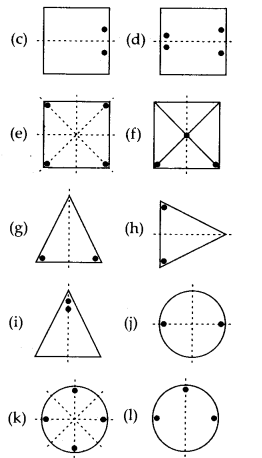
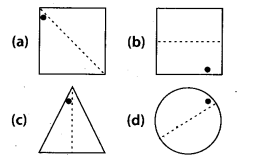
Copy the figures with punched holes and find the axes of symmetry for the following:
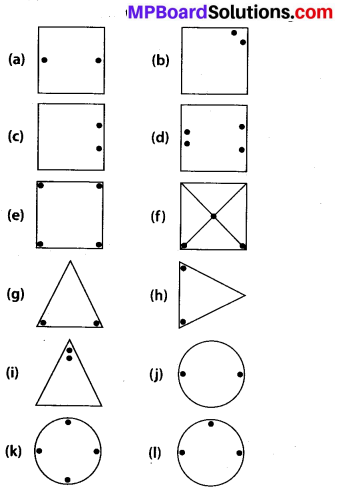
MP Board Class 7th Maths Solutions Chapter 14 Symmetry Ex 14.1 1
Solution:
The axes of symmetry in the given figures are as follows :
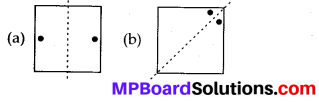
MP Board Class 7th Maths Solutions Chapter 14 Symmetry Ex 14.1 2
MP Board Class 7th Maths Solutions Chapter 14 Symmetry Ex 14.1 3

Question 2.
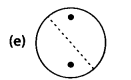
Given the line(s) of symmetry, find the other hole(s).
MP Board Class 7th Maths Solutions Chapter 14 Symmetry Ex 14.1 4
MP Board Class 7th Maths Solutions Chapter 14 Symmetry Ex 14.1 5
Solution:
MP Board Class 7th Maths Solutions Chapter 14 Symmetry Ex 14.1 6

Question 3.
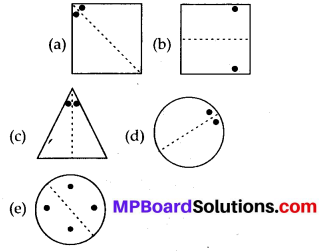
In the following figures, the mirror line (f.e., the line of symmetry) is given as a dotted line. Complete each figure performing reflection in the dotted (mirror) line. (You might perhaps place a mirror along the dotted line and look into the mirror for the image). Are you able to recall the name of the figure you complete?
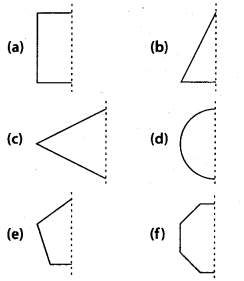
MP Board Class 7th Maths Solutions Chapter 14 Symmetry Ex 14.1 7
Solution:
The given figures can be completed as follows :
(a) It will be a square
MP Board Class 7th Maths Solutions Chapter 14 Symmetry Ex 14.1 8
(b) It will be a triangle
MP Board Class 7th Maths Solutions Chapter 14 Symmetry Ex 14.1 9
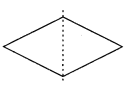
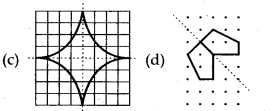
(c) It will be a rhombus
MP Board Class 7th Maths Solutions Chapter 14 Symmetry Ex 14.1 10
(d) It will be a circle
MP Board Class 7th Maths Solutions Chapter 14 Symmetry Ex 14.1 11
(e) It will be a pentagon
MP Board Class 7th Maths Solutions Chapter 14 Symmetry Ex 14.1 12
(f) It will be a octagon
MP Board Class 7th Maths Solutions Chapter 14 Symmetry Ex 14.1 13

MP Board Class 7th Maths Solutions Chapter 14 Symmetry Ex 14.1

Question 4.
The following figures have more than one line of symmetry. Such figures are said to have multiple lines of symmetry.
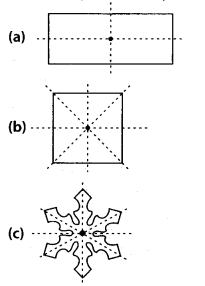
MP Board Class 7th Maths Solutions Chapter 14 Symmetry Ex 14.1 14
Identify multiple lines of symmetry, if any, in each of the following figures:
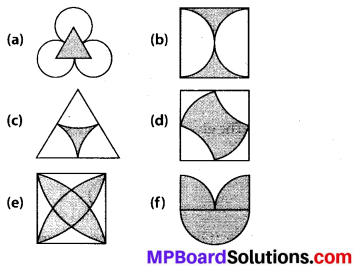
MP Board Class 7th Maths Solutions Chapter 14 Symmetry Ex 14.1 15
MP Board Class 7th Maths Solutions Chapter 14 Symmetry Ex 14.1 16
Solution:
(a) The given figure has 3 lines of symmetry.
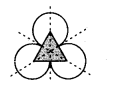
MP Board Class 7th Maths Solutions Chapter 14 Symmetry Ex 14.1 17
Hence, it has multiple lines of symmetry,

(b) The given figure has 2 lines of symmetry.
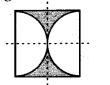
MP Board Class 7th Maths Solutions Chapter 14 Symmetry Ex 14.1 18
Hence, it has multiple lines of symmetry,

(c) The given figure has 3 lines of symmetry.

MP Board Class 7th Maths Solutions Chapter 14 Symmetry Ex 14.1 19
Hence, it has multiple lines of symmetry,

(d) The given figure has 2 lines of symmetry.
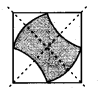
MP Board Class 7th Maths Solutions Chapter 14 Symmetry Ex 14.1 20
Hence, it has multiple lines of symmetry,

(e) The given figure has 4 lines of symmetry.
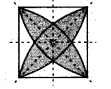
MP Board Class 7th Maths Solutions Chapter 14 Symmetry Ex 14.1 21
Hence, it has multiple lines of symmetry.

(f) The given figure has only 1 line of symmetry.
MP Board Class 7th Maths Solutions Chapter 14 Symmetry Ex 14.1 22

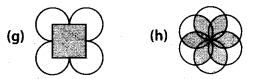
(g) The given figure has 4 lines of symmetry.
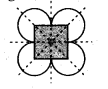
MP Board Class 7th Maths Solutions Chapter 14 Symmetry Ex 14.1 23
Hence, it has multiple lines of symmetry.

(h) The given figure has 6 lines of symmetry.
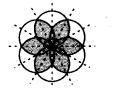
MP Board Class 7th Maths Solutions Chapter 14 Symmetry Ex 14.1 24
Hence, it has multiple lines of symmetry.

Question 5.
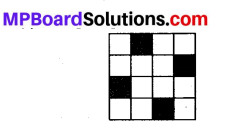
Copy the figure given here.
MP Board Class 7th Maths Solutions Chapter 14 Symmetry Ex 14.1 25
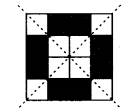
Take any one diagonal as a line of symmetry and shade a few more squares to make the figure symmetric about a diagonal. Is there more than one way to do that? Will the figure be symmetric about both the diagonals?
Solution:
We can shade a few more squares so as to make the given figure symmetric about any of its diagonals.
Yes, the figure is symmetric about both the diagonals. There is more than one way so as to make the figure symmetric about a diagonal as we can choose any of its 2 diagonals.
MP Board Class 7th Maths Solutions Chapter 14 Symmetry Ex 14.1 26

Question 6.
Copy the diagram and complete each shape to be symmetric about the mirror line(s).
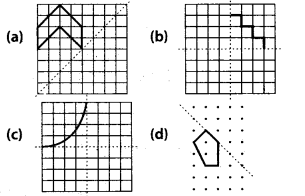
MP Board Class 7th Maths Solutions Chapter 14 Symmetry Ex 14.1 27
Solution:
The given figures can be completed about the given mirror lines as follows :
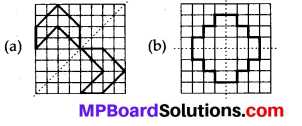
MP Board Class 7th Maths Solutions Chapter 14 Symmetry Ex 14.1 28
MP Board Class 7th Maths Solutions Chapter 14 Symmetry Ex 14.1 29

MP Board Class 7th Maths Solutions Chapter 14 Symmetry Ex 14.1

Question 7.
State the number of lines of symmetry for the following figures.
(a) An equilateral triangle
(b) An isosceles triangle
(c) A scalene triangle
(d) A square
(e) A rectangle
(f) A rhombus
(g) A parallelogram
(h) A quadrilateral
(i) A regular hexagon
(j) A circle
Solution:
(a) There are 3 lines of symmetry in an equilateral triangle.
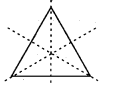
MP Board Class 7th Maths Solutions Chapter 14 Symmetry Ex 14.1 30

(b) There is only 1 line of symmetry in an isosceles triangle.
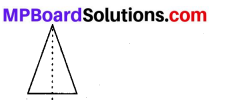
MP Board Class 7th Maths Solutions Chapter 14 Symmetry Ex 14.1 31

(c) There is no line of symmetry in a scalene triangle.
MP Board Class 7th Maths Solutions Chapter 14 Symmetry Ex 14.1 32

(d) There are 4 lines of symmetry in a square.
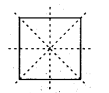
MP Board Class 7th Maths Solutions Chapter 14 Symmetry Ex 14.1 33

(e) There are 2 lines of symmetry in a rectangle.
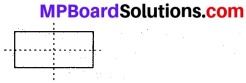
MP Board Class 7th Maths Solutions Chapter 14 Symmetry Ex 14.1 34

(f) There are 2 lines of symmetry in a rhombus.
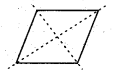
MP Board Class 7th Maths Solutions Chapter 14 Symmetry Ex 14.1 35

(g) There is no line of symmetry in a parallelogram.
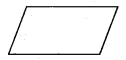
MP Board Class 7th Maths Solutions Chapter 14 Symmetry Ex 14.1 36

(h) There is no line of symmetry in a quadrilateral.
MP Board Class 7th Maths Solutions Chapter 14 Symmetry Ex 14.1 37

(i) There are 6 lines of symmetry in a regular hexagon.
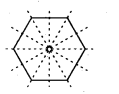
MP Board Class 7th Maths Solutions Chapter 14 Symmetry Ex 14.1 38

(j) There are infinite lines of symmetry in a circle. Some of these are represented as follows.
MP Board Class 7th Maths Solutions Chapter 14 Symmetry Ex 14.1 39

Question 8.
What letters of the English alphabet have reflectional symmetry (i.e., symmetry related to mirror reflection) about
(a) a vertical mirror
(b) a horizontal mirror
(c) both horizontal and vertical mirrors
Solution:
(a) A, H, I, M, O, T, U, V,-W, X, Y are the letters having reflectional symmetry about a vertical mirror.
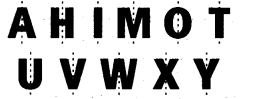
MP Board Class 7th Maths Solutions Chapter 14 Symmetry Ex 14.1 40
(b) B, C, D, E, H, I, K, O, X are the letters having reflection symmetry about a horizontal mirror.

MP Board Class 7th Maths Solutions Chapter 14 Symmetry Ex 14.1 41
(c) H, I, O, X are the letters having reflectional symmetry about both horizontal and vertical mirrors.

MP Board Class 7th Maths Solutions Chapter 14 Symmetry Ex 14.1 42

MP Board Class 7th Maths Solutions Chapter 14 Symmetry Ex 14.1

Question 9.
Give three examples of shapes with no line of symmetry.
Solution:
A scalene triangle, a parallelogram and a trapezium do not have any line of symmetry.
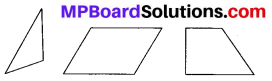
MP Board Class 7th Maths Solutions Chapter 14 Symmetry Ex 14.1 43

Question 10.
What other name can you give to the line of symmetry of
(a) an isosceles triangle?
(b) a circle?
Solution:
(a) An isosceles triangle has only 1 line of symmetry.
MP Board Class 7th Maths Solutions Chapter 14 Symmetry Ex 14.1 44
Which divides the triangle into two equal parts.
Therefore, this line of symmetry is the median and also the altitude of isosceles triangle.
(b) There are infinite lines of symmetry in a circle. Some of these are represented as follows.
MP Board Class 7th Maths Solutions Chapter 14 Symmetry Ex 14.1 45
It can be concluded that each line of symmetry is the diameter of the circle.
MP Board Class 7th Maths Solutions

MP Board Class 7th Maths Solutions Chapter 1 Integers Ex 1.3

MP Board Class 7th Maths Solutions Chapter 1 Integers Ex 1.3

Question 1.
Find each of the following products:
(a) 3 × (-1)
(b) (-1) × 225
(c) (-21) × (-30)
(d) (-316) × (-1)
(e) (-15) × 0 × (-18)
(f) (-12) × (-11) × (10)
(g) 9 × (-3) × (- 6)
(h) (-18) × (-5) × (-4)
(i) (-1) × (-2) × (-3) × 4
(j) (-3) × (-6) × (-2) × (-1)
Solution:
(a) 3 × (-1) = _ 3
(b) (-1) × 225 = – 225
(c) (-21) × (-30) = 630 .
(d) (-316) × (-1) = 316
(e) (-15) × 0 × (-18) = 0
(f) (-12) × (-11) × 10 = 1320
(g) 9 × (-3) × (-6) = 162
(h) (-18) × (-5) × (-4) = -360
(i) (-1) × (-2) × (-3) × 4 = -24
(j) (-3) × (-6) × (-2) × (-1) = 36

MP Board Class 7th Maths Solutions Chapter 1 Integers Ex 1.3

Question 2.
Verify the following:
(a) 18 × [7 + (-3)] = [18 × 7] + [18 × (-3)]
(b) (-21) × [(- 4) + (- 6)]
= [(-21) × (- 4)] + [(-21) × (- 6)]
Solution:
(a) L.H.S. = 18 × [7 + (-3)]
= 18 × [7 – 3] = 18 × 4 = 72
R.H.S. = [18 × 7] + [18 × (-3)] = 126 – 54 = 72
Hence, 18 × [7 + (-3)] = [18 × 7] + [18 × (-3)]
= [(-21) × (-4)] + [(-21) × (-6)]

Question 3.
(i) For any integer a, what is (-1) × a equal to?
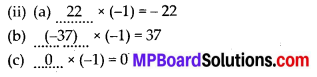
(ii) Determine the integer whose product with (-1) is
(a) -22
(b) 37
(c) 0
Solution:
(i) (-1) × a = -a
MP Board Class 7th Maths Solutions Chapter 1 Integers Ex 1.3 4

Question 4.
Starting from (-1) × 5, write various products showing some pattern to show (-1) × (-1) = 1.
Solution:
-1 × 5 = – 5
-1 × 4 = -4 = – 5 + 1; -1 × 3 = -3 = -4 + 1
-1 × 2 = -2 = -3 + 1; -1 × 1= -1 = -2 + 1
-1 × 0 = 0 = – 1 + 1;
Therefore, -1 × (-1) = 0 + 1 = 1

MP Board Class 7th Maths Solutions Chapter 1 Integers Ex 1.3

Question 5.
Find the product using suitable properties:
(a) 26 × (- 48) + (- 48) × (-36)
(b) 8 × 53 × (-125)
(c) 15 × (-25) × (- 4) × (-10)
(d) (-41) × 102
(e) 625 × (-35) + (- 625) × 65
(f) 7 × (50 – 2)
(g) (-17) × (-29)
(h) (-57) × (-19)+ 57
Solution:
(a) 26 × (-48) + (-48) × (-36)
= (-48) × 26 + (-48) × (-36) (∵ b × a =a × b)
= (-48)[26 – 36] [∵ (a × b) + (a × c) = a × (b + c)] = (-48) × (-10) = 480

(b) 8 × 53 × (-125) = 8 × [53 × (-125)]
[∵ a × b × C = a × (b × C)] = 8 × (- 6625) = – 53000

(c) 15 × (-25) × (-4) × (-10)
= 15 × [(-25) × (-4)] × (-10)
= 15 × [100] × (-10) = 15 × (-1000)
= -15000

(d) (-41) × 102 = (-41) × (100 + 2)
= (-41) × 100 + (-41) × 2
[∵ a × (b + c) = (a × b) + (a × c)]
= -4100 – 82 = -4182

(e) 625 × (-35) + (-625) × 65
= 625 × [(-35) + (-65)]
(a × b) + (a × c) = a × (b + c)]
= 625 × [-100] = – 62500

(f) 7 × (50 – 2) = (7 × 50) – (7 × 2)
[ ∵ a × (b – c) = (a × b) – (a × c)]
= 350 – 14 = 336

(g) (-17) × (-29) = (-17) × [-30 + 1]
= [(-17) × (-30)] + [(-17) × 1]
[∵ a × (b + c) = (a × b) + (a × c)] = [510] + [-17] = 493

(h) (-57) × (-19) + 57 = (57 × 19) + (57 × 1)
= 57 × [19 +1]
[∵ (a × b) + (a × c) = a × (b + c)]
= 57 × 20
= 1140

MP Board Class 7th Maths Solutions Chapter 1 Integers Ex 1.3

Question 6.
A certain freezing process requires that room temperature be lowered from 40°C at the rate of 5°C every hour. What will be the room temperature 10 hours after the process begins?
Solution:
Initial temperature = 40°C
Change in temperature per hour = – 5°C
Change in temperature after 10 hours = (-5) × 10 = – 50°C
Hence, final temperature = 40°C + (-50°C)
= -10°C

Question 7.
In a class test containing 10 questions, 5 marks are awarded for every correct answer and (-2) marks are awarded for every incorrect answer and 0 for questions not attempted.
(i) Mohan gets four correct and six incorrect answers. What is his score?
(ii) Reshma gets five correct answers and five incorrect answers, what is her score?
(iii) Heena gets two correct and five incorrect answers out of seven questions she attempts. What is her score?
Solution:
Marks given for 1 correct answer = 5
Marks given for 1 wrong answer = – 2
(i) Marks given for 4 correct answers = 5 × 4 = 20
Marks given for 6 wrong answers = -2 × 6 = -12
Marks obtained by Mohan = 20 – 12 = 8

(ii) Marks given for 5 correct answers = 5 × 5 = 25
Marks given for 5 wrong answers = -2 × 5 = – 10
Marks obtained by Reshma = 25 – 10 = 15

(iii) Marks given for 2 correct answers = 5 × 2 = 10
Marks given for 5 wrong answers = -2 × 5 = -10
∴ Marks obtained by Heena = 10 – 10 = 0

MP Board Class 7th Maths Solutions Chapter 1 Integers Ex 1.3

Question 8.
A cement company earns a profit of ₹ 8 per bag of white cement sold and a loss of ₹ 5 per bag of grey cement sold.
(a) The company sells 3,000 bags of white cement and 5,000 bags of grey cement in a month. What is its profit or loss?
(b) What is the number of white cement bags it must sell to have neither profit nor loss, if the number of grey bags sold is 6,400 bags.
Solution:
Profit is denoted by a positive integer and loss is denoted by a negative integer.
Profit earned while selling 1 bag of white cement = ₹ 8
Loss incurred while selling 1 bag of grey cement = – ₹ 5
(a) Profit earned while selling 3000 bags of white cement = ₹ 8 × 3000 = ₹ 24000
Loss incurred while selling 5000 bags of grey cement = ₹ (5 × 5000) = -₹ 25000
Total profit/loss earned = Profit + Loss
= ₹ [24000 + (-25000)] = – ₹ 1000
Therefore, a loss of ₹ 1000 will be incurred by the company.

(b) Loss incurred while selling 6400 bags of grey cement = ₹ (-5) × 6400 = – ₹ 32000
Let x number of bags of white cement to be sold.
Profit earned while selling x bags of white cement = ₹ x × 8 = ₹ 8,
In condition of no profit no loss,
Profit earned + Loss incurred = 0
8x + (-32000) = 0 ⇒ 8x = 32000 ⇒ x = 4000
Therefore, 4000 bags of white cement must be sold.

MP Board Class 7th Maths Solutions Chapter 1 Integers Ex 1.3

Question 9.
Replace the blank with an integer to make it a true statement.
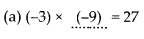
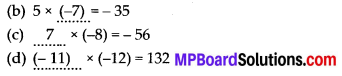
(a) (-3) × ….. = 27
(b) 5 × ….. = -35
(c) …… × (-8) = -56
(d) …… × (-12) = 132
Solution:
MP Board Class 7th Maths Solutions Chapter 1 Integers Ex 1.3 2
MP Board Class 7th Maths Solutions Chapter 1 Integers Ex 1.3 3

MP Board Class 7th Maths Solutions

MP Board Class 7th Maths Solutions Chapter 15 ठोस आकारों का चित्रण Ex 15.4

MP Board Class 7th Maths Solutions Chapter 15 ठोस आकारों का चित्रण Ex 15.4

प्रश्न 1.
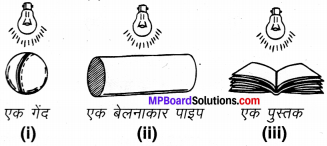
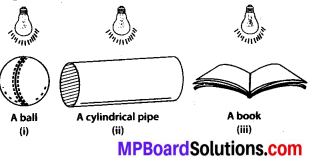
निम्नलिखित ठोसों के ठीक ऊपर एक जलता हुआ बल्ब रखा गया है। प्रत्येक स्थिति में प्राप्त छाया के आकार का नाम बताइए। इस छाया का एक रफ चित्र बनाने | का प्रयास कीजिए। (पहले आप प्रयोग करने का प्रयास करें और फिर उत्तर दें।)
MP Board Class 7th Maths Solutions Chapter 15 ठोस आकारों का चित्रण Ex 15.4 image 1
हल:
जब बल्ब की रोशनी निम्नलिखित ठोसों पर पड़ती | है, तो उनकी छाया का आकार निम्न रूप में दिखाई पड़ता है –

  1. गेंद की छाया वृत्त के रूप में दिखाई पड़ती है।
  2. बेलनाकार पाइप की छाया एक आयत के रूप में दिखाई देती है।
  3. एक पुस्तक की छाया एक लगभग आयत की तरह दिखाई देती है।

MP Board Solutions

प्रश्न 2.
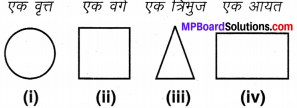
यहाँ कुछ 3-D वस्तुओं की छायाएँ दी गई हैं, जो उन्हें एक ओवरहैड प्रोजेक्टर के लैम्प (बल्ब) के अन्तर्गत या नीचे रखकर प्राप्त की गई हैं। प्रत्येक छाया से मिलान वाले ठोस की पहचान कीजिए (इनमें एक से अधिक उत्तर हो सकते हैं।)
MP Board Class 7th Maths Solutions Chapter 15 ठोस आकारों का चित्रण Ex 15.4 image 2
हल:

  1. दी हुई छाया एक प्लेट अथवा गोले को निरूपित करती है।
  2. दी हुई छाया एक घन को निरूपित करती है।
  3. दी हुई छाया एक शंकु अथवा जोकर की टोपी को निरूपित करती है।
  4. दी हुई छाया घनाभ अथवा बेलन को निरूपित करती है।

प्रश्न 3.
जाँच कीजिए कि क्या ये कथन सत्य हैं:

  1. एक घन एक आयत के आकार की छाया दे सकता है।
  2. एक घन एक षद्भुज के आकार की छाया दे सकता है।

उत्तर:

  1. सत्य
  2. असत्य।

MP Board Solutions

पाठ्य-पुस्तक पृष्ठ संख्या # 307

प्रयास कीजिए

प्रश्न 1.
पाठ्य-पुस्तकमें दियेगयेप्रत्येकठोसकेलिए,तीन दॄश्य (1), (2) और (3) दिए हैं। प्रत्येक ठोस के लिए संगत ऊपर के, सामने के और पार्श्व दृश्यों की पहचान कीजिए।
उत्तर:

(a) → (1) → सामने, (2) → पार्श्व, (3) → ऊपर
(b) → (1) → ऊपर, (2) → पार्श्व, (3) → सामने
(c) → (1) → पाव, (2) → सामने, (3) → ऊपर
(d) → (1) → पार्श्व, (2) → ऊपर, (3) → सामने।

प्रश्न 2.
पाठ्य-पुस्तक में दिये गये प्रत्येक ठोस का, तीर द्वारा सूचित दिशा से उसे देखने पर एक दृश्य खींचिए।
हल:
ठोस का तीर द्वारा सूचित दिशा में देखने पर दृश्य
MP Board Class 7th Maths Solutions Chapter 15 ठोस आकारों का चित्रण Ex 15.4 image 3

MP Board Class 7th Maths Solutions

MP Board Class 7th Hindi Sugam Bharti विविध प्रश्नावली 3

MP Board Class 7th Hindi Sugam Bharti Solutions विविध प्रश्नावली 3

प्रश्न-1.
सही जोड़ी बनाइए
1. नौका – (क) कलाकार
2. कला – (ख) लिपि
3. राजी – (ग) पतवार
4. ब्रेल – (घ) खुशी
उत्तर-
1. (ग),
2. (क),
3. (घ),
4. (ख)।

प्रश्न- 2.
दिए गए शब्दों में से सही शब्द चुनकर रिक्त स्थानों की पूर्ति कीजिए
मानसिक, चिह्न, सच, छूकर
1. उठे हुए अंको को …………………………. वह एकदम सही समय बता देता है।
2. हँसने वाला व्यक्ति शारीरिक और …………………………. दृष्टि से स्वस्थ होता है।
3. मत खोजो …………………………. किसी को।
4. …………………………. बोलने वाले पर हमेशा अल्लाह की मेहरबानी रहती है।
उत्तर-
1. छूकर,
2. मानसिक,
3. चिह्न,
4. सच।

MP Board Solutions

प्रश्न-3
निम्नलिखित प्रश्नों के एक-एक वाक्य में उत्तर लिखिए
(क) नेत्रहीन छात्र किस लिपि में पढ़ते हैं?
उत्तर-
नेत्रहीन छात्र ब्रेल लिपि में पढ़ते हैं।

(ख) कादिर की रक्षा किस गुण के कारण हुई?
उत्तर-
कादिर की रक्षा सच बोलने के कारण हुई

(ग) भारत माता के बेटे क्या बनना चाहते हैं?
उत्तर-
भारत माता के बेटे फौजी बनना चाहते हैं।

(घ) कैलाश मानसरोवर कहाँ स्थिति है?
उत्तर-
कैलाश मानसरोवर चीन में स्थित है।

(ङ) स्वर्ग का गंधर्व किसे बनाया गया है?
उत्तर-
स्वर्ग का गंधर्व साधु कलाकार को बनाया गया है।

प्रश्न 4.
निम्नलिखित प्रश्नों के उत्तर तीन से पाँच वाक्य में लिखिए

(क) संयोग और प्रयत्न से पैदा किए गए संगीत में क्या अंतर है?
उत्तर-
जिस संगीत को राजा सुनना चाहता है वह संगीत तो कभी-कभी संयोग से बन पड़ता है। प्रयत्न से पैदा किया हुआ संगीत राजा को प्रसन्न न कर सकेगा। अर्थात मन से उत्पन्न संगीत अतुल्नीय होता है जबकि प्रयत्न से उत्पन्न संगीत में प्राण नहीं होते हैं।

(ख) वाणी से आदमी की पहचान किस तरह होती है?
उत्तर-
आदमी अपनी वाणी से खुद अपनी पहचान बता देता है। जो जितना बड़ा होता है वह उतना ही नम्र और विनयी होता है और दूसरों का सम्मान करता है।

MP Board Solutions

(ग) अगणित सीश काटने से कवि का क्या तात्पर्य है?
उत्तर-
अगणित सीश कटाने से कवि का तात्पर्य है कि देश के फौजी सिपाही अपने देश की आनु के लिए हजारों बलिदान खुशी-खुशी कर सकते हैं।

(घ) सरदार ने अपनी और कादिर की तुलना किन शब्दों में की है?
उत्तर-
भाइयो, यह लड़का आज से हमारा गुरु है। यह छोटा बच्चा अपनी माँ की आज्ञा का पालन करने में ऐसा सावधान है और हम एक हैं कि बूढ़े होने को आए, अब तक उस मालिक की आज्ञा का पालन नहीं करते, जिसने हमें दुनिया में भेजा है। सचमुच हमारे लिए बड़े शर्म की बात है। आओ, आज से हम यह नीच काम छोड़ दें और हमेशा सच बोलने की आदत डालें।

(ङ) शीला की हार जीत में कैसे बदल गई?
उत्तर-
अब शीला पढ़ने के बाद खाली समय में नए वर्ष, होली, दीवाली, ईद, क्रिसमस, जन्मदिन आदि के कार्ड्स पर सुन्दर-सुन्दर पेंटिंग बनाती है; और उन्हें दुकान पर बिकने के लिए दे आती है। हर महीने वह इससे इतना धन कमा लेती है कि उससे उसकी अपनी जरूरतें पूरी हो जाती हैं। पढ़ने के लिए उसे छात्रवृत्ति मिल रही है। अपने मम्मी-पापा के आगे हाथ नहीं पसारती। सच कहूँ तो विकलांगता ने उसे अभी से आत्मनिर्भर बना दिया है। उसकी हार भी जीत में बदल गई है।

प्रश्न 5.
‘मुस्कान एक औषधि है’ निबंध के आधार पर अपने विचार लिखिए
उत्तर-
छात्र स्वयं करे।

प्रश्न 6.
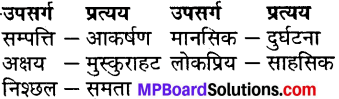
निम्नलिखित शब्दों में से उपसर्ग और प्रत्यय छाँटिए
आकर्षण, सम्पत्ति, मुस्कुराहट, अक्षय, समता, निश्छल, दुर्घटना , मानसिक, लोकप्रिय, साहसिक
उत्तर-
MP Board Class 7th Hindi Sugam Bharti विविध प्रश्नावली 3 1

प्रश्न 7.
निम्नलिखित शब्दों के विलोम लिखिए
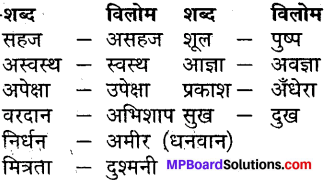
सहज, अस्वस्थ, अपेक्षा, वरदान, निर्धन, शूल, आज्ञा, प्रकाश, सुख, मित्रता
उत्तर-
MP Board Class 7th Hindi Sugam Bharti विविध प्रश्नावली 3 2

प्रश्न 8.
निम्नलिखित में से विशेषण छांटिए और उनके प्रकार लिखिए
तुम्हारे इन इन आगे-पीछे के झोलों में क्या भरा है? आगे का झोला तो काफी भारी है और पीछे का झोला हल्का है और उसमें नीचे छेद भी है। उन दोनों यात्रियों ने कहा-पराया धन किस काम का? इस भारी थैले को आप फेंकिए।
उत्तर-
विशेषण – प्रकार
आगे-पीछे – संकेतवाचक विशेषण
आगे – संकेतवाचक विशेषण
काफी – परिणामवाचक विशेषण
पीछे – संकेतवाचक विशेषण
हल्का – गुणवाचक विशेषण
भारी – परिणामवाचक विशेषण

MP Board Solutions

प्रश्न 9.
निम्नलिखित अवतरण में कारक पहचान कर लिखिए
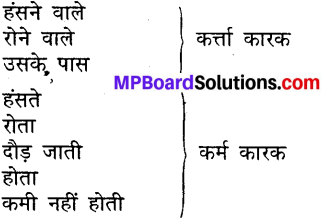
हँसने वाले के साथ सब हंसते हैं; रोने वाले के साथ कोई नहीं रोता। हंसने से शरीर में एक स्फूर्ति की लहर दौड़ जाती है। जिसके पास यह खजाना होता है, उसके पास किसी बात की कमी नहीं होती है। हँसना ही जीतना है।
उत्तर-
MP Board Class 7th Hindi Sugam Bharti विविध प्रश्नावली 3 3
MP Board Class 7th Hindi Sugam Bharti विविध प्रश्नावली 3 4

प्रश्न 10.
निम्नलिखित अवतरण में विराम चिह लगाइए-
‘राजा जब अगे बढ़ गए तब एक आदमी जो कुछ दूर खड़ा वह सारा नजारा देख रहा था साधु के पास आया पूछा साधुजी आप तो दृष्टिहीन हैं विना देखे कैसे पहचान लिया कि कौन सिपाही है कौन हवलदार कौन मंत्री कौन राजा
उत्तर-
राजा जब आगे बढ़ गए तब तक आदमी जो कुछ दूर खड़ा वह सारा नजारा देख रहा था। साधु के पास आया, पूछा-साधु जी आप तो दृष्टिहीन हैं। बिना देखे कैस पहचान लिया कि कौन सिपाही है, कौन हवलदार, कौन मंत्री, और कौन राजा?

प्रश्न 11.
निम्नलिखित शब्दों में से कृदन्त व तद्धित शब्द छाँटिए-
शंकालु, कृपालु, लिखावट, लड़कपन, वैज्ञानिक, हँसोड़, गायक, लालिमा
उत्तर-
कृदन्त शब्द – तद्धित शब्द
शंकालु – लिखावट
वैज्ञानिक – हँसोड़
कृपालु – लड़कपन
गायक – लालिमा

प्रश्न 12.
“जीत” कहानी में शीला के चरित्र से आपको क्या प्रेरणा मिली? लिखिए।
उत्तर-
छात्र स्वयं करें।

MP Board Class 7th Hindi Solutions

MP Board Class 7th Maths Solutions Chapter 15 ठोस आकारों का चित्रण Ex 15.3

MP Board Class 7th Maths Solutions Chapter 15 ठोस आकारों का चित्रण Ex 15.3

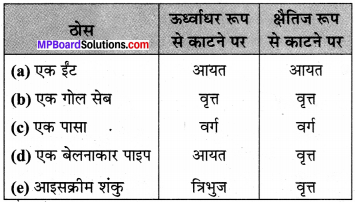
प्रश्न 1.
आपको कौन-सा अनुप्रस्थ काट प्राप्त होता है जब आप निम्नलिखित ठोसों को
(i) ऊर्ध्वाधर रूप से और, (ii) क्षैतिज रूप से काटते हैं ?

(a) एक ईंट
(b) एक गोल सेब
(c) एक पासा
(d) एक बेलनाकार पाइप
(e) आइसक्रीम शंकु।

हल:
MP Board Class 7th Maths Solutions Chapter 15 ठोस आकारों का चित्रण Ex 15.3 image 1
पाठ्य-पुस्तक पृष्ठ संख्या # 305-306

MP Board Class 7th Maths Solutions

MP Board Class 7th Maths Solutions Chapter 15 Visualising Solid Shapes Ex 15.4

MP Board Class 7th Maths Solutions Chapter 15 Visualising Solid Shapes Ex 15.4

Question 1.
A bulb is kept burning just right above the following solids. Name the shape of the shadows obtained in each case. Attempt to give a rough sketch of the shadow.
MP Board Class 7th Maths Solutions Chapter 15 Visualising Solid Shapes Ex 15.4 1
Solution:
The shapes of the shadows of these figures will be as follows.
(i) A ball
MP Board Class 7th Maths Solutions Chapter 15 Visualising Solid Shapes Ex 15.4 2
The shape of the shadow of a ball will be a circle.
(ii) A cylindrical pipe
MP Board Class 7th Maths Solutions Chapter 15 Visualising Solid Shapes Ex 15.4 3
The shape of the shadow of a cylindrical pipe will be a rectangle.

(iii) A book
MP Board Class 7th Maths Solutions Chapter 15 Visualising Solid Shapes Ex 15.4 4
The shape of the shadow of a book will be a rectangle.
MP Board Class 7th Maths Solutions Chapter 15 Visualising Solid Shapes Ex 15.4

Question 2.
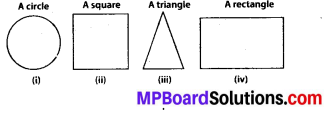
Here are the shadows of some 3-D objects, when seen under the lamp of an overhead projector. Identify the solid(s) that match each shadow. (There may be multiple answers for these!)
MP Board Class 7th Maths Solutions Chapter 15 Visualising Solid Shapes Ex 15.4 5
Solution:
The given shadows can be obtained in case of the following objects.
(i) Compact disk
(ii) A dice
(iii) Triangular pyramid
(iv) NoteBook

Question 3.
Examine if the following are true statements:
(i) The cube can cast a shadow in the shape of a rectangle.
(ii) The cube can cast a shadow in the shape of a hexagon.
Solution:
A cube can cast a shadow only in the shape of a square. Therefore, any other shape is not possible.

MP Board Class 7th Maths Solutions

MP Board Class 7th Maths Solutions Chapter 1 Integers Ex 1.2

MP Board Class 7th Maths Solutions Chapter 1 Integers Ex 1.2

Question 1.
Write down a pair of integers whose:
(a) sum is -7
(b) difference is -10
(c) sum is 0
Solution:
(a) – 9 + (2) = – 7
(b) – 14 – (-4) = – 10
(c) 6 + (-6) = 0

Question 2.
(a) Write a pair of negative integers whose difference gives 8.
(b) Write a negative integer and a positive integer whose sum is -5.
(c) Write a negative integer and a positive integer whose difference is -3.
Solution:
(a) -3 – (-11) = 8
(b) -10 + 5 = -5
(c) -1 – (2) = – 3

MP Board Class 7th Maths Solutions Chapter 1 Integers Ex 1.2

Question 3.
In a quiz, team A scored – 40,10,0 and team B scored 10, 0, -40 in three successive rounds. Which team scored more? Can we say that we can add integers in any order?
Solution:
Team A scored – 40, 10, 0.
Total score of team A = – 40 + 10 + 0 = – 30
Team B Scored 10, 0, -40.
Yes, we can add integers in any order. We had observed that the scores obtained by both teams in successive rounds were numerically equal but different in order. Yet, the total score of both teams were equal.

MP Board Class 7th Maths Solutions Chapter 1 Integers Ex 1.2

Question 4.
Fill in the blanks to make the following statements true:
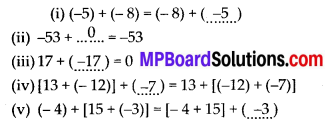
(i) (-5) + (- 8) = (- 8) + (….)
(ii) -53 + …… = -53
(iii) 17 + ….. = 0
(iv) [13 + (- 12)] + (…… ) =13 + [(-12) + (-7)]
(v) (- 4) + [15 + (-3)] = [-4 + 15] + …..
Solution:
MP Board Class 7th Maths Solutions Chapter 1 Integers Ex 1.2 1

MP Board Class 7th Maths Solutions

MP Board Class 7th Maths Solutions Chapter 15 ठोस आकारों का चित्रण Ex 15.2

MP Board Class 7th Maths Solutions Chapter 15 ठोस आकारों का चित्रण Ex 15.2

प्रश्न 1.
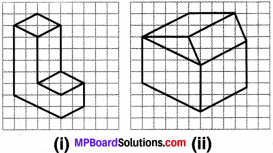
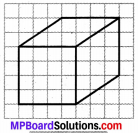
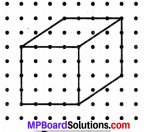
एक समदूरिक बिन्दुकित कागज का प्रयोग करते हुए, पाठ्य-पुस्तक में दी हुई आकृतियों में से प्रत्येक का एक समदूरिक चित्र खींचिए।
हल:
पाठ्य-पुस्तक में दिये हुए प्रत्येक आकार की समदूरिक आकृति अग्र प्रकार है –
MP Board Class 7th Maths Solutions Chapter 15 ठोस आकारों का चित्रण Ex 15.2 image 1

MP Board Solutions

प्रश्न 2.
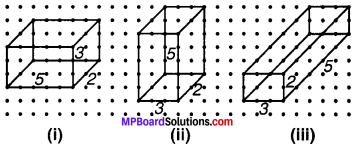
किसी घनाभ की विमाएँ 5 cm, 3 cm और – 2 cm हैं। इस घनाभ के तीन भिन्न-भिन्न समदूरिक चित्र खींचिए।
हल:
घनाभ के तीन भिन्न-भिन्न समदूरिक चित्र जिनकी विमाएँ 5 cm, 3 cm तथा 2 cm हैं।
MP Board Class 7th Maths Solutions Chapter 15 ठोस आकारों का चित्रण Ex 15.2 image 2

प्रश्न 3.
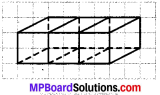
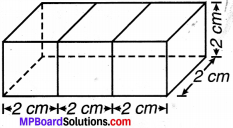
2 cm किनारे वाले तीन घनों को परस्पर सटाकर रखते हुए एक घनाभ बनाया गया है। इस घनाभ का एक तिर्यक अथवा एक समदूरिक चित्र खींचिए।
हल:
2 cm किनारे वाले 3 घनों को परस्पर सटाकर रखते हुए बनाया गया घनाभ
MP Board Class 7th Maths Solutions Chapter 15 ठोस आकारों का चित्रण Ex 15.2 image 3

प्रश्न 4.
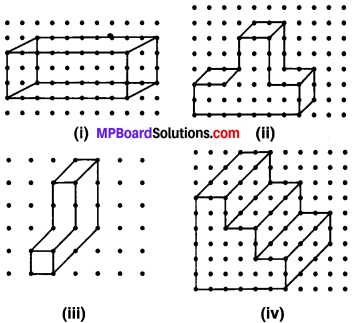
पाठ्य-पुस्तक में दिये हुए समदूरिक आकारों में से प्रत्येक के लिए एक तिर्यक चित्र खींचिए।
हल:
पाठ्य-पुस्तक में दिए हुए समदूरिक आकार का तिर्यक चित्र निम्न है –
MP Board Class 7th Maths Solutions Chapter 15 ठोस आकारों का चित्रण Ex 15.2 image 4

MP Board Solutions

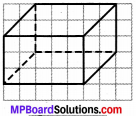
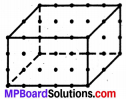
प्रश्न 5.
निम्नलिखित में से प्रत्येक के लिए (i) एक तिर्यक चित्र और (ii) एक समदूरिक चित्र खींचिए
(a) 5 cm, 3 cm और 2 cm विमाओं वाला एक घनाभ (क्या आपका घनाभ अद्वितीय है ?)
(b) 4 cm लम्बे किनारे वाला एक घन।
हल:
(a) (i) 5 cm, 3 cm और 2 cm विमाओं वाले घनाभ का तिर्यक चित्र निम्न है –
MP Board Class 7th Maths Solutions Chapter 15 ठोस आकारों का चित्रण Ex 15.2 image 5
यह चित्र अद्वितीय नहीं है।

(ii) उपर्युक्त घनाभ का समदूरिक चित्र निम्न है –
MP Board Class 7th Maths Solutions Chapter 15 ठोस आकारों का चित्रण Ex 15.2 image 6

(b) (i) 4 cm भुजा वाले घन का तिर्यक चित्र निम्न है –
MP Board Class 7th Maths Solutions Chapter 15 ठोस आकारों का चित्रण Ex 15.2 image 7

(ii) उपर्युक्त घन का समदूरिक चित्र अग्र प्रकार है –
MP Board Class 7th Maths Solutions Chapter 15 ठोस आकारों का चित्रण Ex 15.2 image 8

MP Board Solutions

पाठ्य-पुस्तक पृष्ठ संख्या # 302

इन्हें कीजिए

प्रश्न:
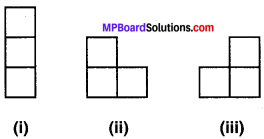
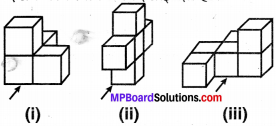
कुछ घन लीजिए तथा उन्हें संलग्न आकृति में दर्शाए अनुसार व्यवस्थित कीजिए। अब अपने मित्र से पूछिए कि वह इसका अनुमान लगाए कि तीर के चिह्न के अनुसार इसको देखने पर कितने घन दिखाई देते हैं ?
MP Board Class 7th Maths Solutions Chapter 15 ठोस आकारों का चित्रण Ex 15.2 image 9
हल:
जब तीर के चिह्न की दिशा में देखते हैं, तो आकृति (i) में 3 घन, आकृति (ii) में 3 घन तथा आकृति (iii) में 4 घन दिखाई देते हैं।

प्रयास कीजिए

प्रश्न:
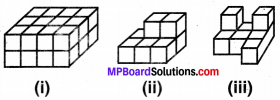
यह अनुमान लगाने का प्रयत्न कीजिए कि निम्नलिखित व्यवस्थाओं में घनों की संख्या कितनी है।
MP Board Class 7th Maths Solutions Chapter 15 ठोस आकारों का चित्रण Ex 15.2 image 10
हल:

  1. आकृति (i) में 24 घन हैं।
  2. आकृति (ii) में 8 घन हैं।
  3. आकृति (iii) में 9 घन हैं।

पाठ्य-पुस्तक पृष्ठ संख्या # 303 प्रयास कीजिए

प्रश्न 1.
दो पासों को आकृति में दर्शाए अनुसार परस्पर सटाकर । रखा गया है। क्या आप बता सकते हैं कि निम्नलिखित फलकों के विपरीत
MP Board Class 7th Maths Solutions Chapter 15 ठोस आकारों का चित्रण Ex 15.2 image 11
फलकों पर अंकित बिन्दुओं का योग क्या होगा ?
(a) 5 + 6
(b) 4 + 3
(याद रखिए कि एक पासे पर सम्मुख फलकों पर अंकित संख्याओं का योग सदैव 7 होता है।)
हल:
(a) 5 + 6 के सम्मुख फलकों का योग 2 + 1 = 3 होगा।
(b) 4 + 3 के सम्मुख फलकों का योग 3 + 4 = 7 होगा।

MP Board Solutions

प्रश्न 2.
2 cm किनारों वाले तीन घनों को परस्पर सटाकर रखते हुए, एक घनाभ बनाया गया है। इस घनाभ का एक तिर्यक चित्र बनाने का प्रयास कीजिए और बताइए कि इसकी लम्बाई, चौड़ाई और ऊँचाई क्या हो सकती है?
हल:
MP Board Class 7th Maths Solutions Chapter 15 ठोस आकारों का चित्रण Ex 15.2 image 12
घनाभ की लम्बाई = 2 cm + 2 cm + 2 cm = 6 cm
घनाभ की चौड़ाई = 2 cm
घनाभ की ऊँचाई = 2 cm

पाठ्य-पुस्तक पृष्ठ संख्या # 304

MP Board Class 7th Maths Solutions

MP Board Class 7th Maths Solutions Chapter 15 Visualising Solid Shapes Ex 15.3

MP Board Class 7th Maths Solutions Chapter 15 Visualising Solid Shapes Ex 15.3

Question 1.
What cross-sections do you get when you give a
(i) vertical cut
(ii) horizontal cut
to the following solids?
(a) A brick
(b) A round apple
(c) A die
(d) A circular pipe
(e) An ice cream cone
Solution:
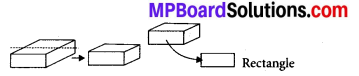
(a) Brick
We can give a vertical cut to a brick in the following way.
MP Board Class 7th Maths Solutions Chapter 15 Visualising Solid Shapes Ex 15.3 1
We can give a horizontal cut to a brick in the following way.
MP Board Class 7th Maths Solutions Chapter 15 Visualising Solid Shapes Ex 15.3 2

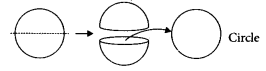
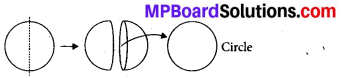
(b) A round apple
We can give a vertical cut to a round apple in the following way.
MP Board Class 7th Maths Solutions Chapter 15 Visualising Solid Shapes Ex 15.3 3
We can give a horizontal cut to a round apple in the following way.
MP Board Class 7th Maths Solutions Chapter 15 Visualising Solid Shapes Ex 15.3 4

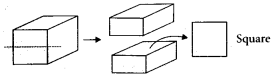
(c) A die
We can give a vertical cut to a dice in the following way.
MP Board Class 7th Maths Solutions Chapter 15 Visualising Solid Shapes Ex 15.3 5
We can give a horizontal cut to a dice in the following way.
MP Board Class 7th Maths Solutions Chapter 15 Visualising Solid Shapes Ex 15.3 6

MP Board Class 7th Maths Solutions Chapter 15 Visualising Solid Shapes Ex 15.3

(d) A circular pipe
We can give a vertical cut to a circular pipe in the following way.
MP Board Class 7th Maths Solutions Chapter 15 Visualising Solid Shapes Ex 15.3 7
We can give a horizontal cut to a circular pipe in the following way.
MP Board Class 7th Maths Solutions Chapter 15 Visualising Solid Shapes Ex 15.3 8

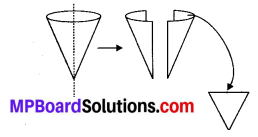
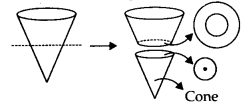
(e) An ice cream cone
We can give a vertical cut to an ice cream cone in the following way.
MP Board Class 7th Maths Solutions Chapter 15 Visualising Solid Shapes Ex 15.3 9
We can give a horizontal cut to an ice cream cone in the following way.
MP Board Class 7th Maths Solutions Chapter 15 Visualising Solid Shapes Ex 15.3 10

MP Board Class 7th Maths Solutions

MP Board Class 7th Maths Solutions Chapter 1 Integers Ex 1.1

MP Board Class 7th Maths Solutions Chapter 1 Integers Ex 1.1

Question 1.
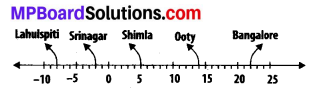
Following number line shows the temperature in degree Celsius (°C) at different places on a particular day.
MP Board Class 7th Maths Solutions Chapter 1 Integers Ex 1.1 1
(a) Observe this number line and write the temperature of the places marked on it.
(b) What is the temperature difference between the hottest and the coldest places among the above?
(c) What is the temperature difference between Lahulspiti and Srinagar?
(d) Can we say temperature of Srinagar and Shimla taken together is less than the temperature at Shimla? Is it also less than the temperature at Srinagar?
Solution:
(a) The temperature of the cities are as follows:
Lahulspiti: -8°C; Srinagar : – 2°C; Shimla : 5°C; Ooty : 14°C; Bangalore : 22°C

(b) Temperature at the hottest place,
i. e., Bangalore = 22°C
Temperature at the coldest place,
i. e., Lahulspiti = – 8°C.
∴ Temperature difference = 22° – (-8°C)
= 30°C

(c) Temperature at Lahulspiti = – 8°C;
Temperature at Srinagar = – 2°C
∴ Temperature difference = – 2°C – (-8°C)
= 6° C

(d) Temperature at Srinagar = -2°C;
Temperature at Shimla = 5°C
Temperature of Srinagar and Shimla taken together = – 2°C + 5°C = 3°C
Hence, the temperature of Srinagar and Shimla taken together is less than the temperature at Shimla but greater than the temperature at Srinagar.

MP Board Class 7th Maths Solutions Chapter 1 Integers Ex 1.1

Question 2.
In a quiz, positive marks are given for correct answers and negative marks are given for incorrect answers. If Jack’s scores in five successive rounds were 25, – 5, – 10, 15 and
Solution:
Total score of Jack at the end will be the sum of scores in five successive rounds.
∴ Jack’s total score at the end
= 25 – 5 – 10 + 15 + 10 = 35

Question 3.
At Srinagar temperature was – 5°C on Monday and then it dropped by 2°C on Tuesday. What was the temperature of Srinagar on Tuesday? On Wednesday, it rose by 4°C. What was the temperature on this day?
Solution:
Temperature on Monday = – 5°C
Temperature on Tuesday = Temperature on Monday – 2°C = -5°C – 2°C = – 7°C Temperature on Wednesday = Temperature on Tuesday + 4°C = – 7°C + 4°C = – 3°C

MP Board Class 7th Maths Solutions Chapter 1 Integers Ex 1.1

Question 4.
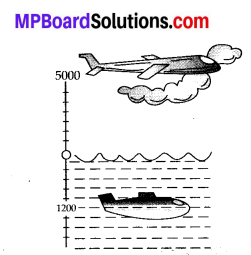
A plane is flying at the height of 5000 m above the sea level. At a particular point, it is exactly above a submarine floating 1200 m below the sea level. What is the vertical distance between them?
MP Board Class 7th Maths Solutions Chapter 1 Integers Ex 1.1 2
Height of plane = 5000 m
Depth of submarine = -1200 m
Distance between plane and submarine = 5000 – (-1200) = 5000 + 1200 = 6200 m

Question 5.
Mohan deposits ₹ 2,000 in his bank account and withdraws ₹ 1,642 from it, the next day. If withdrawal of amount from the account is represented by a negative integer, then how will you represent the amount deposited? Find the balance in Mohan’s account after the withdrawal.
Solution:
Since the amount withdrawn is represented by a negative integer, the amount deposited will be represented by a positive integer.
Amount deposited = ₹ 2000
Amount withdrawn = – ₹ 1642 Balance in Mohan’s account = Money deposited + Money withdrawn = 2000 + (-1642) = 2000 – 1642 = ₹ 358

MP Board Class 7th Maths Solutions Chapter 1 Integers Ex 1.1

Question 6.
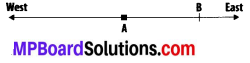
Rita goes 20 km towards east from a point A to the point B. From B, she moves 30 km towards west along the same road. If the distance towards east is represented by a positive integer then, how will you represent the distance travelled towards west? By which integer will you represent her final position from A?
MP Board Class 7th Maths Solutions Chapter 1 Integers Ex 1.1 3
Solution:
Since, the distance towards east is represented by a positive integer, then the distance travelled towards west will be represented by a negative integer.
Distance travelled in east direction = 20 km
Distance travelled in west direction = – 30 km
Distance travelled from A = 20 + (-30)
= -10 km
Therefore, we will represent the distance travelled by Rita from point A by a negative integer, i.e., -10 km (i.e., Rita is now in west direction).

Question 7.
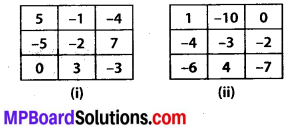
In a magic square each row, column and diagonal have the same sum. Check which of the following is a magic square.
MP Board Class 7th Maths Solutions Chapter 1 Integers Ex 1.1 4
Solution:
It can be observed that in square (i), every row and column add up to give 0. However, the sum of one of its diagonals is not 0.
As -4 – 2 = -6 ≠ 0,
Therefore,
(i) is not a magic square. Similarly, in square
(ii), each row, column, and diagonal add up to give – 9. Therefore,
(iii) is a magic square.

MP Board Class 7th Maths Solutions Chapter 1 Integers Ex 1.1

Question 8.
Verify a – (- b) = a + b for the following values of a and b.
(i) a = 21, b = 18
(ii) a = 118,b = 125
(iii) a = 75, b = 84
(iv) a = 28, b = 11
Solution:
(i) a = 21, b = 18; a + b = 21 + 18 = 39
a – (- b) = 21 – (-18) = 21 + 18 = 39

(ii) a = 118, b = 125;
a – (-b) = 118 – (-125) = 118 + 125 = 243
a + b = 118 + 125 = 243

(iii) a = 75,b = 84;
a – (-b) = 75- (-84) = 75 + 84 = 159
a + b = 75 + 84 = 159

(iv) a = 28, b = 11;
a – (-b) = 28 – (-11) = 28 + 11 = 39
a + b = 28 + 11 = 39

Question 9.
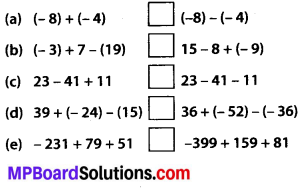
Use the sign of >, < or = in the box to make the statements true.
MP Board Class 7th Maths Solutions Chapter 1 Integers Ex 1.1 5
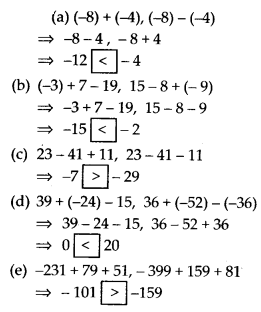
Solution:
MP Board Class 7th Maths Solutions Chapter 1 Integers Ex 1.1 6

MP Board Class 7th Maths Solutions Chapter 1 Integers Ex 1.1

Question 10.
A water tank has steps inside it. A monkey is sitting on the topmost step (i.e., the first step). The water level is at the ninth step.
(i) He jumps 3 steps down and then jumps back 2 steps up. In how many jumps will he reach the water level?
(ii) After drinking water, he wants to go back. For this, he jumps 4 steps up and then jumps back 2 steps down in every move. In how many jumps will he reach back the top step?
(iii) If the number of steps moved down is represented by negative integers and the number of steps moved up by positive integers, represent his moves in part (i) and (ii) by completing the following;
(a) – 3 + 2 -… = – 8
(b) 4 – 2 + … = 8.
In (a) the sum (- 8) represents going down by eight steps. So, what will the sum 8 in (b) represent?
Solution:
Let the number of steps moved down be represented by positive integers and the number of steps moved up be represented by negative integers.
(i) Initially, the monkey was at the 1st step. The monkey will be at step:
After 1st jump =1 + 3 = 4
After 2nd jump = 4 + (-2) = 2
After 3rd jump = 2 + 3 = 5
After 4th jump = 5 + (-2) = 3
After 5th jump = 3 + 3 = 6
After 6th jump = 6 + (-2) = 4
After 7th jump = 4 + 3 = 7
After 8th jump = 7 + (-2) = 5
After 9th jump = 5 + 3 = 8
After 10th jump = 8 + (-2) = 6
After 11th jump = 6 + 3 = 9
Hence, the monkey will reach the water level after 11 jumps.

(ii) Initially, the monkey was at step = 9 The monkey will be at step:
After 1st jump = 9 + (- 4) = 5
After 2nd jump = 5 + 2 = 7
After 3rd jump = 7 + (- 4) = 3
After 4th jump = 3 + 2 = 5
After 5th jump = 5 + (- 4) = 1
Clearly, the monkey will reach back the top step after 5 jumps.

(iii) If number of steps moved down is represented by negative integers and number of steps moved up is represented by positive integers, then his moves will be as follows:

Moves in part (i)

(a) -3 + 2 – 3 + 2 – 3 + 2 – 3 + 2 – 3 + 2 – 3
= -8
Moves in part (ii)

(b) 4 – 2 + 4 – 2 + 4 = 8
Moves in (b) represents going up 8 steps.

MP Board Class 7th Maths Solutions