MP Board Class 12th Special Hindi Sahayak Vachan Solutions Chapter 4 मेरे जीवन के कुछ चित्र

MP Board Class 12th Special Hindi सहायक वाचन Solutions Chapter 4 मेरे जीवन के कुछ चित्र (आत्मकथा, डॉ. रामकुमार वर्मा)

मेरे जीवन के कुछ चित्र अभ्यास प्रश्न

प्रश्न 1.
डॉ. रामकुमार वर्मा सबसे पहले अपनी माता का स्मरण क्यों करते हैं? उनकी माता की दिनचर्या लिखिए।
उत्तर:
अपने अतीत के झरोखों में झाँकते समय डॉ.रामकुमार वर्मा के मन-मस्तिष्क में जो सबसे पहली तस्वीर उभरती है वह है उनकी पूज्यनीय एवं प्रातः स्मरणीय माताजी राजरानी देवी की डॉ. वर्मा अपनी माताजी का बहुत आदर और सम्मान करते थे। उनकी माँ एक उच्च कोटि की संगीतज्ञ एवं काव्य-ज्ञान से परिपूर्ण थीं। उन्हीं की प्रेरणा,स्नेह,मार्गदर्शन और आशीर्वाद से वे कविता-लेखन के क्षेत्र में कदम रख सके थे, अत: डॉ.वर्मा अपनी माँ में न सिर्फ करुणामयी माँ का रूप देखते थे, अपितु एक गुरु का बिम्ब भी उन्हें अपनी माँ में दिखाई देता था। अत: डॉ. रामकुमार वर्मा सवसे पहले अपनी माता का स्मरण किया करते थे।

डॉ.रामकुमार वर्मा की माँ एक कुशल संगीतज्ञ एवं कला प्रेमी महिला थीं। उनके कण्ठ में अद्भुत मिठास थी। वे सुबह-सवेरे जल्दी उठकर शौच इत्यादि से निवृत्त हो राग विभास के स्वरों ‘भोर भयो जागह रघुनन्दन’ का तन्मयता से गान करती थीं। परिवार के अन्य सभी लोग उनके कोकिल कण्ठ को सुनने के लिए उनके पास एकत्रित हो जाते थे। ये नियम उनका प्रतिदिन का था। प्रातःकाल गान के पश्चात् ही वे अन्य आवश्यक कार्यों को सम्पादित किया करती थीं।”

MP Board Solutions

प्रश्न 2.
बचपन में लेखक किस पात्र के अभिनय के विशेषज्ञ थे? इस अभिनय का प्रभाव उन पर कितने समय तक बना रहा?
उत्तर:
बचपन से ही लेखक को कुश्ती लड़ने,नाटक करने, अभिनय करने और पढ़ने का बहुत शौक था। वैसे तो लेखक ने नाटकों में कई पात्रों का अभिनय किया था, किन्तु ‘श्रीकृष्ण’ का अभिनय करने में उन्हें दक्षता प्राप्त थी और वे उसके विशेषज्ञ माने जाते थे। ‘श्रीकृष्ण’ का अभिनय करने के लिए उनके गुरुजन उन्हें शहर के बाहर भी लेकर जाते थे। कई लोग तो उन्हें ‘श्रीकृष्ण’ कहकर ही पुकारने लगे थे।

श्रीकृष्ण’ के अभिनय का लेखक पर प्रभाव पूरे बचपन भर बना रहा। इस पात्र के अतिरिक्त उन्हें किसी अन्य चरित्र का अभिनय करने में आनन्द प्राप्त नहीं होता था। जैसे-जैसे लेखक ने बाल्यावस्था से किशोरावस्था में प्रवेश किया ‘श्रीकृष्ण’ का अभिनय छूटता गया, क्योंकि अब वे बड़े हो गये थे।

प्रश्न 3.
नागपंचमी के दिन घटित अखाड़े की घटना का वर्णन अपने शब्दों में लिखिए।
उत्तर:
बचपन से ही लेखक को कुश्ती लड़ने, नाटक करने, अभिनय करने और पढ़ने इत्यादि का बहुत शौक था। साथ ही,लेखक इनकी प्रतियोगिताओं में भी भाग लेने के लिए सदैव ही उत्सुक रहते थे। एक बार बचपन में लेखक अपने पिताजी के साथ तमाशा देखने के लिए गये। वह नागपंचमी का दिन था। अखाड़े में कुश्ती की प्रतियोगिता चल रही थी। दूर-दूर से कई पहलवान कुश्ती के मैदान में अपना-अपना भाग्य परखने के लिए डटे थे। प्रतियोगिता के दौरान एक पहलवान सबको ‘चित्त’ करता गया और ‘फुल्लम’ (सर्व विजयी) घोषित हुआ। दम्भ के मारे वह पहलवान अखाड़े की मिट्टी को शरीर पर मलते हुए ताल ठोंककर किसी को भी उसका मुकाबला करने के लिए खुली चुनौती देने लगा। लेखक अपने पिताजी के साथ ये सब देख रहे थे।

उनसे यूँ चुनौती से दूर भाग जाना गवारा न हुआ। उन्होंने आव देखा न ताव और उस ‘फुल्लम’ की चुनौती को स्वीकार करते हुए कुश्ती के लिए ललकार दिया। दोनों पहलवानों ने अखाड़े की मिट्टी में अपने-अपने हाथ मले और बोल बजरंग’ के उद्घोष के साथ भिड़ गये। मात्र 5 मिनट से भी कम समय में वह ‘फुल्लम’ पहलवान ‘फुस्स’ हो धरती की धूल चाट रहा था और लेखक के चेहरे पर विजयी आभा तैर रही थी। तालियों की करतल ध्वनि के मध्य लेखक को शेरवानी और नकद पुरस्कार उपहारस्वरूप दिये गये जो लेखक ने प्राप्त करके उदारता के साथ उसी ‘फुल्लम’ पहलवान को प्रदान कर दिये।

प्रश्न 4.
माँ ने रामकुमार वर्मा को पढ़ाई के सम्बन्ध में क्या निर्देश दिए थे? (2010)
उत्तर:
डॉ. रामकुमार वर्मा की माँ एक सुशिक्षित एवं सुसंस्कृत महिला थीं। वे अपने बच्चों में भी शिक्षा के उच्च संस्कार प्रदान करना चाहती थीं। यह उन्हीं के मार्गदर्शन और सीख का फल था कि डॉ.रामकुमार वर्मा कभी अनुत्तीर्ण नहीं हुए, बल्कि वे सदैव ‘डिवीजन’ से उत्तीर्ण होते रहे। पढ़ाई के सम्बन्ध में निर्देशित करते हुए उनकी माँ ने उनसे कहा था कि पढ़ाई में उन्हें पहले दर्जे का ध्यान रखना चाहिए। अपने लक्ष्य के प्रति उसी एकाग्रता एवं समर्पण के साथ प्रयत्नशील रहना चाहिए जिस प्रकार महाभारत काल में अर्जुन ने चिड़िया की केवल आँख पर अपना ध्यान रखा था।

प्रश्न 5.
लेखक ने स्कूल जाना क्यों छोड़ा?
उत्तर:
लेखक जब अपनी किशोरावस्था से युवावस्था में प्रवेश कर रहे थे तब देश में स्वतन्त्रता के लिए संघर्ष अपने चरम पर था। महात्मा गाँधीजी के आह्वान पर देशभर में असहयोग आन्दोलन चलाया जा रहा था। लेखक ने भी इस असहयोग आन्दोलन में भाग लिया। सन् 1921 में जब नागपुर में आयोजित कांग्रेस के सम्मेलन में असहयोग-आन्दोलन का प्रस्ताव पारित हुआ तो लेखक ने मन-ही-मन स्कूल छोड़ने का प्रण कर लिया। लेखक नरसिंहपुर में रहते थे और उनके पिताजी मंडला (सी.पी) में ‘ऐक्स्ट्रा असिस्टेंट कमिश्नर’ थे। उस समय लेखक कक्षा 10 में पढ़ते थे और उन्हें 6 रुपये का वजीफा भी मिलता था। अपने प्रण को पूरा करते हुए लेखक ने स्कूल छोड़ दिया। यह समाचार सुनकर उनके पिताजी ने उन्हें भविष्य के स्वप्न दिखाते हुए पुनः स्कूल जाने के लिए कहा,किन्तु लेखक नहीं माने। पिताजी उनसे रुष्ट हो गये और बेंत से उन्हें दण्ड भी दिया। लेखक ने 72 घण्टे तक उपवास रखा और अपने स्कूल न जाने के निर्णय पर अडिग रहे।

प्रश्न 6.
लेखक ने ‘देश-सेवा’ कविता किन परिस्थितियों में लिखी और उसका क्या परिणाम हुआ? (2016)
उत्तर:
उन दिनों देश-भर में असहयोग आन्दोलन की गूंज थी। बच्चे, बड़े, स्त्री-पुरुष सभी बढ़-चढ़कर उस आन्दोलन में भाग ले रहे थे। गाँधीजी के नेतृत्व में समूचा राष्ट्र मानो एक साथ उठ खड़ा हुआ था। उन दिनों जुलूस राष्ट्रीय झण्डे को लेकर निकलते थे और गाने के लिए नए-नए गीतों की आवश्यकता पड़ती थी। उसी समय देश-सेवा’ कविता के लिए कानपुर के श्री बेनीमाधव खन्ना की 51 रुपये के नकद पुरस्कार वाली घोषणा निकली। लेखक के पिताजी ने लेखक से कहलवाया; “छोटे गाँधीजी से कहो देश-सेवा पर कविता लिखें।” लेखक ने पिताजी की आज्ञा को चुनौती के रूप में स्वीकार करते हुए कविता लिखने की ठान ली। उन्होंने बिना किसी को बतलाए कविता लिखकर भेज दी। तीन माह बाद सूचना मिली कि लेखक की भेजी गई कविता को सर्वोत्तम आँका गया है और उन्हें 51 रुपये का पुरस्कार प्रेषित किया जा रहा है। यूँ कविता चयन की बात सुनकर प्रसन्न माताजी ने लेखक पर अभिमान जताते हुए कहा था, “मुझे गर्व है कि मेरा एक बेटा देश-सेवा में तन-मन से काम कर रहा है” और लेखक के पिताजी ने प्रसन्न होकर लेखक के लिए एक कोट बनवाया था।

मेरे जीवन के कुछ चित्र अति लघु उत्तरीय प्रश्न

प्रश्न 1.
लेखक डॉ. रामकुमार वर्मा के लिए ‘देव पुरस्कार’ से भी अधिक मूल्यवान क्या था?
उत्तर:
लेखक की माताजी संगीतज्ञ एवं काव्य-ज्ञान से पूर्ण थीं। वे उषा-काल में उठकर ‘भोर भयो जागहु रघुनन्दन’ गातीं और लेखक से भी गाने के लिए कहतीं। ठीक गाने पर लेखक को एक जलेबी अधिक का पुरस्कार मिलता था जो लेखक के लिए किसी ‘देव पुरस्कार’ से भी अधिक मूल्यवान था।

प्रश्न 2.
बचपन में लेखक डॉ. रामकुमार वर्मा की विशेष रुचि क्या थीं?
उत्तर:
लेखक को बचपन से ही ‘प्रतियोगिता’ विशेष प्रिय रही। कुश्ती लड़ने, नाटक करने, अभिनय करने और पढ़ने में लेखक की विशेष रुचि रही।

MP Board Solutions

मेरे जीवन के कुछ चित्र पाठ का सारांश

सुप्रसिद्ध कहानीकार ‘डॉ. रामकुमार वर्मा द्वारा लिखित प्रस्तुत आत्मकथा ‘मेरे जीवन के कुछ चित्र’ में लेखक ने अपने बचपन एवं प्रियजनों से सम्बन्धित अतीत की कुछ घटनाओं का सुन्दर एवं सजीव वर्णन किया है।

लेखक के अनुसार उनके जीवन में उनकी माँ का स्थान सर्वोपरि है। उनकी माता का नाम राजरानी देवी था। वे एक उच्च कोटि की संगीतज्ञ थीं और उन्हें काव्य-ज्ञान भी खूब था। वे प्रात:काल जल्दी उठकर राग विभास में गान करतीं और परिवार के सभी लोग सुध-बुध खोकर तन्मयता से उनके गान को सुना करते थे। उन्हीं की प्रेरणा एवं प्रभाव से लेखक कविता-लेखन के क्षेत्र में प्रविष्ट हुए। बचपन से ही लेखक को कुश्ती लड़ने, नाटक खेलने, अभिनय करने और पढ़ने इत्यादि में गहन रुचि थी। किशोरावस्था में एक बार लेखक ने अपने से कहीं अधिक बलशाली प्रतिद्वन्द्वी को कुश्ती में हराकर पुरस्कार जीता था। अभिनय की यदि बात की जाये तो लेखक श्रीकृष्ण’ के अभिनय के विशेषज्ञ थे। श्रीकृष्ण के अभिनय में उन्होंने बहुत-से पुरस्कार अर्जित किये थे।

लेखक पढ़ने में भी काफी होशियार थे। वे सदैव ‘डिवीजन’ में ही उत्तीर्ण हुआ करते थे। माँ की प्रेरणा पर वे सदैव लक्ष्य पर ही अपना ध्यान केन्द्रित करते और उसे पाकर ही साँस लेते थे। लेखक ने अपने जीवन की प्रथम कविता स्वयं-प्रेरणा से एक छोटी-सी तुकबन्दी के रूप में लिखी थी। युवावस्था में लेखक ने असहयोग आन्दोलन में भाग लिया और विरोधस्वरूप स्कूल छोड़ दिया। एक बार पिताजी के कहने पर लेखक ने देश-सेवा पर एक कविता लिखी और 51 रुपये का नकद पुरस्कार अर्जित कर अपने माता-पिता को गौरवान्वित किया। समाचार के साथ-साथ अपने बचपन की यादों से जुड़ी ये कहानियाँ अब लेखक के मस्तिष्क से निकलती जा रही हैं।
MP Board Class 12th Hindi Solutions

MP Board Class 12th Biology Important Questions Chapter 4 Reproductive Health

MP Board Class 12th Biology Important Questions Chapter 4 Reproductive Health

Reproductive Health Important Questions

Reproductive Health Objective Type Questions

Question 1.
Choose the correct answers:

Question 1.
The gestation period in human female is :
(a) 30 days
(b) 200 days
(c) 250 days
(d) 270-280 days.
Answer:
(d) 270-280 days.

Question 2.
In population growth curve the early phase is also called as :
(a) Exponential phase
(b) Stationary phase
(c) Lag period
(d) None of these.
Answer:
(c) Lag period

Question 3.
Removal of fallopian tube in human female is called :
(a) Vesectomy
(b) Tubectomy
(c) Ovaritectomy
(d) Castration.
Answer:
(b) Tubectomy

Question 4.
The cause of population explosion in large cities is : (MP 2009 Set A)
(a) Chances of education
(b) Available facilities
(c) Sources of income
(d) All of these.
Answer:
(d) All of these.

Question 5.
Population density is more in : (MP 2009 Set B)
(a) USA
(b) India
(c) China
(d) Japan.
Answer:
(b) India

Question 6.
Ratio of death rate and birth rate percentage is called : (MP 2016)
(a) Organic index
(b) Demography
(c) Population density
(d) Total population.
Answer:
(a) Organic index

Question 7.
Which of the following is the best solution of population problem in India :
(a) Conservation of natural resources
(b) Growth of medicinal fascility
(c) Decreasing in birth rate
(d) Increasing in food product.
Answer:
(c) Decreasing in birth rate

Question 8.
In which state has less population density :
(a) Manipur
(b) Rajasthan
(c) Meghalaya
(d) Arunachal pradesh.
Answer:
(d) Arunachal pradesh.

Question 9.
Meaning of test tube-baby, when child :
(a) Produce from unfertilized egg
(b) Developed in test-tube
(c) Developed by tissue culture
(d) Fertilization of ovum to out side the body then transplant in uterus.
Answer:
(d) Fertilization of ovum to out side the body then transplant in uterus.

Question 10.
Study of human population growth is :
(a) Anthropology
(b) Sociology
(c) Demography
(d) Geography.
Answer:
(c) Demography

Question 11.
Amniocentesis is used for determining :
(a) Heart disease
(b) Brain disease
(c) Hereditary disease of embryo
(d) All of these.
Answer:
(c) Hereditary disease of embryo

Question 12.
Amniocentesis is the withdrawal of amniotic fluid in :
(a) Menopause
(b) Lactation
(c) Gastation
(d) Pregnancy.
Answer:
(d) Pregnancy.

Question 2.
Fill in the blanks :

  1. Statisitical study of population is called ………………
  2. According to Malthus population grows ……………… whereas the means of its subsistinance grows ………………
  3. According to census 2001, the population of India was ………………
  4. The entry and exit of member in any population is called ………………
  5. Cutting and ligating ends of segments of vas deferense is called ………………
  6. The testing of sex of embryo is done by ………………
  7. Immigration ……………… the population.
  8. Study of differences in foetus is called ………………
  9. Theory of population growth was given by ………………

Answer:

  1. Demography
  2. Geometrically Arithmatically
  3. 1,02,70,15,247
  4. Migration
  5. Vasectomy
  6. Amniocentesis
  7. Increases
  8. Teratology
  9. Malthus.

Question 3.
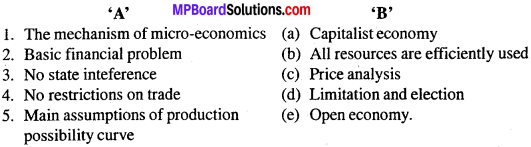
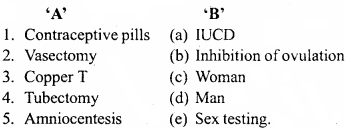
Match the followings :
I.
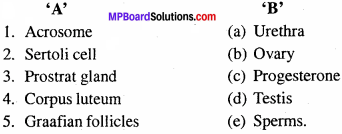
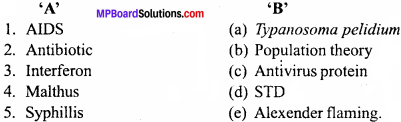
MP Board Class 12th Biology Important Questions Chapter 4 Reproductive Health Important Questions 1
Answer:

  1. (b)
  2. (d)
  3. (a)
  4. (c)
  5. (e).

II.
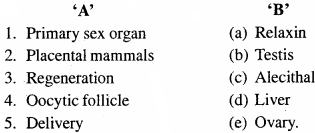
MP Board Class 12th Biology Important Questions Chapter 4 Reproductive Health Important Questions 2
Answer:

  1. (d)
  2. (e)
  3. (c)
  4. (b)
  5. (a).

Question 4.
Write the answer in one word/senteces :

  1. Give the full name of IUCD.
  2. Write a disease which is transmitted by sexual contact.
  3. Write the full name of ZIFT.
  4. Name the method in which cutting and binding of spermatic duct in male.
  5. What is the name of the study of population?
  6. World population day celebrated on.
  7. Name the process in which implantation of embryo in fallopian tube.
  8. Name the stage of life which is called puberty.
  9. Name the disease caused by HIV.
  10. Who gave the human population growth theory?
  11. Write the name of technique in which testing of amniotic fluid to find out the sex and disorders of the foetus.
  12. Name the technique by which found the AIDS.
  13. Write the lull name of GIFT.
  14. Name the technique in which removal of a segment of oviduct.

Answer:

  1. Intrauterine Contraceptive Device
  2. Gonorrhoea
  3. Zygote Intrafallopian Transfer
  4. Vasectomy
  5. Demography
  6. 11 July
  7. Actopic pregnancy
  8. 13 to 18 years
  9. AIDS
  10. T.R.Malthus
  11. Amniocentesis
  12. ELISA test
  13. Gamete Intrafaillopian Transfer
  14. Tubectomy.

Reproductive Health Important Questions Very Short Answer Type Questions

Question 1.
Write one benefit of condom.
Answer:
Condom provides protection from Sexually Transmitted Diseases (STDs).

Question 2.
What is the name of contraceptive pill which is taken only in once in a week?
Answer:
“Saheli.”

Question 3.
Write the full form of IUCD.
Answer:
Intra Uterine Contraceptive Device.

Question 4.
Write the full form of STDs.
Answer:
Sexually Transmitted Diseases.

Question 5.
What is the legal age for marriage of male and female in India?
Answer:
For male 21 Years and for female 18 years.

Question 6.
Write the name of two STDs which are spread through infected blood.
Answer:
AIDS, Hepatitis – B.

Question 7.
Write the name of two diseases which are caused by sexual contact.
Answer:
Gonorrhoea, Syphilis.

Question 8.
Write the full form of HIV and AIDS.
Answer:
HIV : Human Immunodeficiency Virus.
AIDS : Acquired Immune Deficiency Syndrome.

Question 9.
Write the full form of ZIFT.
Answer:
Zygote Intrafallopian Transfer.

Question 10.
What is the process for surgical sterilization in males called?
Answer:
Vasectomy.

Reproductive Health Short Answer Type Questions

Question 1.
Explain the following :

  1. Tubectomy
  2. Vasectomy.

Answer:
1. Tubectomy:
The surgical removal of a segment of oviduct and then ligating the cut end is called tubectomy. It is applied in females to check the pregnancy.

2. Vasectomy:
Surgical cutting and ligating ends of segments of vas deferens is called vasectomy.

Question 2.
What is amniocentesis? Write its effects and two advantages.
Answer:
Amniocentesis:
It is prenatal diagnostic technique in which amniotic fluid of uterus is isolated by a surgical needle and foetus cells are cultured on a culture medium and chromosomes are examined.

This technique is used to understand the following things or Advantages:

  1. Chromosomal abnormalities like that of Down’s syndrome, Philadelphia syndrome and Edward’s syndrome.
  2. Metabolic disorders like that of PKV, Cretinism, Alkaptonuria, etc.
  3. Sex of the embryo can be examined by this technique.

Effects of amniocentesis:
Due to this type of test, the female embryos are being eradicated. This leads into the decrease in number of females which may cause a serious problem.

Question 3.
Explain the social causes of human population growth.
Answer:
Social causes of human population growth rate are:

  1. Illiteracy in society.
  2. Low level of society.
  3. Various orthodox tradition like son leads to progeny.
  4. Social barriers.
  5. Early child marriage presuming that after mid-age marriage reproductive capacity degenerates.
  6. Social backwardness.
  7. Social set – up that “Putra Ratan se Moksh milta hai”.

Question 4.
What do you think about the significance of reproductive health in a society?
Answer:
Significance of reproductive health in a society are:

  1. Control over the transmission of STDs.
  2. Less death due to reproduction related diseases, like AIDS, cancer of reproductive tract.
  3. Control in population explosion.
  4. Not only this reproductive health of men and women affectsthe health of the next generation.

Question 5.
Suggest the aspects of reproductive health which need to be given special attention in the present scenario.
Answer:
Special attention need to be given to the following aspects:

  1. Introduction of sex education in school that to helps in eradicating myths and misconceptions regarding sex – related aspects.
  2. Proper information about reproductive organs, safe and hygienic sexual practices and Sexually Transmitted Diseases.
  3. Awareness of problems due to uncontrolled population growth, social evils like sex abuse and sex – related crimes etc.
  4. Strong infrastructural facilities, professional expertise and material support to provide medical assistance and care to people in reproduction related problems.
  5. Educating people about available birth control options, care of pregnant mothers, postnatal care of mother and child, importance of breast feeding, equal opportunities for the male and female child.

Question 6.
Is sex education necessary in schools. Why?
Answer:
Yes, sex education is necessary in schools because:

  1. It will provide proper information about reproductive organs, adolescence, safe, hygienic sexual practices and Sexually Transmitted Diseases (STDs).
  2. It will provide right information to avoid myths and misconceptions about sex related queries.

Question 7.
Do you think that reproductive health in our country has improved in the past 50 years? If yes, mention some such areas of improvement.
Answer:
Yes, reproductive health in our country has improved in the last 50 years.

Some areas of improvement are:

  1. Better awareness about sex-related matters.
  2. Increased number of medically assisted deliveries and better post-natal care of child and mother leading to decreased maternal and infant mortality rates.
  3. Increased number of couples with small families.
  4. Better direction and cure of STDs and overall increased medical facilities for all sex – related problems.

Question 8.
What are the suggested reasons of population explosion?
Answer:
The situation where population exceeds productive capacity is known as popu-lation explosion. In nature, the amount of resources are limited hence, if the population increases in the present rate and increasing beyond the limit, they (Resources) would get exhausted.

Reasons of population explosion : Following are the reasons of population explosion:

  1. Increasing birth rate.
  2. Decreasing death rate.
  3. Higher rate of reproduction.
  4. Medical services have brought down mortality due to fatal diseases and epidemics.
  5. Lack of predator in the civilized world today, the only predator of man is man himself.

Question 9.
Is the use of contraceptives justified? Give reasons.
Answer:
Yes, use of contraceptive is justified because it helps to control the rapid growth of human population. It will also help in preventing unwanted pregnancies and STDs. Contraceptive also help in controlling the population growth rate.

Question 10.
Removal of gonads can not be considered as a contraceptive option, why?
Answer:
Removal of gonads not only stops the production of gametes but will also stop the secretions of various important hormones, which are important for bodily func¬tions. This method is irreversible and thus, can not be considered as a contraceptive method.

Question 11.
Amniocentesis for sex determination is banned in our country. Is this ban necessary? Comment.
Answer:
Yes, the ban is necessary because amniocentesis is misused for determining the sex of the foetus and then aborting the child if it is a female. This process is illegal as it causes harm to the foetus as well as mother it can also disturb the sex ratio.

Question 12.
What is test – tube baby?
Answer:
In some cases, a woman is unable to have a normal fertilization to bear the child. In such cases, test – tube technique may be successful. In this technique, the unfertilized eggs of such woman is isolated in aseptic condition and fertilized it in test – tube by the sperms of her husband. The fertilized egg or blastocyst can be maintained in vitro till it gets 32 celled stage. It can be implanted in the uterus of the female. The female remains under the supervision of doctor till completion of gestation period of 280 days. The baby produced in such a way is called a test – tube baby.

Question 13.
What is GIFT? Explain in brief.
Answer:
GIFT (Gametes Intrafallopian Transfer): It is a latest technique to produce a child. In this technique, the gametes are kept separately in a catheter and injected directly into the fallopian tube of the woman using laproscopy. Thus, in this case, fertilization occurs inside the body of woman. Prior to injection of gametes, the mother would be given hormones for about a week to stimulate follicle formation. This causes development of several eggs i.e., super ovulation. The first GIFT in India was done in Mumbai and twins were born in August, 1990.

Reproductive Health Long Answer Type Questions

Question 1.
Suggest some methods to assist infertile couples to have children.
Answer:
If the couples are enable birth the children and corrections are not possible, the couples could be assisted to have children through certain special techniques, com¬monly known as Assisted Reproductive Technologies (ART). Some methods are given as:

(1) In Vitro Fertilization (IVF):
In this method, ova from the female and the sperm from the male are collected and induced to form zygote under stimulated conditions in the laboratory. This process is called In Vitro Fertilization (IVF). Some method given as follows:

1. Zygote Intrafallopian Transfer (ZIFT):
The zygote or early embryo with up to 8 blastomeres is transferred into the fallopian tube.

2. Intra Uterine Transfer (IUT):
Embryo with more than 8 blastomeres is trans – ferred into the uterus in females who cannot conceive embryos formed by fusion of gametes in another female are transfered.

3. Test – tube baby:
In this method, ova from the donor (female) and sperm from the donor (male) are collected and are induced to form zygote under stimulated conditions in the laboratory. The zygote could then be transferred into the fallopian tube and embryos transferred intc the uterus, to complete its further development. The child bom from this method is called test-tube baby.

(2) Gamete Intrafallopian Transfer (GIFT):
It is the transfer of an ovum collected from a donor into the fallopian tube of another female who cannot produce one, but can provide suitable environment for fertilization and further development of the embryo.

(3) Intra Cytoplasmic Sperm Injection (ICSI):
It is a procedure to form an embryo in the laboratory by directly injecting the sperm into an ovum.

(4) Artificial Insemination (AI):
In this method, the semen collected either from the husband or a healthy donor is artificially introduced into the vegina or into the uterus (Intra Uterine Insemination, IUI). This technique is used in cases where the male is unable to inseminate sperms in the female reproductive tract or due to very low sperm counts in the ejaculation.

(5) Host Mothering:
In this process, the embryo is transferred from the biological mother to a surrogate mother. The embryo then develops till it is fully developed or partially developed. It is then transferred to the biological mother or into any other. This technique is useful for females in which embryo forms but is not able to develop.

Question 2.
What are the measures one has to take to prevent from contracting STDs?
Answer:
STDs can be prevented by the following methods:

  1. Avoid sex with unknown partners/multiple partners.
  2. Always use condoms during coitus.
  3. Always contact a qualified doctor for any doubt in early stage of infection and get complete treatment if diagnosed with disease.

Question 3.
State True/False with explanation.

Question (a)
Abortion could happen spontaneously too. (True/False)
Answer:
False, Abortion does not happen under normal conditions. It happens accidently or under the will of Parents.

Question (b)
Infertility is defined as the inability to produce a viable offspring and is always due to abnormalities/defects in the female partner. (True/False)
Answer:
False, Sterility always does not occur due to female. Sometimes males are also responsible for this.

Question (c)
Complete lactation could help as a natural method of contraception. (True/False)
Answer:
True, Menstrual cycle does not occur after parturition which can act as natural contraception but this method is functional for a period of six months from parturition.

Question (d)
Creating awareness about sex related aspects is an effective method to im-prove reproductive health of the people. (True/False)
Answer:
True, this creates better reproductive health among people.

Question 4.
Correct the following statements:

Question (a)
Surgical methods of contraception prevent gamete formation.
Answer:
It prevents the transportation of gametes not their formation.

Question (b)
All sexually transmitted diseases are completely curable.
Answer:
Hepatitis – B and AIDS are not curable.

Question (c)
Oral pills are very popular contraceptives among the rural women.
Answer:
Oral pills are not popular among rural women. They require sex education.

Question (d)
In E.T. techniques, embryos are always transferred into the uterus.
Answer:
In E.T. techniques, 8 – celled blastomere is transferred into the fallopian tube. While more than 8 – celled blastomere is transferred into the uterus.

MP Board Class 12th Biology Important Questions

MP Board Class 11th Special Hindi Sahayak Vachan Solutions Chapter 11 समय का मोल

MP Board Class 11th Special Hindi सहायक वाचन Solutions Chapter 11 समय का मोल

समय का मोल अभ्यास प्रश्न

निम्नलिखित प्रश्नों के उत्तर लिखिए

प्रश्न 1.
लेखक ने यौवन को जीवन का मक्खन क्यों कहा है?
उत्तर:
लेखक का कथन है कि यदि व्यक्ति इस उम्र में अपने समय का सदुपयोग रचनात्मक कार्यों में करता है तो उसका परिणाम निश्चित ही अच्छा प्राप्त होता है जो जीवन के अन्य पड़ावों में प्राप्त नहीं हो पाता है। अतः लेखक ने इसको जीवन का मक्खन कहा है।

MP Board Solutions

प्रश्न 2.
लेखक ने ऐसा क्यों कहा है कि “शिखर के बजाए तलहटी में ही जीवन कट जाएगा?”
उत्तर:
यदि व्यक्ति ने अपने जीवन काल के सबसे ऊर्जावान समय जवानी को मनोरंजन, अवकाश और व्यसनों आदि में व्यर्थ व्यतीत कर दिया और वह जागरूक नहीं हो पाया कि यह समय तो सर्वश्रेष्ठ उपयोग में लेने का था तो निश्चित ही वह सफलता के शिखर को छूने से वंचित रह जायेगा। इसीलिए लेखक का कथन है कि “शिखर के बजाए तलहटी में ही जीवन कट जाएगा।”

प्रश्न 3.
“हम पसीने की कमाई खर्च करके विष खरीदते हैं।” इस पंक्ति से लेखक का क्या आशय है?
उत्तर:
लेखक का आशय है मनोरंजन जीवन के महत्त्व को कम करने वाला रह गया है। जब मन दुःखी हो, अवसादग्रस्त या थका हो तभी मनोरंजन की आवश्यकता होती है। जिस प्रकार बिना भूख लगे खाने से कष्ट हो जाता है, उसी प्रकार मन को रंजन में लगा देने का भी परिणाम अच्छा नहीं आता, मन भटक जाता है, प्रमादी हो जाता है। आज जिस प्रकार रंजन हो रहा है वह तो मन तक पहुँचता ही नहीं। अखबार, मैंगजीनों का चटपटापन जीवन में प्रतिदिन धीमे विष की तरह मन को दूषित करता है। अत: लेखक का कथन है कि हम मनोरंजन पर पसीने की कमाई खर्च करके विष खरीदते हैं।

प्रश्न 4.
प्रबंधन के गुरु की बात जीवन को किस प्रकार सार्थक बनाती है?
उत्तर:
प्रबंधन गुरु का कहना है कि प्रत्येक कार्य को उसके परिणाम को ध्यान में रखकर ही करना चाहिए। परिणाम ही जीवन का लक्ष्य बनता है और उसी के अनुसार व्यक्ति के व्यक्तित्व का निर्माण होता है। यही बात जीवन को सार्थक बनाती है।

प्रश्न 5.
जीवन का लक्ष्य क्या होना चाहिए?
उत्तर:
जीवन का लक्ष्य ‘घटिया विषय से दूरी और सर्वश्रेष्ठ का चुनाव’ होना चाहिए। सत्संगति पाकर व्यक्ति का जीवन स्वयं श्रेष्ठता को प्राप्त कर लेता है जैसे कि “जो कुछ गंधी दे नहीं, तो भी वास सुवास।”

प्रश्न 6.
व्यक्तित्व का विकास कैसे होता है?
उत्तर:
जीवन का लक्ष्य कार्य का परिणाम होता है और उसी के अनुरूप मन में चेतना की जागृति हो जाती है और उसी तरह के व्यक्तित्व का निर्माण हो जाता है।

समय का मोल अति लघु उत्तरीय प्रश्न

प्रश्न 1.
जीवन मूल्यों का कार्य क्या है?
उत्तर:
जीवन मूल्यों का प्रमुख कार्य जीवन का मूल्य बनाए रखना है।

प्रश्न 2.
लेखक ने जवानी को क्या कहा है?
उत्तर:
लेखक ने जवानी को जीवन का मक्खन कहा है।

MP Board Solutions

समय का मोल पाठ का सारांश

प्रस्तावना :
लेखक व्यक्ति को समय के मूल्य को समझने के लिए प्रेरित कर रहा है। यदि व्यक्ति समय के मूल्य को स्वयं नहीं समझ सका तो कोई दूसरा उसे नहीं समझायेगा और उसका पूरा जीवन व्यर्थ ही निकल जायेगा। अतः जीवन का मुख्य कार्य समय के मूल्य को समझना ही है।

समय के मूल्य की समझ आवश्यक :
आज व्यक्ति को सोचने की आवश्यकता है कि वह जिस मार्ग पर जा रहा है, उसकी मंजिल कहाँ है? समय कम है, मार्ग भटकने पर उसे मार्ग दर्शन किससे मिलेगा? क्योंकि मार्ग की दिशा पूछने में भी अपने आप में शर्म महसूस करता है।

समय के मूल्य को जानने के लिए कार्य के उद्देश्य को नहीं भूलना होगा। हम घर से जिस कार्य को करने निकले हैं, उसे पूरा न करके व्यर्थ की बातों में दोस्तों के साथ समय व्यर्थ न गवाएँ। हमें याद रहे कि हमें दुकान से क्या खरीदना है? टी. वी. चलाने के बाद टी. वी. में क्या देखना है? अच्छे और बुरे, आवश्यक और अनावश्यक, लाभ और हानि के बीच भेद को पहचानना होगा। यदि इस भेद को न जानकर हमने समय गँवा दिया और हम अपने कार्य पूर्ण नहीं कर पाये तो यह स्पष्ट है कि हमें समय की कीमत का अहसास नहीं है।

समय का सदुपयोग :
हम कहते हैं, जवानी जीवन का मक्खन है। जो इस उम्र में कार्य करते हैं, उसी का फल हमें पूरी उम्र व्यतीत करने के लिए मिल जाता है। परन्तु हमें याद रखना है कि इसका एक-एक क्षण कीमती है, व्यर्थ में एक क्षण भी नष्ट न होने पाये।

यदि हमने जवानी को मनोरंजन बना दिया, अवकाश का समय मान लिया और हम जागरूक नहीं हुए कि यह तो तपस्या का समय है, सफलता के शिखर को छूने का समय है तो निश्चित है कि हम जीवन के सर्वश्रेष्ठ काल का उपयोग नहीं कर पायेंगे।

हमें मनोरंजन के सही अर्थ को समझना होगा। जब मन दुःखी होता है, अवसादग्रस्त या थका होता है, तब मनोरंजन की आवश्यकता होती है। आज का मनोरंजन जीवन के महत्व को कम करने वाला रह गया है। हमें चिन्तनशील विषय पढ़ने-देखने में अच्छे नहीं लगते। सिनेमा, फैशन आदि ऐसे विषय नहीं हैं कि जिन पर घण्टों चर्चा की जाए। अखबार, मैगजीनों का चटपटापन धीमे विष की भाँति मन को दूषित कर रहा है। हमें समय का सदुपयोग करना ही होगा तभी हम जीवन के लक्ष्य को पा सकेंगे।

संकल्प :
आज हमें संकल्प करना ही होगा कि हम अनावश्यक कुछ नहीं करेंगे। समय का रचनात्मक कार्यों में ही उपयोग करेंगे। समय लौटकर नहीं आता। समय ही तो जीवन है। यह हमें हमेशा याद रखना होगा। कार्य का परिणाम ही जीवन का लक्ष्य होता है और इसको हम तभी प्राप्त कर सकते हैं जब हम अच्छे लोगों के सामीप्य में आयें और सार्थक करें-
महाजनस्य संसर्गः कस्य नोन्नति कारकः।

MP Board Class 11th Hindi Solutions

MP Board Class 11th Special Hindi Sahayak Vachan Solutions Chapter 10 प्रेरक प्रसंग

MP Board Class 11th Special Hindi सहायक वाचन Solutions Chapter 10 प्रेरक प्रसंग

प्रेरक प्रसंग अभ्यास प्रश्न

निम्नलिखित प्रश्नों के उत्तर लिखिए

प्रश्न 1.
सूर्यकान्त त्रिपाठी ‘निराला’ ने वृद्धा को अपनी रॉयल्टी के सारे पैसे किस भाव से दिये थे? (2010)
उत्तर:
सूर्यकान्त त्रिपाठी ‘निराला’ ने वृद्धा भिखारिन को अपनी रॉयल्टी के सारे पैसे इस भाव से दिये थे कि वह फिर कभी भी भीख नहीं माँगेगी। वह इस राशि से कोई भी धन्धा कर लेगी। उसने ऐसा संकल्प लेते हुए कहा। ‘निराला’ जी ने उस बुढ़िया भिखारिन को एक सौ चार रुपये जो रॉयल्टी के मिले थे, वे सब उसे दे दिए और स्वयं खाली हाथ इक्के में बैठकर महादेवी के घर की ओर चल पड़े। इक्के का किराया भी महादेवी ने चुकाया।

MP Board Solutions

प्रश्न 2.
‘गरीबों का मसीहा’ कहानी से हमें क्या शिक्षा मिलती है? (2008)
उत्तर:
‘गरीबों का मसीहा’ कहानी से हमें शिक्षा मिलती है कि इस समस्त मानव समाज में गरीबी और अमीरी की विषमता को दूर करने के लिए हम सभी को प्रयास करना चाहिए। जिससे हमारे बीच धनवान् और निर्धन का भेद मिट जाये। कोई भी व्यक्ति गरीब न रहे। इस गरीबी के कारण न जाने कितने इस मनुष्य समाज में अपराध किये जाते हैं। प्रत्येक व्यक्ति अपनी भूख मिटाने के लिए भीख माँगने को अपना धन्धा न बनाये। तब ही ‘गरीबों का मसीहा’ का उद्देश्य सफल हो सकेगा। अन्यथा गरीबी में धनवान् बनकर मसीहा कोई भी नहीं बन सकता। उस व्यक्ति को त्याग करना पड़ता है, परिश्रम करना पड़ता है। परिश्रम से प्राप्त धन गरीबों में वितरित किया जाये, तभी गरीबों का मसीहा स्वयं को सिद्ध कर सकता है। मसीहा कभी भी अपने साथी मनुष्यों की गरीबी को देख नहीं सकता। गरीबी में मसीहा को तो गरीब बनकर ही जीना पड़ता है क्योंकि उनकी गरीबी, उनकी दरिद्रता उनसे (मसीहा से) देखी कहाँ जाती है?

प्रश्न 3.
आपके मतानुसार निराला जी का रॉयल्टी के सारे पैसे देने का निर्णय सही था या गलत, कारण सहित बताइए।
उत्तर:
हमारा मत है कि निराला जी द्वारा रॉयल्टी के सारे पैसे वृद्धा भिखारिन को दिया जाने का निर्णय गलत था। इसके सन्दर्भ में निम्नलिखित कारण स्पष्ट रूप से दिये जा रहे हैं-
(1) ‘निराला’ जी ने अपनी रॉयल्टी के सारे रुपये (एक सौ चार) भीख माँगने वाली वृद्धा को इस संकल्प के साथ दिये कि वह फिर कभी भी भीख नहीं माँगेगी। वह उन रुपयों से कोई धन्धा कर लेगी।

अब यहाँ यह विचार करना है कि वह बूढ़ी भिखारिन कौन-सा कार्य कर सकती है जिससे उसका स्वयं का भरण-पोषण हो सके। उस वृद्ध अवस्था में उसके हाथ-पैर चलते नहीं हैं, निश्चय ही वह कोई भी कार्य नहीं कर पायेगी। रॉयल्टी के दिये गये रुपयों को अपनी निकम्मी सन्तान के ऊपर ही खर्च कर डालेगी और उन पैसों को खर्च कर देने के उपरान्त भीख माँगने के लिए सड़क के किनारे फिर बैठ जायेगी।

(2) उस वृद्धा से उन रुपयों को उसकी सन्तान छीन लेगी और उस वृद्धा को पुनः भीख माँगने के लिए मजबूर होना पड़ेगा।

(3) प्रायः देखा गया है कि इन भिखारिन बनी औरतों पर कोई अभाव नहीं होता। वे भीख माँगने की आदत से मजबूर हो जाती हैं और बदस्तूर भीख माँगती रहती हैं।

(4) ऐसे भिखारी अपने भीख माँगने के स्थान को बदल देते हैं लेकिन अपने भीख माँगने के धन्धे को नहीं बदलते।

(5) मैंने खुद ऐसे भिखारियों को देखा है, जो भीख न माँगने का वायदा करते रहे हैं; परन्तु उन्होंने अपने इस काम को नहीं छोड़ा है। इस भीख माँगने को उन्होंने अपना व्यवसाय बना रखा है। वे अपने असली रूप को भिखारी के वेश में बदल देते हैं और समाज के लोगों को निर्धनता के होने का स्वांग करते हुए प्रदर्शित करते हैं।

(6) इन भिखारी बने लोगों को किसी भी तरह के रोजगार से लगाने की आपकी चेष्टा अवश्य विफल होगी। इसके कारण हैं-एक तो वे काम न करने की आदत में ढल गये हैं। दूसरे वे जहाँ भी रोजगार प्राप्त करने जाते हैं, वहाँ से चोरी करके भाग जाते हैं, या काम पर लौटकर नहीं आते।

इस तरह इन भीख माँगने वाले लोगों ने पूरे भारतीय समाज को कलंकित किया हुआ है। अतः मेरा मत तो यही है कि निराला द्वारा दिया गया रॉयल्टी का पैसा व्यर्थ गया। उनका निर्णय परिस्थितियों के प्रतिकूल था, अव्यावहारिक था। इस दिए गये दान का कोई सुफल प्राप्त होने का नहीं दिखता।

प्रश्न 4.
“अर्थोपार्जन मेरा ध्येय नहीं है। गरीबी मेरी शान है।” इस कथन के भाव अपने शब्दों में लिखिए। (2016)
उत्तर:
“अर्थोपार्जन मेरा ध्येय नहीं है। गरीबी मेरी शान है।” इस कथन को स्पष्ट करते हुए यह कहा जा सकता है कि जहाँ तक धन कमाने का प्रश्न है, धन तो कमाया जा सकता है। लेकिन धन को कमाने के उपाय कैसे होंगे, इन अपनाये गये उपायों का स्वरूप कैसा होगा इसका निर्धारण करना महत्त्वपूर्ण बात है।

श्री बालमुकुन्द गुप्त ‘भारत-मित्र’ नामक दैनिक मित्र के सम्पादक हैं। उनकी साख एक ईमानदार एवं परिश्रमी सम्पादक की है। लोग उनके सच्चे सम्पादकत्व में बेईमानी अथवा भ्रष्टता की दुर्गन्ध होने का विश्वास नहीं करते। अतः अपने परिष्कृत एवं परिमार्जित सम्पादकत्व की गरिमा को उन्होंने अपने सदाचार और परिश्रम से सुरक्षित किया है। वे धन कमाने का ध्येय बनाते तो कोई भी गलत आचरण का उपयोग करके धन अर्जित कर सकते थे, लेकिन अपने स्थापित आदर्शों के परिपालन के लिए उन्होंने गरीबी में जीवनयापन करना उचित समझा। यह निर्धनता कोई ऐसी खराब अवस्था नहीं होती जिससे व्यक्ति व्यथित होकर गलत आचरण करे। ईमानदारी से परिपूर्ण एवं सच्ची लगन से किये गये परिश्रम से उस निर्धनता को दूर किया जा सकता है और वह व्यक्ति समाज में शानदार और इज्जतदार व्यक्ति का सम्मान पा सकता है।

गरीबी में अच्छे-अच्छे महान् कार्यों का सम्पादन करते हुए लोगों को देखा है। उन्होंने अपने आदर्शों का पालन किया है। वे समाज के लिए बड़े ही उपयोगी सिद्ध हुए हैं।

श्री बालमुकुन्द जी गुप्त ने इस गरीबी को अपना प्राण और शान के रूप में धारण किया है, वरण किया है, स्वीकार किया है क्योंकि वे समाज के लोगों से अपने आपको अलग प्रदर्शित करते हुए जीवित रहना नहीं चाहते। भारत का आम नागरिक गरीब है। सम्पादक जी अपने पत्र में अपने इस ईमानदार पेशे से लोगों को सच्ची सूचना देकर उन्हें गुमराह करना नहीं चाहते। एक सम्पादक समाज और देश का सजग प्रहरी होता है। देश के प्रत्येक नागरिक को सही दिशा निर्दिष्ट करता है। उन्हें इंगित करता है कि उचित मार्ग क्या है? सच्ची घटना क्या है? वे चाहते तो कितना ही मनमाना धन अर्जित कर सकते, केवल अपने आदर्श को छोड़कर, सिद्धान्तों में परिवर्तन करके। उनमें इस बात की चाहना है, एक ललक है कि आम नागरिक के दुःख-दर्द को एक सम्पादक समझे और अनुभव करे। यही अनुभव उनके साहित्य को सप्राणता प्रदान करते हैं। अत: गरीबी की अनुभूति समाज के स्तर पर, उसके सतही रूप में गहरी अनुभूति देती है जो व्यक्ति की शान के रूप में उसके चरित्र को उभारकर रखती है।

प्रश्न 5.
“बालमुकुन्द जी भारत के एक आम नागरिक का जीवन जीना चाहते थे।” इस कहानी के आधार पर वर्णन कीजिए।
उत्तर:
श्री बालमुकुन्द गुप्त ‘भारत-मित्र’ जैसे प्रतिष्ठित अखबार के सम्पादक हैं। वे फटेहाली का जीवन जी रहे हैं। वे बहत सस्ते और कम कीमत के वस्त्र पहनते हैं और अपने घर के सभी सदस्यों को मितव्ययिता से जीवन बिताने की सुशिक्षा देते हैं। वे फिजूलखर्ची को अच्छी आदत नहीं मानते हैं। धन को तो किसी भी तरह कमाया जा सकता है, लेकिन फिजूलखर्ची से उसका उपयोग अच्छे रूप में नहीं किया जा सकता, ऐसा उनका मत है।

वे जो भी सिद्धान्त या आदर्श स्थापित करते हैं, या उनको प्रस्तावित करते हैं, वे सबसे पहले अपने ऊपर, अपने परिवार के सदस्यों के ऊपर व्यवहार में लाये जाते हैं। इसका एक कारण है, वह है एक सजग सम्पादक जो अपने परिवेश अपने समाज और देश (राष्ट्र) की नीति और रीति से जुड़ा रहता है। इसके विपरीत चलने पर वह अपने आम नागरिक होने के सिद्धान्त का कोरा ढिंढोरा ही पीटता रहता है।

एक सम्पादक का उत्तरदायित्व होता है आम नागरिक के दुःख-दर्द को समझने का, उन दुःख-दर्दी में अनुभूतिपरक सहयोग का। इन सभी दशाओं में एक सुयोग, सफल और सच्चा सम्पादक वही है जो आम नागरिक को कम से कम परिस्थिति के अनुसार उचित मार्ग निर्देशन देकर सहयोग करे। यही अनुभव सम्पादकीय साहित्य में संजीवनी घोलते हैं और सम्पूर्ण समाज को सचेष्ट और क्रियाशील बनाते हैं। वे एक सच्चे नागरिक के रूप में उभर कर आते हैं तथा राष्ट्र रूपी भवन की ऊँचाइयों को प्राप्त करने के लिए मजबूत स्तम्भ सिद्ध होते हैं।

आम नागरिक का जीवन किसी भी व्यक्ति को चाहे वह साहित्यकार हो या समाज सेवी हो या संस्थागत कर्मचारी-उन सभी का यह सद्कर्त्तव्य होता है कि वे अपने आचरण से, व्यवहार से, लोगों को सच्ची दिशा इंगित करते चलें। अन्याय के कुमार्ग से बचते हुए सन्मार्ग के पथिक होकर वास्तविकताओं को स्वीकारते हुए विकास पथ का अनुसरण करें। आम नागरिक का जीवन इन सभी सामाजिक संस्थानों के सेवकों के आचरण-व्यवहार से प्रभावित होता है। आम नागरिक वस्तुतः गरीबी, साधनहीनता, अशिक्षा के अभिशाप से संतृप्त है, तो फिर बताइये बालमुकुन्द गुप्त जैसे सचेष्ट, सजग सम्पादक स्वयं किस तरह आम नागरिक से अलग प्रभाव से प्रभावित हों। अशिक्षा को मिटाने का उनका ध्येय पूर्ण हो सकेगा, लोग गरीबी से मुक्ति पायेंगे, उनकी समृद्धि के साधन जुटाये जायेंगे-केवल उन्हें सुदिशा, इंगित की जाए। उन्हें सच्ची और सही सूचना प्रदान की जाये।

सही दिशा निर्दिष्ट करना, सच्ची, सही सूचना देना एक सम्पादक का सद्धर्म है। अतः अन्याय से बचकर न्यायमार्ग का अनुसरण करके ही आम आदमी (नागरिक) का जीवन जीवित रहा जा सकता है।

MP Board Solutions

प्रेरक प्रसंग अति लघु उत्तरीय प्रश्न

प्रश्न 1.
कवि ‘निराला’ के अनुसार मानवता कहाँ से आती है?
उत्तर:
कवि ‘निराला’ के अनुसार मानवता हृदय की विशालता से आती है, भौतिक सम्पन्नता से नहीं।

प्रश्न 2.
‘गुप्त जी’ का पूरा नाम क्या था? वह किस अखबार के सम्पादक थे?
उत्तर:
‘गुप्त जी’ का पूरा नाम श्री बालमुकुन्द गुप्त था। वह भारत मित्र’ नामक हिन्दी दैनिक समाचार-पत्र के सम्पादक थे।

प्रेरक प्रसंग पाठ का सारांश

1. गरीबों का मसीहा पाठ का सारांश

प्रस्तावना-ईश्वर की सृष्टि में विषमता :
निर्धनता सिर पर चढ़कर बोलती है। इस संसार में कोई धनवान है, तो कोई निर्धन। कोई कुछ भी काम नहीं करता फिर भी मौज की जिन्दगी जीता है और कोई दिन-रात परिश्रम करते-करते दो जून की रोटी को तरसता है। परिस्थितियों से समझौता, उसकी लाचारी है। इस संसार में यह विषमता कब तक चलती रहेगी, इसका उत्तर किसी के पास भी नहीं है।

सूर्यकान्त त्रिपाठी ‘निराला’ :
गरीबों के मसीहा-निराला जी कई दिनों से उपवास कर रहे थे और पैदल भी चले जा रहे थे। वे दुनिया से दीनता, गरीबी को मिटाने सम्बन्धी विचारों जिससे इक्का ताँगा कर लेते। वे गरीबों के मसीहा थे। अत: उन्हें भी गरीब बनकर जीना है। वे गरीबों की दरिद्रता देख नहीं सकते थे। स्वयं मौज मारे, दूसरे भाई भूखे नंगे रहे, ऐसा वे स्वप्न में

भिखारिन की सहायता :
वे भूखे थे, लीडर प्रेस-दारागंज चले जा रहे थे। सोचते थे कि प्रेस से रॉयल्टी के कुछ पैसे मिलें, तो वे अपनी भूख मिटाएँ। रॉयल्टी के 104 रुपये प्राप्त हुए; इक्के पर सवार हो लिए और अपनी मुँह बोली बहन महादेवी के घर पहुँचने ही वाले थे कि एक करुण पुकार उनके कानों में पड़ी, तो इक्का रुकवाया, स्वयं उतरे और सड़क किनारे बैठी भिखारिन के पास जा पहुंचे। उनके हृदय में करुणा जाग गई, बोले माँ! हमारे रहते तुम्हें भीख माँगनी पड़ती है, ऐसा नहीं हो सकता।

भीख न माँगने का संकल्प :
बुढ़िया ने अपने कमजोर स्वर में कहा कि मैं बुढ़ापे की कमजोरी में कुछ कर नहीं सकती। सन्तान ने दूध से निकाली मक्खी की तरह मुझे फेंक दिया है। विवशता से भीख माँगकर खाती हूँ। कवि ने कहा कि एक रुपया दूं तो कब तक भीख नहीं माँगोगी। यदि पाँच रुपये दूं तो कब तक ? बुढ़िया ने उत्तर दिया एक दिन और पाँच दिन क्रमशः

इस पर कवि निराला ने कहा कि यदि एक सौ चार रुपये दे दिये जाएँ तो कब तक भीख नहीं माँगनी पड़ेगी? बुढ़िया का उत्तर था कभी नहीं। वह कोई धन्धा कर लेगी। इसका संकल्प उस बुढ़िया ने ले लिया।

उपसंहार :
निराला जी, खाली जेब ही महादेवी के घर पहुँचे और इक्के का भाड़ा भी महादेवी को देना पड़ा क्योंकि उनके पास फूटी कौड़ी भी नहीं थी। उनकी आत्मा आज भी दहाड़ मारती हुई कहती है कि मानवता हृदय की विशालता से आती है; भौतिक सम्पन्नता से नहीं।

MP Board Solutions

2. आदर्शवादी बिक नहीं सकता पाठ का सारांश

प्रस्तावना :
श्री बालमुकुन्द गुप्त ‘भारत-मित्र’ जैसे प्रतिष्ठित अखबार के सम्पादक थे। उनके दरवाजे को किसी ने खटखटाया। अन्दर कमरे में नीचे फर्श पर दरी बिछाकर बैठे हुए श्रीगुप्त जी चौकी पर कागज रखकर लिख रहे थे। तब उन्होंने छोटे पुत्र को आवाज दी और कहा, “देखना बेटा! कौन आये हैं?”

छोटे बेटे ने दरवाजा खोला और एक सज्जन अन्दर प्रविष्ट हुए। गुप्त जी उन्हें देखकर खड़े हो गये और पूछा कि हे मित्र! बहुत दिन बाद दिखाई दिए हो, आजकल कहाँ हो और क्या कर रहे हो?

आगन्तुक पुराने मित्र :
जो सज्जन आये हुए थे, वे गुप्तजी के पुराने मित्र थे। भारत-मित्र’ हिन्दी दैनिक के सम्पादक श्री बालमुकुन्द गुप्त की कमीज पीछे दीवार पर खूटी पर टंगी हुई थी। वह कमीज बहुत हल्के और सस्ते कपड़े की सिली हुई थी। गुप्त जी मोटी निब वाली सस्ते दामों वाली कलम से लिख रहे थे।

आगन्तुक महोदय ने सभी वस्तुओं को, घर के वातावरण को बड़ी बारीकी से देखा। सज्जन अपने मन्तव्य की बात कहना ही चाहते थे कि गुप्त के ज्येष्ठ पुत्र ने कमरे में प्रवेश किया और बाजार से खरीद कर लाई गई दो कमीजों को अपने पिताजी श्री गुप्त जी के सामने रखा।

मितव्ययिता की सीख :
गुप्त जी ने कहा कि कमीज तो अच्छी है लेकिन है कितने की? बेटे ने कमीज का मूल्य बताया चार रुपये ! गुप्त जी को विस्मय हुआ और आपत्ति के स्वर में कहा कि कमीज को इतना महँगा क्यों खरीदा? इतने रुपये में तो घर के सभी सदस्यों के लिए कपड़े बन सकते थे। इसी बीच आगन्तुक महादेय ने कहा कि गुप्त जी बच्चे हैं, “यदि वे इस समय नहीं खायेंगे, नहीं पीयेंगे और नहीं पहनेंगे, तो फिर ये कब खाएँगे और पहनेंगे।”

फिजूलखर्ची को रोकना :
गुप्तजी ने कहा- यह तो सरासर फिजूलखर्ची है। महँगे कपड़े पहनने की सामर्थ्य हमारे परिवार में नहीं है। रह जाती है बात खाने-पीने की उम्र का सम्बन्ध भी मितव्ययिता से होना चाहिए। मितव्ययिता भी इसी समय सीखनी है।

धन की कमी की पूर्ति :
आगन्तुक महोदय बोले कि धन की कमी से होने वाली कठिनाई को तो मैं दूर करे देता हूँ। मैं इसलिए ही तो आपके पास आया हूँ। इतना कहते ही आगन्तुक मित्र महोदय ने पाँच हजार रुपये उनकी चौकी पर रख दिये।

विस्मय :
गुप्त जी यह देखकर चौंक पड़े और लगा कि उनके शरीर पर सैकड़ों साँप और बिच्छू रेंग गये हों। विस्मय से फटे नेत्र वाले गुप्त जी ने यह देखते हुए कहा-क्या मतलब?

दो धनवानों के बीच मुकद्दमा :
आपको विहित है कि यहाँ की फौजदारी की अदालत में दो धनवान व्यक्तियों के बीच मुकद्दमा चल रहा है। दोनों पक्षों से सम्बन्धित सनसनीपूर्ण विवरणों द्वारा अपने पत्र के माध्यम से उनका समर्थन करें, तो उन लोगों को लाभ मिल सकता है। इसी के लिए उनकी ओर से आपके पास भेंट लेकर आया हूँ।

गरीबी मेरी शान है :
गुप्त जी ने धीरे से लेकिन गम्भीर स्वर में कहा-‘मित्र ! तुम गलत समझते हो। अगर धन कमाना ही मेरा ध्येय रहा होता; तो आप जो अभी चारों ओर घूर-चूर कर देख रहे थे और मेरी गरीबी पर आश्चर्य कर रहे थे। वह नहीं होता। गरीबी मेरी शान है। मैंने अपनी इच्छा से ही इसका (गरीबी का) वरण किया है। इसका कारण यह है कि मैं आम नागरिक से एक होकर जीवन जीना चाहता हूँ। उसके दुःख-दर्द को समझने की और अनुभव करने की ललक है। यही अनुभव मेरे साहित्य को प्राण देते हैं। दूसरे शब्दों में कहा जाए तो गरीबी मेरे प्राण हैं। यह भी अन्याय की खातिर कदापि सम्भव नहीं।”

उपसंहार :
गरीबी की गरिमा का गान सुनकर बेचारे मित्र महोदय, अपना रुपया उठाकर चलते बने और गुप्त जी पुनः लेखन में व्यस्त हो गये।

MP Board Class 11th Hindi Solutions

MP Board Class 11th Special Hindi Sahayak Vachan Solutions Chapter 9 इत्यादि

MP Board Class 11th Special Hindi सहायक वाचन Solutions Chapter 9 इत्यादि

इत्यादि अभ्यास प्रश्न

निम्नलिखित प्रश्नों के उत्तर लिखिए

प्रश्न 1.
‘इत्यादि’ शब्द का जन्म कब हुआ था? इसके माता-पिता के विषय में भी जानकारी दीजिए। (2017)
उत्तर:
‘इत्यादि’ के जन्म का सन्, संवत्, दिन की जानकारी ‘इत्यादि’ को भी नहीं है। लेकिन यह तो कहा जा सकता है कि जब शब्द का महा अकाल पड़ा था, तो उस समय ‘इत्यादि’ का जन्म हुआ था। इसकी माता का नाम ‘इति’ और पिता का नाम ‘आदि’ है। इसकी माता अविकृत ‘अव्यय’ घराने की है। इसके लिए यह थोड़े गौरव की बात नहीं है क्योंकि भगवान् फणीन्द्र की कृपा से ‘अव्यय’ वंश वाले प्रतापी महाराज ‘प्रत्यय’ के कभी आधीन नहीं हुए। वे सदा स्वाधीनता से विचरते आये हैं।

MP Board Solutions

प्रश्न 2.
ज्योतिषियों ने ‘इत्यादि’ के विषय में क्या भविष्य फल बतलाया था?
उत्तर :
जब ‘इत्यादि’ एक बालक था, तब इसके माँ-बाप ने एक ज्योतिषी से इसके अदृष्ट ‘भविष्य’ का फल पूछा। उन्होंने कहा था कि यह लड़का (इत्यादि) विख्यात और परोपकारी होगा। अपने समाज में यह सबका प्यारा बनेगा। परन्तु इसमें दोष है तो बस इतना ही कि यह कुँवारा ही रहेगा। विवाह न होने से इसके बाल-बच्चे नहीं होंगे। यह सुनकर माँ-बाप को पहले तो थोड़ा दुःख हुआ। पर क्या किया जाय ? होनहार ही यह था।

प्रश्न 3.
‘इत्यादि’ में सबसे अच्छा गुण क्या है? स्पष्ट कीजिए। (2014)
उत्तर:
‘इत्यादि’ में सबसे अच्छा गुण है कि क्या राजा, क्या रंक, क्या पण्डित, क्या मूर्ख, किसी के भी घर आने-जाने में ‘इत्यादि’ को कोई संकोच नहीं होता है और अपनी मानहानि नहीं समझता। अन्य शब्दों में यह गुण नहीं है। वे बुलाने पर भी कहीं जाने-आने में बड़ा गर्व करते हैं। बहुत आदर चाहते हैं जाने पर सम्मान का स्थान न पाने पर रूठकर उठ भागते हैं। इत्यादि में यह बात नहीं है। इसी से यह शब्द सबका प्यारा है।।

प्रश्न 4.
कठिनाई के समय इत्यादि’ शब्द वक्ता की किस प्रकार सहायता करता है?
उत्तर:
कठिनाई का समय वक्ता पर उस समय होता है जब वे किसी विषय को जानते नहीं, या भाषण के मध्य किसी बात को भूल जाते हैं। ऐसी दशा में उनकी सहायता करना या उनके मान की रक्षा करना ‘इत्यादि’ का ही काम होता है। वे उस दशा में भूली हुई शब्दावली को अपनी स्मृति में पुनः लाने का प्रयास करते हैं परन्तु उसे स्मरण नहीं कर पा रहे, तो उस दशा में वे महोदय पसीना-पसीना हो जाते हैं, चिन्ता के समुद्र में डूबने की नौबत आ जाती है, तब ‘इत्यादि’ शब्द ही उनकी नैया पार कराने को आगे आता है। ‘इत्यादि’ का यह परोपकारी स्वरूप है। इस शब्द को बुलाने की जरूरत नहीं, वह बिना बुलाए, उन महोदय की सहायता के लिए तैयार रहता है।

प्रश्न 5.
“भिन्न-भिन्न भाषाओं के शब्द भण्डार में ‘इत्यादि’ का नाम भिन्न-भिन्न है।” उदाहरण देकर समझाइए।
उत्तर:
आजकल ‘इत्यादि’ का महत्त्व बढ़ता जा रहा है, क्योंकि लोगों के पास शब्द की दरिद्रता बढ़ गयी है। अतः ‘इत्यादि’ का सम्मान बढ़ जाना स्वाभाविक है। अतः आजकल ‘इत्यादि’ ही इत्यादि है। इत्यादि का सम्मान, शब्द समाज में किसी शब्द का नहीं है। होगा भी तो कोई विरला ही। सम्मान और आदर जो बढ़ा है उसके साथ इत्यादि’ के नामों की संख्या भी बढ़ रही है। आजकल ऐसे अनेक नाम हैं-भिन्न-भिन्न भाषाओं के ‘शब्द समाज’ में इत्यादि का नाम भी भिन्न-भिन्न है। ‘इत्यादि’ का पहनावा भी भिन्न-भिन्न है-अत: जैसा देश वैसा ही वेश बनाकर इत्यादि सभी जगह विचरण करता है। स्थान कोई भी हो ‘इत्यादि’ शब्द विलायत के पार्लियामेन्ट में, महासभा में भी यह शब्द ‘इत्यादि’ भिन्न रूप में लोगों की सहायता के लिए बैठा है। भिन्न रूप में इत्यादि का बगैरह-बगैरह, इत्यलम् (संस्कृत में) आदि इसके अन्य रूप और उदाहरण हैं।

इत्यादि अति लघु उत्तरीय प्रश्न

प्रश्न 1.
‘इत्यादि’ शब्द इत्यादि क्यों कहलाया?
उत्तर:
‘इत्यादि’ शब्द इसके दो जनक शब्दों ‘इति’ और ‘आदि’ से मिलकर बना है। अतः इसे इत्यादि कहा जाता है।

प्रश्न 2.
‘इत्यादि’ शब्द क्या-क्या कार्य करता है?
उत्तर:
‘इत्यादि’ शब्द मूर्ख को पंडित बनाता है, जिसे युक्ति नहीं सूझती उसे युक्ति सुझाता है। लेखक को यदि भाव प्रकट करने की भाषा नहीं जुटती तो भाषा जुटाता है। कवि को उपमा बताता है, इत्यादि-इत्यादि।

MP Board Solutions

इत्यादि पाठ का सारांश

प्रस्तावना :
‘इत्यादि’ शब्द का प्रयोग बड़े सम्मान के साथ वक्ता (भाषण देने वाले) और लेखक दोनों ही करते रहे हैं। सभा का आयोजन किया जा रहा हो, अथवा किसी सोसाइटी में किसी विषय पर भाषण दिया जा रहा हो या वार्ता का आयोजन किया जा रहा हो, तो वहाँ वक्ता महोदय ‘इत्यादि’ का प्रयोग करने से नहीं चूकते।

लेखक अनेक पुस्तकों का सृजन करता है, वक्ता अनेक तरह के भाषण देता है लेकिन इन दोनों में से कोई भी ‘इत्यादि’ शब्द की व्युत्पत्ति कैसे हुई, इस पर कोई भी वार्ता या सूत्र लिखना नहीं चाहता। वक्ता भी अपने वार्तालाप के दौरान ‘इत्यादि’ का प्रयोग तो करता है लेकिन उसकी निष्पत्ति और सृजन के ऊपर कुछ भी बताने से बचता है। ‘इत्यादि’ शब्द अपने आप ही अपनी प्रशंसा करने से हिचकता है और यह बात स्पष्ट होती है कि ‘इत्यादि’ का प्रयोग वे ही लोग ज्यादातर करते हैं जिनके पास अपनी बात स्पष्ट करने के लिए शब्दों की कमी होती है या उन्हें शाब्दिक दुनिया की दरिद्रता भोगनी पड़ रही है।

‘इत्यादि की व्युत्पत्ति :
‘इत्यादि’ शब्द की व्युत्पत्ति किस समय हुई इसकी जानकारी किसी को भी नहीं है। वक्ता या लेखक अपनी भावना या अपने विचार व्यक्त करना चाहता है, लेकिन उस भाव को व्यक्त करने को उसके पास कोई शब्द न हो, तो उस स्थिति में ‘इत्यादि’ शब्द का प्रयोग करता है, बस, यही वह अवसर या क्षण होता है, तब ‘इत्यादि’ शब्द का जन्म होता है। इत्यादि का विग्रह-इति और आदि होता है। ‘इति’ अव्यय है और ‘आदि’ प्रत्यय । अतः इत्यादि में अव्यय और प्रत्यय का योग है जो अपने प्राकृत रूप में मिलकर अपना नया शब्द व्युत्पन्न करते हैं और उसका अर्थ भी फिर एक ही होता है। ‘इत्यादि’ शब्द का अर्थ इति और आदि दोनों के मेल से है। प्रत्येक के अलग-अलग रूप से नहीं। इत्यादि से आगे और भी फिर कुछ भी नहीं कहा जाता। तात्पर्य यह है कि इति और आदि दोनों मिलकर ‘इत्यादि’ बनते हैं लेकिन फिर इससे आगे बढ़कर कुछ भी नहीं।

प्राचीनकाल में इत्यादि का प्रयोग :
पुराने जमाने में इत्यादि का प्रयोग बहुत कम होता था, अतः ‘इत्यादि’ इतना प्रचलित नहीं था, जितना आजकल। इसका कारण था कि लोगों के पास शब्द भण्डार की कमी नहीं थी। वे लोग बुद्धिमान थे, उनके पास शब्दों की दरिद्रता नहीं थी। अब लोग चाहे विदेशों की पार्लियामेन्ट हो, या अपने ही देश की कोई भी पार्टी हो-राजनैतिक, सामाजिक अथवा अन्य कोई। उसके जितने भी सदस्य होते हैं, वे धड़ाधड़ इत्यादि का प्रयोग बेहिचक करते हैं क्योंकि उनके पास तत्सम्बन्धी शब्दावली का अभाव है। विद्वान हो, मूर्ख हो, सभी की जीभ पर ‘इत्यादि’ विराजमान हो रहा है। गरीब हो धनवान् हो-सबकी यही दशा है। इसका अर्थ है लोग इत्यादि से प्यार करते हैं।

‘इत्यादि’ बड़ा सहायक :
‘इत्यादि’ शब्द का प्रयोग करते ही आगे कुछ भी बोलने, स्पष्टता देने या लिखने की आवश्यकता नहीं होती है। लेखक या वक्ता प्राचीन ग्रन्थकारों, विद्वानों, धर्मवेत्ता और दार्शनिकों के नाम यदि भूल जाता है तो कुछ के आगे ‘इत्यादि’ प्रयोग करके थोड़े समय में अपनी बात कहकर समाप्त कर देता है। इसके पीछे यदि बात है, तो उन लेखकों की विद्वानों की या वक्ताओं की अल्पज्ञता।

आलोचक-समालोचक :
किसी भी कृति में यदि कोई थोड़ा भी दोष हो तो आलोचक उस रचना की धज्जियाँ उड़ाकर उसको प्रचलन से अदृश्य करा सकता है। परन्तु एक समालोचक बुराइयों और अच्छाइयों के दौर में बीच का रास्ता निकालकर उस कृति को लोगों में प्रसिद्धि दिला सकता है। समालोचक या आलोचक अपनी स्वार्थपरता के वशीभूत होकर किसी भी कृति को श्रेष्ठ घोषित कर देते हैं।

MP Board Class 11th Hindi Solutions

MP Board Class 12th Biology Important Questions Chapter 3 Human Reproduction

MP Board Class 12th Biology Important Questions Chapter 3 Human Reproduction

Human Reproduction Important Questions

Human Reproduction Objective Type Questions

Question 1.
Choose the correct answers:

Question 1.
The number of chromosome in human cell will be :
(a) 23
(b) 46
(c) 92
(d) 22
Answer:
(b) 46

Question 2.
The hormone estrogen is secreted by :
(a) Corpus luteum
(b) Graafian follicle
(c) Uterus
(d) Vagina.
Answer:
(b) Graafian follicle

Question 3.
The copulatory organ in female human being is :
(a) Fallopian tube
(b) Uterus
(c) Clitoris
(d) Vagina.
Answer:
(c) Clitoris

Question 4.
The gestation period in rabbit is about :
(a) 27 days
(b) 22 – 30 days
(c) 45 days
(d) 28 days.
Answer:
(b) 22 – 30 days

MP Board Solutions

Question 5.
Hormone secreted during delivery is:
(a) Progesterone
(b) Thyroxine
(c) Relaxin
(d) Glucocorticoid.
Answer:
(c) Relaxin

Question 6.
Blastopore is formed in :
(a) Gastrula
(b) Blastula
(c) Morula
(d) Nurmula
Answer:
(a) Gastrula

Question 7.
Number of parents involved in asexual reproduction is :
(a) Many
(b) Three
(c) Two
(d) One
Answer:
(d) One

Question 8.
Sertoli cells are found in :
(a) Kidney
(b) Ovary
(c) Liver
(d) Testis.
Answer:
(d) Testis.

Question 9.
Which two are found in human semen in more quantity :
(a) Ribos and potassium
(b) Fructose and calcium
(c) Glucose and calcium
(d) DNA and testosteron.
Answer:
(b) Fructose and calcium

Question 10.
Which part of the fallopian tube is nearest to ovary :
(a) Ampula
(b) Isthmus
(c) Infundibulum
(d) DNA and testosteron.
Answer:
(c) Infundibulum

Question 11.
In ovarian cycle of human ovulation is starts from :
(a) 1st day
(b) 5th day
(c) 14th day
(d) 28th day.
Answer:
(c) 14th day

Question 12.
Which hormone controls the sperm formation :
(a) ADH
(b) FSH
(c) LH
(d) STH.
Answer:
(b) FSH

Question 13.
Which is responsible for movement of sperm :
(a) Cilia
(b) Flagella
(c) Basal body
(d) Nucleosome.
Answer:
(b) Flagella

MP Board Solutions

Question 14.
Sperms are mature in :
(a) In oviduct
(b) In epididymis
(c) In vagina
(d) All of the above
Answer:
(b) In epididymis

Question 15.
Seminiferous tubules are found in :
(a) In testis
(b) In ovary
(c) In kidney
(d) In lungs.
Answer:
(a) In testis

Question 2.
Fill in the blanks :

  1. The nature of semen is ………………
  2. The male sex hormone testosterone is produced by ……………… in testis.
  3. The structure between placenta and foetus is called ………………
  4. Human being are ……………… breeders.
  5. The site of fertilization and implantation in human female is ……………… and ………………
  6. After ……………… year growth does not occur in girls.
  7. ……………… hormone is secreted during child birth.
  8. Segments of testis is consist of ……………… tubules.
  9. Testis starts the secretion of ……………… hormone at puberty.
  10. The process of fertilization is occurs in ……………… tube.
  11. ……………… provides the nutrition to embryo.
  12. ……………… hormones are secreted by graafian follicle.

Answer:

  1. Alkaline
  2. Leyding cells
  3. Umblical cord
  4. Continuous
  5. Oviducts, uterus
  6. 14
  7. Relaxin
  8. Seminiferous tubules
  9. Testosteron
  10. Follopean tube
  11. Placenta
  12. Estrogen and Progesteron.

Question 3.
Match the followings:
I.
MP Board Class 12th Biology Important Questions Chapter 3 Human Reproduction 1
Answer:

  1. (e)
  2. (d)
  3. (a)
  4. (c)
  5. (b).

II.
MP Board Class 12th Biology Important Questions Chapter 3 Human Reproduction 2
Answer:

  1. (b)
  2. (c)
  3. (d)
  4. (e)
  5. (a).

Question 4.
Write the answer in one word/sentences:

  1. How many sperms will be produced from 24 spermatocytes during spermatogenesis?
  2. Where does fertilization takes place in mammals?
  3. How many polar bodies are formed during the formation of one gamete?
  4. How many polar bodies are formed during the formation of ovum during oogenesis?
  5. Write the name of three layers of gastrula.
  6. Spermatogenesis is the example of.
  7. How many germ layers are found in gastrula stage?
  8. Write the duration of gastation period in human cases.
  9. How many autosomes are found in human sperm?
  10. Name the process in which formation and maturation of ova.
  11. Name the main store house of sperms.
  12. Skeletal muscle is originated by these layer.
  13. Name the process in which zygote starts dividing by specific mitotic divisions.
  14. In which month body hair developed in embryo.

Answer:

  1. 1.96
  2. Fallopian tube
  3. 2
  4. 3
  5. Ectoderm, Mesoderm and Endoderm
  6. Male gamete formation
  7. Three
  8. 280 days
  9. 22
  10. Oogenesis
  11. Epididymis
  12. Ectoderm
  13. Cleavage
  14. Fourth month.

Human Reproduction Very Short Answer Type Questions

Question 1.
After fertilization, how many days are needed for the birth of human child?
Answer:
280 days (9 months and 10 days).

Question 2.
To produce the new organisms of their own kind is called by a term, name it.
Answer:
Reproduction.

Question 3.
By which name, the reproduction happens by means of fusion of two different gametes?
Answer:
Sexual reproduction.

MP Board Solutions

Question 4.
Which gametogenesis goes on till life span in human beings after attaining puberty?
Answer:
Spermatogenesis.

Question 5.
The stoppage of menstrual cycle in a 50 yrs. old female is known as.
Answer:
Menopause.

Question 6.
What is pregnancy?
Answer: The time period between fertilization to the birth of child is called pregnancy.

Question 7.
Where is carpora cavernosa found?
Answer:
Carpora cavernosa is found in penis.

Question 8.
What is the gestation period in elephant, dog and cat?
Answer:
Elephant 641 days, dog 58 – 68 days, cat 63 days.

Question 9.
Name the hormone that relaxes pubic symphysis during parturition.
Answer:
Relaxin hormone.

Human Reproduction Short Answer Type Questions

Question 1.
Why testes are found outside the abdominal cavity in males?
Answer:
In male, one pair of testes are found in the scrotum or scrotal sac, which are situated outside the abdomen. Temperature of this scrotum is always 2°C less than the body temperature, which is suitable for formation and growth of sperm, otherwise spermatogenesis will not occur. Therefore, testes are situated outside the abdomen in man.

Question 2.
What will happen if leydig cells of testis in males are destroyed?
Answer:
The endocrine cells of the testis are the leydig cells, they are situated in between the seminiferous tubules. Leydig cells secrete the male sex hormones androgens. Testes secrete four types of androgens:

  1. Testosterone
  2. Androsterone
  3. Epiandosterone and
  4. Dihydroepiandrosterone.

Out of these male sex hormone is testosterone.

Functions of Testosterone:

  1. Testosterone stimulates testes to descend into the scrotum in embryos.
  2. It helps in the development of secondary sexual characters.
  3. Stimulates spermatogenesis.

If leydig cells are removed from the body of males, then the above mentioned functions will stop.

Question 3.
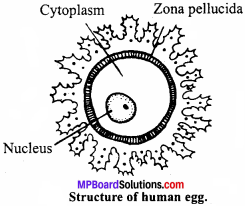
Describe the structure of human egg.
Or
Draw neat well – labelled diagram of human ovum which is ready for fertilization.
Answer:
The egg of human being is rounded and non – motile. It lacks yolk and contains a large Cytoplasm Zona pellucida. amount of cytoplasm. A nucleus (haploid) is present in the centre of egg. Whole egg is covered by a translucent and non – cellular membrane known as zona pellucida. The zona pellucida is irregularly covered by follicle cells. This layer is called as corona radiata. The cells of corona radiata are disintegrated before fertilization.
MP Board Class 12th Biology Important Questions Chapter 3 Human Reproduction 3

Question 4.
What is menstrual cycle ? Which hormones regulate menstrual cycle?
Answer:
The reproductive cycle in the female primates is called menstrual cycle. The uterus linings becomes thick and spongy to receive fertilised egg. If the egg is not fertilised, this lining is not needed any longer so, it slowly breaks and comes out through vagina along with blood and mucus. This is called menstruation. It is repeated at an average interval of about 28/29 days.

Following hormones regulate this cycle:

  1. Gonadotropin
  2. Estrogen
  3. Luteinizing hormone
  4. Follicular stimulating hormone
  5. Progesterone

MP Board Solutions

Question 5.
What is parturition? Which hormones are involved in induction of parturition?
Answer:
The process of delivery of the foetus (child birth) at the end of the pregnancy is called parturition. The signals for parturition originate from the fully developed foetus and the placenta which trigger the release of oxytocin from the maternal pitutary. Oxytocin acts on the uterine muscles and induces stronger uterine contractions leading to expulsion of the baby. Relaxin hormone released by the ovary widens the vagina to facilitate birth.

Following hormones are involved in induction of parturition:

  1. Cortisol
  2. Estrogen
  3. Oxytocin.

Question 6.
In our society the women are often blamed for giving birth to daughters. Can you explain why this is not correct?
Answer:
Women are blamed for giving birth to daughters. This is wrong because sex of the baby is determined by the sperm that can have either X or Y – chromosome. Women have only one type of chromosome (X) in all the ova.

  1. If the sperm having X-chromosome fertillises the ovum (X), the resulting zygote (XX) will become a female.
  2. If the sperm having Y-chromosome fertillises the ovum (X), the resulting zygote (XY) will become a male.

Question 7.
How many eggs are released by a human ovary in a month? How many eggs do you think would have been released if the mother gave birth to identical twins? Would your answer change if the twins born were fraternal?
Answer:
Only one egg is released by a human (female) ovary in a month. Only one egg is released if the mother gave birth to identical twins. Yes, two or more eggs are released in case fraternal twins are born.

Question 8.
Name the hormones involved in regulation of spermatogenesis.
Answer:
The hormones involved in regulation of spermatogenesis are:

  1. Gonadotropin releasing hormone
  2. Luteinizing hormone (LH)
  3. Follicle stimulating hormone and
  4. Testosterone.

Question 9.
Define spermiogenesis and spermiation.
Answer:
Spermiogenesis:
The process involving transformation of spermatid into spermatozoa is called spermiogenesis.

Spermiation:
After spermiogenesis, sperm heads became embedded in the sertoli cells and are finally released from the seminiferous tubules by the process called spermiation.

Question 10.
Give composition of seminal plasma.
Answer:
Composition of seminal plasma : Fructose, calcium ion, some enzymes prostaglandins.

MP Board Solutions

Question 11.
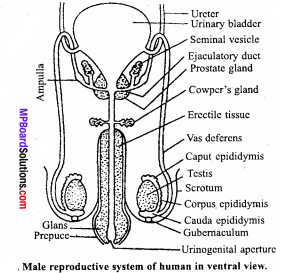
Draw a labelled diagram of male reproductive system.
Answer:
MP Board Class 12th Biology Important Questions Chapter 3 Human Reproduction 4

Question 12.
Draw a labelled diagram of female reproductive system.
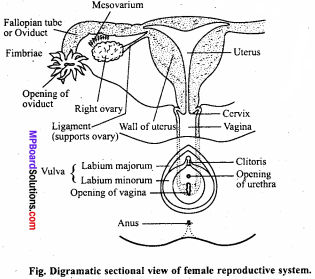
Answer:
MP Board Class 12th Biology Important Questions Chapter 3 Human Reproduction 5

Question 13.
Write two major functions each of testis and ovary.
Answer:
Functions of Testis:

  1. Production of sperms by seminiferous tubules.
  2. Production of male sex hormone, testosterone by leydig cells.

Functions of Ovary:

  1. Production of ova (eggs).
  2. Production of female sex hormones, estrogen and progesterone.

Question 14.
Explain menarchy or menopause.
Answer:
Menopause:
In every human female, puberty period starts from 12 – 13 yrs of age to 45 – 50 yrs of the age. During this period except pregnancy at every interval of a month during 26th day to 28th day. If pregnancy does not occur then the internal wall of the uterus secretes out mucilaginous liquid along with blood. Secretion continues for 3 – 4 days called menses. As it comes at definite period so, it is called menstruation cycle. At the age of 40 – 50 yrs. menses stop and females reach to a stage called menopause. Ability of pregnancy also stops after attaining menopause.

Question 15.
Draw a well labelled diagram of the T.S. of human testis.
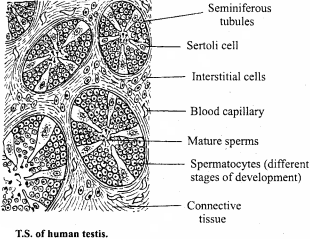
Answer:
MP Board Class 12th Biology Important Questions Chapter 3 Human Reproduction 6

Question 16.
What is the position of fallopian tubule in female reproductive organs? What are their significance?
Answer:
Fallopian tubules are a pair of small muscular tubes, one each on either side of the uterus. These tubules extend from the vicinity of the ovary to the ovary. Each tubule is about 10 cm in length. The free end of each tube lies near the ovary of its side. This end is funnel shaped and fimbriated. It is called ostium and infundibulum. Infundibulum opens in the abdominal cavity by means of abdominal ostium. The fallopian tubule is kept in position by a mesentery which is attached to the uterus.

Significance or Functions of Fallopian Tubes:

  1. By their lashing movement of the cilia present in the lining of infundibulum and nearby area help in pulling the released ovum into fallopian tube.
  2. Passage of ovum into uterus is aided by muscular movement of fallopian tube as well as beating of cilia present in the lining layer of tube.
  3. Fertilization of ovum mostly takes place in the ampulla part of fallopian tube.

Question 17.
Draw a labelled diagram of a section through ovary.
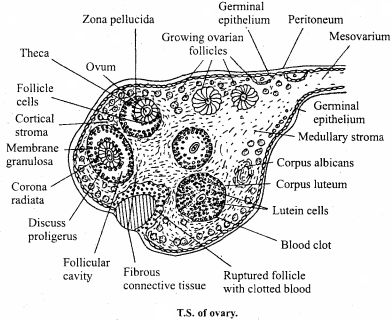
Answer:
MP Board Class 12th Biology Important Questions Chapter 3 Human Reproduction 7

Question 18.
Draw a labelled diagram of a graafian follicle.
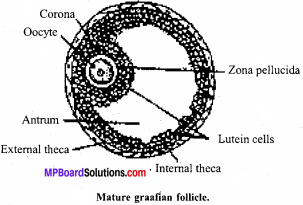
Answer:
MP Board Class 12th Biology Important Questions Chapter 3 Human Reproduction 8

Question 19.
Write the functions of the following :

  1. Corpus luteum
  2. Endometrium
  3. Acrosome
  4. Sperm tail
  5. Fimbriae

Answer:
The functions of the following:

1. Corpus luteum secretes large amount of progesterone which is essential for the maintenance of endometrium of the uterus.

2. Endometrium is necessary for the implantation of the fertillised ovum, for contributing towards making of placenta and other events of pregnancy.

3. Acrosome is filled with enzymes that help in dissolving the outer cover of the ovum and entry of sperm nucleus.

4. Sperm tail facilitates motility of the sperm essential for reaching the ovum to fertilise it.

5. Fimbriae are finger – like projections at the mouth of fallopian tubules that help in collection of the ovum after ovulation.

Human Reproduction Long Answer Type Question

Question 1.
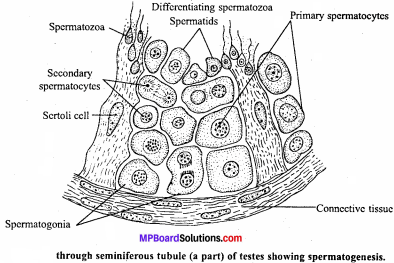
Describe the structure of a seminiferous tubules.
Answer:
Seminiferous tubules are highly coiled tubes, which are lined on the inside by:
1. Male germ cells called spematogonia that undergo meiotic division to form sperm cells.
MP Board Class 12th Biology Important Questions Chapter 3 Human Reproduction 9

2. Sertoli cells provide nutrition and molecular signals to the germ cells.

Question 2.
What is spermatogenesis? Briefly describe the process of spermatogenesis.
Answer:
Spermatogenesis:
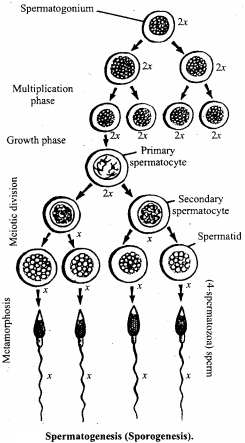
Formation of sperms in the testis is called as spermatogenesis. It involves in the following steps:

1. Multiplication phase:
In this phase, sperm cells are formed in testes. The inner layer of seminiferous tubules of testes is formed of germinal epithelium. Some of these cells called primary germ cells divide mitotically into spermatogonia which become separated in the germinal layer. Other cells of this layer serve as nutrition for the dividing cells.

2. Growth phase:
In this phase, spermatogonia starts growing, absorbing nutrient substances. These large cells are called primary spermatocytes.

3. Maturation phase:
It is a very important phase. Primary spermatocytes divide twice. The first division is meiotic due to which the number of chromosomes is reduced to half. In this process, primary spermatocyte divides into two halves which are known as secondary spermatocytes. The second division is mitotic and no change takes place in the number of chromosomes. Thus, from two secondary spermatocytes four spermatids are formed. In this manner from one primary spermatocyte four spermatids are formed. These spermatids change into sperm cells of spermatozoa by a process called metamorphosis.
MP Board Class 12th Biology Important Questions Chapter 3 Human Reproduction 10

Question 3.
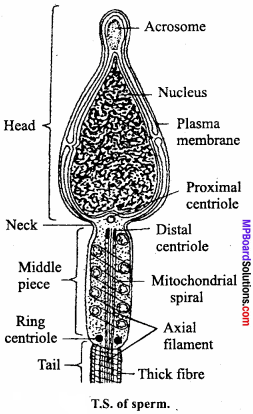
Draw a labelled diagram of human sperm and explain its defferent parts.
Answer:
Structure of sperm:
A mature sperm is a delicate microscopic, motile structure. A typi¬cal mammalian sperm consists of the following three parts:

  1. Head
  2. Middle piece and
  3. Tail.

1. Head:
Head is knob like terminal part of the sperm. It is composed of a large nucleus and an acrosome. At the time of entry of the sperm into egg acrosome secretes spermlysin which dissolve the egg membrane and thus facilitates entry of sperm into the egg or ovum.

2. Middle piece:
It is short and lies between head and tail. It contains two granules called the proximal and distal centrioles in front side and towards posterior side cylindrical middle part of sperm. It is considered as the power house of sperm as it contains compact mass of mitochondria, which provides energy for metabolism and movement of sperm.
MP Board Class 12th Biology Important Questions Chapter 3 Human Reproduction 11
3. Tail:
It is situated on posterior part of sperm. It moves with the help of axial filament. The posterior part of the tail is called as end piece and it is not covered by membrane.

MP Board Solutions

Question 4.
What are the major functions of male accessory ducts and glands?
Answer:
The main functions of male accessory ducts and glands are as follows:

  1. Rete testis : They transport sperms from seminiferous tubule to vas efferentia.
  2. Vas efferentia : Transports sperms to epdidymis.

Question 5.
Describe oogenesis with suitable diagram.
Or
Explain the different phases of oogenesis with ray diagram.
Or
What is oogenesis? Describe its various phases.
Answer:
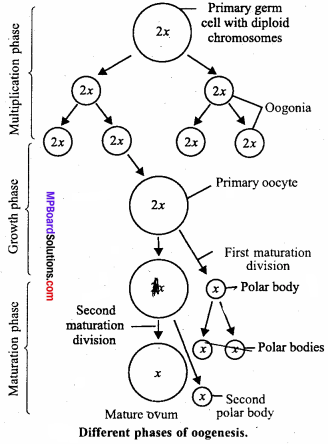
The process of formation of ova from oogonia in the ovaries is called oogenesis. It consists of three phases:

  1. Multiplication phase
  2. Growth phase and
  3. Maturation phase.

1. Multiplication phase:
The primordial germ cells divide by mitosis to produce oogonia. These oogonia divide by repeated mitotic divisions forming clusters of oogonia called ovigerous cords. These lie close to germinal epithelium. When oogonia stop dividing they are called oocytes. In each cluster of oocytes only one enters to the growth phase and is known as primary oocyte, while the remaining oocytes form follicle cells and provide nourishment to the developing ovum, the primary oocyte.

2. Growth phase:
Growth phase of primary oocyte is very long. It varies from a few days to many years. It takes about 6 – 14 days in hen after ovulation, but three years in frog and in women all the oocytes are present at the time of birth but no one grows till the attainment of puberty, i.e., 12 – 14 years. However afterwards they grow one by one. During growth phase, following changes occur:

(i) Increase in size:
The primary oocyte increases many folds. For example, primary oocyte of the frog in the beginning has a diameter of about 50μ and on maturation it is about 1000μ to 2000μ. In man also on maturation oocyte increases in size about 7 times. The size increases due to the accumulation of reserve food like proteins and fats in the form of yolk. Due to heavy weight it is usually concentrated towards and lower portion of the egg forming vegetative pole. The portion of the cytoplasm with egg pronucleus remains often separated from the yolk and occurs towards the upper portion of the egg forming animal pole.

(ii) Number of mitochondria increases and in certain cases (birds, amphibia) they are concentrated in the same places to form mitochondrial clouds.

(iii) Increase the amount of ER and activity of golgi complex.

(iv) Synthesis of yolk or Vitellogenesis:
Chemically, yolk is a lipoprotein composed of protein, phospholipids and neutral fats along with little quantity of glycogen. The yolk is synthesized in the liver of female in soluble form and is transported through circulation to the follicle cells surrounding maturing ovum. From follicle cells it is absorbed by the ovum and is deposited in the form of yolk granules and platelets in the ooplasm. The mitochondria and golgi complex are said to be responsible for the conversion of soluble yolk into insoluble granules or platelets.

(v) Formation of thin vitelline membrane around the oocyte.

(vi) Increase the size of nucleus:
Due to the increase in the amount of DNA, nuclear sap and number of nucleoli, nucleus increases in size.

(vii) Gene amplification:
In growth phase the nucleolar genes which code for ribosomal RNA and are located in the nucleolar organizer region multiply to facilitate rapid synthesis of ribosomal RNA. This multiplication of genes without mitosis is known as gene amplification or redundancy.

3. Maturation phase:
In this phase, the nucleus of oocyte undergoes two maturation divisions. The first division is meiotic, as a result two haploid (n) cells are produced. In this division, cytokinesis is unequal, the large daughter cell with almost entire cytoplasm and yolk forms the secondary oocyte. While the smaller one with haploid nucleus (n) and almost without cytoplasm forms the first polar body which is given off from the surface of oocyte at the animal pole. The secondary oocyte with haploid number of chromosomes undergoes second maturation division or second meiotic division (it is meiotic division).
MP Board Class 12th Biology Important Questions Chapter 3 Human Reproduction 12
This division is also unequal the large one containing yolk is called ovum and small cell is the second polar body. The first polar body may also divide thus, producing total three bodies which degenerate soon. So, as a result of oogenesis only one functional ovum is formed from a primary oocyte. In most of the vertebrates, the first meiotic division occurs with the commencement of the growth phase, and second maturation division occurs when egg is activated by the entry of sperm.

Question 6.
Describe the structure of ovary.
Answer:
These are a pair of female gonads or primary sex organs lying one on each side of uterus. Ovary is attached to abdominal wall as well as utems by means of ligaments. It is surrounded by a fold of peritoneum named mesovarium. Ovary is internally differentiated into four parts : Germinal epithelium, tunica albuginea, cortex and medulla.

Germinal epithelium is the outermost layer of cuboidal to flattened cells. Germinal epithelium is followed by a sheath of condensed connective tissues which is termed as tunica albuginea. It is followed b.y cortex. The central part of ovary contains medulla. A large number of groups of specialized cells are present in the cortex which are termed as ovarian follicles. These follicles are found in four developmental stages.

1. Incipient follicle:
The central part of these follicles contains a large cell which is covered by many smaller cells.

2. Primary follicle:
These follicles are developed from incipient follicles.

3. Vascular follicle:
It is formed from primary follicles. The oocyte of these follicle is covered by a many layered thick wall.

4. Graafian follicle:
Mature ovarian follicle is termed as graafian follicle. It is covered by two sheaths derived from cortex. The follicle contains a single oocyte. A group of follicular cells surrounds the oocyte or ovum. It is called cumulus ovaricus. Another group produces membrane granulosa. Oocyte has two noncellular membranes, inner vitelline membrane and outer zona pellucida.
Note:
MP Board Class 12th Biology Important Questions Chapter 3 Human Reproduction 7

Question 7.
Describe the process of fertilization and give its significance.
Answer:
Fertilization:
Fertilization is the fusion of male and female gametes to produce a single diploid cell, called zygote. Fertilization in human female takes place in fallopian tube. In a sexual mating or coitus the male ejaculates semen into the vaginal passage of the female using the copulatory organ, the penis. In a single coitus as many as 200 million sperms are introduced into the female genital tract but out of this huge number of sperms only one is destined to fuse with the ovum, provided the fallopian tube lodges of fully developed secondary oocyte.

Sperms travel through the vaginal passage and enter the uterus through the cervix. They travel further through the uterus and finally enter the fallopian tube.The vaginal passage is highly acidic to prevent any bacterial infection but this acidic medium is not suitable for the survival of sperms. Many sperms die on the way. The liquid medium of the semen is alkaline which can neutralize the acidity of vagina to some extend and keep the sperms alive and active. The sperms move with the speed of 1-5 to 3 mm per minute.
MP Board Class 12th Biology Important Questions Chapter 3 Human Reproduction 13
The ovum gets surrounded by a large number of sperms but usually only one fuses with the ovum. The sperm penetrates the ovum using certain chemical substances of enzymatic nature.These chemicals are called spermlysins which are present in the acrosome. Certain receptors on the cell surface of the ovum enable the sperms to penetrate the wall of ovum. The ovum is surrounded by follicle cells.

These cells are joined together by a glue like substance known as mucopolysaccharide, an acid, called hyaluronic acid. The sperm produces spermlysin, known as hyaluronidase. The over all changes in a sperm before the fertilization is called capacitation. The hyaluronidase enzyme facilitates the sperm to pen-etrate through the corona radiata (follicle cells), zona pellucida and the plasma membrane of ovum. The nucleus and the cytoplasmic components get inside the ovum, leaving the tail outside. The entry of sperm stimulates the ovum and the signal is transmitted to the egg surface incapacitating all the other cells surrounding the ovum.

Nucleus of sperm move towards the nucleus of ovum and they fuses with each other to form zygote. It takes 2 – 2\(\frac { 1 }{ 2 }\) hours to complete fertilization process. Once the ovum has been fertilized a barrier forms around it that normally prevents other sperms from entering. Now fertilized egg reaches to the uterus and within seven days of fertilization it is transplanted to the wall of the uterus.

Significance of Fertilization:

  1. Egg becomes active after entry of sperm and completes its second maturation division.
  2. Formation of fertilization membrane prevent entry of other sperms in the ovum. In human this membrane is not formed.
  3. It restores the diploid number (2n) of chromosomes in the zygote.
  4. It combines characters of male and female resulting in the introduction of varia-tions. These variations make the offspring better equipped for struggle against environmental conditions to ensure the existence.
  5. The ovum is stimulated to cleavage.
  6. After fertilization ovum rotate inside the membrane.
  7. Ovum do not contain centriole and obtain it from sperm during this process thus zygote continuously divides.
  8. It is necessary for the egg to attain maturity.

MP Board Solutions

Question 8.
Describe development of embryo up to the formation of three germ layer. Give the names of organs formed by three germ layer.
Or
Define cleavage. Describe the changes that occur in embryo till gastrulation.
Answer:
The term cleavage refers to a series of rapid mitotic divisions of the zygote following fertilization forming a many celled blastula. Following are the various steps of embryonic development in human up to the formation of three germ layer:

1. Formation of morula:
The fertilized zygote divides. It undergoes successive quick mitotic cell divisions called cleavage. First cleavage is holoblastic, unequal and meridional. It divides the oyum completely into two unequal blastomeres. The plane of cleavage passes
through animal vegetal axis, i.e., it is meridional. Large blastomere divides little earlier than the small one giving a transitional three cell stage.

As a result of further cleavages, a solid mass of mulberry shaped embryo is formed called morula. Morula is of the size of zygote but consists of 32 cells. These cells are of two types , The outer layer of smaller cells around, inner larger cells. Within 72 hours of fertilization, morula reaches the uterus.
MP Board Class 12th Biology Important Questions Chapter 3 Human Reproduction 14

2. Formation of blastula:
Transformation of morula into a blastula starts by the rearrangement of blastomeres. This leads to the formation of a central cavity inside the morula. The outer cells of morula absorb the nutritive fluid secreted by the uterine mu¬cous membrane and transform into trophoblast. The fluid absorbed by these cells collects in the central cavity called biastocoel. This cavity separates the trophoblast from the inner mass of larger cells except on one side and is termed blastocyst. The inner cell mass is pushed to one pole as a small knob. This knob gives rise to the embryo and is termed as embryonal knob.

3. Formation of gastrula:
In this embryonic stage development of three germ layer occurs. In this stage morphogenic movement of cells of embryo occurs, as a result of this three germ layers are formed. A cavity develops at the centre called as archenteron which opens outside through blastopore.

4. Formation of three germ layers:
MP Board Class 12th Biology Important Questions Chapter 3 Human Reproduction 15

Formation of endoderm:
The enlargement of blastodermic vesicle is followed by the separation of few cells from the inner cell mass. These cells push out from the blastocoel to become the initial cells of the innermost layer of gastrula, the pattern of a tube within a tube. The inner tube is called primitive gut. It is differentiated into gut tract which is within the body and a yolk sac that communicates with the gut of the embryo. The remaining cells of the inner cell mass are organized to form the embryonic disc.

Formation of mesoderm:
After the formation of endoderm an increased rate of cell proliferation takes place at the caudal end of the embryonic disc. This results in the localised increase in the thickness of the disc. These cells subsequently get detached from the embryonic disc and get organized to a well demarcated mesodermal layer.

Formation of ectoderm:
After the formation of endoderm and mesoderm, the remaining cells of the embryonic disc arrange themselves in a layer to form ectoderm.

MP Board Solutions

Question 9.
Write differences between spermatogenesis and oogenesis.
Answer:
Differences between Spermatogenesis and Oogenesis:

Spermatogenesis:

  • Sperms are produced by this process.
  • In this process primary spermatocytes are formed by maturation of germinal epithelium cells.
  • Primary spermatocyte divides to form four spermatids.
  • There is equal division.
  • Large number of sperms are formed by this process.

Oogenesis:

  • Ovums are produced by this process.
  • In this process primary oocytes are formed by maturation of germinal epithelium.
  • Primary oocytes divides to form one ovum and three polar bodies.
  • There is unequal division.
  • Less number of ovums are formed by this process.

MP Board Class 12th Biology Important Questions

MP Board Class 11th Special Hindi Sahayak Vachan Solutions Chapter 8 काठमाण्डू दर्शन

MP Board Class 11th Special Hindi सहायक वाचन Solutions Chapter 8 काठमाण्डू दर्शन

काठमाण्डू दर्शन अभ्यास प्रश्न

निम्नलिखित प्रश्नों के उत्तर लिखिए

प्रश्न 1.
हिमालय के विषय में लेखक के विचार लिखिए।
उत्तर:
भारत से नेपाल की हवाई यात्रा गोरखपुर से सीमा पार करके हिमालय की तराई का प्रदेश शुरू होता है। यह प्रदेश वृक्षों का घना प्रदेश है। वृक्षों से ढंके वन लहराते समुद्र का दृश्य प्रस्तुत करते हैं।

हिमालय की श्रेणियाँ प्रबल आकर्षण की बिन्दु थीं। हिमालय को नगाधिराज हिमालय भी कहा जाता है। इससे भारत की अनेक पुराकथाएँ और उदात्त कल्पनाएँ जुड़ी हुई हैं। कालिदास, प्रसाद, पन्त और दिनकर के अनेक काव्य-विम्ब लेखक की चेतना में अनायास ही उद्बुद्ध होने लगे।

कालिदास ने तो हिमालय को पृथ्वी का मानदण्ड कह दिया। जो उनकी कल्पना के विराट स्वरूप का दिग्दर्शन है। हिमालय का सम्बन्ध शंकर भगवान से है, अतः इन प्रसंगों को कालिदास ने आनन्द-कल्पना के अंग बनाकर भव्य प्रस्तुति की है अपने ग्रन्थों में। कवि ने अपनी भक्ति के फूल इस हिमालय के सैकड़ों-हजारों बिम्बों के प्रति अर्पित किए हैं। परमश्रद्धेय जयशंकर प्रसाद जी ने तो हिमालय को प्रलय के बाद आर्विभूत प्रथम रचना के रूप में चित्रित किया है। हिमालय अपने उत्तुंग शिखरों से सुमण्डित दिगन्तव्यापी कलेवर से संयुक्त होने से उसकी प्रलय समाधि अभी भी भंग नहीं हुई है।

प्रकृति के कोमल चित्रों को उभारने वाले पंत जैसे महान् प्रकृति कवि के भव्य चित्र लेखक के मानस पटल पर अंकित होने लगे। कालिदास की अमर कृति ‘कुमार सम्भव’ के उदात्त कोमल प्रसंग चलचित्र के समान लेखक के मन में फेरी लगाने लगे। इस हिमालय के किसी प्रान्तर की निमृत गुफाओं में उमा ने शंकर को वरण करने की अभिलाषा से तपस्या की होगी। सम्भवतः यहीं कहीं निकटवर्ती कैलाश पर्वत के किसी शिखर पर त्रिनेत्र (शंकर) ने अपने तीसरे नेत्र की प्रचण्ड अग्नि शिखाओं से कामदेव को भस्म किया होगा।

इसी बीच लेखक को अपनी मातृभूमि, भारत के सीमा सम्बन्धी संकटों की स्मृति कौंधने लगी और महाकवि ‘दिनकर’ की ओजस्वी वाणी उसके कानों में इस प्रकार गूंजने लगी-

“जिसके द्वारों पर खड़ा क्रान्त,
सीमापति! तूने की पुकार,
पद दलित इसे करना पीछे,
पहले ले मेरा सिर उतार।”

हिमालय पर्वत को पर्वतों का राजा कहते हैं। नग का अर्थ पर्वत होता है, अतः इसे नगाधिराज भी सम्बोधित करते हैं। लेखक अपने नाम के साथ भी हिमालय का सम्बन्ध जोड़ता है-नगेन्द्र-नग + इन्द्र = पर्वतों का राजा। लेखक की कल्पना में हिमालय देवभूमि, देवात्मा, नगाधिराज, पृथ्वी का मानदण्ड न जाने कितने रूपों और नामों से सम्बोधित किए जाते हुए विराजमान हैं।

MP Board Solutions

प्रश्न 2.
नेपाल में लेखक के ठहरने की क्या व्यवस्था थी? संक्षिप्त में लिखिए।
उत्तर:
नेपाल में ठहरने की व्यवस्था विश्वविद्यालय की ओर से होटल में की गई थी। किन्तु लेखक के मित्र ने इस प्रस्ताव को रद्द कर दिया। लेखक से उसके मित्र महोदय ने आग्रह किया कि वे उसके (मित्र के) घर पर ही चलें। वहाँ ठहरें। मित्र के आग्रह से लेखक ने उसके घर पर ही ठहरना स्वीकार किया। लेखक महोदय मित्र के घर पहुँच गए। चाय पीते-पीते सन्ध्या हो गई। अतः शहर में ही घूमने का कार्यक्रम बनाया। काठमाण्डू-नया शहर और पुराना शहर-दो भागों में अवस्थित है। इस तरह अन्य बहुत सी बातें करते हुए रात्रिकाल को विश्राम किया। दूसरे दिन दर्शनीय स्थलों के देखने के लिए निश्चित किया। मित्र के आवास पर निवास चित्ताकर्षक और प्रसन्नता देने वाला रहा।

प्रश्न 3.
काठमाण्डू भ्रमण के बाद लेखक के अनुभव अपने शब्दों में लिखिए।
उत्तर:
काठमाण्डू में काष्ठमण्डप शहर के मध्यभाग में स्थित है। यह काष्ठमण्डप महावृक्ष के काष्ठ से निर्मित है। शुरू में यह यात्रियों का विश्राम गृह था। धीरे-धीरे देव भावना का समावेश हो जाने पर देवस्थान बन गया। इसमें कोई भी शिल्प सौन्दर्य नहीं है। कृष्ण मंदिर बागमती नदी के पास नगर से कुछ मील की दूरी पर है। यह मंदिर दो हजार वर्ष पुराना है। इसके निर्माण में चूने का प्रयोग नहीं किया गया है। वास्तुकला का अद्भुत चमत्कार है। स्वयंभूनाथ का मंदिर पर्वत खण्ड के विराट् भूभाग पर स्थित है। इसके विग्रह में चारों ओर आँखें लगी हैं जो चतुर्दिक दृकपात करती हैं और नगर को सुरक्षा देती हैं।

काठमाण्डू दर्शन और भ्रमण के बाद लेखक का अनुभव है कि भारत और नेपाल दोनों देश सांस्कृतिक और सामाजिक रूप से अति समृद्ध देश हैं। यह शैव, शाक्त और बौद्ध धर्मों का केन्द्र रहा है। बौद्ध, शाक्त और शैव-हिन्दू धर्म के विशिष्ट सम्प्रदाय हैं। नेपाल विश्व में एक ही हिन्दू राज्य है। यह न तो भारत की तरह धर्मनिरपेक्ष हैं और न पाकिस्तान की तरह धर्म प्रतिबद्ध। नेपाल इस बात का प्रमाण है कि हिन्दू धर्म को उसके सहज उदार रूप में स्वीकार कर लेने के बाद धर्म निरपेक्षता उतनी अनिवार्य नहीं रहती। अनेक हिन्दू-प्रथाएँ जो आज भारत में विलुप्त हैं, वे आज भी वहाँ की व्यावहारिक संस्कृति का अंग हैं। नेपाल और भारत के सम्बन्ध अत्यन्त आत्मीय तथा सौहार्द्रपूर्ण हैं-संस्कृति और धर्म की समानता चिरकाल से दोनों राष्ट्रों को स्नेहबन्ध पान में बाँधे हुए है।

प्रश्न 4.
भगवान पशुपतिनाथ के दर्शन के समय लेखक ने क्या-क्या देखा? लिखिए।
उत्तर:
सन् 1967 ई. के मार्च की नौवीं तारीख थी। उस दिन लेखक का जन्मदिन था तथा महाशिव रात्रि का पर्व भी था। अतः रात्रि को भगवान पशुपतिनाथ के दर्शन का कार्यक्रम बनाया गया। लेखक अपने मित्र के सहयोग से मन्दिर परिसर में गाड़ी से पहुँच सका। मंदिर के प्रांगण में नंगे पैर ही प्रवेश करना था, वहाँ कीचड़ थी, अतः मोजे पहनने की सुविधा नहीं थी। साधारण रूप से लेखक को जाड़े की रात्रि में यह सब कष्ट साध्य तो था ही लेकिन अब तो वहाँ लेखक के लिए कोई अन्य गति भी नहीं थी। लेखक से मित्र श्रद्धालु बोला-भगवान पशुपतिनाथ के मंदिर में किसी बात का भी डर नहीं है। लेखक और उनके मित्र महोदय धक्के-मुक्के खाते देव-विग्रह के पास पहुँच ही गए। वहाँ प्रत्येक श्रद्धालु अपनी श्रद्धा और भक्ति भाव से भगवान को प्रणाम कर रहा था और आगे बढ़ रहा था। वहाँ अधिक समय तक रुकने की कोई सम्भावना नहीं थी।

लेखक ने देखा कि भगवान पशुपतिनाथ के मन्दिर के परिसर में भक्तों की अपार भीड़ सभी दिशाओं से उमड़ पड़ रही थी। मन्दिर के चारों ओर दूर-दूर तक तीर्थयात्रियों के तम्बू लगे हुए थे। यात्रियों की सुविधा के लिए दुकाने भी सजी हुई थीं जिनसे यात्रीजन अपनी आवश्यक वस्तुएँ खरीद सकते थे।

प्रश्न 5.
नेपाल के ‘त्रिभुवन विश्वविद्यालय’ का वर्णन अपने शब्दों में कीजिए।
उत्तर:
नेपाल का त्रिभुवन विश्वविद्यालय काठमांडू से कई मील दूर कीर्तिपुर नामक उपनगर में बन रहा है। इसका केवल प्रशासनिक खंड व दीक्षांत भवन बन चुके थे। विज्ञान विभाग की इमारतें बन रही थीं। विश्वविद्यालय के प्रवेश द्वार पर नागर अक्षरों में त्रिभुवन विश्वविद्यालय लिखा हुआ है और दीर्घा के भीतर सामने की दीवार पर नेपाली भाषा में उसकी स्थापना का संक्षिप्त इतिवृत्त दिया हुआ है। विश्वविद्यालय परिदृश्य अत्यन्त भव्य है। वह विशाल भूखण्ड, जिस पर विश्वविद्यालय स्थित है, पर्वतमाला से घिरा हुआ अर्द्धचन्द्राकार है।

निर्माण कार्य पूरा होने पर त्रिभुवन विश्वविद्यालय का परिवेश प्राकृतिक और मानवीय कला के संयोग से एक अपूर्व गरिमा से मण्डित हो जाएगा। विश्वविद्यालय की स्थापना सन् 1960 ई. में हुई थी। इसके अन्तर्गत कला, सामाजिक विज्ञान और भौतिक विज्ञान के प्रायः सभी प्रमुख विभाग और देश के विभिन्न भागों में स्थापित 35-36 स्नातक विद्यालय हैं। विभिन्न विषयों के लिए नेपाल के सुयोग्य नागरिकों के अतिरिक्त, भारत और अमरीका आदि के विशेषज्ञ विद्वानों की नियुक्ति की जाती है।

भारत सहयोग-संस्थान की ओर से 20-25 भारतीय प्राध्यापक वहाँ भिन्न-भिन्न विभागों में कार्य कर रहे हैं। हिन्दी विभाग में एक आचार्य (प्रोफेसर) एक उपाचार्य (रीडर) तथा कई प्राध्यापक हैं। नेपाल के साथ घनिष्ठ सम्बन्ध होने के कारण हिन्दी और संस्कृत में वहाँ के छात्रों की विशेष रुचि है। कुलपति महादेय के अनुरोध पर मैंने पाठ्यक्रम और शोध व्यवस्था आदि के विषय में हिन्दी विभाग के सहयोगी-बन्धुओं से विचार-विनिमय किया और तुलनात्मक अनुसंधान पर विशेष बल देने पर परामर्श किया। नेपाल के प्राचीन ग्रंथागारों में अपार सामग्री भरी पड़ी है। वह प्रायः संस्कृत और पालि भाषा में है। परन्तु मैथिली हिन्दी के ग्रंथों का भी संग्रह काफी है। उनका सम्पादन और प्रकाशन निश्चय ही उपयोगी होगा।

काठमाण्डू दर्शन अति लघु उत्तरीय प्रश्न

प्रश्न 1.
नेपाल किन-किन धर्मों का केन्द्र रहा है?
उत्तर:
नेपाल शैव, शाक्त और बौद्ध धर्मों का केन्द्र रहा है।

प्रश्न 2.
नेपाल के त्रिभुवन विश्वविद्यालय की स्थापना कब हुई थी?
उत्तर:
नेपाल के कीर्तिपुर नामक उपनगर में बने त्रिभुवन विश्वविद्यालय की स्थापना सन् 1960 में हुई थी।

MP Board Solutions

काठमाण्डू दर्शन पाठ का सारांश

प्रस्तावना :
भारत की राजधानी दिल्ली से नेपाल की यात्रा मुश्किल से तीन घण्टे की है। यह यात्रा फॉकर फ्रेण्डशिप विमान से करनी थी। लेखक के परिवार और अन्तरंग वृत्त में थोड़ी सी हलचल मच गई। थोड़ी सी उत्तेजना भी उत्पन्न हुई।

व्यवस्था :
नेपाल में उस समय शीत ऋतु होने के कारण गर्म कपड़ों के विषय में परिवार के सदस्यों ने बहुत चर्चा की। मेरा ओवरकोट पुराना था। लोगों ने नए ओवरकोट को खरीदने का प्रस्ताव रखा। समय का अभाव था, अतः फिर अगले मौसम तक इसकी खरीद टल गई।

पासपोर्ट आदि का बन्धन नेपाल यात्रा के लिए बाधक नहीं था। भारत और नेपाल की निकटता परस्पर सद्भाव और सहयोग के कारण दोनों देशों के नागरिकों को यह सुविधाएँ प्राप्त हैं।सीमा शुल्क विभाग बहुत सतर्क है। इसकी ओर से तलाशी पूरी-पूरी तरह ली जाती है। सीमा शुल्क के लिए अधिकारी महोदय के सौजन्य से वापस आने और जाने में सुविधा मिल गई क्योंकि वे अधिकारी महोदय मेरे पूर्व छात्र थे।

नेपाल के लिए उड़ान-फॉकर फ्रण्डशिप विमान से पूर्वाह्न 11:30 बजे यह उड़ान शुरू हुई। लगभग डेढ़ घण्टे में हम लोग गोरखपुर की सीमा पार कर हिमालय की तराई में पहुँच गए। सारा वन प्रदेश था जो घने वृक्षों से ढंका हुआ था। चारों ओर हरीतिमा का समुद्र हिलोरें मार रहा था। घने होने से अन्धकारमय वन प्रदेश लेखक ने जीवन में पहली बार देखा। हिमालय के दर्शन हुए। कालिदास, जयशंकर प्रसाद, पन्त और दिनकर द्वारा निर्मित इसके विविध बिम्ब मेरी चेतना में उभरने लगे। दिनकर ने तो सीमा संकट को समाप्त करने के लिए ओजस्वी वाणी में कहा-

“जिसके द्वारों पर खड़ा क्रान्त,
सीमापति! तूने की पुकार,
पद दलित इसे करना पीछे,
पहले ले मेरा सिर उतार …।”

लेखक का नामकरण :
लेखक का नाम इनके पितामह ने नागों के उपासक नगाइच वंश से सम्बन्धित होने के कारण नागेन्द्र रखा जो बाद में नगेन्द्र (पर्वतों का राजा) हो गया। मेरे अन्दर शब्द-अर्थ का सौन्दर्य जागृत हो गया। अत: नगेन्द्र ही अधिक उपयुक्त लगा। अब हमारे विमान की परछाईं पर्वत पर इस तरह लग रही थी मानो किसी देवमन्दिर के रजत-शिखर पर छोटा सा पतंगा मंडरा रहा है। कल्पना और यथार्थ का भेद इस तरह ज्ञात हो रहा था।

काठमाण्डू :
एक अर्द्धवृत्ताकार घाटी-नेपाल राज्य में प्रवेश कर पर्वत श्रेणियों को पार करते ही विमान काठमाण्डू घाटी में उतरने लगा। लेखक कुर्सी पेटी बाँधकर हवाई अड्डे पर उतरने को तैयार हो गया। यह हवाई अड्डा मध्यम श्रेणी का है। हिमालय के पर्वत शिखरों की पृष्ठभूमि में उड़ते हुए विमान को देखकर पुराणों में वर्णित देव-गन्धर्वो के विमानों का स्मरण हो आया। इसी तरह उड़ते होंगे। काठमाण्डू शहर एक अर्द्धवृत्ताकार घाटी में स्थित है। विश्वविद्यालय की ओर से होटल में ठहरने की व्यवस्था को मेरे मित्र ने रद्द कर दिया और मैं उन मित्र महोदय के आग्रह पर उनके घर चला गया। नेपाल पर्यटकों का स्वर्ग कहा जाता है। मित्र महोदय ने वहाँ के दर्शनीय स्थलों के देखने की तालिका तैयार कर ली।

काठमाण्डू :
एक रंगीन पहाड़ी शहर-काठमाण्डू एक रंगीन पहाड़ी शहर है जिसमें नए और पुराने का अनमोल मिश्रण है। शहर का नया भाग आधुनिक ढंग का बना हुआ है। इसमें दूतावास की एवं पाश्चात्य उपयोगी वास्तुकला की इमारते हैं। सड़कें पक्की और साफ हैं। काठमाण्डू के पुराने हिस्से में स्थानीय लोगों के मकान हैं जिनका निर्माण लकड़ी और मिट्टी से किया गया है। पत्थर का प्रयोग बहुत कम किया गया है। सम्पन्न व्यक्तियों के विशेषकर राणा परिवार के सदस्यों के भवन सामन्तीय ढंग के हैं। उनके चारों ओर प्राचीर है और भीतर पहाड़ी शैली के गढ़ीनुमा मकान हैं। इनमें एक प्रकार के अनगढ़ पौरुष का आभास मिलता है। राजमहल में नई और पुरानी वास्तु शैली का मिश्रण है। बाहर की प्राचीर जहाँ पुराने ढंग की है, वहीं भीतर के भवन नए ढंग के नये साज सामान से लैस हैं।

सरकारी भवन :
सरकारी भवनों का निर्माण नए ढंग से किया गया है। परन्तु प्रधानमंत्री तथा मंत्रिमंडल के अन्य सदस्य वहाँ नहीं रहते। वे अपने खानदानी मकानों में ही रहते हैं।

शहर का पुराना भाग बहुत साफ-सुथरा नहीं है। वहाँ का वातावरण और परिवेश उत्तर प्रदेश के उत्तर-पूर्वी शहरों का सा है।

काठमाण्डू के बाजार :
काठमांडू के बाजार में विचित्रता है, रंगीनगी है। सुदूर पूर्व एशिया, चीन भारत और अब अमेरिका का माल यहाँ विदेशी कीमत पर मिलता है। नेपाल की रंग-बिरंगी चीजें बाजार के आकर्षण को बढ़ा देती हैं। खाने-पीने की चीजें वहाँ बहुत महँगी हैं।

नगर के विशेष स्थान पर चौक और चौराहों पर-महाराजाधिराज महेन्द्र व महारानी के चित्र लगे हुए हैं। इन चित्रों के नीचे संस्कृतनिष्ठ नेपाली भाषा में देवनागरी अक्षरों में हिन्दू राजभक्ति परम्परानुसार राजदम्पत्ति की मंगल प्रशस्तियाँ अंकित हैं। वहाँ सभी जगह-मार्गों, हाटों, प्रशासनिक इमारतों पर नेपाली भाषा का ही प्रयोग किया गया है। कहीं पर भी ‘अन्तर्राष्ट्रीय भाषा’ का प्रयोग नहीं किया गया है।

नेपाल के प्रमुख स्थान :
समय का अभाव होने के कारण मुख्य रूप से तीन प्रमुख स्थानों को देखने का कार्यक्रम बन सका-(1) नगर में स्थित काष्ठमंडप, (2) स्वयंभूनाथ और (3) पाटन का कृष्ण मंदिर।

काष्ठमंडप शहर के मध्यभाग में अवस्थित है। इसका रूप और आकार पगोडा के समान है। सम्पूर्ण मण्डप एक ही महावृक्ष के काष्ठ से निर्मित है। काठमांडू काष्ठ मंडप का ही तद्भव है।

स्वयंभूनाथ का मंदिर एक पर्वत खण्ड के ऊपर विराट् भूमिका पर स्थित है। इस मंदिर का प्रमुख आकर्षण है–स्वर्णपत्र से मंडित भगवान बुद्ध की विशाल प्रतिमा। इस प्रतिमा में चारों ओर दो-दो आँखें लगी हैं जो मानो एक चिर सजग प्रहरी हो और चतुर्दिक दृक्पात करता हुआ नगर की रक्षा कर रहा हो।

पाटन के कृष्ण मंदिर को देखने के लिए बागमती नदी पार करके कुछ मील दूर जाना पड़ता है। पाटन नगर एक छोटा सा उपनगर है। जहाँ हर जगह छोटे-छोटे मन्दिर या मूर्ति गृह बने हैं। यह कृष्ण मंदिर प्रायः दो हजार वर्ष पुराना है। इसके निर्माण में चूने का प्रयोग नहीं हुआ है। वास्तुकला का यह अद्भुत चमत्कार है जो बिना चूने के इतना मजबूत बना है।

नेपाल-विश्व में एकमात्र हिन्दू राज्य :
नेपाल विश्व में एकमात्र हिन्दू राज्य है। वह भारत वर्ष की भाँति धर्म निरपेक्ष राज्य नहीं है और न पाकिस्तान की तरह धर्म प्रतिबद्ध। नेपाल सदा से ही शैव, शाक्त और बौद्ध धर्मों का केन्द्र रहा है।

भारत और नेपाल के सम्बन्ध :
भारत में विलुप्त अनेक हिन्दू-प्रथाएँ, आज भी वहाँ की व्यावहारिक संस्कृति का अंग हैं। नेपाल और भारत के सम्बन्ध अत्यन्त आत्मीय तथा सौहार्द्रपूर्ण हैं-संस्कृति और धर्म की समानता चिरकाल से दोनों राष्ट्रों को स्नेह बन्धन में बाँधे हुए है।

भगवान पशुपति नाथ के दर्शन :
रात्रि में भगवान पशुपति नाथ के दर्शन के लिए गए। यह शिवरात्रि का पर्व था। संयोग से उस दिन 09 मार्च थी जो लेखक का जन्मदिन था। भक्तों की अपार भीड़ उमड़ रही थी। मंदिर के प्रांगण में नंगे पाँव प्रवेश किया। थोड़ा कष्ट उठाते हुए देव विग्रह के समीप पहुँचे। भगवान को प्रणाम किया।

दस मार्च :
लेखक को 10 मार्च के दिन नेपाल में भारतीय राजदूत श्री श्रीमन्नारायण से मिलना था। वैदेशिक शिष्टाचार के अनुसार उनसे मिला।

MP Board Solutions

त्रिभुवन विश्वविद्यालय :
वहाँ से विश्वविद्यालय की नई इमारत की ओर चल दिया। यह इमारत काठमाण्डू से कई मील दूर कीर्तिपुर नामक उपनगर में है। विश्वविद्यालय का नाम ‘त्रिभुवन विश्वविद्यालय’ है। इसकी दीर्घा में इसका संक्षिप्त इतिवृत्त दिया हुआ है। जो नेपाली 389 भाषा में है। यह विश्वविद्यालय भव्य आकर्षक विशाल भूमि खण्ड पर स्थित है। पर्वतमाला से घिरा हुआ अर्धचन्द्राकार है। यहाँ प्रकृति और मानव कृति का अद्भुत संयोग है। इस विश्वविद्यालय की स्थापना 1960 ई. में हुई थी।

विश्वविद्यालय का विस्तार :
इस विश्वविद्यालय में-कला, सामाजिक विज्ञान और भौतिक विज्ञान के प्रायः सभी प्रमुख विभाग हैं और देश के विभिन्न भागों में स्थापित 35-36 स्नातक विद्यालय हैं।

विभिन्न विषयों के अध्यापक :
विभिन्न विषयों के अध्यापन के लिए नेपाल के सुयोग्य नागरिकों के अतिरिक्त भारत और अमेरिका आदि के विशेषज्ञ विद्वानों की नियुक्ति की जाती है। भारत सहयोग संस्थान की ओर से 20-25 भारतीय प्राध्यापक वहाँ विभिन्न विभागों में कार्य कर रहे हैं। हिन्दी विभागों में एक आचार्य (प्रोफेसर), एक उपाचार्य (रीडर) तथा कई प्राध्यापक हैं। नेपाली भाषा के साथ घनिष्ठ सम्बन्ध होने के कारण हिन्दी और संस्कृत में वहाँ के छात्रों में विशेष रुचि है।

प्राचीन ग्रंथागारों में अपार सामग्री भरी पड़ी है। वह सामग्री प्रायः संस्कृत और पालि भाषा में है। इसके साथ ही मैथिली हिन्दी का काफी संग्रह है। इन सबका सम्पादन और प्रकाशन निश्चय ही बहुत उपयोगी होगा।

उपसंहार :
अब लेखक के लौटने का दिन 11 मार्च, 1967 था। मध्याह्न में नेपाल-विमान-सेवा से हवाई जहाज से दिल्ली लौटना था। अतः 10.30 बजे हम लोग हवाई अड्डे के लिए चल दिए। यूरोप से कोई विशेष अतिथि नेपाल आ रहे थे। अतः हवाई अड्डे के मार्ग जल्दी बंद हो गए। हमारे विमान में अभी दो-तीन घण्टे का विलम्ब था। हवाई जहाज के आने पर मैंने अपने अतिथेय बन्धुओं से विदा ली। अपरिचित प्रदेश में उनके कारण सभी तरह की सुख-सुविधा रही। यह विमान भी फॉकर फ्रेण्डशिप था। यहाँ सारी सूचनाएँ नेपाली भाषा में दी जाती हैं। समय से लेखक पालम पर उतर गया। उन्हें लेने के लिए बच्चे और परिवार के सदस्य वहाँ पहले से ही खड़े हुए थे। दिल्ली जनपथ से ही उनकी अभिलषित चीजें खरीदकर र्दी क्योंकि नेपाल से कोई भी वस्तु खरीदकर लाई नहीं जा सकती थी।

MP Board Class 11th Hindi Solutions

MP Board Class 11th Special Hindi Sahayak Vachan Solutions Chapter 7 सरजू भैया

MP Board Class 11th Special Hindi सहायक वाचन Solutions Chapter 7 सरजू भैया

सरजू भैया अभ्यास प्रश्न

निम्नलिखित प्रश्नों के उत्तर लिखिए

प्रश्न 1.
सरजू भैया के व्यक्तित्व का संक्षिप्त परिचय लिखिए।
उत्तर:
प्रस्तावना-सरजू भैया की गिनती गाँव के सबसे लम्बे और दुबले आदमियों में हो सकती है। उनका रंग साँवला है। बगुले की सी लम्बी-लम्बी टाँगों जैसी लम्बी बाहें। कमर में धोती पहनते हैं, कंधे पर अंगोछा डाले रहते हैं। जब वे खड़े होते हैं तब, आप उनकी पसलियों की हड्डियाँ गिन लीजिए। नाक खड़ी सी और लम्बी। सघन भर्दै। उनकी आँखें बड़ी-बड़ी हैं जो कोटर में धंसी सी लगती हैं। गाल पिचके से हैं। अंग-अंग की शिराएँ उभरी हुई हैं। कभी-कभी मालूम होता है मानो ये नसें नहीं, उनके शरीर को किसी ने पतली डोरों से जकड़ रखा है।

सरजू की सूरत :
उनको देखने से तो उनकी तस्वीर निस्संदेह किसी भुखमरे, मनहूस आदमी की मालूम होती है। परन्तु ऐसा है भी कि नहीं? सरजू भैया लेखक के गाँव के चन्द जिन्दादिल लोगों में से हैं। बड़े मिलनसार, मजाकिया और हँसोड़ हैं।

दिल खोलकर हँसना :
वे जब दिल खोलकर हँसते हैं, तो शरीर भर में जो सबसे छोटी चीजें उन्हें मिली हैं, वे उनके पंक्तिबद्ध छोटे-छोटे दाँत हैं। तब वे बेतहाशा चमक पड़ते हैं। अंग-अंग हिलने-डुलने लगते हैं, जैसे मानो हर अंग हँस रहा हो। सरजू भैया के पास इतनी सम्पत्ति है कि वह खुद या अपने परिवार का ही पेट नहीं भर सकते वरन् आगत-अतिथि की सेवा पूजा भी मजे से कर सकते हैं। तो फिर यह हड्डियों का ढाँचा क्यों? के जवाब में एक पुरानी कहावत पेश करूँगा-काजी दुबले क्यों-शहर के अंदेशे से।

उपसंहार :
अब सरजू भैया की जो हालत है, वह स्वयं अपने कारण नहीं, दूसरों के चलते है। पराये उपकार के चलते उन्होंने सिर्फ अपना यह शरीर सुखा लिया है, बल्कि अपनी सम्पत्ति की भी कुछ कम हानि नहीं की है।

MP Board Solutions

प्रश्न 2.
सरजू भैया क्या व्यवसाय करते थे? वे अपने व्यवसाय में सफल क्यों नहीं हो सके?
उत्तर:
सरजू भैया के पास खेतीबाड़ी थी, रुपये और गल्ले का अच्छा लेन-देन था। परिवार बड़ा नहीं था और न खर्चीला। लेकिन सरजू के पिता के मरते ही सरजू भैया ने लेन-देन चौपट किया। बाढ़ ने खेती बर्बाद कर दी और भूकम्प ने मकान का सत्यानाश कर दिया। उनका लेन-देन बहुत अच्छा था। खेती को भी सम्हाला जा सकता था। घर भी खड़ा किया जा सकता था। किन्तु सरजू भैया लेन-देन का काम नहीं सम्हाल सकते थे। इसके भी कुछ कारण थे; जिससे सरजू भैया ने इन कामों में रुचि नहीं दिखाई।

“लेन-देन, जिसे नग्न शब्दों में सूदखोरी कहिए, चाहता है, आदमी अपने आदमीपन को खो दे, वह जोंक, खटमल नहीं, चीलर बन जाए। काली जोंक और लाल खटमल का स्वतंत्र अस्तित्व है। हम उनका खून चूसना महसूस करते हैं; हम उनमें अपना खून प्रत्यक्ष पाते हैं और देखते हैं। लेकिन चीलर? गंदे कपड़े में, उन्हीं सा काला कुचैला रंग लिए वह चीलर चुपचाप पड़ा रहता है और हमारे खून को इस तरह धीरे-धीरे चूसता है और तुरन्त उसे अपने रंग में बदल देता है कि उसका चूसना हम जल्द अनुभव नहीं कर सकते और अनुभव करते भी हैं, तो जरा सी सुगबुगी या ज्यादा से ज्यादा चुनमुनी मात्र और अनुभव करके भी उसे पकड़ पाने के लिए तो कोई खुर्दबीन चाहिए।”

इस तरह सूद पर दिए धन का सूद प्राप्त करने के लिए सरजू भैया चीलर नहीं बन सकते थे। उनके इस लम्बे शरीर में जो हृदय मिला है, वह शरीर के ही परिमाण में है अर्थात वे बड़े दिलदार हैं। जो भी दुखिया आया, अपनी विपदा बताई; उसे देवता सा दे दिया और वसूलने के समय जब वह आँखों में आँसू लाकर गिड़गिड़ाया, तो देवता की ही तरह पसीज गए। सूद कौन? कुछ दिन में मूलधन भी शून्य में परिवर्तित हो गया।

बाढ़ और भूकम्प ने उनके खेत और घर को बर्बाद किया जरूर, लेनिक सरजू भैया, लेखक का यकीन है, आज फटेहाली से बहुत कुछ बचे रहते, यदि लेन-देन के बाद भी इन दोनों की तरफ भी पूरा ध्यान दिए होते। यह नहीं कि वह जी चुराने वाले या आलसी और बोदा (कमजोर) गृहस्थ हैं। नहीं, ठीक इसके खिलाफ-चतुर, फुर्तीला और कामकाजी आदमी है। लेकिन करें तो क्या? उन्हें दूसरे के काम से ही कहाँ फुर्सत मिलती है।

यदि किसी का बच्चा बीमार होता है, तो वैद्य बुलाने जायेगा सरजू भैया। बाजार से किसी को सौदा खरीदना है, तो कौन जाएगा-सिवाय सरजू भैया के। किसी भी छोटे से लेकर बड़े काम तक करवाने की जिम्मेदारी है तो सरजू भैया की। इस तरह सरजू भैया ने अपनी खेती को चौपट किया हुआ है। अच्छा भोजन न मिलने से इनकी कमर झुक गई है। चाहे दिन का कोई समय हो, या रात्रि का आधा भाग, फिर भी वहाँ के लोग अपने काम के लिए बुलाएँगे सरजू भैया को। सरजू भैया का दरवाजा हर किसी के लिए चौबीसों घण्टे खुला रहता है। सरजू भैया नर-रल हैं। उनकी भलमनसाहत को कोई भी नहीं ध्यान देता है। सभी उसे सीधा समझकर ठगने की कोशिश करते हैं। इस तरह बहुत से कारण थे जिनकी वजह से वे व्यवसाय में सफल नहीं हुए।

प्रश्न 3.
सूदखोर किस तरह दूसरों का शोषण करते हैं? संक्षेप में लिखिए।
उत्तर:
सूदखोर दूसरों का खूब शोषण करते हैं। उनमें आदमीपन तो रहता ही नहीं। सूदखोर तो जोंक, खटमल नहीं, चीलर बन जाता है। काली जोंक और लाल खटमल अपना स्वतंत्र अस्तित्व बना लेते हैं, क्योंकि जब उनके द्वारा हमारा खून चूसा जाता है, तो हम उनके अन्दर अपना ही रक्त चूसा हुआ पाते हैं। लेकिन चीलर? गन्दे कपड़े में, उन्हीं सा काला कुचैला रंग लिए वह चीलर चुपचाप पड़ा रहता है और हमारे ही रक्त को धीरे-धीरे चूसता रहता है। तुरन्त ही उस चूसे गए खून को अपने रंग में मिला लेता है और अपने रंग में बदल देता है। चीलर के द्वारा चूसा जाना बहुत जल्दी अनुभव नहीं कर पाते। इसी तरह सूदखोर पैसा कमाता है और शोषण करता है।

प्रश्न 4.
“सादगी, सरल स्वभाव और सहज भोलापन ग्रामीणों की विशेषता है।” सरजू भैया पाठ के आधार पर स्पष्ट कीजिए। (2014)
उत्तर:
सरजू भैया लेखक के गाँव के रहने वाले हैं। उनमें सरलता है, सादगी है और सहज भोलापन है। यही सरजू भैया भारतीय ग्रामीणों की इन विशेषताओं को अपने अन्दर सँजोए हुए हैं। वे सदैव दूसरों की सहायता के लिए तत्पर रहते हैं। उनका हृदय विशाल है, उनके विचार भी विस्तृत और उदार हैं। ग्रामीणों की किसी भी आवश्यकता के काम को पूरा करने के लिए चौबीस घण्टे उनका द्वार खुला रहता है।

सरजू भैया यद्यपि शरीर से कमजोर दीखते हैं लेकिन उनमें आत्मिक साहस भरा पड़ा है। बीमार के लिए वैद्य लाकर, किसी की सहायता के लिए बाजार से उसकी आवश्यकता की वस्तुओं को लाकर, बाहर से आई खबर को प्रत्येक घर में पहुँचाकर, किसी के भी काम के लिए उन पर समय ही समय था। लोग उनके सीधेपन का फायदा उठाते और उन्हें ठगने की कोशिश भी करते।

ग्रामीण व्यक्ति सूदखोरों के चंगुल में बहुत जल्दी फंस जाते हैं। सरजू भैया के आधार पर स्पष्ट होता है कि सादगी, सरल स्वभाव और सहज भोलापन ग्रामीणों की विशेषता है।”

प्रश्न 5.
“दूसरों की सहायता करना, सरजू भैया का स्वभाव था” इस सन्दर्भ में बताइए कि सरजू भैया किस प्रकार दूसरों की,सहायता करते थे?
उत्तर:
सरजू भैया का स्वभाव था दूसरों की सहायता करने का। वे चौबीसों घण्टे अपने गाँव के सभी लोगों की सहायता में लगे रहते थे। वे अपने किसी भी काम को देखते नहीं थे। यदि उन्होंने अपना काम किया होता, अपनी खेतीबाड़ी, अनाज व पैसे के लेन-देन को थोड़ा भी समय निकालकर देखा होता तो अवश्य ही उनकी आर्थिक दशा ठीक रही होती। कृषि कार्य के लिए थोड़ा बहुत समय दिया होता तो धान्य आदि की कमी नहीं होती। उनका घर भी नष्ट नहीं होता। लेकिन वे अपने स्वभाव और आदत से लाचार थे कि वे अपने किसी भी काम को नहीं देखते थे। दूसरे लोगों (अपने गाँववासियों) की सहायता में तत्परता से लगे रहते। लोग उन्हें उनके सीधेपन और सहायता की भावना वाला होने से, मूर्ख समझते थे।

लेखक के अनुसार, वे गाँव के किसी भी बीमार व्यक्ति के उपचार के लिए वैद्य को लेकर आते थे। किसी को किसी चीज की आवश्यकता है, सौदा खरीद कर लाना है, तो सरजू भैया बाजार जाता और उनके लिए उस इच्छित वस्तु को लाकर देता। गाँव के किसी रिश्तेदार की बीमारी आदि की सूचना देने और लेने यदि किसी को भेजा जाना है, तो वह है सरजू भैया। इन सभी बातों के पीछे है सरजू भैया का तेजगति से चलना और दूसरे लोगों की सहायता करने की प्रवृत्ति।

गाँव का कोई सज्जन किसी की जमीन, मकान आदि को यदि खरीदता है, तो उसकी शिनाख्त सरजू भैया ही करता है। गाँव में किसी के यहाँ विवाह हो रहा है, यज्ञ आदि का आयोजन है तो समझिए इस सब की जिम्मेदारी सरजू भैया की होती है। बहुत ही अस्त-व्यस्त दिखते रहते हैं। गाँव में किसी के यहाँ कोई मृत्यु होती है, तो भी समय कोई भी हो, इसके लिए भी आवश्यक सामग्री, जैसे कफन आदि खरीदकर लाने का उत्तरदायित्व सरजू भैया का ही रहता है।

इस प्रकार गाँव के लोगों का सारा उत्तरदायित्व अपने सिर पर लेकर सरजू भैया उनकी सहायता करते थे।

प्रश्न 6.
सरजू भैया को सूदखोर ने किस प्रकार ठग लिया था? संक्षिप्त में लिखिए। (2011)
उत्तर:
सरजू भैया अपने सीधेपन से ठगे गए। वे एक दिन एक सूदखोर के चंगुल में इस तरह फंस गए कि लेखक ने सरजू भैया के पास जो रुपये थे; उन्हें अपने काम में लगा लिए। कुछ दिन बाद उन्हें धन की जरूरत पड़ी होगी। संकोचवश लेखक से धन माँग नहीं सके। वे अपनी आवश्यकता की अधिकता के कारण एक सूदखोर के पास चले गए। यह सूदखोर कोई अन्य नहीं था, यह वही था जो पहले इनसे कर्ज लिया करता था। यह सूदखोर तरह-तरह के काम करता रहता है, उनके कारण यह अब धन्ना सेठ बन गया है। उसने इन्हें (सरजू भैया को) धन दे दिया। लेकिन जैसे ही वे चलने लगे तो उसने (धन्ना सेठ बने सूदखोर) कहा, “आपके पास से रुपये जायेंगे कहाँ? लेकिन कोई सबूत तो चाहिए ही।” सरजू भैया ने कहा “क्या सबूत? मैं तैयार हूँ।” उस समय तक सरजू भैया रुपये बाँध चुके थे। उन्हें खोलकर लौटाया नहीं जा सकता था। और न सरजू भैया उसकी (सूदखोर की) माँग को नामंजूर कर सकते थे। सूदखोर ने कहा- नहीं, नहीं, कुछ नहीं-कागज पर सिर्फ निशान बना दीजिए। आपसे बाजाब्ता है नोट क्या कराया जाए?”

सरजू भैया ने बमभोला की तरह कजरौटे से अंगूठा बोर कर कागज पर चिपढ़ा दिया और चले आए, मानो किसी आधुनिक एंटोनियो ने किसी कलजुगी शाइलॉक के हाथ में अपने को गिरवी कर दिया। अब वह कहने लगा कि रुपये जल्दी लौटा दो, अन्यथा नालिश कर दूंगा और नालिश कितने की करेगा, कौन ठिकाना।” यह तो सरजू भैया की बेचारगी बोल रही थी। लेखक उनके मुख की ओर आश्चर्य से देख रहा था। लेखक ने कहा-“आपने ऐसी गलती क्यों कर दी” लेकिन इसके अलावा, उनके पास इसका जबाव क्या दे सकते थे। बस यह कि “क्या करूँ रुपये बाँध चुका था।” इस प्रकार सूरज भैया को सूदखोर ने ठग लिया था।

सरजू भैया अति लघु उत्तरीय प्रश्न

प्रश्न 1.
लेखक रामवृक्ष बेनीपुरी का सरजू भैया से क्या सम्बन्ध था?
उत्तर:
लेखक का सरजू भैया से कोई खून का रिश्ता न था। वास्तव में सरजू भैया का सगा छोटा भाई जाता रहा। लेखक ने उन्हें अपना बड़ा भाई मान लिया और स्वयं उनके छोटे भाई बन गये।

प्रश्न 2.
सरजू भैया का खेत और घर कैसे बर्बाद हो गये?
उत्तर:
बाढ़ और भूकम्प ने सरजू भैया के खेत और घर बर्बाद कर दिये थे।

MP Board Solutions

सरजू भैया पाठ का सारांश

प्रस्तावना-पात्र-परिचय :
सरजू भैया लेखक के पड़ोसी हैं। सरजू भैया अपनी माँ का बड़ा बेटा है। लेखक इकलौते ठहरे। परन्तु सरजू भैया का छोटा भाई नहीं रहा, अतः लेखक उन्हें अपना बड़ा भाई मानता है और स्वयं को उनका छोटा भाई।।

शारीरिक बनावट :
सरजू भैया गाँव भर में सबसे लम्बे और दुबले व्यक्ति हैं। उनका रंग साँवला है। बगुले की टाँगों जैसी लम्बी बाँहें, उनकी पसलियों को एक-एक करके गिना जा सकता है। नाक लम्बी और खड़ी हुई। घनी भवॆ, बड़ी-बड़ी आँखें, परन्तु कोटरों में फंसी हुई। गाल पिचके हुए। अंग-अंग की शिराएँ उभरी हुई। वे नसें ऐसी लगती हैं, मानो उनके शरीर को पतली डोरों से जकड़ रखा है।

पहनावा :
सरजू भैया धोती पहनते हैं। कंधे पर अंगोछा डाले रहते हैं। खड़े होने पर ऐसा प्रतीत होता था कि लकड़ियों पर कपड़ों को टाँग दिया गया है।

स्वभाव :
ऊपर से देखने में उनकी तस्वीर निःसन्देह ही किसी मनहूस भुखमरे व्यक्ति की जैसी लगती है। परन्तु सरजू भैया गाँवभर में जिन्दा-दिल आदमी है, वे मिलनसार, मजाकिया और हँसोड़ हैं। अतिथि का सत्कार करने वाले व्यक्ति हैं।

आर्थिक दशा :
सरजू भैया ने परोपकार करते रहने से शरीर सुखा लिया और अपनी सम्पत्ति भी इसी कारण बरबाद कर डाली। इनके पिता गाँव के अच्छे किसान गिने जाते थे। अच्छा, सुन्दर मकान था, अच्छी खासी बैठक थी। लेकिन सरजू भैया की तो यह राम मढैया है। पिता का कारोबार खेती और लेन-देन का कामकाज़। उनके मरने के बाद सरजू ने लेन-देन चौपट कर दिया। बाढ़ ने खेती और भूकम्प ने मकान आदि सब कुछ नष्ट कर दिया। सरजू चाहते तो सब कुछ ठीक हो सकता था। लेकिन सरजू ………।

सरजू के लिए सूदखोरी का काम आदमीपन को खो देने वाला था। यह काम काली जौक, लाल खटमल और चीलर बने लोगों का है।

सरजू भैया चीलर नहीं बन सकते। उनका हृदय बड़ा है। उसने विपदा में सब लोगों को पैसा देकर सहायता की। सूद की बात दूर, किसी ने इन्हें मूल तक नहीं लौटाया। सरजू भैया आज फटेहाली से गुजर रहे हैं। इसका कारण उनका आलसी होना या काम से जी चुराना नहीं है, वरन् वह तो फुर्तीले और कामकाजी व्यक्ति हैं उन्हें अपने कामों के लिए दूसरों के काम से फुरसत कहाँ?

परोपकार की भावना :
सरजू भैया एकदम परोपकारी हैं। गाँव के किसी भी व्यक्ति का कोई भी काम हो-किसी तरह का कार्य हो सकता है, लेकिन सरजू भैया सभी गाँववासियों की सहायता के लिए तैयार रहते हैं। अपना चाहे कोई भी काम क्यों न पड़ा रहे, लेकिन दूसरों की सहायता में सरजू भैया सबसे आगे। परोपकार और सेवा के लिए तो उनके घर का दरवाजा हर समय खुला रहता था। यही गुण सरजू भैया को दूसरे आदमियों से अलग करता है। इसलिए वे सबके द्वारा वंदनीय और पूजनीय हैं। उनका सीधापन देखकर लोग उन्हें ठगते हैं। लोग उन्हें झंझटों में डालकर मजा लेते हैं।

सरजू भैया का तड़पना :
एक दिन सरजू भैया बहुत भयभीत और तड़पते आये। गाँव का एक चालाक और बेईमान आदमी सरजू भैया पर नालिश करने जा रहा है। यदि समय पर उसे पैसे दे दिए जाएँ, तो वह नालिश नहीं करेगा। दूसरे यदि वह रुपये नहीं देता है तो नालिश कर देगा। लेखक ने उसे धन दिया और इन्हें सूदखोर से मुक्त कराया। ऐसी घटनाएँ पनपती रहती हैं। लेखक भी रात भर सो नहीं सका, यह सोचते हुए कि लोग बड़े कृतघ्न होते हैं। सरजू भैया रूपी किसी आधुनिक एन्टोनियों ने किसी कलयुगी शाइलॉक के हाथ में स्वयं अपनी जिन्दगी को गिरबी रख दिया हो, ऐसी दशा हो रही थी।

उपसंहार :
सरजू भैया जैसे अनगिनत लोग होते हैं जो दूसरों की खातिर स्वयं को परेशानी में डाल लेते हैं।

MP Board Class 11th Hindi Solutions

MP Board Class 11th Special Hindi Sahayak Vachan Solutions Chapter 6 डॉ. चन्द्रशेखर वेंकटरमन

MP Board Class 11th Special Hindi सहायक वाचन Solutions Chapter 6 डॉ. चन्द्रशेखर वेंकटरमन

डॉ. चन्द्रशेखर वेंकटरमन अभ्यास प्रश्न

निम्नलिखित प्रश्नों के उत्तर लिखिए

प्रश्न 1.
डॉ. रमन छात्रवृत्ति मिलने के बाद भी विदेश क्यों नहीं जा सके?” (2016)
उत्तर:
श्री रमन ने एम. ए. की परीक्षा प्रथम श्रेणी में उत्तीर्ण की। भौतिक विज्ञान में विश्वविद्यालय का रिकॉर्ड तोड़ दिया। सरकार ने इनमें असाधारण प्रतिभा देखी तो विदेश जाने के लिए छात्रवृत्ति देना स्वीकार कर लिया। किन्तु अस्वस्थता के कारण आप विदेश नहीं जा सके। लाचार होकर इन्होंने अर्थ विभाग की प्रतियोगिता परीक्षा दी और सर्वप्रथम उत्तीर्ण घोषित हुए। तदुपरान्त इनकी नियुक्ति डिप्टी डायरेक्टर-जनरल के पद पर कोलकाता में हो गई।

प्रश्न 2.
ब्रिटेन यात्रा के समय डॉ. रमन ने क्या-क्या देखा?
उत्तर:
ब्रिटेन यात्रा के समय डॉ. रमन ने समुद्र के नीले रंग को बड़े ध्यान से देखा। यह उनका प्रथम अवसर था। जब वे यात्रा से वापस लौटकर आये तो अपनी प्रयोगशाला में अनुसंधान किया और पता लगाया कि लहरों पर प्रकाश के कारण जल नीला दिखाई देता है। आकाश का रंग भी इसी तरह नीला दिखाई पड़ता है। इन प्रयोगों के परिणामों को विभिन्न पत्रिकाओं में प्रकाशित किया गया और चारों ओर अपनी विद्वता के लिए प्रसिद्ध हो गए। विश्व के विद्वान वैज्ञानिकों में इनकी गणना होने लगी।

MP Board Solutions

प्रश्न 3.
डॉ. रमन ने किन-किन वाद्ययंत्रों के गुणों का अध्ययन किया? स्पष्ट कीजिए।
उत्तर:
कोलकाता में रहते हुए रमन ने वीणा, मृदंग, पियानो आदि वाद्ययंत्रों के शाब्दिक गुणों का अध्ययन किया। इनकी इस खोज से विश्व में तहलका मच गया।

प्रश्न 4.
डॉ. रमन ने किन-किन देशों का भ्रमण किया? (2015)
उत्तर:
डॉ. रमन ने ब्रिटेन के अतिरिक्त अमरीका, रूस तथा यूरोप के अन्य देशों का भी भ्रमण किया। अमरीका के प्रख्यात वैज्ञानिक प्रोफेसर मिलिकन ने स्वयं आकर इनसे भेंट की। सन् 1914 ई. में लन्दन की रॉयल सोसाइटी ने आपको फैलो चुना। आपको कनाडा भी बुलाया और वहाँ आपके प्रकाश सम्बन्धी खोज पर अपना भाषण देने के लिए आमन्त्रित किया।

प्रश्न 5.
“डॉ. रमन का जीवन तत्परता, परिश्रम और एकाग्रता से पूर्ण था।” इस कथन की विवेचना कीजिए।
उत्तर:
डॉ. रमन ने जितने भी अनुसंधान किए, वे सभी मौलिक थे। साथ ही उन्होंने अपने विद्यार्थियों को अनुसंधान की ओर प्रेरित किया। उनकी ही प्रेरणा से डॉ. के. एस. कृष्णन् जैसे वैज्ञानिक भारत को आप की ही देन हैं। रमन का स्वभाव बहुत ही सरल और विनीत था। उनमें अभिमान तो रंचमात्र भी नहीं था।

उनके अन्दर तत्परता ऐसा गुण था कि वे किसी भी विषय पर जिसकी ओर यदि उनमें आकर्षण पैदा हो गया, तो वे उसके सम्बन्ध में पूरी अनुसन्धान विधि से जानकारी लेने में तत्पर रहते थे। साथ ही कोई भी विद्यार्थी अपने शोध अथवा अन्य समाधानों के लिए उनकी सहायता की आकांक्षा रखता तो वे उसकी पूरी-पूरी मदद करते। लेकिन उनमें यह भी एक अन्य विशेषता थी कि वे किसी के भी अनावश्यक हस्तक्षेप को पसन्द नहीं करते थे।

अब आती है बात परिश्रम की। वे वैज्ञानिक अनुसंधानों में दिन-रात जुटकर परिश्रम किया करते थे। अपने बहुमूल्य समय को व्यर्थ नहीं गंवाते थे। एक-एक क्षण में उपयोग से उन्होंने लगातार कितने ही अनुसन्धान और प्रयोग कर डाले। यह उनकी लगन, तत्परता और परिश्रम का ही परिणाम था।

डॉ. रमन एक वैज्ञानिक का अपनी प्रयोगशाला में ही अपना मूल स्थान बताया करते थे, कार्यालयों में नहीं। इसका तात्पर्य यह है वे स्वयं भी किसी प्रयोग को करने में और उस विषय का (समस्या का) समाधान ढूँढ़ने में एकाग्र मन से लगे रहते थे। बर्फ के टुकड़े अथवा साबुन के बुलबुलों तक में अपने अनुसधान करने और जिज्ञासा को शान्त करने के लिए तत्पर रहकर एकाग्रता से अपने निरीक्षणों का परिणाम घोषित करते थे।

इसलिए डॉ. रमन के विषय में यह कथन बिल्कुल सही है और प्रेरणाप्रद भी है कि वे अपने कार्य को तत्परता, परिश्रम और एकाग्रता से किया करते थे। यह उनकी एक बहुत बड़ी विशेषता थी।

प्रश्न 6.
एक महान वैज्ञानिक के रूप में डॉ. रमन की उपलब्धियाँ बताइए।
उत्तर:
यद्यपि रमन ने अर्थ विभाग में कार्य किया, फिर भी उनका ध्यान सदा विज्ञान की ओर लगा रहा। वे भारतीय वैज्ञानिक अनुसंधान परिषद् के सदस्य बने। वहाँ के मंत्री को अपने उन पत्रों को दिखाया जो प्रकाशित हो चुके थे। साथ ही उन्होंने अपनी अभिरुचि को व्यक्त किया कि वे अनुसंधान करना चाहते हैं। भारतीय वैज्ञानिक अनुसंधान परिषद् के मंत्री महोदय उनके लेखों से बहुत प्रभावित हुए। उनके इन लेखों से उनके वैज्ञानिक अभिरुचि का पता चलता था। मंत्री महोदय ने इन्हें परिषद् का सदस्य भी बना लिया और अनुसंधान करने की पूरी-पूरी सुविधा भी प्रदान कर दी।

कोलकाता से रंगून के लिए इनका स्थानान्तरण सन् 1910 ई. में कर दिया गया। वहाँ भी इन्होंने अपने अनुसंधानों को जारी रखा। इनके पिताजी का देहान्त भी इसी वर्ष हो गया, अत: इन्होंने छ: माह का अवकाश लिया और चेन्नई आ गये। बाद में आपकी नियुक्ति कोलकाता में ही डाकतार विभाग में एकाउन्टेन्ट के पद पर हो गई। डॉ. रमन सदैव वैज्ञानिक अनुसंधानों की ओर विशेष रुझान रखते थे। साथ ही, अपने विभाग के कार्यों को भी समय पर तत्परता से करते थे।

जब सन् 1914 ई. में कोलकाता में साइन्स कॉलेज की स्थापना हुई, तब सर आशुतोष मुखर्जी ने इन्हें विज्ञान कॉलेज में भौतिक विज्ञान के प्रोफेसर के पद पर बुलाया, क्योंकि सर मुखर्जी भौतिक विज्ञान में इनकी प्रतिभा से अच्छी तरह परिचित थे। उन्होंने सर आशुतोष मुखर्जी के कहने पर सरकारी नौकरी छोड़ दिया और आचार्य पद स्वीकार कर लिया।

जब वे विज्ञान कॉलेज के प्रोफेसर नियुक्त हुए उस समय उनकी उम्र केवल 29 वर्ष की थी। इस तरह सन् 1917 ई. में इन्होंने कोलकाता विश्वविद्यालय में काम करना स्वीकार कर लिया। विश्वविद्यालय में रहते हुए इन्होंने अनेक अनुसंधान किए. जो बहुत ही महत्त्वपूर्ण थे। बाद में, ब्रिटिश साम्राज्य के सभी विश्वविद्यालयों की एक कॉन्फ्रेंस हुई; तब कोलकाता विश्वविद्यालय ने इन्हें अपना प्रतिनिधि बनाकर इंग्लैण्ड भेजा।

ब्रिटिश यात्रा के दौरान रमन ने समुद्र के नीले रंग को ध्यान से देखा। अपनी यात्रा से लौटकर अपनी प्रयोगशाला में अनुसंधान से इन्होंने ज्ञात किया कि लहरों पर प्रकाश के कारण जल नीला दिखाई देता है। आकाश भी इसी तरह नीला दिखाई देता है। इन प्रयोगों को और उनके निष्कर्षों को विभिन्न पत्रिकाओं में प्रकाशित किया गया और चारों ओर इनकी विद्वता की धूम फैल गई। इन्हें तब से महान वैज्ञानिकों में गिना जाने लगा। इंग्लैण्ड के अलावा इन्होंने अमरीका, रूस और यूरोप के अन्य देशों में अपनी वैज्ञानिक खोजों के प्रपत्रों को विभिन्न वैज्ञानिक समितियों में पढ़ा और उनके निष्कर्षों को उपस्थित लोगों के सम्मुख रखा, तो अमरीका के प्रसिद्ध वैज्ञानिक प्रोफेसर मिलिकन ने स्वयं आकर इनसे भेंट की। सन् 1922 ई. में कोलकाता विश्वविद्यालय ने आपकी अमूल्य सेवाओं से प्रसन्न होकर डी. एस-सी. की उपाधि से सम्मानित किया। सन् 1974 ई. में लन्दन की रॉयल सोसाइटी ने इन्हें फैलोशिप के लिए चुन लिया।

प्रकाश सम्बन्धी खोजों पर भाषण देने के लिए इन्हें कनाडा बुलाया गया। ग्लेशियर पर हरे और नीले रंग देखे। इन्होंने अपने प्रयोगों से खोज निकाला कि पारदर्शक और अपारदर्शक पदार्थों पर प्रकाश का परिक्षेपण होता है। सन् 1924 ई. में ‘रमन-प्रभाव’ से सिद्ध किया कि अणु प्रकाश बिखेरते हैं और मूल-प्रकाश में परिवर्तन हो जाता है।

सन् 1929 ई. में चेन्नई में भारतीय विज्ञान काँग्रेस के लिए इन्हें अध्यक्ष चुना गया। अनेक संस्थानों ने इन्हें सम्मानित किया। ब्रिटिश सरकार ने सन् 1930 ई. में इन्हें ‘सर’ की उपाधि से सम्मानित किया। ‘रमन-प्रभाव’ के अनुसंधान के लिए ‘नोबेल पुरस्कार’ मिला। एशिया के पहले व्यक्ति थे जिन्हें नोबेल पुरस्कार मिला। स्टॉकहोम में भी पुरस्कार मिला। देश और विदेश के अनेक विश्वविद्यालयों ने इन्हें डी. एस-सी. की सम्मानित उपाधि दी।

कोलकाता विश्वविद्यालय से मुक्त होकर सरकार के आग्रह पर इन्होंने बंगलूरू के ‘इण्डियन इन्स्टीट्यूट ऑफ साइन्स’ में अनुसंधान कार्य के संचालक का पद स्वीकार किया और भौतिक विज्ञान की एक प्रयोगशाला स्थापित की। सन् 1941 ई. में इन्हें अमरीका का प्रसिद्ध ‘फ्रेन्कलिन पुरस्कार’ प्रदान किया गया। सन् 1943 ई. में बंगलूरू में ही ‘रमन इन्स्टीट्यूट’ की स्थापना की। सन् 1954 में भारत सरकार ने अपना सर्वोच्च सम्मान ‘भारत रत्न’ इन्हें प्रदान किया। सन् 1957 ई. में सोवियत रूस ने ‘लेनिन शान्ति पुरस्कार’ देकर आपको सम्मानित किया।

डॉ. रमन जैसे विज्ञानवेत्ताओं पर भारत माता गर्व करती है।

MP Board Solutions

प्रश्न 7.
प्रतियोगिता परीक्षा में सफल होने के लिए डॉ. रमन ने किस प्रकार तैयारी की ? लिखिए।
उत्तर:
भौतिक विज्ञान विषय में बी. ए. की परीक्षा प्रथम श्रेणी में उत्तीर्ण की और विश्वविद्यालय का रिकार्ड तोड़ दिया क्योंकि अभी तक कोई भी छात्र भौतिक विज्ञान में न तो प्रथम आया और न किसी को इतने अंक ही मिले। इनकी असाधारण प्रतिभा को देखकर छात्रवृत्ति देना स्वीकार कर लिया किन्तु अस्वस्थ हो गए और विदेश नहीं गए।

परवशता में इन्होंने अर्थविभाग की प्रतियोगिता परीक्षा में शामिल होने का निश्चय किया। प्रतियोगिता परीक्षा में बैठने के लिए इन्हें इतिहास और संस्कृत आदि नए विषयों का अध्ययन करना पड़ा। वे इस बात से परिचित थे कि प्रतियोगिता परीक्षा में इन विषयों में अधिक अंक मिलते हैं।

बस, इसी कारण से इन्होंने इन विषयों का (इतिहास और संस्कृत) का विशेष अध्ययन किया और प्रतियोगिता परीक्षा में सर्वप्रथम उत्तीर्ण घोषित हुए। इन विषयों की तैयारी भी उन्होंने अपनी तत्परता, लगनशीलता और परिश्रम से की। इनके इन्हीं गुणों के कारण कभी भी न पढ़े गए इन विषयों में अपनी अलौकिक प्रतिभा का प्रदर्शन कर सर्वप्रथम उत्तीर्ण हुए।

प्रश्न 8.
‘रमन प्रभाव घटना’ एक महत्त्वपूर्ण खोज थी, इसके बारे में विस्तार से बताइए। (2009)
उत्तर:
ब्रिटेन की यात्रा के अवसर पर रमन को समुद्र के नीले रंग को ध्यान से देखने का अवसर मिला। यात्रा से लौटकर अपनी प्रयोगशाला में अनुसंधान किया और बताया कि लहरों पर प्रकाश के कारण जल नीला दिखाई देता है। इसी तरह आकाश का रंग भी नीला दिखाई देता है। इन प्रयोगों को विभिन्न पत्रिकाओं में प्रकाशित किया गया। परिणामतः आपकी विद्वता की धूम चारों ओर मच गई। आपकी गणना संसार के बड़े-बड़े वैज्ञानिकों में होने लगी।

इसका नतीजा यह हुआ कि आपने ब्रिटिश के अलावा अमरीका, रूस और यूरोप के अन्य देशों की यात्राएँ की। अपनी खोजों और अनुसंधान सम्बन्धी प्रयोगों का निष्कर्ष लोगों के सामने रखा। प्रकाश सम्बन्धी खोजों पर भाषण देने के लिए कनाडा में आप को बुलाया गया। वहाँ के ग्लेशियर को देखते समय इन्होंने हरे और नीले रंग से मिले हुए बर्फ के टुकड़ों को देखा

और उन पर मुग्ध हो गए। उन्होंने एक टुकड़े को काट लिया किन्तु उसमें कोई भी रंग नहीं था। इससे वे इस निष्कर्ष पर पहुँचे कि प्रकाश का परिक्षेपण पारदर्शक पदार्थों में ही नहीं होता, अपितु बर्फ जैसे ठोस पदार्थों में भी होता है। साबुन के बुलबुलों के सम्बन्ध में भी रमन ने इसी प्रकार के प्रयोग किए और सन् 1928 ई. में आपने नया आविष्कार कर दिखाया। इसे ‘रमन प्रभाव’ कहते हैं। ‘रमन-प्रभाव’ के द्वारा आपने यह सिद्ध कर दिया कि जब अणु प्रकाश बिखेरते हैं, तो मूल प्रकाश में परिवर्तन हो जाता है और नई किरणों के कारण परिवर्तन दिखाई देता है। ‘रमन-प्रभाव’ के आधार पर आधुनिक वैज्ञानिकों ने बड़े-बड़े आविष्कार किए हैं।

आपने बंगलूरू में सन् 1943 ई. में ‘रमन इन्स्टीट्यूट’ की स्थापना की। इस इन्स्टीट्यूट में भौतिक विज्ञान विषय पर अनुसंधान कार्य होता है।

प्रश्न 9.
डॉ. वेंकटरमन की कार्य प्रणाली से आप किस प्रकार प्रेरणा ग्रहण करेंगे ? स्पष्ट कीजिए।
उत्तर:
डॉ. वेंकटरमन की कार्य प्रणाली हम सभी को प्रेरणा देने के लिए एक बहुत बड़ा माध्यम सिद्ध होती है। सबसे प्रथम तो बालक रमन पर बाल्यकाल से ही अपने परिवेश का भारी प्रभाव पड़ना शुरू हो गया। जब आप हाईस्कूल तक पहुँचे, तब तक आपने कितनी ही विज्ञान सम्बन्धी पुस्तकों का अध्ययन कर लिया था। इसका सीधा प्रभाव यह हुआ कि उन्होंने मैट्रिक की परीक्षा सम्मानपूर्वक उत्तीर्ण कर ली। एम. ए. भी प्रथम श्रेणी में पास की। परन्तु आपके अ६ ययन का विषय विज्ञान नहीं था।

उपर्युक्त बातों से हमें प्रेरणा मिलती है कि हम किसी भी विषय का अध्ययन करें, परन्तु उस विषय का अध्ययन लगन और तत्परता से किया जाना चाहिए। अपनी पूरी क्षमताओं का उपयोग परिश्रमपूर्वक करना चाहिए।

अब बात आती है स्नातक स्तर पर अध्ययन करने की प्रक्रिया की। इन्होंने अल्पायु में ही इससे पूर्व की कक्षाओं का अध्ययन कर लिया तो इन्हें बी. ए. में किसी छोटी कक्षा का छात्र माना जाने लगा। अंग्रेजी के प्रोफेसर इलियट तो इन्हें किसी छोटी कक्षा का छात्र मानते रहे। बी. ए. की परीक्षा भी प्रथम श्रेणी में उत्तीर्ण की। आपको स्वर्णपदक और पारितोषिक विश्वविद्यालय की ओर से दिए गए। पूरे विद्यालय में अकेले इन्हीं के प्रथम आने पर इन्हें ‘अरणी स्वर्ण पदक’ भी मिला। प्रधानाचार्य को रमन की प्रतिभा पर आश्चर्य था और रमन ने उन्हें प्रभावित भी किया। अतः इन्हें मनचाहे प्रयोग करने के लिए पूरी-पूरी सुविधाएँ दी गईं।

‘गणित’ और ‘यंत्र विज्ञान’ का अध्ययन भी इन्होंने अपनी रुचि से किया। अपने छात्र जीवन में ‘रमन’ अपनी प्रयोगशाला में घण्टों बैठे रहते थे। एम. ए. में प्रवेश लिया। मौलिक अन्वेषण की प्रतिभा का प्रथम परिचय दिया। ‘नाद-शास्त्र’ पर भी नए तरीके का एक प्रयोग किया। इन सभी कार्यों से रमन की प्रतिभा और अलौकिक विद्वता का प्रभाव हम सभी को नई खोजों को और अन्वेषणों को प्रगति देने के लिए प्रेरित करता है।

रमन ने एम. ए. की परीक्षा प्रथम श्रेणी में उत्तीर्ण की। इनकी अप्रतिम प्रतिभा के कारण छात्रवृत्ति देकर विदेश भेजने का सरकार ने अवसर दिया। लेकिन अपनी अस्वस्थता के कारण विदेश नहीं गए। अर्थ विभाग की प्रतियोगिता परीक्षा में शामिल हुए। प्रथम उत्तीर्ण घोषित हुए और डिप्टी डायरेक्टर-जनरल के पद पर नियुक्त हुए।

विज्ञान क्षेत्र के इन्होंने अनेक अनुसंधान किए, कोलकाता विश्वविद्यालय में भौतिक विज्ञान के प्रोफेसर नियुक्त हुए, विदेशी यात्राएँ की, अनेक अन्वेषणों के नतीजे विभिन्न पत्रिकाओं में प्रकाशित हुए। इनके लिए इन्हें सम्मानित किया गया। अनेक उपाधियाँ और पारितोषिक मिले। नोबेल पुरस्कार मिला, भारत रत्न की उपाधि मिली, ये सब डॉ. रमन की अपनी मेहनत, लगन, तत्परता और बौद्धिक क्षमता का ही प्रभाव था।

इनसे हम सभी को अनुप्राणित होकर अपने-अपने विषयों के प्रति अभिरुचि के अनुसार कार्य प्रणाली अपनाना और मानव हित को ध्यान में रखते हुए कार्य करने की प्रेरणा हमें मिलती है।

डॉ. चन्द्रशेखर वेंकटरमन अति लघु उत्तरीय प्रश्न

प्रश्न 1.
चन्द्रशेखर वेंकटरमन का जन्म कब और कहाँ हुआ था?
उत्तर:
चन्द्रशेखर वेंकटरमन का जन्म दक्षिण भारत के त्रिचनापल्ली (तमिलनाडु) नामक नगर में 7 नवंबर, 1888 ई. को एक ब्राह्मण परिवार में हुआ था।

प्रश्न 2.
चन्द्रशेखर वेंकटरमन को कब और किस कार्य के लिए सर्वोच्च वैज्ञानिक सम्मान’ नोबेल पुरस्कार प्रदान किया गया?
उत्तर:
सन् 1930 ई. में चन्द्रशेखर वेंकटरमन को भौतिक विज्ञान का ‘नोबेल पुरस्कार’ प्रदान किया गया। उन्हें यह पुरस्कार उनके द्वारा सम्पादित रमन प्रभाव के अनुसंधान के लिए दिया गया।

MP Board Solutions

डॉ. चन्द्रशेखर वेंकटरमन पाठ का सारांश

प्रस्तावना :
जन्म एवं शिक्षा-चन्द्रशेखर वेंकटरमन का जन्म दक्षिण भारत के त्रिचनापल्ली (तमिलनाडु) नामक नगर में 07 नवम्बर, 1888 ई. को विद्या के क्षेत्र में विख्यात ब्राह्मण परिवार में हुआ था। इनके पिता का नाम चन्द्रशेखर अय्यर तथा माता का नाम पार्वती अम्मल था। रमन के जन्म के समय श्री अय्यर त्रिचनापल्ली के हाईस्कूल में अध्यापक थे। बाद में, विजगापट्टम के हिन्दू कालेज में भौतिक विज्ञान के प्राध्यापक हो गए। रमन के पिता अपने विषय के प्रकाण्ड विद्वान थे।

रमन पर भी अपने पिता का प्रभाव पड़ा और हाईस्कूल तक पहुँचते-पहुँचते उन्होंने विज्ञान की अनेकों पुस्तकों का अध्ययन कर डाला। इन्होंने कुल 12 वर्ष की उम्र में ही मैट्रिक की परीक्षा सम्मानपूर्वक पास कर ली। सन् 1901 ई. में आपने एफ. ए. की परीक्षा प्रथम श्रेणी में उत्तीर्ण की लेकिन इसका विषय विज्ञान नहीं था। प्रेसीडेंसी कॉलेज मद्रास से बी. ए. की परीक्षा विज्ञान विषय के साथ प्रथम श्रेणी में उत्तीर्ण की। स्वर्ण पदक और पारितोषिक विश्वविद्यालय की ओर से मिले। उस वर्ष विश्वविद्यालय में रमन ही प्रथम श्रेणी में उत्तीर्ण हुए थे। भौतिक विज्ञान का ‘अरणी स्वर्ण पदक’ भी आपको मिला। रमन ने गणित और यंत्र विज्ञान का भी अE ययन किया। बी. ए. (भौतिक विज्ञान) की परीक्षा रमन ने प्रथम श्रेणी में उत्तीर्ण की और पिछले रिकार्डों को तोड़ दिया। उस समय तक भौतिक विज्ञान में कोई भी प्रथम श्रेणी में नहीं आया था।

इसके बाद इन्होंने अर्थ विभाग की प्रतियोगिता परीक्षा उत्तीर्ण की और सर्वप्रथम घोषित हुए तथा डिप्टी डायरेक्टर जनरल के पद पर कोलकाता (कलकत्ता) में नियुक्त हो गए।

इनका विवाह सामुद्रिक चुंगी विभाग के सुपरिन्टेन्डेन्ट श्री कृष्णस्वामी अय्यर (मद्रास) और श्रीमती रुक्मणी अम्मल की पुत्री से हो गया।

विज्ञान की तरफ झुकाव :
अर्थ विभाग में काम करते हुए भी आप ‘भारतीय वैज्ञानिक अनुसंधान परिषद्’ में गए। वहाँ अपने प्रकाशित लेखों को दिखाया और वहाँ से अनुसंधान करने की अनुमति प्राप्त की। कोलकाता से इन्हें रंगून के लिए स्थानान्तरित कर दिया। इन्होंने अपने वैज्ञानिक अनुसंधान जारी रखे। सन् 1910 ई. में इनके पिता का देहावसान हो गया। छ: माह के अवकाश पर भारत आए। इसी बीच इनकी नियुक्ति डाकतार विभाग में एकाउन्टेन्ट के पद पर हो गई। सरकार ने इन्हें सचिवालय में बुलाना चाहा किन्तु इन्होंने स्वीकार नहीं किया।

कोलकाता विश्वविद्यालय :
रमन ने कोलकाता में रहकर वीणा, मृदंग, पियानो आदि वाद्ययंत्रों के शाब्दिक गुणों का अध्ययन किया। सन् 1914 ई. में कोलकाता में साइंस कॉलेज खोला गया। सर आशुतोष मुखर्जी रमन की प्रतिभा से परिचित थे। अतः इन्हें वहाँ भौतिक विज्ञान के पद पर प्रोफेसर नियुक्त कर दिया। इन्होंने सरकारी नौकरी छोड़ दी और आचार्य पद स्वीकार कर लिया। सन् 1917 ई. में मात्र 29 वर्ष की आयु में इन्होंने कोलकाता विश्वविद्यालय में काम करना आरम्भ किया। कोलकाता विश्वविद्यालय ने इन्हें अपना प्रतिनिधि बनाकर विश्वविद्यालयों की कॉन्फ्रेंस में भाग लेने इंग्लैण्ड भेजा।

विदेश यात्रा व रमन :
प्रभाव की नींव-विदेश यात्रा से लौटकर इन्होंने प्रयोगशाला में अनुसंधान किया और पता लगाया कि लहरों पर प्रकाश के कारण जल नीला दिखाई देता है। आकाश का रंग भी नीला दिखता है। इन प्रयोगों के नतीजे विभिन्न पत्रिकाओं में प्रकाशित हुए। इन्हें अपनी खोजों के लिए प्रशंसा मिली और प्रसिद्ध वैज्ञानिकों में गणना होने लगी। इन्होंने अमरीका, रूस और यूरोप के अन्य देशों की भी यात्राएँ की। अमरीका के विख्यात वैज्ञानिक प्रोफेसर मिलिकन ने स्वयं आकर इनसे भेंट की और सन् 1922 ई. में कोलकाता विश्वविद्यालय में इन्हें डी. एस. सी. की सम्मानित उपाधि से विभूषित किया। सन् 1914 ई. को लन्दन की रॉयल सोसाइटी ने इन्हें फैलो चुना। प्रकाश सम्बन्धी खोजों पर भाषण देने के लिए कनाडा बुलाया गया। वहाँ के ग्लेशियर्स को देखकर निष्कर्ष निकाला कि प्रकाश का परिक्षेपण पारदर्शक पदार्थों में ही नहीं होता अपितु बर्फ जैसे ठोस पदार्थों में भी होता है। सन् 1928 ई. में ‘रमन प्रभाव’ नामक आविष्कार कर दिखाया। इसके अनुसार, सिद्ध कर दिया कि जब अणु प्रकाश बिखेरते हैं, तो मूल प्रकाश में परिवर्तन हो जाता है।

विज्ञान के नोबेल पुरस्कार विजेता :
सन् 1929 ई. में भारतीय विज्ञान काँग्रेस के आप अध्यक्ष चुने गए। सन् 1929 ई. में ब्रिटिश सरकार ने ‘सर’ की उपाधि दी। सन् 1930 ई. में भौतिक विज्ञान का ‘नोबेल पुरस्कार’ रमन प्रभाव के उपलक्ष्य में मिला। विदेश के अनेक विश्वविद्यालयों ने इन्हें डी. एस. सी. या पी. एच. डी. की उपाधि देकर सम्मानित किया।

कोलकाता विश्वविद्यालय से मुक्त होकर सरकार के आग्रह पर इन्होंने बंगलूरू के ‘इण्डियन इन्स्टीट्यूट ऑफ साइन्स’ में अनुसंधान संचालक का पद स्वीकार कर लिया। सन् 1941 ई. में आपको अमरीका का प्रसिद्ध ‘फ्रेन्कलिन पुरस्कार’ प्रदान किया गया। सन् 1953 ई. में भारत सरकार ने अपना सर्वोच्च सम्मान ‘भारत-रत्न’ इन्हें प्रदान किया। सन् 1957 ई. में सोवियत रूस ने ‘लेनिन शान्ति पुरस्कार’ देकर आपको सम्मानित किया।

व्यक्तित्व :
डॉ. रमन ने अपने विद्यार्थियों को अनुसन्धान के लिए प्रेरित किया। डॉ. के. एस. कृष्णन जैसे विज्ञानवेत्ता भारत को आपकी ही देन हैं। वे स्वभाव से नम्र, सरल और विनीत थे। अभिमान उनमें था ही नहीं। उनमें तत्परता, परिश्रम और एकाग्रता जैसे विरल गुण विद्यमान थे। वे सदा लोकहित के ही कार्य करते थे। वे साहित्य, प्रकृति, संगीत, खेल आदि में विशेष रुचि लेते थे। बच्चों से अगाध प्रेम करते थे। रमन की मृत्यु 82 वर्ष की आयु में 21 नवम्बर, 1970 ई. को बंगलूरू में हो गई।

डॉ. रमन जैसे वैज्ञानिकों पर भारत गौरवान्वित महसूस करता है।

MP Board Class 11th Hindi Solutions

MP Board Class 12th Economics Important Questions Unit 1 Micro Economics Introduction 

MP Board Class 12th Economics Important Questions Unit 1 Introduction

Micro Economics Introduction Important Questions

Micro Economics Introduction Objective Type Questions

Question 1.
Choose the correct answers:

Question 1.
Indian economy is:
(a) Centrally planned economy
(b) Market economy
(c) Mixed economy
(d) None of these.
Answer:
(c) Mixed economy

MP Board Solutions

Question 2.
Who used the word ‘micro’ for the first time:
(a) Marshall
(b)Boulding
(c) Keynes
(d) Ragnar Frisch
Answer:
(d) Ragnar Frisch

Question 3.
Who said economics is the ‘Science of wealth:
(a) Prof. Robbins
(b) Prof. J.K. Mehta
(c) Prof. Marshall
(d) Prof. Adam Smith
Answer:
(d) Prof. Adam Smith

Question 4.
What is the shape of production possibility curve:
(a) Concave to the origin
(b) Concave
(c) Straight line
(d) None of the above.
Answer:
(a) Concave to the origin

Question 5.
The reason for downward shape of production possibility curve is:
(a) Increasing opportunity cost
(b) Decreasing opportunity cost
(c) Same opportunity cost
(d) Negative opportunity cost
Answer:
(b) Decreasing opportunity cost

Question 6.
The point of optimum utilization of resources lies on which side of PPC curve:
(a) Towards left
(b) Towards right
(c) Inside
(d) Upwards
Answer:
(d) Upwards

Question 2.
Fill in the blanks:

  1. Every person has ………………… quantity of goods.
  2. ……………………economics is the study of individual economic units.
  3. Opportunity cost ………………….. in production list.
  4. Micro and Macro-economics are ……………………… to each other.
  5. Economic growth is related to ………………………… economics.
  6. Economy is a group of ………………….. units.
  7. Mixed economy is composed of ………………………. and …………………………
  8. The goods and services which help in the production of other goods and services are ………………………. goods.

Answer:

  1. Few
  2. Micro-economics
  3. Changes
  4. Complement
  5. Macro
  6. Production
  7. Socialism, Capitalism
  8. Intermediate

Question 3
State true or false:

  1. Production possibility curve is convex towards main point.
  2. Central problem in the capitalist economy is solved by price mechanism.
  3. An economy can be capitalist, socialist or opportunist.
  4. Today all economics of the world are almost mixed economics.
  5. Macro-economics is the study of the problems of unemployment, price inflation etc.
  6. In socialism, the feeling of personal profit is prominent.

Answer:

  1. False
  2. True
  3. False
  4. True
  5. True
  6. False

Question 4.
Match the following:
MP Board Class 12th Economics Important Questions Unit 1 Introduction-1
Answer:

  1. (c)
  2. (d)
  3. (a)
  4. (e)
  5. (b)

Question 5.
Answer the following in one word/ sentence:

  1. Which economy is adopted in India ?
  2. What is the production possibility curve towards its origin ?
  3. The governmentalization of exploitation is the fault of which economy ?
  4. The struggle class is the specialty of which economy ?
  5. Which economy has limited the scope of private sector ?
  6. What is the heart of all the institutions of capitalism ?
  7. What are central problems of an economy known as ?
  8. Based on priorities, who determines the production area and quantity of production ?

Answer:

  1. Mixed economy
  2. Concave
  3. Socialist
  4. Capitalism
  5. Socialism
  6. Profit
  7. Basic work
  8. Central Planning Authority

Micro Economics Introduction Very Short Answer Type Questions

Question 1.
What do you mean by macro-economics ?
Answer:
Macro-economics aims at dealing with the aggregates and averages. It is not interested in the individual items but as total savings, total consumption, total employment, aggregate demand, etc.

MP Board Solutions

Question 2.
What do you mean by micro-economics ?
Answer:
Micro-economics studies the economic actions of individuals i.e., particular firm, individual households, wages, interest, profit etc. In other words it is infact a microscopic study of the economy.

Question 3.
What is the central point of macro-economics ?
Answer:
The central point of marco-economics is the analysis of national income.

Question 4.
What do you mean by goods ?
Answer:
All physical, tangible objects which satisfy human wants and need i.e., objects which possess utility, are called goods.
For example : Tables, cars, etc.

Question 5.
What do you mean by economic activity ?
Answer:
Economic activities are those activities which increases the material, welfare of man and which are used for increasing wealth and welfare.

Question 6.
How are services ?
Answer:
Services are non – material, intangible goods which can not be seen, touched or stored and have power to satisfy human wants and needs. For example, services provided by doctor.

Question 7.
Write the meaning of ‘a person’.
Answer:
By person, we mean the decision taking units.

MP Board Solutions

Question 8.
How many branches are there of Economics ?
Answer:
Economics has two branches:

  1. Micro-economics
  2. Macro-economics

Question 9.
What to you mean by resources ?
Answer:
Those goods and services which are used to produce other goods are known as resources. They are traditionally known as factors of production.

Question 10.
What do you mean by economy ?
Answer:
It refers to the sum total of economic activities in an area, which may be a village, a city, a district, or a country as a whole. They provide source of livelihood.

Micro Economics Introduction Short Answer Type Questions

Question 1.
What do you mean by macro-economics ? Write its two characteristics.
Answer:
Macro-economics:
Macroeconomics is the study of aggregate factors such as employment, inflation and gross domestic product and evaluating how they influence the economy as a whole.

The characteristics of macro-economics are as follows:
1. Broader perspective:
The concept of macro-economics is broader. In it small units are not given importance but with the help of it National and International economic problems.

2. Broad analysis:
In macro-economics broad analysis is given importance. For example, under the subject matter of macro-economics we study the monetary and fiscal policies of the government. It studies the general problems of national level like the effects on – monetary policy, fiscal policy, general price level, general employment etc. If the effect of public finance and public expenditure is good on society then we can conclude that the . effect of it is also good on each person of the society.

MP Board Solutions

Question 2.
Explain the main types of Macro-economics.
Answer:
Following are the types of Macro-economics:

1. Macro static:
Macro static method explains the certain aggregative  relations in 1 stationary state. It does not reveal the process by which the national economy reaches the equilibrium. It deals with the final equilibrium of the economy at a particular point of time. It does not analyse the path by which the economy reaches equilibrium. It presents a “still” picture of the economy as a whole at a particular point of time. Pro. Keynes has explained by this equation:

Y = C +1.
Here, Y = Total income, C = Total consumption expenditure, I = Total investment expenditure.

2. Comparative macro statics:
The various macro variables in the economy are subject to charge with the passage of time. Total consumption, total investment and total income etc. go on changing and so the economy reaches different levels of equilibrium.

3. Macro dynamics:
This is a realistic and new method of economic analysis. Under this method, we study how the equilibrium in the economy is reached as a result of changes in the macro variables and aggregates. This method enables us to see the movie picture of the entire economy as progressive whole. This method is a complex method. It is recently developed by Frish, Robertson, Hicks, Tinburzon, Samulson etc.

Question 3.
What is economic problem ? Why do economic problem arises ?
Answer:
An economic problem is basically the problem of choice which arises because of scarcity of resources. Human wants are unlimited but means to satisfy them are limited. Therefore, all human wants cannot be satisfied with limited means.

An economic problem arises because of the following causes:
1. Human wants are unlimited :
With the satisfaction of one want, another want arises. These is a difference in the intensity of wants also. Thus, there is an unending circle of wants, when they arise, are satisfied and arise again.

2. Limited resources:
Means are limited for the satisfaction of wants. Scarcity of resources is a relative term, for satisfying a particular want, resources can be in abundance, but for the satisfaction of all the wants, resources are scarce. Thus, scarcity of resources gives rise to economic problems.

Question 4.
“Scarcity is the mother of all economic problems”. Explain.
Answer:
The statement is true, no matter, how well a particular economy is endowed with resource, these resources will be relatively scarce to fulfill its unlimited wants. Moreover, these scarce resources have alternative uses and can be allocated to the production of different goods and services. Thus, it is due to the scarce availability of resources to fulfill the different and competing unlimited wants that an economy faces the economic problem of choice. Thus, it is rightly said that Scarcity of resources is the mother of all economic problems.

Question 5.
What do you understand by positive economic analysis ?
Answer:
Positive economic analysis is confined to cause and effect relationship. In other words, it states “What is it relates to, what the facts are, were or will be about various economic phenomena in the economics, e.g., it deals with the analysis of questions like what are the causes of unemployment.

Question 6.
What do you understand by normative economic analysis ?
Answer:
Normative economic analysis is concerned with ‘What ought to be’. It examines the real economic events from moral and ethical angles and judge whether certain economic events are desirable or undesirable, e.g., it deals with the analysis of questions like what should be the prices of food grains, unemployment is better than poverty, rich persons should be faxed more.

MP Board Solutions

Question 7.
Write main assumptions of production possibility curve.
Answer:
Following are the main assumptions of production possibility curve:

  1.  Economy produces only two goods X and Y in different proportions.
  2.  Amount of resources available in an economy are given and fixed.
  3.  Resources are not specific i.e., they can be shifted from the production of one goods to the other goods.
  4.  Resources are fully employed, i.e., there is no wastage of resources.
  5.  State of technology in an economy is given and remains unchanged.
  6.  Resources are efficiently employed.

Question 8.
What is production possibility curve ? Explain with example.
Answer:
Production possibility curve shows graphical presentation of various combination of two goods that can be produced with available technologies and given resources assuming that the resources are fully and efficiently employed. The production possibility curve is also known as transformation curve. PPC can be explained with the help of example and imaginary schedule.

Question 9.
What do you mean by opportunity cost ?
Answer:
The opportunity cost of a good is the value of the next best alternative good is forgone for it. In other words opportunity cost of any commodity is the amount of other good which has been given up in order to produce that commodity.

Question 10.
A school teacher takes two years of leave for study to get the degree of doctorate of philosophy from a university. His monthly income is Rs 35,200 and the fees of research degree is Rs 40,000. What will be his opportunity cost for doctorate degree ?
Solution:
Opportunity cost = (35,200 × 12 x 2) + 40,000
= (35,200 × 24) + 40,000
=  Rs 8,84,800.

Question 11.
Why is production possibility curve downward sloping ?
Answer:
Production possibility is a curve which shows various production possibilities with the help of given limited resources and technology. It is also known as production possibility frontier and transformation curve. It i&downward sloping from left to right because in a situation of fuller utilization of the given resources, production of both the goods cannot be increased together. More of goods X can be produced only with less of goods Y as resources are scarce. Because of this un use relationship between production of both the goods, PPC is downward sloping.
MP Board Class 12th Economics Important Questions Unit 1 Introduction-2

Question 12.
Why is production possibility curve concave to the origin ?
Answer:
Production possibility curve is concave to the origin because to produce each additional unit of goods X, more and more unit of goods Y is to be sacrificed. Opportunity cost of producing every additional unit of goods ‘A’ tends to increase in terms of the loss of production of goods Y. It is so because factors of production are not perfect substitute of each other. As we move down along the PPC, the opportunity cost increases. And this causes the concave share of PPC.

For example, if in any state, production of mango is more and it may not be same in other state, the other state may lead in the production of sugar cane. So, it is not Goods (A) necessary that a person who is efficient in the production of one goods will also lead in the production other good. This shows increase in marginal opportunity cost reason of marginal opportunity cost that PP curve is concave to the origin.
MP Board Class 12th Economics Important Questions Unit 1 Introduction-3

Question 13.
What is studied in Economics ?
Answer:
It is an important question that what should be studied under subject matter of economics. Wants are unlimited but resources are limited. It is decided in economics that row resources should be economically and more efficiently used. Study of subject-matter of economics includes the rational use of resources. The ultimate air of any economy is to have maximum economic welfare.

In any economy, what economic system we use is based on macro and micro-economics. In micro-economics, we study principle of consumers, price determination, producers behavior, monetary policy, inflation, Government budget, exchange rate etc. is studied.

MP Board Solutions

Micro Economics Introduction Long Answer Type Questions

Question 1.
Distinguish between Micro-economics and Macro-economics.
Answer:
Differences between Micro-economics and Macro-economics;
MP Board Class 12th Economics Important Questions Unit 1 Introduction-4

Question 2.
Define micro-economics and explain its characteristics.
Answer:
The word ‘micro’ is originated from the Greek word micros; which means small. Micro-economics studies the economic actions of individuals. Under this branch the whole economy is divided into small individual parts i.e., a particular firm, individual household, wages, interest, profit etc. According to Chamberlain, “The micro model is built solely on the individual and deals with interpersonal relations only.”

Characteristics:
Followings are the characteristics of micro-economics:
1. Study of individual units :
The first characteristics of micro-economics is that it studies individual units. It helps to explain personal income (individual income), individual production, individual consumption etc. Micro-economics studies the individual problems and helps in analyzing the whole economic system.

2. Study of small variable:
Micro-economics gives importance to the study of small variable. These variables have such little influence that they do not affect the whole economy.
For e.g., a single consumer by his consumption or a single producer by his production cannot have influence over the demand and supply of whole economic system.

3. Determination of individual price :
Micro-economics is also called the price theory. It determines the individual price of different products by analyzing the demand and supply i. e., behavior of buyers and sellers.

4. Based on the concept of full-employment:
While studying micro-economics the concept of full employment is taken into consideration.

Question 3.
Write any five importance of Micro-economics.
Answer:
The importance of micro-economics can be studied under the following points:
1. Essential for the knowledge of whole economy:
The sum of individual demand, individual production etc., make the aggregated demand and combined supply. Hence, micro-economics analysis is essential for knowing the position of whole economy.

2. Helpful in solving economic problems :
The problems of pricing of product and pricing of factors of production are main economic problems. Each factor of production demands more remuneration for it, each seller wants to get maximum price for his product. What price should be paid, at what price the problems should be sold all these problems are studied in micro-economics,

3. Helpful in determining economic policies:
The economic policies of government are studied in micro-economics in order to know as to how they influence the functioning of individual units.

4. Investigation of condition of economic welfare:
The study of micro-economics also reveals the effects of public expenditure and public revenue along with the position of individual consumption individual living standard etc. The classical economists favored micro-economic analysis as a measuring rod of economic welfare.

5. Helpful in decision making for individual units:
Micro-economics analysis proves helpful in taking rational decision about the problems of individual units profit of individual firm, individual income etc. Each consumers wants to get maximum satisfaction from his limited means, each firms want to get maximum profit.

MP Board Solutions

Question 4.
What are the limitations of macro-economics ?
Or
Write defects of macro-economics.
Answer:
The limitations of macro-economics are as follows :

1. Ignorance of individual units :
Macro-economics gives importance to aggregate rather than individual units. The sum of small individual economic units make the wall of whole economy. The whole economy depend on the economy of individual unit. Thus, the small individual units play the role of foundation which are ignored in the macro-economic analysis.

2. Conclusions are not practical :
The conclusions drawn from macro-economic analysis are after misleading. For example, if the general price index number is unchanged, it cannot be concluded that the price level is unchanged. The increase in prices of certain commodities and decrease in prices of other commodities may make the general price level in – charged but the fluctuations are found in the prices of individual commodities.

3. Measurement of aggregates is difficult:
The measurement of aggregates itself presents serious problems in certain cases. Despite several improvements in statistical techniques in recent years, it has not been possible to obtain reliable measures of aggregates.

4. Macro-economics does not depict correct picture of Individual units :
Macro-economics does not depict the true picture of individual units. For example, if the aggregate demand increases, the production will rise but there may be certain firms whose cost and output may increase or decrease.

Similarly if the level of income increases the consumption of some goods may increase and that of some may decrease also. The out of those goods will be reduced whose consumption tends to decrease and the output of those goods will be reduced whose consumption tends to decrease and the output of those goods will be in-creased whose consumption tends to increase.

5. It may not influence all the sectors of economy:
The principles or analysis of Macro-economics may not influence all the sectors of economy. For example, a general rise in prices may not affect all the sections of the community in a similar manner. Some sections may be affected more adversely than others. Some industries may get more benefit than others.

6. No consideration of composition of the aggregate:
Macro-economic analysis takes into consideration the size and types of the aggregate but does not take into consideration the composition of the aggregate. Unless and until the composition and all the components of the aggregate are not analysed, the forecasts of Macro-economic analysis are baseless the suggestions given on their basis will be of no use.

Question 5.
Explain any five points of importance of macro-economics.
Or
Write any five advantages of macro-economics.
Answer:
The importance of macro-economics is clear from the following facts:

1. Helpful in making and executing governmental economic policies:
The study of macro-economics is essential for formulation of the economic policies of the government. Government has to make policies of general level of production, general price level. Macro-economists help.in formulation of such policies.

2. Helpful for Micro-economics:
The study of macro-economics is helpful for studying micro-economics. No micro-economic law can be formulated without studying macro-economics.

3. Measurement of economic development:
Macro-economics deals with the aggregates (output, consumption, income, capital formation) which help in measuring the economic development of the country.

4. Study of inflation and deflation:
The study of aggregate demand and aggregate supply of currency enables us to analyse the rate of inflation and deflation in the country. By this we can get the idea of economic conditions and standard of living of people.

5. Helpful in the study of fluctuation in economy:
Macro-economics proves helpful in the study of fluctuations in the economy through the analysis of national aggregates like; income, output saving, investment etc.

Question 6.
Write any five limitations of Micro-economics.
Answer:
Following are the limitations of micro-economics:

1. Conclusions drawn are not accurate:
What is true in the case of individual units may not be true in the case of aggregates. For example, individual saving is good but if the entire community starts saving more, effective demand will be reduced.

2. Based on unrealistic assumptions:
Micro-economist assumes other things being equal, and is based on the assumption of full employment in society. This is unrealistic assumption.

3. Concentration on small parts:
Instead of studying the total economy, micro-economics studies only small parts of it. It fails to enlighten us the collective functioning of the national economy.

4. Unable to analyse certain problems:
There are certain economic problems which cannot be analysed with the aid of Micro-economics. For example, important problems relating to public finance, monetary and fiscal policy etc., are beyond purview of microeconomics.

5. Infeasible:
Micro-economics fails to provide us with a description of the real world as it is. It is not in a position to take into accountable the entire economic data of the real world.

Question 7.
What is opportunity cost ? Explain with suitable example.
Answer:
Opportunity cost is defined as the value of a factor in its next best alternative use or it is the cost of foregone alternatives, or it can be defined as the value of the benefit that is sacrificed by choosing an alternative. We can also say that opportunity cost of any commodity is the amount of other goods which has been given up in order to produce that commodity. It is also known as opportunity lost or transfer earning of a factor e.g., a person is working in college ‘A’ at the salary of ? 70,000/- per month, he has two more options to work:

  1. To work in college “C” at Rs 65,000 per month.
  2. To work in college “D” at Rs 62,000 per month.

In this case opportunity cost of working in college “A” is Rs 65,000 i.e., salary he would get in college “C” (cost of foregone alternative) because it is the value of next best alternative between college “C” and college “D”. Thus, opportunity cost is very important concept in economics. It is because our re-sources are limited, we are always making choices from the available alternatives. Thus, the opportunity cost of using a resource is defined as the value of the next best use to which that resource could be put.

MP Board Solutions

Question 8.
What is production possibility curve ? Explain with example.
Answer:
Production possibility curve:
Production possibility curve shows graphical presentation of various combination of two goods that can be produced with available technologies and given resources assuming that the resources are fully and efficiently employed. The production possibility curve is also known as transformation curve. PPC can be explained with the help of example and imaginary schedule.
Example:
MP Board Class 12th Economics Important Questions Unit 1 Introduction-5
We can show the basic problem of choice or all forms of economic problems with the help of this production possibility curve. This is shown in the table and diagram. Here, for the sake of simplicity we have presumed that only two commodities i.e., wheat and machines are being produced in an economy with limited capital.

From the table, it is clear that when the production of machine is zero then production of rice is 500 tone. If, the production of machines increase from 1 to 2 then the production of rice will be decreased from 500 to 450 ton. If all resources are implied on production of machines then production of machines will become 4 and production of rice will be zero. So suitable combination is essential for production.

Question 9.
What do you mean by Marginal Opportunity Cost ? Explain with the help of an imaginary schedule.
Answer:
Marginal Opportunity Cost can be explained as if the resources are transferred from one use to the other, it is obvious that there would be loss in production of one goods in order to increase output of the other. This loss is marginal opportunity cost which is technically termed as marginal rate of transformation. It is also called as rate of sacrifice.
MP Board Class 12th Economics Important Questions Unit 1 Introduction-6
i.e., \(\frac { ΔY }{ ΔX }\)
Here,
ΔY = Increase in production of Goods.
ΔX = Increase in production in Goods of X.
MP Board Class 12th Economics Important Questions Unit 1 Introduction-7
From the above table it is clear that in order to produce one unit of commodity ‘A’ he has to sacrifice all the units of commodity ‘B’. After combination ‘E’ to ‘F’ marginal opportunity cost increases to 25.0. Thus, it is clear that production possibility curve is also known as transformation curve or rate of sacrifice.

Question 10.
“Micro-economics and Macro-economics are not competitive to each other but complementary to each other”. Explain.
Answer:
Interdependence of micro and macro can be studies as follows:

1. Macro – economics depends on micro-economics:
Macro-economics and microeconomics depend on each other. Both are interdependent, macro-economics contributes to the micro-economics. For example, the theory of investment belongs to micro-economics. It is derived from the behavior of the individual entrepreneur. The theory of aggregate investment function can also be derived from micro-economic theory of investment. Thus, we can say, that macro-economics depends on micro-economics.

2. Micro-economics depends on macro-economics:
Micro-economics depend upon macro-economics to a certain extent. For example, the rate of interest is a subject which belongs to micro-economics but it is influenced by macro-economics aggregates. Thus, micro-economics depends upon macro-economics.

Conclusion:
Macro and micro-economics both are interdependent on each other. Neither is complete without the other. We must study macro-economics because it deals with average variables, such as national income and national output. We must study microeconomics because national output and national income are eventually the result of decision of millions of business firms and individuals. Thus, we can conclude that both are complementary to each other.

Question 11.
Search for new entrepreneurs so that expansion of industries can be done and more use of capital intensive technology can be done in the country.
Answer:
When the economy is below its potential due to unemployment, the economy operates inside the PPC. When the government starts employment generation scheme, it enables the economy to utilise its existing resources in the optimum manner. The resources which were sitting idle, now get
MP Board Class 12th Economics Important Questions Unit 1 Introduction-8
job and the economy functions at its maximum capacity and moves from inside the PPC to points on the PPC. Thus, economy moves from point ‘a’ below PPC, to any point on PPC as shown in the figure.

Question. 12.
Explain the subject matter of macro-economics under five headings.
Answer:
We can study the subject matter of economics under the following heads :

1. Income and level of employment:
Income and level of employment is the main subject matter of Macro-economics. Level of employment and income depends on effective demand. Effective demand is determined by total expenditure.

2. Price theory :
It includes the study of inflation and deflation. Macro-economics also studies the normal level of prices of goods. It also studies the causes of inflation.

3. Theory of economic growth:
Macro-economics studies the economic growth by economic planning we can solve the problems of economic growth.

4. Theory of distribution :
During distribution of shares of national income many problems arise. How much should be paid as wages, what should be rent, how much interest should be paid all are the main elements of the subject matter of macro economics.

5. Theory of public finance:
Public revenue, public expenditure, public debts, taxation, fiscal policies are the subject matter of macro-economics.

MP Board Solutions

Question 13.
Explain the five factors determining demand.
Answer:
1. Price of commodity:
Price is a dominating factor. The demand for a commodity is increased when the price of it decreases and the demand for it decreases when the price increases. For example, if the price of a commodity is Rs 50 then its demand is 100 units. If the price increases to Rs 100, its demand will be 50 units. In other words, there is an inverse relation between price and demand.

2. Price of substitutes:
If the price of substitutes of a commodity rises, the price of the commodity will also rise. If the price of substitute of a commodity goes down, the price of the commodity will also go down. For example, tea and coffee are substitutes to each other. If the price of tea rises, the demand for coffee will increase. In other words, the increase or decrease in the price of the substitute of a commodity results in the increase or decrease in the price of the commodity.

3. Price of complementary goods:
If the price of complementary goods increases, the price of the commodity will decrease. For example, the increase in the price of petroleum results in the decrease of demand for motor-cars and scooters etc. If the price of petroleum decreases, the demand for motor-car and scooter etc. will increase.

4. Income of consumer :
There is a direct correlation between the income of consumer and demand. If the income of a consumer increases, the demand for commodities will also increase. If the income of a consumer decreases, the demand for commodities will also decrease. The main reason for this tendency is that the purchasing power of a consumer increases or decreases as a result of increase or decrease in income.

5. Tastes and preferences of consumers:
The consumers, often, consume those commodities which suit to their taste and preference. If a commodity does not suit to their taste and preference, there will no remarkable change its demand as a result of increase or decrease in its price. If the price of a commodity of consumer’s taste and preference goes down, the demand for it will certainly increase and vice-versa.

Question 14.
Distinguish between Market Economy and Centrally Planned Economy.
Answer:
Differences between Centrally planned economy and Market economy:
MP Board Class 12th Economics Important Questions Unit 1 Introduction-9

MP Board Class 12th Economics Important Questions