MP Board Class 7th General English Solutions Chapter 6 I Love Little Pussy

Get Updated MP Board Solutions for Class 7 General English Chapter 6 I Love Little Pussy Questions and Answers in PDF Format and download them free of cost. These are provided as per the latest exam pattern and syllabus. Access the topics of Chapter wise and communication skills, grammer part through the direct links available depending on the need. You can Download MP Board Class 7 English Solutions and can score highest grade in examination. Clear all your queries on the Mp Board Solutions for Class 7 English Chapter 21 Tansen Questions and Answers Subject by using the Madhya Pradesh State Board Solutions for existing.

MP Board Class 7th General English Solutions Chapter 6 I Love Little Pussy

If you are eager to know about the Madhya Pradesh State Board Solutions for Class 7 English you will find all of them here. You can identify the knowledge gap using these MP Board Solutions for English PDF and plan accordingly. Don’t worry about the accuracy as they are given after extensive research by people having subject knowledge along side from the latest English Syllabus.

I Love Little Pussy Textual Exercises

Listen and Repeat (सुनो और दुहराओ):
Students should do themselves.
(छात्र स्वयं करें।)

Comprehension (बोध प्रश्न) :

Answer the following questions :
(निम्न प्रश्नों के उत्तर दीजिए)

Little Pussy MP Board Class 7th General English Question 1.
What is the poem about?
(व्हॉट इज़ द पोएम् अबाऊट?) कविता किसके बारे में है?
Answer:
The poem is about the pussy cat.
(द पोएम इज़ अबाऊट द पूसी कैट।)
कविता पूसी बिल्ली के बारे में है।

Mp Board Class 7th English Chapter 6 Question 2.
What does the poet say about the cat’s coat ?
(व्हॉट डज़ द पोएट से अबाऊट द कैट्स कोट?)
कवयित्री बिल्ली के लोमचर्म के बारे में क्या कहती है?
Answer:
The poet says that the cat’s coat is warm.
(द पोएट सेज़ दैट कैट्स कोट इज वॉर्म।)
कवयित्री कहती है कि बिल्ली का लोमचर्म गर्म है।

I Love Little Puppy Poem MP Board Class 7th General English Question 3.
What will the child do with the pussy ?
(व्हॉट विल द चाइल्ड डू विद द पूसी?)
बच्ची पूसी के साथ क्या करेगी?
Answer:
The child will not pull pussy’s tail or drive her away but will play with her.
(द चाइल्ड विल नॉट पुल पूसीज़ टेल और ड्राइव हर अवे बट विल प्ले विद हर।)
बच्ची पूसी की पूँछ नहीं खींचेगी या उसे भगायेगी नहीं, पर उसके साथ खेलेगी।

I Love Little Pussy MP Board Class 7th General English Question 4.
Where will the pussy sit ?
(व्हेअर विल द पूसी सिट?)
पूसी कहाँ बैठेगी?
Answer:
Pussy will sit by poet’s side.
(पूसी कवियत्री के बगल में बैठेगी।)
पूसी कवियत्री के बगल में बैठेगी।

I Love Little Pussy Poem MP Board Class 7th General English Question 5.
Why will the pussy like the child ?
(व्हाइ विल द पूसी लाइक द चाइल्ड?)
पूसी बच्ची को क्यों पसन्द करेगी?
Answer:
Pussy will like the child because she is gentle and good.
(पूसी विल लाइक द चाइल्ड बिकॉज़ शी इज़ जैन्ट्ल् एण्ड गुड।)
पूसी बच्ची को इसलिए पसन्द करेगी क्योंकि वह सभ्य व अच्छी है।

Word Power (शब्द सामर्थ्य) :

(A) Find atleast nine words from the poem in this word square :
(इस शब्द वर्ग में कविता से कम से कम नौ शब्द ढूढ़ो।)
Answer:
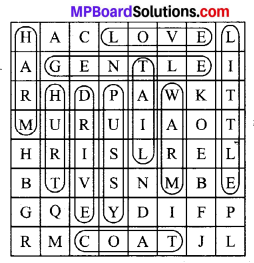
Little Pussey MP Board Class 7th General English

(B) Now write the words you have found :
(अब ढूढ़े गए शब्दों को लिखिए)
Answer:

  1. Drive
  2. Gentle
  3. Hurt
  4. Love
  5. Tail
  6. Pussy
  7. Coat
  8. Warm
  9. Little.

(C) Read the following words which have similar sounds but different meanings :
(These are called homophones.)
(निम्न शब्दों को पढ़िए जिनकी ध्वनि समान हो पर अर्थ अलग हो)
Answer:
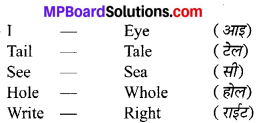
Litil Girl Pussy MP Board Class 7th General English

(D) Now choose the correct word to complete the following sentences :
(अब सही शब्द चुनकर निम्न वाक्यों को पूरा करें।)

  1. The monkey has a long …………..
  2. I saw a man with one …………..
  3. The snakes live in a …………..
  4. ………….. a letter to your friend.
  5. Fishermen go to the ………….. everyday.

Answers:

  1. tail
  2. eye
  3. hole
  4. Write
  5. sea.

Grammar in Use (व्याकरण प्रयोग):

(A) Use the following describing words
(adjectives) in the sentences given below :
(निम्न वर्णनात्मक शब्दों (विशेषणों) का प्रयोग कर दिये गये वाक्यों में प्रयोग करें।)
(as thin as, as old as, as sweet as, as big as, as good as)

  1. Sona is ……….. her sister.
  2. Meena is ……….. her friend meeta.
  3. These mangoes are not ……….. the ones. we ate yesterday.
  4. This box is ……….. the other one.
  5. Raju’s handwriting is ……….. his father’s.

Answer:

  1. as thin as
  2. as old as
  3. as sweet as
  4. as big as
  5. as good as.

(B) Write at least three things about yourself using these words:
(इन शब्दों का प्रयोग कर कम-से-कम तीन बातें अपने बारे में लिखें)
(taller, smaller, shorter, younger.)
Answer:

  1. I am taller than my brother.
  2. My brother is shorter than me.
  3. My brother is younger than me.

(C) Use the following words in the sentences given below :
(नीचे दिए वाक्यों में निम्न शब्दों का प्रयोग कीजिए।)
(the fastest, the smallest, the longest, the best, the highest.).

  1. The humming bird is ……….. bird.
  2. Mt. Everest is ……….. mountain peak in the world.
  3. A Cheetah runs ……….. of all animals.
  4. Birbal told ……….. story to Akbar.
  5. Sujata is ……….. student of her class.

Answer:

  1. the smallest
  2. the highest
  3. the fastest
  4. the longest
  5. the best

Let’s Talk (आओ बात करें):

Here are given some sentences related to two animals which you know very well. The sentences are jumbled. Separate them and write the names of the animals.
(यहाँ दो पशुओं जिन्हें आप भली-भाँति जानते हैं, से सम्बन्धित कुछ वाक्य दिये गए हैं। वाक्य आपस में मिले हुए हैं। इन्हें अलग कर पशुओं के नाम लिखिए।)
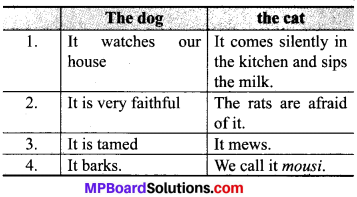
I Love Little Pussy Meaning In Hindi MP Board

Let’s Write (आओ लिखें):

(A) Write five sentences about cats.
(B) Write five sentences about your pet.
Answer:
(A) Cats

  1. A cat is a pet animal.
  2. It mews and rats run away on hearing it.
  3. It eats rats and also likes to drink milk.
  4. It is white, black or brown in colour.
  5. It is not a faithful pet and is a shrewd animal.

(B) My pet animal – Cow

  1. Cow gives us milk.
  2. We call her ‘Gau mata’ and worship her.
  3. The cow dung is used in making dung cakes (Kandas) which are used as fuel.
  4. Cow dung is also used in making gobar gas.
  5. I love my ‘Gau mata’ a lot.

Let’s Do It (आओ इसे करें) :

(A) Collect the pictures of different pet animals and write their names.
(विभिन्न पालतू जानवरों के चित्रों को इकट्ठा करिए और उनके नाम लिखिए।)
Answer:
Students can collect the pictures of different pet animals, like cow, dog, cat, horse etc. and write their names below after pasting them.

Pronunciation & Translation

I love little pussy, Her coat is so warm, And if I don’t hurt her, She’ll do no harm.
(आइ लव लिटल पूसी, हर कोट इज सो वार्म, एण्ड इफ आई डोन्ट हर्ट हर, शी विल डू नो हार्म.)
अनुवाद – मैं छोटी पूसी को प्यार करती हूँ, उसकी खाल कितनी गर्म है, और यदि मैं उसे कोई चोट नहीं पहुँचाती हूँ तो वह मुझे कोई हानि नहीं पहुँचायेगी।
So I’ll not pull her tail, or drive her away, But pussy and I, Very gently will play.
(सो आइ विल नॉट पुल हर टेल, ऑर ड्राइव हर अवे, बट पूसी एण्ड आइ, वैरी जैन्टली विल प्ले.)
अनुवाद-इसलिए मैं उसकी पूँछ नहीं खींचूँगी, या उसे बाहर नहीं धकेलूँगी, लेकिन पूसी और मैं, बड़े स्नेह से खेलेंगे।
She’ll sit by my side, And I ‘ll give her food, And she’ll like me because, I am gentle and good.
(शी विल सिट बाय माइ साइड, एण्ड आइ विल गिव हर फूड, एण्ड शी विल लाइक मी बिकॉज आइ एम जैन्टल एण्ड गुड.)
अनुवाद – वह मेरे पास बैठेगी, और मैं उसे खाना दूंगी, और वह मुझे पसन्द करेगी क्योंकि, मैं सज्जन और अच्छी हूँ।

I Love Little Pussy Word Meanings

Little (लिट्ल)-छोटा; Afraid (अफ्रेड)-डरा हुआ; Coat (कोट)-लोमचर्म; Hurt (हर्ट)-चोट; Harm (हार्म)-हानि; Drive (ड्राइव)- भगाना; Warm (वॉर्म)-गर्म: Gently ( जेन्ट्ली)-हल्के से, धीरे से; Pull (पुल)-खींचना; Silently ( साइलेंटली)-चुपचाप; Pussy (पूसी)-बिल्ली।

We believe the information shared regarding MP Board Solutions for Class 7 English Chapter 21 Tansen Questions and Answers as far as our knowledge is concerned is true and reliable. In case of any queries or suggestions do leave us your feedback and our team will guide you at soonest possibility. Bookmark our site to avail latest updates on several state board Solutions at your fingertips.
MP Board Class 8th Science Solutions Chapter 2 Microorganisms: Friend and Foe

MP Board Class 8th Science Solutions Chapter 2 Microorganisms: Friend and Foe

MP Board Class 8th Science Microorganisms: Friend and Foe NCERT Textbook Exercises

Mp Board Class 8 Science Chapter 2 Question 1.
Fill in the blanks:
(a) Microorganisms can be seen with the help of a ……….. .
(b) Blue green algae fix ………….. directly from air to enhance fertility of soil.
(c) Alcohol is produced with the help.
Answer:
(a) microscope
(b) nitrogen
(c) yeast
(d) bacteria.

Mp Board Class 8 Science Solution Chapter 2 Question 2.
Tick the correct answer:
(a) Yeast is used in the production of:
(i) Sugar
(ii) Alcohol
(iii)Hydrochloric acid
(iv) Oxygen
Answer:
(ii) Alcohol

(b) The following is an antibiotic
(i) Sodium bicarbonate
(ii) Streptomycin
(iii) Alcohol
(iv) Yeast
Answer:
(ii) Streptomycin

(c) Carrier of malaria-causing protozoan is
(i) Female Anopheles mosquito
(ii) Cockroach
(iii) Housefly
(iv) Butterfly
Answer:
(i) Female Anopheles mosquito

(d) The most common carrier of communicable diseases is
(i) Ant
(ii) Housefly
(iii) Dragonfly
(iv) Spider
Answer:
(ii) Housefly

(e) The bread or idli dough rises because of
(i) Heat
(ii) Grinding
(iii)Growth of yeast cells
(iv) Kneading
Answer:
(iii)Growth of yeast cells

(f) The process of conversion of sugar into alcohol is called
(i) Nitrogen fixation
(ii) Moulding
(iii) Fermentation
(iv) Infection
Answer:
(iii)Fermentation

Mp Board Class 8 Science Solution Question 3.
Match the organisms in Column A with their action in Column B.

AB
(i) Bacteria(a) Fixing nitrogen
(ii) Rhizobium(b) Setting of curd
(iii) Lactobacillus(c) Baking of bread
(iv) Yeast(d) Causing malaria
(v) A protozoan(e) Causing cholera
(vi) A virus(f) Causing AIDS
(g) Producing antibodies

Answer:

AB
(i) Bacteria(e) Causing cholera
(ii) Rhizobium(a) Fixing nitrogen
(iii) Lactobacillus(b) Setting of curd
(iv) Yeast(c) Baking of bread
(v) A protozoan(d) Causing malaria
(vi) A virus(f) Causing AIDS

Class 8 Science Chapter 2 Mp Board Question 4.
Can microorganisms be seen with the naked eye? If not, how can they be seen?
Answer:
No, we cannot see microorganisms with unaided eyes. They can be seen with the help of a microscope.

Mp Board Class 8 Science Solution English Medium Question 5.
What are the major groups of microorganisms?
Answer:
The major groups of microorganisms are bacteria, protozoa, fungi and some algae.

Mp Board Class 8 Science Solution In English Question 6.
Name the microorganisms which can fix atmospheric nitrogen in the soil.
Answer:
They are Rhizobium, Azobactor, blue-green algae such as Anabaena and Nostoc, etc.

Mp Board Class 8th Science Solution Question 7.
Write 10 lines on the usefulness of microorganisms in our lives.
Answer:
The usefulness of microorganisms in our lives is given below:

  1. Lactobacillus, a bacterium, is useful in the formation of curd.
  2. Microorganisms like bacteria are also involved in the making of breads, cheese, etc.
  3. They are also used in cleaning up of the environment.
  4. Bacteria are also used in agriculture to increase soil fertility by fixing nitrogen.
  5. Microorganisms like yeast are used for the production of alcohol since ages.
  6. They are used in making manure.
  7. Vaccines are made on a large scale from micro-organisms to protect humans and other animals from several diseases.
  8. Several antibiotics are made from micro-organisms.
  9. Some microorganisms are used to make preservatives.
  10. About 50% of atmospheric carbon dioxide is fixed by micro-organisms (algae).

Mp Board 8th Class Science Solutions Question 8.
Write a short paragraph on the harmful effects of microorganisms.
Answer:
Some micro-organisms are harmful and cause diseases. The harms caused by microorganisms are as follows:

  1. Many communicable diseases, such as cholera, common cold, chickenpox, Tuberculosis (T.B.), etc., are caused by micro-organisms.
  2. Malaria is caused by a micro-organism called Plasmodium carried by female Anopheles mosquito.
  3. Aedes mosquito acts as carrier of dengue virus.
  4. Anthrax is a dangerous human and cattle disease Caused by a bacterium called Bacillus anthracis.
  5. Several microorganisms cause diseases in plants like wheat, rice, potato, sugarcane, orange, apple and others and reduce the yield of the crops.
  6. Food poisoning is also caused by microorganisms, making food poisonous by producing toxic substance in the food.

Mp Board Solution Class 8 Science Question 9.
What are antibiotics? What precautions must be taken while taking antibiotics?
Answer:
Antibiotics. The medicines which kill or stop the disease causing microorga¬nisms are called antibiotics. The common antibiotics produced from bacteria and fungi are penicillin, streptomycin and tetracycline etc.

The precautions to be taken in using antibiotics are as follows:

  1. Antibiotics should be taken only on the advice of a qualified doctor.
  2. One must finish the course prescribed by the doctor.
  3. If antibiotics are taken when not needed, the bacteria in the body will develop resistance to them. Next time, when you need antibiotics they would be less effective.
  4. The source of these medicines is micro-organisms.

MP Board Class 8th Science Microorganisms: Friend and Foe NCERT Extended Learning – Activities and Projects

Class 8 Science Solution Mp Board Question 1.
Pull out a gram or bean plant from the field. Observe its roots. You will find round structures called root nodules on the roots. Draw a diagram of the root and show the root nodules.
Answer:
Do yourself.

Mp Board Class 8 Science Solutions Question 2.
Collect the labels from the bottles of jams and jellies. Write down the list of contents printed on the labels.
Answer:
Ingredients: Sugar, mixed fruit pulp, gelling agent (E440), and acidity regulator (E330). Permitted synthetic food colour (E122) and added artificial flavours. Contains permitted class-II preservatives (E211, E224).

Mp Board Science Solution Class 8 Question 3.
Visit a doctor. Find out why antibiotics sltotdd not be overused? Prepare a short report.
Answer:
Antibiotics should not be overused because they reduce the power of immunity system. Regular or frequent use make the drug ineffective when needed in future.
They kill beneficial bacteria in our body. So, antibiotics should be consumed only when prescribed by a doctor only.

Class 8 Mp Board Science Solution Question 4.
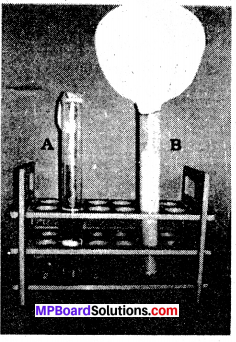
Project: Requirements – 2 test tubes, marker pen, sugar, yeast powder, 2 balloons and lime water.
Take two test tubes and mark them A and B. Clamp these tubes in a stand and fill them with water leaving some space at the top. Put two spoonful of sugar in each of the test tubes. Add a spoonful of yeast in test tube B. Inflate the two balloons incompletely. Now tie the balloons on the mouths of each test tube.
Keep them in a warm place, away from sunlight. Watch the setup every day for next 3-4 days. Record your observations and think of an explanation. Now take another test tube filled 1/4 with lime water. Remove the balloon from test tube B in such a manner that gas inside the balloon does not escape. Fit the balloon on the test tube and shake well. Observe and explain.
Answer:
The balloon in test tube B will get inflated because the process of fermentation has taken place in test tube B. Yeast, bacteria and carbon dioxide gas produced during this process has inflated the balloon. Now the balloon will get a little deflated as gas is consumed by the lime water and the lime water will turn milky.
Mp Board Class 8 Science Chapter 2

MP Board Class 8th Science Microorganisms: Friend and Foe NCERT Additional Important Questions

A. Short Answer Type Questions

Mp Board Solution Science Class 8 Question 1.
How Can you see microorganisms?
Answer:
They can be seen with the help of microscope. These microorganisms are magnified to different extent and then can be seen clearly.

Class 8 Science Mp Board Solution Question 2.
Which microorganisms can be seen with the naked eye?
Answer:
Common mushrooms are the microorganisms which can be seen with naked eyes.

Mp Board Class 8 Social Science Solution Chapter 2 Question 3.
What are the major groups of microorganisms?
Answer:
There are five major groups of microorganisms. These groups are bacteria, fungi, protozoa, algae and viruses.

Mp Board 8th Class Science Question 4.
What are the two groups of organisms in fungi?
Answer:
The two groups of organisms in fungi are yeast and mould. Yeast are usually are unicellular while moulds are multicellular. Moulds also have filament like appearance.

B. Long Answer Type Questions

Class 8 Science Chapter 2 MP Board Question 5.
Are microorganisms always helpful to us? What are their harmful effects?
Answer:
No, microorganisms are not always helpful to us. They are harmful also causing sickness, cold, malaria, skin infection, influenza and many other diseasses by the action of certain microorganisms. They also spoil food materials and other materials used at home.

Science Class 8 Mp Board Question 6.
Explain Aerobic and Anaerobic bacteria. How do these bacteria reproduce?
Answer:
Those bacteria that require oxygen for their growth are called Aerobic bacteria. Those bacteria that grow without oxygen are called Anaerobic bacteria.
Bacteria normally reproduce by binary fission under favourable conditions. Sexual reproduction is also observed in these bacteria.

Class 8th Mp Board Science Question 7.
Name some bacteria which are helpful?
Answer:

  1. Lactobacillus which is a bacterium turns milk into curd.
  2. Bacteria are also involved in the making of cheese, pickles and many other food items.
  3. Bacteria which decompose dead leaves and animals and thus return the carbon, nitrogen and other nutrients to the environment for the next cycle of life processes.
  4. Some friendly bacteria scavenge as well as renew the life giving properties of the soil, water and air.

Question 8.
How do viruses reproduce?
Answer:
Viruses have their own genetic material but they do not have a cellular structure nor metabolic activity of their own. Viruses use the energy of the host cell and change their machinery in such a way they start producing more viral genes. As they multiply and grow in numbers, the host cell eventually bursts releasing all the virale cells.

MP Board Class 8th Science Solutions

MP Board Class 6th Sanskrit Solutions Chapter 4 सङ्ख्याबोधः

MP Board Class 6th Sanskrit Solutions Surbhi Chapter 4 सङ्ख्याबोधः

MP Board Class 6th Sanskrit Chapter 4 अभ्यासः

Mp Board Class 6 Sanskrit Solution प्रश्न 1.
उचितशब्देन रिक्तस्थानं पुरयत-
(उचित शब्द से खाली स्थान की पूर्ति करो)
(क) एकं ………… अस्ति। (बालकः/बालिका/फलम्)
(ख) तिस्त्रः …………….. सन्ति। (बालिकाः/बालकाः/फलानि)
(ग) सप्तः …………. सन्ति। (गजः/अश्वाः /अजा)
उत्तर:
क) फलम्
(ख) बालिकाः
(ग) अश्वाः

Class 6 Sanskrit Chapter 4 MP Board प्रश्न 2.
उचितपरिवर्तनेन रिक्तस्थानं पूरयत (उचित परिवर्तन से रिक्त स्थान को पूरा करो)
(लता, बाला, छात्र, गृह, बालक, नृपः, अजा, गृह, मनुष्य, गज)
(क) द्वै ………..।
(ख) तिस्त्रः ……….।
(ग) द्वौ ……….।
(घ) चत्वारि …………।
(ङ) षट् ………..।
(च) सप्त …………
(छ) नव …………।
(ज) दश……………।
(झ) पञ्च …………।
(ब) त्रयः ………….।
उत्तर:
(क) लते
(ख) बालाः
(ग) छात्रौः
(घ) गृहाणि
(ङ) बालकाः
(च) नृपाः
(छ) अजाः
(छ) गृहाणि
(झ) मनुष्याः
(ञ) गजाः।

Sanskrit Class 6 Chapter 4 MP Board प्रश्न 3.
उचितसङ्ख्यापदेन पूरयत(उचित संख्या शब्द से पूरा करो)
(क) …………. फलम्।
(ख) …………. जनाः।
(ग) ………………. लते।
(घ) …………… मयूराः।
(ङ) …………… अश्वौ।
(च) ……………. नेत्रे।
(छ) ……………. पुष्पाणि।
(ज) …………… पर्वताः।
(झ) …………… गजाः।
(ज) ……….. माला।
उत्तर:
(क) एकं
(ख) सप्त
(ग) द्वे
(घ) पञ्च
(ङ) द्वौः
(च) द्वे
(छ) चत्वारि
(ज) अष्ट
(झ) नव
(ञ) एका।

Mp Board Class 6th Sanskrit Solution प्रश्न 4.
संस्कृतसङ्ख्याः लिखत(संस्कृत संख्या को लिखो)
(क) २………… (स्त्रीलिङ्ग)
(ख) ४ ……….. (पुल्लिङ्ग)
(ग) २ ………… (नपुंसकलिङ्ग)
(घ) १………… (पुल्लिङ्ग)।
(ङ) ३…………. (स्त्रीलिङ्ग)
(च) २ ………… (नपुंसकलिङ्ग)
(छ) २…………(पुल्लिङ्ग)
(ज) १ ……….. (नपुंसकलिङ्ग)
(झ) ३ ………… (पुल्लिङ्ग)
(ञ) १ ………… (स्त्रीलिङ्ग)
उत्तर:
(क) द्वे
(ख) चत्वारः
(ग) त्रीणि
(घ) एकः
(ङ) तिस्रः
(च) द्वे
(छ) द्वौ
(ज) एकम्
(झ) त्रयः
(ञ) एका।

Mp Board Solution Class 6 Sanskrit प्रश्न 5.
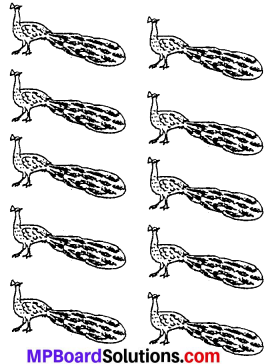
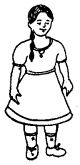
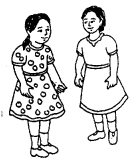
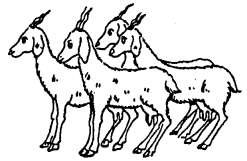
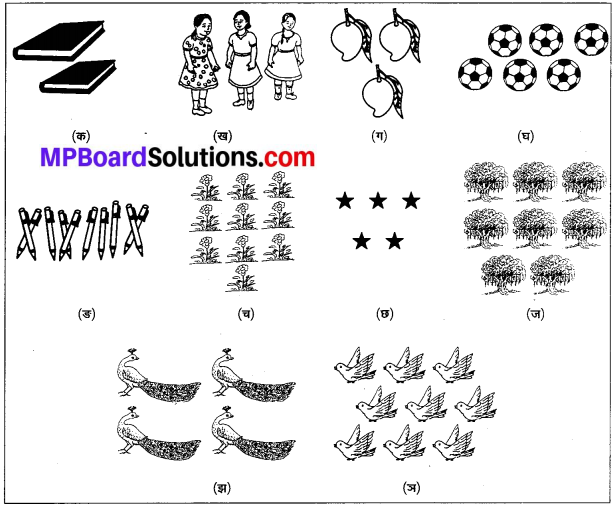
गणनां कृत्वां संख्यां लिखत (गिनती करके संख्या लिखो)
MP Board Class 6th Sanskrit Solutions Chapter 4 सङ्ख्याबोधः 1Class 6 Chapter 4 Sanskrit MP Board
उत्तर:
(क) द्वे
(ख) तिस्त्रः
(ग) त्रीणि
(घ) षट्
(ङ) दश
(च) दश
(छ) पञ्च
(ज) अष्ट
(झ) चत्वारः
(ञ) नव।

कक्षा 6 संस्कृत पाठ 4 MP Board योग्यताविस्तर :
सङ्ख्यां कण्ठस्थीकुरुत (सङ्ख्याओं को कण्ठाग्र करो)

सङ्ख्याबोधः हिन्दी अनुवाद :

1. एकः वृक्षः।
एक पेड़।
Sanskrit Class 6 Mp Board

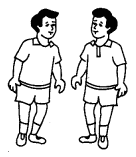
2. द्वौ बालको।
दो बालक।
Class 6 Sanskrit Chapter 4 Question Answer MP Board

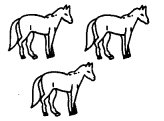
3. त्रयः अश्वाः।
तीन घोड़े।
6th Class Sanskrit Chapter 4 MP Board

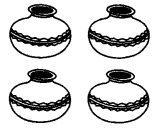
4. चत्वारः घटाः।
चार घड़े।
Class 6 Sanskrit Lesson 4 MP Board

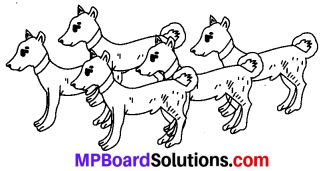
5. पञ्च कुक्कुराः।
पाँच कुत्ते।
Mp Board Solution Class 6th Sanskrit

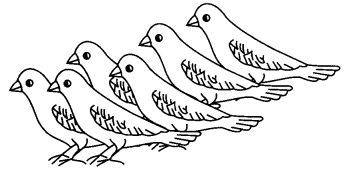
6. षट् कपोताः।
छ: कबूतर।
Class 6th Sanskrit Chapter 4 MP Board

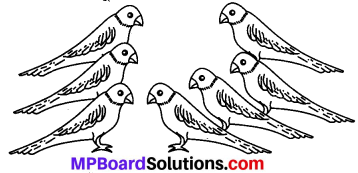
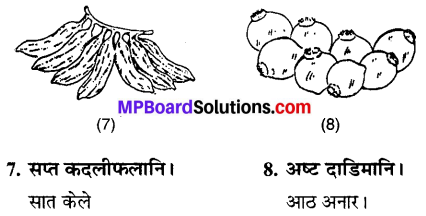
7. सप्त शुकाः।
सात तोते।
Mp Board Class 6 Sanskrit Solution

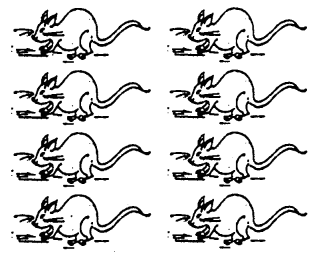
8. अष्ट मूषकाः।
आठ चूहे।
Class 6 Sanskrit Chapter 4 MP Board

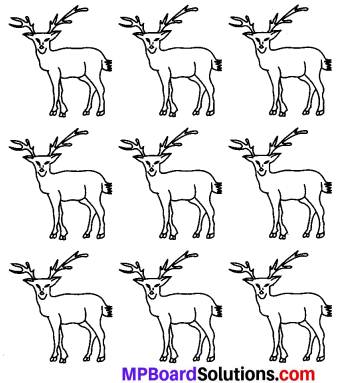
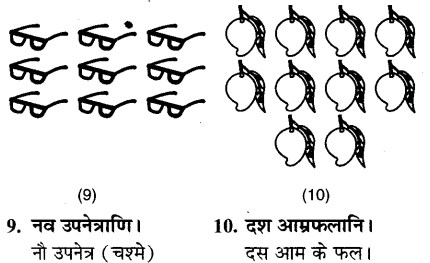
9. नव मृगाः।
नौ हिरण।
Sanskrit Class 6 Chapter 4 MP Board

10. दश मयूराः।
दस मोर।
Mp Board Class 6th Sanskrit Solution

1. एका बालिका।
एक लड़की।
Mp Board Solution Class 6 Sanskrit

2. द्वे बालिके।
दो लड़कियाँ।
कक्षा 6 संस्कृत पाठ 4 MP Board

3. तिस्त्रः मालाः।
तीन मालाएँ।
Class 6 Chapter 4 Sanskrit MP Board

4. चतस्त्रः अजाः।
चार बकरियाँ।
Sanskrit Class 6 Mp Board

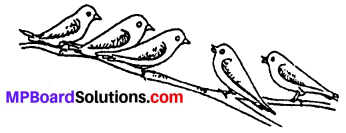
5. पञ्च चटकाः।
पाँच चिड़ियाँ।
Class 6 Sanskrit Chapter 4 Question Answer MP Board

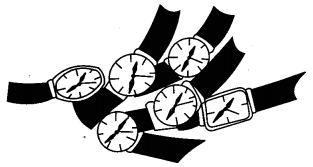
6. षट् घटिकाः।
छः घड़ियाँ।
6th Class Sanskrit Chapter 4 MP Board

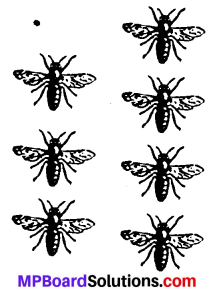
7. सप्त मक्षिका
सात मक्खियाँ।
Class 6 Sanskrit Lesson 4 MP Board

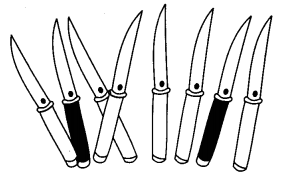
8. आष्टा छुरिका
आठ छुरियाँ।
Mp Board Solution Class 6th Sanskrit

9. नव पिपीलिका
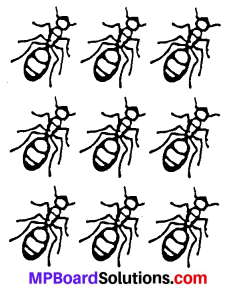
नौ चींदियाँ।
Class 6th Sanskrit Chapter 4 MP Board

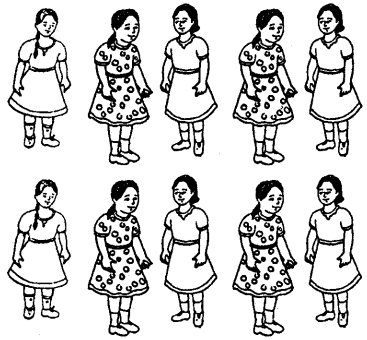
10. दस लड़कियाँ।
दश बालिका
MP Board Class 6th Sanskrit Solutions Chapter 4 सङ्ख्याबोधः 21

MP Board Class 6th Sanskrit Solutions Chapter 4 सङ्ख्याबोधः 22

MP Board Class 6th Sanskrit Solutions Chapter 4 सङ्ख्याबोधः 23

MP Board Class 6th Sanskrit Solutions Chapter 4 सङ्ख्याबोधः 24

MP Board Class 6th Sanskrit Solutions Chapter 4 सङ्ख्याबोधः 25

MP Board Class 6th Sanskrit Solutions Chapter 4 सङ्ख्याबोधः 26

अनुवाद :
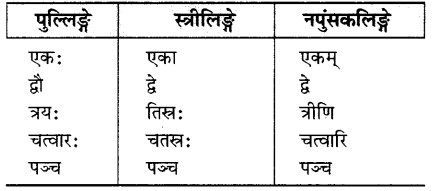
पुल्लिङ्ग-एक, दो, तीन, चार, पाँच।
स्त्रीलिङ्ग :
एक, दो, तीन, चार, पाँच।
नपुंसकलिङ्ग :
एक, दो, तीन, चार, पाँच।

नोट :
संस्कृत में-पुल्लिङ्ग, स्त्रीलिङ्ग तथा नपुंसकलिङ्ग में संख्यावाचक शब्दों के रूपों में भेद उपर्युक्त तालिका में देखा जा सकता है।

MP Board Class 6th Sanskrit Solutions

MP Board Class 7th Sanskrit Solutions Chapter 16 प्राचीन-भारतीय-वैज्ञानिकाः

MP Board Class 7th Sanskrit Solutions Surbhi Chapter 16 प्राचीन-भारतीय-वैज्ञानिकाः

MP Board Class 7th Sanskrit Chapter 16 अभ्यासः

Class 7 Sanskrit Chapter 16 MP Board प्रश्न 1.
एक शब्द में उत्तर लिखो
(क) वृक्षायुर्वेदग्रन्थस्य रचयिता कः? [वृक्षायुर्वेद ग्रन्थ के रचयिता कौन हैं?]
उत्तर:
महर्षिः पराशरः

(ख)”शुल्बसूत्रं” कः रचितवान्? [‘शुल्बसूत्र’ की रचना किसने की?]
उत्तर:
बोधायनः

(ग) प्रकाशस्य गतिं कः ज्ञातवान्? [प्रकाश की गति का किसने पता किया?]
उत्तर:
आर्यभट्टः

(घ) शल्यक्रियायाः जनकः कः? [शल्यक्रिया (सर्जरी) का जनक कौन है?]
उत्तर:
आचार्यः सुश्रुतः

(ङ) गुरुत्वाकर्षणसिद्धान्तं कः प्रतिपादितवान्? [गुरुत्वाकर्षण के सिद्धान्त को किसने प्रतिपादित किया?]
उत्तर:
भास्कराचार्यः।

Class 7 Sanskrit Chapter 16 Question Answer MP Board प्रश्न 2.
अधोलिखित प्रश्नों के उत्तर एक वाक्य में लिखो
(क) महर्षिः पराशरः वनस्पतीनां किं कृतवान्? [महर्षि पराशर ने वनस्पतियों का क्या किया?]
उत्तर:
महर्षिः पराशरः वनस्पतीनां वर्गीकरणं कृतवान् [महर्षि पराशर ने वनस्पतियों का वर्गीकरण किया।]

(ख) विद्युत्कोशस्य आविष्कारकः कः आसीत्? [विद्युत्कोश का आविष्कारक कौन था?]
उत्तर:
विद्युत्कोशस्य आविष्कारकः महर्षिः अगस्त्यः आसीत्। [विद्युतकोश के आविष्कारक महर्षि अगस्त्य थे।]

(ग) “पृथ्वी सूर्यस्य परिक्रमा करोति” इति सिद्धान्तं कः प्रतिपादितवान्? [“पृथ्वी सूर्य की परिक्रमा करती है”, इस सिद्धान्त को किसने प्रतिपादित किया?]
उत्तर:
“पृथ्वी सूर्यस्य परिक्रमा करोति”, इति सिद्धान्तं आर्यभट्टः प्रतिपादितवान्। [“पृथ्वी सूर्य की परिक्रमा करती है”, इस सिद्धान्त को आर्यभट्ट ने प्रतिपादित किया।]

(घ) भास्कराचार्यः किं प्रतिपादितवान्? [भास्कराचार्य ने क्या प्रतिपादित किया?]
उत्तर:
भास्कराचार्यः गुरुत्वाकर्षण सिद्धान्तं, π (पै) इति गणित चिह्नस्य मानं त्रैराशिक-नियमादीन् प्रतिपादितवान्। [भास्कराचार्य ने गुरुत्वाकर्षण सिद्धान्त, π (पाई) नामक गणित चिह्न का मान, त्रैराशिक नियमों आदि का प्रतिपादन किया।]

(ङ) “त्वचारोपणम्” आदौ कः कृतवान्? [त्वचारोपण प्रारम्भ में किसने किया?]
उत्तर:
त्वचारोपणम् आदौ आचार्यः सुश्रुतः कृतवान्। [त्वचारोपण प्रारम्भ में आचार्य सुश्रुत ने किया।]

Class 7th Sanskrit Chapter 16 MP Board प्रश्न 3.
रेखांकित शब्द के आधार पर प्रश्न का निर्माण करो
(क) परमाणुवादस्य जनकः महर्षिः कणादः अस्ति।
(ख) विमानविद्यायाः वर्णनं भरद्वाजः अकरोत्।
(ग) भारतीकृष्णतीर्थः वैदिकगणितं रचितवान्।
(घ) रेखागणितस्य प्रमेयं शुल्बसूत्रे अस्ति।
(ङ) महर्षिः पाणिनि: अष्टाध्यायीं रचितवान्।
उत्तर:
(क) कस्य जनकः महर्षिः कणादः अस्ति?
(ख) विमानविद्यायाः वर्णनं कः अकरोत्?
(ग) भारतीय कृष्णतीर्थः किम् रचितवान्?
(घ) रेखागणितस्य प्रमेयं कस्मिन् अस्ति?
(ङ) महर्षिः पाणिनिः किम् ग्रन्थम् रचितवान्?

Sanskrit Class 7 Chapter 16 MP Board प्रश्न 4.
उचित शब्द से रिक्त स्थान को पूरा करो
(क) सः आपणम् ………. (गतवान्/गतवन्तः)
(ख) बालकाः पाठं ……….। (पठितवान्/पठितवन्तः)
(ग) ……….. पत्रं लिखितवान्। (अध्यापकः/अध्यापकाः)
(घ) ……….. मातृभूमिम् रक्षितवन्तः। (सैनिकः/सैनिकाः)
(ङ) गायकः गीतम् ……….। (गीतवान्/गीतवन्तः)
उत्तर:
(क) गतवान्
(ख) पठितवन्तः
(ग) अध्यापकः
(घ) सैनिकाः
(ङ) गीतवान्।

Chapter 16 Sanskrit Class 7 MP Board प्रश्न 5.
कोष्ठक से उचित शब्द चुनकर रिक्त स्थान को पूरा करो-
(विद्युत-कोशः, सूर्यस्य, प्रकाश निस्सारण, शल्यक्रियाम्)
(क) आर्यभट्टस्य मतेन पृथ्वी …………. परिक्रमा करोति।
(ख) सुश्रुतः शरीरस्य ………… करोति स्म।
(ग) वृक्षाः ………… क्रिया द्वारा भोजनं कुर्वन्ति।
(घ) ताम्र-जतु-पारदादीनां संयोगेन …………. उत्पन्नाः भवति।
उत्तर:
(क) सूर्यस्य
(ख) शल्यक्रियाम्
(ग) प्रकाश निस्सारण
(घ) विद्युत-कोशः।

Sanskrit Chapter 16 Class 7 MP Board प्रश्न 6.
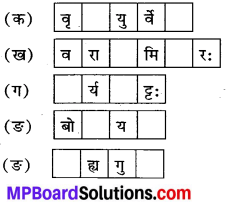
समुचित अक्षर से रिक्त स्थान की पूर्ति करो-
Class 7 Sanskrit Chapter 16 MP Board
उत्तर:
(क) क्षा, द।
(ख) ह, हि।
(ग) आ, भ।
(घ) धा, न।
(ङ) ब्र, प्त।

Mp Board Class 7 Sanskrit Chapter 16 प्रश्न 7.
समुचित मिलान करो
Class 7 Sanskrit Chapter 16 Question Answer MP Board
उत्तर:
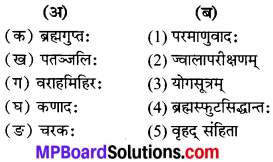
(क) → (4)
(ख) → (3)
(ग) → (5)
(घ) → (1)
(ङ) → (2)

प्राचीन-भारतीय-वैज्ञानिकाः हिन्दी अनुवाद

(एकस्मिन् विद्यालये आचार्य-छात्राणां मध्ये वैज्ञानिकानां विषये वार्तालापः प्रचलति)

Ch 16 Sanskrit Class 7 MP Board आचार्यः :
छात्राः! किं यूयं जानीथ, यत् रेखागणितस्य नवविंशतितमं (२९) प्रमेयं किम्?

Class 7 Sanskrit Chapter 16 Hindi Translation MP Board छात्रा: :
आम्! जानीमः, “पाइथागोरसप्रमेयम्” इति।

Sanskrit Chapter 16 MP Board आचार्यः :
एतस्य नामकरणस्य कारणं किम्?

प्रशान्तः :
अस्य प्रमेयस्य आविष्कर्ता “पाइथागोरस” नामक वैज्ञानिकः आसीत्। अतः तस्य नाम्ना एतस्य नामकरणम् अभवत्।

आचार्यः :
सम्प्रति एषः एव प्रचारः परन्तु पाइथागोरसतः १५०० वर्षपूर्व आचार्य: बोधायन:शुल्बसूत्रे एतस्य प्रमेयस्य प्रयोगं कृतवान्। भारतीयाः अङ्का अपि ततः पूर्वम् आसन्।

नीलेश: :
महोदय! प्राचीनकाले भारतदेशे वैज्ञानिकाः आसन् किम्?

आचार्य: :
भारतदेशः वैदिककालात् एव वैज्ञानिकानां देशः अस्ति। चिकित्सा-अभियान्त्रिकी-गणित-विज्ञानादिषु क्षेत्रेषु भारतीय-वैज्ञानिकाः बहुकार्यं कृतवन्तः।।

अनुवाद :
(एक विद्यालय में आचार्य-छात्रों के बीच में वैज्ञानिकों के विषय में वार्तालाप चलता है।)

आचार्य :
हे छात्रो! क्या तुम सब जानते हो कि रेखागणित के उन्तीस प्रमेय क्या हैं?

छात्र :
हाँ! जानते हैं। ‘पाइथागोरस की प्रमेय’।

आचार्य :
इसके नामकरण का कारण क्या है?

प्रशान्त :
इस प्रमेय का आविष्कार करने वाले “पाइथागोरस” नामक एक वैज्ञानिक थे। इसलिए उसके नाम से इसका नामकरण हो गया।

आचार्य :
अब तो यही प्रचारित है। परन्तु पाइथागोरस से १५०० वर्ष पूर्व (पन्द्रह सौ वर्ष पूर्व) आचार्य बोधायन ने शुल्ब सूत्र में इस प्रमेय का प्रयोग किया था। भारतीय अंक भी उससे पहले थे।

नीलेश :
महोदय! प्राचीन काल में भारत देश में क्या वैज्ञानिक थे?

आचार्य :
भारतदेश वैदिक काल से ही वैज्ञानिकों का देश है। चिकित्सा, अभियान्त्रिकी, गणित, विज्ञान आदि के क्षेत्रों में भारतीय वैज्ञानिकों ने बहुत-सा कार्य किया हुआ है।

सौम्या :
महोदय! वनस्पतिविज्ञान-विषये किं कार्यं भारते अभवत्?

आचार्यः :
महर्षिः पराशरः “वृक्षायुर्वेद” ग्रन्थे वनस्पतीनां वर्गीकरणं कृतवान्। वृक्षेषु प्रकाश-निस्सारण-क्रियायाः (प्रकाशसंश्लेषणम्) पर्णस्य अवान्तर-भागानाम् (प्लाज्माइत्यादीनाम्) अपि वर्णनं पराशरः कृतवान्।

अर्जुन: :
प्राचीनकाले विद्युत्कोशः (बैट्री) अपि आसीत् किम्?

आचार्य: :
अवश्यमेव आसीत्। ताम्रपत्र-जतुपत्रकृष्णाङ्गारचूर्ण-पारद-इत्यादीनां संयोगेन विद्युत् उत्पन्ना भवति इति महर्षिः अगस्त्यः लिखितवान्।

अनुवाद :
सौम्या-महोदय! वनस्पति विज्ञान के विषय में भारत में क्या कार्य हुआ था?

आचार्य :
महर्षि पराशर ने ‘वृक्षायुर्वेद’ नामक ग्रन्थ में वनस्पतियों का वर्गीकरण किया था। वृक्षों में प्रकाश के निकलने की क्रिया का (प्रकाश-संश्लेषण) पत्ते के अवान्तर भागों का (प्लाज्मा आदि का) भी वर्णन पराशर ने किया था।

अर्जुन :
प्राचीनकाल में विद्युत्कोश (बैट्री) भी थी क्या?

आचार्य :
अवश्य ही थी। ताम्रपत्र, जतुपत्र, कृष्णाङ्गारचूर्ण, पारद आदि के संयोग से विद्युत उत्पन्न होती है। महर्षि अगस्त्य ने लिखा था।

केशवः :
महोदय! वदतु कृपया, अस्माकं भारते गणितविषये अन्यत् किं प्रमुखं कार्यम् अभवत्?

आचार्यः :
प्राचीनः भारतीयः महान गणितज्ञः आर्यभट्टः प्रकाशस्य गतिं सम्यक् जानाति स्म। पृथ्वी गोलाकारा अस्ति। पृथ्वी स्व अक्षे भ्रमति, तेन एवं दिवारात्री भवतः। पृथ्वी सूर्यस्य परिक्रमा करोति, तेन एव षड् ऋतवः भवन्ति सप्ताहे दिनानां क्रमः, प्रकाशस्य गतिः, कालगणना, खगोलविज्ञानं त्रिकोणमितिः इत्यादिषु क्षेत्रेषु आचार्यः आर्यभट्टः बहुकार्य कृतवान्।

अनुवाद :
केशव-महोदय! कृपा करके बताइए, हमारे भारतवर्ष में गणित विषय में अन्य कौन-सा प्रमुख कार्य हुआ।

आचार्य :
प्राचीन भारतीय महान गणितज्ञ आर्यभट्ट प्रकाश की गति को ठीक तरह से जानते थे। पृथ्वी गोल आकार की है। पृथ्वी अपने अक्ष पर (कीली पर) घूमती है। उसी के कारण से दिन और रात होते हैं। पृथ्वी सूर्य की परिक्रमा करती है, उसी के कारण से छः ऋतुएँ होती हैं। सप्ताह में दिनों का क्रम, प्रकाश की गति, कालगणना, खगोलविज्ञान, त्रिकोणमिति इत्यादि के क्षेत्र में आचार्य आर्यभट्ट ने बहुत-सा कार्य किया था।

आदित्यः :
आचार्य! भास्करः अपि गणित-विषये कार्य कृतवान् किम्?

आचार्य: :
आम्! गुरुत्वाकर्षणसिद्धान्तं π (पै) इति गणितचिह्नस्य मानं त्रैराशिक-नियमादीन् भास्कराचार्यः प्रतिपादितवान्।

शालिनी :
महोदय! चिकित्साक्षेत्रे अस्माकं पूर्वजानां ज्ञानं कीदृशम् आसीत्?

आचार्यः :
शल्यचिकित्सायाः जनकः आचार्यः सुश्रुतः प्रायशः सर्वाः शल्यक्रियाः करोति स्म। यथा-त्वचारोपणम् (प्लास्टिक सर्जरी), नासिकारोपणम्, कर्णरोपणम्, तन्त्रिकाचिकित्सा नेत्रचिकित्सा इत्यादयः। शल्यक्रियायां यानि उपकरणानि सुश्रुतेन प्रयुक्तानि तानि एव उपकरणानि तथैव आधुनिक-चिकित्सा-क्षेत्रे प्रयुज्यन्ते।

अनुवाद :
आदित्य :
आचार्य! क्या भास्कर ने भी गणित के विषय में कार्य किया हुआ था?

आचार्य :
हाँ! गुरुत्वाकर्षण सिद्धान्त को π (पाई) नामक गणित के चिह्न का मान, त्रैराशिक नियम आदि को भास्कराचार्य ने प्रतिपादित किया।

शालिनी :
महोदय! चिकित्सा के क्षेत्र में हमारे पूर्वजों का ज्ञान कैसा था?

आचार्य :
शल्य चिकित्सा के जनक (जन्म देने वाले) आचार्य सुश्रुत प्रायः सभी प्रकार की शल्य क्रिया किया करते थे। जैसे-त्वचारोपण (प्लास्टिक सर्जरी), नासिकारोपण, कर्णरोपण, तन्त्रिका चिकित्सा, नेत्र चिकित्सा इत्यादि। शल्य क्रिया में जिन उपकरणों (औजारों) का प्रयोग सुश्रुत ने किया, उन्हीं उपकरणों को उसी तरह आधुनिक चिकित्सा के क्षेत्र में प्रयोग किया जाता है।

मोहित :
आचार्य! चरकः अपि भैषजरसायनं, ज्वालापरीक्षणं, वनस्पति-आधारितां च चिकित्सापद्धतिं निर्दिष्टवान्।

गरिमा :
महोदय! प्राचीन भारतीय वैज्ञानिकानां नामानि तेषाम् आविष्कारः च विस्तरेण कुत्र लभ्यन्ते?

आचार्यः :
भारतस्य वैज्ञानिकपरम्परा सुदीर्घा अस्ति। तस्याः परिचयः संस्कृतस्य प्राचीनग्रन्थेषु प्राप्यते।

अनुवाद :
मोहित-आचार्य! चरक ने भी भैषज रसायन को, ज्वाला परीक्षण को और वनस्पति पर आधारित चिकित्सा पद्धति को निर्दिष्ट किया।

गरिमा :
महोदय! प्राचीन भारतीय वैज्ञानिकों के नाम तथा उनके आविष्कार विस्तार से कहाँ प्राप्त किये जा सकते हैं?

आचार्य :
भारतवर्ष की वैज्ञानिक परम्परा बहुत ही दीर्घ है। उसका परिचय संस्कृत के प्राचीन ग्रंथों में प्राप्त होता है।

प्राचीन-भारतीय-वैज्ञानिकाः शब्दार्थाः

सम्प्रति = आजकल। विसङ्गति = असमानता। इत्यस्य = (इति + अस्य) इसका। जतु/कुप्यातु = जस्ता। वर्गीकरणम् = गुणों के आधार पर स्थान निर्धारण। अवान्तर = आन्तरिक, भीतरी। पारदः = पारा। विद्युत्कोशः = सञ्चित विद्युत का भण्डार। कृष्णाङ्गारम् = कोयला। ताम्रम् = ताँबा। π (पै) = गणित में प्रयुक्त एक चिह्न। इसका मान \( \frac{22}{7}\) होता है। त्वचारोपणम् = त्वचाप्रत्यारोपण (प्लास्टिक सर्जरी)। नासिकारोपणम् = नासिकाप्रत्यारोपण (नाक को इच्छानुसार आकार देना)। कर्णरोपणम् = कान प्रत्यारोपण (कान को इच्छानुसार आकार देना)। तन्त्रिकाचिकित्सा = तन्त्रिका तन्त्र की चिकित्सा विधि। शल्यक्रिया = चीरफाड़ द्वारा चिकित्सा करना। उपकरणानि = उपकरण। भैषजरसायनम् = पेड़-पौधों के रस द्वारा औषधि निर्माण प्रक्रिया। सुदीर्घा = लम्बी। वैदिककालादेव = (वैदिककालात् + एव) वैदिक काल से ही। प्रयुज्यमानानि = प्रयोग में आने वाले। प्रयुज्यन्ते = प्रयुक्त होते हैं। प्रकाशनिस्सारणक्रिया = प्रकाश संश्लेषण, सूर्य के प्रकाश में पौधों द्वारा भोजन संग्रहण करने की क्रिया।

MP Board Class 7th Sanskrit Solutions

MP Board Class 7th Social Science Solutions Chapter 6 Government at the Center

MP Board Class 7th Social Science Solutions Chapter 6 Government at the Center

MP Board Class 7th Social Science Chapter 6 Text Book Questions

Choose the correct alternative from the following

Mp Board Class 7th Social Science Chapter 6 Question 1.
The minimum age to become the member of Rajya Sabha is:
(a) 35 years
(b) 30 years
(c) 40 years
(d) 25 years
Answer:
(b) 30 years

Class 7 Social Science Chapter 6 Government At The Centre MP Board Question 2.
The minimum number of the members of the Lok Sabha are:
(a) 230
(b) 545
(c) 250
(d) 552
Answer:
(b) 545

Government At The Centre Class 7th MP Board Question 3.
The maximum difference between the two sittings of the Lok Sabha is:
(a) 1 year
(b) 3 months
(c) 6 months
(d) 9 months
Answer:
(c) 6 months

Fill in the blanks:

  1. In India ……………… is the age for adult franchise.
  2. ……………… presides over the sittings in Lok Sabha.
  3. The number of members decided by the Indian constitution for Rajya Sabha is
  4. The term of a Rajya Sabha member is ………… years.
  5. The President has the power to nominate ……… number of members in die Rajya Sabha.
  6. …………. is the ex-office member of the Rajya Sabha.

Answer:

  1. 18 years
  2. Speaker
  3. 250
  4. six years
  5. 12
  6. Vice President

MP Board Class 7th Social Science Chapter 6 Short Answer Type Questions

Mp Board Class 7 Social Science Chapter 6  Question 1.
Mention three qualifications to become the member of Lok Sabha.
Answer:
Three qualifications to become the member of Lok Sabha:

  • He / She should be a citizen of India and his / hername should beinthe elctoralroll
  • He should have acquired the age of 25 years.
  • He should not be proclaimed bankrupt or insolvent by the court

Class 7th Social Science Chapter 6 MP Board Question 2.
Mention the three qualifications for a voter.
Answer:
Three qualifications for a voter are:

  • He / She must be a citizen of India and must have completed the age of 18 years.
  • His / Her name must be in the voters list of the constituency to which he / she belongs.
  • He must not be insolvent, bankrupt and must be sane.

Class 7 Social Science Chapter 6 MP Board Question 3.
What do you understand by First Reading?
Answer:
In it, copies of the bill are given to the members. The person or minister who introduces the bill in the House, gives a speech explaining the purpose of the bill The proposal of this bill is published in the government gazette of the central government.

Mp Board Solution.Com Class 7 Question 4.
Mention five subjects given in the Central List
Answer:
Among 97 subjects, 5 subjects given the Central List are:

  • Army
  • Bank
  • Currency
  • Railways
  • Post & telegraphs.

Social Science Class 7 Chapter 6 MP Board Question 5.
What is concurrent list?
Answer:
Concurrent list consists of 52 subjects on which both the Parliament and State Legislatures have the power to make laws.

MP Board Class 7th Social Science Chapter 6 Long Answer Type Questions

Social Science Chapter 6 Class 7 MP Board Question 1.
The Rajya Sabha is a Permanent body. Explain how?
Answer:
Rajya Sabha is a permanent body, it is never dissolved. The term of a Rajya Sabha member is six years. One third of its members retire every two years after the completion of their term of six years. In their place a set of new members are elected by the members of the legislative assembly. In the same way one third of its nominated members are also replaced after six years by the President

Class 7 Social Science Chapter 6 Question Answer MP Board Question 2.
Describe any two functions of the Parliament.
Answer:
The Parliament has a number of functions of which two are given below:

1. To make laws – The Parliament makes laws on all the 97 subjects given in the central list It also makes laws on the 52 subjects mentioned in the concurrent list. It also makes laws on the subjects given in the residuary list from time to time.

2. Control over the executive – The central executive is formed from among-st the members of the Parliament The Parliament controls this executive. This is done by various methods like asking questions and supplementary questions, agreements over bills and non – agreement over passing of a bill, calling attention motion and passing no – confidence motion.

Class 7th Civics Chapter 5 Government At The Centre MP Board Question 3.
Describe in brief how a bill is made a law.
Answer:
Every bill has to go through three stages in the Parliament. These stages are:

  • The first reading of the bill – In it, copies of the bill are given to the members. The person or minister who introduces the bill in the House, gives a speech explaining die purpose of die bill.
  • The second reading – In the second reading, a clause / by – clause discussion takes place on the bill.
  • The third reading – in the third reading the bill as a whole is finally discussed and put to vote.

If the majority of the members are in its favor, the bill is passed. Now the bill is sent to the other House. After the bill is sent to the other House, it goes through all the three stages as mentioned above. After toe other House passes toe bill, it is sent to toe President for his assent The bill becomes a law after it is signed by toe President.

MP Board Class 7th Social Science Solutions

MP Board Class 6th General English Solutions Chapter 2 The Swing

Students who wish to prepare the English Subject can rely on the MP Board Solutions for Class 6 English Chapter 2 The Swing Questions and Answers prevailing. Become perfect with the concepts of Class 6 English Chapter 2 The Swing Questions and Answers, Chapter 2 The Swing, Summary, Notes, Guide, Pdf, by preparing you can score highest grade in your exams. Here, You Can Download MP Board Class 6 English Solutions. Detailed Solutions are provided to the concepts by experts keeping in mind the latest edition textbooks and syllabus.

MP Board Class 6th General English Solutions Chapter 2 The Swing

Ace up your preparation by referring to the Madhya Pradesh State Board Solutions for Class 6 Chapter 2 The Swing Questions and Answers and learn all the topics within. Click on the topic you want to prepare from the Class 6 English and prepare it easily. You can understand your strengths and weaknesses by learining the Questions and Answers in MP Board Solutions for Class 6 English PDF.

The Swing Textual Exercise

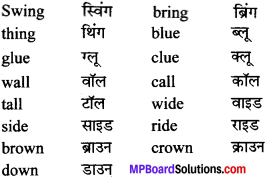
Listen and Repeat
(सुनो और दुहराओ)

Listen to the following words and repeat them aloud:
(निम्नलिखित शब्दों को सुनो और ऊँचे स्वर में उन्हें दुहराओ)
The Swing Poem Question And Answers MP Board Class 6th

Read and Learn
(पढ़ो और याद करो)

Read the poem ‘The Swing’ and fill in the blanks.
(‘द स्विंग’ कविता को पढ़ो और खाली स्थानों को भरो।)
Answer:
How do you like to go up in a swing.
Up in the air so blue?
Oh, I do think it’s the pleasantest thing
Ever a child can do!

Till I look down on the garden green.
Down on the roof so brown.
Up in the air I go flying again.
Up in the air and down!

Word Power
(शब्द सामर्थ्य)

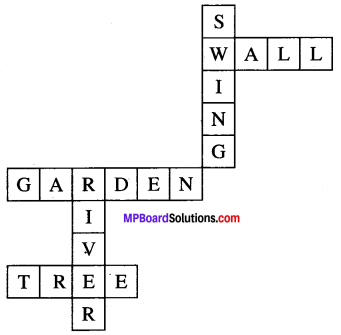
Write the names of the things that can be seen when going up in a swing. Find the words from the poem.
(उन वस्तुओं के नाम लिखो जो एक झूले में ऊपर जाते हुए दिखाई देती हैं। कविता में से शब्द ढूँढो।)
Answer:
Rivers, trees, cattle and the country-side, can be seen while going up in the swing.
Mp Board Class 6 English Chapter 2

Comprehension Questions
(बोध प्रश्न)

Answer the following questions:
(निम्नलिखित प्रश्नों के उत्तर दीजिए)

The Swing Class 6 MP Board Question 1.
What is the pleasantest thing a child can do?
(व्हॉट इज़ द प्लेजन्टेस्ट थिंग अ चाइल्ड कैन डू?)
वह सबसे मनमोहक क्या है जो एक बच्चा कर सकता है?
Answer:
Swinging is the pleasantest thing a child can do according to the poet.
(स्विमिंग इज़ द प्लेजेंटेस्ट थिंग अ चाइल्ड कैन डू अकॉर्डिंग टू द पोइट।)
कवि के अनुसार झूला झूलना ही बच्चे के लिए सबसे मनमोहक है।

Class 6 English Chapter 2 The Swing MP Board Question 2.
What can you see while going up in a swing?
(व्हॉट कैन यू सी व्हाइल गोइंग अप इन अ स्विंग?)
झूले पर ऊपर जाते समय तुम क्या देख सकते हो?
Answer:
While going up in the swing we can see rivers, trees, cattle and countryside.
(व्हाइल गोइंग अप इन द स्विंग वी कैन सी रिवर्स, ट्रीज़, कैटल एण्ड कण्ट्रीसाइड।)
झूले पर ऊपर जाते समय हम नदियाँ, पेड़, गाय-बैल तथा ग्रामीण इलाका देख सकते हैं।

Lesson 2 The Swing MP Board Class 6th Question 3.
What does the child see in the countryside?
(व्हॉट डज़ द चाइल्ड सी इन द कण्ट्रीसाइड?)
बच्चा ग्रामीण इलाके में क्या देखता है?
Answer:
The child sees rivers, trees and cattle in the countryside.
(द चाइल्ड सीज़ रिवर्स, ट्रीज एण्ड कैटल इन द कण्ट्रीसाइड।)
बच्चा ग्रामीण इलाके में नदियाँ, पेड़ और गाय-बैल देखता

The Swing Question Answer MP Board Class 6th Question 4.
What does the child see while going down the swing?
(व्हॉज डज़ द चाइल्ड सी व्हाइल गोइंग डाउन द स्विंग?) बच्चा झूले पर नीचे जाते हुए क्या देखता है?
Answer:
The child sees the green garden and the brown roof while going down the swing.
(द चाइल्ड सीज़ द ग्रीन गार्डन एण्ड द ब्राडन रूफ व्हाइल गोइंग डाउन द स्विंग।)
बच्चा झूले पर नीचे जाते समय हरा बगीचा और भूरी छत देखता है।

The Swing Poem Class 6 MP Board Question 5.
What does the child see when he is up in the air?
(व्हॉट डज द चाइल्ड सी व्हेन ही इज़ अप इन द एअर?) बच्चा ऊपर हवा में होते समय क्या देखता है?
Answer:
The child sees rivers, trees and cattle over the countryside when he is up in the air.
(द चाइल्ड सीज़ रिवर्स, ट्रीज़ एण्ड कैटल ओवर द कण्ट्रीसाइड व्हेन ही इज़ अप इन द एअर।)
बच्चा ऊपर हवा में होते समय ग्रामीण इलाके की नदियाँ, पेड़ और मवेशी जानवरों को देखता है।

Let’s Talk
(आओ, बात करें)

Work in pairs. Talk to your friend choose the correct answer and fill in the blank spaces. Can you? Yes, I can/No, I can’t.
(जोड़े में कार्य करो। अपने मित्र से बात करो, सही उत्तर दूढ़ो और खाली स्थान भरो।)
Answers:
1. I can swim. – Can you? – No, – I can’t.
2. I can ride a bicycle.  – Can you? – Yes, – I can.
3. I can fly a kite. – Can you? – No, – I can’t.
4. I can cook food. – Can you? – No, – I can’t.
5. I can jump high. – Can you? – Yes, – I can.

Let’s Do
(आओ करें)

Draw a picture of what you see when you go up in a swing and write the names of the things that you see.
(झूले पर ऊपर जाते हुए जो दिखाई दे उसका एक चित्र बनाओ और उन वस्तुओं के नाम लिखो जो तुम्हें दिखाई दें।)
Answer:
The students can draw pictures of the things that they see while they go up in the swing. The things that can be seen from the swing are garden, trees, chirping birds, flowers, butterflies etc.

The Swing Difficult Word Meanings

Swing (स्विंग)-झूला, Think (थिंक)-सोचना, Cattle (कैटल)-मवेशी, Pleasantest (प्लेजेण्टेस्ट)-सबसे मनमोहक, Thing (थिंग)-वस्तु, Ever (एवर)-कभी, Child (चाइल्ड)-बच्चा, Wall (वॉल)-दीवार, Wide (वाइड)-फैला हुआ, Rivers (रिवर्स)-नदियाँ, Countryside (कण्ट्रीसाइड)-ग्रामीण इलाका, Garden (गार्डन)-बगीचा, Down (डाउन)-नीचे, Roof (रूफ)-छत, Fly (फ्लाइ)-उड़ना।

The Swing Summary,Pronunciation & Translation

1. How do you like to go up in a swing,
Up in the air so blue?
Oh, I do think it’s the
Pleasantest thing
Ever a child can do!
(हाउ डू यू लाइक टू गो अप इन अ स्विंग,
अप इन द एयर सो ब्ल्यू?
ओह, आई डू थिंक इट्स द
प्लेजेन्टेस्ट थिंग
एवर अ चाइल्ड कैन डू!)

Class 6 English Chapter 2 Mp Board अनुवाद:
झूले में ऊपर जाने पर तुम्हें कैसा लगता है?
हवा में ऊपर नीले आकाश में?
अरे, मैं सोचता हूँ कि यह
एक बच्चे के द्वारा कभी किया गया
एक सबसे अधिक आनन्ददायक कार्य है।

2. Up in the air and over the wall,
Till I can see so wide,
Rivers and trees and cattle and all
Over the countryside.
(अप इन द एयर एण्ड ओवर द वॉल,
टिल आई कैन सी सो वाइड,
रिवर्स एण्ड ट्रीज़ एण्ड कैटल एण्ड ऑल
ओवर द कन्ट्रीसाइड।)

The Swing Poem Class 2 Question Answer MP Board Class 6th अनुवाद:
हवा में ऊपर और दीवार के ऊपर जाऊँ, जब
तक मुझे दूर-दूर तक नदियाँ और पेड़ और
मवेशी और पूरा ग्रामीण क्षेत्र न दिखाई देने लगे।

3. Till I look down on the garden green,
Down on the roof so brown,
Up in the air I go flying again,
Up in the air and down!
(टिल आई लुक डाउन ऑन द गार्डन ग्रीन,
डाउन ऑन द रूफ सो ब्राउन,
अप इन द एयर आई गो फ्लाइंग अगेन,
अप इन द एयर एण्ड डाउन!)

The Swing Poem Questions And Answers MP Board Class 6th अनुवाद:
जब तक मैं हरे-भरे बगीचे की ओर देखें,
अधिक भूरी छत पर नीचे की ओर आऊँ।
हवा में ऊपर की ओर मैं उड़ता हुआ जाऊँ,
इसी तरह हवा में ऊपर नीचे आता-जाता रहूँ।
-Robert Louis Stevensen
-रॉबर्ट लुइस स्टीवेन्सन

Hope the data shared has shed some light on you regarding the MP Board Solutions of Class 6 English Chapter 2 The Swing Questions and Answers. Do leave us your queries via the comment section and we will guide you at the earliest with help seeked. Stay connected with our website and avail the latest information in a matter of seconds.

MP Board Class 7th Special English Solutions Chapter 2 A New Idea of Good Manners

Get Updated MP Board Solutions for Class 7 Special English Solutions Chapter 2 A New Idea of Good Manners Questions and Answers in PDF Format and download them free of cost. These are provided as per the latest exam pattern and syllabus. Access the topics of Chapter wise and communication skills, grammer part through the direct links available depending on the need. You can Download MP Board Class 7 English Solutions and can score highest grade in examination. Clear all your queries on the Mp Board Solutions for Class 7 English Chapter 2 A New Idea of Good Manners Questions and Answers Subject by using the Madhya Pradesh State Board Solutions for existing.

MP Board Class 7th Special English Solutions Chapter 2 A New Idea of Good Manners

If you are eager to know about the Madhya Pradesh State Board Solutions for Class 7 English you will find all of them here. You can identify the knowledge gap using these MP Board Solutions for English PDF and plan accordingly. Don’t worry about the accuracy as they are given after extensive research by people having subject knowledge along side from the latest English Syllabus.

A New Idea of Good Manners Text Book Exercise

Comprehension

A. Answer the questions given below:

Mp Board Class 7th English Chapter 2 Question 1.
Where did Ravi spend his summer vacation?
Answer:
Ravi spent his summer vacation at a village.

Class 7 English Chapter 2 A New Idea Of Good Manners MP Board Question 2.
Why did Ravi and Anand not know Ashok?
Answer:
Ravi and Anand did not know Ashok because Ashok had newly joined the school.

A New Idea Of Good Manners MP Board Question 3.
How did Ashok learn to use a dictionary?
Answer:
Ashok learnt to use a dictionary when his grandfather taught him.

Class 7 English Chapter 2 Mp Board Question 4.
How does a dictionary help us?
Answer:
A dictionary helps us in looking up the correct spellings of the words.

Class 7 English Chapter 2 Question Answer Question 5.
Why does Anand not look up the meaning of all the new words in a dictionary?
Answer:
Whenever Anand looks up the new words in a dictionary, quite often he feels very lazy. He decides not to look up all the new words in a dictionary.

Mp Board Solution Class 7th English Question 6.
Why must we avoid making mistakes?
Answer:
We must avoid making mistakes because our mistakes make the readers unhappy. Besides, It shows our laziness and it is also known as bad manners.

B. Choose the right words from those given after each statement:

(i) The School has opened………….
(a) after winter volation.
(b) after a holiday.
(c) after summer vacation.
(d) after a week.
Answer:
(c) after summer vacation.

(ii) Ashok is a stranger because………….
(a) he is a new student.
(b) he is well known to all.
(c) he is an old student.
(d) he is an intelligent student.
Answer:
(a) he is a new student.

(iii) The Three boys joined and ……………
(a) played football.
(b) visited the school library.
(c) went to the garden of the school.
(d) went inside the classroom.
Answer:
(b) visited the school library.

(iv) Ravi spent his summer vacation …………
(a) at a village
(b) in the town
(c) at home
(d) at his friend’s home.
Answer:
(a) at a village

(v) Ashok joined…………..
(a) class X
(b) Class IX
(c) class VII
(d) class VIII
Answer:
(c) class VII

Word Power

Look at the phrases given below:
(a) a happy man – an unhappy man (A man who is not happy)
(b) a kind woman – an unkind woman (A woman who is not kind)
‘un’ has the meaning of ‘not’
Now change the meaning of the following phrases by adding ‘un’ (be careful of changing ‘a’ to ‘an’)
Answer:
a pleasant journey – An unpleasant journey
a popular boy – An unpopular boy
a necessary thing – An unnecessary thing
a lawful act – An unlawful act
a just decision – An unjust decision
a common animal – An uncommon animal
an interesting story – an uninteresting story
an important event – An unimportant event
an equal opportunity – An unequal opportunity
be usual happening – An unusual happening

Grammar in Use

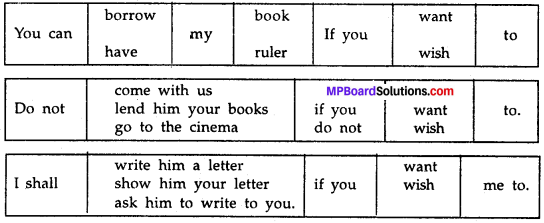
Write sentences from each of the following tables:
Class 7 English Chapter 2 MP Board
Answer:
1. (i) you can borrow my book if you want to.
(ii) you can have my book if you want to.
(iii) you can borrow my ruler if you want to.
(iv) you can have my ruler if you want to.
(v) you can have my book if you wish to.

2. (i) Do not come with us if you do not want to.
(ii) Do not lend him your books if you do not want to.
(iii) Do not go to the cinema if you do not wish to.
(iv)Do not come with us if you do not wish to.
(v) Do not lend him your books if l you do not wish to.

3. (i) I shall write him a letter if you I want me to.
(ii) I shall write him a letter if you 1 wish me to.
(iii) I shall show him your letter if you want me to.
(iv) I shall ask him to write to you if you want me to.
(v) I shall ask him to write to you if you wish me to.

Let’s Talk

Ask your friend to complete the sentences given below by using ‘if you want to’/ ‘if you do not want to’/’if you want him to’
Example:
Ravi will take your letter to the post office.
Ravi will take your letter to the post office if you want him to.

Class 7 English Chapter 2 MP Board Question 1.
Do not go to the cinema………….
Answer:
Do not go to the cinema if you do not want to.

Question 2.
Please have my bicycle…………
Answer:
Please have my cycle if you want to.

Question 3.
Mr. Kumar will lend you a dictionary………….
Answer:
Mr. Kumar will lend you a dictionary if you want him to.

Question 4.
Do not lend your books to other people………….
Answer:
Do not lend your books to other people if you don’t want to.

Question 5.
My father will take you in our car to Agra……………
Answer:
My father will take you in our car to Agra if you want to.

Let’s Write

Write ten sentences on any one of the topics given below:
Question 1.
How you spent your vacation.
Answer:
How I Spent the Summer Vacation:

Our school was closed on 14th of May for the summer vacation. I packed my luggage and caught the first train for Mathura. I reached my native village in the evening. My friends came to know that I had reached there. They came to meet me. We kept talking till midnight. I spent about a week there. We went out for a morning walk and enjoyed ourselves. After a week, I received a telegram from my elder sister. She had asked me to come to Agra.

I reached Agra. I spent many days visiting all the historical places around Agra. I saw the Taj Mahal every night. I also visited Akbar’s Fort. I often used to bathe in the holy water of the Jamuna. I stayed there for about three weeks.

I returned to my house in the middle of june. After a few days I paid a visit to my maternal grandfather. I received a warm reception from my maternal grandmother, maternal uncle and maternal aunt. My cousins were wild with joy at my sight. I made many friends there. We would play many rural games. We could take bath in cold water of the canal. I studied every morning. My breakfast consisted of stale chapaties, butter and butter-milk. After staying there for two weeks I returned home, I finished my home work. Our school opened on 8th july and I reached my school.

Vacation – लम्बा अवकाश, Luggage – सामान, Native – जन्म से सम्बन्धित, Often – प्राय, Holy – पवित्र, Reception – स्वागत, Rural – ग्रामीण, Canal – नहर, Stale – बासी

Question 2.
The first day of your school after the vacation.
Answer:
For self attempt.

Let’s Do It

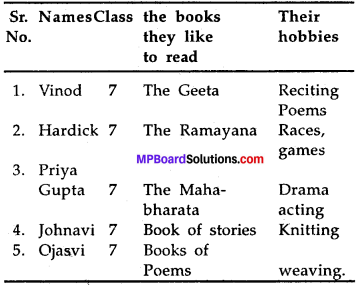
Interview your class mates and complete the following table. The following questions can be asked.
1. What’s your name?
2. What books do you like to read?
3. What’s your hobby?
Answer:
Mp Board Solution Class 7th English

New Idea of Good Manners Word Meanings

Page: Vacation – leave – अवकाश, Almost – nearly – लगभग, Stranger – unknown person – अजनबी व्यक्ति, Just – not long ago – थोड़े समय पहले, Believe – think – विचार\विशवास करना, Joined – admitted – प्रवेश पाया, Excuse – Pardon – क्षमा करना, Interesting – amusing – रोचक, A bit – a little – थोड़ा सा, Dull – tasteless – निरस, Perhaps – probably – शायद, Very often – usually – प्राय, Lazy – idle – सुस्त, Suppose – imagine – कल्पना करो, Careful – attentive – सावधान, Reasons – causes – कारण, Always – ever – सदा

We believe the information shared regarding MP Board Solutions for Class 7 English Chapter 2 A New Idea of Good Manners Questions and Answers as far as our knowledge is concerned is true and reliable. In case of any queries or suggestions do leave us your feedback and our team will guide you at soonest possibility. Bookmark our site to avail latest updates on several state board Solutions at your fingertips.
MP Board Class 7th Social Science Solutions Chapter 4 Our Constitution

MP Board Class 7th Social Science Solutions Chapter 4 Our Constitution

MP Board Class 7th Social Science Chapter 4 Text Book Questions

Choose the correct alternatives from the following:

Mp Board Class 7th Social Science Chapter 4 Question 1.
The constituent assembly was formed on –
(a) Dec. 1946
(b) Jan. 1947
(c) Nov. 1945
(d) Jan. 1950
Answer:
(a) Dec. 1946

Class 7 Social Science Chapter 4 Our Constitution Question 2.
The Chairman of the drafting committee was –
(a) Dr. Rajendra Prasad
(b) Dr. Bhimrao Ambedkar
(c) Dr. Harisingh Gaur
(d) Pt. Jawaharlal Nehm
Answer:
(b) Dr. Bhimrao Ambedkar

Our Constitution Class 7 Question 3.
The Indian constituent assembly adopted the constitutions on –
(a) 28 Jan. 1946
(b) 26 Jan. 1950
(c) 26 Nov. 1949
(d) 26 Jan. 1930
Answer:
(c) 26 Nov. 1949

Fill in the blanks:

  1. The President of the constituent assembly was ……………..
  2. The Indian Constitution is a ………….. and detailed constitution.
  3. India has an ……………. and powerful Judiciary.

Answer:

  1. Dr. Rajendra Prasad
  2. comprehensive
  3. impartial.

MP Board Class 7th Social Science Chapter 4 Short Answer Type Questions

Class 7th Social Science Chapter 4 Question 1.
Write the names of any three members of the Indian Constituent Assembly.
Answer:
Names of three members of the Indian Constituent Assembly Dr. Rajendra Prasad, Pandit Jawaharlal Nehru, Acharya
Kripalani.

Class 7 Social Science Chapter 4 Question 2.
What is meant by ‘Sovereign State’?
Answer:
India is a sovereign state. It means we are supreme in all matters concerning us. We are independent both internally and externally.
Our Constitution Class 7 Notes Question 3.
Why is the Indian constitution called a detailed and written constitution?
Answer:
The.Indian constitution is called a detailed and written constitution because all the fundamental and basic rules are contained in the form of a document. It ensures to promote the feeling of unity in diversity.

Class 7 Chapter 4 Social Science Question 4.
What is a parliamentary system?
Answer:
India has a parliamentary system. The real powers of the government rest in the Parliament. The council of ministers executes die powers of the government and it is answerable to the Parliament.

MP Board Class 7th Social Science Chapter 4 Long Answer Type Questions

Social Science Class 7 Chapter 4 Question 1.
Describe any three features of the Indian Constitution.
Answer:
Three features of the Indian Constitution:
1. Written Constitution – Our constitution is written because all the fundamental and basic rules are contained in the form of a document.

2. Detailed and comprehensive constitution – Our constitution is very comprehensive and vast. People of different caste, religion and speaking different languages reside here. They have their own cultures. The constitution ensures to promote the feeling of unity and diversity.

3. Inclusion of fundamental rights and duties – The Indian constitution has given some fundamental rights to the citizens. It is the duty of the Supreme Court to protect these rights. In the same way, die constitution has mentioned some fundamental duties for the citizens.

Write short notes on:

  1. Secular State
  2. Federal System
  3. Fundamental rights and duties.

Answer:
1. Secular State:
A secular state is one which does not advocate any particular religion, but respects all the religions alike. India has no state religion. Every citizen has a right to profess his own religion. The state will not discriminate any religion nor interfere in religious matters. The people of different religions are equal before law and command equal respect and recognition from the state.

2. Federal System:
A federal system is one in which political power is shared between die center and the state government In such a system, there are two sets of governments. One at the center and the other at the state level.

3. Fundamental rights and duties:
The Indian Constitution has given some fundamental rights to the citizens. These fundamental rights are protected by the Supreme Court. The constitution has mentioned some fundamental duties too for the citizens.

MP Board Class 7th Social Science Solutions

MP Board Class 6th Sanskrit Solutions Chapter 9 उज्जयिनीदर्शनम्

MP Board Class 6th Sanskrit Solutions Surbhi Chapter 9 उज्जयिनीदर्शनम्

MP Board Class 6th Sanskrit Chapter 9 अभ्यासः

Mp Board Class 6 Sanskrit Chapter 9 प्रश्न 1.
एकपदेन उत्तरं लिखत (एक शब्द में उत्तर लिखो)
(क) सर्वदा कस्मात् घण्टानादः श्रूयते? (सदा ही कहाँ से घण्टों की ध्वनि सुनाई देती है?)
उत्तर:
मन्दिरात् (मन्दिर से)

(ख) यात्रिकाः कस्मात् स्थानानां महत्वं जानन्ति? (यात्रीगण कहाँ से स्थानों के महत्व को जानते हैं?)
उत्तर:
मार्गदर्शकात् (मार्गदर्शकों से)

(ग) केभ्यः जयघोषः निःसरति? (किनके द्वारा जयघोष निकलते हैं?)
उत्तर:
भक्तजनमुखेभ्य (भक्तजनों के मुख से)।

Mp Board Solution Class 6 Sanskrit प्रश्न 2.
एकवाक्येन उत्तरं लिखत (एक वाक्य में उत्तर लिखो)
(क) उज्जयनी कस्मात् नगरात् पश्चिमदिशि अस्ति? (उज्जियिनी किस नगर के पश्चिम दिशा में है?)
उत्तर:
उज्जयिनी भोपालनगरात् पश्चिमदिशि अस्ति। (उज्जयिनी भोपालनगर से पश्चिम दिशा में है)

(ख) उज्जयिन्याः मुख्यं दर्शनीयस्थानं किम् अस्ति? (उज्जयिनी का मुख्य दर्शनीय स्थान कौन-सा है?)
उत्तर:
उज्जयिन्याः मुख्यं दर्शनीय स्थानं-महाकालमन्दिरम्, महागणेशमन्दिरं,हरिसिद्धिमन्दिरम्, चिन्तामणिगणपति मन्दिरं, मङ्गलनाथमन्दिरं, कालभैरवमन्दिरम् च सन्ति। (उज्जयिनी के मुख्य दर्शनीय स्थान-महाकाल मन्दिर, महागणेश मन्दिर, हरिसिद्ध मन्दिर, चिन्तामणिगणपति मन्दिर, मङ्गलनाथ मन्दिर और काल भैरव मन्दिर हैं।)

(ग) कस्मात् जनाः श्रीकृष्णस्य इतिहासं जानन्ति? (लोग श्रीकृष्ण के इतिहास को किससे जानते हैं?)
उत्तर:
सान्दीपनि आश्रमात् जनाः श्रीकृष्णस्य इतिहास जानन्ति। (सान्दीपनि आश्रम से लोग श्रीकृष्ण के इतिहास को जानते हैं।)

(घ) महाकालमन्दिरात् जनाः कुत्र गच्छन्ति? (महाकाल मन्दिर से लोग कहाँ जाते हैं)
उत्तर:
महाकालमन्दिरात् जनाः महागणेशमन्दिरम्, हरिसिद्धि मन्दिरम् च गच्छन्ति। (महाकाल मन्दिर से लोग महागणेश मन्दिर और हरिसिद्ध मन्दिर जाते हैं।

(ङ) कस्मात् विक्रमसंवत्सरस्य गणना भवति? (विक्रमसंवत्सर की किससे गणना होती है?)
उत्तर:
उज्जयिन्याः राजा विक्रमादित्यस्य कालात् विक्रम संवत्सरस्य गणना भवति। (उज्जयिनी के राजा विक्रमादित्य के काल से विक्रमसंवत्सर की गणना होती है।)

Sanskrit Class 6 Mp Board प्रश्न 3.
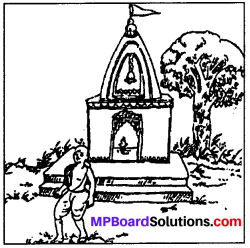
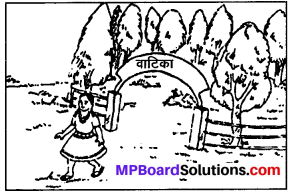
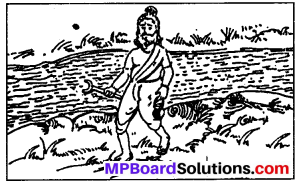
चित्रं दृष्टवा पञ्चमीविभक्तिरूपाणि लिखत (चित्र देखकर पञ्चमी विभक्ति के रूप लिखो)
Class 6 Sanskrit Chapter 9 Solution MP Board
(क) (देवालयः) अर्चकः………… आगच्छति

Sanskrit Class 6 Mp Board Solution
(ख) (वाटिका) बालिका…………. आगच्छति।

Sanskrit Class 6 Chapter 9 Solutions MP Board
(ग) (नदी) मुनिः………….. आगच्छति।

Class 6 Sanskrit Ch 9 Solutions MP Board
(घ) (क्षेत्रम्) कृषकः…………. आगच्छति।
उत्तर:
(क) देवालयात्
(ख) वाटिकायाः
(ग) नद्याः
(घ) क्षेत्रात्।

Class 6 Sanskrit Chapter 9 MP Board प्रश्न 4.
रेखाङ्कितपदस्य पञ्चमी-विभक्तौ परिवर्तनं कृत्वा वाक्यं लिखत (रेखाङ्कित शब्द का पञ्चमी विभक्ति में परिवर्तन करके वाक्य में लिखो)
(क) हिमालयः गङ्गा प्रवहति।
(ख) बालकः सिंहः विभेति।
(ग) वानरः शाखा कूर्दति।
(घ) छात्रः शाला आगच्छति।
(ङ) धार्मिकः काशी आगच्छति।
(च) महिला नदी जलम् आनयति।
(छ) प्रद्युम्न: गुरुकुलं प्रत्यागच्छति।
(ज) सज्जनः असत्यं विभेति।
(झ) सुरेशः रुग्णं शीतम् रक्षति।
उत्तर:
(क) हिमालयात्
(ख) सिंहात्
(ग) शाखायाः
(घ) शालयाः
(ङ) काश्याः
(च) नद्याः
(छ) गुरुकुलात्
(ज) असत्यात्
(झ) शैत्यात्।

Class 6 Sanskrit Mp Board Solution MP Board प्रश्न 5.
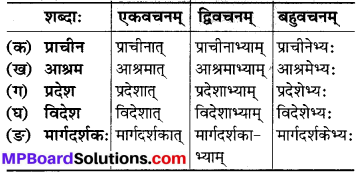
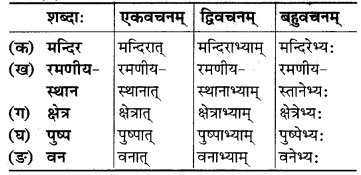
उचितपरिवर्तनेन पञ्चमीविभक्तिरूपाणि लिखत (उचित परिवर्तन से पञ्चमी विभक्ति के रूप लिखो)
(अ)-
Mp Board Class 6 Sanskrit Chapter 9
(ब)-
Mp Board Solution Class 6 Sanskrit
(स)-
Sanskrit Class 6 Mp Board
(द)-
Class 6 Sanskrit Chapter 9 MP Board

Class 6th Sanskrit Chapter 9 Solution MP Board योग्यताविस्तारः
1. तसिल’ (तः) प्रत्ययस्य प्रयोगेण सरलरूपेण एकवचने पञ्चमीविभक्तिप्रयोगः सम्भवति। (तसिल तः प्रत्यय के प्रयोग से सरल रूप में एकवचन में पंचमी विभक्ति का प्रयोग हो सकता है।)
यथा-
विद्यालय – विद्यालयात् – विद्यालयतः
वाटिका – वाटिकायाः – वातिकातः
काशी – काश्याः – काशीतः
उद्यानम् – उद्यानात् – उद्यानतः

2. अधोलिखितं श्लोकं कण्ठस्थीकुरुत। अथ च श्लोकात् पञ्चमीविभक्तिशब्दान् चिनुत (निम्नलिखित श्लोक को कण्ठाग्र करो और इसके बाद श्लोक से पंचमी विभक्ति के शब्दों को चुनो)-

वात्सल्यात् अभयप्रदानसमयात् आार्तिनिर्वाणपणात
औदार्यात् अघशोषणात् अगणितश्रेयः पदप्रापणात्।
सेव्यः श्रीपतिरेक एव जगतामेतेऽभवन्साक्षिणः,
प्रह्लादश्च विभीषणश्च करिराट् पाञ्चाल्यहल्याधुवः॥
उत्तर:
ऊपर दिये गये श्लोक को कण्ठस्थ करो। उच्चारण की शुद्धता बनी रहने से श्लोक शीघ्र स्मृति में धारण हो जायेगा।
पंचमी विभक्ति के शब्द निम्नलिखित हैं-

  1. वात्सल्यात्
  2. अभयप्रदानसमयात्
  3. निर्वापणात्
  4. औदार्यात्
  5. अघशोषणात्
  6. प्रापणात्।

उज्जयिनीदर्शनम् हिन्दी अनुवाद :

उज्जयिनी मध्यप्रदेशस्य प्रसिद्धं दर्शनीयस्थानम् अस्ति। उज्जयिनी भोपालात् पश्चिमदिशि अस्ति। विविधेभ्यः प्रदेशेभ्यः जनाः उज्जयिनीम् आगच्छन्ति। कुम्भपर्वणि विदेशेभ्यः अपि बहवः जनाः आगच्छन्ति।

Mp Board Solution Class 6th Sanskrit अनुवाद :
उज्जियनी (उज्जैन) मध्य प्रदेश का प्रसिद्ध दर्शनीय स्थल है। उज्जयिनी भोपाल से पश्चिम दिशा में है। अनेक प्रदेशों से लोग उज्जयिनी को आया करते हैं। कुम्भ पर्व पर (कुम्भ के उत्सव पर) विदेशों से भी बहुत से लोग आया करते हैं।

क्षिप्रानद्याः समीपे मुख्यदर्शनीयस्थानं महाकालमन्दिरं राजते। सर्वदा मन्दिरात् घण्टानादः श्रूयते। भक्तजनमुखेभ्यः जयघोषः निःसरति। महाकालमन्दिरात् जना: महागेणशमन्दिरं हरिसिद्धिमन्दिरं च गच्छन्ति। इतः चतुर्धाममन्दिरं समीपे एव अस्ति। ततः चिन्तामणिगणपतिमन्दिरं, मङ्गलनाथमन्दिरं, कालभैरवमन्दिरं च जनाः गच्छन्ति।

Class 6 Sanskrit Chapter 9 Question Answer MP Board अनुवाद :
क्षिप्रा नदी के पास मुख्य दर्शनीय स्थल महाकाल मन्दिर सुशोभित है। सदा ही मन्दिर से घण्टों की ध्वनि सुनाई देती है। भक्तजनों के मुख से जयघोष निकलते हैं। महाकाल मन्दिर से लोग महागणेश मन्दिर तथा हरिसिद्धि मन्दिर जाते हैं। यहाँ से चार-धाम मन्दिर पास में ही है। उसके बाद चिन्मामणिगणपति मन्दिर को, मङ्गलनाथ मन्दिर को तथा काल भैरव मन्दिर को लोग जाया करते हैं।

उज्जयिन्याः सर्वेषु भागेषु रमणीयस्थानानि सन्ति। यात्रिकामार्गदर्शकात् स्थानानां महत्वं जानन्ति। पश्चक्रोशीयात्रायां स्थानात् स्थानं गच्छति।

Class 6th Sanskrit Chapter 9 MP Board अनुवाद :
उज्जयिनी के सभी भागों में रमणीय स्थान हैं। यात्रा करने वाले लोग मार्गदर्शकों से स्थानों के महत्व को जानते हैं। पञ्चकोशी यात्रा में एक स्थान से दूसरे स्थान तक जाते हैं।
प्राचीनकालात् आरभ्य उज्जयिनीक्षेत्रं संस्कृतविद्याकेन्द्रम् अस्ति। सान्दीपनि आश्रमात् जनाः श्रीकृष्णस्य इतिहासं जानन्ति। उज्जयिन्याः राजाविक्रमादित्यस्य कालात् विक्रमसंवत्सरस्य गणना भवति। बहूनां कवीनां मुखेभ्यः एवं च कालिदासमुखात् अपि उज्जयिन्याः सौन्दर्यं वर्णितम् अस्ति। महाकालमहिमा यथा-

“आकाशे तारकं लिङ्ग, पाताले हाटकेश्वरम्।
मर्त्यलोके महाकालं लिङ्गत्रयमुपास्महे!॥”

Sanskrit Class 6 Chapter 9 MP Board अनुवाद :
प्राचीनकाल से उज्जयिनी का क्षेत्र संस्कृत विद्या का केन्द्र रहा है। सान्दीपनि आश्रम से लोग श्रीकृष्ण के इतिहास की जानकारी लेते हैं। उज्जयिनी के राजा विक्रमादित्य के समय से विक्रमसंवत की गणना होती है। बहुत से कवियों के मुखों से तथा इसी तरह कालिदास के मुख से भी उज्जयिनी के सौन्दर्य का वर्णन किया हुआ है। महाकाल की महिला (का वर्णन) जैसे

“आकाश में तारक लिङ्ग, पाताल में हाटकेश्वर, मृत्युलोक में महाकाल लिङ्ग-ये तीन लिङ्ग हैं। इन की (मैं) उपासना करता हूँ।”

उज्जयिनीदर्शनम् शब्दार्थाः

भोपालात् = भोपाल से। पश्चिमदिशि = पश्चिम दिशा में। विविधेभ्यः प्रदेशेभ्यः = विविध प्रदेशों से। कुम्भपर्वणि = कुम्भ पर्व में। राजते = शोभायमान है। श्रूयते = सुनाई देता है। निःसरति = निकलता है। भागेषु = भागों में। यात्रिकाः = यात्रीगण। मार्गदर्शकात् = मार्गदर्शक से। सान्दीपनि आश्रमात् = सान्दीपनि आश्रम से। उज्जयिन्याः = उज्जयिनी का। मर्त्यलोके = भूलोक में।

MP Board Class 6th Sanskrit Solutions

MP Board Class 8th Social Science Solutions Chapter 27 Our Life and Environment

MP Board Class 8th Social Science Solutions Chapter 27 Our Life and Environment

MP Board Class 8th Social Science Chapter 27 Text Book Exercise

Choose the correct alternative from the following:

Mp Board Class 8 Social Science Solution Chapter 27 Question 1.
Is not a biodegradable waste:
(a) vegetables
(b) fruits
(c) paper
(d) polythene bags
Answer:
(d) polythene bags

MP Board Class 8th Social Science Chapter 27 Short Answer Type Questions
Class 8 Social Science Chapter 27 Question 1.
What are industrial waste? Give examples.
Answer:
Almost every industry generates different types of wastes, many of which are hazardous to all types of life. The wastes can be solid, liquid or gaseous. These wastes can cause destruction to the environment. The waste material contains ignitable, corrosive, reactive and topic elements. Examples, as, dust, sulphuric acid, hydrochloric acid, SO2, CO2, CO2 gases and plastic waste etc.

Our Life And Environment MP Board Class 8th Question 2.
What are the processes of manufacturing of goods?
Answer:
Manufacturing of goods involve three processes.

1. Assembly:
It is the combinations of parts to make the final product, for example, a bicycle is assembled by joining various parts.

2. Alteration:
It is the modifying of the raw material into a new material or final product for example sawing of trees into lumbar.

3. Extraction:
In this process one or more components from the raw material for example petrol is extracted from the crude oil.

There are many proofs of early production like bricks used in the buildings earthen pots to store grains etc. All there were produced with hands. As civilization grew the method of production improved because of innovation for example fibres take from different sources are processed to forms cloth.

Environment Class 8 MP Board Question 3.
Name the major components of industry?
Answer:
Most of the manufacturing industries need four imparts capital, raw material, technology and labour.

1. Capital:
Every industry needs two types of capital Finance capital and physical capital. The physical capital is building, machinary etc and finance capital is money.

2. Raw Material:
Most of the industries rely on raw materials provided by natural resources. These natural resources may be renewable on non renewable.

3. Technology:
The technology advancement have hed to tremendous industrial growth innovations in the field of technology can transform the culture of the society.

4. Labour:
It refers to the workforce. Labour unions are formed who negotiate their wages and work with the owners.

MP Board Class 8th Social Science Chapter 27 Long Answer Type Questions

Our Environment Class 8 MP Board Question 1.
How does agriculture and cattle affect the environment?
Answer:
In modern agriculture use of fertilizers is increasing day by day in order to enhance the production. Fertilizer are beneficial for increasing the production of foodgrains, it has an advance effect on environment 60% of fertilizers are used by plants, remaining fertilizer gets soluble in rain water and reaches lakes, revised and ponds by which the surface good ground water.

This gets polluted, various insecticides and pesticides which protect the crop from insects and diseases pollute the environment. Cattle are reared in large number to get animal products. Increasing number of cattle has adverse effect. Artificial reproduction of animals through cloning produce economically lucrative breeds, it may lead to diminishing bio-diversity.

Mp Board Class 7th Social Science Chapter 27 Question 2.
Explain the methods of solid waste disposal?
Answer:
The various methods of solid waste disposal are:

1. Recycling:
It is very old method in which the waste materials are made reusable. All the metal products can be melted to make new products. Plastic, glass and paper is roofs recyclable.

2. Landfill:
It is the common method of disposing waste on land. It is also the cheapest means because transport cost is the only major expenditure. In a modem landfill the solid waste is spread in this layers. Each layer is solidified by bulldozer before the next layer is deposited on them trees are planted there.

3. Composting:
It is a process of decomposing solid waste to make fertilizers. Biodegradable waste is decomposed by microorganisms and it is used as a manner.

4. Incinerators:
In the incinerator the waste is burned so that it reduces weight and volume around 90%.

Question 3.
What do yo understand by environment friendly technology? Explain.
Answer:
Modern technology can makes industries safe and cost effective. Modern technology is designed to
recycle the various component of manufacturing system.

For example:

  • The scrap steel of automobile industry can be useful to mixed with other metals produce a new metal.
  • The smoke scrubbers remove all the dangerous gases and particulate matter from the discharge of industrial plants.
  • Some industries release their chemical waste into rivers and lakes. Modem technologies have evolved many techniques to secure such waste.
  • In transport sector use of CNG has reduced the pollution level.
  • Modem computer aided machines have proved to be accurate and economical.
  • As modem energy conservation sources the leaves of some plants are used to produce bio-diesel.

Question 4.
Describe the natural and regional environmental issues?
Answer:
National environmental issues. The govt, of India has created agencies to check the pollution and has passed Environment Protection Act, Factories Amusement Act, Central Motor Vehicle Trucks etc. Govt, agencies as well as NGO’s work to check the pollution govt, of India provided enough money for functioning these agencies and departments.

Pollution Central Board at national level as well as state level has been established. These boards has been authorised to survey the area and fix the responsibility. The guilty is persisted in the court.

Regional environmental issues:
At this level a variety of steps have been taken by the govt. NGO’s for the convservation of environment. At local level the municipality or municipal corporations plays a direct role in the water disposal. The sewage of the city is drained to distant parts from the city.

MP Board Class 8th Social  Science Solutions