MP Board Class 10th General English Letter Writing: Informal and Formal Letters

Are you seeking for the Madhya Pradesh Board Solutions 10th General English Writing Skills Letter Writing: Informal and Formal Letters Questions and Answers PDF? If yes, then read this entire page. Here, we are giving a direct link to download MP Board Class 10th English Solutions Questions and Answers PDF which contains the chapter wise questions, solutions, and grammar topics. You can also get the shortcuts to solve the grammar related questions on this page.

MP Board Class 10th General English Letter Writing: Informal and Formal Letters

For the sake of students we have gathered the complete 10th General English Writing Skills Letter Writing: Informal and Formal Letters Questions and Answers can provided in pdf Pattern. Refer the chapter wise MP Board Class 10th English Solutions Questions and Answers Topics and start the preparation. You can estimate the importance of each chapter, find important English grammar concepts which are having more weightage. Concentrate on the important grammar topics from Madhya Pradesh Board Solutions for 10th English Letter Writing: Informal and Formal Letters Questions and Answers PDF, prepare well for the exam.

Informal Letters

1. Your father is out of town. Write a letter to him saying that your mother is ill and he should come back immediately.
Answer:
R. No. 10, Ring Road,
Lashkar,
Gwalior 2uly, 20….

Dear Father,
High regards, I want to inform you that mother is unwell. She has been suffering from fever for a week. She is under the treatment of Dr.ain. The doctor says that she will be normal in a week. There is nothing to worry, only she is feeling lonely and wants you to come home immediately. Rest is fine. Hoping to see you soon.

Yours affectionately
Rohan

2. Write a letter to your younger brother advising him to work hard at his studies to get a first class.
Answer:
18, Raghava Pura,
Ram Nagar,
Indore
20 jan., 20….

Dear Ramesh,
I have received your letter regarding your marks in the half-yearly examination. You haveust passed. Your marks are very discouraging. You should now work hard so that you may get a first class. I hope you will be serious in your studies now.

I wish you best of luck.

Your loving brother
Mohan

3. Write a letter to your father telling him what you want to become in future.
Answer:
20, Ravidas Marg,
Bijawar
12 Sept., 20….

Dear Father,
High regards. I received your letter yesterday. I am glad that you wish to know what I want to become in future. I want to be a doctor. A doctor is a very important person in society. He cures us when we are Sick. He brings back our joys. It is a very noble profession. Therefore I intend to become a qualified doctor. hope you agree to my views.

With regards to mother.

Your loving son
Akhil

4. Write a letter to your father to send you Rs. 500 as you have to pay your fees and buy some books and stationery.
Answer:
City Inter College,
Bhopal,
15th july, 20

Dear father,
How are you and other family members? I am fine here and busy with my studies. I have to pay my fees and buy some books and stationery. So kindly send me a sum of Rs. 500 soon. Convey my best regards to mother and lots of love to Pappu.

Your loving son
Ashu

5. Write a letter to your friend inviting him on your birthday party.
Answer:
10, Prabhu Nagar Indore
20 March, 20

Dear Raju,
Hope you are fine there. I am also in best of health. Today I am writing to you because I want to invite you to my birthday party on 28 March. Many of our friends will be coming. We shall enjoy a lot. It will be a great fon. So please come definitely and inform me when are your coming here.

I shall wait for your reply.

Yours as ever
Tarun

6. One of your friends has become disabled after an accident. He is very much depressed. Write a letter telling him about the power of determination.
Answer:
50, Raj Mahal Colony Indore (M.P)
10 October, 20….

Dear Rohan,
Hope that you are in a better condition now. I am arso fine here.

I can understand the state which you are going through. But you should not get depressed as nobody has a control on accidents but one has the control on his will power and determination.

Strong determination can do anything. No difficulty can withstand in front of it. Dr. Glenn Cunningham who was the world’s fastest mile runner also met with a fire accident in his childhood. The doctor said that he won’t be able to survive. But he survived due to his detetmination though the lower part of his body was damaged and it was said that he would lead a disabled life. Again his strong determination failed all troubles and he could walk and run.

Therefore you should not be depressed and face the challenges of life boldly. I am sure you will also lead a normal life as before if you become determined for it.

Wishing you success.

Yours affectionately
Vijay

7. Write a letter to your friend congratulating him on his success in the examination.
Answer:
20, Shubham Colony Bhopal (M.P.)
10 Aug., 20…. .

Dear Sonam,
Hearty congratulations to you. I am glad that you have got a brilliant success in the High School Examination. I saw your name in the merit list. We all became very happy to hear the news. You will have to give a nice dinner party to your friends when you come here.
Please inform me when you are reaching here.

Yours as ever
Anju

8. Write a letter to your father telling him about your hostel life.
Answer:
Nehru Hostel Room No. 10,
Chhatarpur,
10 july, 20…..

Respected Father,
Warm regards. Hope you are fine there. I am also fine here. You might be worried about me since I am residing in hostel. I wish to inform you that now f am settled here.

The hostel life is quite different from that at home. It is relatively more disciplined. We have to wake up early in the morning and take care of our things and do everything ourselves. My room mate is also very good and other boys in the hostel are also very cooperative. There are fixed timings of breakfast, lunch and dinner. The food that is served is of good quality. But I miss the taste of mom’s food. I miss home and everyone a lot. But I have adjusted here. Please don’t worry about me.

Give my regards to mom and love to Chhotu.

Your obedient son
Rahul

9. Write a letter to your friend inviting him to attend the marriage ceremony of your brother.
Answer:
54, Shankar Shah Nagar
Jabalpur
December 15, 20….

Dear Rohan,
I hope this letter finds you in the best of health and happiness. You will be glad to know that the marriage of my elder brother has been fixed. The ceremony will take place on 30th December. You should come earlier. Mother remembered you and asked me to inform and invite you as she considers you also as her son. So, please come as soon as possible. There are lot of arrangements to be done and 1 would need your help and assistance. Please inform about your arrival.

Yours sincerely
Sumit

10. Write a letter your younger brother advising him to take part in games regularly.
Answer:
10, AshokNagar Satna
May 25, 20

Dear Himanshu,
Hope you are doing well there. Today I have received a letter from mother. She has also sent me your progress report. Though you are doing well in studies, but you are not taking part in games. That is the reason you are weak in health. I advise you to exercise regularly and take active part in games and sports. There is a saying ‘All work and no play makes Jack a dull boy’.

Write to me soon about your health.

Yours affectionately
Nirmal

Formal Letters

1. Write an application to your Principal to issue you a character certificate.
Answer:
To,
The Principal,
Govt. Ji. S. School,
Raipur

Respected Sir,
I beg to state that I have passed my IX std. examination this year from your school. My. father is getting transferred to Indore. Therefore I am taking admission in a new school there. So I need a character certificate.

If you kindly issue me the character certificate I shall be highly obliged.

Yours obediently
Rahul Dixit

2. Write an application to your Headmaster requesting him to provide you free text books.
Answer:
To,
The Head Master,
Govt. Middle School,
Bhopal
6th July, 20…..

Respected Sir,
I beg to state that I am the student of your school studying in class X. I belong to a very poor family.
My father is a farmer. He is unable to bear the expenses of my studies. I am a good student. I shall be highly obliged if you provide me free text books. Then only I shall be able to continue my studies.

Thanking you,

Yours obediently
Rahul Sharma
Roll No. 21
Class X B

3. Write an application to your Headmaster to grant you sick leave for three days.
Answer:
To,
The Headmaster,
Government Middle School,
Jabalpur j 15 October, 20 ….

Subject: Application for sick leave for three days

Sir,
Respectfully I beg to say that I am a student of X-A.

I am ill, therefore I would be unable to attend the j school. Kindly grant me leave for three days from 16 Oct., 20…. to 18 Oct., 20… I shall be thankful to you.

Yours obediently
Manish Garg
Roll No. 16
Class X-A

4. Write a letter to the Collector requesting him to ban the use of loud-speakers.
Answer:
31, Ashish Nagar,
Katni
1st April, 20 ….

To,
The district Magistrate,
Katni

Subject: Ban on the use of loud-speakers

Sir,
I want to draw your attention to the nuisance caused by the use of loud-speakers. I am a student of high school and my examinations are near. It is a time when all the students are busy day and night preparing for the examinations. Their success depends upon the proper use of their time and the concentration of their minds. It is regrettable that majority of the citizens do not realise the importance of this time for ! students. They enjoy full liberty to use loud-speakers at their highest pitch to celebrate every occasion that comes to their hands. The result is that we are unable to make preparations in the right way. I therefore request you to kindly impose a ban on the use of loud-speakers for the period of Board Examinations and punish those who are found guilty.

Thanking you.

Yours faithfully
Raj Malhotra

5. Write a letter to M/s Shiva Furniture, Gwalior placing an order for school furniture.
Answer:
12, Modem Public School
Datia (Gwalior)
10 March, 20….
To
M/s Shiva Furniture
Fort Road, Gwalior
Subject: Order for school furniture.

Dear Sirs,
Please send the following items of furniture for our public school at the above address. These items should be suitable for the age group of 10 to 14 years. It will be your responsibility that the items supplied by you should be of the specifications passed by M. P. Govt. Administration,

All the items should be sent through State Bank of India, Datia Branch.

1.Desks – 500
2. Chairs – 200
3. Stools – 500
4. Tables – 25

Yours faithfully
Prabhu Chawla
Manager

6. WrIte a lefter to the Director, Career PIus, 10, Kamla Park, Bhopal seeking Information regarding their Postal Courses for computer science.
Ans.
20, Goel Market
Gwalior (M.P.)
July 4,20….

To,
The Director
Career Plus
10, Kamla Park,
Bhopal

Subject: Information regarding 2 year Postal Course in Computer Science.

Sir,
I am a student of class X of Modem Public School, Gwalior. I am interested inoining your career computer postal course. It would be kind of you, if you send me the following.

1. Information regarding your postal course :
(a) Charges for the whole course.
(b) Months and dates of delivery of lessons.
(c) Contact programmes, place, dates.

2. Any other information regarding your postal course.

Hoping for an early reply.
Yours faithfully
Rahul Verma

7. Write an application to the Principal requesting him to allow a change in the subjects offered by you.
Answer:
To,
The Principal;
Government Inter College,
Bhopal

Sir,
Respectfully I beg to say that I am a regular student of class X A in your college. I opted Computer Science as one of my subjects, but I find it very difficult. I fear, I shall not be able to secure good marks in this subject. So I have decided to opt Economics in place of Computer Science.

I, therefore, request you to allow me this change of subject.

Thanking you for the favour.

Yours obediently
Suresh Yadav
Class X A .
July 20, 20….

8. The postman of your area is irregular and not punctual. Write a letter to the post master of your circle complaining against the postman.
Answer:
To,
The Post Master,
Shinde Ki Chhavani,
Gwalior

Subject: Complaint against the postman of Gita Colony.

Sir,
I want to draw your kind attention to the irregular delivery of mail in Gita Colony. Mr. Harpal, the postman of Gita colony is not punctual in the mail delivery. He generally delivers letters late, sometimes he does not deliver mail at all.

He also demands tips. If he is not given tips on Diwali, New Year Day etc. he does not deliver even registered letters and money orders. He sends them back to the sender. He puts the remarks—’the addressee’s house was locked’ or ‘addressee unavailable’ etc.
I request you to take serious action against him.

Thanking you in anticipation.
Your sincerely
Sonam Sihgh
H. No. 2/27, Gita Colony, Gwalior
10 October, 20 ….

Hope that the above shaped information regarding the Madhya Pradesh Board Solutions for 10th English Letter Writing: Informal and Formal Letters Questions and Answers is useful for making your preparation effective. View our website regularly to get other subjects solutions.

MP Board Class 10th English The Rainbow Workbook Solutions Chapter 2 The Happy Prince

Are you seeking for the Madhya Pradesh Board Solutions 10th English The Rainbow Workbook Special English Chapter 2 The Happy Prince Questions and Answers PDF? If yes, then read this entire page. Here, we are giving a direct link to download MP Board Class 10th English Solutions Questions and Answers PDF which contains the chapter wise questions, solutions, and grammar topics. You can also get the shortcuts to solve the grammar related questions on this page.

MP Board Class 10th English The Rainbow Workbook Solutions Chapter 2 The Happy Prince

For the sake of students we have gathered the complete 10th English The Rainbow Workbook Special English Chapter 2 The Happy Prince Questions and Answers can provided in pdf Pattern. Refer the chapter wise MP Board Class 10th English Solutions Questions and Answers Topics and start the preparation. You can estimate the importance of each chapter, find important English grammar concepts which are having more weightage. Concentrate on the important grammar topics from Madhya Pradesh Board Solutions for 10th English Chapter 2 The Happy Prince Questions and Answers PDF, prepare well for the exam.

The Happy Prince Vocabulary

I. Find out from the lesson the words which mean:
(a) The chief church of a Christian diocese (= an area under Bishop)
(b) A member of a race of very small people in Africa
(c) A person elected each year by a town council to be head of that city or town
(d) Heaven
(e) A deep red precious stone
Answer:
(a) Archdiocese,
(b) Pygmy,
(c) Mayor,
(d) Paradise,
(e) Ruby.

II. Find out the meanings of the following phrases from the dictionary and construct one sentence with each of them.

(i) to put up
Answer:
I can’t put up with this sort of situation any more.

(ii) plenty of
Answer:
He has a plenty of dresses.

(iii) to keep off
Answer:
Keep off the dust from this medicine.

(iv) to bid good bye
Answer:
We went to the station to bid good bye to his friend.

(v) to stay behind
Answer:
You must give up your habit to stay behind in cultural functions.

(vi) in the company of
Answer:
You are spoiling yourself in the company of Mohan.

(vii) to make a note of
Answer:
My father asked me to make a note of my expenses daily.

III. Practice saying the following words.
cloaks – clocks
quite – quiet
angel – angle
met – mate
swallow – shallow
Answer:
Do yourself.

Listening Skill

I. Listen to the passage carefully.

See Workbook page 7

Now, answer the following questions. Choose the right option to complete the following sentences.

1. According to definition, a fairy tale is
(a) a humorous story,
(b) a fictional story,
(c) a tragic story.
Answer:
(b) a fictional story,

2. The name ‘fairy tale’ was given by
(a) Madame Elizabeth,
(b) Madame Victoria,
(c) Madame d’ Aulnoy.
Answer:
(c) Madame d’ Aulnoy.

3. Fairy Tales refer to
(a) legends,
(b) fables,
(c) myths.
Answer:
(b) fables,

4. A fairy tale may start with words like
(a) in modem times,
(b) once upon a time,
(c) in olden days.
Answer:
(b) once upon a time,

5. The history of fairy tales is
(a) famous,
(b) well known,
(c) difficult to trace.
Answer:
(c) difficult to trace.

Speaking Skill

1. Speak on Maharana Pratap Singh. Clues are given for your help.

See Workbook page 8

Answer:
Do yourself.

II. Imagine that you are a statue in a public park. Narrate the activities that go on in the park from morning till night and are silently witnessed by you.
Answer:
Do yourself.

Reading Skill
Read the passage carefully.

See Workbook page 9

Now, answer the following questions.

1. (a) With what name was the Buddha born?
Answer:
Buddha was born as Siddhartha.

(b) Why did the animals respect the hare?
Answer:
The animals respected the hare because he was wise and gentle.

(c) What did the hare vow?
Answer:
The hare vowed that if anyone was hungry, he would offer him his own body.

(d) Whom did he convey it to?
Answer:
He conveyed it to the earth.

(e) What do the Jataka Stories recount?
Answer:
The Jataka Stories recount the many previous births of the Buddha in human and animal lives.

2. Match the animal with the food he found:
Animals – Food
1. monkey – (a) fish
2. jackal – (b) mangoes
3. hare – (c) lizard and a pot of milk
4. otter – (d) nothing
Answer:
1. (b)
2. (c)
3. (d)
4. (a).

3. Substitute the appropriate word from the passage for the following:
1. calm and kind:
2. change of appearance:
3. pledge:
4. very great:
5. not objecting to:
6. wanting to express thanks:
Answer:

  1. gentle,
  2. disguised,
  3. vow,
  4. tremendous,
  5. willingly,
  6. gratitude.

Grammar
Tense:

See Workbook pages 11-12

Change the number and rewrite the following sentences. (One is done for you)

1. Birds usually build nests in the trees.
Answer:
A bird usually builds a nest in a tree.

2. Good children always obey their parents.
Answer:
A good child always obeys his parents.

3. The boys box in the gymnasium on Sundays.
Answer:
The boy boxes in the gymnasium on a Sunday.

4. Her dogs always attack strangers.
Answer:
Her dog always attacks a stranger.

5. These hotels don’t allow dogs.
Answer:
This hotel doesn’t allow a dog.

6. I brush my teeth everyday.
Answer:
I brush my tooth everyday.

7. They do exercises every morning before breakfast.
Answer:
He does exercise every morning before breakfast.

8. Horses run fast.
Answer:
The horse runs fast.

9. They spend all their money on clothes.
Answer:
He spends all his money on clothes.

10. Some girls enjoy singing.
Answer:
The girl enjoys singing.

Convert the verbs in the following passage into Simple Past Tense and Simple Future Tense.

A beautiful and very successful actress is the star of a new musical show. Her home is in the country, but she does not want to go back there every night. So she rents an expensive flat in the centre of the city, places order for some beautiful furniture and hires a man to paint the rooms in new colours. It is very difficult to get tickets for her show, because everybody wants to see it.
Answer:
Simple Past:

A beautiful and very successful actress was the star of a new musical show. Her home was in the country, but she did not want to go back there every night. So, she rented an expensive flat in the centre of the city, placed order for some beautiful furniture and hired a man to paint the rooms in new colours. It was very difficult to get tickets for her show, because everybody wanted to see it.

Simple Future:
A beautiful and very successful actress will be the star of a new musical show. Her home will be in the country, but she will not want to go back there every night. So, she will rent an expensive flat in the centre of the city, place order for some beautiful furniture and hire a man to paint the rooms in new colours. It will be very difficult to get tickets for her show, because everybody will want to see it.

Writing Skill

l. Your school is going to organise a social work for the welfare of the poor living in slum areas of your city. Draft the principal’s notice to the students. (50 words)

Notice Board
Welfare Work in Slum Area

All the students are hereby notified that our school has organised a welfare work in the slum area of Seemapuri. We will undertake cleaning, educating and some other such jobs. Those who wish to participate must submit their name in the office of the PT in charge on or before 25 Sep 20xx.

Principal

2. Write a summary of the story of the ‘The Happy Prince.’ (150 words)
Answer:
The statue of a Happy Prince stood on a tall column in the city centre. It was covered with golden leaves. Two sapphires were fitted in his eyes and ruby glowed in his sword hilt. The prince looked around and viewed the pathetic plight of the poor.

A little swallow flew over the city one night. His friends had already gone to Egypt. He stayed back for he was in love with the most beautiful Reed. His courtship lasted all through the summer. But there were no Reeds when autumn came. All the swallows flew away.

The lonely swallow came and sat on the statue. He longed to spend the night there. A large drop of water fell over him as he was going to sleep. The swallow was amazed since there was no cloud. The swallow decided to fly away when another drop of water fell over him. He looked at the statue when the third drop of water fell down. He found the Happy Prince weeping.

The statue told the swallow that he didn’t know what tears were when he was alive. Now he sat quite high and could view the miseries of the city. The Happy Prince told the swallow about a seamstress. She was embroidering flowers on the satin gown of the Queen’s maids-of honour. Her son was suffering from fever. The Happy Prince asked the swallow to pick the ruby from his sword hilt and give that to her.

The swallow flew to the woman’s house and put the ruby near her thimble. He also fanned the boy’s forehead. Feeling a bit better the boy sank into a deep slumber. The swallow’s good action made him feel warmer though it was cold. The Happy Prince asked him to stay there one more night. He told him about a playwright who was too cold to write and finish his play for the Director of the Theatre. He was feeling hungry also. He asked the swallow to pluck one sapphire from his eye and give that to the playwright. The swallow did accordingly.

The playwright became happy to see the sapphire. It would enable him to finish the play. The swallow returned to the Happy Prince to bid him good bye. The Happy Prince again requested him to stay for another night.

The Happy Prince told the swallow about a little match girl in the square below. Her matches had fallen in the gutter. Her father would punish her if she returned home without money. Therefore, she was crying. He asked the swallow to fly to her and give her a sapphire from his eye. The swallow placed the sapphire into the little girl’s hand. Then he flew back to the Happy Prince who had gone blind. The swallow promised to stay with him forever. The Happy Prince asked him to fly over the city and tell him what he saw. The swallow told the Happy Prince about the hungry children and the poor people. As desired by the Happy Prince, the swallow took leaf after leaf of the fine gold over his body and gave them to the needy and helpless. As a result, the children played and the poor laughed.

Then winter set in and snow and frost appeared. The poor little swallow grew colder and colder but kept staying with the Happy Prince. However, he felt that his death was near. The swallow asked the Happy Prince to let him kiss his hand. The Prince asked him to kiss on the lips before going to Egypt. The swallow apprised him that he was going to the house of Death. Just then, he fell down dead.
Then a crack appeared inside the statue. The heart of the Happy Prince broke into two. The dead swallow lay on his feet. The Mayor and the Town Councillors happened to pass that way, the next morning. They declared that the Happy Prince was no longer beautiful and useful. They ordered to destroy it melting in fire.

The broken heart of the Happy Prince did not melt in the furnace. The Mayor declared that his own statue must be made with metal. The town Councillors disagreed and started quarrelling among themselves.

The broken lead heart was thrown away in the dust-heap near the swallow. God asked one of His Angels to bring him the two most precious things in the city. The Angel obeyed. God said that the little bird would sing for Him forever in the Garden of Paradise. The Happy Prince would praise him forever in the city of gold.

Hope that the above shaped information regarding the Madhya Pradesh Board Solutions for 10th English Chapter 2 The Happy Prince Questions and Answers is useful for making your preparation effective. View our website regularly to get other subjects solutions.

MP Board Class 10th English The Rainbow Solutions Chapter 19 If I Were You

Are you seeking for the Madhya Pradesh Board Solutions 10th English Chapter 19 If I Were You Questions and Answers PDF? If yes, then read this entire page. Here, we are giving a direct link to download MP Board Class 10th English Solutions Questions and Answers PDF which contains the chapter wise questions, solutions, and grammar topics. You can also get the shortcuts to solve the grammar related questions on this page.

MP Board Class 10th English The Rainbow Solutions Chapter 19 If I Were You

For the sake of students we have gathered the complete 10th English Chapter 19 If I Were You Questions and Answers can provided in pdf Pattern. Refer the chapter wise MP Board Class 10th English Solutions Questions and Answers Topics and start the preparation. You can estimate the importance of each chapter, find important English grammar concepts which are having more weightage. Concentrate on the important grammar topics from Madhya Pradesh Board Solutions for 10th English Chapter 19 If I Were You Questions and Answers PDF, prepare well for the exam.

If I Were You Textbook Exercises

If I Were You Vocabulary

I. Make sentences with each of the following so as to bring out its meaning.
interior, crawl, to get away with, let you down,clear off, intruder.
Answer:

  • Interior—My house is located in the interior of the city.
  • Crawl—The baby has started craivling.
  • To get away with—The woman got away with my purse.
  • Let you down—I am telling you the fact. I am not trying to let you down at all.
  • Clear off—I have cleared off the bank-loan.
  • Intruder—The intruders should be dealt with an iron hand.

II. Use the following expressions in a conversation.
well, thanks a lot, of course, by the way, O.K., come on, listen.
Answer:
Raju—I will take you in my car to Agra.
Mudit—Well. How long will you stay there?
Raju—For three days.
Mudit—Thanks a lot. Of course, I can spare three days’ time.
Raju—By the way, have you sought your parents’ permission?
Mudit—No, I have not informed them yet.
Raju—Then go and inform them.
Mudit—O.K. I shall do it.
Raju—Come on. Let’us discuss the programme.
Mudit—I am listening to you attentively.

Comprehension

A. Answer the following questions in about 25 words.

Question 1.
What did Gerrard tell the Intruder about his life? (M.P. Board 2012)
Answer:
Gerrard told the Intruder that he lived alone in the lonely cottage (in Essex). Few people know about him and visited him. He is a mystery man like the Intruder. He had killed somebody and the police was after him.

Question 2.
Who were the people that used to visit Gerrard?
Answer:
Very few people took the trouble to visit Gerrard. The baker, the vegetable vendor and the milkman only used to visit Gerrard.

Question 3.
Why did the Intruder go into Gerrard’s house? (M.P. Board 2017)
Answer:
The intruder had killed a cop. The police was chasing him. One day he saw Gerrard. He looked like the Intruder and lived un-known in a lonely cottage. The Intruder went into Gerrard’s house to kill him and live as Gerrard to avoid being arrested.

Question 4.
Why was the Intruder dodging the police?
Answer:
The intruder was a professional jewellery robber. He had already killed a policeman. The police was chasing him. Therefore, he was dodging the police to avoid being hanged.

Question 5.
Why did the Intruder want to kill Gerrard and take on his identity?
Answer:
The intruder had killed a cop. The police was chasing him. One day, he saw Gerrard. Gerrard looked exactly like him. The Intruder desired to protect himself from the police. Therefore, he wanted to kill Gerrard and take on his identity.

Question 6.
Why did the Intruder call Gerrard ‘a mystery man’?
Answer:
The Intruder had a revolver in his hand. He ordered Gerrard to sit down on the chair. He told him that his gun was no toy. It could hurt Gerrard without killing him. His words could not unnerve Gerrard. He answered his questions humorously. He never met trades people. He learnt that Gerrard’s movements were sudden. Therefore, the Intruder called Gerrard a mystery man.

Question 7.
On what ground did the Intruder say that hearing about Gerrard was one of his luckiest breaks?
Answer:
The intruder had learnt that Gerrard had a car. He did not have many visitors. He planned his orders. He moved in and out of the cottage suddenly. He closely resembled the Intruder. The Intruder was in search of such a person. Therefore, he said that hearing about Gerrard was one of his luckiest breaks.

Question 8.
What did Gerrard’s bag contain?
Answer:
Gerrard was a playwright. He had to send the props for rehearsal. He was held up because he had to tackle with the Intruder. His bag contained disguise outfit, false moustaches and other theater requirements.

Question 9.
What was Gerrard’s profession?
Answer:
Gerrard was a playwright by profession. He had to go from place to place. People in general were not aware of his profession.

B. Answer the following questions in about 50 words.

Question 1.
What story did Gerrard knit to trap the Intruder?
Answer:
Gerrard was a young stage artist. One day he was packing his travelling bag. Just then an Intruder entered his cottage. He had a revolver in his hand. His plan was to kill Gerrard and assume his identity. His trick was to elude the police and save himself from being hanged. Gerrard played a trick to save himself and trap the Intruder. He told the Intruder that he had also killed a man. The police might come anytime to arfest him. Therefore, he had posted a man on the main road to forewarn him. Gerrard knit this story to trap the Intruder.

Question 2.
How did Gerrard finally confine the Intruder into the cupboard? (M.P. Board 2011)
Answer:
The telephone bell rang. Gerrard told the Intruder about the forewarning of the police heading towards the cottage. Gerrard opened the door and asked the Intruder to see for the police on the road himself. The Intruder was taken in. He leant forward to see out. Gerrard pushed him into the cupboard and slammed the door and locked it. He picked up the Intruder’s revolver and kept it pointed at the cupboard door.

Question 3.
‘One who is intelligent is powerful.’ How did Gerrard prove that as he defeated the Intruder by his intelligence?
Answer:
The Intruder asked Gerrard many questions. Gerrard answered them humorously in a round about way and confidently. It made the Intruder call him a mystery man. The word ‘mystery man’ gave Gerrard an idea how to befool the Intruder. He was a stage actor and a playwright. He used his intelligence to outsmart the Intruder. He fabricated a story that he had also killed a person. Very cleverly he made the Intruder lean forward to see the approaching police. He pushed him into the cupboard by virtue of his intelligence and defeated his intentions.

If I Were You Grammar

A. Study the following sentences in a paragraph.

He puts down the ‘phone and goes to the divan on the left where there is a travelling bag, and strarts packing. Whilst he is thus engaged, another man, similar in build to Gerrard, enters from the right silently … revolver in hand. He is flashily dressed in an over coat and a soft hat. He bumps accidently against the table, and at the sound Gerrard turns quickly.

The underlined words in the above sentences are prepositions. The preposition is a word or group of words often placed before a Noun or Pronoun to indicate place, direction, source, method etc.

Read the following paragraph and make a list of prepositions occurred.

Gerrard: Oh, don’t be a fool. Look for yourself. (Gerrard opens the door and steps away. Intruder leans forward to. inspect it, with his sit towards Gerrard, but with his revolver ready. As he turns his head Gerrard gives him a push into the cupboard, knocking the revolver out of his hand. He slams the door and looks for it, picks up the revolver and goes to the phone where he stands with the gun pointed at the cupboard door. Intruder rattles door and shouts, ‘Let me out of here!’)
Answer:
List of prepositions occurred in the above para.
for, away, forward, to, with, into, out of, for, up, to, with, at, of.

B. Study the following sentences.
Intruder—Keep it to yourself and just answer my questions. You live here alone? Well, do you?
Gerrard—I’m so sorry, I thought you were telling me. not asking me. A question of inflexion, your voice is unfamiliar.
The underlined words in the above sentences are used as Pro-nouns in their different forms.
Pronouns are used to replace a noun already referred to, that is, we use them instead of repeating the noun.

Personal Pronouns
(Summary of forms)

SubjectObjectPossessive
Adjective
Possessive
Pronoun
Reflexive/
Emphatic
Imemyminemyself
weusouroursourselves
youyouyouryoursyourselfves
hehimhishishimself
sheherherhersherself
itititsitsitself
theythemtheirtheirsthemselves

Underline the pronouns in the following sentences and name their forms.

Question 1.
Why add murder to your other crimes? It’s a grave step you’re taking.
Answer:
Your ………… possessive adjective
You …………. subjective pronoun

Question 2.
I’ve got freedom to gain. As myself I’m a poor hunted rat.
Answer:
I ………… Subjective Pronoun
Myself …………. Reflexive/Emphatic Pronoun
I ……….. Subjective Pronoun

Question 3.
Yours will fit me fine.
Answer:
Yours …………… Possessive Pronoun
me ………… Objective Pronoun

Question 4.
It’s a bag all right.
Answer:
It ………… Subjective Pronoun

Question 5.
Now do you believe me?
Answer:
You ……….. Subjective Pronoun
me……………. Objective Pronoun

Speaking Skill

Question 1.
Each of the character in the play has special style of speaking. For example Gerrards voice is polite (cultured). Intruder also speaks politely (but tauntingly). Gerrard uses different kinds of words like ‘Nonchalant’. Make a list of such words use by Gerrard and tell in the class.
Answer:
Polite (cultured) words used by Gerrard—Pleasantly, non- chalant, sympathetic audience, unfamiliar, Mr. clever imitation, assist, charming, interesting, trouble, modest, embrace, a trifle, grave step, gratuitous double, luckier, decorative, very good reason, apparently.

II. Listen to these children. What are they talking about?

  • Would you like tea or coffee?
  • I’d prefer coffee, thank you.
  • I don’t like coffee I’d prefer tea.

Work in pairs. One of you is an agent and the other is a client looking for accommodation in a hotel. Talk to each other, use the clues given below:

AgentClient
1. What sort of accommodation would you prefer?1. I’d prefer a (a)………..
2. Would you like your own room or would you like to share a room?2. I’d like (b)………..
3. Would you like a roomwith a television?3. I don’t think I’d like (c)………..
4. Do you need to hire a car?4. Yes, I do want (d)………..
5. What sort of location are you interested in?5. No thanks, I don’t need (e)
6. No I’d prefer (f)………..
7. I’d like to stay in (g)…………
8. Yes, I must have (h)………..

Answer:
(a) I would prefer a furnished accommodation.
(b) I would like you to book the last room for me.
(c) I don’t think, I would like to share my room with anyone.
(d) Yes, I do want a room with a television.
(e) No, thanks, I don’t need a guide.
(f) No, I would prefer to go by a three-wheeler.
(g) I would like to stay in an independent room.
(h) Yes, I must have my supper.

Writing Skill

Question 1.
‘Life happens to those who live dangerously’. Write an act of bravery performed by someone when his life was under threat. (50 words)
Answer:
Merely earning bread and butter is not life. Life means ad-venture because they never die who die for a great cause. Death may come any time to the person who lives dangeroulsy. Once a street Romeo threatened to kill me because I had objected to his evil pursuits. He used to molest the girls in the street. I approached the police station for help. They gave me hollow assurance of help. Then I called the meeting of the welfare society and brought the goon s threat to their notice. They gave me moral support and caught the goon red-handed while robbing an old woman. They gave him a severe beating and handed him over to the police.

Question 2.
Sometimes an actor has to act in a real life situation. Why? Write your answer in the light of the play. (150 words)
Answer:
Horace Danby was a gpod-natured man. He was fairly suc-cessful in his profession of lock-making. He was considered a good and respectable citizen. However, he was not completely honest. He was very fond of rare and expensive books. He started committing thefts with a view to meeting his expenses for books. He stole only from those who had a lot of money. He never thought of hurting anybody. One day he was ready to break open the safe. Just then, a woman dressed in red appeared at the door.

She posed herself as the mistress of the household. She threatened to get him arrested. Danby was afraid of the police. He requested her to let him go. She agreed on the condition that he opened her safe. The foolish fellow did the same. The lady, who herself was a thief, slipped away with the jewellery. Later, Danby was arrested. This story resembles the story of Gerrard and the intruder. The lady told a false story to Horace as Gerrard cooked up a false story. This is the story of an actor who acted in a real-life situation.

Think It Over

Question 1.
Give a man a fine reputation to live upto and he will be at his best.
Answer:
Think and apply the principle when you must deal with an unfriendly man. Treat him as if he were an honourable gentleman. Take it granted that he will answer to it and be proud that someone trust him.

Question 2.
Write your experience after the encounter.
Answer:
Once a young man hired a room in our street. He was known as a quarrelsome man. One day, all of our neighbours invited him to Holi celebration. We honoured him and called him a fine and strong young man. We called him as an asset to our street. All of us elected him the Secretary of the Welfare Association. It brought about a magical change in his nature and conduct. Though he was unfriendly ‘in the beginning yet he has become a refined man now. He is respectful to all the elderly people and courteous to his age- mates. He really became an honourable gentleman. He is proud of us and we are proud of him.

Question 3.
A small encouragement has more corrective power than that of all the rebuke in the world. Think and write your experience.
Answer:
My younger brother failed miserably in English and Science. He was full of despair. My parents rebuked him in very severe words. They called him an ass, a duffer and an idiot. It had no effect on him. He was not reformed. The next time he failed again in the same subjects. I asked my parents to handle him psychologically. They patted him and asked him not to lose courage. They asked him to engage a tutor and to read a little more. These words of small encouragement did wonders. He stood first in the next examination. It proved that a small encouragement has more corrective power than all the rebukes in the world.

Things To Do

Stage this play on the annual day of your school taking help of your classmates under the direction of your teacher.
Answer:
For self-attempt.

If I Were You Additional Important Questions

A. Read the passages and answer the questions that follow:

Question 1.
(He puts dozen the phone and goes to the divan on the left where there is a travelling bag, and starts packing. Whilst he is thus engaged, another man, similar in build to Gerrard, enters from the right silently revolver in hand. He is flashily dressed in an overcoat and a soft hat. He humps accidentally against the table, and at the sound Gerrard turns quickly.) (Page 155)

Questions:
(a) What does he start down after putting down the phone?
(b) Who enters Gerrard’s cottage?
(c) What does the Intruder have in his hand?
(d) Find a word from the above passage which means ‘gaudily’.
Answers:
(a) He goes to the divan and starts packing a travelling bag.
(b) An Intruder, similar to Gerrard in identity, enters Gerrard’s cottage.
(c) The Intruder has a revolver in his hand.
(d) ‘Flashily.

Question 2.
I’m O.K. I’ve got a reason for everything. I’m going to be Vincent Charles Gerrard, see. I’ve got to know what he talks like. Noio I know. That posh stuff comes easy. This is Mr. V.C. Gerrard speaking, (pantomine of ‘phoning, in imitation cultured voice) And that’s not all. (He stands up.) Get up a minute. (Gerrard stands.) Now take a look at me.
(Page 158)

Questions:
(a) Why is he going to be Vincent Charles Gerrard?
(b) What has he got to know?
(c) What does he ask Gerrard to do?
(d) Find a word from the passage which means ‘facial expression to convey meaning’.
Answers:
(a) He is going to be Vincent Charles Gerrard so that he can ecape police & punichment for murdering the police officer and live life freely.
(b) He has got to know what V.C. Gerrard talks like him.
(c) He asks Gerrard to get up(stand) a minute.
(d) ‘Pantomime’.

I. Match the following:
1. Gerrard is of – (a) is cultured
2. Gerrard is wearing – (b) flashily dressed in an overcoat and soft hat
3. Horrace’s voice – (c) medium height
4. The intruder is – (d) seats himself on the divan by the bag
5. The intruder – (e) horn-rimmed glasses
Answer:
1. (c), 2. (e), 3. (a), 4. (b), 5. (d).

II. Pick up the correct choice:

(i) ‘If I were you’ is:
A. a voluminous drama
B. the autobiography of a playwright
C. a piece of fiction
D. a one-act-play.
Ans.
D. a one act play

(ii) A. This is all very ………. (dramatic/melodramatic).
B. I shall make you ……………. (somersault/roll/crawl).
C. You are not ………….. (confronting/dealing) with a fool.
D. I can………… (rest/retire) here nicely for a little while.
Answer:
A. dramatic
B. crawl
C. dealing
D. rest.

III. Write ‘True’ or ‘False’:
1. The hero of the play If I Were You’ is a murderer.
2. People in general are not aware of Gerrard’s profession.
3. The intruder was being pursued by the police for jewel robbery.
4. The Intruder kills Gerrard and assumes his identity.
5. Gerrard foils the Intruder’s plan and manages to lock him in a cupboard.
Answer:

  1. False
  2. True
  3. True
  4. False
  5. True.

IV. Fill in the following blanks:
1. Put those ………… up!
2. You have got enough sense not to want to get ………………
3. Are you American or is that merely a clever ………. ?
4. I’m afraid jewels are few and far between in the ………. of Essex.
5. Admitted you’ve nothing to lose, but what have you to ……………
Answer:

  1. paws
  2. hurt
  3. imitation
  4. wilds
  5. gain.

B. Short Answer Type Questions (In about 25 words)

Question 1.
Why did the Intruder want to make Gerrard talk?
Answer:
The Intruder had killed a cop. The police was chasing him. He came to Gerrard’s cottage to kill and impersonate him. He wanted some knowledge about Gerrard which might save him from being hanged. Therefore, he wanted to make Gerrard talk.

Question 2.
When, according to the Intruder, would Gerrard stop being smart?
Answer:
The Intruder was pointing a revolver at Gerrard. Gerrard pretended to be calm and carefree. Moreover, Gerrard did not show any sign of fear. The Intruder thought that Gerrard was trying to be smart. He would stop being smart on being hit by one of his bullets.

Question 3.
Why did the Intruder say, “They can’t hang me twice?”
Answer:
The intruder told Gerrard that he would kill him. Gerrard called murder a grave crime. A person can be hanged for killing another person. The Intruder told him that he had already committed a murder for which he would be hanged. They can’t hang him twice.

Question 4.
How can you say that Gerrard was an intelligent and tactful person?
Answer:
Gerrard told the Intruder that he knew all the answers. He understood that the Intruder had evil intentions. Still he told him that he was pleased to see him. Being a sensible and tactful man he knew how to behave in a crisis. He took the Intruder into confidence and trapped him.

Question 5.
Why did the Intruder think that Gerrard was being smart?
Answer:
Gerrard was casual in his talks. He was trying to know the particulars of the Intruder. Besides, Gerrard was not disclosing or confirming his own particulars. Therefore, the intruder thought that Gerrard was being smart.

Question 6.
When according to the intruder, would Gerrard stop being smart?
Answer:
Gerrard was taking the things easy. He was not serious in giving answers to his questions. Rather he was being smart. Accordinrg to the Intruder, Gerrard would stop being smart when he learnt his plan of killing him. He would appeal to him to spare his life and come to senses.

Question 7.
Why was the Intruder running from pillar to post?
Answer:
The Intruder lived in a town. Things went wrong with him. In a fit of anger, he committed the murder of a cop. The police was chasing him. To avoid being arrested, he kept running from pillar to post.

Question 8.
Gerrard had presence of mind. Justify.
Answer:
Gerrard did not lose his cool while he was answering the Intruder’s questions. He learnt how the Intruder was afraid of Police. He made up a story that he was also a criminal like him. He created the scene of the arrrival of police. The Intruder was caught in his trap. It shows his presence of mind.

Question 9.
Why did Gerrard say, “You won’t kill me for a very good reason”?
Answer:
The Intruder had expressed his desire to kill Gerrard and impersonate him. Gerrard told him that he was also a murderer. If the intruder shot him dead, he will be hanged for sure either as himself or as Gerrard. Therefore, he won’t kill him for a very good reason.

Question 10.
How would Gerrard’s clothes let down the intruder?
Answer:
Gerrard told the intruder that it would not be out of danger for him to pose as him. He (Gerrard) himself is wanted by the police in a case of murder. A raid is expected any moment. If the intruder was found clad in Gerrard’s clothes, he would be let down soon.

C. Long Answer Type Questions (In about 50 words)

Question 1.
Narrate Gerrard’s encounter with the Intruder? What was its result?
Answer:
Gerrard was a young stage artist. He was packing his travelling bag to leave his cottage. An Intruder broke into his cottage. He was holding a revolver in his hand. His intention was to impersonate the mysterious Gerrard after killing him. To outwit him, Gerrard made up a fake story. He said that he too was wanted by the police wrhich was round the corner. Gerrard suggested that both of them should escape. Mistaking the cupboard as the exit door, the Intruder entered it and was trapped.

Question 2.
Compare and contrast the characters of Gerrard and the Intruder.
Answer:
Both Gerrard and the Intruder were smart and clever. Both planned their moves thoughtfully. Gerrard was a young actor. He did not socialise. His movements were sudden. He was called a mysterious person. He was humorous and intelligent. He was good at cooking stories. Gerrard was a law-abiding fellow but the Intruder was a jewel robber. Gerrard was not a criminal but the Intruder was a murderer. Gerrard was going for a rehearsal but the Intruder was trying to evade the police. He could kill anybody for his personal safety. However, Gerrard proved smarter than the Intruder.

If I Were You Introduction

This one-act-play revolves round Gerrard and the Intruder, the two major characters. Gerrard is a playwright and always avoids social relations. People are not aware of his profession. The Intruder, who happens to be a criminal, suspects Gerrard to be the same (criminal). Once he plans to kill Gerrard to take on his identity so that he may not be caught by the police. But Gerrard foils his plan.

If I Were You Summary in English

The scene of the play opens in a small cottage interior. There is an entrance back right. The practical door is to the left. There is simple furniture like a small table, a chair and a divan in the room. On the table is a telephone.

Gerrard is of medium height. He is wearing horn-rimmed glasses. He is dressed in a lounge suit and a green coat. He is phoning in a cultured voice to somebody. He asks him to phone him back in about ten minutes. He goes to the divan and starts packing his travelling bag. He hopes to leave the house soon after.

A man enters the cottage secretly just then. He has a revolver in his hand. He is dressed in an overcoat and a soft hat. Gerrard turns his head as he hits against the table. He shows no sign of fear. Rather he keeps cool and greets the stranger.

The Intruder asks Gerrard to raise his hands. He seats himself on the divan and makes Gerrard sit on a chair. He expresses his desire to know about Gerrard. However, he shows no interest in Gerrard’s life story. He asks Gerrard to answer his questions. He asks Gerrard his full name, whether he lives alone, if he owns and runs a car and the number of people who often visit him.

Gerrard replies that he avoids seeing trades people. A baker, a greengrocer and milkman are his regular visitors. Then the intruder gives him some information about himself. He is a jewel thief. The police is after him since he once killed a policeman. He cannot help killing Gerrard because he wants to live as Gerrard in that cottage. He will neither be harmed nor hanged twice for another murder.Gerrard expresses his desire to know what the Intruder will gain by killing him. He answers that his murder will grant him freedom. He can go at will as Gerrard to places and do things. Gerrard plays a trick. He tells the Intruder a false story. He asks him not to kill him in a hurry. He (Gerrard) is also wanted by the police in a murder case.

The Intruder calls Gerrard a mysterious person. Gerrard con-firms his remark that it is all due to the fear of police. The Intruder is likely to be hanged as Gerrard if he assumes his name on killing him. His bag is full of make up material and false moustaches. He keeps them so that he may dodge the police by looking different. The police is about to reach soon.

Gerrard asks the Intruder to follow him to the garage and escape himself. He has posted a man on the main road. He will ring him up about the movement of the police. The telophone bell rings just then. Gerrard informs the Intruder that policemen are heading towards the cottage. He opens the door of the garage. He asks the intruder to see the approaching police himself.

Gerrard pushes the Intruder into the cupboard as he leans forward to see out. He slams the door and locks it. He picks up the Intruder’s revolver. He keeps it pointed at the cupboard door. Gerrard rings up the actors waiting for him. He regrets his unability to deliver the dresses for rehearsal. He informs them about his trouble. He would put the amusing incident in his next play. He asks them to send the sergeant to his cottage. They would arrest the Intruder who is beating on the cupboard.

If I Were You Summary in Hindi

नाटक का दृश्य एक छोटी कॉटेज के भीतर होता है। सीधे पिछली तरफ प्रवेश द्वार है। प्रयोग में आने वाला दरवाजा बायीं तरफ है। कमरे में एक छोटी मेज, एक की और एक दीवान जैसा साधारण फर्नीचर है। मेज के ऊपर टेलीफोन रखा है।

जिरार्ड, दरमियानी ऊँचाई का है। वह सींगोंवाले फ्रेम के चश्मे पहने हुए है। वह ढीला सूट और हरा कोट पहने हुए है। वह शालीन भाषा में किसी को फोन कर रहा है। वह उसे वापिस लगभग दस मिनट के भीतर फोन करने के लिए कहता है। वह दीवान तक जाता है और अपनी यात्रा का सामान बांधने लगता है। उसके तत्काल बाद उसके घर से निकलने की आशा है।

उसी समय कुटिया में गुप्त रूप से एक आदमी प्रवेश करता है। उसके हाथ में एक रिवाल्वर है। वह ओवरकोट और नर्म हैट पहने हुए है। ज्यों ही वह मेज से टकराता है, जिॉर्ड अपना सिर घुमाता है। वह भय का कोई संकेत नहीं देता है। बल्कि वह शान्त रहता है और अजनबी का अभिनन्दन करता है।

घुसपैठिया, जिॉर्ड को अपने हाथ उठाने के लिए कहता है। वह दीवान के ऊपर बैठ जाता है और जिॉर्ड को कुर्सी के ऊपर बैठा देता है। वह जिॉर्ड के विषय में जानने की अपनी इच्छा प्रकट करता है। फिर भी वह जिॉर्ड की जीवन कथा में कोई रुचि नहीं लेता है। वह जिरॉई से कहता है कि उसके प्रश्नों का उत्तर दे। वह पूछता है कि जिरोई का पूरा नाम क्या है, क्या वह अकेला रहता है, क्या उसके पास कार है और वह उसे चलाता है और प्रायः कितने व्यक्ति उसके पास आते हैं।

जिरॉर्ड उत्तर देता है कि वह व्यापारियों से मिलने से बचता है। एक बेकर, सब्जीविक्रेता और एक दूधवाला उसके पास प्रायः आते हैं। फिर घुसपैठिया अपने विषय में उसे कुछ सूचना देता है। वह मणियों का चोर है। पुलिस तब से उसका पीछा कर रही है जबसे उसने एक पुलिसमैन की हत्या की है। वह जिॉर्ड की हत्या करना नहीं टाल सकता है क्योंकि वह उसकी झोपड़ी में जिरॉई के रूप में रहना चाहता है। दूसरी हत्या करने पर उसकी न तो हानि होगी और न ही उसे दोबारा फांसी पर लटकाया जाएगा।

जिरॉर्ड यह जानने के लिए अपनी इच्छा प्रकट करता है कि उसकी हत्या कर के घुसपैठिये को क्या लाभ होगा? वह उत्तर देता है कि उसकी हत्या करने पर उसे स्वतन्त्रता मिलेगी। वह मनमाने स्थानों पर जिॉर्ड के रूप में जा सकेगा और मनचाही चीजें कर सकेगा। जिरॉर्ड एक चाल खेलता है। वह घुसपैठिये को झूठी कहानी सुनाता है। वह उसे कहता है कि जल्दबाजी में वह उसकी हत्या नहीं करे, हत्या के मामले में, पुलिस को उस (जिरॉड) की भी तलाश है।

घुसपैठिया, जिरॉर्ड को रहस्यमय व्यक्ति कहता है। जिरॉई उसकी टिप्पणी की पुष्टि करता है कि वह सब पुलिस के भय के कारण है। घुसपैठिया यदि उसे मारकर उसका नाम धारण कर लेता है तो सम्भवतः उसे जिॉर्ड के रूप में फांसी लग सकती है। उसका थैला शृंगार सामग्री तथा नकली मूंछों से भरा हुआ है। वह उन्हें इसलिए रखता है ताकि वह भिन्न दिखाई देकर पुलिस को चकमा दे सके। पुलिस तुरन्त पहुँचने ही वाली है।

जिरॉर्ड, घुसपैठिये को कहता है कि अपने प्राण बचाने के लिए गरॉज तक उसके पीछे चले। उसने मेन रोड पर एक आदमी को तैनात कर रखा है। वह पुलिस की गतिविधियों के बारे में उसे फोन द्वारा सूचित कर देगा। तभी टेलीफोन की घंटी बजती है। जिॉर्ड, घुसपैठिये को सूचित करता है कि पुलिसकर्मी उसकी कुटिया की तरफ बढ़ रहे हैं। वह गरॉज का दरवाजा खोल देता है। वह घुसपैठिये को कहता है कि आती हुई पुलिस को स्वयं देख ले।

ज्यों ही घुसपैठिया आगे देखने के लिए झुकता है, जिरॉर्ड उसे अल्मारी में धकेल देता है। वह धड़ाम से दरवाजा बंद कर देता है और उसको ताला लगा देता है। वह घुसपैठिये का रिवाल्वर उठा लेता है। वह कबर्ड के दरवाजे की तरफ उसकी नोंक करता है। जिॉर्ड उन अभिनेताओं को फोन करता है जो उसकी प्रतीक्षा कर रहे हैं। वह खेद प्रकट करता है कि वह रिहर्सल के लिए वेशभूषाएँ भेजने में असमर्थ रहा। वह अपनी परेशानी के विषय में उन्हें सूचित करता है। अपने अगले नाटक में वह इस रोचक घटना को लिखेगा। वह उनसे कहता है कि सारजेन्ट को कुटिया में भेज दो। वे उस घुसपैठिया को गिरफ्तार कर लेंगे जो अल्मारी का दरवाजा पीट रहा है।

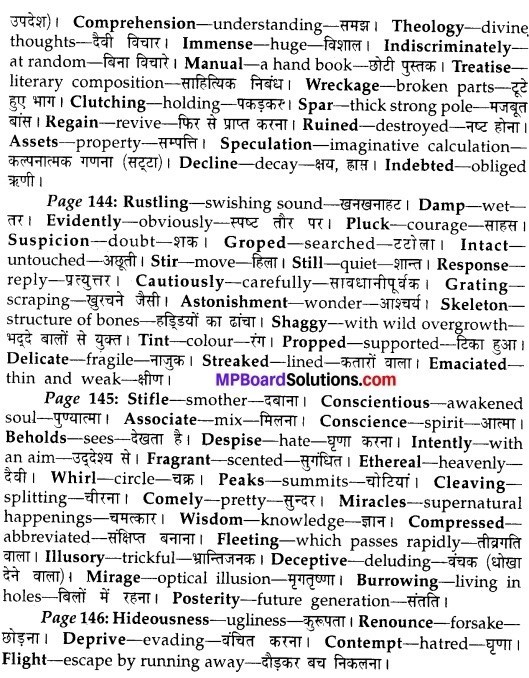
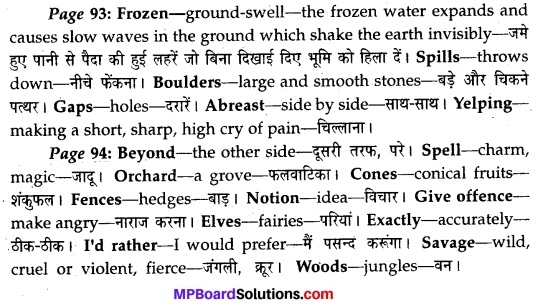
If I Were You Word-Meanings

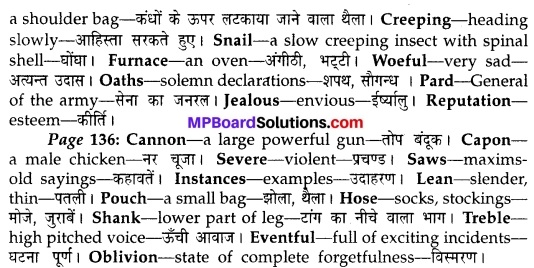
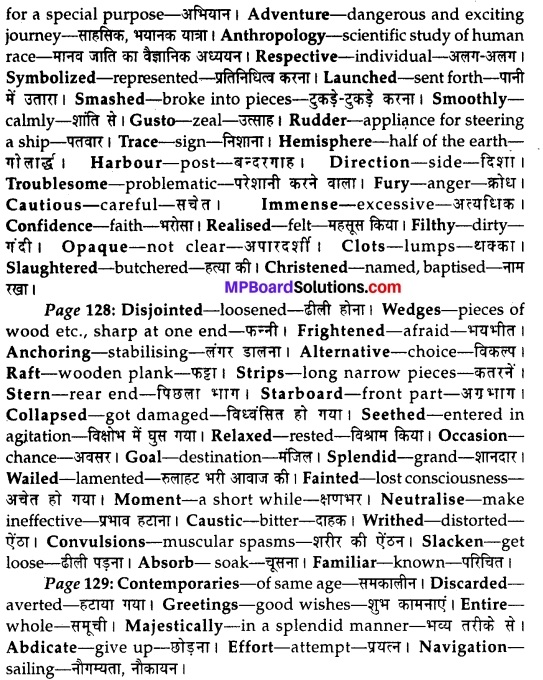
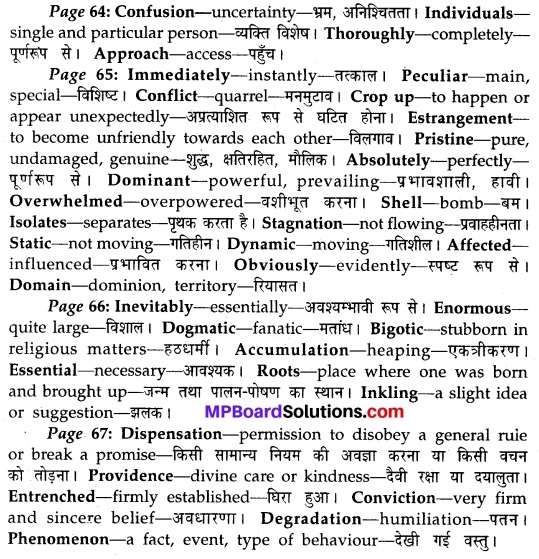
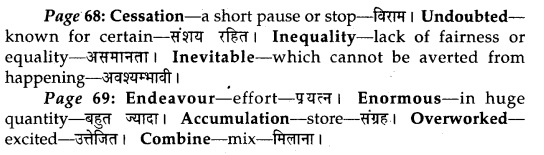
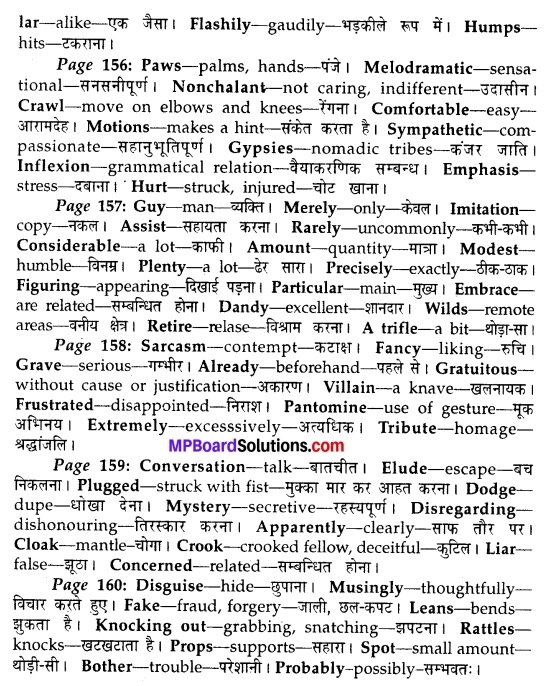
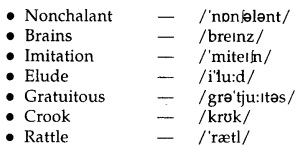
MP Board Class 10th English The Rainbow Solutions Chapter 19 If I Were You 1
MP Board Class 10th English The Rainbow Solutions Chapter 19 If I Were You 2

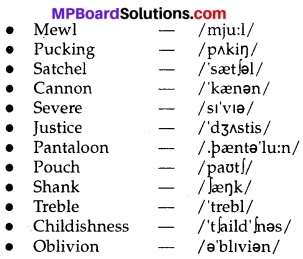
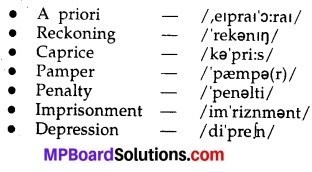
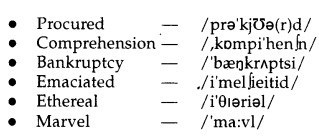
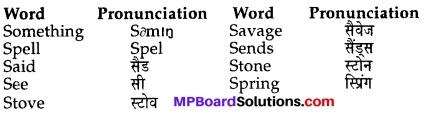
If I Were You Some Important Pronunciations

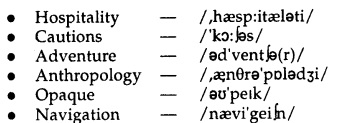
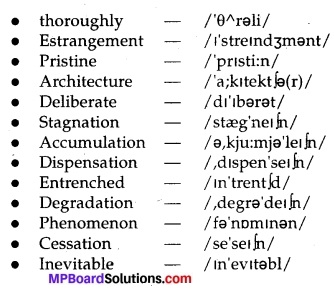
MP Board Class 10th English The Rainbow Solutions Chapter 19 If I Were You 3
MP Board Class 10th English The Rainbow Solutions Chapter 19 If I Were You 4

Hope that the above shaped information regarding the Madhya Pradesh Board Solutions for 10th English Chapter 19 If I Were You Questions and Answers is useful for making your preparation effective. View our website regularly to get other subjects solutions.
MP Board Class 10th English The Rainbow Solutions Chapter 18 The Bridge Builder

Are you seeking for the Madhya Pradesh Board Solutions 10th English Chapter 18 The Bridge Builder Questions and Answers PDF? If yes, then read this entire page. Here, we are giving a direct link to download MP Board Class 10th English Solutions Questions and Answers PDF which contains the chapter wise questions, solutions, and grammar topics. You can also get the shortcuts to solve the grammar related questions on this page.

MP Board Class 10th English The Rainbow Solutions Chapter 18 The Bridge Builder (Will Allen Dromgoole)

For the sake of students we have gathered the complete 10th English Chapter 18 The Bridge Builder Questions and Answers can provided in pdf Pattern. Refer the chapter wise MP Board Class 10th English Solutions Questions and Answers Topics and start the preparation. You can estimate the importance of each chapter, find important English grammar concepts which are having more weightage. Concentrate on the important grammar topics from Madhya Pradesh Board Solutions for 10th English Chapter 18 The Bridge Builder Questions and Answers PDF, prepare well for the exam.

The Bridge Builder Textbook Exercises

The Bridge Builder Vocabulary

Question I.
Note down the different meanings of the word ‘Bridg& in your notebook and use them in your own sentences.
Answer:

  1. A structure of wood, concrete etc. There is a bridge on the river.
  2. Connection, Cultural Uniformity is a way of building bridges between nations
  3. Raised platform on a ship. Arrange some chairs on the bridge of the ship.
  4. l-lard upper part of the nose. The spectacles do not fit my bridge.
  5. A movable piece of wood on a violin – stretch the string over the bridge of the violin
  6. A device for firing teeth. Fix the denture with the bridge.

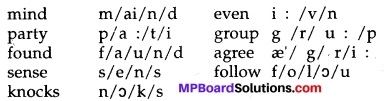
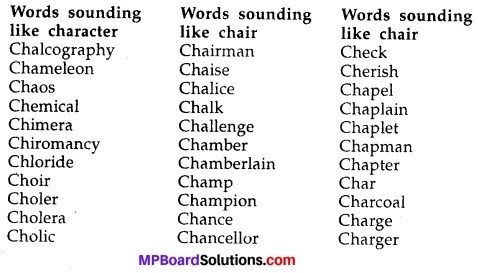
II. Words beginning with ‘ch..’ may have different sounds In pronunciation, e.g., character and chair. Make a list of such words,
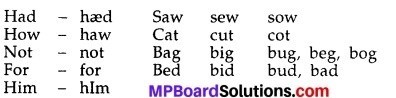
MP Board Class 10th English The Rainbow Solutions Chapter 18 The Bridge Builder 1
MP Board Class 10th English The Rainbow Solutions Chapter 18 The Bridge Builder 2

Comprehension

A. Answer the following questions in about 25 words.

Question 1.
To what did the old man come on the highway and what did he do in the twilight?
Answer:
The old man was a pilgrim. He was travelling on the highway to reach some place. He came to a chasm. He crossed the chasm in the twilight dim.

Question 2.
What did the old man do when he reached safely on the other side of the chasm and why did he do so?
Answer:
The old man crossed the chasm safely. He reached the other side of the chasm. He built a bridge and spanned the tide. He did it for the sake of a young man who would follow him then.

MP Board Solutions

Question 3.
What did the old man’s fellow pilgrim tell him about his attempt at building a bridge across the chasm?
Answer:
The old man’s fellow pilgrim called his labour futile. His journey would end that evening. He would never pass that way again. Therefore, his attempt at building a bridge across the chasm would be of no use to him.

Question 4.
What did the oldman tell his fellow pilgrim?
Answer:
The old man told his fellow pilgrim that a youth was following him. While travelling in the twilight he might slip his feet and fall into the pit. Therefore, he was building the bridge for his safety.

B. Answer the following questions in about 50 words.

Question 1.
What is the moral, conveyed by ‘The Bridge Builder’?
Answer:
‘The Bridge Builder conveys the following morals:

  1. Do good and forget.
  2. Help others and you will be helped.
  3. Be generous and helpful even to the strangers.
  4. Don’t be selfish.
  5. Always act for the benefit of humanity.
  6. Be humane.
  7. Always adopt a helpful attitude towards others.
  8. Do unto others as you would be done by.
  9. Never be miserly in helping others.
  10. Develop your concern about the safety and welfare of others.

MP Board Solutions

Question 2.
Explain: The old man crossed in the twilight dim;
The sullen stream had no fears for him;
But he turned, when safe on the other side,
And built a bridge to span the tide.
Answer:

  1. The old man was an experienced pilgrim. He did not mind the presence of the chasm though it was dusky and the light was dim.
  2. The old man was so experienced that he did not mind the presence of the vulgar and wild stream. He passed it fearlessly and safely.
  3. The old man had noticed a pitfall in the sullen stream. He crossed it safely. However, he turned to see how vast, deep and wide it was.
  4. The old man had crossed the chasm. He would never pass that way in future. However, he was not a selfish man. He knew that a young-man was coming behind him. He might fall down into the deep chasm and harm himself. Therefore, he built a bridge to span the tide. Then the young man would also cross it safely.

Speaking Skill

Choose your partner and go ahead with the pair-activity given below:
Mohan—I know it’s not lunch time yet but 1 am really hungry.
Sarah—It’s only eleven and you have already had two coffees since breakfast.
Mohan—Those samosas are still hot. May I have one?
Sarah—Oh, yes, you can, but it’s already served to other friends.
Mohan—It’s not late yet. I can join them.
Sarah—Yes, you still have a choice.
Mohan—They have not finished it yet.
Sarah—They are slow eaters they are still having their snacks.
Specially notice the use of yet, still and already. Practise the conversation with the help of your partner. Switch over the role and practise more.
Answer:
Nikunj—You are not yet ready and the bus driver is sounding the horn.
Mukul—I have already sent him the message to wait for me just for two minutes.
Nikunj—There is still one seat vacant in the bus.
Mukul—Oh no, it is already reserved for a senior citizen.
Nikunj—It is not late yet. I can attend the meeting.
Mukul—Yes, you still have your option.
Nikunj—They have not got degrees yet.
Mukul—They are slow readers. They are still preparing for the test.
Switch over the role and prectise further yourselves.

Writing Skill

Question 1.
Suppose you meet a stranger who needs your help. Will you help him and how far? (50 words)
Answer:
Strange are the ways of the world. Some strangers exploit the situation and cause harm to the helper. If you give shelter to a person in your house for the night he might injure and rob you. If you give a lift to a stranger, he might land you in trouble. Some motor cyclists enquire about some addresses and speed away with the chains, necklaces and earrings. If I meet a stranger who needs my help, I shall keep him at an arm’s distance. I shall only help him to the extent that he does not endanger my safety.

MP Board Solutions

Question 2.
What is the importance of a role model in life? Who is your role model and why? (150 words)
Answer:
A role model is a person who may be taken as an example to be copied. A role model plays a vital role in one’s life. He directs, guides and channelizes one’s course of life. My grandfather is my role model. He was a successful teacher before his retirement. He has an appreciable command on English, Hindi, Urdu and Sanskrit. His ideas serve as a source of inspiration to me. He has authored many books.

His simple living, high thinking, magnetic personality and noble sentiments have made me his fan. He is always cheerful and has an optimistic outlook on life. He is a renowned scholar and eloquent speaker. He has contributed a lot in my all round development. He has taught me the value of work, discipline and character and how to make the best use of time by doing the maximum in minimum time. He has taught me the art of living by facing all odds in life.

Think It Over

1 . Where the vision is one year, cultivate flowers.
2. Where the vision is ten years, cultivate trees.
3. Where the vision is eternity, cultivate people.
Think and elaborate.
Answer:
We make provision keeping the time factor in view. If we intend to travel for a day we travel light. We take many items with us if we travel for a longer period. Similarly, we take all the items of household and other requirements if we settle somewhere for years. We develop the friendship with our neighbours and others if we intend to live at some place forever. Flowers grow in an year and trees start giving fruits and shade in a decade. Friends are needed during life and even after death. A circle of friends and companions is the life long need of a man. He who wins others’ hearts remains victorious in life.

MP Board Solutions

Albert Einstein said, “Try not to be a man of success but rather try to be a man of value..”
Who makes society more livable? Men of success or men of value? Ponder and pen your thought.
Answer:
Some people achieve success by fraud and fraudulent means. Such success is not praiseworthy. Gandhiji was of the opinion that both means and ends should be good. The cruel emperors seek victory by killing innocent people. That victory is not creditable. Ashok learnt a bitter lesson. He noticed the defeat of his morals in his victory in war. Failures are not the curses of fate. Sincere people meet failure after failure but they never lose their values. Men of value make society more valuable. Gandhiji grabbed freedom from the cruel rulers by virtue of the weapons of truth and non-violence. Sincerity, truth and courage make one a man of value.

Things To Do

Collect information about great personalities of the following fields:
1. Science and technology
2. Social reforms
3. Sports and games
4. World peace and environment.
Collect photographs of those greatmen if possible, and keep the record as a project work.
Answer:
For self-attempt.

The Bridge Builder Additional Important Questions

A. Read the stanzas and answer the questions that follow:

1. The old man crossed in the tunlight dim;
The sullen stream had no fears for him
But he turned, when safe on the other side,
And built a bridge to span the tide. (Page 151)

Questions:
(a) These lines have been taken from the poem
(i) To the Cuckoo
(ii) The Bridge Builder
(ii) If
(iv) Gitanjali
Answer:
(ii) The Bridge Builder

(b) The word used for ‘a device that connects two sides of road over a river’ in the above lines is
(i) bridge
(ii) stream
(iii) tide
(iv) side
Answer:
(i) bridge

(c) What did the old man cross?
Answer:
The old man crossed the vast, deep and wide chasm.

2. The builder lifted his old ‘gray head:
“Good friend, the path I have come,” he said,
“There folloioeth after me today
A youth, whose feet must pass this way. (Page 152)

Questions:
(a) The poet of these lines is
(i) William Shakespeare
(ii) John Keats
(iii) William Wordsworth
(iv) Will Allen Dromgoole
Answer:
(iv) Will Allen Dromgoole

MP Board Solutions

(b) The word used for ‘one who builds something’ in the above extract is
(i) builder
(ii) friend
(iii) youth
(iv) feet
Answer:
(i) builder

(c) Who is addressed to as ‘good friend’?
Answer:
The fellow pilgrim is addressed to as good friend.

I. Match the following:
1. An old man (was) – (a) in the evening
2. He came to a chasm – (b) through the vast, deep and wide chasm
3. A sullen tide was flowing – (c) the fair haired youth
4. The old man built a – (d) going a lone highway
5. The chasm could be a – (e) bridge to span the tide, pitfall for
Ans.
1. (d), 2. (a), 3. (b), 4. (e), 5. (c).

II. Pick up the correct choice:
(i) ‘The Bridge Builder’ is written by:
A.Walter Scott
B. John Dryden
C. Will Allen Dromgoole
D. Matthew Arnold
Answer:
C. Will Allen Dromgoole

(ii) A. An old man, going ………. (alone/a lone) highway.
B. Through which was ………. (blowing/flowing) a sullen tide.
C. Your ………… (journey/voyage) will end with the ending day.
D. Good friend, I am ………… (raising/building) the bridge for him.
Answer:
A. a lone
B. flowing
C. journey
D. building.

III. Write ‘True’ or ‘False’:
1. An old man reached a chasm in the evening.
2. The chasm was shallow and narrow.
3. The sullen stream had no fears for the old man.
4. A fellow pilgrim asked the old man why he was building the bridge.
5. The old man replied that he was building the bridge because he might pass that way again.
Answer:

  1. True
  2. False
  3. True
  4. True
  5. False.

IV. Fill in the following blanks:
1. The old man crossed in the ……….. dim.
2. The ……….. stream had no fears for him.
3. You are wasting …………….. with building here.
4. Your journey will end with the ………. day.
5. Why build the ………. at the eventide?
Answer:

  1. twilight
  2. sullen
  3. energy
  4. ending
  5. bridge.

MP Board Solutions

B. Short Answer Type Questions (In about 25 words)

Question 1.
What is the world of today replete with?
Answer:
The world of today is called the Kaliyug. Most of the people are mean, greedy, of loose morals and insincere. They are after grinding their own axes by hook or by crook. They are least concerned with others’ weal, woe or welfare.

Question 2.
How was the old pilgrim different from his fellow pilgrim?
Answer:
The old pilgrim had crossed the chasm safely. But he was concerned for the safety of a young and inexperienced youth who was following him. So, he built a bridge over the chasm for his safety. The fellow passenger was of individualistic views. He asked the old man not to waste his energy in building the bridge.

Question 3.
How was the old man’s action different from the actions of the people in general?
Answer:
The old man had built a bridge over a vast, deep and wide chasm. His journey had ended and he would never again pass that way. It was quite an unselfish act. The people in general have no concern for the sufferings of others. They sometimes dig pits for others.

Question 4.
How can we call ‘The Bridge Builder’ a beautiful poem?
Answer:
‘The Bridge Builder’ is a beautiful poem from all angles. It has the rhyming scheme a b throughout the poem. Its theme is noble. It has a religious and moral content. It tells us about the utility of selfless labour. It reveals the diverse nature of two pilgrims.

C. Long Answer Type Question (In about 50 words)

Question 1.
Give the substance of the poem ‘The Bridge Builder’.
Answer:
‘The Bridge Builder’ is a story in rhyme. It narrates the story of an old man. He had crossed a vast, deep and wide chasm fearlessly. He would never come back on that path again. But he was concerned about the safety of a young man. The sullen stream might prove a pitfall for the inexperienced traveller. A fellow pilgrim advised him not to waste his energy. He did not heed to his advice and achieved his objective. We need more people like the old gentleman.

MP Board Solutions

The Bridge Builder Summary in English

An old man was going alone on the highway. In the evening he crossed a vast, deep and wide chasm fearlessly and safely. But he was concerned about the safety of a young and inexperienced youth who was following. He suspected that the chosen path could prove a pitfall for the young traveller. So he built a bridge and spanned the tide.

 The Bridge Builder Summary in Hindi

एक वृद्ध पुरुष हाईवे पर जा रहा था। शाम को उसने एक विशाल, गहरे और चौड़े, खुले नाले को निडर होकर सुरक्षित पार किया। लेकिन वह एक जवान और अनुभवहीन पुरुष, जो उसके पीछे आ रहा था, के लिए चिंतित हो उठा। उसे शंका हई कि नाला उस जवान यात्री के लिए घातक सिद्ध हो सकता है। इसलिए उसने एक पुल बनाकर ज्वार को रोक दिया।

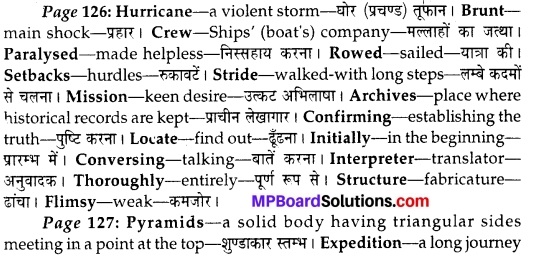
The Bridge Builder Word-Meanings

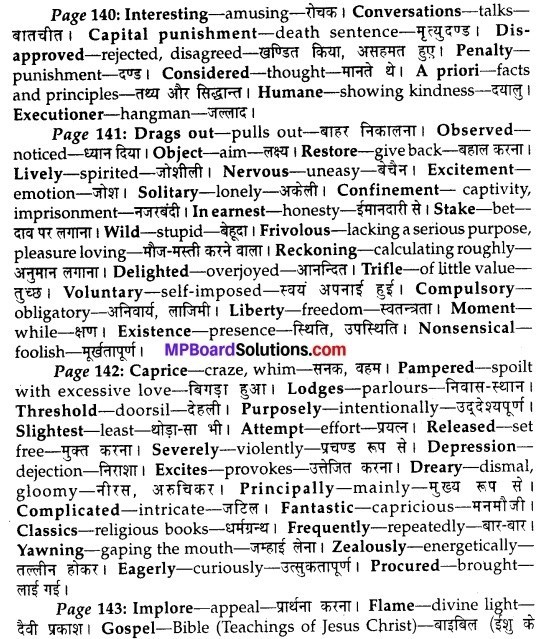
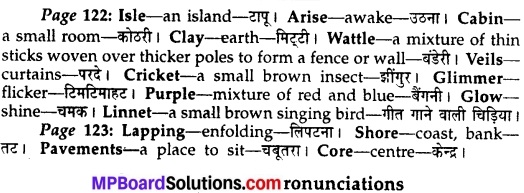
MP Board Class 10th English The Rainbow Solutions Chapter 18 The Bridge Builder 3

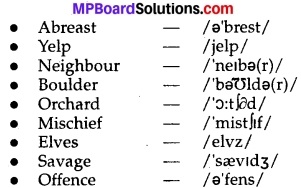
Some Important Pronunciations

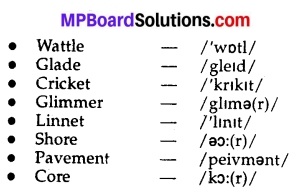
MP Board Class 10th English The Rainbow Solutions Chapter 18 The Bridge Builder 4

Hope that the above shaped information regarding the Madhya Pradesh Board Solutions for 10th English Chapter 18 The Bridge Builder Questions and Answers is useful for making your preparation effective. View our website regularly to get other subjects solutions.
MP Board Class 10th English The Rainbow Solutions Chapter 16 All the World’s a Stage

Are you seeking for the Madhya Pradesh Board Solutions 10th English Chapter 16 All the World’s a Stage Questions and Answers PDF? If yes, then read this entire page. Here, we are giving a direct link to download MP Board Class 10th English Solutions Questions and Answers PDF which contains the chapter wise questions, solutions, and grammar topics. You can also get the shortcuts to solve the grammar related questions on this page.

MP Board Class 10th English The Rainbow Solutions Chapter 16 All the World’s a Stage (William Shakespeare)

For the sake of students we have gathered the complete 10th English Chapter 16 All the World’s a Stage Questions and Answers can provided in pdf Pattern. Refer the chapter wise MP Board Class 10th English Solutions Questions and Answers Topics and start the preparation. You can estimate the importance of each chapter, find important English grammar concepts which are having more weightage. Concentrate on the important grammar topics from Madhya Pradesh Board Solutions for 10th English Chapter 16 All the World’s a Stage Questions and Answers PDF, prepare well for the exam.

All the World’s a Stage Textbook Exercises

All the World’s a Stage Vocabulary

I. Find single words in the poem which have the meanings given below:

1. a very young child, one who has not learnt to speak or walk.
2. an apparatus in a factory, in which metals and other substances are heated to very high temperature in an enclosed space.
3. full of interesting or exciting events.
4. the raised floor on which plays are performed in a theatre.
5. unsuitable for an adult.
Answer:

  1. infant
  2. furnace
  3. eventful
  4. stage
  5. youthful.

II. What’s the meaning of the word ‘players’ in the poem? Explain in your own words.
Answer:
The word ‘players’ in the poem means ‘actors’. As the actors play their parts on a dramatic/theatrical stage, in the same manner, human beings play their different roles in different ages of their lives.

Comprehension

A. Answer the following questions in about 25 words.
Question 1.
Explain:

All the world’s a stage,
And all the men and women merely players:
They have their exits and their entrances;
And one man in his time plays many parts,
His acts being seven ages.
Answer:
Shakespeare compares the world to a stage. Both men and women take birth and die. It means they come on the stage of life and play their parts like actors. Every man has to play different parts according to his span of life. The full life span is divided into seven ages.

Question 2.
Why does the poet compare the school boy to a snail?
Answer:
A snail is a type of small soft animal usually with a hard round shell on its back, which moves very slowly. The school boy is also soft and delicate. He has to carry his satchel to school. He is not willing to go to school. Therefore, he walks slowly like a snail.

Question 3.
How does the soldier play his part on the stage of the world?
Answer:
The soldier is full of strange oaths. He has a long beard like the General of the army. He is honour seeking. He does not mind quarrelling. He does not mind going into the mouth of the cannon to achieve the short living fame.

Question 4.
How does the justice act out his part on the stage of the world?
Answer:
The justice is round bellied as he has fed on male chickens. He has severe looks. He plays his part on the stage of life successfully, using wise sayings and modern examples.

Question 5.
Why does the poet call man’s last age as “second childishness and mere oblivion”?
Answer:
The old man becomes lean and weak. His manly voice gushes out like a whistle. He starts limping. He becomes childish and forgetful. He loses all his senses. He loses his digestive power but longs for youthful items. His memory too fails. His tastes and demands also become childish.

B. Answer the following questions in about 50 words.

Question 1.
“This poem is pictorial in effect as it draws the seven parts played by man on the stage of the world with extraordinary clarity and vivid force.” Explain.”
Answer:
The poem ‘All the World’s a Stage’ gives pictorial description of seven stages in a man’s life. He enters the world as an infant who keeps crying. Then he starts going to school unwillingly. As a lover he sings woeful songs. As a soldier he desires to earn honour. As a judge he gives wise judgments. Then he becomes lean and thin but his voice is still manly. In the last stage he becomes childish and forgetful. He loses all his senses. He becomes helpless.

Question 2.
“The portraits of the soldier and the magistrate are quite satirical in this poem.” Comment on the above statement.
Answer:
The soldier is full of silly and strange oaths. He shows himself off by keeping beards like a general. He picks up a quarrel to seek momentary fame. The justice becomes round bellied by feeding on male chickens. He has severe eyes. He is full of wise sayings. Both of these portraits are quite satirical. Instead of fighting in war, the soldier invites quarrels at all places. The justice has great wisdom, yet he feeds on male chickens.

Speaking Skill

I. Work in pairs. One of the pair will say the following words from the poem and the other will repeat the same along with the additional words as given in the text.
stage – All the worlds a stage
players – …………………
ages – ………………
nurse’s arms – ……………….
school boy – ………………
oaths – ………………………
sans everything – ………………………
Answer:
stage – All the world’s a stage.
players – And all the men and women merely players.
ages – His acts being seven ages.
nurse’s arms – Mewling and puking in the nurse’s arms.
school boy – And then the whining school boy.
oaths – Full of strange oaths.
sans everything – Sans teeth, sans eyes, sans taste, sans everything.

II. You have been chosen by your dramatics teacher to prepare the costumes and make up for staging a playlet on. ‘The Seven Ages of Man.’ With the help of ideas given in the poem prepare a list of instructions for the costume designer and make up artist for creating the characters of your show.
Answer:
The artist will be advised to make different types of costumes suiting different ages. He will design a blue frock/baby suit for the infant. Then he will design a school uniform of a student. Then he will sketch a model of a love lost lover. Then a soldier in military dress. Then the justice in his posh dress. Then a man with loose pantaloons and old socks. Then he will design an old man in white dress.

Writing Skill

Question 1.
Paraphrase the extract “All the world’s a stage”. (50 words)
Answer:
All the men and women are merely players on the world’s
stage. They come on the stage, play their parts and disappear. Every man plays many different parts during his life. He cries and vomits in the nurse’s arms as an infant. He goes to school unwillingly. As a lover he sighs like a furnace and composes poems on his mistress’s eyebrows. As a soldier he is quick in picking up a quarrel. He is not afraid even of the gun. As a judge he imparts wise justice. In his old age he becomes weak. His senses do not support him. He becomes childish and oblivious.

Question 2.
Write a paragraph on “Shakespeare as a great literary artist”. (150 words)
Answer:
Shakespeare has dealt with all aspects of human life in all its complexity and variety. He has touched all elements of human experience and all segments of human sensibility. Shakespeare was a versatile genius. He wrote tragedies, comedies, tragicomedies, poems and sonnets. His mastery over natural scenes is beyond question. He has a keen insight into human nature. Shakespeare was a great literary artist. He was primarily concerned not with postulating theories of life but with the stuff of life itself. He was quite a rich and imaginative poet. He has touched every mood of graceful sentiment. He is a supreme poet in an age of great poetry. His description about the primal things as love, hate, hope, despair, courage, endurance etc. is very real. He has magical power over words. He is a universal literary gem of all time.

Think It Over

Question 1.
For all your days prepare and meet them over alike,
When you are the anvil, bear.
When you are the hammer, strike.
Now ponder and pen your thought in two sentences of your own.
Answer:
Do your assigned duty earnestly for no work is small. Never shirk your duty. Do your duty considering it as the worship of God.

Question 2.
Henry Ford once said, “Obstacles are those frightful things you see when you take eyes off your goal.” Think it over and confirm the statement with an example.
Answer:
Every job is full of obstacles. Cowards do not start any work for fear of obstacles. The mediocres do not start a work for fear of obstacles. The main reason behind it is that they keep their eyes on impending obstacles. A man of firm determination keeps his eyes on the goal. He does not bother about the obstacles which he will have to face. He will tread the obstacles and achieve his goal in the end.

Things To Do

Question 1.
Convert this poem into a play script. Add your imagination to show traits of different phases of life, such as: childhood, boyhood, adolescence, youth, adulthood, senescence, old age.
Answer:
For self-attempt.

All the World’s a Stage Additional Important Questions

A. Read the passages and answer the questions that follow:

1. At first the infant,
Mewling and puking in the nurse’s arms.
And then the whining school-boy, with his satchel,
And shining morning face, creeping like snail Unwillingly to school. (Page 135)

Questions:
(a) The poem from which the above extract has been taken is
(i) Good Will
(ii) All the World’s a Stage
(iii) To the Cuckoo
(iv) The Bridge Builder
Answer:
(ii) All the World’s a Stage

(b) The one word used for Tittle new born baby’ in the above extract is
(i) school boy
(ii) infant
(iii) snail
(iv) nurse
Answer:
(ii) infant

(c) How does the school boy go to school?
Answer:
The school boy unwillingly goes to school creeping like a snail.

2. Then a soldier,
Full of strange oaths, and bearded like the pard,
Jealous in honour, sudden and quick in quarrel,
Seeking the bubble reputation Even in the cannon’s mouth.

Questions:
(a) The poet of the above lines is
(i) John Keats
(ii) William Wordsworth
(iii) William Shakespeare
(iv) Robert Frost
Answer:
(iii) William Shakespeare

(b) The world for ‘a device for firing’ in the above extract is
(i) cannon
(ii) soldier
(iii) bubble
(iv) pard
Answer:
(i) cannon

(c) What does a man in his third stage quarrel for?
Answer:
A man in his third stage quarrels for seeking bubble reputation.

I. Match the following:
1.. All the world’s – (a) pukes in the nurse’s arms.
2. All the men and women – (b) plays many parts.
3. One man in his time – (c) the bubble reputation.
4. The infant mewls and – (d) (are) merely players.
5. The soldier seeks – (e) a stage.
Answer:
1. (e), 2. (d), 3. (b), 4. (a), 5. (c).

II. Pick up the correct choice.
(i) ‘All the World’s a Stage’ is written by:
(a) William Wordsworth
(b) William Shakespeare
(c) Thomas Gray
(d) John Keats
Answer:
(b) William Shakespeare

(ii) A. All the men and women …………. (only/merely) players.
B. The lover sighs like a …………… (chimney/furnace)
C. The ……………….. (judge/justice) is full of wise saws and modern instances.
D. The old age is second …………… (childhood/childishness) and mere oblivion.
Answer:
A. merely
B. furnace
C. justice
D. childishness.

III. Write ‘True’ or ‘False’:
1. All the men and women have their exits and their entrances.
2. One man in his time plays only one part.
3. The school boy goes willingly to school.
4. The soldier is full of strange oaths and is jealous in honour.
5. One becomes sans everything in ripe old age.
Answer:

  1. True
  2. False
  3. False
  4. True
  5. True.

IV. Fill up the following blanks:
1. His acts being ……… ages.
2. The soldier is …… and quick in quarrel.
3. The …………. age shifts into the lean and slippered pantaloon.
4. Last scene of all, that ends this strange ……. history.
5. His ………… hose well saved.
Answer:

  1. seven
  2. sudden
  3. sixth
  4. eventful
  5. youthful.

B. Short Answer Type Questions (In about 25 words)

Question 1.
What does an infant do according to the poem?
Answer:
An infant is a very young child. He is normally up to the age of two years. He/She has no understanding. He is fully dependent on his nurse. He keeps on crying with broken voice, whenever he feels hungry. He spills milk and vomits in the nurse’s arms (lap).

Question 2.
How does Shakespeare depict a child?
Answer:
The infant grows into a child. He begins to go to school. He is unwilling to leave the protected environment of his home. He does not find himself confident enough to exercise his own discretion. Therefore, he heads towards the school as slowly as the snail.

Question 3.
How does the lover play his role?
Answer:
Adolescence turns the youth into a lover. Out of passion he sighs like a furnace. Most of the lovers prove failures. Such lovers feel remorseful due to some reason or the other. The main reason is loss/breach of love. It turns him into a maniac and he expresses his torn love in tearful (tragic) songs.

Question 4.
How does the poet sketch the role of a soldier?
Answer:
In the poem, the soldier is compared to a modern day young adult. He thinks less of himself and more of others. He becomes hot headed and gets aroused soon. He is always working towards gaining recognition through short-lived reputation, even at the cost of his life.

Question 5.
How does the poet sketch the role of the justice?
Answer:
Shakespeare is the poet of all ages. His justice can be compared to a modern-day adult. He has acquired wisdom through of various experiences life. He has gained prosperity and social status. He enjoys the finer things of life. He also becomes very attentive of his looks.

C. Long Answer Type Questions (In about 50 words)

Question 1.
How does the poet sketch the old age?
Answer:
Old age is the worst and the most pitiable of all ages. Man in this age begins to lose both his physical and mental charm. He loses his assertiveness and firmness. He also shrinks in stature and personality. He loses his status and becomes a non-entity. Like a child, he becomes dependent on others. He needs constant support. He loses the function of all of his senses. He becomes a physical wreck due to his deformed figure. His life becomes hellish.

Question 2.
Shakespeare was a versatile genius. Justify.
Answer:
Shakespeare wrote tragedies, comedies, tragicomedies, poems and sonnets. He was not of an age but of all times. He was not a man but a phenomenon. He was not an imitator but an instrument of nature. Nature spoke through him. He was never fresh. He dealt with the entire length and breadth of human life and character in all its complexity and variety. He combined various dramatic gifts in a balanced form. His mastery of individual scenes was beyond question. He had a keen insight into human nature. He was the master of human psychology.

All the World’s a Stage Introduction

William Shakespeare compares the world with a stage. Men and women come on this stage, play their parts and die. The poem describes the seven stages in a man’s life.

All the World’s a Stage Summary in English

The poet calls this world a stage. The human beings come and play their parts here.
There are seven stages in a man’s life. In his first stage, the infant cries and vomits in the nurse’s arms. The second stage is that of a school-boy who goes to school unwillingly. On growing up, he enters the third stage. He becomes a lover. He is full of passion for his mistress and composes sad songs. As a soldier, he takes a pledge to dedicate his services to the nation without fear of the enemy’s cannons.

As a judge in his fifth stage, he tries to maintain the dignity and honour of the Chair. He adapts mannerism to show his wisdom. Then he becomes lean and weak in his sixth stage. His strength fails him. His clothes become loose. He fails even to walk steadily. He still retains his manly voice. In the last stage, all of his senses betray him. He enters the stage of the second childishness and forgetfulness. He lives on the mercy of others.

All the World’s a Stage Summary in Hindi

कवि, इस संसार को मंच (स्टेज) कहता है। मानव यहां आकर अपनी भूमिका अदा कर देते हैं। अपनी प्रथम अवस्था में शिशु, रोता रहता है और नर्स की बाजुओं पर (गोद में) उलटी कर देता है। दूसरी अवस्था स्कूली-बालक की है जो अनिच्छा से स्कूल जाता है। तीसरी अवस्था में सयाना (वयस्क) होने पर वह प्रेमी बन जाता है। वह अपनी प्रेमिका (महबूबा) के प्रति कामुकता से भरा रहता है और उसके लिए दुखभरे गीतों की रचना करता है। सैनिक के रूप में वह तोप से भयभीत हुए बिना, राष्ट्र के प्रति अपनी सेवाएँ अर्पित करने की प्रतिज्ञा करता है। यह उसकी चौथी अवस्था

जज के रूप में वह अपनी कुर्सी की मान और मर्यादा को स्थापित रखने का प्रयत्न करता है। अपनी कुशलता दिखाने के लिए वह नैतिक रीतियों को अपनाता है। छठी अवस्था में वह दुबला और कमजोर हो जाता है। उसकी शक्ति क्षीण हो जाती है। उसके कपड़े ढीले हो जाते हैं। वह स्थिर गति से चलने में विफल हो जाता है। परन्त उसकी रौबीली आवाज बरकरार रहती है। उसकी अन्तिम अवस्था में उसकी सभी इन्द्रियां उसे चकमा दे जाती हैं। वह दूसरे शैशव और भुलक्कड़पन की अवस्था में प्रविष्ट हो जाता है। वह दूसरों के रहम पर जीवित रहता है।

All the World’s a Stage Word-Meanings

MP Board Class 10th English The Rainbow Solutions Chapter 16 All the World's a Stage 1
MP Board Class 10th English The Rainbow Solutions Chapter 16 All the World's a Stage 2

All the World’s a Stage Some Important Pronunciations

MP Board Class 10th English The Rainbow Solutions Chapter 16 All the World's a Stage 3

Hope that the above shaped information regarding the Madhya Pradesh Board Solutions for 10th English Chapter 16 All the World’s a Stage Questions and Answers is useful for making your preparation effective. View our website regularly to get other subjects solutions.
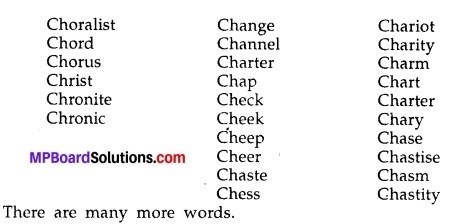
MP Board Class 10th English The Rainbow Solutions Chapter 17 The Bet

Are you seeking for the Madhya Pradesh Board Solutions 10th English Chapter 17 The Bet Questions and Answers PDF? If yes, then read this entire page. Here, we are giving a direct link to download MP Board Class 10th English Solutions Questions and Answers PDF which contains the chapter wise questions, solutions, and grammar topics. You can also get the shortcuts to solve the grammar related questions on this page.

MP Board Class 10th English The Rainbow Solutions Chapter 17 The Bet (Anton Chekhov Pavlovich)

For the sake of students we have gathered the complete 10th English Chapter 17 The Bet Questions and Answers can provided in pdf Pattern. Refer the chapter wise MP Board Class 10th English Solutions Questions and Answers Topics and start the preparation. You can estimate the importance of each chapter, find important English grammar concepts which are having more weightage. Concentrate on the important grammar topics from Madhya Pradesh Board Solutions for 11th English Chapter 17 The Bet Questions and Answers PDF, prepare well for the exam.

The Bet Textbook Exercises

The Bet Vocabulary

I. The word BET Ibet/ has three sounds. The first and the last are consonant sounds and in the middle there is a vowel sound. Go on changing the vowel sound and make a list of meaningful words.
Answer:
MP Board Class 10th English The Rainbow Solutions Chapter 17 The Bet 1

II. Use the word ‘BET’ with different meanings in your own sentences.
Answer:
I cannot bet against his statement.
Let us have a bet.
I bet he arrives late.
I don’t believe in making bets.
He put a bet on a horse.
It seems like a fair bet.

III. Match the words given under A with the meanings given under B.
1. penalty — (a) not good or right
2. wisdom — (b) a total lack of respect
3. contempt — (c) feel extreme dislike and disrespect for
4. despise — (d) a punishment for breaking a law
5. immoral — (e) knowledge gained through learning or experience.
Ans. 1. (d), 2. (e), 3. (b), 4. (C), 5. (a).

Comprehension

A. Answer the following questions in about 25 words.

Question 1.
Why did the majority of the guests disapprove of the death penalty?
Answer:
There were many clever men in the bankers party. Majority of the guests disapproved of the death penalty. They found it out-dated, anti-Christian and immoral. It should be replaced by life imprisonment. It was better to live somehow than not to live at all.

Question 2.
Why did the banker argue that death penalty was more moral and more humane than imprisonment for life?
Answer:
The banker argued that death penalty was more moral and more humane than imprisonment for life. He was of the view that excecution kills instantly. It brings about the end of all vows. Life imprisonment kills a man by degrees (inches). It causes disgrace and humiliation.

Question 3.
On what ground did one of the guests, observe that both capital punishment and imprisonment for life were equally immoral?
Answer:
One of the guests observed that both capital punishment and imprisonment for life were equally immoral. His argument was that the purpose behind both of them was the same. Both of them took away life.

Question 4.
Why did the young lawyer support imprisonment for life?
Answer:
The young lawyer preferred life imprisonment to capital punishment. His argument was ‘It’s better to live somehow than not to live at all. Morever, the state has no right to take away what it cannot give.

Question 5.
Why did the banker feel that the bet was nonsensical and meaningless?
Answer:
The bet between the banker and the lawyers was made in excitement. It was both wild and ridiculous. The banker felt that the bet was nonsensical and meaningless. It was observed without thinking. It had no objective. It could not prove that the death penalty is better or worse than imprisonment for life. It was simply a caprice based on greed and ego.

Question 6.
What did the prisoner suffer from in the first year of his confinement? How do you know about it?
Answer:
In the first year of his confinement, the prisoner suffered severely from loneliness and depression. It is clear because the sounds of the piano could be heard from his lodge day and night. He refused wine and tobacco. He longed to see human faces and hear human voices.

Question 7.
Why did the prisoner refuse wine and tobacco?
Answer:
The prisoner refused wine since it excites desires which are the worst foes of a prisoner. It was most dreary to drink good wine without seeing human faces. He refused tobacco because it spoilt the air of his room.

Question 8.
What did the prisoner read in the last two years?
Answer:
During the last two years, the prisoner read an immense number of books on natural sciences, romantic poetry, chemistry, medicines, novels and treatises on philosophy and theology.

Question 9.
Why did the banker regret his action in the end of the period of agreement?
Answer:
The banker longed to kill the lawyer in order to save himself from bankruptcy. He went to the lawyer’s cell with intentions of killing him. He read the lawyer’s note. He felt a great contempt for himself for reducing the lawyer to a skeleton of bones. He started sobbing and regretted his action in the end of the period of agreement.

Question 10.
Why did the lawyer renounce the two millions of which he once dreamed as paradise?
Answer:
The lawyer considered the amount of two million roubles as paradise in his youth. He suffered a lot in prison. He read a large number of books. They gave him wisdom. He realised that all the worldly riches were worthless, fleeting, illusory and deceptive like a mirage. Therefore he renounced the two millions wilfully.

Question 11.
According to the lawyer, the banker ‘exchanged heaven for earth.’ Why did he think so?
Answer:
According to the lawyer, the banker was a man of ego, selfishness and greed. He had taken the wrong path. He had taken lies for truth and ugliness for beauty. In a nutshell, he had exchanged heaven for earth. He thought so because the banker lacked wisdom and had lost his reason.

Question 12.
What did the lawyer do at last?
Answer:
The lawyer realized that all the worldly riches were worthless, fleeting and deceptive. Therefore, he renounced the two million roubles willfully. He escaped at night five minutes before the fixed period of imprisonment to forgo his claim of money.

B. Answer the following questions in about 50 words.

Question 1.
What were the conditions of the agreement between the banker and the young lawyer? (M.P. Board 2012)
Answer:
The following were the conditions of the agreement between the banker and the young lawyer:

  1. The lawyer would get two million roubles if he remained confined to the solitary cell.
  2. The lawyer would lose his claim on money if he tried to escape even two minutes before the expiry of the agreed period.
  3. He could write letters though (but) not receive them.
  4. He could have books, tobacco, wine etc. as much as he needed.

Question 2.
Sum up some of the activities that the prisoner undertook in the prison.
(M.P. Board 2012)
Answer:
During the first year of imprisonment, the lawyer read books of light character. He also played on piano. During the fifth year he ate, drank and rested on his bed. He often talked angrily to himself. He wrote all notes and tore all the papers up in the morning. He also wept often. In the sixth year he read at random. Sometimes hie would read science but would quickly move to medicine and then to literature. He read the New Testament thoroughly.

Question 3.
Summarise the things that the lawyer learnt from books in prison. (M.P. Board 2009)
Answer:
The lawyer read a large number of books including the New Testament in prison. He learnt the following things from them:

  1. Freedom, life, health and the other so-called blessings of the world are all worthless.
  2. Everything is void, weak, fleeting, delusive and transitory like a mirage.
  3. Life is not worth living. Only one thing remains certain. It is death. Death would soon wipe away everything.

Question 4.
’There is nothing more valuable than wisdom in this world.’ Examine this statement in the light of the message emerging from the story.
Answer:
Both the banker and the lawyer were victims of ego, greed and selfishness. They were not far sighted. They were ignorant of the happenings in future. The lawyer lost his youth and health and the banker became a bankrupt due to his taste for investment in stock exchanges. The lawyer’s dream for leading a heavenly life after winning the bet was sheerly his lack of wisdom. The banker’s desire to kill the lawyer was also based on his ignorance. It justifies the fact that ‘There is nothing more valuable than wisdom in this world.’ Wisdom is another word for forethought. If they had applied even the least wisdom, the result would not have been so tragic.

The Bet Grammar

Study the following sentences:

  1. If I had to choose between the death penalty and imprisonment for life. I would certainly choose the second.
  2. “If you mean that in earnest” said the young man, “I’ ll take a bet.”
  3. If they find not one mistake. I implore you to fire a shot in the garden.
  4. ‘If I had the pluck to carry out my intention.’ thought the old man, ‘suspicion would fall first upon the watchman.’
  5. You would marvel if. owing to strange events of some sorts, frogs and lizards grew on apple and orange trees instead of fruit. The underlined clauses are adverb clauses of condition. They are introduced by the subordinating conjunctions if, unless, whether.

Study the following table:

Dependent clausesMain clauses
with ‘if
V1will + V1
V2would
had + V3would have + V3

Fill in the blanks with the correct tenses of the verbs given in brackets.

1. If she gives me a brush I (paint) my door.
2. If you (come) I would help you.
3. If he (not work) he would fail.
4. He would have started living with you if you (agree).
5. If you (tell) a lie, the teacher would have punished you.
6. You will spoil your health if you (not give up) smoking.
7. If Radha (come) I would have helped her.
8. If a man (permit), he need not care who made the laws of a nation.
9. If I (can) be guilty of the absurdity for recommending to a young man, I should tell him that he could find no safer guide than Dryden.
10. If he worked hard, he (may) become rich.
Answer:

  1. If she gives me a brush I shall paint (paint) my door.
  2. If you come (came) I would help you.
  3. If he does (will/did) not work he would fail.
  4. He would have started living with you if you had agreed (agree).
  5. If you had told (tell) a lie, the teacher would have punished you.
  6. You will spoil your health if you do not give up (not give up) smoking.
  7. If Radha had come (come) I would have helped her.
  8. If a man permits (permit), he need not care who made the laws of a nation.
  9. If I could (can) be guilty of the absurdity for recommending to a young man, I should tell him that he could find no safer guide than Dryden.
  10. If he worked hard, he might (may) become rich.

Speaking Skill

1. During the fifteen years of imprisonment the lawyer emerged as a better human being. He realized that all the worldly wisdom and earthly blessings were hollow, illusive and unreal. He was sure to win two millions but he despised money. On the other hand the banker lost money in gambling and speculation. He became poor. For the sake of money he wanted to kill the lawyer. He proved to be mean and selfish.
Now enact the play in the class with the following characters:

  • the lawyer
  • the banker
  • Four journalists

Answer:
For self-attempt.

II. Enact a scene where the bet was made between the young lawyer and the banker.
Answer:
Classroom activity.

III. Enact a scene where the terms and conditions of the bet were made.
Answer:
Classroom activity.

Writing Skill

Question 1.
Write a letter to your penfriend about which profession would you like to choose as your career after the completion of your studies. (50 words)
Answer:
67/2 (Block C-19)
Rani Laxmibai Nagar
Bhopal
18th July 20xx
Dear Michael
Received your letter today. I have thought about the profession I would like to choose in future and want to tell you about the same. My ambition in life is to become a teacher. Teaching is a noble profession. Teachers are the builders of the nation. They serve the country by turning the students into good citizens. They sow the seeds of discipline and character among their students.
I hope you will appreciate my choice.
With love
Yours sincerely
Hardik Kaushik

Question 2.
Your grandfather always says ’Be wise while choosing what you want to get in your life otherwise you are forced to choose what you get.’ Elaborate this thought for a school magazine article. (150 words)
Answer:
Choice plays a key role at every stage in life. It starts quite early in life and matters throughout life. Those who have no choice are forced to get the items of others’ choice. The children have to wear faded and worn out clothes if they do not have their individual choice. The choice of clothes is the choice of personality and the choice of the stream of education determines one’s career.

It makes or mars one’s life and career. However, it is not easy to make a wise choice. One gets confused. One also finds oneself in dilemma. Choices are made in favour of one option and against a lot of other options. The choice of a career or a partner are important choices. One who makes a good choice leads a heavenly life. Every time, we are called upon to make a choice, a wrong choice may turn our life into a virtual hell. It is an ap>t saying, ‘If you are not wise while choosing what you want to get in your life, you are forced to choose what you get.

Think It Over

Question 1.
Human mind is like’a parachute, it works only when open. Books are the best means of knowing truth and experience of generations that brings about openness of mind. Think and say something about books in a two sentences.
Answer:
Books are the store houses of knowledge. The material comprised in them is most fruitful for us in our day-to-day life. They leave an everlasting effect on us. They mould one’s career. They contain philosophy of life. They convey to us the gospel of hard work and honesty. They inspire us to proceed towards our destination with single minded devotion. Their teachings enrich us and provide us with new directions. They instruct us not to waver or yield to temptations of the worldly attractions.

Question 2.
The geniuses of all the ages and of all lands speak different languages, but the same flame burns in them all. Think and express your view on this ‘flame’ that burns in all.
Answer:
The body is like an engine which is activated by the flame. It burns in all alike. We call it soul. This flame is eternal and immortal. Weapons can not cut it, fire cannot burn it, water can not dampen (moisten) it nor can the wind make it dry. It is beyond expression, thought and decay. It is a wonder that nobody can control this flame. In spite of difference in birthplaces and languages human hearts are alike all over the globe.

Things To Do

Go to a library and talk to the librarian. Try to find out how he classifies books and keeps them in a systematic way.
Collect names of the books of your choice under each classification.
Answer:
For self-attempt.

The Bet Additional Important Questions

A.Read the passages and answer the questions that follow:

1. There had been many clever men, there, and there had been interesting conversations. Among other things they had talked of capital punishment. The majority of the guests, among whom were many journalists and intellectual men, disapproved of the death penalty. They considered that form of punishment out of date, immoral and unsuitable for Christian States. In the opinion of some of them the death penalty ought to be replaced everywhere by imprisonment for life. (Page 140)

Questions:
(a)What was the major topic of talk there?
(b) What did majority of guests disapprove of?
(c) What did they consider?
(d) Find a word from the passage which means ‘punishment’.
Answer:
(a) The major topic of talk was what is better-capital punishment or life-imprisonment.
(b) Majority of guests disapproved of the death penalty.
(c) They considered ‘death penalty’ out of date.
(d) ‘Penalty’

2. And I despise your books, I despise wisdom and the blessings of this world. It is all worthless, fleeting, illusory, and deceptive, like a mirage. You may be proud, wise and fine, but death will wipe you off the face of the earth as though you were no more than mice burrowing under the floor, and your posterity, your history, your immortal geniuses will burn or freeze together with the earthly globe. (Page 145)

Questions:
(a) Find the word from the above passage which means same as ‘deep knowledge’.
(b) Give noun form of ‘proud’.
(c) Find the word which means opposite of ‘life’.
(d) What was the lawyer’s view about the world?
Answer:
(a) wisdom
(b) pride
(c) death
(d) In the lawyer’s view, the world is all worthless, fleeting, illusory and deceptive like a mirage.

I. Match the following:
1. The old banker was – (a) capital punishment
2. A young lawyer – (b) the lawyer in the garden wing of his house
3. They discussed – (c) life imprisonment to death sentence
4. The young lawyer favoured – (d) was also at the banker’s party
5. The banker locked up – (e) walking in his study-room.
Ans.
1. (e), 2. (d), 3. (a), 4. (c), 5. (b).

II. Pick up the correct choice:
(i) ‘The Bet’ is written by:
A. M.K. Gandhi
B. Pt. Jawaharlal Nehru
C. Rudyard Kipling
D. Anton Chekhov.
Answer:
D. Anton Chekhov

A. The old banker had given a party ……………… (five/fifteen) years before.
B. The banker said: the death penalty is more ………. (human/humane) than imprisonment for life.
C. To live ………. (somehow/anyhow) is better than not to live at all.
D. You have lost your …………….. (reason/reasoning) and taken the wrong path.
Answer:
A. fifteen
B. humane
C. anyhow
D. reason.

III. Write ‘True’ or ‘False’:
A. The majority of the guests disapproved of imprisonment for life.
B. Capital punishment kills a man at once, but lifelong imprisonment kills him slowly.
C. Both are equally immoral for they both have the same object to take away life.
D. Wine excites the desires and desires are the worst foes of the prisoner.
Answer:
A. False
B. True
C. True
D. True.

IV. Fill in the following blanks:
1. ‘I don’t agree with you’, said their …………… the banker.
2. The ……………. is not God.
3. ‘Think better of it, young man,………… there is still time.
4. Nothing could be more ………… than drinking good wine and seeing no one.
5. The one means of being saved from ………… and disgrace is the death of that man.
Answer:

  1. host
  2. state
  3. while
  4. dreary
  5. bankruptcy.

B. Short Answer Type Questions (In about 25 words)

Question 1.
Why did the banker recall the party he gave fifteen years ago?
Answer:
The banker was mentally perturbed. He had hosted a grand party fifteen years ago. A young lawyer had made a bet with him in the party. The lawyer staked his freedom and he had staked two millions roubles. The banker recalled the party because the lawyer would gain his freedom the next day. He would lose two millions then.

Question 2.
How did the lawyer spend the second half of the sixth year?
Answer:
The lawyer (prisoner) began to study languages, philosophy and history in the second half of the sixth year. He wrote fluently and correctly in six languages. He wrote the lines to the banker to let the expert read them and confirm their accuracy.

Question 3.
What was the difference in the financial position of the banker in the beginning and end of the lesson?
Answer:
Two millions were a trifle for the banker in the beginning of the story. Gradually his business failed. Before the end of the lesson his financial condition was really very delicate. He had lost his fortune in gambling on the stock exchange. Payment of two million roubles would mean his ruin.

Question 4.
Which crime was the banker about to commit and why? Who would be blamed for it?
Answer:
The banker was short of money. He would become bankrupt if he paid two million roubles to the lawyer. Therefore he intended to kill the lawyer to escape bankruptcy and disgrace. He thought that the watchman would be blamed for the crime.

Question 5.
What did the banker do, the day before the lawyer’s release?
Answer:
The next day was the day of the lawyer’s release. The banker reached the lawyer’s room. He peeped through the window into the lawyer’s cell. He saw a candle burning in the room. He entered the room. He picked up a piece of paper and read its contents.

Question 6.
What did the lawyer look like at the end of fifteen years of imprisonment?
Answer:
The lawyer looked like a skeleton. His skin was drawn tight over his bones. He had long curls and a shaggy beard. His face had become pale. His cheeks were hollow. His back was long and narrow. His hands were thin and delicate. His aged-looking emaciated face was dreadful in looks. He looked quite old.

Question 7.
What were the lawyer’s views about worldly blessings? How did he plan to show his feeling/attitude?
Answer:
According to the lawyer, drinking wine, singing songs, hunting deer and loving women etc., were worldly blessings. The lawyer despised all such things after gaining wisdom. He escaped from the prison five minutes before the expiry of the term of the bet. Willing giving up the stake money shows his attitude/feelings.

Question 8.
Who emerges as a great human being-the lawyer or the banker?
Answer:
In the beginning, the banker was capricious and the lawyer was greedy. Deep studies made the lawyer a wiser and sadder man. He realises the worthlessness of money and gets over his greed. By the time the banker becomes poor. He plans to take the lawyer’s life to save himself from bankruptcy. Thus the lawyer emerges as a great human being.

C. Long Answer Type Questions (In about 50 words)

Question 1.
Capital punishment is more humane than life imprisonment. Discuss.
Answer:
Life has to be lived. We should celebrate life and live it happily and meaningfully. It should not become a perennial torture or burden. Capital punishment means an instant death. It is far more humane and relieving. It does not cause death by inches. Both the capital punishment and life imprisonment are immoral. Life imprisonment brings lifelong disgrace. Therefore, capital punishment is far more humane than life imprisonment. It removes woes, disgraces and disillusionments within a second. It does not prolong man’s sufferings indefinitely like life-imprisonment.

Question 2.
In ‘The Bet’, in fifteen years, the lawyer lost his health and two million roubles but he was a gainer. Do you agree? Explain.
Answer:
The lawyer lost both his health and wealth (two million roubles). In spite of all that we consider him a gainer. He gained ample knowledge. It created in him a sense of bitter disillusionment. He despised not only money, life, health and the other blessings of the world but also freedom. He rose from a greedy lawyer to a saintly figure. By escaping from the prison he saved his own life. The banker must have killed him. It was his biggest gain. Even the banker who had lost his conscience for the sake of money considered himself a loser.

The Bet Introduction

A bet is thrown by a banker. A lawyer accepts it. He agrees to stay alone in a cell for fifteen years and the banker promises to pay him two million roubles. Thus, the banker agrees to stake his money and the lawyer stakes his freedom. The lawyer reads all sorts of books to pass his time during his solitary confinement. He becomes disillusioned in the last. He loses all interest in money. He decides to renounce the lust and just five hours before the fixed time he escapes.

The Bet Summary in English

The old banker was walking in his study-room, one dark autumn night. He was worried. Fifteen years ago, he had entered into a bet with a young lawyer. He had promised to pay the lawyer two million roubles if There was a young lawyer also at the banker’s party. They discussed capital punishment. They called it immoral and against Christianity to take any body’s life. They were in favour of replacing it with life sentence. The banker argued that capital punishment was more humane because it caused instant death. During life imprisonment, one is killed by inches.

The young lawyer favoured life imprisonment to death sentence. He argued that it was better, to live somehow than not to live at all. The banker threw a challenge. The lawyer accepted it. He agreed to stay alone in a cell for fifteen years if the banker promised to pay him two million roubles. The banker agreed to stake his money and the lawyer staked his freedom. Both had the bet out of excitement. The agreement was drawn up.
The banker locked up the lawyer in the garden wing of his house. The lawyer was permitted to read books, write letters/drink and smoke during his confinement. He would neither receive letters nor hear any human voice. He would lose the money if he made any attempt to escape.

The lawyer felt quite lonely and bored during the first year of his imprisonment. He read books of light character and played on the piano. He asked for classics, the next year. He ate, drank and rested in the fifth year. He studied languages and philosophy in the sixth year. He finished six hundred volumes in the next four years. He read the Bible for one year. He studied poetry and sciences during the last two years of his imprisonment.

The banker had fallen short of money. He had undergone heavy losses in business. The next day was the day of the lawyer’s release. The banker could escape bankruptcy only if the lawyer died. At night he went near the lawyer’s room to kill him. The doubt would fall on the watchman who was not found there.

The banker entered the lawyer’s room. The prisoner was like a heap of bones. He was sitting motionless by the table. The banker could kill him with the pillow. It would be treated as a natural death. Just then, the banker caught sight of a note. It said that he (the lawyer) had lost all interest in freedom, life, health and worldy riches. Reading books had granted him wisdom. He had realized that the world was an illusion and death alone was a real thing. So he would escape five minutes before the fixed period of imprisonment. Thus he would forgo his claim of money.

The banker went out sobbing. He began to hate himself. The lawyer kept his word and escaped at night. The banker locked the lawyer’s note in his safe.

The Bet Summary in Hindi

पतझड़ की एक अंधेरी रात में बूढ़ा साहूकार अपने अध्ययन कक्ष में घूम रहा था। वह चिंतित था। पंद्रह वर्ष पहले उसने एक युवा वकील से शर्त लगाई थी। उसने वकील को दो मिलियन देने का वचन दिया था यदि वह पंद्रह वर्ष तक अकेला एक कमरे में ठहरा रहे। यह वकील के कारावास की अन्तिम रात थी। परन्तु उसे धनराशि देने के लिए साहूकार के पास पर्याप्त धन नहीं था। उसने उस पार्टी का ध्यान किया जहाँ शर्त लगाई गई थी

साहूकार की पार्टी में एक युवा वकील भी था। उन्होंने मृत्युदण्ड पर चर्चा की। किसी के जीवन लेने को उन्होंने अनैतिक और ईसाई धर्म के विरुद्ध कहा। वे उसे आजीवन कारावास में बदलने के पक्ष में थे। साहूकार ने तर्क दिया कि मृत्युदण्ड अधिक उदार है क्योंकि उसमें तत्काल मृत्यु हो जाती है। आजीवन कैद, धीरे-धीरे प्राण लेती

युवा वकील ने मृत्यु दण्ड से उम्र कैद को बढ़िया बताया। उसने तर्क दिया कि बिल्कुल जीवित नहीं रहने से किसी प्रकार जीवित रहना अधिक अच्छा है। साहूकार ने चुनौती दी। वकील ने उसे स्वीकार कर लिया। वह पंद्रह वर्ष तक एक कोठरी में अकेले रहने के लिए राजी हो गया यदि साहूकार उसे दो मिलियन देने का वचन देता है। साहूकार अपनी धनराशि को और वकील अपनी स्वतन्त्रता को दाव पर लगाने के लिए सहमत हो गए। दोनों ने जोश में शर्त लगा ली। शर्तनामा तैयार किया गया।

साहूकार ने वकील को अपने भवन के बगीचे में बनी हुई कोठरी में बंद कर दिया। अपने कारावास के दौरान वकील को पुस्तकें पढ़ने, पत्र लिखने, मद्यपान तथा धुम्रपान करने की अनुमति थी। उसे न तो पत्र प्राप्त होंगे और न ही कोई मानवीय आवाज़ सुनाई देगी। यदि उसने भागने का कोई प्रयत्न किया तो उसे पैसे से हाथ धोना पड़ेगा।

अपने कारावास के पहले वर्ष में वकील ने अकेलापन और बोरियत महसूस की। उसने हलकी-फलकी पुस्तकें पढ़ीं और प्यानो बजाता रहा। अगले वर्ष उसने शास्त्रीय ग्रंथों की मांग की। पाँचवें वर्ष वह खाता. पीता और आराम करता रहा। छठे वर्ष उसने भाषाएं और दर्शन शास्त्र पढ़े। अगले चार वर्षों में उसने छह सौ पोथियां पढ़ीं। एक वर्ष तक उसने बाइबिल पढ़ी। कारावास के अपने अन्तिम दो वर्षों में उसने कविता और विभिन्न वैज्ञानिक विषयों का अध्ययन किया।

साहूकार के पास धनराशि की कमी पड़ गई थी। व्यापार में उसे भारी नुकसान हो गया था। अगला दिन, नजरबंदी से वकील के छुटकारे का दिन था। साहूकार दीवालियापन से मुक्त हो सकता था यदि वकील की मृत्यु हो जाती। वकील की हत्या करने के लिए वह रात को उसके कमरे के पास गया। कैदी हड्डियों के ढेर की तरह था। वह मेज के पास सटा हुआ गतिहीन बैठा था। साहूकार उसे तकिया से दबाकर मार सकता था। वह स्वाभाविक मृत्यु मानी जाती।

तभी, वकील की नजर कागज के एक पुर्जे पर पड़ी। उसमें लिखा हुआ था कि वकील की स्वतन्त्रता, जीवन, स्वास्थ्य और सांसारिक वैभव में रुचि समाप्त हो गई है। पुस्तकों के अध्ययन से उसमें ज्ञान उपज गया है। उसे महसूस हो गया था कि संसार मायाजाल है और केवल मृत्यु ही वास्तविकता है। इसलिए वह नजरबंदी की निर्धारित अवधि से पांच मिनट पहले कमरे से बच निकलेगा। इस प्रकार वह अपने पैसों का दावा छोड़ देगा। साहकार सबकता हआ बाहर निकल आया। वह स्वयं से घणा करने लगा। वकील ने अपना वचन निभाया और रात को भाग निकला। साहूकार ने वकील के प्रपत्र (कागज के पुर्जे) को तिजोरी में रख दिया।

The Bet Word-Meanings

MP Board Class 10th English The Rainbow Solutions Chapter 17 The Bet 2
MP Board Class 10th English The Rainbow Solutions Chapter 17 The Bet 3

Some Important Pronunciations
MP Board Class 10th English The Rainbow Solutions Chapter 17 The Bet 4
MP Board Class 10th English The Rainbow Solutions Chapter 17 The Bet 5

Hope that the above shaped information regarding the Madhya Pradesh Board Solutions for 10th English Chapter 17 The Bet Questions and Answers is useful for making your preparation effective. View our website regularly to get other subjects solutions.

MP Board Class 10th English The Rainbow Solutions Chapter 15 Journey of the Atlantic on a Papyrus Boat

Are you seeking for the Madhya Pradesh Board Solutions 10th English Chapter 15 Journey of the Atlantic on a Papyrus Boat Questions and Answers PDF? If yes, then read this entire page. Here, we are giving a direct link to download MP Board Class 10th English Solutions Questions and Answers PDF which contains the chapter wise questions, solutions, and grammar topics. You can also get the shortcuts to solve the grammar related questions on this page.

MP Board Class 10th English The Rainbow Solutions Chapter 15 Journey of the Atlantic on a Papyrus Boat

For the sake of students we have gathered the complete 10th English Chapter 15 Journey of the Atlantic on a Papyrus Boat Questions and Answers can provided in pdf Pattern. Refer the chapter wise MP Board Class 10th English Solutions Questions and Answers Topics and start the preparation. You can estimate the importance of each chapter, find important English grammar concepts which are having more weightage. Concentrate on the important grammar topics from Madhya Pradesh Board Solutions for 10th English Chapter 15 Journey of the Atlantic on a Papyrus Boat Questions and Answers PDF, prepare well for the exam.

Journey of the Atlantic on a Papyrus Boat Textbook Exercises

Journey of the Atlantic on a Papyrus Boat Vocabulary

I. Distinguish between the following pairs of words:
sea – ocean
hurricane – cyclone
boat – ship
venture – adventure
hard – hardly
wave – waive
Answer:

  1. Sea—The salt water that covers most of the earth’s surface and surrounds its continents and islands.
  2. Ocean—Major seas are known as oceans.
  3. Hurricane—A violent storm with a strong fast circular wind in the western Atlantic ocean.
  4. Cyclone—A violent storm in which strong winds move over the ground in a circle.
  5. Boat—A small hollow structure moved by oars for travelling on water.
  6. Ship—A large boat carrying people or goods by sea.
  7. Venture—A project or an undertaking especially a commercial one involving a risk of failure.
  8. Adventure—An unusual, exciting or dangerous experience.
  9. Hard—Firm, stiff or solid and not easily bent or broken.
  10. Hardly—Scarcely, barely.
  11. Wave—A moving ridge of water especially on the sea caused by the wind and tide.
  12. Waive—To choose not to insist on something in a particular case even if one has a legal or official right to do so.

II. Use the following expressions in your own sentences,
red carpet welcome, red alert, Red Cross, Red Indian, red neck.
Answer:

  1. Red carpet welcome—The winning cricket team was given a red carpet welcome.
  2. Red alert—The government has given red alert after the terrorist activities on the border.
  3. Red Cross—The Red Cross is an international organization that takes care of those who suffer due to war or natural calamities.
  4. Red Indian—Red Indians live in certain parts of America.
  5. Red neck—He gave a redneck denial to my proposal.

Comprehension

A. Answer the following questions in about 25 words.

Question 1.
Who was the leader of the crew?
Answer:
There were seven men in the crew. Thor Heyerdahl was the leader of the crew.

Question 2.
What did Thor Heyerdahl want to prove to the world?
Answer:
Thor Heyerdahl had a mission. He wanted to prove to the world how the ancient civilizations had reached ages before Columbus in the jungles of Central America and the mountains of Peru.

Question 3.
Why did Thor Heyerdahl choose the Papyrus boat for his journey?
Answer:
The Egyptians had used the Papyrus boats for sailing on the sea. Heyerdahl had known this fact from the archives. Therefore, he chose the Papyrus boat for his journey.

Question 4.
What advantages did the Papyrus boat have over others?
Answer:
Other boats were not so durable. They had weak structures and were flimsy. The Papyrus boat also looked flimsy on the surface. But it had its own advantages over other boats. It was well structured.

Question 5.
What difficulty did Heyerdahl have with the tribals? How did he overcome it?
Answer:
Thor Heyerdahl located the tribals who excelled at making Papyrus boats. He had to seek permission from the Sultan of Chad to get a boat made by them. The tribals did not understand his language. But a tribal named Abdullah knew French and English languages and acted as his interpreter.

Question 6.
What problems did the crew face on the fourth day of their sail?
Answer:
The crew members sailed smoothly for three days. However, they faced problems on the fourth day of their sail. They lost the track concerning the of time and the hemisphere. They were also unable to contact the Safi harbour on radio. They learnt about the direction by Africa’s big sand dunes.

Question 7.
What happened to Norman Baker on 28th June?
Answer:
28th June was a splendid day for the sailors. All of a sudden, Norman wailed. He was bitten by wild insects. Soon he fainted. Everybody was shocked thinking that a shark had bitten him. Human urine was applied on his sting marks. He writhed in pain and convulsions. Finally he slept. Next day, he felt better.

B. Answer the following questions in about 50 words.

Question 1.
What were the preparations Thor Heyerdahl had done before setting out for his journey?
Answer:
Thor Heyerdahl longed to prove how the ancient Egyptian civilization had reached the jungles of central America and on the mountains of Peru much before Columbus’ discovery. He chose the Papyrus boat for sailing on the sea like the early Egyptians. He located the tribes which made excellent boats. He sought permission from their Sultan. He brought Papyrus trees from Ethiopia. He arranged for a spare rudder oar. They kept chickens and ducks which they could eat on the way. They had wooden wedges and sledge hammers. These were the preparations he had made before setting out for his journey.

Question 2.
Describe the launch of the Papyrus boat.
Answer:
The Papyrus boat was prepared after studying the pictures on the Pyramids. All the facilities were duly completed. The ship was ready for the expedition. Pasha’s wife launched the ship with goat’s milk. It was a symbol of hospitality and good water. She smashed the pitcher against the wooden cradle. She christened the ship ‘Ra’ to honour the Sun God. The Papyrus boat started on its great adventure amidst cheers.

Question 3.
Describe some of the hardships faced by the crew during their journey. How did they manage to overcome them?
Answer:
The crew faced many hardships during the journey. After some days the violent wind broke the rowing oars. They took out the spare rudder oar and fixed it to the ship. One day, they lost track concerning the time and the hemisphere. They found themselves unable to contact the Safi harbour on radio. They sought direction by Africa’s big sand dunes. Sometimes the sailor’s being cautious saved them from the furies of the sea. Once their ship got disjointed. They tightened the mast by hammering wooden wedges around it. On 18th June the high rising waves caused havoc for them. They repaired the. boat and checked the fury of the waves. Heavy rain unnerved them the most. Luckily the waves pushed them rashly toward America. The wind also backed them. One day the boat broke into two parts from the middle. The sailors hammered the boat together.

Question 4.
Describe the last stage of their expedition.
Answer:
9th July, (46th day) was the most dramatic day of the sailors’ entire journey. Their ship broke into two parts from the middle. The seasoned sailors did not lose hearts. They rowed (set) the boat together with a sledge hammer. The sea had tasted their strength. It started raining heavily. The sailors did their best to save the boat. The radio contact became operative. They contacted Heyerdahl’s wife on a steamer. The sailors left the badly damaged Papyrus boat into the sea forever. Finally, they took shelter on the steamer. They were given a red carpet welcome.

Journey of the Atlantic on a Papyrus Boat Grammar
Active and Passive Voice

Study the following sentences:

  1. All the main ropes and chains were broken.
  2. Thor thoroughly checked the power of the boats and was surprised by their strong structure.
  3. The Papyrus boats were prepared after studying the pictures on the pyramids.
  4. The rowing oars were reduced to a matchwood.
  5. The same day the last chicken was slaughtered.
  6. The sailors were frightened for the first time.
  7. Everybody rushed to him and urns shocked for a moment. The above sentences are passive of simple past tense.

A sentence is said to be in passive voice if the person or thing (denoted by the subject in its Active Voice) is said to suffer something from some other person or thing (denoted by the object in its active voice).

See the Table:

TenseRule to formSentence
Simple PresentPassive
is/am/are + past
I am written
Simple Pastparticiple was/were + pastI was written
Simple Futureparticiple
Shall be/will be +
I shall be
past participlewritten……..
Present Continuousis/am/are + beingI am being
+ past participlewritten……..
Past Continuouswas/were + beingI was being
+ past participlewritten……..
Present Perfecthave/has + beenI have been
+ past participlewritten……..
Past Perfecthad + been + pastI had been
participlewritten……..
Future Perfectshall/will have +I shall have
been + past participlebeen written…

Now, put the verbs in brackets into the passive form of simple past. The first one is done for you.

Question 1.
The urine of all other six sailors (put) on the sting marks with a rag dipped into it.
Answer:
The urine of all other six sailors was-put on the sting marks with a rag dipped into it.

Question 2.
He (surprise) to see that the world out side was eager to share their experience.
Answer:
He was surprised to see that the world outside was eager to share their experience.

Question 3.
However, by then the radio contact (make) with Shenandoah.
Answer:
However, by then the radio contact was made with Shenandoah.

Question 4.
Heyerdahl’s wife (see) coming on a steamer with a film photographer.
Answer:
Heyerdahl’s wife was seen coming on a steamer with a film photographer.

Question 5.
One day this second boat majestically (roll) into the sea.
Answer:
One day this second boat was majestically rolled into the sea.

Question 6.
They (give) a red carpet welcome.
Answer:
They were given a red carpet welcome.

Question 7.
Fortunately, the radio set, which (discard) when they were not able to get in touch with the Safi harbour, once again (pick) up by Norman.
Answer:
ortunately, the radioset, which was discarded when they were not able to get in touch with the Safi harbour, was once again picked up by Norman.

Speaking Skill

Complete your answers to the question and speak to your partner. Switch over your role and repeat the conversation.
Raju—Are you going to buy that sweater?
Vicky—I don’t know whether to buy it or not?
Amar—What time do you think we should leave?
Rekha—I am not really sure what time to leave?
Asma—Do you want to do business studies?
Sabir—I am wondering whether to go for business studies or statistics.
Vicky—How much money we should spend on the present?
Asma—I have no idea how much money to spend on it.
Amar—Do you intend to join sports club?
Sabir—I can’t decide whether to join it or not.
Raju—Which route should we take?
Rekha—It is difficult to know which route to take?
Answer:
Raju—Are you going to buy that sweater?
Vicky—I don’t know whether I should buy it or not.
Amar—What time do you think we should leave?
Rekha—I am not really sure what time we should leave.
Asma—Do you want to do business studies?
Sabir—I am wondering whether I should go for business studies or statistics.
Vicky—How much money we should spend on the present?
Asma—I have no idea how much money we should spend on it.
Amar—Do you intend to join sports club?
Sabir—I can’t decide whether I should join it or not.
Raju—Which route should we take? ‘
Rekha—It is difficult to know which route we should take. Switch over your role now and repeat the conversation at your own level.

Writing Skill

Question 1.
Which adventure sport do you like most, and why? (50 words)
Answer:
I am very fond of games. I can play football, volleyball, tennis, cricket and hockey. But I like hockey, the adventure sport, the most. I have been playing hockey since my childhood. We have been the world champion in this national game for over a quarter century. A hockey match lasts for an hour-and a half. One has to defend one’s body from being hit by the ball or the stick. The goal keeper’s role is very important. It has a great educative value. This adventure sport teaches us the importance of discipline, obedience to law, co-operation, team-spirit and sportsmanship. The spectators enjoy this adventure sport the most.

Question 2.
You attended a trekking and hiking expedition to the hills
during summer vacation. Write an article for your school magazine describing your experiences. (150 words)
Answer:
Excursions are important for students. Students can visit any hilly place. Then they can have the first hand information about its surroundings. In trekkings and hikings, students learn many things. They help students to develop the skills of planning and organization. They understand the value of cooperation and mutual help. They learn how to behave with others when they go out. So excursions are very useful.

Our Physical Education teacher took us on a trekking and hiking expedition to Shimla. I packed my woollens, an umbrella and some other necessary items. It was a novel experience for me to travel on foot in hilly regions. The mountain scenery all around was highly enchanting. We spent a week in Shimla. We visited Solan and Pasvanoo and stayed there for two days. There we saw nature in all her grandeur.

The tall mountains seemed to kiss the skies. The snow-covered peaks of the mountains filled my heart with joy. We saw the sun rising from behind the hills. We sat for hours on a rock beside some mountain stream. Its pure crystal water made my heart leap with joy. The terraced fields, lovely flowers and beautiful ferns captivated our heart. The visit to Shimla proved more than a pleasure trip for us.

Think It Over

Question 1.
We need to learn fronfi nature. According to scientists, the bumblebee’s body is too heavy and its wing-span is too small. Aerodynamically the bumblebee cannot fly. But bumblebee doesn’t know that, and it keeps flying. Think how scientifically impossible is simply possible. Can you recall any other example? If yes, write it in your notebook.
Answer:
Nature is a great teacher. The bumblebee’s body is too heavy and its wing-span is too small. Therefore, scientifically, it cannot move through air. But we see the bumblebee flying in the air. In a way, it has flouted the scientific principle and made the impossible, possible. Science has done many wonders. There is a strong possibility that there might be more insects like snails which can fly like a bumblebee in similar conditions.

Question 2.
Generally limitations are self-imposed. Don’t let education put limitations on you. Think and express your view in a few lines.
Answer:
Man is bound by many limitations. He suffers from many complexes and superstitions. He hates the persons belonging to lower castes, creeds and communities. He does not dine with them. He does not smoke with them. He does not like to establish marital relations with them. He does not start his journey on a particular day. He would not get his hair cut or his clothes washed on certain days. He does not go out if somebody sneezes or if he happens to see a widow or some empty pot. He would mind if a cat crosses his path. These limitations are self-imposed by ignorant and backward people. Education does not allow such taboos, limitations and superstitions.

Things To Do

Question 1.
Find pictures of kinds of boats named below and stick them in your project book with their details.
1.liner
2. ferry
3. hovercraft
4. raft
5. catameran
6. speed boat
7. cruiser
8. sailing dinghy
9. rowing boat canoe
Answer:
Class-room activity.

Journey of the Atlantic on a Papyrus Boat Additional Important Questions

A. Read the passages and answer the questions that follow:

1. But, hardly had they sat dozen, it started raining heavily. The whole I’essel bent on one side. The starboard rudder oar collapsed, the water seethed in. They had to throw out both the sea anchors and had nothing to steer with. Above all, there was no light from land or ship. Once again their life depended upon the mercy of the sea. This had an advantage too. The sea waves pushed the boat mercilessly towards America. (Page 128)

Questions:
(a) Find the word from the above passage which means opposite to ‘scantily’.
(b) Find the word from the above passage which means the same as ‘gain’.
(c) Give adjective form of ‘advantage’.
(d) Why did they have nothing to steer with?
Answer:
(a) heavily
(b) advantage
(c) advantageous
(d) They had nothing to steer with as the starboard rudder had collapsed.

2. One day this second boat was majestically rolled into the sea. This boat took them near Barbados. But, on 8th July, just two hundred nautical miles away from Barbados, the sailors had to abdicate this boat. However, they were znctorious, thanks to the common effort of sailors and the well- wishers. They were given a red carpet welcome. The Prime Minister of Barbados himself came to receive the brave adventurers, who had created a history in navigation. (Page 129)

Questions:
(a) Find the word from the passage which has the same meaning as ‘sailing over sea’.
(b) Find the word from the above passage which means opposite to ‘uncommon’.
(c) Give noun form of the word ‘brave’.
(d) Where did the sailors abdicate the second boat?
Answer:
(a) navigation
(b) common
(c) bravery
(d) The sailors abdicated the second boat just 200 nautical miles away from Barbados.

I. Match the following:
1. Thor Heyerdahl – (a) seven members
2. His team was of – (b) on the Atlantic Sea on the night of 8th July, 1969.
3. His boat was made of – (c) knew the French and Persian languages.
4. There was a hurricane – (d) sailed across the Atlantic ocean.
5. A tribal named Abdullah – (e) Papyrus tree.
Answer:
1. (d), 2. (a), 3. (e), 4. (b), 5. (c).

II. Pick up the correct choice:
(i) ‘Journey of the Atlantic on a Papyrus Boat’ is written by :
(a) Hugh Chesterman
(b) Mihir Sen
(c) Thor Heyerdahl
(d) Mulk Raj.
Answer:
(c) Thor Heyerdahl

(ii) (a) Thor Heyerdahl, the leader of the …………….. (gang/crew) did not lose heart.
(b) Initially, Thor had some difficulty in ………… (conversing/convincing).
(c) Thor decided to sail in the Papyrus boat ………….. (through/across) the Atlantic.
(d) Pasha’s wife ……………….. (initiated/launched) the ship with goat’s milk.
Answer:
(a) crew
(b) conversing
(c) across
(d) launched.

III. Write ‘True’ or ‘False’.
1. Six other men joined Thor in his adventure.
2. The sailing was started on 15th May.
3. The journey was full of problems from the very first day.
4. 28th June was a splendid day for the sailors.
5. Abdullah’s words were: “As long as the ropes hold, the boat will float”.
Answer:

  1. True
  2. False
  3. False
  4. True
  5. True.

IV. Fill up the following blanks:
1. The sea piled up and became ……………..
2. They …………….. only when they had crossed 40° west longitude.
3. Now the ………………..were in the last stage of their expedition
4. Thor Heyerdahl was a great ………………
5. The brave adventurers had created a history in …………………
Answer:

  1. fierce
  2. relaxed
  3. sailors
  4. adventurer
  5. navigation.

B. Short-Answer Type Questions (In about 25 words)

Question 1.
How can you say that ‘Journey of the Atlantic on a Papyrus Boat’ is a true story?
Answer:
‘Journey of the Atlantic on a Papyrus Boat’ is the story which describes the adventure of Thor Heyerdahl and his team of seven members. They had sailed on a Papyrus boat across the Atlantic Ocean. They faced many hurdles on the sea but ultimately succeeded in his mission. Hence it is a true story.

Question 2.
What was the startling fadt Heyerdahl had learnt from the archives? What did he do to confirm it?
Answer:
Heyerdahl had learnt from the archives that the Egyptians had earlier used the Papyrus boats for sailing on the sea. It was a startling fact for him. He wanted to confirm it. Therefore, he went to Morocco and Peru. And Chad in central Africa.

Question 3.
How did the tribals help Heyerdahl?
Answer:
The head of the tribe proudly showed Thor Heyerdahl various books.
The other tribal was named Abdullah. He knew French and Persian languages. He acted as the interpreter between Heyerdahl and the tribals.

Question 4.
What did Thor do before he decided to sail across the Atlantic?
Answer:
Thor was doubtful about the power of the Papyrus boat. Therefore, he checked the power of the boats thoroughly. He got fully satisfied that the flimsy looking boats were well structured. Then alone he decided to sail across the Atlantic.

Question 5.
Why did Thor Heyerdahl go to Ethiopia?
Answer:
Thor Heyerdahl wanted to get a Papyrus boat made. He located the tribe who asked him to seek permission from the Sultan of Chad. Thor took the permission from the Sultan. The Papyrus trees no longer grew in Egypt. Therefore he went to Ethiopia to get the Papyrus trees.

Question 6.
How was the ship ready for the expedition?
Answer:
The ship was made of a strong Papyrus tree. It was built on the pattern of the pictures on the Pyramids. It was a 26 feet high boat. It was fully furnished and had provisions for all the facilities. Therefore, it was ready for the expedition.

Question 7.
When did the first attack come to the ship?
Answer:
The ship sailed smoothly for some days. Then the wind started blowing violently. It caused a great attack to the ship. It reduced the rowing oars to a match wood (fragile item). This mishap shook the seven sailors to the skin.

Question  8.
How did the sailors save themselves on the fifth day of their journey?
Answer:
Problems started for the voyagers from the fourth day. The fifth day again proved to be troublesome. The sea turned rough and furious once again. However, the sailors did not get nervous. They got cautious and saved themselves bravely.

Question 9.
How did the sailors find the sea on 10th June?
Answer:
On 10th June, the sailors entered the trans-Atlantic shipping lanes. They found the sea around them filthy. The water was grayish green and opaque. It was covered with clots of oil. They also saw plastic bottle floating among .the waste.

C. Long Answer Type Questions (In about 50 words)

Question 1.
Name the persons who joined Thor Heyerdahl in his adventure.
Answer:
The persons named below joined Thor Heyerdahl in his adventure:

  1. Norman Baker from the U.S. (He was the only real sailor).
  2. Dr. Yuri Alexandrorech Senkevich. (He was a Russian).
  3. Carlo Mauri. (He was a cameraman from Italy).
  4. Dr. Santiago Genoves. (He was from Mexico. He was the editor of an Anthropology book).
  5. George Sourial. (He was an Egyptian. He was a chemical engineer by profession).
  6. Abdullah. (He was the most important member of the crew. He was a tribal who knew French and Persian languages).

Question 2.
Why did 18th June prove as a dramatic day for the sailors?
Answer:
The ship had sailed more than a thousand miles around the north-west coast of Africa. On 18th June, the waves were slipping under the ship (sailors) and lifting them up. However, they were creeping over the stem and pushing them down. The sailors were un-nerved for the first time. It was feared that the ship might break up into two parts. It would not leave them enough time for anchoring the boat. In this way, it proved a dramatic day for the sailors.

Journey of the Atlantic on a Papyrus Boat Introduction

This is a real adventure story of Thor. Heyerdahl and his team of seven members. They managed to sail on a Papyrus boat across the Atlantic ocean. It might be an impossible journey for others but not for Heyerdahl. He made this journey possible only to prove that the ancient Egyptian civilization had reached the jungles of Central, America and on the mountains of Peru, much before Columbus discovery.

Journey of the Atlantic on a Papyrus Boat Summary in English

Thor Heyerdahl had a mission. He wanted to prove how the ancient civilizations had reached the jungles of Central America and the mountains of Peru much before Columbus’s discovery. The Egyptians had chosen the Papyrus boats for sailing on the sea.

Heyerdahl confirmed the fact. He located the tribes who were excellent boat makers. He saw various boats there and was satisfied with them. Then he decided to sail in the Papyrus boat across the Atlantic. He brought the Papyrus tree from Ethiopia and got the boat prepared. Six men joined him in the adventure.

They started sailing on 25th May. The ship was given a ritual send off. The crew faced many hardships. The violent winds and the high-rising waves proved to be their worst enemies. Their rowing oars were broken. They lost trace of the hemisphere. Once their ship got disjointed. At another time it was broken into two parts from the middle.

Heavy rains shook them to the skin when the water entered the ship. The seasoned sailors faced all the furies of the sea heroically. They mended the ship every time it created trouble. In the end they came out with flying colours. They had created a history in navigation.

Summary in Hindi

थोर हैयरडहल की एक अभिलाषा थी। वह यह सिद्ध करना चाहता था कि किस प्रकार प्राचीन सभ्यता, कोलम्बस से यगों पहले सेण्ट्रल अमरीका के वनों में और पेरू के पर्वतों पर पहुंच चुकी थी। मिस्र वालों ने समुद्र पर यात्रा करने के लिए पैपाइरस (वृक्ष) की बनी हुई नौकाएं चुनी थीं।

 हैयरडहल ने इस तथ्य की पुष्टि की। उसने उन कबीलों को ढूँढ़ा जो शानदार नौकाएं बनाते थे। उस ने वहाँ शानदार नौकाएं देखीं और उनसे सन्तुष्ट हो गया। फिर उसने पैपाइरस की नौका द्वारा यात्रा करते हुए अटलांटिक के पार जाने का निर्णय लिया। वह ईथोपिया से पैपाइरस का पेड़ लाया और नौका बनवाई। उसके साहसिक कार्य में छह व्यक्ति शामिल हो गए।

उन्होंने 25 मई को जलीय यात्रा प्रारम्भ की। नौका (जहाज) को संस्कारों के साथ विदा किया गया। जत्थे को बहत-सी कठिनाइयों का सामना करना पड़ा। प्रचण्ड वायु और ऊँची उठती हुई लहरें उनकी कठोर शत्रु सिद्ध हुई। नौका चलाने वाले उनके चप्पू टूट गए। वे गोलार्द्ध की स्थिति को भूल गए। एक बार उन की जहाज के जोड़) ढीले हो गए। एक अन्य समय वह बीच से टूटकर दो टुकड़ों में बंट गई।

भारी वर्षा ने कई बार उनके छक्के छुड़ा दिए जब जहाज के भीतर पानी घुस गया। अनुभवी नाविकों ने बड़ी वीरता से समुद्र की सभी चुनौतियों का मुकाबला किया। जब कभी जलयान में कोई खराबी आती थी वे उसे ठीक कर लेते थे। अन्त में उनको सफलता मिली। वे झण्डा लहराते हुए लौटे। उन्होंने नौकायन में इतिहास की रचना कर दी थी।

Word-Meanings

MP Board Class 10th English The Rainbow Solutions Chapter 15 Journey of the Atlantic on a Papyrus Boat 1
MP Board Class 10th English The Rainbow Solutions Chapter 15 Journey of the Atlantic on a Papyrus Boat 2

Some Important Pronunciations

MP Board Class 10th English The Rainbow Solutions Chapter 15 Journey of the Atlantic on a Papyrus Boat 3
MP Board Class 10th English The Rainbow Solutions Chapter 15 Journey of the Atlantic on a Papyrus Boat 4

Hope that the above shaped information regarding the Madhya Pradesh Board Solutions for 10th English Chapter 15 Journey of the Atlantic on a Papyrus Boat Questions and Answers is useful for making your preparation effective. View our website regularly to get other subjects solutions.
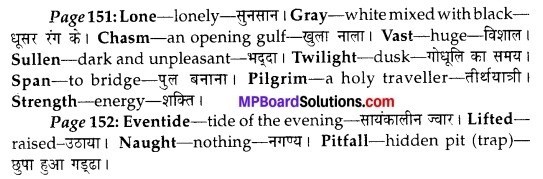
MP Board Class 10th English The Rainbow Solutions Chapter 14 Lake Isle of Innisfree

Are you seeking for the Madhya Pradesh Board Solutions 10th English Chapter 14 Lake Isle of Innisfree Questions and Answers PDF? If yes, then read this entire page. Here, we are giving a direct link to download MP Board Class 10th English Solutions Questions and Answers PDF which contains the chapter wise questions, solutions, and grammar topics. You can also get the shortcuts to solve the grammar related questions on this page.

MP Board Class 10th English The Rainbow Solutions Chapter 14 Lake Isle of Innisfree (W.B. Yeats)

For the sake of students we have gathered the complete 10th English Chapter 14 Lake Isle of Innisfree Questions and Answers can provided in pdf Pattern. Refer the chapter wise MP Board Class 10th English Solutions Questions and Answers Topics and start the preparation. You can estimate the importance of each chapter, find important English grammar concepts which are having more weightage. Concentrate on the important grammar topics from Madhya Pradesh Board Solutions for 10th English Chapter 14 Lake Isle of Innisfree Questions and Answers PDF, prepare well for the exam.

Lake Isle of Innisfree Textbook Exercises

Lake Isle of Innisfree  Vocabulary

I. Distinguish between the following pairs of words:
MP Board Class 10th English The Rainbow Solutions Chapter 14 Lake Isle of Innisfree 1
Answer:
Rows—Boys are standing in rows.
Rose—He rose to greet his uncle.
Be—Be honest
Bee—The bee gathers honey from the flowers.
Peace—India believes in peace and prosperity.
Piece—I gave him a piece of advice.
Veil—Muslim women wear veils.
Well—I am quite well.
Morning—I got up early in the morning.
Mourning—She kept mourning for days when her daughter died.
Shore—The ship has reached the shore.
Sure—I am sure of success.
Heart—Do not take my words to heart.
Hurt—He was hurt while playing football.

II. Describe in your own words the following:
a lake, a river, the sea.
Answer:

  • A lake is a large area of water surrounded by land.
  • A river is a large natural stream of water flowing in a channel.
  • The sea is the salt water that covers most of the earth’s surface and surrounds its continents and islands.

Comprehension
A. Answer the following questions in about 25 words.

Question 1.
What does the poet want to do after going to the lake Isle of Innisfree?
Answer:
After going to the lake Isle of Innisfree, the poet wants to build a small cabin in a secluded place. He will grow vegetables for his own use near his cabin. He will also have a hive for his honey bees.

Question 2.
How does peace come to the poet in the lake Isle of Innisfree?
Answer:
At dawn, the poet will hear cricket’s song. He would hear the song of the linnets flying all around in the evening. He would view the stars glimmering in the sky at midnight. All these beauties of nature would bring him peace of mind.

Question 3.
What impressions do the varying times of the day leave on the poet’s mind in the lake Isle of Innisfree?
Answer:
The varying times of the day leave a deep impression on the poet’s mind. The melodious sounds of small insects like cricket attract the poet in the morning. Several insects flying in the sky in the evening create a lively atmosphere for him. The noon gives a purple coloured brightness for him. It cheers his heart.

Question 4.
How does the poet hear lake water lapping with low sounds by the shore in the lake Isle of Innisfree?
Answer:
Sometimes the poet is far away from Innisfree. He is standing on the roadside or on the pavement. Even then he hears in the deep core of his heart the low sounds of lake water lapping with the shore in the Lake Isle of Innisfree.

Question 5.
How do the lines in each of .the three quatrains of the poem rhyme?
Answer:
In the 1st quatrain ‘Innisfree’ rhymes with ‘honey bee.’ and ‘made’ rhymes with ‘glade.’
In the 2nd quatrain ‘slow’ rhymes with ‘glow’ and ‘sings’ rhymes with ‘wings.’
In the 3rd quatrain ‘day’ rhymes with ‘grey’ and ‘shore’ rhymes with ‘core.’

B. Answer the following questions in about 50 words.

Question 1.
Why does the poet want to go to the lake Isle of Innisfree?
Answer:
The poet is standing on a London pavement. It is a noisy and crowded place. Innisfree is a lovely island. It is situated in a lake. It is a place of great natural beauty. It is free from din and bustle of modern world. It gives peace to the poet’s mind. He finds a world of difference between London and Innisfree. Therefore, he wants to go to the Lake Isle of Innisfree. The sounds of the lake beckon him. He dare not resist their strong and sincere call.

Question 2.
What is the significance of the nine bean rows with which the poet wants to build a hive for the honey-bee in the lake Isle of Innisfee?
Answer:
The poet longs to grow vegetables and plants for his own use. He would grow nine-bean rows. The honey bees will hum loudly all around. Their sweet humming will produce a sweet music. The honey bees build their hives which are like nine-bean rows. The bees will confuse it as their hive and gather honey there. In this way, the poet will enjoy the musical humming of the bees. He would also get honey and vegetables. It would grant his soul satisfaction, charm and peace.

Speaking Skill

I. I will arise and go now, and go to Innisfree,
And a small cabin build there, of clay and ivattles made:
Nine bean-roivs will I have there, a hive for the honeybee,
And live alone in the bee-loud glade.

The poet here dreams of simple unadorned life close to nature on an island. According to him, life in London is full of disgust and boredom. He decides to sail to Innisfree and make for himself a small hut by the side of the Sea. Only in such a heaven the poet can have peace and contentment. Compare and contrast life in the city and life in the country. Discuss with your friends.
Answer:
Life in the city versus life in the country.

Life in the CityLife in the County
City life has numerous attrac­tions and advantages. There are facilities of trade, employment, recreation, education and advanced medical aid. There are glamour, hotels, clubs, cars and of course fashion models. There are different modes of transport and communication. Everything is available in plenty. The life of the people is hectic and hasty. People do not waste time in gossips and quarrels. A big city is like the garden of Eden. But there is pollution every-where in the city.A village is free from the din and noise which damages physical health. The country is slow but steady. People do not suffer from hypertension. There is crowdfree and open atmo­sphere. People live in the lap of nature. Atmosphere is free from air pollution. Fresh air, water, milk and vegetables are in plenty. Life is not showy and artificial. The rural games are healthy. They are simple in mind, speech and action. Rural life is heavenly life.

II. Speak on your recollections of childhood with the help of the following clues:
companions, games, carefree life style, school, old friends and sweet memories
Answer:
I am sixteen years old. I have many recollections of my childhood. I had a number of companions. We used to play kabaddi and football. We had no cares or worries. Our lifestyle was carefree. I used to study in a public school. I used to go to school in the school bus. A few students of my class were my close friends. We used to tease the naughty students. We used to help our friends in studies. We used to bathe in a lake every morning. We went out for the morning walk daily.

Writing Skill

Question 1.
You have been to a sight seeing trip to a lake recently. Make a diary entry of your experiences.
Answer:
18th June, 20xx 10 P.M.
Our class decided to go to Sultanpur lake for a sight seeing trip. We had hired a bus. We reached there at sunrise. We heard the songs of birds. There were a large number of tourists there. We took photos of birds and trees. We splashed water of the lake on one another. We sat on the grass. We took tea and snacks. Then we bathed in the cool water of the lake. We had a cultural programme. Many tourists joined us. We spent four hours there in full joy and pleasure.

Question 2.
‘Nature has a remedy for all’. Elaborate the thought.
Answer:
Nature has a Remedy for all. An apple a day keeps the doctor away is a well known saying. The apples come direct from woods. A morning walk in open spaces makes one healthy. The sick people go to hills and countryside. They regain health. All the herbs are found in natural surroundings. The money-minded persons trade in honey, hides, timber and fuel woods. They get these items direct from forests. All the nutrients, medicines and minerals are provided by nature. Fresh water comes from nature. In short, nature caters to the needs of all. As such, nature has a remedy for all. It is the best healer. It provides us with mental peace and joy.

Think It Over

Question 1.
The person who risks nothing does nothing, has nothing, and is nothing. He may avoid suffering and sorrow. But he cannot learn, feel, change, or grow. Chained by his attitudes he is a slave. He has forfeited his freedom. Only a person who risks is free. Think and write your views on it.
Answer:
Risk can be defined as the probable and potential loss arising out of uncertainties. Uncertainties arise due to changes taking place in the prevailing environment. A person who invests money in banks does not get as much profit like the person who invests in business. He may avoid suffering and sorrow for some time but he will regret forever. Such a person remains static. He fails to get extra benefits. If a country does not take risk in driving away encroachers it would lose both its land and prestige. One who does not enter a river for fear of risk can never go across it. Risks are the stepping stones to success.

Question 2.
A man is a hero, not because he is braver than anyone else, but because he is brave for ten minutes longer. Ponder over it.
Answer:
For self-attempt.

Things To Do

Prepare a project of a historical/educational visit. Take help of the points given below:

  1. peer/group which undertakes the project
  2. selection of the place to be visited and time of the visit
  3. learning activities:
    • the geography of the place
    • the history of the place
    • important people of historical personalities of the place
    • important events connected with the place
  4. guide and counsellor
  5. allotment of job/work’
  6. budget (approximate expenditure)

Answer:
For self-attempt.

Lake Isle of Innisfree Additional Important Questions

A. Read the stanzas and answer the questions that follow:

1.I will arise and go now, and go to Innisfree,
and a small cabin build there, of clay and wattles made:
Nine beanrows will I have there,
a hive for the honey bee,
and live alone in the bee-loud glade.
I shall have some peace there, for peace
comes dropping slow,
dropping from the veils
of the morning to where the cricket sings,
there midnight’s all a glimmer, and noon
a purple glow and evening full of the linnet’s wings. (Page 122) (M.P. Board 2012)

Questions:
(i) Identify the poem and the poet.
(ii) What does the poet mean by ’I will arise’?
(Hi) Why does the poet want to go to Innisfree?
(iv) What does the poet want to do after going to the Lake Isle of Innisfree?
Answers:
(i) The poem is Lake Isle of Innisfree and the poet is WB Yeats.
(ii) The poet means to say that he will build a cabin and live there.
(iii) The poet wants to go there for peace.
(iv) The poet will enjoy peace and bliss of nature.

2. And I shall have some peace there, for peace comes dropping slow,
Dropping from the veils of the morning to where the cricket sings;
There midnight’s all a glimmer, and noon a purple glow
And evening full of the linnet’s wings. (Page 122)

Questions:
(a) The poet of the above stanza is
(i) Robert Frost
(ii) William Wordsworth
(iii) John Keats
(iv) W.B. Yeats

(b) Find the word from the above stanza which is opposite in meaning to ‘midday’.
(c) Find the word from the above stanza which means same as ‘shine’.
(d) Who sings there in the morning?
Answers:
(a) (iv) W.B. Yeats
(b) midnight
(c) glow
(d) A cricket sings there in the morning.

I. Match the following:
1. The poet wants to go – (a) the bees back to
2. His cabin will be of – (b) crickets’ song at dawn
3. He will have a hive for – (c) Innisfree
4. He will hear – (d) beckons him
5. The sound of lake water – (e) clay and thin sticks.
Answer:
1. (c), 2. (e), 3. (a), 4. (b), 5. (d).

II. Pick up the correct choice:
(i) ’Lake Isle of Innisfree’ is composed by:
(a) W.B. Yeats
(b) John Keats
(c) William Wordsworth
(d) Milton.
Answer:
(a) W.B. Yeats

(b) A. And a small – (hut/cabin) build there.
B. And live alone in the – (bee-loud/beloved) glade.
C. There midnight is all a – (glitter/glimmer) and noon a purple glow.
D. I hear it in the – (large/deep) heart’s core.
Answer:
A. cabin
B. bee-loud
C. glimmer
D. deep.

III. Write ‘True’ or ‘False’:
1. Innisfree is a little island in Lough Gill.
2. The poet intends to have twelve bean-rows there.
3. Peace drops there from the veils of the morning to where the circket sings.
4. There the noon is full of linnet’s wings.
5. The poet hears lake water lapping with low sounds by the shore.
Answer:

  1. True
  2. False
  3. True
  4. False
  5. True.

IV. Fill in the following blanks:
1. And a small cabin build there of ……………. and wattles made.
2. And live ………….. in the bee-loud glade.
3. There ……………… is all a glimmer.
4. There evening is full of linnet’s ………..
5. He hears …………. water lapping with low sound.
Answer:

  1. clay
  2. alone
  3. midnight
  4. wings
  5. lake.

B. Short Answer Type Questions (In about 25 words)

Question 1.
What does the poet hear and see in Innisfree? What effect does it have on him?
Answer:
The poet hears cricket’s songs in the dim light of the dawn in Innisfree. He hears the songs of. the linnets flying here and there. He sees the stars glimmering in the sky at midnight. All these beauties of nature
bring peace to the poet’s mind.

Question 2.
What does the poet hear in his ‘heart’s core even when he is far away from Innisfree?
Answer:
The poet was standing on a london pavement. He had spent most of his boyhood in Sligo. He had visited Innisfree many times. He hears the sound of the lake water beating against the shores of the lake. He hears it day and night in his heart.

Question 3.
‘And I shall have some peace there, for peace comes dropping slow Dropping from the veils of the morning to where the cricket sings.” Elaborate the idea contained in these lines.
Answer:
The poet feels that he has been transported to Innisfree. He hears the cricket singing somewhere near him in the twilight of the morning. It is singing songs of a care free life. The poet hopes to get some slow dropping peace by hearing the cricket’s song.

Question 4.
Explain: ‘Bee-loud glade’ and ‘Evenings full of the linnet’s wings’?
Answer:
The honey-bees are humming loudly all around. Their sweet humming is producing sweet music. It brings the picture of lovely glade to our mind. Linnets keep flying all around in the sky in the evenings. They are also producing a sweet music. It brings the picture of lovely evenings to our mind.

C. Long Answer Type Questions (In about 50 words)

Question 1.
The poet W.B. Yeats is greatly inclined towards nature. Justify.
Answer:
The poet visited the Lake Isle of Innisfree many a time in his teens. He lives in London but is fed up with its rat-race. He wants to go back to Innsifree. He will build a small and simple cabin in a secluded place. He will enjoy the sights of birds crickets and linnets and hear their songs. He will enjoy the glimmer of stars at midnight. The purple glow of sun at noon will provide charm to his weary soul. The flowing water of the lake and its low sounds will gladden his heart. This shows that he is greatly inclined towards nature.

Question 2.
What are the ideas contained in the poem ‘The Lake Isle of Innisfree?
Answer:
W.B. Yeats is fed up with the rat-race going on in London. He wants to go back to Innisfree. The old memories of the lake Isle haunt him. He thinks of building a small and simple cabin there. He would grow beans there. He would enjoy the constant working of nature. He would seek peace hearing the songs of crickets and linnets. The natural sights of starry nights and glowing noons will grant his soul satisfaction, fascination and peace. He will feel charmed at the sight of lapping water flowing towards the shore slowly. The ideas of peace, beauty, happiness and satisfaction are contained in this poem.

Introduction

The poet wants to go back to Innisfree, a place devoid of all the fret and fury of the world in turmoil. He longs to spend his life these days in peace. He will be happy there.

Summary in English

The poet wants to go back to Innisfree as soon as possible. He will build a small cabin there with clay and thin sticks. He will grow vegetables (beans) in rows. He will have a hive for the bees. He will live alone in his beloved glade.

The poet hopes to get peace by hearing cricket song at dawn and enjoying the glimmer of stars at midnight. The purple glow of the sun will amuse his weary soul at noon. The song of linnets will provide him with joy in the evenings. He hears the sound of lake water constantly in the core of his heart. It beckons him. He dare not resist the strong call. Therefore, he desires to go there immediately.

Summary in Hindi

कवि यथासम्भव शीघ्र ही वापिस इनिजफ्री जाना चाहता है। वह मिट्टी तथा पतली लकड़ियों से वहाँ एक छोटी कोठरी बनाएगा। वह पंक्तियों में सब्जियाँ (सेम) उगाएगा। वह मधुमक्खियों के लिए छत्ता बनाएगा। वह अपने प्रिय वनीय स्थान में अकेला रहेगा।

कवि को आशा है कि वह प्रातः झींगुरों के गीत सुनकर और आधी रात में सितारों की टिमटिमाहट का आनन्द लेते हुए शान्ति प्राप्त करेगा। दोपहर को सूर्य की बैंगनी चमक उसकी थकी हुई आत्मा को आनन्दित करेगी। शाम को उसे लिनेट चिड़िया का गीत आह्लादित करेगा। वह अपने हृदय के केन्द्र में निरन्तर झील के पानी की कलकल ध्वनि सुनता रहता है। वह उसे पुकारती है। उसमें उसकी सशक्त आवाज का विरोध करने का साहस नहीं है, इसलिए वह तुरन्त वहाँ जाना चाहता है।

Word-Meanings

MP Board Class 10th English The Rainbow Solutions Chapter 14 Lake Isle of Innisfree 2

Some Important Pronunciations

MP Board Class 10th English The Rainbow Solutions Chapter 14 Lake Isle of Innisfree 3

Hope that the above shaped information regarding the Madhya Pradesh Board Solutions for 10th English Chapter 14 Lake Isle of Innisfree Questions and Answers is useful for making your preparation effective. View our website regularly to get other subjects solutions.
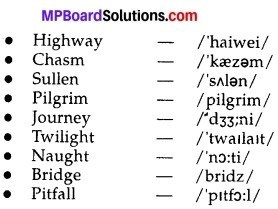
MP Board Class 10th English The Rainbow Solutions Chapter 11 Mending Wall

Are you seeking for the Madhya Pradesh Board Solutions 10th English Chapter 11 Mending Wall Questions and Answers PDF? If yes, then read this entire page. Here, we are giving a direct link to download MP Board Class 10th English Solutions Questions and Answers PDF which contains the chapter wise questions, solutions, and grammar topics. You can also get the shortcuts to solve the grammar related questions on this page.

MP Board Class 10th English The Rainbow Solutions Chapter 11 Mending Wall (Robert Frost)

For the sake of students we have gathered the complete 10th English Chapter 11 Mending Wall Questions and Answers can provided in pdf Pattern. Refer the chapter wise MP Board Class 10th English Solutions Questions and Answers Topics and start the preparation. You can estimate the importance of each chapter, find important English grammar concepts which are having more weightage. Concentrate on the important grammar topics from Madhya Pradesh Board Solutions for 10th English Chapter 11 Mending Wall Questions and Answers PDF, prepare well for the exam.

Mending Wall Textbook Exercises

Mending Wall Vocabulary

Question 1.
What is the meaning of the following words in the poem?
mending, spell, pine, fences, savage.
Answer:
Word – Meaning
Mending — repairing, restoring to a sound state.
Spell — magic, charm.
Pine — trees which yield turpentine.
Fences — hedges, structure of bricks, stones etc. to make partition.
Savage — wild, cruel or violent/fierce, uncivilized and rude.

Question 2.
The word ‘good’ has different meanings in the following sentences. What are they?
(i) A boy from a small town who made good in Mumbai met me yesterday.
(ii) Milk is good for you.
(iii) Take a good look at it.
(iv) Did you have a good time at the party?
(v) We travelled a good distance.
(vi) We must reach the station in good time.
Answer:
(i) settled, (ii) useful, (iii) loving, (iv) nice, (v) great, (vi) before.

Question 3.
The following words begin with the letter ‘s’. How do you
pronounce the following words?
something, spell, said, see, stove, savage, sends, stone, spring.
Answer:
MP Board Class 10th English The Rainbow Solutions Chapter 11 Mending Wall 1

Comprehension

A. Answer the following questions in about 25 words.

Question 1.
Why do hunters make gaps in the wall between the land holdings of the poet and his neighbour?
Answer:
There is a wall between the land holdings of the poet and his neighbour. The hunters keep dogs with them. The dogs start yelping to tell the hunters where the rabbit is hiding. The hunters make gaps in the wall to pull the rabbit out of its hiding places under the wall.

Question 2.
When does the poet find gaps in the wall between his and his neighbour’s land holdings and why does he not find them earlier than that time?
Answer:
The poet finds gaps in the wall between his own and his neighbour’s land holdings during spring when he goes there. Spring season is the normal mending time. He does not find them earlier than that time (spring) because no one had seen or heard the gaps made.

Question 3.
How do the poet and his neighbour set the wall between them once again?
Answer:
The poet and the neighbour meet one day to set the wall. Each of them keeps to his own side of the wall. They walk along the line of the wall. They pick up the flat and round stones fallen to their sides. They balance one stone above the other.

Question 4.
Why does the poet tell his neighbour that they do not need a wall between them and how does his neighbour respond to his statement?
Answer:
There were no cows there to wander into the neighbour’s field and destroy the crop. Therefore, the poet tells his neighbour that they do not need a wall between them (their fields). The neighbour responds to his statement saying good fences make good neighbours.

Question 5.
What does the poet like to know before building a wall and why?
Answer:
The poet feels no need of raising the wall between his land holdings and those of his neighbour’s. Before building a wall he likes to know the following things:
(a) What he was walling in or walling out?
(b) Whom would he offend if the wall is not built?

Question 6.
Explain:
“I could say ‘elves’ to him,
But it’s not elves exactly, and I’d rather he said it for himself.”
Answer:
The poet thinks that ‘elves’ don’t love a wall. Rather they want it pulled down. But the next moment he says, “It is not ‘elves’ exactly.” He is not certain who or what it could be. The poet wishes that like him his neighbour too had no love for walls and fences.

B. Answer the following questions in about 50 words.

Question 1.
“Good fences make good neighbours.” Explain the meaning of this statement in the context of ‘Mending the Wall’.
Answer:
The poet is of modern views. He does not move in the inner darkness of narrow-mindedness. He is open-hearted. However, his neighbour is narrow-minded. He fears that the poet’s apple trees will get across his orchard and eat the cones under his pines. Moreover, the cows may enter his fields and damage the crops. He sticks to his ancestral and traditional views. Twice in the lesson he says, ‘Good fences make good neighbours’. It means he is a savage. He believes that the fences are a sure remedy against quarrels, misgivings, bickerings and mental differences. He does not mind the physical pain and labour in building the fence. No encroachment or trespassing would be possible then.

Question 2.
What nation in regard to building a wall does Robert Frost seek to put into his neighbour’s head and how does his neighbour react to it?
Answer:
Robert Frost seeks to put a notion into his neighbour’s head. It is that there should be no walls where they don’t serve any useful purpose. The frozen-ground-swell spills the stones. Hunters also break down the walls. The poet’s apple trees will never get across his orchard and eat the cones under his neighbour’s pine trees. There were no cows to enter the neighbour’s fields and destroy his crops. The neighbour does not react favourably. He sticks to his decision and says, ’good fences make good neighbours’. Good fences check encroachments and trespassing which are the root causes behind quarrels and fights.

Speaking Skill

Karan and Asma are decorating their classroom. Use the present perfect and speak out the sentences. Work in pairs.
Asma—How is the painting going? Have you (finish)?
Karan—No, I (be + not) painting the ceiling is really difficult,you know.
Asma—You have not (put) enough on.
Karan—I have (hurt) my back. It feels bad.
Asma—Well, I’ll do it. Where have you (put) the brush?
Karan—I don’t know. It has (disappear).I am looking for it, but I can’t find it.
Asma—You are hopeless, aren’t you? I have (paint) two doors.
Karan—I have (clean) all this old paint around the window.It looks much better now, doesn’t it?
Asma—We have (make) some progress, I suppose. Now, where has that brush (go)? Oh, you have (leave) it on the ladder. Look.
Ans.
Asma—How is the painting going? Have you finished it?
Karan—No, I have not. Painting the ceiling is really difficult, you know.
Asma—You have not put enough on.
Karan—I have hurt my back. It feels bad.
Asma—Well, I’ll do it. Where have you put the brush?
Karan—I don’t know. It has disappeared.I am looking for it, but I can’t find it.
Asma—You are hopeless, aren’t you? I have painted two doors.
Karan—I have cleaned all this old paint around the window. It looks much better now, doesn’t it?
Asma—We have made some progress, I suppose. Now, where has that brush gone? Oh, you have left it on the ladder. Look.

Writing Skill

Make a diary entry about your neighbours with their remarkable features.

Question 1.
Write about your neighbours in short. (50 words}
Answer:
My Neighbours—I am lucky that I have good neighbours. I like most of them. They make my life pleasant. They share my joys and sorrows. We have a teacher, a doctor, an electrician, a washerman a postman, a clerk, a cobbler, a carpenter and a painter. They are well trained and skilled in their own trade. They are ever ready to help each other on priority basis and against reasonable and nominal charges. However, I dislike one of my neighbours. He is a bundle of vices. He is of thievish nature. He borrows from all but never repays it. He is both a drunkard and a gambler. He is a man of loose morals.

Question 2.
How can we spread the message of universal love and brotherhood? Write your views. (150 words)
Answer:
Ways of spreading message of universal love and brotherhood. No men are strange and no countries are foreign. The inner essence is everywhere the same in spite of outward superficial differences. All men have the same kind of body which breathes in the same way as our body does. All men lie on the same earth. The people enjoy the same Sun, air and water everywhere. The people everywhere starve during the long winter of war. Every country prefers peace and longs for prosperity. By hating others we rob, deceive and criticize ourselves. Hence, it is necessary to spread message of universal love and brotherhood in the following ways:

  1. We should rise above caste, colour and nationality.
  2. We should honour all religions and ways of worship.
  3. We should send missionaries to preach the gospel of love and truth.
  4. We should entertain foreign students and tourists
  5. We should give meaningful jobs to foreigners
  6. We should open our borders for foreign trade.
  7. We should develop marital relations with foreigners.
  8. We should exchange literature
  9. We should provide financial help during their crisis.
  10. We should help others to solve their genuine problems
  11. We should honour their customs and share their festivities whole-heartedly.

Think It Over

Question 1.
Nature is a great leveller. It levels mounds and pits alike. Those who go against nature waste a lot of their energy and resources in doing so. So, why not let nature guide us? Think and also pen your thoughts.
Answer:
We love and admire nature. Nature is full of extraordinary energy. We can view nature all around us in rivers, rocks, glaciers, forests and outskirts of villages and cities. Nature is a vital part of our life. We have tender feelings for green trees, plants and weeds. By hurting nature we hurt ourselves. The Moon and Sun give equal light to a businessman and a beggar. Nature destroys the mounds and pits alike when it grows furious. Earthquakes and floods equally harm all. We should seek guidance from nature. If we live in harmony with nature we can become upart of nature. Nature is the best teacher and healer. They are great sufferers who do not give due importance to nautre.

Question 2.
The poet says, “Something there is that doesn’t love a wall,” what is this ‘something’? Is it nature? Think and write about this ‘something’.
Answer:
A wall is not necessary if there is no fear of encroachment and trespassing. Building a wall there means wastage of time, labour and money. Walls stand for artificial divisions on the basis of caste, creed, religion and nationality. All those people who favour internationalism and cosmopolitanism are against walls. Partition on the basis of craze is sheer stupidity. Even the hunters and dogs dislike a wall. The word ‘something’ suggests some mysterious force in nature. Spring, Sun, Shower, wind, earthquakes and heavenly fairies don’t love a wall. Even the stones do not like to remain balanced for long. The wall has no use even for the apple tree which has no desire to eat the cones under the pine tree. The frozen-ground-swell dislikes and damages the wall.

Things To Do

There are some aspects of traditions and customs that bring people together and establish harmony in society.
One of them is given in the table below. Consult your parents and teachers and list out some more. Now draw a table in your notebook and fill the information in it.

S.No.Tradition/CustomElement of unity and harmonyRemark
1.Hospitality or welcoming guest without any discrimina­tion.Welcoming guests, known or stranger, gener­ates brotherhood in the society.Guest is considered a divine entity.

Answer:

S.N.Tradition/CustomElement of unity and harmonyRemark
1.Adopting the or­phans and meet­ing their needs.Adopting orphans or strangers speaks of your generos­ity.An orphan is considered as a burden on earth.
2.Worshipping a widow like a motherWorshipping widow speaks of your noble character.A widow is considered as ominous.
3.Feeding the saints and offering them clothes.Feeding and clothing of saints speaks of your sense of adoration.Saints deserve honour in society.

Mending Wall Additional Important Questions

Read the stanzas and answer the questions that follow:

1. The work of hunters is another thing:
I have come after them and made repair
Where they have left not one stone on a stone,
But they would have the rabbit out of hiding,
To please the yelping dogs. The gaps I mean.

Questions:
(a) The above stanza occurs in the poem
(i) To the Cuckoo
(ii) If
(iii) Mending Wall
(iv) Gitanjali
Answer:
(iii) Mending Wall

(b) The word used for ‘crying loudly’ in the above stanza is
(i) yelping
(ii) repair
(iii) please
(iv) hiding
Answer:
(i) yelping

(c) Who have broken the wall and how?
Answer:
The hunters have broken the wall without leaving one stone on another stone.

2. He is all pine and I am apple orchard.
My apple trees will never get across
And eat the cones under his pines, I fell him.
He only says, Good fences ,nake good neighbours. (Page 94)

Questions:
(a) The poet of the above lines is
(i) John Keats
(ii) Robert Frost
(iii) William Cowper
(iv) William Wordsworth
Answer:
(ii) Robert Frost

(b) The one word used for ‘people living close to you’ in the
extract is
(i) pine
(ii) neighbours
(iii) cones
(iv) fences
Answer:
(ii) neighbours

(c) What is the benefit of good fences?
Answer:
The benefit of good fences is that no encroachment or trespassing is possible.

Match the following:
1. Spring is the – (a) there is no need of a wall
2. The stones fall down – (b) describes a rural scene
3. Good fences make – (c) when the farmers turn their backs
4. Outwardly the poem – (d) mending time
5. One of the farmers says – (e) good neighbours.
Answer:
1. (d), 2. (c), 3. (e), 4. (b), 5. (a).

II. Pick up the correct choice.
(1) The poem ‘Mending Wall is composed by:
(a) Robert Frost
(b) John Frost
(c) Michael Frost
(d) Thomas Frost.
Answer:
(a) Robert Frost

III . A. Something there is that doesn’t ………. (need/love) a wall.
B. The work of ………… (fowlers/hunters) is another thing.
C. I let my …………. (neighbour/relative) know beyond the hill.
D. He is all ……………… (pine/mulberry) and I am apple orchard.
Answer:
A. love
B. hunters
C. neighbour
D. pine.

III. Write ‘True’ or ‘False’:
1. The ground under the wall gets frozen and swollen and the upper stones of the wall fall down.
2. The two neighbours walk along the wall and try to keep one stone on another on their respective sides.
3. It is quite easy to balance the stones.
4. The farmers use the spell ‘Stay where you are until our backs are turned’.
5. The wall is needed between the two farms lest the pine and the apple trees should spoil each other.
Answer:

  1. True
  2. True
  3. False
  4. True
  5. False.

IV. Fill in the following blanks:
1. The work of ……………. is another thing.
2. We have to use a ……….. to make them balance.
3. We wear our …………… rough with handling them.
4. ………….. is the mischief in me.
5. He will not go behind his father’s ………….
Answer:

  1. hunters
  2. spell
  3. fingers
  4. Spring
  5. saying.

B. Short Answer Type Questions (In about 25 words)

Question 1.
What is the effect of the furies of nature on the wall?
Answer:
Something in nature does not like the existence of a wall. It sends invisible waves under the wall and shake the earth. As a result, the upper stones on the wall fall down from the edge. Big gaps appear in the wall.

Question 2.
How are the dogs (hounds) instrumental in damaging the wall?
Answer:
The hunters take the dogs (hounds) with them. The dogs have a great smelling and detecting power. They find the hiding place of the rabbit under the wall. They start yelping. The hunters throw down the entire wall. Thus the dogs are instrumental in damaging the wall.

Question 3.
What is the routine of the poet every spring?
Answer:
The poet visits his orchard every spring. He notices gaps in the wall between his land holdings and his neighbour’s holdings. He informs his neighbour who lives on the other side of the hill. Both of them jointly mend the wall.

Question 4.
What problems did the stones create in the poem ‘Mending Walls’?
Answer:
The upper stones on the wall fell over the edge. With their fall, they caused gaps in the wall. The stones were of different shapes and sizes. They were balanced one above the other or one beside the other with great difficulty. Being irregular in shape they kept falling down again and again.

Question 5.
Give an example of humour in the poem ’Mending Walls’.
Answer:
There were apples in the poet’s orchard and pine trees in his neighbour’s field. In spite of the poet’s several indications he was deadset on building the wall. Therefore, the poet said humorously “My apple trees will never get across and eat the cones under your pines.”

C. Long Answer Type Questions. (In about 50 words)

Question 1.
Give the main points of the poem ‘Mending Wall’.
Answer:
‘Mending Wall’ is a dramatic monologue. In this poem, the poet (Robert Frost) expresses his views and attitudes through the wall. The wall separates his plot from his neighbour’s. The poet is of modem outlook. He sees no use in having the partition wall. The neighbour, on the other hand, is a traditionalist. He is in favour of building the wall. It checks encroaching and trespassing. Above all, his strongly view is that ‘good walls make good-neighbours’. He is held narrow-minded.

Question 2.
Robert Frost was a man of modem views. Justify.
Answer:
Robert Frost, the poet of ‘Mending Wall’ is a man of modern and cosmopolitan views. He is against artificial divisions between man and man. According to him, there is something in nature that breaks down the walls. He is the worshipper of nature. He is of the view that there is no need of walls where there is no fear of encroachment or trespassing. He is clear-hearted. In his view, fences are made for animals and separating each other on the basis of caste, creed, religion and nationality is the primitive way of life.

Question 3.
Give the central idea of Frost’s poem ‘Mending Wall’.
Answer:
Outwardly, the poem ‘Mending Wall’ describes a rural scene. The two neighbours build the wall which falls again and again. It appears that there is something that does not like the wall to be there. The owner of the apple orchard says that there is no need of the wall. He assures his neighbour that his apples will not jump over the wall and spoil the cones of his farm. But the other neighbour believes in the tradition of his ancestors.

The two farmers represent two opposed elemental forces-man’s rebellious spirit and his love of tradition. The wall is the barrier between man and man-socially and politically. Therefore, the barrier should be removed. The moral of the poem is the humanity of the world should be bound by the common ties of love and brotherhood.

Mending Wall Introduction

This is a dramatic monologue in which the poet expresses his views about the wall separating his plot from his neighbour’s. The poet is not in favour of erecting the wall but his neighbour, being a traditionalist, is of the idea that good fences make good neighbours. Hence a wall is needed to be raised.

Mending Wall Summary in English

There is something in nature that dislikes a wall. It sends invisible waves under the wall. As a result the upper stones on the wall fall down. It causes big gaps in the wall. The hunters also throw down the entire wall. They do it to get rabbits out of the hiding places under the wall. The dogs tell them where the rabbit is hiding. The wall has to be repaired in spring. The poet informs his neighbour who lives on the other side of the hill.

Both of them jointly reset the wall between them. Each keeps to his own side and walks along the line of the wall. Each one of them picks up the flat or round stones with great difficulty. They balance one above the other. Stones keep falling down again and again since they are irregular in shape. Their fingers perform a rough job. They look like two players playing an outdoor game.

There is no need to raise the wall. The poet’s apple trees will never get across and eat the cones under his neighbour’s pine trees. However the neighbour says, “Good fences make good neighbours”. The poet doesn’t agree with his neighbour’s views. Through high hearted talk he desires to put one idea in his neighbour’s head. There were no cows to wander into the neighbour’s field and destroy the crop. Moreover, he would like to know what it was that he was walling in or walling out. Whom he would give offence in case there was no wall. There is something in nature that wants the wall pulled down. He is not certain who or what it could be. It could certainly not be elves. The neighbour is bringing stones. The poet wishes that like him his neighbour also was not in favour of raising the wall and mending it every year.

The poet says that his neighbour is moving both in outward darkness (of woods and shades) and inward darkness (of narrow-mindedness). He is still a savage in his ways. He sticks to his ancestral and traditional views.

Mending Wall Summary in Hindi

प्रकृति में कोई चीज़ अवश्य है जो दीवार से घृणा करती है, वह दीवार के नीचे अदृश्य लहरें पैदा करती है। परिणामस्वरूप दीवार के ऊपर वाले पत्थर गिर जाते हैं। इससे दीवार में बड़ी-बड़ी दरारें बन जाती हैं। शिकारी भी समूची दीवार को गिरा देते हैं। वे ऐसा इसलिए करते हैं ताकि वे दीवार के नीचे बनी छुपने की जगह से खरगोशों को निकाल सकें। कुत्ते उन्हें बताते हैं कि खरगोश कहाँ छुपा हुआ है। वसन्त ऋतु में दीवार की मरम्मत करनी पड़ती है। कवि अपने पड़ोसी को सूचित कर देता है जो पहाड़ी के दूसरी तरफ रहता है। वे दोनों मिलकर अपनी बीच वाली दीवार को फिर खड़ी कर देते हैं। प्रत्येक अपनी तरफ रहता है। वे दीवार वाली रेखा के साथ-साथ चलते रहते हैं। उनमें से प्रत्येक, बड़ी मुश्किल से चपटे या गोल पत्थरों को उठाता है। वे एक पत्थर को दूसरे पत्थर के ऊपर टिकाते हैं। पत्थर बार-बार गिरते रहते हैं क्योंकि वे आकृति में असन्तुलित होते हैं। उनकी उँगलियाँ भद्दा काम करती हैं। वे उन दो खिलाड़ियों जैसे लगते हैं जो खुले में खेले जाने वाले खेल खेलते हैं।

दीवार, खड़ी करने की आवश्यकता नहीं है। कवि के सेब के पेड़ कभी भी दूसरी तरफ बढ़ (लांघ) कर, पड़ोसी के चीड़ (देवदार) के वृक्ष के नीचे गिरे हुए शंकुफलों को नहीं खाएंगे। तथापि, पड़ोसी कहता है कि अच्छी तरह बनाई गई बाड़े अच्छे पड़ोसी बनाती हैं। कवि अपने पड़ोसी के मतों से सहमत नहीं है। वह बातों-बातों में अपने पड़ोसी के दिमाग में एक विचार डालना चाहता है। वहाँ गायें नहीं हैं जो पड़ोसी के खेत में घुसकर उसकी फसल को नष्ट कर दें, साथ ही वह यह जानना चाहेगा कि वह किस चीज को दीवार के अन्दर बंद करना चाहता है अथवा किसे दीवार के बाहर रखना चाहता है और दीवार को नहीं बनाने पर किसे रुष्ट करेगा। प्रकृति में कोई चीज़ है जो दीवार को गिराना चाहती है।

वह निश्चित रूप से नहीं जानता है कि वह कौन और क्या हो सकती है। वे परियाँ नहीं हो सकती हैं। पड़ोसी पत्थर ला रहा है। कवि चाहता है कि उसकी भांति उसका पड़ोसी भी दीवार खड़ी करने का मोह नहीं करे और प्रतिवर्ष उसकी मरम्मत करने के पक्ष में नहीं रहे। कवि कहता है कि उसका पड़ोसी बाह्य (वनों और छायाओं के) अन्धकार और आन्तरिक (संकीर्ण मानसिकता के) अन्धकार के बीच विचरण कर रहा है। वह अभी तक अपने विचारों में वन्य है। वह अपने पैतृक और परम्परागत विचारों में अटका हुआ है।

Mending Wall Word-Meanings

MP Board Class 10th English The Rainbow Solutions Chapter 11 Mending Wall 2

Mending Wall Some Important Pronunciations

MP Board Class 10th English The Rainbow Solutions Chapter 11 Mending Wall 3

Hope that the above shaped information regarding the Madhya Pradesh Board Solutions for 10th English Chapter 11 Mending Wall Questions and Answers is useful for making your preparation effective. View our website regularly to get other subjects solutions.

MP Board Class 10th English The Rainbow Solutions Chapter 8 What is Culture

Are you seeking for the Madhya Pradesh Board Solutions 10th English Chapter 8 What is Culture Questions and Answers PDF? If yes, then read this entire page. Here, we are giving a direct link to download MP Board Class 10th English Solutions Questions and Answers PDF which contains the chapter wise questions, solutions, and grammar topics. You can also get the shortcuts to solve the grammar related questions on this page.

MP Board Class 10th English The Rainbow Chapter 8 What is Culture? (Pt. Jawaharlal Nehru)

For the sake of students we have gathered the complete 10th English Chapter 8 What is Culture Questions and Answers can provided in pdf Pattern. Refer the chapter wise MP Board Class 10th English Solutions Questions and Answers Topics and start the preparation. You can estimate the importance of each chapter, find important English grammar concepts which are having more weightage. Concentrate on the important grammar topics from Madhya Pradesh Board Solutions for 10th English Chapter 8 What is Culture Questions and Answers PDF, prepare well for the exam.

What is Culture Textbook Exercises

What is Culture Vocabulary

I. Why are the words in bold types in the following examples more suitable in the context than those in brackets?
Yet, when I look through (in, at, round) the pages of history or study current (new, modern, contemporary) events, I sometimes find that people who know one another most, quarrel (war, fight, discuss) most. Countries, which are next door to one another in Europe or in Asia, somehow seem to rub on another up the wrong (incorrect, unsuitable, faulty) way, though they know one another very thoroughly, (completely, fully, meticulously).
Answer:
Words have their specific meanings. No word can replace the other word to express its exact and delicate meaning. Synonyms are not exact substitutes for a word. They only convey similar meanings. Keeping these points in view we can say that the words in bold type are more suitable in the context than those in brackets.

II. Use the following expressions in your own sentences, a great deal of, goes on, the last word, on the other hand, trial and error, in spite o(, to deal with, after all, having an open mind, anyhow.
Answer:
A great deal of—She took a great deal of pains to rear to her son.
Goes on—Nobody knows how the time goes on.
The last word—The sayings of some saints can be accepted as the last word.
On the other hand—She is generous. On the other hand, her husband is miserly.
Trial and error—He used the approach of trial and error and solved the sums at last.
In spite of—In spite of his old days, my grandfather works in the fields.
To deal with—A police officer has to deal with criminals.
After all—You should not disobey the old man. After all, he is your grandfather.
Having an open mind—Having an open mind she took the dusty infant in her lap.
Anyhow—The beggar has eaten nothing for a week.’Anyhow, he is alive.

III. When we speak ‘Great, we produce four sounds../g/ /r/ lei/ lit. Now try yourself for the words given below. If necessary, you can consult a dictionary.
mind, even, party, group, found, agree, sense, follow, knocks.
Answer:
MP Board Class 10th English The Rainbow Solutions Chapter 8 What is Culture 1

What is Culture Comprehension

A. Answer the following questions in about 25 words.

Question 1.
What does Nehru find when he looks through the pages of history or current studies? (M.P. Board 2011)
Answer:
Nehru quite often looks (goes) through the pages of history or current studies. He sometimes finds that people who know one another most, quarrel most. Even adjoining countries quarrel with one another over trifles.

Question 2.
Why does the author say that knowledge by itself doesn’t lead to greater co-operation or friendship?
Answer:
The author has read or seen adjoining countries rubbing one another illegality. They have thorough understanding of one another. Still they always try to suppress one another. Therefore, he says that knowledge by itself doesn’t lead to greater co-operation or friendship.

Question 3
What makes the author think that the idea of cultural relations is only good in theory?
Answer:
Every country and every individual seem to have their peculiar idea of culture. Those peculiar ideas come into conflict and lead to estrangement. Therefore, the idea of cultural relations is only good in theory, not in practice.

Question 4.
Is there any culture in the world which is absolutely pristine, pure and, unaffected by any other culture? Give reasons.
Answer:
Unmistakable changes and mixtures have occurred in cultures of every country in the course of centuries or millenniums. Therefore, there is no culture which is absolutely pristine, pure and unaffected by any other culture.

Question 5.
How far assimilating the good from other cultures is helpful in enriching one’s own culture?
Answer:
No culture is perfect in itself. Every culture has certain good qualities. Assimilating the good qualities from other cultures will prove very helpful. They will add to the stock of our good qualities. Hence they would enrich our own culture.

Question 6.
What are the things that affected the culture of India in the old days? (M.P. Board 2016)
Answer:
Culture is usually affected by geography, climate and soil. The Himalayas, the forests, the great rivers of India and a host of other things affected the culture of India in the old days. It was also affected by architecture, music and literature.

Question 7.
How does civilization influence culture?
Answer:
Each separate civilization develops its own culture which has its roots in past generations. The impulse that initially starts a civilization is affected by various conceptions. Their action and interaction moulds the culture.

Question 8.
What kind of attitude should a cultured mind develop?
Answer:
A cultured mind is rooted in itself. It should have its doors and windows open. It should be capable of understanding the other people’s viewpoint fully. The question of agreement or disagreement arises after he understands a thing.

Question 9.
When do cultural conflicts occur?
Answer:
Sometimes nationalism goes on spreading in an aggressive way. Then it becomes a danger internationally. Sometimes it breeds conflicts and hatred. The good culture turns into evil culture then.

Question 10.
What are the various domains of culture?
Answer:
There are various domains of culture. Architecture, music and literature are its prominent domains. The happy combination of any two of them amounts to culture.

Question 11.
When does a society become static?
Answer:
Social life is essentially a dynamic, changing and growing thing. If the mind of the society is shut up deliberately or isolated to the influence of others the society becomes static. Then the mind becomes opposed to all ideas of alien cultures or the outside world.

Question 12.
According to Nehru, when is it folly to talk about culture or God? Why?
Answer:
India is full of ahost of problems. Bribery, adultery, adulteration, unemployment, terrorism and exploitation are the major problems. According to Nehru, it is a folly to talk about culture or God so long as human beings starve and die. He refers to the poverty of the Indian masses who fail to get two square meals a day.

B. Answer the following questions in about 50 words.

Question 1.
The evaluation of culture depends on a vast number of factors. Describe a few of them.
Answer:
The following are a few factors on which the evaluation of culture depends:

  1. Whether means of transportation and communication among the societies are quick or not?
  2. Whether it emphasises nationalism or inter-nationalism?
  3. Whether it enshrines power of assimilation or not?
  4. Whether a fundamental cultural unity underlies its diversities or not?
  5. Whether it is organically whole or not?
  6. Whether it is tolerant and observing or not?
  7. Whether it is democratic and assimilating or not?
  8. Whether there is spirit of brotherhood amongst the people or not?
  9. Whether it is integrated or not?
  10. Whether the people meet their basic requirements of food, clothing and shelter or not?

Question 2.
How does the author compare the growth of culture with the growth of a tree? (M.P. Board 2012, 17)
Answer:
According to Nehru, the individual human being, or race or nation must have a certain depth and certain roots somewhere. They have worth because of their roots in the past. It comprises of experience and wisdom. An individual or a group is useless without them. However, one cannot live in roots alone. The roots need the sun and the free air. Then alone can the roots give us sustenance. No branching out or flowering (blossom) is possible without their combination. Only a stout root can sustain leaves, flowers and branches. In the same manner, past experience and wisdom sustain culture.

Question 3.
What is the scientific approach to life’s problems, according to the author?
Answer:
Nehru points out the scientific approach to life’s problems. Scientific approach is the approach of examining everything. It aims at seeking truth by trial and error and by experiment. In scientific approach one never says that this must be so. Rather one should try to understand why it is so. One should accept it only on being convinced of it. One must have the capacity to change one’s views whenever one finds other proof. A man of scientific approach has an open mind to assimilate truth. It can solve all the global problems.

Question 4.
What does culture mean, according to the author? Describe briefly.
Answer:
Pt. Nehru tries to probe into the real meaning of culture. He fails to define the word Culture’ appropriately. Each nation and each civilization develops its own culture. However, we cannot find a pure and unaffected culture. The culture of a country is influenced by its geography, climate and soil. People of every country are proud of their own culture and consider it the best. Culture means inner growth in a man which governs his conduct. A cultured fellow understands others and enables others to understand him.

Question 5.
Summarise the views expressed by the author on Nationalism. (M.P. Board 2012)
Answer:
According to Pt. Nehru, nationalism is a curious phenomenon. Sometimes, it gives life, growth, strength and unity to the country’s history. It restricts a human being’s thinking to the welfare of his own nation. He excludes the thoughts of all others. The concept of growth fades in his mind. When nationalism becomes aggressive, it becomes dangerous for internationalism. It turns the noble culture into a revengeful and hateful culture. It also breeds conflict. National culture should be balanced so that normal essentials of life are provided to all the human beings. One should rise above narrow nationalism and adopt cosmopolitanism as his way of life.

Question 6.
‘Culture is evolved or inherited, not made or acquired.’ Examine this statement in the light of the ideas expressed by Nehru.
Answer:
According to Nehru, culture is evolved and inherited. Each nation and each civilization develops its own culture from past experience or wisdom. It has its roots in generations of hundreds and thousands of years ago. The nations were moulded by such impulse that initially starts a civilization. Other conceptions are
affected by other factors and there is action and interaction between them. Culture in the true sense is not made or acquired overnight. It is not a manufacturing item. Culture shows values of a nation through the ages.

What is Culture Grammar

Subject Verb Agreement
Study the following sentences:

  1. Nations, individuals and groups talk of understanding one another.
  2. Thus, knowledge, by itself, does not lead to greater cooperation or friendship.
  3. There was a big war to spread this ‘Kultur’ and to resist it.
  4. Every country and every individual seem to have their peculiar idea of culture.
  5. What exactly is the culture that people talk so much about?
  6. In the course of hundreds and thousands of years unmistakable changes and mixtures have occurred.
  7. The culture of India in the old days was effected greatly.
  8. I sometimes find that people who know one another most quarrel most.
    In the above sentences we see A Finite verb agrees with its subject in number and person.

Study the following chart:

S.No.SubjectVerbNumberPerson
1.NationstalkPluralThird
2.Knowledgedoes leadSingular
3.(A big) warwasSingular
4.Every countryseemPlural
and every individual
5.(a) CultureisSingular
(b) PeopletalkPlural
6.Changes andhavePlural
mixtureoccurred
7.CulturewasSingular
8.(a) I(a) findSingularFirst
(b) People(b) quarrelPluralThird
(c) Who(c) knowPluralThird

In each of the following sentences mark the correct form of the verb:

Question 1.
There (is/are) a great deal of confusion in my mind.
Answer:
There is a great deal of confusion in my mind.

Question 2.
All kinds of basic questions (crop/crops) up from what (is/ are) going on.
Answer:
All kinds of basic questions crop up from what is going on.

Question 3.
Even the long pages of history (show/shows) that…
Answer:
Even the long pages of’history show that…

Question 4.
(Has/Have) there been something wrong in individual nations?
Answer:
Has there been something wrong in individual nations

Question 5.
When we (talk/talks) of cultural relations, the question that immediately (arise/arises) in my mind (is/are) what exactly (is/are) the culture that people (talk/talks) so much about?
Answer:
When we talk of cultural relations, the question that immediately arises in my mind is what exactly is the culture that people talk so much about.

Question 6.
I (am/are/is) certainly not competent to give you definition of it because I (have/has) not found one.
Answer:
I am certainly not competent to give you definition of it because I have not found one.

Question 7.
One (see/sees) these nations being intimately moulded by the impulse that initially (start/starts) a civilization going on its long path.
Answer:
One sees these nations being intimately moulded by the impulse that initially starts a civilization going on its long path.

Question 8.
One (see/sees) action and interaction between these varying conceptions.
Answer:
One sees action and interaction between these varying conceptions.

Question 9.
If that kind of thing (go/goes) on peacefully, there (is/are) no harm in it.
Answer:
If that kind of thing goes on peacefully, there is no harm in it.

Question 10.
Then they (draw/draws) themselves into a shell which (isolate/isolates) them and (prevent/prevents) their thoughts and ideas going out.
Answer:
Then they draw themselves into a shell which isolates them and prevents their thoughts and ideas going out.

Question 11.
Almost every country in the world (believe/believes) that it (has/have) some special dispensation from providence that it (is/ are) of the chosen people or race and that others, whether they (is/ are) good or bad, (is/are) somewhat inferior creatures.
Answer:
Almost every country in the world believes that it has some special dispensation from providence that it is of the chosen people or race and that others, whether they are good or bad, are somewhat inferior creatures.

Speaking Skill

Ask your parents how to prepare Rangoli. Collect information about its steps, material required, various patterns and themes. Then discuss your findings in the class. .
Answer:
For self-attempt.

Writing Skill

Question 1.
‘Culture means inner growth in man.’ Comment. (50 words)
Answer:
Culture means inner growth in man. Inner growth stands for noble qualities. A sincere, courteous, courageous, obedient, obliging, useful, utilitarian and truthful person alone has the claim to be called a man with inner growth. Such a man becomes disciplined, generous, helpful and self-sacrificing. Greed and passion do not touch him. He controls anger with his balanced mind. He becomes morally and spiritually sound. Such a man is free from fear.

Question 2.
With the help of the answers of the following questions write a composition on ‘Indian culture’.
1. How can you say that India has a rich cultural heritage?
2. How do the customs make India’s culture unique?
3. What are the different languages spoken in different parts of India?
4. What are the factors that strengthen unity of the country?
Answer:
The old and traditional values are honoured in India. The oldest man in the family manages the household. Marriages are arranged by parents. Women are respected like goddesses. This means India has a rich cultural heritage. Sixteen rites are observed in Indian society. Clothes and money are given to the elderly people. They can spend it at will. Elderly parents are honoured like godly guests. It speaks high of India’s unique culture. There are about twenty languages and five hundred dialects spoken in different parts of India. For example, Hindi, Punjabi, Kannada, Telugu, Oria, etc. (languages); Bhojpuri, Maithili (dialects). Fairs, festivals, rivers and hill stations, vegetarian diet, and nobility of character and the Indian constitution strengthen the unity of the country.

Think It Over

Question 1.
Indian culture is like a rainbow with different colours and several hues with in every colour. Still, it unites people. What are the uniting forces of the culture? Think and name a few.
Answer:
The Indian culture is a fusion of different cultural trends and strands. It is like a rainbow with different colours and several hues within every colour. There are many religions, sects and beliefs here. There are many odds and diversities here. There are many castes, subcastes and communities. There are thousands of languages and dialects and hundreds of regions. There are a number of political, economic, social and scientific systems here. They are opposed to one another. However, the people remain united. A common constitutional stream runs through these diversities. Indian culture is a synthetic culture. A sense of fraternity urges all to remain united. Equal regard is shown to all religions and faiths.

Question 2.
Does every culture have some uniting forces? Give your opinion.
Answer:
All the cultures believe in a single God. Every culture believes in the existence and purity of soul. Every culture is nationalist in its attitude and approach. The people are devoted to their country. Blessing of God is the most uniting force. Equal opportunity for all and no distinction on the basis of caste, creed or colour are adhered to. Being the sons of Mother India, all are like brothers. Love for humanity above community ties the people with the bond of friendship and brotherhood.

Question 3.
Anything that grows within man and the society out of experiences and wisdom of generations is culture. Think and quote one example.
Answer:
Experience is a great teacher. It grants us wisdom. Man gains not only by his own experiences but by the experiences of others in society too. He derives benefit even from the experiences of past generations. Certain values grow in his mind which he was badly lacking. No man is perfectly wise. Spiritual and moral values are not everything. Experience is also important. It tells us that we need advanced technology also besides our spiritual values.’We should be strong and courageous physically. The German people spread their culture, not through preaching but through victory.

Things To Do

Question 1.
Write a short report on a tribal culture of your choice. Describe some special features of it. Arrange your report in the following format:

  1. name and geography of the place.
  2. name of the cultural group and its culture.
  3. kind of traditional houses they live in.
  4. kind of dress they wear.
  5. kind of food they eat (specific dishes).
  6. festivals and rituals.
  7. folksongs and dances.
  8. economic system (if distinct).

Answer:
For self-attempt.

What is Culture Additional Important Questions

A. Read the passages and answer the questions that follow.

Question 1.
I remember reading about German ‘kultur’ and of the attempts of the German people to spread it by conquest and other means. There was’xi big war to spread this ‘kultur’ and to resist it. Every country and every individual seem to have their peculiar idea of culture. When there is a talk about cultural relations—although it is very good in theory— what actually happens is that those peculiar ideas come into conflict and instead of leading to friendship they lead to more estrangement. It is a basic question—What is culture? And I am certainly not competent to give you a definition of it because I have not found one. (Page 65) Questions:
(a) Find the word from the above passage that is similar in meaning to ‘victory’.
(b) Find the word from the above passage that is opposite in meaning to ‘common’.
(c) Give adjective form of ‘friendship’.
(d) How did the Gerjnan people spread their ‘kultur’.
Answers:
(a) conquest
(b) peculiar
(c) friendly
(d) The German people spread their ‘kultur’ by conquest and other means.

Question 2.
We have had great religions and they have had enormous effection humanity. Yet, if I may say so with all respect and without meaning any ill to any person, those very religions, in the measure that they made the mind of man static, dogmatic and bigoted, have had, to my mind, an evil effect. The things they said may be good but when it is claimed that the last word has been said, society becomes static. (Page 66)
Questions:
(a) Find the word from the above passage which means the same as ‘huge’.
(b) Find the word from the above passage which means opposite to ‘wilderness’.
(c) Give adjective form of ‘religion’”.
(d) What have the great religions done?
Answers:
(a) enormous
(b) humanity
(c) religious
(d) The great religions have shown enormous effect on humanity.

I. Match the following:

1. Nehru’s mind is full of (a) German ‘kultur’
2. People who know one another most (b) Some inner growth in the man
3. The Germans attempted to spread (c) Confusion
4. Even roots wither (d) Quarrel most
5. Culture means (e) Unless they come out in the sun and the free air.
Answer:
1. (c), 2. (d), 3. (a), 4. (e), 5. (b)

II. Pick up the correct choice.
(i) ‘What is Culture’ is written by:
(a) Sardar Patel A
(b) Mahatma Gandhi
(c) Pt. Jawaharlal Nehru
(d) Vinoba Bhave.
Ans.
(c) Pt. Jawaharlal Nehru

(ii) A. …………… (Wisdom/Knowledge) by itself does not lead to greater co-operation or friendship.
B. Culture, if it has any value must have a certain ……………… (height/depth).
C. Culture means the ……………….. (capability/capacity) to make yourself understand by the other persons.
D. The cultural mind, rooted in itself, should have its door and windows …………….. (open/close).
Ans.
A. Knowledge
B. depth
C. capacity
D. open.

III. Write ‘True’ or ‘False’.
1. According to Pt. Nehru, it is difficult to define the word ’culture1.
2. Culture means outer growth in a man.
3. A cultured man should understand others and make himself understood.
4. It is folly to talk of culture or even of ’God when human beings starve and die.
5. Geography, climate and soil usually affect culture.
Answer:

  1. True
  2. False
  3. True
  4. True
  5. True.

IV. Fill in the following blanks.
1. What exactly is culture that people ………….. so much about?
2. The …………….. element of a particular national culture remains dominant.
3. Life, whether of the …………. group, nation or Society, is essentially a dynamic, changing, growing thing.
4. The ……………… of agreement or disagreement only arises when you understand a thing.
5. A friendly ……………… brings a friendly response.
Answer:

  1. talk
  2. basic
  3. individual
  4. question
  5. approach.

B. Short Answer Type Questions (In about 25 words)

Question 1.
What is the speciality of Indian culture?
Answer:
Indian culture is one of the most ancient cultures of the world. It is both flexible and dynamic. It has great power of assimilation. Therefore, it has survived in spite of many foreign invasions. It represents a fusion of different cultural trends.

Question 2.
Name some diversities in Indian Society.
Answer:
Indian society is heterogeneous. There are remarkable diversities here. The people speak a great number of languages and dialects. There are many sects and religions. The teeming millions of India observe different customs and rites. They profess several faiths and cults.

Question 3.
What has made the Indian culture great?
Answer:
Indian culture is fundamentally tolerant and absorbing. Its assimilating and democratic nature has kept it alive and also made it great. People follow different styles of living but they have a spirit of common brotherhood among themselves.

Question 4.
What is endangering India’s age old integrity?
Answer:
Many parochial and fissiparous forces have surfaced in our country. They are unhinging our political and cultural unity. Certain vested foreign powers are also instigating them. They are endangering our age-old integrity.

Question 5.
Why should we fight the bigots and fanatics?
Answer:
Bigots and fanatics are international elements. They are misguiding our people. They are hell bent to create communal hatred, violence and intolerance in our integrated country. They also encourage separatist tendencies among the peace-loving people. We should fight them collectively.

Question 6.
How do some political parties endanger harmony in India?
Answer:
The followers of different faiths and cults live in harmony in India. But some political parties sometimes endanger this harmony for their selfish ends. They fight elections on the basis of castes, communities and religions. They poison the people’s hearts, divide them and thus endanger national harmony.

Question 7.
How can our government preserve national harmony and integrity?
Answer:
The government should tackle the problem of unemployment at war level. It should provide equal development opportunities to all cadres and sections of society. It should crush parochial forces with an iron hand. In this way, our national harmony and integrity can be preserved and strengthened.

Question 8.
How can we say that Indian culture is human culture?
Answer:
The Indian culture is a cosmopolitan culture. It is universal and eternal. It is ingrained in human aspirations and emotions. It has assimilated in itself the best of all the cultures. It has a charm for all those who love humanity.

C. Long Answer Type Questions (In about 50 words)

Question 1.
Give the salient features of Indian culture.
Answer:
Indian culture respects others’ opinions and views. Our culture is philosophical, not religious. It doesn’t generate fanaticism. It covers a wide range of philosophical concepts. Tolerance is the inherent quality of Indian culture. It is non-aggressive and unsuspecting in nature. The spirituality of Indian culture lies in its being introspective. A moral and spiritual synthesis between the self and the universe is visible in it. Synthesis of foreign cultures for its own growth is the keynote of Indian culture.

Question 2.
Write a brief note on National Integration in India.
Answer:
India is a country with many ethnic groups. There are many languages, religions, sects and beliefs here. There are many diversities and odds here. In spite of great variations, a common stream runs through these diversities. The dynamism and flexibility of Indian culture has enabled it to survive. Our culture is synthetic and cosmopolitan. Our constitution promotes harmony and preserves the spirit of common brotherhood amongst the people all over India. Our culture lays emphasis on spiritualism. The broad outlook of leaders on moral and spiritual values unites the people. The people resolve their differences by peaceful me Awareness of common nationality keeps the nation integrated.

What is Culture Introduction

Pt. Nehru tries to make us aware of the real meaning of culture. He says that the culture of a country is influenced by its geography and climate. The true meaning of culture, according to Pt. Nehru, is related to the inner growth of a man. He must have the ability to understand others and being understood by others as well.
He who lacks these qualities lacks knowledge and wisdom. His mind and culture is narrow.

What is Culture Summary in English

Pt. Nehru’s mind is full of confusion. Nations, individuals and groups often talk of understanding to one another and learning from one another. He finds that people who know one another most, quarrel most. It means, knowledge, by itself does not lead to greater cooperation or friendship. He fails to understand what culture exactly is. The German people spread their ‘Kultur’ through conquests and other means. Every country or individual has a peculiar idea of culture which causes conflict and estrangement.

According to Nehru, each nation and each separate civilization develops its own culture. There is no unique worldly culture which is absolutely pristine, pure and unadulterated. Unmistakable changes and mixtures have been occurring in culture over the ages. In spite of little adulteration, the basic element of a particular national culture remains dominant. It often leads to misunderstanding and conflicts and isolates them. It also causes stagnation. Besides being deep, culture must have a certain dynamic character.

Culture is most often affected by geography, climate and location (natural factors) and soil. Closing the mind to the outside world makes it static. If the growth is stopped,life gets injured and undermined. Some great religions have caused evil effects by making the mind of man static, dogmatic and bigoted. They claim to have said the final word. Individuals, races or nations must have certain depth and certain roots in the past. However one cannot live in roots alone. There should be a healthy balance between roots and branches.

Culture means some inner growth in the man. It also means one’s conduct towards others, ability to understand others and being understood by others. He who lacks these qualities lacks knowledge and wisdom. His mind and culture is narrow. He who shuts his mind towards other’s genuine knowledge (wisdom) and truth can be called uncultured. A cultured fellow is broad-minded. Blind negation of others’ viewpoints without thoroughly understanding them is an uncultured approach.

A scientific mind examines everything before accepting or rejecting it. He tries to imbibe the truth wherever it is found. If we represent scientific culture, most of the internal and global problems would find easy solution. Every country thinks the alien people and races as inferior creatures. The nations of the East are strongly enghrlfed in their own ideas, conviction and superiority complexes. They have got jolts and have been exploited. It brought a sense of realism to them. Though they were not advanced in material and technical things they were proud of their spiritual values. Pt. Nehru pities their lot.

Nationalism only gives limited life, growth, strength and unity since it isolates the people of a’country from the rest of the world. Aggressive nationalism causes international danger. It makes the culture static which causes conflicts. It is a folly to talk of culture or even of God when human beings starve and die. Such problems can be tackled in economic and other ways. If we do not understand one another, we would limit ourselves completely.

We should develop a friendly approach in understanding others with our minds and hearts open. If approach is good, response is surely good and vice versa. We should always be prepared to accept what is good in aliens or with them. It helps us in enriching our own culture. Civilization influences culture the most. Culture is evolved or inherited, not made or acquired. Culture means betterment of human species through purity of mind.

What is Culture Summary in Hindi

पं. नेहरू का मस्तिष्क संदिग्धता से भरा हुआ है। राष्ट्र, व्यक्ति तथा समूह, एक-दूसरे को समझने तथा एक-दूसरे से सीखने के बारे में प्रायः बातें करते रहते हैं। उन्हें पता है कि जो व्यक्ति एक-दूसरे को अधिकतम जानते हैं, वे अधिकतम झगड़ते हैं। इसका अर्थ है कि ज्ञान स्वयं महानता, सहकारिता या मित्रता की ओर अग्रसर नहीं करता है। वह यह समझने में असमर्थ है कि संस्कृति, यथार्थ में क्या है। जर्मनी के लोग विजयों तथा अन्य साधनों के माध्यम से अपने ‘Kultur’ को फैलाते थे। प्रत्येक देश या व्यक्ति का संस्कृति के बारे में अपना विशिष्ट विचार होता है जो टकराव और विच्छिन्नता का कारण बनती है।

नेहरू के अनुसार प्रत्येक राष्ट्र तथा प्रत्येक पृथक सभ्यता अपनी निजी संस्कृति को विकसित करती है। विश्व में कोई इस प्रकार की संस्कृति नहीं है जो समूचे तौर पर स्वच्छ/मौलिक, शुद्ध और अमिश्रित हो। समयांतरों में संस्कृति में सही परिवर्तन और मिश्रण हुए हैं। हल्की-सी मिलावट होने के बावजूद भी किसी विशिष्ट राष्ट्रीय संस्कृति में उसके बुनियादी तत्त्व हावी रहे हैं। यह प्रायः गलतफहमी और झगड़ों को जन्म देते हैं और उन्हें अलग कर देते हैं। ये प्रवाहहीनता को भी जन्म देते हैं। गहरा होने के साथ-साथ संस्कृति में निश्चित प्रवाही होने (गतिशीलता) का गुण होना चाहिए। संस्कृति, अधिकांश भूगोल, जलवायु तथा स्थिति (प्राकृतिक कारणों) और भूमि से प्रभावित होती है। बाहरी संसार से मस्तिष्क को परे हटाने से वह गतिहीन हो जाएगा। यदि बढ़ोतरी रुक गई, तो जीवन आहत और अवमानित होगा। कुछ महान धर्मों ने मनुष्य के मन (दिमाग) को गतिहीन, मतांध और हठधर्मी बनाकर दुष्प्रभाव डाले हैं। उनका दावा है कि उनका वचन अकाट्य है, व्यक्तियों, नस्लों और राष्ट्रों की कुछ गहराई होनी चाहिए और भूतकाल में जड़ें होनी चाहिएं। फिर भी, केवल जड़ों के आधार पर मनुष्य जीवित नहीं रह सकता है। जड़ों और शाखाओं के बीच स्वस्थ संतुलन होना चाहिए।

संस्कृति से अभिप्राय है, मानव की अन्दरूनी बढ़ोतरी। इसके दूसरे अर्थ हैं दूसरों के प्रति मनुष्य का आचरण, दूसरों को समझने की योग्यता तो दूसरों द्वारा समझे जाने की क्षमता। जिसमें इन गुणों का अभाव होता है उसमें ज्ञान और सूझ-बूझ का अभाव होता है। उसका मस्तिष्क तथा उसकी संस्कृति संकीर्ण होती है। वह मनुष्य संस्कृतिहीन कहलाने का अधिकारी है जो इस मौलिक ज्ञान (सूझ-बूझ) और सच्चाई से अपने मस्तिष्क को परे (विमुख) रखता है, सुसंस्कृत व्यक्ति विस्तीर्ण दिमाग वाला होता है। बिना पूर्ण समझ के दूसरों के दृष्टिकोणों को नकारना, संस्कृतिहीन विधि

वैज्ञानिक मस्तिष्क वाला व्यक्ति किसी बात को स्वीकार या अस्वीकार करने से पूर्व उसे परखता है। जहाँ कहीं सच्चाई मिलती है वह उसे ग्रहण करने का प्रयत्न करता है। यदि हम वैज्ञानिक संस्कृति का प्रतिनिधित्व करना प्रारम्भ कर दें तो बहुत-सी आन्तरिक तथा सार्वभौमिक समस्याओं का सरल समाधान ढूँढ़ पाएंगे। प्रत्येक व्यक्ति विदेशी लोगों और जातियों को घटिया प्राणी समझता है। पूर्वी देश अपने निजी विचारों, अवधारणाओं और उच्च भावनाओं में धंसे रहते हैं। उन्हें झटके लगे हैं और उनका शोषण हुआ है। इससे उनमें यथार्थ की भावना जाग्रत हुई है। हालांकि उन्होंने भौतिक और तकनीकी क्षेत्रों में प्रगति नहीं की फिर भी वे अपने आध्यात्मिक मूल्यों पर गर्व करते रहे। पण्डित नेहरू उनके भाग्य पर तरस खाते हैं।

राष्ट्रीयता से केवल सीमित जीवन, विकास, शक्ति और एकता मिलती है क्योंकि यह एक देश के निवासियों को शेष संसार से विलग कर देती है। आक्रामक राष्ट्रीयता, अन्तर्राष्ट्रीयता को खतरा पैदा करते हैं। यह संस्कृति को प्रवाहहीन (गतिहीन) बनाती

What is Culture Word-Meanings

MP Board Class 10th English The Rainbow Solutions Chapter 8 What is Culture 2
MP Board Class 10th English The Rainbow Solutions Chapter 8 What is Culture 3

Some Important Pronunciations

MP Board Class 10th English The Rainbow Solutions Chapter 8 What is Culture 4

Hope that the above shaped information regarding the Madhya Pradesh Board Solutions for 10th English Chapter 8 What is Culture Questions and Answers is useful for making your preparation effective. View our website regularly to get other subjects solutions.