MP Board Class 10th English The Rainbow Solutions Chapter 5 Refund

Are you seeking for the Madhya Pradesh Board Solutions 10th English Chapter 5 Refund Questions and Answers PDF? If yes, then read this entire page. Here, we are giving a direct link to download MP Board Class 10th English Solutions Questions and Answers PDF which contains the chapter wise questions, solutions, and grammar topics. You can also get the shortcuts to solve the grammar related questions on this page.

MP Board Class 10th English The Rainbow Solutions Chapter 5 Refund (Fritz Karinthy)

For the sake of students we have gathered the complete 10th English Chapter 5 Refund Questions and Answers can provided in pdf Pattern. Refer the chapter wise MP Board Class 10th English Solutions Questions and Answers Topics and start the preparation. You can estimate the importance of each chapter, find important English grammar concepts which are having more weightage. Concentrate on the important grammar topics from Madhya Pradesh Board Solutions for 10th English Chapter 5 Refund Questions and Answers PDF, prepare well for the exam.

Refund Textbook Exercises

Refund Vocabulary

Mp Board Class 10 English Chapter 5 Question 1.
Use the following expressions in your own sentences.
by hook or by crook, what the hell, is that plain enough, will go straight, good for nothing, God forbid! Bravo! Have my ears open, as a matter of fact, with flying colours.
Answer:

  1. By hook or by crook—She will try to pass the test by hook or by crook.
  2. What the hell—What the hell were you doing with that girl?
  3. Is that plain enough—Don’t waste your precious time. Is that plain enough to you?
  4. Will go straight—The arrow will go straight to its target.
  5. Good for nothing—Your neighbour is a good for nothing fellow.
  6. God forbid—God forbid! how will the old man survive if he is not given medicines in time.
  7. Bravo—Bravo! our team has won the final match.
  8. Have my ears open—Don’t speak so loudly, I have my ears open.
  9. As a matter of fact—She won’t listen to your advice. As a matter of fact, she is stupid.
  10. With flying colours—Our soldiers returned with flying colours after defeating their enemy.

II. Select the correct spelling of the following and write it in your notebook.

Class 10 English Chapter 5 Refund Question Answer MP Board Question 1.
A. Tution
B. Twishan
C. Tuition
D.Tooshan
Answer:
(C) Tuition

Class 10 English Chapter 5 Refund MP Board Question 2.
A. Kursy
B. Courtesy
C. Gourtsy
D. Courtsye
Answer:
(B) Courtesy

Refund Questions And Answers MP Board Question 3.
A. Mathematic
B. Mathematics
C. Mathamatics
D. Mathamatiks
Answer:
(B) Mathematics

Mp Board Class 10th English Chapter 5 Question 4.
A. Ainsteen
B. Einstean
C. Instein
D. Einstein
Answer:
(D) Einstein

Class 10 English Chapter 5 Mp Board Question 5.
A. Unparalleled
B. Unparralleled
C. Unparaleled
D. Unparelleled
Answer:
(A) Unparalleled

III. Write in your own words what the following expressions mean in the lesson.
approved of, examined in, agree with, entitled to.
Answer:
Approved of—agreed with Examined in—tested in Agree with—to have similar opinion
Entitled to—having the right to get/do something; deserved/ fit for.

Comprehension

A. Answer the following questions in about 25 words.

Chapter 5 English Class 10 Mp Board Question 1.
Why did Wasserkopf come to the school after eighteen years?
Answer:
Wasserkopf had studied at the school nearly eighteen years ago. The education he received in the school failed to provide him with any capability. It had also rendered him worthless. He came to the school for the refund of his tuition fees.

Refund Questions And Answers Mp Board Question 2.
What were Wasserkopf’s arguments to get his fee back?
Answer:
Wasserkopf argued with the Principal of the school. He said that he had received education in that school eighteen years ago. It had not provided him with any capability at all. On the contrary, it had made him worthless. He hadn’t got his money’s worth.

Refund Chapter Question Answer MP Board Question 3.
The Principal summoned the Masters for a most extra-ordinary conference. What did he tell them?
Answer:
The Principal summoned the Masters for the most extraordinary conference. He told them about an old pupil, Wasserkopf who had come there to get his fee back. It was a unique case during his career as a school-master.

Mp Board Class 10 English Workbook Solutions Chapter 5 Question 4.
Why did the Principal consider Wasserkopf’s case “a most unusual state of affairs”?
Answer:
Wasserkopf had brought the certificate of the school. He said that he was no good for anything. The education he got there made nothing but an incompetent ass of him. He would complain about the Principal if his fee was not refunded to him. The Principal considered it a most unusual case.

Question 5.
What did the Mathematics teacher suggest to checkmate Wasserkopf?
Answer:
The Mathematics teacher said that they were dealing with a sly, crafty individual. He would try to get the better of them and would take his money back anyhow. In this context he suggested that he should be asked simple questions so that he must not fail. In this way, they could checkmate him.

Question 6.
Why did the Mathematics teacher want to prevent Wasserkopf from failing?
Answer:
The Mathematics teacher ’knew that Wasserkopf would try his level best to fail in the re-examination. If he failed, he would succeed in his mission. In other words, the school would have to refund his fees. That would place them in an awkward position. Therefore, he wanted to prevent Wasserkopf from failing.

Question 7.
What were the qualities of Wasserkopf that the Principal and the Masters evaluated?
Answer:
The Principal and the Master evaluated the following qualities of Wasserkopf. Patriarchal manners, gentlemanliness, courtesy, physical culture, alertness, perseverance, logic and ambition.

Question 8.
On what ground was Wasserkopf awarded ‘Excellent’ in Physical Culture?
Answer:
The History Master asked Wasserkopf to sit on the chair. Wasserkopf said. “To hell with a seat! I shall stand.” The Mathematics Master interprets that Wasserkopf intended to face the oral examination and will remain standing. He awarded Wasserkopf ‘excellent’ in physical culture due to his splendid physical condition.

Question 9.
What was the question that the Physics Master put to Wasserkopf?
Answer:
The Physics Master also put a question to Wasseskopf. The question was whether clocks in church steeples really become smaller as you walk away from them or do they merely appear to become smaller because of an optical illusion (mirage)

Question 10.
How much money, according to Wasserkopf, did the school owe to him?
Answer:
According to Wasserkopf, the school owed to him the following money.
Wasserkopf had attended the school for six years. The total of his fees, examination fees and fees on incidentals was 2400 + 1800 + 1482 + 768 crowns 50 heller. He was ready to knock off the hellers.

Question 11.
What was the final result that Principal presented to Wasserkopf?
Answer.
The Principal presented the result to Wasserkopf. He had passed with distinction in every subject. Therefore, he had again shown that he was entitled to the certificate they had awarded him on his graduation. He congratulated both Wasserkopf and his team.

Question 2.
Anita: What do want to do this morning?

Prakash: I feel like taking a walk. It’s so nice outside.
Anita: Great, let’s walk around the lake in the park.
Prakash: It’s really rocky here.
Anita: Yes, watch your steps so you don‘t trip.
Anita asked Prakash
(a) Prakash …………… answered that he (b) It was so nice outside.Anita agreed to this and suggested (c) ………….. Then Prakash observed that (d) …………. Anita cautioned him to watch his steps.

Question 3.
Read the comic strip and complete the passage given below.
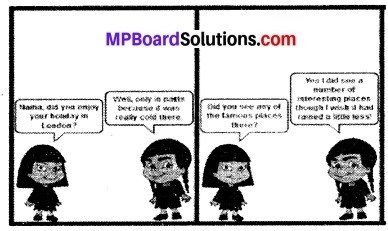
Mp Board Class 10 English Chapter 5
Neha asked Naina (a) …………… London. Naina replied that she had enjoyed herself only in parts as
(b) …………….. there. Then Neha wanted to know (c) ……………… To this Naina replied that she saw a number of places although (d) ……………. it had rained a little less there.

Question 4.
Interviewer: So, Why do you want to be a computer programmer?
Ravi: Well, I don’t like working in a fast food restaurant and I want to make more money.
Interviewer: I see. Do you have any experience?
Ravi: No, but I am a fast learner.
Interviewer: What kind of a computer do you use?
Ravi: Computer? Uhm… let me see. I can use a Mac. I also used Windows 95 once.
Interviewer: We will get back to you. called his claim for refund genuine. The second answer made him call Wasserkopf as a mathematical genius. By his tact,-the Mathematics teacher proved that he was more ‘shrewd’ than the former pupil.

Question 5.
How did the three Masters shatter Wasserkopf’s plan to get the refund?
Answer:
Wasserkopf wanted to fail in the examination to get the refund of his fees. Wasserkopf’s answer was absurd. He spoke that the Thirty- year war lasted seven metres. The History teacher and the Maths teacher proved it correct according to Einstein’s theory of relativity.

The Physics teacher asked, ’Do clocks in church steeples really become smaller as you walk away from them or merely appear so?’ His reply was you’re an ass. The teacher proved it correct due to optical illusion. The Mathematics teacher asked Wasserkopf to calculate the amount of refund. His correct answer made him successful. He was declared pass in every subject. His request for refund was rejected. He was sent away disappointed.

Question 6.
How far is a school or educational institution accountable for the future of its students? Support your answer with arguments given in the play.
Answer:
Education aims at securing one’s livelihood as well as life. Stress should be laid on technical and vocational education. Character formation should be the major motive of education. There should be a personal contact between the teacher and the taught. Good manners should be inculcated among the students from the very beginning. According to Wasserkopf he didn’t learn anything. He had become an incompetent ass. He failed at every job. He used abusive and taunting language before teachers and the Principal of the school. He was rude and challenging in his behaviour. He lacked respectful behaviour. He was nill at gentlemanliness, courtesy, physical culture, alertness, perseverance, logic and ambition. The school was not accountable for his fate.

Refund Grammar

Non-Finite s
Study the following sentences:

  1. I want you to refund the tuition fee.
  2. I have got to hurry to the broker’s to collect the money.
  3. I haven’t got to tell you now.

The root form of the verb preceded by ‘to’ is called the to-infinitive. Study the following sentences:

  1. I don’t think.
  2. I should just say.
  3. I suppose I can get along.

The root form of the verb without ‘to’ is called the bare-infinitive. Name and underline the Infinitives in the following sentences:
1. You really want to take another examination?
2. Why do you want it?
3. I might be able to do something.
4. I have the right to take one.
5. I shall have to consult the staff.
6. I have asked you to come here on account of a most unusual state of affairs.
7. How do you do?
Answer:

  1. You really want to take another examination? (To-Infinitive)
  2. Why do you want it? (Bare-Infinitive)
  3. I might be able to do something. (To-Infinitive)
  4. I’ve the right to take one. (To-Infinitive)
  5. I shall have to consult the staff. (To-Infinitive)
  6. I have asked you to come here on account of a mostunusual state of affairs. (To-Infinitive)
  7.  How do you do? (Bare-Infinitive)

Study the following sentences.

  1. I am bringing back the leaving certificate.
  2. Will you wait in the waiting room?
  3. Thus the candidate has come through with flying colours.

The form of verb which has the characteristic of a verb as well as an adjective is called the Participle. Study the following sentences.

  1. I made speculation in foreign exchange.
  2. They surround the Physics Master, slapping him on the back and shaking his hands.
  3. I’ll start off by telling you a few things.

The -ing form of verb when used as a Noun is called Gerund.
Distinguish the following underlined words:
1. He remains standing.
2. He hurried away and left me standing there.
3. What a distressing bussiness
4. The following speeches are nearly spoken simultaneously.
5. The Principal, leaning back and stretching, received parents only during office hours.
Answer:

  1. standing – Gerund.
  2. standing – Gerund.
  3. distressing – Participle.
  4. following – Participle.
  5. leaning – Participle
  6. stretching – Gerund.

Speaking Skill

A. Survey of students opinion regarding the school timetable.

Question 1.
Prepare a questionnaire consisting of seven questions on the school timetable. Question atleast ten students, get their views and note down the questions.
You may use the following questions.
1. What should be the length of total reading time in schools?
2. What should be the length of a period?
3. Which subjects should be taught before the recess (interval)?
4. Which period should be allotted to practical classes?
5. How many periods should be alloted to library-activity in a week?
6. What should be the length of recess (interval)?
7. How many periods should be allotted to games in a week?
Answer:
Sample Answer of one student.

  1. The length of total reading time in school should be six hours.
  2. The length of a period should be 45 minutes before recess and 40 minutes after recess.
  3. English, Maths and Science subjects should be taught before
    the recess (interval).
  4. The last period should be allotted to practical classes.
  5. Three periods should be allotted to library activity in a week.
  6. The length of recess (interval) should be 20 minutes.
  7. Four periods should be allotted to games in a week. (However, there can be as many different answers depending on the number of students.)

Question 2.
Imagine you have just shifted to Bhopal from Harda and H have to join a new school there. Your residence is in a multistoreyed complex where there are many students of your age. Talk to them and find out all about the schools in which they study.
Draw a table in your notebook in the manner as given below and fill in the details. In some cases, the friends may not provide information under all the headings in the table. In- such cases, put a -in that box.
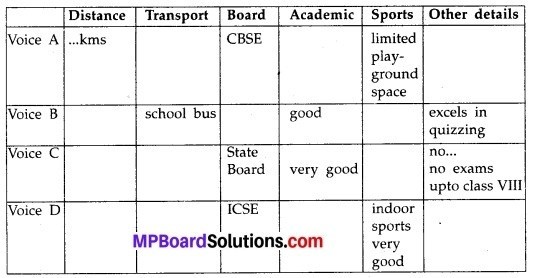
Class 10 English Chapter 5 Refund Question Answer MP Board
Ask the same question in different ways as given below:

  1. Where do you study? or
  2. In which school do you study? or
  3. What is the name of your school?

Answer:
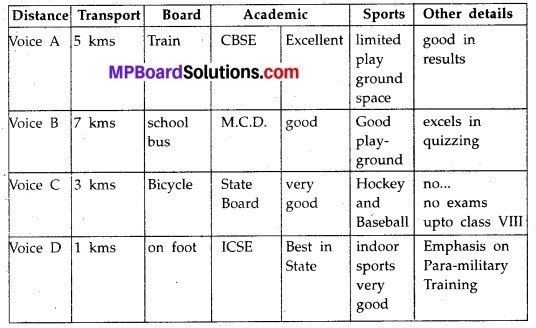
Class 10 English Chapter 5 Refund MP Board

Writing Skill

Question 1.
‘Education is for life, not for livelihood’. Expand the idea. (50 words)
Answer:
Education aims at creating ideal personality in a student. It is expected that the student after completing his education becomes the picture of all that is noble. He knows the value of time. He is helpful and sympathetic towards those who are weak and needy. He never nourishes ill will against others. He is honest and respectful to his seniors. He remains in discipline. He takes care of his health and honour. He does not degrade himself in the estimation of others. He is never a slave to his senses. He is a good debator and organizer. He becomes a moving spirit in society. He accomplishes everything with a humanitarian concern. Being a social animal he shares others’ happiness and woes. In this way education prepares him for life, not only for livelihood.

Question 2.
Suppose you are going to deliver a speech on ’Teacher’s Day’. Prepare a draft of your speech. (150 words)
Answer:
Teacher’s Day Teacher’s day is a national function. It is celebrated on 5th September every year, the day of Dr. Radha- krishnan’s birthday. Dr. Radhakrishnan was an ideal teacher and therefore his birthday is celebrated as Teacher’s Day throughout the country. The main idea is to draw the attention of the society towards this noble profession. Nearly a hundred teachers are honoured with National Award on this day. The awardees are selected on the basis of the personal character, conduct, professional competence and their contribution to society. Only ideal and worthy teachers get it.

Giving award to teachers is a good incentive for them. It is a pity that a teacher is not accorded due respect these days. He is held low7 down in the social scale. One of the most serious causes for the loss of respect for the teacher is his poor salary. Also most of the teachers today fail to involve themselves with students. They do not bother for the future of their students. It is therefore, whenever they (students) obtain poor marks or show poor results, teachers are held responsible. They sometimes suffer from lack of confidence. The selfless teachers who possess character and unbiased love and affection for students enjoy social respect which is its own award.

Think It Over

1. He who does not know that he doesn’t know is an ignorant person. Keep him away.
He who knows that he doesn’t know is ready to learn, teach him. He who knows that he knows is wise, make him your teacher. Ponder over it and if you find such persons around you, write their names and traits.
2. Be wise than other people, if you can; but do not tell them so because men must be taught as if you taught them not. And things unknown must be proposed as things forgot. Ponder.
3. A man convinced against his will is of the same opinion still. Think and pen your experience.
Answer:
For pondering at individual level.

Things To Do

1. Take as many chart sheets as many subjects you read. Write names of the subjects on different sheets. Now write difficult portions of your syllabus according to your opinion on every sheet.
2. Show these sheets to your parents and teachers. Stick them on the wall in your study.
3. Try to learn those items and cross them when they are no more difficult for you.
4. Try to eliminate them all.
Answer:
For self-attempt.

Refund Additional Important Questions

A. Read the passages and answer the questions that follow.

1. Because actual warfare took place only during half of each day- that is to say, twelve hours out of the twenty-four-and the thirty years at once become fifteen. But not even fifteen years were given up to incessant fighting, for the combatants had to eat-three hours a day, reducing our fifteen years to twelve. And if from this we deduct the hours given up to noonday siestas, to peaceful diversions, to nonwar like activities. (Page 38)

Question 1.
Who spoke the above lines?
Answer:
The History Master spoke the above lines.

Question 2.
How many hours did the actual warfare take place each day?
Answer:
The actual warfare took place twelve hours out of twenty- four each day.

Question 3.
How many hours a day did the combatants have to eat?
Answer:
The combatants had to eat for three hours a day.

Question 4.
How long had the war lasted according to Wasserkopf?
Answer:
According to Wasserkopf, the war had lasted seven metres.

Question 5.
Give a synonym from the passage for the word ‘afternoon short sleep’.
Answer:
‘Siesta.’

2. (rising): I present the result of the examination. Herr Wasserkopf has passed with distinction in every subject, and has again shown that he is entitled to the certificate we awarded him on his graduation. Herr Wasserkopf, we offer our congratulations accepting a large share of them for ourselves for having taught you so excellently. And noisy that we have verified your knowledge and your abilities (he makes an eloquent gesture) get out before I have you thrown out! (Page 41)

Question 1.
Who spoke the above lines?
Answer:
The Principal spoke the above lines.

Question 2.
What would he present ?
Answer:
He would present the result of the examination.

Question 3.
How had Herr Wasserkopf passed?
Answer:
Herr Wasserkopf had passed with distinction in every subject.

Question 4.
What was his final word to Wasserkopf?
Answer:
His final word to Wasserkopf was Get out before he had him thrown out.

Question 5.
Give a word from the passage for the expression. ‘Expression with motion of limbs’.
Answer:
‘Gesture’.

I. Match the following:

1. Principal received parents – (a) i don’t think so
2. Wasserkopf – (b) Gentlemen, the case is natural
3. The Mathematics teacher – (c) Only during office hours
4. The Physics Master – (d) I’m bringing back the leaving certificate you gave me.
5. A pupil – Tell us about it.
Answer:
1. (c), 2. (d), 3. (e), 4. (b), 5. (a).

II. Pick up the correct choice.

(i) The story Refund
A. Wasserkopf
B. Fritz Karinthy
C. Rudyard Kipling
D. Oscar Wilde
Answer:
B. Fritz Karinthy

(ii) A. Yes; but be quick. I’’e got no time to (waste! wait).
B. Because hes (a donkey/an ass).
C. There is nothing like it in the history of (India! civilization).
D. The Geography Master. Where is the (fellow! person), any how?
Answer:
A. waste
B. an ass
C. civilization.
D. fellow

III. Write ‘True’ or ‘False’.

1. The History Master, leave it to us.
2. The Principal (to the servant): Show in Herr Wasserkopf.
3. Wasserkopf. Agreed! Agrèed!
4. The Mathematics Master: ‘Logic; Excellent’.
5. The Physics Master: You were always a numskull.
Answer:

  1. False.
  2. True
  3. False
  4. True
  5. False.

IV. Fill in the following blanks.

1. Oh, you can’t think of a ………….. that’s easy enough?
2. How long did the …………….. year war last?
3. This is no way to ……………. an examination.
4. The Principal; I shall …………….with this decisively.
5. The ……….. takes the’ place of the History Master.
Answer:

  1. question
  2.  thirty
  3. run
  4. deal
  5. Physics Master.

B. Short Answer Type Questions (In about 25 words)

Question 1.
What did the servant (peon) tell the Principal?
Answer:
The servant (peon) told the Principal that there was a man outside. He wanted to see the Principal. He was neither a parent nor a pupil. He had a beard. His name was Wasserkopf. He looked intelligent.

Question 2.
Whom did the peon show in?
Answer:
The peon showed in a middle-aged person. His name was Wasserkopf. He was bearded. He was carelessly dressed. He was somewhat under forty. He was energetic and decidedly a man of confidence.

Question 3.
How did Wasserkopf introduce himself?
Answer:
Wasserkopf remained standing. The Principal asked him what he should do for him. Wasserkopf asked if the Principal remembered him. Then he realised that he was not worth remembering. In the end he told the Principal that he was a student in that school eighteen years ago.

Question 4.
Why could Wasserkopf say that he could get along without another certificate?
Answer:
Wasserkopf was awarded a certificate on his graduation from the school. The certificate showed that he had got an education. The reality was that he hadn’t learnt anything. He couldn’t keep a job even if he managed to get it. Therefore, he could get along without any (another) certificate.

Question 5.
Who was Lederer? What was his suggestion to Wasserkopf?
Answer:
Lederer was a man who made speculations in foreign exchange. He was awfully busy. He told Wasserkopf that he earned whenever money Was down. Wasserkopf failed to understand it. Lederer pitied his poor knowledge. He suggested him to get his tuition fee refunded if he did not know any damn thing.

Question 6.
Why was Wasserkopf hell bent on getting the refund of his tuition fee?
Answer:
Wasserkopf was a poor man. His tuition fee amounted to a lot of money. Therefore, he could not afford to forgo the heavy amount. Moreover, he didn’t get anything for them. He was no good for anything. He couldn’t retain even his acquired jobs.

Question 7.
Why did the Principal scratch his head?
Answer:
A former student, named Wasserkopf came to the Principal ,j to get his tuition fee refunded. It was a unique case. He had never heard of anything like it before. He couldn’t make any decision single handed. Therefore, he scratched his head.

Question 8.
What were the views’ of the Mathematics Master about re-examination?
Answer:
Wasserkopf was in favour of a re-examination. It would prove that he had really learned nothing. The Mathematics Master suggested that they should not make their questions too difficult. In this way, they would get the better of the sly and crafty fellow.

Question 9.
What is the pedagogical scandal referred to in the lesson ’Refund’?
Answer:
The Mathematics Master was of the view that all the teachers would prevent Wasserkopf from failing. If he fails, he would claim for the refund of his fees. It would become a pedagogic scandal. The number of claimants would go on swelling day after day

C. Long Answer Type Questions (In about 50 words)

Question 1.
Give a brief character sketch of Wasserkopf.
Answer:
Wasserkopf was a poor and greedy person. He was fired from his jobs due to his ill manners and rude behaviour. He had no knowledge of any field. He neither had sense of shame nor sense of respect. He threatens the Principal that he would complain against him to the Ministry of Education. He is like a ruffian. He stares insolently at the Principal. He calls the teachers ’loafers’. He doesn’t give a damn for the teachers. He calls the History Master a ‘numskull’. He calls the Physics Master ‘a cannibal’ and ‘a whiskered balloon’. He calls the Maths teacher as ‘old stick in the mud’.

Question 2.
Give the role of the Principal of the school in the lesson ’Refund’.
Answer:
The entire scene of the one act play takes place in the office of the Principal of the school. A former student, named Wasserfopf enters his office. He addresses him as Mr. Principal. He asks him to refund his tuition fee because the school had taught him nothing. The Principal hears his complaint patiently He makes him wait and called a conference of his teachers. He apprises the teachers of the silly demand of a sly and crafty old student. He is a silent spectator when Wasserkopf is re-examined. He is a competent and considerate administrator. He controls the situation and turns Wasserkopf out empty handed.

Refund Introduction

This one act play is about a former pupil who unexpectedly arrives at the school in which he studied earlier. The education that he received at school has left no good impact on him. He has become worthless. He argues with the Principal of the school. Previously the Principal is not ready to accept his demand. But finally he tells his teachers to conduct a re-examination to a certain his worth.

Refund Summary in English

A former pupil unexpectedly arrived at the school. He had studied there nearly eighteen years ago. He entered the Principal’s office arrogantly. He told the Principal that his name was Wasserkopf. The Principal asked him whether he wanted a certificate. Wasserkopf replied in the negative. He wanted the Principal to refund the tuition fees which he had paid for his education. He was a poor man. Therefore, he needed the money.

The Principal asked Wasserkopf why he wanted the fee back. He told the Principal that he didn’t get his money’s worth. He didn’t learn anything. Rather, the education had made nothing but an incompetent ass of him. His old classmate Lederer gave him the idea because he did not know any damn thing. He said, he would complain against the Principal if his request for refund was not granted

The Principal asked Wasserkopf why he thought he couldn’t do anything. Wasserkopf told that he couldn’t keep any job even if he got it. He asked the Principal to give him an examination and tell him what he ought to do. The Principal asked him to wait and called a conference of the teachers. The matter was discussed seriously. The teachers decided to hold the examination and ask him simple questions. They would declare him successful regardless of his answers.

Wasserkopf faced all the teachers one-by-one. He called them by names and gave silly answers. The teachers interpreted his answers positively. He was given excellent in patriarchal manners, gentle manliness, courtesy, physical culture, alertness, perseverance, logic and ambition. Now it was the turn of the Maths teacher. His first question was answered wrongly. Everybody was stunned when the teacher justified his rightful claim for the refund. The Principal got furious with the Maths teacher. Then the teacher asked Wasserkopf to calculate the amount of the fees to be refunded. He did the same correctly. It amounted to 6450 crowns. He had answered the difficult question correctly to the smallest detail. The Maths teacher certified that the candidate passed in Maths. He was really a Mathematical genius. Wasserkopf called it a tricky plan.

The Principal declared him pass with distinction in every subject and was fully entitled to the certificate he was already awarded. The Principal congratulated him. He asked Wasserkopf to be off lest he should be thrown out.

Refund Summary in Hindi

एक पूर्वकालिक अनपेक्षित छात्र एक स्कूल में आया। वह लगभग अठारह वर्ष पहले वहाँ पढ़ा था। वह अभद्रता से मुख्याध्यापक के दफ्तर में घुस गया। उसने प्रधानाचार्य को अपना नाम वॉसरकॉफ बताया। प्रधानाचार्य ने उससे पूछा कि क्या उसे प्रमाणपत्र चाहिए, वॉसरकॉफ ने नकारात्मक उत्तर दिया। वह चाहता था कि प्रधानाचार्य उसकी वह फीस लौटा दे जो उसने अपनी शिक्षा-प्राप्ति के बदले दी थी। वह निर्धन व्यक्ति था। इसलिए, उसे धन-राशि की आवश्यकता थी।

प्रधानाचार्य ने वॉसरकॉफ से पूछा कि उसे फीस वापिस क्यों चाहिए? उसने प्रधानाचार्य को बताया कि उसे अपनी धन-राशि का उचित लाभ नहीं मिला। उसने कुछ भी नहीं सीखा। बल्कि, शिक्षा ने उसे एक अयोग्य गधा बना दिया। उसके पुराने सहपाठी लैडरर ने उसे यह विचार दिया क्योंकि उसे (वॉसरकॉफ को) कुछ भी नहीं आता था। वह बोला कि शुल्क वापसी की उसकी प्रार्थना अस्वीकार किए जाने पर वह प्रधानाचार्य की शिकायत कर देगा।

प्रधानाचार्य ने वॉसरकॉफ से पूछा कि उसे यह विचार कैसे आया कि वह कुछ नहीं कर सकता था। वॉसरकॉफ ने बताया कि कोई धंधा मिल जाने पर भी वह उसे निभा नहीं पाता था। उसने प्रधानाचार्य से कहा कि उसकी परीक्षा ली जाए और उसे बताया जाए कि उसे क्या करना चाहिए। प्रधानाचार्य ने उसे इंतजार करने के लिए कहा और अध्यापकों की मीटिंग बुलाई। इस मामले पर गम्भीर रूप से विचार किया गया। अध्यापकों ने परीक्षा लेने और आसान प्रश्न पूछने का निर्णय लिया। उसके उत्तरों पर विचार नहीं करते हुए वे उसे सफल घोषित कर देंगे।

वॉसरकॉफ ने क्रम से एक-एक अध्यापक का मुकाबला किया। उसने उन्हें उनके उपनाम (चिढ़ाने वाले नाम) से पुकारा और उन्हें बेतुके उत्तर दिए। अध्यापकों ने उसके उत्तरों पर सकारात्मक टिप्पणी की। उसे पैतृक व्यवहार, भलमनसाहत, शिष्टाचार, शारीरिक फुर्ती, संस्कृति, अध्यवसाय, तर्क, तथा अभिलाषा में उत्कृष्ट दर्शाया गया। फिर, गणित अध्यापक की बारी थी। उनके पहले प्रश्न का उत्तर गलत पाया गया। उन्होंने फीस वापसी के वॉसरकॉफ के दावे को न्यायोचित ठहराया। प्रधानाचार्य, गणित के अध्यापक से रुष्ट हो गए। फिर अध्यापक ने वॉसरकॉफ से कहा कि वापिस ली जाने वाली फीस का हिसाब लगाओ। उसने ठीक (सही) हिसाब लगा दिया। वह 6450 क्राऊन बनी। उसने कठिन प्रश्न का सूक्ष्मतम विस्तार के साथ सही उत्तर दिया था। गणित के अध्यापक ने प्रमाणित किया कि प्रत्याशी (परीक्षार्थी) को गणित में पास किया जाता है। वह वास्तव में गणित में प्रतिभाशाली पाया गया। वॉसरकॉफ ने उसे एक षड्यन्त्रपूर्ण चाल बताया।प्रधानाचार्य ने घोषित किया कि वह प्रत्येक विषय में श्रेष्ठता प्राप्त रूप में पास है और पहले दिए गए प्रमाणपत्र का वह पूर्ण रूप से अधिकारी है। प्रधानाचार्य ने उसे बधाई दी। उसने वॉसरकॉफ को दफा होने के लिए कहा ताकि उसे बाहर नहीं फेंका जाए।

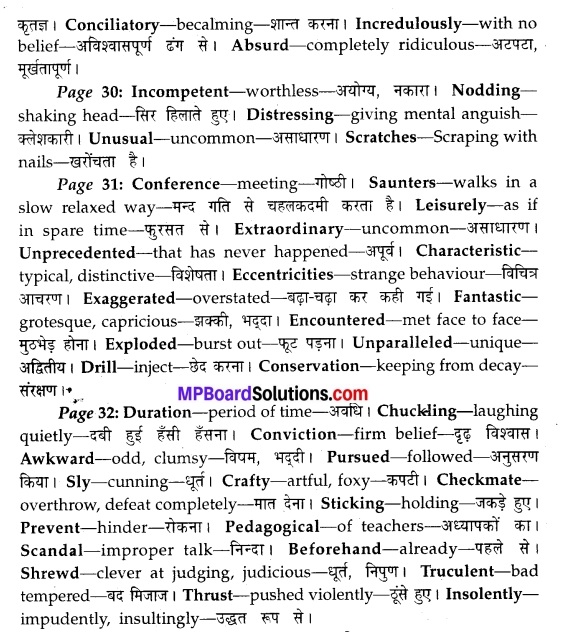
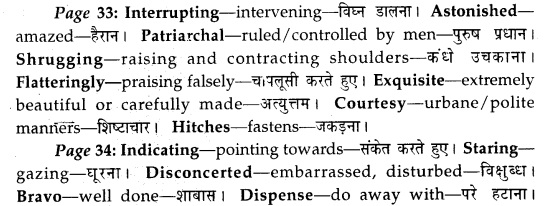
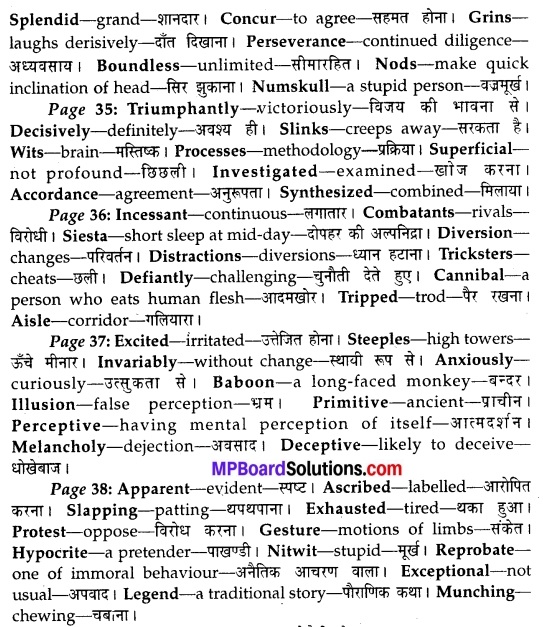
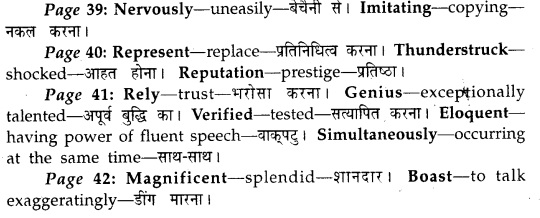
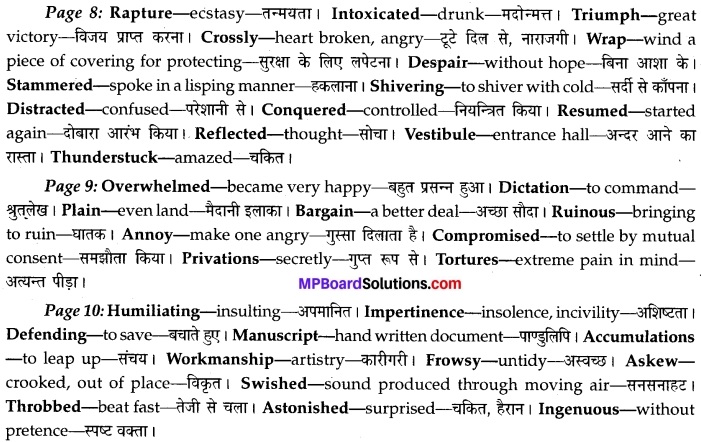
Refund Word-Meanings
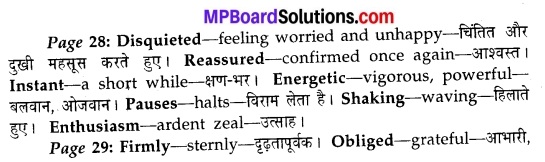
Refund Questions And Answers MP Board
Mp Board Class 10th English Chapter 5
Class 10 English Chapter 5 Mp Board
Chapter 5 English Class 10 Mp Board
Refund Questions And Answers Mp Board

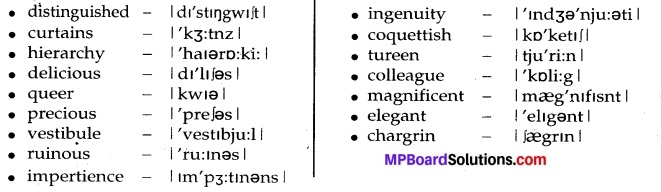
Refund Some Important Pronunciations
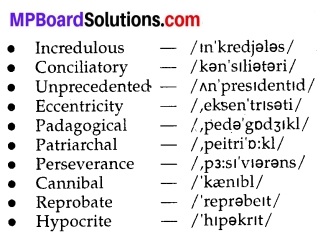
Refund Chapter Question Answer MP Board

Hope that the above shaped information regarding the Madhya Pradesh Board Solutions for 10th English Chapter 5 Refund Questions and Answers is useful for making your preparation effective. View our website regularly to get other subjects solutions.

MP Board Class 8th Hindi Sugam Bharti Solutions Chapter 17 रहीमन-विलास

In this article, we will share MP Board Class 8th Hindi Book Solutions Chapter 17 रहीमन-विलास Pdf, These solutions are solved subject experts from the latest edition books.

MP Board Class 8th Hindi Sugam Bharti Solution Chapter 17 रहीमन-विलास

प्रश्न अभ्यास
अनुभव विस्तार

Mp Board Class 8 Hindi Chapter 17 प्रश्न 1.
वस्तुनिष्ठ प्रश्न
Mp Board Class 8 Hindi Chapter 17
Class 8 Hindi Chapter 17 Mp Board
उत्तर
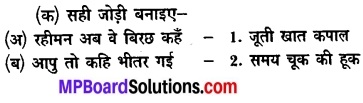
(अ) 4, (ब) 1, (स) 2, (द) 3

अति लघु उत्तरीय प्रश्नोत्तर
Class 8 Hindi Chapter 17 Mp Board प्रश्न 2.
(अ) कपूत की गति किसके समान होती है?
(ब) रहीम के अनुसर अब कौन से वृक्ष दिखाई नहीं देते?
(स) रहीम ने सबसे बड़ा लाभ किसे माना है?
(द) दीनबंधु के समान कौन हो जाता है?
(ई) पावस आने पर कौन मौन साध लेता है?
उत्तर
(अ) कपूत की गति दीपक के समान होती है।
(ब) रहीम के अनुसार अब घनी छाया देने वाले वृक्ष नहीं दिखाई देते।
(स) रहीम ने सबसे बड़ा लाभ समय के सदुपयोग को माना है।
(द) दीनबंधु के समान दीनों (गरीबों) को देखने वाले हो जाते हैं।
(इ) पावस आने पर कोयल मौन साध लेता है। लघु उत्तरीय प्रश्नोत्तर

MP Board Solutions

Rahiman Vilas Class 8 MP Board Chapter 17 प्रश्न 3.
(अ)
रहीम ‘रिस की गाँस’ के विषय में क्या कहते हैं?
उत्तर
रहीम ‘रिस की गाँस’ के विषय में यह कहते हैं कि अमृत ऐसे वचन हैं, जो रिस की गाँस अर्थात् क्रोध की चुभन को कम कर देते हैं।

(ब)
‘जीभ के बावलेपन’ का क्या दुष्परिणाम होता है?
उत्तर
‘जीभ के बावलेपन” का दष्परिणाम यह होता है कि वह तो भीतर चली जाती है और सिर को जूती खानी पड़ती है।

(स)
रहीम ने तन की तुलना नाव से क्यों की है?
उत्तर
रहीम ने तन की तुलना नाव से की है। यह इसलिए कि दोनों की गति एक ही तरह की होती है।

(द)
कवि के अनुसार ‘सच्चा मीत’ कौन है?
उत्तर
कवि के अनुसार ‘सच्चा मित्र’ वही होता है, जो विपत्ति में साथ देता है।

MP Board Solutions

Mp Board Class 8 Hindi Book Solution Chapter 17 प्रश्न 4.
निम्नलिखित दोहे के माध्यम से कवि क्या कहना चाहते हैं, स्पष्ट कीजिए
विपति भए धन ना रहे, रहे जो लाख करोर।
नभ तारे छिपि जात हैं, ज्यों रहीम भए भोर।।
उत्तर
उपर्युक्त दोहे के माध्यम कवि यह कहना चाहता है कि धन-सुख अस्थिर होते हैं। वे कब रहेंगे और कब नष्ट हो जाएंगे, कहा नहीं जा सकता है। इसलिए हमें धन को पाकर इतराना और घमंड करना नहीं चाहिए।

भाषा की बात

Mp Board Solution Class 8 Hindi Chapter 17 प्रश्न 1.
बोलिए और लिखिएमिसिरिहु, विरछ, दीनबंधु, सेंहुड, बक्ता।
उत्तर
मिसिरिङ, विरछ, दीनबंधु, सेंहुड़, वक्ता।

Mp Board Class 8 Hindi Chapter 17 प्रश्न 2.
निम्नलिखित शब्दों की शुद्ध वर्तनी खाली स्थान में लिखिए
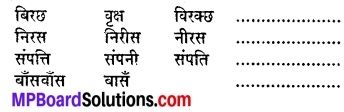
बिरछ वृक्ष बिरक्छ निरस निरीस नीरस संपत्ति संपनी संपति बाँसवाँस वासँ
Rahiman Vilas Class 8 MP Board Chapter 17
उत्तर
वृक्ष, नीरस, संपत्ति, बाँस।

Mp Board Class 8th Hindi Solution Chapter 17 प्रश्न 3.
निम्नलिखित शब्दों के विलोम शब्द लिखिए
उत्तर
शब्द – विलोम शब्द
उपकार – अपकार
अमृत –  विष
लाभ – हानि
सबल – निर्बल
अनुरक्ति – विरक्ति
कपूत – सपूत

MP Board Solutions

हिंदी सुगम भारती आठवीं कक्षा Pdf MP Board Chapter 17 प्रश्न 4.
निम्नलिखित तत्सम एवं तद्भव शब्दों को पहचानकर जोड़ी बनाइए
अँधरो, दीप, स्वर्ग, जीभ, कुपुत्र, दुग्ध, दीया, अंधकार, कपूत, दूध, जिह्वा, सरग।
उत्तर
अधरो – अंधकार
दीप – दीया
स्वर्ग – सरग
जीभ – जिह् वा
कुपुत्र – कपूत
दुग्ध – दुध

दोहों की संदर्भ-प्रसंग सहित व्याख्याएँ

1. जो रहीम गति दीप की, कुल कपूत गति सोय
बारे अजियारो कर, बड़े अँधेरो होय ॥1॥

शब्दार्थ
कुल-वंश। दीप-दीपक। गति-दशा। उजियारो-अजेला।

संदर्भ – प्रस्तुत पंक्तियाँ हमारी पाठ्य-पुस्तक ‘सुगम भारती’
(हिंदी सामान्य) भाग-8 के ‘पाठ-17’ के ‘रहिमन-विलास’ से ली गई हैं। इसके रचयिता कविवर रहीम हैं।

प्रसंग – प्रस्तुत पक्तियों में रहीम ने कुपुत्र की दशा दीपक के समान बतलाते हुए कहा है कि

Sugam Bharti Class 8 MP Board Chapter 17 व्याख्या
कुपुत्र और दीपक की दशा एक ही होती है। दीपक के जलने पर प्रकाश होता है और बुझने पर अंधेरा हो जाता है। उसी प्रकार कुपुत्र का बचपन अच्छा लगता है लेकिन जब वह बड़ा हो जाता है, तब वह परिवार के लिए दुखदायक हो जाता है।

विशेष

  • भाषा में प्रवाह है।
  • यह अंश ज्ञानवर्धक है।

2. अमृत ऐसे वचन में, रहिमन रिस की गाँस ।
जैसे मिसिरिहु में मिली, निरस बाँस की फाँस।।2।।

शब्दार्थ
रिस की गाँस-क्रोध की चुभन !

संदर्भ – पूर्ववत् ।

प्रसंग – प्रस्तुत पंक्तियों में कविवरम ने मीठी बोली के महत्त्व बतलाते हुए कहा है कि

व्याख्या- अमृत के समान मीठी बोली का बहुत ही अधिक महत्त्व और प्रभाव है। इससे क्रोध की चुभन समाप्त हो जाती है। यह ठीक उसी प्रकार से है, जैसे मिश्री में नीरस बाँस की फाँस का अभाव नहीं रहता है।
विशेष

  • मीठी बोली बोलने की सीख दी गई है।
  • दोहा छंद है।

3. रहीमन अब वे विरठ कहैं जिनकी छाँह गंभीर।
यागन बिच-बिच देखियत, सेंहुड़ कुंज करीर ॥3॥

शब्दार्थ
बिरछ-पेड़ । कुंज-लता। करीर-काँटेदार झाड़ी।

संदर्भ – पूर्ववत्।

प्रसंग – प्रस्तुत पंक्तियों में कविवर रहीम ने उपकारी व्यक्तियों की हो रही कमी के बारे में कहा है कि

व्याख्या
आजकल वे बड़े-बड़े और घनी छाया देने वाले पेड़ नहीं दिखाई दे रहे हैं। आजकल तो बागों के बीच-बीच में सेंहुड़, लता और काँटेदार झाड़ियाँ ही दिखाई दे रही हैं।

विशेष

  • दोहा छंद है।
  • यह अंश आर्कषक है।।

MP Board Solutions

4. रहिमन जिह्वा बाबरी, कहि गई सरग पताल ।
आपु तो कहि भीतर गई, जूती खात कपाल  ||4||

शब्दार्थ
बावरी-बावली। सरग = स्वर्ग। आपु-स्वयं । कपाल-सिर।

संदर्भ – पूर्ववत्।

प्रसंग – प्रस्तुत पंक्तियों में कविवर रहीम ने दुष्ट की संगति के कुपरिणाम को बदलते हुए कहा है कि

व्याखा
बावली जीभ ने बिना किसी सोच-विचार के स्वर्ग-पताल आदि अनाप-शनाप कह दिया। फिर वह अंदर चली गई। उसके इस प्रकार अनाप-शनाप कहने के कारण ही सिर को जूतों की मार खानी पड़ी।

विशेष

  • दोहा छंद है।
  • दुष्टों की निंदा की गई है।

5. तन रहीम है कर्म बस, मन राखो ओहि ओर।
जल में उलटी नाव ज्यों, बँचत गुन के जोर । ॥5॥

शब्दार्थ
बस-वश । राखो-रखो। ओहि-उस ।

संदर्भ – पूर्ववत्।

प्रसंग – प्रस्तुत पंक्तियों में कविवर रहीम ने मन को केन्द्रित करके कर्म की करने सीख देते हुए कहा है कि

व्याख्या
यह शरीर कर्म के अधीन है। इसलिए इसे मन से उस ओर ही लगाना चाहिए। जिस प्रकार पानी में उलटी नाव अर्थात् धारा के विपरीत नाव को चलाने के लिए नाव को खींच करके उस ओर लाया जाता है।

विशेष

  • मन को लगाकर कर्म करने की सीख दी
  • दोहा इंद है।

6. समय लाभ सम लाभ नहि, समय चूक सम चूक।
चतुरन चित रहिमन लगी, समय चूक की हूक ॥6॥

शब्दार्थ
सम-समान। चूक-भूल। चतुरन-चतुराई। = चित-हदय । हूक-चोट।

संदर्भ- पूर्ववत् ।

प्रसंग – प्रस्तुत पंक्तियों में कविवर रहीम ने समय के सदुपयोग को बतलाते हुए कहा है कि

व्याख्या
समय के सदुपयोग के समान और कोई बड़ा लाभ नहीं है। इसी प्रकार समय के दुरुपयोग के समान और
कोई भूल अर्थात् हानि नहीं है। इसलिए इसे बड़ी चतुराई से । चतुर लोग हृदय से जानते हैं कि समय के चूक जाने से हृदय को बड़ी चोट पहुँचती है।।

विशेष

  • दोहा छंद है।
  • भाषा सरल है।

MP Board Solutions

7. कहि रहीम संपति सगे, बनत बहुत बहु रीति।
विपति कसौटी जे कसे, ते ही साँचे मीत ॥7॥

शब्दार्थ
संपत्ति-धन। सगे-संबंधी। रीति-प्रकार। कसौटी-परीक्षा । साँचे-सच्चा। मीत-मित्र।

संदर्भ- पूर्ववत्।

प्रसंग – प्रस्तुत पंक्तियों में कविवर रहीम ने सच्चे मित्र की पहचान बलताते हुए कहा है कि

व्याख्या
जब व्यक्ति धनवान होता है उसके अनेक मित्र होते हैं। अनेक संबंधी बन जाते हैं। लेकिन सच्चे मित्र तो वे ही होते हैं, जो विपत्ति में साथ देते हैं।

विशेष

  • दोहा छंद है।
  • सच्चे मित्र की पहचान बताई गई है।

8. दीन सबन को लखत है, दीनहि लबै न कोय।
जो रहीम दीनहि लखे, दीनबंधु सम होय ॥8॥

शब्दार्थ
दीन-गरीब । सबन-सभी को। लखे-देखता।

संदर्भ – पूर्ववत्।

प्रसंग – प्रस्तुत पंक्तियों में कविवर रहीम ने गरीब लोगों के महत्त्व को बतलाते हुए कहा है कि

व्याख्या
गरीब लोग सभी को महत्त्व देते हैं। सबके दुख में अपना हाथ बँटाते हैं। लेकिन गरीबों को कोई महत्त्व नहीं देता है। उनके दुख में कोई हाथ नहीं बँटाता है। जो कोई गरीबों के दुख में साथ देता है, वह ईश्वर के समान होता है।

विशेष

  • दोहा छंद है।
  • भाषा-शैली में प्रवाह है।

9. पावस देखि रहीम मन, कोइल साये मौन।
अब दादुर बक्ता भए, हमको पूछत कौन ॥9॥

शब्दार्थ
पावस-वर्षा ऋतु । कोइल-कोयल । साधे मौन-चुप हो जाती है। दादुर-मेंढक।

संदर्भ- पूर्ववत्।

प्रसंग – प्रस्तुत पंक्तियों में कविवर रहीम ने समयानुसार रहने की सीख देते हुए कहा है कि

व्याख्या
वर्षा ऋतु में कोयल मौन धारण कर लेती। वर्षा ऋतु में मेंढक टरटर्राने लगते हैं। ऐसे समय में वह यह सोच लेती है कि उसके मधुर स्वर की कोई नहीं प्रशंसा करेगा। इसलिए चुप रहना ही ठीक है।

विशेष

  • भाषा में प्रवाह है।
  • दोहा छंद है।

10. विपति भए धन ना रहे, रहे जो लाख करोर।
नभ तारे छिपि जात हैं, ज्यों रहीम भए भोर ॥10॥

शब्दाव
विपत्ति-संकट । करोर-करोड़। छिपि-छिप । जात हैं-जाते हैं। भोर-प्रातःकाल ।

संदर्भ – पूर्ववत् ।

प्रसंग – प्रस्तुत पंक्तियों में कविवर रहीम ने धन की अस्थिरता और नश्वरता को बतलाते हुए कहा है कि

व्याख्या
जब विपत्ति आती है, तो सारे धन-सुख नष्ट हो जाते हैं। धन चाहे लाख करोड़ क्यों न हो। वह ठीक वैसे ही समाप्त हो जाता है, जैसे प्रातःकाल होने पर आकाश के तारे नहीं दिखाई देते हैं।

विशेष

  • भाषा-शैली आकर्षक है।
  • दोहा छंद है।

MP Board Class 6th Hindi Sugam Bharti Solutions Chapter 4 अभिनन्दनीय भारत

MP Board Class 6th Hindi Sugam Bharti Solutions Chapter 4 अभिनन्दनीय भारत

MP Board Class 6th Hindi Sugam Bharti Chapter 4 प्रश्न-अभ्यास

वस्तुनिष्ठ प्रश्न

Mp Board Solution Class 6 Hindi प्रश्न 1.
(क) सही जोड़ी बनाए
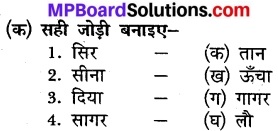
1. कर्मभूमि – (क) शिखा
2. मुकुट – (ख) सुरभि
3. संस्कृति – (ग) हिमालय
4. ज्योति – (घ) भारत
उत्तर
1. (घ), 2. (ग), 3. (ख), 4. (क)

सुगम भारती कक्षा 6 MP Board प्रश्न (ख)
दिए गए शब्दों में से उपयुक्त शब्द चुनकर रिक्त स्थानों की पूर्ति कीजिए
1. जीवन…..चढ़ाकर आराधना करेंगे। (सुमन सुगंध)
2. तू प्राण है, हमारी……समान तू है। (जननी/भगिनी)
3. वह देश है हमारा…..कर कहेंगे। (पुकार/ ललकार)
4. आलोक का पथिक जो……चल रहा है। (अभिराम/अविराम)
उत्तर
1. सुमन
2. जननी
3. ललकार
4. अविरात।

MP Board Class 6th Hindi Sugam Bharti Chapter 4 अति लघु उत्तरीय प्रश्न

Sugam Bharti Class 6 MP Board प्रश्न 2.
निम्नलिखित प्रश्नों के उत्तर एक-एक वाक्य में दीजिए

(क) कर्मभूमि का अर्थ क्या है?
उत्तर
कर्मभूमि का अर्थ है वह स्थान जहाँ हम काम करते हुए जीते हैं।

(ख) कवि जनम-जनम भर किसकी वंदना करने की बात कहता है?
उत्तर
कवि जनम-जनम भारत की वंदना करने की बात कहता है।

(ग) भारत का मुकुट किसे कहते हैं?
उत्तर
हिमालय को भारत का मुकुट कहते हैं।

(घ) सागर की अंजलि में क्या है?
उत्तर
सागर की अंजलि में रत्न हैं।

(ङ) स्वतंत्रता का दीपक किस तरह जल रहा है?
उत्तर
स्वतंत्रता का दीप अविराम जल रहा है।

MP Board Class 6th Hindi Sugam Bharti Chapter 4 लघु उत्तरीय प्रश्न

Sugam Bharti Class 4 Solutions MP Board प्रश्न 3.
निम्नलिखत प्रश्नों के उत्तर तीन-से-पाँच वाक्यों में दीजिए

(क) ‘जन्मभूमि’ और ‘कर्मभूमि’ से कवि का क्या आशय है?
उत्तर
कवि के कहने का तात्पर्य है कि वह भारत जैसे महान् देश में जन्म लेने का गौरव प्राप्त किया है। इसी देश को उसने अपना कर्मभूमि भी बनाया है अर्थात्
देश के लिए काम करते हुए जीएगा और उसी के लिए अपना प्राण न्योछापर भी करेगा।

(ख) कवि जन्मभूमि के लिए जीने-मरने की बात – क्यों करता है?
उत्तर
कवि कहता है कि भारत उसकी जन्मभूमि है। उसकी यह जन्मभूमि माता के सदृश है। वह माता के लिए जीना चाहता है और उसकी रक्षा में अगर उसे प्राण भी देने पड़े तो वह पीछे नहीं हटेगा।

(ग) देश की सीमाओं के संदर्भ में कवि ललकार कर क्या कहना चाहता है?
उत्तर
कवि कहता है, कि भारत का मुकुट हिमालय है जिसके पैरों को पखारने वाले सागर में असीम रत्न भरे पड़े हैं। इस गौरवशाली देश के बिना उसका कोई अस्तित्व नहीं है। वह इस देश के बिना जी नहीं सकता।

(घ) संस्कृति को दुर्जेय-सी क्यों कहा गया है?
उत्तर
भारत की संस्कृति पूरी दुनिया में प्रसिद्ध है। कोई भी देश उसका मुकाबला नहीं कर पाया है। इस नाते वह दुर्जेय है।

(ङ) कविता का केन्द्रीय भाव तीन-से-पाँच वाक्यों में लिखिए।
उत्तर
कवि भारत जैसे देश में जन्म लेने के कारण गौरवान्वित महसूस करता हैं। वह जनम-जनम तक उसकी पूजा-अर्चना करना चाहता है। भारत की सभ्यता और संस्कृति अनमोल है। इसके उत्तर में स्थित हिमालय इसको और अधिक गौरवशाली बना देता है। दक्षिण में स्थित सागर रत्नों से भरा है। भारत स्वतंत्रता का दीप अविराम जला रहा है।

भाषा की बात

Mp Board Class 6 Hindi Solution प्रश्न 4.
निम्नलिखित शब्दों का शुद्ध उच्चारण
कीजिएसंस्कृति, कुंज, शाश्वत, वन्दनीय, अर्चना।
उत्तर
छात्र स्वयं करें।

Class 6th Hindi Sugam Bharti MP Board प्रश्न 5.
निम्नलिखित शब्दों की वर्तनी शुद्ध कीजिए
बिसाल, हीमालय, शास्वत, आविराम, अजंली
उत्तर

  1. विशाल
  2. हिमालय
  3. शाश्वत
  4. विराम
  5. अंजलि

Class 6 Hindi Sugam Bharti MP Board प्रश्न 6.
निम्नलिखित शब्दों का वाक्यों में प्रयोग कीजिए
जन्मभूमि, स्वतन्त्रता, साधना, दीप, आलोक
उत्तर
जन्मभूमि-हमें अपनी जन्मभूमि के प्रति कर्तव्यों को नहीं भूलना चाहिए।
स्वतन्त्रता-स्वतंत्रता सभी चाहते हैं। साधना-कोई भी काम बिना साधना के नहीं होता।
दीप-मंदिर में दीप जलाया गया।
आलोक-इस कविता के आलोक में सब तत्व फीके है।

Class 6th Mp Board Hindi MP Board प्रश्न 7.
निम्नलिखित शब्दों में से उपसर्ग और मूल शब्द अलग-अलग कीजिए
अनुकूल, पराजय, विक्रम, उपयोग, अपकार, अनुसार
उत्तर
अनुकूल-अनु (उपसर्ग), कूल (मूल शब्द)
पराजय -परा (उपसर्ग), जय (मूल शब्द)
विक्रम -वि (उपसर्ग), क्रम (मूल शब्द)
उपयोग-उप (उपसर्ग), योग (मूल शब्द)
अपकार-अप (उपसर्ग), कार (मूलशब्द)
अनुसार-अनु (उपसर्ग), सार (मूलशब्द)

Mp Board Class 6th Hindi Solution प्रश्न 8.
निम्नलिखित शब्दों के हिन्दी मानक रूप लिखिए
जनम, रतन, करम, धरम, प्रान, चरन, प्रवीन
उत्तर
जन्म, रल, कर्म, धर्म, प्राण, चरण, प्रवीण

Class 6th Hindi Mp Board प्रश्न 9.
निम्नलिखित शब्दों में से संज्ञा शब्द छांटकर लिखिए
विशाल, मंदिर, मुकुट, ध्वजा, वंदनीय, भारत, हिमालय, स्वतंत्रता, सागर, अंजलि।
उत्तर
संज्ञा शब्द-मंदिर, मुकुट, ध्वजा, भारत, हिमालय, सागर।

प्रश्न 10.
निम्नलिखित शब्दों के दो-दो पर्यायवाची शब्द लिखिए
सागर, पवन, जग, जननी, सुमन
उत्तर
समुद्र, सलिल, वायु, समीर, संसार, दुनिया, माता, माँ, फूल, पुष्प

अभिनन्दनीय भारत प्रसंग सहित व्याख्या

1. जिसका मुकुट हिमालय, जग जगमगा रहा है,
सागर जिसे रतन की, अंजलि चढ़ा रहा है,
वह देश है हमारा, ललकार कर कहेंगे,
उस देश के बिना हम, जीवित नहीं रहेंगे।
हम अर्चना करेंगे।

शब्दार्थ-मुकुट ताज। जग-संसार, दुनिया। अर्चना-पूजा, प्रार्थना।

प्रसंग-प्रस्तुत पंक्तियाँ हमारी पाठ्य पुस्तक सुगम भारती-6 में संकलित कविता ‘अभिनन्दनीय भारत’ से ली गई हैं। इसमें कवि ने भारत की महिमा का गुणगान किया है।

व्याख्या-कवि कहता है कि भारत महिमावान और गौरवशाली हैं इसका मुकुट हिमालय है, जो सारी दुनिया में जगमगा रहा है। भारत के पास रत्नों से भरा सागर है जो हिमालय के पैर को पखारता है। कवि ऐसे देश में जन्म लेने की वजह से गौरवान्वित महसूस कर रहा है। वह कहता है कि इस देश से अलग उसका कोई अस्तित्व नहीं है। भारत से अलग रहकर वह जी नहीं सकता। वह तो केवल उसकी पूजा अर्चना करना चाहता है। क्योंकि इसी में उसका जीवन है और इसी में उसके अस्तित्व की सार्थकता है।

विशेष

  • कवि का देश के प्रति भक्ति और प्यार ‘उमड़ पड़ा है, जिसे सहज शैली में व्यक्त किया गया है।
  • शब्दों का प्रयोग बोधगम्य है।

2. शाश्वत स्वतंत्रता का जो दीप जल रहा है,
आलोक का पथिक जो अविराम चल रहा है,
विश्वास है कि फ्लभर, रुकने उसे न देंगे,
उस ज्योति की शिखा को, ज्योतित सदा रखेंगे।
हम अर्चना करेंगे।

शब्दार्थ-शश्वत-अमर, सनातन आलोक=प्रकाश, रोशनी। पथिक = राहगीर । अविराम = लगातार । ज्योति= रोशनी। शिखा=प्रकाश की लौ। अर्चना=पूजा।

प्रसंग-पूर्ववत्

व्याख्या-कवि कहता है कि भारत अब स्वतन्त्र है। उसकी स्वतंत्रता का दीप अमर है अर्थात् कभी-नहीं बुझने वाला है। स्वतंत्रता रूपी दीप राहगीरों को रास्ता दिखाएगा। कवि विश्वास दिलाता है कि वह पलभर भी इस रोशनी को धुमिल नहीं होने देगा। उसकी ज्योति को बरकरार रखेगा, उसकी लौ को हिलने तक नहीं देगा।
कवि को अपने देश पर गर्व है। वह जीवन भर उसकी आराधना करना चाहता है।

विशेष

  • कवि एक सच्चे देशभक्त की भांति देश की वंदना कर रहा है।
  • कविता की शैली सहज और बोधगम्य है। शब्दों का प्रयोग भी सुगम है।

MP Board Class 6th Hindi Solutions

MP Board Class 8th Hindi Sugam Bharti Solutions Chapter 13 ग्राम्य जीवन

In this article, we will share MP Board Class 8th Hindi Book Solutions Chapter 13 ग्राम्य जीवन Pdf, These solutions are solved subject experts from the latest edition books.

MP Board Class 8th Hindi Sugam Bharti Solutions Chapter 13 ग्राम्य जीवन

प्रश्न अभ्यास
अनुभव विस्तार

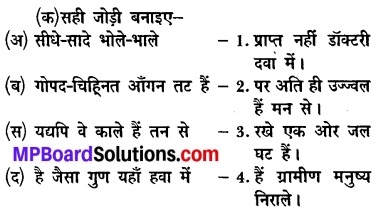
(क) सही जोड़ी बनाइए

Mp Board Class 8 Hindi Chapter 13 प्रश्न 1.
वस्तुनिष्ठ प्रश्न
Mp Board Class 8 Hindi Chapter 13
उत्तर
(अ) 4, (ब) 3, (स) 2, (द) 1

(ख) सही शब्द चुनकर रिक्त स्थान की पूर्ति कीजिए

(अ) एक दूसरे की ममता है, सब में ………………. समता है। (प्रेममयी, क्रोधमयी)
(ब) छोटे से …………………. के घर हैं, लिपे-पुते हैं, स्वच्छ सुघर हैं। (लकड़ी, मिट्टी)
(स) खपरैलों पर बेले छाई, …………………. हरी, मन भाई। (फूली-फली, खिली-खिली)
(द) प्रायः सबकी सब विभूति हैं, पारस्परिक ………. है।(अनुभूति, सहानुभूति)
उत्तर
(अ) प्रेममयी
(ब) मिट्टी
(स) फूली-फली
(द) सहानुभूति।

Class 8 Hindi Chapter 13 Mp Board प्रश्न 3.
अति लघु उत्तरीय प्रश्न
(अ)आडंबर और अनाचार किन लोगों में नहीं होता है?
(ब) हवा को किससे बढ़कर बताया है?
(स) गाँवों में आँगन तट कैसे होते हैं?
(द) कवि ने नन्दन-विपिन को किस पर निछावर किया है?
उत्तर
(अ) आडंबर और अनाचार गाँव के लोगों में नहीं होता है।
(ब) हवा को डॉक्टरी दवा से बढ़कर बताया है।
(स) गाँवों में आँगन तट गोपद चिहित होते हैं।
(द) कवि ने नन्दन-विपिन को शाम के समय गाँव के वातावरण पर निछावर किया है?

Sugam Bharti Class 8 MP Board प्रश्न 4.
लघु उत्तरीय प्रश्न

(अ)
कवि ने ग्राम्य-जीवन को शहरी जीवन से श्रेष्ठ क्यों माना है?
उत्तर
कवि ने ग्राम्य-जीवन को शहरी जीवन से श्रेष्ठ माना है। यह इसलिए कि यहाँ थोड़े में निर्वाह हो जाता है। यहाँ कोई दाब, पेंच और छल-कपट नहीं है। यहाँ आडंबर और अनाचार नहीं है।

(ब)
गाँव के घरों की क्या विशेषताएँ होती हैं?
उत्तर
गाँव के घर मिट्टी के घर हैं। वे लिपे-पुते हैं। वे स्वच्छ और सुन्दर हैं।

(स)
गाँववालों का स्वभाव कैसा होता है?
उत्तर
गाँववालों का स्वभाव बड़ा ही सरल और सीधा-सादा होता है। उसमें कोई छल-कपट नहीं होता है। उसमें परस्पर सहानुभूति होती है। उसमें दूसरे के प्रति ममता और समता होती है।

(द)
‘श्रम-सहिष्णु सब जन होते हैं’ से कवि का क्या ‘आशय है?
उत्तर
श्रम-सहिष्णु सब जम होते हैं’ से कवि का क्या आशय है-गाँव के लोग घोर परिश्रमी होते हैं। वे जी नहीं चुराते हैं। हमेशा मेहनत करने के कारण उनमें आलस्य बिलकुल ही नहीं होता है।

(ई)
गाँवों में अतिथि-सत्कार किस प्रकार होता है?
उत्तर
गाँवों में अतिथि-सत्कार विशेष प्रकार से होता है। अतिथि को आदरपूर्वक ठहराया जाता है। उसके प्रति अपने किसी संबंधी की ही तरह आदर देकर खुश किया जाता है। फिर सम्मान के साथ विदा किया जाता है।

भाषा की बात

Mp Board Class 8 Chapter 13 प्रश्न 1.
बोलिए और लिखिए___ ग्रामीण, अन्तःकरण, उज्ज्वल, श्रम, सहिष्णु।
उत्तर
ग्रामीण, अन्तःकरण, उज्ज्वल, श्रम, सहिष्णु।

कक्षा 8 विषय हिंदी पाठ 13 के प्रश्न उत्तर MP Board प्रश्न 2.
सही वर्तनी पर गोला लगाइए
निरवाह, निर्वाह, निवार्ह, र्निवाह,
साहानुभूति, शहानुभूति, सहानुभूति, सहानूभूती,
आतिथ्य, अतिथ्य, आतीथ्य, आतिथय,
आर्शीवाद, आसीरवाद, आशीवार्द, आशीर्वाद ।
उत्तर
निर्वाह, सहानुभूति, आतिथ्य, आशीर्वाद ।

Class 8 Hindi Mp Board प्रश्न 3.
निम्नलिखित शब्दों का वाक्यों में प्रयोग कीजिए।
अपनी-अपनी, सीधे-सादे, दिन-दिन, ग्राम्य-जीवन
उत्तर
शब्द – वाक्य-प्रयोग
अपनी अपनी – अपनी  आजकल सभी को अपनी- अपनी ही पड़ी है।
सीधे सादे – सीधे-सादे आजकल ठगे जाते
दिन दिन – दिन-दिन महँगाई बढ़ रही है।
ग्राम्य जीवन – ग्राम्य-जीवन सबका मनचाहा है।

Mp Board Class 5th Hindi Sugam Bharti Solution प्रश्न 4.
निम्नलिखित शब्दों में से जल, हवा, और विपिन के समानार्थी (पर्यायवाची शब्द) छाँटकर लिखिए
वायु, पानी, वन, जंगल, पवन, नीर, समीर, कानन, सलिल।
उत्तर
पर्यायवाची शब्द
जल-पानी, नीर, सलिल।
हवा-वायु, पवन, समीर।
विपिन-वन, जंगल, कानन।

Mp Board Class 8 Hindi प्रश्न 5.
निम्नलिखित शब्दों में तत्सम और तद्भव शब्द छाँटकर सूची बनाइए
पद, चाँद, पैर, नैन, हाथ, धरा, अमिय, काम, चन्द्र, हस्त, अग्नि देवता, सुभीता, नयन, धरती, देव, सुविधा, कार्य, आम, अश्रु, आग, आम्र, आँसू।
उत्तर
तत्सम-पद, धरा, चन्द्र, हस्त, अग्नि देवता, नयन, देव, कार्य, अश्रु, आम्र।
तद्भव-चाँद, पैर, नैन, हाथ, अमिय, काम, सुभीता, धरती, सुविधा, आम, आग, आँसू।

प्रश्न 6.
नीचे दी हुई पंक्तियों में से सर्वनाम शब्द छाँटिए
(अ) क्यों न इसे सबका मन चाहे।
(ब) अपनी-अपनी घात नहीं है।
(स) तो न उसे आती बरबादी।
(द) देती याद उन्हें चौपालें।
(ई) सब में प्रेममयी ममता है।
उत्तर
सर्वनाम शब्द
(अ) इसे
(ब) अपनी-अपनी
(स) उसे
(द) उन्हें
(ई) सबमें।

प्रमुख पद्यांशों की संदर्भ-प्रसंग सहित व्याख्याएँ

1. अहा! ग्राम्य-जीवन भी क्या है क्यों न इसे सब का मनचाहे।
थोड़े में निर्वाह यहाँ है, ऐसी सुविधा और कहाँ है।
यहाँ शहर की बात नहीं है, अपनी-अपनी घात नहीं है।
आडम्बर का काम नहीं है, अनाचार का नाम नहीं है।

शब्दार्थ
ग्राम्य-गाँव । निर्वाह-गुजारा । घात-दाव-पेंच, छल। आडंबर-ढोंग, दिखावा। अनाचार-दुराचार, बुरा व्यवहार।

संदर्भ – प्रस्तुत पंक्तियाँ हमारी पाठ्य-पुस्तक ‘सुगम भारती’ (हिन्दी सामान्य) के भाग-8 के पाठ-13 ‘ग्राम्य-जीवन’ से ली गई हैं। इनके रचयिता श्री मैथिलीशरण गुप्त हैं।

प्रसंग – प्रस्तुत पंक्तियों में कवि ने गाँव के जीवन की विशेषताओं पर प्रकाश डालते हुए कहा है कि__

व्याख्या
अहा! गाँव के जीवन का क्या कहना है! सचमुच में यह इतना अधिक सुन्दर है कि इसे भला ऐसा कौन नहीं है, जो इसे बार-बार न चाहेगा। इसकी सबसे अधिक अच्छाई है कि यहाँ थोडी-सी सुविधा में गजारा हो जाता है। इस प्रकार की सुविधा और कहीं नहीं है। यहाँ शहर की कोई बात नहीं हैं दुसरे शब्दों में यहाँ कोई शहरी विशेषताएँ नहीं हैं। इसलिए यहाँ शहरी कोई दाव-पेंच या छल नहीं है। किसी प्रकार का दिखावा नहीं है। इसी प्रकार कोई यहाँ किसी तरह का अनाचार-दुराचार नहीं दिखाई देता है।

विशेष

  • भारतीय गाँव की खूबियाँ बतायी गई हैं।
  • यह अंश ज्ञानवर्द्धक है।

2. सीधे-सादे भोले-भाले, हैं ग्रामीण मनुष्य निराले। एक दूसरे की ममता है,
सब में प्रेममयी समता है। यद्यपि वे काले हैं
तन से, पर अति ही उज्जवल हैं मन से।
अपना और ईश्वर का बल है, अन्तःकरण अतीव सरल है।

शब्दार्थ
ग्रामीण-गाँव के। ममता-प्रेम, लगाव । समतासमानता। तन-शरीर। अति-अधिक। अन्तःकरण-हृदय।

संदर्भ – पूर्ववत्

प्रसंग – प्रस्तुत पंक्तियों में कवि ने गाँव के लोगों की अच्छाइयों को बतलाते हुए कहा है कि

व्याख्या
गाँव के लोग बड़े ही सीधे-साधे और भोले-भाले होते हैं। वे बहुत ही निराले और दूसरे के प्रति समता और लगाव रखते हैं। उनमें परस्पर प्रेममयी समानता होती है। यह बात अवश्य है कि वे काले और कुरूप होते हैं, लेकिन उनका मन बहुत ही सुन्दर और आकर्षक होता है। उन्हें और किसी का भरोसा नहीं होता है। उनका तो केवल अपना और ईश्वर पर ही भरोसा होता है। इस प्रकार उनका हृदय बड़ा ही सरल और खुला हुआ होता है।

विशेष

  • गाँव के लोगों की खूबियों को ज्ञानवर्द्धक रूप में प्रस्तुत किया गया है। .
  • यह अंश रोचक है।

3. प्रायः सबकी सब विभूति हैं, पारस्परिक सहानुभूति है।
कुछ भी ईर्ष्या-द्वेष नहीं है, कहीं कपट का लेश नहीं है।
छोटे से मिट्टी के घर हैं, लिपे-पुते हैं, स्वच्छ सुघर हैं।
गोपद चिह्नित आँगन तट हैं, रखे एक और जल-घट हैं।

शब्दार्थ
प्रायः-लगभग। विभूति-धन-संपति, वैभव । पारस्परिक-परस्पर, एक-दूसरे के प्रति । ईर्ष्या-द्वेष, वैर, विरोध । कपट-छल। लेश-अंश मात्र, थोड़ा-सा भी। सुघर-सुंदर। गोपद-गाय के खुर। तट-किनारा।

संदर्भ – पूर्ववत्।

प्रसंग-पूर्ववत्।

व्याख्या
गाँव के लोगों के पास परस्पर सहानुभूति और सहयोग ही धन, संपत्ति और वैभव है। उनमें एक-दूसरे के प्रति कुछ भी वैर, विरोध आदि बुरे भाव नहीं हैं। उनमें एक-दूसरे के लिए छल-कपट थोड़ा-सा भी नहीं है। उनका घर मिट्टी का ही है, लेकिन वह लीपा-पोता हुआ बड़ा ही साफ, आकर्षक और सुन्दर है। उनके घर के आँगन में एक ओर गाय के खुर से और दूसरी ओर रखे हुए पानी के घड़े से शोभित होते हैं।

विशेष

  • गाँव के लोगों और उनके स्वभाव को सामने लाने का प्रयास किया गया है।
  • यह अंश ज्ञानवर्द्धक है।

4. खपरैलों पर बेलें छाईं, फूली-फली हरी, मन भाई।
काशीफल कुष्मांड कहीं है, कहीं लौकियाँ लटक रही हैं।
है जैसा गुण यहाँ हवा में, प्राप्त नहीं डॉक्टरी दवा में।
सन्ध्या समय गाँव के बाहर, होता नंदन विपिन निछावर।

शब्दार्थ
काशीफल-कदू । कुष्मांड-कुम्हड़ा, सफेद कदू। संध्या-शाम। नंदन- देवताओं का। विपिन-वन, जंगल। निछावर-त्याग, बलिदान।

संदर्भ – पूर्ववत्।

प्रसंग – प्रस्तुत पंक्तियों में कवि ने गाँव के वातावरण का चित्र खींचते हुए कहा है कि

व्याख्या
गाँव में घर खपरैल के होते हैं। उन पर बेलें छायी रहती हैं। उन पर कई प्रकार की सब्जियाँ लटक रही होती हैं। वे हरी-हरी और फूली-फली होती हैं। उन्हें देखकर मन खिल उठता है। कहीं कद्दू की बेलें खपरैलों पर लटकी रही होती हैं, तो कहीं सफेद कददू की बेलें। खपरैलों पर कहीं-कहीं लौकियाँ लटकती हुई होती हैं, तो कहीं-कहीं कई और बेलें भी इसी प्रकार दिखाई देती हैं। यहाँ की हवा में स्वास्थ्य को ठीक रखने का गुण है वह किसी डॉक्टरी दवा से बेहतर है। शाम के समय गाँव के बाहर का वातावरण नंदन वन से कहीं अधिक सुखद होता है। उस पर तो वह निछावर होता हुआ दिखाई देता है।

विशेष

  • गाँव के स्वरूप का सच्चा चित्र है।
  • तुकान्त शब्दावली है।

5. श्रम-सहिष्णु सब जन होते हैं, आलस में न पड़े सोते हैं।
दिन-दिनभर खेतों में रहकर, करते रहते काम निरंतर ।
अतिथि कहीं जब आ जाता है, वह आतिथ्य यहाँ पाता है।
ठहराया जाता है ऐसे, कोई संबंधी हो जैसे।

शब्दार्थ
श्रम-सहिष्णु-घोर परिश्रमी। निरंतर-हमेशा।

संदर्भ – पूर्ववत्।

प्रसंग – प्रस्तुत पंक्तियों में कवि ने गाँव के लोगों की अच्छाइयों को बतलाते हुए कहा है कि

व्याख्या
गाँव के लोग घोर परिश्रमी होते हैं। इसलिए वे आलसी नहीं होते हैं। वे पूरे दिन खेतों में लगातार काम करते रहते हैं। जब उनके यहाँ कोई अतिथि आ जाता है, तो वह संतुष्ट होकर ही वापस जाता है। वे उसका आदर-सम्मान अपने किसी सगे-संबन्धी की ही तरह करके उसे खुश कर देते है।

विशेष

  • गाँव के लोगों की महानता को आकर्षक रूप में चित्रित किया गया है।
  • यह अंश ज्ञानवर्द्धक है।

MP Board Class 12th English A Voyage Solutions Chapter 1 Invocation

MP Board Solutions for 12th English Chapter 1 Invocation Questions and Answers aids you to prepare all the topics in it effectively. You need not worry about the accuracy of the Madhya Pradesh Board Solutions for 12th English as they are given adhering to the latest exam pattern and syllabus guidelines.

You Can Download MP Board Class 12th English Solutions Questions and Answers Notes, Summary, Lessons: Pronunciation, Translation, Word Meanings, Textual Exercises. Enhance your subject knowledge by preparing from the Chapterwise MP Board Solutions for 12th English and clarify your doubts on the corresponding topics.

MP Board Class 12th English A Voyage Solutions Chapter 1 Invocation (Translated from Atharva Veda)

Kick start your preparation by using our online resource MP Board Solutions for 12th English Chapter 1 Invocation Questions and Answers. You can even download the Madhya Pradesh Board Class 12th English Solutions Questions and Answers for free of cost through the direct links available on our page. Clear your queries and understand the concept behind them in a simple manner. Simply tap on the concept you wish to prepare in the chapter and go through it.

Invocation Textbook Exercises

Word Power

A. Choose the antonyms of the following words from the text:
discord, destroy, diversity, resolve, worldly, fall, known, demon.
Answer:
Words – Antonyms

  • Discord – Concord
  • Destroy – Create
  • Diversity – Unity
  • Notes – Battle
  • Worldly – Divine
  • Fall – Rise
  • Known – Stranger
  • Demon – God

B. Compounding is a process of word formation, in which two constituent words normally are bound together to form a single word. The first member of a compound word is a modifier whereas the second member acts as an independent unit. There are two examples of compound words in the poem.

  • battle + cry ………….. battle-cry.
  • war + god ………… war-god.

Now match words from the two columns to form suitable compound words.

Column A – Column B

(i) black – (a) watch
(ii) on – (b) ways
(iii) off – (c) cry
(iv) side – (d) set
(y) watch – (e) board
(vi) mind – (f) wise
(vii) stop – (g) colour
(viii) out – (h) line
(ix) like – (i) word.
Answer:
(i) (e), (ii) (h), (iii) (g), (iv) (b), (y) (i), (vi) (J), (vis) (a), (viii) (C), (ix) (J).

Comprehension

A. Answer in one sentence each:

Mp Board Class 12 English Chapter 1 Question 1.
Who is the speaker in the poem?
Answer:
The poet is the speaker in the poem.

Invocation Poem Class 12 MP Board Question 2.
What does ‘concord’ mean?
Answer:
‘Concord’ means friendship and peace among people and countries.

Invocation Poem Summary Class 12 MP Board Question 3.
Whose concord is wished for at first?
Answer:
Concord with our own people is wished for at first.

Invocation Class 12 MP Board Question 4.
Who are the Asvins?
Answer:
Asvlns are the dual gods (devas) who symbolise perfect unity between the natives and the strangers.

English Chapter 1 Class 12 Mp Board Question 5.
What should not be fought against?
Answer:
The divine spirit within us should not be fought against.

B. Answer in about 50-60 words each:

Invocation Question Answer MP Board Question 1.
Which are the two kinds of people referred to in the verse? (M.P. Board 2020)
Answer:
The verse is an invocation made to the Asvins, the twin gods. The two types of people that are referred here the first type of people are those who surround us and whom we know well. We live among them. They are our own people. The second type of people are those who are strangers who do not belong to us. We don’t know them. It means that they belong to different culture and land. They are foreigners to us. Poet wants to create unity between these two kind of people. In short, the first type refers to our countrymen while the other refers to foreign people.

Chapter 1 English Class 12 Mp Board Question 2.
‘Let not the battle-cry rise amidst many slains, nor the arrows of the War-God fall with the break of the day’. What is implied by these lines?
Answer:
These lines imply that we have already.fought many battles. There are a lot of war victims. We have already lost many lives and property. The cries still haunt us. So, we should not let any more cries caused by battles. Instead we should resolve all issues peacefully.

Summary Of Invocation Class 12 MP Board Question 3.
In how many ways is the unity sought?
Answer:
Unity has been sought in many ways. First, we should have concord with our own people as well as with the strangers. We should unite our minds and purposes. We should not let any more battle-cry rise.

Mp Board Solution Class 12 English Question 4.
Why does the speaker invoke the gods-Asvins?
Answer:
Asvins are the dual gods (devas) who symbolise perfect unity of the natives and the strangers; The poet here, while making invocation for unity, invokes the gods Asvins in order to establish perfect concord and harmony between our countrymen and the foreigners.

C. Answer in about 75 words:

12th English Workbook Answers Pdf MP Board Question 1.
What is the message of the verse?
Answer:
The verse ‘Invocation’ has a very sound message. In the present context the poet feels that there is a need of mutual harmony and co-existence among people. This feeling of oneness should be extended to the foreign people also. We should have cordial relations and peace among our own men and with the strangers. This is the only way that can bring peace and harmony everywhere.

Class 12 English Chapter 1 Mp Board  Question 2.
Why does the speaker not want the battle-cry to be raised? (M.P. Board 2009,2015)
Answer:
The poet here intends to establish peace in the world. He wishes for the unity among people by having concord among ourselves and also with the aliens. He denigrates them because they are the vital causes for all ruins. People are victimised. Battles never resolve any problem but add many more, leaving a lot of unanswered questions and unending cries without end. We have already suffered a lot. Any more cry will finish us completely. Hence we should make efforts to resolve our differences by peaceful ways.

Mp Board Class 12 English Book Solution Question 3.
How does the speaker wish to achieve concord? (M.P. Board 2012)
Answer:
This poem is an invocation for the establishment of concord in world. First, we should have concord with our own people and then with the strangers. Here ‘own people’ refers to our countrymen with whom we live and share all our joys and sorrows. All the time they are with us. Then we should have a state of peace with the strangers i.e., the aliens who contribute to our global vision. We can achieve this by resolving our disputes or issues through peaceful ways because battles only ruin us and we should condemn them.

Speaking Activity

A. Divide the class into two groups and conduct a debate on the proposition, ‘United we stand, Divided we fall’.
Answer:
Do with the help of your teacher.

B. Narrate a story to the class, bringing out the moral of Unity is Strength.
Answer:
Do yourself.

Writing Activity

A. Write a short composition on the theme, ‘Our country represents unity amid diversity’.
Answer:
India is a great country. It has embraced a lot of vicissitudes. It is culturally so rich that it stands apart with its unique recognition. It is recognized as a land of diversity. Its uniqueness lies in the fact that it is a federal democratic country with so many different cultures, climates, castes, religions, and foods. We have Kashmir where the temperature goes even below zero on the one hand and on the other we have coastal regions which remain hot all the time. We equally enjoy and celebrate the festivals of Holi, Id, Christmas,etc. We have so many different dresses and manners. Still we are Indians with one national song, one national anthem, one national flag, one national symbol, one judiciary and one parliament. Hence in the truest sense our country represents unity amid diversity.

B. Every Indian takes pride in his culture and age-old traditions. Write a letter to your American friend, highlighting the salient features of Indian civilization and culture.
Answer:
A-42/F, Shivaji Park
Gwalior, M.P.
25th July, 20xx
Dear Jack,
I am really happy to receive your letter. It gives me extreme joy to note that you wish to know about my country and visit it soon. I would like to highlight a few unique features of my country. You know that India is a land of glorious past and prosperous future. Its culture has been so rich that it has always attracted the foreigners for study and research. The world is still amazed at the unique culture of unity in diversity of India. It has been the land of Rama, Krishna, Gautama, Ram Krishna Paramhans and Vivekananda, Mahatma Gandhi and Subhash Chandra Bose. Every Indian feels proud of belonging to this country. India can’t be explained in words. Therefore, I would like to invite you to my country, so that you see it with your own eyes. So come, see and feel its beauty. It would be an exciting and new experience felt for its beauty.
Yours,
Arun

Think IT over

A. Have you read the English translation of the Sanskrit epics, the Ramayana and the Mahabharata or any other Indian literary work? Are they able to capture the essence of the original work to your satisfaction?
Answer:
Yes, I have read the English translation of some of the epics like the Mahabharata, the Gita by some great writers and scholars. They have captured the essence of the original work to my satisfaction.

B. In this age of revolution in information and communication technology, we talk of the world being a global village. Do you find any relevance of our ancient texts in sustaining the tempo of social change?
Answer:
Yes, the ancient texts are much relevant in sustaining the tempo of social change. The evidences of Aakashwani, Pushpak Viman, Predictions, etc. prove it well.

Things to Do

A. Inspired by the ‘Vedas’, Tagore composed Gitanjali in Bengali. lts translation into English exposed Tagore to the readers worldwide. For this work, he was awarded the Nobel Prize in 1913. look for other such Nobel Laureates from other languages.
Answer:
Some Nobel Laureates from other languages are:

  • Romain Rolland — French
  • Selma Legerlof — Swedish
  • Gunter Grass — German

B. Prepare a list of important literary works by foreign authors, whose translations you would like to have in your personal library, citing reasons there of
Answer:
I would like to have the translations of the literary works of Jane Austen, James Joyce, Emil Zola, Anton I’ Chekov, O. Henr Hemingway, and Charles Dickens. I would like to have the works of these writers in my library because they have touching appeal. They put their impact upon our mind and their characters seem to be realistic. They depict the incidents that seem to be our own life’s stories and their characters are
common people who give us a message for life.

C. You know the books giving information about knowledge and Indian culture are called ‘the Vedas’. You also know a book containing important dates and statistical information is called an ‘almanac’. Given below are some books with the information they give us. What are these books called? Write the names on the books. (You can take the help of the Help Box.)

Help Box

(a) Psalter
(b) Lexicon
(c) Pharmacopoeia
(d) Anthology
(e) Missal
(f) Bestiary.
Answer:
1. (d), 2. (f), 3. (e), 4. (c), 5. (b), 6. (a).

Invocation by Translated from Atharva Veda Introduction

The poem inculcates the ethics of collective living through mutual love and understanding. There must be a sense of unity among all human beings. Thus, an invocation has been made to unite ah the people.

Invocation Summary in English

Invocation is an excerpt taken from Hymns from the Vedas, a book of selected translations from the Vedas by Dr. Abinash Chandra Bose. In this part, the ethics of collective living through mutual love and understanding has been propounded.

An invocation has been made to the Asvins, the twin gods for the people to be united and live with mutual co-operation, not only with their relatives and friends but also with strangers. There should be a unity between mind and purposes. We should not fight against the divine spirit within us. We should avoid wars and battles.

Invocation Summary in Hindi

Invocation डॉ. अविनाश चन्द्र बोस द्वारा वेदों के संकलन के अनुवाद की एक पुस्तक Hymns from the Vedas का एक अंश है। इस भाग में परस्पर प्यार एवं समन्वय के साथ सामूहिक जीवन के सिद्धान्तों को प्रतिपादित किया गया है। लोगों को परस्पर प्यार एवं सहयोग के साथ न केवल अपनों (स्वजनों) बल्कि अजनबियों के साथ भी एकाकार होने के लिए गन्धर्व (द्विदेव) को उद्बोधित किया गया है। मस्तिष्क एवं उद्देश्यों में तारतम्य होना चाहिए। हमें अपने अंदर के दैविक शक्तियों से लड़ना नहीं चाहिए। हमें युद्ध एवं क्रन्दन को नकारना चाहिए।

Invocation Word Meaning

Mp Board Class 12 Special English Book Pdf Download

Invocation Important Pronunciation

12th General English Workbook Answers MP Board

We believe the information shared regarding MP Board Solutions for 12th English Chapter 1 Invocation Questions and Answers as far as our knowledge is concerned is true and reliable. In case of any queries or suggestions do leave us your feedback and our team will guide you at the soonest possibility. Bookmark our site to avail latest updates on several state board Solutions at your fingertips.

MP Board Class 8th Hindi Sugam Bharti Solutions Chapter 19 हार नहीं होती

In this article, we will share MP Board Class 8th Hindi Book Solutions Chapter 19 हार नहीं होती Pdf, These solutions are solved subject experts from the latest edition books.

MP Board Class 8th Hindi Sugam Bharti Solutions Chapter 19 हार नहीं होती

प्रश्न अभ्यास
अनुभव विस्तार

Mp Board Class 8 Hindi Chapter 19 प्रश्न.1.
वस्तुनिष्ठ प्रश्न
Mp Board Class 8 Hindi Chapter 19
उत्तर
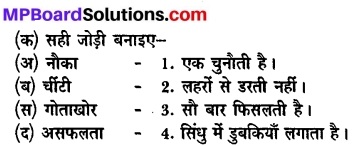
(अ) 2, (ब) 3, (स) 4, (द) 1

(ख) दिए गए विकल्पों से रिक्त स्थान की पूर्ति कीजिए
(अ) नन्हीं चींटी जब ……………….लेकर चलती है। (खाना/दाना)
(ब) कोशिश करने वालों की ……………….नहीं होती। (हार/जीत)
(स) ……………….एक चुनौती है स्वीकार करो। (सफलता, असफलता)
(द) संघर्षों का मैदान ………………. मत भागो तुम। (छोड़/तोड़)
उत्तर
(अ) दाना
(ब) हार
(स) असफलता
(द) छोड़।

अति लघु उत्तरीय प्रश्नोत्तर

Class 8 Hindi Chapter 19 Mp Board प्रश्न 1.
(अ) किसकी हार नहीं होती?
(ब) गहरे पानी में से खाली हाथ लौटने पर गोताखोर क्या करता है?
(स) कवि चैन की नींद त्यागने के लिए क्यों कह रहा है?
(द) असफलता को किस रूप में स्वीकार करना चाहिए?
उत्तर
(अ) कोशिश करने वालों की हार नहीं होती।
(ब) गहरे पानी में से खाली हाथ लौटने पर गोताखोर फिर इस दोगुने उत्साह से डुबकी लगाता है कि बड़ी आसानी से मोती नहीं मिलते हैं।
(स) कवि चैन की नींद त्यागने के लिए सफलता की प्राप्ति तक संघर्ष करने के लिए कह रहा है।
(द) असफलता को चुनौती के रूप में स्वीकार करना चाहिए।

लघु उत्तरीय प्रश्नोत्तर

Class 8 Hindi Chapter 19 प्रश्न 1.
(अ) कोशिश करते रहने की जीवन में क्या उपयोगिता है?
(य) नन्हीं चींटी किस प्रकार संघर्ष करती है?
(स) असफलता मिलने पर हमें क्या करना चाहिए?
(द) गोताखोर समुद्र में बार-बार डुबकी क्यों लगाता है?
(ई) सफलता पाने के लिए हमें क्या काम करना चाहिए?
उत्तर
(अ) कोशिश करते रहने की जीवन में बहुत बड़ी उपयोगिता है। इससे सफलता मिलती हा है।
(ब) नन्हीं चींटी दीवार पर दाना लेकर चढ़ते समय एक नहीं, दो बार नहीं बल्कि सौ बार फिसलती है। अंत में उसे सफलता मिल ही जाती है।
(स) असफलता मिलने पर हमें यह देखना चाहिए कि हमारी कोशिश में क्या कमी रह गयी है और उसे कैसे सुधारा जा सकता है।
(द) सफलता पाने के लिए हमें कोशिश करते रहना चाहिए।

भाषा की बात

Mp Board Solution Class 8 Hindi Chapter 19 प्रश्न 1.
बोलिए और लिखिए
नौका, कोशिश, मैदान, विश्वास, सिंधु, हैरानी, संघर्षों, डुबकियाँ, असफलता।
उत्तर
नौका, कोशिश, मैदान, विश्वास, सिंधु, हैरानी, संघर्षों, डुवकियाँ, असफलता।

कोशिश करने वालों की हार Ques And Answers Mp Board प्रश्न 2.
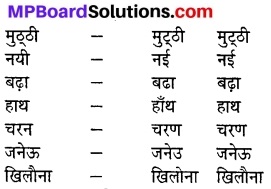
निम्नलिखित शब्दों में ‘ए’ और ‘ऐ की मात्रा संबंधी अशुद्धियाँ हैं, उन्हें सही कीजिए
उत्तर
अशुद्धियाँ – शुद्धियाँ
तेरता – तैरता
गहरै – गहरे
हेरानी – हैरानी
चेन – चौन
सेनिक – सैनिक

Class 8 Hindi Chapter 19 Question Answer Mp Board प्रश्न 3.
निम्नलिखित शब्दों में से एक बचन तथा बहुवचन छाँटकर लिखिए
रंग, डुबकियाँ, संघर्षों, कपड़ा, गाय, कथाएँ, गुड़िया
उत्तर
एकवचन – बहुवचन
रंग – इबकियाँ
कपड़ा – संघर्षों
गाय – कथाएँ
गुड़िया

Class 8 Chapter 19 Hindi Mp Board प्रश्न 4.
निम्ननिखित शब्दों में से शुद्ध शब्द छाँटकर लिखिए
उत्तर
Class 8 Hindi Chapter 19 Mp Board

Mp Board For Class 8 Hindi Chapter 19 प्रश्न 5.
पढ़िए, समझिए और उदाहरण के अनुसार लिखिए
उत्तर
फिसलती – फिसलना, फिसलता, फिसला
सिसकती – सिसकना, सिसकता, सिसका
लहराती – लहराना, लहराता, लहरता
अखरती – अखरना, अखरता, अखरा।

प्रश्न 6.
निम्नलिखित शब्दों में से शब्द और उनके विलोम शब्दों को छाँटकर जोड़ी बनाइए
हार, गिरना, असफलता, जीत, स्वीकार, सफलता, उठना, अस्वीकार, अविश्वास, भरा, विश्वास, खाली।
उत्तर
शब्द – विलोम शब्द
हार – जीत
गिरना – उठना
असफलता – सफलता
स्वीकार – अस्वीकार
अविश्वास – विश्वास
भरा – खाली

प्रश्न 7.
‘क’ वर्ग में लिखित शब्द समूहों का सही अर्थ ‘ख’ वर्ग से छाँटकर सही जोड़ी बनाइए
Class 8 Hindi Chapter 19
उत्तर
(अ) 5, (ब) 1, (स) 4, (द) 3, (ई) 2

प्रश्न 8.
निम्नलिखित शब्दों का वाक्यों में प्रयोग कीजिए
साहस, मेहनत, उत्साह, चुनौती, संघर्ष।
उत्तर
शब्द वाक्य-प्रयोग
साहस – साहस से काम करना चाहिए।
मेहनत – मेहनत से सफलता मिलती है।
उत्साह – उत्साह से निराशा समाप्त होने लगती है।
चुनौती – असफलता एक चुनौती है।
संघर्ष – संघर्ष करने से जीत हासिल होती है।

पयांशों की संदर्भ-प्रसंग सहित व्याख्याएँ

1. लहरों से डरकर नौका पार नहीं होती,
कोशिश करनेवालों की हार नहीं होती,
नन्हीं चींटी जब दाना लेकर चलती है,
चढ़ती दीवारों पर, सो बार फिसलती है,
मन को विश्वास रगों में साहस भरता है,
चढ़कर गिरना, गिरकर चढ़ना न अखरता है,
आखिर उसकी मेहनत बेकार नहीं होती,
कोशिश करनेवालों की हार नहीं होती।

शब्दार्य
नौका-नाव । रगो में-नसों में। अखरता-बुरा लगता।

संदर्भ – प्रस्तुत पंक्तियाँ हमारी पाठ्य-पुस्तक ‘सुगम भारती’ (हिंदी सामान्य) भाग-8 के पाठ-19 ‘हार नहीं होती’ से ली गई हैं।

प्रसंग- प्रस्तुत पंक्तियों में कवि ने कोशिश करके ही विजय प्राप्त होती है। इसे बतलाते हुए कहा है कि

व्याख्या
लहरों के थपेड़ों से अगर कोई नाविक डर जाए, तो वह अपनी नौका को इस पास से उस पार नहीं लगा सकता है। उसे यह विश्वास कर लेना चाहिए कि जो कोशिश करते हैं, उनकी कभी हार नहीं होती है।
कवि का पुनः कहना है कि जब नन्हीं-सी चींटी दाना लेकर दीवार पर चढ़ती है, तो वह एक नहीं, दो नहीं बल्कि सो बार फिसलती है। फिर भी चढ़ने में सफल हो जाती है। अगर नसों में मन का विश्वास भरा हो तो उससे साहस मिलता है। चढ़कर गिरना लेकिन गिरकर फिर न चढ़ना बुरा लगता है। इस प्रकार जो मेहनत करते हैं, उनको आखिर में सफलता मिलती है। उनकी मेहनत बेकार नहीं जाती है। इस आधार पर यह कहा जा सकता है कि कोशिश करने वालों की हार कभी नहीं होती है।

विशेष

  • यह अंश उत्साहवर्द्धक है।
  • वीर रस का प्रवाह है।

2. डुबकियाँ सिंधु में गोताखोर लगाता है,
जा-जाकर खाली हाथ लौट कर आता है।
मिलते न सहज ही मोती गहरे पानी में,
बढ़ता दूना उत्साह इसी हेरानी में,
मुट्ठी उसकी खाली हर बार नहीं होती,
कोशिश करने वालों की हार नहीं होती।

शब्दार्थ
सिंधु-समुद्र । दूना-दो गुना।

संदर्भ – पूर्ववत्।

प्रसंग- पूर्ववत्।

व्याख्या
गोताखोर समुद्र में गहरी डुबकियाँ लगाता है। फिर भी कभी-कभी नह खाली हाथ लौटकर आता है। लेकिन वह यह भलीभाँति जानता है कि समुद्र की गहराई में इतनी आसानी से मोती नहीं मिलते हैं। वह इसी बात को समझकर हैरान हो जाता है। इस प्रयास में उसका उत्साह दो गुना बढ़ – जाता है कि उसकी मुट्ठी हर बार खाली नहीं लौटेगी। इस प्रकार कोशिश करने वालों की हार नहीं होती है।

विशेष

  • भाषा में प्रभाव है।
  • वीर रस का संचार है।

3. असफलता एक चुनौती है, स्वीकार करो, क्या कमी रह गयी, देखो और सुधार करो

जब तक न सफल हो, नीद चन का त्यागा तुम,
संघर्षों का मैदान छोड़ मत भागो तुम ।
कुछ किये बिना ही जय-जयकार नहीं होती,
कोशिश करने वालों की हार नहीं होती।

संदर्भ – पूर्ववत्

प्रसंग – पूर्ववत्।

व्याख्या
असफलता कोशिश करने वालों के लिए एक चुनौती है। ऐसा मानकर उन्हें इसे स्वीकार करना चाहिए। इसके लिए उन्हें यह छानबीन करनी चाहिए। उनकी कोशिश में क्या कमी रह गयी और उसे अब कैसे दूर करके कदम बढ़ाना चाहिए। ऐसा सोच-विचार कर फिर कोशिश करनी चाहिए। इस प्रकार जब तक सफलता न मिले, चैन की नींद नहीं आनी चाहिए। इस दृढ़ संकलप के साथ संघर्षों के मैदान में डटे रहना चाहिए। यह अच्छी तरह से समझ लेना चाहिए श्रेष्ठ और अटूट कर्मों से ही जय-जयकार होती है। यही नहीं, जो कोशिश करते है, उन्हें विजय प्राप्त होती है, हार नहीं।

विशेष

  • वीर रस प्रवाह है।
  • यह अंश प्रेरक हैं।

MP Board Class 12th Special Hindi पद्य साहित्य का विकास : आधुनिक काव्य प्रवृत्तियाँ

MP Board Class 12th Special Hindi पद्य साहित्य का विकास : आधुनिक काव्य प्रवृत्तियाँ

आधुनिक काल

आधुनिक हिन्दी कविता का प्रारम्भ संवत् 1900 से माना जाता है। यह काल अनेक दृष्टियों से महत्त्वपूर्ण है। इस काल में हिन्दी साहित्य का चहुंमुखी विकास हुआ। इस काल में सांस्कृतिक,राजनीतिक एवं सामाजिक आन्दोलनों के फलस्वरूप हिन्दी काव्य में नई चेतना तथा विचारों ने जन्म लिया और साहित्य बहुआयामी क्षेत्रों को सस्पर्श करने लगा। इस काल में धर्म, दर्शन,कला एवं साहित्य,सभी के प्रति नये दृष्टिकोण का आविर्भाव हुआ।

आधुनिक हिन्दी कविता के विकासक्रम को विभिन्न विद्वानों ने अनेक प्रकार से वर्गीकृत किया है किन्तु सर्वमान्य रूप से इस विकास को निम्नलिखित भागों में बाँटा जा सकता-
आधुनिक हिंदी कविता की प्रमुख प्रवृत्तियाँ Pdf MP Board Class 12th Special
है भारतेन्दु युग हिन्दी कविता का जागरण काल है। इस युग को हिन्दी साहित्य का प्रवेश द्वार माना जाता है। इस युग में देशोद्धार, राष्ट्र – प्रेम, अतीत – गरिमा आदि विषयों की ओर ध्यान दिया गया और कवियों की वाणी में राष्ट्रीयता का स्वर निनादित होने लगा। भारतेन्दु हरिश्चन्द्र, प्रताप नारायण मिश्र, चौधरी बद्रीनारायण प्रेमघन’, लाला सीताराम आदि प्रमुख रचनाकार हुए।
आधुनिक हिंदी काव्य की प्रमुख प्रवृत्तियाँ MP Board Class 12th Special

द्विवेदी युग में खड़ी बोली कविता की सम्वाहिका बनी। काव्य में सामाजिक तथा पौराणिक विषयों का विस्तार हुआ। श्रीधर पाठक, आचार्य महावीर प्रसाद द्विवेदी, अयोध्यासिंह उपाध्याय ‘हरिऔध’, मैथिलीशरण गुप्त, गयाप्रसाद शुक्ल ‘सनेही’,रामचरित उपाध्याय, रामनरेश

त्रिपाठी, गोपालशरण सिंह, जगन्नाथ प्रसाद ‘रत्नाकर’, सत्यनारायण ‘कविरत्न’ आदि विशेष उल्लेखनीय हैं।
आधुनिक काल की प्रवृत्तियाँ Pdf MP Board Class 12th Special

हिन्दी काव्य की प्रमुख प्रवृत्तियाँ

1. छायावाद [1920 – 19361]

हिन्दी कविता में आधुनिकता तथा नवीन युग के सूत्रपात का श्रेय छायावादी युग को प्रदान किया जाता है।

हिन्दी साहित्य में छायावाद द्विवेदीयुगीन काव्य प्रवृत्ति की प्रतिक्रिया की उपज है। आचार्य रामचन्द्र शुक्ल के अनुसार, “छायावाद शब्द का प्रयोग दो अर्थों में है—एक तो कवि उस अनन्त अज्ञात प्रियतम को आलम्बन बनाकर चित्रमयी भाषा में प्रेम के अनेक प्रकार की व्यंजना करता है। दूसरा प्रयोग काव्य – शैली या पद्धति – विशेष के व्यापक अर्थ में है।”

डॉ. रामकुमार वर्मा के अनुसार, “परमात्मा की छाया आत्मा में पड़ने लगती है और आत्मा की छाया परमात्मा में,यही छायावाद है।”

डॉ. नगेन्द्र ने छायावाद को “स्थूल के प्रति सूक्ष्म का विद्रोह”माना है।

आचार्य नन्ददुलारे वाजपेयी के अनुसार, “मानस अथवा प्रकृति के सूक्ष्म किन्तु व्यक्त सौन्दर्य में आध्यात्मिक छाया का भाव ही छायावाद है।”

  • छायावाद की प्रमुख प्रवृत्तियाँ

छायावादी काव्य में पायी जाने वाली प्रवृत्तियों को हम मुख्यतः तीन वर्गों में विभक्त कर सकते हैं—
(क) विषयगत, (ख) विचारगत और (ग) शैलीगत।

आधुनिक हिंदी कविता की प्रमुख प्रवृत्तियाँ Pdf MP Board Class 12th Special (क) विषयगत प्रवृत्तियाँ
इसके अन्तर्गत तीन प्रकार की अभिव्यंजना है –
(1) नारी सौन्दर्य और प्रेम – चित्रण,
(2) प्रकृति – सौन्दर्य और प्रेम – व्यंजना तथा
(3) अलौकिक प्रेम या रहस्यवाद।

(1) नारी सौन्दर्य और प्रेम – चित्रण छायावादी कवियों ने सौन्दर्य के स्थूल चित्रण की अपेक्षा उसके सूक्ष्म प्रभाव का अंकन किया है। प्रेम के क्षेत्र में वे किसी रूढ़ि, मर्यादा या नियमबद्धता को स्वीकार नहीं करते। दारले 3 इनके प्रेम की दूसरी विशेषता है – वैयक्तिकता। हिन्दी में पहले भी श्रृंगारी कवियों ने प्रेम – वर्णन किया, किन्तु प्रेममार्गी कवियों को छोड़कर सभी ने राधा, पद्मिनी,उर्मिला,यशोधरा को माध्यम बनाया, जबकि छायावादी कवियों ने निजी प्रेमानुभूतियों की व्यंजना की। उनका प्रेम सूक्ष्म है। इन्होंने श्रृंगार के स्थूल क्रिया – कलापों के बजाय सूक्ष्म भाव दशाओं का उद्घाटन किया। चौथी विशेषता है कि उनकी प्रणय – गाथा का अन्त असफलता एवं निराशा में होता है। प्रेम – निरूपण में सबसे अधिक सफलता विरह – अनुभूति के वर्णन में मिली है।

(2) प्रकृति – सौन्दर्य और प्रेम – व्यंजना प्रकृति के सौन्दर्य और प्रेम का वर्णन भी छायावादी कवियों की श्रृंगारिकता का दूसरा रूप है। वे प्रकृति में नारी और प्रेयसी दोनों की छवि और सौन्दर्य देखते हैं। पत्तों और फूलों की मर्मर, भ्रमरों की गुनगुन में उन्हें पायल की झंकार या मधुर आलाप सुनायी देता है। उन्होंने प्रकृति को सचेतन मानकर (उसका) मानवीकरण और नारीकरण किया है।

(3) अलौकिक प्रेम या रहस्यवाद – ‘प्रेम पथिक’ और ‘आँसू’ में प्रसादजी ने सबसे पहले अलौकिक प्रेम की अभिव्यक्ति की थी। रहस्यवाद में पहले वियोग, फिर संयोग होता है। छायावाद में इसके विपरीत है।

(ख) विचारगत प्रवृत्तियाँ छायावाद की विचारगत प्रवृत्तियाँ निम्नलिखित हैं

(1) दर्शन के क्षेत्र में अद्वैतवाद एवं सर्वात्मवाद।
(2) धर्म के क्षेत्र में रूढ़ियों एवं बाह्याचारों से मुक्त व्यापक मानव – हितचिन्तन।
(3) समाज के क्षेत्र में समन्वयवाद।
(4) राजनीति के क्षेत्र में अन्तर्राष्टीय एवं विश्व – शान्ति का समर्थन।
(5) पारिवारिक एवं दाम्पत्य जीवन के क्षेत्र में हृदयतत्व की प्रधानता।
(6) साहित्य के क्षेत्र में व्यापक कलावाद या सौन्दर्यवाद।

आधुनिक हिंदी काव्य की प्रमुख प्रवृत्तियाँ MP Board Class 12th Special (ग) शैलीगत प्रवृत्तियाँ
छायावादी शैली की प्रमुख विशेषताएँ निम्नलिखित हैं
(1) मुक्तक गीत शैली।
(2) प्रतीकात्मकता।
(3) प्राचीन एवं नवीन अलंकारों का प्रचुर मात्रा में सफल प्रयोग।
(4) कोमलकांत संस्कृतनिष्ठ पदावली।
(5) गीति शैली के सभी प्रमुख तत्व – वैयक्तिकता, भावात्मकता, संगीतात्मकता, संक्षिप्तता और कोमलता।

  • छायावाद के प्रमुख कवि एवं उनकी रचनाएँ

आधुनिक काल की प्रवृत्तियाँ Pdf MP Board Class 12th Special छायावाद के चार प्रमुख स्तम्भ हैं
1. जयशंकर प्रसाद,
2. सुमित्रानन्दन पन्त,
3. सूर्यकान्त त्रिपाठी ‘निराला’,
4. महादेवी वर्मा।

(1) जयशंकर प्रसाद प्रसाद ने प्रारम्भ में ब्रजभाषा में कविताएँ लिखीं। 1913 – 14 में वे खड़ी बोली में कविता करने लगे। उनके प्रमुख काव्य ग्रन्थ हैं – ‘चित्राधार’, ‘प्रेम पथिक’, ‘करुणालय’, ‘महाराणा का महत्व’, ‘कानन कुसुम’, ‘झरना’, ‘आँसू’, लहर’ और ‘कामायनी’। ‘कामायनी’ उनकी अन्तिम काव्य – रचना है। यह महाकाव्य है। ‘प्रेम पथिक’ लघु प्रबन्ध – काव्य है। ‘आँसू’ खण्ड – काव्य है, विरह – काव्य है। ‘कानन कुसुम’, झरना’, लहर स्फुट’ कविताओं के संग्रह हैं।

प्रसादजी छायावाद के प्रौढ़तम श्रेष्ठ कवि हैं।

(2) सुमित्रानन्दन पन्त—’वीणा’,’ग्रन्थि’, पल्लव’, ‘गुंजन’, ‘युगान्त’,’युगवाणी’, ‘ग्राम्या’, ‘स्वर्ण धूलि’, ‘युगान्तर’, ‘उत्तरा’, ‘रजतशिखर’,’शिल्पी’, ‘अतिमा’, ‘वीणा’ पन्त की काव्य – कृतियाँ हैं। पल्लव’, ‘गुंजन’ में उनकी स्फुट रचनाएँ हैं। ‘वीणा’ में रहस्यवाद का प्रभाव है। ‘पल्लव’ में निराशा और प्रकृति – चित्रण की तथा ‘गुंजन’ में नारी सौन्दर्य एवं मानववाद की प्रवृत्ति दृष्टव्य है। ‘ग्रन्थि’ एक छोटा प्रबन्ध – काव्य है जिसमें असफल प्रेम की कहानी है। ‘युगान्त’ में छायावादी युग का अन्त हो जाता है।

(3) सूर्यकान्त त्रिपाठी ‘निराला’ – ‘परिमल’, ‘अनामिका’, ‘तुलसीदास’, ‘कुकुरमुत्ता’, ‘अणिमा’,’बेला’, ‘नये पत्ते’, ‘अर्चना’, ‘आराधना’ निरालाजी की रचनाएँ हैं। इनकी रचनाओं में छायावाद की सभी प्रवृत्तियाँ हैं। कहीं रहस्यवाद भी है। बाद में निरालाजी प्रगतिवादी हो गये।

(4) महादेवी वर्मा – ‘नीहार’, ‘रश्मि’, ‘नीरजा’, ‘सांध्यगीत’ और ‘दीपशिखा’ महादेवीजी की काव्य – रचनाएँ हैं। इन चार प्रमुख कवियों के अतिरिक्त मुकुटधर पाण्डेय, भगवतीचरण वर्मा, रामकुमार वर्मा, नरेन्द्र शर्मा, रामेश्वर शुक्ल ‘अंचल’, मोहनलाल महतो ‘वियोगी’, जानकीबल्लभ शास्त्री भी छायावाद के कवि हैं।
आधुनिक हिंदी कविता की प्रमुख प्रवृत्तियाँ MP Board Class 12th Special

2. रहस्यवाद
[काल निर्धारण कठिन]

आचार्य रामचन्द्र शुक्ल के शब्दों में, “चिन्तन के क्षेत्र में जो अद्वैतवाद है वही भावना के क्षेत्र में रहस्यवाद है।”

बाबू गुलाबराय ने “प्रकृति में मानवीय भावों का आरोप कर जड़ – चेतन के एकीकरण की प्रवृत्ति के लाक्षणिक प्रयोगों को रहस्यवाद कहा है।”

मकटधर पाण्डेय के अनुसार, “प्रकृति में सूक्ष्म सत्ता का दर्शन ही रहस्यवाद है।”

रहस्यवाद का अर्थ है – छिपी हुई बात’। अतः रहस्यवाद का अर्थ हुआ वह विचारधारा या वाद जिसका आधार अज्ञात है। हिन्दी कविता में रहस्यवाद का काल निर्धारण करना कठिन है क्योंकि रहस्यवाद सृष्टि के आरम्भ से ही कवियों को प्रिय रहा है।

रहस्यवाद के तीन प्रमुख लक्षण हैं –
(1) अद्वैतवादी विचारधारा की स्वीकृति – आत्मा और परमात्मा एक हैं, अभिन्न हैं।
(2) उस असीम शक्ति से रागात्मक सम्बन्ध की अनुभूति।
(3) भाषा के माध्यम से अनुभूतियों की अभिव्यक्ति। सर्वप्रथम रहस्यवादी कवि कबीर और जायसी माने गये हैं।

आधुनिक युग में रहस्यवादी कवियों में जयशंकर प्रसाद सर्वप्रथम हैं। फिर निरालाजी ने तुंग हिमालय श्रृंग मैं चंचलगति सुर – सरिता” कहकर अलौकिक के साथ अपना स्पष्ट सम्बन्ध जोड़ लिया। पन्तजी भी प्रारम्भ में रहस्यवादी रहे।

रहस्यवाद की साधना में अकेली महादेवी वर्मा विरह के गीत ही गाती रहीं।

  • रहस्यवाद की प्रमुख प्रवृत्तियाँ

(1) अद्वैतवादी मान्यता,
(2) दाम्पत्य – प्रेम पद्धति,
(3) प्रेम में स्वच्छता एवं पवित्रता,
(4) दैन्य एवं आत्म – समर्पण की भावना,
(5) प्रतीकात्मकता,
(6) मुक्तक गीति शैली।

  • रहस्यवाद के प्रमुख कवि

कबीर, प्रसाद, पन्त, निराला, महादेवी सभी ने इस शैली को अपनाया है। ये सभी रहस्यवादी हैं। रामकुमार वर्मा आदि कवि अंशतया रहस्यवाद के कुछ सोपानों पर चढ़ सके. इसलिए उनकी रचनाओं में कुछ स्थानों पर रहस्यवाद की झलक मिलती है।

3. प्रगतिवाद
आधुनिक हिंदी कविता की प्रमुख प्रवृत्तियाँ MP Board Class 12th Special [1936 – 19431]

“राजनीति के क्षेत्र में जो साम्यवाद है, वह काव्य के क्षेत्र में प्रगतिवाद है।”

प्रगतिवादी काव्य की संज्ञा उस कविता को प्रदान की गई जो कि छायावाद के समापन काल में सन् 1936 के आस – पास सामाजिक चेतना को लेकर अग्रसर हुआ। प्रगतिवादी कविता में राजनैतिक, आर्थिक और सामाजिक शोषण से मुक्ति का स्वर प्रमुख है। इस कविता पर मार्क्सवाद का प्रभाव है। रूस के नये संविधान और सन् 1905 में लखनऊ में भारतीय प्रगतिशील लेखक संघ की प्रेमचन्द की अध्यक्षता में हुई सभा इसके विकास – क्रम के महत्वपूर्ण सोपान हैं। प्रगति शब्द का अर्थ है – चलना, आगे – बढ़ना, अर्थात् यह वह वाद है जो आगे बढ़ने में विश्वास रखता है। प्रगतिवाद में साम्यवाद दृष्टिकोण को साहित्यिक विचारधारा के रूप में स्वीकार किया गया है।

  • प्रगतिवाद की प्रमुख प्रवृत्तियाँ

“दर्शन में जिसे द्वन्द्वात्मक भौतिक विकासवाद माना गया है, राजनीति में जो साम्यवाद है, वही साहित्य में प्रगतिवाद है।”
(1) धर्म,ईश्वर एवं परलोक का विरोध है। समाज में वर्ग – संघर्ष को समाप्त करने के लिए भाग्यवादिता की मान्यता को नष्ट करना होगा, क्योंकि शोषक वर्ग केवल भाग्य के बल पर ही शोषण करता है।
(2) पूँजीपति वर्ग के प्रति घृणा का प्रचार प्रगतिवादी कलाकारों ने किया है।
(3) शोषित वर्ग की दीन – हीन दशा का यथार्थ चित्रण करके ही दोनों वर्गों का भेद स्पष्ट किया है।
(4) नारी के प्रति यथार्थवादी दृष्टिकोण अपनाया गया है। उसे रूपसी, नायिका या राज – वैभव में पलने वाली राजदुलारी नहीं, वरन् मजदूरी करने वाली कृषक ललना के रूप में चित्रित किया है।
(5) सरल शैली को अपनाकर अपनी रचनाओं को जन – साधारण तक पहुँचाना ही इस प्रवृत्ति का उद्देश्य रहा है।

  • प्रगतिवाद के प्रमुख कवि एवं उनकी रचनाएँ

निराला, सुमित्रानन्दन पन्त, नरेन्द्र शर्मा, भगवतीचरण वर्मा के अतिरिक्त आधुनिक कवियों में सबसे अग्रणी नाम रामधारीसिंह ‘दिनकर’ का है। इनके बाद बालकृष्ण शर्मा ‘नवीन’, शिवमंगल सिंह ‘सुमन’, रामेश्वर शुक्ल ‘अंचल’, नागार्जुन, त्रिलोचन, केदारनाथसिंह, केदारनाथ अग्रवाल, शमशेर बहादुर सिंह आदि प्रगतिवादी कवि हुए।
आधुनिक हिंदी साहित्य की प्रवृत्तियाँ MP Board Class 12th Special

4. प्रयोगवाद
आधुनिक हिंदी साहित्य की प्रवृत्तियाँ MP Board Class 12th Special [1943 – 1950]

सन् 1943 में सच्चिदानन्द हीरानन्द वात्स्यायन ‘अज्ञेय’ के नेतृत्व में हिन्दी में एक आन्दोलनकारी लहर उठी,जो ‘प्रयोगवाद’ कहलायी। इसकी भूमिका में अज्ञेय ने लिखा है, “ये कवि नवीन राहों के अन्वेषी हैं।”
इस प्रयोगवाद नामक विचारधारा पर यूरोप के अनेक आधुनिक काव्य सम्प्रदायों का प्रभाव है, जिसमें
(1) प्रतीकवाद, बिम्बवाद,
(2) अति यथार्थवाद,
(3) अस्तित्ववाद,
(4) फ्राइडवाद आदि मुख्य हैं।

  • प्रयोगवाद की मुख्य प्रवृत्तियाँ

(1) घोर व्यक्तिवाद – नयी कविता का प्रमुख लक्ष्य निजी मान्यताओं, विचारधाराओं और अनुभूतियों का प्रकाशन है। वस्तुतः इन कविताओं में व्यष्टिवाद को अभिव्यक्ति प्रदान की गयी है
(2) दूषित वृत्तियों का यथार्थ (एवं) नग्न रूप में चित्रण – जिन वृत्तियों को पहले साहित्य में अश्लील,असामाजिक एवं अस्वस्थ समझा जाता था,उन्हीं कुण्ठाओं और वासनाओं का वर्णन प्रयोगवादी कविता में मिलता है।
(3) निराशावादिता – इस धारा के कवि भूत – भविष्य की प्रेरणा और चिन्ता से मुक्त होकर केवल वर्तमान क्षण में ही जीना चाहते हैं।
(4) बौद्धिकता एवं रूखापन, इस युग की कविताएँ हृदय की न होकर मस्तिष्क की देन हैं। इसलिए वे नीरस हैं और शायद चिरस्थायी साहित्य सम्पदा भी न हो। इन कविताओं में रागात्मकता के स्थान पर विचारात्मकता अधिक परिलक्षित होती है। इनका दावा है कि भले ही ये कविताएँ हृदय पर प्रभाव न डालें,किन्तु बौद्धिकता में भी रस होता है।
(5) साधारण विषयों पर लेखन इन नये कवियों ने आस – पास की साधारण वस्तुओं, जैसे – चूड़ी का टुकड़ा, चाय की प्याली, साइकिल, कुत्ता, होटल, दाल, नोन, तेल,लकड़ी, ब्लेड आदि को लेकर कविताएँ रची हैं।
(6) व्यंग्य एवं कटूक्ति – आधुनिक जीवन के विभिन्न पहलुओं पर व्यंग्य किये हैं। पर उनमें गम्भीरता का अभाव है। अतः वे व्यंग्य कटूक्ति बनकर रह गये।
(7) असम्बद्ध प्रलाप – फ्राइडवादी प्रवृत्ति के अनुसार उद्गारों का प्रभाव ग्रहण कर उन्मुक्त साहचर्य की पद्धति अपनाकर नयी कविता में उसका प्रयोग किया गया है।
(8) शैली – नये बिम्ब, प्रतिमान, उपमान, मुक्त छन्द और नयी शब्दावली का प्रयोग, बेढंगी उपमाओं, अनगढ़ शब्दों, असम्बद्ध पदों और अनुपयुक्त विशेषणों का प्रयोग किया है।

  • प्रयोगवाद के प्रमुख कवि एवं उनकी रचनाएँ

सन् 1943 में अज्ञेय ने ‘तार सप्तक’ का सम्पादन किया,फिर 1951 में दूसरा सप्तक’ और 1959 में ‘तीसरा सप्तक’ का सम्पादन किया।

1. प्रथम तार – सप्तक
(1) अज्ञेय,
(2) नैमिचन्द्र जैन,
(3) गजानन माधव मुक्तिबोध’,
(4) भारत भूषण,
(5) प्रभाकर माचवे,
(6) गिरिजाकुमार माथुर, और
(7) रामविलास शर्मा।

2. दूसरा तार – सप्तक
(1) भवानीप्रसाद मिश्र,
(2) धर्मवीर भारती,
(3) शकुन्तला माथुर,
(4) हरिनारायण व्यास,
(5) रघुवीर सहाय,
(6) शमशेर बहादुर सिंह, और
(7) नरेश मेहता।

3. तीसरा तार – सप्तक
(1) प्रयागनारायण त्रिपाठी,
(2) कीर्ति चौधरी,
(3) मदन वात्स्यायन,
(4) केदारनाथसिंह,
(5) कुँवरनारायण,
(6) विजयदेव नारायण साही, और
(7) सर्वेश्वर दयाल सक्सेना।

नलिनविलोचन शर्मा,डॉ. जगदीश गुप्त,श्रीकान्त वर्मा, अशोक वाजपेयी, धूमिल स्नेहमयी चौधरी, कैलाश वाजपेयी आदि भी प्रयोगवाद के अन्य प्रसिद्ध कवि हैं।
Aadhunik Hindi Kavita Ki Pravritiyan MP Board

5. नई कविता
Aadhunik Hindi Kavita Ki Pravritiyan MP Board [1950 से अब तक]

नई कविता भारतीय स्वाधीनता के अनन्तर लिखी गई उन कविताओं को कहा गया जिन्होंने नये भावबोध,नये मूल्यों और नूतन शिल्पविधान को अन्वेषित तथा स्थापित किया। नई कविता अपनी वस्तु – छवि तथा रूपायन में पूर्ववर्ती प्रगतिवाद तथा प्रयोगवाद की विकासान्विति होकर भी अपने में सर्वथा विशिष्ट तथा असामान्य है।

नई कविता में आज की क्षणवादी,लघु मानववादी जीवन दृष्टि के प्रति नकार निषेध नहीं अपितु स्वीकार सहमति के साथ जीवन को पूर्णतया स्वीकार करके उसके भोगने की आकांक्षा है। नई कविता क्षणों की अनुभूतियों में अपनी आस्था प्रकट करती है जो कि समस्त जीवनानुभूतियों के लिए अवरोध न बनकर सहायक होते हैं। नई कविता, लघु मानवत्व को स्वीकार करती है जिसका तात्पर्य है सामान्य मनुष्य की अपेक्षित समूची संवेदनाओं और मानसिकता की खोज या प्रतिष्ठा करना। नई कविता कोई वाद नहीं है। उसमें सर्व महान् विशिष्ट कश्य की व्यापकता तथा सृष्टि की उन्मुक्तता है। नई कविता के दो प्रमुख घटक हैं – (क) अनुभूति की सच्चाई और (ख) बुद्धि की यथार्थवादी दृष्टि।।

नई कविता जीवन के प्रत्येक क्षण को सत्य मानती है। आन्तरिक और मार्मिकता के कारण नई कविता में जीवन के अति साधारण सन्दर्भ अथवा क्रिया – कलाप नूतन अर्थ तथा छवि पा लेते हैं। नई कविता में क्षणों की अनुभूति को लेकर अनेकानेक मार्मिक एवं विचारोत्तेजक कविताएँ लिखी गई हैं जो कि अपने लघु आकार के बावजूद प्रभावोत्पादकता में अत्यन्त तीव्र तथा सघन हैं। नई कविता की वाणी अपने परिवेश की जीवनानुभूतियों से संसिक्त है।

  • नई कविता की प्रमुख प्रवृत्तियाँ

(1) कुंठा, संत्रास, मृत्युबोध – मानव मन में व्याप्त कुंठाओं का, जीवन के संत्रास एवं मृत्युबोध का मनोवैज्ञानिक ढंग से चित्रण इस काल की कविताओं की पहचान है।
(2) बिम्ब – प्रयोगवादी कवियों ने नूतन बिम्बों की खोज की है।
(3) व्यंग्य प्रधान रचनाएँ – इस काल में मानव जीवन की विसंगतियों, विकृतियों एवं अनैतिकतावादी मान्यताओं पर व्यंग्य रचनाएँ लिखी गई हैं।
(4) लघु मानववाद की प्रतिष्ठा – मानव जीवन को महत्वपूर्ण मानकर उसे अर्थपूर्ण दृष्टि प्रदान की गई।
(5) प्रयोगों में नवीनता – नए – नए भावों को नए – नए शिल्प विधानों में प्रस्तुत किया गया
(6) क्षणवाद को महत्व जीवन के प्रत्येक क्षण को महत्वपूर्ण मानकर जीवन की एक – एक अनुभूति को कविता में स्थान प्रदान किया गया है।
(7) अनुभूतियों का वास्तविक चित्रण – मानव व समाज दोनों की अनुभूतियों का सच्चाई के साथ चित्रण किया गया है।

नई कविता में जीवन मूल्यों की पुनः परीक्षा की गई है। प्रगतिवाद में लोक जीवन एक आन्दोलन के रूप में आया,प्रयोगवाद में वह कट गया परन्तु सम्प्रक्ति नई कविता की एक प्रमुख विशेषता बन गई। नई कविता के शिल्प को भी लोक – जीवन ने प्रभावित किया। उसने लोक – जीवन से बिम्बों,प्रतीकों,शब्दों तथा उपमानों को चुनकर निजी संवेदनाओं तथा सजीवता को द्विगुणित किया। नई कविता अपनी अन्तर्लय, बिम्बात्मकता, नव प्रतीक योजना, नये विशेषणों के प्रयोग,नव उपमान – संघटना के कारण प्रयोगवाद से अपना पृथक् अस्तित्व भी सिद्ध करती है।

प्रयोगवाद बोझिल शब्दावली को लेकर चलता है, परन्तु नई कविता ने प्रगतिवाद की तरह विशेष क्षेत्रों के विशिष्ट सन्दर्भ के लिए ही लोक शब्द नहीं लिये, परन्तु समस्त प्रकार के प्रसंगों के लिए लोक शब्दों का चयन किया। नई कविता की भाषा में एक खुलापन और ताजगी है।

निष्कर्षतः नई कविता मानव मूल्यों एवं संवेदनाओं की नूतन तलाश की कविता है।

  • नई कविता के प्रमुख कवि एवं उनकी रचनाएँ

नई कविता के प्रमुख कवियों में अज्ञेयजी के अनुभव – क्षेत्र तथा परिवेश में ग्राम एवं नगर, दोनों ही समाहित हैं। शहरी परिवेश के साथ जुड़ने वाले रचनाकारों में बालकृष्ण राव, शमशेर बहादुर सिंह, गिरिजाकुमार माथुर, कुँवर नारायण, डॉ. धर्मवीर भारती, डॉ. प्रभाकर माचवे, विजयदेव नारायण साही, रघुवीर सहाय आदि कवि आते हैं परन्तु भवानीप्रसाद मिश्र, केदारनाथ सिंह, शम्भूनाथ सिंह, ठाकुर प्रसाद सिंह, नागार्जुन, केदारनाथ अग्रवाल आदि ऐसे सृजनकर्ता हैं जिन्होंने मुख्यतः ग्रामीण संस्कारों को अभिव्यक्ति दी।
आधुनिक काल की प्रमुख प्रवृत्तियां MP Board Class 12th Special

प्रश्नोत्तर

आधुनिक काल की प्रमुख प्रवृत्तियां MP Board Class 12th Special (क) वस्तुनिष्ठ प्रश्न

  • बहु – विकल्पीय

प्रश्न 1. आधुनिक हिन्दी कविता का प्रारम्भ माना जाता है
(अ) 1901 ई.से, (ब) 1900 ई.से, (स) संवत् 1901 से, (द) संवत् 1900 से।

2. छायावादी युग की कालावधि है
(अ) 920 – 1936, (ब) 1936 – 1943, (स) 1943 – 1950, (द) 1950 – अब तक।

3. छायावादी काव्य की विशेषता है [2009]
(अ) सामाजिक यथार्थ का चित्रण, (ब) अलौकिक सत्ता के प्रति प्रेम, विद्रोह, (स) सुख के लिए फूल तथा दुःख के लिए काँटा, (द) रूढ़ियों के प्रति विद्रोह।

4. नई कविता की कालावधि है
(अ) 1920 – 1936, (ब) 1936 – 1943, (स) 1943 – 1950, (द) 1950 – अब तक।

5. हिन्दी कविता का जागरण काल माना जाता है
(अ) भारतेन्दु युग को, (ब) द्विवेदी युग को, (स) छायावादी युग को, (द) प्रयोगवादी युग को।

6. इस युग के काव्य में सामाजिक तथा पौराणिक विषयों का विस्तार हुआ
(अ) भारतेन्दु युग, (ब) द्विवेदी युग, (स) छायावादी युग, (द) रहस्यवादी युग।

7. “स्थूल के प्रति सूक्ष्म का विद्रोह” – छायावाद की यह परिभाषा है
(अ) आचार्य रामचन्द्र शुक्ल की, (ब) डॉ.रामकुमार वर्मा की, (स) डॉ.नगेन्द्र की, (द) आचार्य नन्ददुलारे वाजपेयी की।

8. प्रसाद, पन्त, निराला और महादेवी को इस युग के चार स्तम्भ माना गया है
(अ) प्रगतिवाद, (ब) छायावाद, (स) प्रयोगवाद, (द) नई कविता।

9. ‘युगधारा’ के रचनाकार हैं
(अ) नागार्जुन, (ब) सुमित्रानन्दन पन्त, (स) त्रिलोचन, (द) निराला।

10. दूसरा तार – सप्तक प्रकाशित हुआ
(अ) 1943 में, . (ब) 1950 में, (स) 1951 में, (द) 1959 में।

11. नई कविता की प्रमुख प्रवृत्ति है
(अ) बिम्ब, (ब) प्रयोगों में नवीनता, (स) व्यंग्य प्रधान रचनाएँ, (द) उपर्युक्त सभी।

12. ‘कामायनी’ इस युग की रचना है [2009]
(अ) रहस्यवाद, (ब) प्रयोगवाद, (स) छायावाद, (द) प्रगतिवाद।
उत्तर–
1. (द), 2. (अ), 3. (ब), 4. (द), 5. (अ), 6. (ब), 7.(स), 8. (ब), 9.(अ), 10. (स), 11. (द), 12. (स)।

  • रिक्त स्थानों की पूर्ति

1. नई कविता की कालावधि …… से अब तक मानी गई है।
2. ‘पंचवटी’ के रचनाकार ……. थे।
3. हिन्दी कविता में आधुनिकता तथा नवीन युग के सूत्रपात का श्रेय ……. युग को प्रदान किया जाता है।
4. ‘नीरजा’ की रचनाकार ……… हैं।
5. “चिन्तन के क्षेत्र में जो अद्वैतवाद है,वही भावना के क्षेत्र में ……. है।”
6. प्रथम तार – सप्तक का प्रकाशन ……. में हुआ।
7. ‘सन्नाटा’ के रचनाकार “…” हैं।
8. ……. मानव मूल्यों और संवेदनाओं की कविता है।
9. ……… कविता पर मार्क्सवाद का प्रभाव है।
10. राजनीति के क्षेत्र में जो साम्यवाद है, वह काव्य के क्षेत्र में ……. है।
11. प्रगतिशील लेखक संघ की स्थापना ……….. में हुई। [2009]
12. ……… स्थूल के प्रति सूक्ष्म का विद्रोह है। [2009]
13. शोषण का विरोध ………. काव्य की प्रमुख विशेषता है। [2009]
14. जयशंकर प्रसाद ……. के प्रमुख कवि हैं। [2010]
15. सुमित्रानन्दन पन्त …… के प्रमुख कवि हैं। [2011]
उत्तर–
1. 1950 ई, 2. मैथिलीशरण गुप्त, 3. छायावादी, 4. महादेवी वर्मा, 5. रहस्यवाद, 6. 1943 ई. 7. भवानीप्रसाद मिश्र, 8. नई कविता, 9. प्रगतिवादी 10. प्रगतिवाद, 11. सन् 1936, 12. छायावाद, 13. प्रगतिवादी, 14. छायावाद, 15. छायावाद।

  • सत्य/असत्य

1. आधुनिक हिन्दी कविता का प्रारम्भ 1900 ई.से माना गया है।
2. आधुनिक काल की कविता में धर्म,दर्शन,कला एवं साहित्य के प्रति नवीन दृष्टिकोण का आविर्भाव हुआ।
3. प्रयोगवादी युग की कालावधि 1943 ई.से 1950 ई. तक मानी गयी है।
4. द्विवेदी युग को हिन्दी साहित्य का प्रवेश – द्वार माना जाता है।
5. प्रसाद,पन्त, निराला और महादेवी वर्मा रहस्यवाद के चार प्रमुख स्तम्भ माने गये हैं।
6. “प्रकृति में सूक्ष्म सत्ता का दर्शन ही रहस्यवाद है।” यह कथन मुकुटधर पांडेय का है।
7. “राजनीति के क्षेत्र में जो साम्यवाद है,वह काव्य के क्षेत्र में प्रगतिवाद है।”
8. “ये कवि नवीन राहों के अन्वेषी हैं।” प्रयोगवाद के सम्बन्ध में यह कथन अज्ञेयजी का है।
9. गजानन माधव मुक्तिबोध रीतिकाल के प्रमुख कवि हैं। [2010]
10. भक्तिकाल को हिन्दी साहित्य का स्वर्ण युग कहा जाता है। [2009]
उत्तर–
1. असत्य, 2. सत्य, 3. सत्य, 4. असत्य, 5. असत्य, 6. सत्य, 7. सत्य, 8. सत्य, 9. असत्य,10. सत्य।

  • सही जोड़ी मिलाइये

I. ‘क’
(1) माखनलाल चतुर्वेदी – (अ) कामायनी
(2) केदारनाथ अग्रवाल – (ब) सूर्य का स्वागत
(3) जयशंकर प्रसाद – (स) हिमकिरीटिनी
(4) धर्मवीर भारती – (द) फूल नहीं रंग बोलते हैं
(5) दुष्यन्त कुमार – (इ) अन्धा युग
उत्तर–
(1) → (स),
(2) → (द),
(3) → (अ),
(4) → (इ),
(5) → (ब)।

II. ‘क’
(1) छायावाद – (अ) सुमित्रानन्दन पन्त
(2) हिन्दी साहित्य का प्रवेश द्वार [2010] – (ब) जयशंकर प्रसाद
(3) प्रकृति के सुकुमार कवि [2011] – (स) नई कविता
(4) प्रयोगवाद – (द) अज्ञेय
(5) व्यंग्य की प्रधानता [2009] – (इ) भारतेन्दु युग
उत्तर–
(1) → (ब),
(2) → (इ),
(3) → (अ),
(4) → (द),
(5) → (स)।

  • एक शब्द/वाक्य में उत्तर

Hindi Sahitya Ka Pravesh Dwar MP Board Class 12th Special प्रश्न 1.
भारतेन्दु युग के कवियों की वाणी में कौन – सा स्वर मुखरित हुआ है?
उत्तर–
राष्ट्रीयता का स्वर।

आधुनिक काल की कविता MP Board Class 12th Special प्रश्न 2.
द्विवेदी युग में कौन – सी भाषा कविता की संवाहिका बनी?
उत्तर–
खड़ी बोली।

आधुनिक युग की काव्य प्रवृत्तियां MP Board Class 12th Special प्रश्न 3.
हिन्दी कविता में नवीन युग के सूत्रपात का श्रेय किस युग को प्रदान किया जाता है?
उत्तर–
छायावादी युग।

आधुनिक काल की प्रवृतियां MP Board Class 12th Special प्रश्न 4.
छायावादी काव्य में किन भावनाओं की प्रधानता है?
उत्तर–
सौन्दर्य तथा प्रेम – भावना।

आधुनिक काव्य की प्रवृत्तियाँ Pdf MP Board Class 12th Special प्रश्न 5.
महादेवी वर्मा के काव्य में प्रधान रूप से कौन – से स्वर मुखरित हैं?
उत्तर–
विरह – वेदना।

प्रश्न 6.
जयशंकर प्रसाद ने मूलत: अपने काव्य में किन भावों का अंकन किया है?
उत्तर–
सौन्दर्य,प्रेम, यौवन और श्रृंगार।

प्रश्न 7.
छायावादी युग के किस कवि ने क्रान्ति एवं विद्रोह का स्वर निनादित किया है?
उत्तर–
सूर्यकान्त त्रिपाठी ‘निराला’।

प्रश्न 8.
कामायनी किस युग की रचना है?
उत्तर–
आधुनिक छायावादी युग।

प्रश्न 9.
गजानन माधव मुक्तिबोध’ की रचनाएँ किस युग से सम्बन्धित हैं?
उत्तर–
प्रगतिवाद।

प्रश्न 10.
यथार्थ से पलायन का काव्य कौन – सा है?
उत्तर–
छायावाद।

  • (ख) अति लघु उत्तरीय प्रश्न

प्रश्न 1.
प्रगतिवादी साहित्य किस विचारधारा से प्रभावित है?
उत्तर–
प्रगतिवादी साहित्य साम्यवादी विचारधारा से प्रभावित है।

प्रश्न 2.
दो छायावादी कवियों के नाम बताइये।
उत्तर–
(1) सुमित्रानन्दन पन्त,
(2) महादेवी वर्मा।

प्रश्न 3.
सुमित्रानन्दन पन्त किन – किन विचारधाराओं से प्रभावित थे?
उत्तर–
सुमित्रानन्दन पन्त गाँधीवाद,मार्क्सवाद एवं अरविन्द दर्शन से अत्यधिक प्रभावित

प्रश्न 4.
भारतेन्दु युग का अन्य क्या नाम है?
उत्तर–
भारतेन्दु युग को ‘पुनर्जागरण काल’ के नाम से भी जाना जाता है।

प्रश्न 5.
भारतेन्दु युग में काव्य की भाषा क्या थी?
उत्तर–
भारतेन्दु युग में काव्य की भाषा ब्रज थी।

प्रश्न 6.
आधुनिक काल के द्वितीय युग का नाम लिखिए।
उत्तर–
आधुनिक काल के द्वितीय युग का नाम द्विवेदी युग है।

प्रश्न 7.
द्विवेदी युग के प्रवर्तक कौन थे?
उत्तर–
द्विवेदी युग के प्रवर्तक आचार्य महावीर प्रसाद द्विवेदी माने जाते हैं।

प्रश्न 8.
द्विवेदीयुगीन दो महाकाव्यों के नाम लिखिए।
उत्तर–
द्विवेदीयुगीन दो महाकाव्य ‘प्रिय प्रवास’ और ‘साकेत’ हैं।

प्रश्न 9.
छायावाद का तात्पर्य समझाइए।
उत्तर–
संसार के किसी पदार्थ में एक अनजान शक्ति का प्रतिबिम्ब निहारना अथवा सको आरोपित करना छायावाद कहलाता है।

प्रश्न 10.
छायावादी काव्य के एक कवि एवं उसकी एक रचना का नाम बताइए।
उत्तर–
एक प्रमुख छायावादी कवि सुमित्रानन्दन पन्त हैं एवं उनकी रचना लोकायतन’ है।

प्रश्न 11.
छायावाद का समय क्या माना गया है?
उत्तर–
छायावाद का समय सन् 1920 ई.से 1936 ई. माना गया है।

प्रश्न 12.
छायावाद की किन्हीं दो रचनाओं के नाम लिखिए।
उत्तर–
‘कामायनी’ तथा ‘परिमल’ छायावाद की प्रमुख दो रचनाएँ हैं।

प्रश्न 13.
छायावादी युग के दो श्रेष्ठ कवियों के नाम लिखिए।
उत्तर–
जयशंकर प्रसाद एवं सुमित्रानन्दन पन्त छायावाद के दो श्रेष्ठ कवि हैं।

प्रश्न 14.
प्रगतिवादी कविता का विषय क्या रहा है?
उत्तर–
प्रगतिवादी कविता में निर्धन, मजदूरों तथा शोषितों का यथार्थ चित्रण हु

प्रश्न 15.
प्रगतिवादी काव्य की समयावधि का उल्लेख कीजिए।
उत्तर–
प्रगतिवादी काव्य का समय सन् 1936 से लेकर 1943 तक स्वीकारा गया है।

प्रश्न 16.
प्रगतिवादी काव्यधारा के दो कवियों के नाम लिखिए।
उत्तर–
प्रगतिवादी काव्यधारा के दो श्रेष्ठ कवि नागार्जुन तथा केदारनाथ अग्रवाल हैं।

प्रश्न 17.
प्रयोगवाद का प्रवर्तक किसे माना गया है?
उत्तर–
प्रयोगवाद का प्रवर्तक ‘अज्ञेय’ को माना गया है।

प्रश्न 18.
‘तार सप्तक’ का सम्पादन प्रथम बार कब और किसने किया?
उत्तर–
तार सप्तक’का प्रथम बार सम्पादन ‘अज्ञेय’ जी ने सन् 1943 में किया था।

प्रश्न 19.
प्रयोगवाद के एक कवि तथा उसकी एक रचना का नाम लिखिए।
उत्तर–
अज्ञेय’ प्रयोगवाद के प्रमुख कवि हैं। उनकी एक रचना का नाम ‘बावरा अहेरी’ है।

प्रश्न 20.
‘नई कविता’ के एक कवि तथा उसकी एक रचना का नाम लिखिए।
उत्तर–
नई कविता’ के प्रमुख कवि भवानीप्रसाद मिश्र हैं तथा उनकी एक रचना का नाम ‘गीत फरोश’ है।

  • (ग) लघु उत्तरीय प्रश्न

प्रश्न 1.
हिन्दी कविता के आधुनिक विकासक्रम को विद्वानों ने किस प्रकार वर्गीकृत किया है? सर्वमान्य रूपों को लिखिए तथा यह भी बताइए कि हिन्दी साहित्य का प्रवेश द्वार किस युग को माना गया है? [2009]
उत्तर–
आधुनिक हिन्दी कविता के विकासक्रम को विभिन्न विद्वानों ने अनेक प्रकार से वर्गीकृत किया है किन्तु सर्वमान्य रूप से इस विकास को अग्रलिखित भागों में बाँटा जा सकता है-
MP Board Class 12th Special Hindi पद्य साहित्य का विकास आधुनिक काव्य प्रवृत्तियाँ img-8

भारतेन्दु युग हिन्दी कविता का जागरण काल है। इस युग को हिन्दी साहित्य का प्रवेश द्वार माना जाता है। इस युग में देशोद्धार, राष्ट्र – प्रेम, अतीत – गरिमा आदि विषयों की ओर ध्यान दिया गया और कवियों की वाणी में राष्ट्रीयता का स्वर निनादित होने लगा।

प्रश्न 2.
आधुनिक काल को कितने युगों में विभाजित किया गया है?
उत्तर–
आधुनिक काल को निम्नांकितं युगों में विभाजित किया गया है
(1) भारतेन्दु युग,
(2) द्विवेदी युग,
(3) छायावादी युग,
(4) प्रगतिवादी युग,
(5) प्रयोगवादी युग,
(6) नयी कविता।

प्रश्न 3.
भारतेन्दु युग के काव्य की प्रमुख विशेषताएँ लिखिए। [2015, 16]
उत्तर–
भारतेन्दु युग के काव्य की प्रमुख विशेषताएँ इस प्रकार हैं
(1) समाज सुधार का भाव,
(2) राष्ट्रीय चेतना,
(3) भक्ति भावना,
(4) प्रकृति चित्रण,
(5) ब्रजभाषा का प्रयोग,
(6) शृंगार वर्णन,
(7) स्वदेश – प्रेम।

प्रश्न 4.
भारतेन्दु युग के प्रमुख कवियों के नाम लिखिए।
उत्तर–
भारतेन्द हरिश्चन्द्र प्रताप नारायण मिश्र चौधरी बद्रीनारायण ‘प्रेमघन’ ‘ठाकर जगमोहन सिंह’, राधाकृष्ण दास, अम्बिकादत्त व्यास आदि भारतेन्दु युग के प्रमुख कवि हैं।

प्रश्न 5.
भारतेन्दु युग को हिन्दी कविता का जागरण काल क्यों कहा जाता है?
उत्तर–
भारतेन्दु युग के कवियों की कविता में देशोद्धार, राष्ट्र – प्रेम, अतीत गरिमा आदि विषयों की ओर ध्यान दिया गया है। कवियों की वाणी में राष्ट्रीयता के स्वर मुखरित हैं। सांस्कृतिक,राजनीतिक एवं सामाजिक आन्दोलनों के फलस्वरूप हिन्दी काव्य में नयी चेतना तथा विचारों का समावेश हुआ।

प्रश्न 6.
द्विवेदी – युग के काव्य की चार विशेषताएँ बताइए। [2006]
उत्तर–
(1) वर्णन का प्राधान्य,
(2) अतीत के गौरव का बखान,
(3) आदर्शवादिता, और
(4) देश – प्रेम।

प्रश्न 7.
रूपसि तेरा घन केशपाश !
श्यामल – श्यामल कोमल – कोमल
लहराता सुरभित केशपाश !
उपर्युक्त में व्यक्त छायावाद की तीन विशेषताएँ बताइए।
उत्तर–
(1) सौन्दर्य का चित्रण,
(2) मानवीकरण,
(3) कोमलकान्त पदावली।

प्रश्न 8.
छायावाद के तीन कवियों के नाम उनकी एक – एक रचना सहित लिखिए।
उत्तर–
(1) जयशंकर प्रसाद कामायनी।
(2) सुमित्रानन्दन पन्त – युगवाणी।
(3) महादेवी वर्मा – दीपशिखा।

प्रश्न 9.
छायावादी कविता की विशेषताओं का उल्लेख कीजिए। [2009]
अथवा
छायावाद की चार विशेषताएँ लिखिए। [2012, 14, 17]
उत्तर–
(1) सौन्दर्य तथा प्रणय – भावनाओं का प्राधान्य।
(2) भाषा में लाक्षणिकता तथा वक्रता की प्रमुखता।
(3) बाह्यार्थ निरूपण के स्थान पर स्वानुभूति निरूपण की प्रमुखता।
(4) प्रकृति का सजीव सत्य के रूप में चित्रण तथा प्रकृति पर कवि द्वारा अपने भावों का आरोपण।
(5) छन्द विधान में नूतनता।।
(6) डॉ. नगेन्द्र के शब्दों में, छायावाद स्थूल के प्रति सूक्ष्म का विद्रोह था।”

प्रश्न 10.
छायावाद के चार प्रमुख कवियों के नाम बताइए।
उत्तर–
छायावाद के चार प्रमुख कवि –
(1) जयशंकर प्रसाद,
(2) सूर्यकान्त त्रिपाठी ‘निराला’,
(3) सुमित्रानन्दन पन्त, तथा
(4) महादेवी वर्मा हैं।

प्रश्न 11.
छायावादी कविता के ह्रास के प्रमुख कारण लिखिए।
उत्तर–
छायावादी कविता में प्रेम और सौन्दर्य का अति सूक्ष्म अंकन हो रहा था। काव्य में यथार्थ से परे रहस्यवादी प्रवृत्तियों की प्रधानता का समावेश हो गया था। जीवन से पलायन की प्रवृत्ति बढ़ गयी थी। प्रतीक और बिम्बों की अतिशयता थी। ये कारण ही छायावाद के हास के कारण बने।

प्रश्न 12.
रहस्यवाद की परिभाषा देते हुए रहस्यवादी कविता की चार विशेषताओं का उल्लेख कीजिए।
अथवा
रहस्यवादी कविता की विशेषताएँ लिखिए। [2009, 15]
उत्तर–
परिभाषा – आचार्य रामचन्द्र शुक्ल के शब्दों में, “चिन्तन के क्षेत्र में जो अद्वैतवाद है वही भावना के क्षेत्र में रहस्यवाद है।”
विशेषताएँ –
(1) विरह – वेदना की अभिव्यक्ति।
(2) आधुनिक काल में रहस्यवादी कविता व्यापक स्वच्छन्दतावादी काव्य क्षेत्र के अन्तर्गत समाविष्ट है।
(3) कविता में अप्रस्तुत योजना की नतनता है।
(4) रहस्यवादी कविता में बौद्ध दर्शन के अतिरिक्त उपनिषदों का प्रभाव भी परिलक्षित है।

प्रश्न 13.
छायावाद तथा रहस्यवाद में अन्तर लिखिए। [2010]
उत्तर–
छायावाद तथा रहस्यवाद में अन्तर इस प्रकार है-
MP Board Class 12th Special Hindi पद्य साहित्य का विकास आधुनिक काव्य प्रवृत्तियाँ img-9

प्रश्न 14.
प्रगतिवादी काव्य का परिचय दीजिए।
उत्तर–
अतिशय भावुकता का विरोध,स्थूल भौतिक जगत की यथार्थता का वर्णन,शोषण के प्रति आक्रोश तथा सामाजिक विषमताओं पर तीव्र प्रहार करने की प्रवृत्ति वाले हिन्दी काव्य को प्रगतिवादी काव्य कहा जाता है।

प्रश्न 15.
पाँच प्रगतिवादी कवियों के नाम बताइए।
उत्तर–
पाँच प्रगतिवादी कवि हैं –
(1) नागार्जुन,
(2) रामधारी सिंह ‘दिनकर’,
(3) नागार्जुन,
(4) शिवमंगल सिंह ‘सुमन’,
(5) निराला।

प्रश्न 16.
दो प्रगतिवादी कवियों के नाम लिखिए तथा उनकी एक – एक रचना का नाम भी लिखिए।
अथवा
प्रगतिवाद की विशेषताएँ बताते हुए दो प्रमुख कवियों के नाम तथा उनकी एक – एक रचना लिखिए। [2009, 11, 13]
उत्तर–
प्रगतिवाद की विशेषताएँ –
(1) प्रगतिवादी काव्य में यथार्थ का चित्रण है।
(2) इस काव्य में रूढ़िवादी विचारधाराओं का जमकर विरोध किया गया है।
(3) मानव की समानता में आस्था।
MP Board Class 12th Special Hindi पद्य साहित्य का विकास आधुनिक काव्य प्रवृत्तियाँ img-10

प्रश्न 17.
प्रगतिवाद की चार विशेषताएँ लिखिए। [2017]
उत्तर–
प्रगतिवादी काव्य की चार विशेषताएँ निम्नांकित हैं-
(1) सड़ी – गली रूढ़ियों का विरोध।
(2) शोषण तथा अन्याय के प्रति रोष।
(3) साम्यवाद से प्रभावित।
(4) मानव की समानता में आस्था।

प्रश्न 18.
प्रगतिवादी काव्यधारा से आप क्या समझते हैं? दो प्रगतिवादी कवियों के नाम लिखिए। [2009]
उत्तर–
प्रगति शब्द का अर्थ है – चलना, आगे बढ़ना। अर्थात् यह वह वाद है जो आगे बढ़ने में विश्वास रखता है। प्रगतिवाद में साम्यवादी दृष्टिकोण को साहित्यिक विचारधारा के रूप में स्वीकार किया गया है। प्रगतिवादी काव्य की संज्ञा उस कविता को प्रदान की गई है जो कि छायावाद के समापन काल में सन् 1936 के आस – पास सामाजिक चेतना को लेकर अग्रसर हुआ। प्रगतिवादी कविता में राजनैतिक, आर्थिक और सामाजिक शोषण से मुक्ति का स्वर प्रमुख है। इस कविता पर मार्क्सवाद का प्रभाव है।

दो प्रगतिवादी कवि हैं – सुमित्रानन्दन पन्त, नागार्जुन।

प्रश्न 19.
कुछ प्रमुख महाकाव्यों एवं उनके रचयिता का नाम लिखिए।
उत्तर–
MP Board Class 12th Special Hindi पद्य साहित्य का विकास आधुनिक काव्य प्रवृत्तियाँ img-11

प्रश्न 20.
‘तार सप्तक’ से क्या आशय है? समझाइए।
उत्तर–
सन् 1943 ई.में प्रथम बार तार सप्तक’ के प्रकाशन के साथ हिन्दी में प्रयोगवाद का आरम्भ हुआ। यही धारा विकसित होकर 1952 – 54 तक ‘नयी कविता के रूप में स्थापित हो गयी। आज इसी का युग चल रहा है। इसकी मुख्य विशेषताएँ ये हैं – अतिवैयक्तिकता. यथार्थवाद, बौद्धिकता का आग्रह, विद्रोह का स्वर, यौन भावनाओं का मुक्त चित्रण, सामाजिक विषमता पर व्यंग्य विचित्रता का प्रदर्शन प्रकृति का बहुविधि चित्रण,भावों और भाषा का अनगढ़ रूप,भदेसपन,प्रतीकात्मकता, नवीन उपमान तथा भाषा शैली के नये प्रयोग।

प्रश्न 21.
प्रयोगवादी कविता की विशेषताएँ लिखिए। [2009]
अथवा
प्रयोगवाद की विशेषताएँ बताते हुए दो प्रयोगवादी कवियों के नाम लिखिए। [2012]
अथवा
प्रयोगवादी काव्य की तीन प्रमुख विशेषताओं का उल्लेख दो प्रमुख कवियों के नाम, उनकी एक – एक रचना के साथ लिखिए। [2013]
उत्तर–
प्रयोगवाद की विशेषताएँ –
(1) प्रयोगवादी कविता पर मार्क्सवादी प्रभाव परिलक्षित है।
(2) इस काव्य में सजग एवं गहरी पीड़ा का बोध है।
(3) प्रयोगवादी कविता भावुकता के स्थान पर बौद्धिकता पर विशेष बल देती है।
(4) फ्रायड के काम सिद्धान्त को सर्वोपरि रूप में स्वीकार किया गया है।
MP Board Class 12th Special Hindi पद्य साहित्य का विकास आधुनिक काव्य प्रवृत्तियाँ img-12

प्रश्न 22.
‘प्रयोगवाद’ का प्रारम्भ काल बताइए तथा उसकी प्रमुख प्रवृत्ति का उल्लेख कीजिए।
उत्तर–
‘अज्ञेय’ के सम्पादन में प्रकाशित ‘तार सप्तक’ के साथ सन् 1943 ई. से ‘प्रयोगवाद’ का प्रारम्भ माना गया है। प्रयोग के प्रति आग्रह इस कविता की प्रमुख प्रवृत्ति है।

प्रश्न 23.
प्रयोगवादी कवियों का नाम उल्लेख करते हुए उनकी प्रमुख वृत्तियों को संक्षेप में बताइए।
उत्तर–
प्रयोगवाद के प्रमुख कवि अज्ञेय, धर्मवीर भारती, भारत भूषण, नरेश मेहता, प्रभाकर माचवे आदि हैं। उनके काव्य में अतिवैयक्तिकता, बौद्धिकता, यथार्थवादिता,स्वार्थपन, विद्रोह,नग्न श्रृंगार, भदेसपन आदि वृत्तियाँ दृष्टिगोचर होती हैं। इन कवियों ने प्राचीन का विरोध किया है। भाषा तथा शैली का अनगढ़ विकृत रूप भी इनके काव्य में दिखायी पड़ता है।

प्रश्न 24.
प्रयोगवादी और प्रगतिवादी काव्य में कोई तीन अन्तर लिखिए।
उत्तर–
प्रयोगवादी काव्य में कवि प्रतीक, बिम्ब,शब्द चयन और कथन की विचित्र भाव भंगिमा द्वारा मानव मन की कुंठा की अभिव्यक्ति होती है। इस काव्य में घोर व्यक्तिवाद होता है और इसमें निराशावादी दृष्टिकोण पाया जाता है जबकि प्रगतिवाद पूँजीपति वर्ग के प्रति घृणा व्यक्त करता है,शोषित वर्ग की दीन – हीन दशा का वर्णन करता है और नारी के प्रति यथार्थवादी दृष्टिकोण का चित्रण करता है।

प्रश्न 25.
नई कविता की चार विशेषताएँ लिखिए।
उत्तर–
(1) नई कविता जीवन के हर क्षण को सत्य ठहराती है।
(2) नई कविता की को वाणी अपने परिवेश के जीवन अनुभव पर आधारित है।
(3) नई कविता लघु माननत्व को स्वीकार करती है।
(4) नई कविता में जीवन मूल्यों की पुनः परीक्षा की गयी है।

प्रश्न 26.
नई कविता एवं प्रयोगवादी कविता में अन्तर स्पष्ट कीजिए।
उत्तर–
नई कविता ने प्रगतिवाद की तरह विशेष क्षेत्रों में विशिष्ट शब्द नहीं लिए हैं। समस्त प्रकार के प्रश्नों हेतु लोक शब्दों का चयन किया है। प्रयोगवाद बोझिल शब्दावली को लेकर चलता है। प्रयोगवादी कविता में मध्यवर्गीय जीवन के संघर्ष को बौद्धिकता के माध्यम से अभिव्यक्त किया गया है।

प्रश्न 27.
यह पहाड़ी, पाँव क्या चढ़ते इरादों ने चढ़ी है,
कल दरीजे ही बनेंगे द्वार,
अब तो पथ यही है।
उपर्युक्त पंक्तियों को किन कारणों से नयी कविता कहा जा सकता है?
उत्तर–
नयी कविता में भाषा की सरलता, बिम्बात्मकता और प्रतीक योजना होती है। क्षण की अनुभूति को कविता का आकार दिया जाता है। इन पंक्तियों में नयी कविता की ये विशेषताएँ हैं। इसलिए इनको नयी कविता कहा जा सकता है।

प्रश्न 28.
‘नई कविता’ के प्रमुख कवियों तथा उनकी प्रमुख रचनाओं के नाम लिखिए।
उत्तर–
नई कविता’ के प्रमुख कवि एवं उनकी प्रमुख रचनाएँ इस प्रकार हैं-
MP Board Class 12th Special Hindi पद्य साहित्य का विकास आधुनिक काव्य प्रवृत्तियाँ img-13

प्रश्न 29.
‘नई कविता’ की दो विशेषताएँ बताते हुए दो प्रमुख कवियों के नाम तथा उनकी एक – एक रचना का नाम लिखिए। [2010]
अथवा
नई कविता की तीन विशेषताएँ बताते हुए दो प्रमुख कवियों के नाम लिखिए। [2014]
उत्तर–
नई कविता’ के प्रमुख कवि एवं उनकी प्रमुख रचनाएँ इस प्रकार हैं –
(1) नई कविता जीवन के हर क्षण को सत्य ठहराती है।
(2) नई कविता की को वाणी अपने परिवेश के जीवन अनुभव पर आधारित है।
(3) नई कविता लघु माननत्व को स्वीकार करती है।
(4) नई कविता में जीवन मूल्यों की पुनः परीक्षा की गयी है।

प्रश्न 30.
लोकगीतों की कोई दो विशेषताएँ लिखिए। [2012]
उत्तर–
लोकगीतों की प्रमुख विशेषताएँ निम्नवत् हैं
(1) लोकगीत अधिकांशतः सामूहिक रूप में ही माने जाते हैं।
(2) लोकगीत लोक मानस के भावों और विचारों को प्रकट करने की सक्षम विधा है।
(3) लोकगीतों में जीवन का उल्लास, विषाद, भक्तिभावना, हास्य – व्यंग्य, प्रेम, प्रकृति, आक्रोश आदि भावों का समावेश रहता है।
(4) लोकगीत सामाजिक परम्पराओं में भी बड़ी भूमिका निभाते हैं।

MP Board Class 12th Hindi Solutions

MP Board Class 7th Hindi Sugam Bharti Solutions Chapter 1 प्रार्थना

MP Board Class 7th Hindi Sugam Bharti Solutions Chapter 1 प्रार्थना

MP Board Class 7th Hindi Sugam Bharti Chapter 1 प्रश्न-अभ्यास

वस्तुनिष्ठ प्रश्न
Mp Board Class 7th Hindi प्रश्न 1.
Mp Board Class 7 Hindi Book
उत्तर:
1. (ख), 2. (क), 3. (घ), 4. (ग)

(ख) दिए गए शब्दों में से उपयुक्त शब्द चुनकर काव्य पंक्तियाँ पूर्ण कीजिए

1. अपने सुख-दुख को ……………. सहें हम। (चुपचाप/सहष)
2. थके हुए के लिए ……………. सदा बहे हम। (दवा की तरह/हवा की तरह)
3. बैठे आँखों में ……………. भरने को। (आशा/आँसू)
4. माँ! इन नन्हें हाथों को बस यह ……………. दो अपना। (प्रभार/प्रसाद)
उत्तर
1. चुपचाप
2. दवा की तरह
3. आँसू
4. प्रसाद।

MP Board Class 7th Hindi Sugam Bharti Chapter 1 अति लघु उत्तरीय प्रश्न

Mp Board Class 7th Hindi Chapter 1 प्रश्न 2.
निम्नलिखित प्रश्नों के उत्तर एक-एक वाक्य में लिखिए

(क) कवि अपनी मुट्ठी में क्या बाँधना चाहता है?
उत्तर
कवि अपनी मुट्ठी में तकदीर बाँधना चाहता है।

(ख) हम सीना तानकर किस प्रकार खड़े हों?
उत्तर
हम पर्वत की तरह सीना तानकर खड़े हों।

(ग) कवि नन्हें हाथों में किस प्रसाद को चाहता है?
उत्तर
कवि नन्हें हाथों में ऐसा प्रसाद चाहता है जिससे वह यो कार्य कर सके जिसको लोग सपना मानते हैं।

(घ) इस कविता में ‘माँ’ का संबोधन किसके लिए है?
उत्तर
कवित में ‘माँ’ का संबोधन भारत माता के लिए है।

MP Board Class 7th Hindi Sugam Bharti Chapter 1 लघु उत्तरीय प्रश्न

Class 7 Hindi Chapter 1 Prarthana प्रश्न 3.
निम्नलिखित प्रश्नों के उत्तर तीन से पाँच वाक्यों में लिखिए

(क) कबि माँ से क्या-क्या प्रार्थना करता है?
उत्तर
कवि माँ से प्रार्थना करता है कि वह बुद्धि और बल से श्रेष्ठ बने। उनका सिर पर्वत सा ऊँचा हो ताकि वे सभी मुसीबतों का डटकर मुकाबला करे। हममें इतनी शक्ति हो कि हम जरूरतमंदों की सेवा कर सकें। हम अपने दुःखों का चुपचाप सहें। वह कार्य भी कर सकें जिसे सब सपना समझते हैं।

(ख) ‘सावन से घिर आएँ’ का क्या तात्पर्य है?
उत्तर
‘सावन से घिर आएँ’ पंक्ति में कवि का तात्पर्य है कि माँ हमें इतनी शक्ति और बुद्धि प्रदान करे कि हम सभी प्यासों की प्यास बुझा सकें तथा हर सूखी और बंजर भूमि को तृप्त कर सकें।

(ग) कवि नन्हें हार्यों को कहाँ तक पहुँचाना चाहता है?
उत्तर
कवि नन्हें हाथों को वहाँ तक पहुँचाना चाहता है जहाँ तक लोग मात्र सपना समझते हैं अर्थात हर समय उनके हाथ दूसरों की मदद के लिए उठे।

(घ) इस कविता का भावार्थ लिखिए।
उत्तर
संपूर्ण कविता में कवि ने बच्चों को प्रार्थना के माध्यम परिपूर्ण बनने का आहान किया है। बच्चे माँ के सामने प्रार्थना करते हैं कि उनकी बुद्धि और बल दोनों श्रेष्ठ हो ताकि वे उन व्यक्तियों की सेवा कर सके जो दुबल एवं क्षीण हैं। अपने दुःखों को सहने तथा दीन-दुखियों की सहायता करने पर बल दिया गया है।

भाषा की बात

Class 7 Hindi Chapter 1 Prathna प्रश्न 4.
निम्नलिखित शब्दों के सही उच्चारण कीजिए
बुद्धि, आँधी, मुसीबत, तकबीर, लौ, अँधियारे
उत्तर
छात्र स्वयं करें।

Mp Board Solution Class 7 Hindi प्रश्न 5.
निम्नलिखित शब्दों की वर्तनी शुद्ध कीजिए
साबन, बुद्धि, पिरसाद, सदेव, परबत, पियासे
उत्तर
शुद्ध-साबुन, बुद्धि, प्रसाद, सदैव, पर्वत, प्यास।

Mp Board Class 7 Hindi Solutions प्रश्न 6.
निम्नलिखित शब्दों के दो-दो पर्यायवाची शब्द लिखिए
पर्वत, सिर, सागर, हवा, धरती, आँख
उत्तर
पर्यायवाची-नग, अचल; समुद्र, जलधि; समुद्र, जलधि, नीर, पवन; धरा, भूमि; नेत्र, लोचन।

Class 7th Hindi Mp Board प्रश्न 7.
निम्नलिखित शब्दों के विलोम शब्द लिखिए
ऊँचा, कठिन, अँधियारा, सुख, बड़े, बिखराना
उत्तर
विलोम-नीचा, उजियारा/ उजाला, दुःख, छोटे, समेटना।

प्रार्थना कविता का परिचय

1. में कवि ने हमें जागरूक बन कर देश की रक्षा करने के लिए कहा है। हम अपनी शक्ति और बुद्धि का सदुपयोग करें ताकि जीवन में आने वाली प्रत्येक मुसीबत का सामना निर्भय होकर कर सकें। हमें किस्मत के सहारे नहीं बैठना चाहिए बल्कि मेहनत और बल से स्वयं का विकास करना चाहिए।

प्रार्थना संदर्भ-प्रसंग सहित व्याख्या

1. तन से, मन से और बुद्धि से
हम सब बहुत बड़े हो
पवर्त-से हो, सिर ऊँचा कर
सीना तान खड़े हो
कोई कठिन काम हो भारी
हम करके दिखला दें ।
आँधी से हों, मुसीबतों को
बादल-सा बिखरा दें।

Mp Board Class 7th Hindi Solution शब्दार्थ
मुसीबत= कठिनाई,संकट; कठिन = मुश्किल; भारी =बहुत बड़ा, गंभीर; आंधी से हो=आंधी के समान, भयानक।

संदर्भ – प्रस्तुत काव्य पंक्तियाँ हमारी पाठ्य-पुस्तक ‘सुगम भारती’ (हिंदी सामान्य) भाग-7 के पाठ-1 ‘प्रार्थना’ से ली गई हैं। इसके रचयिता डॉ. जयकुमार जलज हैं

प्रसंग – प्रस्तुत पंक्तियों में कवि ने हमें चेताया है कि हम अपनी बुद्धि और बल का प्रयोग करके जीवन में ,उत्पन्न मुसीबतों का मुकाबला करें।

व्याख्या- हम सब को अपनी बुद्धि और बल का सदुप्रयोग करके स्वयं का विकास करना चाहिए। फिर चाहे जीवन में किसी भी प्रकार की कठिनाई.या मुसीबत उत्पन्न हो, हम उनका मुकाबला डट कर करें।

विशेष – जीवन की कठिनाइयों से लड़ने और उनसे मुकाबला करने के लिए प्रेरित किया गया है।

2. मुट्ठी में तकदीरें बाँये
हँस कर चलने वाले
अँधियारे में किसी-दिए की
लौ-से जलने वाले
प्यासे को देखें तो हम सब
सावन-से घिर आएँ
सागर में ही नहीं
हयेली गागर में भर जाएँ।

शब्दार्थ – तकदीर=भाग्य, किस्मत; दिए=दीपक।

Mp Board Solution Class 7th Hindi संदर्भ-पूर्ववत्।

प्रसंग-प्रस्तुत पंक्तियों में कवि ने किस्मत को स्वयं | बनाने और सबके लिए मार्गदर्शक बनने के लिए आहान किया है।

व्याख्या-हमें अपना भाग्य खुद बनाना चाहिए और स्वयं को इतना मजबूत बना लेना चाहिए कि कमजोर |हमारा सहारा ले सके। प्यासे अपनी प्यास बुझा सके | तथा दूसरों पर निर्भर न होना पड़े।

3. बके हुए के लिए
हवा की तरह सदैव बहें हम
धरती-से हां
अपने सुख-दुख को चुपचाप सहें हम
उठे हमारा हाथ
दीन दुखियों का दुख हरने को
रहे न फुरसत ।
बैठें आँखों में आँसू भरने को।

शब्दार्थ
आँखों में आँसू भरना=रोना, निराश होना।

Mp Board Class 7 Hindi Book Pdf संदर्भ-पूर्ववत्।

प्रसंग-प्रस्तुत पंक्तियों में कवि ने कमजोर और दीन-दुखियों की रक्षा के लिए जागृत किया है।

व्याख्या-जो व्यक्ति समाज की मुसीबतों से डर जाते हैं, धक जाते हैं, उनको सही राह सुझाएँ। हमें निस्वार्थ होकर दीन-दुखियों की सेवा करनी चाहिए। हमें अपने घावों की चिंता न करके दूसरों के आँसू पोछने चाहिए।

4. माँ! इन नन्हें हाथों को
बस यह प्रसाद दो अपना
ये उस तक भी पहुंचे
जिसको सब कहते हो सपना। .

शब्दार्थ-सपना=स्वप्न, कल्पित लक्ष्य।

Prarthana Poem In Hindi 7th Class संदर्भ-पूर्ववत्

प्रसंग-इसमें बच्चे माँ से आशीर्वाद माँग रहे हैं।

व्याख्या-बच्चे माँ के समक्ष प्रार्थना कर रहे हैं कि वे तन-मन और बुद्धि से इतने पूर्ण हो जाएँ कि सबकी | रक्षा कर सकें।

MP Board Class 7th Hindi Solutions

MP Board Class 12th English A Voyage Solutions Chapter 2 The Diamond Necklace

MP Board Solutions for 12th English Chapter 2 The Diamond Necklace Questions and Answers aids you to prepare all the topics in it effectively. You need not worry about the accuracy of the Madhya Pradesh Board Solutions for 12th English as they are given adhering to the latest exam pattern and syllabus guidelines.

You Can Download MP Board Class 12th English Solutions Questions and Answers Notes, Summary, Lessons: Pronunciation, Translation, Word Meanings, Textual Exercises. Enhance your subject knowledge by preparing from the Chapterwise MP Board Solutions for 12th English and clarify your doubts on the corresponding topics.

MP Board Class 12th English A Voyage Solutions Chapter 2 The Diamond Necklace (G.D. Maupassant)

Kick start your preparation by using our online resource MP Board Solutions for 12th English Chapter 2 The Diamond Necklace Questions and Answers. You can even download the Madhya Pradesh Board Class 12th English Solutions Questions and Answers for free of cost through the direct links available on our page. Clear your queries and understand the concept behind them in a simple manner. Simply tap on the concept you wish to prepare in the chapter and go through it.

The Diamond Necklace Textbook Exercises

Word Power

A. Mathilde has been described as a pretty girl. The zoords-pretty, beautiful and gorgeous convey almost the same idea ‘good-looking’ but the intensity of the idea is different. Rearrange the words in each group from the least to the highest intensity;
1. distinguished, well-known, famous.
2. exhausted, tired, sluggish.
3. exquisite, dainty, graceful.
4. torturous, oppressive, troubling.
5. magnificent, beautiful, stunning.
6. priceless, costly, precious.
7. ecstasy, gladness, happiness.
8. bewildered, puzzled, disoriented.
9. shocked, thunderstruck, amazed.
10. proud, self-satisfied, egoistical.
Answer:

  1. well-known, famous, distinguished.
  2. tired, sluggish, exhausted:
  3. graceful, exquisite, dainty.
  4. troubling, oppressive, torturous.
  5. beautiful, magnificent, stunning.
  6. costly, precious, priceless.
  7. happiness, gladness, ecstacy.
  8. puzzled, disoriented, bewildered.
  9. shocked, amazed, thunderstruck.
  10. self-satisfied, proud, egoistical.

B. In each set of words given below, one word is the exactly opposite of the first word. The rest are nearer to each other in meaning. Identify them and put them in the proper columns in the table given below:
(i) strange, weird, familiar, odd.
(ii) ancient, primeval, modern, ageless.
(iii) envy, prejudice, jealousy, goodwill.
(iv) delicious, tasteless, sumptuous, delectable.
(u) irritated, exasperated, unperturbed, vexed.
(vi) convinced, uncertain, sure, certain.
(vii) queer, peculiar, bizarre, commonplace.
(viii) homage, reverence, disrespect, tribute.
(ix) charming, appealing, delightful, unattractive.
(x) impertinence, brazenness, insolence, respect.
Answer:

WordAntonymWords nearer to each other in meaning
strange
ancient
envy
delicious
irritated
convinced
queer
homage
charming
impertinence
familiar
modem
goodwill
tasteless
unperturbed
uncertain
commonplace
disrespect
unattractive
respect
weird
primeval
prejudice
delectable
vexed
sure
peculiar
tribute
delightful
brazenness
odd
ageless
jealousy
sumptuous
exasperated
certain
bizarre
reverence
appealing
insolence

C. The words given below have more than one meaning. Use each of them in two separate sentences of your own to bring out different meanings:
dress, rank, sight, heat, bore, company, shoot, pale, shop, paste.

  • Dress : (i) His dress is wonderful.
    (ii) She dressed herself in a modest way.
  • Rank : (i) Jack holds a high rank in army.
    (ii) I was ranked second in the race.
  • Sight : (i) This awful sight depressed me.
    (ii) An unidentified flying object was sighted last month
  • Heat : (i) The heat of the water is unbearable.
    (ii) Heat the water for tea.
  • Bore : (i) Ramesh is a great bore to everyone.
    (ii) I was extremely bored with that movie.
  • Company: (i) My father is CEO in a software company.
    (ii) Avoid bad company to make your future bright.
  • Shoot : (i) I was invited to host a photo shoot expo.
    (ii) Shoot the tiger.
  • Pale : (i) He became pale due to the disease.
    (ii) His face was paled at this news.
  • Shop : (i) There is no good book shop in my 1ocality
    (ii) My friends like to shop in the weekend.
  • Paste : (i) Mustard paste is good for skin.
    (ii) Don’t paste the ticket here.

A. Answer the following questions in one sentence each:

The Diamond Necklace Class 12 MP Board Question 1.
Who was Mathilde married to?
Answer:
Mathilde was married to Mr Loisel, a clerk.

The Diamond Necklace Questions And Answers MP Board Class 12th Question 2.
Where was Mathilde’s husband employed?
Answer:
Mathilde’s husband was employed in the Ministry of Public Instruction.

The Diamond Necklace Questions And Answers Pdf MP Board Class 12th Question 3.
Why did Mathilde wear plain dresses?
Answer:
Mathilde wore plain dresses because she couldn’t afford costly ones.

Class 12 English Chapter 2 The Diamond Necklace MP Board Question 4.
What was there in the envelope Mathilde’s husband gave her?
Answer:
There was an invitation card to a party in the envelope.

The Diamond Necklace Class 12 Summary MP Board Question 5.
How much money did Mathilde ask for from her husband to buy a gown?
Answer:
Mathilde asked for four hundred francs from her husband to buy a gown.

Mp Board Class 12 English Chapter 2  Question 6.
When did the couple go to the ministerial ball?
Answer:
The couple went to the ministerial ball at night.

The Diamond Necklace Question Answer MP Board Class 12th Question 7.
How much did the necklace at Palaise Royale cost?
Answer:
The necklace at Palaise Royale costed forty thousand francs.

The Diamond Necklace Chapter MP Board Class 12th Question 8.
How did Madame Forestier react when Mathilde returned the necklace?
Answer:
When Mathilde returned the necklace Madame Forestier reacted that she (Mathilde) should have returned it sooner. She (Forestier) might have needed it.

Class 12 English Chapter 2 Question Answer Mp Board Question 9.
How long did it take Mathilde and Loisel to repay the cost of the necklace?
Answer:
It took ten years for Mathilde and Loisel to repay the cost of the necklace.

The Diamond Necklace Summary In Hindi MP Board Class 12th Question 10.
What was the actual cost of the necklace?
Answer:
The actual cost of the necklace was only five hundred francs.

B. Answer the following questions in about 60 words each:

Question 1.
Was Mathilde dissatisfied with her life? What makes you think so?
Answer:
Yes, Mathilde was dissatisfied with her life as she was extraordinarily pretty and charming girl. As, she had been born into a family of unfavourable economic status had no dowry to pay, so she was destined to marry an ordinary clerk. She had lost all her hopes and aspirations. She had no means to fulfill her desires. She had no beautiful dresses to flaunt. There was no one to praise her beauty. She longed for luxuries and led an ordinary life.

Question 2.
What things did Mathilde resent in her life? (M.P. Board 2009)
Answer:
There were many things that Mathilde resented all her life. But the most important of it was her being born and married in an ordinary family devoid of all the luxuries. She had no good and costly dresses, She had poor dwellings. But unluckily, she was destined to live in a wretched house with barren walls. She had shabby chairs and ugly curtains. She had no rank and profile in society. Seeing her rich and well off married friends tortured her and made her angry.

Question 3.
On receiving the invitation to the-ball, Mathilde wept. Why? (M.P. Board 2010)
Answer:
When Mathilde’s husband, Mr. Loisel brought the invitation to the ball, she wept instead of being delighted because she had no jewels, no gowns, and nothing of the sort that can match the grand party. She resent being married to such an ordinary man as she was a lady with high ambitions.

Question 4.
Describe Mathilde’s feelings while she was sifting through her friend’s jewellery.
Answer:
Mathilde on the advice of her husband went to borrow some ornaments for the ball from her friend Madame Forestier. Since Mathilde was not rich enough to buy the jewellery for herself she get really happy to see a large collection of ornaments that her friend had. She tried each and every ornament and was lost in them. She enjoyed while sifting through her friend’s jewellery. She was feeling hesitated and did not wish to part from the jewellery or give them back. Her interest was at its peak and can be understood by her statement “Haven’t you anymore?” Which not only shows how much she enjoyed trying the jewellery but also her hidden desire to possess one.

Question 5.
How did Mathilde fare at the ball? (M.P. Board 2011)
Answer:
At the party Madame Loisel was a great success. She was prettier than any other woman
present. She was elegant, graceful, smiling and filled with joy. Everyone was attracted to her and wished to be familiar with her. The attaches of the cabinet wished to dance with her. Even the minister himself was attracted to her. She fared well more than she had thought for.

Question 6.
Why did Mathilde not take a cab at the minister’s house but took one on the quay?
Answer:
Mathilde did not take a cab at the minister’s home but took one on the way since she was ashamed of her low status and felt embarrassed before other ladies. Her modest wraps reminded her of their poor earnings and ordinary life. She wanted to hide her poverty which was continuously reminded to her through her wrap. She wanted to avoid the remarks of other women who enveloped themselves in fine fur. She wanted to escape from that place as soon as possible and did not care about the cold and went till the quay to get one cab.

Question 7.
What efforts did Loisel make to find the necklace?
Answer:
It was really very shocking for them to lose the necklace. They were nervous. They looked among the folds of Mathilde’s skirt, of her cloak, in her pockets and everywhere but all in vain. The necklace was found nowhere. Loisel made all his efforts. He followed the cab. He went around the minister’s house. He went to the police headquarter, to the newspaper offices to offer reward. He did everything but could not find the necklace.

Question 8.
How did Loisel arrange the money for the necklace?
Answer:
The couple had to face great trouble after the diamond necklace was lost. They found a similar one in a jewellery shop. Its cost was forty thousand francs which was really a huge amount for them. They bargained it for thirty-six thousand francs. Loisel had eighteen thousand francs his father had left for him. He had to borrow a thousand francs of one, five hundred of another, five louis here, three louis there. He gave notes, took up ruinous obligation, dealt with usures and all the race of lenders. In this way, he could manage the cost of the necklace.

Question 9.
How did Mathilde and Loisel repay the cost of the necklace? (M.P. Board 2012)
Answer:
Mathilde and Loisel had to pay a very heavy price to meet the cost of the new necklace. The arrangement of the money for the necklace proved to be a ruin for the rest of their life. They had to compromise for the whole life thereafter. They dismissed their servants, changed their lodgings and rented a garrage under the roof. Mathilde did all the household work herself. She washed the dishes, soiled linen, the shirts, and the discloths and carried water. She dressed like a common woman, went to fruiter, the grocer, the butcher and everywhere and bargained for every sou. Loisel himself worked in the evenings making up tradesman’s account and late at night often copied manuscript for five sous a page. It took ten years for them to compensate the loss.

Question 10.
What change did the ordeal of repaying bring about in Mathilde?
Answer:
The loss of the necklace took a heavy toll to the life of the Loisels. Mathilde and Loisel over strained themselves. As a result they grew old prematurely. Specially Mathilde had 1 become the woman of impoverished households. She looked strong and rough with frousy hair, skirts, askew and red hands. She talked loud washing on the floor with great swishes of water. She lost all her beauty and charm in due course.

C. Answer the following questions in about 75 words each:

Question 1.
How would you rate Mathilde as an ambitious woman or as an honest woman? Justify
your answer.
Answer:
Mathilde was a pretty and extraordinarily charming lady with high hopes. She was over- ambitious. But by ill-luck she had to compromise with her poverty Once when she got a chance she wished to quench her thirst of ambitions. In the story, The Necklace, Mathilde borrowed a necklace from her rich friend Madame Forestier to show off herself in the party. Unfortunately, she lost it. She had to spend thirty-six thousand francs to replace it. She was forced to undergo various difficulties to pay the debt of eighteen thousand francs. She had to shift to a cheaper one room house and remove her servant.

Mathilde and her husband had to lower their standard of living for full ten years. She looked older than her age. But in the end she found from her friend that the cost of necklace was only five hundred francs because its diamonds were not original. In this way her over- ambitious nature and her love for ornaments was responsible for her difficult life. At least for ten years they took to repay the debt.

Question 2.
What kind of husband was Loisel?
Answer:
Loisel is a caring and loving husband. He is a simple man. He is not over-ambitious like Mathilde. He would very happily relish the potpie, while she would think of rich life. When Mathilde refuses to go to the party, he tries his best to make her agree. He gives her four hundred francs to buy a pretty gown. This amount he had been saving to purchase a gun for himself. On the day of the ball, Mathilde again grumbles that she has no ornaments to wear for this occasion.

Then he suggests her that she can borrow it from her rich friend Madame Forestier. In the party, whereas Mathilde danced up till four o’clock in the morning, Loisel was half asleep in a small room since midnight. When he comes to know about the lost necklace, he does not rebuke his wife. Rather, to pay off the debt of eighteen thousand francs, he overworked for ten years and suffered other inconveniences like shifting to a smaller house. Therefore, we can say that Loisel was a simple man, who loved his wife tremendously.

Question 3.
Do you think it was unfortunate for Mathilde to have married Loisel? Why?
Answer:
Mathilde was an extraordinary girl with all the charms and beauty. But her fate made her compromise with the reality of life. She had to marry a middle class poor clerk working with the Ministry of Public Instruction. Loisel was a devoted and loving husband who made sure that his wife never compromises. He was understanding of her sentiments and compromised with his desires to fulfill his wishes.

He willingly gave his savings of four hundred franes to her for her lavish ball gown when she lost the necklace, he didn’t loose his colours and put all his efforts to search the necklace. He worked hard for ten years to pay off for the diamond necklace she had to bought as she lost the original necklace. She was very fortunate in her marriage as she had as honest man whose life revolved around his wife. It was her own high ambitions and misdesires which lead to so much sorrow, pain and stroggle in her life.

Question 4.
In what way was Madame Forestier different from Madame Loisel?
Answer:
Madame Forestier and Madame Loisel both are contrary to each other. Madame Forestier is a rich and high profile lady. She is completely materialisitc and formal. When Madame Loisel goes to ask her for jewellery, she shows her affluency putting a large jewel box before her and says, “Choose my dear,”. She is very much formal with Mathilde. Mathilde takes a diamond necklace from her for the party, which unluckily she loses. Mathilde replaces the necklace with great trouble.

When she goes to return it Madame Forestier very rudely says, that she should have returned it sooner and that she might have needed . it. Towards the end when Mathilde tells her misery to her she simply says that her necklace was a paste.. On the other hand, Madame Loisel is an honest lady. She is informal. She hesitates to go to Forestier after losing the necklace and manages to replace it with the Same one which costed her thirty six thousand francs. It ruined her life. She feels stunned when she comes to know that the necklace was artificial. She is simple and hard working too.

Question 5.
What do you think would have happened if Mathilde had not lost the necklace that night?
Answer:
Mathilde had borrowed the necklace from her rich friend Madame Forestier to wear at the party. Unluckily the necklace was lost by her. To get a new necklace they had to . borrow eighteen thousand francs on a higher rate of interest to repay the debt they had to lead miserable life for ten long years.

Had Mathilde not lost the necklace, her husband would not have borrowed money and their life would have been better. Though they would not have led a luxurious life, yet they would, at least, have been free from the hard difficulties of life. They would not have had to shift to a cheap one room house and put so much hard labour.

They still would have had a servant in the house and Mathilde would not have to do all the household work by herself. Her husband would not have had to work in the evening and late in the night. She would not have had to toil hard and become rough and old. Mathilde would have remained charming and equally ambitious and would never have understood the pains of miserable life.

Grammar

A. When Loisel meant to say that Mathilde had not dropped the necklace in the street, he said, “If you had lost it in the street, we should have heard it fall,”
English can express three important ideas with ‘If.

Type 1: Open condition: Conditionals of this type tell us that something will happen if a certain condition is fulfilled ‘If you study hard, you will get a first class.’
Type 2 : Improbable or Imaginary Condition: We use conditionals of this type when we talk about something which we don’t expect to happen or which is purely imaginary ‘If you studied hard, you would get a first class.’
Type 3: Unfulfilled Condition: We use these conditionals when we mean to say that something did not happen because a certain condition was not fulfilled—’If you had studied hard,, you would have got a first class’.
But you didn’t! Why? Because you didn’t work hard.
Now convert the following sentences given in Type 1 conditional form into the other two forms. The first one is done for you.

(i) He will come if you ask.
He would come if you asked.
He would have come if you had asked.
(ii) If you ring the bell, the servant will come.
(iii) You’ll catch the train if you hire a taxi.
(iv) I shall come and see you if I have time.
(v) If my father allows me, I will come to the party.
(in) If you go to town, will you buy something for me?
(vii) If you step on the dog’s tail, it will bite you.
(viii) We shall be pleased if our school wins.
(ix) The soldiers will fight bravely if they understand the orders. .
(x) If he buys a motorcycle for Rs.10,000 and sells it for Rs.12,000, he’ll make a good profit.
Answer:
(ii) If you rang the bell, the servant would come.
If you had rung the bell, the servant would have come.
(iii) You would catch the train if you hired a taxi.
You would have caught the train, if you had hired a taxi.
(iv) I should come and see you if I had time.
I should have come and see you if I had had time.
(v) If my father allowed me, I would come to the party.
If my father had allowed me, I would have come to the party.
(vi) If you went to town, would you buy something for me?
If you had gone to town, would you have bought something for me?
(vii) If you stepped on the dog’s tail, it would bite you.
If you had stepped on the dog’s tail, it would have, bitten you.
(viii) We should be pleased if our school won. .
We should have been pleased if our school had won.
(ix) The soldiers would fight bravely if they understood the orders.
The soldiers would have fought bravely if they had understood the orders.
(x) If he bought a motorcycle for Rs. 10,000 and sold it for Rs. 12,000, he would make a good profit. If he had bought a motorcycle for Rs. 10,000 and had sold it for Rs.12,000, he would have made a good profit.

B. Try to read the following excerpt:
i have i have ive lost madame forestiers necklace she cried he stood up bewildered what how impossible
This excerpt is unpunctuated. It is difficult to understand the meaning of this excerpt clearly. Let us now read it in the punctuated form:
“I have-I have-I’ve lost Madame Forestier’s necklace,” she cried. He stood up, bewildered. “What!-how? Impossible!”
Now we can easily understand the excerpt. So punctuation makes our expression clearer and easier to follow. We use stops or marks of punctuation to separate one sentence from another, or one part of a sentence from another part. You have studied them in detail in previous classes. However, given below are the main marks of punctuation to refresh your memory.
The main marks of punctuation are:

  • Fullstop (.)
  • Comma (,)
  • Semicolon (;)
  • Colon (:)
  • Mark of interrogation (?)
  • Mark of Exclamation (!)
  • Quotation marks or inverted commas (” “)
  • Dash (—)
  • Hyphen (-)
  • Parenthesis and the Apostrophe (‘)

Now punctuate the following:
1. the teacher said Mary have you done the sums many said no madam i did not understand them
2. why is a river so rich asked tarunrita said a river is rich because it has two banks
3. a father had two sons the elder was wise clever and diligent the younger was foolish lazy and careless one day the father called the younger son and said why do you waste your time doing nothing
4. the man was angry with his servant and said why have you again disturbed me in my sleep i am very sorry sir excuse me this time said the servant
5. the laws of most countries today are split into two kinds criminal law and civil law
Answer:

  1. The teacher said, “Mary! Have you done the sums?” Mary said, “No madam! I did not understand them.”
  2. “Why is a river so rich?” asked Tarun. Rita said, “A river is rich because it has two banks.”
  3. A father had two sons. The elder was wise, clever and diligent. The younger was foolish, lazy and careless. One day, the father called the younger son and said, “Why do you waste your time doing nothing?”
  4. The man was angry with his servant and said, “Why have you again disturbed me in my sleep?” “I am very sorry sir, excuse me this time”, said the servant.
  5. The laws of most countries today are split into two kinds—criminal law and civil law.

Speaking Activity

A. Work in groups of four or five. List the points for and against the topic ‘Ambition leads a man to success’. Half the number of groups should work for’ and the other half ‘against’ the motion. Present your views in the class in the form of a debate.
Answer:
A. Do at class level. Some points are given below:
For:

  • Ambition gives determination.
  • Ambition makes one plan systematically.
  • One finds ways to fulfill the ambition.
  • Ambition makes one courageous, enthusiastic and meticulous.
  • One labours hard to reach the zenith.
  • Without ambition one can never succeed.

Against:

  • Ambition may lead to corruption.
  • It may create evil ways for one to reach the top.
  •  One may be blind to one’s ambition.

B. Present before the class a short speech on your ambition(s) and how you intend to achieve it (them).
Answer:
I am a student of class XII. Right from the very beginning, I nourish an ambition to climb Mount Everest. I am determined for it. I have gone under various training for it. I am trying to build my body well enough to climb the height of the Everest. I am also trying to cultivate perseverance in myself. Next year, I shall go for a mountaineering expedition. It will show me the way. My parents and friends are all giving me support and courage for it. I hope to be the youngest to achieve this success.

Writing Activity

A. You are Mathilde. You have just returned from the ball and found that the necklace you borrowed from your affluent friend is missing. Write down your feelings in the form of a diary entry.
Answer:
25th June, Sunday 4 a.m.
I have just come back from the party of the Minister of Education. Oh! what a wonderful experience I had! For the first time in my life I felt what I am. Since I got married to Mr. Loisel, I had never thought, I am so pretty. For the party, I had borrowed a diamond necklace from my friend Madame Forestier. I was so charming that everyone including the Minister himself came closer to me. After all, it was an unforgettable moment. But as I came back home, I found the necklace missing. I was shocked. All my happiness disappeared. My husband tried to search for it everywhere but all in vain. I don’t understand what would we do to return the necklace. Now I feel my husband was right when he told me to wear flowers. However, the mistake has been committed and now, I can do nothing except accepting the tough trolling ahead. I am very upset. I am also afraid, how will I confront Madame Forestier.

B. Write a notice for display at prominent places as Mathilde would have put up when the necklace was lost.
Answer:
Notice
Lost! – Lost!! – Lost!!!
A beautiful diamond necklace has been lost somewhere on the Circular Road between the house of the Minister of Education and the Church Gate on Sunday night. If anyone finds it, please inform or meet at the address given below. The person will be rewarded.
Mathilde
Contact:
C1/M225,
Circular Road
Near Church Gate, Bhopal
Phone No : 9414311921

Think it over

A.What is the moral of the story, The Diamond Necklace? Should all good stories teach a lesson?
Answer:
The Diamond Necklace is a story that tells the tragic effect of one’s over-ambition. Mathilde and her husband Mr Loisel are the protagonists. Mathilde is a pretty and charming lady with not so good fate. As she had no dowry, she was destined to marry a poor middle class man. Her husband is a clerk in the Ministry of Instruction. She has suppressed her expectation but once she gets a chance to attend to a party arranged by the Minister of Instruction himself.

She borrows a diamond necklace from one of her rich friends. She loses it and it brings the ruin to all her charm. She replaces the necklace by spending thirty-six thousand francs. She and her husband over strain themselves to repay the borrowed amount. It takes ten years to overcome the nightmare. Had she not borrowed the necklace, she would not have suffered so much. At last, she comes to know that the diamond necklace, that she lost was artificial costing not more than five hundred francs.

So, she lost her life for a fake thing. Hence, the moral of the story is that we must realize our reality. We should never wish too much for things beyond our capacity. Never borrow from others and adjust within your limits and be happy.

Yes, I feel that all the good stories should teach a lesson as in that way we can understand how good or bad we behave in the society. Moral values are degrading day by day in our society. These stories will help in reaffirming the lost morals of our society.

B. Some of your friends may be good at imitating others speech, mannerism, etc. Such children are often popular among peers but seldom among elders. Why?
Answer:
Some of the children imitate others. They can be interesting and funny among their friends. It is for the limited time that they are taken to be genius and get appreciation from their friends but the elders never like them. It is because they know that imitation is not a good tendency. It may lead to corrupt one. It may promote bad habits among children. One should develop one’s own talent and skills. It provides originality which lasts long.

Things to Do

Etymology is the study of the origin and development of a word, a prefix, a suffix etc., Look up for the word coquettish in a good dictionary. It is the adjective of the word coquette, which itself is mid-17th century French feminine of coquet derived from coq meaning ‘a little cock’.

Find out the roots of the following words and write them under the proper heading: radius, democracy, petite, capital, chalet, pneumonia, regal, delta, discotheque, axis, charade, philosophy, lymph, restaurant, anthrax.
Answer:

FrenchLatinGreek
petiteradiusdemocracy
chaletaxiscapital
discothequelymphdelta
restaurantregalphilosophy
charadepneumonia
anthrax

The Diamond Necklace by G.D. Maupassant Introduction

This story is about the irony of the Me in the life of a woman called Mathilda Loisel. She is very ambitious. In order to show her off in a ball she borrows a diamond necklace. Eventually she loses it in the party. She along with her husband does hard labour to purchase a similar diamond necklace. In the end, she is Rocked to know that the necklace that she had lost was artificial.

The Diamond Necklace Summary in English

Mathilde Loisel was a beautiful, young lady. She was born in a middle class family. She was very ambitious. She thought that she had nothing to feel proud of. It was not possible for her to marry a rich man. So, she got married to a clerk. This clerk was serving in the Ministry of Public Instruction. Mathilde, being highly ambitious, was not happy because she could not lead a luxurious life. She had to wear simple clothes and had to live in a mediocre apartment with shabby walls and shabby furniture and curtains. She was jealous of her own schoolmates who were rich.

She felt small and would weep after visiting them.One day, her husband brought her an invitation card. But she was not very happy because she had no good and beautiful clothes to wear on the occasion. So, her husband arranged to buy a gown for her for 400 francs. He had saved this money to buy a gun for himself. As the date for the party came near, she looked sad again. It was because she had no jewellery befitting the occasion. She thought that she would be considered a poor lady in the party. Her husband advised her to borrow some ornaments from her rich friend Madame Forestier. Poor Loisel liked this suggestion. Next day she went to her friend’s house and borrowed a diamond necklace.

She attended the ball with her husband and everyone was paying attention to her. She was the prettiest of all the women present there. All the men were fascinated with her charm. They wanted to be introduced to her. All the officials of the Ministry expressed their desire to dance with her. Even the minister took notice of her.

She was intoxicated by pleasure. She was greatly excited and happy. She danced with passion. She forgot everything in the victory of her beauty and felt elated over her success. She danced and danced in the hall till about four o’clock in the morning. When she had finished, her husband threw the modest shawl he had brought for her. After reaching home, she stood before the mirror. She wanted to see herself once more in all her glory. However, she was shocked to see that there was no necklace around her neck and then cried in dismay.

Mathilde informed her husband that she had lost the necklace. Her husband was bewildered. They looked for the necklace everywhere but all in vain. Mr. Loisel went out to search it on the way. She was waiting in her ball dress. She had no more strength left to go to bed. Her husband returned at about seven o’clock but he could not find the necklace anywhere.

On the advice of her husband, Mathilde wrote a letter to her friend Madame Forestier saying that the clasp of the necklace was broken, so it had been sent for repairs. In this way they got some time to buy another diamond necklace. After going from, one shop to the other, at last they found a necklace similar to the lost one. The shopkeeper demanded 40,000 francs as its price. The bargain finally was settled for 36,000 francs. Mathilde’s husband had only 18,000 francs with him. He borrowed the remaining 18,000 francs on high rate of interest. They bought the necklace and sent it to Madame Forestier. She did not care to see it.

Now a life of hardship began for Mathilde and her husband. They had to pay off the debt of 18,000 francs. For this, they had to shift to a very cheap room. They removed the servant. Now Mathilde did the household work herself. She fetched water, washed the floor of the house, utensils and dirty clothes all by herself. She did shopping by herself. Her husband worked in the evening and late at night to pay back 18,000 francs. They had paid the entire amount at I the end of tenth year. But Mathilde had to pay a heavy price for it.

She look ed like an ordinary woman. She looked old now. She was now a tough and rough woman. One Sunday, Mathilde went out to take a walk. She saw Madame Forestier there and went up to her. Madame Forestier was surprised to see her so much changed. Mathilde told her that she had to lead a very tough life and it was because of her. Madame Forestier was puzzled to hear it. Then Mathilde explained to her how she had lost her diamond necklace and had to buy another for 36,000 francs to replace it. It had taken them ten years to pay for it. Madame Forestier was moved to hear Mathilde’s tragic story. She revealed to Mathilde that her necklace was worth” only five hundred francs and the diamonds were artificial and not real.

The Diamond Necklace Summary in Hindi

मैथिल्ड लॉयसल एक बहुत सुन्दर, आकर्षक नवयुवती थी। वह एक मध्यवर्गीय परिवार में पैदा हुई थी। वह बहुत ही महत्वाकांक्षी थी। वह सोचती थी कि उसके पास ऐसा कुछ नहीं है जिस पर वह घमण्ड कर सके। उसके लिए यह संभव नहीं था कि वह किसी अमीर या प्रसिद्ध व्यक्ति से विवाह करे। इस प्रकार उसका विवाह एक क्लर्क से हो गया, जो कि मिनिस्ट्री ऑफ पब्लिक इन्सट्रॅक्शन में कार्य करता था। बहुत महत्त्वाकांक्षी होने के कारण वह खुश नहीं थी क्योंकि वह विलासी जीवन व्यतीत नहीं कर सकती थी। वह साधारण वस्त्र पहनती थी और मध्यम श्रेणी के एक कमरे में रहती थी जिसकी दीवारें बहुत पुरानी थीं। वह अपने विद्यालय में पढ़ने वाली उन सहपाठियों से ईर्ष्या करती थी जो कि अमीर थीं। उनसे मिलने के बाद वह बहुत रोती थी।

एक दिन उसका पति उसके लिए एक निमंत्रण पत्र लाया। लेकिन वह प्रसन्न नहीं थी क्योंकि उसके पास इस अवसर पर पहनने के लिए अच्छे वस्त्र नहीं थे। इसलिए उसके पति ने 400 फ्रैंक्स का एक गाउन खरीदने का प्रबंध किया। उसने यह पैसे अपने लिए बन्दूक खरीदने के लिए बचाए थे। जैसे-जैसे दावत की तिथि पास आ रही थी वह पुनः बहुत उदास नजर आ रही थी। ऐसा इसलिए था क्योंकि उसके पास इस अवसर पर पहनने लायक आभूषण नहीं थे। वह सोचती थी कि वह एक सबसे गरीब महिला होगी। उसके पति ने उसे सलाह दी कि वह अपनी अमीर सहेली मैडम फरिस्टियर से कुछ आभूषण उधार ले ले। बेचारी Loisel को यह सुझाव पसन्द आया। अगले दिन वह अपनी सहेली के घर गई और एक हीरे का हार उधार ले आई।

जब उसने अपने पति के साथ नृत्य किया, तो प्रत्येक व्यक्ति उसी की ओर देख रहा था। वह वहाँ उपस्थित सभी महिलाओं में सबसे सुन्दर महिला थी। सभी व्यक्ति उसकी सुन्दरता पर मोहित थे। वे सभी उससे परिचित होना चाहते थे। मंत्रालय के सभी अधिकारियों ने उसके साथ नृत्य करने की इच्छा व्यक्त की। Minister तक का उस पर ध्यान गया।

वह प्रसन्नता से मदमस्त हो गई। वह मस्ती में नृत्य करने लगी। वह अपनी सुन्दरता की विजय में सब कुछ भूल गई। वह अपनी सफलता पर काफी उल्लासित हो रही थी। वह सुबह 4 बजे उस बड़े कमरे (हॉल) से निकली। उसके पति ने उस पर साधारण शाल डाल दिया। घर पहुँचने के बाद वह शीशे के सामने खड़ी हो गई। वह स्वयं को एक बार पुनः गौरव से देखना चाहती थी। परन्तु वह यह देखकर सन्न रह गई कि उसके गले में कहीं हार नहीं था। वह निराशा में चिल्लाई।

मैथिल्ड ने अपने पति को बताया कि उससे वह हीरे का हार खो गया है। उसका पति भयभीत हो गया। उन लोगों ने हार को हर जगह खोजा लेकिन सब बेकार। Mr. Loisel रास्ते में हार खोजने के लिए बाहर निकल पड़े। वह नृत्य की पोशाक पहने प्रतीक्षा करने लगी। वह सोने जाने के लिए भी साहस नहीं जुटा पा रही थी। उसका पति लगभग सात बजे वापिस आया। किन्तु उसे वह हार कहीं भी नहीं मिला।

अपने पति की सलाह पर मैथिल्ड ने अपनी सहेली को एक पत्र लिखा कि हार का हुक टूट गया था, इसलिए उसने हार मरम्मत के लिए भेज दिया था। इस प्रकार उन्हें एक दूसरा हीरे का हार खरीदने का समय मिल गया। एक दुकान से दूसरी दुकान पर ढूँढ़ते हुए अंततः उस खोए हुए हार जैसा एक हार उन्हें मिला। दुकानदार ने उस हार की कीमत 40,000 फ्रैंक माँगी। अन्ततः 36,000 फ्रैंक पर सौदा तय हुआ। मैथिल्ड के पति के पास कुल 18,000 फ्रैंक थे। उसने बाकी बचे 18,000 फ्रैंक ऊँचा ब्याज देकर उसे ले लिया। हीरे का हार उसने मैडम फरिस्टियर को भेज दिया। उसने उसे देखने की भी परवाह नहीं की।

अब मैथिल्ड और उसके पति के लिए जीवन कठिन बन गया। उन्हें 18,000 फ्रैंक का कर्ज चुकाना था। इसके लिए, उन्हें एक सस्ते कमरे में जाना पड़ा। उन्होंने अपना नौकर भी हटा दिया था। अब मैथिल्ड घर के काम-काज स्वयं करने लगी। वह पानी लाना, कमरे का फर्श साफ करना, बर्तन और गंदे कपड़े धोना सभी कार्य स्वयं करने लगी। खरीददारी भी वह स्वयं ही करती थी। उसका पति शाम को तथा देर रात तक उधार लिए हुए 18,000 फ्रैंकों को चुकाने के लिए कठिन परिश्रम करता था। उन्होंने दसवें वर्ष के अन्त तक सारा कर्जा चुका दिया। लेकिन मैथिल्ड को इसके लिए काफ़ी बड़ी कीमत चुकानी पड़ी थी। वह एक सामान्य औरत लगने लगी थी और वस्तुतः बूढ़ी भी दिखने लगी थी। अब वह एक कठोर, कर्कश और हठी औरत बन गई थी।

एक रविवार मैथिल्ड सैर के लिए बाहर निकली। उसने मैडम फॉरिस्टियर को वहाँ देखा और उसके पास गई। मैडम फॉरस्टियर उसमें आए बहुत बड़े बदलाव को देखकर बहुत आश्चर्यचकित हुई। मथिल्ड ने बताया कि वह बहुत कठिन जीवन व्यतीत कर रही थी और यह सब उसके कारण हुआ। मैडम फरिस्टियर यह सुनकर बहुत अचंभित हुई। तब मैथिल्ड ने उसे विस्तारपूर्वक बताया कि किस प्रकार उससे उसका हीरे का हार खो गया था। उसने उसके स्थान पर 36,000 फ्रैंक का एक अन्य हार खरीदा। उस कर्ज को चुकाने में उसे दस वर्ष लग गए। मैडम फॉरस्टियर उसकी दुख भरी कहानी सुनने लगी। उसने मैथिल्ड को बताया कि उसका हार मात्र पाँच सी फ्रैंक का था और उसमें लगे हीरे बनावटी थे न कि असली थे।

The Diamond Necklace Word Meaning


The Diamond Necklace Important Pronunciation

MP Board Class 12th English A Voyage Solutions Chapter 2 The Diamond Necklace img 3

We believe the information shared regarding MP Board Solutions for 12th English Chapter 2 The Diamond Necklace Questions and Answers as far as our knowledge is concerned is true and reliable. In case of any queries or suggestions do leave us your feedback and our team will guide you at the soonest possibility. Bookmark our site to avail latest updates on several state board Solutions at your fingertips.

MP Board Class 10th Hindi Vasanti Solutions Chapter 9 बरखा गीत

In this article, we will share MP Board Class 10th Hindi Book Solutions Chapter 9 बरखा गीत (रमानाथ अवस्थी) Pdf, These solutions are solved subject experts from latest edition books.

MP Board Class 10th Hindi Vasanti Solutions Chapter 9 बरखा गीत (रमानाथ अवस्थी)

बरखा गीत पाठ्य-पुस्तक के प्रश्नोत्तर

बरखा गीत लघु-उत्तरीय प्रश्नोत्तर

क्लास 10th हिंदी बुक MP Board Chapter 9 प्रश्न 1.
वर्षा के आगमन पर धरती में क्या-क्या परिवर्तन होता है?
उत्तर-
वर्षा के आगमन पर मुरझाई धरती हरी हो जाती है। खाली गगरी भर जाती है। आकाश में बादल छा जाते हैं। झूले पर कजली लहराने लगती है।

क्लास 10th हिंदी MP Board Chapter 9 प्रश्न 2.
पीड़ा दुलारने वाला किसे कहा गया है?
उत्तर-
पीड़ा दुलारने वाला घनश्याम को कहा गया है।

बरखा गीत दीर्घ-उत्तरीय प्रश्नोत्तर

Class 10th Subject Hindi MP Board Chapter 9 प्रश्न 1.
वर्षा की प्रतीक्षा सभी प्राणियों को क्यों रहती है?
उत्तर-
वर्षा की प्रतीक्षा सभी प्राणियों को रहती है। यह इसलिए कि उससे नया जीवन मिलता है। नीसरता सरसता में बदल जाती है। चारों ओर आनंद और सुख का वातावरण फैल जाता है।

Mp Board Hindi Chapter 9 Class 10th प्रश्न 2.
गीत में कवि ने वियोगजन्य पीड़ा को किस प्रकार चित्रित किया है?
उत्तर-
गीत में कवि ने वियोगजन्य पीड़ा को इस प्रकार चित्रित किया है बरखा के भय से डरी-डरी बजती है दूर कहीं बाँसुरी जागी फिर से सोई पीड़ा फिर विकल हुई कोई मीरा जो पीड़ा को दुलरा सकता,
ऐसा घनश्याम नहीं आया।

चैप्टर 9 MP Board Class 10th प्रश्न 3.
‘जागी फिर से सोई पीड़ा’ से कवि का क्या आशय है?
उत्तर-
‘जागी फिर से सोई पीड़ा’ से कवि का आशय है-कवि का वियोग स्थाई है। यह इसलिए उसकी पीड़ा का प्रेम करने वाला अभी तक कोई घनश्याम उसके पास नहीं आया है।

बरखा गीत भाषा-अनुशीलन

प्रश्न 1.
निम्नलिखित शब्दों के पर्यायवाची शब्द लिखिए।
पेड़, अम्बर, प्रहरी, वादल।
उत्तर-
पेड़ – वृक्ष, तरु
अम्बर – गगन, आसमान
प्रहरी – पहरेदार, रक्षक
बादल – जलद, नीरद।

प्रश्न 2. निम्नलिखित शब्दों के समास-विग्रह कीजिए
घनश्याम, मधुवन, बरखागीत, पीताम्बर।
उत्तर-
शब्द – समास-विग्रह
घनश्याम – घन के समान श्याम
मधुवन – मधु है जो वन
बरखागीत – बरखा का गीत
पीताम्बर – पीत है अम्बर (वस्त्र) जिसका।

प्रश्न 3.
‘बादल टूटे, बरसा जीवन’ पंक्ति का भाव-सौंदर्य स्पष्ट कीजिए।
उत्तर-
‘बादल टूटे, बरसा जीवन’ काव्य-पंक्ति की भाव-योजना सरस और स्वाभाविक है। वर्षा के आने पर चारों ओर ऐसा उल्लास छा जाता है, मानो जीवन बरस रहा है। इससे भावों का आकर्षण स्पष्ट झलक रहा है।

प्रश्न 4.
निम्नलिखित तद्भव शब्दों के तत्सम रूप लिखिए-
बरखा, रीति, धरती, दिन, बाँसुरी।
उत्तर-
तद्भव शब्द – तत्सम रूप
बरखा – वर्षा
रीति – रिक्त
धरती – धरा
दिन – दिवस
बाँसुरी – बंशी।

बरखा गीत योग्यता-विस्तार

प्रश्न 1.
ऋतु-वर्णन से संबंधित अन्य कवियों की रचनाओं का संकलन कर कक्षा में सुनाइए।

प्रश्न 2.
छः ऋतुओं के नाम क्रमानुसार लिखिए और जो भी ऋतु आपको पसंद है, उसका वर्णन अपने शब्दों में कीजिए।
उत्तर-
उपर्युक्त प्रश्नों को छात्र/छात्रा अपने अध्यापक/अध्यापिका की सहायता से हल करें।

बरखा गीत परीक्षोपयोगी अतिरिक्त प्रश्नोत्तर

बरखा गीत अर्थग्रहण संबंधी प्रश्नोत्तर

प्रश्न 1.
‘बरखा गीत’ कविता का प्रतिपाद्य लिखिए।
उत्तर-
प्रस्तुत गीत में कवि ने वर्षा-वर्णन के संदर्भ में अपनी अनुभूति को ही विस्तार दिया है। हमेशा ही एक अपूर्णता का भाव गीतकार के अंतर्मन में क्रियाशील है। इस अपूर्णता को वर्षा का उल्लास और वर्षा की प्रकृति-संवेदना भी पूर्ण नहीं कर पाती है। वर्षा ने यद्यपि पृथ्वी को हरा-भरा बना दिया, मरुस्थल भी वर्षा से गीला हुआ, वृक्षों के पल्लवों में सघनता आई, बांसुरी ने तान छेड़ी, लेकिन इससे कवि की वेदना को विराम नहीं मिल पाया है। वर्षा के आगमन के बीच वियोगजन्य अनुभूतियों का प्रभावशाली वर्णन इस गीत को विरुद्ध अनुभूतियों के संयोगपरक सौंदर्य में बदल देता है।

प्रश्न 2.
वर्षा आगमन से पहले धरती कैसी थी?
उत्तर-
वर्षा आगमन से पहले धरती की दशा दुखद थी। गर्मी और प्यास से लोग आकुल-व्याकुल थे। धरती मुरझा गई थी। गागर खाली पड़ी हुई थी। आसमान बिल्कुल साफ था।

प्रश्न 3. वर्षा के आगमन से धरती में होने वाले परिवर्तनों को कवि ने किन पंक्तियों में चित्रित किया है?
उत्तर-
वर्षा के आगमन से धरती में होने वाले परिवर्तनों को कवि ने निम्नलिखित पंक्तियों में चित्रित किया है-
बादल टूटे, बरसा जीवन
भीगा मरुस्थल, महका मधुवन।
पेड़ों की छाँह हुई गहरी,
इसका साथी दिनका प्रहरी॥

प्रश्न 4.
रिक्त स्थानों की पूर्ति दिए गए विकल्पों में से उचित शब्दों के चयन से कीजिए।
1. वर्षा के अभाव में धरती ……………… हुई थी। (हरी, मुरझाई)
2. वर्षा के आगमन से ……………… पर बादल छा जाते हैं। (धरती, आकाश)
3. पीड़ा को दुलरा सकता है ………………। (प्रेमी, घनश्याम)
4. वर्षा के भय ……………… डरी-डरी है। (पीड़ा, बँसुरी)
5. झूले पर ……………… लहरा रही है। (बच्ची, कजली)
उत्तर-
1. मुरझाई,
2. आकाश,
3. घनश्याम,
4. बंसुरी,
5. कजली।

प्रश्न 5.
दिए गए कथनों के लिए सही विकल्प चुनिए।
1. बरखा गीत में है
1. वियोग का चित्रण,
2. संयोग का चित्रण,
3. संयोग-वियोग का चित्रण,
4. वर्षा का चित्रण।
उत्तर-
4. वर्षा का चित्रण।

2. प्राकृतिक उल्लास के बीच कवि की वेदना है-
1. अधिक बढ़ी हुई,
2. ज्यों का त्यों,
3. बदली हुई,
4. नई।
उत्तर-
2. ज्यों का त्यों,

3. वर्षा के अभाव में रहता है
1. अपूर्णता का भाव,
2. पूर्णता का भाव,
3. अपूर्णता-पूर्णता का भाव,
4. उपर्युक्त कोई नहीं।
उत्तर-
1. अपूर्णता का भाव,

4. बरखा गीत में अनुभूति है-
1. समाज की,
2. मनुष्य,
3. पशु-पक्षी की,
4. ईश्वर,
5. कवि की।
उत्तर-
5. कवि की।

5. रमानाथ अवस्थी का जन्म हुआ था
1. 1920 में,
2. 1924 में,
3. 1932 में,
4. 1933 में।
उत्तर-
2. 1924 में,

प्रश्न 4.
सही जोड़ी मिलाइए
कालिदास की समालोचना – कबीरदास
गीतांजलि – जैनेन्द्र कुमार
रमैनी – महावीर प्रसाद द्विवेदी
वैदेही बनवास – रवीन्द्रनाथ ठाकुर
अपना-अपना भाग्य – ‘हरिऔध’।
उत्तर-
कालिदास की समालोचना – महावीर प्रसाद द्विवेदी
गीतांजलि – रवीन्द्रनाथ ठाकुर
रमैनी – कबीरदास
वैदेही वनवास – ‘हरिऔध’
अपना-अपना भाग्य – जैनेन्द्र कुमार।

प्रश्न 5.
निम्नलिखित वाक्य सत्य हैं या असत्य? वाक्य के आगे लिखिए।
1. मरुस्थल वर्षा में गीला हो जाता है।
2. वर्षा से मनुष्य में नहीं प्रकृति में उल्लास होता है।
3. बरखा गीत लयात्मक है।
4. वर्षाकाल में पेड़ों के पल्लव गिर जाते हैं।
5. वर्षा के आगमन से वियोगियों की पीड़ा बढ़ जाती है।
उत्तर-
1. सत्य,
2. असत्य,
3. सत्य,
4. असत्य,
5. सत्य।

प्रश्न 6.
निम्नलिखित कथनों का उत्तर एक शब्द में दीजिए।
1. किसकी प्यास समझने वाला बादल नहीं आया?
2. आसमान पर क्या बौराई?
3. किसके टूटने से जीवन बरस गया?
4. फिर से कौन विकल हुई है?
5. पीड़ा को कौन दुलरा सकता है?
उत्तर-
1. कवि की,
2. बादल,
3. बादल के,
4. मीरा,
5. घनश्याम।

बरखा गीत लघु-उत्तरीय प्रश्नोत्तर

प्रश्न 1.
कवि के लिए कौन-सा गीत अनगाया है?
उत्तर-
कवि के लिए उसके मन पर लहराने वाला गीत अनगाया है।

प्रश्न 2.
कवि को किस बादल की प्रतीक्षा है?
उत्तर-
कवि को उसकी प्यास समझने वाले बादल की प्रतीक्षा है।

प्रश्न 3.
मीरा फिर विकल क्यों हुई?
उत्तर-
मीरा फिर विकल हुई। यह इसलिए उसकी सोई हुई पीड़ा फिर से जाग गई थी।

बरखा गीत कवि-परिचय

जीवन-परिचय-कविवर रमानाथ अवस्थी का आधुनिक हिंदी के नवगीतकारों अधिक उल्लेखनीय स्थान है। आपका जन्म उत्तर-प्रदेश के फतेहपुर जिला में 8 नवंबर, सन् 1924 को हुआ था। आपने अपनी शिक्षा प्राप्ति के दौरान गीत-रचना संसार में प्रवेश कर लिया था। धीरे-धीरे आप आधुनिक हिंदी गीत-रचना की एक अधिक मजबूत कड़ी के रूप में बनकर साहित्यकाश पर छा गए। इस तरह आपका नाम राष्ट्रीय स्तर के मंचीय कवियों में बड़े ही आदर के साथ लिया जाता है। अगर हम आपके रचनाओं के विषय में चर्चा करें, तो हम यह अवश्य कह सकते हैं कि आपके गीतों में न केवल प्रकृति का मनमोहक दृश्य है, अपितु उनमें सामाजिक, वास्तविकता और मानवीय संवेदनाओं का उफनता हुआ सागर भी है।

रचनाएँ-रमानाथ अवस्थी की निम्नलिखित रचनाएँ हैं’रात और सहनाई’, ‘आग और पराग’ ‘बंदन करना द्वार’ आदि हैं।

भाव पक्ष-कविवर रमानाथ अवस्थी की कविताओं का भाव पक्ष सरल-सरस और स्वाभाविक है। उसमें यथार्थ और विश्वसनीयता का भरपूर भण्डार है। उनका भावपक्ष जाना-पहचाना और सुपरिचित है। इसलिए उसमें कल्पना की उड़ान नहीं है, अपितु यथार्थ का सपाट मैदान है।

कला पक्ष-कविवर रमानाथ अवस्थी की कलापक्षीय विशेषताएँ आकर्षक हैं। उसमें कलागत श्रेष्ठता सर्वत्र देखी जा सकती है। इस दृष्टि से आपका कला पक्ष सरल और प्रचलित शब्दों पर आधारित भाषा से पुष्ट है। प्रभायता के लिए चित्रात्मकता और भावात्मकता जैसी शैलियों को प्रस्तुत करने का प्रयास काबिले तारीफ़ है।

साहित्य में स्थान-हिदी के नवगीतकारों में कविवर रमानाथ अवस्थी अधिक चर्चित हैं। हिंदी साहित्य सम्मेलन इलाहाबाद द्वारा सन् 1900 में इन्हें ‘साहित्य महोपाध्याय’ की उपाधि से विभूषित किया गया। हिंदी की नवपीढ़ी पर आपकी कविताओं का व्यापक और स्थायी प्रभाव है।

बरखा गीत कविता का सारांश

प्रस्तुत कविता गीत काव्य पद्धति पर आधारित भावपूर्ण कविता है। इसमें ग्रामीण वातावरण के अंतर्गत वर्षाकालीन दशा का चित्रण है। वर्षा का स्वरूप, स्थित, दिशा और उसके प्रभाव को दर्शाने का प्रयास किया गया है। वर्षा से मुरझाई धरती हरी हो जाती है। खाली गगरी भर जाती है। आकाश पर बादल दौड़ने लगते हैं। झूलों पर कजली लहराने लगती है। वर्षा से मरुस्थल सरस हो गया। मधुवन महक उठा। पेड़ों की छाँह गहरा गई। इससे कहीं दूर बाँसुरी की जो ध्वनि सुनाई दे रही है, उससे सोई हुई पीड़ा जग जाती है। मानो कोई फिर से मीरा व्याकुल होने लगी है लेकिन अफ़सोस है कि उस पीड़ा को दुलारने वाला कोई कृष्ण नहीं आ रहा है।

बरखा गीत संदर्भ-प्रसंग सहित व्याख्या

जो मेरी प्यास समझ पाता,
वह बादल अभी नहीं आया।
मुरझाई धरती हरी हुई,
रीती गागरियाँ भरी हुई,
अम्बर पर बौराई बदली,
झूले पर लहराई कजली,
जो मेरे मन पर लहराता,
वह गीत अभी तक अनगाया।

शब्दार्थ-रीति-खाली। अम्बर-आकाश।

संदर्भ-प्रस्तुत पद्यांश हमारी पाठ्य-पुस्तक ‘हिंदी सामान्य’ में संकलित कवि श्री रमानाथ अवस्थी विरचित ‘बरखा गीत’ कविता से है।

प्रसंग-प्रस्तुत पद्यांश में कवि ने वर्षा होने से पहले की दशा-दिशा का चित्र खींचते हुए कहा है कि

व्याख्या-अब तक मैं जिस प्रकार से प्यासा रहा, उस प्यास को बुझाने वाला अभी तक कोई बादल दिखाई नहीं दे रहा है। हम देख रहे हैं कि इस समय सारी धरती रुखी-सूखी पड़ी है। ठंडे जल की गगरी इस समय खाली पड़ी हुई दिखाई दे रही है। आकाश पर बादल पूरी तरह से उमड़ते हुए दिखाई दे रहे हैं। चारों ओर कजली की बहार झूले पर दिखाई दे रही है। इस प्रकार मेरे पर लहराने वाला जो सुंदर गीत है, वह अभी तक अनगाया ही रह गया है।

विशेष-
1. भाषा बिल्कुल सरल और सपाट है।
2. वर्षा के स्वरूप और उसके अभाव के प्रभाव को रेखांकित किया गया है।

सौंदर्य-बोध पर आधारित प्रश्नोत्तर भाव-सौंदर्य

प्रश्न 1.
उपर्युक्त पद्यांश का भाव-सौंदर्य स्पष्ट कीजिए।
उत्तर-
उपर्युक्त पद्यांश का भाव-सौंदर्य वर्षा अभाव के स्वरूप पर आधारित है। वर्षा के बिना चारों ओर बेजान की स्थिति हो गई है। धरती मुरझाई हुई है। गगरी खाली पड़ी है। इस प्रकार के दृश्यों का यथार्थपूर्ण चित्रांकन भावों को सजीव और वास्तविक बनाने के लिए सटीक रूप में है। शिल्प-सौंदर्य

प्रश्न 1.
उपर्युक्त पद्यांश के शिल्प-सौंदर्य पर प्रकार डालिए।
उत्तर-
उपर्युक्त पद्यांश का शिल्प-सौंदर्य अत्यधिक सरल, सपाट, प्रचलित और आम शब्दों से तैयार भाषा पर आधारित है। इसके लिए चित्रमयी शैली मन को छू रही है। लय और संगीत का अच्छा तालमेल दिखाई दे रहा है।

विषय-वस्तु पर आधारित प्रश्नोत्तर

प्रश्न 1.
उपर्युक्त पद्यांश का भाव स्पष्ट कीजिए।
उत्तर-
उपर्युक्त पद्यांश का मुख्य भाव वर्षा के अभाव से उत्पन्न हुई दशा और दिशा को सामने रखना है। इसके माध्यम से कवि ने वर्षा की आवश्यकता को सुखद दशा की प्राप्ति का एक साधन बतलाने का प्रयास किया है।

2. बादल टूटे, बरसा जीवन,
भीगा मरुथल, महका मधुवन,
पेड़ों की छाँह हुई गहरी,
इसका साथी दिन का प्रहरी,
जो मेरा साथी बन पाता,
वह रूप कहीं है भरमाया।

शब्दार्थ-मरुथल-रेगिस्तान प्रहरी,-पहरेवाला।

संदर्भ-पूर्ववत्।

प्रसंग-प्रस्तुत पद्यांश में कवि ने वर्षा के बाद की स्थिति का चित्र खींचते हुए कहा है कि-

व्याख्या-वर्षा होने पर आकाश में उमड़ते हुए बादल अब बरसने लगे। इससे ऐसा लगने लगा है कि मानो जीवन ही बरस गया है। उजाड़, सूखा और निर्जीव रेगिस्तान भी सरस हो गया है। मधुवन की उदासी कट गई है। वह अब महकने लगा है। पेड़ों के पत्ते और फूल-फल अधिक हो गए हैं। इससे पेड़ों की छाया भी बड़ी गहरी होने लगी है। अब तो इसका साथ देने वाला दिन का प्रहरी सूरज ही है। मेरा साथी बन पायेगा, उसका स्वरूप और अधिक भ्रम में डालने वाला है।

विशेष-
1. वर्षा के बाद की दशा और दिशा का वर्णन है।
2. स्वभावोक्ति अलंकार है।

सौंदर्य-बोध पर आधारित प्रश्नोत्तर भाव-सौंदर्य

प्रश्न 1.
उपर्युक्त पद्यांश के भाव-सौंदर्य पर प्रकाश डालिए।
उत्तर-
उपर्युक्त पद्यांश के भाव वर्षा के बाद के स्वरूप को दर्शा रहा है। वर्षा होने से नीरसता और उदासी की स्थिति का नामोनिशान नहीं रह जाता है। उसके स्थान पर सरसता का साम्राज्य स्थापित हो जाता है। ऐसी दशा के अनुकूल भावों की योजना बड़ी ही सटीक और उपयुक्त रूप में है।

शिल्प-सौंदर्य

प्रश्न 1.
उपर्युक्त पद्यांश के शिल्प-सौंदर्य पर प्रकाश डालिए।
उत्तर-
उपर्युक्त पद्यांश की शिल्प-योजना सरल और सपाट शब्दों की है। ये शब्द आम प्रचलित और सुपरिचित हैं। इनसे बनी हुई भाषा बोधगम्य और हृदयस्पर्शी है। शैली-विधान लयात्मक और संगीतात्मक दोनों ही है।

विषय-वस्तु पर आधारित प्रश्नोत्तर

प्रश्न 1.
उपर्युक्त पद्यांश का आशय स्पष्ट कीजिए।
उत्तर-
उपर्युक्त पद्यांश के द्वारा कवि ने यह आशय व्यक्त करना चाहा है कि सूखे की दुखद स्थिति बीत गई तो वर्षा की सुखद स्थिति आई है। दूसरे शब्दों में, दुख के बाद सुख आता है। इससे दुख का घाव भर जाता है और सुख का संसार संवरने-बढ़ने लगता है।

3. बरखा के भय की डरी-डरी,
बजती है दूर कहीं बँसुरी,
जागी फिर से सोई पीड़ा,
फिर विकल हुई कोई मीरा,
जो पीड़ा को दुलरा सकता,
ऐसा घनश्याम नहीं आया।

शब्दार्थ-बरखा-वर्षा। विकल-व्याकुल। घनश्याम-काले बादल, श्रीकृष्ण। दुलरा-स्नेह-प्रेम करना।

संदर्भ-पूर्ववत्।

प्रसंग-प्रस्तुत पद्यांश में कवि ने वर्षा के सुखद वातावरण के बावजूद अपनी पीड़ा के शांत न होने का चित्र खींचते हुए कहा है कि

व्याख्या-वर्षा के भयंकर रूप को समझकर कहीं दूर पड़ी बांसुरी अब खुलकर नहीं बज रही है। वह तो वर्षा से डरकर रुक-रुककर बज रही है। इससे सोई पीड़ा अब जाग गई है। इस तरह मानो श्रीकृष्ण की वंशी की ध्वनि सुनकर व्याकुल और अस्थिर हो गई है। अफसोस की बात यह है कि जो व्याकुल कर देने वाली पीड़ा को सहलाने वाला है। वह घनश्याम अभी तक नहीं आया है।

विशेष-
1. वियोग शृंगार रस का प्रवाह है।
2. ‘डरी-डरी’ में पुनरुक्ति प्रकाश अलंकार है।

सौंदर्य-बोध पर आधारित प्रश्नोत्तर भाव-सौंदर्य

प्रश्न 1.
उपर्युक्त पद्यांश का भाव-सौंदर्य लिखिए।
उत्तर-
उपर्युक्त पद्यांश की भाव-योजना मार्मिक है। उसमें हृदय की कसक और अस्थिरता साफ झलक रही है। इस तरह भावों की निरंतरता है। इसके साथ क्रमबद्धता है। ये सभी स्वाभाविक और सहज हैं।

शिल्प-सौंदर्य
प्रश्न 1.
उपर्युक्त पद्यांश के शिल्प-सौंदर्य पर प्रकाश डालिए।
उत्तर-
उपर्युक्त पद्यांश का शिल्प-सौंदर्य सरल और सहज शब्दों पर आधारित भाषा-शैली है। भाषा की शब्दावली तद्भव प्रधान शब्दों की है जिसे वियोग शृंगार रस में डूबोकर चित्रात्मक शैली से चमकाने का प्रयास किया गया है। इसे प्रभावशाली बनाने के लिए पुनरुक्ति प्रकाश अलंकार (डरी-डरी) को लिया गया है।

विषय-वस्तु पर आधारित प्रश्नोत्तर

प्रश्न 1.
उपर्युक्त पद्यांश का मुख्य भाव लिखिए।
उत्तर-
उपर्युक्त पद्यांश में वियोगावस्था का चित्रांकन किया गया है। इसे स्वाभाविक और विश्वसनीय रूप में रखने का प्रयास करके प्रेरक रूप दिया गया है। वियोग पीड़ित मनोदशा को वियोगभोगी ही समझ सकता है, इस ओर भी अप्रत्यक्ष संकेत है, इसे अस्वीकार नहीं किया जा सकता है।