MP Board Class 7th Special English Solutions Chapter 11 Leisure

Get Updated MP Board Solutions for Class 7 Special English Solutions Chapter 11 Leisure Questions and Answers in PDF Format and download them free of cost. These are provided as per the latest exam pattern and syllabus. Access the topics of Chapter wise and communication skills, grammer part through the direct links available depending on the need. You can Download MP Board Class 7 English Solutions and can score highest grade in examination. Clear all your queries on the Mp Board Solutions for Class 7 English Chapter 11 Leisure Questions and Answers Subject by using the Madhya Pradesh State Board Solutions for existing.

MP Board Class 7th Special English Solutions Chapter 11 Leisure

If you are eager to know about the Madhya Pradesh State Board Solutions for Class 7 English you will find all of them here. You can identify the knowledge gap using these MP Board Solutions for English PDF and plan accordingly. Don’t worry about the accuracy as they are given after extensive research by people having subject knowledge along side from the latest English Syllabus.

Leisure Text Book Exercise

Listen and Repeat
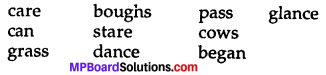
MP Board Class 7th Special English Chapter 11 Leisure 1

Comprehension

Answer the questions given below:
Question 1.
Why does the poet say that it is a poor life?
Answer:
The poet’s life is full of care. He has no time to watch the beauties around him. Therefore, he says that it is a poor life.

Question 2.
What do the busy and anxious people miss daily in their lives?
Answer:
The busy and anxious people miss,the general happenings around them, daily in their lives.

Question 3.
Do the people have time to see the beauty of nature?
Answer:
No, the people do not have time to see the beauty of nature.

Question 4.
How does the poet present scenic beauty of nature?
Answer:
The poet presents the scenic beauty of nature as enchanting. The groves, woods and streams are full of eye-catching beauty.

Question 5.
What do you understand by the lines, ’No time to wait till ………. began.’?
Answer:
The smile appears in the eyes before it reaches the mouth. It takes a few moments. But the poet has no time even to view that smile.

Question 6.
What is the theme of the poem?
Answer:
The theme of this poem is that a careworn life is a miserable life.

Word Power

Use the words given below and complete the sentences:
(full of, no time, beneath, woods, hide, as long as)
Example :
We can not go outside as long as it rains.

  1. People stand ………….. it rains.
  2. The rabbits run around in the ……………
  3. The river is …………
  4. The man has …………. watch.
  5. The birds …………. nests.
  6. you do not hurt animals they ………… do not harm you.

Answer:

  1. beneath
  2. woods
  3. full of
  4. no time
  5. hide
  6. As long as

Let’s Talk

Visit a river side/lake nearby and talk about it. Find answers to the following.
Question 1.
Did you see any birds, fish etc. near the lake?
Answer:
I saw many birds, fish etc. hear the lake.

Question 2.
What frees grow near the water body? Find the names if possible.
Answer:
Many trees grow near the water body (river/lake). They are neem, peepal, mango etc.

Question 3.
What was most interesting in the visit?
Answer:
The sight of the visitors and their boating was most interesting in the visit.

Question 4.
Do lot of tourists come there? Why?
Answer:
Yes, lot of tourists come there. They come there to learn about the eating and clothing habits of the local residents. They also learn about their way of living, traditions and cultures.

Let’s Write

Question 1.
A. Write three sentences about the woods.
B. Write three sentences about the sky.
Answer:
A. The woods

  1. The woods look pleasant only in pictures.
  2. All sorts of trees are found in the woods.
  3. Dangerous animals live in the woods.

B. The Sky

  1. The sky is above the earth.
  2. It is full of stars at night.
  3. Clouds roar in the sky during rainy season.

Let’s Do It

Draw the picture of different images that appear in the poem and name them.
Answer:
Attempt yourself.

Leisure Word Meanings
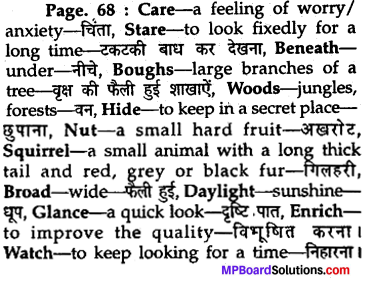
MP Board Class 7th Special English Chapter 11 Leisure 2

We believe the information shared regarding MP Board Solutions for Class 7 English Chapter 11 Leisure Questions and Answers as far as our knowledge is concerned is true and reliable. In case of any queries or suggestions do leave us your feedback and our team will guide you at soonest possibility. Bookmark our site to avail latest updates on several state board Solutions at your fingertips.
MP Board Class 9th General English The Spring Blossom Solutions Chapter 5 Fair Play

MP Board Solutions for Class 9 Textbook General English The Spring Blossom Solutions Chapter 5 Fair Play Questions and Answers aids you to prepare all topics in it effectively. You need not worry about accuracy of Madhya Pradesh State Board Solutions for Class 9 English Composition: Visual Stimulus as they are given adhering to latest exam pattern and syllabus guidelines. You Can Download MP Board Class 9 English Solutions Questions and Answers, Notes, Summary, Guide pdf on is page. Enhance your subject knowledge by preparing from Chapterwise MP Board Solutions for Class 9 English and clarify your doubts on corresponding topics.

MP Board Class 9th General English The Spring Blossom Solutions Chapter 5 Fair Play

Kick start your preparation by using our online resource Madhya Pradesh State Board Solutions for Class 9 Textbook General English The Spring Blossom Solutions Chapter 5 Fair Play. You can even download MP Board Solutions for Class 9 English free of cost rough direct links available on our page. Clear your queries and understand concept behind in a simple manner. Simply tap on concept you wish to prepare chapterwise and go rough it.

Fair Play Textual Exercises

Word Power

(a) Choose the correct meanings of the following words
(दिए गए शब्दों के सही अर्थ चुनिए।)

(1) wretched-
(a) separate
(b) worthless
(c) insane.
Answer:
(b) worthless

(2) indifferent-
(a) separate
(b) alike
(c) having no interest.
Answer:
(c) having no interest

(3) obvious-
(a) easy to see
(b) particular
(c) similar
Answer:
(a) easy to see

(4) justice-
(a) proper
(b) fair treatment
(c) decision
Answer:
(b) fair treatment

(5) annoyed-
(a) slightly angry
(b) sad
(c) indifferent.
Answer:
(a) slightly angry.

(b) Write the meanings of these phrases and words and use them in your own sentences
(दिए गए शब्दों के अर्थ लिखिए तथा उन्हें वाक्यों में प्रयुक्त कीजिए।)

(1) kept ringing – echoing in the mind.
The words of my teacher kept ringing in my mind till I came home.

(2) piece of luck – something good happened.
It was a piece of luck for me to escape from the kidnapper’s home.

(3) keep mum – keep quiet.
My Mother scolded my brother harshly and asked him several questions but he kept mum.

(4) become indifferent – negligent.
Sohan has become indifferent to his parents after his marriage.

(5) grudged – complained.
She always grudges of his coming late.

(6) nominate – suggest somebody name for a post.
Villagers nominated Satish as the head of panchayat

(7) abide by – follow
I always abide by the rules fixed by my father.

(8) deviate – leave the fixed path.
He has now deviated from his word.

(9) tight spot – difficult situation.
I am not able to understand that whether I should listen to my heart or my mind, I am in a tight spot.

(10) embraced – to put arms around somebody.
My team mates embraced me in joy when we won the football match.

How Much Have I Understood?

(a) Answer the following questions in one or two sentences
(निम्नलिखित प्रश्नों के उत्तर एक या दो वाक्यों में दीजिए।)

Question 1.
Who was nominated as the head Panch by the aunt?
(हू वॉज़ नॉमिनेटिड एज़ द हैड पंच बाइ द आन्ट?)
सरपंच के लिए चाची ने किसका नाम सुझाया?
Answer:
Algu Chowdhary was nominated as the head Panch by the aunt.
(अलगू चौधरी वॉज़ नॉमिनेटिड एज द हैड पंच बाइ द आन्ट।)
चाची ने अलगू चौधरी का नाम सरपंच के लिए सुझाया।

Question 2.
Who nominated Jumman as the head Panch?
(हू नॉमिनेटिड जुम्मन एज़ द हैड पंच?)
जुम्मन को सरपंच के लिए किसने चुना?
Answer:
Samjhu Sahu nominated Jumman as the head Panch.
(समझू साहू नॉमिनेटिड जुम्मन एज़ द हैड पंच।)
समझू साहू ने जुम्मन को सरपंच चुना।

Question 3.
Where was the village Panchayat held?
(व्हेअर वॉज़ द विलेज पंचायत हैल्ड?)
गाँव की पंचायत कहाँ हुई?
Answer:
The village Panchayat was held under a banyan tree.
(द विलेज पंचायत वॉज़ हैल्ड अन्डर अ बैनयन ट्री।)
गाँव की पंचायत एक बरगद के वृक्ष के नीचे हुई।

Question 4.
What was the demand of Jumman’s aunt?
(व्हॉट वॉज़ द डिमान्ड ऑफ जुम्मन्स आन्ट?)
जुम्मन की खाला की क्या माँग थी?
Answer:
Jumman’s aunt winted Jumman to give her a monthly allowance.
(जुम्मन्स आन्ट वॉन्टेड जुम्मन टू गिव हर अ मन्थली अलाओएन्स।)
जुम्मन की खाला जुम्मन से मासिक खर्चे के लिए रकम चाहती थी।

(b) Answer the following questions in three or four sentences.
(निम्न प्रश्नों के उत्तर तीन या चार वाक्यों में दीजिए।)

Question 1.
What was the understanding between Jumman and his aunt?
(व्हॉट वॉज़ द अन्डरस्टैन्डिंग बिटवीन जुम्मन एण्ड हिज़ आन्ट?)
जुम्मन और उसकी खाला में क्या तय हुआ?
Answer:
The understanding between Jumman and his, aunt was that his aunt would transfer her property to Jumman and would stay with him and Jumman would look after her.
(द अन्डरस्टैन्डिंग बिटवीन जुम्मन एण्ड हिज़ आन्ट वॉज़ दैट हिज आन्ट वुड ट्रान्सफर हर प्रॉपर्टी टू जुम्मन एण्ड वुड स्टे विद हिम एण्ड जुम्मन वुड लुक ऑफ्टर हर।)
जुम्मन व उसकी खाला में तय था कि खाला अपनी जायदाद जुम्मन के नाम करेगी व जुम्मन खाला को अपने यहाँ रखेगा व उसकी देखभाल करेगा।

Question 2.
Why was Jumman happy when Algu was nominated as the head Panch?
(व्हॉय वॉज़ जुम्मन हैप्पी व्हेन अलगू वॉज़ नॉमिनेटिड एज़ द हैड पंच?)
जब अलगू का नाम सरपंच के लिए प्रस्तावित हुआ तब जुम्मन खुश क्यों था?
Answer:
Algu and Jumman were close friends. Therefore, Jumman was happy that Algu would give judgement in his favour.
(अलगू एण्ड जुम्मन वर क्लोज फ्रेन्ड्स। देअरफोर, जुम्मन वॉज़ हैप्पी दैट अलगू वुड गिव जजमेन्ट इन हिज़ फेवर।)
अलगू व जुम्मन गहरे दोस्त थे। अतः जब अलगू का नाम सरपंच के लिए सुझाया गया तब जुम्मन को खुशी हुई कि निर्णय उसके पक्ष में होगा।

Question 3.
What did Algu think when he started his proceedings as the head Panch?
(व्हॉट डिड अलगू थिंक व्हेन ही स्टार्टेड हिज़ प्रोसीडिंग्स एज़ द हैड पंच?)
जब अलगू ने सरपंच के रूप में कार्यवाही शुरू की तो उसने क्या सोचा?
Answer:
Algu thought that Jumman’s friendship should not come in the way of justice.
(अलगू थॉट दैट जुम्मन्स फ्रेन्डशिप शुड नॉट कम इन द वे ऑफ जस्टिस।)
अलगू ने सोचा कि न्याय के रासते में जुम्मन की दोस्ती आड़े नहीं आनी चाहिए।

Question 4.
What was Algu’s judgement? How did Jumman take it?
(व्हॉट वॉज़ अलगूज जजमेन्ट? हाउ डिड जुम्मन टेक इट?)
अलगू ने क्या निर्णय दिया? जुम्मन ने उसे कैसे लिया?
Answer:
Algu’s judgement was that Jumman must pay his aunt a monthly allowance, or else the pa property goes back to her. On this Jumman became Algu’s enemy.
(अलगूज जजमेन्ट वॉज़ दैट जुम्मन मस्ट पे हिज़ आन्ट अ मन्थली अलाओएन्स और एल्स द प्रॉपर्टी गोज बैक टू हर। ऑन दिस जुम्मन बिकेम अलगूज एनिमी।)
अलगू ने निर्णय दिया कि जुम्मन को अपनी खाला को मासिक खर्चा देना होगा अन्यथा जायदाद खाला को वापस हो जायेगी। इस पर जुम्मन अलगू का दुश्मन बन गया।

Question 5.
Which incident took algu to a tight spot?
(व्हिच इन्सिडेन्टं टुक अलगू ट अ टाईट स्पॉट?)
कौन-सी घटना ने अलगू को मुश्किल में डाल दिया?
Answer:
The incident that took Algu to a tight spot was that he had sold one of his bullocks to Samjhu Sahu. After some time the bullock died. So Samjhu refused to pay his price.
(द इन्सिडेन्ट दैट टुक अलगू टू अ टाईट स्पॉट वाज़ दैट ही हैड सोल्ड वन ऑफ. हिज़ बुलक्स टू समझू साहू। ऑफ्टर सम टाइम द बुलक डाइड। सो समझू रिफ्यूज्ड् टू पे हिज़ प्राइस।)
घटना यह थी कि अलगू ने अपना एक बैल समझू साहू को बेचा था। कुछ दिनों के बाद बैल मर गया। अतः समझू ने उसकी कीमत देने से इंकार कर दिया।

Question 6.
Why did Samjhu Sahu nominate Jumman as the head Panch?
(व्हाय डिड समझू साहू नॉमिनेट जुम्मन एज़द हैड पंच?)
समझू साहू ने जुम्मन का नाम सरपंच के लिए क्यों सुझाया?
Answer:
Jumman and Algu had become enemies after Algu gave the judgement against Jumman. So Samjhu Sahu nominated Jumman as head Panch thinking that he will give the judgement in his favour.
(जुम्मन एण्ड अलगू हैड बिकम एनिमीज़ ऑफ्टर अलगू गेव द जजमेन्ट अगेन्स्ट जुम्मन। सो समझ साहू नॉमिनेटिड जुम्मन एज़ हैड पंच थिंकिंग दैट ही विल गिव द जजमेन्ट इन हिज़ फेवर।)
अलगू के जुम्मन के खिलाफ निर्णय के बाद जुम्मन व अलगू दुश्मन बन गए थे। इसलिए समझू साहू ने जुम्मन को सरपंच बनाया क्योंकि उसने सोचा कि जुम्मन उसके पक्ष में निर्णय देगा।

Question 7.
What was the decision of Jumman? How did Algu take it?
(व्हाट वॉज़ द डिसिजन ऑफ जुम्मन? हाउ डिड अलगू टेक इट?)
जुम्मन का निर्णय क्या था? अलगू ने उसे कैसे लिया?
Answer:
Jumman’s judgement was that Sahu should pay Algu the price of the bullock. Algu became very happy and said God lives in the voice of the Panch.
(जुम्मन्स जजमेन्ट वॉज़ दैट साहू शुड पे अलगू द प्राइस ऑफ द बुलक। अलगू बिकेम वेरी हैप्पी एण्ड सेड गॉड लिव्स इन द वॉइस ऑफ द पंच।)
जुम्मन का निर्णय था कि साहू को बैल की कीमत अलगू को देनी होगी। अलगू बहुत खुश हुआ और उसने कहा कि पंच की वाणी ईश्वर की वाणी होती है।

Question 8.
“Victory to the Panchayat. This is justice. God lives in the voice of the Panch.” Who said all this and why? Explain. (“विक्ट्री टू द पंचायत। दिस इज़ जस्टिस। गॉड, लिव्स इन द वॉइस ऑफ द पंच।” हू सेड ऑल दिस एण्ड व्हॉय? एक्सप्लेन।)
“पंचायत की जय हो। यह न्याय है। ईश्वर पंच की वाणी में निवास करता है।” यह किसने कहा और क्यों कहा? समझाइए।
Answer:
This was said by Algu after Jumman gave his judgement. Algu thought that Jumman would take his revenge and would give judgement against him. But Jumman did justice.
(दिस वॉज़ सेड बाइ अलगू आफ्टर जुम्मन गेव हिज़ जजमेन्ट। अलगू थॉट दैट जुम्मन वुड टेक हिज़ रिवेन्ज एण्ड वुड गिव जजमेन्ट अगेन्स्ट हिम। बट जुम्मन डिड जस्टिस।)
ये अलगू द्वारा कहे गये शब्द थे। अलगू ने सोचा कि जुम्मन अपना बदला लेगा और उसके विरुद्ध निर्णय देगा। मगर जुम्मन ने न्याय किया।

Language Practice

Mark the mistakes and rewrite the sentences correctly.
(निम्न लिखित वाक्यों को सही करके लिखो।)

Question 1.
There are a pair of scissors in my drawer.
Answer:
There is a pair of scissors in my drawer.

Question 2.
Many of the flowers has no smell.
Answer:
Many of the flowers have no smell.

Question 3.
Working women leads a life of dual responsibilities.
Answer:
Working women lead a life of dual responsibilities.

Question 4.
Either John or Gaurav are to be selected as the team captain.
Answer:
Either John or Gaurav is to be selected as the team Captain.

Question 5.
Clouds is very dark, perhaps it is going to rain soon.
Answer:
Clouds are very dark, perhaps it is going to rain soon.

Question 6.
My mother and I am preparing for my birthday.
Answer:
My mother and I are preparing for my birthday.

Question 7.
In India, tea mostly grow in the north.
Answer:
In India, tea mostly grows in the north.

Question 8.
Sameer like to play football.
Answer:
Sameer likes to play football.

Question 9.
Rosy and Pratham wants to go abroad and settle down in some other country.
Answer:
Rosy and Pratham want to go abroad and settle down in some other country.

Question 10.
If it rain heavily I won’t be able to go for a morning walk.
Answer:
If it rains heavily I won’t be able to go for a morning walk.

Listening Time

(a) Underline the correct option given in the paragraph
(सही शब्द चुनो।)
Answer:
There was a certain/curtain house in the town of Kyoto (Japan) which pupil/people avoided to live in. The season/reason for their fear/fair was that two of the farmer/former owners/honours of the house/mouse had crowned/drowned themselves in the well/bell that was in the courtyard.

(b) Complete the following passage with appropriate words
(निम्न गद्यांश को पूरा कीजिए।)
Answer:
All of us felt that it was a very (vary/very) fine (vine/fine) day for journey. We went (went/vent) across the river on a ferry (fairy/ferry) where a van (vain/wane/van) was waiting on the western bank of the vast river. We all. climbed into the van and off (of/off) we went leaving behind us the wide river valley.

Speaking Time

Situation-1
You want to take a lift because your bicycle has a puncture and you have to reach your school on time.
Answer:
(Given) Would you mind if I asked you to give me a lift? I’ll be late if I don’t reach my school soon.

Situation-2
You are not feeling well. You want someone to call a doctor for you.
Answer:
Would you please call a doctor? I am not feeling well.

Situation-3
You are alone at home and the fuse has blown out. You ask your neighbour to fix it.
Answer:
Would you please fix this fuse? I am alone at home and don’t know how to do it.

Situation-4
You want someone to carry your bag because you have hurt your hand.
Answer:
Would you mind carrying my bags. My hand is hurt.

Situation-5
You have lost your wallet and you have to purchase some important things from the market. Your home is far away from the market. You want to borrow some money from an acquaintance you meet there.
Answer:
Would you please lend me some money as I have to buy some necessary things from the market and I have lost my pocket. It shall be very kind of you. I shall return it to you tomorrow.

Writing Time

Punctuate the following sentences
(विशम चिह्न लगाइए।)

Question 1.
shahjahan built the Taj Mahal.
Answer:
Shahjahan built the Taj Mahal.

Question 2.
you can get this book from the royal book centre kanpur.
Answer:
You can get this book from the Royal Book Centre, Kanpur.

Question 3.
the traveller was old and hungry
Answer:
The traveller was old and hungry.

Question 4.
run away shouted my brother
Answer:
“Run away”, shouted my brother.

Question 5.
my library has many kinds of books plays poems novels etc.
Answer:
My library.has many kinds of books, plays, poems, novels etc.

Things to do

(1) Go to the library and read the stories written by ‘Munshi Premchand’.
(मुंशी प्रेमचन्द की कहानियाँ पढ़ो।)
Answer:
Students should do themselves.
छात्र स्वयं करें।

(2) Make a list of the matters that can be solved in village panchayats.
(ग्राम पंचायत में सुलटने वाले विषयों की सूची बनाओ।)
Answer:
Students should do themselves.
छात्र स्वयं करें।

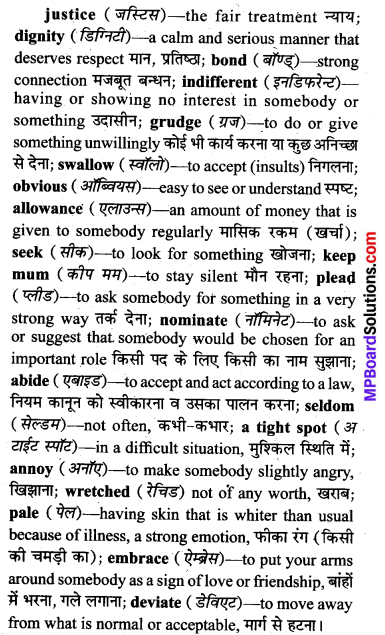
Fair Play Difficult Word Meanings

MP Board Class 9th General English The Spring Blossom Solutions Chapter 5 Fair Play 1

Fair Play Summary, Pronunciation & Translation

[1] Justice knows neither friendship nor enmity. Jumman Sheikh and Algu Chowdhary act as head men on two occasions. How do they maintain the dignity of their role as judges? Read and find out.

Jumman Sheikh and Algu Chowdhary were good friends. So strong was their bond of friendship that when either of them went away from the village, the other looked after his family. Both were greatly respected in the village.

(जस्टिस नोज़ नाइदर फ्रेन्डशिप नोर एनमिटी। जुम्मन शेख .एण्ड अलगू चौधरी एक्ट एज़ हैडमैन आन टू ओकेज़न्स। हाउ डू दे मेन्टेन द डिग्निटी ऑफ देअर रोल एज़ जजेस? रीड एण्ड फाइन्ड आउट।

जुम्मन शेख एण्ड अलगू चौधरी वर गुड फ्रेन्डस। सो स्ट्रांग देअर बॉन्ड ऑफ फ्रेन्डशिप दैट व्हेन आइदर ऑफ देम वेन्ट अवे फ्राम विलेज, द अदर लुक्ड आफ्टर हिज़ फेमिली। बोथ वर ग्रेटली रेस्पेक्टेड इन द विलेज।)।

हिन्दी अनुवाद :
न्याय न तो मित्रता को जानता है न ही दुश्मनी को। जुम्मन शेख और अलगू चौधरी दो अवसरों पर सरपंच बनते हैं। वे न्यायाधीश के रूप में किस तरह अपने सम्मान को बनाये रखते हैं। पढ़ो और जानो।

जुम्मन शेख व अलगू चौधरी अच्छे मित्र थे। उनका मित्रता का बंधन इतना मजबूत था कि इनमें से एक कभी गाँव के बाहर जाता था तो दूसरा उनके परिवार की देखभाल करता था। दोनों की गाँव में बड़ी इज़जत थी।

[2] Jumman had an old aunt who had some property. This she transferred to him on the understanding that she would stay with him and he would look after her. The arrangement worked well for a couple of years. Then the situation changed. Jumman and his family were tired of the old relative. Jumman became as indifferent to her as his wife, who grudged even the little food that the old lady wanted every day. She swallowed these insults along with her food for a few months. But patience has its limits.

(जुम्मन हैड एन ओल्ड आण्ट हू हैड सम प्रापर्टी। दिस शी ट्रान्स्फर्ड टु हिम ऑन दी अन्डरस्टेंडिंग दैट शी वुड स्टे विद हिम एण्ड ही वुड लुक आफ्टर हर। दी अरेंजमेन्ट वर्ल्ड वेल फोर अ कपल ऑफ यीअर्स। देन द सिचुएशन चेंज्ड। जुम्मन एण्ड हिज़ फैमिली वर टायर्ड ऑफ दी ओल्ड रिलेटिव। जुम्मन बिकेम एज़ इनडिफरेन्ट टु हर एज़ हिज़ वाइफ हू ग्रज्ड इवन द लिटिल फुड दैट दी ओल्ड लेडी वान्टेड एव्री डे। शी स्वेलोड दीज इन्सल्ट्स अलांग विद हर फूड फोर अ फ्यूि मन्थ्स। बट पेशन्स हेज़ इट्स लिमिट।)

हिन्दी अनुवाद :
जुम्मन की एक बूढ़ी मौसी थी जिसके पास कुछ जायदाद थी। यह उसने जुम्मन शेख के नाम कर दी इस समझ के साथ कि वह उसके साथ रहेगी और वह उसकी देखभाल करेगा। यह योजना कुछ साल तक तो ठीकठाक चली। फिर परिस्थिति बदली। जुम्मन शेख व उसका परिवार इस वृद्धा रिश्तेदार से थक गये। उसकी पत्नी, जो उसके थोड़े से भोजन जो कि उसे प्रतिदिन दिया जाता था, के प्रति चिड़चिड़ी हो गई थी। वह कुछ माह तक तो इन अपमानों को अपने भोजन के साथ निगलती रही। किन्तु धैर्य की भी एक सीमा होती है।

[3] One day she spoke to Jumman. “My son, it is now obvious that I am not wanted in your house. Kindly give me a monthly allowance so that I can set up a separate kitchen.”

“My wife knows best how to run the house. Be patient,” said Jumman shamelessly. This made his aunt very angry and she decided to take her case to the village panchayat.

(वन डे शी स्पोक टु जुम्मन। “माइ सन, इट इज नाउ ओबियस दैट आई एम नाट वान्टेड इन युअर हाउस। काइन्डली गिव मी अ मंथली अलाउन्स सो दैट आइ केन सैट अप अ . सेपरेट किचन।”

“माइ वाइफ नोज़ बेस्ट हाउ टु रन द हाउस। बी पेशन्ट’, सेड जुम्मन शेमलेसली। दिस मेड हिज़ आण्ट वेरी एन्ग्री एण्ड शी डिसाइडेड टु टेक हर केस टु द विलेज पंचायत।)

हिन्दी अनुवाद :
एक दिन उसने जुम्मन से बात की। “मेरे बेटे, यह स्पष्ट है कि तुम्हारे घर में अब मेरी जरूरत नहीं रही। कृपया मुझे एक मासिक भत्ता दे दो ताकि मैं अपने लिए अलग रसोईघर का इन्तजाम कर सकूँ।

“मेरी पत्नी घर को अच्छी तरह चलाना जानती है। धैर्य रखो”, जुम्मन ने बेशर्मी से कहा। इससे खाला बहुत गुस्सा हुई व अपने मामले को ग्राम पंचायत में ले जाने का उसने निश्चय किया।

[4] For many days, the old lady was seen talking to the villagers, explaining her case and seeking their support. At last, she came to Algu Chowdhary and spoke to him “You know, Chachi, Jumman is my best friend. How can I go against him?” Algu said. “But is it right, my son, to keep mum and not say what you consider just and fair?” pleaded the old lady. “Come to the panchayat and speak the truth.”, she said. Algu didn’t reply, but her words kept ringing in his ears.

(फोर मेनी डेज़, दी ओल्ड लेडी वाज़ सीन टाकिंग टु द विलेजर्स, एक्सप्लेनिंग हर केस एण्ड सीकिंग देयर सपोर्ट। एट लास्ट, शी केम टु अलगू चौधरी एण्ड स्पोक टु हिम। “यू नो, चाची, जुम्मन इज़ माय बेस्ट फ्रेन्ड, हाउ केन आई गो अगेन्स्ट हिम?” अलगू सेड “बट इज़ इट राइट, माई सन टु कीप मम एण्ड नाट से व्हाट यू कन्सीडर जस्ट एण्ड फेयर ?” प्लीडेड द ओल्ड लेडी। “कम टु पंचायत एण्ड स्पीक द ट्रथ”, शी सेड अलगू डिड नाट रिप्लाय बट हर वर्ड्स केप्ट रिंगिंग इन हिज इयर्स।)

हिन्दी अनुवाद :
कई दिनों तक बूढ़ी महिला गाँव वालों से बात करती रही, अपने मामले में स्पष्टीकरण देती हुई उनका सहयोग माँगती रही। अंतत: वह अलग चौधरी के यहाँ गई व उसे सब कुछ बताया। “चाची, तुम जानती हो कि जुम्मन व मैं गहरे मित्र हैं। मैं उसके विरुद्ध कैसे जा सकता हूँ।” अलगू ने कहा। “किन्तु मेरे बेटा क्या यह उचित है कि जिस बात को तुम सही व न्यायपूर्ण मामला समझते हो उसके प्रति मौन रहो ?” वृद्धा ने तर्क दिया। “पंचायत में आओ व सच बात कहो।” उसने कहा, अलगू ने उत्तर तो नहीं दिया पर चाची के शब्द उसके कानों में गूंजते रहे।

[5] The panchayat was held the same evening under an old banyan tree. Jumman stood up and said, “The voice of the panch is the voice of God. Let my aunt nominate the head-Panch. I will abide by her decision.”

“The Panch knows neither friend nor enemy. What do you say to Algu Chowdhary?” the old lady announced.

(द पंचायत वाज़ हेल्ड द सेम ईवनिंग अन्डर एन ओल्ड बनयान ट्री। जुम्मन स्टुड अप एण्ड सेड, “द वॉइज ऑफ द पंच इज़ द वॉईज ऑफ गाड। लेट माई आन्ट नामिनेट द हेड पंच। आई विल अबाइड बाय हर डिसिज़न।”

“द पंच नोज़ नाइदर फ्रेन्ड नॉर एनिमी। व्हाट डू यू से टु अलगू चौधरी?” दी ओल्ड लेडी अनाउन्स्ड।)

हिन्दी अनुवाद :
उसी शाम को एक बरगद के वृक्ष के नीचे पंचायत बुलाई गई। जुम्मन खड़ा हुआ और कहा-“पंच की आवाज़ खुदा (ईश्वर) की आवाज़ होती है। मेरी खाला पंच को नामांकित करें। मैं उसके निर्णय से बँधा हूँ।”

बूढ़ी खाला ने कहा, “पंच न मित्र जानता है, न दुश्मन। अलगू चौधरी के बारे में तुम क्या कहते हो?”

[6] “Fine”, replied Jumman, hiding his joy over this unexpected piece of luck.

“Chachi, you are aware of my friendship with Jumman.” said Algu.

“I know that” replied the aunt, “but I also know that God lives in the heart of the Panch, and his voice is the voice of God.” And the old lady explained her case.

“Jumman”, said Algu, “you and I are old friends. Now I am a Panch. You and your aunt are equal before me. What do you have to say in your defence?”

(“फाइन” रिप्लाइड जुम्मन, हाइडिंग हिज जॉय ओवर दिस अनएक्सपेक्टेड पीस आफ लक।

“चाची, यू आर अवेअर ऑफ माय फ्रेंडशिप विद जुम्मन।” सेड अलगू।

“आइ नो दैट” रिप्लाइड दी आन्ट, “बट आई अल्सो नो दैट गॉड लिब्ज़ इन द हार्ट ऑफ द पंच एण्ड हिज़ वर्ड्स इज़ वाइज़ ऑफ गॉड।” एण्ड दी ओल्ड लेडी एक्सप्लेन्ड हर केस।

“जुम्मन” सेड अलग, “यू एण्ड आई आर ओल्ड फ्रेन्ड्स। नाउ आई एम अ पंच। यू एण्ड युअर आण्ट आर इक्वल बिफोर मी। व्हाट डू यू हेव टु से इन डिफेन्स?”)

हिन्दी अनुवाद :
“बहुत अच्छा” जुम्मन सद्भाग्य के इस मौके पर अपनी खुशी छिपाते हुए बोला।

“चाची, तुम जानती हो कि जुम्मन व मैं बहुत पुराने मित्र हैं।” अलगू ने कहा।

“मैं जानती हूँ।” खाला ने कहा, “किन्तु मैं यह भी जानती हूँ कि पंच की आवाज खुदा की आवाज होती है।” और बूढ़ी महिला ने अपना प्रकरण रखा।

“जुम्मन” अलगू बोला, “तुम और मैं बहुत पुराने मित्र हैं। अब मैं एक पंच हूँ। मेरे सामने तुम व चाची बराबर हैं। तुम्हें अपने बचाव में क्या कहना है।”

[7] “Three years ago,” began Jumman, “my aunt transferred her property to me. I promised to support her as long as she lived. I have done all I could. There have been a couple of quarrels between my wife and her but I can’t stop it. Now my aunt is claiming a monthly allowance from me. This is not possible. That’s all I have to say.”

Jumman was cross-examined by Algu and others. Then Algu announced, “We have gone into the matter carefully. In our opinion, Jumman must pay his aunt a monthly allowance, or else the property goes back to her.”

(“थ्री इयर्स एगो”, बिगेन जुम्मन, “माय ऑण्ट ट्रान्सफर्ड हर प्रापटी टु मी। आई प्रामिस्ड टु सपोर्ट हर एज़ लांग एज़ शी लिव्ड। आई हेव डन ऑल आई कुड। देअर हेवं बीन अ कपल ऑफ क्वारल्स बिटवीन माई वाइफ एण्ड हर बट आई काण्ट स्टॉप इट। नाउ माई ऑण्ट इज़ क्लेमिंग अ मंथली अलाउन्स फ्रॉम मी। दिस इज़ नॉट पासिबल। दैट्स आल आई हेव टु से।”

जुम्मन वाज़ क्रास इक्जामिन्ड बाय अलगू एण्ड अदर्स। देन अलगू अनाउन्स्ड, “वी हैव गोन इन टू द मेटर केअरफुली। इन अवर ओपिनियन, जुम्मन मस्ट घे हिज ऑण्ट अ मंथली अलाउन्स, ओर एल्स द प्रापर्टी गोज बैक टु हर।”)

हिन्दी अनुवाद :
“तीन साल पहले, जुम्मन ने कहना शुरू किया, मेरी खाला ने अपनी जायदाद मेरे नाम की। मैंने जब तक वह जीवित रहती है उसको शरण देने का वचन दिया। मैं जो कुछ कर सकता था, मैंने किया। हाँ, मेरी औरत और खाला के बीच कुछ खटपट चलती रहती है। मैं उसमें कुछ नहीं कर सकता। अब खाला एक मासिक भरण-पोषण का खर्चा चाहती है। यह सम्भव नहीं है। बस मुझे यही कहना था।”

जुम्मन का कूट परीक्षण अलगू व अन्य लोगों के बीच हुआ।, फिर अलगू ने घोषणा की। “हमने इस मामले में बहुत सावधानी से विचार किया। हमारी राय में जुम्मन को मासिक गुजारा भत्ता देना होगा, अन्यथा जायदाद वापिस चाची के नाम होगी।”

[8] Now, the two friends were seldom seen together. The bond of friendship between them was broken. In fact, Jumman was Algu’s enemy and wanted his revenge.

Days passed and as ill luck would have it, Algu Chowdhary found himself in a tight spot. One of his fine pair of bullocks died, and he sold the other to Samjhu Sahu, a cart driver of the village. The understanding was that Sahu would pay the price of the bullock in a month’s time. It so happened that the bullock died within a month.

(नाउ, द टू फ्रेड्ज वर सेल्डम सीन टुगेदर। द बॉन्ड ऑफ फ्रेन्डशिप बिटवीन देम वॉज ब्रोकन। इनफैक्ट जुम्मन वॉज अलगूज एनिमी एण्ड वान्टेड हिज रिवेन्ज।

डेज पास्ड ऑन एन्ड, एज़ इल लक वुड हेव इट, अलगू चौधरी फाउन्ड हिमसेल्फ इन अ टाइट स्पॉट। वन ऑफ हिज़ फाइन पेअर ऑफ बुलक्स डाइड, एण्ड ही सोल्ड द आदर टु समझू साहू, ए कार्ट ड्राइवर ऑफ द विलेज। दी अन्डरस्टेडिंग वाज दैट साहू वुड पे द प्राइज ऑफ द बुलक इन अ मन्थस टाइम। इट सो हेपन्ड दैट द बुल्क डाइड इन अ मन्थ।)

हिन्दी अनुवाद :
अब, दोनों मित्र साथ-साथ कभी-कभी ही दिखाई देते थे। दोनों के बीच का मित्रता का बन्धन टूट चुका था। वास्तव में जुम्मन अलगू का दुश्मन बन गया व बदले का मौका देखने लगा।

समय बीतता गया, और जैसा कि दुर्भाग्य होता है, अलगू चौधरी एक संकट में फंस गया। उसके सुन्दर बैलों की जोड़ी में से एक मर गया और उसने दूसरे बैल को गाँव के एक गाड़ीवान समझू साहू का बेच दिया। समझौता यह था कि साहू एक माह में बैल की कीमत अदा कर देगा। ऐसा हुआ कि बैल एक महीने के अन्दर ही मर गया।

[9] Several months after the bullock’s death, Algu reminded Sahu of the money he hadn’t yet paid. Sahu got very annoyed “I can’t pay you a penny for the wretched beast you sold me. He brought us nothing but ruin. I have a bullock. Use it for a month and then return it to me. No money for the dead bullock,” he said angrily.

Algu decided to refer the case to the panchayat. The panchayat was held under the old banyan tree. Algu stood up and said, “The voice of the Panch is the voice of God. Let Sahu nominate the Head Panch. I will abide by his decision.”

(सेवेरल मंथस आफ्टर द बुलक्स डेथ, अलगू रिमान्डेड साहू ऑफ द मनी ही हैडन्ट यट पेड। साहू गॉट वेरी अनायड। “आई काण्ट पे यू अ पेनी फोर द रेचेड बीस्ट यू सोल्ड मी। ही ब्राट नथिंग बट स्यूइन। आई हेव अ बुलक। यूज़ इट फॉर ए मन्थ एण्ड देन रिटर्न इट टु मी। नो मनी फोर द डेड बुलक,” ही सेड एन्ग्रीली।

अलगू डिसाइडेड टु रिफर द केस टु द पंचायत। द पंचायत वाज हेल्ड अन्डर दी ओल्ड बनयान ट्री। अलगू स्टुड अप एण्ड सेड, “द वॉईज ऑफ द पंच इज द वाइज ऑफ गॉड। लेट साहू नामिनेट द पंच। आई विल अबाइड बाय हिज डिसीज़न।”)

हिन्दी अनुवाद :
बैल के मरने के कई महीनों बाद अलगू ने साहू को रकम चुकाने की याद दिलाई। साहू बहुत नाराज हुआ। “मैं तुम्हें उस दुर्भाग्य पूर्ण जानवर के लिये जो तुमने मुझे बेचा एक पैसा भी नहीं दे सकता। वह हमारे लिये बर्बादी के अलावा कुछ नहीं लाया। मेरे पास एक बैल है। उसे ले जाओ और एक माह उसका उपयोग करके मुझे वापस दे दो मृत बैल के लिये कोई पैसा नहीं।” वह गुस्से से बोला।

अलगू ने मामला पंचायत में ले जाने का निश्चय किया। पुराने बरगद के वृक्ष के नीचे पंचायत बैठी। अलगू खड़ा हुआ और बोला-“पंच की आवाज परमेश्वर की होती है। साहू सरपंच नामांकित करे मैं उसके निर्णय से बद्ध रहूँगा।”

[10] Sahu saw his chance and proposed the name of Jumman. Algu’s heart sank and he turned pale. But what could he do?

The moment Jumman became Head Panch, he realised his responsibility as judge and the dignity of his office. He thought and thought. He must not allow his personal feelings to come in the way of speaking the truth and doing justice.

Both Algu and Sahu stated their cases. They were cross-examined and the case was considered deeply. Then Jumman stood up and announced, “It is our opinion that Sahu should pay Algu the price of the bullock. When Sahu bought the bullock, it suffered from no disability or disease. The death of the bullock was unfortunate but Algu cannot be blamed for it.” Algu could not contain his feelings. He stood up and said loudly over and over again. “Victory to the panchayat. This is justice. God lives in the voice of the Panch.”

(साहू सॉ हिज चांस एण्ड प्रपोज्ड द नेम ऑफ जुम्मन। अलगूज हार्ट सेंक एण्ड ही टर्ड पेल। बट व्हाट ही कुड डू?

द मामेंट जुम्मन बिकेम हेड पंच, ही रियलाइज्ड हिज़ रेस्पांसिबिलिटी एज़ जज एण्ड द डिग्निटी ऑफ हिज़ आफिस। ही थाट एण्ड थाट। ही मस्ट नॉट अलौ हिज पर्सनल फीलिंग्स टु कम इन द वे ऑफ स्पीकिंग द ट्रथ एण्ड डूइंग जस्टिस।

बोथ अलगू एण्ड साहू स्टेटेड देअर केसेस। दे वर क्रॉस इग्जामिन्ड एण्ड द केस वाज कन्सीडर्ड डीपली। देन जुम्मन स्टुड अप एण्ड अनाउन्स, “इट इज अवर ओपिनियन दैट साहू शुड पे द प्राइस ऑफ द बुल्क। व्हेन साहू बॉट द बुलक, इट सफर्ड फ्राम नो डिसएबिलिटी ओर डिसिज। द डेथ ऑफ द बुलक वाज अनफार्चुनेट बट अलगू केन नाट बी क्लेम्ड फोर इट।” अलगू कुड नाट कन्टेन हिज फीलिंग्स। ही स्टुड अप एण्ड सेड लाउडली ओवर एण्ड ओवर अगेन, “विक्ट्री टु द पंचायत। दिस इज़ जस्टिस। गॉड लिव्ज़ इन द वाईस ऑफ द पंच।”)

हिन्दी अनुवाद :
साहू ने अपना मौका देखा व जुम्मन का नाम प्रस्तावित कर दिया। अलगू का दिल डूबने लगा और उसका रंग पीला पड़ गया। किन्तु वह कर क्या सकता था।

जिस क्षण जुम्मन सरपंच बना, उसने एक न्यायाधीश और अपने पद की महत्ता के उत्तरदायित्व को महसूस किया। उसने सोचा और सोचा। उसे लगा सत्य बोलने व न्याय करने में अपनी व्यक्तिगत भावनाओं को रास्ते में नहीं लाना चाहिए।

अलगू व साहू ने अपनी बात को कहा। उनका कूट-परीक्षण किया गया और मामले पर गहराई से विचार किया गया। फिर जुम्मन खड़ा हुआ और घोषणा की, “हमारी राय यह है कि साहू को बैल की कीमत देनी होगी। जब साहू ने बैल खरीदा, तब बैल किसी तरह भी बीमार या पंगु नहीं था। बैल की मृत्यु दुर्भाग्यपूर्ण है किन्तु उसके लिए अलगू दोषी नहीं ठहराया जा सकता।” अलगू अपनी भावनाओं पर काबू नहीं रख सका और बार-बार जोर से बोल उठा, “पंचायत की जय हो। यह न्याय है। पंचों की आवाज में ईश्वर बोलता है।

[11] Soon after, Jumman came to Algu, embraced him and said “Since the last panchayat, I had become your enemy. Today I realised what it meant to be a panch. A panch has no friend or enemy. He knows only justice. Let no one deviate from the path of justice and truth for friendship or enmity.”

Algu embraced his friend and wept. And his tears washed away all the dirt of misunderstanding between them. -Premchand (retold)

(सून आफ्टर जुम्मन केम टु अलगू, इम्ब्रेस्ड हिम एण्ड सेड, “सिन्स द लास्ट पंचायत आई हेड बिकम युअर एनिमी। टुडे आई रियलाइज्ड व्हाट इट मीट टु बी पंच। अ पंच हेज़ नो फ्रेन्ड और एनिमी। ही नोज ओनली जस्टिस। लेट नो वन डेविएट फ्राम द पाथ ऑफ जस्टिस एण्ड टूथ फोर फ्रेन्डशिप एण्ड एन्मिटी।”

अलगू इम्ब्रेस्ड हिज़ फ्रेन्ड एण्ड वेप्ट। एण्ड हिज़ टीअर्स वाश्ड अवे ऑल द डर्ट ऑफ मिसअण्डरस्टेण्डिंग बिटवीन देम।)

हिन्दी अनुवाद :
तत्पश्चात् जुम्मन अलगू के पास आया, ‘उससे लिपट गया और बोला, “पिछली पंचायत के बाद से मैं तुम्हारा दुश्मन बन गया था। आज मैंने जाना कि पंच बनना क्या होता है। पंच का कोई दुश्मन या दोस्त नहीं होता है। वह केवल न्याय करना जानता है। न्याय व सत्य की राह पर दोस्ती या दुश्मनी के द्वारा कोई भी विचलित न होवे।

अलगू भी अपने दोस्त से लिपट गया व रोने लगा और उसके आँसुओं ने दोनों के बीच आई गलतफहमी को धोकर रख दिया।

We believe information shared regarding MP Board Solutions for Class 9 Textbook General English The Spring Blossom Solutions Chapter 5 Fair Play Questions and Answers as far as our knowledge is concerned is true and reliable. In case of any queries or suggestions do leave us your feedback and our team will guide you at soonest possibility. Bookmark our site to avail latest updates on several state board Solutions at your fingertips.
MP Board Class 9th General English The Spring Blossom Solutions Chapter 4 Today and Tomorrow

MP Board Solutions for Class 9 Textbook General English The Spring Blossom Solutions Chapter 4 Today and Tomorrow Questions and Answers aids you to prepare all topics in it effectively. You need not worry about accuracy of Madhya Pradesh State Board Solutions for Class 9 English Composition: Visual Stimulus as they are given adhering to latest exam pattern and syllabus guidelines. You Can Download MP Board Class 9 English Solutions Questions and Answers, Notes, Summary, Guide pdf on is page. Enhance your subject knowledge by preparing from Chapterwise MP Board Solutions for Class 9 English and clarify your doubts on corresponding topics.

MP Board Class 9th General English The Spring Blossom Solutions Chapter 4 Today and Tomorrow

Kick start your preparation by using our online resource Madhya Pradesh State Board Solutions for Class 9 Textbook General English The Spring Blossom Solutions Chapter 4 Today and Tomorrow. You can even download MP Board Solutions for Class 9 English free of cost rough direct links available on our page. Clear your queries and understand concept behind in a simple manner. Simply tap on concept you wish to prepare chapterwise and go rough it.

Today and Tomorrow Textual Exercises

Word Power

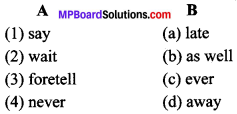
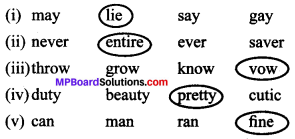
(i) Match the following words with the rhyming ones
(सुमेलित कीजिए)

MP Board Class 9th General English The Spring Blossom Solutions Chapter 4 Today and Tomorrow 1
Answer:
(1) → (d)
(2) → (a)
(3) → (b)
(4) → (c)

(ii) Give antonyms of the following words
(विलोम शब्द दीजिए)
Answer:

  1. give – take
  2. late – early
  3. always – never
  4. few – many

(iii) Complete the following lines of the poem
(कविता की निम्न पंक्तियों को पूरा करिए।)
Answer:
Every moment has its duty.
Who the future can foretell?
Then, why put off till tomorrow.
What today can do as well?

How Much Have I Understood?

Answer these questions
(निम्न प्रश्नों के उत्तर लिखिए)

Question 1.
What does the poet mean by saying, “every moment has its duty”?
(व्हॉट डज़ द पोएट मीन बाइ सेइंग, ‘एव्री मोमेन्ट हैज़ इट्स ड्यूटी?)
‘हर क्षण का कर्तव्य होता है। उससे कवि का क्या तात्पर्य है?
Answer:
It means that there is something to be done every moment. Each moment is precious and is to be used in something useful.
(इट मीन्स दैट देअर इज़ समथिंग टू बी डन एव्री मोमेन्ट। ईच मोमेन्ट इज़ प्रेशिअस एण्ड इज़ टू बी यूज्ड इन समथिंग यूज़फुल।)
इसका अर्थ है कि हर क्षण कोई न कोई कार्य करना होता है। हर क्षण कीमती है व किसी उपयोगी कार्य में उपयोग होना चाहिए।

Question 2.
What type of man does the poet want?
(व्हॉट टाइप ऑफ मैन डज़ द पोएट वॉन्ट?)
कवि किस प्रकार का व्यक्ति चाहता है?
Answer:
The poet wants a man who does his work on the very day and not puts off till tomorrow what he can do the same day.
(द पोएट वॉन्ट्स अ मैन हू डज़ हिज़ वर्क ऑन द वैरी डे एण्ड नॉट पुट्स ऑफ टिल टुमारो व्हॉट ही कैन डू द सेम डे।)
कवि ऐसा व्यक्ति चाहता है जो अपना कार्य उसी दिन करे व कल पर न छोड़े।

Question 3.
How can we control the present?
(हाउ कैन वी कन्ट्रोल द प्रेजेण्ट?)
हम वर्तमान को कैसे नियन्त्रित कर सकते हैं?
Answer:
We can control the present if we act and never wait.
(वी कैन कन्ट्रोल द प्रेजेन्ट इर्फ वी एक्ट एण्ड नेवर वेट।)
हम वर्तमान को नियन्त्रित कर सकते हैं अगर हम बिना प्रतीक्षा किए सदैव कार्य करते रहें।

Question 4.
Why should we not throw the hours away?
(व्हाय शुड वी नॉट थ्रो द आवर्स अवे?)
हमें समय को बर्बाद क्यों नहीं करना चाहिए?
Answer:
We should not throw the hours away because that which can be accomplished today can never be accomplished tomorrow.
(वी शुड नॉट थ्रो द आवर्स अवे बिकॉज दैट व्हिच कैन बी एकम्प्लिश्ड टुडे कैन नेवर बी एकम्प्लिश्ड टुमारो।)
हमें समय बर्बाद नहीं करना चाहिए क्योंकि जो हम आज प्राप्त कर सकते हैं वो कल बिल्कुल नहीं कर सकते।

Question 5.
What does the word foretell mean?
(व्हॉट डज़ द वर्ड ‘फोरटेल’ मीन?)
पूर्व कथन शब्द का क्या अर्थ है?
Answer:
The word foretell means to know or say what will happen in the future, especially using magic powers.
(द वर्ड फोरटेल मीन्स टु नो और से व्हॉट विल हैपन इन द फ्यूचर, इस्पेश्यली यूजिंग मैजिक पावर्स।)
शब्द पूर्व कथन का तात्पर्य है कि किसी जादुई शक्ति से वह बताना या जानना कि भविष्य में क्या होने वाला है।

Question 6.
Give the central idea of the poem.
(गिव द सैन्ट्रल झडिया ऑफ द पोऍम।)
कविता का केन्द्रीय भाव दीजिए।
Answer:
The poet says that we should not put off till tomorrow what we can do today. The time once lost never returns. Nobody knows what the future has in store. We should not let precious moments go waste. We should make full use of the present.

Listening Time

(a) Supply the missing words in the following sentences
(निम्न वाक्यों में लुप्त शब्द दीजिए।)

  1. Radium is one of the rarest of …………
  2. The discoverer of this magic metal was
  3. She ……… born in ………. in the ……….. 1877.
  4. She lost ………… when she was only …………. old.
  5. This was a ………… blow to her

Answer:

  1. metals
  2. Madam Curie
  3. was, Poland, year
  4. her mother, ten years
  5. terrible.

(b) Encircle the odd words in each series.
(विषम शब्दों पर गोला लगाइए।)
Answer:
MP Board Class 9th General English The Spring Blossom Solutions Chapter 4 Today and Tomorrow 2

Speaking Time

Discuss the visit of Prabhat with one of your friends. Use the following questions.
(अपने मित्र प्रभात की सैर की चर्चा अपने किसी मित्र से करो। निम्न प्रश्न पूछो।)
Answer:
You will get the following answers

Question 1.
When did he go there?
वह वहाँ कब गया?
Answer:
He went there on 22 July, 2014.
वह वहाँ 22 जुलाई, 2014 को गया।

Question 2.
Where did he go?
वह कहाँ गया?
Answer:
He went to Sanchi.
वह साँची गया।

Question 3.
How did he go there?
वह वहाँ कैसे गया?
Answer:
He went there by train.
वह वहाँ रेल से गया।

Question 4.
What monuments did he see there?
उसने वहाँ कौन-से स्मारक देखे?
Answer:
He saw big and small stupas there.
उसने वहाँ बड़ा व छोटे स्तूप देखे।

Question 5.
How many days did he stay there?
वह वहाँ कितने दिन रहा?
Answer:
He stayed there for a single day, for eight hours.
वह वहाँ आठ घण्टे रहा।

Writing Time

(1) Prepare your daily routine.
(अपना दैनिक कार्यक्रम लिखिए।)
Answer:
My Daily Routine

I wake up at 5’clock in the morning. After my morning activities I go for a walk and return at around 6.30 a.m. Then I have my breakfast and tea and read newspaper. After bath I sit for studies at 7.30. I study till 10 O’clock. Then at 10 I take my meals and go to school. I return from school at 5 o’clock: In the evening I play with my friends for sometime then I watch ‘T.V. I sometimes listen to the radio and read magazines or books. At 9 O’clock, I have my dinner and from 9.30 to 11 O’ clock I study again. After that I go to sleep.

(2) Write the poem “Today and Tomorrow’ in prose form in your notebook.
(कविता को गद्य की तरह लिखो)
Answer:
Students can do themselves.
(छात्र स्वयं करें।)

Things to do

Question 1.
Suppose it is Sunday. Discuss with your friends about their schedule for that day and the next day. Talk to them the next day and list the items of work they have done or the books they have read.
Answer:
Students can themselves discuss it with their friends.
(छात्र स्वयं करें।)

Question 2.
Collect a poem having the similar idea and read it out in the class.
Answer:
Students can find a poem in books from library or from their friends and read it.
(छात्र स्वयं करें।)

Today and Tomorrow Central Idea of the Poem 

The poet says that we should not put off till tomorrow what we can do today. The time once lost never returns. Nobody knows what the future has in store. We should not let precious moments go waste. We should make full use of the present.

Today and Tomorrow Difficult Word Meanings

deed (575)-a thing that somebody does कृत्य; command (कमान्ड) to control नियन्त्रित करना; repetance (रिपेन्टेन्स)-the fact of showing that you are sorry for something wrong that you have done पश्चाताप करना; phantom (फैन्टम)-athing that exists in your imagination काल्पनिक वस्तु; accomplish (एकम्प्लिश)-to succeed in doing or completing something सम्पन्न करना; foretell (फोरटेल)-to know or say what will happen in the future, especially by using magic powers भविष्यवाणी करना।

Today and Tomorrow Summary, Pronunciation & Translation

[1] Don’t tell me of tomorrow,
.Give me the man who’ll say
That, when a good deed’s to be done,
‘Let’s do the deed today.”

(डोंट टेल मी ऑफ टुमारो;
गिव मी द मेन हू’इल से ट्रैट,
व्हेन अ गुड डीड’स टु बी डन,
“लेट्स डू द डीड टुडे।”)

हिन्दी अनुवाद :
मुझे आने वाले कल के बारे में मत बताओ मुझे वह व्यक्ति दो जो यह कहे कि जब कोई अच्छा काम करना है तो उसे आज ही कर डालो।

[2] We may all command the present,
If we act and never wait,
But repentance is the phantom
Of a past that comes too late!

(वी मे आल कमाण्ड द प्रेजेन्ट,
इफ वी एक्ट एन्ड नेवर वेट,
बट रिपेन्टेन्स इज द फेन्टोम,
ऑफ ए पास्ट कम्स टू लेट।)

हिन्दी अनुवाद :
हम सभी वर्तमान को अपने वश में कर सकते हैं यदि हम कार्य करते रहें और प्रतीक्षा न करें। परन्तु पश्चाताप एक काल्पनिक वस्तु है जो बहुत देर से आता है।

[3] Don’t tell me of tomorrow,
There is much to do to-day,
That can never be accomplished,
If we throw the hours away.

(डोंट टेल मी ऑफ टुमारो,
देअर इज़ मच टु डू टुडे,
दैट केन नेवर बी एकमप्लीज़्ड
इफ वी थ्रो द अवर्स अवे।)

हिन्दी अनुवाद :
मुझे (आने वाले) कल के बारे में कुछ मत बताओ, हमारे पास वर्तमान में बहुत कुछ करने को है। अगर हम यूँ ही समय नष्ट कर देंगे तो हम कभी भी कुछ नहीं कर सकेंगे।

[4] Every moment has its duty,
Who the future can foretell?
Then why put off till tomorrow
What today can do as well? -J. E. Carpenter

(एवी मोमेन्ट हेज इट्स ड्यूटी,
हू द फ्यूचर केन फोरटेल?
देन व्हाय पुट ऑफ टुमारो
व्हाट टु डे केन डू एज़ वेल? -जे.ई. कारपेन्टर

हिन्दी अनुवाद :
हर क्षण में हमारा कोई न कोई कर्तव्य होता है, भविष्य के बारे में कोई क्या भविष्यवाणी कर सकता है। तो फिर जो काम हम आज अच्छी तरह कर सकते हैं उसे कल पर क्यों डालें।

We believe information shared regarding MP Board Solutions for Class 9 Textbook General English The Spring Blossom Solutions Chapter 4 Today and Tomorrow Questions and Answers as far as our knowledge is concerned is true and reliable. In case of any queries or suggestions do leave us your feedback and our team will guide you at soonest possibility. Bookmark our site to avail latest updates on several state board Solutions at your fingertips.
MP Board Class 9th General English The Spring Blossom Solutions Chapter 7 Am I a Child?

MP Board Solutions for Class 9 Textbook General English The Spring Blossom Solutions Chapter 7 Am I a Child? Questions and Answers aids you to prepare all topics in it effectively. You need not worry about accuracy of Madhya Pradesh State Board Solutions for Class 9 English Composition: Visual Stimulus as they are given adhering to latest exam pattern and syllabus guidelines. You Can Download MP Board Class 9 English Solutions Questions and Answers, Notes, Summary, Guide pdf on is page. Enhance your subject knowledge by preparing from Chapterwise MP Board Solutions for Class 9 English and clarify your doubts on corresponding topics.

MP Board Class 9th General English The Spring Blossom Solutions Chapter 7 Am I a Child?

Kick start your preparation by using our online resource Madhya Pradesh State Board Solutions for Class 9 Textbook General English The Spring Blossom Solutions Chapter 7 Am I a Child?. You can even download MP Board Solutions for Class 9 English free of cost rough direct links available on our page. Clear your queries and understand concept behind in a simple manner. Simply tap on concept you wish to prepare chapterwise and go rough it.

Am I a Child? Textual Exercises

Word Power

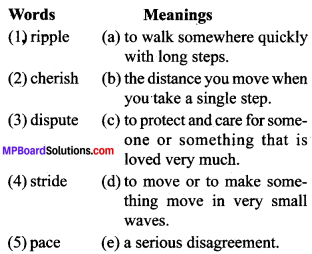
(a) Match these words with their meanings
(सुमेलित कीजिए।)
MP Board Class 9th General English The Spring Blossom Solutions Chapter 7 Am I a Child 1
Answer:
(1) → (d)
(2) → (c)
(3) → (e)
(4) → (a)
(5) → (b)

(b) Write antonyms of the following words
(विलोम शब्द लिखिए।)
Answer:

  1. lost – gained
  2. adult – minor
  3. behind – ahead
  4. life – death
  5. love – hate
  6. half – full
  7. now – later
  8. away – near
  9. tall – short
  10. new – old

How Much Have I Understood?

(a) Answer these questions in one or two sentences:
(निम्न प्रश्नों के उत्तर एक या दो वाक्यों में दीजिए)

Question 1.
What do you mean by ‘my dream world’?
(व्हॉट डू यू मीन बाइ ‘माइ ड्रीम वर्ल्ड’?)
‘मेरा स्वप्न संसार’ से क्या अर्थ है?
Answer:
A child lives in the world of dreams that is childhood fantasies consisting of dolls and toys, fairies and princesses as in the tales.
(अ चाइल्ड लिव्स इन द वर्ल्ड ऑफ ड्रीम्स दैट इज़ चाइल्डहुड फैन्टेसीज़ कन्सिस्टिंग ऑफ डॉल्स एण्ड टॉयज, फेयरीज़ एण्ड प्रिन्सेसेज़ एज़ इन द टेल्स।)
बच्चे स्वप्नों के संसार में रहते हैं जिसमें गुड़ियाँ व खिलौने, परियाँ व राजकुमारियाँ होती हैं जैसे कि कहानियों में।

Question 2.
What does the poet find herself unable to see?
(व्हॉट डज़ द पोएट फाइन्ड हरसेल्फ अनेबल ट्र सी?)
कवयित्री खुद को क्या देखने में असमर्थ पाती है?
Answer:
The poet is unable to see the reasons for adult disputes.
(द पोएट इज़ अनेबल टू सी द रीजन्स फॉर एडल्ट डिस्प्यूट्स।)
कवयित्री वयस्कों के विवादों का कारण जानने में असमर्थ है

Question 3.
What will happen to the poet soon?
(व्हॉट विल हैपन टू द पोएट सून?)
कवयित्री को जल्द ही क्या होने वाला है?
Answer:
The poet will soon step into a new world, the world of adult life.
(द पोएट विल सून स्टैप इनटू अ न्यू वर्ल्ड, द वर्ल्ड ऑफ एडल्ट लाइफ।)
कवयित्री जल्दी ही एक नई दुनिया में कदम रखेगी, वयस्कों के संसार में।

Question 4.
Write any two lines of the poem you like most.
(राइट एनी टू लाइन्स ऑफ द पोएम यू लाइक मोस्ट।)
अपनी पसन्द की कविता की कोई दो पंक्तियाँ लिखो।
Answer:
Students can write any two lines from the poem that they like most.
छात्र अपनी पसन्द की कोई भी दो पंक्तियाँ लिखें।

(b) Answer the following questions in three to four sentences.
(निम्न प्रश्नों के उत्तर तीन या चार वाक्यों में दीजिए।)

Question 1.
Write the things that indicate that the poet is still a child.
(राईट द थिंग्स दैट इन्डीकेट दैट द पोएट इज़ स्टिल अ चाइल्ड।)
वह बातें लिखिए जिनसे पता चलता है कि कवयित्री अभी बच्ची है।
Answer:
She could not look after herself, she pays a half fare on a bus to school and the does not see the reasons for adult disputes.
(शी कुड नॉट लुक आफ्टर हरसेल्फ, शी पेज़ अ हॉफ फेयर ऑन अ बस टू स्कूल एण्ड शी डज़ नॉट सी द रीज़न्स फॉर एडल्ट डिस्पयूट्स।)
वह अपना ख्याल नहीं रख सकती, उसे बस का आधा किराया देना पड़ता है तथा उसे वयस्कों के विवादों के कारण समझ में नहीं आते।

Question 2.
Write the things that indicate that the poet is on the threshold of an adulthood.
(राईट द थिंग्स दैट इन्डिकेट दैट द पोएट इज़ ऑन द ऐशहोल्ड ऑफ एन एडल्टहुड।)
वह बातें लिखिए जिनसे पता चलता है कि कवयित्री वयस्कता की देहलीज पर है।
Answer:
She is tall, she understands adult talk, she doesn’t love the teddy and toys. This indicates that she is older than a child but there are some things which show that she is still not an adult. Hence she is on the threshold of adulthood.

(शी इज़ टॉल, शी अन्डरस्टैण्ड्स एडल्ट टॉक शी डजन्ट लव द टैडी एण्ड टॉयज। दिस इन्डीकेट्स दैट शी इज़ ओल्डर दैन अ चाइल्ड बट देयर आर सम थिंग्स विच शो दैट शी इज़ स्टिल नॉट एन एडल्ट। हैन्स शी इज़ ऑन द धैशहोल्ड ऑफ एडल्टहुड।)

वह लम्बी है, उसे वयस्कों की बातें समझ आती हैं, उसे खिलौने अच्छे नहीं लगते। इससे लगता है कि वह बच्ची नहीं है लेकिन कुछ ऐसी चीजें हैं जो ये दिखाती हैं कि वह अब भी बच्ची है। अतः वह वयस्कता की देहलीज पर है।

Question 3.
The poet is unable to understand the reasons of the disputes among adults. Why? Think and answer
(द पोएट इज़ अनेबल टू अन्डरस्टैण्ड द रीजन्स ऑफ द डिस्प्यूट्स अमंग एडल्टस। व्हॉय? थिंक एण्ड आन्सर।)
कवयित्री वयस्कों के विवादों का कारण समझने में असमर्थ है। क्यों? सोचो व उत्तर दो।
Answer:
The poet is unable to understand the reasons of the disputes among adults because at her age reasoning power is not developed. Children are innocent and simple. They forget their quarrels quickly.
(द पोएट इज़ अनेबल टू अन्डरस्टैण्ड द रीजन्स ऑफ द डिस्प्यूट्स अमंग एडल्ट्स बिकॉज़ एट हर एज रीजनिंग पावर इज़ नॉट डेवलप्ड। चिल्ड्रन आर इनोसेन्ट एण्ड सिम्पल। दे फॉरगेट देयर क्वॉरल्स क्विकली।)
क्योंकि कवयित्री की उम्र में बच्चे सीधे-सादे होते हैं। वे अपने झगड़े जल्द भूल जाते हैं।

Question 4.
Write the Central idea of the poem.
कविता का केन्द्रीय भाव लिखिए।
Answer:
The poem tries to find out the strange feelings of an adolescent. She has just left behind childhood but has not yet stepped into adulthood. She has a twinge of regret in the passing away of childhood and air of expectation for the approaching adulthood.

Listening Time

Fill in the missing words.
(रिक्त स्थान भरो।)
Answer:
(a) Am I an adult or a child?
No! Not an adult-I do not see.
The reasons for adult disputes;
I am safe in non-understanding.
But does that means that I am a child?

(b) Am I a child or an adult?
No! Not a child now it’s not a teddy I love.
His cherished position is taken.
Just because my toys have lost their value.
Does that mean that I am an adult?

Speaking Time

Using the given words, speak a few sentences?
(दिये गये शब्दों का प्रयोग कर कुछ वाक्य बोलिए।)
doll, teddy, dispute, honest, parents, child, look after, friend, responsibility, adult, games, play, helping dream world, marks, doubt.
Answer:
You can speak sentences as follows
आप इस तरह के वाक्य बोल सकते हैं।
Dolls and teddy lose their interest when a child is becoming an adult. He/She comes out of the dream world. He/She does not understand the reason of adult disputes.

He/She is unable to take one’s own responsibility and his/her parents look after him/her.

Writing Time

Question 1.
Make a list of things (games/food items/toys etc.) you liked when you were quite small and the things you like to do now. Compare it with your friends.
(उन चीजों की सूची बनाओ जो तुम्हें बचपन में पसन्द थीं और जो तुम्हें अब पसन्द हैं। अपने दोस्तों से तुलना करो।)
Answer:
Students should do themselves.
(छात्र स्वयं करें।)

Question 2.
Write the poem ‘Am I a Child’ in your own words.
(कविता को अपने शब्दों मे लिखो)
Answer:
Students should do themselves.
(छात्र स्वयं करें।)

Things to do

Question 1.
How can you help the adults in solving their disputes? List the ways in which you can help them.
(तुम अपने बड़ों के झगड़े सुलझाने में उनकी किस प्रकार सहायता करोगे? तरीके सुझाओ।)
Answer:
We can help the adults in solving their disputes by making them understand their real cause. We can also help them by making them realise that they are losing their peace of mind and valuable time due to them. We can also ask them to be analytical and find its solution.

Question 2.
Discuss with your friends and list their views on the following:
(निम्न पर अपने मित्रों से चर्चा करो व उनके विचार लिखो)

(a) Things that we gain or learn from our adults.
(बातें जो हम अपने बड़ों से सीखते हैं।)
Answer:
The views of your friends may be as follows:
We learn accepting responsibility, taking care of ourselves, discipline, good manners and moral values such as honesty, sympathy, being fair, etc.

(b) Things that we don’t like but we have to listen to.
(बातें जो हमें अच्छी नहीं लगतीं पर हमें सुननी पड़ती हैं।)
Answer:
We have to listen things such as-sit properly, behave properly, drink milk, don’t sit among adult’s talk, dont’t watch T.V. sitting too close to it and for so much time, wake up early etc.

Question 3.
Collect information about the faculties of studies pertaining to different careers.
(विभिन्न क्षेत्रों में कार्य करने के लिए की जाने वाली पढ़ाई के बारे में सूचना इकट्ठी करो।)
Answer:
Students can collect information about studies pertaining to careers such as journalism, medicine, engineering, teaching, software etc. themselves.

Am I a Child? Central Idea of the Poem

The poem tries to find out the strange feelings of an adolescent. She has just left behind childhood but has not yet stepped into adulthood. She has a twinge of regret in the passing away of childhood and air of expectation for the approaching adulthood.

Am I a Child? Difficult Word Meanings

ripple (रिपल) to move or to make something move in very small waves छोटी-छोटी लहरों में आगे बढ़ना या बढ़ाना; cherish (चेरिश) protect and care for someone or something स्नेहपूर्वक देखभाल करना; dispute (डिस्प्यूट)-a disagreement between two people, groups or countries विवाद; stride (स्ट्राइड)-to walk with long steps in a particular direction लम्बे-लम्बे डग भरकर एक दिशा में चलना।

Am I a Child? Summary, Pronunciation & Translation

[1] Am I a child or an adult?
No! Not a child now my dolls are gone;
My dream world has rippled away.
I am tall, I understand adult talk,
But does that mean that I am an adult?

(एम आई अ चाइल्ड और एन एडल्ट?
नो! नॉट अ चाइल्ड नाउ माई डॉल्स आर गोन;
माई ड्रीम वर्ल्ड हेज़ रिपल्ड अवे,
आई एम टॉल, आई अन्डरस्टेण्ड एडल्ट टॉक,
बट डज़ दैट बीन दैट आई एम एन एडल्ट?)

हिन्दी अनुवाद :
मैं एक बच्ची हूँ या एक वयस्क?
नहीं! अब एक बच्ची नहीं-मेरी गुड़ियाएँ जा चुकी
हैं। मेरे सपनों का संसार लहराते हुए आगे बढ़ चुका हैं।
मैं लम्बी हो गई हूँ, मैं वयस्कों की बात समझती हूँ।
पर क्या इसका मतलब है कि मैं वयस्क हो गई हूँ?

[2] Am I an adult or a child?
No! Not an adult-I could’t look after myself;
The understanding is just not there.
I pay a half fare on a bus to school,
But does that mean that I am a child?

(एम आई एन एडल्ट ऑर ए चाइल्ड?
नो! नाट एन एडल्ट-आई कुडन्ट लुक आफ्टर मायसेल्फ;
द अण्डरस्टेडिंग इज़ जस्ट नॉट देयर।
आई पे अ हाफ फेयर ऑन अ बस टु स्कूल,
बट डज़ दैट मीन दैट आई एम अ चाइल्ड?)

हिन्दी अनुवाद :
क्या मैं एक वयस्क हूँ या बच्ची?
नहीं वयस्क नहीं-मैं अपनी देखभाल स्वयं नहीं कर सकती
अभी मुझमें समझदारी नहीं।
मैं स्कूल बस से स्कूल जाने का आधा किराया ही देती हूँ
पर इसका क्या यह मतलब है कि मैं बच्ची ही हूँ?

[3] Am I a child or an adult?
No! Not a child now-it’s not a teddy I love;
His cherished position is taken.
Just because my toys have lost their value,
Does that mean that I am an adult?

(एम आई ए चाइल्ड और एन एडल्ट?
नो! नॉट ए चाइल्ड नाउ-इट्स नॉट अ टेडी आई लव;
हिज़ चेरिस्ड पोजिशन इज़ टेकन।
जस्ट बिकाज़ माई टायज़ हेव लॉस्ट देअर वेल्यू,
डज़ दैट मीन दैट आइ एम एन एडल्ट?)

हिन्दी अनुवाद :
मैं एक बच्ची हूँ या एक वयस्क?
नहीं! अब बच्ची नहीं-अब मैं टेडी से प्यार नहीं करती;
उसकी प्यार से देखभाल अब नहीं रही।
क्योंकि मेरे खिलौनों ने अपनी कीमत खो दी है,
पर इसका क्या यह मतलब है कि मैं एक वयस्क हूँ?

[4] Am I an adult or a child?
No! Not an adult I do not see
The reasons for adult disputes;
I am safe in non-understanding.
But does that mean that I am a child?

(एम आई एन एडल्ट और अ चाइल्ड
नो! नाट एन एडल्ट-आई डू नाट सी
द रीज़न्स फोर एडल्ट डिस्प्यूट्स;
आई.एम सेफ इन नन-अण्डरस्टैडिंग।
बट डज़ दैट मीन दैट आई एम ए चाइल्ड?)

हिन्दी अनुवाद :
मैं एक वयस्क हूँ या बच्ची?
नहीं! एक वयस्क नहीं-मैं समझ नहीं सकती
वयस्कों के वाद-विवादों के कारण;
मैं ना समझ होने में सुरक्षित हूँ।
किन्तु क्या इसका मतलब है कि मैं एक बच्ची हूँ?

[5] Well, am I a child or an adult?
No! Not one or the other now;
One pace in front of childhood,
And one behind an adult.
Soon I shall stride into a new world,
The world of adult life. -Margaret Lawrence

(वेल एम आई अ चाइल्ड और एन एडल्ट?
नो! नॉट वन और दी आदर नाउ;
वन पेस इन फ्रन्ट ऑफ चाइल्डहुड,
एण्ड वन बिहाइन्ड एन एडल्ट।
सून आई शैल स्ट्राइड.इन्टू अ न्यू वर्ल्ड,
द वर्ल्ड ऑफ एडल्ट लाइफ।)

हिन्दी अनुवाद :
अच्छा, क्या मैं एक बच्ची हूँ या वयस्क?
नहीं! अभी न यह हूँ, न वह;
बचपन से एक कदम आगे,
और वयस्क से एक कदम पीछे।
शीघ्र ही मैं एक नये संसार में कदम रखेंगी,
जो वयस्क जीवन का संसार है।

We believe information shared regarding MP Board Solutions for Class 9 Textbook General English The Spring Blossom Solutions Chapter 7 Am I a Child? Questions and Answers as far as our knowledge is concerned is true and reliable. In case of any queries or suggestions do leave us your feedback and our team will guide you at soonest possibility. Bookmark our site to avail latest updates on several state board Solutions at your fingertips.
MP Board Class 9th General English The Spring Blossom Solutions Chapter 3 The School for Sympathy

MP Board Solutions for Class 9 Textbook General English The Spring Blossom Solutions Chapter 3 The School for Sympathy Questions and Answers aids you to prepare all topics in it effectively. You need not worry about accuracy of Madhya Pradesh State Board Solutions for Class 9 English Composition: Visual Stimulus as they are given adhering to latest exam pattern and syllabus guidelines. You Can Download MP Board Class 9 English Solutions Questions and Answers, Notes, Summary, Guide pdf on is page. Enhance your subject knowledge by preparing from Chapterwise MP Board Solutions for Class 9 English and clarify your doubts on corresponding topics.

MP Board Class 9th General English The Spring Blossom Solutions Chapter 3 The School for Sympathy

Kick start your preparation by using our online resource Madhya Pradesh State Board Solutions for Class 9 Textbook General English The Spring Blossom Solutions Chapter 3 The School for Sympathy. You can even download MP Board Solutions for Class 9 English free of cost rough direct links available on our page. Clear your queries and understand concept behind in a simple manner. Simply tap on concept you wish to prepare chapterwise and go rough it.

The School for Sympathy Textual Exercises

Word Power

(1) Correct the spelling of the following words:
(शब्दों की वर्तनी सही करके लिखें।)
Answer:

  1. panioncom – companion
  2. pplecri – cripple
  3. fortunemis – misfortune
  4. anityhum – humanity
  5. fortcom – comfort

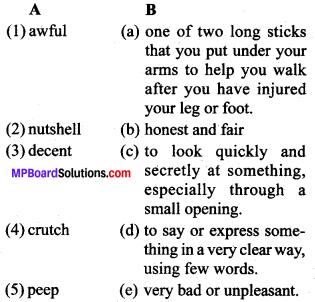
(2) Match the following words with their correct meanings
(सुमेलित कीजिए)
MP Board Class 9th General English The Spring Blossom Solutions Chapter 3 The School for Sympathy 1
Answer:
(1) → (e)
(2) → (d)
(3) → (b)
(4) → (a)
(5) → (c)

How Much Have I understood?

Answer the following questions
(निम्न प्रश्नों के उत्तर लिखिए)

Question 1.
Why do you think the writer wants to visit Miss Beam’s school?
(व्हाय डू यू थिंक द राईटर वॉन्ट्स टू विजिट मिस बीम्स् स्कूल?)
तुम्हारे विचारानुसार लेखक मिस बीम के स्कूल क्यों जाना चाहता है?
Answer:
The writer wants to visit Miss Beam’s school because he had heard a lot about it.
(द राईटर वॉन्ट्स टू विजिट मिस बीम्स् स्कूल बिकॉज ही हैड हर्ड अ लॉट अबाऊट इट।)
लेखक मिस बीम के विद्यालय जाना चाहता है क्योंकि उसने उसके बारे में बहुत कुछ सुन रखा है।

Question 2.
When the writer arrives at the school, he sees something unusual. What is it?
(व्हेन द राईटर एराइव्स एट द स्कूल ही सीज समथिंग अनयूजुअल, व्हॉट इज इट?)
जब लेखक विद्यालय आता है तो वह कुछ असाधारण देखता है। वह क्या है?
Answer:
The unusual thing that writer sees on arriving at the school was that a girl of about twelve, with her eyes covered with a bandage was being led carefully between the flower-beds by a little boy of eight.
(द अनयूजुअल थिंग दैट राईटर सीज़ ऑन एराइविंग एट द स्कूल वॉज़ दैट अ गर्ल ऑफ अबाऊट वैल्व, विद हर आईज़ कवर्ड विद अ बैन्डेज़ वॉज़ बींग लेड केअरफुली बिटवीन द फ्लावर-बैड्स बाई अ लिटल बॉय ऑफ एट।)
असाधारण बात जो लेखक ने देखी वह यह थी कि आँखों पर पट्टी बाँधे एक बारह वर्ष की लड़की को आठ वर्ष का एक लड़का फूलों की क्यारी के पास रास्ता बताता ले जा रहा था।

Question 3.
In which part of the school does the writer meet Miss Beam? ‘………..her round figure was likely to be comforting to a homesick child’. What does this mean?
(इन व्हिच पार्ट ऑफ द स्कूल डज द राईटर मीट मिस बीम? ……….”हर राउण्ड फिगर वॉज़ लाइकली टू बी कमफटिंग टू अ होमसिक चाइल्ड’, व्हॉट डज़ दिस मीन?)
विद्यालय के किस भाग में लेखक मिस बीम से मिलता है? ‘उनका गोलमटोल चेहरा ऐसे बच्चे को सांत्वना देने वाला था जिसे घर की याद सता रही हो।’ इसका क्या मतलब है?
Answer:
The writer meets Miss Beam inside the school. The given lines mean that she had such a comforting motherly appearance that a homesick child got the feeling that she was the member of his/her family.
(द राइटर मीट्स मिस बीम इनसाईड द स्कूल। द गिविन लाइन्स मीन दैट शी हैड सच अ कमफटिंग मदरली एपिअरेन्स दैट अ होमसिक चाइल्ड गॉट द फीलिंग दैट शी वॉज़ द मेम्बर ऑफ हिज़/हर फैमिली।)
लेखक मिस बीम से विद्यालय के अन्दर मिलता है। दी गई पंक्तियों का अर्थ है कि उनकी गोल-मटोल काया एक माँ सदृश व इतनी मृदु थी कि बच्चा उन्हें अपने घर का सदस्य समझता था व उसे घर की याद नहीं आती थी।

Question 4.
Which word in paragraph 3 suggests that Miss Beam’s school is perhaps a residential School?
(व्हिच वर्ड इन पैराग्राफ 3 सजेस्ट्स दैट मिस बीम्स स्कूल इज परहैप्स अ रेजिडेन्शिअल स्कूल?)
अनुच्छेद 3 में कौन-सा शब्द यह बताता है कि मिस बीम का विद्यालय एक आवासीय विद्यालय है?
Answer:
The word ‘homesick child’ suggests that Miss Beam’s school is perhaps a residential school.
(द वर्ड ‘होमसिक चाइल्ड सजेस्ट दैट मिस बीम्स स्कूल इज परहैप्स अ रेजिडेन्शिअल स्कूल।)
शब्द ‘घर की याद से परेशान या बेचैन’

Question 5.
What does the writer see in Miss Beam’s school that surprises and pains him? Is he right in thinking that not all the children are ‘healthy and active’?
(व्हॉट द राईटर इन मिस बीम्स स्कूल दैट सरप्राइजेज एण्ड पेन्स हिम। व्हाय? इज़ ही राईट इन थिकिंग दैट नॉट ऑल द चिल्ड्रन आर ‘हैल्दी एण्ड एक्टिव’?)
लेखक जो मिस बीम के स्कूल में देखता है उससे उसे आश्चर्य और दुःख होता है। क्यों? क्या उसकी यह सोच कि सभी बच्चे स्वस्थ व सक्रिय नहीं हैं सही है?
Answer:
In Miss Beam’s school writer sees that all the children are not healthy and active. This surprises and pains him. No, he is not right in thinking that not all the children are healthy and active because what he saw was not true. Children were merely pertending.

(इन मिस बीम्स स्कूल राईटर सीज़ दैट ऑल द चिल्ड्रन आर नॉट हैल्दी एण्ड एक्टिवा दिस सरप्राइजेज एण्ड पेन्स हिम। नो, ही इज नॉट राईट इन थिंकिंग दैट नाट ऑल द चिल्ड्रन आर हैल्दी एण्ड एक्टिव’ बिकॉज व्हॉट ही सॉ बाज़ नॉट टु। चिल्ड्रन वर मेयरली प्रिटेन्डिंग।)

मिस बीम के स्कूल में लेखक देखता है कि सभी बच्चे स्वस्थ व चुस्त नहीं हैं। यह उसे आश्चर्यचकित व दुःखी करता है। नहीं, वह सही नहीं है क्योंकि जो उसने देखा वह सच नहीं था। बच्चे महज ऐसा नाटक कर रहे थे।

Question 6.
How does Miss Beam give the children an idea of suffering in the world? How is the blind day educative to both the blind and the helpers?
(हाउ डज़ मिस बीम गिव द चिल्ड्रन एन आइडिया ऑफ सफरिंग इन द वर्ल्ड? हाउ इज़ द ब्लाइन्ड डे एजुकेटिव टू बोथ द ब्लाइन्ड एण्ड द हैल्पर्स?)
मिस बीम बच्चों को किस प्रकार दुनिया के कष्टों के बारे में जानकारी देती हैं? नेत्रहीन दिवस किस प्रकार अन्धे व उसके सहायकों के लिए शिक्षाप्रद है?
Answer:
Miss Beam gives the children an idea of suffering in the world by arranging artificial suffering. The blind day is educative to both, the blind and the helpers as the blind needs assistance of others in everything so he feels the suffering of a blind man and the helpers learn the duty to help others.

(मिस बीम गिव्स द चिल्ड्रन एन आइडिया ऑफ सफरिंग इन द वर्ल्ड बाइ अरेन्जिंग आर्टिफिशियल सफरिंग। द ब्लाइन्ड डे इज एजूकेटिव टू बोथ, द ब्लाइन्ड एण्ड द हैलपर्स एज द ब्लाइन्ड नीड्स असिस्टेन्स ऑफ अदर्स इन एव्रीथिंग सो ही फील्स द सफरिंग ऑफ अ ब्लाइन्ड मैन एण्ड द हैल्पर्स लर्न द ड्यूटी टू हैल्प अदर्स।)

मिस बीम बच्चों को दुनिया के कष्टों के बारे में कृत्रिम रूप से कष्ट अनुभव करा कर कराती हैं। नेत्रहीन दिवस बच्चों को नेत्रहीन व्यक्ति के कष्टों का बोध कराता है क्योंकि उन्हें उसकी विवशता का अनुभव होता है व उसके सहायक दूसरों की मदद करना सीखते हैं।

Question 7.
In what way is the dumb day more frightening than even the blind day?
(इन व्हॉट वे इज़ द डम्ब डे मोर फ्राइटनिंग दैन ईवन द ब्लाइन्ड डे?)
मूक दिवस, नेत्रहीन दिवस से ज्यादा भयावह क्यों है?
Answer:
The dumb day is more frightening than the blind day because the mouth is not bandaged like the eyes on blind day, so the child must use his will power.
(द डम्ब डे इज़ मोर फ्राइटनिंग दैन द ब्लाइन्ड डे बिकॉज़ द माउथ इज़ नॉट बैन्डेड लाइक द आईज़ ऑन ब्लाइन्ड डे, सो द चाइल्ड मस्ट यूज़ हिज़ विल पावर।)
मूक दिवस नेत्रहीन दिवस से ज्यादा भयावह है, क्योंकि मूक दिवस पर मुँह पर पट्टी नहीं बँधी होती। बच्चे को अपनी इच्छा शक्ति का प्रयोग करना होता है।

Question 8.
On which day is sitting down a relief? Why?
(ऑन व्हिच डे इज सिटिंग डाउन अरिलीफ? व्हाय?)
किस दिन बैठना राहत वाला होता है? क्यों?
Answer:
On blind day sitting down is a relief because if a child walks, he feels that he may be hit by something any moment.
(ऑन ब्लाइंड डे सिटिंग डाउन इज अ रिलीफ बिकॉज़ इफ अचाइल्ड बॉक्स, ही फील्स दैट ही मे बी हिट बाइ समथिंग एनी मोमेन्ट।)
नेत्रहीन दिवस पर बैठना राहत वाला होता है क्योंकि चलने में किसी भी पल टकराने का डर होता है।

Language Practice

(1) Choose the correct verb form from those in brackets
(सही शब्द चुनो।)

  1. The earth………………round the sun. (move, moves)
  2. The dates………………..good. (taste, tastes)
  3. The rain………..on your land. (fall, falls)

Answer:

  1. moves
  2. taste
  3. falls.

Listening Time

Fill in the missing words in the space given.
(रिक्त स्थान भरिए।)
Answer:
Miss Beam laughed “Oh, no” she said, “She’s not lame really, this is only her lame day. Nor are those others blind it is only their blind day.” I must have looked very much astonished, for she laughed again. “There you have an essential part of our system in a nutshell. In order to get these young minds to appreciate and understand misfortune, we make them share in misfortune too. In the course of the term every child has one blind day, one lame day, one deal day, one dumb day. During the blind day their eyes are bandaged, and it is a point of honour not to peep. The bandage is put on overnight, they wake up blind. This means that they need assistance in everything, and other children are told to help them and lead them about. It is educative to both of them-the blind and the helpers.”

Speaking Time

Answer the following questions seeing the diagram given in the book.
(पाठ्य-पुस्तक में दिए गए चित्र को देखकर निम्न प्रश्नों के उत्तर दो।)

  1. Whose learning achievement is higher?
  2. Do boys and girls differ in their feeling of patriotism?
  3. Whose risk taking ability is higher?
  4. Who are more creative?

Answer:

  1. Girls
  2. No
  3. Boys
  4. Girls.

Writing Time

Write a letter to your friend telling him/her about the lesson “School for Sympathy.”
(अपने मित्र को पाठ सहानुभूति विद्यालय के बारे में बताते हुए पत्र लिखो।)
Answer:
20, Budhwar Peth, Nagpur
12, December, 20…

Dear Mohan,

Hope you are fine there, I am also fine here. Today I am writing you this letter because I want to tell you about a school that does not teach thought but thoughtfulness. I read about such a thought provoking school in the lesson “The School for Sympathy’ in our text. I was really moved after reading it. It is about Miss Beam’s school and her innovative teaching method. In her school there is a blind day, a lame day, a deaf day and a dumb day for every child in the course of the term. It means that every child has to be a blind, a dumb, a deaf and a lame for a day so that he can experience himself the helplessness and problems of the disabled. It is educative to both the one who is disabled and the helper. The idea behind it is that only when we experience the state of the disability ourselves then only we really understand others miseries and sorrows.

After reading it I realized how unaware was I of others troubles and sometimes ignored them. It really touched my heart. You should also read it whenever you come here. Now.I am stopping to write. Rest is fine.

Yours as ever
Vikram

Things to do

Go to your school library and read any story about Helen Keller or any other successful blind/deaf/lame person and on the basis of your reading take notes and discuss it with your classmates. Ask your teacher to help you.
(अपने विद्यालय के पुस्तकालय में जाकर हेलेन केलर या अन्य किसी सफल अपंग या विकलांग व्यक्ति की कहानी पढ़िये। मुख्य बातें लिख लीजिए व अपनी कक्षा के अन्य बच्चों के साथ उन पर विचार करिये)
Answer:
Student should themselves read any story and make notes on their own or with the help of their teacher.
छात्र स्वयं करें।

The School for Sympathy Difficult Word Meanings

MP Board Class 9th General English The Spring Blossom Solutions Chapter 3 The School for Sympathy 2

The School for Sympathy Summary, Pronunciation & Translation

[1] I had heard a lot about Miss Beam’s school, but I did not get the chance to visit it till last week.

When I arrived at the school I saw a girl of about twelve, with her eyes covered with a bandage, being led carefully between the flower-beds by a little boy of eight. She stopped, and asked who it was that had come in, and he seemed to be describing me to her. Then they passed on.

(आई हैड हर्ड ए लॉट अबाउट मिस बीम्स स्कूल, बट आई डिड नाट गेट द चान्स टु विज़िट इट टिल लास्ट वीक।

व्हेन आई अराइव्ड एट द स्कूल आई सॉ अ गर्ल ऑफ अबाउट ट्वेलव, विद हर आइज कवर्ड विद अ बेन्डेज़, बीइंग लेड केअरफली बिटविन द फ्लावर-बेइज़ बाय अ लिटिल बॉय ऑफ एट। शी स्टॉप्ड, एण्ड आस्क्ड हू इट वाज दैड हैड कम इन, एण्ड ही सीम्ड टु डिस्क्राइबिंग मी टु हर। दैन दे पास्ड ऑन।)

हिन्दी अनुवाद :
मैंने मिस बीम के विद्यालय के बारे में काफी कुछ सुन रखा था, पर मुझे पिछले सप्ताह तक वहाँ जाने का कोई अवसर नहीं मिला था।

जब मैं विद्यालय पहुँचा तो मैंने लगभग बारह साल की एक बच्ची को देखा जिसकी आँखों पर पट्टी बँधी थी और जिसे लगभग आठ वर्ष का एक लड़का फूलों की क्यारियों के बीच साथ लेकर चल रहा था। वह रुकी और उसने पूछा कि कौन अन्दर आया है और ऐसा लगा कि वह उससे मेरे बारे में वर्णन कर रहा था। फिर वे चले गये।

[2] Miss Beam was all that I had expected middle-aged authoritative, kind and understanding. Her hair was beginning to turn grey, and her round figure was likely to be comforting to a homesick child.

We chatted for a little while, and when I asked her some questions about her teaching methods, which I had heard were simple.

(मिस बीम वाज ऑल दैट आई हैड एक्सपेक्टेड मिडिल एजेड-अथॉरिटेटिव, कांइन्ड एण्ड अण्डरस्टेडिंग। हर हेअर वाज बिगनिंग टु टर्न ग्रे, एण्ड हर राउण्ड फिंगर वाज लाइकली टु बी कम्फरटिंग टु अ होमसिक चाइल्ड।

वी चेटेड फोर अ लिटिल व्हाइल, एण्ड व्हेन आस्क्ड हर सम क्वेश्चन्स अबाउट हर टीचिंग मेथड्स, विच आई हैड हर्ड वर सिम्पल।)

हिन्दी अनुवाद :
मिस बीम जैसे कि मेरी अपेक्षा थी, मध्यम आयु की, दबदबा रखने वाली, दयालु और समझदार महिला थी। उनके बाल भूरे होना शुरू हो रहे थे, और उनकी गोलाकार आकृति किसी घर के प्रति अत्यन्त लगाव रखने वाले बालक के प्रति ममतामयी सकून देने वाली थी।

हम थोड़ी देर बातें करते रहे और जब मैंने उन्हें उनकी शिक्षण पद्धति के बारे में कुछ प्रश्न पूछे जो कि मैंने सुना था कि बहुत साधारण थे।

[3] “…….. We teach only those things that are simple and useful to pupils-spelling, adding, subtracting, multiplying, writing. The rest is done by reading to them and giving them interesting talks. There are practically no other lessons.

“…….. I have heard so much,” I said, “about the originality of your system.”

(वी टीच ओनली दोज थिंग्ज दैट आर सिम्पल एण्ड यूजफुल टु प्यूपिल्स-स्पेलिंग, ऐडिंग, सबट्रेक्टिंग, मल्टीप्लाइंग, राइटिंग। द रेस्ट इज़ डन बाइ रीडिंग टु देम एण्ड गिविंग देम इन्टरएस्टिंग टॉक्स। देअर आर प्रेक्टिकली नो अदर लेसन्स।

“आई हैव हर्ड सो मच”, आई सैड, “अबाउट द ऑरिजनेलिटी – ऑफ योर सिस्टम।”)

हिन्दी अनुवाद :
हम केवल उन्हीं वस्तुओं को सिखाते हैं जो छात्रों के लिए सरल एवं उपयोगी हों-वर्तनी, जोड़, गुणा, घटाना और लिखना सिखाया जाता है। शेष अध्यापन पढ़कर होता है और बच्चों से मनोरंजक बातें की जाती हैं। इसके अलावा कोई प्रायोगिक पाठ नहीं सिखाया जाता है। मैंने कहा “मैंने बहुत कुछ सुना है आपकी यथार्थता के विषय में”।

[4] Miss Beam smiled. “Ah, yes” she said. “I am coming to that. The real aim of this school is not to teach thought but thoughtfulness-humanity, kindness and citizenship. That is the ideal I have always had, and happily there are parents good enough to trust me to try and put it into practice. Look out of the window for a minute, will you?”

I went to the window, which looked out on a large garden and playground at the back.

(मिस बीम स्माइल्ड, “हा, यस” शी सेड, “आई एम कमिंग टु दैट। द रीअल एम ऑफ दिस स्कूल इज़ नाट टु टीच थॉट बट थॉटफुलनेस-हृयूमेनिटी, काइन्डनेस एण्ड सिटीजनशिप। दैट इज़ द आइडियल आई हेव आलवेज हैड, एण्ड हैप्पिली देअर आर पेरेण्ट्स गुड इनफ टु ट्रस्ट मी टु ट्राय एण्ड पुट इट इन्टु प्रेक्टिस। लुक आउट ऑफ द विन्डो फोर अ मिनट, विल यू?”

आई वेन्ट टु द विन्डो, विच लुक्ड आउट आन ए लार्ज गार्डन एण्ड प्लेग्राउण्ड एट द बेक।)

हिन्दी अनुवाद :
मिस बीम मुस्कराई, “अरे हाँ” वह बोली, “मैं उसी बात पर आ रही हूँ। इस विद्यालय का मुख्य उद्देश्य विचार सिखाना नहीं बल्कि विचारशील बनाना है जिसमें मानवता, दयालुता और नागरिकता समाहित हो। यह वही आदर्श है जो कि सदैव मेरे मन में रहा है, और खुशी की बात है कि अभिभावक मुझ पर भरोसा करते हैं और इसको अमल में लाने का प्रयास करते हैं।”

मैं खिड़की तक गया जो पीछे एक विशाल बगीचे और खेल के मैदान को दिखाती है।

[5] “What do you see?” Miss Beam asked. “I see some very beautiful grounds.” I said, “and a lot of jolly children. But what surprises me, and pains me too, is that they are not all healthy and active. As I came in I saw one poor little thing being led about because of some trouble with her eyes. And now I can see two more in the same condition, while there is a girl with a crutch just under the window watching the others at play. She seems to be a hopeless cripple.

(“व्हॉट डू यू सी?” मिस बीम आस्क्ड? “आई सी सम वेरी ब्यूटीफुल राउन्ड्स” आई सेड, “एण्ड अ लॉट ऑफ जॉली चिल्ड्रन। बट व्हाट सरप्राजेस मी, एण्ड पेन्स मी टू, इज़ दैट दे आर नॉट हेल्दी एण्ड एक्टिव। एंज़ आई केम इन आइ सॉ वन पुअर लिटिल थिंग बीईंग, लेड अबाउट बिकाज़ ऑफ सम ट्रबल विद हर आइज़। एण्ड नाउ आई केन सी टू मोर इन द सेम कन्डीशन, व्हाइल देअर इज़ अ गर्ल विद अ क्रच जस्ट अण्डर द विन्डो वाचिंग अदर्स एट प्ले। शी सीम्स टू बी अ होपलेस क्रिपल।”)

हिन्दी अनुवाद :
“आप क्या देखते हो ?” मिस बीम ने पूछा। “मैं कुछ बहुत सुन्दर मैदान देख रहा हूँ।” मैंने कहा, “और बहुत से प्रसन्न बच्चे परन्तु जो मुझे आश्चर्यजनक लगता है तथा कष्ट भी पहुँचाता है, वह है कि वे सभी स्वस्थ व सक्रिय नहीं हैं। जब मैं यहाँ आया तो मैंने देखा एक छोटी बच्ची को थाम कर ले जाया जा रहा था क्योंकि उसकी आँखों में कुछ तकलीफ थी। और अब मैं और दो को इसी तरह की स्थिति में देख रहा हूँ जहाँ खिड़की के ठीक नीचे एक बच्ची बैसाखी पर दूसरों को खेलते हुए देख रही है। वह एक निराश द्विव्योग प्रतीत होती है।”

[6] Miss Beam laughed. “Oh, no”, she said, “she’s not lame really, this is only her lame day. Nor are those others blind, it is only their blind day.” I must have looked very much astonished, for she laughed again. “There you have an essential part of our system in a nutshell. In order to get these young minds to appreciate and understand misfortune, we make them share in misfortune too.

(मिस बीम लाफ्ड “ओह, नो” शी सेड, “शी इज़ नाट लेम रीअली, दिस इज़ ओनली हर लेम डे। नॉर आर दोज अदर्स ब्लाइण्ड, इट इज़ ओनली देअर ब्लाइंड डे।” आई मस्ट हेव लुक्ड वेरी मच एस्टोनिश्ड, फोर शी लाफ्ड अगेन। “देअर यू हेव इन एसेंशियल पार्ट ऑफ अवर सिस्टम इन अ नटशेल। इन आर्डर टु गेट दीज़ यंग माइन्ड्स टु एप्रिशिएट एण्ड अन्डरस्टेन्ड मिसफायूँन, वी मेक देम शेयर इन मिसफाळून टू।)

हिन्दी अनुवाद :
मिस बीम हँसी। “अरे नहीं”, उन्होंने कहा, “वह वास्तव में लँगड़ी नहीं है, यह उसका केवल पंगू दिवस है। न ही वे दूसरे अन्धे हैं, यह उनका केवल अन्धदिवस है।” मैं बहुत अधिक आश्चर्यचकित दिखाई दिया होऊँगा क्योंकि वह फिर हँसी थीं। आपने हमारी पद्धति का एक आवश्यक भाग संक्षिप्त रूप में पाया। इन बाल मस्तिष्क को प्रेरित करने एवं दुर्भाग्य को समझाने के लिए हम उन्हें दुर्भाग्य में शामिल भी करवाते हैं।

[7] In the course of the term every child has one blind day, one lame day, one deaf day and one dumb day. During the blind day their eyes are bandanged, and it is a point of honour not to peep. The bandage is put on overnight, they wake up blind. This means that they need assistance in everything, and other children are told to help them and lead them about. It is educative to both of them the blind and the helpers.”

(इन द कोर्स ऑफ द टर्म एव्री चाइल्ड हेज वन ब्लाइंड डे, वन लेम डे, वन डीफ डे एण्ड वन डम्ब डे। ड्यूरिंग द ब्लाइंड डे, देअर आइज आर बेंडेज, एण्ड इट इज़ अ पॉइन्ट ऑफ ऑनर नाट टु पीप। द बेण्डेज इज़ पुट ऑन ओवरनाइट, दे वेक अप ब्लाइंड। दिस मीन्स दैट दे नीड असिस्टेन्स इन एव्रीथिंग, एण्ड अदर चिल्ड्रन आर टोल टु हेल्प देम एण्ड लीड देम अबाउट। इट इज़ एजुकेटिव टु बोथ ऑफ देम-द ब्लाइन्ड एण्ड द हेल्पर्स।”)

हिन्दी अनुवाद :
शिक्षा सत्र के दौरान हर एक बालक का एक अन्धदिवस, एक पंगु दिवस एक बधिर दिवस और एक मूक दिवस होता है। अन्ध दिवस के दौरान उनकी आँखों पर पट्टी बाँध दी जाती है और यह एक प्रतिष्ठा की बात होती है कि वे झाँके नहीं। पट्टी सारी रात को ही बँधी रहती है ताकि वे एक अंधे की तरह ही जागें। इसका अर्थ है कि उनको सहायता की जरूरत पड़ती है और अन्य बच्चों को उनकी सहायता करने को कहा जाता है। यह अंधे व उनके सहायकों दोनों के लिए ही शिक्षाप्रद होता है।

[8] “Everyone is very kind, “Miss Beam continued, “and it is really something of a joke, although of course, before the day is over the reality of the disability becomes clear even to the least thoughtful. The blind day is, of course, really the worst, but some of the children tell me that the dumb day is the most frightening. There, of course, the child must use will-power only because the mouth is not bandaged. But come down into the garden and see for yourself how the children like it.

(“एवीवन इज़ वेरी काइन्ड” मिस बीम कन्टीन्यूड, “एण्ड इट इज़ रीअली समथिंग ऑफ ए जोक, अल्दो, ऑफ कोर्स, बिफोर द डे इज़ ओवर द रियलिटी ऑफ द डिस्एबीलिटी बिकम्स क्लीअर इवन टु द लीस्ट थाटफुल। द ब्लाइंड डे इज़, ऑफ कोर्स, रिअली द वर्ट, बट सम ऑफ द चिल्ड्रन टेक मी दैट द डम्ब डे इज़ द मोस्ट फ्राइटनिंग। देअर, ऑफ कोर्स, द चाइल्ड मस्ट यूस विल पावर ओनली बिकाज़ द माउथ इज़ नाट बेन्डेज्ड। बट कम डाउन इन्टू द गार्डन एण्ड सी फोर युअरसेल्फ हाउ द चिल्ड्रन लाइक इट।”)

हिन्दी अनुवाद :
“यहाँ हर व्यक्ति दयावान है।” मिस बीम ने कहना जारी रखा,”और यह एक प्रकार का मजाक ही है। यद्यपि निश्चय ही, दिन समाप्त होने के पूर्व दिव्यांगता की वास्तविकता बहुत कम विचारवान को भी स्पष्ट हो जाती है। अन्धदिवस वास्तव में बहुत खराब है किन्तु कुछ बच्चों ने बताया कि मूक दिवस बहुत ही डरावना होता है। उसमें बालक को अपनी दृढ़ इच्छा शक्ति का पालन करना होता है क्योंकि मुँह पर पट्टी नहीं बाँधी जाती। परन्तु आप बगीचे में आइये व स्वयं देखिये कि बच्चे इसे कितना. पसन्द करते हैं।

[9] Miss Beam led me to one of the bandaged girls, a little merry thing. “Here’s a gentleman come to talk to you,” said Miss Beam, and left us.
“Don’t you ever peep?” I asked, by way of an opening.
“Oh, no”, she exclaimed, “that would be cheating! But i’d not idea it was so awful to be blind. You can’t see a thing. One feels one is going to be hit by something every moment sitting dawn such a relief.

(मिस बीम लेड मी टु वन ऑफ द बेन्डेज्ड गर्ल्स ए लिटिल मेरी थिंग। “हिअर इज़ अ जेन्टलमैन कम टु टाक टु यू” सेड मिस बीम एण्ड लेफ्ट अस।
“डोन्ट यू एवर पीप?” आई आस्क्ड, बॉय वे ऑफ एन ओपनिंग।
“ओह नो”, शी एक्सक्लेम्ड, “दैट वुड बी चीटिंग। बट आई हेड नो आइडिया इट वाज सो ऑफुल टु बी ब्लाइंड।. यू कान्ट सी ए थिंग। वन फील्स वन इज गोइंग टु बी हिट बाय समथिंग एव्री मोमेण्ट। सिटिंग डाउन इज सच ए रिलीफ।)

हिन्दी अनुवाद :
मिस बीम मुझे आँखों पर पट्टी बँधी एक बच्ची के पास ले गईं, एक छोटी प्रसन्न बच्ची।” यहाँ एक सज्जन तुमसे बात करने आये हैं”, मिस बीम ने कहा और हमें वहीं छोड़कर चली गईं।
“क्या तुम कभी बीच से झाँकती हो।” मैंने बात शुरू करने के इरादे से कहा।
“अरे नहीं”, वह बोल उठी, “यह तो धोखा देना होगा किन्तु मुझे पता नहीं था कि अन्धा होना कितना दुःखपूर्ण होगा। तुम किसी चीज को देख नहीं पाते हो। ऐसा लगता है कि तुम कभी भी किसी चीज से टकरा जाओगे। बैठना बड़ी राहत देता है।

[10] “Are your guides kind to you?” I asked.
“Pretty good. Not so careful as I shall be when it’s my turn. Those that have been blind already are the best. It’s terrible not to see. I wish you’d try!”
“Shall I lead you anywhere” I asked.

(“आर यूअर गाइड्स काइन्ड टु यू?” आई आस्क्ड।
“प्रेटी गुड। नाट सो केयरफुल एज आई शाल बी व्हेन इट्स माई टर्न। दोज दैट हेव बीन ब्लाइंड अलरेडी आर द बेस्ट। इट्स टेरिबल नाट टु सी। आई विश यू वुड ट्राय।”
“शाल आई लीड यू एनी व्हेयर” आई आस्क्ड।)

हिन्दी अनुवाद :
“क्या तुम्हारे मार्गदर्शक तुम्हारे प्रति दयालु हैं।” मैंने पूछा।
“काफी अच्छे। किन्तु इतने फिक्रवान नहीं जितना मैं होऊँगा जब मेरी बारी आयेगी। वे जो पहले से अंधे हैं, सर्वोत्तम हैं। नहीं देख पाना बहुत भयावह है। आप भी कोशिश करके देखिये न।”
“क्या मैं तुम्हें कहीं और ले चलूँ?” मैंने पूछा।

[11] “Oh, yes”, she said, “let’s go for a little walk. Only you must tell me about things. I shall be so glad when today’s over. The other bad days can’t be half as bad as this. Having a leg tied up and hopping about on a crutch is almost fun. I guess. Having an arm tied up is a little more troublesome, because you have to get your food cut up for you, and so on, but it doesn’t really matter. And as for being deaf for a day, I shan’t mind that-at least, not much. But being blind is so frightening. My head aches all the time, just from avoiding things that probably aren’t there. Where are we now?”

(“ओह, यस”, शी सेड, “लेट्स गो फोर अलिटिल वाक्। ओनली यू मस्ट टेल मी अबाउट थिंग्स। आई शेल बी सो ग्लेड व्हेन टुडेइज ओवर। दी अदर बेड डेज काण्ट मी हाफ एज बेड एस दिस। हेविंग अ लेग टाइट अप एण्ड होपिंग अलाइट ऑन अ क्रच इज आलमोस्ट फन। आई गेस। हेविंग एन आर्म टाइड अप इज अ लिटिल मोर ट्रबलसम, बिकाज़ यू हेव टु गेट युअर फुड कट अप फोर यू, एण्ड सो ऑन, बट इट डज़ नाट रीअली” मेटर। एण्ड एज़ फोर बीइंग डीफ फोर अ डे, आई शांट माइंड दैट-एट लीस्ट नाट मच। बट बीइंग ब्लाइंड इज सो फ्राइटनिंग। माई हेड एक्स ऑल द टाइम, जस्ट फ्रॉम अवाइडिंग थिंग्स दैट प्राबेबली आरण्ट देअर व्हेअर वी आर नाउ?”)

हिन्दी अनुवाद :
“अरे, हाँ।” उसने कहा, “आओ हम थोड़ी देर घूमने चलते हैं। आपको केवल आसपास की चीजों के बारे में बताना होगा। आज का दिन बीतने के बाद मैं बहुत प्रसन्न होऊँगी। अन्य बुरे दिन इतने बुरे नहीं होंगे जितना कि वह। एक टाँग बँधवा कर बैसाखियों पर वहाँ-वहाँ फुदकना बड़ा मजेदार होगा। मैं ऐसा अनुमान लगाती हूँ। और एक हाथ बँधवाकर थोड़ा कष्टदायी होता होगा, क्योंकि तुम्हें अपना भोजन अपने लिए काटकर खाना होगा। और अन्य बातें। खैर कोई बात नहीं। और जहाँ तक बहरा दिवस की बात है मुझे उसका बुरा नहीं लगेगा-कम से कम ज्यादा तो नहीं। किन्तु अन्धदिवस बहुत ही भयावह होता है। मेरा सिर दिन भर दुखता है केवल उन चीजों को नजरअंदाज करते हुए जो कि शायद वहाँ हैं ही नहीं। अब हम कहाँ हैं?

[12] “In the playground”, I said, “going towards the house. Miss Beam is walking up and down the terrace with a tall girl.”
“What has the girl got on?” My companion asked.
“I blue skirt and a pink blouse.”
“I think it’s Millie”, she said, “What colour is her hair?”
“Very light”, I said.
“Yes, that’s Millie. She’s the head girl. She’s very decent.”
“There’s an old man tying up roses”, I said.
“Yes, that’s Peter. He’s the gardener.”
“And here comes a dark girl in red, on crutches.”
“Yes”, she said, “that’s Berryl.”

(“इन द प्लेग्राउंड,” आई सेड, “गोइंग टु वर्ड्स द हाउस। मिस बीम इज़ वाकिंग अप एण्ड डाउन द टेरेस विद अटॉल गर्ल।”
“व्हाट हेज़ द गर्ल गॉट आन?” माइ कम्पेनियन ऑस्क्ड। “अ ब्ल्यू स्कर्ट एण्ड अ पिंक ब्लाउज।”
“आई थिंक इट्स मिली” शी सेड, “व्हाट कलर इज़ हर हेअर?”
“वेरी लाइट” आई सेड।
“यस दैट्स मिली। सी इज द हेड गर्ल, शी इज़ वेरी डिसेण्ट।”
“देअर इज़ एन ओल्ड मैन टाइंग अप रोज़ेज़” आई सेड।
“यस, दैट्स पीटर। ही इज द गार्डनर।”
“एण्ड हियर कम्स अ डार्क गर्ल इन रेड, आन क्रचेस।”
“यस,” शी सेड, “दैट्स बेरील।”)

हिन्दी अनुवाद :
“खेल के मैदान में” मैंने कहा, “घर की ओर जा रहे हैं। मिस बीम, छत पर एक लम्बी लड़की के साथ टहल रही हैं।”
“उस लड़की ने क्या पहना हुआ है।” मेरी साथिन ने पूछा।
“एक नीला स्कर्ट व गुलाबी ब्लाउज।”
“मैं सोचती हूँ, वह मिली है” उसने कहा, “उसके बालों का रंग क्या है?”
“बहुत हल्का” मैंने कहा।
“हाँ वह मिली ही है। वह प्रधान लड़की है, वह बहुत सभ्य है।”
“वहाँ एक वृद्ध महाशय हैं वे गुलाबों को बाँध रहे हैं।” मैंने कहा।
“हाँ वे पीटर हैं। वे माली हैं।” और यह एक काली लड़की आ रही है वह बैसाखी लिए लाल कपड़े पहनी हैं।”
“हाँ” उसने कहा, “वह बेरिल है।”

[13] And so we walked on, and in guiding this little girl about I discovered that I was ten times more thoughtful already than usual. I also realized that having to describe the surroundings to another, makes them more interesting.
When Miss Beam came to release me I was sorry. to go, and said so.
“Ah!” she replied. “Then there is something in my system after all.”
I walked back to the town murmuring (incorrectly as ever) the lines :
Can I see another’s woe,
And not share their sorrow too?
O no, never can it be,
Never, never, can it be.  – Simplified form EV Lucas

(एण्ड सो वी वाक्ड ऑन, एण्ड इन गाइडिंग दिस लिटिल गर्ल अबाउट आई डिस्कवर्ड दैट आई वाज टेन टाइम्स मोर थाट फुल अलरेडी देन युज्अल। आई अल्सो रियलाइज़्ड दैट हेविंग टु डिस्क्राइब द सराउडिंग्स टु अनादर, मेक्स देम मोर इंटरेस्टिंग।
व्हेन मिस बीम केम टु रिलीज़ मी आई वाज सारी टु गो, एण्ड सेड सो।
“आह!” शी रिप्लाइड “देन देअर इज़ समथिंग इन माय सिस्टम आफ्टर आल।”
आई वाक्ड बेक टु द टाउन मर्मरिंग (इनकरेक्टली एज़ एवर) द लाइन्स।
केन जाय सी अनादर्स वो,
एण्ड नाइट शेअर सॉरो टू?
ओ नो, नेवर केन इट बी,
नेवर नेवर केन इट बी।)

हिन्दी अनुवाद :
और हम इसी तरह चलते रहे, और इस छोटी बच्ची के निर्देशित करते हुए मैंने पाया कि मैं हमेशा से ज्यादा दूसरों के लिए दस गुना ज्यादा विचारवान बन गया हूँ। और मैंने यह भी महसूस किया कि दूसरों को आसपास के रहन-सहन के बारे में वर्णन करने से वह और ज्यादा दिलचस्प बन जाता है।
जब मिस बीम मुझे छोड़ने के लिये आईं तो मुझे वहाँ से विदा लेने में दुःख हो रहा था और मैंने उनसे यह कहा भी।
“अच्छा” मिस बीम ने उत्तर दिया, “तो फिर मेरी इस पद्धति में कुछ दम है।”
मैं निम्न पंक्तियाँ (हमेशा की तरह त्रुटिपूर्ण) गुनगुनाते हुए नगर की ओर वापस लौटा।
क्या मैं दूसरों के दुःखों को देख सकता हूँ, और उनके दुःख में भागीदार नहीं बन सकता?
अरे नहीं, यह कभी नहीं हो सकता,
कभी नहीं, कभी नहीं, यह नहीं हो सकता है?

We believe information shared regarding MP Board Solutions for Class 9 Textbook General English The Spring Blossom Solutions Chapter 3 The School for Sympathy Questions and Answers as far as our knowledge is concerned is true and reliable. In case of any queries or suggestions do leave us your feedback and our team will guide you at soonest possibility. Bookmark our site to avail latest updates on several state board Solutions at your fingertips.
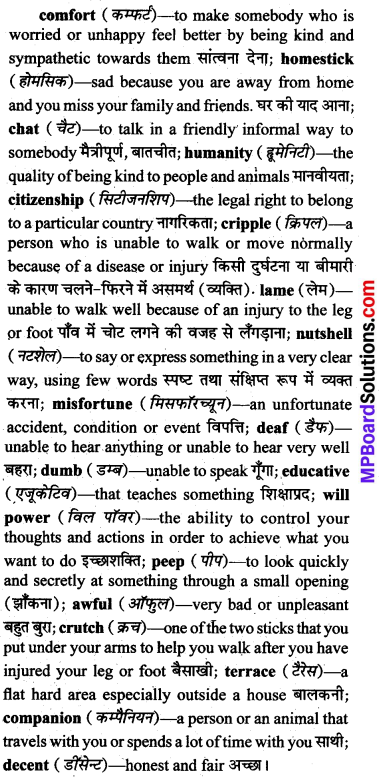
MP Board Class 9th General English The Spring Blossom Solutions Chapter 2 Kasturba Gandhi

MP Board Solutions for Class 9 Textbook General English The Spring Blossom Solutions Chapter 2 Kasturba Gandhi Questions and Answers aids you to prepare all topics in it effectively. You need not worry about accuracy of Madhya Pradesh State Board Solutions for Class 9 English Composition: Visual Stimulus as they are given adhering to latest exam pattern and syllabus guidelines. You Can Download MP Board Class 9 English Solutions Questions and Answers, Notes, Summary, Guide pdf on is page. Enhance your subject knowledge by preparing from Chapterwise MP Board Solutions for Class 9 English and clarify your doubts on corresponding topics.

MP Board Class 9th General English The Spring Blossom Solutions Chapter 2 Kasturba Gandhi

Kick start your preparation by using our online resource Madhya Pradesh State Board Solutions for Class 9 Textbook General English The Spring Blossom Solutions Chapter 2 Kasturba Gandhi. You can even download MP Board Solutions for Class 9 English free of cost rough direct links available on our page. Clear your queries and understand concept behind in a simple manner. Simply tap on concept you wish to prepare chapterwise and go rough it.

Kasturba Gandhi Textual Exercises

Word Power

(A) Rearrange the following jumbled letters to make meaningful words that come from the lesson
(दिए गए अक्षरों को व्यवस्थित करके अर्थपूर्ण शब्द बनाइए।)
Answer:

  1. roprupseso – prosperous
  2. socutm – custom
  3. drcsae – sacred
  4. einetr – entire
  5. epapall – appeal

(B) Fill in the blanks with appropriate words given in order to make a meaningful passage.
(रिक्त स्थान भरो।)
country, history, vow, footsteps, speeches, pledge, joined, custom, prosperous, accompanied
Answer:
Ramdin was a very honest and hard-working man. He worked day and night and became prosperous. He was very fond of reading. Once he read the life history of Gandhiji. He was very much impressed and thought of doing something for his country. He took a pledge to walk on the footsteps of Gandhiji. His wife, an active lady also joined him. She accompanied him wherever he went for social upliftment, though in those days the custom of accompanying one’s husband was forbidden. She gave speeches wherever she went and took a vow to uplift the position of Indian women.

How Much Have I Understood?

(A) Choose the correct option and complete the sentences
(सही विकल्प चुनो)

Question 1.
Kasturba Gandhi was married at the age of ………..
(a) thirteen
(b) eighteen
(c) twenty one
(d) twenty two.
Answer:
(a) thirteen

Question 2.
She was taught by her ………..
(a) father
(b) mother
(c) brother
(d) husband.
Answer:
(d) husband.

Question 3.
In 1942, she was arrested for protesting against the arrest of …………
(a) Nehruji
(b) Gandhiji
(c) Lokmanya Tilak
(d) Gopal Krishna Gokhale.
Answer:
(b) Gandhiji.

(B) Answer the given questions in one or two sentences.
(निम्न प्रश्नों के एक या दो वाक्यों में उत्तर दीजिए।)

Question 1.
Who was Kasturba Gandhi?
(हु वास् कस्तूरबा गाँधी?)
कस्तूरबा गाँधी कौन थी?
Answer:
Kasturba Gandhi was the daughter of a prosperous businessman of Porbander; (Kathiawar).
(कस्तूरबा गाँधी वॉज़ द डॉटर ऑफ अ प्रॉस्परस बिजनेसमैन ऑफ पोरबन्दर (काठियावाढ़।)
कस्तूरबा गाँधी पोरबन्दर के एक समृद्ध व्यापारी की पुत्री थीं।

Question 2.
Who was she married to?
(हू वॉज़ शी मैरिड टू?)
उनका विवाह किससे हुआ?
Answer:
She was married to Mohandas Karamchand Gandhi (Mahatma Gandhi).
(शी वॉज़ मैरिड टू मोहनदास करमचन्द गाँधी (महात्मा गाँधी))
उनका विवाह मोहनदास करमचन्द गाँधी (महात्मा गाँधी) से हुआ।

Question 3.
Why was she arrested in 1939?
(व्हाय वॉज़ शी अरैस्टिड इन 1939?)
उन्हें 1939 में बन्दी क्यों बनाया गया?
Answer:
In 1939, she was arrested for participating in the Rajkot Satyagraha.
(इन 1939, शी वॉज़ अरैस्टिड फॉर पार्टिसिपेटिंग इन द राजकोट सत्याग्रह।)
1939 में उन्हें राजकोट सत्याग्रह में भाग लेने के कारण बन्दी बनाया गया।

Question 4.
What kind of life did she live?
(व्हॉट काइन्ड ऑफ लाइफ डिड शी लिव?)
उन्होंने कैसा जीवन बिताया?
Answer:
She lived a simple and austere life.
(शी लैड अ सिम्पल एण्ड ऑस्टिअर लाइफ।)
उन्होंने एक सादा व संयमी जीवन बिताया।

Question 5.
What was her special appeal to the women?
(व्हॉट वॉज़ हर स्पैशल अपील टू द विमेन?)
स्त्रियों से उनका विशेष निवेदन क्या था?
Answer:
Her special appeal to the women was to spin and wear khadi, boycott government schools and colleges and remove untouchability.
(हर स्पैशल अपील टू द विमेन वॉज़ टू स्पिन एण्ड वियर खादी, बॉयकॉट गवर्नमेन्ट स्कूल्स एण्ड कॉलेजेज़ एण्ड रिमूव अन्टचेबिलिटी।)
उनका स्त्रियों से विशेष निवेदन यह था कि वे सूत कातें, खादी पहनें, शासकीय स्कूलों व कॉलेजों का बहिष्कार करें तथा अस्पृश्यता छोड़ें।

Question 6.
What happened on 22 February, 1944?
(व्हॉट हैपन्ड ऑन 22 फेब्रुअरी, 1944?)
22 फरवरी, 1944 को क्या हुआ?
Answer:
Kasturba died in detention on 22 February, 1944.
(कस्तूरबा डाइड इन डिटेन्शन ऑन 22 फेब्रुअरी, 19441)
कस्तूरबा का 22 फरवरी, 1944 को नजरबन्द कैद में देहान्त हुआ।

Question 7.
What great events happened in the years 1897, 1915, 1918, 1932, 1939, 1944?
(व्हॉट ग्रेट ईवेन्ट्स हैपन्ड इन द ईयर्स 1897, 1915, 1918, 1932, 1939, 1944?)
इन वर्षों में कौन-सी महान घटनाएँ घटी?
Answer:
(a) In 1897-Women’s Satyagraha in South Africa.
(इन 1897-विमेन्स सत्याग्रह इन साऊथ एफ्रिका)।
1897 में-दक्षिण अफ्रीका में स्त्रियों का सत्याग्रह।

(b) 1915-Indigo workers compaign in Champaran, Bihar
(इन 1915- इन्डिगो, वर्कर्स कैम्पेन इन चम्पारन, बिहार।)
1915 में-चम्पारन, बिहार में नील बनाने वाले मजदूरों का आन्दोलन।

(c) In 1918-No Tax Campaign in Kaira, Gujarat.
(इन 1918- नो टैक्स कैम्पेनं इन कैरा, गुजरात।)
1918 में-कर न अदा करने का गुजरात के कैरा में आन्दोलन।

(d) In 1932-Picketing liquor and foreign cloth shops.
(इन 1932-पिकेटिंग लिकर एण्ड फॉरेन क्लॉथ शॉप्स।)
1932 में-शराब व विदेशी वस्त्रों की दुकानों पर धरना।

(e) In 1939-Rajkot Satyagraha.
(इन 1939-राजकोट सत्याग्रह।)
1939 में-राजकोट सत्याग्रह।

(f) In 1944 Death of Kasturba Gandhi.
(इन 1944-डैथ ऑफ कस्तूरबा गाँधी।)
1944 में-कस्तूरबा गाँधी की मृत्यु।

Question 8.
Write, who said to whom and why?
“The true religion of a woman is to follow the footsteps of her husband like Sita……”
(राइट, हू सेड टू हूम एण्ड व्हाय? “द ट्र रिलिजन ऑफ अ वुमन इज़ टू फॉलो द फुटस्टेप्स ऑफ हर हज़बेण्ड लाईक सीता……”)
(बताओ ये शब्द किसने, किससे और क्यों कहे? “किसी स्त्री का वास्तविक धर्म सीता…..”)
Answer:
These words were said by Kasturba Gandhi to the women of Vadhtal village to inspire them to encourage their husbands for not paying their revenue dues so that India may win Swaraj.
(दीज व वर सेड बाइ कस्तूरबा गाँधी टू द विमेन ऑफ वधतल विलेज टू इन्सपायर देम टू एन्करेज देअर हस्बेन्ड्स फॉर नॉट पेइंग देअर रेवन्यू ड्यूज़ सो दैट इण्डिया मे विन स्वराज।)
ये शब्द कस्तूरबा गाँधी द्वारा वधतल गाँव की स्त्रियों को प्रेरित करने के लिए कहे गए थे जिससे वे अपने पतियों को बकाया राजस्व न देने के लिए प्रोत्साहित करें ताकि भारत स्वराज प्राप्त कर सके।

(C) Write the answer to the following questions in four or five sentences
(चार या पाँच वाक्यों में उत्तर लिखिए।)

Question 1.
What did Kasturba address the women, of Vadhtal Village?
(व्हॉट डिड कस्तूरबा अड्रेस द विमेन ऑफ वधतल विलेज?)
कस्तूरबा ने वधतल की स्त्रियों से क्या कहा?
Answer:
Addressing the women of Vadhtal village, she said, “The true religion of a woman is to follow the footsteps of her husband like sati Sita. If she also encourages her husband to stick to the sacred pledges (of non-payment of the revenue dues) her progeny is sure to be brave and India will then win Swaraj.”

(अड्रेसिंग द विमेन ऑफ वधतल विलेज, शी सेड, “द ट्र रिलीजन ऑफ अ वुमन इज़ टू फॉलो द फुटस्टेप्स ऑफ हर हस्बेन्ड लाइक सती सीता। इफ शी ऑल्सो एन्करेजेज़ हर हस्बेन्ड टू स्टिक टू द सेकरेड प्लैजेज (ऑफ नन पेमेन्ट ऑफ द रेवन्यू ड्यूज़) हर प्रोजेनी इज़ श्योर टू बी ब्रेव एण्ड इन्डिया विल देन विन स्वराज।”)

वधतल गाँव की स्त्रियों को सम्बोधित करते हुए उन्होंने कहा कि स्त्रियों का सच्चा धर्म सती सीता की तरह अपने पति के पद चिन्हों पर चलना है। यदि वह अपने पति को अपनी पवित्र प्रतिज्ञा (राजस्व न चुकाने की प्रतिज्ञा) पर दृढ़ रहने के लिए प्रोत्साहित भी करती हैं तो उनकी संतति बहादुर होगी और तभी भारत स्वराज जीत सकेगा।

Question 2.
Mention the date (s) and reason (s) for Kasturba Gandhi’s arrests on different occasions.
(मेन्शन द डेट्स एण्ड रीजन्स फोर कस्तूरबा गाँधीज, अरेस्ट्स ऑन डिफ्रेन्ट ओकेजन्स।)
विभिन्न अवसरों पर कस्तूरबा गाँधी की गिरफ्तारी का दिनांक तथा कारण बताइए।
Answer:
Kasturba Gandhi was arrested in:
(कस्तूरबा गाँधी वॉज़ अरेस्टेड इन)
कस्तूरबा गाँधी की गिरफ्तारी हुई थी:

(a) In 1931 and 1932-for picketing liquor and foreign cloth shops.
(इन 1931 एण्ड 1932-फॉर पिकेटिंग लिकर एण्ड फॉरेन क्लॉथ शॉप्स।)
1931 व 1932 में-शराब व विदेशी वस्त्र की दुकानों पर धरना देने के लिए।

(b) In 1939-For participating in Rajkot Satyagraha.
(इन 1939-फोर पार्टिसिपेटिंग इन राजकोट सत्याग्रह।)
1939 में-राजकोट सत्याग्रह में भाग लेने के लिए।

(c) In August 1942-When proceeding to address a meeting of protest against the arrest of her husband.
(इन ऑगस्ट 1942 – व्हेन प्रोसीडिंग टू अड्रेस अ मीटिंग ऑफ प्रोटेस्ट अगेन्स्ट द अरैस्ट ऑफ हर हस्बेन्ड।)
अगस्त 1942 में-अपने पति की गिरफ्तारी के विरुद्ध सभा को सम्बोधित करने जाते समय।

Language Practice

Fill up the gaps with suitable prepositions given in the brackets (in, on, to, from, for till, after, with, at)
(रिक्त स्थान भरिए।)
Answer:
Rahul : Sir, where are we going this Sunday?
Mr. Khanna : The school is planning to take you to a dam.
Rahul : Which dam? Where is it?
Mr. Khanna : I can’t tell right now. It may be in Bhopal.
Rahul : What shall we do there?
Mr. Khanna : We’ll play games at there ground.
Rahul : How long are we going to stay there?
Mr. Khanna : We are going to stay there till 50’clock.
Rahul : May I take my younger brother along with me?
Mr. Khanna : No, You can’t. It’s a school picnic. Moreover we are going to a dam and you will be busy with your friends. Then, who is going to look after him?
Rahul : At what time are we going to leave?
Mr. Khanna : Go and get the information from the office.

Listening Time

(A) Write down the meaning against the words given below.
(शब्दों के सम्मुख उनके अर्थ लिखिए।)

  1. bear tolerate  – bare not wearing clothes.
  2. too in addition – to in the direction of.
  3. vein a blood vessel  – vain useless or meaningless.
  4. hair fine thread like strands growing from with very long the skin of mammals and other animals. – hare an animal hind legs.
  5. dear much loved  – deer a hoofed animal

(B) Your teacher will read out the directions, sentence by sentence on how to draw pictures. Draw what you hear.
(शिक्षक के निर्देश सुनकर आकृति बनाओ।)
Answer:
Students should do themselves with the help of their teacher.
(छात्र शिक्षक के निर्देशन में स्वयं करें।)

Speaking Time

Speak at least 5 sentences about your friend using these words
(अपने मित्र पर दिये गये शब्दों की सहायता से 5 वाक्य बोलो।)
honest, beautiful, handsome, hardworking sincere, courageous, tall, clever, civilized gentle.
Answer:
Students can do themselves.
(छात्र स्वयं करें।)

Writing Time

Do you know any simple minded person like Kasturba? Write at least a paragraph about him/her with the help of this lesson.
(किसी सादे व्यक्ति पर एक अनुच्छेद लिखो।)
Answer:
Students can write about any person around them themselves.
(छात्र स्वयं करें।)

Things to do

Paste the pictures of Indira Gandhi, Mother Teresa and Laxmi Bai. Write a paragraph on each one of them.
Answer:
Students should do themselves.
(छात्र स्वयं करें।)

Kasturba Gandhi Difficult Word Meanings 

prosperous (प्रॉस्परस)-rich and successful समृद्ध; indigo (इंडिगो)-dark blue dye नील; campaign (कैम्पेन)-a series of planned activities that are intended to achieve a particular social, commercial or political aim अभियान; progeny (प्रोजैनी)-a person’s children सन्तान; picketing (पिकोटिंग)-the activity of standing outside the entrance to a building in order to protest about something and stop people from entering that building धरना, आन्दोलन; protest (प्रोटेस्ट)-opposition to something विरोध; detention (डिटेन्शन)-the state of being kept in a place, especially a prison and prevented from leaving कैद; austere (ऑस्टीर)-simple and plain सीधा-सादा।

Kasturba Gandhi Summary, Pronunciation & Translation

[1] Kasturba Gandhi was the daughter of a prosperous businessman of Porbander (Kathiawar). She was married at the very young age of thirteen to Mohandas Karamchand Gandhi. Her father was a strong believer in prevalent customs and traditions. He did not believe in educating her. After her marriage, it was her husband who taught her to read and write. In 1897, she joined her husband in South Africa and worked there till 1914. Along with her husband, she led the women’s satyagraha there for which she was imprisoned.

(कस्तूरबा गाँधी वॉज द डॉटर ऑफ अ प्रॉस्परस बिज़िनेस मेन ऑफ पोरबन्दर (काठियावाड)। शी वाज़ मेरिड एट द वेरी यंग एज ऑफ थर्टीन टु मोहन दास करमचन्द गाँधी। हर फॉदर बाज़ अ स्ट्रांग बिलीवर इन प्रिविलेन्ट कस्टम्स एण्ड ट्रेडिशन्स। ही डिड नॉट बिलीव इन एजुकेटिंग हर। ऑफ्टर हर मेरिज, इट वाज़ हर हसबेंड हू टॉट हर टु रीड एण्ड राइट। इन 1897 शी जॉइन्ड हर हसबंड इन साउथ अफ्रीका एण्ड वर्ल्ड देअर टिल 1914। अलांग विथ हर हसबेंड, शी लेड द वीमन्स सत्याग्रह देयर फोर विच शी वाज़ इम्प्रिजन्ड।)

हिन्दी अनुवाद :
कस्तूरबा गाँधी पोरबन्दर (काठियावाड़) के एक धनवान व्यापारी की पुत्री थी। 13 वर्ष की बाल उम्र में ही उनका विवाह मोहनदास करमचन्द गाँधी से हो गया था। उनके पिता प्रचलित रीति-रिवाजों में अटूट विश्वास रखते थे। वे कस्तूरबा की शिक्षा में विश्वास नहीं करते थे। विवाह के पश्चात् उनके पति ने ही उन्हें लिखना-पढ़ना सिखाया। 1897 में वे अपने पति के साथ दक्षिण अफ्रीका रहने चली गयीं और वहाँ 1914 तक काम करती रहीं। अपने पति के साथ उन्होंने महिला सत्याग्रह आन्दोलन का नेतृत्व किया जिसके कारण उनको बन्दी बनाया गया।

[2] On his return to India in 1915, Kasturba joined her husband, Gandhi in the cause of the indigo workers in Champaran, Bihar and took an active part in the No Tax Campaign in Kaira, Gujarat in 1918.

(ऑन हिज़ रिटर्न टु इंडिया इन 1915, कस्तूरबा जॉइन्ड हर हसबेण्ड, गाँधीजी इन द कॉज़ ऑफ दी इंडिगो वर्कर्स इन चम्पारन, बिहार, एण्ड टुक ऐन एक्टिव पार्ट इन द नो टेक्स केम्पेन इन कैरा, गुजरात इन 1918)

हिन्दी अनुवाद :
1915 में भारत वापस आने पर कस्तूरबा ने गाँधी जी के बिहार के चम्पारन में नील (कपड़ों को लगाने वाला) की खेती करने वाले मजदूरों के आन्दोलन में अपने पति गाँधी जी का साथ दिया तथा गुजरात के कैरा में 1918 में टैक्स न देने के आन्दोलन में भी सक्रिय हिस्सा लिया।

[3] Kasturba not only took part in the campaign but also delivered significant speeches wherever she went. For instance, addressing the women of Vadhtal Village on 6 April 1918; she said : “the true religion of a woman is to follow the footsteps of her husband like Sita. If she also encourages her husband to stick to the sacred pledges (of non-payment of the revenue dues) her progeny is sure to be brave and India will then win swaraj.”

(कस्तूरबा नाट ओनली टुक पार्ट इन द कैम्पेन बट अल्सो डिलीवर्ड सिग्निफिकेंट स्पीचेस व्हेअरेवर शी वेन्ट फोर इन्सटेन्स, एड्रेसिंग द वीमेन ऑफ वढ़तल वीलेज ऑन 6 अप्रिल 1918, शी सेड “द ट्र रिलिजन ऑफ अ वुमन इज़ टु फॉलो द फुटस्टेप्स ऑफ हर हसबेंड लाइक सीता। इफ शी अल्सो इनकरेजेस हर हसबेण्ड टु स्टिक टु द सेक्रेड प्लींजेस (ऑफ नन-पेमेन्ट ऑफ द रेवेन्यू ड्यूज) हर प्रोजेनी इज़ श्युअर टु बी ब्रेव एण्ड इंडिया बिल देन विन स्वराज।)

हिन्दी अनुवाद :
कस्तूरबा ने आन्दोलन में न केवल हिस्सा लिया बल्कि वे जहाँ-जहाँ गईं वहाँ-वहाँ उन्होंने बहुत महत्त्वपूर्ण भाषण भी दिये। उदाहरण के लिए 6 अप्रैल, 1918 को वढ़तल ग्राम की सभा में वहाँ की महिलाओं को सम्बोधित करते हुए कहा-“किसी महिला का सही धर्म अपने पति के चरण चिन्हों पर सीता के समान चलना है। यदि वह अपने पति को पवित्र वचन पर (लगान की बकाया रकम को नहीं चुकाना) दृढ़तापूर्वक चलने के लिए प्रोत्साहित करती है तो उसकी आने वाली सन्तान बहादुर होगी और तब भारत स्वराज को जीतेगा।”

[4] In the First Non-coperation Movement launched by Gandhiji, she accompanied him and went from village to village. Along with her husband, she made a special appeal to women, asking them to spin and wear khadi, boycott government schools and colleges and remove untouchability. She was arrested in 1931 and again in 1932, for picketing liquour and foreign cloth shops.

(इन द फर्स्ट नन-कोआपरेशन मूवमेंट लॉन्च्ड बाय गाँधीजी, शी एकम्पनिड हिम एन्ड वेन्ट फ्रॉम विलेज टु विलेज। अलांग विद हर हसबेन्ड शी मेड ए स्पेशल अपील टु वीमेन आस्किंग देम टु स्पिन एंड वीअर खादी, बायकॉट गवर्नमेंट स्कूल्स एण्ड कॉलेजेस एण्ड रिमूव अनटचेबिलिटी। शी वाज अरेस्टेड इन 1931 एण्ड अगेन इन 1932, फोर पिकेटिंग लिक्वर एण्ड फॉरेन क्लॉथ शाप्स।)

हिन्दी अनुवाद :
गाँधीजी द्वारा प्रारम्भ प्रथम असहयोग आन्दोलन में वे गाँधीजी के साथ गाँव-गाँव गईं। अपने पति के साथ उन्होंने महिलाओं से विशेष अपील की कि वे सूत कातें, खादी पहनें, सरकारी स्कूल कालेजों का बहिष्कार करें तथा अस्पृश्यता को दूर करें। उन्हें 1931 में और फिर 1932 में शराब व विलायती वस्त्रों के विरुद्ध लोगों को रोकने के प्रयासों में गिरफ्तार किया गया।

[5] In 1939, she was arrested for participating in the Rajkot Satyagraha and was released only when Mahatma Gandhi began his fast. She was again arrested in August 1942, when proceeding to address a meeting of protest against the arrest of her husband and was lodged in a detention camp along with her husband in Pune. She looked after her husband when he undertook a twenty-one day fast in February 1943. Her health gradually broke down and she died in detention on 22 February 1944. During her entire life she worked whole-heartedly for the welfare of people and the removal of untouchability. She lived a simple and austere life.

(इन 1939 शी वाज़ अरेस्टेड फोर पार्टीसिपेटिंग इन द राजकोट सत्याग्रह एण्ड वॉज़ रिलीज़्ड व्हेन महात्मा गांधी बिगेन हिज फास्ट। शी वाज़ अगेन अरेस्टेड इन ऑगस्ट 1942 व्हेन प्रोसिडिंग टु एड्रेस अ मीटिंग ऑफ प्रोटेस्ट अगेन्स्ट दी अरेस्ट ऑफ हर हस्बेंड एण्ड वाज लॉज्ड इन अ डिटेशन केम्प अलांग विद हर हस्बेण्ड इन पुने। शी लुक्ड ऑफ्टर हर हसबेंड व्हेन ही अण्डरटुक अ टवेन्टी वन डे फास्ट इन फेब्रुअरी 1943. हर हेल्थ ग्रेजुअली ब्रोक डाउन एण्ड शी डाइड इन डिटेन्शन ऑन 22 फेब्रुअरी 1944. ड्यूरिंग हर इन्टायर लाइफ शी वड होल-हार्टेडली फोर द वेलफेयर ऑफ पीपुल एण्ड रिमूवल ऑफ अनटचेबिलीटी। शी लिव्ड अ सिंपल एण्ड ऑस्टीयर लाइफ।)

हिन्दी अनुवाद :
1939 में राजकोट सत्याग्रह में भाग लेने के लिए उन्हें गिरफ्तार किया गया और उन्हें तभी मुक्त किया गया जब गाँधीजी ने अपना उपवास शुरू किया। उन्हें अगस्त 1942 में जब वे अपने पति की गिरफ्तारी के विरुद्ध एक सभा को सम्बोधित करने जा रही थीं, पुनः गिरफ्तार किया गया और उन्हें पूना में उनके पति के साथ बन्दीगृह में रखा गया। फरवरी 1943 में जब गाँधीजी ने 21 दिन का उपवास का व्रत किया तब उन्होंने गाँधीजी की खूब देखभाल की। धीरे-धीरे उनका स्वास्थ्य खराब होता गया और 11 फरवरी, 1944 को उन्होंने बंदीगृह में ही प्राण त्याग दिये। अपने सम्पूर्ण जीवन में वे पूर्णत: हार्दिक रूप से जन कल्याण के लिए व छुआछूत मिटाने के लिए कार्य करती रहीं। उन्होंने एक सादा व संयमी जीवन बिताया।

We believe information shared regarding MP Board Solutions for Class 9 Textbook General English The Spring Blossom Solutions Chapter 2 Kasturba Gandhi Questions and Answers as far as our knowledge is concerned is true and reliable. In case of any queries or suggestions do leave us your feedback and our team will guide you at soonest possibility. Bookmark our site to avail latest updates on several state board Solutions at your fingertips.
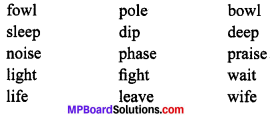
MP Board Class 9th General English The Spring Blossom Solutions Chapter 1 O Light!

MP Board Solutions for Class 9 Textbook General English The Spring Blossom Solutions Chapter 1 O Light! Questions and Answers aids you to prepare all topics in it effectively. You need not worry about accuracy of Madhya Pradesh State Board Solutions for Class 9 English Composition: Visual Stimulus as they are given adhering to latest exam pattern and syllabus guidelines. You Can Download MP Board Class 9 English Solutions Questions and Answers, Notes, Summary, Guide pdf on is page. Enhance your subject knowledge by preparing from Chapterwise MP Board Solutions for Class 9 English and clarify your doubts on corresponding topics.

MP Board Class 9th General English The Spring Blossom Solutions Chapter 1 O Light!

Kick start your preparation by using our online resource Madhya Pradesh State Board Solutions for Class 9 Textbook General English The Spring Blossom Solutions Chapter 1 O Light!. You can even download MP Board Solutions for Class 9 English free of cost rough direct links available on our page. Clear your queries and understand concept behind in a simple manner. Simply tap on concept you wish to prepare chapterwise and go rough it.

O Light! Textual Exercises

Word Power

(i) Encircle the odd one among the similar sounding words:
(असमान शब्द छाँटिए)
Answer:
MP Board Class 9th General English The Spring Blossom Solutions Chapter 1 O Light! 1

(ii) Match the words with their meanings given as under:
(सुमेलित कीजिए)
MP Board Class 9th General English The Spring Blossom Solutions Chapter 1 O Light! 2
Answer:
(1) → (c)
(2) → (d)
(3) → (e)
(4) → (b)
(5) → (a)

How Much Have I Understood?

(A) Answer these questions in one or two sentences
(निम्न प्रश्नों के उत्तर एक या दो वाक्यों में दीजिए।)

Question 1.
What is the sun?
(व्हॉट इज़ द सन?)
सूर्य क्या है?
Answer:
The sun is the source of light.
(द सन इज़ द सोर्स ऑफ लाईट।)
सूर्य प्रकाश का स्रोत है।

Question 2.
Who is the poem addressed to?
(हू इज द पोऍम अड्रेस्ड टू?)
कविता किसको सम्बोधित है?
Answer:
The poem is addressed to light.
(द पोऍम इज़ एड्रेस्ड टू लाईट।)
कविता प्रकाश को सम्बोधित है।

Question 3.
Whose life and soul is the light?
(हूज़ लाइफ एण्ड सोल इज़ द लाईट?)
प्रकाश किसका जीवन व आत्मा है?
Answer:
The light is the life and soul of sun.
(द लाइट इज द लाइफ एण्ड सोल ऑफ सन)
प्रकाश सूर्य का जीवन व आत्मा है।

Question 4.
Is the light wisdom’s daughter?
(इज़ द लाइट विज़डम्स डॉटर?)
क्या रोशनी (प्रकाश) विवेक की पुत्री है?
Answer:
No, light is not wisdom’s daughter.
(नो, लाईट इज़ नॉट विजडम्स डॉटर।)
नहीं, रोशनी (प्रकाश) विवेक की पुत्री नहीं है।

(B) Answer these questions in three or four sentences.
(निम्न प्रश्नों के उत्तर तीन या चार वाक्यों में दीजिए।)

Question 1.
‘Light is the form of knowledge.’ Elaborate.
(‘लाईट इज़ द फॉर्म नॉलेज’ इलैबोरेट।)
‘प्रकाश ज्ञान का स्वरूप है।’ विस्तार से बताइये।
Answer:
When a man sleeps he only sees darkness. He cannot do anything. But when light comes he wakes up. He can do anything. An ignorant person is like a sleeping person. When he gets knowledge, he becomes powerful. So’we can say that light is the form of knowledge

(व्हेन अ मैन स्लीप्स ही ओनली सीज़ डार्कनेस। ही कैन नॉट डू एनीथिंग। बट व्हेन लाईट कम्स ही. वेक्स अप। ही कैन डू एनीथिंग। एन इगनोरेन्ट पर्सन इज़ लाइक अ स्लीपिंग पर्सन। व्हेन ही गेट्स नॉलेज, ही बिकम्स पावरफुल। सो वी कैन से दैट लाईट इज द फॉर्म ऑफ नॉलेज।)

जब कोई व्यक्ति सोता है तो उसे सिर्फ अन्धकार दिखाई देता है। वह कुछ भी करने में सक्षम नहीं होता। परन्तु जब सूर्य का प्रकाश फैलता है तो वह जाग उठता है। तब वह कुछ भी कर सकता है। एक अज्ञानी व्यक्ति भी सोए हुए व्यक्ति की तरह होता है। जब ज्ञान का प्रकाश उसके अज्ञान रूपी अन्धकार को दूर करता है तब वह प्रबुद्ध हो जाता है। इस प्रकार हम कह सकते हैं कि ज्ञान प्रकाश का स्वरूप है।

Question 2.
Why does the poet long for the light? Give some references from the poem.
(व्हॉय डज द पोएट लाँग फोर द लाईट? गिव सम रेफरेन्सेस फ्रॉम द पोऍम।)
कवि प्रकाश की इच्छा क्यों करता है? कविता से कुछ सन्दर्भ दीजिए।
Answer:
The poet longs for light because he wants to know from the light, the following things :
(a) When was it born?
(b) Who made it?
(c) What is it?
(d) What is its nature?

“(द पोऍट लॉग्स फॉर लाईट बिकॉज़ ही वॉन्ट्स टू नो फ्रॉम द लाईट, द फॉलोइंग थिंग्स:
(a) व्हेन वॉज़ इट बॉर्न?
(b) हू मेड इट?
(c) व्हॉट इज़ इट?
(a) व्हॉट इज़ इट्स नेचर?)

कवि प्रकाश की कामना इसलिए करता है क्योंकि वह उससे यह जानना चाहता है कि वह कबं पैदा हुआ, उसे किसने बनाया, वह क्या है तथा उसकी प्रकृति क्या है?

Question 3.
The poet has used the word ‘she’. Who has this word been referred to?
(द पोऍट हैज यूज्ड द वर्ड ‘शी’। हू हैज दिस वर्ड वीन रैफर्ड टू?)
कवि ने स्त्री सूचक ‘वह’ शब्द का प्रयोग किया है। इस शब्द.का इशारा किसकी ओर है?
Answer:
‘She’ refers to mother nature.
(‘शी’ रैफर्स टू मदर नेचर।)
उसका इशारा प्रकृति माता की ओर है।

Question 4.
Find out the lines of the poem where the poet praises the light.
(फाइन्ड आउट द लाइन्स ऑफ द पोऍम व्हेअर द पोऍट प्रेज़ेज़ द लाईट।)
वे पंक्तियाँ ढूँढ निकालिए जिनमें कवि ने उजाले की प्रशंसा की है।
Answer:
The lines are-
The sun is the body, you are its life-spark.
Perhaps you are wisdom’s clarity.
Perhaps you are the form of knowledge.

Listening Time

Complete the following stanza.
(निम्नलिखित पद्यांश को पूरा करिए।)
Answer:
O Light, who are you?
Daughter of the sun?
No, you are the sun’s life, his soul,
We praise you in the sun.
The sun is the body, you are its life-spark.

Speaking Time

(1) The sun is the source of light. Think for other sources of light and talk about those sources.
(प्रकाश के स्रोतों के बारे में लिखिए।)
Answer:

  1. Fire is the source of light.
  2. Electricity is the source of light.
  3. Moon is the source of light at night.
  4. Candle is the source of light.
  5. Stars are the source of light.

(2) In the morning when light spreads, darkness disappears. Discuss in groups and describe what happens when light fades?
(जब रोशनी कम हो जाती है तो क्या होता है वर्णन कीजिए)
Answer:

  1. When light fades sun disappears.
  2. When light fades it becomes dark.
  3. When light fades moon and stars appear.
  4. When light fades sky. becomes black.

Writing Time

Write the poem “O Light!” in prose form.
(कविता ‘ओ उजाले’ गद्यांश के रूप में लिखिए।)
Answer:
Students should do themselves.
(छात्र स्वयं करें।)

Things to do

(1) Make a list of the different planets of the solar system and draw a diagram in proper order.
(विभिन्न ग्रहों के नाम लिखो व चित्र बनाओ।)
Answer:
Different planets of the solar system are:

  1. Mercury
  2. Venus
  3. Earth
  4. Mars
  5. Jupiter
  6. Saturn
  7. Uranus
  8. Neptune.

Students can draw the diagram of the solar system themselves placing the planets in the above order.

(2) Light is the source of energy. Write at-least five different uses of light in our day to day life.
(प्रकाश के पाँच उपयोग लिखिए।)
Answer:
Uses of light:

  1. Light makes things visible.
  2. Light is the source of heat.
  3. Light kills harmful germs in the atmosphere.
  4. Light in the form of solar energy can be used to cook food.
  5. Solar energy is used to obtain electricity through solar cells.

O Light! Central Idea of the Poem

The poet says that light is the soul of the sun. Later on he calls this light as wisdom and knowledge. The poet says that the nature is the enchanter, for it has created light. In the end the poet praises the light to prosper and bring the light of knowledge in this world.

O Light! Difficult Word Meanings

soul (सोल)-spirit of a person आत्मा; Praise (प्रेज़)-to express admiration प्रशंसा करना; life spark (लाइफ स्पाक)-life giving light जीवनदायी प्रकाश; clarity (क्लैरिटी)-the quality of being expressed clearly स्पष्टता; merge (मज)-combine मिलना; she (शी)-mother nature (symbolical use) प्रकृति; bewitcher (बिवियर)-one who puts a magical spell (जादू करने वाला); prosper (प्रॉस्पर)-to be successful, समृद्ध होना।

O Light! Summary, Pronunciation & Translation

[1] O Light, who are you?
Daughter of the sun?
No, you are the sun’s life, his soul
We praise you in the sun.
The sun is the body, you are its life-spark
When were you born, O Light?
Who made you?

(ओ लाइट हू आर यू?
डॉटर आफ द सन?
नो, यू आर द सन्स लाइफ, हिज़ सोल!
वी प्रेज़ यू इन द सन द सन
इज़ द बॉडी, यू आर इट्स लाइफ स्पार्क
व्हेन वर यू बॉर्न, ओ लाइट?
हू मेड यू?)

हिन्दी अनुवाद :
हे रोशनी, तुम कौन हो?
सूर्य की पुत्री?
नहीं, तुम सूर्य का जीवन हो, उसकी आत्मा हो,
हम तुम्हारी सूर्य में स्तुति करते हैं।
सूर्य शरीर है, तुम उसके जीवन की चिंगारी हो
तुम कब पैदा हुईं, हे रोशनी?
तुम्हें किसने बनाया?

[2] O Light, what are you?
What is you nature?
Are you wisdom’s daughter?
But Wisdom sleeps.

(ओ लाइट, व्हॉट आर यू?
व्हॉट इज यूअर नेचर?
आर यू बिस्डम्स डॉटर?
बट विस्डम स्लीप्स।)

हिन्दी अनुवाद :
हे रोशनी, तुम क्या हो?
तुम्हारा स्वभाव कैसा है?
क्या तुम बुद्धि की पुत्री हो?
किन्तु बुद्धि तो सोई रहती है।

[3] Perhaps you are its clarity
Perhaps you are the form of knowledge.
O Light, for how long have you
befriended the sky?
And wherefore this love of it?
How do you completely merge in it?

(परहेप्स यू आर इट्स क्लैरिटी
परहेप्स यू आर द फॉर्म आफ नॉलेज
ओ लाइट फोर हाउ लांग हेव यू
बिफ्रेन्डड द स्काय?
एण्ड व्हेअर फोर दिस लव आफ इट?
हाउ डू यू कम्प्लीटली मर्ज इन इट?)

हिन्दी अनुवाद :
शायद तुम उसकी स्पष्टता हो।
शायद तुम ज्ञान का प्रकट रूप हो।
हे रोशनी, तुमने कब से
आकाश को अपना मित्र बनाये हुए हो?
किस तरह तुम उसमें पूर्णतः समा जाती हो?

[4] She who made you all is a magician
She is enchanter, the bewitcher
We praise her
Prosper O Light. – Subramania Bharti

(शी हू मेड यू ऑल इज़ ए मेजिशियन
शी इज़ इन्चान्टर, द बिविचर
वी प्रेज़ हर
प्रॉस्पर ओ लाइट)

हिन्दी अनुवाद :
वह जिसने तुम्हें बनाया पूरी तरह जादूगरनी है
वह मायावी मोहिनी शक्ति है।
हम उसकी स्तुति करते हैं
हे रोशनी, तुम खूब फलो फूलो।

We believe information shared regarding MP Board Solutions for Class 9 Textbook General English The Spring Blossom Solutions Chapter 1 O Light! Questions and Answers as far as our knowledge is concerned is true and reliable. In case of any queries or suggestions do leave us your feedback and our team will guide you at soonest possibility. Bookmark our site to avail latest updates on several state board Solutions at your fingertips.
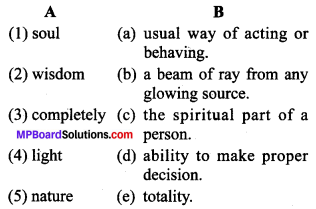
MP Board Class 9th General English The Spring Blossom Solutions Objective Type Questions

MP Board Solutions for Class 9 Textbook General English The Spring Blossom Solutions Objective Type Questions Questions and Answers aids you to prepare all topics in it effectively. You need not worry about accuracy of Madhya Pradesh State Board Solutions for Class 9 English Composition: Visual Stimulus as they are given adhering to latest exam pattern and syllabus guidelines. You Can Download MP Board Class 9 English Solutions Questions and Answers, Notes, Summary, Guide pdf on is page. Enhance your subject knowledge by preparing from Chapterwise MP Board Solutions for Class 9 English and clarify your doubts on corresponding topics.

MP Board Class 9th General English The Spring Blossom Solutions Objective Type Questions [Based on Textual Lessons]

Kick start your preparation by using our online resource Madhya Pradesh State Board Solutions for Class 9 Textbook General English The Spring Blossom Solutions Objective Type Questions. You can even download MP Board Solutions for Class 9 English free of cost rough direct links available on our page. Clear your queries and understand concept behind in a simple manner. Simply tap on concept you wish to prepare chapterwise and go rough it.

Multiple Choice Questions
(बहु विकल्पीय प्रशन)

Question 1.
The real aim of Miss Beam’s school was to:
(A) Be practical
(B) Teach thought
(C) Teach thoughtfulness
(D) Increase memory.
Answer:
(C) Teach thoughtfulness

Question 2.
Those who prepare the matter for advertisements and publicity are called:
(A) Dramatists
(B) Playwrights
(C) Script writers
(D) Copywriters.
Answer:
(D) Copywriters.

Question 3.
J. C. Bose was born in:
(A) Faridabad
(B) Faridkot
(C) Firozpur
(D) Faridpur.
Answer:
(D) Faridpur.

Question 4.
Kasturba Gandhi was married at an age of:
(A) thirteen
(B) eighteen
(C) twenty one
(D) twenty two.
Answer:
(A) thirteen

Question 5.
The poem ‘Am I a child’ is about:
(A) Child’s disputes
(B) Childhood worries
(C) An adolescent child’s situation
(D) Childhood fantasies.
Answer:
(C) An adolescent child’s situation

Question 6.
For Sudhir what mattered most was that he was:
(A) Back in the field
(B) Winner
(C) Loser
(D) In the team.
Answer:
(A) Back in the field

Question 7.
Chaturbhuj Babu had passed:
(A) M. A.
(B) B.A.
(C) Ph.D.
(D) Inter.
Answer:
(A) M. A.

Question 8.
In the opinion of the wise saint a best friend on the earth is:
(A) His own good sense
(B) His courage
(C) His physical power
(D) His smartness.
Answer:
(A) His own good sense

Question 9.
Ram Prasad Bismil was hanged on:
(A) 18th December 1927
(B) 19th December 1927
(C) 9th August 1925
(D) 19th August 1927
Answer:
(B) 19th December 1927

Question 10.
The moon walks wearing:
(A) Light shoes
(B) White shoes
(C) Silver shoes
(D) Bronze shoes.
Answer:
(C) Silver shoes

Question 11.
The tree described in the poem ‘Woodman spare that Tree’ is:
(A) A Pipal tree
(B) A Banyan Tree
(C) A Neem Tree
(D) An Oak Tree.
Answer:
(D) An Oak Tree.

Question 12.
Bose demonstrated the feelings of:
(A) Plants
(B) People
(C) Fish
(D) Animals
Answer:
(A) Plants

Question 13.
Rani Karnavati had sent Humayun:
(A) A raksha thread
(B) A gift
(C) A pearl
(D) A sword.
Answer:
(A) A raksha thread

Question 14.
Cheemi was called:
(A) Chhoti
(B) Little sparrow
(C) A bird
(D) None of these.
Answer:
(B) Little sparrow

Fill in the Blanks
(रिक्त स्थान भरो।)

  1. Jumman became ……….. enemy.
  2. Miss Beam’s figure was comforting to a ………. child.
  3. Kasturba Gandhi led the women’s ……….. for which she was imprisoned.
  4. ………… is the pen name of Ram Prasad.
  5. King Vikramaditya was a ruler of ………..
  6. Rani Karnavati sent a message to ……….
  7. J. C. Bose was honoured with the degree of………..
  8. The most deafening place on the earth is a ……….
  9. Akbar was missing ………..
  10. ……….. motivated Sudhir.
  11. Akbar regreted ………… Birbal from the court.
  12. The child will stride into a new world of ………..
  13. Chaturbhuj Babu had brought a ……….. cat with him.
  14. Moon is wearing ……….. shoes.

Answer:

  1. Algu’s
  2. homesick
  3. Satyagraha,
  4. Bismil
  5. Ujjain
  6. Humayun
  7. Doctor of science
  8. Gold factory
  9. Birbal
  10. Baljit
  11. banishing
  12. adult life
  13. Afghan
  14. silver

State True or False
(सत्य असत्य बताइए।)

  1. Kasturba Gandhi was the daughter of a prosperous businessman.
  2. Advertisements can be termed as the backbone of the commerical world.
  3. King Vikramaditya was the ruler of Udaipur.
  4. Kakori train incident took place on 18 December 1927.
  5. In the second match Sudhir was to play in right in position.
  6. Jumman sold his bullock to Samjhu Sahu.
  7. We should do our work today.
  8. During the dumb day, a child has to use his will power.
  9. Parvati Kaki loved Cheemi.
  10. The present day babies are too soft spoken.
  11. J. C. Bose was awarded the fellowship of Royal Society in 1920.
  12. J. C. Bose was also a great writer.
  13. Examination for a royal scribe was to be held at Udaipur University.
  14. Birbal had passed a harmless comment about Akbar’s sense of humour.

Answer:

  1. True
  2. True
  3. False
  4. False
  5. True
  6. False
  7. True
  8. True
  9. False
  10. False
  11. True
  12. False
  13. False
  14. True.

Match the Columns
(जोड़ी मिलाइए)

(I)
MP Board Class 9th General English The Spring Blossom Solutions Objective Type Questions 1
Answer:
(1) → (ii) to accept and act according to a law
(2) → (iv) an imaginary thing
(3) → (i) an easy chance to score
(4) → (v) extremely hot
(5) → (iii) filled with air

(II)
MP Board Class 9th General English The Spring Blossom Solutions Objective Type Questions 2
Answer:
(1) → (iii) poor orphan
(2) — (i) pen name
(3) → (v) To go from place to place to sell things
(4) → (ii) response in the living and Non-living
(5) → (iv) silver shoon

We believe information shared regarding MP Board Solutions for Class 9 Textbook General English The Spring Blossom Solutions Objective Type Questions Questions and Answers as far as our knowledge is concerned is true and reliable. In case of any queries or suggestions do leave us your feedback and our team will guide you at soonest possibility. Bookmark our site to avail latest updates on several state board Solutions at your fingertips.
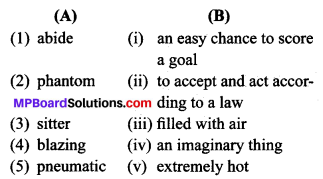
MP Board Class 9th General English The Spring Blossom Solutions Chapter 17 Noise

MP Board Solutions for Class 9 Textbook General English The Spring Blossom Solutions Chapter 17 Noise Questions and Answers aids you to prepare all topics in it effectively. You need not worry about accuracy of Madhya Pradesh State Board Solutions for Class 9 English Composition: Visual Stimulus as they are given adhering to latest exam pattern and syllabus guidelines. You Can Download MP Board Class 9 English Solutions Questions and Answers, Notes, Summary, Guide pdf on is page. Enhance your subject knowledge by preparing from Chapterwise MP Board Solutions for Class 9 English and clarify your doubts on corresponding topics.

MP Board Class 9th General English The Spring Blossom Solutions Chapter 17 Noise

Kick start your preparation by using our online resource Madhya Pradesh State Board Solutions for Class 9 Textbook General English The Spring Blossom Solutions Chapter 17 Noise. You can even download MP Board Solutions for Class 9 English free of cost rough direct links available on our page. Clear your queries and understand concept behind in a simple manner. Simply tap on concept you wish to prepare chapterwise and go rough it.

Noise Textual Exercises

Word Power

(a) Make new words from the following root words by adding the suffix-er/r/or.
(प्रत्यय जोड़कर नए शब्द बनाओ।)
Answer:
write – writer
read – reader
teach – teacher
sell – seller
supervise – supervisor
create – creator
pollute – polluter
vote – voter

(b) Look into the dictionary and find out the meanings of the words above made by adding the suffix.
(प्रत्यय जोड़कर बनाए गये शब्दों के अर्थ ढूँढ़िए।)
Answer:
Students can do themselves.
(छात्र स्वयं करें।)

II. Find out the words from the text which mean the following.
(अध्याय में से निम्नार्थक शब्द ढूँढ़ो।)

  1. To crush into fine powder – pulverize.
  2. One who teaches – teacher.
  3. One who goes from place to place to sell things – hawker.
  4. Someone whose job is to find out secret information about a country – spy.
  5. Bright and cheerful – festive.

How Much Have I Understood?

(A) Answer the following questions in one or two sentences
(निम्न प्रश्नों के उत्तर एक या दो वाक्यों में दीजिए।)

Question 1.
What are the things that create noise in this age?
(व्हॉट आर दि थिंग्स दैट क्रिएट नॉइज़ इन दिस एज?)
वे कौन सी चीजें हैं जो आज के युग में शोर उत्पन्न करती हैं?
Answer:
Radio, tape-recorders, television, loudspeakers, machines in the factories motor vehicles especially motorcycles, present day babies, hawkers on the streets etc. are the things that create noise.
(रेडियो, टेपरिकॉर्डर्स, टेलिविज़न, लाउडस्पीकर्स, मशीन्स इन द फैक्ट्रीज़, मोटर वेहिकल्स एस्पेश्यली मोटरसाइकिल्स, प्रेजेन्ट डे बेबीज, हॉकर्स ऑन द स्ट्रीट्स ऐटसेट्रा आर द थिंग्स दैट क्रियेट नॉइज़।)
रेडियो, टेपरिकॉर्डर, टेलीविजन, लाउडस्पीकर, कारखानों की मशीनें, मोटरगाड़ियाँ विशेषकर-मोटरसाइकिल, आज के बच्चे, फेरी वाले आदि शोर उत्पन्न करते हैं।

Question 2.
Why do we create noise?
(व्हॉय डू वी क्रिएट नॉइज़?)
हम शोर क्यों करते हैं?
Answer:
We create noise not only to show that we are in a happy and festive mood but also to canvass votes, to advertise a commodity or a point of view and also for its own sake.
(वी क्रिएट नॉइज़ नॉट ओनली टू शो दैट वी आर इन अ हैप्पी एण्ड फैस्टिव मूड बट ऑल्सो टू कैनवस वोट्स, टू एडवरटाईज़ अ कमोडिटी और अपॉइन्ट ऑफ वियू एण्ड ऑल्सो फॉर इट्स ओन सेक।)
हम अपनी खुशी जाहिर करने के लिए ही शोर उत्पन्न नहीं करते, बल्कि प्रचार द्वारा वोट प्राप्त करने, किसी वस्तु या विचार को विज्ञापित करने और इसको बनाए रखने के लिए भी शोर करते हैं।

Question 3.
Name the different kinds of noises.
(नेम द डिफ्रेन्ट काइन्ड्स ऑफ नॉइज़ेज़।)
विभिन्न प्रकार के शोर के नाम बताओ।
Answer:
Necessary noise, unnecessary noise, purposeful noise and purposeless noise are various types of noises.
(नेसेसरी नॉइज़, अननेसेसरी नॉइज़, परपजफुल नॉइज़ एण्ड परपजलेस नॉइज़ आर वेरिअस टाइप्स ऑफ नॉइज़ेज़।)
जरूरी शोर, अनावश्यक शोर, उद्देश्यपूर्ण शोर व अनुद्देश्यपूर्ण शोर विभिन्न प्रकार के शोर हैं।

Question 4.
How does a motor cyclist create agitation? How long does it last?
(हाउ डज़ अ मोटर साइक्लिस्ट क्रिएट एजिटेशन? हाउ लाँग इज इट लास्ट?)
मोटर साइकिल चालक किस प्रकार अशान्ति उत्पन्न करता है? वह कितनी देर तक रहती है?
Answer:
Motor cyclist creates agitation by starting the motor cycle and testing its engine. The agitation lasts half an hour even after the machine itself has gone out of sight.
(मोटर साइक्लिस्ट क्रिएट्स एजिटेशन बाइ स्टार्टिंग द मोटर साइकिल एण्ड टेस्टिंग इट्स एन्जिन। द एजिटेशन लास्ट्स हॉफ एन आवर ईवन आफ्टर द मशीन इटसेल्फ हैज गॉन आउट ऑफ साईट।)
मोटर साइकिल वाला मोटर साइकिल चलाकर व उसके इंजन की जाँच करके अशान्ति उत्पन्न करता है। वह अशान्ति उसके चले जाने के बाद आधे घण्टे तक भी रहती है।

Question 5.
Why did the author abandon a very comfortable house?
(व्हॉय डिड द ऑथर अबैन्डन अ वेरी कम्फर्टेबल हाऊस?)
Answer:
The author abandoned a very comfortable house because of a neighbour who switched on his radio every morning at five, long before even the gates were unlocked in any radio station.
(द ऑथर अबैन्डन्ड अवैरी कम्फर्टेबल हाऊस बिकॉज ऑफ अ नेबर हू स्विच्ड ऑन हिज रेडियो एवरी मॉर्निंग एट फाइव, लाँग बिफोर ईवन द गेट्स वर अनलॉक्ड इन एनी रेडियो स्टेशन।)
लेखक ने एक बहुत आरामदेह घर छोड़ा क्योंकि उसका पड़ोसी सुबह 5 बजे से अपने रेडियो को चालू कर देता था जबकि शायद किसी रेडियो स्टेशन के गेट भी न खुले हों।

Question 6.
Which factory did the author visit that he mentions?
(व्हिच फैक्ट्री डिड द ऑथर विज़िट दैट ही मैन्शन्स?)
लेखक किस कारखाने को देखने गया था?
Answer:
The author visited a gold factory.
(द ऑथर विज़िटिड अ गोल्ड फैक्टरी।)
लेखक स्वर्ण कारखाना देखने गया था।

Question 7.
What is that the author longs for?
(व्हॉट इज़ दैट द ऑथर लॉग्स फॉर?)
लेखक की क्या इच्छा थी?
Answer:
The author longs for a zone of silence.
(द ऑथर लांग्स फॉर अ जोन साइलेंस।)
लेखक शान्त क्षेत्र की इच्छा करता है।

(B) Answer the following questions in two or three sentences :
(निम्न प्रश्नों के उत्तर दो या तीन वाक्यों में दीजिए।)

Question 1.
What do you mean by noise pollution? How does noise create pollution?
(व्हॉट डू यू मीन बाइ नॉइज़ पॉल्यूशन? हाउ डज़ नॉइज़ क्रियेट पॉल्यूशन?)
ध्वनि प्रदूषण से तुम क्या समझते हो? ध्वनि कैसे प्रदूषण पैदा करती है?
Answer:
Noise pollution is caused by creating unwanted sound that disturbs others. Every moment it distracts our lives. The noise in an around us is wearing us out at a terrific pace, creating pollution.
(नॉइज़ पॉल्यूशन इज़ कॉज्ड बाइ क्रिएटिंग अनवॉन्टेड साउण्ड दैट डिस्टर्ब अदर्स। एवरी मोमेन्ट इट डिस्ट्रैक्ट्स आर लाइव्स। द नॉइज़ इन एन अराउण्ड अस इज़ वियरिंग अस आउट एट अ टैरिफिक पेस, क्रियेटिंग पॉल्यूशन।)
ध्वनि प्रदूषण वह अनचाहा शोर है जो दूसरों को विचलित करता है। हर पल हमारा जीवन उससे विचलित होता है। हमारे चारों ओर का शोर हमें तेजी से थका रहा है व प्रदूषण फैला रहा है।

Question 2.
Why is the whole locality. converted into a sort of gold factory?
(व्हाय इज़ द होल लोकेलिटी कन्वर्टिड इन टू अ सॉर्ट ऑफ गोल्ड फैक्ट्री?)
हमारे चारों ओर का वातावरण किस प्रकार सोने की फैक्ट्री है?
Answer:
Whole locality around us is creating so much noise that it seems to be converted into a gold factory. A gold factory is the most deafening place on earth when the ore is pulverized before being treated with cyanide.

(होल लोकैलिटी अराऊण्ड अस इज़ क्रियेटिंग सो मच नॉइज़ दैट इट सीम्स टू बी कनवर्टिड इन्टू अ गोल्ड फैक्ट्री। अ गोल्ड फैक्ट्री इज़ द मोस्ट डैफनिंग प्लेस ऑन अर्थ व्हेन द ओर इज़ पलवरइज्ड बिफोर बीइंग ट्रीटेड विद साइनाइड।)

हमारे आस-पास के वातावरण में इतना शोर उत्पन्न होता है कि ऐसा लगता है कि वह एक सोने का कारखाना है। सोने का कारखाना इस धरती पर सबसे शोरगुल वाला स्थान होता है जब कच्ची धातु को संसाधित करने से पूर्व उसका चूरा बनाया जाता है।

Question 3.
What type of pollution does your school have and what steps do you take to keep your school pollution free?
(व्हॉट टाइप ऑफ पॉल्यूशन डज़ योर स्कूल हैव एण्ड व्हॉट स्टेप्स डू यू टेक टू कीप योर स्कूल पॉल्यूशन फ्री)
तुम्हारे विद्यालय में किस प्रकार का प्रदूषण है और तुम अपने विद्यालय को प्रदूषण रहित करने के लिए क्या कदम उठाओगे?
Answer:
Our school has noise pollution. The vehicles on the street create a lot of noise pollution and the shops in front of our school play tape recorders at high volume. We have complained the collector to stop the shopkeepers from playing music at such large volume as they did not.stop it at our request.

(अवर स्कूल हैज़ नॉइज़ पॉल्यूशन। द वेहिकल्स ऑन द स्ट्रीट क्रिएट अ लॉट ऑफ नॉइज़ पॉल्यूशन एण्ड द शॉप्स इन फ्रन्ट ऑफ अवर स्कूल प्ले टेप रिकॉर्डर्स एट हाइ वॉल्यूम। वी हैव कम्प्लेंड द कलैक्टर टू स्टॉप द शॉपकीपर्स फ्रॉम प्लेइंग म्यूज़िक एट सच लार्ज वॉल्यूम एज़ दे डिड नॉट स्टॉप इट एट अवर रिक्वेस्ट।)

हमारे विद्यालय में ध्वनि प्रदूषण है। सड़क पर वाहन ‘अत्यधिक ध्वनि प्रदूषण फैलाते हैं व हमारे विद्यालय के समक्ष जो दुकानें हैं वहाँ बहुत तेज, ध्वनि पर टेप रिकॉर्डर बजता है। हमने शहर के जिलाधिकारी को शिकायत की है कि वे दुकानदारों को तेज आवाज में संगीत बजाने से रोकें क्योंकि वे हमारे कहने पर नहीं माने।

Question 4.
Why are we surrounded by a moving loud market all the time?
(व्हाय आर वी सराउन्डेड बाइ अ मूविंग लाऊड मार्केट ऑल द टाइम?)
हम हर समय अपने को एक चलते-फिरते बाजार में घिरा क्यों पाते हैं?
Answer:
We are surrounded by a moving loud market all the time because we hear the loud sounds of different street vendors trying to sell their things, anywhere within the house. They are shouting at their highest pitch.

(वी आर सराउण्डेड बाइ अ मूविंग लाऊड मार्केट ऑल द टाइम बिकॉज़ वी हिअर द लाऊड साउण्ड्स ऑफ डिफ्रेन्ट स्ट्रीट वेन्डर्स, ट्राइंग टू सैल देयर थिंग्स, एनीव्हेयर विदिन द हाऊस। दे आर शाऊटिंग एट देयर हायेस्ट पिच।)

हम एक चलते-फिरते बाजार से घिरे हुए हैं, क्योंकि हम हर समय फेरी वालों को अपना माल बेचने के लिए जोर-जोर से चिल्लाने की आवाज सुनते हैं। वे बहुत तेज चिल्ला रहे होते हैं।

Question 5.
Every noise is not necessary. What would you consider as necessary noise?
(एवरी नॉइज़ इज़ नॉट नैसेसरी। व्हॉट वुड यू कन्सिडर एज नैसेसरी नॉइज़?)
हर आवाज आवश्यक नहीं होती। कौन-सी आवाज को तुम आवश्यक समझते हो?
Answer:
Sound that is created at a medium volume for communication purpose in the necessary noise.
(साउण्ड दैट इज़ क्रियेटिड एट अ मीडियम वॉल्यूम फॉर कम्युनिकेशन्स परपज इज़ द नैसेसरी नॉइज़।)
आवश्यक उद्देश्य से मध्यम आवाज में की गई ध्वनि आवश्यक शोर होता है।

(C) Choose the correct option
(सही विकल्प चुनिए।)

(1) We don’t create a noise when we :
(a) canvass for votes
(b) advertise a commodity
(c) read loudly
(d) read silently.
Answer:
(d) read silently.

(2) The noisiest creatures on the earth are :
(a) animals
(b) birds
(c) insects
(d) children.
Answer:
(d) children.

(3) A moving loud market means :
(a) a market on wheels
(b) many markets selling different things
(c) a voice which fills the entire area
(d) cry loudly.
Answer:
(a) a market on wheels

(4) ‘Hawking’ means :
(a) go from place to place to sell things
(b) to call
(c) street sellers
(d) poor workers.
Answer:
(a) go from place to place to sell things

(5) Noise pollution can be controlled by :
(a) the government
(b) the police
(c) The citizens
(d) all of them.
Answer:
(c) The citizens.

Language Practice

(A) Combine the pair of sentences into one using nouns clause as an object of the verb :
(1) I think.
He has done his work.
Answer:
I think that he has done his work.

(2) He says.
He is a doctor.
Answer:
He says that he is a doctor.

(3) You assure.
You will attend the meeting.
Answer:
You assure that you will attend the meeting.

(4) They say.
The students are hard working.
Answer:
They say that the students are hard working.

(5) The teacher feels.
I am sick.
Answer:
The teacher feels that I am sick.

(B) Combine the following pair of the sentences to make a noun clause as a subject of the verb.
(निम्नलिखित वाक्य जोड़िए)

(1) He is my friend.
It is true.
Answer:
That he is my friend is true.

(2) When does he go to school?
It is not known to us.
Answer:
When he goes to school is not known to us.

(3) What do you mean by this?
It is clear to me.
Answer:
What do you mean by this is clear to me.

(4) Who do you like most?
It is still not clear.
Answer:
Whom you like most is still not clear.

(5) How are you preparing?
It is not known to me.
Answer:
How you are preparing is not known to me.

Listening Time

I. Listen carefully to your teacher and tick the correct word given in the sentences.
(सही शब्द चिह्नित करो।)

(1) I can see myself/myshelf.
Answer:
myself.

(2) Ram had a big sock/shock.
Answer:
shock.

(3) Sow/show the dress.
Answer:
show.

(4) She went down to the seasore/seashore.
Answer:
seashore.

(5) She was a short/sort girl.
Answer:
short.

(6) The sea/see was shallow.
Answer:
sea.

II. Listen carefully to your teacher reading the passage below and underline the words in which the letter ‘a’ is pronounced as in the word ‘cart.
(A अक्षर के ‘आ’ उच्चारण वाले शब्द छाँटिए)
Answer:
In the afternoon the farmer went into his garden and cut some flowers. He put them in his cart and took them to the market. He sold the flowers and bought a duck which he put in the basket. Then he started to go home. But it , was dark and the path was hard. Suddenly a dog barked loudly and this alarmed him very much.

Speaking Time

Complete the following conversation :
(निम्न वातोलाप को पूरा करो।)
Answer:
1. Rohan : Excuse me did you drop this purse?
Lady : I beg your pardon.
Rohan : I said, ‘Did you drop this purse?’
Lady : Could you be a little bit louder?
Rohan : I’ve found this purse. Is it yours?
Lady : I’m sorry. I’m a little deaf. I couldn’t hear what you said. Any purse? Yes, that’s mine. I must have dropped it.
Lady : Thank you for your kindness.
Rohan : It’s a pleasure.

2. Mala : Excuse me I want to know the address of Mrs. Mishra
Gentleman : I beg your pardon.
Mala : May I know the address of Mrs. Mishra?
Gentleman : You walk to a short distance and turn to the right. The house in the corner is of Mr. Mishra.
Mala : Thank you sir.
Gentleman : It’s pleasure.

Writing Time

Write an article for your school magazine entitled “Living safely”.
(विद्यालय की वार्षिक पत्रिका के लिए दिए गए शीर्षक पर एक लेख लिखिए।)
Answer:
Living Safely

Safety is very necessary in our lives. There is a saying “Precaution is better than cure.’ So, one should take safety or precaution to prevent injuries and accidents that may be fatal to our lives.

We should take precautions both at home and outside. While on road we should drive carefully at slow speed, wear helmet and avoid using mobile phones. We should also obey traffic signals as it prevents accidents. Pedestrians should use overhead bridges and walk on the footpath, cross at Zebra crossing following traffic signals.

At home children most often come across accidents. Care should be taken to prevent them from accidents. Medicines should be kept out of their reach and matches and sharp objects like blade etc., should also be kept away from them. Hence, to live safely safety is essential so that one may not come across accidents.

Things to do

How can crowded scenes on the road to school or in the market be avoided? Prepare a list of suggestions.
(स्कूल के रास्ते व बाजार से भीड़ किस प्रकार हटाई जा सकती है?)
Answer:
To prevent crowd on road and in market following steps can be taken-

  1. Parking of vehicles on the road should be avoided.
  2. Street vendors and hawkers should be prevented on busy roads and markets.
  3. Large vehicles like buses, trucks and cars should be prevented on such roads,
  4. Footpath shops should be removed from the market.
  5. Traffic signals should be followed on road.

Noise Difficult Word Meanings

canvass (केनवास)-to ask somebody to support a particular person, political party etc. किसी चीज के लिए समर्थन माँगना, चुनाव प्रचार; peculiar (पिक्युलिअर)-strange or unusual विशेष, खास; elegant (एलिगेन्ट)graceful and attractive भव्य व आकर्षक; hawk (हॉक)-to try to sell things going from place to place asking people to buy them जगह-जगह जाकर चीजें बेचना; anguish (एनिवश)-severe pain तीव्र वेदना; abandon (अबैन्डन)-to leave a thing or place स्थान त्यागना; skewer (स्कवर)-to push a thing or object through something किसी तीखी वस्तु को किसी में घुसाना।

Noise Summary, Pronunciation & Translation

[1] This age will probably be known as the noisiest in human history. We create a lot of noise not only to show that we are in a happy, festive mood, to canvass votes, to advertise a commodity or a point of view, but also for its own sake. Noise is the greatest bane of modern life. Every moment of our lives we are being distracted by it, necessary noise, unnecessary noise, purposeful noise and the purposeless, enough to weaken our nerves and madden us. The noise in and around us is wearing us out at a terrific pace.

(दिस ऐज़ विल प्राबेब्ली बी नोन एज़ द नॉइजिएस्ट इन ह्यूमन हिस्ट्री। वी क्रीएट अ लॉट ऑफ नॉइज़ नॉट ओनली टु शो दैट वी आर इन अ हैप्पी, फेस्टिव मूर्ड, टु केनवास बोट्स, टु एडवरटाइज़ं अ कमोडिटी और अ पॉइन्ट ऑफ विउ, बट ओल्सो फोर इट्स ओन सेक। नॉइज़ इज़ द ग्रेटेस्ट बेन ऑफ मॉडर्न लाइफ। एवी मॉमेन्ट ऑफ अवर लाइब्ज वी आर बीईंग डिस्ट्रेक्टेड बाय इट, नेसेसरी नॉइज़, अननेसेसरी नॉइज़, पर्पजफुल नॉइज़ एण्ड द परपज़लेस, इनफ टु वीकन अवर नज एण्ड मेडन अस। द नॉइज़ इन एण्ड अराउण्ड अस इज़ वीअरिंग अस आउट एट यू टेरिफिक पेस।)

हिन्दी अनुवाद :
यह युग सम्भवतः मानव इतिहास में सबसे ज्यादा शोरगुल वाला युग जाना जाएगा। हम बहुत शोरगुल केवल यह बताने के लिए नहीं करते हैं कि हम खुशी में हैं, उत्सवी मड में हैं, वोट माँगने के लिये या किसी वस्तु अथवा दृष्टिकोण के प्रचार के लिए अपितु केवल शोर करने के लिए शोर करते हैं। शोरगुल आधुनिक जीवन का अभिशाप है। हमारे जीवन का प्रत्येक क्षण इसके द्वारा भटकाया जाता है। आवश्यक शोरगुल, अनावश्यक शोरगुल, उद्देश्यपूर्ण व अनुद्देश्यपूर्ण शोरगुल हमारी मस्तिष्क की नसों को कमजोर बनाने के लिए व हमें पागल बनाने के लिये पर्याप्त है। हमारे घर और बाहर शोरगुल हमें शीघ्रता से नष्ट कर रहा है।

[2] Someone noted recently that present-day babies are peculiarly loud-throated. They look elegant and sweet, no doubt, but the moment they open their mouths they let out a shattering volume of sound. School teachers do their best from the beginning by ordering every few seconds in the classroom, ‘silence, silence’. But it does not appear to have any effect on children. They remain the noisiest creatures on the earth. I think there will be an all-round benefit if a period of absolute silence is introduced in every class time table with a prize at the end of the year for the softest spoken person in the school.

(समवन नोटेड रिसेन्टली दैट प्रेजेन्ट डे बेबीज़ आर पिक्युलरली लाउड थ्रोटेडा दें लुक इलेजान्ट एण्ड स्वीट, नो डाउट, बट द मोमेन्ट दे ओपन देअर माउथ्स दे लेट आउट अ शेटरिंग वॉल्यूम ऑफ साउन्ड। स्कूल टीचर्स डू देअर बेस्ट फ्रॉम द बिगनिंग बाय ऑर्डरिंग एव्री फिउ सेकण्ड्स इन द क्लास रूम, ‘साइलेन्स, साइलेन्स।’ बट इट डज़ नॉट अपीयर टु हैव. एनी इफेक्ट ऑन चिल्ड्रन। दे रिमेन द नॉइजिएस्ट क्रीएचर्स ऑन द अर्थ। आई थिंक देअर विल वी एन ऑल राउण्ड बेनीफिट इफ अपीरियड ऑफ अब्सोल्यूट ‘साइलेन्स’ इज़ इन्ट्रोड्यूस्ड इन एव्री क्लास टाइम टेबल विद अ प्राइज़ एट द एन्ड ऑफ द यीअर योर द सॉफ्टेस्ट स्पोकन पर्सन इन द स्कूल।)

हिन्दी अनुवाद :
किसी ने अभी-अभी यह नोट किया कि आजकल के बच्चे खासकर जोर से बोलने वाले गले वाले हैं। वे बेशक, बहुत आकर्षक और मीठे दिखते हैं, पर जिस क्षण वे अपने मुँह खोलते हैं वे बहुत कानफाड़ ध्वनि का शोर करते हैं। स्कूल के शिक्षक कक्षा में निरन्तर “शान्ति शान्ति” का आदेश देने का भरसक प्रयास करते हैं। परन्तु इसका बच्चों पर कोई प्रभाव नहीं दिखता। वे इस पृथ्वी पर सबसे ज्यादा शोरगुल मचाने वाले प्राणी हैं। मैं सोचता हूँ कि हमें सब तरह से लाभ होगा यदि प्रत्येक कक्षा के टाइमटेबल में एक वादन “पूर्णतः शान्ति” का हो तथा प्रत्येक वर्ष के अन्त में “सबसे कोमल ध्वनि” वाले व्यक्ति के लिए स्कूल में एक इनाम रखा जाए।

[3] Hawking in the streets has, of late, become a little too much. It seems impossible to concentrate on any study.or writing at home,particularly if one’s window looks over’a street. Even if one retires to the back of the house, one may not be saved, since the hawker seems to set the pitch of his voice on the basis that you should be searched out and pierced through and through, even if you are hiding in the innermost recess of the house.

(हॉकिंग इन द स्ट्रीट्स हेज़, ऑफ लेट, बिकम ए लिटिल टू मच। इट सीम्स इम्पॉसिबल टु कन्सेन्ट्रेट ऑन एनी स्टडी और राइटिंग एट होम, पर्टिक्युलरली इफ वन्स विन्डो लुक्स ओवर अ स्ट्रीट। इवन इफ वन रिटायर्स टु द बैक ऑफ द हाउस, वन मे नॉट बी सेव्ड, सिन्स द हॉकर सीम्स टू सैट द पिच ऑफ हिज़ वॉयस ऑन द बेसिस दैट यू शुड बी सर्ल्ड आउट एण्ड पीअर्ल्ड श्रू एण्ड थू, इवन इफ यू आर हाइडिंग इन द इनरमोस्ट रिसेस ऑफदा हालस।)

हिन्दी अनुवाद :
गर्मियों में जोर-जोर से आवाज लगाकर फेरी लगाना (सामान बेचना) कुछ ज्यादा ही बढ़ गया है। घर पर अध्ययन करना या लिखना भी असम्भव प्रतीत होता है, विशेष रूप से यदि खिड़की गली या सड़क पर खुलती हो। यदि कोई अपने पीछे के कमरे में विश्राम भी कर रहा है तो, भी बच नहीं सकता क्योंकि फेरीवाला अपनी आवाज को इतनी ऊँची कर देता है कि वह आवाज आपको खोज ले और आपको पूरी तरह बेच दे, चाहे आप घर के सबसे अन्दरूनी कोने में ही क्यों न छिपे हों।

[14] At the moment I am writing this I see and hear two plantain-sellers coming on each other’s heels, almost trying to bark each other out of existence. I fear that ‘Grow More Food’ campaign has brought in only more plantains since I notice two more hawkers coming in with the same commodity. Now for a variation, I suppose, a seeker of old paper and empty bottles is expressing his wish in a rich, space-filling voice, a knife-grinder is employing an anguished cry like one caught in a trap and many others follow; all that we understand is that they are shouting something, it may be anything from gingerly oil-cake to lotus flowers, brinjals and bangles. We are surrounding by a moving loud market all the time.

(एट द मोमेन्ट आई एम राइटिंग दिस आई सी एण्ड हीअर टू प्लेनटेन सेलर्स कमिंग ऑन ईच अदर्स हील्स, अलमोस्ट ट्राइंग टु बार्क ईच अदर आउट ऑफ एक्ज़िस्टन्स। आई फिअर दैट – “ग्रो मोर फूड” केम्पेन हेज़ ब्रॉट इन ओनली मोर प्लेनटेन्स सिंस आई नोटिस टू मोर हॉकर्स कमिंग इन विद द सेम कमोडिटी। नाउ फोर ए वेरिएशन, आई सपोज़, ए सीकर ऑफ ओल्ड पेपर एण्ड एम्प्टी बॉटल्स इज़ एक्सप्रेसिंग हिज़ विश इन अ रिच, स्पेस फिलिंग वॉइस, अ नाइफ ग्राइन्डर इज़ इम्प्लॉइंग एन एंग्विश्ड क्राय लाइक वन कॉट इन अ ट्रेप, एण्ड मेनी अदर्स फॉलो; ऑल दैट वी अन्डरस्टेण्ड इज़ दैट दे आर शाउटिंग समथिंग, इट मे बी एनीथिंग फ्रॉम जिन्जरली ऑइल केक, टु लोट्स फ्लावर्स, ब्रिन्जाल्स एण्ड बेंगल्स। वी आर सराउन्डिंग बाय ए मूविंग लाउड मार्केट ऑल द टाइम।)

हिन्दी अनुवाद :
जिस क्षण मैं यह लिख रहा हूँ, मैं देखता व सुनता हूँ दो केले विक्रेताओं का बिल्कुल एक के पीछे एक, वें इतनी जोर से चिल्लाते हैं मानो वे एक-दूसरे का अस्तित्व ही खत्म कर देंगे। मुझे डर है कि अधिक अन्न उपजाओ’ आन्दोलन केवल अधिक केलों को उपजाया है क्योंकि मैंने महसूस किया कि दो और हॉकर्स इसी माल को लेकर आ रहे हैं। अब थोड़े परिवर्तन के लिए, मैं अनुमान करता हूँ कि, एक रद्दी पेपर व खाली बोतलों को पाने वाला अपनी भरपूर आवाज से उस स्थान को गुंजाता है, एक चाकू तेज करने वाला एक वेदनापूर्ण आवाज करता है जैसे कि कोई किसी जाल में फंस गया हो, और अन्य भी आ रहे हैं, सभी जैसा कि हम समझते हैं वे किसी चीज के लिए आवाज कर रहे हैं वो कुछ भी हो सकता है अदरक के तेल वाली केक से लेकर कमल के फूल, बैंगन और चूड़ियाँ। हम हर समय चलते-फिरते शोर भरे मार्केट से सदैव घिरे रहते हैं।

[5] I have dread of living next to a man owning a motor cycle. When a motor cyclist starts out, the agitation he creates lasts half-an-hour, even after the machine itself has gone out of sight. On Sundays this enthusiast tests and touches up his engine, whereupon the whole locality is converted into a sort of gold factory. I say gold factory because, in my experience, it is the most deafening place on earth when the ore is pulverized before being treated with cyanide. This was all I could catch of the whole process when I visited a gold-mine some years ago. My guide was explaining everything to me in great detail, but I could only see his lips move, there was such a clatter all around. It has been the same experience for me in any factory.

(आई हैव अ ड्रेड ऑफ लिविंग नेक्स्ट टु अ मैन ओनिंग अ मोटर साइकिल। व्हेन अ मोटर साइक्लिस्ट स्टार्ट्स आउट द एजिटेशन ही क्रीएट्स लास्टस हॉफ-एन-अवर, ईवन ऑफ्टर द मशीन इटसेल्फ हैज गोन आउट ऑफ साइट। ऑन सन्डेज दिस एन्थूजियास्ट टेस्ट्स एण्ड टचेस अप हिज़ इंजिन, व्हेअर अपॉन द होल लोकेलिटी इज़ कनवर्टेड इन टू ए सॉर्ट ऑफ गोल्ड फेक्ट्री। आई से गोल्ड फेक्ट्री बिकॉज़, इन माय एक्सपीरियन्स, इट इज़ द मोस्ट डीफनिंग प्लेस ऑन अर्थ व्हेन द ओर इज़ पल्वेराईज्ड बिफोर बीईंग ट्रीटेड विद सायनाइड। दिस वॉज़ आल आई कुड केच ऑफ द होल प्रोसेस व्हेन आई विज़िटेड अ गोल्ड-माइन सम यीअर्स एगो। माय गाइड वॉज़ एक्सप्लेनिंग एवरीथिंग टु मी इन ग्रेट डिटेल, बट आई कुड ओनली सी हिज़ लिप्स मूव, देयर वॉज़ अक्लेटर ऑल अराउन्ड। इट हेज बीन द सेम एक्सपीरियन्स फोर मी इन एनी फेक्ट्री।)

हिन्दी अनुवाद :
मुझे पड़ोस में रहने वाले व्यक्ति जिसके पास एक मोटर बाइक है, के लिए डर रहता है। जब कोई बाइक चलाने वाला व्यक्ति अपनी गाड़ी चलाना आरम्भ करता है उससे उत्पन्न परेशानी व कष्ट कम से कम आधे घंटे तक रहता है जब तक कि वह मशीन आँखों के सामने से ओझल न हो जाए। रविवार के दिन जब अपनी मशीन पर वह यह जोश भरे परीक्षण करता है तो पूरा क्षेत्र एक सोने का कारखाना बन जाता है। मैं इसे सोने का कारखाना कह रहा हूँ क्योंकि मेरा अनुभव यह है कि जब सायनाइड के साथ खनिज का प्रयोग होने से पहले धातु अथवा खनिज छोटे-छोटे टुकड़ों में बदलता है तब यह पृथ्वी का सबसे अधिक वधिर (बहरा) कर देने वाला स्थान हो जाता है। यह पूरी विधि मैंने देखी क्योंकि कुछ वर्ष पूर्व मैं एक सोने की खदान में भ्रमण करने गया था। मेरा गाइड (पथप्रदर्शक) मुझे सब कुछ विस्तारपूर्वक बता रहा था, परन्तु मैंने केवल उसके होंठ हिलते ही देखे क्योंकि चारों तरफ इतना कोलाहल (खड़खड़ाहट) था। मेरे लिए वह अनुभव ऐसा था जैसे कि मैं किसी कारखाने में हूँ।

[6] I have often been taken around many types of factories, but as my guides move their lips. I give up all attempts at knowing how cotton or silk is converted into yarn and fabric. The noise of machinery is always at a higher scale than the voice of the guide, a fact which is generally overlooked by those who take people around factories. While all the explanation is going on, my mind keeps feasting on visions of a zone of silence.

(आई हैव ऑफन बीन टेकन अराउन्ड मेनी टाइप्स ऑफ फेक्ट्रीज़, बट एज़ माय गाइड्स मूव देअर लिप्स, आई गिव अप ऑल अटेम्पट्स एट नोइंग हाउ कॉटन और सिल्क इज़ कनवर्टेड इन्टू यार्न एण्ड फेब्रिक। द नॉइज ऑफ मशीनरी इज़ आलवेज़ एट द हायर स्केल देन द वॉयस ऑफ द गाइड, अ फेक्ट विच इज़ जनरली ओवरलुक्ड बाय दोज़ हू टेक पीपुल अराउन्ड फेक्ट्रीज़। व्हाइल ऑल द एक्सप्लेनेशन इज गोइंग ऑन, माय माइन्ड कीप्स फेयस्टिंग ऑन विजन ऑफ अ जोन ऑफ साइलेन्स।)

हिन्दी अनुवाद :
मुझे कई प्रकार की फैक्ट्रियों में ले जाया गया परन्तु मेरे गाइड केवल अपने होठों को ही हिलाते थे। मैं कपास या रेशम को किस तरह सूत और कपड़े में बदला जाता है इसे समझने के सभी प्रयास त्याग देता हूँ। मशीनरी का शोरगुल गाइड की आवाज से बहुत तीव्र होता है, यह तथ्य उन लोगों द्वारा उपेक्षित कर दिया जाता है जो लोगों को फैक्ट्रियों में ले जाते हैं। जबकि सारा वर्णन चलता रहता है, मेरा मस्तिष्क किसी शान्ति क्षेत्र के मानसिक दृश्यों में विचरण करता रहता है।

[7] I abandoned a very comfortable house once because of a neighbour who switched on his radio every morning at five, long before even the gates were unlocked in any radio station. The result of such an early switching on was that the radio (the neighbour’s) kept up a sort of humming, a most harassing accompaniment, unbroken like the humming of a thousand bees. I fear that this simile may mislead my readers by its poetic association, but, far from it, this humming was like the skewering of one’s brain by many instruments of torture, something like a pneumatic drill operating at one’s temples.

(आई अबैन्डन्ड अ वेरी कम्फर्टेबल हाउस वन्स बिकॉज़ ऑफ अ नेबर हू स्विच्ड ऑन हिज़ रेडियो एवी मॉर्निंग एट फाइव, लॉग बिफोर इवन द गेट्स वर अनलॉक्ड इन एनी रेडियो स्टेशन। द रिज़ल्ट ऑफ सच एन अर्ली स्विचिंग ऑन वॉज़ दैट द रेडियो (दे नेबर्स) केप्ट अप अ सॉर्ट ऑफ यूमिंग, अ मोस्ट हेरासिंग अकम्पनीमेंट अनब्रोकन लाइक द यूमिंग ऑफ अ थाउजन्ड बीज। आई फियर दैट दिस सिमिल मे मिस्लीड माय रीडर्स बाय इट्स पोएटिक असोसिएशन बट फार फ्रॉम इट, दिस यूमिंग वॉज़ लाइक द स्कीविरंग ऑफ वन्स ब्रेन बाय मेनी इंन्स्ट्रमेंटस ऑफ टॉरचर, समथिंग लाइक अ न्यूमेटिक ड्रिल ऑपरेटिंग एट वन्स टेम्पल्स।)

हिन्दी अनुवाद :
मैंने एक बहुत ही आरामदेह घर को त्याग दिया क्योंकि एक पड़ोसी था जो अपने रेडियो को प्रात: 5 बजे चालू कर देता था, किसी रेडियो स्टेशन के गेट के ताले खुलने से बहुत पहले। परिणाम था कि पड़ोसी का रेडियो एक प्रकार की गुनगुनाहट करता रहता था, जो कि एक प्रकार पीड़ादायी साथी था, बिना रुके हजारों मधुमक्खियों की गुनगुनाहट के समान था। मुझे डर है कि वह उपमा मेरे पाठकों को उसके कविता के साथ जुड़े होने से गलतफहमी पैदा करेगी किन्तु इससे दूर तक, यह गुनगुनाहट किसी व्यक्ति के कानों में कई यन्त्रों द्वारा किसी व्यक्ति के मस्तिष्क भेदन के समान लगती थी। एक प्रकार की वायु चलित बरमें के द्वारा खोपड़ी में भेदन करने के समान।

[8] Why my neighbour should have queued up so early in the day in order to receive a radio programme was a thing I could never understand. Its only effect was to make me get up early since I did not like to lie in bed wallowing in uncheritable neighbourly thoughts the first thing in the day. Moreover I was not without hope since a friend who knows all about radios told me that my neighbour’s habit of switching on the radio when the transmitter was still cold was the surest way of destroying the valves, if not the radio itself ………. But nothing occurred along those happy lines, and I had to move on.

(व्हॉय माय नेबर शुड हैव क्यूउड अप सो अर्ली इन द डे इन ऑर्डर टु रिसीव अ रेडियो प्रोग्राम वॉज़ अ थिंग आई कुड नेवर अण्डरस्टैण्ड्। इट्स ओनली इफेक्ट वॉज़ टु मेक मी गेट अप अर्ली सिन्स आई डिड नॉट लाइक टू लाइ इन बेड वेलोइंग इन अनचेरिटेबल नेबरली थॉट्स द फर्स्ट थिंग्स इन द डे। मोरओवर आई वॉज़ नॉट विदाउट होप सिन्स अ फ्रेन्ड हू नोज ऑल अबाउट रेडियोज टोल्ड मी दैट माय नेबर्स हैबिट ऑफ स्विचिंग ऑन द रेडियो व्हेन द ट्रांसमिटरं वॉज़ स्टिल कोल्ड वॉज़ द स्युअरेस्ट वे ऑफ डिस्ट्रॉइंग वाल्व्ज, इफ नॉट द रेडियो इट सेल्फ …….. बट नथिंग आकर्ड एलांग दोज हैप्पी लाइन्स, एण्ड आई हैड टू मूव ऑन।)

हिन्दी अनुवाद :
मेरा पड़ोसी इतनी जल्दी दिन में रेडियो कार्यक्रम को प्राप्त करने में लाइन में लग जाता है मैं कभी समझ नहीं पाया। इसका मुझ पर इतना ही प्रभाव मेरे ऊपर हुआ कि मुझे भी जल्दी उठ जाना पड़ता था क्योंकि मैं इतनी देर तक बिस्तर में पड़ा पड़ोसी के प्रति द्वेषपूर्ण विचारों में सुबह-सुबह लिपटा नहीं रहना चाहता था और मैं इस उम्मीद में नहीं था क्योंकि मेरे एक मित्र ने जो कि रेडियो के बारे में सब कुछ जानता था कहा कि रेडियो जो ट्रांसमिटर के ठंडे बने रहने के वक्त रेडियो को ऑन करना यदि रेडियो को नहीं तो उसके वॉल्ब्ज को नष्ट करना है …….. किन्तु कुछ भी नहीं हुआ और मुझे वहाँ से चले जाना पड़ा।

[9] I sometimes feel that God, who constructed the human body with so much forethought seems to have become weary when he came to the ears, and left them as the most vulnerable portion of a human being. The result is that we spend all our hours longing for something that we cannot attain, namely silence.

(आई समटाइम्स फील दैट गौड, हू कन्स्ट्रक्टेड द ह्यूमन बॉडी विद सो मच फोरथॉट सीम्स टू हैव बिकम वीअरी वेन ही केम टु द इअर्स, एण्ड लेफ्ट देम-एज द मोस्ट वलनरेवल पोर्स ऑफ ए ह्यूमन बीइंग। द रिजल्ट इज दैट वी स्पेन्ड ऑल अवर आवर्स लाँगिंग फॉर समथिंग दैट वी कैननॉट एटेन, नेमली साइलेन्स।)

हिन्दी अनुवाद :
कभी-कभी मैं सोचता हूँ कि ईश्वर जिन्होंने मानव संरचना इतने सोच विचार के पश्चात् की है, भी परेशान व चिन्तित हो गये होंगे जब ईश्वर ने कानों के विषय में सोचा होगा और फिर उसे मानव का सर्वाधिक आघात करने योग्य वाला भाग समझकर छोड़ दिया। परिणामस्वरूप हम अपना सारा समय कुछ पाने की इच्छा में, जिसे हम प्राप्त नहीं कर सकते में बिता देते हैं और जो है शान्ति।

We believe information shared regarding MP Board Solutions for Class 9 Textbook General English The Spring Blossom Solutions Chapter 17 Noise Questions and Answers as far as our knowledge is concerned is true and reliable. In case of any queries or suggestions do leave us your feedback and our team will guide you at soonest possibility. Bookmark our site to avail latest updates on several state board Solutions at your fingertips.
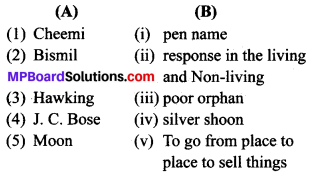
MP Board Class 9th General English The Spring Blossom Solutions Chapter 16 Cheemi: The Brave Girl

MP Board Solutions for Class 9 Textbook General English The Spring Blossom Solutions Chapter 16 Cheemi: The Brave Girl Questions and Answers aids you to prepare all topics in it effectively. You need not worry about accuracy of Madhya Pradesh State Board Solutions for Class 9 English Composition: Visual Stimulus as they are given adhering to latest exam pattern and syllabus guidelines. You Can Download MP Board Class 9 English Solutions Questions and Answers, Notes, Summary, Guide pdf on is page. Enhance your subject knowledge by preparing from Chapterwise MP Board Solutions for Class 9 English and clarify your doubts on corresponding topics.

MP Board Class 9th General English The Spring Blossom Solutions Chapter 16 Cheemi: The Brave Girl

Kick start your preparation by using our online resource Madhya Pradesh State Board Solutions for Class 9 Textbook General English The Spring Blossom Solutions Chapter 16 Cheemi: The Brave Girl. You can even download MP Board Solutions for Class 9 English free of cost rough direct links available on our page. Clear your queries and understand concept behind in a simple manner. Simply tap on concept you wish to prepare chapterwise and go rough it.

Cheemi: The Brave Girl Textual Exercises

Word Power

(1) Arrange the jumbled letters to make meaningful words
(अक्षरों को उचित क्रम में लगाकर अर्थपूर्ण शब्द बनओ।)
Answer:

  1. hanpro – orphan
  2. lifra – frail
  3. odors – doors
  4. bubyhc – chubby
  5. tandisce – distance
  6. torfacies – factories

(2) Rewrite the following words using appropriate prefixes given below.
(उचित उपसर्ग लगाइए।)
(dis, un, in, im)
Answer:

  1. educated – uneducated
  2. correct – incorrect
  3. cover – uncover
  4. possible – impossible
  5. position – disposition.

(3) Arrange the words in alphabetic order
(शब्दों को वर्णमाला के क्रम में लगाओ।)
Answer:

  1. babies
  2. centuries
  3. discarded
  4. fetch
  5. floor
  6. garden
  7. humanity,
  8. lady
  9. Safety
  10. style
  11. vegetable
  12. wooden.

How Much Have I Understood?

(A) Answer the following questions in one or two sentences
(निम्न प्रश्नों के उत्तर एक या दो वाक्यों में दीजिए।)

Question 1.
Why did people call Cheemi the little sparrow?
(व्हाय डिड पीपल कॉल चीमी द लिट्ल स्पैरो?)
लोग चीमी को एक छोटी चिड़िया क्यों कहते थे?
Answer:
People called Cheemi the little sparrow because she was a frail little girl.
(पीपल कॉल्ड चीमी द लिटल स्पैरो बिकॉज़ शी वॉज़ अ फ्रेल लिट्ल गर्ल।)
लोग चीमी को छोटी चिड़िया कहते थे क्योंकि वह दुबली पतली व कमजोर लड़की थी।

Question 2.
Who were said to be Parvati Kaki’s ancestors?
(हू वर सेड टू बी पार्वती कॉकीज़ एन्सेस्टर्स?)
पार्वती काकी के पूर्वज कौन थे?
Answer:
Parvati Kaki’s ancestors were related to the great Peshwas who had ruled Maharashtra during the 18th and 19th centuries.
(पार्वती काकीज़ एन्सेस्टर्स वर रिलेटिड टू द ग्रेट पेश्वाज़ हू हैड रूल्ड महाराष्ट्र ड्यूरिंग द एटीन्थ एण्ड नाइन्टीन्थ सेन्चुरीज़।)
पार्वती काकी के पूर्वज महाराष्ट्र के 18वीं व 19वीं सदी के शासक महान पेशवा थे।

Question 3.
Cheemi had to be satisfied with cooing to Chhotu at a distance. Why?
(चीमी हैड टू बी सैटिस्फाइड विद कूइंग टू छोटू एट अ डिस्टेन्स। व्हाय?)
चीमी को छोटू को दूर से ही पुचकार कर सन्तोष करना पड़ता था। क्यों?
Answer:
Since Parvati Kaki kept vigil like a watch dog and never allowed Cheemi to touch Chhotu therefore she had to be satisfied with cooing to Chhotu at a distance.
(सिन्स पार्वती कांकी कैप्ट विजिल लाइफ अवॉच डॉग एण्ड नेवर अलाउड चीमी टू टच छोटू देयरफोर शी हैड ट्र बी सैटिस्फाइड विद कुइंग टू छोट्र एट अ डिस्टेन्स।)
चूँकि पार्वती काकी छोटू पर नजर रखती थी व छोटू को उसके पास नहीं जाने देती थी इसलिए चीमी को छोटू को दूर से ही पुचकार कर सन्तोष करना पड़ता था।

Question 4.
What was the incident that caused flood in Shanwar Peth where Cheemi lived?
(व्हॉट वॉज़ द इन्सीडेन्ट दैट कॉज़्ड् फ्लड इन शॉवर पेठ व्हेयर चीमी लिव्ड?)
कौन-सी घटना के कारण चीमी के निवास के पास शाँवर पेठ में बाढ़ आ गई थी?
Answer:
There was flood in Shanwar Peth because the Panshet Dam at Mutha river had given way and the river water entered the city.
(देयर वॉज़ फ्लड इन शॉवर पेठ बिकॉज़ द पानशेट डैम एट मुठा रिवर हैड गिवन वे एण्ड द रिवर वॉटर एन्टर्ड द सिटी।)
शाँवर पेठ में बाढ़ आ गई थी क्योंकि मुठा नदी पर जो पानशेत बाँध था वह टूट गया था व नदी का पानी शहर में आ गया था।

Question 5.
Vinayak, Parvati Kaki’s son was not at home at the time of flood. Where was he?
(विनायक, पार्वती काकीज़ सन वॉज़ नॉट एट होम एट द टाइम ऑफ फ्लड। व्हेयर वॉज़ ही?)
बाढ़ के समय पार्वती काकी का बेटा विनायक घर पर नहीं था। वह कहाँ था?
Answer:
Parvati Kaki’s son, Vinayak had gone to Mumbai on business when there was flood.
(पार्वती काकीज़ सन, विनायक हैड गॉन टु मुम्बई ऑन बिज़नेस व्हेन देयर वॉज़ फ्लड।)
पार्वती काकी का बेटा, विनायक बाढ़ के समय व्यापार के लिए मुम्बई गया था।

(B) Answer the following questions in three or four sentences
(निम्न प्रश्नों के उत्तर तीन या चार वाक्यों में दीजिए।)

Question 1.
What was the source of Cheemi’s food and clothes?
(व्हॉट वॉज़ द सोर्स ऑफ चीमीज़ फूड एण्ड क्लोद्स?)
चीमी के भोजन व वस्त्रों का स्रोत क्या था?
Answer:
Cheemi lived on leftovers that she got from the women in the neighbourhood and wore the discarded clothes that the girls of her age gave her.
(चीमी लिव्ड ऑन लेफ्टओवर्स दैट शी गॉट फ्रॉम द विमेन इन द नेबरहुड एण्ड वोर द डिस्कार्डेड क्लोद्स दैट द गर्ल्स ऑफ हर एज़ गेव हर।)
चीमी पड़ोस की औरतों द्वारा दिए गए बचे हुए भोजन पर निर्वाह करती थी व अपने ही उम्र की लड़कियों द्वारा दिये गये उतरे हुए कपड़े पहनती थी।

Question 2.
What change took place in Parvati Kaki’s attitude after Cheemi had brought Chhotu to safety?
(व्हॉट चेन्ज टुक प्लेस इन पार्वती काकीज़ एटीट्यूड आफ्टर चीमी हैड ब्रॉट छोटू टू सेफ्टी?)
छोटू को सुरक्षित आने के बाद चीमी के प्रति पार्वती काकी के व्यवहार में क्या परिवर्तन आया?
Answer:
Parvati Kaki hugged her, addressed her as Cheemi” and then allowed her to play with Chhotu.
(पार्वती काकी हग्ड हर, अड्रेस्ड हर एज़ “डॉटर चीमी” एण्ड देन अलाउड हर टू प्ले विद छोटू।)
पार्वती काकी ने चीमी को गले से लगाया, उसे “चीमी बेटी” कहकर पुकारा और उसे छोटू के साथ खेलने की अनुमति दे दी।

Question 3.
What clues do you find in the lesson that, show that the police were active in the flooded village. Describe in brief.
(व्हॉट क्लूज़ डू यू फाइन्ड इन द लैसन दैट शो दैट द पुलिस वर् एक्टिव इन द फ्लडेड विलेज। डिस्क्राइब इन ब्रीफ।)
पाठ में तुम्हें क्या संकेत मिलते हैं कि पुलिस बाढ़ वाले गाँव में सक्रिय रही। संक्षेप में वर्णन करो।
Answer:
Police was active in the flooded village as the police only discovered that one of the bedroom’s window was open to take out Chhotu. It was the policeman who lowered Cheemi to the window and Cheemi handed the child to the policeman only.

(पुलिस वॉज़ एक्टिव इन द फ्लडेड विलेज एज़ द पुलिस ओनली डिसकवर्ड दैट वन ऑफ द बेडरूम्स विन्डो वॉज़ ओपन टु टेक आउट छोटू। इट वॉज़ द पुलिस मैन हू लोअर्ड चीमी टू द विन्डो एण्ड चीमी हैन्डिड द चाइल्ड टू द पुलिसमैन ओनली।)

बाढ़ वाले गाँव में पुलिस सक्रिय थी क्योंकि पुलिस ने ही ढूँढ़ा कि शयनकक्ष की एक खिड़की खुली है जिससे छोटू को निकाला जा सकता है। पुलिस वाले ने ही चीमी को खिड़की से अन्दर उतारा व चीमी ने बालक को पुलिस वाले को ही दिया।

Question 4.
What did the police inspector offer Cheemi when life became normal in Pune?
(व्हॉट डिड द पुलिस इंस्पेक्टर ऑफर चीमी व्हेन लाइफ बिकेम नॉर्मल इन पुणे?)
पुलिस इंस्पेक्टर ने पुणे में जीवन सामान्य होने पर चीमी को क्या प्रस्तावित किया?
Answer:
The Police Inspector asked her what reward she would like to have for her bravery.
(द पुलिस इन्स्पेक्टर आस्कड हर व्हॉट रिवॉर्ड शी वुड लाइक टू हैव फॉर हर ब्रेवरी।)
पुलिस इंस्पेक्टर ने चीमी को उसकी बहादुरी के लिए इनाम माँगने को कहा।

Question 5.
“I have already got the reward,” said Cheemi. What was the reward that she had got?
(“आइ हैव ऑलरेडी गॉट द रिवॉर्ड” सेड चीमी। व्हॉट वॉज़ द रिवॉर्ड दैट शी हैड गॉट?)
मुझे इनाम मिल चुका है? चीमी ने कहा। वह इनाम क्या था जो उसे मिला था?
Answer:
The reward was an opportunity to play with Chhotu.
(द रिवॉर्ड वॉज़ एन अपॉयूँनिटी टू प्ले विद छोटू।)
छोटू के साथ खेलने का मौका।

(C) Who said these words to whom?
(किसने किससे कहा?)

Question 1.
“Let me help, I can easily crawl in and get Chhotu out.”
(“लेट मी हैल्प! आइ कैन ईज़ली क्रॉल इन एण्ड गेट छोटू आउट?”)
Answer:
Cheemi to the policemen.
(चीमी टू द पुलिसमैन।)

Question 2.
“We’ll drop you a rope ladder through the window.”
(“वी विल ड्रॉप यू अरोप लैडर श्रू द विण्डो।”)
Answer:
Policemen said to Cheemi.
(पुलिसमैन सेड टु चीमी।)

Question 3.
“Come here, Cheemi”…………”Daughter Cheemi.”
(“कम हेअर, चीमी”……..”डॉटर चीमी।”)
Answer:
Parvati Kaki to Cheemi.
(पार्वती काकी टू चीमी।)

Question 4.
“I should like to go to school if you can help me.”
(“आइ शुड लाइक टू गो टू स्कूल इफ यू कैन हैल्प मी।”)
Answer:
Cheemi to the police inspector.
(चीमी टू द पुलिस इंस्पेक्टर।)

Question 5.
“We’ll bear the expenses of Cheemi’s schooling.”
(“वी विल वीअर द एक्सपेंसेस ऑफ चीमीज़
Answer:
Vinayak to the Police Inspector.
(विनायक दू द पुलिस इंस्पेक्टर।)

Language Practice

Change the following sentences into passive voice.
(निम्नलिखित वाक्यों को ‘passive voice’ में बदलो।)

(i) The servant will clean the floor.
Answer:
The floor will be cleaned (by the servant).

(ii) I have finished my work.
Answer:
My work has been finished (by me).

(iii) Mother is cooking lunch for us.
Answer:
Lunch is being cooked for us (by mother).

(iv) Sarla called Arun in the kitchen.
Answer:
Arun was called in the kitchen (by Sarla).

(v) They are playing football all over the world.
Answer:
Football is being played all over the world (by them).

Writing Time

(1) Write a paragraph on how Cheemi saved Chhotu.
(चीमी ने छोटू को कैसे बचाया इस पर एक गद्यांश लिखो।)
Answer:
The window of the bedroom is which Chhotu was sleeping was open but it was too small for an adult to crawl. But Cheemi was small so she easily jumped into the room through the window with the help of the policeman. She picked up Chhotu who was sleeping soundly, put him on her back and tied him tight to herself with a bed-sheet. Then she climbed slowly up the ladder lowered by the policeman and peeped through the window. Carefully she undid the bed-sheet and handed it with Chhotu to the policeman. Then she herself crawled out of the window.

(2) Describe Cheemi in your own words.
(चीमी का अपने शब्दों में वर्णन करो।)
Answer:
Cheemi was a poor girl. She was an orphan. She was physically weak and thin and hence was called little sparrow. She did small works of the women in the neighbourhood like fetching vegetables from the corner shop, looking after babies, cleaning home and vessels and in return she got food to eat and clothes to wear. She was satisfied with what she had. She loved children as she always wanted to play with Chhotu. She had made a place in heart of everybody except Parvati Kaki and there was an urge within her to be loved by her too. She was a brave girl as without caring about herself she stepped into the flooded room to save Chhotu. She also had a desire to study and get educated. She had a wish to have a home for her which was also finally fulfilled due to her courageous and caring attitude for everyone.

Things To Do

(i) Visit a river-side area and discuss with the peasants about the problems they face in the rainy season and prepare a list.
(नदी किनारे जाकर किसानों से बरसात के मौसम में उनको होने वाली समस्याओं के बारे में बात करो व उसकी सूची बनाओ।)

(ii) Discuss among your friends the ways of helping flood victims of your area. Make a list of the things you would need.
(अपने मित्रों से बाढ़ पीड़ितों की मदद करने के विषय में चर्चा करो।)
Answer:
Students can do themselves.
(छात्र स्वयं करें।

Cheemi: The Brave Girl Difficult Word Meaning

orphan (ऑर्फन)-a child whose parents are dead अनाथ; frail (फ्रेल)-physically weak and thin (दुबली-पतली); maid (मेड) a female servant in a house नौकरानी; vessels (वैसल्स)-utensils and cups and bowls etc. घर के बर्तन; left-overs (लैफ्ट ओवर्स) food that has not been eaten at the end of a meal बचा-खुचा भोजन; mansion ( मैंशन)-a large impressive house हवेली; chandelier (शैन्डलियर)-objects for ceiling fitted with small pieces of glass for light decoration छत से लटकने वाले झाड़-फानूस; zari (जरी) brocade जरी; curtain (कर्टेन)-a piece of cloth that is hung to cover a window or door परदा; ancestors (एन्सेस्टर्स)-one’s forefathers पूर्वज; chubby (चबी) slightly fat in an attractive way गोल-मटोल; vigil (विजिल)-to be very closely watching somebody or something सतर्क; cooing (कुइंग)-imitating the sound of a dove चिड़िया की आवाज निकालना; danger (GR)-risk or possibility of ill-happening, खतरा; storeyed (स्टोरीड)-a multilevelled building बहुमंजिला इमारत; confusion (कन्फ्यू जन)-a state of uncertainty असमंजस; persuade (परस्युएड)-to give good reasons for doing something आग्रह करना; panicky (पैनिकी) anxious about something चिंतातुर; wail (वेल)-to make a long loud cry विलाप करना; crawl (क्राल)-to move forward on self hands and knees; emerge (इमर्ज)-to come suddenly and unexpectedly from somewhere उभरकर आना; fondle (फॉन्डल)-to touch and move hand gently over someone दुलारना; recede (रिसीड)-to move gradually down उतरनाl

Cheemi: The Brave Girl Summary, Pronunciation & Translation

[1] Cheemi was a poor orphan. Nobody knew where she had come from yet everyone accepted the frail little girl and named her Cheemi’ the little sparrow. She fetched vegetables from the corner shop or looked after babies when their mothers went shopping. If the maid didn’t turn up, Cheemi was there to help, cleaning vessels, sweeping the floor and so on.

(चीमी वॉज़ अ पुअर ऑफैन। नो बडी निउ व्हेअर शी हैड कम फ्रॉम यट एव्रीवन एक्सेप्टेड द फ्रेल लिटिल गर्ल एण्ड नेम्ड, हर चीमी, द लिटिल स्पेरो। शी फेच्ड वेजीटेबल्स फ्रॉम द कॉर्नर शॉप और लुक्ड आफ्टर बेबीज़ व्हेन देअर मदर्स वेन्ट शॉपिंग। इफ द मेड डिडन्ट टर्न अप, चीमी वॉज़ देअर टु हैल्प, क्लीनिंग वेसल्स, स्वीपिंग द फ्लोर सो ऑन।)

हिन्दी अनुवाद :
चीमी एक गरीब अनाथ थी। कोई नहीं जानता था कि वह कहाँ से आई तो भी हर व्यक्ति उस दुबली-पतली नन्हीं बालिका को चाहता था और उसका नाम चीमी, छोटी चिड़िया रखा गया था। वह कोने की दुकान से सब्जियाँ लाती, माताएँ जब खरीदारी के लिए जाती तो बच्चों की देखभाल करती थी। यदि घर की नौकरानी नहीं आती, तो चीमी उनकी सहायता के लिए तैयार रहती थी, वह बर्तन साफ करती, झाडू लगाती और भी अन्य काम करती थी।

[2] Cheemi lived on leftovers women in the neighbourhood gave her. The girls of her age gave her their discarded clothes. Everybody liked Cheemi, except Parvati Kaki. She had a big house with a beautiful garden full of jasmines and roses. But nobody was ever allowed in. The flowers were meant for puja.

(चीमी लिव्ड ऑन लेफ्टओवर्स वुमन इन द नेबरहुड गेव हर। द गर्ल्स ऑफ हर एज़ गेव हर देअर डिस्कार्डेड क्लोथ्स। एवीबडी लाइक्ड चीमी, एक्ससेप्ट पार्वती काकी। शी हैड अ बिग हाउस विद अ ब्यूटीफुल गार्डन फुल ऑफ जेस्मीन्स एण्ड रोजेज। बट नोबडी वॉज़ एवर अलाउड इन। द फ्लावर्स वर मेन्ट फोर पूजा।)

हिन्दी अनुवाद :
चीमी आस-पड़ोस की महिलाओं द्वारा दिए गए बचे हुए खाने तथा कपड़ों पर जीवित थी। उसकी उम्र की लड़कियाँ अपने पहने हुए वस्त्र उसे दे देती थीं। हरेक व्यक्ति पार्वती काकी को छोड़कर चीमी को पसन्द करता था। उनका बहुत बड़ा मकान था और उसमें जैस्मिन व गुलाबों से भरा एक बगीचा था। किसी को भी अन्दर आने की इजाजत नहीं थी। बगीचे के फूल केवल पूजा के लिए थे।

[3] Parvati Kaki’s house was almost like a mansion built in traditional style with big wooden carved doors, huge halls and chandeliers. Surprisingly, ‘ the windows, especially of the rooms, were very small. They were decorated with beads and zari curtains and hangings. It was said that Parvati Kaki’s ancestors were related to the great Peshwas who had ruled Maharashtra during the 18th and 19th centuries.

(पार्वती काकीज़ हाउस वॉज़ अलमोस्ट लाइक ए मेन्सन बिल्ट इन ट्रेडिशनल स्टाइल विद बिग वुडन कार्ड डोअर्स, ह्यूज हॉल्स एण्ड चेन्डलियर्स। सरप्राइजिंगली, द विन्डोज़, स्पेशल ऑफ द रूम्स, वर वेरी स्माल। दे वर डेकोरेटेड विद बीड्स एण्ड जरी कन्स एन्ड हेगिंग्स। इट वॉज़ सेड दैट पार्वती काकीज .एनसेस्टर्स वर रिलेटेड टु द ग्रेट पेशवाज हू हैड रूल्ड महाराष्ट्र ड्यूरिंग द 18th (एट्टीन्थ) एण्ड 19th (नाइन्टीन्थ) सेन्चुरीज।)

हिन्दी अनुवाद :
पार्वती काकी का घर एक विशाल भवन था जो कि बड़े लकड़ी के नक्काशीदार दरवाजों, बड़े हॉलों और काँच की कारीगरी से परम्परागत स्टाइल में बना हुआ था। अद्भुत बात यह थी कि खिड़कियाँ विशेषकर कमरों की बहुत छोटी-छोटी थीं। उन्हें लकड़ी की बीडिंग जरी के पर्दो से और झालरों से सजाया गया था। यह कहा जाता था कि पार्वती काकी के पूर्वज महान पेशवाओं से सम्बन्धित थे जो कि 18वीं व 19वीं सदी में महाराष्ट्र के शासक थे।

[4] In the big house Parvati Kaki lived with her son Vinayak, his wife Gauri and her chubby little grandson, Chhotu. Chhotu was a great favourite with the girls. Gauri Bhabhi, as Chhotu’s mother was called, was a very nice, educated lady and didn’t mind Chhotu being carried by others. Parvati Kaki, however, kept vigil like a watchdog and never allowed Cheemi to touch Chootu. Cheemi had to be satisfied with cooing to Chhotu from a distance. How she wished she could play with him.

(इन द बिग हाउस पार्वती काकी लिव्ड विद हर सन विनायक, हिज़ वाइफ गौरी एण्ड हर चबी लिटिल ग्रैंडसन, छोटू। छोटू वॉज़ अ ग्रेट फेवरिट विद द गर्ल्स। गौरी भाभी, एज़ छोटूज़ मदर वॉज़ काल्ड, वॉज़ अ वेरी नाइस, एजुकेटेड लेडी एण्ड डिडन्ट माइण्ड छोटू बीइंग करिड बाय अदर्स। पार्वती काकी हाउएवर, केप्ट विजिल लाइक अ वाच डॉग एण्ड नेवर अलाउड चीमी टु टच छोटू। चीमी हैड टु बी सेटिसफाइड विद कूइंग टु छोटू फ्रॉम अडिस्टन्स। हाउ शी विश्ड शी कुड प्ले विद हिम।)

हिन्दी अनुवाद :
उस बड़े घर में पार्वती काकी अपने बेटे विनायक, उसकी पत्नी गौरी और उसके गोलमटोल छोटे पोते छोटू के साथ रहती थी। छोटू लड़कियों के बीच बहुत प्रिय था। गौरी भाभी, जो छोटू की माँ थी, एक बहुत उम्दा शिक्षित महिला थी और छोटू को किसी के द्वारा ले जाने पर एतराज नहीं करती थी। हालांकि पार्वती काकी उस पर सुरक्षा करने वाले कुत्ते के समान नजर रखती थी, और उसने कभी भी छोटू को चीमी द्वारा कभी छूने की इजाजत नहीं दी थी। चीमी को दूर से ही डोव की तरह कूऽऽ आवाज करने से ही सन्तुष्ट रहना पड़ता था। वह कितना चाहती थी कि वह उसके साथ खेले।

[5] Every year when, during the monsoons, the river Mutha, near Pune, gets flooded, people gather to watch the flood waters. That year, when the level of the water rose, no one bothered. Suddenly, the news came that Panshet Dam had given way and the waters of Mutha river had entered the city. Children were asked to rush home from school. Shanwar Peth, where Cheemi and her friends lived, and other areas on the river banks were in danger of being flooded.

(एवी यीअर व्हेन, ड्यूरिंग मानसून्स, द रिवर मुथा, नीअर पुणे, गेट्स फ्लडेड, पीपुल गेट टुगेदर टू वाच द फ्लड वाटर्स। दैट यीअर, व्हेन द लेवल ऑफ वाटर रोज़, नो वन बॉदर्ड। सडनली, द न्यूज केम दैट पानशेट डैम हैड गिवन वे एण्ड वाटर्स ऑफ मुथा रिवर हैड इन्टर्ड द सिटी। चिल्डरन वर आस्क्ड टु रश होम फ्रॉम स्कूल। शांवर पेठ, व्हेयर चीमी एण्ड हर फ्रेन्ड्स लिव्ड एण्ड अदर एरियाज़ ऑन द रिवर बैंक्स वर इन डेन्जर ऑफ बीईंग फ्लडेड।)

हिन्दी अनुवाद :
प्रतिवर्ष जब मानसून के दिनों में पुणे के पास मुथा नदी में बाढ़ आती थी तो लोग बाढ़ के पानी को देखने इकट्ठे हो जाते थे। उस वर्ष जब पानी का स्तर बढ़ा, किसी ने कोई चिन्ता नहीं की। अचानक, यह खबर आई कि पानशेत बाँध ने मुथा नदी के पानी को रास्ता दे दिया है, मुथा नदी के पानी ने शहर में प्रवेश किया। बच्चों को कहा गया कि वे स्कूल से तेजी से घर चले जाएँ परन्तु शांवर पैठ एवं दूसरे क्षेत्र जहाँ चीमी और उसके साथी रहते थे, बाढ़ के खतरे में थे।

[6] At first the water was just knee-deep, but it rose fast. People living on the ground floors were shifted to places of safety. Those who lived in two or three storeyed flats climbed to the top. There was confusion everywhere.

(एट फर्स्ट द वाटर वॉज़ जस्ट नी डीप, बट इट रोज़ फास्ट। पीपुल लिविंग ऑन द ग्राउण्ड फ्लोर वर शिफ्टेड टु प्लेसेस ऑफ सेफ्टी। दोज़ हू लिव्ड इन टू और थ्री स्टोरिड फ्लैट्स क्लाइम्ड टु द टॉप देअर वॉज़ कन्फ्यूजन एव्रीव्हेअर।)

हिन्दी अनुवाद-पहले तो पानी घुटने-घुटने तक था किन्तु वह तेजी से बढ़ा। लोग जो जमीनी तल पर रहते थे उन्हें सुरक्षित स्थानों पर पहुँचाया गया। दूसरे या तीसरे माले के फ्लैट में रहने वाली सबसे ऊँचे तल पर चढ़ गए। चारों ओर असमंजस की स्थिति थी।

[7] Vinayak, Parvati Kaki’s son, had gone to Mumbai on business. Parvati Kaki and Gauri Bhabhi were on the ground floor. When water entered their house. Parvati Kaki was in the puja room and Gauri Bhabhi in the kitchen Within seconds the water rose. The police persuaded Parvati Kaki and Gauri Bhabhi to climb to the top floor. In the hurry and confusion, they forgot that Chhotu was sleeping on the first floor.

(विनायक, पार्वती काकीज़ सन, हैड गोन टू मुम्बई ऑन बिज़नेस। पार्वती काकी एण्ड गौरी भाभी वर ऑन द ग्राउण्ड फ्लोर। व्हेन वाटर इन्टर्ड देअर हाउस। पार्वती काकी वॉज़ इन द पूजा रूम एण्ड गौरी भाभी इन द किचन। विदिन सेकन्ड्स द वाटर रोज। द पोलिस परस्यूएडेड पार्वती काकी एण्ड गौरी भाभी टु क्लाइम्ब टु द टॉप फ्लोर। इन द हरी एण्ड कन्फ्यूजन, दे फारगॉट दैट छोटू वॉज़ स्लीपिंग ऑन द फर्स्ट फ्लोर।)

हिन्दी अनुवाद ;
विनायक, पार्वती काकी का बेटा व्यापार के सिलसिले में मुम्बई गया हुआ था। पार्वती काकी व गौरी भाभी अपने घर के जमीनी तल पर थे। जब पानी घर में घुसा तब पार्वती काकी पूजा कक्ष में व गौरी भाभी रसोईघर में थीं। कुछ ही सेकण्डों में पानी बढ़ा। पुलिस ने पार्वती काकी व गौरी भाभी से सबसे ऊपरी मंजिल पर जाने को कहा। जल्दबाजी व असमंजस में वे भूल गईं कि छोटू प्रथम तल पर सो रहा है।

[8] The staircases were flooded. It was impossible to get to the bedroom on the first floor. Though the door to the room was closed, it was not bolted. Any moment the water could rush in. The women were panicky. “Chhotu” They wailed “What’ll happen to our Chhotu!”

Suddenly the police discovered that one of the bedroom windows was open, but it was too small for an adult to crawl in. Only a child could. But no one was willing to let their children take the risk. Out of nowhere, Cheemi emerged. “Let me help. I can easily crawl in and get Chhotu out,” she offered.

There was no time to waste. The policemen lowered Cheemi to the window. “Jump”, they told her. “We will drop you a rope ladder through the window.”

(द स्टेअरकेसेस वर फ्लडेड। इट वॉज़ इम्पॉसिबल टु गेट टु द बैडरूम ऑन द फर्स्ट फ्लोर। दो द डोर टु द रूम वॉज़ क्लोज्ड, इट वाज नॉट बोल्टेड। एनी मॉमेन्ट द वाटर कुड रश इन। द वूमैन वर पेनिकी। “छोटू” दे वेल्ड “व्हाट विल हैपन टु अवर छोटू!”

सडनली द पोलिस डिस्कवर्ड दैट वन ऑफ द बैडरूम विन्डोज वॉज़ ओपन, बट इट वॉज़ टू स्माल फोर एन एडल्ट टु क्रॉल इन। ओनली ए चाइल्ड कुड। बट नो वन वॉज़ विलिंग टु लेट देअर चिल्ड्रन टेक द रिस्क। आउट ऑफ नोव्हेअर, चीमी इमर्ड। “लेट मी हैल्प, आई केन इजीली क्रॉल इन एण्ड गेट छोटू आउट” शी ऑफर्ड।

देअर वॉज नो टाइम टु वेस्ट। द पोलिसमैन लोअर्ड चीमी टु द विन्डो। “जम्प” दे होल्ड हर। वी विले ड्रॉप यू अ रोप लैडर श्रू विन्डो।”)

हिन्दी अनुवाद :
सीढ़ियाँ पानी में डूब गई थीं। प्रथम तल के शयनकक्ष तक पहुँचना असम्भव था। यद्यपि शयनकक्ष का दरवाजा बन्द था पर उसकी चिटखनी नहीं लगी थी। किसी भी क्षण पानी तेजी से चढ़ता जाएगा। “छोटू” दोनों स्त्रियाँ विलाप कर उठीं, “हमारे छोटू का क्या होगा”?

अचानक पुलिस ने देखा कि शयनकक्ष की एक खिड़की खुली हुई है। किन्तु वह इतनी छोटी है कि कोई भी वयस्क अन्दर नहीं जा सकता था। केवल कोई बालक जा सकता था। किन्तु कोई भी अपने बच्चे के लिए खतरा मोल लेने को तैयार नहीं था। अचानक कहीं से चीमी प्रकट हुई। “मुझे मदद करने दो। मैं आसानी से रेंगकर अन्दर जा सकती हूँ और छोटू को बाहर ला सकती हूँ।” उसने कहा।

समय नष्ट करने का वक्त न था। पुलिसवालों ने चीमी को खिड़की में नीचे उतारा। “कूद जाओ” उन्होंने कहा, “हम तुम्हें रस्से की सीढ़ी से खिड़की से बाहर निकाल लेंगे।”

[9] Without a moment’s hesitation. Cheemi jumped through the window. Chhotu was sleeping soundly. Picking him up, Cheemi put him on her back and tied him tight to herself with a bedsheet.

Slowly she climbed up the ladder and peeped through the window. Carefully she undid the bedsheet and handed it, with the child to a policeman. Then she crawled out of the window.

(विदाउट अ मॉमेन्ट्स हेजिटेशन चीमी जम्प्ड थू द विन्डो। छोटू वॉज़ स्लीपिंग साउण्डली। पिकिंग हिम अप, चीमी पुट हिम ऑन हर बेक एण्ड टाइड हिम टाइट टु हरसेल्फ विद अ बैडशीट।

स्लोली शी क्लाइम्ड अप द लेडर एण्ड पीप्ड शू द विन्डो। केअरफुल्ली शी. अनडिड द बैडशीट एण्ड हेण्डेड इट, विद द चाइल्ड टु अ पोलिसमैन दैन शी क्रॉल्ड आउट ऑफ द विन्डो।)

हिन्दी अनुवाद ;
बिना किसी हिचकिचाहट के चीमी खिड़की से कूद गई। छोटू गहरी नींद में सो रहा था। उसे उठाकर चीमी ने उसे अपनी पीठ पर लिया और एक चादर से उसे अपने से बाँध लिया।

धीरे-धीरे वह सीढ़ी पर चढ़ी और खिड़की से झाँक कर देखा। सावधानी से उसने चादर को खोला और उसे बालक सहित एक पुलिस वाले को सौंप दिया। फिर वह भी खिड़की से रेंगकर बाहर आ गई।

[10] Both Cheemi and Chhotu were taken to the second floor where Parvati Kaki, Gauri Bhabhi and others were watching. Chhotu, who woke up by now, saw so many people around him and burst out crying. Cheers greeted Cheemi.

Gauri Bhabhi hugged Cheemi while Parvati Kaki fondled her grandson. Cheemi did not know what the fuss was all about.

(बोथ चीमी एण्ड छोटू वर टेकन टु द सेकण्ड फ्लोर व्हेअर पार्वती काकी, गौरी भाभी एण्ड अदर्स वर वॉचिंग। छोटू, हू वोक अप बाय नाउ, सो मेनी पिपुल अराउन्ड हिम एण्ड बर्स्ट आउट क्राइंग। चीअर्स ग्रीटेड चीमी।

गौरी भाभी हग्ड चीमी व्हाइल पार्वती काकी फॉन्डल्ड हर ग्रेन्ड सन। चीमी डिड नाट नो व्हाट द फस वॉज़ ऑल अबाउट।)

हिन्दी अनुवाद :
चीमी और छोटू दोनों को द्वितीय तल पर ले जाया गया। जहाँ पार्वती काकी व गौरी भाभी और अन्य लोग यह दृश्य देख रहे थे। छोटू, जो अब जग गया था इतने सारे लोगों को देखकर चीख पड़ा व रोने लगा।

खुशी से चीमी का स्वागत हुआ। ‘ गौरी भाभी ने उसे गले से लगा लिया जबकि पार्वती काकी अपने पोते को सहला रही थी। चीमी को यह समझ में नहीं आया कि माजरा क्या है?

[11] “Come here, Cheemi”, Parvati Kaki called her. Cheemi hesitated. But Parvati Kaki almost dragged Cheemi to her and hugged her. “Daughter Cheemi” she said, “You have shown that it is courage and humanity that counts, not your caste or position.”

After two days the flood water began to recede. As soon as life returned to normal in Pune, the police inspector of the locality met Cheemi and asked her what reward she would like to have for her bravery.

(“कम हिअर, चीमी”, पार्वती काकी कॉल्ड हर। चीमी हेजिटेटेड। बट पार्वती काकी अलमोस्ट ड्रेग्ड चीमी टु हर एण्ड हग्ड हर। “डॉटर चीमी”, शी सेड, “यू हैव शोन दैट इट इज़ करेज़ एण्ड ह्यूमेनिटी दैट काउण्ट्स, नाट युअर कास्ट और पोजिशन।”

आफ्टर टू डेज़ द फ्लड वाटर बिगेन टु रिसीड। एज़ सून एज़ लाइफ रिटर्ड टु नॉर्मल इन पुणे, द पोलिस इंस्पेक्टर ऑफ द लोकेलिटी मैट चीमी एण्ड आस्कड हर व्हाट रिवार्ड शी वुड लाइक टु हेव फोर हर ब्रेवरी।)

हिन्दी अनुवाद :
“चीमी इधर आओ” पार्वती काकी ने कहा। चीमी हिचक रही थी। किन्तु पार्वती काकी ने उसे पास खींचा और उसको गले लगाया। “बेटी चीमी” उसने कहा, “तुमने यह दिखा दिया कि वह साहस और मानवता है जो मायने रखती है जाति या वर्ग नहीं।”

दो दिन बाद बाढ़ का पानी उतरा। जैसे ही पूना में जीवन सामान्य हुआ स्थानीय पुलिस इंस्पेक्टर चीमी से मिले और पूछा कि तुम अपनी बहादुरी के लिए कौन-सा इनाम चाहती हो।

[12] The entire neighbourhood was there. To everyone’s surprise, Cheemi said, “I have already got the reward-an opportunity to play with Chhotu.” She paused for a while and added. “I should like to go to school if you can help me.” The Inspector was helpless. But Vinayak Bhai came forward and said, “We’ll bear the expenses of Cheemi’s schooling. She can stay with us as long as she wants.”

Cheemi was delighted. At last she had a place to stay and little Chhotu to play with.

(दी इन्टायर नेबरहुड वॉज़ देअर। टु एव्रीवन्स सरप्राइज़, चीमी सेड “आई हैव आलरेडी गाट द रिवार्ड-एन अपॉर्चुनिटी टु प्ले विद छोटू”, शी पॉज्ड, फोर ए व्हाइल एण्ड एडेड। “आई शुड लाइक टु गो टू स्कूल इफ यू केन हैल्प मी।” द इंस्पेक्टर वॉज़ हैल्पलेस। बट विनायक भाई केम फॉर्वर्ड एण्ड सैड, “वी’, इल बीयर द एक्सपेन्सेस ऑफ चीमीज स्कूलिंग। शी केन स्टे विद अस एज लांग एज़ शी वान्ट्स।”

चीमी वॉज़ डिलाइटेड। एट लास्ट शी हैड अ प्लेस टु स्टे एण्ड लिटिल छोटू टु प्ले विद।)

हिन्दी अनुवाद :
सारा आस-पड़ोस हाजिर था। हरेक को आश्चर्य हुआ जब चीमी ने कहा, “मुझे अपना इनाम मिल चुका है-छोटू के साथ खेलने का मौका।” वह रुकी और कहा-“मैं स्कूल जाना चाहती हूँ यदि आप मेरी सहायता कर सकें।” इंस्पेक्टर लाचार था। किन्तु विनायक भाई आगे आये और कहा-“हम चीमी की पढ़ाई का खर्च उठायेंगे। चीमी जब तक चाहे हमारे यहाँ रह सकती है।”

चीमी की प्रसन्नता का ठिकाना नहीं रहा। अंतत: उसे छोटू के साथ रहने और खेलने का स्थान जो मिल गया था।

We believe information shared regarding MP Board Solutions for Class 9 Textbook General English The Spring Blossom Solutions Chapter 16 Cheemi: The Brave Girl Questions and Answers as far as our knowledge is concerned is true and reliable. In case of any queries or suggestions do leave us your feedback and our team will guide you at soonest possibility. Bookmark our site to avail latest updates on several state board Solutions at your fingertips.