MP Board Class 7th General English Solutions Chapter 13 One Way Ticket-II

Get Updated MP Board Solutions for Class 7 General English Chapter 13 One Way Ticket-II Questions and Answers in PDF Format and download them free of cost. These are provided as per the latest exam pattern and syllabus. Access the topics of Chapter wise and communication skills, grammer part through the direct links available depending on the need. You can Download MP Board Class 7 English Solutions and can score highest grade in examination. Clear all your queries on the Mp Board Solutions for Class 7 English Chapter 21 Tansen Questions and Answers Subject by using the Madhya Pradesh State Board Solutions for existing.

MP Board Class 7th General English Solutions Chapter 13 One Way Ticket-II

If you are eager to know about the Madhya Pradesh State Board Solutions for Class 7 English you will find all of them here. You can identify the knowledge gap using these MP Board Solutions for English PDF and plan accordingly. Don’t worry about the accuracy as they are given after extensive research by people having subject knowledge along side from the latest English Syllabus.

One Way Ticket-II Textual Exercises

Read and Learn (पढ़ो और याद करो) :
Students should do themselves.
(छात्र स्वयं करें।)

Comprehension (बोध प्रश्न) :

Answer the questions given below :
(निम्न प्रश्नों के उत्तर दीजिए)

Question 1.
What did the.children like most when they reached the fair?
(व्हॉट डिड द चिल्ड्रन लाइक मोस्ट व्हेन दे रीच्ड् द फेयर?)
बच्चे जब मेले में पहुँचे तो उन्हें सबसे ज्यादा क्या पसंद आया?
Answer:
Children liked the lights in the fair, the most.
(चिल्ड्रन लाइक्ड् द लाईट्स् इन द फेयर द मोस्ट।) बच्चों को मेले में रोशनी सबसे ज्यादा पसंद आई।

Question 2.
Why did the children decide to stay together?
(व्हॉइ डिड द चिल्ड्रन डिसाइड टू स्टे दुगैदर?) बच्चे एक साथ रहने का फैसला क्यों करते हैं?
Answer:
The children decided to stay together so that they are not lost in the crowd.
(द चिल्ड्रन डिसाइडेड टू स्टे टूगेदर सो दैट दे आर नॉट लॉस्ट इन द क्राउड।)
बच्चे एक साथ रहने का फैसला करते हैं जिससे वे भीड़ में खो न जाएँ।

Question 3.
Why do you think jalebies and bhajias are filling ?
(व्हाइ डू यू थिंक जलेबीज़ एण्ड भजीयाज़ आर फिलिंग?)
तुम्हें क्यों लगता है कि जलेबी और भजिया पेट भरते हैं?
Answer:
I think jalebies and bhajias are filling because they are heavy and take long to digest.
(आइ थिंक जलेबीज एण्ड भजियाज़ फिलिंग बिकॉज दे आर हैवी एण्ड टेक लॉन्ग टू डाइजेस्ट।)
मैं सोचता हूँ कि जलेबी और भजिया से पेट भर जाता है क्योंकि ये भारी होते हैं और इनके पाचन में समय लगता है।

Question 4.
Why do you like a caterpillar train ride?
(व्हाइ डू यू लाइक अ कैटरपिलर ट्रेन राइड?)
तुम्हें एक इल्ली रेलगाड़ी वाली सवारी क्यों पसंद है?
Answer:
I like the caterpillar train ride because it is a joy ride and it takes us round the fair too.
(आइ लाइक द कैटरपिलर ट्रेन राईड बिकॉज़ इट इज़ अ जॉय राईड एण्ड इट टेक्स अस राउण्ड द फेयर टू।)
मुझे इल्ली रेलगाड़ी वाली सवारी पसंद है क्योंकि यह एक मजेदार सवारी है और यह हमें पूरा मेला घुमा देती है।

Question 5.
What kind of seats does a merry-goround have ?
(व्हॉट काइण्ड ऑफ सीट्स् डज़ अ मैरी-गो-राउण्ड हैव?)
मैरी-गो-राउण्ड की सीटें किस प्रकार की हैं?
Answer:
The merry-go-round has decorated wooden horses as seats.
(द मैरी-गो-राउण्ड हैज़ डैकोरेटेड वुडन हॉर्सेज़ एज़ सीट्स्।)
मैरी-गो-राउण्ड में सजाये हुए घोड़ों वाली सीटें हैं।

Question 6.
Why did ‘Lambu’ want to go on a ‘merry go-round’?
(व्हाइ डिड’लम्बू’वॉन्ट टू गो ऑन अ’मैरी-गो-राउण्ड’?)
लम्बू मैरी-गो-राउण्ड पर क्यों जाना चाहता था?
Answer:
Lambu wanted to go on a merry-go-round as on it they could ride a horse too.
(लम्बू वॉन्टेड् टू गो ऑन अ मैरी-गो-राउण्ड एज़ ऑन इट दे कुड राइड अ हॉर्स टू।)
लम्बू मैरी-गो-राउण्ड पर जाना चाहता था क्योंकि उस पर वे घुड़सवारी भी कर सकते हैं।

Question 7.
Why is the story called “One way Ticket” ?
(व्हाइ इज़ द स्टोरी कॉल्ड ‘वन वे टिकट’?)
कहानी को ‘एकमार्गी टिकट’ के नाम से क्यों पुकारा गया
Answer:
All the five friends collected their money they had and then only they were able to buy a one way ticket for the return journey.
(ऑल द फाइव फ्रेन्ड्स कलेक्टेड देअर मनी दे हैड एण्ड दैन ओनली दे वर एबल टू बाय अ वन वे टिकट फॉर द रिटर्न जी)
सभी पाँच मित्रों ने, जो भी उन पर धन था उसे इकट्ठा किया, तब वे एकमार्गी टिकट अपनी लौटती यात्रा के लिए खरीद सके।

Word Power (शब्द-सामर्थ्य):

(A) Use the phrases given below in sentences given after them :
(निम्नलिखित वाक्यांशों को उनके बाद में दिये वाक्यों में प्रयोग कीजिए।)
trace (anyone, anything), opt for, get lost, find out, joy rides, get dizzy, pool money, go round.

  1. I have put my pen somewhere. I am not able to ………………
  2. What will you ……………… after matriculation Arts, Science or Commerce ?
  3. The child held his mother’s hand tightly so that he may not ………………
  4. ……………… the correct solution of this sum.
  5. There were several ……………… at the fair.
  6. If you stand under the hot sun you will. ………………
  7. The principal like to ……………… the school to see all the classes.

Answer:

  1. trace it
  2. opt for
  3. get lost
  4. Find out
  5. joy rides
  6. get dizzy
  7. go round.

(B) Given below are some words which have similar sounds but different meanings, match these words with their meanings in each pair:
(नीचे कुछ शब्द दिए गए हैं जिनकी ध्वनि समान है लेकिन उनके अर्थ भिन्न हैं। इन शब्दों का उनके अर्थों से मिलान कर जोड़े बनाइए।)

  1. fare – (a) opposite of ‘there’
  2. here – (b) receiving sounds by ear
  3. fair – (c) money paid for a ticket
  4. hear – (d) gathering of shops etc. for public entertainment.

Answer:

  1. → (c)
  2. → (a)
  3. → (d)
  4. → (b)

Grammar in Use (व्याकरण प्रयोग):

(A) Combine the following sentences using who, what, when, which, or where.
(निम्न वाक्यों को Who,what,when,which या where का प्रयोग कर जोड़िए)

Question 1.
I entered the room. Sheila was sleeping. (when)
Answer:
I entered the room when Sheila was sleeping.

Question 2.
Mohan has gone. I do not know. (where)
Answer:
I do not know where Mohan has gone.

Question 3.
The doctor came. The patient had died. (when)
Answer:
The doctor came when the patient had died.

Question 4.
Mother kept the milk on the shelf. The cat could not reach it. (where)
Answer:
Mother kept the milk on the shelf where the cat could not reach.

Question 5.
You want something. I do not know. (what)
Answer:
I do not know what you want.

Question 6.
The police caught the thief. He had stolen the necklace. (who)
Answer:
the police caught the thief who had stolen the necklace.

(B) Rewrite the following sentence using ‘tool:
(‘too’ का प्रयोग कर निम्नलिखित वाक्यों को लिखिए)

Question 1.
This exercise is so difficult that I can’t do it.
Answer:
This exercise is too difficult for me to do.

Question 2.
It is so hot that I can’t walk outside.
Answer:
It is too hot for me to walk outside.

Question 3.
It is so dark that one can’t see.
Answer:
It is too dark for to see.

Question 4.
She is so young that she can’t do such hard work.
Answer:
She is too young to do such hard work.

Question 5.
The bed is so hard that no one can sleep on it.
Answer:
The bed is too hard to sleep on it.

(C) Rewrite the following sentences using fullstops (.), capital letters, question marks (?), commas (,), inverted commas (” “) and exclamation marks (!) wherever necesary:
(निम्न वाक्यों को फुल स्टॉप (.), केपीटल अक्षर, प्रश्नवाचक चिन्ह्न (?), कोमा (,), उद्धरण चिह्न (” “) और विस्मयादि बोध (!) चिन्ह्न लगाइए।)
Answer:
Once Bishni, Kishto, Gittu and Lambu went to see a Bal Mela in the nearby high school. There, they saw many science models made by the students. Bishni said, “What is this model about ?” Kishto explained, “This tells you about how water is pumped up with the help of electric motor.” Bishni, “I can see water coming out of the tap.” Lambu said, “Such models are called working models.”

Let’s Talk (आओ बात करें) :

Talk to your friends about various sweets/ dishes they like to eat and the swings/rides they enjoy in a fair and write them in the table. You can choose from these words.
swings and rides : (merry-go-round, giant wheel, horse ride, see-saw, train ride, car-rides, motor cycle rides)
sweets and dishes : (jalebi, bhajia, samosa, barfi, kulfi, papad, dosa, chat, pani-puri).

MP Board Class 7th General English Chapter 13 One Way Ticket-II 1
Ask four of your friends these questions to complete your table. Your friends will make the same chart and ask some questions.

  1. What is your name?
  2. Which sweets and dishes do you like most? (one sweet/one dish)
  3. Which swings do you prefer?
  4. What rides did you take in the fair you visited last?

अपने मित्रों से विभिन्न प्रकार के मिठाइयों/पकवानों के बारे में बात करो जो उन्हें पसन्द हों और वे झूले जो वे मेले में पसन्द करते हों, उसकी एक सारिणी बनाओ। इन प्रश्नों को अपने चार मित्रों से पूछो और सारिणी पूरी करो। तुम्हारे मित्र भी ऐसी ही एक सारिणी बनाकर तुमसे वे ही प्रश्न पूँछेगे।

  1. आपका नाम क्या है?
  2. आप कौन-सी मिठाइयाँ और पकवान अधिक पसन्द करते हो?
  3. आप किस झूले को प्राथमिकता देते हो? 4. मेले में अंतिम बार आपने कौन-सी सवारी की?

Let’s Write (आओ लिखें):

(A) Read the given telephonic conversation and then write in the following paragraph what Sonam will have to do the following morning:
(नीचे दिए टेलीफोन वार्तालाप को पढ़िए और सोनम को अगली सुबह क्या करना है, इस पर एक अनुच्छेद लिखिए।)
Answer:
Sonam will have to go to receive Montu the next morning at 9.30 a.m. at Habibganj station and take him to Professor’s Colony. He is having a computer test at NIIT, Arera Colony the next day so she will have to leave his luggage at home, give him some breakfast and take him for the test. She will have to pick him up at 5 p.m. from there when he finishes the test and put him on the train for Delhi at 7.30 p.m. (B) Fill in the blank spaces in the paragraph below using the words given in the box below:
(कोष्ठक में दिये गए शब्दों का प्रयोग कर अनुच्छेद के रिक्त स्थानों करे भरो।
(receive, bring, leave, computer centre, Habibganj, will, then, I’ll, luggage, Bhopal, test, 5 P.M., Professor’s Colony, have)
Answer:
I’ll receive, Montu at Habibganj railway station. Then I’ll bring Montu to our house at Professor’s Colony. We’ll then have breakfast and leave, for NIIT computer centre. Montu will then take his test. He will be free by 5 p.m. I’ll then take him home. We will pick up his luggage and then go to the main station at Bhopal.

Let’s Do It (आओ इसे करें) :

Make a list of the things that you enjoyed in a fair. Draw a picture of the fair and write about your picture.
(मेले में आपने जिन वस्तुओं से आनन्द प्राप्त किया उनकी एक सूची बनाओ। मेले का एक चित्र बनाओ और अपने चित्र के बारे में लिखो।
Answer:
Students can write themselves according to their individual choice what they enjoy in a fair. They can then draw the picture of the fair and write about it.

Pronunciation & Translation

Gittoo : Oh ! How beautiful ! Look at all those lights.
(गिटू : ओह! हाउ ब्यूटीफुल! लुक ऐट ऑल दोज लाइट्स.)
अनुवाद-गिटू : ओह! कितना सुन्दर! उन सभी रोशनियों को देखो।

Krishan : Yes, yes, let us go and see all the rides first and decide which ones we really want to go to.
(कृष्ण : येस, येस, लेट अस गो एण्ड सी ऑल द राइड्स फर्स्ट एण्ड डिसाइड विच वन्स वी रीअली वान्ट टू गो टू.)
अनुवाद-कृष्ण : हाँ, हाँ, आओ चलें, और सभी सवारियों को पहले देखें और तय करें कि हम किस की ओर वास्तव में जाना चाहते हैं।

Bishni : Yes Krishan, you are absolutely right. We would like to see what rides are available and which.ones are the best. Also we should all be walking together so that we are not lost in this crowd.
(बिशनी : येस कृष्ण, यू आर एब्सोल्यूटली राइट. वी वुड लाइक टू सी व्हॉट राइड्स आर अवेलेबल एण्ड विच वन्स आर द बेस्ट. ऑल्सो वी शुड ऑल बी वॉकिंग टूगेदर सो दैट वी आर नॉट लॉस्ट इन दिस क्राउड़)
अनुवाद-बिशनी : हाँ, कृष्ण, तुम बिल्कुल सही कह रहे हो। हम देखना चाहेंगे कि कौन-सी सवारियाँ उपलब्ध हैं और | कौन-सी सबसे अच्छी हैं। हम सबको इकठे घूमना चाहिए ताकि हम भीड़ में न खो जाएँ।

Kishto : That’s true, it’ll be difficult to trace anyone who gets lost. Can we eat something before we go for the rides.
(किश्तो : दैट्स ट्र, इट ‘विल बी डिफीकल्ट टू ट्रेस एनीवन हू गैट्स लॉस्ट. कैन वी ईट समथिंग बिफोर वी गो फॉर द राइड्स.)
अनुवाद-किश्तो : यह सच है, जो भी खो जायेगा उसे ढूँढ़ पाना कठिन होगा। क्या सवारी पर जाने से पहले हम कुछ खा सकते हैं?

Krishan : Alright, let’s eat something that is really filling.
(कृष्ण : ऑलराइट, लेट्स ईट समथिंग दैट इज रीअली फिलिंग.)
अनुवाद-कृष्ण : ठीक है, आओ कुछ खायें जिससे वास्तव में पेट भर जाये।

Lambu : Well, we had our food on the way. I think we can do with some snacks. Shall we opt for jalebies, Bhajias and Kulfis?
(लम्बू : वैल, वी हैड अवर फूड ऑन द वे. आइ थिंक वी कैन डू विद सम स्नेक्स. शैल वी ऑप्ट फॉर जलेबीज, भजीयाज़ एण्ड कुल्फीस?)
अनुवाद-लम्बू : अच्छा, हमें रास्ते में खाना मिल जाता। मेरा सोचना है, हम कुछ स्नेक्स ले सकते है। क्या हमें जलेबी भाजी और कुल्फी लेना चाहिए?

Gittoo : Oh! That’s nice.
(गिटू : ओह! दैट्स नाइस.)
अनुवाद-गिट्ट : ओह! यह अच्छा है।

Kishto : Yes, that will do. (They all eat.)
(किश्तो : येस, दैट विल डू. (दे ऑल ईट.))
अनुवाद-किश्तो : हाँ, यह चलेगा। (वे सब खाते हैं।)

Bishni : Good; that was quite filling.
(बिशनी :- गुड; दैट वॉज क्वाइट फिलिंग.)
अनुवाद-बिशनी : वाह; पेट भर गया।

Krishan : Now, let’s go round the fair. Look at these train rides. That train looks like a caterpillar. It’s a joy ride and it takes us round the fair too.
(कृषण : नाउ, लेट्स गो राउण्ड द फेअर. लुक ऐट दीज ट्रेन राइड्स. दैट ट्रेन लुक्स लाइक अ कैटरपिलर. इट्स अ जॉय राइड एण्ड इट टेक्स अस राउन्ड द फेअर टू.)
अनुवाद-कृष्ण : अब, मेले में घूमें। इन रेलगाड़ियों की सवारियों को देखें। वह रेलगाड़ी देखने में कैटरपिलर की तरह दिखाई देती है। यह एक मजेदार सवारी है और यह हमें मेला भी घुमाती है।

Gittoo : Let’s us go for that. All together certainly
(गिटू : लेट्स अस गो फॉर दैट. ऑल टूगेदर सर्टेनली.)
अनुवाद-गिटू : आओ उसके लिए चलते हैं। सब एक साथ-अवश्य।

Lambu : I want to go on the ‘merry-go-round’. We can ride a horse too because all the swings on the merry-go-round have decorated horses as seats.
(लम्बू : आइ वान्ट टू गो ऑन द ‘मैरी- गो-राउण्ड.’ वी कैन राइड अ होर्स टू बिकाज ऑल द स्विंग्स ऑन द मैरी-गो-राउण्ड हैव डेकोरेटेड होर्सस एज सीट्स.)
अनुवाद-लम्बू : मैं घूमने वाले झूले में जाना चाहता हूँ। हम एक घोड़े की सवारी भी कर सकते हैं क्योंकि मैरी-गो-राउण्ड (झूले) पर सीटों जैसे घोड़ों को सजाया गया है।

Kishto : Yes, I know how to ride a horse.
(किश्तो : येस, आइ नो हाउ टू राइड अ हॉर्स.)
अनुवाद-किश्तो : हाँ मैं जानता हूँ कैसे घोड़े की सवारी की जाती है।

Bishni : But this is a wooden horse.
(बिशनी : बट दिस इज अ वुडन हॉर्स.)
अनुवाद-बिशनी : लेकिन, यह एक लकड़ी का घोड़ा है।

Gittoo : Oh! Really ?
(गिटू : ओ! रीयली?)
अनुवाद-गिटू : अरे! वास्तव में?

Bishni : It is fast indeed and gets you dizzy soon. It goes too fast and sometimes you are a little scared too.
(बिशनी : इट इज फास्ट इन्डीड एण्ड गैट्स यू डिज़ी सून. इट गोज टू फास्ट एण्ड समटाइम्स यू आर अ लिटल स्केअर्ड टू.)
अनुवाद-बिशनी : यह वास्तव में तेज है और जल्दी ही तुम्हें चक्कर आ जायेंगे। यह बहुत तेज चलता है और कभी-कभी तुम्हें थोड़ा डर भी लगेगा।

All : Let’s us ride the horses.
(ऑल : लेट्स अस राइट द हॉर्सेस.)
अनुवाद-सभी : आओ घोड़ों पर चढ़ें।

Bishni : That was fun. Now we can tell our friends what we did at the fair.
(बिशनी : दैट वाज फन. नाउ वी कैन टैल अवर फ्रेण्ड्स व्हॉट वी डिड ऐट द फेअर.)
अनुवाद-बिशनी : यह मजेदार था। अब हम अपने मित्रों को बता सकते है कि हमने मेले में क्या किया।

Gittoo : It’s almost 11.o’clock in the night. Let’s go and rest somewhere and we can leave by the first bus in the morning.
(गिटू : इट्स ऑलमोस्ट इलेवन ओ क्लॉक इन द नाइट. लेट्स गो एण्ड रेस्ट समव्हेअर एण्ड वी कैन लीव बाइ द फर्स्ट बस इन द मॉर्निग.)
अनुवाद-गिटू : अब रात के लगभग ग्यारह बजे हैं। आओ कहीं चलकर आराम करें और हम कल प्रात: पहली बस से जा सकते हैं।

Kishto : Oh my God ! We don’t have enough money to buy tickets for the return journey.
(किश्तो : आह माइ गॉड ! वी डोन्ट हैव एनफ मनी टू बाय टिकट्स फॉर द रिटर्न जर्नी.)
अनुवाद-किश्तो : ओ मेरे भगवान! हमारे पास वापसी यात्रा के लिये टिकट खरीदने को पर्याप्त धन नहीं है।

Krishan : Let’s pool our money and see what we can do. There are five of us. We need Rs. 3/- for each ticket. That works out to Rs. 15/-
(कृष्ण : लेट्स पूल अवर मनी एण्ड सी व्हॉट वी कैन डू. देअर आर फाइव ऑफ अस. वी नीड रूपीज 3/- फॉर ईच टिकट. दैट वर्क्स आउट ट रुपीज 15/-.)
अनुवाद-कृष्ण : आओ अपना पैसा इकट्ठा कर लें और देखें हम क्या कर सकते हैं। हम पाँच हैं। हमें प्रत्येक टिकट के लिए तीन रुपये की जरूरत है। जो 15 रुपये होते हैं।

Gittoo : Here is all the money we have. It’s just five rupees. What shall we do now?
(गिटू. : हीअर इज ऑल द मनी वी हैव. इट ‘स जस्ट फाइव रुपीज. व्हॉट शैल वी डू नाउ?)
अनुवाद-गिट्ट : हमारे पास कुल पैसे यहीं हैं। यह केवल पाँच रुपये हैं। अब हम क्या करेंगे?

Lambu : I am very tired. I can’t walk back.
(लम्बू : आइ एम वैरी टायर्ड. आइ कॉन्ट वॉक बैक.)
अनुवाद-लम्बू-मैं बहुत थका हुआ हूँ। मैं वापस पैदल नहीं जा सकता हूँ।

Bishni : I don’t think my mother will like it if I reach home very late.
(बिशनी : आइ डोन्ट थिंक माइ मदर विल लाइक इट इफ आइ रीच होम वेरी लेट.)
अनुवाद-बिशनी : मुझे नहीं लगता है कि मेरी माँ यह पसंद करेगी यदि मैं घर बहुत देर से पहुँचूँ।

Gittoo : I don’t think it was worth spending time here if we have to walk home now. We shouldn’t have come without enough money in the first place.
(गिटू : आइ डोन्ट थिंक इट वॉज वर्थ स्पेन्डिंग टाइम हीअर इफ वी हैव टू वॉक होम नाउ. वी शुडन्ट हैव कम विदआउट एनफ मनी इन द फर्स्ट प्लेस.)
अनुवाद-गिट्टू : मुझे नहीं लगता कि यहाँ समय बेकार किया जाए यदि हमें अब घर पैदल जाना है। हमें पहले से ही पर्याप्त पैसे के बिना नहीं आना चाहिए था।

Kishto : Bapu must be looking for me.
(किश्तो : बापू मस्ट बी लुकिंग फॉर मी.)
अनुवाद-किश्तो : बापू मेरी राह देख रहे होगे।

Krishan : Well don’t worry. I have kept some money separately and have saved Rs. 10/-. That should be enough. I just found out that there is a bus. Let’s leave now and we’ll reach home by 11.30.
(कृष्ण : वैल, डोन्ट वरी. आइ हैव केप्ट सम मनी सेपरेटली एण्ड हैव सेव्ड रुपीज 10/-. दैट शुड बी एनफ. आइ जस्ट फाउण्ड आउट दैट देअर इज अ बस. लेट्स लीव नाउ एण्ड वी विल रीच होम ब्राइ 11:30.)
अनुवाद-कृष्ण : ठीक है, चिन्ता मत करो। मैंने कुछ पैसे अलग रख लिये हैं और 10 रुपये बचा लिये हैं। यह काफी होंगे। मैंने अभी-देखा कि यहाँ एक बस है। आओ। अब चलें और हम 11:30 बजे तक घर पहुँच जायेंगे।

All together : That’s wonderful. That’s why we call your Krishan, the wise. Because of you, we are able to buy our tickets for the return journey. Thank you for saving the money for our one-way tickets.
(ऑल टुगेदर : दैट्स वन्डरफुल. दैट्स व्हाइ वी कॉल योअर कृष्ण, द वाइज. बिकॉज ऑफ यू, वी ऑर एबल टू बाय अवर टिकट्स फॉर द रिटर्न जर्नी. थेंक यू फॉर सेविंग द मनी फॉर अवर वन-वे टिकट्स.)
अनुवाद–सभी एक साथ : आश्चर्यजनक है। इसीलिए हम तुम्हें कृष्ण कहते हैं यानि बुद्धिमान। तुम्हारे ही कारण हम वापिसी यात्रा के टिकिट खरीद सके हैं। हमारी एक-मार्गी टिकट के लिये पैसे बचाने के लिए तुम्हें-धन्यवाद।

One Way Ticket-II Word Meanings

Absolutely (एब्सोल्यूटलि)-बिल्कुल; Available (अवेलेबल)-उपलब्ध; Caterpillar (कैटरपिलर)-इल्ली; झिनगा; Decorated (डैकोरेटेड)-सजा हुआ; Really (रीयली)-वास्तव में; Dizzy (डिज़ी)-चक्कर आना; Enough (इनफ)- पर्याप्त; Filing (फिलिंग)- भरना; Horse ride (हॉर्स राईड)-घुड़सवारी; Indeed (इन्डीड)वास्तव, असल में; Opt (ऑप्ट)-चुनना, पसन्द; Pool (पूल)-एकत्र करना, जमा करना; Ride (राइड)-चढ़ना,सवारी; Saved (सेव्ड्)-बचाना; Scared (स्केअर्ड)डरा हुआ, भयभीत; Separately (सेपरेट्ली)-अलग से; Snacks (स्नैक्स)-हल्का नाश्ता; Certainly (सर्टेनली)अवश्य; Swing (स्विंग)-झूला; Spend (स्पेंड)-खर्च करना; Wonderful (वण्डरफुल)-आश्चर्यजनक; Trace (ट्रेस)-खोजना; Worry (वरी)-चिन्ता; Worth (वर्थ)लायक, योग्य।

We believe the information shared regarding MP Board Solutions for Class 7 English Chapter 21 Tansen Questions and Answers as far as our knowledge is concerned is true and reliable. In case of any queries or suggestions do leave us your feedback and our team will guide you at soonest possibility. Bookmark our site to avail latest updates on several state board Solutions at your fingertips.
MP Board Class 7th General English Solutions Chapter 12 One Way Ticket-I

Get Updated MP Board Solutions for Class 7 General English Chapter 12 One Way Ticket-I Questions and Answers in PDF Format and download them free of cost. These are provided as per the latest exam pattern and syllabus. Access the topics of Chapter wise and communication skills, grammer part through the direct links available depending on the need. You can Download MP Board Class 7 English Solutions and can score highest grade in examination. Clear all your queries on the Mp Board Solutions for Class 7 English Chapter 21 Tansen Questions and Answers Subject by using the Madhya Pradesh State Board Solutions for existing.

MP Board Class 7th General English Solutions Chapter 12 One Way Ticket-I

If you are eager to know about the Madhya Pradesh State Board Solutions for Class 7 English you will find all of them here. You can identify the knowledge gap using these MP Board Solutions for English PDF and plan accordingly. Don’t worry about the accuracy as they are given after extensive research by people having subject knowledge along side from the latest English Syllabus.

One Way Ticket-I Textual Exercises

Read and Learn (पढ़ो और याद करो):
Students should do themselves.
(छात्र स्वयं करें।)

Comprehension (बोध प्रश्न) :

Answer the questions given below:
(निम्न प्रश्नों के उत्तर दीजिए)

Question 1.
What does Kishto wear ?
(व्हॉट डज़ किश्तो वेयर् ?)
किश्तो क्या पहनता है?
Answer:
Kishto wears a long Khadi kurta and his pyjamas are too short for his long legs.
(किश्तो वेयर्स अ लौंग खादी कुर्ता एण्ड हिज़ पायजामाज़ आर टू शॉर्ट फॉर हिज़ लौंग लेग्स्)
किश्तो खादी का लम्बा कुर्ता पहनता है और उसका पजामा उसकी लम्बी टाँगों के लिए काफी छोटा होता है।

Question 2.
Who is a chatter box ?
(हू इज अ चैटर ब बहुत बोलने वाला कौन है?
Answer:
Bishni is a chatter box.
(बिश्नी इज़ अ चैटर बॉक्स।)
बिश्नी बहुत बोलने वाली है।

Question 3.
What does Lambu always do ?
(व्हॉट डज़ लम्बू ऑल्वेज़ डू?)
लम्बू हमेशा क्या करता है?
Answer:
Lambu is always butting in and asking silly questions or giving childish ideas.
(लम्बू इज़ ऑल्वेज़ बटिंग इन एण्ड ऑस्किंग सिली क्वेश्चन्स् ऑर गिविंग चाइल्डिश आइडियाज़।)
लम्बू हमेशा अनावश्यक हस्तक्षेप करता है और बेवकूफी से भरे सवाल पूछता है या बचकाने विचार सुनाता रहता है।

Question 4.
Why is Krishan called the wiseman ?
(व्हाइ इज़ कृष्ण कॉल्ड द वाईज़ मैन?)
कृष्ण को चतुर व्यक्ति क्यों कहा जाता है?
Answer:
Krishan is called the wise man because he solves everyone’s problems.
(कृष्ण इज़ कॉल्ड द वाईज मैन बिकॉज ही सौल्वज एवरीवन्स प्रॉब्लम्स्।)
कृष्ण को चतुर व्यक्ति इसलिए कहा जाता है क्योंकि वह सबकी समस्याओं का समाधान करता है।

Question 5.
Describe Gittoo’s dress. How does he keep everybody informed ?
(डिस्क्राइब गिट्टज़ ड्रैस। हाउ डज़ ही कॉप एवरीबडी इन्फॉर्ड?)
गिट्ट की पोशाक का वर्णन करो। वह हर एक को सूचित कैसे रखता है?
Answer:
Gittoo is always dressed in Khaki. He gathers news and gossip from the whole village and keeps everyone informed.
(गिट्ट इज़ ऑल्वेज़ ड्रैस्ट् इन खाकी। ही गैदर्स न्यूज़ एण्ड गॉसिप फ्रॉम द होल विलेज एण्ड कीप्स एवीवन इन्फॉर्ड।)
गिट्ट हमेशा खाकी पोशाक पहनता है। वह पूरे गाँव से खबर व गपशप इकट्ठा करके सबको सूचित करता है।

Question 6.
What do the children plan after the bus breaks down?
(व्हॉट डू द चिल्ड्रन प्लैन आफ्टर द बस ब्रेक्स् डाउन?)
बस के रुकने के बाद बच्चे क्या योजना बनाते हैं?
Answer:
The children planned to walk to the fair and return the next day by the morning bus.
(द चिल्ड्रन प्लैन्ड टू वॉक टू द फेअर एण्ड रिटर्न द नेक्स्ट डे बाइ द मॉर्निग बस।)
बच्चों ने मेले तक पैदल चलकर जाने और अगली सुबह की बस से लौटने की योजना बनाई।

Question 7.
Why does Krishan suggest to go on foot ?
(व्हाइ डज़ कृष्ण सजेस्ट टू गो ऑन फुट?)
कृष्ण ने पैदल जाने की सलाह क्यों दी?
Answer:
Krishan suggested to go on foot because there were no chances of the bus to get repaired socon.
(कृष्ण सजैस्टेड टू गो ऑन फुट बिकॉज़ देयर वर नो चान्सेज़ ऑफ द बस टू गेट रिपेयर्ड सून।)
‘कृष्ण ने पैदल जाने की सलाह दी क्योंकि बस के जल्दी ठीक होने के कोई आसार नहीं थे।

Question 8.
What do they do the inform their parents?
(व्हॉट डू दे डू टू इन्फॉर्म देयर पेरेन्ट्स्?)
वे अपने माता-पिता को सूचित करने के लिए क्या करते हैं?
Answer:
They call the postman on telephone to inform their parents about them.
(दे कॉल द पोस्टमैन ऑन टेलिफोन टू इनफॉर्म देयर पेरेन्ट्स् अबाउट देम।)
वे डाकिये को फोन करके उनके माता-पिता को उनके बारे में सूचित करने को कहते हैं।

Word Power
(शब्द-सामर्य) :

(A) Use the following phrases in the sentences given below :
(निम्न वाक्यांशों का वाक्यों में प्रयोग कीजिए।)
(keeping a watch, board a bus, three piece, broke down)

  1. My two wheeler ………………. when I was going home.
  2. Moti, the dog is ………………. on all the people going inside the gate.
  3. We have to ………………. at Pipariya to go to Pachmarhi.
  4. I have a ………………. blue suit.

Answers:

  1. broke down
  2. keeping a watch
  3. board a bus
  4. three piece.

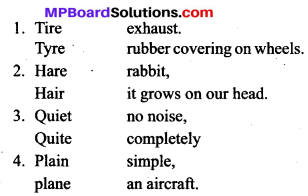
(B) Match these words with their meanings in each pair :
(इन शब्दों का इनके अर्थों से मिलान जोड़ियों में कीजिए।)
Answer:
MP Board Class 7th General English Chapter 12 One Way Ticket-I 1

(C) Now use these words in separate sentences of your own.
(अब इन शब्दों को अपने वाक्यों में प्रयोग कीजिए।)
Answer:
1. Tire – When Seema came from office, she was too tired.
Tyre-The tyre of Nikhil’s scooter got punctured on the way.

2. Hare-A hare is fond of eating carrots.
Hair-Ranjana is suffering from the problem of hair fall.

3. Quiet-The students became quiet as the teacher entered the classroom.
Quite-It is quite an easy job.

4. Plain-She wore a plain dress.
PlaneIt was Shyam’s first experience to travel in a plane.

Grammar in Use (व्याकरण प्रयोग) :

(A) Combine the sentences given below using who, what, when, which or where.
(नीचे दिए वाक्यों को Who, what, when, which, या where का प्रयोग कर जोड़िए)

Question 1.
Ranjana wants to buy a book. Ramu has the same book. (which)
Answer:
Ranjana wants to buy the same book which Ramu has.

Question 2.
Mother went to market. Ramu was sleeping. (when)
Answer:
Mother went to market when Ramu was sleeping.

Question 3.
I found the pen. I had kept it. (where)
Answer:
I found the pen where I had kept it.

Question 4.
Sona called me. I was reading. (when)
Answer:
Sona called me when I was reading.

Question 5.
The teacher punished the boy. He was making a noise. (who)
Answer:
The teacher punished the boy who was making noise.

(B) Rewrite the following sentences removing ‘too’.
(निम्नलिखित वाक्यों से ‘too’ हटाकर पुनः लिखिए)

Question 1.
The ceiling is too high to reach.
Answer:
The ceiling is so high that it cannot be reached

Question 2.
The shirt is too big to wear.
Answer:
The shirt is so big that is cannot be worn.

Question 3.
This dress is too costly to buy.
Answer:
This dress is so costly that it cannot be bought

Question 4.
My school is too far to walk to.
Answer:
My school is so far that it cannot be walked to.

Question 5.
This picture is too large to hang.
Answer:
This picture is so large that it cannot be hung.

Let’s Talk (आओ बात करें):

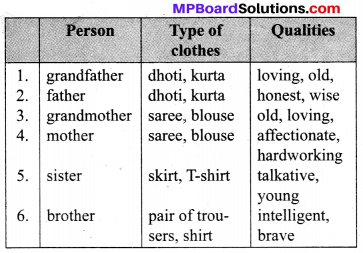
Talk to your friends about various dresses they or their family member wear. Also find out their special qualities and write at least two of them. You can choose from these words.
(अपने मित्रों से विभिन्न पोशाकों के बारे में बात करें जो वे या उनके परिवारीजन पहनते हों। उनकी विशेषताएँ खोजिए और कम से कम दो विशेषताएँ लिखिए। आप इन शब्दों में से चुन सकते हो।)
Dress : (dhoti, kurta, lungi, saree, pair of trousers, shirt, skirt, blouse, pair of half-pants, short, T-shirt.)
Quality : (honest, hard working, thin, fat, young, old, talkative, quiet, peace loving, childilike, innocent, brave, wise, intelligent, loving, affectionate.)
Answer:
MP Board Class 7th General English Chapter 12 One Way Ticket-I 2

Let’sWrite (आओ लिखें):

(A) You the elder brother/sister in you family. Write about an incident when you went together for a picnic and lost your way. What happened then and how you came back. Write a paragraph. Start like this:

(तुम अपने परिवार में बड़े भाई/बहिन हो। उस घटना के बारे में लिखो जब तुम एक साथ पिकनिक पर गए थे और रास्ता भूल गए थे। तब क्या हुआ और तुम लोग कैसे वापस आए। एक अनुच्छेद लिखो। इस प्रकार से आरम्भ करे।)

Once my family members and I went to a nearby riverside. We wanted to see the woods and walked into the thick forest. Then we went deep inside the woods. There was very dim light inside the thick forest as light could not penetrate through the densely packed trees. We could hardly see one another. We soon realised that we had lost our way. There was fear of wild animals, hunger, thirst and also it was getting darker.

The very thought of passing night in the forest trembled us. We didn’t even know to climb trees. We began to search the way out so that we could somehow get out of it. The only wish and the only prayer at that time was to get the way out, Suddenly, we heard the horn of a vehicle passing through the road. Oh! God, we were on the right track and we just started to run as fast as we could into the direction of the sound. We had come out on the highway cutting through the forest. The happiness of those moments couldn’t be expressed through words. It seemed as if we’ve got a new life.

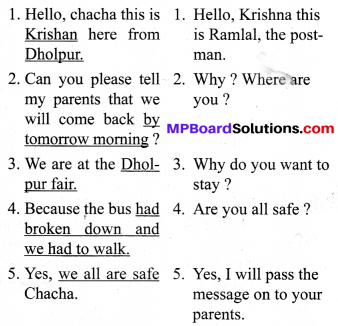
(B) (Work in pairs) Krishan calls the postman ‘chacha’. Complete the conversation. Use these words. (tomorrow, Dholpur, fair, it’s late, of course, Krishan)
(जोड़ों में कार्य करो) कृष्ण डाकिए को ‘चाचा’ कहकर बुलाता है। इस वार्तालाप को पूरा करो। इन शब्दों का प्रयोग करो)
(tomorrow, Dholpur, fair, it’s late, of course, Krishan)
MP Board Class 7th General English Chapter 12 One Way Ticket-I 3

(C) Now write what Ramlal says to their parents.
(अब लिखो रामलाल उनके माता-पिता से क्या कहता है?)
Ramlal : Krishan called from Dholpur.
Krishan’s father : What did he say?
Ramlal : He said they will stay there tonight.
Father : Why are they not coming ?
Ramlal : Because their bus broke down and they walked to the fair.
Father : Are they safe ?
Ramlal : Yes, they are safe.

Let’s Do It (आओ इसे करें) :
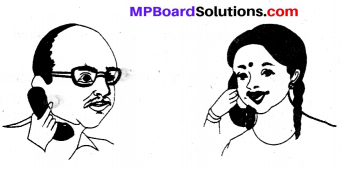
Describe these two pictures in five sentences each. Use these clues.
(इन दो चित्रों में से प्रत्येक का पाँच वाक्यों में वर्णन करो। इन संकेतों का प्रयोग करो।)
(round face, old man, young girl, wears spectacles, big eyes, short hair, bald, grandfather looks, school girl.)
Answer:
MP Board Class 7th General English Chapter 12 One Way Ticket-I 4
The Man

  1. The man in the picture is old and has a round face.
  2. He has big eyes, short hair and moustaches.
  3. He wears spectacles.
  4. He has short hair at the back of his head and is bald from front.
  5. He looks like my grandfather.

The Girl

  1. The young girl in the picture is a school girl.
  2. She has tow long plaits hanging on both sides.
  3. She has round face, sharp nose and beautiful eyes and lips.
  4. She wears bangles and there is a small bindi on her forehead.
  5. She is talking to her grandfather on phone.

Pronunciation & Translation

Read this story of five friends from a village and their adventures while going to a fair.
(रीड दिस स्टोरी ऑफ फाइव फ्रेन्ड्स फ्रॉम अ विलेज एण्ड देअर एडवेन्चर्स व्हाइल गोइंग टू अ फेअर.)
अनुवाद-एक गाँव से मेले जाते समय पाँच दोस्तों के रोमांचक अनुभव की यह कहानी पढ़ें।

Kishto is twelve. He wears a long khadi kurta, his father’s perhaps. His pyjamas are always too short for his long legs. He wears his hair long. They are patched on his head like a thatch. He copies everyone in the village from his Dadi to the ration-shop man with his pair of scales.
(किश्टो इज ट्वेल्व. ही वीअर्स अ लौंग खादी कुर्ता, हिज फादर्स परहेप्स. हिज पायजामाज आर ऑलवेज टू शॉर्ट फॉर हिज लौंग लेग्स. ही वीअर्स हिज हेअर लौंग दे आर पैच्ड ऑन हिज हैड नाइक अ थैचं. ही कॉपीज ऐवीवन इन द विलेज फ्रॉम हिज दादी टू द राशन-शॉप मैन विद हिज पेअर ऑफ स्केल्स.)
अनुवाद-किश्तो बारह वर्ष का है। वह एक लम्बा खादी का कुर्ता पहनता है। जो शायद उसके पिता का है। उसका पायजामा सदैव उसके लम्बे पैरों के लिए बहुत छोटा होता है। उसके बाल लम्बे हैं। वे उसके सिर पर एक छप्पर के समान पैबन्द की तरह हैं। वह अपने गाँव में अपनी दादी से लेकर राशन की दुकान वाले आदमी की तराजू, के साथ, सभी की नकल निकालता है।

Bishni is thirteen. She wears a loose three piece dress-ghagra, choli and odhni. She is bold but a chatterbox. She has two plaits hanging on both the sides.
(बिश्नी इज थर्टीन. शी वीअर्स अलूज थ्री पीस ड्रेस-घाघरा, चोली एण्ड ओढ़नी. शी इज बोल्ड बट अ चैटरबॉक्स. शी हैज टू प्लेट्स हैगिंग ऑन बोथ द साइड्स.)
अनुवाद-बिशनी तेरह वर्ष की है। वह एक तीन पीस वाली ढीली पोशाक-घाघरा, चोली और ओढ़नी पहनती है। वह साहसी हैं परन्तु बातूनी है। उसके दोनों ओर दो चोटी लटक रही हैं।

Lambu is eleven. He is ever so simple and innocent but rather awkward and grown too tall for his age. He usually wears a shirt and pyjamas. He is always butting in and asking silly questions or giving childish ideas.
(लम्बू इज इलेवन. ही इज एवर सो सिम्पल एण्ड इन्नोसेन्ट बट रादर ऑकवर्ड एण्ड ग्रोन टू टाल फॉर हिज एज. ही यूजुअली वीअर्स अ शर्ट एण्ड पायजामाज़. ही इज ऑल्वेज बुटिंग इन एण्ड आस्किंग सिली क्वेश्चन्स ऑर गिविंग चाइल्डिश आइडियाज.)
अनुवाद-लम्बू ग्यारह वर्ष का है। वह हमेशा बहुत – साधारण और मासूम रहा है परन्तु कुछ अजीब लगता है और अपनी उम्र की अपेक्षा काफी लम्बा है। वह अक्सर एक कमीज और पाजामा पहनता है। वह हमेशा मूर्खतापूर्ण प्रश्न पूछता है और बच्चों जैसे विचार देता है।

Krishna is fourteen. He is neatly dressed in a shirt and shorts or sometimes in dhoti kurta. He is always clean and has a straight gait. He is known as krishna the wise. For anything you cannot solve, you can go to him. He will help you to find a solution.
(कृष्ण इज फॉर्टीन. ही. इज नीटली ड्रेस्ड इन अ शर्ट ऐन्ड शोर्ट ऑर समटाइम्स इन धोती कुर्ता. ही इज ऑल्वेज क्लीन एण्ड हैज अ स्ट्रेट गेट. ही इज नोन ऐज कृष्ण द वाइज. फॉर ऐनीथिंग यू कैननॉट सॉल्व, यू कैन गो टू हिम. ही विल हैल्प यू टू फाइन्ड अ सोल्यूशन.)
अनुवाद-कृष्ण चौदह वर्ष का है। वह साफ कमीज और . छोटा निकर या कभी-कभी धोती कुर्ता भी पहनता है। वह हमेशा साफ रहता है और सीधे रास्ते चलता है। वह कृष्ण, बुद्धिमान कहलाता है। जो कुछ भी आप नहीं सुलझा सकते हो, तो आप उसके पास जा सकते हो। वह आपकी हल ढूँढ़ने में सहायता करेगा।

Then we have little Gittoo who is twelve. He is a little too short for his age. He is always dressed in khaki and plays the policeman, postman and gathers news and gossip from the whole village and keeps you informed.
(दैन वी हैव लिटल गिटू हू इज ट्वेल्व. ही इज अ लिटल टू शॉर्ट फॉर हिज एंज. ही इज ऑल्वेज ड्रेस्ड इन खाकी एण्ड प्लेज द पुलिसमैन, पोस्टमैन एण्ड गेदर्स न्यूज एण्ड गौसिप फ्रॉम द होल विलेज एण्ड कीप्स यू इनफॉर्मड.)
अनुवाद-तब हमारे पास छोटा गिट्ट है जो कि बारह वर्ष का है। वह अपनी उम्र को देखते हुए नाटा है। वह हमेशा खाकी पोशाक में रहता है और पुलिसमैन, डाकिया का अभिनय करता रहता है और पूरे गाँव से समाचार और आपसी बात-चीत एकत्रित करता है और आपको सूचना देता रहता है।

Well, they plan to go over to the next village Dholpur by bus. They decide to take Sheru, the dog with them. The plan is to go next Sunday. There is a fair in Dholpur and they want to see it. It has caterpillar train rides, the cars that you can drive through a maze and there are horse rides too. You can see real fish in a small aquarium, merry-go-round, giant wheel and hansi ghar.
(वैल, दे प्लान टू गो ओवर टू द नेक्स्ट विलेज. धौलपुर बाइ बस. दे डिसाइड टू टेक शेरू, द डॉग विद दैम. द प्लान इज टू गो नेक्स्ट संडे. देअर इज अ फेअर इन धोलपुर एण्ड दे वान्ट टू सी इट. इट हैज कैटरपिलर ट्रेन राइड्स, द कार्स दैट यू कैन ड्राइव श्रू अ मेज़ एण्ड देअर आर होर्स राइड्स टू. यू कैन सी रीयल फिश इन अ स्मॉल एक्वेरियम मैरी-गो-राउण्ड, जायन्ट व्हील एण्ड हँसी घर.)
अनुवाद-अब वे बस द्वारा अगले गाँव धौलपुर जाने की योजना बनाते हैं। वे शेरू (कुत्ते) को ले जाने का निर्णय करते हैं। योजना अगले रविवार को जाने की है। धौलपर में एक मेला है और वे इसे देखना चाहते हैं। वहाँ सवारी को कैटरपिलर (तितली के बच्चों जैसी) रेलगाड़ी है, कार है जिनहें तुम भूल भुलैया (संकरे रास्तों से) में से होते हुए चला सकते हो और घोड़ों की सवारी भी है। तुम एक छोटे से मछली घर में असली जीवित मछलियों को, हँसी घर, बड़ा झूला और घूमने वाला झूला देख सकते हो।

They ask their parents for some money for the rides. Mothers give them a few the things to eat on the way.
(दे आस्क देअर पेरेन्ट्स फॉर सम मनी फॉर द राइड्स. मदर्स गिव दैम अ फ्यू थिंग्स टू ईट ऑन द वे)
अनुवाद-वे अपने माता-पिता से सवारी करने के लिए कुछ रुपये माँगते हैं। माताएँ रास्ते में उन्हें कुछ वस्तुएँ खाने को देती हैं।

They buy their tickets, board the bus, sit on the wornout seats, huddled together. Sheru is keeping a watch at everything around.
(दे बाय देअर टिकट्स, बोर्ड द बस, सिट ऑन द वार्नआउट सीट्स, हडल्ड् टुगेदर. शेरू इज कीपिंग अ वॉच ऐट एव्रीथिंग अराउण्ड.)
अनुवाद-वे अपने टिकट खरीदते हैं, बस में चढ़ते हैं, एक साथ सटे हुए टूटी-फूटी सीटों पर बैठते हैं। शेरू आस-पास की हर चीज पर नजर रखे हुए है।

The bus does not move.
(द बस डज नॉट मूव.)
अनुवाद-बस नहीं चलती है।

Kishto : Ho, Ho, Ha. Conductor Chacha what shall we do now? Why are we not moving?
(किश्तो : हो, हो, हा. कन्डक्टर चाचा व्हॉट शैल वी डू नाउ ? व्हाई आर वी नॉट मूविंग?)
अनुवाद-किश्तो : हो, हो, हा! कन्डक्टर (परिचालक) चाचा हम अब क्या करेंगे? हम चल क्यों नहीं रहे हैं?

Conductor : Something seems to be wrong with the engine.
(कन्डक्टर : समथिंग सीम्स टू बी रॉग विद द इंजिन.)
अनुवाद-परिचालक : इंजन में कुछ खराबी दिखाई देती है।

Bishni : We will wait for a while.
(बिशनी : वी विल वेट फॉर अ व्हाइल.)
अनुवाद-बिशनी : हम कुछ देर इन्तजार कर लेंगे।

Kishto : Ha, Ha, Ha, Ha, wait for what They have no proper tools. How w they repair it ?
(किश्तो : हा, हा, हा, हा, वेट फॉर व्हॉट ? दे हैव नो प्रॉपर टूल्स. हाउ विल दे रिपेअर इट?)
अनुवाद-किश्तो : हा, हा, हा, हा, इन्तजार किसके लिए? उनके पास उचित औजार नहीं हैं। वो इसकी मरम्मत किस प्रकार करेगें?

Gittoo : What shall we do? What to do ?
Nobody on the bus seems to know.
(गिटू : व्हॉट शैल वी डू? व्हॉट टू डू? नोबडी ऑन द बस सीम्स टू नो.)
अनुवाद-गिटू : हम क्या करेंगे? क्या करना है? बस में कोई जानकार दिखाई नहीं देता है।

Lambu : Let’s go home.
(लम्बू : लेट्स गो होम.)
अनुवाद-लम्बू : आओ, घर चलें।

Bishni : What for?
(बिशनी : व्हॉट फॉर?)
अनुवाद-बिशनी : किसलिए?

Lambu : Oh, the bus has broken down. We cannot go to Dholpur. So let’s go back to Rampur.
(लम्बू : ‘ओह, द बस हैज ब्रोकन डाउन. वी कैननॉट गो टू धौलपुर. सो लेट्स गो बैक टू रामपुर.)
अनुवाद-लम्बू : अरे, बस टूट गई है। हम धौलपुर नहीं जा सकते हैं। इसलिए, आओ रामपुर वापस चलें।

Krishan : No, no, I think we can walk to the fair and return tomorrow by the morning bus.
(कृष्ण : नो, नो, आइ थिंक वी कैन वॉक टू द फेअर एण्ड रिटर्न टूमोरो बाइ द मॉर्निंग बस.)
अनुवाद-कृष्ण : नहीं, नहीं मेरा विचार है कि हम मेले तक पैदल चल सकते हैं और कल सुबह की बस से वापिस हो सकते

Bishni : That’s a good idea. I certainly want to see the mela and the new rides.
(बिशनी : दैट्स अ गुड आईडिया. आइ सर्टेनली वान्ट टू सी द मेला एण्ड द न्यू राइड्स.)
अनुवाद-बिशनी : यह अच्छा विचार है। मैं निश्चित ही मेला और नई सवारियाँ देखना चाहती हूँ।

Gittoo : I am sure you will get tired of walking.
(गिटू” : आइ एम श्योर यू विल गेट टायर्ड ऑफ वॉकिंग.)
अनुवाद-गिटू-मुझे यकीन है तुम पैदल चलने से थक जाओगी।

Bishni : No, no, I walk to so many places. I am sure I can do it.
(बिशनी : नो, नो, आई वॉक टू सो मेनी प्लेसेस. आइ एम श्योर आइ कैन डू इट.)
अनुवाद-बिशनी : नहीं, नहीं, मैं कई जगह पैदल जाती हूँ। मुझे यकीन है मैं यह कर सकती हूँ।

Kishto : Aha ! That’s a brave girl.
(किश्तो : अहा! दैट्स अ ब्रेव गर्ल.)
अनुवाद-किश्तो : अहा! यह एक बहादुर लड़की है।

Krishan : Let’s go. We’ll call the postman chacha on telephone to tell our parents that we are safe and will be back by tomorrow. They return the tickets and get their money back from the conductor.
(कृष्ण : लेट्स गो. वी ‘इल कॉल द पोस्टमैन चाचा ऑन टेलीफ़ोन टू टैल अवर पेरेन्ट्स दैट वी आर सेफ एण्ड विल बी बैक बाइ टुमोरो. दे रिटर्न द टिकट्स एण्ड गैट देअर मनी बैक फ्रॉम द कन्डक्टर.)
अनुवाद-कृष्ण : आओ चलें। हम डाकिया चाचा को फोन कर देखें कि हमारे अभिभावकों को बता दें कि हम सुरक्षित हैं और कल तक वापस आएँगे। वे टिकट वापिस करते हैं और कन्डक्टर परिचालक से अपना पैसा वापिस ले लेते हैं।

Gittoo : Walk fast it will be dark soon. So the five friends with their dog Sheru walked to Dholpur and reached the fair ground at about 7 O’clock in the evening.
(गिटू : वॉक फास्ट इट विल बी डार्क सून. सो द फाइव फ्रेण्ड्स विद देअर डॉग शेरू वॉक्ड टू धौलपुर एण्ड रीच्ड द फेअर ग्राउण्ड ऐट अबाउट सेवन ओ क्लॉक इन द ईवनिंग.)
अनुवाद-गिटू : तेज चलो, जल्दी ही अंधेरा हो जाएगा। इस प्रकार पाँचों दोस्त अपने कुत्ते शेरू के साथ पैदल धौलपुर चल दिये और सांय करीब सात बजे मेला स्थल पर पहुँच गये।

One Way Ticket-I Word Meanings

Aquarium (अक्वेरिअम्)-मछली घर; Awkward (ऑक्वर्ड)-बेढंगा, अटपटा; Bold (बोल्ड)-बहादुर; Brave (ब्रेव)-वीर; Butting (बटिंग)-अनावश्यक हस्तक्षेप, करना; Chatter box (चैटर बॉक्स)-बहुत बोलने वाला; Childish (चाइल्डिश)-बचकाना; Decide (डिसाइड)-निर्णय करना; Fair (फेअर)-मेला; Gait (गेट)-चाल; Scales (स्केल्स)-तराजू; Gather (गैदर) एकत्र करना; Giant wheel (जायन्ट व्हील)-विशाल चक्र; Gossip (गॉसिप)-गपशप; Hanging (हैंगिंग)-लटकती हुई; Huddle (हडल)-सटकर, इकठ्ठा हो जाना; Idea (आइडिया) विचार; Informed (इन्फॉम्र्ड)-सूचित; Innocent (इनोसेन्ट)-मासूम; Maze (मेज़)-भूल भुलैया; Merry-go-round (मैरी-गो-राउण्ड)-चक्र दोला; Neatly नीटली)-सफाई से, अच्छे से; Patch (पैच)-थिगली, पैबन्द जैसा लगे होना; Perhaps (परहैप्स)-शायद; Plait (प्लैट)-चोटी; Plan (प्लैन)-योजना; Qualities (क्वालिटीज़)-गुण,लक्षण;Repair(रिपेयर)-मरम्मत करना; Safe (सेफ)-सुरक्षित; Silly (सिली)-बेवकूफी से भरे; Solution (सल्यूशन)-हल, समाधान; Solve (सॉल्व)-हल करना; Straight (स्ट्रेट)-सीधा; Thatch (थैच)-छप्पर; Tired (टायर्ड)-थका हुआ; Usually (यूजुअलि)-प्रायः, अक्सर; Wear (वियर)-पहनना; While (व्हाइल)-जब तक।

We believe the information shared regarding MP Board Solutions for Class 7 English Chapter 21 Tansen Questions and Answers as far as our knowledge is concerned is true and reliable. In case of any queries or suggestions do leave us your feedback and our team will guide you at soonest possibility. Bookmark our site to avail latest updates on several state board Solutions at your fingertips.
MP Board Class 7th General English Solutions Chapter 11 Lohri

Get Updated MP Board Solutions for Class 7 General English Chapter 11 Lohri Questions and Answers in PDF Format and download them free of cost. These are provided as per the latest exam pattern and syllabus. Access the topics of Chapter wise and communication skills, grammer part through the direct links available depending on the need. You can Download MP Board Class 7 English Solutions and can score highest grade in examination. Clear all your queries on the Mp Board Solutions for Class 7 English Chapter 21 Tansen Questions and Answers Subject by using the Madhya Pradesh State Board Solutions for existing.

MP Board Class 7th General English Solutions Chapter 11 Lohri

If you are eager to know about the Madhya Pradesh State Board Solutions for Class 7 English you will find all of them here. You can identify the knowledge gap using these MP Board Solutions for English PDF and plan accordingly. Don’t worry about the accuracy as they are given after extensive research by people having subject knowledge along side from the latest English Syllabus.

Lohri Textual Exercises

Listen and Repeat (सुनो और दुहराओ) :

(A) Students should do themselves.
(छात्र स्वयं करें।)

(B) Listen to the teacher as she/he reads the poem and fill in the gaps :
(अपने शिक्षक से कविता को सुनिए और खाली स्थान भरिए।)
Down in the South, The days are fine When January comes around. But up in the North. And in the hills and so forth. January’s Lohri time.

(C) Listen to the poem carefully and write the words from the poem that rhyme with the words given below:
(कविता को ध्यानपूर्वक सुनो और उसमें से वे शब्द जो समान ध्वनि वाले हों, लिखिए।)
pine fine, blame flame, letter better
file pile, cuts nuts, turn burn

Comprehension (बोध प्रश्न) :

Answer the following questions :
(निम्न प्रश्नों का उत्तर दीजिए)

Question 1.
What is the poem about ?
(व्हॉट इज द पोऍम अबाउट?)
कविता किसके बारे में है?
Answer:
The poem is about the festival of ‘Lohri’.
(द पोऍम इज़ एबाउट द फेस्टीवल ऑफ लोहड़ी।)
कविता लोहड़ी के त्यौहार के बारे में है।

Question 2.
How are the days in the south during January?
(हाउ आर द डेज़ इन द साउथ ड्यूरिंग जनवरी?)
दक्षिण में जनवरी के दिन कैसे होते हैं?
Answer:
The days in the south during January are very fine.
(द डेज़ इन साउथ ड्यूरिंग जेन्युअरी आर वेरी फाइन।)
दक्षिण में जनवरी के महीने में दिन बहुत ही सुहावने होते हैं।

Question 3.
Why do people collect twigs and leaves ?
(व्हाई डू पीपल कलेक्ट ट्विग्स एण्ड लीज् ?)
लोग टहनियाँ और पत्तियाँ क्यों एकत्र करते हैं?
Answer:
People collect twigs and leaves to burn them when they celebrate Lohri in January.
(पीप्ल् कलेक्ट ट्विग्स एण्ड लीव्ज़ टू बर्न दैम व्हैन दे सेलीब्रेट लोहड़ी इन जेन्युअरी।)
लोग टहनियाँ और पत्तियाँ जलाने के लिए एकत्र करते हैं, जब वे जनवरी में लोहड़ी मनाते हैं।

Question 4.
What goes from hand to hand ?
(व्हॉट गोज़ फ्रॉम हैण्ड टू हैण्ड ?)
एक हाथ से दूसरे हाथ में क्या जाता है?
Answer:
Nuts and sweetmeats pass from hand to hand.
(नट्स एण्ड स्वीटमीट्स पास फ्रॉम हैण्ड टू हैण्ड।)
मूंगफली व रेवड़ियाँ एक हाथ से दूसरे हाथ में जाती हैं।

Question 5.
What, according to the poet, is not good for environment ?
(व्हॉट, एकॉर्डिग टू द पोऍट, इज़ नॉट गुड फॉर एनवाइरनमेन्ट?)
कवि के अनुसार, पर्यावरण के लिए क्या ठीक नहीं है?
Answer:
Burning the wood a lot, is not good for environment. The air gets polluted from smoke caused by burning the wood.
(बर्निंग द वुड ए लॉट, इज़ नॉट गुड फॉर एनवाइरनमेन्ट। द एयर गेट्स पॉल्यूटेड फ्रॉम स्मोक कॉज्ड बाइ बर्निंग द वुड।)
बहुत अधिक लकड़ी का जलाया जाना पर्यावरण के लिए अच्छा नहीं है। लकड़ी जलाने से पैदा हुआ धुआँ पर्यावरण को प्रदूषित कर देता है।

Question 6.
How can Lohri be celebrated in a better way?
(हाउ कैन लोहड़ी बी सेलीब्रेटेड इन ए बैटर वे?)
अपेक्षाकृत अच्छी तरह से लोहड़ी कैसे मनायी जा सकती है?
Answer:
Lohri can be celebrated by burning our hatred in a better way.
(लोहड़ी कैन बी सेलीब्रेटेड बाइ बर्निंग ऑवर हेट्रेड इन अ बैटर वे।)
लोहड़ी हमारी घृणा के भाव को जलाकर एक अच्छे रूप में मनायी जा सकती है।

(B) Tick the correct option:
(सही विकल्प पर चिन्ह लगाइए।)

  1. Down in the North/South.
  2. Soon, we have a great small/big pile.
  3. The flame will leap up/down high.
  4. Bonfires consume a lot of/little wood.
  5. Yet, there must be a good/better way.

Answers:

  1. South
  2. big
  3. up
  4. a lot of
  5. better.

(C) Write the missing lines :
(छूटी पंक्तियों को लिखिए।)

1. Down in the South,
The days are fine.

2. Bonfires consume a lot of wood.
For the environment, this is not so good.

3. Let’s burn our hatred instead of wood.
And send it up in flames for good.

Word Power (शब्द – समर्थ):

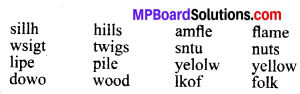
(A) Rearrange the jumbled letters to form meaningful words:
(अव्यवस्थित अक्षरों को अर्थपूर्ण शब्द बनाने के लिए पुनः व्यवस्थित कीजिए)
MP Board Class 7th General English Chapter 11 Lohri 1
(B) Fill in the blank spaces using the correct word from those given in brackets :
(कोष्ठक में दिए गए सही शब्दों का प्रयोग कर रिक्त स्थान भरिए)

  1. Sohan alway does the ………… thing first and leaves the ………… one. (difficult/easy)
  2. Owls ………… in the day and ………… in the night. (sleep/wake up)
  3. Chandra is ………… and smart whereas her friend Chandini is ………… and lazy. (wise/foolish)
  4. It is very ………… in the park but in is. here. (noisy/quiet)
  5. Silk is ………… but handmade cloth is ………… (smooth/rough)

Answers:

  1. easy, difficult
  2. sleep, wake up
  3. wise, foolish
  4. noisy, quiet
  5. smooth, rough.

(C) ‘g’ is pronouned in two different ways as ‘g’ in gap and as ‘j’ in gem. Given below are some words. Classify them according to their sounds.
(‘g’ का उच्चारण दो भिन्न रूपों में होता है जैसे ‘g’ ‘gap’ (गैप) में और जैसे ‘j”gem’ (जैम) में। नीचे कुछ शब्द दिए गये हैं उन्हें उनकी ध्वनि (उच्चारण) के अनुसार वर्गीकृत करिए।
give, gem, ginger, grow, get, geometry, grass, guest, giant, geography, judge.)
Answer:
gem – gem, ginger, geometry, giant, geography, Judge.
gap – give, grow, get, got, grass guest.

Grammar in Use (व्याकरण प्रयोग) :

(A) Use the words given below to complete the following sentences :
(निम्नलिखित वाक्यों में उचित शब्दों से वाक्य पूरा कीजिए।)
Answer:
(into, across, up, between, among)

  1. Letter Q comes ………. letter P and R of the English alphabet.
  2. Smoke goes ……….. in the sky.
  3. Don’t throw waste paper anywhere. Put it ……. a dustbin.
  4. The cat ran ……….. the room quickly.
  5. She works ………. the poor.

Answer:

  1. between
  2. up
  3. into
  4. across
  5. among

(B) Rewrite the following conversation in indirect form of narration :
(निम्नलिखित वार्तालाप को अप्रत्यक्ष रूप में लिखिए।)
Answer:

  1. Bala asked Vinita where she had gone the previous day.
  2. Vinita replied Bala that she had gone to the market the previous day.
  3. Bala asked Vinita what she had bought from there.
  4. Vinita told Bala that she had bought some vegetables and fruits.
  5. Bala asked Vinita again if she could come with her that day.
  6. Vinita replied that she would come with her that day.

Let’s Talk (आओ बात करें):

Discuss about the festivals such as Diwali, Id, Christams. Collect information about these festivals and complete the following chart. (Work in pairs (दीवाली, ईद, क्रिसमस जैसे त्यौहारों के बारे में चर्चा करें। उनके बारे में सूचना एकत्रित करें और निम्नलिखित चार्ट को पूरा करें।) (समूह में कार्य करें।)
MP Board Class 7th General English Chapter 11 Lohri 2

Let’s Write (आओ लिखें) :

Write a paragraph on Holi. Take clues from the conversation with your friends.
(होली पर एक अनुच्छेद लिखिए। अपने मित्रों के साथ बात चीत कर संकेत लीजिए) .
Answer:
Holi is the festival of colours. The people express their happiness by throwing colours on their friends, relatives and neighbours. They make fun. They use dry and wet colours. Relating to the festival and season people are lost in singing songs. They feel happy by welcoming their friends with sweetmeats and tea or coffee or cold drink. Sugarcane fields look full of cheerfulness of the farmers who work there. Grain fields look very beautiful. Some people throw mud on one another and shout. Everyone small or big bears a smile on his face.

Let’s Do It (आओ इसे करें) :

Collect pictures of some festivals celebrated in our country and paste them in your notebook.
(हमारे देश में मनाये जाने वाले कुछ त्यौहारों के चित्र एकत्रित कीजिए और उन्हें अपनी पुस्तिका में चिपकाइए ।)
Answer:
Students can collect the pictures of the festivals such as Holi, Diwali, Raksha Bandhan and Christmas etc. from newspapers, magazines old books etc. and paste them in their note books.

Pronunciation & Translation

Down in the South, The days are fine.
When January comes around.
But up in the North,
And in the hills and so forth,
January’s Lohri time.

(डाउन इन द साउथ, द डेज आर फाइन.
व्हेन जेनुअरी कम्स अराउण्ड.
बट अप इन द नॉर्थ,
एण्ड इन द हिल्स एण्ड सो फोर्थ,
जेनुअरीज लोहरी टाइम.)

अनुवाद-नीचे दक्षिण में दिन अच्छे होते हैं जब जनवरी आती है। लेकिन ऊपर उत्तर में, पहाड़ों में और उसके आगे जनवरी लोहड़ी का समय होता हैं।

We gather up all twigs and leaves,
And wood of any sort,
Soon we have a great big pile
And in just a little while,
The flame will leap up high,
Leap right into the sky.

(वी गेदर अप ऑल ट्विग्स एण्ड लीज,
एण्ड वुड ऑफ ऐनी सॉर्ट,
सून वी हैव अ ग्रेट बिग पाइल
एण्ड इन जस्ट अलिटल व्हाइल,
द फ्लेम विल लीप अप हाई,
लीप राइट इन्टू द स्काई.)

अनुवाद-हम पत्तियाँ और टहनियाँ इकट्ठा करते हैं, और किसी भी प्रकार की लकड़ियाँ, जल्दी ही हमारे पास एक बड़ा ढेर हो जाता है, और कुछ ही देर में, आग की लपटें ऊपर उठेंगी, ठीक आसमान की ओर उठेगी।

Nuts and sweetmeats make the ornaments,
Passing from hand to hand,
I think everyone will agree with me
We have lovely customs in our land.
Don’t we?

(नट्स एण्ड स्वीट मीट्स मेक द ऑरनामेंट्स,
पासिंग फ्रॉम हैण्ड टू हैण्ड,
आइ थिंक ऐबीवन विल एग्री विद मी
वी हैव लवली कस्टम्स इन अवर लैन्ड. डोन्ट वी?)

अनुवाद-मेवे और मिठाइयाँ सजाये जाते हैं, एक हाथ से दूसरे हाथ में घूमते हुए मेरा विचार है कि प्रत्येक व्यक्ति मुझसे सहमत होगा, हमारे देश में प्यारे रीति-रिवाज है। क्या नहीं हैं?

But Bonfires consume a lot of wood, For the environment This is not so good. The air gets polluted from all the smoke so It’s a problem, folk?
(बट बोनफायर्स कन्ज्यूम अ लॉट ऑफ वुड, फॉर द ऐनवायरनमेंट दिस इज नॉट सो गुड. द एअर गैट्स पोल्यूटेड फ्रॉम ऑल द स्मोक सो इट्स अ प्रोब्लम, फोक?)
अनुवाद-लेकिन आग जलाने में बहुत-सी लकड़ी खर्च होती है, वातावरण के लिए, यह इतना अच्छा नहीं है।
हवा सारे धुएँ से प्रदूषित हो जाती है इसलिए यह लोगों द्वारा उत्पन्न एक समस्या है।

I don’t want to given up
Lohri Yet there must be a better way,
To celebrate winter’s passing,
Now what do you have to say?”
“Let’s burn our hatred instead of wood,
And send it up in flames for good.”

(आइ डोन्ट वान्ट टू गिव अप
लोहड़ी यट देअर मस्ट बी अ बैटर वे.
टू सेलिब्रेट विन्टर्स पासिंग.
नाउ व्हाट डू यू हैव टू से ?
“लैस बर्न अवर हेट्रेड इन्सटीड ऑफ वुड,
एण्ड सेन्ड इट अप इन फ्लेम्स फॉर गुड”।)

अनुवाद-मैं लोहड़ी को त्यागना नहीं चाहता हूँ तो भी इस उत्सव को मनाने का तरीका अच्छा होना चाहिए, जाती हुई शीत ऋतु को मनाने का, अब आपके पास क्या कहने को है? आओ, हम लकड़ी की बजाय अपनी घृणा को जला दें, और इसे लपटों के रूप में अच्छाई के लिए ऊपर भेजें।

Lohri Word Meanings

Twigs and leaves (ट्विग्स एण्ड लीव्स)-टहनियाँ और पत्तियाँ; A little while (ए लिटिल व्हाइल)-थोड़ी देर; Leap up high (लीप अप हाइ)-ऊँचा उछलना; Nuts and sweetmeats ( नट्स एण्ड स्वीट मीट्स)-अखरोट और मिठाईयाँ; Hand to hand (हैण्ड टू हैण्ड)-हाथों हाथ; Give up (गिव अप)-त्यागना; Burn our hatred (बर्न आवर हेट्रेड) अपनी घृणा को जला देना; For good (फॉर गुड)-सदा के लिए; Bonfire (बोनफायर)-अलाव; Custom (कस्टम)-रीति-रिवाज; Pollute (पॉल्यूट)-दूषित करना; Problem (प्रॉब्लम) समस्या; Smoke (स्मोक)-धुंआ; Environment (एनवायरनमेंट)-वातावरण; Celebrate (सेलीब्रेट)-मनाना; Consume (कन्ज्यूम)-व्यय करना; Ornament (ऑरनामेंट)-आभूषण।

We believe the information shared regarding MP Board Solutions for Class 7 English Chapter 21 Tansen Questions and Answers as far as our knowledge is concerned is true and reliable. In case of any queries or suggestions do leave us your feedback and our team will guide you at soonest possibility. Bookmark our site to avail latest updates on several state board Solutions at your fingertips.
MP Board Class 7th General English Solutions Chapter 10 The Modern Way

Get Updated MP Board Solutions for Class 7 General English Chapter 10 The Modern Way Questions and Answers in PDF Format and download them free of cost. These are provided as per the latest exam pattern and syllabus. Access the topics of Chapter wise and communication skills, grammer part through the direct links available depending on the need. You can Download MP Board Class 7 English Solutions and can score highest grade in examination. Clear all your queries on the Mp Board Solutions for Class 7 English Chapter 21 Tansen Questions and Answers Subject by using the Madhya Pradesh State Board Solutions for existing.

MP Board Class 7th General English Solutions Chapter 10 The Modern Way

If you are eager to know about the Madhya Pradesh State Board Solutions for Class 7 English you will find all of them here. You can identify the knowledge gap using these MP Board Solutions for English PDF and plan accordingly. Don’t worry about the accuracy as they are given after extensive research by people having subject knowledge along side from the latest English Syllabus.

The Modern Way Textual Exercises

Listen andRepeat (सुनो और दुहराओ) :

Students should do themselves.
(छात्र स्वयं करें।)

Comprehension (चोध प्रश्न) :

Answer the questions given below :
(निम्न प्रश्नों के उत्तर दो)

Question 1.
Whom does the poetess invite ?
(हूम डज़ द पोएटैस इन्वाईट?)
कवयित्री किसको आमन्त्रित करती है?
Answer:
The poetess invites her friend.
(द पोएटैस इन्वाईट्स हर फ्रेन्ड।)
कवयित्री अपने मित्र को आमन्त्रित करती है।

Question 2.
What does she want to see ?
(व्हॉट डज़ भी वॉन्ट टू सी?)
वह क्या देखना चाहती है?
Answer:
She wants to see the moon.
(शी वॉन्ट्स टू सी द मून।)
वह चन्द्रमा को देखना चाहती है।

Question 3.
Which are the things that attract her ?
(व्हिच आर द थिंग्स् दैट अट्रैक्ट हर?)
उसे कौन सी चीजें आकर्षित करती हैं?
Answer:
Stars that shine like diamonds attract her.
(स्टार्स दैट शाइन लाइक डायमण्ड्स अट्रैक्ट हर।)
हीरे के समान चमकते तारे उसे आकर्षित करते हैं।

Question 4.
Which test has she cleared ?
(व्हिच टैस्ट हैज़ शी क्लीयर्ड ?)
वह कौन से इम्तिहान में सफल हुई है?
Answer:
She has passed her test of riding the rocket.
(शी हैज़ पास्ड् हर टैस्ट ऑफ राइडिंग द रॉकेट।)
उसने वायुयान उड़ाने की परीक्षा उत्तीर्ण की है।

Question 5.
What does she long to do?
(व्हॉट डज़ शी लाँग टू डू?)
वह क्या करने को लालायित है?
Answer:
She longs to take her friend for a ride.
(शी लॉग्स टू टेक हर फ्रेन्ड अ राइड।)
वह अपने मित्र को भ्रमण पर ले जाने के लिए लालायित है।

Word Power (शब्द सामर्थ्य):

Use the prefix ‘un’ to write the opposites of the words given below :
(प्रत्यय ‘un’ लगाकर नीचे दिए शब्दों के विपरीत शब्द लिखो):
Answer:
ease – unease
pleasant – unpleasant
happy – huhappy
wanted – unwanted
natural – unnatural

Grammar in Use (व्याकरण प्रयोग):

(A) Rewrite the given lines using the punctuation marks wherever necessary :
(निम्नलिखित पंक्तियों को आवश्यकतानुसार ‘विराम चिह्न’ लगाकर पुनः लिखिए।)
Answer:
I have a tree, a green tree to shade me from the sun. Under it, I often sit, when all my work is done.

(B) Rearrange the words to make meaningful sentences and capitalize where ever necessary:
(अर्थपूर्ण वाक्य बनाने हेतु शब्दों को व्यवस्थित कीजिए और जहाँ आवश्यक हो, केपीटल शब्द का प्रयोग कीजिए।)

1. have / time / if / we / will / visit / . / Mars / we
Answer:
If we have time we will visit Mars.

2. it’s /a/ quite / trip/./really / pleasant
Answer:
It’s really a quite pleasant trip.

3. diamonds / in / shine / the / sky / stars/./ like
Answer:
Stars shine like diamonds in the sky.

4. my / rocket / just / waiting / is / outside
Answer:
My rocket is waiting just outside.

5. you/take /. / will/a / long / for / ride /I
Answer:
I will take you for a long ride.

Let’s Talk (आओ बात करें) :

Discuss with your friend and list the names of planets. Then ask these questions and find answers. Ask your friend to repeat the questions and learn the correct answer.
(अपने मित्र से चर्चा करो और ग्रहों के नामों की सूची बनाओ। तब इन प्रश्नों को पूछो और उत्तर खोजो। अपने मित्र से प्रश्नों को दुहराने के लिए कहो और सही उत्तर याद करो)
Answer:
Names of the planets-Mercury, Venus, Earth, Mars, Jupiter, Saturn, Neptune, Uranus.

Question 1.
Which is the smallest planet?
Answer:
The Mercury

Question 2.
Which is the hottest planet ?
Answer:
The mercury.

Question 3.
What are the people who go into space are called ?
Answer:
Astronaut

Question 4.
Name the astronaut you have read about.
Answer:
Kalpana Chawla.

Question 5.
What do you find most interesting about the space journey?
Answer:
To ride through the stars.

Let’s Write (आओ लिखें) :

Add the missing lines of the poem :
(कविता में रिक्त पक्तियों को भरो)
Answer:
(a) O ! come with me and see the moon.
If we have time we’ll visit Mars.
It’s really quite a pleasant trip.
Great fun at night with all the stars.
That shine like diamonds in the sky.

(b) Please say you’ll come.
It won’t take long.
My rocket’s waiting just outside.
I’ve passed my test with perfect ease,
And long to take you for a ride.

Let’s Do It :(आओ इसे करें)

Visit the school library to find a poem on nature and then recite it in the class.
(प्रकृति के बारे में एक कविता खोजने के लिए विद्यालय के पुस्तकालय में जाएँ और कक्षा में इसका पाठ करें।)
Answer:
Students should do themselves.
छात्र स्वयं करें।

Pronunciation & Translation

O! come with me and see the moon,
If we have time we’ll visit Mars,
It’s really quite a pleasant trip.
Great fun at night with all the start
That shine like diamonds in the sky.

(ओ! कम विद मी एण्ड सी द मून,
इफ वी हैव टाइम वी ‘इल विजिट मार्स,
इट्स रीअली क्वाइट अ प्लैजैन्ट ट्रिप.
ग्रेट फन ऐट नाइट विद ऑल द स्टार्ट
दैट शाइन लाइक डायमण्ड्स इन द स्काइ.)

अनुवाद-अरे! मेरे साथ आओ और चन्द्रमा को देखो, अगर हमारे पास समय होगा तो हम मंगल की यात्रा करेंगे, वास्तव में, यह बहुत ही मजेदार यात्रा होगी। रात में सभी तारों के साथ बड़ा मजा आयेगा जो आसमान मे हीरों के समान चमकते हैं।

Please say you’ll come,
It won’t take long, My.
Rocket’s waiting just outside,
I’ve passed my test with perfect ease,
And long to take you for a ride.
Jacqueline Newman

(प्लीज से यू विल कम,
इट वोन्ट टेक लांग, माइ
रॉकेट्स वेटिंग जस्ट आउटसाइड.
आइ हैव पास्ड माइ टैस्ट विद परफेक्ट ईज,
एण्ड लोंग टू टेक यू फॉर अ राइड।)
जैकलीन न्यूमैन

अनुवाद-कृपया कहो कि तुम आओगे, इसमें अधिक समय नहीं लगेगा, मेरा रॉकेट ठीक बाहर इन्तजार कर रहा है, मैंने बहुत आराम से अपना परीक्षण पास कर लिया है, और तुम्हें घुमाने (सैर) के लिए लालायित हूँ।

The Modern Way Word Meanings

Visit (विज़िट)-मिलने जाना या आना, भ्रमण पर जाना; Mars (मार्स)-मंगल ग्रह; Really (रीयली) -सचमुच, वास्तव में; Pleasant (प्लैर्जेन्ट)-रमणीय, मनोहर; Trip (ट्रिप)-आमोद यात्रा, सैर; Fun (फन) -आमोद-प्रमोद, मजाक; Have (हैव)-पास होना; Perfect (परफैक्ट)-श्रेष्ठ, सही, निपुण; Diamond (डायमण्ड) -हीरा; Ease (ईज़)–आराम, चैन; Ride ( राईड) चढ़ना, सवारी; Long (लौंग)-लालायित होना, तरसना; Rocket (रॉकेट)-अंतरिक्ष यान।

We believe the information shared regarding MP Board Solutions for Class 7 English Chapter 21 Tansen Questions and Answers as far as our knowledge is concerned is true and reliable. In case of any queries or suggestions do leave us your feedback and our team will guide you at soonest possibility. Bookmark our site to avail latest updates on several state board Solutions at your fingertips.
MP Board Class 7th General English Solutions Chapter 9 The White Visitor

Get Updated MP Board Solutions for Class 7 General English Chapter 9 The White Visitor Questions and Answers in PDF Format and download them free of cost. These are provided as per the latest exam pattern and syllabus. Access the topics of Chapter wise and communication skills, grammer part through the direct links available depending on the need. You can Download MP Board Class 7 English Solutions and can score highest grade in examination. Clear all your queries on the Mp Board Solutions for Class 7 English Chapter 21 Tansen Questions and Answers Subject by using the Madhya Pradesh State Board Solutions for existing.

MP Board Class 7th General English Solutions Chapter 9 The White Visitor

If you are eager to know about the Madhya Pradesh State Board Solutions for Class 7 English you will find all of them here. You can identify the knowledge gap using these MP Board Solutions for English PDF and plan accordingly. Don’t worry about the accuracy as they are given after extensive research by people having subject knowledge along side from the latest English Syllabus.

The White Visitor Textual Exercises

Read and Learn (पढ़ो और याद करो) :
Students should do themselves.
(छात्र स्वयं करें।)

Comprehension (बोध प्रश्न) :

Questions and Answers :
(प्रश्न और उत्तर)

Questions 1.
Why did Dr. Dass need to buy a house ?
(व्हाइ डिड डॉ. दास नीड टू बाय अ हाउस?)
डॉ. दास को एक मकान खरीदने की क्यों जरूरत थी?
Answer:
Dr. Dass needed to buy a house because he had come to live and work in Kalighat (Kolkata).
(डॉ. दास नीडेड टू बाई अ हाउस बिकॉज़ ही हैड कम टू लिव एण्ड वर्क इन कालीघाट (कोलकाता)।)
डॉक्टर दास को एक घर खरीदने की जरूरत थी क्योंकि वह कोलकाता के कालीघाट में रहने और काम करने के लिए आ गये थे।

Question 2.
Why did he want to buy Shanti Bhawan?
(व्हाइ डिड ही वान्ट टू बाय शान्ति भवन?)
वह शान्ति भवन को खरीदना क्यों चाहते थे?
Answer:
He wanted to buy Shanti Bhawan because it did not cost much.
(ही वॉन्टेड टू बाय ‘शान्ति भवन’ बिकॉज़ इट डिड नॉट कॉस्ट मच।) – वह शान्ति भवन को खरीदना चाहते थे क्योंकि इसकी कीमत अधिक नहीं थी।

Question 3.
What reason did Mr. Chaudhary give Dr. Dass so that he wouldn’t buy Shanti Bhawan
(व्हॉट रीज़न डिड मि. चौधरी गिव डॉ. दास सो दैट ही वुडन्ट बाय ‘शान्ति भवन’?)
श्री चौधरी ने डॉ. दास को कौन-सा तर्क दिया जिससे वह शान्ति भवन को न खरीदें?
Answer:
Mr. Chaudhary gave Dr. Dass a reason that the owner of the house was Mrs. Ghosh who died two years back. He told that people say that she visits her old house in the night.
(मि. चौधरी गेव डॉ. दास अ रीज़न दैट द ओनर ऑफ द हाउस वॉज़ मिसेज़ घोष हू डाइड टू ईअर्स बैक। ही टोल्ड दैट पीप्ल से दैट शी विज़िट्स हर ओल्ड हाउस इन द नाइट।)
श्री चौधरी ने डॉ. दास को एक तर्क दिया कि उस घर मालकिन श्रीमती घोष थीं जो दो वर्ष पहले मर गईं। उसने बताया कि लोग कहते हैं कि वह अपने पुराने घर को रात में देखने आती हैं।

Question 4.
Why did Dr. Dass want to spend a night in the house before buying it ?
(व्हाइ डिड डॉ. दास वॉन्ट टू स्पेन्ड ए नाइट इन द हाउस बिफोर बाइंग इट?)
डॉ. दास मकान को खरीदने से पूर्व, उसमें एक रात क्यों गुजारना चाहते थे?
Answer:
Dr. Dass wanted to spend a night in the house before buying it so that he might know the real thing.
(डॉ. दास वान्टेड टू स्पेन्ड अ नाइट इन द हाउस बिफोर बाइंग इट सो दैट ही माइट नो द रीअल थिंग।)
डॉ. दास मकान को खरीदने से पहले उसमें एक रात गुजारना चाहते थे जिससे वे वास्तविक चीज को जान सकें।

Question 5.
Who was the ‘White Visitor’? Do you think Dr. Dass suspected anyone else before he caught the ghost ?
(हू वॉज़ द व्हाइट विज़िटर? ड्रयू थिंक डॉ. दास सस्पैक्टेड ऐनीवन एल्स बिफोर ही कॉट द घोस्ट?)
गोरा अभ्यागत कौन था? भूत को पकड़ने से पहले डॉ. दास ने किसी अन्य का सन्देह किया था, क्या तुम ऐसा सोचते हो?
Answer:
The ‘White Visitor’, was Mr. Chaudhary. We think Dr. Dass did not suspect anyone else before he caught the ghost.
(द ‘व्हाइट विज़िटर’ वॉज़ मि. चौधरी। वी थिंक डॉ. दास डिड नॉट सस्पेक्ट ऐनीवन एल्स बिफोर ही कॉट द घोस्ट।)
गोरा अभ्यागत श्री चौधरी थे। हम विचार करते हैं कि डॉ. दास ने भूत को पकड़ने से पहले किसी अन्य का सन्देह नहीं किया था।

Question 6.
What qualities of Dr. Dass helped him in buying the house?
(व्हॉट क्वालिटीज़ ऑफ डॉ. दास हैल्पड हिम इन बाइंग दहाउस?)
डॉ. दास के कौन से गुणों ने उन्हें घर खरीदने में सहायता की?
Answer:
Dr. Dass was intelligent, determined and brave so these qualities helped him in buying the house.
(डॉ. दास वॉज़ इन्टेलीजेन्ट, डिटरमाइन्ड एण्ड ब्रेव सो दीज़ क्वालिटीज़ हेल्प्ड हिम इन बाइंग द हाउस।)
डॉ. दास बुद्धिमान, निश्चयपूर्ण तथा बहादुर थे, इसलिए इन गुणों ने घर खरीदने में उनकी सहायता की।

Question 7.
Why did Mr. Chaudhary ask Dr. Dass not to talk about this incident ?
(व्हाइ डिड मि. चौधरी आस्क डॉ. दास नॉट टू टॉक अंबाउट दिस इन्सीडेन्ट?)
श्री चौधरी ने डॉ. दास को इस घटना के बारे में किसी से | बात ने करने के लिए क्यों कहा?
Answer:
Mr. Chaudhary asked Dr. Dass not to talk about this incident. Otherwise he would lose his business.
(मि. चौधरी आस्क्ड डॉ. दास नॉट टू टॉक एबाउट दिस इन्सीडेन्ट, अदरवाइज़ ही वुड लूज़ हिज़ बिज़नस।)
श्री चौधरी ने डॉ. दास को इस घटना के बारे में बात न करने के लिए कहा, अन्यथा उसके व्यापार में घाटा (हानि) हो जायेगा।

Word Power (शब्द सामर्थ्य):

(A) Write the qualities of Dr. Dass and Mr. Chaudhary in correct columns :
(डॉ. दास और मि. चौधरी के गणों को सही कॉलम में लिखिए):
Answer:
Dr. Dass-Smart, intelligent determined, brave.
Mr. Chaudhary-Not straight forward, lacks confidence, clever, greedy

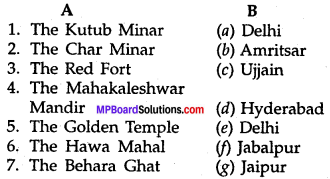
(B) Match the following:
(सही मिलान करिए):
MP Board Class 7th General English Chapter 9 The White Visitor 1
Answers:

  1. → (c)
  2. → (e)
  3. → (g)
  4. → (b)
  5. → (f)
  6. → (d)
  7. → (a)

Grammar in Use:(व्याकरण प्रयोग):

(A) Learn these phrases with their meanings and fill in the blank spaces in the sentences given below using the suitable phrase in its correct form:
(निम्न वाक्यांशों को अर्थ सहित याद कीजिए और दिए गए वाक्यों के खाली स्थानों में वाक्यांश का सही रूप भरो)।
(to visit, dressed in, in a bad state, afraid of, by the light of, in good order, at the end, head to foot.)

  1. All my records are ……………..
  2. His grandmother is very old, she is …………….. of health.
  3. Sohan went …………….. his sister last month.
  4. He is working …………….. the moon.
  5. Suman was …………….. a khadi saree to act as a leader.
  6. The sick child gets cured …………….. of the story.
  7. She was wearing black clothes from ……………..
  8. I am not …………….. ghosts.

Answers:

  1. In good order
  2. in a bad state
  3. to visit
  4. by the light of
  5. dressed in
  6. at the end
  7. head to foot
  8. afraid of.

(B) Rewrite the following sentences in Indirect form of Narration :
(निम्न वाक्यों को अप्रत्यक्ष (indirect) रूप में लिखिए)
Answer:

  1. Geeta said that she was going to her grandmother’s place.
  2. Seema asked her how far her grandmother’s house was.
  3. Geeta told that it was not very far. She would have to take a bus to Sonpur village.
  4. Seema said that Sonpur was a nice village. She had seen it.

(C) Read the following words and write them in the right column.
(निम्नलिखित शब्दों को पढ़िए और उन्हें सही कॉलम में लिखिए)
(Pencil, king, mother, baby, cup, parent, father, tree, girl, boy, uncle, book, aunt, lioness, teacher, queen, cousin, box, ghost.)
Answer:
MP Board Class 7th General English Chapter 9 The White Visitor 2

Let’s Talk (आओ बात करें) :

(A) Work in pairs and answer the questions :
(जोड़ों में काम कीजिए और प्रश्नों के उत्तर दीजिए।)
Answer:

  1. ‘Shanti,Bhawan’ stands in the middle of the town. Its owner is Mrs. Ghosh. Mrs. Ghosh died two years back. She visits her house in the form of ghost.
  2. Dr. Dass did not believe in Mr. Choudhary’s stories.
  3. Dr. Dass plans to find out the truth. He goes to ‘Shanti Bhawan’ to have a sleep at night and find out himself what the reality was.
  4. After midnight, Dr. Dass hears sound just outside the bedroom door. The door opens very slowly and quietly. Something dressed in white from head to foot comes in and stands at the end of the room.
  5. Dr. Dass says to the white visitor that he is busy in reading and wants to finish the book and he is not afraid of him.
  6. Dr. Dass pulls the white cloth off the visitor’s face and finds out the truth.

(B) Match the answers in column ‘B’ with the questions in column ‘A’
(कॉलम ‘B’ में दिए उत्तरों को कॉलम ‘A’ में दिए प्रश्नों से मिलान कीजिए।)
MP Board Class 7th General English Chapter 9 The White Visitor 3
Answers:

  1. → (d)
  2. → (a)
  3. → (c)
  4. → (b)

Let’s Write (आओ लिखें):

(A) Imagine you are Dr. Dass. Write a letter to your sister telling her how you managed to buy the house and what your future plans are about the garden which you intend to have outside to house.
(कल्पना करें कि आप मि. दास हैं। अपनी बहिन को एक पत्र लिखें कि आपने कैसे मकान खरीदा और आपकी इस मकान के बगीचे के बारे में भविष्य में क्या योजना है जिसे आप घर के बाहर लगाना चाहते हैं।)
Answer:
Shyamla Hills,
Kolkata
January 15, 2003
Dear Anju,

Hope you are fine. I have bought a house in Kolkata for 3 lakhs. Its a good house but I had to strive a lot in buying it. Actually, the house agent told me that the place was haunted so I should not dare to buy it. I stayed in the house for one night and found that the white visitor who visited the house at night was not a ghost but the house agent who wanted to buy it himself at more cheap rates.

Well ! now that I have bought it, I have planned to have a beautiful garden outside the house. I’ll plant roses, sunflower and lily in it. I’ll also plant mango and guava trees and some ornamental plants. On one side I’ll plant vegetables like spinach, radish, potato etc. Please visit my home soon.

Yours affectionately
Dr. Dass

Let’s Do It (आओ इसे करें):

Read some stories you like and share them with your classmates. Narrate them in short sentences.
(कुछ कहानियाँ जिन्हें तुम पसन्द करते हो पढ़ो और अपने कक्षा के साथियों से बताओ उन्हें छोटे वाक्यों में बताओ।)
Answer:
Students should search books from the library and read the stories and narrate them briefly in short sentences.

Pronunciation & Translation

Act-I
(अंक-1)

An office in kali Ghat, in Kolkata. On the walls of the office there are several notices about houses and shops for sale. The time is about ten in the morning. Mr. Choudhary is writing at a table. Doctor Dass walks in.
(एन ऑफिस इन काली घाट, इन कोलकाता. ऑन द वाल्स ऑफ दि ऑफिस देअर आर सेवरल नोटिसेस अबाउट हाउसेस एण्ड शॉप्स फॉर सेल. द टाइम इज अबाउट टैन इन द मॉनिंग. श्रीमान् चौधरी इज राइटिंग ऐट अ टेबल. डॉक्टर दास वाक्स इन.)
अनुवाद-कोलकाता के काली घाट में एक दफ्तर दफ्तर की दीवारों पर बिक्री के लिए घरों व दुकानों के बारे में बहुत सी सूचनाएँ लगी थीं। लगभग सुबह के दस बजे का समय है। श्रीमान् चौधरी एक मेज पर कुछ लिख रहे हैं। डॉ. दास अन्दर आते हैं।

Dass : Good morning ! Are you Mr. Chaudhary
(दास : गुड मॉर्निग! आर यू मि. चौधरी?)
Chaudhary : Please, sit down. (they both sit)
(चौधरी : प्लीज, सिट डाउन. (दे बोथ सिट)
अनुवाद-दास : नमस्ते! क्या आप मि. चौधरी?

चौधरी : कृपया, बैठ जाइए। (वे दोनों बैठते हैं)
Dass: I’m Doctor Dass. I have come to live and work in Kali Ghat and I need a house.
(दास : आइ एम डॉक्टर दास. आइ हैव कम टू लिव एण्ड वर्क इन काली घाट एण्ड आइ नीड अ हाउस.)
अनुवाद-मैं डॉक्टर दास हूँ। मैं काली घाट में रहने और काम करने आया हूँ। और मुझे एक मकान की जरूरत है।

Chaudhary : I see, You are ready to buy a house, I suppose.
(चौधरी : आइ सी, यू आर रेडी टू बाय अ हाउस, आइ सपोज़)
चौधरी : मैं समझा, मुझे लगता है आप एक मकान खरीदने के लिए तैयार हैं।
Dass : Yes, if it doen’t cost too much.
(दास : येस, इफ इट डजन्ट कॉस्ट टू मच.)
दास : हाँ, यदि उसकी कीमत बहुत ज्यादा न हो।
Chaudhary : It’s not very easy at present.
(चौधरी : इट्स नॉट वैरी ईजी ऐट प्रेजेन्ट)
Doctor Dass : A lot of people are coming to live here and there aren’t many houses. The prices are going up every week.
(डॉक्टर दास : अ लॉट ऑफ पीपल आर कमिंग टू लिव हिअरएण्ड देअर ऑर नॉट मैनी हाउसेस. द प्राइसेज आर गोइंग अप एवरी वीक.)
अनुवाद-चौधरी : डॉक्टर दास, वर्तमान में यह इतना आसान नहीं है। बहुत से लोग यहाँ रहने आ रहे है और अधिक मकान नहीं हैं। कीमतें प्रत्येक सप्ताह ऊपर जा रही हैं।

Dass : Well, can you give me some idea ?
(दास : वैल, कैन यू गिव मी सम आइडिया?)
अनुवाद-दास : अच्छा, क्या आप मुझे कोई विचार बता सकते हैं?

Chaudhary : There’s a nice house. (He points to the notice on the wall.) The owner wants ten lac.
(चौधरी : देअर इज अ नाइस हाउस. (ही पॉइन्ट्स टू द .नोटिस ऑन द वाल.) दि ओनर वान्ट्स टैन लैक.)
अनुवाद-चौधरी : एक अच्छा घर है। (वह दीवार पर नोटिस की ओर इशारा करता है). मकान मालिक दस लाख चाहता है।

Dass : Oh! That’s too much for me. Isn’t there a house for less than that?
(दास : ओह! दैट्स टू मच फॉर मी. इजन्ट देअर अ हाउस फॉर लैस दैन दैट।)
अनुवाद-दास : अरे! यह तो मेरे लिए बहुत अधिक है। क्या कोई मकान इससे कम का नहीं है?

Chaudhary : How much are you ready to pay ?
(चौधरी : हाउ मच आर यू रेडी टू पे ?)
अनुवाद-चौधरी : आप कितना देने के लिए तैयार हैं?

Dass : Well, I thought about five lacs or a little more.
(दास : वेल, आइ थॉट अबाउट फाइव लैक्स ऑर अ लिटल मोर.)
अनुवाद-दास : ठीक है, मैंने पाँच लाख या कुछ अधिक का सोचा था।

Chaudhary : You won’t find a house at that price here.
(चौधरी : यू वोन्ट फाइन्ड अ हाउस ऐट दैट प्राइस हिअर.)
अनुवाद-चौधरी : तुम्हें यहाँ इस कीमत का कोई मकान नहीं मिलेगा।

Dass : What’s that ? (He points to one of the notices.)
(दास : व्हाट्स दैट? (ही पॉइन्ट्स टू वन ऑफ द नोटिसेस.)
अनुवाद-दास : वह क्या है? (वह नोटिसों में से एक को इंगित करते हैं।)

Chaudhary : That’s Shanti Bhawan, but you don’t want that, of course.
(चौधरी : दैट्स शान्ति भवन, बट यू डोन्ट वान्ट दैट, ऑफ कोर्स.)
अनुवाद-चौधरी : वह शान्ति भवन है, किन्तु आप बेशक उसे लेना नहीं चाहेंगे।

Dass : Why? What’s the matter with it? Where is it?
(दास : व्हाई व्हाट्स द मैटर विद इट? व्हेअर इज इट?)
अनुवाद-दास : क्यों? इसका क्या मामला है? यह कहाँ है?

Chaudhary : In the middle of the town.
(चौधरी : इन द मिडल ऑफ द टाउन।)
अनुवाद-चौधरी : शहर के मध्य में।
Dass : Well, That will suit me very well. How much is it?
(दास: वेल, दैट विल सूट मी वैरी वेल. हाउ मच इज इट?)
अनुवाद-दास : ठीक है, यह मेरे लिए बहुत उपयुक्त रहेगा। यह कितने का है?

Chaudhary : er……..three lac or so.
(चौधरी : एर…….थ्री लैंक ऑर सो.)
अनुवाद-चौधरी : अरे…….तीन लाख या ऐसा ही।

Dass: Is that all ? That’s not much, is it? Why such a low price ?
(दास : इज दैट ऑल? दैट्स नॉट मच, इज इट? व्हाई सच अ लो प्राइस?)
अनुवाद-दास : क्यों ऐसा क्या है? यह अधिक नहीं है, क्या है? इतनी कम कीमत क्यों ?

Chaudhary : It hasn’t always been as low as that.
Mr. Ghosh wanted six lac at first; then the price fell to four lac. Now it’s just three lac. But no one wants that house.
(चौधरी: इट हैजन्ट ऑलवेज बीन ऐज लो ऐज दैट. मि. घोष वान्टेड सिक्स लैक ऐट फर्स्ट; दैन द प्राइस फैल टू फोर लैक. नाउ इट्स जस्ट थ्री लैक. बट नो वन वान्ट्स दैट हाउस.)
अनुवाद-चौधरी : यह हमेशा से इतनी कम नहीं रही है। मि. घोष पहले छः लाख माँगते थे; तब कीमत चार लाख तक गिर गई। अब यह मात्र तीन लाख है। लेकिन कोई इस मकान को नहीं चाहता है।

Dass : Why?
(दास : व्हाइ?)
अनुवाद-दास : क्यों ?

Chaudhary : Well-er-the truth is er…….
(चौधरी : वैल-एर-द ट्रथ इज एर……)
अनुवाद-चौधरी : हाँ……..अरे…….सच्चाई यह है कि.

Dass : Go on, go on. Don’t you want to sell it? Is it in a bad state ?
(दास: गो ऑन, गो ऑन. डोन्ट यू वॉन्ट टू सेल इट? इज इट इन अ बैड स्टेट?)
अनुवाद-दास : बताइये, बताइये। क्या आप इसे बेचना नहीं चाहते हैं? क्या यह खराब स्थिति में है?

Chaudhary : Oh! No, it’s in good order. But there are some strange stories about Shanti Bhawan. The owner was a woman, Mrs. Ghosh. She died in the house two years ago. She wasn’t happy woman but she loved Shanti Bhawan. And people say that she comes back in the night to visit her old house.
(चौधरी : ओह! नो, इट्स इन गड ऑर्डर. बट देअर आर सम स्ट्रेन्ज स्टोरीज अबाउट शान्ति भवन. द ओनर वॉज अ वुमैन, मिसेज घोष. शी डाइड इन द हाउस टू ईअर्स ऐगो. शी वाजन्ट हैप्पी वुमैन बट शी लव्ड शान्ति भवन. एण्ड पीपुल से दैट शी कम्स बैक इन द नाइट टू विजिट हर ओल्ड हाउस.)
अनुवाद-चौधरी : अरे नहीं, यह तो कुछ अच्छी हालत में हैं परन्तु शान्ति भवन के बारे में कुछ विचित्र कहानियाँ हैं। इसकी मालकिन एक महिला, मिसेज घोष थीं। दो वर्ष पहले इसी मकान में उनकी मृत्यु हो गई। वह सुखी महिला नहीं थीं लेकिन वह शान्ति भवन को प्यार करती थी। और लोग कहते हैं कि वह अपने पुराने मकान में रात्रि में घूमने आती है।

Dass : What ? Two years after her death!
Well, I don’t believe that kind of thing. Can you take me to the house now, please ?
(दास : व्हॉट ? टू ईअर्स आफ्टर हर डैथ!)
(वैल, आइ डोन्ट बिलीव दैट काइन्ड ऑफ थिंग कैन यू टेक मी टू द हाउस नाउ, प्लीज?)
अनुवाद-दास : क्या मृत्यु के दो वर्ष बाद! ठीक है, मैं इस तरह की बातों में विश्वास नहीं कर आप कृपया मुझे उस मकान में ले जायेंगे?

Chaudhary : I can do so, if you wish. But you mustn’t buy that house.
(चौधरी : आइ कैन डू सो, इफ यू विश। बट यू मस्टन्ट बाइ दैट हाउस.)
अनुवाद-चौधरी : मैं यदि आप चाहें तो यह कर सकता हूँ। लेकिन आपको उस मकान को नहीं खरीदना चाहिए।

Dass : Please show it to me.
(दास : प्लीज शो इट टू मी.)
अनुवाद-दास : कृपया मुझे यह दिखाइये।

Chaudhary : (sadly) As you wish. (they go out together.)
(चौधरी : (सैडली) ऐज यू विश (दे गो आउट टुगेदर.)
अनुवाद-चौधरी : (दुखी होकर) जैसा आप चाहें। (वे एक साथ बाहर जाते हैं।)

The same office an hour later. Dass and Chaudhary walk in and sit down.
(द सेम ऑफिस ऐन आवर लेटर. दास एण्ड चौधरी वॉक इन एण्ड सिट डाउन.)
अनुवाद-एक घण्टे बाद उसी दफ्तर में। दास और चौधरी अन्दर आते हैं और बैठ जाते हैं।

Dass : I’ll buy Shanti Bhawan. Who’s the owner ?
(दास : आइ ‘इल बाय शान्ति भवन. हू इज द ओनर?)
अनुवाद-दास : मैं शान्ति भवन खरीदूंगा। इसका मालिक कौन

Chaudhary : ‘Mr. Ghosh. He lives in Chennai. He’s the dead woman’s brother. He wants to sell it. But of course no one wants to live there with all these stories about the White Visitor.
(चौधरी : मि. घोष. ही लिव्स इन चेन्नई. हीज द डैड वुमैन्स ब्रदर. ही वान्ट्स टू सेल इट बट ऑफ कोर्स नो वन वान्ट्स टू लिव देअर विद ऑल दीज स्टोरीज अबाउट द व्हाइट विजीटर.)
अनुवाद-चौधरी : श्रीमान् घोष। वह चेन्नई में रहते हैं। वह मृत स्त्री के भाई हैं। वह इसे बेचना चाहते हैं। परन्तु, निसन्देह सफेदपोश आगन्तुक के बारे में इन सब कहानियों के कारण कोई भी वहाँ नहीं रहना चाहता है।

Dass : I don’t believe in such stories.
(दास : आइ डोन्ट बिलीव इन सच स्टोरीज.)
अनुवाद-दास : मैं ऐसी कहानियों में विश्वास नहीं करता हूँ।

Chaudhary : Well, don’t come back to me later and say that I didn’t warn you about these things earlier.
(चौधरी : वैल, डोन्ट कम बैक टू मी लेटर एण्ड से दैट आइ डिडन्ट वार्न यू अबाउट दीज थिंग्स अर्लीयर.)
अनुवाद-चौधरी : ठीक है, बाद में मेरे पास आकर यह न कहिएगा कि मैंने आपको पहले इन चीजों के बारे में सावधान नहीं किया था।

Dass : Will Mr. Ghosh let me sleep in Shanti Bhawan for a night before I buy it?
(दास विल मि. घोष लेट मी स्लीप इन शान्ति भवन फॉर अ नाइट बिफोर आइ बाय इट?)
अनुवाद-दास : क्या मि. घोष इसे खरीदने से पहले शान्ति भवन में मुझे एक रात के लिए सोने देंगे?

Chaudhary : I am not sure. But it’s not the house for you.
(चौधरी : आइ ऐम नॉट श्योर. बट इट्स नॉट द हाउस फॉर यू.)
अनुवाद-चौधरी : मुझे निश्चय नहीं है। लेकिन यह मकान – आपके लिए नहीं है।

Dass: Please write and ask him. If he’s ready to let me do that, I’ll spend the night in the house next Tuesday.
(दास : प्लीज राइट एण्ड आस्क हिम. इफ ही इज रैडी टू लैट मी डू दैट, आइ ‘इल स्पेन्ड द नाइट इन द हाउस नेक्स्ट ट्यूजडे.)
अनुवाद-दास : कृपया उन्हें लिखिए और पूछिए यदि वे ऐसा करने देने के लिए तैयार है तो मैं अगले मंगलवार को मकान में रात व्यतीत करूँगा।

Chaudhary : Where will you sleep ? And what about light ? There isn’t any over there.
(चौधरी : व्हेअर विल यू स्लीप? एण्ड वाट अबाउट लाइट? देअर इजन्ट ऐनी ओवर देअर.)
अनुवाद-चौधरी : आप कहाँ सोयेंगे? और बिजली के बारे में क्या? वहाँ कोई बिजली की व्यवस्था नहीं है।

Dass : Look, I’m an old soldier. I have a small cot and a small lamp too. I’ll take them with me.
(दास : लुक, आइ एम ओल्ड सोल्जर. आई हैव अ स्मॉल कॉट एण्ड ए लैम्प ट्र. आई-इल टेक दैम विद मी.)
अनुवाद-दास : देखो, में एक पुराना सिपाही हूँ। मेरे पास एक छोटी चारपाई और एक छोटा लैम्प भी है। मैं उन्हें अपने साथ ले जाऊँगा।

Chaudhary : As you wish.
(चौधरी : ऐज यू विश.)
अनुवाद-चौधरी : जैसा आप चाहें।

Act-II
(अंक-II)

A bedroom in Shanti Bhawan. Dass is reading in bed by the light of a small lamp. It is one minute to twelve.
(अबैडरूम इन शान्ति भवन. दास इज रीडिंग इन बेड बाइ द लाइट ऑफ अ स्मॉल लैम्प. इट इज वन मिनट टू ट्वेल्व.) अनुवाद-शान्ति भवन का एक सोने का कमरा। दास बिस्तर में एक छोटे से लैम्प की रोशनी में पढ़ रहे हैं। बारह बजने में एक मिनट हैं।
Dass : (Looking at the watch) : Well, it’s almost midnight (the sound of the big clock outside is heard) It is twelve ! Now the visitor from the other world will come, if she ever does!
(दास : (लुकिंग ऐट द वॉच) : वेल. इट्स ऑलमोस्ट मिडनाइट (द साउन्ड ऑफ द बिग क्लॉक आउटसाइट इज हर्ड) इट इज ट्वेल्व ! नाउ द विजिटर फ्रॉम द अदर वर्ल्ड विल कम, इफ शी एवर डज!)
अनुवाद-दास-(घड़ी को देखते हुए): अच्छा, यह बिल्कुल आधी रात का समय है (बाहर लगी बड़ी घड़ी की आवाज सुनाई देती है)। अब बारह बजे हैं। अब वह आगन्तुक दूसरी दुनियाँ से आयेगी, यदि वह ऐसा कभी करती है! .

(He hears a sound just outside the bedroom door). The door opens very slowly and quietly.
(ही हिअर्स अ साउण्ड जस्ट आउटसाइड द बेडरूम डोर). द डोर ओपन्स वैरी स्लोली एण्ड क्वाइटली.)
अनुवाद-वह तभी ठीक सोने के कमरे के दरवाजे के बाहर एक आवाज सुनते हैं। दरवाजा बहुत धीरे-धीरे और शान्तिपूर्वक खुलता है।

Who is there ? (He sits up. Something dressed in white from head to foot comes quietly in and stand at the end of the room.
(हू इज देअर? (ही सिट्स अप. समथिंग ड्रेस्ड इन व्हाइट फ्रॉम हैड टू फुट कम्स क्वाइटली इन एण्ड स्टैण्ड ऐट द एन्ड ऑफ द रूम.)
अनुवाद-वहाँ कौन है? (वह बैठ जाते हैं। कोई सिर से पैर तक सफेद वस्त्रों में शान्ति से अंदर आता है और कमरे के अन्त में खड़ा हो जाता है।

Hey! Who are you? What do you want ? Why don’t you speak ?
(हे! हू आर यू ? वाट डू यू वान्ट ? व्हाइ डोन्ट यू स्पीक?)
अनुवाद-ए! कौन हो तुम? तुम क्या चाहते हो? तुम बोलते क्यों नहीं हो?

Visitor : Go away.
(विजिटर : गो अवे.)
अनुवाद-आगन्तुक चले जाओ।

Dass : No, I won’t, You go away. I’m busy, I’m reading. Can’t you see?
(दास: नो, आइ वोन्ट, यू गो अवे. आइ एम बिजी,आइ एम रीडिंग. कान्ट यू सी?)
अनुवाद-दास : नहीं मैं नहीं जाऊँगा। तुम चले जाओ। मैं व्यस्त हूँ, मैं पढ़ रहा हूँ। क्या तुम्हें दिखाई नहीं देता है?

Visitor : (Slowly, with long pauses between the words) This is my house. You have to leave now.
(विजिटर : (स्लोली, विद लाँग पॉजेज बिटवीन द व) दिस इज माइ हाउस. यू हैव टू लीव नाउ.)
अनुवाद-आगन्तुक (धीरे से, शब्दों के बीच एक लम्बे विराम के साथ) यह मेरा घर है। तुम्हें अब जाना पड़ेगा।

Dass:Go away. I want to finish this book.
(दास : गो अवे. आइ वान्ट ट्र फिनिश दिस बुक.)
अनुवाद-दास-चले जाओ। मैं इस पुस्तक को पूरी करना चाहता हूँ।

I’m not afraid of you. (He throws his book at the Visitor. The Visitor moves its head out of the way) Hal You are not aghost, you’re certainly a human being. (Dass jumps out of bed and pulls the white | cloth off the Visitor’s face) Ha! Mr. Chaudhary, I believe. Good evening. Please sit down. Mr. Chaudhary, I’m very glad to see you. Why have you Come?
(आइ एम नॉट अफेड ऑफ यू. (ही थ्रोज हिज बुक. ऐट द विजिटर. द विजिटर मूव्स इट्स हैड आउट ऑफ द वे) हा ! यू. आर नॉट अ घोस्ट, यू आर सर्टेनली अ ह्यूमन बीइंग. दास जम्प्स आउट ऑफ बेड एण्ड पुल्स द व्हाइट क्लॉथ ऑफ द विजिटर्स फेस) हा! मि. चौधरी, आइ बिलीव. गड ईवनिंग. प्लीज सिट डाउन. मि. चौधरी, आइ एम वैरी ग्लेड टू सी यू. व्हाइ हैव यू कम?)
अनुवाद-मुझे तुमसे डर नहीं है। (वह आगन्तुक पर अपनी किताब फेंकते हैं। आगन्तुक किताब के रास्ते से अपना सिर हटा लेता है। हा! तुम भूत नहीं हो, तुम निश्चय ही मनुष्य हो। (दास बिस्तर से बाहर कूदते हैं और आगन्तुक के चेहरे से सफेद कपड़ा हटा देते हैं) हा! मि. चौधरी, मुझे विश्वास है। नमस्ते। कृपया बैठिए। मि. चौधरी मैं आपको देखकर बहुत प्रसन्न हूँ। आप यहाँ क्यों आये हो?

Chaudhary : I didn’t want you to buy the house.
(चौधरी : आइ डिडन्ट वान्ट यू टू बाय द हाउस.)
अनुवाद-चौधरी : मैं नहीं चाहता हूँ कि आप यह मकान खरीदें।

Dass : No, of course not. The price is only three lac. If I buy a house for five lac, you’ll get more money, won’t you?
(दास : नो, ऑफ कोर्स नॉट. द प्राइस इज ऑनली थ्री लैक. इफ आई बाय अ हाउस फॉर फाइव लैक, यू विल गैट मोर मनी, वोन्ट यू?)
अनुवाद-दास : नहीं, बेशक नहीं! कीमत सिर्फ तीन लाख है। यदि मैं पाँच लाख में मकान खरीदै तो आपको अधिक रुपये मिलेंगे, क्या नहीं मिलेंगे?

Chaudhary : That wasn’t the reason.
(चौधरी : दैट वाजन्ट द रीजन.)
अनुवाद-चौधरी-यह कारण नहीं था।

Dass : Well, what was the reason then ?
(दास: वेल, वाट वाज द रीजन दैन?)
अनुवाद-दास : ठीक है, तब क्या कारण था?

Chaudhary : I wanted to buy this house for myself.
(चौधरी : आइ वान्टेड टू बाय दिस हाउस फॉर माइसेल्फ.)
अनुवाद-चौधरी : मैं स्वयं यह मकान खरीदना चाहता था।

Dass : Well, why didn’t you do it earlier ?
(दास : वेल, व्हाई डिडन्ट यू डू इट अर्लीअर?)
अनुवाद-दास : ठीक है, आपने पहले क्यों नहीं ऐसा किया?

Chaudhary : The price was falling. I have one and a half lac, and the bank was ready to give me a loan of one lac. That comes to two and a half. But the price is three lac. I wanted the price to come down further by another fifty thousand rupees.
(चौधरी द प्राइस वॉज फॉलिंग. आइ हैव वन एण्ड अ हाफ लैक, एण्ड द बैंक वॉज रेडी टू गिव मी अ लोन ऑफ वन लैक. दैट कम्स टू टू एण्ड अ हाफ. बट द प्राइस इज थ्री लैक. आइ वान्टेड द प्राइस टू कम डाउन फर्दर बाइ अनअदर फिफ्टी थाउजेन्ड रूपीज.)
अनुवाद-चौधरी : कीमत गिर रही थी। मेरे पास डेढ़ लाख रुपये थे, और बैंक मुझे एक लाख का ऋण देने को तैयार था। इसे मिलाकर ढाई लाख होते हैं। परन्तु कीमत तीन लाख है। मैं चाहता था कि कीमत और पचास हजार कम हो जाए।

Dass : I see. Those stories came handy,didn’t they? Who started them? Perhaps you did yourself, Mr. Chaudhary. And you wanted me to tell everyone about the White Visitor. The White Visitor is Mr. Chaudhary, isn’t he ?
(दास :: व्हाइ सी. दोज स्टोरीज केम हैण्डी, डिडन्ट दे ? ह. स्टार्टेड दैम ? परहेप्स यू डिड .योरसेल्फ, मि. चौधरी. एण्ड यू वान्टेड मी टू टैल एवरीवन अबाउट द व्हाइट विजिटर. द व्हाइट विजिटर इज मि. चौधरी, इजर ही?)
अनुवाद-दास : मैं समझा ये कहानियाँ क्यों फैली, क्या नहीं? इन्हें किसने शुरू किया? शायद आपने स्वयं किया, मि. चौधरी। और आप चाहते थे कि मैं सफेदपोश आगन्तुक के बारे में सभी को बताऊँ। सफेदपोश आगन्तुक मि. चौधरी हैं, ऐसा नहीं है क्या?

Chaudhary : Please don’t tell anyone, Doctor Dass. I’ll lose my business.
(चौधरी : प्लीज डोन्ट टैल एनीवन, डॉक्टर दास. आइ विल लूज माइ विजनेस.)
अनुवाद-चौधरी : कृपया किसी को न बताएँ, डॉक्टर दास. मेरा व्यापार चौपट हो जाएगा।

Dass : Why didn’t you think of that before? Now goodnight, Mr. White Visitor. I just want to have a good night’s sleep. I’ll come to your office tomorrow at ten and buy the house.
(दास : व्हाइ डिडन्ट यू थिंक ऑफ दैट बिफोर? नाउ, गुडनाइट, मि. व्हाइट विजिटर. आइ जस्ट वान्ट टू हैव अ गुड नाइट्स स्लीप आइ विल कम टू योर ऑफिस टूमोरो ऐट टेन एण्ड बाय द हाउस.)
अनुवाद-दास : आपने यह पहले क्यों नहीं सोचा? अब शुभ रात्रि मि. सफेदपोश आगन्तुक। मैं अब अच्छी नींद सोना चाहता हूँ। मैं कल आपके ऑफिस में 10 बजे आऊँगा और यह मकान खरीदूंगा।

The White Visitor Word Meanings

Cost (कॉस्ट)-कीमत; Going up (गोइंग अप) -बढ़ रही है; Too much (टू मच)-बहुत अधिक; Less than that (लेसदैन दैट)-उससे कम; to pay (टूपे)-अदा करने के लिए; Little more (लिटिल मोर)-थोड़ा अधिक; of course (ऑफ कोर्स)-वास्तव में; In the middle (इन द मिडिल)-बीच में; In a bad state (इन अ बैड स्टेट) -खराब दशा में; In good order (इन गुड ऑर्डर)-ठीक स्थिति में; Strange (स्ट्रेन्ज़)-अनोखी; Believe (बिलीव) -विश्वास करना; To visit (टू विज़िट)-देखने के लिए; With a long pause (विद अ लौंग पौज़) लम्बी रुकावट के साथ; Afraid off (अफ्रेड ऑफ)-भयभीत; Pulls off (पुल्स ऑफ)-खींचकर हटा देता है; Glad (ग्लैड)-प्रसन्न To come down down (टू कम डाउन)-नीचे आ जाना, भाव उतर जाना; Handy (हैण्डी)- आसानी से प्रयोग करने योग्य; Several (सेवरल)-कई; Lose (लूज़)-खो देना; Visitor (विजिटर)-आगन्तुक; Soldier (सोल्जर) -सिपाही; Suppose (सपोज)-मानो; Dressed in white (ड्रेस्ड इन व्हाइट)-सफेद कपड़े पहने हुए।

We believe the information shared regarding MP Board Solutions for Class 7 English Chapter 21 Tansen Questions and Answers as far as our knowledge is concerned is true and reliable. In case of any queries or suggestions do leave us your feedback and our team will guide you at soonest possibility. Bookmark our site to avail latest updates on several state board Solutions at your fingertips.
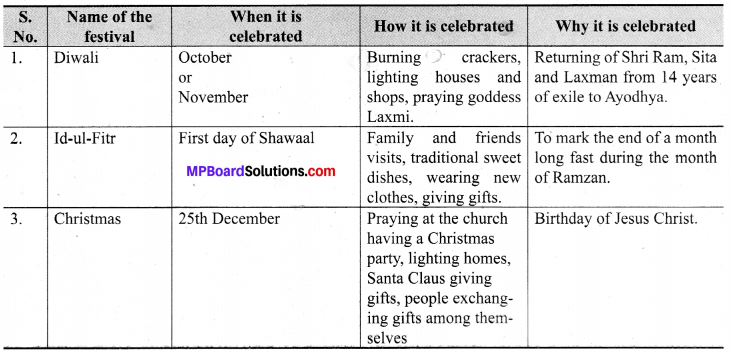
MP Board Class 7th General English Solutions Chapter 8 The Olympic Champion

Get Updated MP Board Solutions for Class 7 General English Chapter 8 The Olympic Champion Questions and Answers in PDF Format and download them free of cost. These are provided as per the latest exam pattern and syllabus. Access the topics of Chapter wise and communication skills, grammer part through the direct links available depending on the need. You can Download MP Board Class 7 English Solutions and can score highest grade in examination. Clear all your queries on the Mp Board Solutions for Class 7 English Chapter 21 Tansen Questions and Answers Subject by using the Madhya Pradesh State Board Solutions for existing.

MP Board Class 7th General English Solutions Chapter 8 The Olympic Champion

The Olympic Champion Textual Exercises

Read and Learn ( पड़ी और याद करौ) :
Students should do themselves.
(छात्र स्वयं करें।)

Comprehension (बोध प्रश्न)

(A) Answer the questions given below :
(निम्नलिखित प्रश्नों के उत्तर दीजिए )

Question 1.
What do we know about the ancient Olympic Games ?
(व्हॉट डू वी नो अबाउट द एन्शीएन्ट ओलम्पिक गेम्स?) प्राचीन ओलम्पिक खेलों के बारे में हम क्या जानते हैं ?
Answer:
We know a few things about the ancient Olympic Games. An Olympic sports festival was held in Greece in 776 B. C. at Olympia. Therefore, this sports-festival was called Olympic Games.
(वी नों ए फ्यू थिंग्स अबाउट द एन्शीएन्ट ओलम्पिक गेम्स। एन ओलम्पिक स्पोर्ट्स फेस्टीवल वॉज़ हेल्ड इन ग्रीस इन 776 B. C. एट ओलम्पिआ, देअरफोर, दिस स्पोर्ट्स फेस्टीवल वॉज़ कॉल्ड ओलम्पिक गेम्स।)
प्राचीन ओलम्पिक खेलों के बारे में हम बहुत ही कम बातें जानते हैं। ओलम्पिक खेलों का उत्सव यूनान में ओलम्पिया नामक स्थान पर मनाया गया। इसलिए यह खेलों का उत्सव ओलम्पिक खेलों के नाम से पुकारा गया।

Question 2.
Where did the Olympic Games get their name from?
(व्हेअर डिड दि ओलम्पिक गेम्स गेट देअर नेम फ्रॉम?)
ओलम्पिक खेलों ने अपना नाम कहाँ से प्राप्त किया?
Answer:
The Olympic Games festival was for the first time held in Greece at Olympia. So this sports festival got its name from the place ‘Olympia’
(द ओलम्पिक गेम्स फेस्टीवल वॉज़ फॉर द फर्स्ट टाइम हैल्ड इन ग्रीस एट ओलम्पिया। सो दिस स्पोर्ट्स फेस्टीवल गॉट इट्स नेम फ्रॉम द प्लेस ओलम्पिआ।)
ओलम्पिक खेलों का उत्सव पहली बार यूनान के ओलम्पिआ नामक स्थान पर हुआ। इसलिए खेलों के इस उत्सव ने ‘ओलम्पिआ’ स्थान से अपना नाम प्राप्त किया।

Question 3.
Who won a gold medal for a rowing race in the Olympic Games of 1928 ?
(हवन अगोल्ड मैडल फॉर अ रोइंग रेस इन द ओलम्पिक गेम्स ऑफ 1928)
सन 1928 ई. के ओलम्पिक खेलों में नौका दौड़ के लिए स्वर्ण पदक किसने जीता?
Answer:
Bobby Pearce won a gold medal for a rowing race in the Olympic Games of 1928.
(बॉबी पियर्स वन ए गोल्ड मैडल फॉर ए रोइंग रेस इन द ओलम्पिक गेम्स ऑफ 19281)
बॉबी पियर्स ने नौका दौड़ के लिए सन् 1928 के ओलम्पिक खेलों में स्वर्ण पदक जीता।

Question 4.
At what age did Bobby win the first race?
(ऐट व्हॉट एज डिड बॉबी विन द फर्स्ट रेस?) बॉबी ने कितने वर्ष की उम्र में पहली दौड़ जीती?
Answer:
Bobby won the first race at the age of six.
(बॉबी वन फर्स्ट रेस ऐट द एज ऑफ सिक्स।)
बॉबी ने छः वर्ष की उम्र में पहली दौड़ जीती।

Question 5.
Who did Bobby compete with in the finals of the Amsterdam Olympics ?
(ह डिड बॉबी कम्पीट विद इन द फाइनल्स ऑफ द एम्स्टरडम ओलम्पिक्स?)
एम्स्टरडम ओलम्पिक्स के फाइनल में बॉबी ने किसके साथ प्रतियोगिता की?
Answer:
He competed with Ken Myers of America in the finals of the Amsterdam Olympics.
(ही कम्पीटेड विद केन मायर्स ऑफ अमेरिका इन द फाइनल्स ऑफ द एम्स्टरडम ओलम्पिक्स।)
उसने अमेरिका के केन मायर्स के साथ एम्स्टरडम ओलम्पिक्स के फाइनल्स (अंतिम प्रतियोगिता) में प्रतियोगिता की थी।

Question 6.
What caused Bobby to slow down in the middle of the race ?
(व्हॉट कॉज़्ड बॉबी टू स्लो डाउन इन द मिडिल ऑफ द रेस?)
दौड़ के बीच में ही बॉबी ने अपनी गति धीमी किसके कारण कर दी?
Answer:
A duck and her ducklings swam across the waterway. It was the path of Bobby’s boat. The boat was going to run into them, therefore Bobby had to slow down in the middle of the race.
(अ डक एण्ड हर डकलिंग्स स्वैम एक्रॉस द वॉटरवे। इट वॉज़ द पाथ ऑफ बॉबीज़ बोट। द बोट वॉज़ गोइंग टू रन इनटू दैम, देअरफोर बॉबी हैड टू स्लो डाउन इन द मिडिल ऑफ द रेस)
एक बतख और उसके बच्चे जलमार्ग के आर-पार तैर रहे थे। यही बॉबी की नाव का मार्ग था। नाव उन्हें रौंदने जा रही थी, इसलिए बॉबी को दौड़ के बीच में ही गति धीमी करनी पड़ी।

Question 7.
What did Bobby do when he saw a duck and her duckling swimming across the waterway?
(व्हॉट डिड बॉबी डू हैन ही सौ अडक एण्ड हर डकलिंग्स स्विमिंग एक्रॉस द वॉटरवे?)
जब बॉबी ने एक बतख और उसके बच्चों को जलमार्ग के आर-पार तैरते हुए देखा तो उसने क्या किया?
Answer:
He slowed down his boat when he saw a duck and her ducklings across the waterway.
(ही स्लोड डाउन हिज़ बोट हैन ही सौ अ डक एण्ड हर डकलिंग्स एक्रॉस द वाटरवे।)
उसने उस समय अपनी नौका की गति धीमी कर ली जब उसने एक बतख और उसके बच्चों को जलमार्ग के आर-पार देखा।

(B) Read the following sentences and tick them as true or false :
(निम्नलिखित वाक्यों को पढ़कर सही व गलत निशान लगाइए)

  1. Athletes come from all countries to take part in the Olympic games.
  2. Bobby Pearce’s father was a great wrestler.
  3. At the age of six, Bobby won the first race.
  4. The people on the bank were silent.
  5. His friends in the Australian Olympic team were not surprised.
  6. In all these years, he lost a few races.

Answers:

  1. T
  2. F
  3. T
  4. F
  5. T
  6. F

Word Power (शब्द समर्थ):

Match these (मिल करे):

  1. Pig – (a) piglet
  2. Owl – (b) cygnet
  3. Swan – (c) owlet
  4. Book – (d) kitchenette
  5. River – (e) booklet
  6. Kitchen – (f) rivulet.

Answer:

  1. → (a)
  2. → (c)
  3. → (b)
  4. → (e)
  5. → (f)
  6. → (d).

Grammar in Use (व्याकरण प्रयोग):

(A) Fill in the blank spaces with the correct form of the verb given below :
(नीचे दिये शब्दों के सही रूप से रिक्त स्थानों को भरिए)
(hear, win, seem, compete, wait)

  1. Our Indian Cricket Team …………… The World Cup in 1983.
  2. There was complete silence outside. Suddenly I …………… a noise.
  3. Milkha Singh was leading in the 100 metre race in the Olympics. It …………… that he would win the race.
  4. We couldn’t play the cricket match because of heavy rain. We …………… until the rain stopped.
  5. Kamal is the 800 metre race champion of our school. So far he has …………… many races and never lost any.

Answer:

  1. won
  2. heard
  3. seemed
  4. waited
  5. competed.

(B) Fill in the blank spaces with appropriate prepositions given ahead :
(नीचे दिए गए उपयुक्त पूर्व सर्ग (Prepositions) के रिक्त स्थान को भरिए):
(with, on, in, into, across, by, to)

  1. We should not write ……….. the walls.
  2. There is plenty of water ……….. the jug.
  3. Children are playing ……….. a football.
  4. Ashu drew a line ……….. the page.
  5. Abu jumped ……….. the river.
  6. We go ……….. school ……….. bus.
  7. Mehak kept the book ……….. her bag.

Answers:

  1. on
  2. in
  3. with
  4. across
  5. into
  6. to, by
  7. in.

Let’s Talk (आओ बात करें):

Talk to your friends in the class. Ask questions to fill up the blank spaces in the table given below.
(कक्षा में अपने मित्रों से बात करो। प्रश्नों को पूछ कर नीचे दी गई तालिका में दिए खाली स्थान भरिए।)
Answer:
Students can talk to their friends in the class and fill up the blank spaces in the given table themselves, as shown in the example, according to the answers given by their friends.

Let’s Write (आओ लिखें):

(A) Write sentences from the above table as in the example.
(उपर्युक्त तालिका से उदाहरण के अनुसार वाक्य बनाएँ।)
Answer:
Students can write the sentences as given in the example themselves according to the answers they have filled in the table.

(B) Write a letter to your friend describing a sports event held in your school.
(अपने मित्र को एक पत्र लिखिए जिसमें आपके विद्यालय में हई खेल स्पर्धा का वर्णन हो।)
Answer:
See letters in the Grammar section.

Let’s Do It (आओ इसे करें):

(A) Match the heading with the news items and write them in the table given at the end.
(शीर्षक का समाचार से मिलान कीजिए और उन्हें अन्त में दी गयी तालिका में लिखिए।)
Answer:
MP Board Class 7th General English Chapter 8 The Olympic Champion

(B) Fruits and Vegetables – Precaution
(फल और सब्जियाँ-सावधानी)

Question 1.
What did Nidhi and her friends ask Dr. Prasad ?
(व्हॉट डिड निधि एण्ड हर फ्रेन्ड्स आस्क डॉ. प्रसाद?) निधि और उसके मित्रों ने डॉ. प्रसाद से क्या पूछा?
Answer:
They ask Dr. Prasad a few questions on using fruits and vegetables sefely.
(दे आस्क डा. प्रसाद अ फ्यू क्विश्चन्स ऑन यूजिंग फ्रूट्स एण्ड वेजीटेबिल्स सेफली।)
उन्होंने डॉ. प्रसाद से फल और सब्जियों के प्रयोग पर कुछ प्रश्न पूछे।

Question 2.
Why should we not keep fruits after cutting them ?
(व्हाई शुड वी नॉट कीप फ्रूट्स आफ्टर कटिंग दैम?) हमें फलों को काटकर क्यों नहीं रखना चाहिए?
Answer:
Because they may get infected. (बिकॉज दे मे गेट इनफेक्टेड।) क्योंकि वे संक्रमित हो सकते हैं।

Question 3.
Why do we wash the fruits before eating ?
(व्हाई डू वी वॉश द फ्रूट्स बिफोर ईटिंग?) हम खाने से पहले फलों को क्यों धोते हैं ?
Answer:
They have eggs and larvae of insects or the pesticides on them.
(दे हेव एग्स एण्ड लार्वी ऑफ इन्सेक्ट्स और द पेस्टीसाइड्स ऑन देम।)
उन पर कीटों के अण्डे और लार्वा होते हैं।

Question 4.
Why should we not peel the fruits?
(व्हाई शुड वी नॉट पील द फ्रूट्स?)
हमें फलों के छिलके क्यों नहीं उतारने चाहिए?
Answer:
Fruits have vitamins in their peel, so we should not peel them.
(फ्रूट्स हेव विटामिन्स इन देअर पील, सो वी शुड नॉट पील दैम।)
फलों के छिलके में विटामिन होते हैं, अतः हमें उनके छिलके नहीं उतारने चाहिए।

Question 5.
How does overcooking harm our food ?
(हाउ डज़ ओवरकुकिंग हार्म आउर फूड?)
हमें अपना भोजन अधिक गर्म करना कैसे हानिकारक होता
Answer:
So, because overcooking spoils vitamins and other nutrients of the food.
(सो, बिकॉज ओवरकुकिंग स्पॉइल्स विटामिन्स एण्ड अदर न्यूट्रीएन्ट्स ऑफ द फूड।)
क्योंकि अधिक गर्म करने से भोजन के विटामिन और दूसरे पोषक तत्व नष्ट हो जाते हैं।

Pronunciation & Translation

The Olympic Games are held once in every four years. Athletes come from all the countries and take part in the games. Many kinds of games, races and other competitions are held in the Olympic Games.
(दि ओलम्पिक गेम्स आर हैल्ड वन्स इन एवरी फोर ईयर्स. ऐथलीट्स कम फ्रॉम ऑल द कन्ट्रीज एण्ड टेक पार्ट इन द गेम्स. मैनी काइन्ड्स ऑफ गेम्स, रेसेस एण्ड अदर कम्पिटीशन आर हैल्ड इन दि ओलम्पिक गेम्स.)
अनुवाद-ओलम्पिक खेल प्रत्येक चार वर्ष में एक बार होते हैं। सभी देशों से खिलाड़ी इन खेलों में भाग लेने आते हैं। कई प्रकार के खेल, दौड़ और दूसरी स्पर्धाएँ ओलम्पिक खेलों में होती हैं।

We know only a few things about the ancient Olympic Games. An Olympic sports festival was held in Greece in 776 B.C. at Olympia. So it was called the Olympic Games.
(वी नो ऑनली अ फ्यू थिंग्स अबाउट दि एन्शियेन्ट ओलम्पिक गेम्स. एन ओलम्पिक स्पोर्ट्स फेस्टीवल वॉज हैल्ड इन ग्रीस इन 776 बी.सी. ऐट ओलम्पिया. सो इट वॉज कॉल्ड दि ओलम्पिक गेम्स.)
अनुवाद-हम प्राचीन ओलम्पिक खेलों के बारे में कुछ ही बातें जानते है। एक ओलम्पिक खेल महोत्सव ग्रीस में 776 ई.पू. में ओलम्पिया में हुआ था। इसलिए यह ओलम्पिक खेल के नाम से जाना गया।

There are many interesting events associated with the Olympic Games. Let’s share one of those events. It tells us about a person who not only won a gold medal for rowing in the Olympic Games of 1928 but also won the hearts of all who saw him win.
(देयर आर मैनी इन्टरेस्टिंग इवेन्ट्स एसोशिएटेड विद दि ओलम्पिक गेम्स. लेट्स शेअर वन ऑफ दोज इवेन्ट्स. इट टैल्स अस अबाउट अ पर्सन हू नॉट ऑनली वन अ गोल्ड मेडल फॉर रोइंग इन दि ओलम्पिक गेम्स ऑफ 1928 बट ऑल्सो वन द हर्ट्स ऑफ आल हू सॉ हिम विन.)
अनुवाद-ओलम्पिक खेलों से कई मनोरंजक घटनाएँ जुड़ी हुई हैं। आओ, उन घटनाओं में से एक के बारे में बात करें। यह हमें एक ऐसे व्यक्ति के बारे में बताती है जिसने 1928 के ओलम्पिक खेलों में नावों की दौड़ में न केवल स्वर्ण पदक जीता बल्कि उन सभी लोगों का दिल भी जीत लिया जिन्होंने उसे जीतते हुए देखा।

Bobby Pearce was born in Sydney in Australia. His father was a great sculling champion. When Bobby was five, he was rowing around Sydeny Harbour in a small boat. At the age of six he won the first race competing against fourteen year olds.
(बॉबी पीयर्स वॉज बोर्न इन सिडनी इन आस्ट्रेलिया, हिज फादर वॉज अ ग्रेट स्कलिंग चैम्पियन. व्हेन बॉबी वॉज फाइव, ही वॉज रोइंग अराउण्ड सिडनी हार्बर इन अ स्मॉल बोट. ऐट दि .. एज ऑफ सिक्स ही वन द फर्स्ट रेस कम्पिटिंग अगेन्स्ट फोर्टीन ईअर्स ओल्ड्स)
अनुवाद-बॉबी पीयर्स आस्ट्रेलिया में सिडनी में पैदा हुआ था। उसके पिता एक महान नौका दौड़ विजेता थे। जैब बॉबी पाँच साल का था तभी वह सिडनी के बन्दरगाह के चारों ओर एक छोटी नाव में चप्पू चलाया करता था। छह वर्ष की आयु में उसने पहली दौड़ चौदह वर्ष के प्रतिद्वन्द्वी से जीती।

By the time he was twenty, Bobby was the sculling champion of Australia. The following year he went to Amsterdam to compete in the Olympic Games.
(बाइ द टाइम ही वॉज ट्वन्टी, बॉबी वॉज द स्कलिंग चैम्पियन ऑफ आस्ट्रेलिया, द फॉलोइंग ईयर ही वैन्ट टू एम्सटर्डम टू कम्पीट इन दि ओलम्पिक गेम्स.)
अनुवाद-बीस वर्ष की आयु में बॉबी आस्ट्रेलिया का नौका दौड़ विजेता बन गया था। अगले वर्ष वह ओलम्पिक खेलों में मुकाबला करने एम्सटर्डम गया।

In the finals, he competed against Ken Myers of America. From the start of the race, Bobby was in the lead. He was very much ahead of Myers. After half the race was over, he was still leading. It seemed that Bobby would easily win the race. Then suddenly something happend.
(इन द फाइनल्स, ही कम्पीटेड अगेन्स्ट केन मायर्स ऑफ अमेरिका. फ्रॉम द स्टार्ट ऑफ द रेस, बॉबी वॉज इन द लीड. ही वॉज वैरी मच अहेड ऑफ मायर्स. आफ्टर हॉफ द रेस वॉज ओवर, ही वाज स्टिल लीडिंग. इट सीम्ड दैट बॉबी वुड ईजिली विन द रेस. दैन सडनली समथिंग हेप्पन्ड.)
अनुवाद-फाइनल में उसका मुकाबला अमेरिका के केन मायर्स से था। दौड़ के आरम्भ से ही बॉबी आगे था। वह मायर्स से बहुत अधिक आगे था। आधी दौड़ के बाद भी वह आगे चल रहा था। ऐसा लगता था कि बॉबी आसानी से दौड़ जीत जायेगा। तभी अचानक कुछ घटना घटी।

He saw a duck and her ducklings swimming across the waterway. They were swimming into the path of his boat and the boat was going to run into them. The poor birds had no idea that they were in the middle of an Olympic race.
(ही सॉ अ डक एंड हर डकलिंग्स स्विमिंग अक्रॉस द वाटरवे. दे वर स्विमिंग इनटू द पाथ ऑफ हिज बोट एण्ड द बोट वॉज गोइंग टू रन इनटू दैम. द पूअर बर्ड्स हैड नो आइडिया दैट दे वर इन द मिडल ऑफ एन ओलम्पिक रेस.)
अनुवाद-उसने एक बतख और उसके बच्चों को पानी में से तैरकर गुजरते देखा। वे उसकी नाव की तरफ आ रहे थे और नौका उनकी तरफ दौड़ रही थी। बेचारे पक्षियों को मालूम नहीं था कि वे एक ओलम्पिक दौड़ के मध्य में थे।

Immediately Bobby slowed down his boat. Myers was catching up very quickly. The people on the bank were cheering and shouting as if they were mad. But Bobby waited until all the ducklings were out of danger. Then he picked up speed again and went on to win the race easily.
(इमीडियेटली बॉबी स्लोड डाउन हिज बोट. मायर्स वॉज कैचिंग अप वैरी क्विकली. द पीपल ऑन द बैंक वर चीअरिंग एण्ड शाउटिंग एज इफ दे वर मैड. बट बॉबी वेटेड अन्टिल ऑल द डकलिंग्स वर आउट ऑफ डेन्जर. दैन ही पिक्ड अप स्पीड अगेन एण्ड वेन्ट ऑन टू विन द रेस ईजिली.)
अनुवाद-तुरन्त ही बॉबी ने अपनी नाव की गति को धीमा किया। मायर्स बहत तेजी से पीछा कर रहा था। किनारे पर लोग खुशी से ऐसे चिल्ला रहे थे जैसे कि वे पागल हों। लेकिन बॉबी ने तब तक इन्तजार किया जब तक सभी बतख के बच्चे खतरे से बाहर नहीं हो गये। तब उसने दुबारा गति पकड़ी और आसानी से दौड़ जीत ली।

Of all the Olympic champions, it was he who won everybody’s heart. A Dutch newspaper wrote, “He won the goodwill of the children of Amsterdam”.
(ऑफ ऑल दि ओलम्पिक चैम्पियन्स, इट वॉज ही हू वन एवरीबडीज हर्ट. अ डच न्यूजपेपर रोट, “ही वन द गुडविल ऑफ द चिल्ड्रन ऑफ एम्सटर्डम.”)
अनुवाद-सारे ओलम्पिक विजेताओं में से केवल वही एक था जिसने सभी का दिल जीत लिया। एक डच अखबार ने लिखा, “उसने एम्सटर्डम के बच्चों की ख्याति जीत ली।”

His friends in the Australia Olympic team were not surprised by the story of the ducks. “Bobby is that kind of a man,” they said.
(हिज फ्रेन्ड्स इन द आस्ट्रेलिया ओलम्पिक टीम वर नॉट सरप्राइज्ड बाइ द स्टोरी ऑफ द डक्स. “बॉबी इज दैट काइण्ड ऑफ अ मैन,” दे सैड.)
अनुवाद-आस्ट्रेलिया की ओलम्पिक टीम में उसके मित्र बतख की कहानी पर आश्चर्यचकित नहीं हुए। “बॉबी उस प्रकार का ही व्यक्ति है,” उन्होंने कहा।

From the age of six, Bobby Pearce competed in races for thirty three years.He stopped taking part in sports in 1945. In all these years he never lost a single race.
(फ्रॉम द एज ऑफ सिक्स, बॉबी पीयर्स कम्पीटेड इन रेसेस फॉर थर्टी थ्री ईयर्स. ही स्टॉप्ड टेकिंग पार्ट इन स्पोर्ट्स इन 1945. इन ऑल दीज ईयर्स ही नैवर लॉस्ट अ सिंगल रेस.)
अनुवाद-छह वर्ष की उम्र से, बॉबी पीयर्स ने 33 वर्ष तक दौड़ प्रतियोगिता में भाग लिया। 1945 से उसने खेलों में भाग लेना बन्द कर दिया। इन सभी वर्षों में उसने एक भी दौड़ मुकाबला नहीं हारा।

The Olympic Champion Word Meanings

Athlete (एथलीट)-खिलाड़ी; ‘Events : (ईवेन्ट्स) – घटनाएँ; Ancient ( एन्शीएन्ट)-प्राचीन; Rowing (रोइंग) — नाव का खेना; In the middle of (इन द मिडिल ऑफ)-मध्य में; Against (अगेंस्ट)-विरुद्ध; Harbour (हार्बर) -बन्दरगाह; Sports-festival (स्पोर्ट्स फेस्टीवल)-खेल मेला; Lead (लीड)-आगे चलना; Interesting (इन्टरेस्टिंग) –रुचिपूर्णIn the lead (इन द लीड)-आगे; Associated (एसोसिएटिड)-जुड़े हुए; Picked up (पिक्ड् अप)उठाया; Share a gold medal (शेयर ए गोल्ड मैडल)-स्वर्ण पदक प्राप्त किया; Sculling (स्कलिंग)-नौका दौड़ जिसमें खिलाड़ी दो झपकों का प्रयोग करता है; Path (पाथ)-रास्ता; Row (रो)-नाव खेना;Out of danger (आउट ऑफ डेन्जर) -खतरे से बाहर; In the finals (इन द फाइनल्स)-अंतिम प्रतियोगिता में; Shout (शाउट)-चिल्लाना; Surprise (सरप्राइज)-आश्चर्य करना; Competition (कम्प्टीशन) -प्रतियोगिता; Catching up (कैचिंग अप) पकड़े हुए था; Suddenly (सडनली)-अचानक;Win someone’s heart (विन समवन्स हार्ट)-किसी के दिल को जीत लेना।

If you are eager to know about the Madhya Pradesh State Board Solutions for Class 7 English you will find all of them here. You can identify the knowledge gap using these MP Board Solutions for English PDF and plan accordingly. Don’t worry about the accuracy as they are given after extensive research by people having subject knowledge along side from the latest English Syllabus.

MP Board Class 7th Special English Revision Exercises 3

Get Updated MP Board Solutions for Class 7 Special English Revision Exercises 3 Questions and Answers in PDF Format and download them free of cost. These are provided as per the latest exam pattern and syllabus. Access the topics of Chapter wise and communication skills, grammer part through the direct links available depending on the need. You can Download MP Board Class 7 English Solutions and can score highest grade in examination. Clear all your queries on the Mp Board Solutions for Class 7 English Chapter 21 Tansen Questions and Answers Subject by using the Madhya Pradesh State Board Solutions for existing.

MP Board Class 7th Special English Solutions Revision Exercises 3

If you are eager to know about the Madhya Pradesh State Board Solutions for Class 7 English you will find all of them here. You can identify the knowledge gap using these MP Board Solutions for English PDF and plan accordingly. Don’t worry about the accuracy as they are given after extensive research by people having subject knowledge along side from the latest English Syllabus.

Comprehension

Question 1.
How did the rats make the people uncomfortable?
Answer:
The rats ate all grains, flour, bread and cheese. They got into their shoes, hats and pockets. They lay in beds and cradles of children and bit the babies. They attacked and killed kittens and puppies. They confronted dogs and cats. In this way, the rats made the people uncomfortable.

Question 2.
How did the Pied Piper punish the people of Hamelin?
Answer:
The Piper played a different tune. All the children were drawn to the charming tune. They followed the Piper merrily. In this way, the Piper punished the people of Hamelin very severely. He led their children to some unknown place in the side of mountain near the town.

Question 3.
How many slaves were employed in building the great Pyramid?
Answer:
A hundred thousand (one lakh) slaves were employed in building the Great Pyramid.

Question 4.
What was ancient Egypt famous for? What was its greatest glory?
Answer:
Ancient Egypt was famous for its art and civilization. Its greatest glory was its pyramids.

Question 5.
What does hieroglyphics mean?
Answer:
Hieroglyphics means ‘sacred writing.’ It is a kind of picture writing.

Question 6.
Where did Radha carry her curds to?
Answer:
Radha carried her curds to the Mathura fair.

Question 7.
Why did Akbar punish Tansen’s enemies?
Answer:
Tansen’s enemies wanted to ruin him. Akbar came to know about their conspiracy. Therefore, he punished Tansen’s enemies.

Question 8.
How did Tansen come into contact with Swami Haridas?
Answer:
Tansen used to go to dense forests to enjoy the beauty of nature. He learnt how to imitate the calls of different birds and animals, One day, swami Haridas and his disciples were crossing the forest. Tansen roared like a lion. It frightened Swami Haridas and his disiciples. One of the disciples found Tansen and presented him before Swamiji. Thus Tansen came into contact with Swami Haridas.

Question 9.
What is an alphabet? How is it better system than picture writing?
Answer:
An alphabet is a collection of letters. Each letter stands for a sound of the language. The letters are learnt in a fixed order. Instead of drawing pictures of objects we talk about, this system of writing represents the sounds we use in our speech. As the sounds of any one language are not many, we need not have a large number of symbols. In most languages the letters of the alphabet are never more than fifty. But we can form several hundreds or thousands of words by combining letters. The alphabetic system of writing is therefore far better than picture writing.

Question 10.
Why did the pied Piper look very strange?
Answer:
The Piper looked very strange on account of his red and yellow dress and odd appearance. He was dressed in red and yellow. He was as thin as a starved rat. He had a crooked nose and bright, blue eyes. He had no beard and a smile played on his lips.

Word Power

A. Encircle the odd one:

  1. Diwali, Id, Monday, Holi.
  2. flours, wheat, bread, vegetable.
  3. dollar, pound, rupee, cheque.
  4. girl, lady, man, woman.
  5. lecturer, professor, teacher, postman.

Answer:

  1. Monday
  2. Vegetable
  3. Cheque
  4. Man
  5. Postman.

B. Find the opposites of the words listed below from the words given in the box and write them

(possible, life, ancient, wise, difficult)

  1. Modern …………
  2. easy ………..
  3. impossible ………..
  4. fool …………
  5. death ………..

Answer:

  1. ancient
  2. difficult
  3. possible
  4. wise
  5. life

Grammar in use

A. Punctuate the following lines using ., ,, ‘, ? and capital letters.

does the road uphill go all the way yes to the very end.
will the days journey take the whole long day
from morn to night my friend.
Answer:
Does the road uphill go all the way? Yes, to the very end.
Will the day’s journey take the whole long day
From morn to night, my friend.

B. Fill in the blank spaces with suitable adverb given below:
(logically, very, clearly, highly, easily)
Answer:
Our new English teacher is very sincere. She is highly qualified and explains every thing clearly and logically. All the students understand easily whatever she explains.

Let’s Write

Question 1.
Write a note on the topic : How rats trouble you in the house. Use the following clues:
(nibble, food, wheat, clothes, toys, cats, chasing, them.)
Answer:
How Rates Trouble you in the House:
The rats eat up cooked food and grain like wheat, barley, gram, millet and maize. They nibble our clothes and tear holes in them. They nibble the toys and bite babies, kittens and puppies. They chase cats and dogs.

Question 2.
Describe in your own words the look and the dress of the Pied Piper.
Answer:
The Pied Piper was dressed in red and yellow. He had a pipe in his hand. He was very thin. His nose was crooked. His eyes were sharp and blue. He had no beard. He had smiling lips. He looked very strange.

Question 3.
Write a short account of the great Pyramid
Hints:
who built it and why? time taken to build it. number of slaves employed Its base, height and its faces A wonder of the world
Answer:
The great Pyramid was built by Cheops, the most famous King of Egypt about four thousand years ago. It took twenty years to build this Great Pyramid. One hundred thousand slaves were engaged to build it. It stands on a base of more than twelve acres of land. Its height is 500 feet. Its faces are very smooth. About two and a half million blocks of stone were used for it. Each block weighed about two and a half tons. It is very solidly built. There is no room even for a single hair to be slipped in between any two blocks of stones. This everlasting pyramid is the glory of Egypt and remains a wonder of the world to this day.

Question 4.
Write Tansen’s biography in about ten sentences using information from the lesson.

  1. Birth
  2. Childhood
  3. Father
  4. Guru
  5. Marriage
  6. Navrattan
  7. conspiracy
  8. deepak Raga
  9. death
  10. pilgrimage

Answer:
Tansen’s Biography, Tansen was born at Behat, a small village near Gwalior. He was the only child of his parents. He was a naughty but a talented and adventurous child. Sri Mukandan Misra was his father. Swami Haridas was his guru. Tansen was married to hussaini. Tansen joined Akbar’s courts as one of his ‘Navartnas’ He sang the Raga. Deepak properly and successfully. His daughter and her friend saved his life by singing Raga Mesh. However, he fell seriously ill and died in 1585 His tomb at Gwalior is a place of pilgrimage for music lovers.

Question 5.
Write a paragraph on each stanza of the poem:
“Song of Radha” the milk maid explaining what the poetess Sarojini Naidu is trying to say in the poem.
Answer:
Do Yourself.

We believe the information shared regarding MP Board Solutions for Class 7 English Chapter 21 Tansen Questions and Answers as far as our knowledge is concerned is true and reliable. In case of any queries or suggestions do leave us your feedback and our team will guide you at soonest possibility. Bookmark our site to avail latest updates on several state board Solutions at your fingertips.
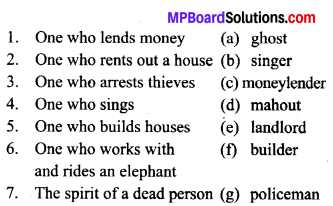
MP Board Class 7th Special English Revision Exercises 2

Get Updated MP Board Solutions for Class 7 Special English Revision Exercises 2 Questions and Answers in PDF Format and download them free of cost. These are provided as per the latest exam pattern and syllabus. Access the topics of Chapter wise and communication skills, grammer part through the direct links available depending on the need. You can Download MP Board Class 7 English Solutions and can score highest grade in examination. Clear all your queries on the Mp Board Solutions for Class 7 English Chapter 21 Tansen Questions and Answers Subject by using the Madhya Pradesh State Board Solutions for existing.

MP Board Class 7th Special English Solutions Revision Exercises 2

If you are eager to know about the Madhya Pradesh State Board Solutions for Class 7 English you will find all of them here. You can identify the knowledge gap using these MP Board Solutions for English PDF and plan accordingly. Don’t worry about the accuracy as they are given after extensive research by people having subject knowledge along side from the latest English Syllabus.

Comprehension

Question 1.
Where does the poet breathe a song?
Answer:
The poet breathe’s a song into the air.

Question 2.
Why is Shravan Kumar famous?
Answer:
Shravan kumar is famous for his devotion and obedience to his blind parents.

Question 3.
What is a talking machine? What is a ‘talkie’?
Answer:
A talking machine is one that can talk. The modem gramophone is simply an improvement on this talking machine. A ‘talkie’ is a talking picture. This is the modern cinema.

Question 4.
Why did the Americans turn off their electric lights for a while when Edison died?
Answer:
Edison had invented the electric light. Therefore, when Edison died, the Americans turned off their electric lights for a while as a mark of respect to the wonderful inventor.

Question 5.
What kind of life did Sri Ramakrishna live as a temple priest?
Answer:
As a temple priest Sri Ramakrishna spent all his time in the service of ‘Kali’ the Divine Mother whom he worshipped out of religious duty. He lived a happy and a deeply religious life. He spent days and nights in prayer. He led a very hard life. He often went without food and water and ruined his health.

Question 6.
Why is quarrelling in the name of religion foolish?
Answer:
All the religions lead to the same goal. They also teach the same truth. In fact, people worship the same God under different names. Therefore, quarrelling in the name of religion is foolish.

Question 7.
What do you understand by the lines “till …….began No, time to wait?
Answer:
The smile appears in the eyes before it reaches the mouth. It takes a few moments. But the poet has no time even to view that smile.

Question 8.
What words and phrases did Anand fail to understand?
Answer:
The words and phrases which Anand failed to understand are = Cross, boiling of blood, get, novel.

Question 9.
Whom do the villagers give credit for their prosperity?
Answer:
The villagers give credit to God (who sends rain)

Question 10.
What is the best of all for the country people?
Answer:
The country faith is the best of all for the country-people.

Word Power

A. Choose the correct words to complete the sentences.

  1. She is very ………. to me. (deer/dear)
  2. He has a very bad eye ………… (sight/site)
  3. The ………… was bright that day. (Son/sun)
  4. He went inside the temple to ………… to god. (prey/pray)
  5. He saved the ………. from the hunter. (dear/deer).

Answer:

  1. dear
  2. sight
  3. sun
  4. pray
  5. deer.

B. Match the words in column (A) with the meaning given in column (B)
MP Board Class 7th Special English Revision Exercises 2 1
Answer:
1. → (b)
2. → (d)
3. → (a)
4. → (e)
5. → (c)

Grammar in Use

A. Rearrange the words in the following sentences and rewrite them to make meaningful sentences:

  1. the/bet/is/What/?/
  2. surprised/very/am/I/./
  3. committed/a/blunder/he/./
  4. archer/great/a/was/Dashrath/./
  5. jobs/lost/Edison/many/./

Answer:

  1. What is the bet?
  2. I am very surprised.
  3. He committed a blunder.
  4. Dashrath was a great archer.
  5. Edison lost many jobs.

B. Use the prefix ‘dis’ in the words given below and fill in the blank space, trust obey honest similar like

  1. We should never ………. our elders.
  2. People of ……….. nature never come together.
  3. I ………. eating kachori.
  4. Mr. Natawarlal is a ………… man.
  5. Don’t ………… a priest.

Answer:

  1. disobey
  2. dissimilar
  3. dislike
  4. dishonest
  5. distrust

Let’s Write

1. Write five sentences about the wood.
2. Write ten sentences on Shravan Kumar. Take the help of the clues, obedient, devoted, dutiful, pilgrimage, forest, put aside, thirsty, old and blind, river.
3. Write a paragraph on gramophone.
4. You are a cricket player of your school team. Give a set of three or four rules of the game using ought to and ought not to.
5. Write a message to your friend stating that as you didn’t attend the school that day and you want him to send the homework for English given by the teacher.
Answer:
1. The wood :
The wood is a place of beasts. We find many trees in the wood. The trees provide us fuel, food and fruit. Rishis live in the wood. They practise penance there.

2. Shravan Kumar was a devoted and obedient son. He used to carry his old and blind parents for pilgrimage. One day he was passing through the forest around Ayodhya. His parents asked him to bring water. Shravan took a pot. He went to Saryu river to bring water. His pot produced a gurgling sound. King Dashrath drought him to be a big animal. He shot an arrow. It pierced shravan’s chest. Shravan asked Dashrath to give water to his parents just then he died.

3. Edison invented the first talking machine. It looked very funny. However, it could talk. It was a new machine. The modern gramophone or record player is an improvement on the talking machine. The present day telephones and wireless sets are also talking machines. We can play the records on the gramophone of our choice and hear songs. The modem cinema is called a talkie due to the same.

4.Three or four rules of the game-

  1. The bowler ought not to cross the crease- line while bowling.
  2. The bowler ought not to throw the ball above chest height of the batsman.
  3. We ought to obey the orders of the umpire.
  4. We ought to play a fair game.

5. Class Room Activity in School

We believe the information shared regarding MP Board Solutions for Class 7 English Chapter 21 Tansen Questions and Answers as far as our knowledge is concerned is true and reliable. In case of any queries or suggestions do leave us your feedback and our team will guide you at soonest possibility. Bookmark our site to avail latest updates on several state board Solutions at your fingertips.
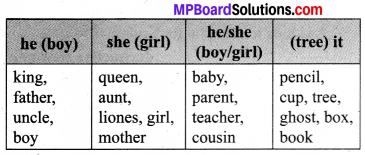
MP Board Class 7th Special English Revision Exercises 1

Get Updated MP Board Solutions for Class 7 Special English Revision Exercises 1 Questions and Answers in PDF Format and download them free of cost. These are provided as per the latest exam pattern and syllabus. Access the topics of Chapter wise and communication skills, grammer part through the direct links available depending on the need. You can Download MP Board Class 7 English Solutions and can score highest grade in examination. Clear all your queries on the Mp Board Solutions for Class 7 English Chapter 21 Tansen Questions and Answers Subject by using the Madhya Pradesh State Board Solutions for existing.

MP Board Class 7th Special English Solutions Revision Exercises 1

If you are eager to know about the Madhya Pradesh State Board Solutions for Class 7 English you will find all of them here. You can identify the knowledge gap using these MP Board Solutions for English PDF and plan accordingly. Don’t worry about the accuracy as they are given after extensive research by people having subject knowledge along side from the latest English Syllabus.

Comprehension

Question 1.
Write the central idea of the poem ’My Land’.
Answer:
The poet is all praise for his motherland. He would feel pride in serving and defending her.

Question 2.
How does a dictionary help us?
Answer:
A dictionary helps us in looking up the correct spellings of the words.

Question 3.
Where was the merchant going one day?
Answer:
He (the merchant) was going to a town one day.

Question 4.
What fell into the princess’ eye?
Answer:
The train of camels fell (right) into the princess’s eye.

Question 5.
How did the farmer make the\merchant pay him up?
A As.
Farmer framed the story cleverly to make the merchant pay him.

Question 6.
Whom did the lion appoint as his Courtiers and why?
Answer:
The lion appointed the crow, the fox and the leopard as his courtiers. He did so for the following reasons. The fox was wise and clever. The leopard was alert and swift-footed. The crow could fly high.

Question 7.
Why did the three advisers smile mysteriously?
Answer:
The lion and the three advisers were tired and hungry. They looked at the camel intently. Then they looked at each other. With their looks they planned to entrap the camel. Therefore, they smiled mysteriously.

Question 8.
What was the problem that the great emperor Akbar was not able to solve?
Answer:
Akbar drew a line on a piece of paper. The problem that the great emperor Akbar was not able to solve was how to make the line short.

Question 9.
What was the day fixed to fetch the horse?
Answer:
Any other day than the week days was fixed to fetch the horse.

Question 10.
What does the wasp ask the bee?
Answer:
The wasp asks the bee why the people love her better than him.

Word Power

A. Write the meaning and make sentences of the words given below:
MP Board Class 7th Special English Chapter Revision Exercises 1 1
Answer:
MP Board Class 7th Special English Chapter Revision Exercises 1 2

B. Give one word for the following:

  1. A person who is kept in a prison…….
  2. A person who advises………..
  3. A person who buys and sells goods in large quantities……….
  4. One who remains faithful …………
  5. An area full of sand …………..

Answer:

  1. Prisoner
  2. Adviser
  3. Whole seller
  4. Loyal
  5. Desert

Grammar in use

A. Fill in the blanks with suitable prepositions:

  1. The members …………this family are.
  2. Very fond ………… watching.
  3. TV ………… night.
  4. They love ………… watch all the serials.
  5. Which are telecast ……….. various channels.

Answer:

  1. of
  2. of
  3. at
  4. to
  5. on

B. Fill in the following blank spaces a, an, the as required:

  1. English is not ………… easy language.
  2. He is ………. cleverest boy in ………… class.
  3. She is ……….. old woman of ninety.
  4. The train was ………… hour late.
  5. I saw ……………. cat, ……….. cow and ………… horse.

Answer:

  1. an
  2. the, the
  3. an
  4. an
  5. a, a, a

Let’s Write

1. You are Reena Mishra. Your sister is getting married next month. Write an invitation to your friend asking her to come at least for a week before so that she can enjoy all the programmes of marriage.
2. Write one funny incident of your life.
3. Write a paragraph on My Mother Land.
4. Write a letter to your friend describing your visit to a hill station.
5. Write a paragraph on good manners.
Answer:
1. Invitation of friend on sister’s marriage.

F-4, Dr. R.P. Colony,
Gwalior.
Dated 8th June, 2006

My Dear Ram Lai,
You will be glad to know that my sister’s marriage ceremony comes off next month. The marriage party will come from Delhi. I am inviting you to my sister’s marriage. You must come at least a week before it. I have invited some other friends also. But I need you most, because of your experience. You can also enjoy all the programmes of marriage. All the things will be bought in your presence. Please do come. More when we meet.

Yours ever,
Reena Mishra

2. A Funny Incident of My Life :

Life is full of incidents. Some incidents are happy. Others are sad or even funny. One day I received a telegram. Its message was ‘your dear friend Hari has met with a serious accident’. Come soon to Dayal Nursing Home where he is breathing his last. I hired a three wheeler and started for Najafgarh. I was about to enter the Nursing Home when my friend called me. He asked me in which ward my father was admitted. I could understand nothing. He showed me a telegram. The message of his telegram was-your friend will come to visit his father in Nursing Home at 4 p.m. today, please reach there and meet him. Later, we realised that it was the 1st April day.

3. My Mother Land

Read the Summary of the poem ‘My Land’.

4. Letter to friend describing your visit to a hill station.

476-L Model Town,
Ludhiana.
17th July, 2006

Dear Madhuri
I have returned from Simla. Being sick of the heat of Delhi, I had gone to Simla in the first week of June. It is, you know the best hill-station. It has various picnic spots such as Jakhu, Prospects Hill, Glenn, Chedwich Falls etc.
We used to go to the Mall every night and enjoyed the scenic beauty of hills. Warm clothes and umbrellas were used every day there was greenery all around. It was very pleasant to be in bed with blankets in June. The Mall and the Ridge gave the impression of fashion parade. We visited the Hanuman Mandir on every Tuesday.
Rest when we meet with love.

Yours sincerely,
Manoj Kaushik

5. Good Manners :

Good manners are taught to us by our parents, teachers and elders. We show good manners by what we say and the way we say it. Good manners are also expressed by the way we behave and conduct ourselves. Being polite and considerate is good manners. Being rude and arrogant in our words and deeds shows bad manners. Similarly, being quarrelsome and argumentative is bad manners.

Speaking softly and gently is good manners. If a person shouts it is bad manners. Using abusive and offensive language is also bad manners. It is good manners to use appropriate language at all times. One who uses words like thank you, sorry, pardon and welcome in an appropriate way shows good manners.

People around us are friendly with us and appreciate us if we are good mannered. If we are good mannered we can live a life of peace, harmony and good cheer.

We believe the information shared regarding MP Board Solutions for Class 7 English Chapter 21 Tansen Questions and Answers as far as our knowledge is concerned is true and reliable. In case of any queries or suggestions do leave us your feedback and our team will guide you at soonest possibility. Bookmark our site to avail latest updates on several state board Solutions at your fingertips.
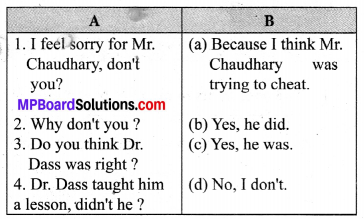
MP Board Class 7th Special English Solutions Chapter 18 The Great Pyramid

Get Updated MP Board Solutions for Class 7 Special English Solutions Chapter 18 The Great Pyramid Questions and Answers in PDF Format and download them free of cost. These are provided as per the latest exam pattern and syllabus. Access the topics of Chapter wise and communication skills, grammer part through the direct links available depending on the need. You can Download MP Board Class 7 English Solutions and can score highest grade in examination. Clear all your queries on the Mp Board Solutions for Class 7 English Chapter 18 The Great Pyramid Questions and Answers Subject by using the Madhya Pradesh State Board Solutions for existing.

MP Board Class 7th Special English Solutions Chapter 18 The Great Pyramid

If you are eager to know about the Madhya Pradesh State Board Solutions for Class 7 English you will find all of them here. You can identify the knowledge gap using these MP Board Solutions for English PDF and plan accordingly. Don’t worry about the accuracy as they are given after extensive research by people having subject knowledge along side from the latest English Syllabus.

The Great Pyramid Text Book Exercise

Read and Learn

MP Board Class 7th Special English Chapter 18 The Great Pyramid 1

Comprehension

A. Answer these questions

Question 1.
What was ancient Egypt famous for? What was its greatest glory?
Answer:
Ancient Egypt was famous for its art and civilization. Its greatest glory was its pyramids.

Question 2.
Who built the Great Pyramid?
Answer:
Cheops, the most famous of all Egyptian kings, built the Great Pyramid.

Question 3.
What according to the ancient Egyptians, would happen to their kings after their death?
Answer:
According to the ancient Egyptians their dead kings would come back to life after a long time of thousands of years.

Question 4.
Why did the ancient Egyptians take great care to preserve the bodies of their dead kings?
Answer:
The ancient Egyptians believed that the safety of the common people lay in the safety of their kings. Therefore, they took great care to preserve the bodies of their dead kings.

Question 5.
Why did they build huge pyramids for the tombs?
Answer:
They wanted the king’s body to be safe till* he came back to life. The time could not destroy huge pyramids. So they built huge pyramids for the tombs.

Question 6.
How many slaves were employed in building the Great Pyramids?
Answer:
A hundred thousand (one lakh) slaves were employed in building the Great Pyramid.

Question 7.
How long did it take to build?
Answer:
It took twenty years to build the Great Pyramid.

B. Choose the correct option.

Question 1.
Egypt is famous for ………….
(i) the pyramids
(ii) sports
(iii) buildings
Answer:
(i) the pyramids

Question 2.
Cheops was a very young …………
(i) slave
(ii) prince
(iii) girl
Answer:
(ii) prince

Question 3.
The (height of a Great Pyramids is ……….
(i) 400 ft.
(ii) 500 ft.
(iii) 600 ft.
Answer:
(ii) 500 ft.

Question 4.
In the Great Pyramid, the royal architect used ……………
(i) about two and half million blocks of stone.
(ii) about three and a half million blocks of sand.
(iii) about three and a half million blocks of logs.
Answer:
(i) about two and half million blocks of stone.

Question 5.
The Great Pyramid is
(i) hollow
(ii) solid
(iii) weak.
Answer:
(ii) solid

Word Power

A. Fill in the blanks with the words given below:

(tomb, glory, preserved, buried, skilled, slaves, everlasting, art, architect)
The Taj Mahal is the greatest ………. of the Moghuls. It is a ………… built by Shah Jahan in the memory of his wife, Mumtaz Mahal. She was …………. in it, but her body was not ………… like those of the Egyptian kings. The ………… who built Taj was Ustad Isa. Thousands of workers from all over the country and perhaps many more …………. worked on it for about seventeen years. The Taj is a work of ………… and it will remain an …………. wonder of the world.
Answer:
glory, tomb, buried, preserved, architect, slaves, art, everlasting.

B. Find the opposites of the words listed below from the words given in the box and write them:
MP Board Class 7th Special English Chapter 18 The Great Pyramid 2
Answer:

  1. ancient – modern
  2. huge – tiny
  3. civilized – uncivilized
  4. wise – fool
  5. difficult – easy
  6. impossible – possible
  7. death – life
  8. royal – common
  9. kind – unkind

Grammar in Use

A. Study the sentences in the table given below:
MP Board Class 7th Special English Chapter 18 The Great Pyramid 3
Now write ten meaningful sentences from the table given below.
MP Board Class 7th Special English Chapter 18 The Great Pyramid 4
Answer:

  1. Gopal cannot do it unless I help him.
  2. Sajid will not complete the work unless I help him.
  3. Sajid may not be able to complete the work unless I help him.
  4. He cannot do it unless I help him.
  5. He will not do it unless he is paid for it.
  6. He will not complete the work unless you give him all the materials.
  7. He may not be able to complete the work unless you give him all the materials.
  8. The architect cannot complete the work unless you give him all the materials.
  9. The architect may not be able to complete the work unless he is given a month’s time.
  10. The architect will not complete the work unless he is paid for it.

B. Change the sentences below, using since? it the beginning instead of ‘so’ in the middle.
Example:
He had no money, so he did not enter the, shop.
Since he had no money, he did not enter the shop

  1. It was a public holiday, so there was no school that day.
  2. You like these songs very much, so Sita will sing them for you
  3. You work hard, so you will pass the examination.
  4. There is no air on the moon, so there cannot be any life on it.
  5. I have no money, so I can’t buy this car.

Answer:

  1. Since it was a public holiday, there was no school that day.
  2. Since you like these songs very much, Sita will sing them for you.
  3. Since you work hard, you will pass the examination.
  4. Since there is no air in the moon, there cannot be any life on it.
  5. Since I have no money, I can’t buy this car.

Let’s Talk (work in pairs)

A. Discuss in pair, where the following are situated and then match them. Write the correct answer:
MP Board Class 7th Special English Chapter 18 The Great Pyramid 5
Answer:
1. → (A)
2. → (d)
3. → (e)
4. → (c)
5. → (b)
6. → (g)
7. → (f)

B. Discuss with your teacher about the stupas of Sanchi.

Find answers to the following questions:
(a) Where is Sanchi?
(b) Who built these Stupas? Why?
(c) What are they famous for?
Answer:
(a) Sanchi is in Madhya Pradesh.
(b) The kings of that period built there stupas. They wanted to place the rechies in them.
(c) They are famous because relies of Buddha or Buddhist monks are placed in them.

Let’s Write

A. Write about the stupas of Sanchi using the following words:
ancient, architect, imagine, huge, blocks, solid, figures, model
Answer:
Stupas of Sanchi
MP Board Class 7th Special English Chapter 18 The Great Pyramid 6
MP Board Class 7th Special English Chapter 18 The Great Pyramid 7

B. Write a short account of the Great Pyramid.
Hints : Who built it and why?
Time taken to build it
Number of slaves employed
Its base, height and its faces A wonder of the world.
Answer:
The great Pyramid was built by Cheops, the most famous King of Egypt about four thousand years ago. It took twenty years to build this Great Pyramid. One hundred thousand slaves were engaged to build it. It stands on a base of more than twelve acres of land. Its height is 500 feet. Its faces are very smooth. About two and a half million blocks of stone were used for it. Each block weighed about two and a half tons. It is very solidly built. There is no room even for a single hair to be slipped in between any two blocks of stones. This everlasting pyramid is the glory of Egypt and remains a wonder of the world to this day.

Let’s Do it

A. Collect more information and pictures of the Kutub Minar, Red Fort and the Golden Temple. Make a chart and write at least two or three sentences about each of them.
Answer:
Class-room Activity.

The Great Pyramid Word Meaning 

MP Board Class 7th Special English Chapter 18 The Great Pyramid 8

We believe the information shared regarding MP Board Solutions for Class 7 English Chapter 18 The Great Pyramid Questions and Answers as far as our knowledge is concerned is true and reliable. In case of any queries or suggestions do leave us your feedback and our team will guide you at soonest possibility. Bookmark our site to avail latest updates on several state board Solutions at your fingertips.