MP Board Class 7th Special English Solutions Chapter 20 The Story of Writing

Get Updated MP Board Solutions for Class 7 Special English Solutions Chapter 20 The Story of Writing Questions and Answers in PDF Format and download them free of cost. These are provided as per the latest exam pattern and syllabus. Access the topics of Chapter wise and communication skills, grammer part through the direct links available depending on the need. You can Download MP Board Class 7 English Solutions and can score highest grade in examination. Clear all your queries on the Mp Board Solutions for Class 7 English Chapter 20 The Story of Writing Questions and Answers Subject by using the Madhya Pradesh State Board Solutions for existing.

MP Board Class 7th Special English Solutions Chapter 20 The Story of Writing

If you are eager to know about the Madhya Pradesh State Board Solutions for Class 7 English you will find all of them here. You can identify the knowledge gap using these MP Board Solutions for English PDF and plan accordingly. Don’t worry about the accuracy as they are given after extensive research by people having subject knowledge along side from the latest English Syllabus.

The Story of Writing Text Book Exercise

Answer these Questions

Mp Board Class 7th English Chapter 20 Question 1.
How would our travel suffer in the absence of writing?
Answer:
In the absence of writing our travel would suffer a great deal. Buses and trains would not run. Ships would not sail and aeroplanes would not fly. There would be no reference books for engineers to enable them to keep the machines in order. Because they cannot retain all the information in their minds.

Class 7 English Chapter 19 The Story Of Writing MP Board Question 2.
How does commerce depend upon writing?
Answer:
Commerce in the modern world is carried on mainly with the help of cheques, account books and correspondence. In case the writing disappears, all these would disappear. National and international trade would become impossible and come to stop.

Lesson 19 The Story Of Writing MP Board Question 3.
What did the Scythians send to the Persians? What did they want to tell the Persians?
Answer:
The Sycthians sent the Persians a bird, a mouse, a frog and five arrows. They wanted to tell the Persians through these signs that if they could not fly like birds and hide themselves in the earth like mice arid jump over water like frogs, they should not try to go to war with them. They would attack the Persians with arrows and defeat them. They meant to warn them against waging a war.

Class 7th English Chapter 20 MP Board Question 4.
What does hieroglyphics mean?
Answer:
Hieroglyphics means ‘sacred writing.’ It is a kind of picture writing.

Class 7 English Chapter 20 MP Board Question 5.
Why is it difficult to learn Chinese?
Answer:
Chinese is a kind of picture writing. The symbols used in it are called pictures or characters. The characters do not represent sounds but ideas. There are characters for every kind of object and for every idea. It is therefore very difficult to learn Chinese because one has to master almost as many characters as one has ideas. Since the number of characters runs to several thousands it takes a long time to learn Chinese.

Mp Board Solution Class 7th English Question 6.
What is an alphabet? How is it a better system than picture writing?
Answer:
An alphabet is a collection of letters. Each letter stands for a sound of the language. The letters are learnt in a fixed order. Instead of drawing pictures of objects we talk about, this system of writing represents the sounds we use in our speech. As the sounds of any one language are not many, we need not have a large number of symbols. In most languages the letters of the alphabet are never more than fifty. But we can form several hundreds or thousands of words by combining letters. The alphabetic system of writing is therefore far better than picture writing.

Special English Class 7th MP Board Question 7.
In what direction are most languages written?
Answer:
Most languages are written from left to right. However there is no fixed direction of writing. For instance, Urdu and Arabic are written from right to left, Chinese is written vertically and hieroglyphics could be written in all directions.

Class 7th Chapter 20 MP Board Question 8.
What, according to the simple servant, was magical about the letter?
Answer:
The simple servant thought that there must be something magical in the letter.
He failed to understand how it could see him eating the mangoes and tell his master’s daughter about it.

Word Power

A. Write one word for the following. Choose from the given words
(alphabets, cheque, commerce, Correspondence, account, direction.)
Example:
The buying and selling of goods and services
Answer:
commerce

  1. A set of letters used for writing a language
  2. The general position a person or thing moves or points towards.
  3. A printed form that you can write on as a way of paying for something.
  4. An arrangement that somebody has with a bank.
  5. The letters a person sends or receives.

Answer:

  1. Alphabets
  2. direction
  3. Cheque
  4. account
  5. correspondence.

B. Rearrange the letters and make meaningful words.
Example:
l,o,b,m,s,y → symbol

  1. g,n,i,s → s ………… n
  2. s, y, c,l,m,u → c ……….. y
  3. t,s,y,s,m,e → s ………… m
  4. q,u,e,h,c,e → c …………. e
  5. e,c,a,v,r → c …………. e
  6. e,d,a,s,r,c → s ………… d

Answer:

  1. sign
  2. clumsy
  3. system
  4. cheque
  5. crave
  6. sacred

Grammar in Use

A. In the examples given below, notice how the sentences against (1) have been joined in (2) by using ‘not only’, ‘but also’/’as well’.

1. He is a good student. He is also a fine sports person.
Answer:
2. He is not only a good student, but also a fine sports person.

1. This table can be used for writing. It can be used for dinner as well.
Answer:
2. This table can be used not only for\writing but for dinner as well.

1. He speaks French and German. He also speaks many Indian languages.
Answer:
2. Not only does he speak French and Gerpian, but also many Indian languages.

1. Mother gave he children ice cream. She gave them cold drink as well.
Answer:
2. Not only did mother give her children ice cream, but cold drink as well.

B. Now join these sentences as shown in the examples above.

  1. Jack was very intelligent. He was also hard working.
  2. He was hungry. He was tired as well.
  3. It is difficult to lift the stone. It is also difficult to break it.
  4. The students were tired. The teachers were also tired.
  5. He works hard at school. He also works hard on his father’s farm.

Answer:

  1. Jack was not only intelligent, but also hardworking.
  2. He was not only hungry but also tired.
  3. It is not only difficult to lift the stone but also to break it.
  4. Not only the students but the teachers also were tired.
  5. He works hard not only at school, but also on his father’s farm.

C. Punctuate the following paragraph using .,?”” and capital letters, so we see that in absence of writing.

Our civilization would not only come to a stop but within another half of a century we would lose all that humanity has achieved in science and industry during the past thousand years in about fifty years we would find ourselves as uncivilized as the cave men of the past and we would have to learn the art of writing all over agian.
Answer:
So we see that in absence of writing our civilization would not only come to a stop but within another half of a century we would lose all that humanity has achieved in science and industry during the past thousand years. In about fifty years we would find ourselves as uncivilized as the cave men of the past, and we would have to learn the art of writing, all over again.

Let’s Talk

Sit in groups of four and five. Look at a currency note and talk about its features (marks, figures, shapes, size etc.)
Find answer to these.

  1. How many languages are there on the currency note?
  2. How many pictures are there on the currency note?
  3. How many signatures are there on a currency note?

Answer:

  1. There are fourteen languages in the currency note.
  2. There are three pictures on the currency note. Two on the front and one on the back.
  3. There are two signatures (one in Hindi and one in English) on a currency note.

Let’s Write

Find out what languages are written on a hundred rupee note. Write down the names of the languages and the regions where these are spoken.
Answer:
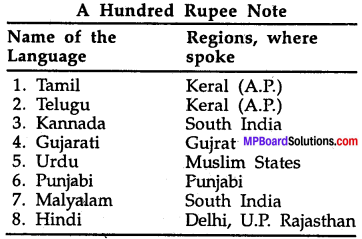
MP Board Class 7th Special English Chapter 20 The Story of Writing 1
Complete the table with the help of your teacher.

Let’s Do It

Interview your friends who speak regional languages mentioned above (some or any of them) and write it in the proper column. Use this table for the interview.
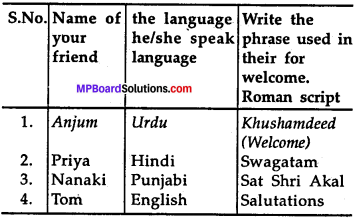
MP Board Class 7th Special English Chapter 20 The Story of Writing 2

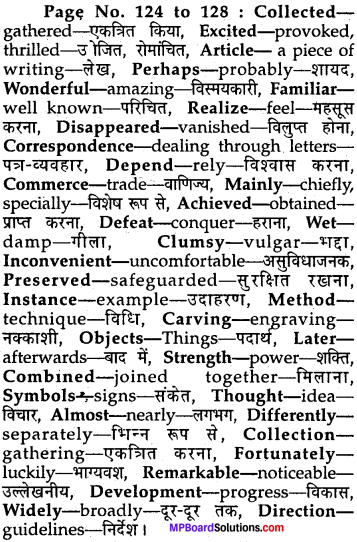
The Story of Writing Word Meanings

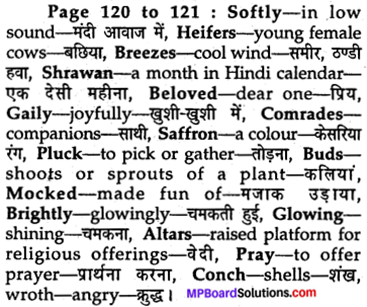
MP Board Class 7th Special English Chapter 20 The Story of Writing 3

We believe the information shared regarding MP Board Solutions for Class 7 English Chapter 20 The Story of Writing Questions and Answers as far as our knowledge is concerned is true and reliable. In case of any queries or suggestions do leave us your feedback and our team will guide you at soonest possibility. Bookmark our site to avail latest updates on several state board Solutions at your fingertips.
MP Board Class 7th General English Letter and Application Writing

Get Updated MP Board Solutions for Class 7 General English Letter and Application Writing Questions and Answers in PDF Format and download them free of cost. These are provided as per the latest exam pattern and syllabus. Access the topics of Chapter wise and communication skills, grammer part through the direct links available depending on the need. You can Download MP Board Class 7 English Solutions and can score highest grade in examination. Clear all your queries on the Mp Board Solutions for Class 7 English Chapter 21 Tansen Questions and Answers Subject by using the Madhya Pradesh State Board Solutions for existing.

MP Board Class 7th General English Letter and Application Writing

If you are eager to know about the Madhya Pradesh State Board Solutions for Class 7 English you will find all of them here. You can identify the knowledge gap using these MP Board Solutions for English PDF and plan accordingly. Don’t worry about the accuracy as they are given after extensive research by people having subject knowledge along side from the latest English Syllabus.

Applications (प्रार्थना पत्र)

Application For Class 7 MP Board Question 1.
Write an application to your school principal for four days leave as you are going out of station.
Answer:
To
The Principal, Janta Junior School,
Gwalior

Sir,
Most respectfully I beg to say that I am a student fo class VII-B. I have to go to Delhi for attending my brother’s marriage. Kindly grant me leave for four days. I shall be highly obliged to you.
Thanking you,

Date : 19th August, 20…..

Yours obediently,
Mukul Jain Roll No. 7
Class VII-A

Application For 7th Class MP Board Question 2.
Write an application to your principal to take you on a picnic.
Answer:
To
The Principal,
Govt. Middle School,
Bhopal

Respected sir,
With due salutations and respect I beg to state that I am the monitor of class VII-A and on behalf of all the students of class VII, I request you to take us to a class picnic. We shall be highly obliged if you grant our request.

Thanking you,
Date : 10th October, 20…..

Yours obediently
Mehul Garg
Class VII-A

Application For Class 7th MP Board Question 3.
Write an application to your principal for two days sick leave.
Answer:
Το
The Principal,
V. J. Middle School, Guna

Sir,
I beg to say that I am suffering from fever since last night i.e., 4th October 20……. Therefore, I won’t be able to attend school. Kindly grant me leave for two days.
Thanking you,
Date : 5th October, 20 ………

Yours sincerely,
Ashutosh Tiwari
Class VII-B

Letters
(पत्र)

Application Writing For Class 7 MP Board Question 1.
Write a letter to your sister, asking her to come and visit you for the coming festival.
Answer:
22, Ashok Nagar,
Indore (West) M. P.
Oct. 11, 20……

My dear sister Anu,

I want to inform you that our parents have decided to celebrate ‘Deepawali’ here with our family. Our elder brother has agreed to reach by 13th of October. Therefore, I request you to come to us and pay a visit for the coming Deepawali on 17th October, 20….. Rest is O. K.

Thanking you,

Yours younger brother,
Mohan G

Leave Application For Class 7 MP Board Question 2.
Write a letter to your friend telling him about the Sports Meet in your school.
Answer:
10, Raghava Pura,
Ram Nagar, Indore
10-2-20……

My dear Mahesh,
In the month of January, ‘Sports Meet’ Programme was held in my school. Different sports took place. Most attractive games were cricket and football. The players of school topped the list of winners of Gold medals. The D. M. was the chief guest. The function was over with a lecture of our Principal. Rest is O. K.

Waiting for your letter.

Yours
Mahendra

Applications For Class 7 MP Board Question 3.
Write a letter to your father telling him how you enjoyed your school picnic.
Answer:
School Hostel
4, Rajpur (M.P.)
4 – 5 – 20…….

Respected Father,

The students of class VIII arranged picnic. We hired a bus and reached Government Park. We saw it for the first time. It is very beautiful and attractive. My friends read their poems and sang songs. We all had our lunch there. Then we played antakshari with our teachers. We really enjoyed a lot. Everything was 0. K.

Thanks,
Yours obedient son/daughter,
Mohan/Mohini
Class-VII

7th Class Ki Application MP Board Question 4.
You are living in a village and write a letter to our friend to spend the summer vacation with you.
Answer:
Vill.–Sohanpura, Post-Awagarh
Distt. KATNI
January 11, 20…

Dear Harish,
Our school has closed for the summer vacation. Last night, we were talking of you. Father and mother asked me to invite you during the vacations. I needed no pressing as I long to have you in our midst. The rains have set in. The weather is pleasant. The mango trees are laden with sweet juicy fruits and when you come we will enjoy them to our heart’s content. I hope you will not disappoint me.

Very Sincerely yours,
Parishkrat

Question 5.
Write an application to the Principal of your school for full fee concession.
Answer:
The Principal,
H. S. Secondry School,
Gwalior.

Sir,
I am a poor student. My father’s monthly income is only Rs.5000/-. He cannot afford to pay my school fees. I beg to add that I came first at the last examination.

I request you to grant me full fee concession so that I may continue my studies.

Thanking you,

Your most obedient student.
Deepak Sharma
Class VII A
Date : 15 April 20…..

We believe the information shared regarding MP Board Solutions for Class 7 English Chapter 21 Tansen Questions and Answers as far as our knowledge is concerned is true and reliable. In case of any queries or suggestions do leave us your feedback and our team will guide you at soonest possibility. Bookmark our site to avail latest updates on several state board Solutions at your fingertips.
MP Board Class 7th Special English Solutions Chapter 19 Song of Radha, the Milkmaid

Get Updated MP Board Solutions for Class 7 Special English Solutions Chapter 19 Song of Radha, the Milkmaid Questions and Answers in PDF Format and download them free of cost. These are provided as per the latest exam pattern and syllabus. Access the topics of Chapter wise and communication skills, grammer part through the direct links available depending on the need. You can Download MP Board Class 7 English Solutions and can score highest grade in examination. Clear all your queries on the Mp Board Solutions for Class 7 English Chapter 19 Song of Radha, the Milkmaid Questions and Answers Subject by using the Madhya Pradesh State Board Solutions for existing.

MP Board Class 7th Special English Solutions Chapter 19 Song of Radha, the Milkmaid

If you are eager to know about the Madhya Pradesh State Board Solutions for Class 7 English you will find all of them here. You can identify the knowledge gap using these MP Board Solutions for English PDF and plan accordingly. Don’t worry about the accuracy as they are given after extensive research by people having subject knowledge along side from the latest English Syllabus.

Song of Radha, the Milkmaid Text Book Exercise

Comprehension

Song Of Radha The Milkmaid Question And Answer MP Board Class 7th Question 1.
Where did Radha carry her curds to?
Answer:
Radha carried her curds to the Mathura fair.

Mp Board Class 7th English Chapter 19 Question 2.
What did she compare her curds to?
Answer:
She compared her curds to white clouds.

Song Of Radha The Milkmaid MP Board Class 7th Question 3.
What did she cry out and why?
Answer:
She cried out ‘Govinda’, ‘Govinda’. She did so because her heart was full of the beauty of her beloved Krishna.

Class 7 English Chapter 19 MP Board Question 4.
What did her comrades ask her to do?
Answer:
Her comrades asked her to dance, sing, wear saffron garments and pluck new buds.

Song Of Radha The Milkmaid Summary MP Board Class 7th Question 5.
Why did her comrades mock at her?
Answer:
Her (Radha’s) comrades mocked at her because she did not care for their requests. Instead of joining them in dance, in singing and plucking new buds, she cried ‘Govinda’, ‘Govinda’.

The Song Of Radha The Milkmaid MP Board Class 7th Question 6.
What did she do at the altar?
Answer:
She folded her hands at the altar and prayed for divine guidance at all times.

Song Of Radha The Quest Question And Answer MP Board Class 7th Question 7.
Why were her comrades angry?
Answer:
Her comrades were angry because she did not pay attention to their requests. She busied herself in the worship of her beloved Krishna.

Word Power

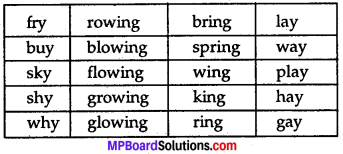
Select words from these and write them in the columns with the word they rhyme with:
(fry, bring,way, lay, rowing, buy, blowing, sky, flowing, spring, play, growing, hay, wing, shy, king, gay, ring why, glowing)
Answer:
Song Of Radha The Milkmaid Question And Answer MP Board Class 7th

Let’s Talk

Talk to your partner and find answers to the questions given below:
Radha The Milkmaid MP Board Class 7th Question 1.
Who is Radha?
Answer:
Radha is a milkmaid.

Question 2.
Who is Govinda?
Answer:
Govinda is Lord Krishna.

Question 3.
What is the poetess trying to explain about-Radha?
Answer:
The poetess is trying to explain that Radha is deeply devoted to Krishna. Her heart is full of Krishna’s beauty and music. She is so much engrossed in his worship that she does not care for anything else or any other person.

Question 4.
What does the poetess compare the curds with?
Answer:
The poetess compares the curds with white clouds in the sky.

Question 5.
Write about the three things that made Eadha say Govinda Govinda?
Answer:
The following three things made Radha say Govinda Govinda.

  1. Her heart was full of her beloved’s (Govinda’s) beauty.
  2. Her heart was deeply full of her beloved’s (Govinda’s) music.
  3. Her heart was fully lost in her beloved’s (Govinda’s) worship.

Let’s Write

Write three paragraphs one on each stanza of the poem explaining/saying what the poetess Sarojini Naidu is trying to say in the poem.
Answer:
Do Yourself.

Let’s Do it

(a) Find some more poems written by Sarojini Naidu and read them in the class.
(b) In your library find poems on Radha and krishna and write them in your note book.
Answer:
Class-room Activity

Song of Radha, the Milkmaid Word Meanings

Mp Board Class 7th English Chapter 19

Song of Radha, the Milkmaid Stanzas for Comprehension

1. I carried my curds to the Mathura fair
How softly the heifers were lowing
I wanted to cry “Who will buy
These curds that are white as the clouds in the sky
When the breezes of Shrawan are blowing?”

Question 1.
Who is ‘Y in the above stanza?
Answer:
Here T refers to ‘Radha’.

Question 2.
How were the heifers lowing?
Answer:
The heifers were lowing softly.

Question 3.
What did she want to cry?
Answer:
She wanted to cry, “who will buy these white curds?”

Question 4.
What do you mean by ‘Shrawan’?
Answer:
Shrawan is a month of rainy season in Hindu calendar.

2. How softly the river was flowing!
I carried my pots to the Mathura tide
How gaily the rowers were rowing!
My comrades called, “Ho! let us dance, let us sing
And wear saffron garments to welcome the spring.
And pluck the new buds that are blowing.”

Question 1.
What was flowing softly?
Answer:
The river was flowing softly.

Question 2.
What were the pots full of?
Answer:
The pots were full of curd and other gifts.

Question 3.
Why did her comrades call her?
Answer:
Her comrades called her to dance, sing and pluck the new buds.

Question 4.
How were the rowers rowing?
Answer:
The rowers were rowing in a gay mood.

3. I carried my gifts to the Mathura shrine
How brightly the torches were glowing!
I folded my hands at the altars to pray
“O shining, ones guard us by night and by day”
And loudly the conch shells were blowing.

Question 1.
Where did Radha carry her gifts?
Answer:
Radha carried her gifts to the Mathura Shrine.

Question 2.
How were the torches glowing there?
Answer:
The torches Were glowing brightly’ there.

Question 3.
What did she pray for?
Answer:
She prayed that the shining gods, should guard her every time.

Question 4.
What were blowing loudly?
Answer:
The conch shells were blowing loudly.

We believe the information shared regarding MP Board Solutions for Class 7 English Chapter 19 Song of Radha, the Milkmaid Questions and Answers as far as our knowledge is concerned is true and reliable. In case of any queries or suggestions do leave us your feedback and our team will guide you at soonest possibility. Bookmark our site to avail latest updates on several state board Solutions at your fingertips.
MP Board Class 7th Hindi Sugam Bharti Solutions Chapter 15 सितारों से आगे और भी है जहाँ

MP Board Class 7th Hindi Sugam Bharti Solutions Chapter 15 सितारों से आगे और भी है जहाँ

MP Board Class 7th Hindi Sugam Bharti Chapter 15 प्रश्न-अभ्यास

वस्तुनिष्ठ प्रश्न

Solution 7th Class MP Board प्रश्न 1.
(क) सही जोड़ी बनाइए
1. नदी के समान एक सफेद चमकीली चौड़ी पट्टी जो
आकाश में फैली है तथा उसे दो भागों में बांटती है। – (क) नीहारिका
2. वह दूरी जो प्रकाश एक वर्ष में तय कर लेता है। – (ख) दूरदर्शी
3. सहसा चमकने वाला नया तारा – (ग) प्रकाशवर्ष
4. गैस और ब्रह्माण्ड-धूलि का बादल – (घ) नोवा
5. जिससे दूर की चीज को देखा जा सके – (ङ) आकाशगंगा
उत्तर
1. (ङ), 2. (ग), 3. (घ), 4. (क), 5. (ख)

Class 7 Hindi Chapter 15 MP Board प्रश्न (ख)
दिए गए शब्दों में से उपयुक्त शब्द घुनकर रिक्त स्थानों की पूति कीजिए
1. सूर्य से ग्रहों की दूरी …………….मीलों में है। (सैकड़ों/करोड़ों)
2. हमारा सौरमंडल जिस द्वीपविश्व में है उसे – सामान्य लोग ………………कहते हैं। (आकाशगंगा/नीहारिका)
3. आकाशगंगा के सभी तारे हमें पास-पास एक ही दूरी पर दीखते हैं; यह …………………. है। (दृष्टिदोष दृष्टिभ्रम)
4. सफेद बौने तारे सबसे……………………. उम्र के होते हैं। (ज्यादा/कम)
5. हमारी आकाशगंगा अंतरिक्ष की अनंत दूरियों में समाहित ……………………. आकशगंगाओं में से एक है। (दस अरब/दस करोड़)
उत्तर
1. करोड़ों
2. आकाशगंगा
3. दृष्टिभ्रम
4. कम
5. दस अरब।

MP Board Class 7th Hindi Sugam Bharti Chapter 15 अति लघु उत्तरीय प्रश्न

Class 7th Hindi Sugam Bharti MP Board प्रश्न 2.
निम्नलिखित प्रश्नों के उत्तर एक-एक वाक्य में दीजिए

(क)
दूरवी से हम एक बार में कितने तारे देख पाते हैं?
उत्तर
दूरदर्शी से हम एक बार में एक अरब तारे देख सकते हैं।

(ख)
हमारा सूर्य वास्तव में क्या है?
उत्तर
हमारा सूर्य भी तो इन्हीं में से एक तारा है।

(ग)
अल्गॉल क्या है?
उत्तर
अल्गॉल तारों का आकार और प्रकाश सहसा बढ़ या घट जाता है।

(घ)
‘नोवा’ या ‘नया तारा’ किसे कहते हैं?
उत्तर
अक्सर तारे न तो दुहरे होते हैं और न सेफीइड, फिर भी सहसा उनकी चमक बढ़ जाती है, इसे नोवा कहते हैं।

(ङ)
गैलीलियो के दूरदर्शी से हमें क्या आभास हुआ?
उत्तर
गैलीलियों के दूरदर्शी ने बताया कि ब्रह्मांड का कोई अंत नहीं।

MP Board Class 7th Hindi Sugam Bharti Chapter 15 लघु उत्तरीय प्रश्न

Class 7 Hindi Chapter 15 Question Answer MP Board प्रश्न 3.
निम्नलिखित प्रश्नों के उत्तर तीन से पाँच वाक्यों में दीजिए

(क)
हमारी ‘आकाशगंगा’ या ‘मंदाकिनी’ का आकार | कैसा दिखता है?
उत्तर
हमारी ‘आकाशगंगा’ या मंदाकिनी’ एक सफेद, चौड़ी नदी के समान आकाश में फैली दीखती है और आकाश को दो भागों में बाँटती है।

(ख)
प्रकाश वर्ष क्या होता है?
उत्तर
शास्त्रियों ने इसे मापने के लिए नया एक ढंग ‘खोज निकाला है। यह ढंग है ‘प्रकाशवर्ष’ प्रकाशवर्ष का तात्पर्य है-वह दूरी जो प्रकाश एक वर्ष में तय कर लेता है। (लगभग पाँच खरब, छियासी अरब, छप्पन करोड़, छियानवे लाख मील)

(ग)
चमक के हिसाब से तारों को कितनी श्रेणियों में बाँटा गया है? प्रत्येक का नाम व उसकी एक-एक विशेषता लिखिए।
उत्तर
चमक के हिसाब से तारों के चार श्रेणियों में बाँटा गया है

  • अतिविशाल : इनका घनत्व बहुत कम और व्यास बहुत अधिक होता है।
  • विशाल : इनका घनत्व ‘अतिविशालों’ से कुछ अधिक और व्यास कुछ कम होता है।
  • मुख्यश्रेणी : इनका घनत्व अधिक और व्यास कम होता है; और
  • सफेद बौने : इनका घनत्व बहुत अधिक और व्यास बहुत कम होता है।

(घ)
सेफीइड तारे कैसे होते हैं?
उत्तर
ये तारे खूब चमकदार होते हैं, फिर धुंधले पड़ते जाते हैं और पुनः चमकदार बन जाते हैं। इस प्रकार का पहला तारा सेफीयस तारामंडल में देखा गया था, इन्हें सेफीइड तारे कहते हैं।

(ङ)
नोवा और सुपर नोवा तारों की क्या विशेषताएँ
उत्तर
जब कोई ‘नया’ तारा अचानक चमकने लगता है, नोवा कहलाता है जबकि सुपर नोवा तारे की चमक अचानक लाखों करोड़ों गुनी बढ़ जाती है।

(च)
नीहारिका क्या होती है?
उत्तर
आकाशगंगा में कभी-कभी एक प्रकाशमान गैस का बादल दिखाई देता है। इसकी चमक का कारण है- किसी गर्म और चमकदार तारे का पास होना। गैस और ब्रह्माण्ड-धूलि का या बादल नीहारिका कहलाता है।

भाषा की बात

Class 7th Hindi Mp Board Solution MP Board प्रश्न 4.
निम्नलिखित शब्दों का शुद्ध उच्चारण कीजिए
दुरदर्शी, दीपविश्व, ब्रह्माण्ड, दृष्टिभ्रम, प्रागैतिहासिक, अल्गॉल, सेफीयस, स्पष्ट, परिक्रमा, अंतरिक्ष
उत्तर
छात्र स्वयं करें।

Hindi Class 7 Chapter 15 MP Board प्रश्न 5.
निम्नलिखित शब्दों की वर्तनी शुद्ध कीजिए
विचित्तर, द्रष्टिभरम, धनत्व, ब्यास, कडोर, परकास, अपेक्षाकत, खगोलग्य, आशचर्य, परिकरमा।
उत्तर
शब्द = शुद्धवर्तनी
विचित्तर = विचित्र
द्रष्टिभरम = दृष्टिभ्रम
धनत्व = घनत्व
ब्यास = व्यास
कड़ार = करोड़
परकास = प्रकाश
अपेक्षाकत = अपेक्षाकृत
खगोलग्य = खगोलज्ञ
आशचर्य = आश्चर्य
परिकरमा = परिकर्मा

Chapter 15 Hindi Class 7 MP Board प्रश्न 6.
निम्नलिखित शब्दों के तत्सम रूप लिखिए
परकम्मा, सूरज, गरम, दीठ, भरम, कुम्हार
उत्तर
शब्द = तत्सम रुप
परकम्मा = परिक्रमा
सूरज = सूर्य
गरम = गर्म
दीठ = दीर्घ
भरम = भ्रम
कुम्हार = कुमार

प्रश्न 7.
निम्नलिखित शब्दों में से विशेषण एवं संज्ञा शब्दों को पृथक् कीजिए
अनगिनत, तारे, काला आकाश, चौड़ी, नदी, साफ, मौसम, मजेदार, कारण, धुंधला, साथी
उत्तर
संज्ञा = विशेषण
तारे = अनगिनत
आकाश = काला
नदी = चौड़ी
मौसम = साफ
कारण = मजेदार
साथी = धुंधला

प्रश्न 8.
‘तारे’ संज्ञा में दिए गए विशेषण जोड़कर शब्द बनाइए
जैसे-धुंधले तारे
स्पष्ट, अतिविशाल, दुहरे, अनगिनत, चमकदार, झिलमिलाते, सफेद, बौने।
उत्तर
स्पष्ट – तारे
अतिविशाल – तारे
दुहरे – तारे
अनगिनत – तारे
चमकदार – तारे
झिलमिलाते – तारे
सफेद – तारे
बौने – तारे

प्रश्न 9.
निम्नलिखित शब्दों को पढ़िए- हृदय-परिवर्तन, राजा-खुशी, गुजर-वसर, सुख-दुःख में दो-दो शब्द (पद) है। एक-दूसरे से संबंध रखने वाले ऐसे शब्दों को सामासिक शब्द कहते हैं। सामासिक शब्दों में एक-दूसरे का संबंध बतलाने वाली विभिक्त, शब्दों या प्रत्ययों का लोप हो जाता है।
उत्तर
विद्यार्थी स्वयं करें।

प्रश्न 10.
निम्नलिखित शब्दों का समास विग्रह कीजिए
प्रकाशबिंदु आश्चर्यजनक, दृष्टिभ्रम, ब्रह्माण्डधूलि, -आकाशगंगा, तारामंडल
उत्तर
प्रकाशबिंदु = प्रकाश के बिंदु
आश्चर्यजनक = आश्चर्य के भरा हुआ
दृष्टिभ्रम= दृष्टि का भ्रम
ब्रह्माण्डधूलि = ब्रह्माण्ड की धूल
आकाशगंगा = आकाश की गंगा
तारामंडल = तारों का मंडल

सितारों से आगे और भी है जहाँ पाठ का परिचय

प्रस्तुत पाठ में ब्रह्मांड, सितारों तथा उनके मध्य दूरी को स्पष्ट किया गया है। रात में आँखों से सितारों को स्पष्ट निहारते है और गिनने का प्रयास करते हैं। प्रकाशबिंदु से दिखाई देने वाले तारे दूरदर्शी से भी एक बार में एक अरब से अधिक नहीं दिखाई दे सकते हैं। हमारा सूर्य अरबों तारों में से एक है। हमारे तारे समूह को ‘द्वीप विश्व’ या ‘ब्रह्माण्ड’ कहते हैं। दूरी को मापने के लिए प्रकाशवर्ष का प्रयोग किया जाता है। एक प्रकाश वर्ष में लगभग पाँच खरब, छियासी अरब, छप्पन करोड़, छियानवे लाख मील होते हैं। अल्गॉल का एक साथी तारा है जिसका प्रकाश बहुत कम है। खगोल-शास्त्री ऐसे तारों को दुहरे तारे कहते हैं। पहला तारा सेफीयस तारामंडल में देखा गया था। इन्हें सेफीयड कहते हैं। आकाशगंगा में कभी-कभी एक प्रकाशमान गैस का बादल दिखाई देता है। आकाशगंगाएँ पास-पास दिख रही हैं लेकिन वे तीस-चालीस लाख प्रकाश वर्ष दूर है। दस करोड़ आकाशगंगाओं में से एक है जिनका एक पुँज है हमारा ब्रह्मांड।

सितारों से आगे और भी है जहाँ संदर्भ-प्रसंग सहित व्याख्या

1. कुछ तारों का………………… ….गुनी बढ़ जाती है। (पृ. 87)
शब्दार्थ-नियमितता = एक नियम से; खगोलशास्त्री = आकाश-मंडल की जानकारी रखने वाला विद्वान; सहसा = अचानक।

संदर्भ-प्रस्तुत पंक्तियाँ हमारी पाठ्य-पुस्तक ‘सुगम-भारती’ (हिंदी सामान्य) भाग-7 के पाठ 15 ‘सितारों से आगे और भी है जहाँ से ली गई हैं।
प्रसंग-इसमें तारों के अंत तथा जन्म का विवरण दिया है।

व्याख्या
अचानक कुछ तारों का आकार घट या बढ़ जाता है। अरबों ने यह स्थिति सबसे पहले ‘अल्गॉल’ नाम के एक तारे में यह बात देखी थी। इनके अनुसार 21 घण्टे बाद बाद इनकी चमक कम पड़ जाती है। इसके चारों ओर घूमने वाले तारे को दुहरे तारे कहते हैं। ये चमक कर धुंधले होते हैं, फिर दोबारा चमक उठते हैं। ये तारे सेफीयस तारामंडल में देखा गया, इन्हें सेफीयड कहते हैं। इसे नोवा या नयातारा कहते हैं। ‘सुपर नोवा’ स्थिति में तो अचानक इसकी चमक लाखों-करोड़ों गुनी |बढ़ जाती है।

विशेष-तारों की चमकदार स्थिति को दर्शाया गया है।

MP Board Class 7th Hindi Solutions

MP Board Class 7th Special English Solutions Chapter 4 The Wheat is Cheaper-II

Get Updated MP Board Solutions for Class 7 Special English Solutions Chapter 4 The Wheat is Cheaper-II Questions and Answers in PDF Format and download them free of cost. These are provided as per the latest exam pattern and syllabus. Access the topics of Chapter wise and communication skills, grammer part through the direct links available depending on the need. You can Download MP Board Class 7 English Solutions and can score highest grade in examination. Clear all your queries on the Mp Board Solutions for Class 7 English Chapter 4 The Wheat is Cheaper-II Questions and Answers Subject by using the Madhya Pradesh State Board Solutions for existing.

MP Board Class 7th Special English Solutions Chapter 4 The Wheat is Cheaper-II

If you are eager to know about the Madhya Pradesh State Board Solutions for Class 7 English you will find all of them here. You can identify the knowledge gap using these MP Board Solutions for English PDF and plan accordingly. Don’t worry about the accuracy as they are given after extensive research by people having subject knowledge along side from the latest English Syllabus.

The Wheat is Cheaper-II Text Book Exercise

Comprehension

A. Answer the questions given below:

Mp Board Class 7th English Chapter 4 Question 1.
Did the merchant cast a doubt on the farmer’s story?
Answer:
No, the merchant did not cast a doubt on the farmer’s story at all.

Class 7 English Chapter 4 The Wheat Is MP Board Question 2.
How did the farmer make the merchant pay him up?
Answer:
The farmer made the merchant pay him up by narrating a false story.

The Wheat Is Cheaper 2 MP Board Question 3.
Why did the merchant not object to the farmer’s charge about his father?
Answer:
The merchant would have to pay the farmer a hundred rupees if he cast a doubt on his story. He was very greedy, \miserly and money minded. By paying fee price of wheat he still saved some money. Therefore he did not object to the farmer’s charge about his father.

Class 7 English Chapter 4 Mp Board Question 4.
Why was he silent during the farmer’s story?
Answer:
He was silent during the farmer’s story because if he raised objection, he would undergo a loss of money.

Class 7 English Chapter 4 MP Board Question 5.
Why did the merchant decide to pay the farmer?
Answer:
The merchant decided to pay the farmer because the price of wheat was lesser than the price of raising the doubt.

Class 7 Chapter 4 English MP Board Question 6.
How much money did he pay to the farmer?
Answer:
He paid rupees seventy five to the farmer. It was the price of 75 kilos of wheat.

English Chapter 4 Class 7th MP Board Question 7.
Who do you think was clever’ the merchant or fee farmer?
Answer:
The farmer was cleverer of the two.

B. Read the following sentences and tick true or false.

  1. The merchant cast a doubt on the farmer’s story. T / F
  2. The merchant held his tongue.T / F
  3. The farmer had a weak horse with out saddle. T / F
  4. The grains sprouted on the horse back. T / F
  5. The merchant gave him hundred rupees. T / F
  6. The farmer’s story failed to impress the merchant. T / F

Answer:

  1. False
  2. True
  3. False
  4. True
  5. False
  6. True.

Word Power

A. Fill in the blanks using the words given below:
(Saddle, admired, sore, grain, sprouted, hire, reap, starving, begged, neighbouring, his)

The farmer used to go to the market on………….. horse. The horse had a fine …………… on which he sat. People of the …………. village …………. the horse and its saddle. The farmer’s saddle was torn which caused a …………. on its back. Once there was a storm and a lot of ………….. stuck into the wound. Later the grains of wheat …………. on the horse back. The farmer had to………… about forty men to………… the grain. One day a man came to my father and ………… him to give seventy five kilos of wheat. When my father saw the man…………. he gave him wheat.
Answer:
his, saddle, neighbouring, admired, sore, grain, sprouted, hire, reap, begged, starving.

Grammar in Use

A. Frame questions for the following answers using what, when, how, who, why.

Example:
Question.
Who had a fine horse?
Answer:
The farmer’s father had a fine horse.

i. ………….
Answer:
The farmer used to go on his horse to the market.

ii. …………
Answer:
The farmer found that the horse had a sore on its back.

iii. ………….
Answer:
He begged him to give him seventy- five kilos of wheat.

iv. …………..
Answer:
Your father owes seventy kilos of wheat to my father even to this day.

v. ……………
Answer:
The merchant began running his thumb up and was calculating.

Answer:
(i) Who used to go on his horse to the market?
(ii) What did the farmer find on the horse’s back.
(iii) Who begged him to give him seventy- five kilos of wheat.
(iv) What does my father owe to your father to this day?
(v) Why did the merchant begin running his thumb up and calculating?

Let’s Talk

Discuss in groups about the famous Indian freedom fighter Bhagat Singh and find answers to the following questions.

  1. Who was Bhagat Singh?
  2. Where was he born?
  3. How did he inspire people?
  4. Why did the British dislike him?
  5. Where was he hanged to death?

Answer:

  1. Bhagat Singh was a martyr.
  2. He was born at Lyollpur in Punjab (Now in Pakistan).
  3. He inspired the people to make armed struggle.
  4. The British disliked him because he shot dead Saunders and revenged the death of Lala Lajpat Rai.
  5. He also threw a bomb in the Assembly.
  6. He was hanged to death in Delhi.

Let’s Write

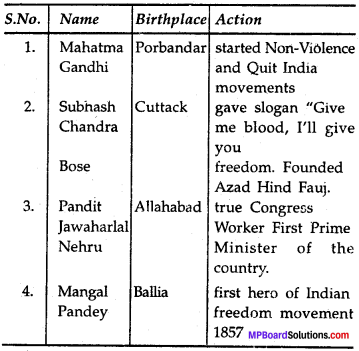
Read the information given in the table and write three sentences about each freedom fighter.
Example:
(1) Mahatma Gandhi was a freedom fighter
(2) He was born in Porbandar.
(3) He started Non-violence and Quit India movements.
Mp Board Class 7th English Chapter 1
Answer:
1. Mahatma Gandhi :
Mahatma Gandhi was born at Porbander. He started Non-Violence and Quit India movements. We call him ‘Bapu’. He was the liberator of India.

2. Subhash Chander Bose :
Subhash Chander Bose was born in Cuttack. He gave the slogan “give me blood” I’ll give you freedom, He founded the National Indian Army. He was famous by the name of ‘Netaji’.

3. Pandit Jawaharlal Nehru :
Jawaharlal Nehru was born at Allahabad. He was a true congress worker. He was the First Prime Minister of India. The children call him ‘Chacha’ He was the maker of modern India.

4. Mangal Pandey :
Mangal Pandey was born at Ballia. He was the first hero of Indian freedom movement of 1857. He lost his, life for the nation It was a great sacrifice!

Let’s Do It

Make a list of the names of crops produced by the farmers.
Answer:
The following is the list of the names of crops produced by the farmers.
Wheat barley, grams, millet, maize, rice

The Wheat is Cheaper-II Word Meanings

Page 22 to 24: Cast – show – दिखाना, Doubt – suspicion – राक, Really – actually – वास्तव में, Interesting – charming – रोचक – seat – काठी, Neighbouring – nearby – पास वाले, Admired – praised – सराहना करना, Sore – wound – घाव, Palm – front part of the hand – हथेली, Caused – brought- about – कारण बनना, Grains – corn – दाने, Sprout – germinate – उगना, Wonder – amazement – आरचर्थ, Reap – harvest – फसल काटना, Lucky – fortunate – भाग्यशाली, Indeed – really – सचमुच, Starving – suffering from hunger – भूखों मरना, Effort – attempt – प्रयत्न, Owes – remains to be paid, payment is due – देनदार, Calculating – counting – हिसाब लगाना, Bargain – transaction, a deal – सौदा

We believe the information shared regarding MP Board Solutions for Class 7 English Chapter 4 The Wheat is Cheaper-II Questions and Answers as far as our knowledge is concerned is true and reliable. In case of any queries or suggestions do leave us your feedback and our team will guide you at soonest possibility. Bookmark our site to avail latest updates on several state board Solutions at your fingertips.
MP Board Class 7th Science Solutions Chapter 12 पादप में जनन

MP Board Class 7th Science Solutions Chapter 12 पादप में जनन

MP Board Class 7th Science Chapter 12 पाठान्त अभ्यास के प्रश्नोत्तर

पादप में जनन Class 7 MP Board प्रश्न 1.
रिक्त स्थानों की पूर्ति कीजिए –

  1. जनक पादप के कायिक भागों से नये पादप के उत्पादन का प्रक्रम ….. कहलाता है।
  2. ऐसे पुष्पों को, जिनमें केवल नर अथवा मादा जनन अंग होता है ……….. पुष्प कहते हैं।
  3. परागकणों का उसी अथवा उसी प्रकार के अन्य पुष्प के परागकोश से वर्तिकाग्र पर स्थानान्तरण का प्रक्रम ……….. कहलाता है।
  4. नर और मादा युग्मकों का युग्मन ………. कहलाता है।
  5. बीज प्रकीर्णन ……….., …………. और …………. के द्वारा होता है।

उत्तर:

  1. कायिक प्रवर्धन।
  2. एकलिंगी।
  3. परागण।
  4. युग्मनज।
  5. पवन, जल, जन्तुओं।

Padap Mein Janan MP Board Class 7th Science प्रश्न 2.
अलैंगिक जनन की विभिन्न विधियों का वर्णन कीजिए। प्रत्येक का उदाहरण दीजिए।
उत्तर:
अलैंगिक जनन की विधियाँ:
(1) कायिक प्रवर्धन विधि:
इस विधि में पादप के मूल, तने, पत्ती अथवा कली/मुकुल जैसे किसी कायिक अंग द्वारा नया पादप प्राप्त किया जाता है।

उदाहरण:
गुलाब के पौधे की एक शाखा का पर्वसन्धि से काटकर शाखा का एक टुकड़ा निकाल लिया जाता है। इस टुकड़े को कलम कहते हैं। कलम को सीधा खड़ा करके इसका कुछ भाग मिट्टी में दबा देते हैं। कलम को प्रतिदिन पानी देते हैं। कुछ दिन बाद इससे जड़ और पत्तियाँ निकलने लगती हैं।

(2) मुकुलन विधि:
मुकुलन विधि में कोशिका से एक उभार के समान बाहर की ओर एक रचना निकलती है। इसे मुकुल या कली कहते हैं। यह मुकुल वृद्धि करता है और परिपक्व होकर मातृ कोशा से अलग हो जाता है तथा स्वतन्त्र होकर कार्य करता है। कभी-कभी मुकुल मातृ कोषा में लगे रहकर भी नए जीव उत्पन्न करता है।

उदाहरण:
थोड़ा यीस्ट पाउडर लेकर इसे एक ऐसे बर्तन में डाल देते हैं जिसमें कुछ जल हो। इस जल में एक चम्मच शक्कर डालकर घोल लेते हैं। कुछ समय बाद कोशा से एक उभार के समान मुकुल निकलने लगते हैं।

(3) खण्डन विधि:
खण्डन विधि से अलैंगिक प्रजनन सामान्य रूप से एक कोशीय जीवों में होता है। इस विधि में जीव का शरीर दो भागों में टूट जाता है। इसमें अनुकूल परिस्थिति में परिपक्व कोशिका का केन्द्रक दो भागों में विभाजित हो जाता है। ‘इसके पश्चात कोशिका द्रव्य भी दो भागों में विभाजित होकर दो कोशिकाओं को जन्म देता है जो स्वतन्त्र रूप से वृद्धि करते हैं।

उदाहरण:
जलाशयों में शैवाल जल और पोषक तत्व पाकर दो या दो से अधिक खण्डों में विखण्डित हो जाते हैं। ये खण्ड नये जीवों में वृद्धि कर जाते हैं। प्रक्रम निरंतर चलता ही रहता है।

(4) बीजाणु निर्माण विधि:
यह अलैंगिक जनन की विधि है। इस विधि द्वारा जीवाणु जनन करते हैं। जीवाणु उच्च ताप और निम्न आर्द्रता जैसी प्रतिकूल परिस्थितियों के कारण कठोर सुरक्षात्मक आवरण से ढके रहते हैं। इसलिए ये लम्बे समय तक जीवित रह सकते हैं। अनुकूल परिस्थितियों में बीजाणु अंकुरित होकर नये पौधे बनाते हैं।

उदाहरण: फर्न अनुकूल परिस्थिति पाकर नये पौधों का निर्माण करते हैं।

पादप में जनन MP Board Class 7th Science प्रश्न 3.
पादपों में लैंगिक जनन के प्रक्रम को समझाइए।
उत्तर:
पुष्प पादप का जनन अंग होते हैं। पुष्प में पुंकेसर नर जनन अंग तथा स्त्रीकेसर मादा जनन अंग हैं। पुंकेसर में परागकोश होता है जिसमें परागकण होते हैं जो नर युग्मकों को बनाते हैं। स्त्रीकेसर में अंडाशय होते हैं। अण्डाशय में एक या अधिक बीजांड होते हैं। मादा युग्मक (अण्ड) का निर्माण बीजांड में होता है। लैगिंक जनन में नर और मादा युग्मकों के युग्मन से युग्मनज बनता है। युग्मनज भ्रूण के रूप में विकसित होता है।

पादप में जनन प्रश्न उत्तर MP Board Class 7th Science प्रश्न 4.
अलैंगिक और लैंगिक जनन के बीच प्रमुख अन्तर बताइए।
उत्तर:
लैंगिक और अलैंगिक जनन में अन्तर:

लैगिक नननअलैंगिक जनन
लैंगिक जनन में नर और मादा दोनों की आवश्यकता होती है।अलैंगिक जनन में नर एवं मादा की आवश्यकता नहीं होती।
नये जीव की उत्पत्ति दोनों से होती है।नये जीव की उत्पत्ति एक ही जनक से होती है।
इसमें निषेचन की क्रिया होती है।इसमें निषेचन की क्रिया नहीं होती।

Padap Me Janan MP Board Class 7th Science प्रश्न 5.
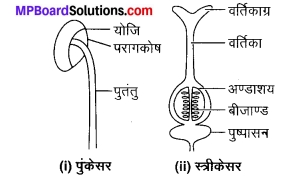
किसी पुष्प का चित्र खींचकर उसमें जनन अंगों को नामांकित कीजिए।
उत्तर:
पुष्प के जनन अंग:
पादपों में जनन MP Board Class 7th Science

पादपों में जनन MP Board Class 7th Science प्रश्न 6.
स्व-परागण और पर-परागण के बीच अन्तर बताइए।
उत्तर:
स्व-परागण और पर-परागण में अन्तर:

स्व-परागणपर-परागण
जब किसी पुष्प के परागकण उसी पुष्प के वर्तिकाग्र पर गिरते हैं तो इसे स्व-परागण कहते हैं।जब किसी एक पुष्प केपरागकण किसी अन्य पुष्प के वर्तिकान पर गिरते हैं, तो कहते हैं। इसे पर-परागण कहते हैं।

प्रश्न 7.
पुष्पों में निषेचन का प्रक्रम किस प्रकार सम्पन होता है?
उत्तर:
पुष्पों में निषेचन-पुंगकेसरों के परागकोशों से । परागकरण स्त्रीकेसर की वर्तिकान पर पहुँचते हैं। यहाँ इनका अंकुरण होता है जिसके फलस्वरूप पराग नलिका बनती है। पराग नलिका वर्तिका में प्रवेश करके अण्डाशय में पहुँचती है। अण्डाशय में बीजाण्ड होते हैं जिसमें अण्डाणु होते हैं। पराग नलिका बीजाण्ड में नरयुग्मक छोड़ती है। नर एवं मादा युग्मक मिलकर युग्मनज बनाते हैं। इस प्रकार पुष्पों में निषेचन की प्रक्रिया होती है। निषेचन के पश्चात् बीजाण्ड एवं अण्डाशय परिवर्धित होकर, क्रमशः बीज एवं फल बनाते हैं।

प्रश्न 8.
बीजों के प्रकीर्णन की विभिन्न विधियों का वर्णन कीजिए।
उत्तर:
प्रकृति में पादप के फलों और बीजों का प्रकीर्णन पवन, जल और जन्तुओं द्वारा होता है –
(1) पवन द्वारा प्रकीर्णन:
कुछ पादपों के पंखयुक्त बीज जैसे सेहिजन (ड्रमिस्टक), द्विफल (मैपिल), घासों के हल्के बीज, मदार के रोमयुक्त बीज, सूरजमुखी के रोमयुक्त फल पवन के साथ उड़कर सुदूर स्थानों तक चले जाते हैं और वहाँ जाकर प्रकीर्णित हो जाते हैं।

(2) जल द्वारा प्रकीर्णन:
कुछ बीज अथवा फल जल के द्वारा प्रकीर्णित होते हैं, ऐसे बीजों के आवरण स्पन्ज़ी अथवा तन्तुमय होते हैं जिससे वे जल में आसानी से तैरते हुए एक स्थान से दूसरे स्थान को चले जाते हैं। जैसे- नारियल।

(3) जन्तुओं द्वारा प्रकीर्णन:
कुछ बीजों का प्रकीर्णन जन्तुओं द्वारा होता है। इस प्रकार के बीजों में ऐसी संरचनाएँ होती हैं जिससे ये जन्तुओं के शरीर से चिपक जाते हैं और दूर स्थान पर पहुँच जाते हैं। ऐसे बीज काँटेदार अथवा हुक जैसी संरचनाओं के होते हैं। जैसे- यूरेना, जैन्थियम आदि।

प्रश्न 9.
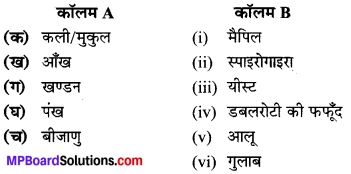
कॉलम A में दिए गए शब्दों का कॉलम B में दिए गए जीवों से मिलान कीजिए –
Padap Me Janan MP Board Class 7th Science
उत्तर:
(क) → (iii)
(ख) → (v)
(ग) → (ii)
(घ) → (i)
(च) → (iv)

प्रश्न 10.
सही विकल्प पर (✓) निशान लगाइए –
(क) पादप का जनन भाग होता है, उसका –

  1. पत्ती/पर्ण।
  2. तना।
  3. मूल।
  4. पुष्प।

(ख) नर और मादा युग्मक के युग्मन का प्रक्रम कहलाता है –

  1. निषेचन।
  2. परागण।
  3. जनन।
  4. बीज निर्माण।

(ग) परिपक्व होने पर अंडाशय विकसित हो जाता है –

  1. बीज में।
  2. पुंकेसर में।
  3. स्त्रीकेसर में।
  4. फल में।

(घ) बीजाणु उत्पन्न करने वाला एक पादप जीव है –

  1. गुलाब।
  2. डबलरोटी का फफूंद।
  3. आलू।
  4. अदरक।

(च) ब्रायोफिल्लम अपने जिस भाग द्वारा जनन करता है, वह है –

  1. तना।
  2. पत्ती।
  3. मूल।
  4. पुष्प।

उत्तर:
(क) पुष्प।
(ख) निषेचन।
(ग) फल में।
(घ) डबलरोटी का फफूंद।
(च) पत्ती।

MP Board Class 7th Science Solutions

MP Board Class 7th Hindi Sugam Bharti Solutions Chapter 12 अमन-शांति है ध्येय हमारा

MP Board Class 7th Hindi Sugam Bharti Solutions Chapter 12 अमन-शांति है ध्येय हमारा

MP Board Class 7th Hindi Sugam Bharti Chapter 12 प्रश्न-अभ्यास

वस्तुनिष्ठ प्रश्न
प्रश्न 1.
(क) सही जोड़ी बनाइए
1. कला = (क) बलिदान
2. त्याग = (ख) फूल
3. विश्व = (ग) कौशल
4. धरा = (घ) विजय
5. फल = (ङ) गगन
उत्तर
1. (ग), 2. (क), 3. (घ), 4. (ङ), 5. (ख)

प्रश्न (ख)
उपयुक्त शब्द चुनकर रिक्त स्थानों की पूर्ति कीजिए
1. विश्व-विजय तो नहीं चाहता………….है ध्येय हमारा। (अमन-शक्ति/दमन क्रांति)
2. हमने जब भी कदम बढ़ाए, कला नहीं…….. दिखलाए। (पराक्रम/कौशल)
3. धरा-गगन युग-युग से करते, अमर……….की जयकारा। (शहीदों/वैज्ञानिकों)
4. विविध भांति के …………. से, हरा-भरा है – अपना नंदन। (शूलों/फूलों)
5. विपदाओं की प्रखर ज्वाल में, तपकर मानव …………… हुआ है। (बुद्ध/मुग्ध)
उत्तर
1. अमन-शक्ति
2. कौशल
3. शहीदों
4 बुद्ध।

MP Board Class 7th Hindi Sugam Bharti Chapter 12 अति लघु उत्तरीय प्रश्न

प्रश्न 2.
निम्नलिखित प्रश्नों के उत्तर एक वाक्य में लिखिए

(क)
इस कविता के अनुसार हमारा ध्येय क्या है?
उत्तर
इस कविता के अनुसार हमारा ध्येय ‘अमन-शक्ति ‘ है।

(ख)
किस वैज्ञानिक परीक्षण ने विश्व को चकित किया है?
उत्तर
पोखरन के परमाणु परीक्षण ने विश्व को चकित किया है।

(ग)
लहराता हुआ झण्डा क्या सीखा देता है?
उत्तर
लहराता हुआ झण्डा त्याग और बलिदान सिखाता

(घ)
हमारे जनमानस ने कौन-सा दीप जलाकर उजाला किया है?
उत्तर
हमारे जनमानस ने स्वाभिमान कर दीप जलाकर उजाला किया है?

(ङ)
विपदाओं की किस ज्वाल में तप कर मानव बुद्ध बना है?
उत्तर
विपदाओं की प्रखर-ज्वाल में तपकर मानव बुद्ध बना है।

MP Board Class 7th Hindi Sugam Bharti Chapter 12 लघु उत्तरीय प्रश्न

प्रश्न 3.
निम्नलिखित प्रश्नों के उत्तर तीन से पाँच वाक्यों में लिखिए

(क)
“हमने जब भी अपने कदम बढ़ाए हैं”, का आशय स्पष्ट कीजिए।
उत्तर
“हमने जब भी अपने कदम बढ़ाए हैं,” का आशय है कि भारत ने जब कभी विकास करने की कोशिश की है तो यहाँ की कला-कौशल अपने चरमोत्कर्ष पर उभरी है।

(ख)
अखिल विश्व चकित हो उठा, से कवि का क्या तात्पर्य है?
उत्तर
जब पोखरन में भारत ने परमाणु-परीक्षण किया तो भारत की वैज्ञानिक क्षमता को देखकर अखिल विश्व चकित हो उठा। सारे विश्व ने भारत का लोहा स्वीकार किया।

(ग)
हमें कौन-सी चीजें बाँट पायेंगी, और क्यों?
उत्तर
हमारा देश इतना बड़ा है। यहाँ पर अनेक जातियाँ, विभिन्न प्रकार के धर्म तथा हजारों प्रकार की बोलियाँ विद्यमान है जो हमें बाँट नहीं पाएगी।

(घ)
विविधा में एका की माला गूंथ-गूंध कर संवारने के भाव को स्पष्ट कीजिए।
उत्तर
भारत एक विशाल देश है जहाँ भिन्न-भिन्न प्रकार के लोग निवास करते हैं। ऐसी विभिन्नता में हम भारतवासियों ने एकजुटता दिखाई है और भारत का रुप संवारा है।

(ङ)
अमन-शांति है ध्येय हमारा’ कविता के आधार पर अपने देश की सांस्कृतिक विशेषताएँ लिखिए।
उत्तर
भारत एक विशाल लोकतांत्रिक देश है। इसके 28 राज्य और 7 केंद्रशाथित प्रदेश है। यहाँ पर सैकड़ों प्रकार की बोलियां बोली जाती है। कई प्रकार की जातियाँ विद्यमान है। यहाँ कई धर्म के लोग एक-साथ वास करते है। भारत विज्ञान तथा कई क्षेत्रों में विकास कर चुका है। फिर भी हमारा अमन-शांति ही प्रमुख ध्येय है।

भाषा की बात

प्रश्न 4.
निम्नलिखित शब्दों का शुद्ध उच्चारण कीजिए
फिसड्डी, शर्मिंदगी, जिंदगी, यात्रा, ख्याल
उत्तर
छात्र स्वयं करें।

प्रश्न 5.
निम्नलिखित शब्दों की वर्तनी शुद्ध
कीजिएविश्व, धेयय, अदभूत, चकीत, वेज्ञानिक, आदीकाल
उत्तर
शुद्ध – शुद्ध वर्तनी
विश्व = विश्व
घयेय = ध्येय
अदभूत = अद्भुत
चकीत = चकित
बेज्ञानिक = वैज्ञानिक
आदीकल = आदिकाल

प्रश्न 6.
निम्नलिखित शब्दों के तत्सम रूप लिखिए
महूरत, उजियारा, धरम, करम
उत्तर
शब्द – तत्सम रुप
महूरत – मुर्हत
उजियारा – उजयारा
धरम – धर्म
करम – कर्म

प्रश्न 7.
निम्नलिखित शब्दों का वाक्यों में प्रयोग कीजिए
विश्व, प्रगति, स्वाभिमान, वैज्ञानिक
उत्तर
विश्व-हमें विश्व शांति के लिए प्रयास करना चाहिए।
स्वाभिमान- स्वाभिमान किसी के आगे झुकने नहीं देता।
वैज्ञानिक-देश के भौतिक विकास में वैज्ञानिकों का सबसे बड़ा हाथ है।

प्रश्न 8.
निम्नलिखित शब्दों के पर्यायवाची शब्द कोष्ठक में दिए शब्दों में से छांटकर लिखिए
(अवनि, अंबर, कुसुम, मार्ग, रास्ता, पुष्प, आकाश, धरती)
उत्तर
(क) धरा = धरती, अवनि
(ख) गगन = आकाश, अंबर
(ग) फूल = पुष्प, कुसुम
(घ) पंथ – मार्ग, रास्ता

प्रश्न 9.
निम्नलिखित शब्दों के विलोम शब्द लिखिए
(शान्ति, सरल, विजय, धर्म, नई)
उत्तर
(क) शांति = अशांति
(ख) सरल = कठिन
(ग) विजय = पराजय
(घ) धर्म = अधर्म
(ङ) नई = पुरानी

अमन-शांति है ध्येय हमारा पाठ का परिचय

प्रस्तुत पंक्तियों के माध्यम से कवि देश की प्रगति और विकास की चर्चा करता है। कवि का कहना है कि हम भारतवासी विश्व को जीतने की आकांक्षा नहीं रखते, हम केवल अपनी आजादी को बरकरार रखना चाहते हैं। भारत ने नई खोजें तो की ही हैं, साथ ही संपूर्ण विश्व के सामने अपनी कुशलता का परिचय दिया है। आजादी से पूर्व ही नहीं बल्कि आज भी हम इसके लिए त्याग और बलिदान कर सकते हैं। जब हमने पोखरन में परमाणु परिक्षण किया था तो सारा विश्व हैरान रहा गया था। हम आज भी उन शहीदों को याद करते हैं जिन्होंने देश को आजाद कराने के लिए अपने प्राणों की आहुती दे दी। भारत में अनेक प्रकार जातियाँ तथा भाषा-भाषी है, तथा विभिन्न धर्म विद्यमान है, फिर भी हम कभी टूट नहीं पाएगें। भारत के प्रत्येक जन में देश के प्रति गर्व तथा स्वाभिमान भरा है। आदि काल से न जाने कितने लोगों ने भारत पर राज्य किया है, किंतु वर्तमान में हम विशुद्ध हो चुके हैं। यहाँ का मानव अब महात्मा बुद्ध की तरह तटस्थ बन चुका है। अमन-शक्ति है ध्येय हमारा।

अमन-शांति है ध्येय हमारा संदर्भ-प्रसंग सहित व्याख्या

1. विश्व-विजय तो नहीं चाहता,
अमन-शांति है ध्येय हमारा।
आजादी को कायम रखना,
सिर्फ नहीं उद्देश्य हमारा॥
हमने जब भी कदम बढ़ाए,
कला नहीं कौशल दिखलाये,
नई और अद्भुत खोजों से,
प्रगति-पंथ को सरल बनाए

शब्दार्थ- ध्येय = लक्ष्य; आजादी = स्वतंत्रता; सिर्फ = केवल, मात्र; कौशल = कुशलता, निपुणता;
अद्भुत = अनोखी प्रगति-पंथ = उन्नति का रास्ता।

संदर्भ-प्रस्तुत काव्य पंक्तियाँ हमारी पाठ्य-पुस्तक ‘सुगम भारती’ (हिंदी सामान्य) भाग-7 के पाठ-12 ‘अमन-शांति है ध्येय हमारा’ से ली गई हैं। इसके रचयिता दिनेश कुमार पाण्डेय ‘व्यथित’ है।

व्याख्या-कवि कहता है भारत कभी विश्व-विजेता बनने के सपने नहीं देखता बल्कि वह सारे संसार में अमन-शांति कायम करना चाहता है। भारत एक प्रगतिशील राज्य है जिसमें कला तथा अद्भुत खोजों का संगम है। विशेष-सरल भाषा का प्रयोग है।

2. त्याग और बलिदान सिखाता,
लहर-लहर कर झण्डा प्यारा।
विश्व-विजय तो नहीं चाहता,
अमन-शांति है ध्येय हमारा।।
अखिल विश्व भी चकित हो उठा,
पोखरन-परीक्षण को निहार,
वैज्ञानिक-दल सफल हुआ जब,
देश में आई खुशी अपार,

शब्दार्थ-अखिल = संपूर्ण; निहार = देखकर।

संदर्भ-पूर्ववत्।

प्रसंग-भारत की वैज्ञानिक प्रगति का वर्णन किया गया है।

व्याख्या-भारत की मिट्टी ही ऐसी है जो हमें त्याग और बलिदान से ओत-प्रोत करती है। हमारा प्यारा तिरंगा हमें गर्व करना सिखाता है। जब हमने पोखरन में परमाणु किया या तब सारा विश्व हैरान रह गया था, सारे वैज्ञानिक सफल हुए थे तथा चारों ओर खुशिया बिखर गई थी।

विशेष-सरल भाषा का प्रयोग है।

3. धरा-गगन, युग-युग से करते,
अमर शहीदों की जयकारा ।
विश्व-विजय तो नहीं चाहता,
अमन-शांति है ध्येय हमारा॥
बाँट न पायेगा हम सबको।
जाति-धर्म-भाषा का बंधन।
विविध भाँति के फल-फूलों से,
हरा-भरा हैं अपना नंदन,

शब्दार्थ-विविध = भिन्न-भिन्न; नंदन = बगीचा।

संदर्भ-पूर्ववत्

प्रसंग-भारत की एकता का वर्णन किया गया है।

व्याख्या-सैकड़ों वर्षों से भारत-भूमि ने हमारे शहीदों को अपनी गोद में सुलाया है। जाति, धर्म तथा भाषा के नाम कोई हमें बांट नहीं सकता। हमारा चमन भिन्न-भिन्न फूलों से सदैव खिलता रहेगा।

विशेष-सरल भाषा का प्रयोग है।

4. स्वाभिमान का दीप जलाकर,
जनमानस करता उजियारा ।
विश्व-विजय तो नहीं चाहता,
अमन-शांति है ध्येय हमारा।।
आदि-काल से चलता आया,
परिवर्तन अब शुद्ध हुआ है,
विपदाओं की प्रखर-ज्वाल में,
तपकर मानव बुद्ध हुआ है,
विविधा में एका की माला,
गूंथ-गूंथ का रूप संवारा।
विश्व-विजय तो नहीं चाहता,
अमन-शांति है ध्येय हमारा।।

शब्दार्थ-परिवर्तन = बदलाव; युद्ध = पवित्र, स्वच्छ; विपदा = विपत्ति, कष्ट प्रखर = तेज, बुद्ध = ज्ञानी, विद्वान, विविधत = अनेकता; एका = एकता।

संदर्भ-पूर्ववत्

प्रसंग-इसमें भारत के जन की शक्ति को उजागर किया गया है।

व्याख्या-भारत का एक-एक जन स्वाभिमान तथा गर्व से परिपूर्ण है। आदि काल से अब तक न जाने कितने ही प्रकार के वंशों ने अपनी धाक जमानी चाही, अंत में हुआ क्या, भारतीय आखिर मजबूत होकर ही निकला। शोषण की मार खाते-खाते यहाँ का वासी बुद्ध जैसा तटस्थ बन चुका है। आज हम सब एक हैं, यह एक मिसाल ही तो है।

विशेष

  • भारत की एकता को सफलतापूर्वक दिखाया गया है।
  • भाषा का सरल रुप है।

MP Board Class 7th Hindi Solutions


MP Board Class 7th Social Science Solutions Chapter 23 The Administration of the Mughal and the Life of the People

MP Board Class 7th Social Science Solutions Chapter 23 The Administration of the Mughal and the Life of the People

MP Board Class 7th Social Science Chapter 23 Text Book Questions

Choose the correct alternatives:

Class 7 Social Science Chapter 23 Question 1.
During the Mughal period the Di-wan or Wazir looked after:
(a) The income & expenditure
(b) The army
(c) Home affairs
(d) Judicial affairs
Answer:
(a) The income & expenditure

Mp Board Class 7th Social Science Chapter 23 Question 2.
The main occupation of the people during the Mughal rule was:
(a) Agriculture
(b) Timber industry
(c) Foreign trade
(d) None of the above
Answer:
(a) Agriculture

Mp Board Solution Class 7 Social Science Question 3.
Which new faith was propagated by Akbar:
(a) Din-i-illahi
(b) Bhakti Movement
(c) Sikhism
(d) All the above
Answer:
(a) Din-i-illahi

Fill in the blanks:

  1. The court language was …………. during the Mughal period. (Sanskrit, Arabic, Urdu and Pessian)
  2. During the reign of Akbar …………. was the great singer of India, (Tansen, Tulsidas, Raidas, Mirabai).
  3. The ………….. built by Shajahan is included in the world heritage site. (Jama Masjid, Redfort, Tajmahal, Hawaniahal)

Answer:

  1. Urdus and Persian
  2. Tansen
  3. Tajmahal.

MP Board Class 7th Social Science Chapter 23 Short Answer Type Questions

Mp Board Solution Class 7th Social Science Question 1.
Write a short account of the administration of the Mughal period.
Answer:
The Emperor was all powerful. He ruled with the help of his army. There were many Ministers to did and assist the Emperor, e.g. Wakil, Wazir or Diwan, Mirabakshi, Khan – i – sama, Qazi – ul – Qazat etc. Akbar introduced the provincial system of administration in his empire. He divided his empire in 18 Subas.

Mp Board Solutions.Com Class 7 Question 2.
Name of the items of import and export during the Mughal period.
Answer:

1. Items of import:
Gold, Silver, Copper, Tin, Steel, Glass, Minors, Wines, Horses, Corals, Mercury etc.

2. Items of export:
Muslim, Spices, Turmeric, Gun powder, Indigo, opium, Sugar, Gum, Sugar candy, Precious stones etc.

Class 7 Social Science Mp Board Solution Question 3.
Give an account of Akbar’s religious policy.
Answer:
Akbar followed a policy of broad religious toleration. He gave full religious freedom to die people. In 1594 he abolished the Jazia which was used by the Ulema to humiliate the non – Muslims. He abolished the pilgrim’s tax. Generally he removed himself from orthodoxy in Islam. He set up a new religion which was compounded of many existing religions Hinduism, Christianity, Zoroastrianism etc. This new religion was known as Din-i-Illahi.

MP Board Class 7th Social Science Chapter 23 Long Answer Type Questions

Mp Board Solution Class 7th Sst Question 1.
Describe with examples the development of architecture during the Mughal Period.
Answer:
The Mughal Emperors were great lovers of architecture. The buildings of this period reflect the fusion of Hindu – Muslim – style of architecture. The tomb of Humayun is an excellent piece of architecture. Akbar built the city of Fatehpur Sikri in which besides Buland Darwaza many beautiful buildings were also constructed. Noorjahan built the tomb of her father Itmad – ud – daulah that was decorated wife precious gems.

The Tajmahal built by Shahjahan in fee memory of his Begun Mumtaz is fee best example of architecture of Mughal period. It has been included in fee World Heritage Site. Shahjahan also built – Jama Masjid at Delhi and Agra, The Red Fort of Delhi, Shish Mahal etc. The Moti Masjid was built by Aurangzeb. Thus we can find magnificent buildings during fee Mughal period.

MP Board Class 7th Social Science Solutions

MP Board Class 7th Hindi Sugam Bharti Solutions Chapter 5 दाँत हैं तो जहान है

MP Board Class 7th Hindi Sugam Bharti Solutions Chapter 5 दाँत हैं तो जहान है

MP Board Class 7th Hindi Sugam Bharti Chapter 5 प्रश्न-अभ्यास

वस्तुनिष्ठ प्रश्न
Mp Board Class 7th Hindi Chapter 5 प्रश्न 1.
(क) सही जोड़ियाँ बनाइए
1. पंचभूत = (क) दन्त
2. गंजा = (ख) लहर
3. शति = (ग) शरीर
4. दीर्घ = (घ) आदमी
उत्तर
1. (ग), 2. (घ), 3. (ख), 4. (क)

Class 7th Hindi Chapter 5 Question Answer प्रश्न (ख)
दिए गए शब्दों में से उपयुक्त शग्द चुनकर रिक्त स्थानों की पूर्ति कीजिए
1. परमात्मा ने शरीर में कुछ चीजें मात्र ……………के लिए लगा रखी है। (बनावट/सजावट)
2. गंजे आदमी की कार्य क्षमता किसी बालों वाले से ………….. नहीं होती। (कम/अधिक)
3. मेरे …………….. सर्वेक्षण में आँखों को इतना महत्त्व नहीं दिया जा सकता। (निरीक्षण/सर्वेक्षण)
4. मैंने छल-फरेब से ……………… दुनिया देख ली। (भरी/खाली)
उत्तर
1. सजावट
2. कम
3. सर्वेक्षण
4. भरी।

MP Board Class 7th Hindi Sugam Bharti Chapter 5 अति लघु उत्तरीय प्रश्न

Mp Board Solution Class 7 Hindi प्रश्न 2.
निम्नलिखित प्रश्नों के उत्तर एक-एक वाक्य में लिखिए
(क) लेखक ने मनुष्य के अतिरिक्त किन-किन प्राणियों के दाँतों का उल्लेख किया है।
उत्तर
लेखक ने मनुष्य के अतिरिक्त साँप औरा कुत्ते के दाँतों का उल्लेख किया है।

(ख) किसी से कुछ माँगने से पहले दाँत दिखाना क्यों आवश्यक हैं?
उत्तर
किसी से कोई चीज माँगनी होती है तो पहले दाँत खिसकाकर हल्का मुस्कुराना पड़ता है।

(ग) शीत लहर में लोग अपना गुस्सा कैसे झाड़ते हैं?
उत्तर
शीतलहर में लोग दाँत किटकिटाकर ठंड पर अपना गुस्सा झाड़ते हैं।

(घ) किस बात से पता चलता है कि लोग अपने दाँतों को सोने-चाँदी से अधिक महत्त्व देते हैं?
उत्तर
लोग दाँतों में सोने-चाँदी के तार जुड़वाते हैं।

MP Board Class 7th Hindi Sugam Bharti Chapter 5 लघु उत्तरीय प्रश्न

Class 7 Hindi Chapter 5 Question Answer प्रश्न 3.
निम्नलिखित प्रश्नों के उत्तर तीन से पाँच वाक्यों में लिखिए

(क) लेखक लंबे दाँत वाले आदमी को अधिक आदर क्यों देता है?
उत्तर
लेखक लंबे दाँत वाले आदमी को इसलिए अधिक आदर देता है क्योंकि लंबे दाँत होने से उस आदमी के गुस्सा होने या खुश होने का अंदाजा नहीं लगा सकते। उनके लिए ‘जाकी रही भावना जैसी’ वाली बात यहाँ पूर्णरुपेण चरियार्थ हो जाती है।

(ख) लेखक ने आकार के अनुसार दाँतों के कितने प्रकार बतलाए हैं?
उत्तर
आकार के अनुसार दाँतों के दो प्रकार है। पहले वे जो मुँह की परिसीमा में समाए रहते हैं तथा तथा यदा-कदा ही ओठों से बाहर निकालते हैं। दूसरे वे दीर्थदंत है जिनके आवास के लिए ओठ छोटे पड़ते हैं तथा उन्हें ज्यादातर समय ओठों से बाहर बिताना बड़ता है।

(ग) लेखक ने बालों को सजावट की चीज कहा है। इस कथन से आप कितने सहमत हैं?
उत्तर
लेखक ने बालों को सजावट की चीज कहा है क्योंकि इनके होने अथवा नहीं होने से कोई मानसिक तथा शारीरिक ताकत पर फर्क नहीं पड़ता है। अतः लेखक का उपर्युक्त तथ्य बिल्कुल सही है।

(घ) लेखक के अनुसार आँखों का महत्त्व कम क्यों
उत्तर
लेखक ने छल-फरेब से भरी दुनिया, शोषण, अन्याय आदि स्वयं अपनी आँखों से देखे हैं लेकिन कुछ कर नहीं सका। कोई ‘आँख दिखाता’ भी है तो चुपचाप उसकी आँख देख लेता हूँ। समय के साथ लोग आँख फेर लेते हैं। लेखक सोचता है यदि आँख न होती तो उसे किसी की आँख क्यों देखनी पड़ती है। इसलिए लेखक के अनुसार आँखों का महत्त्व अधिक नहीं है।

(ङ) लेखक परमात्मा से क्या प्रार्थना करता है?
उत्तर
हानि-लाभ की पूरी गणना के बाद अब लेखक परमात्मा से प्रार्थना करता है कि हे भगवान, भले ही मेरी आँख फोड़ दे, टाँग तोड़ दे पर इस बत्तीसी को सही सलामत बनाए रखे।

भाषा की बात

Hindi Class 7 Mp Board प्रश्न 4.
निम्नलिखित शब्दों का शुद्ध उच्चारण कीजिए
पंचभूत, सर्वाधिक, विशिष्ट, प्रतिद्वंद्वी, परमात्मा।
उत्तर-छात्र स्वयं करें।

Mp Board Class 7 Hindi प्रश्न 5.
निम्नलिखित शब्दों की शुद्ध वर्तनी लिखिए
यध्यपि, भोंकना, कीटकीटाना, बत्तिसि, निश्पन्न।
उत्तर
अशुद्ध वर्तनी – शुद्ध वर्तनी
यध्यपि – यद्यपि
भोंकना – भोकना
कीटकीटाना – किटकिटाना
बत्तिसि – बत्तीसी
निश्पन्न – निष्पन्न

Hindi Sugam Bharti Class 7 Solutions प्रश्न 6.
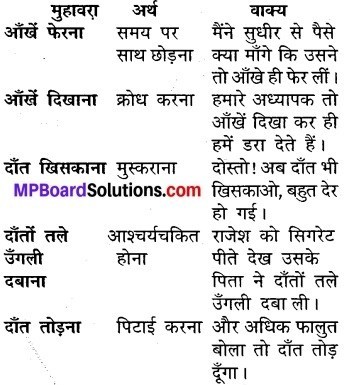
पाठ में आए इन मुहावरों के अर्थ लिखकर वाक्यों में प्रयोग कीजिए
आँखे फेरना, आँखें दिखाना, दाँत खिसकाना, दाँतों तले उंगली दबाना, दाँत तोड़ना।
उत्तर
Mp Board Class 7th Hindi Chapter 5

Mp Board Class 7th Subject Hindi प्रश्न 7.
‘हाथी के दाँत खाने के और दिखाने के और’ कहावत का प्रयोग करते हुए एक वाक्य बनाइए।
उत्तर
तुम्हारे बेटे ने सारे साल परिक्षा की तैयारी की किंतु वह फेल हो गया, सही कहते हैं ‘हाथी के दाँत खाने के और दिखाने के और’ होते हैं।

Mp Board Class 7th Hindi Sugam Bharti Solution प्रश्न 8.
इस पाठ में आया ‘डबलसेट’ शब्द अंग्रेजी भाषा का है, जिसे हिंदी में ज्यों का त्यों प्रयोग किया गया है। हिंदी में प्रयोग किए जाने वाले अंग्रेजी के पाँच शब्द लिखिए।
उत्तर
हिंदी में प्रयोग किए जाने वाले अंग्रेजी के पाँच शब्द :

  • फर्स्टक्लास
  • मोटरसाइकल
  • कार
  • मशीन
  • डॉक्टर।

दाँत हैं तो जहान है पाठ का परिचय

प्रस्तुत रचना एक हास्य रचना है जिसमें लेखक ने दाँतों के महत्त्व का उल्लेख किया है। लेखक मनुष्य के सभी अंगों के विश्लेषण के बाद तय करता है कि दाँतों से अधिक श्रेष्ठ अंग कोई नहीं है। कुछ विशेष जैसे-साँप, हाथी तथा कुत्ते के दाँत निकाल दिए जाएँ तो उनका अस्तित्व जैसे समाप्त हो जाता है। लेखक ने कहा लंबे दाँतों की अपनी ही विशेषता होती है। मुँह खोलते ही हँसता चेहरा नजर आता है। इसी तरह ‘हाथी के खाने के दाँत और’ तथा दिखाने के दाँत और होते हैं। दाँतों के बिना मनुष्य ने तो रो सकता है और न. ही हँस सकता है। इस तरह लेखक ने दाँतों को शरीर का सबसे खास अंग माना है।

दाँत हैं तो जहान है संदर्भ-प्रसंग सहित व्याख्या

1. शरीर के सभी …………………… पड़ता नहीं।

शब्दार्थ – पंचभूत शरीर = पृथ्वी, जल, आकाश, हवा व, अग्नि से बना शरीर; निष्पन्न = किया गया।

संदर्भ-प्रस्तुत काव्य पंक्तियाँ हमारी पाठय-पुस्तक ‘सुगम भारती’ ‘हिंदी सामान्य’ भाग-7 के पाठ-5 ‘दाँत हैं तो जहान हैं’ से ली गई है। इसके रचयिता श्रीनिवास वत्स हैं।

प्रसंग- पुस्तत पंक्तियों में शरीर के कई हिस्सों का वर्णन किया गया है।

व्याख्या-लेखक शरीर के कई हिस्सों का विश्लेषण करता है और उसे ज्ञात होता है शरीर में बहुत थोड़े अंग ऐसे है जो ठीक तरह से काम के नहीं है। अब बाल को ही लीजिए। क्या गंजे किसी बुद्धिमान की तरह नहीं सोच सकते। ईश्वर ने कुछ अंग तो ऐसे. दिए हैं जो मात्र शोभावान हैं।

विशेष-शरीर के अंगों की चर्चा की गई है।

2. आकार के अनुसार……………परम आवश्यक हैं। (प्र. 23-24)

शब्दार्थ-दरिया = बड़ी नदी; दंत विहीन = बिना दाँत के प्रतिद्वंद्वी = विरोधी, प्रतिस्पर्धी; सर्वोपरि सबसे ऊपर।

संदर्भ-पूर्ववत्।

प्रसंग-इमसें दाँतों के प्रकार तथा बल्कि अंगों से तुलना को दर्शाया गया है।

व्याख्या-लेखक के अनुसार दो प्रकार के दाँत होते हैं। पहले प्रकार के दाँत इतने विशाल होते हैं कि जो मुँह बंद करने पर भी बाहर निकले रहते हैं और दूसरे प्रकार के वे हमेशा मुँह के अंदर ही रहते हैं। जीभ की उपयोगिता को नकारा नहीं जा सकता परंतु जैसे-जैसे दाँत टूटते जाते हैं, हाब्द भी अशद्ध निकलने शुरू हो जाते है। झगड़े-आदि के समय सबसे पहले दाँत तोड़ने की बात करता है। बाकि अंगों से दाँत श्रेष्ठ ही साबित होते हैं। और खाने के लिए तो दाँत है ही अनिवार्य ।

MP Board Class 7th Hindi Solutions

MP Board Class 7th Sanskrit Solutions Chapter 12 प्रहेलिकाः

MP Board Class 7th Sanskrit Solutions Surbhi Chapter 12 प्रहेलिकाः

MP Board Class 7th Sanskrit Chapter 12 अभ्यासः

प्रहेलिकाः MP Board Class 7th Sanskrit प्रश्न 1.
एक शब्द में उत्तर लिखो
(क) सुप्तोऽपि नेत्रे क: न निमीलयति? [सोते हुए भी दोनों नेत्रों को कौन बन्द नहीं करती है?]
उत्तर:
मत्स्यः

(ख) फलानाम् दाता कः अस्ति? [फलों को देने वाला कौन होता है?]
उत्तर:
वृक्षः

(ग) पक्षिराजः कः अस्ति? [पक्षियों का राजा कौन है?]
उत्तर:
गरुड़ः।

Pakshiraj Ka Asti MP Board Class 7th Sanskrit प्रश्न 2.
एक वाक्य में उत्तर लिखो
(क) मूकः कथं जीवति? [गूंगा कैसे जीवित रहता है?]
उत्तर:
मूकः मौनेन जीवति। [गूंगा मौन रूप (बिना बोले) में जीवित रहता है।]

(ख) एकेन पादेन कः तिष्ठति? [एक पैर पर कौन खड़ा रहता है?]
उत्तर:
एकेन पादेन बको तिष्ठति। [बगुला एक पैर पर खड़ा रहता है।]

(ग) नारिकेलफले कति नेत्राणि भवन्ति। [नारियल के फल में कितनी आँखें होती हैं?]
उत्तर:
नारिकेलफले त्रिनेत्राणि भवन्ति। [नारियल के फल में तीन आँखें होती हैं।]

Prahelika In Sanskrit Class 7 MP Board प्रश्न 3.
रिक्त स्थानों की पूर्ति करो(पण्डितः, मम, मूकः, शूलपाणिः, तस्यादिः)
(क) न ……….. न तस्यान्तः।
(ख) साक्षरं न च………….।
(ग) त्रिनेत्रधारी न च………….।
(घ) स्वजाति जीवाः…………. भोजननि।
(ङ) मौनेन जीवामि मुनिन …………।
उत्तर:
(क) तस्यादिः
(ख) पण्डितः
(ग) शूलपाणिः
(घ) मम
(ङ) मूकः।

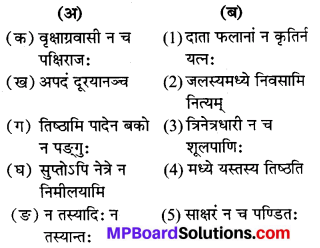
प्रहेलिका कक्षा 7 MP Board प्रश्न 4.
उचित मेल करो
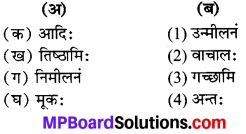
प्रहेलिकाः MP Board Class 7th Sanskrit
उत्तर:
(क) → (3)
(ख) → (5)
(ग) → (1)
(घ) → (2)
(ङ) → (4)

Pakshiraj Ka Hasti MP Board Class 7th Sanskrit प्रश्न 5.
सन्धि विच्छेद करो
(क) तस्यादिः
(ख) तस्यान्तः
(ग) वृक्षाग्रवासी
(घ) ममाप्यस्ति
(ङ) तवाप्यस्ति।
उत्तर:
(क) तस्य + आदिः
(ख) तस्य + अन्तः
(ग) वृक्ष + अग्रवासी
(घ) मम + अपि + अस्ति
(ङ) तव + अपि + अस्ति।

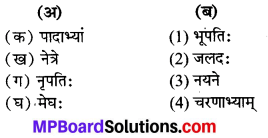
Sanskrit Prahelika Class 7 MP Board प्रश्न 6.
समानार्थक शब्दों का मेल करो
Pakshiraj Ka Asti MP Board Class 7th Sanskrit
उत्तर:
(क) → (4)
(ख) → (3)
(ग) → (1)
(घ) → (2)

Pakshi Raja Ka Asti MP Board Class 7th Sanskrit प्रश्न 7.
विपरीतार्थक शब्दों का मेल करो
Prahelika In Sanskrit Class 7 MP Board
उत्तर:
(क) → (4)
(ख) → (3)
(ग) → (1)
(घ) → (2)

Mp Board Class 7 Sanskrit Chapter 12 प्रश्न 8.
उदाहरण के अनुसार अन्वय की पूर्ति करो
(क) सुप्तः………… नेत्रे न निमीलयामि, जलस्य ……… नित्यं……………मम………… स्वजा. तिजीवाः, मान्या! ………… नामधेयं …………।
(ख) …………. तिष्ठामि बकः न……….. , दाता……….. न कृतिः …………. यत्नः, मौनेन”…………. मुनिः …………. मूकः, सेव्यः ………… कः नृपतिः……….. देवः।
उत्तर:
(क) अपि, मध्ये, निवसामि, भोजनानि मम, वदन्तु।
(ख) अहं पादेन, पङ्गुः, अहं फलानां न, जीवामि न, न, अस्मि, न।

प्रहेलिकाः हिन्दी अनुवाद

अपदं दूरगामी च, साक्षरं न च पण्डितः।
अमुखं स्फुटवक्ता च, मां जानाति सः पण्डितः॥१॥

Class 7th Sanskrit Chapter 12 MP Board अन्वयः :
अहं पादाभ्यां विना दूरं गच्छामि। अक्षरयुक्तः। किन्तु, पण्डितः नास्मि। अहं मुखेन विना स्पष्टं वदामि। यः मां जानाति सः पण्डितः।

Class 7 Sanskrit Chapter 12 MP Board अनुवाद :
मैं पैरों के बिना भी दूर तक जाता हूँ। अक्षरयुक्त हूँ किन्तु पण्डित नहीं हूँ। मैं मुख के बिना स्पष्ट बोलता हूँ। जो मुझे जानता है, वह विद्वान है।

न तस्यादिः न तस्यान्तः, मध्ये यस्तस्य तिष्ठति।
ममाप्यस्ति तवाप्यस्ति, यदि जानासि तद् वद॥२॥

अन्वयः :
‘न’ तस्य आदिः। ‘न’ तस्य अन्तः। मध्ये ‘य’ अस्ति। मम अपि अस्ति। तव अपि अस्ति। यदि जानासि तद् वद।

अनुवाद :
‘न’ उसका प्रारम्भ है। न उसका अन्त है। बीच में ‘जो’ है। मेरे भी पास है। तुम्हारे भी (पास) है। यदि जो जानता है, वह बोले। [नेत्र ]

सुप्तोऽपि नेत्रे न निमीलयामि,
जलस्य मध्ये निवसामि नित्यम्।
स्वजातिजीवा: मम भोजनानि,
वदन्तु मान्याः! मम नामधेयम्॥३॥

अन्वयः :
अहं सुप्ते अपि नेत्रे न निमीलयामि। जलस्य मध्ये एव निवसामि। स्वजातिजीवाः मम भोजनानि सन्ति। मान्याः! मम नाम वदन्तु।

अनुवाद :
मैं सोते हुए भी दोनों नेत्रों को बन्द नहीं करती हूँ। जल के बीच ही रहती हूँ। अपनी जाति के जीव ही मेरे भोजन हैं। हे माननीये! मेरा नाम बतलायें। [मत्स्य (मछली)]

तिष्ठामि पादेन बको न पगुः,
दाता फलानां न कृतिर्न यत्नः।
मौनेन जीवामि मुनिर्न मूकः,
सेव्योऽस्मि कोऽहं नृपतिर्नदेवः॥ ४॥

अन्वयः :
अहं पादेन तिष्ठामि, किन्तु न बकः, न पगुः। अहं फलानां दाताः, किन्तु न कृतिः, न यत्नः। मौनेन जीवामिः, किन्तु न मुनिः, न मूकः। सेव्यः अस्मि अहं:, किन्तु न नृपतिः, न देवः। अहं कः?

अनवाद :
मैं पैर पर (तने पर) खड़ा रहता हूँ। किन्तु बगुला नहीं हूँ, न लँगड़ा हूँ। मैं फलों को देने वाला हूँ किन्तु कोई रचना नहीं हूँ। न कोई प्रयत्न हूँ। मौन रूप में ही जीवित रहता हूँ किन्तु मैं न तो मुनि हूँ और न मूक (गँगा) हूँ। मैं सेवा किये जाने योग्य हूँ, किन्तु राजा नहीं हूँ, न (कोई) देवता हूँ। (बताओ) मैं कौन [वृक्ष]

वृक्षाग्रवासी न च पक्षिराजः,
त्रिनेत्रधारी न च शूलपाणिः।
त्वग्वस्त्रधारी न च सिद्धयोगी,
जलं च विभ्रन्न घटो न मेघः॥५॥

अन्वयः :
अहं वृक्षाग्रवासी, किन्तु न पक्षिराजः। अहं त्रिनेत्रधारी:, किन्तु न शूलपाणिः, अहं त्वग्वस्त्रधारी किन्तु न सिद्धयोगी। जलं विभ्रन् किन्तु न घटः, न मेघः।

अनुवाद :
मैं वृक्ष के अगले भाग पर रहता हूँ। किन्तु मैं पक्षिराज (गरुड़) नहीं हूँ। मैं तीन नेत्र धारण करने वाला हूँ, किन्तु हाथ में त्रिशूल धारण करने वाला ‘शिव’ नहीं हूँ। मैं छाल के वस्त्र धारण करता हूँ, किन्तु कोई सिद्धि प्राप्त करने वाला योगी नहीं हूँ। जल से परिपूर्ण हूँ परन्तु घड़ा नहीं हूँ (और) न बादल है। [नारियल]

प्रहेलिकाः शब्दार्थाः

अपदं = बिना पैर वाले। दूरयानम् = दूर तक जाने वाला वाहन। (दूरगामी = दूर तक जाने वाला।) साक्षरम् = अक्षरयुक्त। अमुखम् = बिना मुख वाले। स्फुटवक्ता = स्पष्ट बोलने वाला। तस्यादिः = उसका प्रारम्भ। तस्यान्तः = उसका अन्त। ममाप्यस्ति = मेरे पास भी है। निमीलयामि = मैं मूंद लेता हूँ। वदन्तु = कहें। नामधेयम् = नाम। कृतिः = रचना। सेव्योस्मि = सेवा योग्य हूँ। वृक्षाग्रवासी = वृक्ष के ऊपर रहने वाला। पक्षिराजः = गरुड़ (पक्षियों का राजा)। विभ्रन् = धारण करता हुआ। शूलपाणिः = हाथ में शूल (त्रिशूल) धारण करने वाले भगवान शंकर। त्वग्वस्त्रधारी = पेड़ की छाल के वस्त्र धारण करने वाले। त्वक् = पेड़ की छाल।

MP Board Class 7th Sanskrit Solutions