MP Board Class 11th General English Grammar Modals

Students who are studying 11th can get the free Madhya Pradesh Board Solutions for General English Grammar Modals Questions and Answers PDF here. You can download MP Board Class 11th English Solutions Questions and Answers PDF on this page. Practice questions of Mp Board Solutions of 11th English subject as many times as possible to get good marks.

MP Board Class 11th General English Grammar Modals

Gather chapter wise MP Board Solutions for 11th English Study Material to score the highest marks in the final exam. Various chapters and subtopics are given clearly in MP Board Class 11th English Solutions Objective Questions Questions and Answers Material. All the MP Board Solutions for 11th English Questions with detailed answers are provided by subject experts. The step by step MP Board Class 11th English Objective Questions and Answers guide will help you to enhance your skills in General English Grammar Modals. Here, along with the subject knowledge, General English Grammar Modals knowledge also plays an important role. So, students should download MP Board Solutions 11th English and read it to attempt all the questions with 100% confidence.

Anomalous finites be, have तथा do व उनके रूप temporal finites कहलाते हैं और अंग्रेजी भाषा की व्याकरण में महत्त्वपूर्ण भूमिका निभाते हैं। इनकी negatives, questions, tenses और passives की रचना में बड़ी अहम् भूमिका होती है। किन्तु शब्दकोष में इनका अर्थ देखने से हमें विशेष लाभ नहीं होता क्योंकि इनमें शाब्दिक अर्थ नहीं के बराबर होता है। इसके विपरीत can, could, may, might, shall, should, will, would, must, ought to, need, dare और used to जिन्हें हमने modal finites के अन्तर्गत रखा है, व्याकरण में महत्त्वपूर्ण भूमिका निभाने के साथ-साथ अर्थ के क्षेत्र में भी बड़ी अहम् भूमिका निभाते हैं। Modal finites में आपस में काफी समानताएँ हैं :

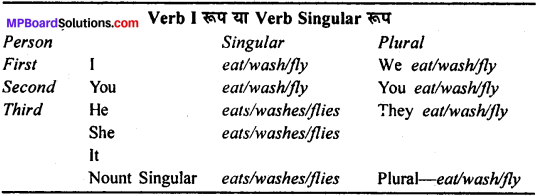
1. Form की दृष्टि से modal finites अन्य finites से काफी भिन्न हैं। 3rd person singular subject के साथ इनमें -5 या-es नहीं लगता। इस प्रकार इनके infinitive, present participle तथा past participle forms का उपयोग नहीं होता।

2. could, might, should और would क्रमश: can, may, shail और will के past tense के रूप में प्रयुक्त होते हैं। परन्तु यह उनके function का केवल एक छोटा-सा क्षेत्र है। इनका अधिकतर उपयोग present और future की घटनाओं की अभिव्यक्ति के लिए होता है। शेष में से dare, need, must और ought ‘to के past tense के रूप उपलब्ध नहीं हैं तथा उनका उपयोग भूतकाल की घटनाओं के लिये नहीं होता। वहीं used to का present tense का रूप उपलब्ध नहीं है व उसका उपयोग present या future की घटनाओं के लिये नहीं किया जाता।

3. वास्तव में need और used दोनों एक ही spelling की दो अलग-अलग क्रियाएँ हैं तथा दोनों का कार्यक्षेत्र और अर्थ एक-दूसरे से काफी भिन्न हैं। एक need anomalous finite के समान कार्य करती है वह उसके साथ questions और negatives में do के forms की आवश्यकता नहीं होती जबकि जो need regular verb के समान कार्य करती है जिसका अर्थ होता है “आवश्यकता होना”; उसके साथ questions और negatives में do के forms का उपयोग करना पड़ता है:

  • We need a lot of paper every month.
  • We do not need a lot of paper every month.
  • Do we need a lot of paper every month?

इसी प्रकार use की दो क्रियाएँ हैं, एक anomalous finite के समान काम करती है-used to- तथा दूसरी regular verb के समान कार्य करती है तथा इसके साथ questions और negatives में do के form का उपयोग करना पड़ता है :

  • They use a lot of paper every month.
  • They do not use a lot of paper every month.
  • Do they use a lot of paper every month?

4. Ought और used को छोड़कर सभी के साथ main verb का bare infinite (infinitive without to) का उपयोग होता है। केवल ought और used के बाद to-infinitive का उपयोग होता है :
You need not come to this meeting.
(तुम्हारा इस बैठक में आना जरूरी नहीं है।)

You must come to this meeting.
(तुम्हारा इस बैठक में आना जरूरी है।)

You ought to come to this meeting.
(तुम्हें इस बैठक में आना चाहिए।)

Can you come to this meeting?
(क्या तुम इस बैठक में आ सकते हो?)

I used to attend such meetings.
(भूतकाल में मैं इस प्रकार की बैठकों में आता था।)

5. Function की दृष्टि से भी modal finites अन्य finites से काफी भिन्न हैं। इनका उपयोग ऐसी घटनाओं के लिए नहीं किया जा सकता जो निश्चित रूप से घट रही हों या घट चुकी हों। used to का उपयोग केवल भूतकाल में आदतन घटने की प्रत्याशा में उनके घटने की सम्भावना, आवश्यकता, अनिवार्यता आदि की चर्चा करने के लिए किया जाता है :

They can finish the work by Saturday.
(उनमें शनिवार तक कार्य पूर्ण करने की योग्यता है।)

They may finish the work by Saturday.
(उनके शनिवार तक काम पूरा कर लेने की सम्भावना है।)

They might finish the work by Saturday.
(ऐसी सम्भावना है कि वे शनिवार तक काम पूरा कर लेंगे–पर सम्भावना ऊपर वाले वाक्य से कम है)

They will finish the work by Saturday.
(वे शनिवार तक काम पूरा कर लेंगे।)

They must finish the work by Saturday.
(उन्हें शनिवार तक काम पूरा कर लेना होगा।)

They needn’t finish the work by Saturday.
(यह आवश्यक नहीं है कि वे शनिवार तक काम पूरा कर लें।)

They ought to finish the work by Saturday.
(शनिवार तक काम पूरा करना उनकी नैतिक बाध्यता है।)

6. Modal finites के बाद perfect infinitive (have + past participle) का उपयोग कर हम ऐसी घटनाओं की चर्चा कर सकते हैं जिन्हें भूतकाल में घटना था परन्तु वे नहीं घर्टी या जिनके बारे में निश्चित रूप से ये नहीं जानते कि वे घटी या नहीं :

They could have come earlier.
(वे पहले आ सकते थे-पर नहीं आए।)

You should have told me at once.
(तुम्हें मुझको तुरन्त बताना चाहिए था—पर तुमने नहीं बताया।)

They may have missed the train.
(हो सकता है उनकी ट्रेन छूट गई हो हमें निश्चित नहीं मालूम कि क्या हुआ।)

They will have come by now.
(वे अभी तक आ चुके होंगे-हमें निश्चित नहीं मालूम कि वे वास्तव में आए या नहीं।)

She must have typed the letter.
(उसने पत्र टाइप कर लिया होगा—सम्भावना है, पर निश्चित नहीं मालूम।)

SHALL and WILL

Future tense में 1st person subjects-I और we के साथ shall तथा 2nd person -you- 311 3rd person—he, she, it, they, the boy, the car, the girls, etc. के साथ will का उपयोग किया जाता है।

I shall be seventy next birthday.
(मैं अगले जन्मदिन पर सत्तर वर्ष का हो जाऊँगा।)

We shall have a good monsoon this year.
(इस वर्ष मानसून की वर्षा अच्छी होगी।)

Tomorrow will be Monday.
(कल सोमवार होगा।)

The sun will set at 17.56 hours today.
(आज सूर्यास्त 5 बजकर 56 मिनट पर होगा।)

Next year they will celebrate the golden jubilee of their marriage.
(अगले वर्ष वे अपनी शादी की स्वर्ण जयन्ती मनायेंगे।)

The train will reach Jabalpur about an hour late.
(ट्रेन जबलपुर करीब एक घंटे देर से पहुँचेगी।)

Note : क्योंकि औपचारिक लेखन व भाषण के अलावा सभी परिस्थितियों में
subjects, विशेषकर pronoun subjects के साथ shall और will का contracted form-II,जो दोनों के लिये एक जैसा ही है प्रयुक्त होता है, अत: Modern English में shall और will का अन्तर करीब-करीब समाप्त हो गया है।

केवल प्रश्नवाचक वाक्यों में, जहाँ ये subject के पूर्व आते है और इस कारण इनके contracted form का उपयोग नहीं किया जा सकता, इनका अन्तर अभी भी बरकरार है।

Shall

1. Shall का उपयोग ऐसे प्रश्नवाचक वाक्यों में किया जाता है जिनके द्वारा हम किसी के लिये कुछ करने का प्रस्ताव करते हैं तथा हमें उम्मीद होती है कि हमारा प्रस्ताव स्वीकार कर लिया जायेगा :

Shall I spell that word for you?
(क्या मैं उस शब्द की हिज्जे कर दूँ?)

2. Shall का उपयोग ऐसे प्रश्नवाचक वाक्यों में भी किया जाता है जिनके द्वारा हम किसी अन्य व्यक्ति के साथ मिलकर कुछ करने का सुझाव देते हैं :

Shall we go and see a film?
(क्यों न हम लोग जाकर एक फिल्म देखें?)

3. Shall का उपयोग ऐसे प्रश्नवाचक वाक्यों में भी किया जाता है जिनके द्वारा हम स्वयं कुछ करने का सुझाव देते हैं :

Shall I contact the chairman?
(क्या मैं चेयरमेन से सम्पर्क स्थापित करूँ?)

4. Shall का उपयोग ऐसे प्रश्नवाचक वाक्यों में भी किया जाता है जिनके द्वारा हम किसी से निर्देशों के लिए आग्रह करते हैं :

What shall we do now?
(अब हमें क्या करना चाहिए?)

5. Shall का उपयोग ऐसे प्रश्नवाचक वाक्यों में भी किया जाता है जिनके द्वारा हम किसी से सलाह देने का आग्रह करते हैं :

Which book shall I buy?
(मैं कौन-सी किताब खरीदूँ?)

6. Shall का उपयोग ऐसे प्रश्नवाचक वाक्यों में किया जाता है जिनके द्वारा कुछ जानकारी चाही जाती है :
Shall I need some help there?
(क्या वहाँ मुझे कुछ सहायता की आवश्यकता होगी?)

When shall we go there?
(हम लोग वहाँ कब जाएँगे?)

Where shall we be this time tomorrow?
(कल इस समय हम कहाँ होंगे?)

7. 2nd और 3rd person subjects के साथ shall का उपयोग कानूनी या शासकीय शर्तों में होता है। ऐसे वाक्यों में इसके contracted form का उपयोग नहीं किया जाता:

Candidates shall not be allowed to use calculators.
(परीक्षार्थियों को केलक्युलेटर का उपयोग नहीं करने दिया जाएगा।)

Applicants shall submit three copies.
(आवेदकों को तीन प्रतियाँ प्रस्तुत करनी होंगी।)

Will

1. 1st person subjects के साथ will का उपयोग ऐसे वाक्यों में किया जाता है जो
किसी कार्य को करने में सहयोगशीलता दिखाते हैं :

A. Can somebody help me?
(क्या कोई मेरी मदद कर सकता है?)

B. I will.
(मैं करूँगा।)

2. 1st person subjects के साथ will का उपयोग ऐसे वाक्यों में किया जाता है, जो किसी कार्य को करने का प्रस्ताव करते हैं :
A. There isn’t any bread in the house.
(घर में डबलरोटी नहीं है)

B. Don’t worry. I will go and get some.
(चिन्ता मत करिये। मैं जाकर ले आऊँगा।)

3. 1st person subjects के साथ will का उपयोग ऐसे वाक्यों में किया जाता है जिनसे दृढ़ निश्चय या वादा प्रकट किया जाता है।

I will stop smoking.
(मैं सिगरेट पीना छोड़ दूंगा।)

4. 1st person subjects के साथ will का उपयोग ऐसे वाक्यों में किया जाता है जो धमकी देने का काम करते हैं :
I will break your neck.
(मैं तुम्हारी गर्दन तोड़. दूंगा।)

5. 2nd person subject के साथ will का प्रश्नवाचक वाक्य में उपयोग किसी से कुछ करने का अनुरोध करने के लिए किया जाता है :

Will you pass the salt, please?
(कृपया क्या नमक इधर बढ़ाने का कष्ट करेंगे?)

अनुरोध के लिय उपयोग किये गये प्रश्नवाचक वाक्यों में will के स्थान पर would का उपयोग अनुरोध को ओर अधिक विनम्र बना देता है :
Would you pass the salt, please?
(कृपया क्या नमक इधर बढ़ाने का कष्ट करेंगे?)

6. 2nd person subject के साथ will का उपयोग आज्ञा देने के लिए किया जाता है:
Will you be quiet?
(खामोश रहो।)

7. 2nd person subject के साथ will का उपयोग ऐसे प्रश्नवाचक वाक्यों में किया जाता है जिनका अभिप्राय किसी से कोई कार्य करने का अनुरोध करने के लिए किया जाता है :
Will you have some more coffee?
(थोड़ी और कॉफी लीजिए।)

ऐस प्रश्नों में will के स्थान पर won’t का उपयोग अनुरोध को और सबल बना देता है:

Won’t you have some more coffee?
(थोड़ी और कॉफी लीजिए न।)

8. 1st और 3rd person subjects के साथ won’t का उपयोग किसी कार्य को करने से इन्कार करने के लिए भी किया जाता है :

No I won’t do it.
(नहीं, मैं यह नहीं करूँगा।)

She won’t open the door. (वह दरवाजा खोलने से इन्कार कर रही है।)

3rd person subjects के साथ won’t का उपयोग ऐसी चीजों की चर्चा के लिए भी किया जाता है, जो हमारी इच्छा के अनुसार काम नहीं करती :
The scooter won’t start.
(स्कूटर स्टार्ट नहीं हो रहा है।)

The door won’t open.
(दरवाजा खुल ही नहीं रहा है।)

9. 2nd और 3rd person subjects के साथ will का उपयोग ऐसे प्रश्नवाचक वाक्यों में किया जाता है जिनके द्वारा कुछ जानकारी चाही जाती है :

How will you reach there?
(तुम वहाँ कैसे पहुँचोगे?)

Why will he oppose our suggestions?
(वह हमारे सुझाव का विरोध क्यों करेगा?)

10. 3rd person subjects के साथ will का उपयोग तथ्यात्मक कथन के लिए भी किया जाता है :
There will be time for questions after the lecture.
(लेक्चर के बाद प्रश्नों के लिये समय होगा।)

They will not be able to come tomorrow.
(वे कल नहीं आ सकेंगे।)

11: 3rd person subjects के साथ will का उपयोग वर्तमान के आदतन व्यवहार के लिए भी होता है :

She will sit for hours without saying anything.
(वह बिना कुछ कहे घंटों बैठी रहती है।)

12. 3rd person subjects के साथwill तथा won’t का उपयोग किसी चीज के स्वाभाविक व्यवहार या उसकी विशेषता बताने के लिए भी होता है :

Sulphuric acid will dissolve most metals.
(सल्फ्यूरिक एसिड अधिकतर धातुओं का विलयन कर लेता है।)

Gold won’t dissolve in hydrochloric acid.
(सोना हाइड्रोक्लोरिक एसिड में नहीं घुलता।)

Should And Would

1. Should और would का उपयोग subordinate clause में जबकि main clause की verb past tense में हो, shall और will के past form के रूप में होता है। ऐसा अधिकतर reported speech में होता है :

  • I said, “I shall be there before ten.”
  • I said that I should be there before ten.
  • He said, “They will see you again tomorrow.”
  • He said that they would see me again the next day.

Note: आजकल reported speech में 1st person subjects के साथ भी should के स्थान पर would का उपयोग करने की प्रवृत्ति बढ़ रही है। इसका एक कारण यह हो सकता है कि इससे should के औचित्य के अर्थ में व्याख्या की जाने की सम्भावना समाप्त हो जाती है :
I said I would be there before ten.

2. Should और would का उपयोग conditional constructions में भी होता है :

If I worked hard, I should be paid well.
(यदि मैं मेहनत से काम करता तो मुझे अच्छी मजदूरी मिलती।)

If he worked hard, he would be paid well.
(यदि वह मेहनत से काम करता तो उसे अच्छी मजदूरी मिलती।)

Note : ऐसे वाक्यों में भी आजकल 1st person subjects के साथ should के स्थान पर would का उपयोग करने की प्रवृत्ति बढ़ रही है :
If I worked hard, I would be paid well.

Should

1. Should और ought to का उपयोग सभी प्रकार के subjects के साथ कर्तव्य, बाध्यता, या औचित्य की चर्चा के लिए किया जाता है। बाध्यता को मुख्य रूप से दो भागों में बाँट सकते हैं :
(i) बाध्यता जहाँ चुनाव करने का अवसर नहीं होता-कानून या नियम के अनुरूप यह कर सकते हो, यह नहीं कर सकते,

जैसे-
In India, you must keep to your left while driving.
(भारत में, तुम्हें बायें हाथ पर वाहन चलाना चाहिए।)

(ii) बाध्यता जहाँ चुनाव करने का अवसर होता है, जैसे
You should help old people.
(तुम्हें बूढ़े व्यक्तियों की मदद करनी चाहिए।)

यह एक सामाजिक बाध्यता है। यदि तुम ऐसा नहीं करते तो कानूनन तुम्हें दण्ड नहीं मिल सकता पर समाज में तुम्हारे सम्मान को ठेस पहुँच सकती है, या:

I ought to go and see my doctor.
(मुझे अपने डॉक्टर से मिलना चाहिए।)

यदि मैं ऐसा नहीं करता तो मुझे दण्ड तो नहीं मिल सकता पर इसके न करने से मुझे ही नुकसान होने वाला है।

Note : Should और ought to के अर्थ में बहत साम्य है. अतः इन अर्थों में एक के स्थान पर दूसरे का उपयोग किया जा सकता है। (देखिये आगे ought to)

2. Should का उपयोग सम्भावना व्यक्त करने के लिए किया जाता है :

Our team should win this series.
(Provided they keep playing like this.)
(हमारी टीम यह श्रृंखला जीत जायेगी–यदि वे इसी प्रकार खेलते रहे तो।)

3. Should का उपयोग यह व्यक्त करने के लिए भी किया जाता है कि क्या करना अच्छा या उचित है। यह ऊपर 1 पर बताए अर्थ के करीब-करीब समान है :

We should send him a reply.
(हमें उसे उत्तर दे देना चाहिए।)

We shouldn’t spend all the money.
(हमें सारा पैसा खर्च नहीं कर देना चाहिए।)

4. Should का उपयोग अन्य व्यक्तियों को क्या करना चाहिए इस बाबत सलाह देने के लिए भी किया जाता है :
You should attend this meeting.
(तुम्हें इस बैठक में उपस्थित रहना चाहिए।)

You shouldn’t watch TV for long duration.
(तुम्हें बहुत देर तक टी.वी. नहीं देखना चाहिए।)

5. Should का उपयोग स्थिति विशेष पर लोगों का अभिमत जानने के लिए भी किया जाता है। ऐसे वाक्य अक्सर I think’, ‘I don’t think’, या ‘Do you think’ से शुरू होते हैं :

I think he should join the army.
(मैं सोचता हूँ उसे सेना में भर्ती हो जाना चाहिए।)

I don’t think that a mid-term poll should be held.
(मैं नहीं सोचता कि मध्यावधि चुनाव होना चाहिए।)

Do you think we should go there?
(क्या तुम सोचते हो कि हमें वहाँ जाना चाहिए?)

6. Should के बाद perfect infinitive का उपयोग कर यह बताया जाता है कि भूतकाल में हमें किसी घटना के घटने की आशा थी पर वह नहीं घंटी :

They should have arrived yesterday.
(उन्हें कल आ जाना चाहिए था-परन्तु वे नहीं आए।)

Would

1. Would का उपयोग भूतकाल की ऐसी घटनाओं के लिए किया जाता है जो नियमित रूप से घटती रही हों :

We would normally go to school by bus.
(हम सामान्यतः बस से स्कूल जाते थे।)

Note : इस अर्थ में would का उपयोग उन क्रियाओं के साथ नहीं होता जो सामान्यतः continuous tenses में उपयोग (देखिये Present Progressive Tense) इस अर्थ में would के स्थान पर used to का उपयोग किया जा सकता है :

  • We used to go to school by bus.

Used to का उपयोग उन क्रियाओं के साथ भी किया जा सकता है जो सामान्यत: continuous tenses में उपयोग में नहीं लाई जाती :
People used to believe that the earth was flat.
(लोग विश्वास करते थे कि पृथ्वी चपटी है।)

2. Would you का उपयोग किसी से कुछ करने के लिए कहने को किया जाता है। इस अर्थ में will you का उपयोग भी किया जाता है। Will you और Would you दोनों का उपयोग सामान्यतः सत्तासम्पन्न व्यक्तियों द्वारा किया जाता है।

Will you से would you अधिक विनम्र है :

  • Will you please leave the room?
  • Would you please leave the room?

3. औपचारिक परिस्थितियों में जब हम किसी से सहायता के लिए आग्रह करते हैं तब would you और could you दोनों का उपयोग किया जा सकता है। इनका उपयोग तब किया जाता है जब हम अत्यधिक विनम्रता दिखाते हुए किसी से ऐसा कुछ करने के लिए कहते हैं जिसमें कुछ अतिरिक्त मेहनत लगती हो। would you से could you अधिक विनम्र है:

Would you show me how to do this?
(क्या आप यह बताने का कष्ट करेंगे कि इसे कैसे किया जाता है?)

Could you show me how to do this?
(कृपया यह बताने का कष्ट करें कि इसे किस प्रकार किया जाता है।)

4. I would like के बाद to infinitive या noun group का उपयोग किसी से कुछ अनुरोध करने के लिए किया जाता है :
I would like to ask you à question.
(मैं आपसे एक प्रश्न पूछना चाहूँगा।)

I would like black coffee, please.
(मैं बिना दूध की कॉफी लेना चाहूँगा।)

5. Would you mind’ के बाद present participle का उपयोग कर किसी से कुछ करने के लिए अनुरोध किया जा सकता है:
Would you mind waiting a moment?
(क्या आप कुछ इन्तजार कर सकेंगे?)

6. ‘Would you like’ के बाद to- infinitive या noun group का उपयोग किसी से कुछ करने का निवेदन करने के लिए किया जाता है :
Would you like some more coffee?
(थोड़ी और कॉफी लीजिए।)

Would you like to come to the film with us?
(आप हमारे साथ फिल्म देखने चलिए न?)

7. Would like के बाद to- infinitive या noun group का उपयोग कोई क्या चाहता है यह बताने के लिए किया जाता है :

They would like to know the date of the next meeting.
(वे अगली मीटिंग की तारीख जानना चाहते हैं।)

He would like the work to be finished by Saturday.
(वह चाहता है कि शनिवार तक काम समाप्त हो जाए।)

Would not like का उपयोग यह बताने के लिए किया जाता है कि कोई व्यक्ति क्या नहीं चाहता :

They would not like your presence in the meeting.
(वे मीटिंग में तुम्हारी उपस्थिति नहीं चाहते।)

She would not like to go there alone.
(वह वहाँ अकेले जाना नहीं चाहती।)

8. Would hate, would love या would prefer के बाद to-infinitive याnoun group का उपयोग करके भी यह बताया जाता है कि कोई क्या चाहता है क्या नहीं चाहता :

I would hate to go there again.
(मैं फिर से वहाँ जाना पसन्द नहीं करूंगा।)

I would prefer a cup of tea.
(मैं एक कप चाय पसन्द करूँगा।)

Note: Would enjoy के बाद noun group या present participle का उपयोग किया जाता है, to- infinite का नहीं :

I would enjoy a bath before we leave.
(रवाना होने से पहले मैं स्नान करना पसन्द करूँगा।)

I would enjoy seeing the film again.
(मैं यह फिल्म दोबारा देखना पसन्द करूँगा।)

9. I wouldn’t mind’ के बाद noun group या present participle का उपयोग भी .. यह बताने के लिए किया जा सकता है कि हम क्या चाहते हैं :

I wouldn’t mind a cup of tea.
(मैं एक प्याला चाय चाहता हूँ।)

I wouldn’t mind going there alone.
(मैं वहाँ अकेला जाना चाहूँगा।)

CAN

1. Can का उपयोग यह बताने के लिए किया जाता है कि कोई कार्य सम्भव है :

Watching television can sometimes be boring.
(टेलीविजन देखना कभी-कभी उबाऊ हो सकता है।)

Cannot या can’t का उपयोग यह बताने के लिए किया जाता है कि कोई कार्य सम्भव ‘नहीं है :

You cannot learn English in just three months.
(तुम अंग्रेजी केवल तीन महीनों में नहीं सीख सकते।)

Note: Cannot हमेशा एक शब्द के समान लिखा जाता है। 2. Can का उपयोग यह बताने के लिए भी किया जाता है कि किसी में कुछ करने की सामर्थ्य है :

He can speak two languages.
(वह दो भाषाएँ बोल सकता है।)

Can not और can’t का उपयोग यह बताने के लिये किया जाता है कि किसी में कुछ करने का सामर्थ्य नहीं है :

She can’t lift this heavy table.
(वह इस भारी टेबिल को नहीं उठा सकती।)

3. Can और can’t का उपयोग verb of senses (see, hear, smell, taste, feel) के साथ यह बताने के लिए किया जाता है कि कोई व्यक्ति इनका उपयोग कर कुछ अनुभव कर पाता है अथवा नहीं:

I can hear that sound.
(मैं यह आवाज सुन रहा हूँ।)

I can’t see her from here.
(मैं यहाँ से उसे नहीं देख पा रहा हूँ।)

4. Can का उपयोग यह बताने के लिए भी होता है कि किसी व्यक्ति को कुछ करने की अनुमति है :
Any student can participate in this competition.
(कोई भी विद्यार्थी इस प्रतियोगिता में भाग ले सकता है।)

Cannot या can’t का उपयोग यह बताने के लिए किया जाता है कि उन्हें ऐसा करने की अनुमति नहीं है :
Students cannot use calculators in the exam.
(विद्यार्थी परीक्षा में केलक्युलेटर का उपयोग नहीं कर सकते।)

5. Can का उपयोग किसी कार्य करने की अनुमति चाहने के लिए भी किया जाता है। Can का उपयोग अनौपचारिक परिस्थितियों में किया जाता है :

Can I ask a question?
(क्या मैं एक प्रश्न पूछ सकता हूँ?)

6. Can का उपयोग किसी को कोई कार्य करने की अनुमति प्रदान करने के लिए भी किया जाता है। इसका उपयोग अनौपचारिक परिस्थितियों में होता है:

She can take a day off.
(वह एक दिन का अवकाश ले सकती है।)

Cannot या can’t का उपयोग किसी काम के करने की अनुमति से इन्कार करने के लिए किया जाता है :

Student : Can I leave the class for a moment?
(विद्यार्थी : क्या मैं कुछ देर के लिये कक्षा से बाहर जा सकता हूँ?)

Teacher : No, You can’t.
(शिक्षकः नहीं, तुम नहीं जा सकते।)

7. Can का उपयोग अनौपचारिक परिस्थितियों में सहायता के लिये अनुरोध करने के लिये भी किया जाता है। ऐसा तभी किया जाता है जब सहायता के काम में कम समय व मेहनत लगती हो :

Can you give me his telephone number?
(क्या आप मुझे उसका टेलीफोन नम्बर बताएँगे?)

8. Can का उपयोग किसी की सहायता के लिये कुछ करने के प्रस्ताव में भी किया जाता हैं :

Can I help you with your homework?
(क्या मैं तुम्हारे गृहकार्य में तुम्हारी मदद करूँ?)

9. I can’ का उपयोग विवरणात्मक वाक्यों में यह बताने के लिये भी किया जाता है कि हम उनकी सहायता करने की स्थिति में है व उनके लिए कुछ कर सकते हैं :

I am going to town, I can post the letters for you.
(मैं शहर जा रहा हूँ और तुम्हारे पत्र पोस्ट कर सकता हूँ।)

COULD

1. Could का उपयोग यह बताने के लिये किया जाता है कि किसी व्यक्ति में भूतकाल में कोई विशेष योग्यता थी।

He could run faster than any one else.
(वह किसी भी अन्य से तेज दौड़ सकता था।)

Note : Could का उपयोग यह बताने के लिये नहीं किया जाता कि भूतकाल में कोई व्यक्ति किसी विशेष समय पर कुछ कर सका था, इसके लिये managed to का उपयोग किया जाता है। Could तो बीते हुए समय की किसी सामान्य योग्यता की चर्चा के लिये काम में लाया जाता है :

Pete Sampras was a better player but Paes managed to beat him on that occasion.
(पीट सम्प्रास बेहतर खिलाड़ी था परन्तु पेस उस अवसर पर उसे हरा सका था।)

Could not का उपयोग यह बताने के लिये किया जाता है कि बीते हुए समय में किसी व्यक्ति में एक विशेष योग्यता नहीं थी :

A lot of them couldn’t read or write.
(उनमें से बहुत से व्यक्ति पढ़-लिख नहीं सकते थे।)

Note : Could not या couldn’t का उपयोग बीते हुए किसी विशेष अवसर पर कोई व्यक्ति कोई कार्य नहीं कर सका था इसको बताने के लिए भी किया जाता है :

Pete Sampras was a better player but on that occasion he could not beat Paes.
(पीट सम्प्रास बेहतर खिलाड़ी था परन्तु उस अवसर पर वह पेस को हरा नहीं सका था।)

2. Could का उपयोग यह बताने के लिए भी किया जाता है कि बीते हुए समय में किसी व्यक्ति को कुछ करने की अनुमति थी :

We could keep library books for the whole session.
(हम पुस्तकालय की किताबें पूरे सत्र रख सकते थे।)

Could not या couldn’t का उपयोग यह बताने के लिए किया जाता है कि उन्हें कुछ करने की अनुमति नहीं थी :

We couldn’t go to the library after 5 p.m.
(हम शाम के 5 बजे के बाद पुस्तकालय में नहीं जा सकते थे।)

3. Could का उपयोग किसी काम को करने की अनुमति मांगने के लिये किया जाता है। Can की अपेक्षा could का प्रयोग अधिक विनम्रता दर्शाता है :

Could I just ask you a question?
(क्या मैं आपसे एक प्रश्न पूछ सकता हूँ?)

4. Could के बाद you का उपयोग कर हम किसी से कोई काम करने के लिये कह सकते हैं। Could का उपयोग इसे बहुत विनम्र बना देता है :

Could you just open that window?
(क्या आप उस खिड़की को खोल देंगे?)

Note: Could you का उपयोग औपचारिक परिस्थितियों में किया जाता है :

  • Can you show me how to do it? (informal)
  • Could you show me how to do it? (formal)

5. Could का उपयोग कुछ करने का सुझाव देने के लिये भी किया जाता है :

We could meet next Sunday.
(हम लोग अगले रविवार को मिल सकते हैं।)

6. Could I का उपयोग ऐसे प्रश्नों में किया जाता है जिनके द्वारा हम किसी के लिए कुछ करने का प्रस्ताव करते हैं। Can की अपेक्षा Could I प्रस्ताव को अधिक विनम्र बनाता है :

Could I help you carry those bags?
(क्या मैं इन थैलों को ले जाने में आपकी मदद करूँ?)

7. I could का उपयोग ऐसे वाक्यों में किया जाता है जिनके द्वारा आप किसी को यह बताने का प्रयत्न करते हैं कि आप उनकी मदद करने की स्थिति में हैं:

I could pay some of the rent.
(कुछ किराया मैं चुका सकता हूँ?)

8. Could के बाद perfect infinitive का उपयोग यह बताने के लिए किया जाता है कि बीते हुए समय में कुछ होने की सम्भावना थी परन्तु आप निश्चित रूप से यह नहीं कह सकते कि वैसा हुआ अथवा नहीं :

They could have been you.
(हो सकता है कि उन्होंने तुम्हें देख लिया हो।)

इसी प्रकार की नकारात्मक संरचना could not + perfect infinitive यह बताती है कि यह सम्भव नहीं है कि कोई घटना घटी हो :
His train was late by two hours, so he could not have reached in time.
(उसकी ट्रेन दो घंटे देर से चल रही थी, अतः यह सम्भव नहीं है कि वह समय से पहुँच गया हो।)

9. Could के बाद perfect infinitive का उपयोग यह बताने के लिये भी किया जाता हैं कि बीते हुए समय में किसी घटना के घटने की सम्भावना थी परन्तु वह नहीं घटी :

You could have broken your legs.
(तुमने अपना पैर तोड़ लिया होता।)

10. Could के बाद perfect infinitive का उपयोग यह बताने के लिए भी किया जाता है कि बीते हुये समय में किसी में कुछ करने की सामर्थ्य थी किन्तु उसने वैसा नहीं किया। ऐसा उस समय किया जाता है जब तुम कार्य के न किए जाने पर अपनी नापसन्दगी दिखाना चाहती हो :

You could have told me earlier.
(तुम मुझे पहले बता सकते थे।)

MAY

1. May का उपयोग यह बताने के लिए किया जाता है कि कोई कार्य सम्भव तो है पर हम निश्चित तौर पर यह नहीं कह सकते कि वैसा होगा :

They may help us.
(हो सकता है वे हमारी मदद करें।)

इसी प्रकार के अर्थ की नकारात्मक अभिव्यक्ति के लिए may not का उपयोग किया जाता है :

They may not get a house in our locality.
(हो सकता है कि उन्हें हमारे इलाके में मकान न मिले।)

First person के साथ प्रश्नवाचक वाक्यों में may का उपयोग किसी काम को करने की अनुमति प्राप्त करने के लिये किया जाता है। परन्तु may का उपयोग औपचारिक (formal) परिस्थितियों में ही किया जाता है-अनौपचारिक परिस्थितियों में can का उपयोग होता है :

May I come in?
(क्या मैं अन्दर आ सकता हूँ?)

3. May का उपयोग किसी काम को करने की अनुमति प्रदान करने के लिए भी किया जाता है। ऐसा औपचारिक परिस्थितियों में ही होता है :

You may leave as soon as you have finished.
(जैसे ही तुम्हारा काम पूरा हो तुम जा सकते हो।)

4. May का उपयोग यह बताने के लिए भी किया जाता है कि आमतौर से ऐसा करने की इजाजत है :

Candidates may submit an advance copy.
(प्रत्याशियों को एडवान्स कॉपी भेजने की इजाजत है।)

इस प्रकार के अर्थ की नकारात्मक अभिव्यक्ति के लिए may not का उपयोग किया , जाता है :

Candidates may not use calculators.
(परीक्षार्थियों को कलक्युलेटर के उपयोग की इजाजत नहीं है।)

5. May के बाद perfect infinitive का उपयोग यह बताने के लिए किया जाता है कि भूतकाल में ऐसा हुआ हो यह सम्भव तो है पर हम निश्चित रूप से नहीं कह सकते कि ऐसा हुआ था :

You may have seen this advertisement.
(हो सकता है तुमने यह विज्ञापन देखा हो।)

इसी प्रकार के अर्थ की नकारात्मक अभिव्यक्ति के लिये may not के बाद perfect infinitive का उपयोग होता है :

They may not have seen you.
(हो सकता है उन्होंने तुम्हें नहीं देखा हो।)

Might

1. Might का उपयोग भी यह बताने के लिये किया जाता है कि कोई कार्य सम्भव तो है पर हम निश्चित रूप से यह नहीं कह सकते कि वैसा होगा :

He might come to the meeting.
(सम्भव है कि वह मीटिंग में आ जाए।)

Might के बाद व्यक्त अनिश्चितता may से ज्यादा होती है।

2. You के बाद might का उपयोग like या want जैसी क्रिया के साथ बहुत ही विनम्रता के साथ कुछ सुझाव देने के लिए किया जाता है :

You might want to see another book.
(कदाचित आप एक और किताब देखना पसन्द करेंगे।)

3. Might के बाद perfect infinitive का उपयोग यह बताने के लिए किया जाता है कि भूतकाल में ऐसा हुआ हो, यह सम्भव तो है परन्तु हम निश्चित रूप से यह नहीं कह सकते कि ऐसा हुआ था। Might का उपयोग may से अधिक अनिश्चितता बताता है :

You might have seen this advertisement.
(हो सकता है आपने यह विज्ञापन देखा हो।)

इसी प्रकार के अर्थ की नकारात्मक अभिव्यक्ति के लिए might nor के बाद perfect infinitive का प्रयोग किया जाता है :

They might not have seen you.
(हो सकता है उन्होंने तुम्हें नहीं देखा हो।)

MUST
1. Must का उपयोग तब किया जाता है जब वक्ता किसी चीज के बारे में पूर्ण रूप से आश्वस्त हो :

You must be Mr. Gupta’s son.
(मैं निश्चित रूप से कह सकता हूँ कि तुम गुप्ताजी के पुत्र हो।)

2. जब वक्ता पूर्ण रूप से आश्वस्त हो कि ऐसा नहीं है तो must not का उपयोग नहीं किया जाता। इसके लिए cannot या can’t का उपयोग होता है :

You cannot be Mr. Gupta’s son. (And not : must not be)
(मैं निश्चित रूप से कह सकता हूँ कि तुम गुप्ताजी के पुत्र नहीं हो।)

3. Must का उपयोग यह बताने के लिए भी होता है कि किसी के लिए कुछ करने की बाध्यता (obligation) है या उसके लिए ऐसा करना आवश्यक है। Must का उपयोग यह बताता है कि बाध्यता या आवश्यकता वक्ता की ओर से है :

You must go now.
(अब तुम्हें जाना चाहिए-यह बाध्यता मेरी ओर से है।)

जब वक्ता यह बताना चाहता है कि बाध्यता किसी और व्यक्ति की ओर से है वह तो केवल सूचित कर रहा है, तो वह have to का उपयोग करता है :

You have to go now.
(अब तुम्हें जाना चाहिए—यह बाध्यता किसी और की ओर से है।)

4. जब वक्ता यह बताना चाहता है कि किसी काम को नहीं करना आवश्यक है तब वह must not का उपयोग करता है :

You must not come tomorrow.
(तुम्हें कल नहीं आना है—यह आवश्यक है कि तुम कल नहीं आओ।)

जब वक्ता यह बताना चाहता है कि किसी काम को करना आवश्यक नहीं है कर भी सकते हो नहीं भी कर सकते-तब वह need not या not have to का उपयोग करता है:

You need not come tomorrow.
Or
You don’t have to come tomorrow.
(तुम्हारे लिए कल आना आवश्यक नहीं है।)

5. जैसा ऊपर बताया जा चका है. must के past का form उपलब्ध नहीं है, अत: ऐसी परिस्थिति में have to के past का उपयोग किया जाता है :

We had to reach there before Sunday.
(हमें वहाँ रविवार से पहले पहुँचना आवश्यक था।)

NEED

जैसा हम पहले बता चुके हैं, need एक ही spelling की दो अलग-अलग क्रियाएँ हैं। Modal need का उपयोग अक्सर negative sentences में ही होती है।

1. Need not का उपयोग यह बताने के लिए किया जाता है कि कोई काम करना आवश्यक नहीं हैं :

You need not bring your homework on Monday.
(तुम्हें सोमवार को अपना होमवर्क लाना आवश्यक नहीं है।)

2. Need not के बाद perfect infinitive का उपयोग यह बताने के लिए किया जाता है कि किसी व्यक्ति ने भूतकाल में कोई काम किया था जिसका करना आवश्यक नहीं था :

I need not have bought a Hindi-English dictionary
(मुझे हिन्दी-अंग्रेजी शब्दकोश नहीं खरीदना था।)

DARE

Dare का उपयोग अक्सर affirmative sentences में नहीं होता :

I dare not go there again.
(मैं फिर वहाँ जाने का साहस नहीं कर सकता।)

लेकिन हमें इन दो उपयोगी fixed phrases को याद रखना चाहिए:

(i) Idare say………’ जिसका अर्थ होता है 1 suppose ………’ या I think probably……… I dare say you are tired after that long journey. (मैं समझता हूँ कि इस लम्बी यात्रा के बाद तुम थक गये हो।)

(ii) How dareyou……….’ How dare you speak to me like that? (तुम्हें मुझसे इस प्रकार बात करने का साहस कैसे हुआ?)

OUGHT TO

जैसा हम ऊपर बता चुके हैं, ought to का उपयोग जिन अर्थों की अभिव्यक्ति के लिए किया जाता है उनके लिए should का भी प्रयोग किया जा सकता है। दोनों के अर्थ में कोई बड़ा अन्तर नहीं है। 1. Ought to का उपयोग कर्तव्यजनित बाध्यता या आवश्यकता के लिए किया जाता है :

You ought to go and see your parents.
(तुम्हें जाकर अपने माता-पिता को देखना चाहिए।)

2. Ought to का उपयोग किसी काम को करने की सलाह देना या अनुशंसा करने के लिए भी किया जाता है :

You ought to improve your English if you want a good job.
(यदि तुम अच्छी नौकरी चाहते हो तो तुम्हें अपनी अंग्रेजी सुधारनी चाहिए।)

USED TO

जैसा हम पहले कह चुके हैं, used to का उपयोग केवल past की घटनाओं के लिए ही किया जा सकता है।
1. Used to का उपयोग यह बताने के लिये किया जाता है कि भूतकाल में कोई काम नियमित रूप से या आदतन किया जाता था पर अब ऐसा नहीं किया जाता :

I used to smoke a lot.
(मैं पहले बहुत सिगरेट पीता था-पर अब नहीं पीता।)

वर्तमान आदत को बताने के लिए am/is/are + used to + verb + ing का प्रयोग किया जाता है।

As-
I am used to taking a cup of milk every morning.
(मैं एक कप दूध (आदतन) सुबह पीता हूँ।)

2. Used to का उपयोग यह बताने के लिये नहीं किया जा सकता कि बीते हुए काल में कोई काम कितने समय तक होता रहा या कितनी बार हुआ। इसके लिए past indefinite tense का उपयोग करना पड़ता है :

  • I lived in Sagar for four years. (note : used to live)
  • I went to Delhi a number of times.. (note : used to go)

Exercise (a)
Fill in the blanks choosing the right modals.
1. We ………….. obey our teachers. (must, may, will) [2009]
2. I know the place so I ………….. advise you where to go. (can, must, should, ought to)
3. The swimmer was very tired but he ………….. reach the shore. (could, managed to, would, might)
4. He ………….. read well when he was only five years old. (could, managed to, might, would)
5. You should buy it now; prices ………….. go up after the budget. (will, must, may, shall)
6. We eat so that we ………….. live. (may, should, can) [2008]
7. The buses were all full so l………… take a taxi. (would, could, had to, must)
8. “Cars ………… not be parked here.” (must, need, could, should)
9. Hands up ! otherwise l…………… kill you.(may, will, shall) [2012]
10. He ………….. not ask for a pay rise for fear of losing his job. (must, need, dare, will)
11. You ………….. not do all the exercise. Ten sentences will be enough. (could, should, need, must)
12. We ……….. obey the law. [2010] (must, should, may)
13. I ……… be an atheist but now I believe in God. (would, could, used to, ought to)
14. ………… I do that sum for you? (shall, will, can, may)
15. Come what may I ………. stop smoking? (shall, will, can, may)
16. He said I………….use his telephone at any time. (dare, might, should) [2013]
17. He will get a driving license as soon as he ………… drive well. (will, shall, may, can)
18. The sun ….. rise at 6.17 hours tomorrow. (can, may, will, shall)
19. ……….. I need a lot of money for the journey? (can, may, will, shall)
20. You … speak up. I can hardly hear you. (must, will, can, may)
21. I ……….. be 18 next birthday. (can, may, shall, should)
22. You ………. not come with us if you don’t want to. (need, can, will, must)
23. I hope it will not be necessary, but I …… borrow some money from you. (have to, would, might, can)
24. When we were children we ……….. get up at five every morning. (would, could, should, might)
25. We………get up early in the morning. (should, would, must) [2008]
Answers
1. would for will, 2. won’t for will, 3. used to play, 4. could for would, 5. going for to go, 6. can for could, 7. could for can, 8. can for may, 9. might for may, 10. cannot for must, 11. may for might, 12. have to for must, 13. need not for must, 14. must not for must. 15. for must, 16. used to smoke for smokes, 17. may for can, 18. could for may, 19. could for can, 20. would for used to.

(b) Rewrite the following sentences as required :
1. Will you pass the sugar, please? (Express a more polite request)
2. Will you have some more tea? (Express a more polite offer)
3. Praveen was in the habit of playing cricket when he was in college. (Rewrite using used to) [2008]
4. Would you show me how to run this machine? (Express a more forceful request)
5. I would hate to go there again. (Use enjoy in place of hate)
6. Could I just ask you a question? (Make it slightly less formal)
7. Can I help you carry that box? (Make it more polite)
8. May I borrow this book for a day? (Make it less formal)
9. He may come to the meeting. (Express lesser possibility)
10. You must be an engineer. (Express a negative meaning)
11. They might have seen this film. (Express greater possibility)
12. I must go to Jabalpur tomorrow. (Express that the obligation is not from your side)
13. They must finish the work by Monday. (Express that there is no obligation to do it)
14. You Haust invite him to the meeting. (Express a negative obligation)
15. We must finish the work by Saturday. (Express a past obligation)
16. He smokes a hundred cigarettes a day. (Express a past habit)
17. You can leave as soon as you have finished. (Make it more formal)
18. We may keep library books for the whole session. (Express it in the past)
19. Can you give me his telephone number? (Make it more formal)
20. We used to go swimming on Sundays. (Use another modal without changing the meaning)
Answers
1, must, 2. can, 3. managed to, 4. could, 5. may, 6. may, 7. had to, 8. must, 9. will, 10. dare, 11. need, 12. must to, 13. used to, 14. Shall, 15. will, 16. might, 17. can, 18. will, 19. Shall, 20. must, 21. shall, 22. need, 23. might, 24. would, 25. must.

Charts Of Modals

Chart : 1
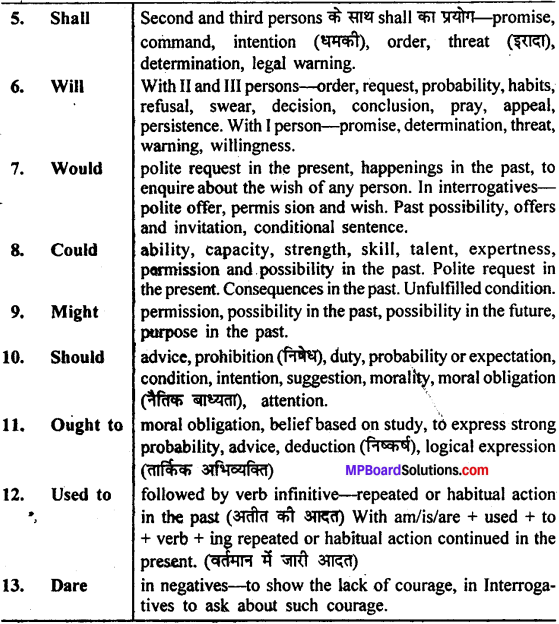
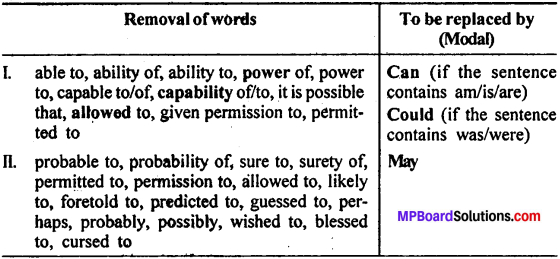
हम यहाँ एक चार्ट के माध्यम से यह स्पष्ट कर रहे हैं कि कौन-सी Modal Auxiliary किस बात को प्रकट करती है।
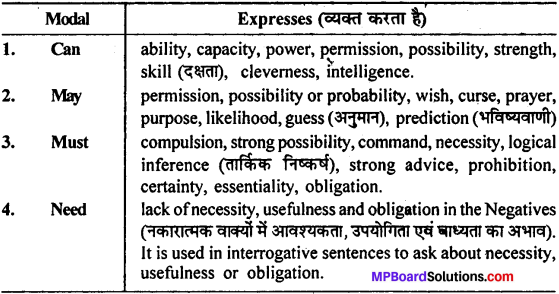
MP Board Class 11th General English Grammar Modals 1
MP Board Class 11th General English Grammar Modals 2

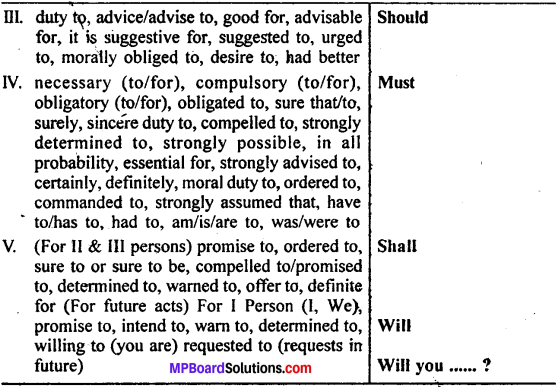
Chart : 2
MP Board Class 11th General English Grammar Modals 3
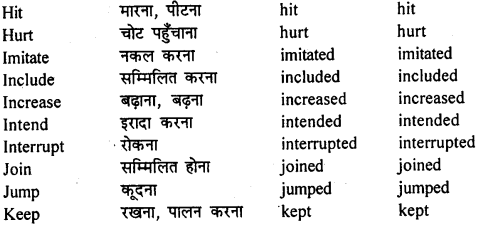
MP Board Class 11th General English Grammar Modals 4

Note: There are no such fit words for other modals. They are selected on the basis of the circumstances expressed in the sentence.

Additional Exercises

Fill in the blanks with appropriate modals :
Exercise : 1 (Solved)
1. You ………. not think so, but dirty streets ……. cause ‘epidemics.
2. (i) The doctor told me that I …….. not smoke any more.
(ii) 1 ……. come there even if it rains.
(iii) One …….. always be kind to others.
(iv) If you have a ticket, you ………. go inside.

3. (i) You ……. not enter my class. I forbid it.
(ii) He has been absent for a fortnight, he …….. be ill.
(iii) …….. I come in? I’m sorry to be late.
(iv) You …….. to respect your elders.
(v) …….. you possibly lend me a thousand rupees?

4. (i) ……. I speak to Principal for a minute?
(ii) The breeze is cool and fresh; it ……. rain soon.

5. …….. not come yesterday since I was too busy.
6. We …….. go to the station by taxi; it is getting late.
7. We …….. help our neighbours as much as we can.
8. You ……. respect your elders.
9. You ……. not see him. Just write a letter.
10. You ……. always remember that you ……. be the first to offer help wherever needed. 11. Work hard lest you ……. fail.
Answers
1. may, can 2. (i) must, (ii) will, (iii) should, (iv) can, 3. (i) shall, (ii) must, (iii) May, (iv) ought, (v) Could, 4. (i) Could, (ii) may, 5. could, 6. must, 7. should, 8. ought to, 9. need, 10. must, should, 11. should.

Exercise : 2 (Solved)
1. (i) In a democracy everyone …….. obey the laws of the country. [2014]
(ii) We ……. borrow any money. We have enough for our needs.
(iii) If I were rich, I ……. give my money to the poor.
2. (i) …… you like to take coffee?
(ii) The headmaster …….. check all these accounts.
3. We ……. go shopping next week. We ……. need a lot of things for the holidays.
4. (i) He …….. be rich; but he is very cruel.
(ii) We …….. do as we are told.
5. (i) 1 …….. not come yesterday since I was too busy.
(ii) If you have a ticket, you ……. go inside.
6. (i) The doctor told me that I …….. not smoke any more.
(ii) The children asked if they …….. have ice cream.

7. (i) He …….. like to spend the evening with you.
(ii) ……… help him with money before I leave for London.
8. (i) …….. he work hard, he will pass.
(ii) Children ……. obey and respect their elders.
9. (i) We eat that we …….. live.
(ii) I doubt, if it …….. be of any use telephoning them so late.

10. Fill in the blanks with one of the following:

Should; would; can; could; may; might.
(i) …….. his soul rest in peace !
(ii) If I were you, I …….. not do it.

11. Fill in the blanks with suitable modals :

May; ought to; would; must; need.
(i) The doctor told me that I ……. not smoke any more.
(ii) You ……. go home now.
(iii) You ……. not see him. Just write a letter to him.
(iv) We ….. show respect to our elders.
(v) ……. you possibly lend a thousand rupees?
Answers
1. (i) should, (ii) needn’t, (iii) would, 2. (i) Would, (ii) must, 3. (i) may, (ii) shall, 4. (i) may, (ii) must, 5. (i) could, (ii) can, 6. (i) must, (ii) should, 7. (i) would, (ii) will, 8. (i) Should, (ii) ought to, 9. (i) may, (ii) would, 10. (i) May, (ii) would, 11. (i) must, (ii) may, (iii) need, (iv) ought to, (v) Would.

Exercise : 3
(Solved) Complete the following sentences with appropriate modals.
1. Work hard so that ……..
2. He is so weak that ………………
3. I want to go to Delhi ……………….?
4. Till father is earning enough ………..
5. This old man has no relatives to look after so
6. The wolf said to the lamb “……………?”
7. Father could not walk properly so ……….
8. The traffic is heavy, everyone
9. On the answer book the instruction was
10. He was a good jumper so ………
Answers
1. you may not fail.
2. he cannot walk.
3. Would you give me a ticket?
4. you need not worry.
5. I have to look after him.
6. “How dare you dirty the water that I am drinking.”
7. he used to carry a stick.
8. ought to obey traffic rules.
9. candidate must not write their name anywhere in the answer book,
10. he could jump this wall easily.

Above provided complete MP Board Solutions 11th English Study guide is useful for making your preparation effective. Students can frequently visit our page to get the latest updates on other subjects study materials.
MP Board Class 11th General English Report Writing

Students who are studying 11th can get the free Madhya Pradesh Board Solutions for General English Report Writing Questions and Answers PDF here. You can download MP Board Class 11th English Solutions Questions and Answers PDF on this page. Practice questions of Mp Board Solutions of 11th English subject as many times as possible to get good marks.

MP Board Class 11th General English Report Writing

Gather chapter wise MP Board Solutions for 11th English Study Material to score the highest marks in the final exam. Various chapters and subtopics are given clearly in MP Board Class 11th English Solutions Objective Questions Questions and Answers Material. All the MP Board Solutions for 11th English Questions with detailed answers are provided by subject experts. The step by step MP Board Class 11th English Objective Questions and Answers guide will help you to enhance your skills in General English Report Writing. Here, along with the subject knowledge, General English Report Writing knowledge also plays an important role. So, students should download MP Board Solutions 11th English and read it to attempt all the questions with 100% confidence.

Example 1.
With the help of the words given below, produce a write up .on the Farewell to the English teacher in 40-50 words.
(i) The teacher and his services,
(ii) His personality,
(iii) Function decision,
(iv) The meeting,
(v) Honour of the teacher,
(vi) Speeches delivered,
(vii) Teacher’s speech. [2014]
Answer:

Farewell To The English Teacher

Our English teacher Mr. R. S. Negi retired last month. He served for a long period. His distinguished services were for more than forty years. He was a perfect gentleman with an imposing personality. The school decided to hold a farewell function in his honour. It was held on 20th of October in him a long, healthy and peaceful life. Other speakers too showered praises on such a great and sincere teacher. He was given several gifts. Mr. Negi made his speech, blessed the students and wished for their bright future. In he end tea and refreshment were served.

Example 2.
With the help of the words given below, produce a write up on an N. C. C. a scout camp in about 70-80 words :
(i) Location of camp,
(ii) The N. C. C. Officer Scout master,
(iii) 300 Cadets,
(iv) Opeaning of ground,
(v) Activities of Cadets,
(vi) Enjoyed the camp.
Answer:

N.C.C scout Camp [2008]

N. C. C./Scout camp was organised on the grounds of M. S. H. S. School, Indore from 26th Dec. to 29th Dec. Our N. C. C. oflficer Scout master Mr. Raviranjan Mehta was our leader. We went to Indore by train. Our berths were reserved by our Principal. We reached the M. S. H. S. School ground on 25th Dec. at about 10 p.m. There were camps for all of us. Nearly about 300 cadets from several schools attended it. In the morning, after warming up we were given the task of cleaning the ground. We did it with pleasure. Several activities were arranged for the cadets, these included races, hurdle races, jumping etc. A cultural programme was also organised. We were given nice meal. We made several friends. I enjoyed the camp very much.

Example 3.
With the help of the words given below, prepare a write-up on the topic given in 40-50 words :
“An Election Scene”.
(a) Age limit,
(b) Propaganda of elections,
(c) Canvassing by candidates,
(d) Promises made,
(e) Voting,
(f) Polling over. [2015]
Answer:

An Election Scene

People rule today through votes. We elect representatives to Panchayats, Corporations, Assemblies and Parliament. At present, the age limit of voters is 18 years. Very recently we saw elections in five states that were under President’s rule. Candidates in the fray were in large number. The propaganda of election was stopped twenty-four hours before the polling date. Candidates went from door to door to contact their voters. Even money was given by some contestants to some voters. All sorts of promises were made. At last, the day of voting came. But voters had no zeal. They were led to polling booths by party workers. When the election was over they waited for the result.

Example 4.
With the help of the words given, produce a write up (report) on a Looted Tourist Bus in 40-50 words.
(i) Details of bus, date and time,
(ii) The place of incident,
(iii) Details of looting,
(iv) Complaint to the police.
Answer:

Tourist Bus Looted

A dare devil act of loot was reported by the passengers of an ill-fated deluxe tourist bus which was going from Pune to Indore in the night of 16th April. It passed Shirdi around 11.20 p.m. When the bus reached near Malegaon the driver noticed road blocks and indicators of diversion. He Applied brakes. Just then some miscreants appeared from the cover of darkness. Two of them engaged the driver in conversation while the two managed to enter the bus. They threatened to shoot the conductor and a passenger, they compelled the driver to take the approach road. The bus reached a wilderness. All the miscreants became active. They surrounded the passengers and forced ladies to part»>vith their jewelry and compelled men to surrender cash and costly items. A case has been registered for robbery but still no offender could be arrested.

Example 5.

With the help of these words produce a write-up :
(i) Place of accident,
(ii) People who died – 50 and injured – 127,
(iii) Causes of accident,
(iv) Help from NGO’s and other local people. [2013]
Answer:

Bus Collides With A Train
(By our own correspondent)

A bus going from Indore to Bhopal collided with a train coming from Bhopal near Dewas on Thursday. Eyewitnesses say that the bus was overloaded. A railway crossing had no barrier and so the bus was crossing it. Suddenly the train came and the driver lost control over the bus due to anxiety resulting in to a collision. The collision was so terrible that the engine got off the track and a general compartment bogie next to the engine was damaged. As soon as the accident took place, the local people came running for help and put their efforts in taking the affected people for treatment. The accident took the lives of 50 people and around 127 are reported to be injured. Many NGO’s have come forward to provide help to the affected persons.

Example 6.
With the help of the words given below, produce a write up on a match between India and New Zealand in 40-50 words:
(i) Venue of the match,
(ii) Weather,
(iii) The toss,
(iv) The winning team,
(v) Man of the match,
(vi) Reaction of the spectators. [2009]
Answer:

An Amazing Match

India scored a convincing victory over New Zealand in the third One Day International Cricket Match held at New Delhi today. Ganguli won the toss and decided to bat first. The opening pair put up 150 runs in thirty overs. Then came the debacle. Four wickets collapsed in four overs for seven runs. The whole team bundled out for 247 runs. Now it was the turn of the Kiwis. They thrashed Indian fast bowlers all around the wicket and scored at will. The spin of Kumble proved the turning point. He got 6 wickets for 26 runs in ten overs. He was declared the Man of the Match. India won by 29 runs.

Example 7.
With the help of the words given below, produce a report on the “Polio Camp” :
(i) The date and time,
(ii) Venue and queue of parents,
(iii) How many children involved,
(iv) The scene of the camp. (2010)
Answer:

The Polio Camp

It was a polio Sunday. On this day children whose age is 5 years were given two drops of life i.e., polio drops. It prevents occurring of polio disease at later age. Polio makes a person disabled for the whole life. I saw a polio camp on a Sunday (8th Aug 20…) at a primary school. People brought their children (1-5 years) for polio drops. There was a long queue but they were patient for their turn. About 80-85 children were there. The attendants were from the Health Department. They performed their duties cheerfully.

Example 8.
With the help of the following input write an article on corruption in India:

Corruption is spreading like cancer from top to bottom-politicians and officials-corruption everywhere-priorities have changed-simple living and high thinking no more the ideals-even the Prime Minister and Ministers are not free from suspicion-effective steps to curb parallel black money and corruption. [2013, 16]
Answer:
Corruption has become a way of life in India. It has entrenched itself deeply in the social, political, economic and religious life of the nation. To be true, right from the Prime Minister down to the ordinary clerk in the office, no one is free from the suspicion of being a corrupt person. The criminalization of social and political life has only sanctified Corruption in every walk of life. It seems corruption filters down from top to bottom. In India, a parallel economy of black money works controlled and regulated by the dons of the underworld.

Simple living and high thinking used to be the ideals of our leaders during the struggle for independence. But now the priorities have changed.

These days scams and scandals- dominate their political and social life. The God of wealth has corrupted their minds and morals. Top posts and jobs can be bought. The members of State Legislatures and the Parliament are vulnerable to corrupt practices and bribery. The need of the hour is an inspiring leadership equipped with a firm political will to fight and root out the growing cancer of corruption.

Example 9.
With the help of the words given below, prepare a write up on the topic given (in 40-50 words) ‘Essay Competition’.
(i) Topic,
(ii) Time and date,
(iii) Time given,
(iv) Judgment,
(v) The prize winners,
(vi) Distribution of prizes. [2008, 14]
Answer:

Essay Competition

[Context-I study in class XI in Tagore Memorial School, Seoni Malwa, 125/88 Hoshangabad]. On 5th September every year we celebrate ‘TEACHERS DAY’. This is an important day. This year it became more significant as our Prime Minister Shri Narendra Modi himself honored the teachers and spoke about them in a reverent manner. He said, ‘A teacher never retires’. On 5th September he met students through network and answered their questions.

Our student leaders, and the Principal decided to organise an Essay Competition on ‘Importance of Teachers in Society.’ It was organised on 6th September in the school. The time was from 10 am. to 11:30 am. About 30 students participated. The M.P. of our area donated the prizes.’ The prizes were ₹ 1001, ₹ 501, ₹ 251 for First, Second and Third winners. 5 consolation prizes were of? 101. The judge were one Professor, one retired Lecturer and one frpm management committee. At about 2 pm. the results were declared and prizes were given. Mr. S.M. Gupta a judge gave away the prizes. Ramesh Mehta, Class XII was the 1st winner, Om Prakash Jain, Class X was second and Vidhya Makwana Class XI was the third. The Principal thanked the guests and judges.

Example 10.
With the help of the words given below, produce a write upon ‘Grow More Trees’,
(a) Food to eat,
(b) Houses fbr shelter,
(c) Support life,
(d) Cause rain,
(e) Medicinal plants. [2016]
Answer:

Grow More Trees

Trees are very important to us. They are just like a friend to a man. They are the gifts of nature to man. They give us fruits to eat and firewood to bum. They also support the life of living things. They give us oxygen. We make furniture and houses by providing us timber. Trees cause rainfall. Now-a-days due to various reason many trees are being cut. It causes ecological imbalance. Global warming increases. There is a need to plant new trees. Tree plantation should be made a compulsory drive throughout the nation and every citizen should actively participate in it and do tree plantation. Trees also supply many medicines. Neem tree has great medicinal value.

Above provided complete MP Board Solutions 11th English Study guide is useful for making your preparation effective. Students can frequently visit our page to get the latest updates on other subjects study materials.

MP Board Class 11th General English Process Writing

Students who are studying 11th can get the free Madhya Pradesh Board Solutions for General English Process Writing Questions and Answers PDF here. You can download MP Board Class 11th English Solutions Questions and Answers PDF on this page. Practice questions of Mp Board Solutions of 11th English subject as many times as possible to get good marks.

MP Board Class 11th General English Process Writing

Gather chapter wise MP Board Solutions for 11th English Study Material to score the highest marks in the final exam. Various chapters and subtopics are given clearly in MP Board Class 11th English Solutions Objective Questions Questions and Answers Material. All the MP Board Solutions for 11th English Questions with detailed answers are provided by subject experts. The step by step MP Board Class 11th English Objective Questions and Answers guide will help you to enhance your skills in General English Process Writing. Here, along with the subject knowledge, General English Process Writing knowledge also plays an important role. So, students should download MP Board Solutions 11th English and read it to attempt all the questions with 100% confidence.

Example 1.
With the help of the words given below, produce a writeup on ’‘Preparing a cup of tea,” in about 70-80 words : [2008]
(i) Preparation is not easy but an art,
(ii) Cooking bowl,
(iii) Burning flame,
(iv) Clean water, tea leaves, sugar and milk,
(v) Boiling and filtering.
Answer:

Preparing A Cup Of Tea

The preparation of tea is also an art. It is not so easy as it seems. One has to master certain details to get a really good result. First measure three-fourth of a cup of water. Pour it into a pan and let it boil for some time. Put the required measure of tea leaves in the pan. The quality of tea leaves must be nice. Pour milk and drop a measure of sugar. Let the mixture boil for some time. Pour tea into a kettle filtering it. Tasty tea is ready to serve.

Example 2.
With the help of words given below, produce a write up on the process of “Dressing a wound”, in 40-50 words.
(i) Clean the wound,
(ii) Surrounding skin,
(iii) Antiseptic powder,
(iv) Spread ointment,
(v) Putting gauze,
(vi) Bandage.
Answer:

Dressing A Wound

One need not go to a doctor for getting his wound dressed. One can master this skill just by trials and errors. To bandage a cut or wound, the affected part and the surrounding skin must be properly cleaned and dried. Sprinkle some good antiseptic powder on the affected part. Take a gauze properly dipped into antiseptic lotion. Spread a thin layer of ointment on it. The gauze should be put on the wound and it should be so stretched that it covers all the affected parts. The wound should be bandaged properly.

However, if the wound is very deep and the bleeding doesn’t stop, then never hesitate to take prompt medical aid from a qualified doctor.

Example 3.
With the help of the words given below, produce a write up on “Getting a bus pass made”, in 40-50 words.
(i) Buying a ticket daily,
(ii) Costly and troublesome,
(iii) Provision of passes,
(iv) Counters at several places,
(v) Form and money,
(vi) Pass ready.
Answer:

Getting A Bus Pass Made

City bus transport is a great facility for passengers going daily from one place to another. Daily purchasing a ticket is costly as well as troublesome. So passengers are provided monthly bus-passes.

These passes can be used to travel from one place to another as many times as one likes to travel. The passes are prepared at several points in the city. One has to go to those places and fill in an application form giving full details. The authorities check them. You are required to pay the charge of the pass and get yourself photographed. The clerical staff verifies all the details and prepares the pass and hands over to you. These passes are to be used by a particular person only. It cannot be transferred to any other person.

Example 4.
With the help of the words given below, produce a write up on “Crossing a busy street”, in 40-50 words.
(1) Crossing roads dangerous,
(ii) Zebra crossings,
(iii) Traffic rules,
(iv) Looking both sides of road.
Answer:

Crossing A Busy Street

So many precious lives are lost in road accidents. Many of them happen to be pedestrians Crossing a busy street in a city requires open eyes and alert mind. A false step can be very risky. A long row of cars, scooters, buses and vehicles of all sizes makes the job of crossing a street very difficult. Look out for the Zebra crossings or white strips painted on the road. They are meant only for the use of pedestrians We should obey the red, orange, green signals given to regulate the traffic. Attempt a crossing only when the traffic stands still at the red light. Look on either side of the road before you cross it. Cross the road with full confidence, without undue and indecent haste. If you obey or follow the general rules of the road you will have no trouble in crossing even the busiest road in the town.

Exercise

With the help of the words given, prepare a write up on the topic given in 40-50 words.
(1) Opening A Bank Account,

  1. Enter the bank,
  2. Application form,
  3. Passport size photos,
  4. Address proof,
  5. Introduction by an existing account holder,
  6. Deposit money on the counter,
  7. Hand it over to the concerned clerk,
  8. Receive the passbook.

(2) Planning a Picnic Party,

  1. Choose an interesting place,
  2. Things needed,
  3. Spot near a river or a grassy lawn,
  4. Activities at the picnic spot.

(3) Berth Reservation for a Journey,

  1. Reservation chart,
  2. Confirm availability,
  3. Fill up reservation form,
  4. Details in specified columns,
  5. Hand over the form at the counter,
  6. Required amount.

(4) Getting Ready to School, [2008]

  1. Get up in the morning,
  2. Check homework,
  3. School bag,
  4. Dress up,
  5. Lunch-box,
  6. Start for school.

Above provided complete MP Board Solutions 11th English Study guide is useful for making your preparation effective. Students can frequently visit our page to get the latest updates on other subjects study materials.
MP Board Class 11th General English Grammar Compound Sentences

Students who are studying 11th can get the free Madhya Pradesh Board Solutions for General English Grammar Compound Sentences Questions and Answers PDF here. You can download MP Board Class 11th English Solutions Questions and Answers PDF on this page. Practice questions of Mp Board Solutions of 11th English subject as many times as possible to get good marks.

MP Board Class 11th General English Grammar Compound Sentences

Gather chapter wise MP Board Solutions for 11th English Study Material to score the highest marks in the final exam. Various chapters and subtopics are given clearly in MP Board Class 11th English Solutions Objective Questions Questions and Answers Material. All the MP Board Solutions for 11th English Questions with detailed answers are provided by subject experts. The step by step MP Board Class 11th English Objective Questions and Answers guide will help you to enhance your skills in General English Grammar Compound Sentences. Here, along with the subject knowledge, General English Grammar Compound Sentences knowledge also plays an important role. So, students should download MP Board Solutions 11th English and read it to attempt all the questions with 100% confidence.

Basic Sentence Patterns IT Negatives a Interrogatives at 37 of Simple Sentences के बारे में हम विस्तृत चर्चा कर चुके हैं। हमने देखा कि simple sentences में एक subject व एक predicate होता है। Predicate में एक verb phrase में एक predicate की आन्तरिक संरचना में अहम भूमिका निभाता है : साथ ही उसमें (verb phrase में) एक finite verb होती है जो subject से number a person में agree करती है। अब हम देखेंगे कि दो या दो अधिक simple sentences को जोड़ कर किस प्रकार compound complex sentences बनाए जाते हैं। जोड़ने का यह काम conjunctions द्वारा किया जाता है। जोड़कर बनाए गए complex sentences में simple sentences का जो रूप रहता है उन्हें clauses कहा जाता है। Simple sentence के समान ही प्रत्येक clause में एक subject तथा एक predicate होता है तथा predicate के verb phrase में एक finite verb होती है जो अपने subject से number और person में agree करती है।

Clause के status (प्रतिष्ठा) व जोड़ने वाले conjunction के आधार पर इस प्रकार बने sentences को compound या complex के रूप में वर्गीकृत किया जाता है :

  1. Compound sentences में clauses को co-ordinate conjunction जिन्हें coordinators भी कहते हैं-द्वारा जोड़ा जाता है तथा इसमें clause का status बैराबरी का होता है और उन्हें co-ordinate clauses कहा जाता है।
  2. Complex sentences A clauses ont sub-ordinate conjunction for sub ordinators भी कहते हैं द्वारा जोड़ा जाता है तथा इनमें clause का status बराबरी का नहीं होता। Clauses में से एक main clause तथा बाकी के subordinate clauses कहलाते हैं।

इस अध्याय में हम केवल compound sentences की चर्चा करेंगे। Complex sentences की चर्चा अगले अध्याय में करेंगे।

जैसा हमने ऊपर कहा है compound sentences में clauses को जोड़ने वाले conjunction को co-ordinate conjunctions या co-ordinators कहा जाता है। इन्हें दो समूहों में बाँट सकते हैं :

  1. Simple Co-ordinators, तथा
  2. Correlative Co-ordinators प्रमुख Simple Coordinators है :  and, but, or तथा nor प्रमुख Correlative Co-ordinators हैं :
    • either ……… or
    • both……..and
    • neither ……… nor
    • not only…….. but also.

Simple Co-Ordinators

अब हम simple co-ordinators का एक एक करके अध्ययन करेंगे

AND = Bits

And का उपयोग positive polarity (समान ध्रुवीयता) clauses को जोड़ कर उनकी अन्तर्वस्तु के बीच निम्न सम्बन्धों की अभिव्यक्ति के लिए किया जाता है :

  1. Mohan bought a new shirt.
    Sohan bought a new tie.
    Mohan bought a new shirt and Sohan bought a new tie.
    and = similarly (इसी प्रकार)
  2. He has a small family
    He gets a good salary. He has a small family and he gets a good salary.
    and = also (साथ ही)
  3. Sunil worked very hard.
    He got a first division. Sunil worked very hard and he got a first divişion.
    and = therefore (इसीलिए इसी कारण से)
  4. He wrote the address on the envelope.
    He posted the letter. He wrote the address on the envelope and he posted the letter.
    and = then (तब)
  5. Give them sufficient time.
    They will print it well. Give them sufficient time and they will print it well.
    and = then only (उसी स्थिति में)

Note : जब clauses को co-ordinating conjunctions से जोड़ा जाता है तो अधिकतर पुनरावृत्ति वाले शब्दों को delete (विलोपित) कर दिया जाता है:

1. जब दोनों clauses में verb के subjects या objects वही हों तो एक को विलोपित
He went to the market and (he) bought a new tie.
She typed (the letter) and (she) signed the letter.

2. जब दोनों clauses में auxiliary verb भी हो तो एक को विलोपित किया जाता है :
You could have come and (you could have) told me.

3. जब दोनों clauses में main verb भी हो तो एक को विलोपित किया जाता है :
He typed these letters and (he typed) those certificates.

4. Deletion के बाद,यदि आवश्यक हो तो वाक्य में अन्य परिवर्तन किये जाते है :
Rajesh is a hard-working boy.
Brijesh is a hard-working boy.

Rajesh and Brijesh are hard-working boys.
अत: (ii), (iii) व (iv) के compound sentences सामान्यतः इस रूप में होंगे :
(ii) He has a small family and gets a good salary.
(iii) Sunil worked very hard and got a first division.
(iv) He wrote the address on the envelope and posted the letter.

Exercise : 1
Join the following pairs of sentences to make compound sentences using and. Pay attention to the meaning as well as delete those parts which need to be deleted :
1. He is popular with the boys.
His teachers like him.

2. The boys heard the bell.
They rushed to the class.

3. She washed the shirt.
She ironed the shirt.

4. Do these exercises carefully.
You will get good marks.

5. Swapnesh is intelligent.
Swapnesh is hard-working.

6. Ravi sings well.
Sunita sings well.

7. He heard somebody knock. ,
He went to open the door.

8. The soldier walked to the Captain.
The soldier handed him the letter.

9. She will telephone you.
She will see you later.

10. Rita is an intelligent girl.
Mona is an intelligent girl.

Note : When we join more than two clauses of positive polarity the conjunction and is used before the last clause and commas are used between the others :

The Principal opened the envelope. He took out the question papers.

He counted the question papers. The Principal opened the envelope, took out the question papers and counted them.

BUT = किन्तु

But का उपयोग clauses की अन्तर्वस्तु में विषमता की अभिव्यक्ति करता है, अतः इसका प्रयोग ऐसे clauses को जोड़ने के लिए किया जाता है जिनकी अन्तर्वस्तु में opposite polarity (विपरीत ध्रुवीयता) हो या जब एक clause की अन्तर्वस्तु के अनुसार दूसरे clause की अन्तर्वस्तु अनेपक्षित हो :
He is poor.
He is happy.
He is poor but (he is) happy.

दूसरे clause में जो अभिव्यक्ति है वह आज की मान्यताओं के अनुसार पहले clause की अभिव्यक्ति को देखते हुए अनपेक्षित है।

Exercise : 2
Join the following pairs of sentences to make compound sentences using but. Pay attention to the meaning as well as delete those parts which need to be deleted :
1. You accepted our invitation.
You did not come to the party.
2. Our team played extremely well.
Our team could not win the match.
3. Our forwards moved skilfully.
Our forwards moved slowly.
4. The queen fought very bravely.
She could not defend the fort.
5. He wrote the letters.
He did not post them.
6. Our land is rich.
Our people are poor.
7. A glider is a machine with wings.
It is without engine.
8. At school I used to play football.
I don’t play any games now.
9. Ashish used to walk to school.
Now he goes to school by bus.
10. I phoned you yesterday. You were not at home. [2014]

OR = या अन्यथा

Or का उपयोग एसे clauses को जोड़ने के लिये किया जाता है जिनकी अन्तर्वस्तु द्वारा अभिव्यक्त विकल्पों में से एक चुनाव किया जाना हो :
You can write in ink. You can write in pencil.
You can write in ink or (you can write) in a pencil.

Or का उपयोग negative condition की अभिव्यक्ति के लिए भी किया जाता है:
You must hurry up.
You will miss the train.
You must hurry up or you will miss the train.

Now pay attention to these examples :
(a) Work hard.
You will pass the examination.
Work hard and you will pass the examination.

(b) Work hard.
You won’t pass the examination.
Work hard or you won’t pass the examination.

Exercise : 3
Join the following pairs of sentences to make compound sentences using or. Pay attention to the meaning as well as delete those parts which need to be deleted :

1. You should buy a copy of this book.
You should borrow it from the library.

2. They can take a bus.
They can go in a taxi.

3. You must learn English well.
You won’t get a good job.

4. They should come to school on time.
They would be marked absent.

5. Say something worthwhile.
Keep quite.

6. Return my money.
‘I will file a suit against you.

7. Cut the grass.
Plant the plants.

8. Shut the windows.
Mosquitoes will enter.

9. You should begin the work.
The boss will fine you.

Nor = न ही

Nor का उपयोग दो negative polarity (नकारात्मक ध्रुवीयता) वाले clauses को जोड़ने के लिए किया जाता है। दूसरे clause में, जिसके पूर्व nor आता है, Yes/No Type question के समान subject और finite verb को invert करना आवश्यक होता है :

They did not look at him.
They did not talk to him.
They did not look at him nor did they talk to him.

Note : क्योंकि nor स्वयं नकारात्मक अर्थ अभिव्यक्त करता है, अत: दूसरे वाक्य की polarity बदलकर positive करनी होती है।

Now pay attention to these examples :
(a) She washed the dishes.
She dried them.
She washed the dishes and (she) dried them.

(b) She washed the dishes.
She did not dry them.
She washed the dishes but (she) did not dry them.

(c) She did not wash the dishes.
She did not dry them.
She did not wash the dishes nor did she dry them.

Exercise : 4
Join the following pairs of sentences to make compound sentences using nor. Pay attention to the meaning :
1. They did not return the books.
They did not deposit their cost.

2. He did not do his homework.
He did not bring his notebook.

3. I won’t let you have this book.
I won’t give you my notes.

4. He does not play any outdoor games.
He is not interested in watching them.

5. The clerk did not come in time.
He did not type all the letters.

6. We do not lend anything.
We do not borrow anything.

7. He did not say ‘Yes’.
He did not say ‘No’.

8. The wife did not cry.
She did not shed tears.

9. You do not take food.
You do not eat fruits.

10. The officer did not come.
He did not send any message.

Correlative Co-ordinators

Correlative co-ordinators का उपयोग अभिव्यक्ति को emphatic बनाने के लिये किया जाता है। जैसा हम ऊपर कह चुके हैं, निम्न चार pairs of conjunction को correlative coordinators के अंतर्गत रखा जाता है:

  1. both ……. and
  2. not only ……. but also
  3. either …… or
  4. neither …….. nor.

Correlative co-ordinators का उपयोग अभिव्यक्ति को emphatic बनाने के लिए किया जाता है।
1. अर्थ की ओर ध्यान दें तो both …. and तथा not only ….. but (also) conjunction and के समान दो अभिकथनों को emphatic ढंग से जोड़ने का काम करते हैं और either …. or तथा neither …. nor conjunction or के समान विकल्पों के बीच चुनाव को emphasize करते हैं।

2. Correlative co-ordinators के द्वारा जोड़े गये clauses में balance (सन्तुलन) रखना पड़ता है अर्थात् पहले element के बाद जिस प्रकार का grammatical structure आता है उसी प्रकार का grammatical structure दूसरे element के बाद भी आना चाहिए

He does both, keeps long hair and wears jeans. (predicate)
She speaks not only French but also German. (noun phrase)
You can write either in ink or in pencil. (prep. phrase)
I can neither drive a car nor ride a scooter. (main verb)

Note :
(i) जब either और neither का main verb के पूर्व उपयोग किया जाता है तब or और nor के द्वारा introduce किये जाने वाला clause full clause हो सकता है :
They can either write in ink or they can write in pencil.
I can neither drive a car nor can I ride a scooter.

(ii) इस स्थिति में nor के बाद आने वाले clause में Yes/No type question के समान subject और finite verb को invert करना आवश्यक होता है जैसा ऊपर किया गया है।

3. Either…..or तथा not only….but (also) पूरे-पूरे clauses को जोड़ने के लिए भी काम में आते हैं। बाकी दो, both….and तथा neither….nor, केवल similar structure के phrases को जोड़ने के काम में आते हैं :
(i) Either she comes in time or she loses her job.
She either comes in time or loses her job.

(ii) Not only is he a good artist but he is also an excellent teacher.
He is not only a good artist but also an excellent teacher.

Note :
जब not only का उपयोग clause के शुरू में किया जाता है तब उस clause Yes/No type questions के समान subject और finite verb को invert करना आवश्यक होता है, जैसा, ऊपर (ii) के पहले वाक्य में किया गया है।

4. जबcorrelative coordinators द्वारा जोड़े गये sentence का subject both….and से जुड़ा हो तो verb के plural form का उपयोग किया जाता है :
Rajesh is playing for our team.
Suresh is playing for our team.
Both Rajesh and Suresh are playing for our team.

जब इस प्रकार का subject either….or अथवा neither…..nor से जुड़ा हो तो verb अपने पास वाले noun phrase के person और number से agree करती है :
(a) Neither his father nor his friend was allowed to see him.
(b) Neither his parents nor his friends were allowed to see him.
(c) Neither his father nor his friends were allowed to see him.
(d) Neither his friends nor his father was allowed to see him.

Note- यदि सम्भव हो तो (d) के स्थान पर (c) के समान वाक्य जिसमें verb के पहले plural noun आता है, का उपयोग किया जाना चाहिए।

जब subject के second element के बाद personal pronoun आता है तब verb अपने पास वाले pronoun के person से agree करती है :
Neither Hari nor I have to go there.
Neither you nor he has to go there.
Neither you nor I have to go there.
अब हम एक-एक करके इनका अध्ययन करेंगे।

BOTH ….. AND = दोनों …… और

Both….. and conjunction and के समान दो अभिकथनों को जोड़ने का काम करता है। तब इसके द्वारा sentence के subject noun phrases को जोड़ा जाता है तो इसके बाद verb के plural form का उपयोग किया जाता है :

  • He is intelligent.
  • He is hard-working.
  • He is both intelligent and hard-working.
  • Sita was present.
  • Gita was present.
  • Both Sita and Gita were present.

Exercise : 5
Join the following pairs of sentences using both …. and :
1. The new clerk comes punctually.
The new clerk takes interest in her work.

2. They have time to spare.
They have money to spare.

3. The storm destroyed the crops.
The storm damaged the houses.

4. Sunil speaks English well.
His friend speaks English well.

5. You are going to get good marks.
He is going to get good marks.

6. They were criticised by their friends.
They were criticised by their enemies.

Not Only ………………. But (Also) = न केवल …………….. बल्कि (यह भी)

Not only…..but (also) भी conjunction and के समान दो अभिकथनों को जोड़ने का काम करता है। जब not only……..but (also) दो ऐसे clauses को जोड़ते subjects भिन्न हों तो not only पहले clause के शुरू में आता है तथा उसमें subject और finite का inversion :

Our team played well. Luck favoured them.
Not only did our team play well but luck also favoured them.

जब not only……but (also) दो ऐसे clauses को जोड़ता है जिनके subjects same extra emphasis के लिये not only को पहले clause के शुरू में रखा जा सकता है किन्तु तब उसमें subject और finite का inversion किया जाता है :

They come to school in time.
They do their homework regularly.
They not only come to school in time but they also do their homework regularly.
Or Not only do they come to school in time but they also do their homework regularly.

Exercise : 6
Join the following pairs of sentences using not only….but also :
1. He protested.
He refused to pay his taxes.

2. She is arrogant.
She is selfish.

3. The BBC reported the demonstration.
The BBC announced it in advance.

4. They must come to school in time.
They must do their homework regularly.

5. The statement is very unfair.
The statement is quite untrue.

6. My brother works hard.
His colleagues help him.

Either ….. OR = या तो…….या

Either…..or conjunction or के समान दो विकल्पों के बीच चुनाव को emphasize करता है। जब इसके द्वारा sentence के subject noun phrases को जोड़ा जाता है तो verb अपने पास वाले noun phrase से number तथा person में agree करती है :

(a) He is responsible for this mess.
His friends are responsible for this mess.
Either he or his friends are responsible for this mess.

(b) They are responsible for this mess.
Their father is responsible for this mess.
Either they or their father is responsible for this mess.

Exercise : 7
Join the following pairs of sentences using either…..or :
1. They must come to the class in time.
They must stay out for the whole period.

2. They must come to the class in time.
I will make them stay out for the whole period.

3. His father is coming to visit him.
His brothers are coming to visit him.

4. I left it on the table.
I left it in the drawer.

5. The pump is broken.
There is a blockage in the pipe.

6. We can meet this evening.
We can discuss the matter at dinner.

Neither………NOR = न तो ……. न ही

Neither…..nor conjunction or के समान दो नकारात्मक विकल्पों को emphasize करता है। जब इसके द्वारा sentence के subject noun phrases को जोड़ा जाता है तो verb अपने पास वाले noun phrase से number तथा person में agree करती है :

(a) The teacher does not like him.
The boys do not like him.
Neither the teacher nor the boys like him. [2008]

(b) His colleagues do not have a good word for him.
His boss does not have a good word for him. Neither his colleagues nor his boss has a good word for him.

Exercise : 8.
Join the following pairs of sentences using neither….nor :

1. You don’t have to tell him about it.
She doesn’t have to tell him about it.

2. He hasn’t answered the queries.
You haven’t answered the queries.

3. The old man could not read.
He could not write. [2009]

4. The inspector did not accept any bribe.
The inspector did not show undue favour to anybody.

5. His doctor doesn’t allow him to drink.
His doctor doesn’t allow him to smoke.

6. Sita does not sing well.
She does not dance well. [2009]

Now look at these examples :
1. They are coming by bus.
They are coming by taxi.

(a) They are either coming by bus or they are coming by taxi.
(b) They are neither coming by bus nor are they coming by taxi.

2. He keeps long hair.
He wears jeans.
(a) He either keeps long hair or he wears jeans.
(b) He neither keeps long hair nor does he wear jeans.

जब पहले clause में either या neither का उपयोग main verb के पहले किया जाता है तो दूसरे clause में or या nor के बाद पूरे clause (subject और यदि auxiliary verbs हैं तो वे भी) का उपयोग किया जा सकता है। लेकिन nor के बाद clause में subject और finite का inversion किया जाता है, जैसा ऊपर 1(b) तथा 2(b) में।

Exercise : 9
Rewrite the following sentences using neither….. nor in place of either…..or making other necessary changes :
1. You can either bring your relatives or you can bring your friends.
2. She either works in an office or she teaches in a school.
3. They will either go there by a taxi or they will take their own car.
4. People either go there by air or they go there by sea.
5. We can either visit the fort or we can visit the dam.

Exercise : 10
Combine each set of simple sentences into compound sentences with suitable conjunction :
(i) God made the country. Man made the town. [2009]
(ii) She is rich. She leads an unhappy life.
(iii) I called on you yesterday. You were not at home.
(iv) The sun rose. The fog disappeared.
(v) He works in a shop. He studies in a college.
(vi) The bell is about to go. We should go to our classes.
(vii) She will come here on Monday. If she cannot she will come on Tuesday.
(viii) I will not go to Mussorie. I will not go to Nainital.
(ix) Keep quiet. I shall turn you out of the class.
(x) We do not borrow money. We do not lend money,
Answers:
Join with-
(i) and,
(ii) but,
(iii) but,
(iv) and,
(v) but also not only,
(vi) but also,
(vii) therefore,
(viii) either
(ix) or,
(x) neither….nor.

Above provided complete MP Board Solutions 11th English Study guide is useful for making your preparation effective. Students can frequently visit our page to get the latest updates on other subjects study materials.
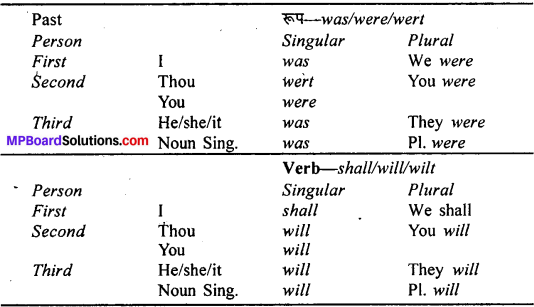
MP Board Class 11th General English Grammar Active and Passive Voice

Students who are studying 11th can get the free Madhya Pradesh Board Solutions for General English Grammar Active and Passive Voice Questions and Answers PDF here. You can download MP Board Class 11th English Solutions Questions and Answers PDF on this page. Practice questions of Mp Board Solutions of 11th English subject as many times as possible to get good marks.

MP Board Class 11th General English Grammar Active and Passive Voice

Gather chapter wise MP Board Solutions for 11th English Study Material to score the highest marks in the final exam. Various chapters and subtopics are given clearly in MP Board Class 11th English Solutions Objective Questions Questions and Answers Material. All the MP Board Solutions for 11th English Questions with detailed answers are provided by subject experts. The step by step MP Board Class 11th English Objective Questions and Answers guide will help you to enhance your skills in General English Grammar Active and Passive Voice. Here, along with the subject knowledge, General English Grammar Active and Passive Voice knowledge also plays an important role. So, students should download MP Board Solutions 11th English and read it to attempt all the questions with 100% confidence.

There are two voices of the verb

  • (A) Active Voice, and
    कर्तृ वाच्य
  • (B) Passive Voice.
    कर्म वच्य

A. ACTIVE VOICE

When the subject of a verb acts or is active, it is said to be in the Active Voice.
जब कर्ता कोई कार्य करता है या सक्रिय होता है तो वह verb – active voice कर्तृ वाच्य में होती है।

Verbs are of two kinds –
(i) Intransitive verbs, and
अकर्मक
(ii) Transitive verbs.
व सकर्मक क्रियाएँ।

(a) When a verb does not have any object is said to be intransitive verb.
जब किसी क्रिया का object न हो, तो वह अकर्मक क्रिया कहलाती है।
As – (1) Radha is sleeping.
(ii) You stand in the corner.
(iii) She lives at Dhar.

(b) किन्तु जब verb में object होता है तो वह सकर्मक क्रिया कहलाती है –
Subject Verb Object
As –
(1) Hari buys an umbrella.
(ii) Mother brings glasses.
(iii) You know me.

B. Passive Voice

If in a sentence, object is acted upon by the subject, it is said to be in the Passive Voice.
As –
(i) An umbrella is bought by Hari.
एक छाता हरी द्वारा खरीदा जाता है।

(ii) Glasses are brought by mother.
गिलास माँ द्वारा लाये जाते हैं।

(iii) I am known to you. In this way only Transitive verbs can be used in Active and Passive Voice.

Change Of Voice

While changing a verb from the Active into the Passive

  • The object of the active verb is made subject of the passive verb.
  • The subject of the active verb is made the object of some preposition. (generally by)
  • The passive verb must contain the past participle (Third form) of the principal verb.
  • Some form of the verb ‘to be is used according to the tense.
  • The Tense of the verb remains the same.

MP Board Class 11th General English Grammar Active and Passive Voice 1

Changing From Active To Passive Continuous Tenses

A. Present Continuous Tense
इस Tense के Active Voice का क्रम निम्नानुसार होता है :
Subject – am/is/are – Verb – ing रूप Object (other words)
MP Board Class 11th General English Grammar Active and Passive Voice 2

Passive Voice में परिवर्तन:
Object – am/is/are + being + Verb III (other words) + by Subject
MP Board Class 11th General English Grammar Active and Passive Voice 3

Exercise : 1
Change into Passive Voice :
[Order – Object – am/is/are + being + Verb III (Other words) by Sub ject]

  1. I am buying mangoes.
  2. We are collecting stamps.
  3. You are lending money.
  4. He is sending me there.
  5. The merchant is selling sugar.
  6. Girls are smelling flowers.
  7. Father is not spending money.
  8. is Mohan learning English?
  9. Who is sending letters?
  10. Where are they catching fish?

B. Past Continuous Tense

Exercise : 2
(Order – Object – was/were + being + Verb III (Other words) by Subject)

Example –
He was cleaning the rooms.
The rooms were being cleaned by him.

  1. I was writing a letter.
  2. We were reading newspapers.
  3. You were throwing the balls.
  4. He was drawing a picture.
  5. His father was bringing mangoes.
  6. The teacher was teaching Physics.
  7. The servant was beating the dog.
  8. Whom was father beating?
  9. How much sugar was he selling?
  10. Why were they calling me?

C. Future Continuous Tense

इस Tense की Passive Voice नहीं होती। यह सिर्फ Active Voice में ही प्रयोग में आता है

N.B. – कुछ Verbs जैसे give, send, teach, tell इत्यादि है जिनमें दो ObjectIndirect व Direct Object. ऐसे वाक्यों में दो तरह से Passive Voice बनायी जा सकती है:

eg. (i) The teacher gave Sohan a book.
(Or The teacher gave a book to Sohan)
इसके possive इस प्रकार होंगे
(a) Sohan was given a book by the teacher.
(b) A book was given to Sohan (by the teacher).
(ii) I showed you my book.
My book was shown to you by me.
You were shown my book by me.
(iii) She teaches us English.
English is taught to us by her.
We are taught English by her.

Indefinite Tenses

A. Present (or Simple) Indefinite Tense Examples :
Active – Passive
1. I take coffee. – Coffee is taken by me.
2. Sonali sings a song. – A song is sung by Sonali. (2015)
3. You catch fish. – Fish is caught by you.
4. His father teaches Hindi. – Hindi is taught by his father. 5. We help everybody. [2009] – Everybody is helped by us. 6. Sheela dries clothes. – Clothes are dried by Sheela.

Exercise – 3
[Order – Object – am/is/are + Verb III by Subject]

  1. I give the child two kites.
  2. He sells sugar.
  3. His brothers polish shoes.
  4. Boys fly kites.
  5. My father replies letters.
  6. You copy the lesson.
  7. Prof. Gupta teaches me English.
  8. We expect happy news.
  9. People celebrate Diwali all over India.
  10. People do not play crcket in America.
  11. Sangeeta Pal likes Grammar.
  12. Does he build a house?
  13. Do you not do any work?
  14. Do they feed cattle?
  15. Where do they keep money?

B. Past Indefinite Tense

Examples –

  • I took tea.” (Active)
  • Tea was taken by me. (Passive)
  • His father sent a gift to his friend. (Active)
  • A gift was sent to his friend by his father.
  • Or His friend was sent a gift by his father. (Passive)

Exercise : 4
[Order – Object – was/were + Verb III by Subject]

  1. He gave me a book. [2008]
  2. You knew me. (Hint : by Subj. Per to Subj.]
  3. Harish told lies.
  4. My mother told Mohan an interesting story.
  5. They wrote a letter to the Editor of the newspaper.
  6. Sheela knit a sweater yesterday.
  7. The servant shut the door.
  8. Hari did not reply my letter.
  9. What did you buy?
  10. Did his brother lend you money?

C. Future Indefinite Tense

Example –

  • 1 shall write a letter. (Active)
  • A letter will be written by me. (Passive)

Exercise : 5
[Order – Object – shall/will + be f. verb III by Subject)

  1. We shall watch the match.
  2. Your brother will buy a watch.
  3. The farmer will grow more food.
  4. She will drop me a letter.
  5. The boys will read the lesson twice.
  6. They will make Dinesh captain of the hockey team.
  7. The scientist will find out the answer.

Perfect Tenses

A. Present Perfect Tense

Examples –

  • I have sent a letter. (Active)
  • A letter has been sent by me. (Passive)
  • She has spent all the money. (Active)
  • All the money has been spent by her. (Passive)

Exercise : 6
[Order – Object – have/has + been + Verb III by Subject]

  1. I have bought a car.
  2. The servant has cleaned the room.
  3. Grandmother has told a tale.
  4. Someone has stolen my purse. [2003]
  5. The Election Commission has declared the dates for Gujarat polls. [2003]
  6. Somebody has taken away my book.
  7. Government has built a road in our village.

B. Past Perfect Tense
Example –
Father had written the letter. (Active)
The letter had been written by father. (Passive)

Exercise : 7
[Order – Object – had been + Verb III by Subject]

  1. The chief guest had delivered the speech.
  2. The boy had made a doll.
  3. The merchants had reduced prices of essential things.
  4. The girls had collected a big fund for the blind’s welfare.
  5. The watchman had closed the gate.
  6. You had finished the work.
  7. The British had developed a nice system of education in India.

C. Future Perfect Tense

Example –
The servant will have rung the bell. (Active)
The bell will have been rung by the servant. (Passive)

Exercise : 8
[Order – Object – shall/will. + have been + Verb III by Subject]

  1. We shall have earned a lot of money.
  2. The clerk will have compared the statement.
  3. The volunteers will have buried the dead in the open.
  4. He will have called me.
  5. Mohan will have learnt English.
  6. The Principal will have mentioned my name during his speech.
  7. The children will have exploded the crackers.

Note – किसी भी Tense के Perfect Continuous का Passive नहीं होता।
Interrogative Sentences

Exercise : 9
[Order – HERA Fotell + Object(FER404 Fell 2) (Heruch for all 3) + Verb III by Subject]

  1. Are you studying Physics?
  2. Do I not give you money?
  3. Does your brother drive the car?
  4. Has the farmer grown rice?
  5. Have you read this book?
  6. Did she not tear the curtain?
  7. Who has brought this news? [2009]
  8. Was the boy throwing stones?
  9. Had this boy broken your teeth?
  10. Will the leader have finished his meal?

Exercise : 10
[Order – By whom or By who + सहायक क्रिया 1 + object + सहायक क्रिया 2 + Main Verb III + other words?]

  1. Who brings medicine for you?
  2. Who rubs the floor in the morning?
  3. Who do not supply sugar at reasonable rate?
  4. Who does not learn mathematics?
  5. Who broke this chair? [2008]
  6. Who did not control the mob?
  7. Who is folding papers?
  8. Who are not speaking the truth?
  9. Who has drawn this picture?
  10. Who have put tables here?

Note – Modern Grammar ‘Who’ को ही उसका objective case मानती है।

Exercise : 11
[Order – Q. W. + सहायक क्रिया + M. V. III + Other words + by Subject]

  1. What do you take in the morning?
  2. What does Hari not serve in the evening?
  3. What have they studied?
  4. What has Mohan burnt?
  5. What did Sita do to make you so angry?
  6. How many mangoes do you sell every day?
  7. How much milk is mother boiling?
  8. How many pencils has she broken?
  9. How much rice will the merchant sell?
  10. How many tables had she given upto 10th March?

Exercise : 12
[Order – Q.W. + सहायक क्रिया + object + सहायक क्रिया + M.V.III + Other words + by Subject]

  1. When does the watchman close the gate?
  2. Why have they not appointed you?
  3. Where are they distributing sweets?
  4. Why are you not earning enough money?
  5. In which room did they worship the goddess?
  6. From where will you buy sweets?
  7. On what occasions will they have broken the promises?
  8. Under what circumstances have you spoken these words?
  9. On what account have the ministry made such promises?
  10. How can you open this window?

Imperative Sentences

Examples :

  1. Active – Buy some wool.
    Passive – Let some wool be bought. कुछ ऊन खरीदा जाए
  2. Active – Do not think this.
    Passive – Let this not be thought (by you). येसा नहीं सोच जाए
  3. Active Never tell lies. [2008]
    Passive – Let lies never be told. झूठ कभी न बोला जाए।

Exercise : 13
(Structure – Let – Object (not, never) be Verb III]

  1. Make two kites.
  2. Do not spend all the money,
  3. Never read cheap literature.
  4. Love the children.
  5. “Write fresh letters,” said Bairam Khan.
  6. “Begin the festival,” ordered the king.
  7. “Never disobey your parents,” advised the teacher to the students.
  8. “Grow more food,” said the minister to the farmers.
  9. “Dig a pit measuring 1 cube metre,” said the engineer.
  10. “Never drag bags,” said the notice in the post office.

Other Types Of Sentences

शोष अन्य प्रकार के Sentences जैसे modals, can, could, should, would, ought to इत्यादि व to infinitive को Passive करने के लिए वही रहता है व सहायक क्रिया order be अथवा been जोड़ी जाती है –

Examples –

  1. I can speak French. (Active)
  2. French can be spoken by me. (Passive)
  3. Gopal is to make a kite. (Active)
  4. A kite is to be made by Gopal. (Passive)
  5. Suresh is going to buy a car. (Active)
  6. A car is going to be bought by Suresh. (Passive)
  7. We should not buy smuggled goods. (Active)
  8. Smuggled goods should not be bought by us. (Passive)
  9. I could have answered all questions (Active)

All questions could have been answered by me. (Passive)

Exercise : 14
[Order – Object – HERO Forell + be + Verb III by Subject)

  1. Mother can do several works at a time.
  2. You can write three letters in a week.
  3. He could move a bus.
  4. The doctors should not prescribe aspirin pills to children.
  5. We are going to help you.
  6. Father may give you some money.
  7. We are to grow more trees.
  8. Dinesh was going to fly a kite.
  9. We must help the poor.
  10. The judge might forgive you.
  11. You can find this word in your dictionary.
  12. Gopal is to draw a picture.

Exercise : 15
[Order – Object – सहायक क्रिया + been + Verb III by Subject)

  1. The boy should have spoken the truth.
  2. He would have drawn the picture.
  3. Mother could have told the story.
  4. The passenger might have bought the ticket.
  5. You should have thought of a plan.

Note – कुछ Sentences का Passive Voice absurd (बेतुका) होता है, किसी का अर्थ एकदम उल्टा हो जाता है।

As –
I washed my face.
My face was washed by me. (Absurd)
I cannot teach Mohan (मेरी असमर्थता)
Mohan cannot be taught by me. (मोहन की असमर्थता) कुछ

कुछ Sentences को Passive Voice में बदलने पर by के स्थान पर अन्य Preposition का प्रयोग होता है। इन्हें Note करो।

Examples :

  1. His behaviour disgusts us.
    We are disgusted with his behaviour.
  2. The jug contains milk.
    Milk is contained in the jug.
  3. I knew him.
    He was known to me.
  4. Stamp – collecting interests you.
    You are interested in stamp – collecting.
  5. Your jokes amuse us.
    We are amused at your jokes.
  6. You please me.
    I am pleased with you.
  7. This news surprised me.
    I was surprised at this news.
  8. His gestures amazed them.
    They were amazed at his gastures.
  9. Who broke this jug?
    By whom was this jug broken?
  10. They are demolishing the entire block.
    The entire block is being demolished.
  11. They asked the boys to wait.
    The boys were asked to wait.
  12. What have they done to increase the production?
    What has been done to increase the production?

Exercise : 16
Change the voice of the following sentences:

  1. The goldsmith melted gold.
  2. You know him.
  3. They do not burn papers.
  4. We shall study Physics.
  5. They did not build the house.
  6. Your brother polishes shoes.
  7. Hari does not tap the door.
  8. Did they wave the flag?
  9. Do they bring potatoes?
  10. Will you shut the door?
  11. I sold my bicycle.
  12. Post the letter today.
  13. I lost my watch.
  14. One cannot gather grapes from thistles.
  15. We are collecting stamps.
  16. The merchant is selling sugar.
  17. Deepali does her homework in time.
  18. I gave him good advice.
  19. Who brings letters?
  20. Who teaches you English?
  21. Do you know me?
  22. Someone has stolen my pen.
  23. My father gave me a pen.
  24. He likes mangoes.
  25. People celebrate Diwali all over India.
  26. Who sang this beautiful song?
  27. Mr. Sharma teaches me English.

Changing From Passive To Active

किसी Passive Voice के वाक्य को Active Voice में बदलने में थोड़ी कठिनाई आती है क्योंकि वहाँ Passive Voice के हर sentence में Verb की III form ही प्रयोग में आती है जबकि Active Voice में Verb की पाँच forms काम में आती हैं। दूसरे, कई बार Passive Voice में by subject नहीं दिया होता, हमें अन्दाज लगाना होता है।

Steps :

  1. By subject में से subject को सर्वप्रथम लिखो।
  2. Active Voice की उस Tense की सहायक क्रिया हो तो लिखो।
  3. Passive Voice में जोड़ी गई सहायक क्रिया हटाओ।
  4. Main Verb का सही रूप लिखो
  5. Object को प्रथम स्थान से लेकर लिखो
  6. Other words हों तो उन्हें लिखो।

Continuous Tenses

1. Present Continuous Tense
Passive Voice कम – Object – am/is/are + being + Verb III + other words + by subject.

As –

  1. Wheat is being grown by the farmers.
  2. Tea is being taken by me.
  3. Sugar is being distributed at the control shops.
  4. Letters are being written by us.
  5. Buses are being stopped by the police.

Active Voice Subject – am/is/are + verb + ing + object + other words.
As –

  1. The farmers are growing wheat.
  2. I am taking tea.
  3. They are distributing sugar at the control shops.
  4. We are writing letters.
  5. The police are stopping the buses.

Exercise : 17
Change into Active Voice : [Order – Subject – am/is/are + Verb + ing object etc.]

  1. Applications are being sent by the boys.
  2. The statue is being carried to the Rajbada Chowk. (by them)
  3. Clothes are being dipped into the river by Sheela.
  4. Songs are being heard by me.
  5. Fruits are not being bought by anyone.
  6. Is the lesson being taught thoroughly (by him)?
  7. The cattle are being tied by the farmer.
  8. A road is being built joining our village to the highway. (by P.W.D.)
  9. Nothing is being done in this case by the officer.
  10. Why is this picture not being completed by you?

2. Past Continuous Tense

Passive कम – Object – was/were + being + Verb III + other words + by subject.

  • Tales were being told by grandmother.
  • The room was not being swept.

Active कम – Subject – was/were + Verb + ing object + other words.

  • Grandmother was telling tales.
  • The servant was not sweeping the room.

Exercise : 18
Change into Active Voice : (Order – Subject + was/were + Verb + ing object + other words]

  1. The account was being verified by the auditor.
  2. The effigy of Ravan was being burnt at the Dusshera ground. (by People)
  3. Newspapers were being sold at 7a.m. yesterday by the hawker.
  4. Were lessons being read by you?
  5. Mangoes were being plucked by the gardener.
  6. Was money being spent lavishly by them?
  7. The floor was being rubbed by the servant.
  8. Money was being earned honestly by us.
  9. Nuts were being hidden by the squirrels.
  10. Two pictures were being drawn by the artist.

3. Future Continuous Tense
यह Tense Passive Voice में होता ही नहीं।

Indefinite Tenses
1. Present Indefinite Tense
[Passive कम – Object – am/is/are + Verb III + Other words + by sub ject]

As –

  1. I am disturbed by the children.
  2. You are sent there by me.
  3. Clothes are washed by her.
  4. Letters are replied by father.
  5. Rice is not supplied by us.
  6. Are flowers smelt by her?

Active कम – Aff. Subj. – Verb I/Verb 1 +s, es, ies object etc.
Neg. Subject – do/does + not + Verb I object etc.
Int. Do/Does subject + Verb I + object etc.?

As –

  1. The children disturb me.
  2. I send you there.
  3. She washes clothes.
  4. Father replies letters.
  5. We do not supply rice.
  6. Does she smell flowers?

Exercise : 19
Change into Active Voice :
[Order – Subject – Verb I/Verb I + s, es, ies object etc.]

  1. Fruits are given to me by Hari.
  2. Kites are flown on Sankranti. (by people)
  3. Hindi is spoken in India. (by people);
  4. Cricket is not played in America. (by people)
  5. Mangoes are brought daily by father.
  6. I am seen every day by them.
  7. Is rice not grown here? (by farmers)
  8. Are you known to Hari?
  9. A man is known by the company he keeps. (by people)
  10. The lesson is taught by Mr. Prasad.
  11. Clothes are dried by Sheela.
  12. Homework is not done regularly by Mohan.
  13. Sugar is not sold here. (by us)
  14. Torn notes are exchanged here. (by us)
  15. An honest man is trusted by all. [2014]

2. Past Indefinite Tense
Passive कम – Object – was/were + Verb III + other words + by subject.

  1. The car was driven at 60 km/h by Hari.
  2. It was not known to me.
  3. Was he satisfied with Mohan?

Active कम – Aff. SubVerb II – object etc.
Neg. Subject did not Verb I object etc.
Int. Did – Subject – Verb I object etc.?

As –

  1. Hari drove the car at 60 km/h,
  2. I did not know it.
  3. Did Mohan satisfy him?

Exercise : 20
Change into Active Voice :
[Order – Aff. SubjectVerb II – object etc.
Neg. Subject did not – Verb I object etc.
Int. Did – Subject – Verb I object etc.?]

  1. The door was shut by Charan Singh.
  2. The ball was thrown by Venkatesh Prasad.
  3. The chair was not broken by Mahesh.
  4. This temple was built in 200 B.C. (by a king)
  5. Was the bell rung by Nand Kishore?
  6. Were stamps stuck on the envelopes by you?
  7. Were pits not dug by the gardener?
  8. The lesson was not copied by the girl.
  9. The papers were not folded by the peon.
  10. Mohan was not admitted by the Principal.

3. Future Indefinite Tense
Passive कम – Object – shall/will + be + Verb III + other words + by subject.

As –
The rent will be paid on 10th by me.
Active Subject – shall/will + Verb I object etc.
As I shall pay the rent on 10th.

Exercise : 21
Change into Active Voice :
[Order – Subject – shall/will. – Verb I object etc.)

  1. Signal will be given at 7 o’clock by the driver.
  2. The account will be verified on 7th by him.
  3. Nothing will be listened against you by us.
  4. Will five questions be omitted by you?
  5. The bank will be managed by the government.
  6. I shall not be sent there by the company.
  7. Will the news be published in the Nai Dunia?

Perfect Tenses
1. Present Perfect Tense
Passive कम – Object – havelhas + been + Verb III + other words + by subject.
Passive – Prices have been controlled by the government. Active – The government has controlled the prices.

Exercise : 22
Change into Active Voice :
(Order – Subject – havelhas + Verb III + object etc.)

  1. The farm has been cultivated.
  2. Money has been borrowed @ 15% by him.
  3. Raw mangoes have been supplied by the fruit seller.
  4. Clothes have been washed by Sheela.
  5. You have been be fooled by her.
  6. The papers have not been signed.
  7. Have contraband goods been seized by the police?
  8. Have letters been replied by father?
  9. Money has not been paid by you.
  10. Physics has been studied by us.

2. Past Perfect Tense
Passive – Fish had been caught by Hariharan.
Active Hariharan had caught fish.

Exercise : 23
Change into Active Voice :
[Order – Subject – had + Verb III + object etc.]

  1. Kites had been flown by them.
  2. Wheat had been grown by the farmer.
  3. The answer had not been found out by him.
  4. Had the work been done by Mukesh?
  5. The badge had been worn by the inspector.

3. Future Perfect Tense
Passive – The picture will have been drawn by the artist. ActiveThe artist will have drawn the picture.

Exercise : 24
Change into Active Voice :
[OrderSubjectshall/will + have + Verb III + object etc.)

  1. Kites will have been flown by us.
  2. The bottles will have been thrown by them.
  3. Mathematics will have been learnt by you.
  4. The bus will have been pushed by them.
  5. The gates will have been closed by the gatekeeper.

Exercise : 25
Change the voice of the following sentences :

  1. The goldsmith melted gold.
  2. Flower is smelled by the artist.
  3. You know him.
  4. They do not burn papers.
  5. The newspaper will be published from Indore and Bhopal by them.
  6. We shall study Physics.
  7. They did not build the house.
  8. Tea was not taken by guests.
  9. Your brother polishes shoes.
  10. Hari does not tap the door.
  11. Did they wave the flag?
  12. Is the lecture listened by you?
  13. Do they bring potatoes?
  14. Was this news heard by you?
  15. Will you shut the door?
  16. I sold my bicycle.
  17. Post the letter today.
  18. I lost my watch.
  19. One cannot gather grapes from thistles.
  20. We are collecting stamps.
  21. They elected him monitor of the class. [2011]
  22. Ramu will post all the letters. [2012]

Additional Exercises

Exercise : 1
Complete the following sentences using passive voice verb forms of the verbs given in brackets :
1. Mangoes are being………(buy).
2. Indira was………(bear) in 1917.
3. Wheat is……..(grow) here.
4. Let the thief……..(punished).
5. By whom is the door………? (knock)
6. Quinine is bitter when………(taste)
7. French can be………(speak) by me.
8. The truth should have been. (speak)
9. Milk is………(contain) in the jug.
10. He was………(know) to me.

Silence is the element in which great things fashion themselves.
Thomas Carlyle. Hard work, positive thinking, fair dealing, right treatment of people, and the proper kind of praying always get results. – N.V. Peele.
Answers
1. bought,
2. born
3. grown,
4. be punished,
5. knocked
6. tasted
7. spoken
8. spoken.
9. contained
10. known.

Exercise : 2
Arrange the words in a proper order : [2009]
1. have/left/they/for/Indore.
2. are/fruits/bought/by/us/being.
3. by/kites/have/will/been/flown/the boys.
4. given/signal/be/will/at/5 O’clock.
5. The/built/the/was/house/in 1929.
6. My bicycle/sold/was/by me.
7. by/the/work/had/done/been/by Mukesh.
8. were/brought/potatoes/by/you?
9. Stamps/been/collected/have/by us.
10. The/tapped/not/was/door.
Answers
1. They have left for Indore.
2. Fruits are being bought by us.
3. Kites will have been flown by the boys.
4. Signal will be given at 5 o’clock.
5. The house was built in 1929.
6. My bicycle was sold by me.
7. The work had been done by Mukesh.
8. Were potatoes brought by you?
9. Stamps have been collected by us.
10. The door was not tapped.

ExercIse: 4
Complete the rollowing dialogues using passive voice.
I. Giia – Who built the Taj’
Sita – TheTaj……..?
2. Gita – When did you buy this T. V.?
Sits – The T. V ……….
3. Sits – When will we buy a house?
Gita – A house………
4. Sits – Who was taking tea?
Gua – Tea ……….
5. Gita – When was Gandhiji born?
SIta – Gandhiji
6. Gus – Who wrote Gitanjali?
Sim – Gitanjali ……
7. Ohs – WhIch fruit will be brought by you’
Sita – Bananas ……….
8. Gita – Who killed Rayan?
Sita – Ravan ……….
9. Oils – Who leaches you mathematics?
Sita – – Matheniaiiczs ……….
10. Gita – $low many books have you read?
Sits – Five books ……….
Answers
1. The Taj was built by Shahjahan.
2. The T. V. was bought m 2001 by us.
3. A house will be bought next year by us.
4. Tea was being taken by Mohan.
5. Garnthiji was born on 2nd October.
6. Gitanjali was written by R N. Tagote.
7. Bananas will be brought by me.
8. Rayan was killed by Ram.
9. Mathcinztics is taughi to us by Mr. R. N. Gupu
10. Five books have been read by inc.

Above provided complete MP Board Solutions 11th English Study guide is useful for making your preparation effective. Students can frequently visit our page to get the latest updates on other subjects study materials.
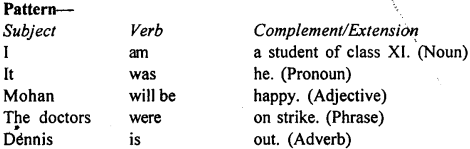
MP Board Class 11th General English Incidents Write Up

Students who are studying 11th can get the free Madhya Pradesh Board Solutions for General English Incidents Write Up Questions and Answers PDF here. You can download MP Board Class 11th English Solutions Questions and Answers PDF on this page. Practice questions of Mp Board Solutions of 11th English subject as many times as possible to get good marks.

MP Board Class 11th General English Incidents Write Up

Gather chapter wise MP Board Solutions for 11th English Study Material to score the highest marks in the final exam. Various chapters and subtopics are given clearly in MP Board Class 11th English Solutions Objective Questions Questions and Answers Material. All the MP Board Solutions for 11th English Questions with detailed answers are provided by subject experts. The step by step MP Board Class 11th English Objective Questions and Answers guide will help you to enhance your skills in General English Incidents Write Up. Here, along with the subject knowledge, General English Incidents Write Up knowledge also plays an important role. So, students should download MP Board Solutions 11th English and read it to attempt all the questions with 100% confidence.

Example 1.
With the help of the words given below produce a write up on ‘A Train Accident’ in 40-50 words.
(i) Date, time, place of accident,
(ii) Impact of incident,
(iii) Relief measures,
(iv) Probable causes,
(v) Reactions of passengers and railway staff.
Answer:

A Train Accident

A ghastly train accident occurred last night at Sohagpur when Indore bound Narmada Express rammed into a stationary goods train. The impact was so severe that two bogies of the express were mounted atop the engine of the goods train. The passengers who were asleep fell down. Some received, only minor injuries while others were badly wounded. About 150 persons were trapped in the two bogies. Relief measures were slow as it was a small town. The carelessness of the railway staff and mechanical failure led to the disaster resulting in the loss of 50 lives. The railway staff blamed the old equipment and fog for the train wreck.

Example 2.
With the help of the words given below, produce a write up on Celebration of Holi at Hostel in 40-50 words.
(i) Most colourful and enjoyable festival,
(ii) Celebration at hostel,
(iii) Enjoyment with fellow students,
(iv) The activities.
Answer:

Celebration Of Holi At Hostel

Holi is the most colourful and enjoyable festival of India. We observe this festival with great zeal and fanfare. This year I stayed back at the hostel at Holi and didn’t visit home. The experience was rewarding. Holi was celebrated with a lot of fanfare. The students embraced one another and smeared the faces with coloured powder called ‘Gulak. The more adventurous added fast colours in buckets of water and threw them on others. Everyone, shared the excitement and fun. With faces smeared with colours we looked like ghosts. Sweets and tea exchanged hands quite frequently. Dancing and singing lifted the spirits of even the gloomiest persons. The memories of celebration of Holi at Hostel make me smile even today.

Example 3.
With the help of the words given below, produce a write up on A Chain Snatching Incident in 40-50 words.
(i) Date, time, place of incident,
(ii) People around,
(iii) The motorcyclist’s description,
(iv) Registration number of the vehicle,
(v) The act of snatching,
(vi) Riding away,
(vii) Reactions of the lady and others.
Answer:

A Chain Snatching Incident

Last Monday, I was waiting for my school bus at Mhow-naka bus stop. It was bout 9 a.m. The office goers had started pouring in and formed queues for separate bus routes. .Suddenly a Motorcyclist came towards the shelter for passengers. The young man slowed his motorbike near a young lady, and in a twinkle of an eyelid snatched her necklace and purse and rode away fast. The screams of the young lady attracted the attention of others. I had written the registration number of the vehicle. I gave it to the lady. Some gentlemen took her to the police station to lodge a complaint against this chain-snatching incident. The lady and other gentlemen thanked me.

Example 4.
With the help of the words given below produce a write up on Demonstration by Adivasis in 40-50 words.
(i) Time,
(ii) The participants,
(iii) Cause,
(iv) What they carried,
(v) Weather and its effect.
Answer:
Demonstration By Adivasis
While returning from school yesterday afternoon, 1 came across a group of Adivasis. Adivasis living near the town and some political activists had organised a demonstration to register their annoyance and protest against their displacement for the dam to be constructed on the Mann River. They carried banners and placards with catchy slogans were. Some of the Adivasis seemed over-enthusiastic. They shouted vociferously. As it was a very hot afternoon, the weather took its toll and some of the volunteers collapsed under sunstroke and dehydration. They were rushed to nearby hospitals but the march of the protesters went on.

Exercise
With the help of the given words, prepare a write up on the topics given in 40-50 words.

  1. A house on fire,
  2. A house on fire,
  3. Cries and shrieks,
  4. People assemble,
  5. Use of water,
  6. Rescue of an injured woman and a child.

(2) Students’ strike,

  1. Students on strike,
  2. Demand for better facilities „ in games and sports,
  3. Students assemble with banners and posters with slogans written on them,
  4. Property damaged,
  5. Classes suspended,
  6. Negotiation expected.

(3) A Picnic,

  1. Time of leaving,
  2. The Journey,
  3. The weather,
  4. Reaching the lake,
  5. The scene at the lake,
  6. Music and dancing,
  7. Taking food,
  8. Sightseeing,
  9. Return.

(4) A Minor Earthquake Experience,

  1. Sitting watching TV,
  2. The starting of the earthquake,
  3. The windows, doors and furniture trembling,
  4. Running out of the houses,
  5. Scene at the road,
  6. Stopping of the earthquake,
  7. The results-the clefts of the roads and of the houses.

Above provided complete MP Board Solutions 11th English Study guide is useful for making your preparation effective. Students can frequently visit our page to get the latest updates on other subjects study materials.
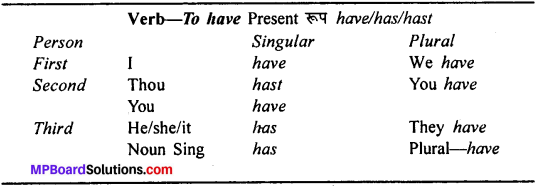
MP Board Class 11th General English Events Write Up

Students who are studying 11th can get the free Madhya Pradesh Board Solutions for General English Events Write Up Questions and Answers PDF here. You can download MP Board Class 11th English Solutions Questions and Answers PDF on this page. Practice questions of Mp Board Solutions of 11th English subject as many times as possible to get good marks.

MP Board Class 11th General English Events Write Up

Gather chapter wise MP Board Solutions for 11th English Study Material to score the highest marks in the final exam. Various chapters and subtopics are given clearly in MP Board Class 11th English Solutions Objective Questions Questions and Answers Material. All the MP Board Solutions for 11th English Questions with detailed answers are provided by subject experts. The step by step MP Board Class 11th English Objective Questions and Answers guide will help you to enhance your skills in General English Events Write Up. Here, along with the subject knowledge, General English Events Write Up knowledge also plays an important role. So, students should download MP Board Solutions 11th English and read it to attempt all the questions with 100% confidence.

Example 1.
With the help of the words given below produces a write up on Annual Day and Prize Distribution Function in 40-50 words :
(i) Date of Function,
(ii) The Chief Guest,
(iii) The beginning of the Function,
(iv) Annual Report,
(v) Honouring of the students by the Chief Guest,
(vi)The end of the Function. (2011)
Answer:

Annual Day And Prize Distribution Function

The Annual Day and Prize Distribution Function of our school was celebrated on 25th Dec. The Chief Guest was the State Education Minister. He started the function by lighting a lamp and garlanding Goddess Saraswati’s picture. Then the Principal read out the Annual Report. The Chief Guest then honoured the meritorious students and eminent sportsmen. They were awarded medals, prizes and certificates. National Anthem was recited by all in the end.

Example 2.
With the help of the words given below, produce a write up on Painting Competition in 40-50 words.
(i) The Occasion,
(ii) Time given,
(iii) Judgement,
(iv) Display of painting,
(v) First prize winner,
(vi) Distribution of Prizes. [2009]
Answer:

Painting Competition

On Children’s Day a painting competition was arranged in our school. Time given was three hours for on the spot painting. After the fixed time duration was over, the best paintings were displayed in rows. The first prize went to Madhukar Joshi whose painting was Mother and Child. Mukesh Sharma’s ‘Sunflowers and Roses’ was appreciated by all. The child displayed a fine sense of colours. Our Principal distributed prizes to the winners and congratulated them.

Example 3.
With the help of the words given below, produce a write up on how you celebrated your birthday, in 40-50 words.
(i) My date of birth,
(ii) The programme,
(iii) Greetings by friends and relatives,
(iv) Cutting of the birthday cake,
(v) Dishes and cultural programme,
(vi) Conclusion. [2009]
Answer:
How I Celebrated My Birthday
My birthday celebration on 5th April was a gala event. At 6 in the evening, my friends and relatives arrived. They gave me birthday presents. When cutting the cake all the invitees sang in a chorus “Happy birthday to you.” I offered them pieces of cake. Then tasty dishes and tea were served. It was followed by a brief but entertaining cultural programme. We had a jolly good time. I thanked all my friends and relatives for their kind visit and good wishes.

Example 4.
With the help of the words given below produce a write up on the Computer Block in your school in 40-50 words.
(i) Situation,
(ii) Accommodation,
(iii) Arrangement of furniture,
(iv) Guiding staff,
(v) Conclusion.
Answer:

The Computer Block

The new Computer block is adjacent to the Biology laboratory. It has seven rooms and a big hall. Each room has 8-10 computers. Arrangement of tables and chairs make it convenient for children of various age groups to be seated comfortably and handle the computer properly. Trained Computer professionals guide the students to operate the wonderful machines. In short, the computer block is superb and the facilities it provides to the students are excellent.

Exercise

With the help of the given words prepare a write up on the topics given in 40-50 words.
(1) Our new house,

  1. Situation,
  2. Accommodation,
  3. Outer position,
  4. Facilities.

(2) Blood donation Camp,

  1. The date and time,
  2. Who donated blood first,
  3. Other donors,
  4. The reward is given to donors. [2009]

(3) A Charity Show,

  1. The Occasion,
  2. The entertainment programme arranged,
  3. Response from parents and patrons,
  4. The collection of the fund presented.

(4) The Republic Day Celebration,

  1. The Chief Guest,
  2. Welcome to the Chief Guest,
  3. The unfurling of the flag,
  4. Address of the chief guest,
  5. Cultural programme,
  6. End of the programme.

Above provided complete MP Board Solutions 11th English Study guide is useful for making your preparation effective. Students can frequently visit our page to get the latest updates on other subjects study materials.
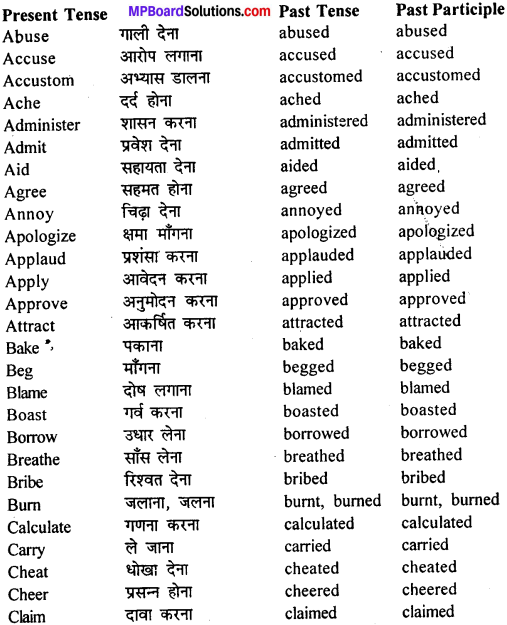
MP Board Class 11th General English Grammar Tenses

Students who are studying 11th can get the free Madhya Pradesh Board Solutions for General English Grammar Tenses Questions and Answers PDF here. You can download MP Board Class 11th English Solutions Questions and Answers PDF on this page. Practice questions of Mp Board Solutions of 11th English subject as many times as possible to get good marks.

MP Board Class 11th General English Grammar Tenses

Gather chapter wise MP Board Solutions for 11th English Study Material to score the highest marks in the final exam. Various chapters and subtopics are given clearly in MP Board Class 11th English Solutions Objective Questions Questions and Answers Material. All the MP Board Solutions for 11th English Questions with detailed answers are provided by subject experts. The step by step MP Board Class 11th English Objective Questions and Answers guide will help you to enhance your skills in General English Grammar Tenses. Here, along with the subject knowledge, General English Grammar Tenses knowledge also plays an important role. So, students should download MP Board Solutions 11th English and read it to attempt all the questions with 100% confidence.

प्रत्येक Simple Sentence का सामान्यतः प्रारम्भ एक Noun या Pronoun से होता है जो कि Subject (कर्ता) कहलाता है।
इसके पश्चात् एक Verb आती है जो कि Subject के द्वारा किए गए किसी कार्य या स्थिति (Action or Pronoun) को प्रकट करती है।
जो Verb केवल Position दर्शाती है गति (Action) नहीं, वह Incomplete Verb कहलाती है।
जो Verb कोई गति (Action) प्रकट करती है वह Complete Verb कहलाती है।

Incomplete Verbs

केवल Subject + Incomplete Verb से Sentence पूर्ण नहीं होता, इसके अर्थ को पूर्ण करने के लिए दिए गए Words Complement कहलाते हैं।
Incomplete Verbs तीन Tenses में होती है :

  1. Present,
  2. Past,
  3. Future.

1. Verb To be = होना।

  • Present Forms – am/is/are/art.
  • Present Participle – being
  • Past Forms – was/were/wert.
  • Past Participle – been
  • Future Forms – shall be/will be/wilt be.

Subject Verb Agreement–Verb अपनेके Subject अनुसार Number व Person में होती है।

Verb – To be = होना, Present रूप – am/is/are/art.
MP Board Class 11th General English Grammar Tenses 1
MP Board Class 11th General English Grammar Tenses 2

Note : Modern Grammar ने अब ‘shall’ के प्रयोग को समाप्तप्राय घोषित कर केवल ‘will के प्रयोग को प्रचलित किया है-
MP Board Class 11th General English Grammar Tenses 3
Rewrite using correct form of the verbs.

Exercise : 1
Structure – Subject – am/is/are. Complement.

  1. I (be) happy.
  2. We (be) students.
  3. You (be) late.
  4. He (be) there.
  5. She (be) in the hospital.
  6. It (be) I.
  7. His father (be) an accountant.
  8. The farmers (be) very clever.
  9. They (be) in a poor condition,
  10. O God ! Thou (be) kind.

Exercise :
2 Structure – Subject – was/were. Complement.

  1. You (be) very poor.
  2. Harish (be) in the garden.
  3. His son (be) sad.
  4. I (be) there.
  5. He (be) on the top of the mountain.
  6. The boys (be) very intelligent.
  7. Mohan (be) early.
  8. Your brothers (be) quarrelsome.
  9. One of the ministers (be) a cheat.
  10. Each boy (be) quick.

Exercise : 3
Structure – Subject – shall be/will be, Complement.

  1. I (be) there within an hour.
  2. You (be) present in the meeting.
  3. Mohan (be) a first class doctor.
  4. The child (be) on the terrace.
  5. His father (be) the first person to visit that place.
  6. The teachers (be) on leave.
  7. The fans (be) on.
  8. The lights (be) off.
  9. His brothers (be) quarrelsome.
  10. There (be) no place for you.

2. Verb – To have = पास में होना या रखना
Present Tense = have/has/hast
Present Participle – having.
Past Tense = had
Past Participle – had.
Future Tense = shall have/will have
MP Board Class 11th General English Grammar Tenses 4

Exercise : 4
Structure Subject – have/has Complement.

  1. I (have) a nice pen.
  2. You (have) a big house.
  3. We (have) not had a glass of water.
  4. He (have) black shoes.
  5. She (have) six boxes.
  6. Radha (have) a pitcher on her head.
  7. Your son (have) a scooter.
  8. They (have) no car.
  9. The monkey (have) sharp nails.
  10. His brothers (have) no cups.

Exercise : 5
Structure. Subject – had, Complement.

  1. I (have) a very nice umbrella.
  2. We (have) so many cows.
  3. You (have) a big house.
  4. Gandhiji (have) a she-goat.
  5. Mohan (have) three pens.
  6. His father (have) a big farm.
  7. They (have) grass on their head.
  8. The king (have) two daughters.
  9. The teacher (have) a book in his hand.
  10. Mother (have) a nice saree.

Exercise : 6
Structure – Subject – shall/will have, Complement.

  1. I (have) wings.
  2. You (have) a good dictionary.
  3. He (have) a watch.
  4. She (have) a purse.
  5. They (have) a colour TV set.

Complete Verbs

Complete Verbs वे Verbs होती हैं जिनके द्वारा कोई Action प्रकट होता है। इनकी पाँच Forms होती है

  1. Present Form
  2. Past Form
  3. Past Participle Form
  4. Present Participle Form
  5. Singular Form.

इनका वर्णन हम आगे करेंगे। इन Forms का प्रयोग विभिन्न Tenses में Main Verb के रूप में किया जाता है। Dictionary में भी ये दी रहती हैं।

Verb की Tense का सम्बन्ध Time से होता है। मोटे तौर पर हम Time को तीन भागों में बाँटते हैं –

  1. Present वर्तमान समय
  2. Pasta बहुत समय
  3. Future भविष्यत

वास्तव में अस्तित्व केवल Present का है। Present ही बीत जाने पर स्मृतिस्वरूप Past बन जाता है तथा आने वाले वर्तमान की कल्पना ही Future कहलाती है।

The Verb

[A] Three Forms of Some Verbs
Group I
MP Board Class 11th General English Grammar Tenses 5
MP Board Class 11th General English Grammar Tenses 5a
MP Board Class 11th General English Grammar Tenses 6
MP Board Class 11th General English Grammar Tenses 7
MP Board Class 11th General English Grammar Tenses 8
MP Board Class 11th General English Grammar Tenses 9
MP Board Class 11th General English Grammar Tenses 10

Weak Verbs – d के स्थान पर t Present Tense
MP Board Class 11th General English Grammar Tenses 11

Weak Verbs – एक Vowel कम करें
MP Board Class 11th General English Grammar Tenses 12
MP Board Class 11th General English Grammar Tenses 13
Change in Inside Vowel As Well
MP Board Class 11th General English Grammar Tenses 14

Group II
Weak Verbs – जो क्रियाएँ तीनों रूप में समान रहती हैं।
MP Board Class 11th General English Grammar Tenses 15

‘en’ Verbs Present Tense
MP Board Class 11th General English Grammar Tenses 16
MP Board Class 11th General English Grammar Tenses 17

Group III
Strong Verbs भीतरी स्वर बदलने से बनने वाली क्रियाएँ –
MP Board Class 11th General English Grammar Tenses 18
MP Board Class 11th General English Grammar Tenses 19

Group IV
Strong Verbs इनमें n, या en जोड्नेसे परिवर्तन होता है –
MP Board Class 11th General English Grammar Tenses 20

Group V
Strong + Weak Verbs मिश्रित रूप वाली क्रियाएँ –
MP Board Class 11th General English Grammar Tenses 21

Group VI.
कुछ verb के दो रूप होते हैं एक strong की भाती दूसरा weak की भाती
MP Board Class 11th General English Grammar Tenses 22

(B) Verb का Present Participle Form (ing रूप) बनाने के नियम –
1. अधिकांश verb में सीधे ing जोड़ते हैं
MP Board Class 11th General English Grammar Tenses 23
MP Board Class 11th General English Grammar Tenses 24

II. जिन क्रियाओं के अंत में होती है उनमें e हटाकर ing जोड़ते हैं।
MP Board Class 11th General English Grammar Tenses 25
MP Board Class 11th General English Grammar Tenses 26

III. (1) यदि शब्द एक syllable का हो (e.g., bat, spilt), (2) एक से अधिक syllable का हो, तो उसका accent अन्तिम syllable पर (e.g., control, for’get, occ’ur) तथा (3) दोनों में अंत में एक Consonant व उसके पूर्व एक Vowel (a, e, i, o, u) हो, तो अंत के Consonant को डबल करके जोड़ते हैं-
MP Board Class 11th General English Grammar Tenses 27

IV. ie से अंत होने वाली क्रियाओं में ie को हटाकर। बनाकर – ing जोड़ते हैं।
As:
Die – dying
lie – lying
Tie – tying

(C) Verbs को Singular बनाने के नियम
I. अधिकांश क्रियाओं में केवल s जोड़ते हैं
MP Board Class 11th General English Grammar Tenses 28

II. sh, ss, ch, x व ० से अंत होने वाली क्रियाओं में es जोड़ते हैं
MP Board Class 11th General English Grammar Tenses 29

III. y से अंत होने वाली और उसके पूर्व Consonant रखने वाली क्रियाओं में हटाकर ies जोड़ते हैं।
MP Board Class 11th General English Grammar Tenses 30

Present Indefinite (Or Simple) Tense

इस Tense में Verb की Present रूप या उसमें s, es या ies जोड़कर बनाई गई रूप (Singular form) प्रयोग में लायी जाती है
Subject-Verb Agreement
MP Board Class 11th General English Grammar Tenses 31

इस Tense का प्रयोग निम्न को प्रकट करने के लिए प्रयोग किया जाता है :
1. किसी स्थायी तथ या सत्य को प्रकट करने केलिए
As –
The Sun rises in the East
Cows eat grass.

2. जो कार्य हम नित्य या स्वभावतः करते हैं उसे express करने के लिए :
AS –
I always get up at 5 a.m.
We go to school every day.
They have curd every morning.

इस हेतु प्रायः निम्न adverbs का प्रयोग किया जाता है :
Always, never, every day, every week, every month, often (प्रया:), usually (सामान्यतः), Generally, once, twice, sometimes (कभी – कभी), several times (कई बार), a week, a month etc.

3. किसी भावी निश्चित कार्यक्रम (planned future action) को सूचित करने के लिए :
As –
We leave for Mumbai tomorrow.

4. If, as soon as, when, unless, after, before, till, until, even if, in case, as के बाद आने वाला subordinate clause भी Present Indefinite में लिखा जाता है यदि Principal clause future tense में हो :
As –
(a) If you work hard, you will pass.
(b) We shall make payment, if the officer signs the bill.
(c) I shall not write to him, unless he replies my previous letter.

5. (i) किसी author (लेखक) को उद्धत करते समय :
As –
Shakespeare says, “Frailty, thy name is women.”
(ii) Radio या TV से आँखों देखा हाल (Commentary) में :
As – Vijay passes the ball to Mohan.
Virendra strikes the ball while Rahim pushes it out.

(ii) कभी – कभी History लिखने में भी इसका प्रयोग होता है :
As –
Now Rani of Jhansi enters the scene.

Exercise : 1
A Rewrite the following sentences choosing correct form of the Verb given in brackets.

  1. This book (contain, contains) everything required.
  2. I (buy, buys) books.
  3. The train (reach, reaches) late.
  4. You (carry, carries) a flower pot.
  5. His father (fix, fixes) the date of marriage.
  6. Your son (get/gets) first division.
  7. They (care, cares) for us.
  8. The child (cry, cries) loudly.
  9. One of the sheep (graze, grazes) in the field.
  10. One of the ships (sink, sinks) into the sea.
  11. Hari (meet, meets) us at Mathura tomorrow.
  12. You (pass, passes) the examination.
  13. One of the ministers (resign, resigns) the post.
  14. The cattle (go, goes) to the jungle.
  15. His brothers (reply, replies) letters.

Exercise : 1
Rewrite the sentences using correct form of the verbs given in brackets and say what they indicate.
Structure Subject – Verb I/VI + s, es, ies, Object etc.

  1. The earth (move) a round the sun.
  2. Two and two (make) four.
  3. He never (reply) letters in time.
  4. The President (visit) America next week.
  5. Tom will have finished the work before I (reach) there.
  6. Shakespeare (say), “Nothing is good or bad, but our thinking makes it so.”
  7. The bus (start) at 7 p.m.
  8. I (read) his newspaper daily.
  9. She sometimes (go) to the Church.
  10. You frequently (take) bath in this tank.
  11. His son (control) the machine.
  12. Her sister (do) her work.
  13. She usually (speak) english. [2010]
  14. Water (freeze) in the freezer.
  15. Your shoe (shine).

Emphatic या Strong Form

इस Tense में Verb को Emphatic या Strong बनाने के लिए do/does: सहायक क्रिया तथा Verb की Ist form प्रयोग में लाई जाती है।

Negative बनाना

जैसा कि पूर्व Tense में हमने देखा कि Affirmative वाक्यों में सहायक क्रिया रहती है तो हम सहायक क्रिया के बाद not लगा लेते हैं। किन्तु इस Tense में Affirmative साधारण
वाक्यों में सहायक क्रिया नहीं है। अतः हम Strong form जिसमें सहायक क्रिया do/does . है उसकी सहायता से Negative बनाते हैं।

Exercise : 2
Change the following sentences into Negative : Structure Subject – do not/does not Verb I object.
1. The Sun goes around the earth.
2. I do my work. [2008]
3. We fly for Delhi tomorrow.
4. The teacher takes the period every Sunday.
5. You play very well.
6. She denies the charge.
7. They catch fish.
8. If Dinesh studies hard, he will get a first division.
9. Your father quarrels with neighbours.
10. Soniya likes only this book. [2013]

INTERROGATIVE बनाना

साधारण वाक्यों में सहायक क्रिया न होने से Interrogative भी Strong form की सहायता and .
As
1. I take tea. – Do I take tea?
2. You reply letters. – Do you reply letters.
3. His brother teaches Hindi. – Does his brother teach Hindi?
4. He lost his pen yesterday. – Did he lose his pen yesterday? [2008]

किन्तु
MP Board Class 11th General English Grammar Tenses 32

Exercise : 3
Change the following sentences into interrogative : Structure – Do/Does Subject (not) Verb I Object etc.?

  1. I like mangoes.
  2. We do not grow rice.
  3. You speak the truth.
  4. He never sings well.
  5. She catches birds.
  6. They read every lesson twice.
  7. His brother does not carry tables.
  8. They win the match every time.
  9. The boys of this class often make great noise.
  10. The sheep return at 6 p.m.

Present Continuous Tense

इस Tense को Progressive या Present Imperfect भी कहते हैं। यह Tense निम्न अर्थ का प्रकट करने के लिए उपयोग में लाया जाता है।
1. इन sentences से यह बोध होता है कि कोई कार्य इस क्षण हो रहा है और इसका अंत होगा इसमें just, at present, at moment, now इत्यादि adverb का प्रयोग होता है।
As –
Boys are playing Cricket.
I am writing a letter.
Rekha is knitting a sweater.

2. भविष्य की Time adverbial जुड़ी होने पर भविष्य में होने वाले कार्य का बोध होता है। Present Indefinite से भी हम इस तरह का कार्य लेते हैं किन्तु उससे ज्यादा certainty (निश्चितता) प्रकट होती है जबकि Present Progressive से कम।
As –
1 am meeting Mohan tomorrow.
We are going to Bhopal next week.

3. किसी कार्य से झल्लाहट व्यक्त करने के लिए always, continually, often adverbs के साथ इसका प्रयोग होता है।
As –
The teacher is always complaining about my son.
She is continually demanding money.
They are often disturbing me.

4. निम्न Verbs का प्रयोग साधारणत: Present Continuous में नहीं होता। इन्हें Present Indefinite में लिखा जाता है :
(a) Verbs of perception (अनुभव कराने वाली क्रियाएँ – see, hear, smell, notice.
(b) Verbs used to express feelings or state of mind – want, desire, wish, refuse, forgive, care, hate, adore, like, dislike, admire, etc.
(c) Verbs involving the process of thinking (विचार प्रक्रिया बताने वाली) – think, feel, know, mean, suppose, remember, realise, recollect, forget, recall, mind, understand, etc.
(d) Verbs denoting possession (अधिकतर बताने वाली) – own, belong, possess.
(e) Verbs such as – contain, consist, keep, cost, seem.

Examples
(i) Incorrect – I am feeling unwell.
Correct – I feel unwell.
(ii) Incorrect – We are hearing the bell.
Correct – We hear the bell.
(iii) Incorrect – He is owning a car.
Correct – He owns a car.

Note – आगे दी जा रही Exercise में सहायक क्रियाओंAgreement पूर्व में दिए अनुसार रहेगा।

Exercise : 4
Rewrite the sentences into Present Progressive (or Continuous) Tense using correct form of the verb given in brackets.

Structure – Subject – am/is/are – Verb + ing – Object etc.

  1. I (write) a letter.
  2. You (speak) the truth.
  3. Ducks (swim) in the tank now.
  4. The cat (run) after the rat.
  5. The Ganga (flow) pretty fast these days.
  6. The two teams (play) a match next Sunday.
  7. Weavers (weave) cloth.
  8. The farmer (tie) bulls at the moment.
  9. Your brother always (ask) money from me.
  10. Father (do) some work.
  11. She (shed) crocodile tears.
  12. Mohan (fly) kites.
  13. The Sun (rise).
  14. Hari (draw) a picture.
  15. It (rain) heavily.

double consonant + ing.

Negative बनाना

किसी Affirmative (सकारात्मक) Sentence को Negative (नकारात्मक) बनाने का सामान्य तरीका है
सहायक क्रिया के बाद (Adverb) not जोड़ना ऊपर दिए Sentences को जब आप Present Continuous Tense में लिख लोगे तब उन्हें Negative बनाने का अभ्यास करो –
As –
Affirmative – The horses are running.
Negative – The horses are not running.

Interrogative बनाना

किसी भी Affirmative या Negative Sentence से सामान्यतः हिन्दी में प्रश्नवाचक बनाने के लिए हम ‘क्या’ शब्द प्रारम्भ में जोड़ देते हैं।

किन्तु English में हम What न जोड़कर, उस वाक्य की सहायक क्रिया को प्रारम्भ में लिखकर अन्त में प्रश्नवाचक चिह्न लगाते हैं।

As –
Affirmative – The horses are running. घोड़े दौड़ रहे हैं।
Interrogative Are the horses running? क्या घोड़े दौड़ रहे हैं?
Negative – The horses are not running. घोड़े दौड़ नहीं रहे हैं।

Interrogative Are the horses not running?
Or
Aren’t the horses running?
क्या घोड़े दौड़ नहीं रहे हैं?

Note : Exercise 4 के वाक्यों को Negative व Interrogative बनाओ।
आगे भी ये ही नियम लागू होंगे।

Present Perfect Tense

इस Tense का प्रयोग निम्न को व्यक्त करने के लिए किया जाता है।
1. जो कार्य अभी समाप्त हुआ होः इसके साथ already, yet, since, just, so far, till, now, upto the present etc.का प्रयोग होता है :

As – I have lost my book.
The train has already left.
The chief guest has not arrived yet.
I have just finished this book.

2. यदि कार्य पूर्ण हो गया हो किन्तु कार्यारम्भ तथा पूर्ण होने का समय निश्चित न हो :
As –
I have met him before.
She has passed the examination.

3. जो कार्य में रूप हुआ और हभी जारी है :
As –
We have been at this place since 9 O’clock.
His father has been in this job for 12 years.
Thakurs have lived here for 5 months.

Exercise : 5
Rewrite the following sentences using correct form of the verbs given in brackets.

Structure Subject – havelhas (not) Verb III Object.

  1. I (take) two cups of tea.
  2. We (not read) this book so far.
  3. Father just (leave) for office.
  4. His brother (not come) till now.
  5. The manager already (give) us passes.
  6. The sun (rise).
  7. You (speak) the truth.
  8. His sister (live) in Mumbai for 10 years.
  9. They (show) this film.
  10. The driver (stop) the bus.
  11. We (study) Physics.
  12. You (kill) the lion.
  13. She (not finish) the work upto the present.
  14. The farmers (sell) all the crop.
  15. It (rain) here.

Note : Negative व Interrogative बनाने के लिए सहायक क्रिया have/has ही है।

Present Perfect Progressive

इस Tense का प्रयोग निम्न को व्यक्त करने के लिए किया जाता है (इसे Present Perfect Continuous भी कहते हैं):

1. कोई कार्य भूतकाल में शुरू हुआ, अभी चल रहा है तथा भविष्य में भी जारी रहेगा :
As –
I have been sitting here for two hours.
He has been living here since 1982.

2. कोई कार्य अभी हाल तक चलता रहा है जिसका प्रभाव अभी भी है :
As –
The workers have been drinking a lot.
I have been running too fast. She has been working in the kitchen.

Exercise : 6
Rewrite the following sentences using correct form of the verbs given in brackets :
Structure Subject – have/has + been + Verb + ing + Object – since/ for time.

  1. He (work) in the post office for twenty years. [2009]
  2. It (rain) in torrents ……. an hour.
  3. We (wait) …… on the platform since seven o,clock. [2011].
  4. The teacher (teach) the lesson ….. two days.
  5. The horses (run) on the ground ……… morning.
  6. He (grow) rice ……… 10 years.
  7. She (wash) clothes …….. Monday.
  8. People (use) this bridge ……. 1970.
  9. His brothers (quarrel) …… half an hour.
  10. The author (write) ……. books.
  11. His mother (talk) …….. an hour.
  12. Father (worry) …….. 2 hours for me.
  13. The fishers (catch) fish ……. 3 months.
  14. They (build) this house ……. April 1989.
  15. I (live) here since 1960. [2015]

(double consonant + ing)
Change above sentences into Negative and Interrogative.

Past Simple Or Indefinite Tense

इस Tense का प्रयोग निम्न को व्यक्त करने के लिए किया जाता है :
1. भूतकाल में समाप्त हुए किसी कार्य का बोध कराने के लिए. इसके साथ कभी – कभी yesterday, ago, yesterday evening, last night, last week, last month, last year etc. of का प्रयोग होता है

As –
Yesterday, we saw a beautiful bird.
It rained heavily last night.
Pandit Nehru died in 1964.

2. Polite request वाले Sentences में इसका प्रयोग किया जाता है यद्यपि अर्थ के दृष्टिकोण से ये Present Tense के ही होते हैं।

As –
Could you lend me your pen please?
lend me your poco pofase osease?
Would you pass on the lemon plate please?
I wanted to talk to you for a minute.

3. Subjunctive Mood (अर्थात् शर्त का अनुमान सूचक या wish वाले Sentences में प्रयुक्त) Verb को Past Tense में लिखा जाता है—(और इसमें verb to be’ की क्रिया की रूप केवल ‘were’ होती है, ‘was’ नहीं।)
As –
I wish I were a king.
He speaks as if he knew it.
It is (high) time we started for the station.
इन Sentences में Simple Past से Future time का बोध होता है।

4. Rule of sequence of tense के अनुसार किसी वाक्य में Principal clause की Verb past tense हो व Subordinate clause की Present Indefinite तो Subordinate clause की Verb Past Indefinite में लिखी जाती है भले ही अर्थ Present Indefinite का हो :

As –
I explained ……..
Why do I go there?
I explained why I went there.
Hari said, “The teacher teaches well.”
Hari said that the teacher taught well.

Exercise : 7
Rewrite the following sentences using correct form of the verbs given in brackets : .
Structure Subject + verb II + Object etc.

  1. I (clean) the room yesterday.
  2. We (bring) a shawl from Haryana.
  3. You (buy) wool.
  4. He (meet) me last night.
  5. The soldier (shoot) at the enemy.
  6. I.(want) a ticket, please.
  7. Father wished if he (build) a temple.
  8. His father said that Dinesh (sleep) soundly.
  9. The teacher (write) a book.
  10. The merchant (sell) all the sugar.
  11. Mother (cut) mangoes.
  12. Somebody has (steal) my book. [2008]
  13. The driver (stop) the bus.
  14. Father (send) me a nice gift last month.
  15. I (do) it myself yesterday. [2008]

Emphatic या Strong Form

इस Tense में Verb की Emphatic या Strong form did + Verb द्वारा बनाई जाती है

As –
I caught the bird – I did catch the bird.

Negative या Interrogative

चूँकि इस Tense के साधारण वाक्यों में सहायक क्रिया नहीं होती अत: Emphatic form की सहायता से Negative तथा Interrogative बनाते हैं।
MP Board Class 11th General English Grammar Tenses 33
Exercise : 8
Change the following sentences into Negative : Structure – Subject – did not Verb 1 + Object etc.

  1. The Sun rose at 6 a.m.
  2. I bent the stick.
  3. You studied Chemistry.
  4. I wish I went there.
  5. The train left the station at 6.30 a.m.
  6. Sanjay shut the door. [2010]
  7. The teacher gave me a book.
  8. She ate biscuits.
  9. The cloth shrank.
  10. He did his work. [2008]
  11. The officer did his duty well. [2011]

Exercise : 9
Change the following sentences into Interrogative : Structure – Did Subject (not) Verb I + Object?

  1. He tore your shirt.
  2. The boy did not stand up on the bench.
  3. His brother wore a blue shirt.
  4. Water did not freeze last night.
  5. She broke the glass.
  6. Mother told you a story.
  7. The villain shed crocodile tears.
  8. The driver did not drive the car fast.
  9. The ship sank into the water.
  10. Many persons drowned into the Yamuna.

Past Continuous Tense
(Or Past Progressive Tense)

Present Continuous ही जब बीत जाता है तो उसकी स्मृति Past Continuous बना जाती है

As –
The horses are running (now).
The horses were running (then).

इस tense का प्रयोग निम्न को व्यक्त करने के लिये किया जाता है। 1. भूतकाल में शुरू और समाप्त हुए किसी कार्य का बोध कराने के लिए :
As –
(a) I was reading the Ramayan yesterday at this time.
(b) Mukul was writing letters.

2. जिस समय एक कार्य जारी था काई दूसरा कार्य जो उससे अधिक महत्त्वपूर्ण था, घटित हुआ।
प्रधान कार्य को (Simple Past) व जारी था कई को (Past Continuous) में लिखते है :

As –
(a) When I met him, he was going to cinema.
(b) As I was going to the market, it started to raiņ.
(c) While the patient was taking medicine, the doctor came.

3. यदि भूतकाल में दो कार्य साथ – साथ चल रहे थे तो दोनों को Pase Continuous Tense में लिखा जात है:
As –
While Renu was singing, Mona was dancing
Hema was reading, her sister was knitting a sweater.

4. Rule of sequence of tense के अनुसार Principal clause की Verb Past Tense हो व Subordinate Present Continuous हो तो जोड़ने पर उसे Past Continuous में लिखा जाता है जबकि अर्थ Present Continuous ही होता है:

As –
(1) (a) I knew ……..
(b) The minister is coming.
I knew that the minister was coming.

(ii) His father said,
“Children are playing.”
His father said that children were playing.

Exercise : 10
Rewrite the following sentences using correct form of the verb given in brackets :
Structure – Subject – was/were Verb + ing Object.

  1. I (shave) my face.
  2. We (play) hockey.
  3. Gopal (run) on the ground.
  4. His brother (quarrel).
  5. One of the ministers (lie).
  6. Father arrived as mother (tell) us stories.
  7. Abdul (water) plants, Mohan (pluck) flowers.
  8. Students (talk) quite the teacher teach the lesson.
  9. Price (increase) rapidly.
  10. I felt that I (sink) into the ground.
  11. The Principal said that the teachers (go) on strike.
  12. The farmers (cut) crops.
  13. She (tie) the cow with the peg.
  14. People (listen) to the leader with interest.
  15. You (manage) the bank well.

Change the above sentences into Negative and Interrogative. (Double consonant + ing)

Past Perfect Tense

इस Tense का प्रयोग निम्न को व्यक्त करने के लिए किया जाता है :
1. कभी – कभी complex sentence में दो verbs होती है, जो भूतकाल में समाप्त हुई रहती है। दो में से जो घटना पूर्व में घटित होती है उसे Past Perfect व बाद वाली के Past Indefinite (Verb Il form) में प्रकट करते हैं :
As –
(1) I had taken bath before the sun rose.
सूर्य उदय होने से पूर्व मैं स्नान कर चुका था।

(2) I took bath after the Sun had risen.
सूर्य उदय होने के पश्चात् मैंने स्नान किया।

(3) He had left when I arrived here.
मैं जब यहाँ आया, तब वह जा चुका था।

2. Direct से Indirect Speech में बदलते समय Reported Speech यदि Past Tense या Present Perfect में हो तो उन्हें Past Perfect में बदला जाता है :

As –
Hari said, “Guests have taken tea.”
Hari said that guests had taken tea.
His father said, “I took the pen.”
His father said that he had taken the pen.

3.Conditional (शर्तसूचक) वाक्यों से यदि यह प्रकट हो कि शर्त पूरी नहीं हुई (Future in the past) तो इस Tense का प्रयोग किया जाता है :
As –
(1) If you had worked hard you would have passed.
यदि तुमने कठिन मेहनत की होती तो तुम पास हो जाते।
(2) Had she asked me for help, I would have helped her.
यदि उसने मुझसे सहायता माँगी होती, तो मैं उसकी मदद करता।

Exercise : 11
Rewrite the following sentences using correct form of the verbs given in brackets :
Structure Subject + had + Verb III + Object.

  1. I (buy) the book, before the teacher asked me.
  2. We called the servant, after he (clean) the room.
  3. When the father reached, the son (pay) fees.
  4. The doctor said that his wound (heal).
  5. The customer said that prices (fall) during festivals.
  6. She (lose) her purse.
  7. When she reached the station, the train (leave).
  8. The artist (draw) a picture.
  9. The boy (tear) his shirt.
  10. Father (write) the letter.
  11. The cloth (shrink).
  12. Our team (win) the match.
  13. Sheela (knit) a sweater.
  14. Deer (run) away before the lion (see) them.
  15. The thief ran away after he (see) the police.

Change the above sentences into Negative and Interrogative.

Past Perfect Continuous Tense
(Or Past Perfect Progressive Tense)

इस Tense का प्रयोग निम्न को व्यक्त करने के लिये किया जाता है।

1. कोई कार्य भूतकाल में एक निश्चित समय तक जारी था :
(a) The workers stopped for a rest after they had been working for 5 hours.
(b) I had been standing here for 10 minutes before you opened the door.

2. Direct speech से Indirect speech में बदलते समय Reported Verb Present Perfect Continuous में हो तो Rule of Sequence of Tense के अनुसार Past Perfect Continuous में लिखते है :

As –
He said, “I have been living here for six months.”
He said that he had been living there for six months.

Exercise : 12
Rewrite the following sentences using correct form of the Verb given in brackets :

Structure Subject had been + Verb + ing + Object.

  1. I (read) the Ramayan ………. 3 hours.
  2. The child (weep) ………. morning.
  3. Tom (spend) money uselessly ………. last year.
  4. We (sell) this product ………. 10 years.
  5. The teacher (sit) here ………. evening.
  6. His brother (study) Physics ………. 3 hours.
  7. The king (smell) the flower ………. morning.
  8. His sister (wash) clothes ………. 3. O’clock.
  9. They (work) here ………. 40 years.
  10. The servant (sweep) the room ………. 40 minutes.
  11. The moon (shine) …………… 3 p.m.
  12. It (rain) ……… 10 days.
  13. He (tell) lies ……………. his birth.
  14. The artist (draw) pictures …………. years.
  15. Boys (fly) kites …………. a month. ( double consonant + ing)

Make the above sentences Negative and Interrogative.

Future Indefinite Tense

इस Tense से कोई कार्य भविष्य में गॉन का बढ़ होता है:
As –
1 shall go to Bhopal on Monday.
They will do this work next week.
Our team will take part in these tournaments.

Exercise : 13
Rewrite the following sentences using correct form of the verbs given in brackets.

Structure Subject – shall will/erb 1 + Object.

  1. I (write) an essay.
  2. We (buy) a TV set.
  3. You (bring) toys tomorrow.
  4. She (sing) a song in the party.
  5. She (ask) two questions.
  6. His father (read) the newspaper.
  7. They (return) from Mumbai next Monday.
  8. Dinesh (learn) French.
  9. The farmers (grow) more food.
  10. You (get) a prize.
  11. One of his brothers (give) you money.
  12. Father (drive) the car.
  13. She (wear) a blue saree this morning.
  14. India (make) a great progress.
  15. His son (copy) the lesson.

Note – इन वाक्यों में shall/will सहायक क्रिया होने से इनके बाद not लगाने से Negative तथा shall/will को कर्ता के पहले रखने से Interrogative बनाये जाते हैं।

Future को प्रकट करने के अन्य तरिके –
1. Going to + Verb got yety of to
As I am going to open a shop.
He is going to buy a TV set.
There is going to be a meeting on Monday.
They are going to vote for Mohan.

2. Present Indefinite का प्रयोग करके
As –
The meeting starts at 5 p.m.
The Prime Minister visits Moscow next week.

3. Present Continuous Tense का प्रयोग करके
As –
I am going to Indore tomorrow.

4. About + to-infinitive का प्रयोग करके
As –
The bus is about to start.
The peon is about to ring the bell.

5. (Verb) be + infinitive का प्रयोग करके
As –
I am to finish this book soon.
He is to blow the whistle.

Future Continuous Tense
(Or Future Progressive)

भविष्य के किसी समय पर क्या हो रहा होगा – इसे Tense द्वारा व्यक्त करते है।

As –
The horses are running (now).
The horses will be running (at this time tomorrow etc.)

यह Tense निम्न को व्यक्त करने के लिए प्रयोग किया जाता है

1. सामान्य तरीके से कोई कार्य भविष्य में होता रहेगा।
As –
It will be raining all morning.
पूरी सुबह वर्षा रहेगी
At 5 a.m. tomorrow I shall be reading.

2. कोई कार्य वक्ता की किसी पहले से निर्धारित योजना के अनुसार होगा :
Gopal will be staying with you.
Paul will be marrying Mary next Sunday.
I shall be going to Delhi tomorrow.

Exercise : 14
Rewrite the sentences using correct form of the verb given in brackets : Structure Subject – shall/will be Verb + ing Object.

  1. I (clean) the room.
  2. Horses (run) on the ground.
  3. His father (write) a letter.
  4. We (meet) you next Monday.
  5. The teachers (visit) Mandu on Sunday.
  6. The government (control) prices.
  7. The officer (compel) them to attend to their duties.
  8. She (knit) a sweater.
  9. He (ask) questions to the teacher.
  10. They (catch) fish. (double consonant + ing).

Note – (1) Negative बनाने के लिए पहली क्रिया all shall/will के बाद not जोड़ों

Interrogative बनाने के लिए पहली सहायक क्रिया shall/will को Sentence के प्रारम्भ में लिखो।

Future Perfect Tense

यह Tense निम्न को प्रकट करने के लिए प्रयुक्त होता है:
1. Future में किसी निश्चित समय पर कोई कार्य समाप्त हो चुका होगा :
As –
I shall have finished this work by 5 p.m.
She will have typed all the letters before the meeting begins.

2. वक्ता का belief कि कुछ घटना हो चुकी है।
As –
You will have heard about Laxmibai, Queen of Jhansi.
They will have known about our plans for future.

Exercise : 15
Rewrite the sentences using correct form of the Verb given in brackets :

Structure – Subject – shall/will + have + Verb III + Object etc.

  1. The teacher (come) before the peon rings the bell.
  2. I (write) this book by the next month.
  3. You (clean) the room by 5 p.m. ;
  4. The farmer (borrow) a large sum from Mahajan.
  5. They (take) bath before the sun rises.
  6. All the persons (know) about our plans.
  7. His brother (join) the army before the telegram reaches there.
  8. The officer (pay) the bill before we object.
  9. The police (catch) the thief before he steals the ornaments.
  10. The country (make) a big progress by the end of this century.

Change the above sentences into Negative and interrogative.

Future Perfect Continuous Tense
(Or Future Perfect Progressive)

इस Tense से पता चलता है कि किसी निश्चित समय तक कार्य चलता रहेगा :

As –
I shall have been playing hockey for two hours.
By 10th March his father will have been working for 25 years.

Exercise : 16
Rewrite the following sentences using correct form of the Verb given in brackets :

Structure – Subject – shall/will + have been + Verb + ing + Object etc.

  1. I (grow) wheat for 2 years by June next.
  2. Students (copy) the lesson for 30 minutes.
  3. We (talk) for 2 hours.
  4. His father (read) the Ramayan for an hour.
  5. Boys (practise) swimming since morning.
  6. He (get) prizes for two sessions.
  7. The bird (lay) eggs for 3 seasons.
  8. Your brothers (cut) grass for 2 months.
  9. The train (run) for 15 hours.
  10. You (eat) cakes for 10 minutes.

(double consonant + ing)
Change the above sentences into Negative and Interrogative.

Additional Exercises

Exercise : 1
Complete the following sentences with proper tense forms,
1. Birds of same feather …………………
2. They came to Bhopal in 1976 and …………………
3. We had hardly reached the station, when ………………
4. ………………. before we reached the station.
5. ……………… when a third one joined them.
6. ……………… that we cannot help him.
7. ……………. who has some books in his bag.
8. Sita was watching the television …………………….
Answers
1. flock together
2. have been living there since then.
3. the train left
4. The train had left.
5. The two shopkeepers were quarreling for an hour,
6. We have told him clearly
7. There comes Ramesh
8. when Lata knocked at the door

Exercise : 2
Reorder (Rearrange) the following sentences to form meaningful sentences :

1. theatre/he/the/goes/seldom/to.
2. I/in Delhi/living/have been/last two years/for the.
3. Penguin/I/a/seen/never/have.
4. since morning/has been/it/raining.
5. did/come/He/yesterday/here/not.
6. don’t/nests/build/cuckoos.
7. last night/house/our/broke intola thief.
8. he/message/a/if/you/give/him/come/will.
Answers
1. He seldom goes to the theatre.
2. I have been living in Delhi for the last two years.
3. I have never seen a Penguin.
4. It has been raining since morning.
5. He did not come here yesterday.
6. Cuckoos don’t build nests.
7. Last night a thief broke into our house.
8. If you give him a message he will come.

Exercise : 5
Complete the following dialogues using suitable verb forms:
1. Smita – Where do your parents reside?
Hema ………………………
2. Smita – How long have they been residing there?
Hema ………………………
3. Smita – When did you come here?
Hema ………………………
4. Smita – Did you come here alone?
Hema ………………………
5. Smita – With whom have you come?
Hema ………………………
6. Smita – How do you feel here?
Hema ………………………
7. Smita – Where do you want to go today?
Hema ………………………
Answers
1. They reside at Mumbai.
2. They have been residing there for two years.
3. I came here yesterday.
4. No, being a small girl I did not come alone.
5. I have come with a friend of my father.
6. I feel quite home here.
7. I want to see the Taj Mahal today.

Above provided complete MP Board Solutions 11th English Study guide is useful for making your preparation effective. Students can frequently visit our page to get the latest updates on other subjects study materials.
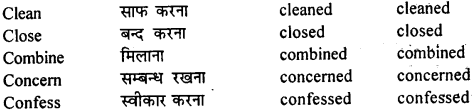
MP Board Class 11th General English Note Making and Summary Writing Examples

Students who are studying 11th can get the free Madhya Pradesh Board Solutions for General English Note Making and Summary Writing Examples Questions and Answers PDF here. You can download MP Board Class 11th English Solutions Questions and Answers PDF on this page. Practice questions of Mp Board Solutions of 11th English subject as many times as possible to get good marks.

MP Board Class 11th General English Note Making and Summary Writing Examples

Gather chapter wise MP Board Solutions for 11th English Study Material to score the highest marks in the final exam. Various chapters and subtopics are given clearly in MP Board Class 11th English Solutions Objective Questions Questions and Answers Material. All the MP Board Solutions for 11th English Questions with detailed answers are provided by subject experts. The step by step MP Board Class 11th English Objective Questions and Answers guide will help you to enhance your skills in General English Note Making and Summary Writing Examples. Here, along with the subject knowledge, General English Note Making and Summary Writing Examples knowledge also plays an important role. So, students should download MP Board Solutions 11th English and read it to attempt all the questions with 100% confidence.

Reading Comprehension के इस भाग में एक Unseen Passage देकर आपको उस पर Notes बनाने को कहा जायेगा। अर्थात् उसके महत्वपूर्ण Points निकालने हैं जिसकी सहायता से Passage की Summary या Precis बनाई जा सकें। इसके अतिरिक्त Vocabulary पर प्रश्न होंगे।

Division of Marks
Note Making – 7 marks
Vocabulary – 3 marks

First, let us know about Note making.

Note Making

Notes are a short-written record of facts to aid the memory. Notes are generally taken to record a speech or dictation while listening to it or after reading a book, magazine or article. They are referred back whenever needed and may be reproduced in the desired way.

टिप्पण, स्मृति की सहायता के लिए संक्षिप्त रेकार्ड लेखन है। किसी भाषण, उद्बोधन को सुनते वक्त या किसी पुस्तक, निबन्ध या किसी पत्रिका के पढ़ते वक्त टिप्पण लिखे जाते हैं। इनकी सहायता से हम पूर्वानुभव को वापस प्राप्त कर सकते हैं।

The Necessity Of Note Making

Knowledge is vast, but our memory is limited. We cannot remember all the information all the time. So note-making is essential. With its help, we can recall the complete information read/heard months ago. Note making is very useful to students preparing so many subjects. At the time of examination, it is not possible to go through voluminous books. At such critical times, notes are quite handy. So note-making fulfills three useful functions-

  1. Keeps a lot of information in short.
  2. Helps us reconstruct what was said or written.
  3. Comes in handy in any expression.

Characteristics :

  1. Short and compact.
  2. Complete information.
  3. Must be in a logical way.
  4. Understandable.

The Art Of Taking Notes
[टिप्पण लेने की कला]

Taking and preparing NOTES is very essential, useful and helpful in learning any subject. While studying you must have a note-book or a diary in which you may make notes. These notes prove very useful and make you sharp and impressive in future.
शिक्षा ग्रहण करने में टिप्पण लेना व लिखना बहुत ही अर्थपूर्ण व उपयोगी है।

Utility and Importance

1. Focus of attention-When we read an article or a lesson, our mind and attention slips away and we lose the grip and interest in reading, Taking notes keeps your mind and attention fixed and busy. They do not loiter here and there. You achieve concentration which is very essential in learning,
यह हमारे ध्यान को एकान रखता है।

2. Improvement of Memory-Taking notes helps you in memorizing facts and figures, quotations, main points etc. which makes it easy to keep the whole article in mind. Writing makes an exact man.
यह हमारी स्मृति को तेज रखता है।

3. Help in Writing Summary or Precis-By rearranging the ideas from notes, you may prepare agist or precis of the article.
सारांश लिखने में सहायता मिलती है।

4. Useful Quotations-The notes help us in quoting important things to support our speech or expressions.
उद्धरण हमारे कथन या लेख को पुष्ट करते हैं।

5. Dictionary Consultation Habit-While taking notes you must consult the dictionary. This habit will increase your vocabulary and knowledge.
शब्दकोश देखने की उपयोगी आदत हमारे ज्ञान को विस्तृत करती है।

6. Art of Editing-We learn the art of editing which proves to be very useful in future.
सम्पादन कला सीखने को मिलती है।

7. Books or Magazine Neat and Clean-Our book or magazine remains clean of markings or underlining.
पुस्तकें साफ व स्वच्छ रहती हैं।

8. Helpful in Examination-While solving the question paper answers spring up in our mind.
परीक्षा में उत्तर हमें याद आ जाते हैं।

9. Help in Composition-This habit helps us in composing an original article.
मौलिक रचना करने में सहायता मिलती है।

10. Improves Handwriting-Our handwriting improves because of practice.
हस्तलेखन सुन्दर होता है।

How to take Notes?
Essential Material

  1. The Book or Magazine.
  2. A Nice Pen.
  3. A Note Book or a Diary.
  4. A Dictionary.
  5. Other Reference Books.

The Method

1. Write main points in a notebook or a diary.
मुख्य बिन्दु नोटबुक में या डायरी में लिखें।

2. Write meaningful sentences and figures.
तथ्यपरक वाक्य व अंक लिखें।

3. Write appealing and important sentences occurring in the article. You may modify them so as to make them applicable without previous reference.
महत्त्वपूर्ण व दिल को छूने वाले वाक्य लिखें।

4. Write the meaning of new and difficult words or phrases with the help of dictionary.
शब्दकोश की सहायता से नये व महत्त्वपूर्ण शब्दों के अर्थ लिखें।

5. Sometimes you may have to write the whole paragraph or stanza of apoem.
कभी-कभी पूरा अनुच्छेद या कविता का पद लिखना पड़ सकता है।

6. Take the help of some reference book. Write the referred material with page no. etc.
किसी सन्दर्भ पुस्तक से सहायता लें।

7. Write beautiful and impressive quotations.
सुन्दर प्रभावोत्पादक उद्धरण लिख लें।

Section : A-2

हम यहाँ सरल से कठिन व संक्षिप्त से विस्तृत Passages अध्यापन हेतु दे रहे हैं।

Solved Exercises

MP Board Class 11th General English Note Making and Summary 1

A tree is a woody plant usually with a single stem. A large area well covered with woody plants is a forest. The woody plants called shrubs and bushes are smaller than trees and have usually more than one main stem. Trees are the largest living things on the earth, and they live longer than any animal. The tallest trees are the ‘mountain ashes’ which have grown to well over 300 feet. The oldest trees are the ‘Californian pines’, some of which are more than 4,500 years old. The age of a tree can be told by counting the rings in its trunk. In most kinds of temperate trees (those which grow in neither very hot nor very cold climates), new wood is formed every year in a layer outside the wood of the previous year. The layers of wood, as seen on the cut end of a felled tree, are circular and are called annual rings. Each ring in the trunk of the wood represents one year of the tree’s life. In a year a good rainfall, the ring formed is wider than one formed in the drier year. A record of rainfall can thus be read in tree rings.

Trees are important to our world for a number of reasons. Like all green plants, they build up their food by the process known as photosynthesis. The by-product of this process is oxygen which human beings and other animals take from the atmosphere as they breath. That is why the great forest have been called the ‘Lungs of the world’. They make much of the oxygen we need to live.

[Word Meanings : Stem – वृक्ष का तना। Layer = परत। Photosynthesis -प्रकाश-संश्लेषण]

Questions :
A. Make notes and give a suitable title to the above passage.
B. Do as directed :
Find words from the passage which have the similar meaning as given below:
(a) A large plant with several stems
(b) The process by which green plants make food
(c) The regular pattern of weather condition
Answers:
A Title-Importance of Trees.

Notes-

  1. Tree, a woody plant has a single stem.
  2. A large area well covered with woody plants is a forest.
  3. Trees are largest and longest living, live longer than any animal. The oldest trees are 4,500 years old.
  4. The age of a tree can be determined by no. of rings in its trunk.
  5. Trees are important :
    (a) They gave us oxygen.
    (b) Called the ‘lungs of the world’.

B.
(a) Shrubs and bushes.
(b) Photosynthesis.
(c) Temperate. [2016]

MP Board Class 11th General English Note Making and Summary 2

Tourism has emerged as the world’s largest industry. Growing rapidly in the last two decades, today it accounts for 6% of the world output and employs some 100 million people around the globe.

Tourism-the travel-based recreation-provides people with a change of place and a break from the monotony of daily life. It brings people of different nations together, allowing them to come into close contact with each other’s customs and other aspects of life. It reveals the scenic beauty and past herit¬age of a country. It can lead to greater understanding and tolerance and foster world peace.

The contribution of tourism can be nowhere seen more clearly than on the economic front. A study conducted by the United Nations has shown that developing countries, in particular, can reap handsome benefits out of tourism which greatly boosts national income.

Tourism generates employment and adds to the wealth of a nation.

Questions:
A. (a) On the basis of reading of the above passage make notes on it using recognizable abbreviations.
(b) Supply title to it.
B. (a) Find the word from the above passage which means ‘dullness due to lacking change’.
(b) Write the word opposite meaning to ‘advantage’ using a prefix.
(c) Give the adjective form of custom’.
Answers :
A. (a) Notes-
1. Tourism emerged as world’s largest industry.
2. (i) accounts for 6% of world output.
(ii) employs 100 millions people.

3. Tourism-the travel based recreation.

  1. change of place and a break from the monotony.
  2. brings people of different nations together.
  3. reveals the scenic beauty and past heritage.
  4. can lead to greater understanding, tolerance, foster world peace.
  5. boosts national income.
  6. generates employment.

(b) Title-Tourism: An Emerging Largest Industry.
(a) monotony,
(b) disadvantage,
(c) customary. [2009, 14]

MP Board Class 11th General English Note Making and Summary 3

Speeches are of two kinds, informal or conversational and formal or public. They are arts and perfection can be achieved by constant practice. Both are important in life and help to make a person achieve great things. While writing has its own place in society and writers have earned name and fame if their works are landmarks in their respective fields. Speech has an equally important place in society.

A good conversationalist can impress the people he comes in contact with. He can bring home his point of view in day to day life and create an impact on the people he converses with. A sweet tongue, clear pronunciation, proper arrangement of ideas, good or proper control oyer the language go to make a person attractive and impressive. For interesting conversations, it is desirable to go slow and steady. It is never good to appear important while conversing. Before you speak out your ideas, you must listen to the other side. To keep to the point and to use the minimum words for expressing maximum ideas is an art which carl be attained by gradual practice.

[Word Meanings : Formal = following a particular pattern औपचारिक Achieve = attain प्राप्त करनाI Conversationalist = talker वार्ताकार impact = influence प्रभाव।]

Questions :
A. Read the passage carefully, make notes on it and suggest a title.
B. Do as directed :
(a) Give a word from the passage that means ‘regular’.
(b) Give noun form of ‘pronounce’.
(c) Give adjective form of ‘attract’.
Answers ;
A. Title-The Art of Speaking Notes-
1. Two kinds of speeches
(a) Informal or Conversational
(b) Formal or Public.
2. These arts require practice. .
3. Writing and speaking both are equally important.
4. Qualities of a good Conversationalist
(a) Impact on people.
(b) (i) Sweet tongue.
(ii) Clear pronunciation.
(iii) Proper arrangement of ideas.
(iv) Control over the language.
5. For interesting conversation
(i) Go slow.
(ii) don’t feel important.
(iii) listen to the other side.
B. (a) constant,
(b) pronunciation,
(c) attractive.

MP Board Class 11th General English Note Making and Summary 4

A business letter is one that gets results. The best way to get results is to develop a letter that in appearance, style and content conveys information efficiently. To perform this function, a business letter must be concise, clear and courteous.

The business letter must be concise. Don’t waste words, little introduction or preliminary chat is necessary. Get to the point, state the point directly and leave it. It is safe to assume that your letter is being read by a very busy person with all kinds of papers to deal with.

The business letter must be clear. You should have a very firm idea of what you want to say and you should let the reader know it. Use the structure » of the letter, the paragraphs, topic sentences, introduction, conclusion-to guide your reader point by point from your thesis, through your reasoning to your conclusion.

[Word Meanings : Concise = short संक्षिप्त।Courteous = polite नम्र I Assume = take as true before there is proof सच मान लेना I Thesis = written after great thinking सोच-विचार कर लिखा कथन।]

Questions :
A. Read the passage carefully, make notes and supply a title.
B. Do as directed :
(a) Sarcasm. (Give adjective form)
(b) Courteous. (Give noun form)
(c) Belief or opinion that is the result of reasoning. (Give a word that has this meaning.)
Answers :
A Title-The Art of Writing a Business Letter Notes-
1. Features of a good business letter
(a) conveys information efficiently to get results.
(b) is concise.
(c) is clear.
(d) is courteous.

2. How to write a concise letter
(a) Introduction must be brief.
(b) Get to the point.
(c) Understand that the reader has a little time to read it.

3. Business letter must be clear.
(a) Have a firm idea of what you say.
(b) Use the proper structure of the letter.

4. Business letter must be courteous.
(a) No Sarcasm or insults.
(b) Point out your ideas politely.
(c) There should be no errors or omissions.
(a) sarcastic, (b) courtesy, (c) conclusion. [2010]

MP Board Class 11th General English Note Making and Summary 5

People look upon poverty as a great evil and it seems to be an accepted belief that if people only had plenty of money, they would be happy and useful and get more out of life. As a rule, there is more genuine satisfaction in and more obtained from life in the humble cottages of the poor men than in the palaces of the rich. I always pity the sons and daughters of the rich men, who are attended by servants and have governesses at a late age at the same time. I am glad to think that they do not know what they have missed.

It is because, I know how sweet and happy and pure the home of the honest poverty is, how free from perplexing care and from social envies and jealousies, how loving and united its members are in the common interest of supporting the family that I sympathize with the rich man’s boy and congratulate the poor man’s son. If you read the list of the immortals who are not born to die, you will find that most of them have been poor.

[Word Meanings : Evil = पाप Perplexing = confusing उलझन भर Immortal = living for ever अमर]

Questions :
A. Read the passage carefully, make notes on it and give a suitable title.
B. Do as directed :
(a) Give the opposite word of ‘happy’.
(b) Give the adverb form of ‘humble’.
(c) Give the word from the passage that gives the meaning “The state of being very poor.”
Answers :
A. Title-Poverty Vs Richness.

Note-
1. Public opinion :
Poverty a curse.

  • 1.1. Plenty of money : guarantee for happiness & success.

2. Reality: Different

  • 2.1. More happiness in cottages.
  • 2.2. Children of the rich miss a lot of important things.
  • 2.3. More genuine satisfaction and more obtaining in life in cottages.

3. Home of honest poverty

  • 3.1. Contains sweetness, happiness and purity.
  • 3.2. Free from care, envy and jealousy.
  • 3.3. Love, unity and support is abundant.

(B) (a) unhappy, (b) humbly, (c) poverty.

MP Board Class 11th General English Note Making and Summary 6

A headache is usually caused due to spinal misalignment to the head, due to poor posture. Sleeping on the stomach with the head turned to one side and bending over positions for a long time make it worse.

In migraine headaches, the pain is usually on one side of the head. It is with nausea, vomiting, irritability and bright spots or flashes of light. This .headache is made worse by activity, especially bending. The pain in the head gets worse by noise and light. Chocolate, caffeine, smoking, etc., cause it. The pain may last from eight to twenty-four hours and there may be a hangover for two-three days.

Migraines have before them changes in sight and sensation. There is usually a family history of migraine.

In a headache, the pain starts not from the nerves of muscles, blood vessels and bones. These send pain signals to the brain which then judges the degree of distress and sends it to appropriate sites. The pain may sometimes be referred to sites other than the problem areas. This is known as referred pain and occurs due to sensation overload. Thus though most headaches start at the base of the skull, the referred pain is felt typically behind the eyes.

[Word Meanings: Spinal = of the spine रीढ़ की हड्रडी सम्बन्धी I Misalignment = disconnection असम्बद्ध। Posture = mode तरीकाI Nausea = sickness जी मिचलाना। Irritability = irritation चिड़चिड़ापन। Hangover = after effect बाद का प्रभाव। Distress = pain दर्द]

Questions ;
A. Read the passage carefully, suggest a title to it and make notes on it.
B. Do as directed :
(a) Give adjective form of ‘continue’.
(b) Find out a word from the passage that means-‘suited to’, ‘in keeping with’.
(c) Give noun form of irritable’.
Answers :
A. Title-Headache
Notes-
(a) Causes and duration

  • Causes-spinal misalignment due to poor posture.
  • Duration-usually short, can last for some days.

(b) Migraine Headache

  • Symptoms-pain on head-one side, nausea, irritabilty, bright spots.
  • Causes-Certain foods, smoking, genetic.
  • Duration-8-24 hrs. hangover possible.

(c) Pain in brain

  • signals of stress received
  • pain at other places also.
  • called referred pain.

B. (a) continuous, (b) appropriate, (c) irritability.

MP Board Class 11th General English Note Making and Summary 7

The work of heart can never be interrupted. The heart’s job is to keep oxygen-rich blood flowing through the body. All the body’s cells need a constant supply of oxygen especially those in the brain. The brain cells live only four to five minutes after their oxygen is cut off and death comes to the entire body.

The heart is a specialized muscle that serves as a pump. This pump is divided into four chambers connected by tiny doors called valves. The chambers work to keep the blood- flowing through the body in a circle.

At the end of each circuit, veins carry the blood to the right atrium, the first of the four chambers. Its oxygen has been used up and it is on its way back to the lung to pick up a fresh supply and to give up the carbon dioxide it has accumulated. From the right atrium, the blood flows through the tricuspid valve into the second chamber, the right ventricle. The right ventricle contracts when it is filled, pushing the blood through the pulmonary artery, which leads to the. lungs. In the lungs the blood gives up its carbon- dioxide and picks up fresh oxygen. Then it travels to the third chamber, the left atrium. When this chamber is filled it forces the blood through a valve to the left ventricle. From here it is pushed into a big blood vessel called aorta and sent round the body by way of arteries.

[Word Meanings : Interrupted disturbed विधन डालना Constant = regular लगातार। Muscle = tissue मांसपेशी। Chambers = room-like structures कक्ष। Circuit = circle चक्कर  Atrium = entrance प्रांगण। Ventricle = निलय, खोह। Contracts = shrinks सिकुड़ती है Pulmonary = relating to heart दिल सम्बन्धी]

Questions ;
A. Read the passage carefully, supply a title and make notes on it.
B. Do as directed :
(a) Give a word from the passage that means ‘put obstacle and check.’
(b) Give the noun form of ‘divide’.
(c) Give the meaning of ‘chamber’.
Answers
Title-Heart and Its Working Notes-
(1) Uninterrupted work of Heart.

Functions-
(a) Supply of Oxygen-rich blood.
(b) Keep the brain cells alive.

Heart-a special muscle-Serves as a pump.
Parts of heart-
(a) Right Atrium.
(b) Right Ventricle.
(c) Left Atrium.
(d) Left Ventricle.

Working of heart.
Veins carry impure blood → Right Atrium → Right Ventricle → Lungs » Left Atrium → Left Ventricle → Aorta → Body.

B.
(a) interrupt, (b) division, (c) room. [2011]

MP Board Class 11th General English Note Making and Summary 8

Man’s journey of life from childhood to old age is very charming and colourful. Youth is the most exciting period of man’s life, when it is time to grow and dream. A young man is fiill of hope, energy and zeal. Nothing is difficult or impossible or dangerous for him. The old people say that youth is not daring but thoughtless. A young man bums the candle at both ends. He commits mistakes and learns only after burning the fingers. Sometimes the young men misuse their freedom and thus invite difficulties and hardships.

They are full of strength, energy and enthusiasm. They become rebels and are no longer afraid of facing the forces of realities. A young man accepts the challenge of evil difficulties. To win or lose the game of life is the mission of his career. He loves to lead an adventurous life and has a keen desire to build up a new world of his dream.

But the period of youth does not last long. Soon it is followed by old age, when he regrets his past mistakes and failures. The weak old man feels helpless, depressed and disappointed. He becomes unfit for any adventure. But some fortunate old people never grow old and continue to feel young and active and make the most even in the last years of their lives. It will not be wrong to say that youth brings honour and old age commands respect.

Questions :
A. Read the passage carefully, make notes on it and supply a suitable title.
B. Do as directed :
(a) Give a word from the passage that means ‘courage’.
(b) Give the noun form of the word ‘disappointed’
(c) Give the adjective form of ‘energy’.
Answers :
A. Title-Man’s Journey of life.

Notes-

  1. Man’s Journey of life-Charming and colorful
  2. Youth- The most exciting period :
    • full of hope, energy and zeal.
    • daring and thoughtless.
    • sometimes misuse their freedom.
    • result-difficulties and hardships.
    • full of strength, energy and enthusiasm.
    • love to lead an adventurous life.
  3. Old age :
    • regrets past mistakes and failures.
    • weak old man : helpless, depressed and disappointed.
    • some lucky old men make the most even in the last years of their lives.
  4. Youth brings honor and old age commands respect.

B. (a) dare (b) disappointment (c) energetic.

MP Board Class 11th General English Note Making and Summary 9

Books are, by far the most lasting products of human effort. Temples fall into ruin, pictures and statues decay, but books survive. Time does not destroy the great thoughts which are as fresh today as when they first passed through their author’s minds ages ago. What was then thought and said stili speaks to us as vividly as ever from the printed pages. The only effect of time has been to throw out of currency the bad products, for nothing in literature can long survive but what is really good. Books introduce us into the best society, they bring us into the presence of the greatest minds that have ever lived. We hear what they said and did, we see them as if they were really alive, we sympathize with them, enjoy with them and grieve with them. In a way we move in their company and their experiences become ours. Without books no fresh ideas are possible and without fresh ideas no cultured society is possible. No wonder that the world keeps its books with great care.

[Word Meanings : Lasting = लम्बे समय तक चलने वाल Products yield = उत्पादन। Ruin = downfall नष्ट हो जाना। Decay = decline क्षय, सड़ना। Survive = to remain alive जीवित रहना। Vividly = striking bright चमकने के साथ]

Questions :
A. Read the passage carefully, make notes on it and supply a suitable title.
B. Do as directed :
(a) Write the verb form of the word ‘product’.
(b) Give the opposite word of ‘ruin’.
(c) Find out the word from the passage that gives the meaning ‘attempt’.
Answers :
Title-Importance of Books.

Notes-

  1. Other things are destroyed; Books remain immortal.
  2. They are ever fresh and evergreen; Bad books go out of currency.
  3. Books take us to the best society.
  4. We move in the company of greatest minds.
  5. Fresh ideas are possible only by books; Fresh ideas are necessary for cultured society.
    (a) produce, (b) survive, (c) effort. [2013]

MP Board Class 11th General English Note Making and Summary 10

The invention of computers has been one of the greatest advancements in modem technology. Computers are used not only in industries but also in universities. Computers have been used in the service of man in all spheres. Computers are capable of doing extremely complicated work in all branches of learning. They can solve the most complicated mathematical problems or put thousands of unrelated facts in order. These machines can be put to various uses. For instance, they can provide information in the best way to prevent traffic accidents or they can count the number of times a word has been used in the Bible. The computer’s work for us has been called ‘automation’ may enable human beings for more leisure than they have today.

Questions :
A Make notes and give a title to the passage.
B. Do as directed :
(a) Give the opposite of ‘related’.
(b) Give the noun form of ‘prevent’.
(c) Write comparative of greatest.
Answers :
A. 1. Title-Computers : Modem Miracle.
2. Notes-

  1. Computers : One of the greatest advancements in modern technology.
  2. Used-
    • in industries
    • in universities
    • in the service of man in all spheres.

3. Advantages :

  • Can do complicated work
  • Solve complicated mathematical problems
  • Various uses
  • Prevent traffic accidents
  • Bring more leisure to man.

B. (a) unrelated, (b) prevention, (c) greater.

Above provided complete MP Board Solutions 11th English Study guide is useful for making your preparation effective. Students can frequently visit our page to get the latest updates on other subjects study materials.
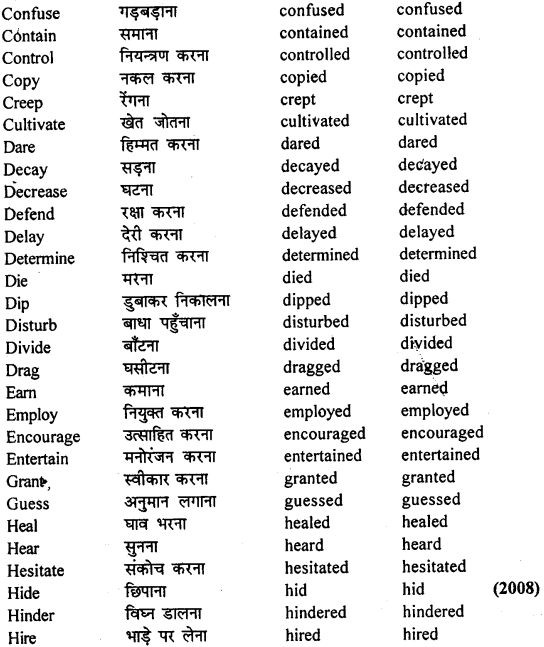
MP Board Class 11th General English Unseen Passages

Students who are studying 11th can get the free Madhya Pradesh Board Solutions for General English Unseen Passages Questions and Answers PDF here. You can download MP Board Class 11th English Solutions Questions and Answers PDF on this page. Practice questions of Mp Board Solutions of 11th English subject as many times as possible to get good marks.

MP Board Class 11th General English Unseen Passages

Gather chapter wise MP Board Solutions for 11th English Study Material to score the highest marks in the final exam. Various chapters and subtopics are given clearly in MP Board Class 11th English Solutions Objective Questions Questions and Answers Material. All the MP Board Solutions for 11th English Questions with detailed answers are provided by subject experts. The step by step MP Board Class 11th English Objective Questions and Answers guide will help you to enhance your skills in General English Unseen Passages. Here, along with the subject knowledge, General English Unseen Passages knowledge also plays an important role. So, students should download MP Board Solutions 11th English and read it to attempt all the questions with 100% confidence.

In the new syllabus, two unseen passages are to be solved. They will be of two kinds :

  1. In the first passage after reading, you will be asked to answer some questions and vocabulary shall be tested.
  2. In the second passage, you will be asked to make notes and vocabulary questions will also be given.

आपके पाठ्यक्रम में दो Unseen passages पूछे जायेंगे। प्रथम में प्रश्नोत्तर व शब्द भण्डार पर प्रश्न होंगे व दूसरे में सामग्री पर Notes बनाने होंगे व Vocabulary पर प्रश्न होंगे।

Section : A-1

हम यहाँ पहले सरल व सामान्य Passages दे रहे हैं व आगे उच्च स्तर के Passages होंगे।

Solved Exercises

MP Board Class 11th General English Unseen Passage 1

Read the following passages carefully and answer the questions given below:

Ecology teaches us the interdependence of all life forms, yoga goes a step further and teaches us the unity of all life forms With the wider and deeper understanding of Ecology, man has come to understand his link with nature better. He has shed his anthropocentric arrogance. It is hoped that he will take a step further and (pome to the ‘Amrit of Yoga as many ecologists have already done.

Sir Jagdish Chandra Bose noted the ability of plants to react to its environs. That was in the 1920s. After his demise, the research was given up. It was left to the modern day scientists to produce irrefutable proof that plants can not only establish ‘Yoga’ with living things around them, including man, but also can read our minds and intentions. The doyen of these living researches, Cleve Backster says, “There is no doubt in my mind that we are all one”. Most of the top scientists of the world echo these sentiments, or rather, this conviction. All say, “We are Unity”. And in the spectrum of‘ we’ every living thing on this earth is included. The language of the theory of the hoary ‘Yogis’ may be unintelligible: the ground trod may be ‘terra incognita’ to us. Now, however, scientists are speaking in scientific parlance, which we can comprehend. But shall we heed even them?

We have the various traditional paths to yoga: Bhakti Yoga, Karma Yoga, Tantra Yoga and others. For the scientifically inclined modern man, a new path has been discovered. Let us name is “Ecology Yoga”.

[Word Meanings: Ecology = Branch of Biology that deals with the habits of living things पारिस्थिति विज्ञान। Anthropo Centric = मानव केन्द्रित। वातावरण = ARRUTI (Surroundings) I doyen = वरिष्ठ कूटनीतिज्ञ]

Questions
A. (a) What does Yoga teach us?
(b) What is expected of a man?
(c) What was observed by J. C. Bose?
(d) Mention the two things that plants can do?
(e) Name the various traditional paths of Yoga.
(f) Give a suitable title to the above passage.
B. Find out the words from the passage which have the opposite of the words traditional, include & heed.
Answers :
(a) Yoga teaches us the unity of all life forms. [2008]
(b) It is expected of a man to come to the Amrit of Yoga.
(c) He observed the ability of plants to react to its environs.
(d) Bose’s research was given up because he died.
(e) (i) They can establish yoga.
(ii) They can read minds and intentions.
(f) Bhakti Yoga, Karma Yoga, Tantra Yoga.
(i) humility.
(ii) exclude.
(iii) ignore.

MP Board Class 11th General English Unseen Passage 2

Strength is essential. Strength is one thing, awareness of strength is another. It is not enough. If we are strong, we should also be aware of our strength. It is not enough. If we are rich, we should also be aware of our richness. Our strength and wealth will be useless if we are not aware of their existence in us then it makes no difference whether we have them or do not have them. Ramesh is a rich person. He has cash in his pocket. On the way to a hotel his pocket is picked and his cash is lost. Ramesh has no knowledge of the loss. He goes to the Restaurant, sits with confidence and eats like a lord. Praveen is a poor person, he has no money. He is hungry. He stands near a hotel. Somebody related to him goes close to him and thrusts into his pocket a thousand rupee note folded in a piece of paper. Poor Praveen is not aware of the cash in his pocket. He stands on the pavement and begs for alms. Though he can afford to eat like a lord sitting in a Restaurant. It is the awareness or ignorance that causes the feeling of the richness or poverty. A rich person may be poor for want of awareness of his wealth and a person without money may behave dike a rich man on account of his ignorance of the strength of wealth.

Awareness of our culture, glory and heritage is sure source of strength. This awareness of our country’s wealth is called National Pride. It makes us hold our heads high with confidence and self-esteem.

[Word Meanings-Aware = having knowledge of जानकरी होना Existence = अस्तित्व। Thrust = push with force घुसाना। Pavement = फुटपाथ| Afford – to be able to buy क्रयशक्ति होना Heritage = inherited विरासत में प्राप्त I Esteem = respect आदर भाव Alms = भिखी]

Questions :
A. (a) In what condition our strength and wealth will be useless?
(b) What is the comparison in two instances of Ramesh and Praveen?
(c) How did Ramesh behave? On what basis did he behave so?
(d) How did Praveen behave?
(e) What is the real source of strength?
(f) What is called national pride?
B. Do as directed :
(a) Find out a word from the passage that means—a lack of knowledge.
(b) Give the adjective form of ‘poverty’.
(c) Give noun form of ‘hungry’.
Answers ;
A. (a) If we are unaware of our strength and wealth, they will be useless.
(b) The comparison between the two instances of Ramesh and Praveen is the ignorance of poverty and richness.
(c) Ramesh behaved like a lord because he thought he had money in his pocket while it was picked by someone.
(d) Praveen behaved like a beggar because he did not have the knowledge that he has money in his pocket.
(e) The real source of strength is awareness of our culture, glory and heritage.
(f) The awareness of our countiy’s wealth is called National Pride.
B. (a) Ignorance, (b) Poor, (c) Hunger.

MP Board Class 11th General English Unseen Passage 3

The blessings which the reading habit confers on its possessor are many, provided we choose the right kind of books. Reading gives the highest kind of pleasure. Some books we read simply for pleasure and amusement e.g., good novels. And novels and books of imagination must have their place in everybody’s reading. When we are tired, or the brain is weary with serious study, it is healthy recreation to lose ourselves in some absorbing story written by a master hand. But to read nothing but books of fiction is like eating cakes and sweet-meats. As we need plain wholesome food for the body, so we must have serious reading for the mind and here we can choose to our taste. There are many books on history, geography, philosophy, religion, travel and science which we ought to read, and which will give us not only pleasure but education. And we can develop a taste for serious reading, so that in the end it will give us more solid pleasure than even novels and books of fiction. Nor should poetry be neglected, for the best poetry gives us noble thoughts and beautiful imaginings clothed in lovely and musical language.
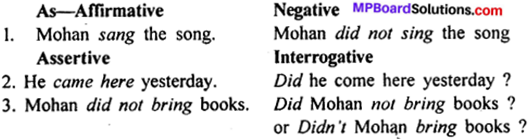
[Word Meanings: Provided on the condition बशर्ते Confer give, bestow प्रदान करना। Amusement = entertainment मनोरंजन। Weary = tired थका हुआ। Absorb = take or suck in सोखना। Fiction = novel उपन्यास।]

Questions:
A (a) What is the condition for getting blessings of the reading habit?
(b) Which books do we read simply for pleasure?
(c) Which is the healthy recreation when we are tired or weary?
(d) How is reading only books of fiction like?
(e) Which books give us pleasure and education.
(f) What does poetry give us?
B. Select words from the passage which give the following meanings :
(a) give an honour or favour.
(b) beneficial for you.
(c) to give not enough care or attention.
Answers:
A (a) The condition is the choice of right books.
(b) We read good novels and the books of stories simply for pleasure.
(c) When we are tired and weary the healthy recreation is to lose ourselves in some absorbing story written by a master hand.
(d) Reading only books of fiction is like eating cakes and sweet-meats.
(e) Books on history, geography, philosophy, religion, travel and science give us not only pleasure but education also.
(1) Poetry gives us noble thoughts and beautiful imaginings clothed in lovely and musical language.
B. (a) confer, (b) wholesome, (c) neglect. [2009, 10]

MP Board Class 11th General English Unseen Passage 4

I love India as the birthplace of the highest and best of all religions, as the country that has grandest mountains, the Himalayas, the country where the homes are simple, where domestic happiness is most to be found, and where the women unselfishly, unobtrusively, ungrudgingly serve the dear ones from early morn to dewy eve.

India is above all others, the land of great women. Wherever we turn, whether history or literature, we are met on eveiy hand by those figures, whose strengths she mothered and recognized, while she keeps their memory eternally sacred.

I believe that India is one, indissoluble, national unity is built on the common home, the common interest and the common love. I believe that the strength, which spoke in Vedas and Upnishads, in the making of religions and empires, in the learning of scholars, and meditation of the saints, is born once more amongst us; its name today is ‘Nationality’, I believe that the present of India is deep-rooted in her past, and that before her, shines a glorious future. O! Nationality, come there to me as joy or sorrow, as honour or as shame! Make me thine own !!

[Word Meanings : Unobtrusively = not easily noticably अप्रात्यक्ष Ungrudgingly = wholeheartedly पूरे मन से Indissoluble = unbreakable अट् टू Thine = your तुम्हारा।]

Questions:
A. (a) Why does the author love India?
(b) How is national unity built?
(c) Why does the author call India the land of great women?
(d) When we turn to history or literature, what do we find?
(e) Whose memory is kept eternally sacred?
(0 Give a suitable title to the passage.
B. Do as directed :
(a) Give the opposite of ‘sacred’.
(b) Give the word from the passage that gives the same meaning of ‘graceful’.
(c) Give the noun form of ‘belief’.
Answers :
A. (a) The author loves India as the birth place of the highest and best of all religions, as the country that has grandest mountains, and the country where homes are simple, where domestic happiness is most to be found and where the women serve the dear ones.
(b) National unity is built on the common home, common interest and common love. •
(c) The author calls India, the land of great women because here women unselfishly, unobtrusively, ungrudgingly serve the dear ones from early morning to dewy eve.
(d) When we turn to history or literature, we are met on every hand by those figures, whose strengths India mothered and recognized.
(e) The memory of great women of India is kept eternally sacred.
(0 India : A Great Country.
(a) corrupt, (b) honour, (c) belief. [2011]

MP Board Class 11th General English Unseen Passage 5

Discipline means obedience to the established rules of conduct. Certain rules have been laid down in every society to control and regulate the life and activities of its members so that the society as a whole may progress in harmony and peace. If any of these rules is broken, there is trouble and society suffers. In fact, discipline is the very basis of progress in every sphere, public or private. A man without discipline is like an engine without a brake. A society that has no rules or whose members do not conform to its rules soon falls into pieces. In games too, discipline is, necessary. Every player has to obey his captain and carry out his commands, whether he likes them or not. In army discipline is more necessary. An army without discipline is no better than a lawless mob. In the same way a school or a college cannot run if the boys do not observe the rules and regulations of the institutions. Teaching is impossible if the boys do not keep discipline. Discipline cultivates a spirit of respect for elders and superiors, teaches gentlemanly behaviour in society and meek submisson to any punishment that may be inflicted due to indiscipline. It is the duty of every student to observe them if they want to build their character and prosper in life.

[Word Meanings : Harmony = oneness in opinions समान विचारधार Conform = adapt oneself to अनुरूप बन जाना। Inflict = impose (दण्ड) देना।]

Questions
A. (a) What does discipline means?
(b) Why are certain rules of conduct laid down by the society?
(c) What happens to society without discipline?
(d) What is an army without discipline?
(e) What will be the result if boys do not keep discipline?
(f) What does discipline develop among the students?
B. Do as directed :
(a) Give the verb form of ‘obedience’.
(b) Give the word from the passage that has the same meaning as “a disorderly crowd”.
(c) Give the opposite word of ‘punishment’.
Answers :
(a) Discipline means obedience to the established rules of conduct.
(b) They are laid down by the society to control and regulate the life and activites of its members so that the society as a whole may progress in harmony and peace.
(c) A society that has no rules or whose members do not conform to its rules soon falls into pieces.
(d) An army without discipline is no better than a lawless mob.
(e) If boys do not keep discipline teaching is impossible.
(f) Discipline develops character among students.
(a) obey, (b) mob, (c) reward. [2014]

MP Board Class 11th General English Unseen Passage 6

Getting a good night’s sleep can help you cope with stress more effectively. But not getting enough sleep causes more stress. Insomniacs have higher concentrations of hormones than others.

Women are prone to sleep disturbances. Their sleep problems frequently interfere with their daily activities.

Experts believe that sleep, especially deep sleep, enables our nervous system to function well. Without it, we lose our ability to concentrate, remember or analyse. Some experts speculate that during deep sleep, cells manufacture more proteins, which are essential for cell growth and repair the damage from things like stress and ultraviolet rays.

Scientists believe that activity in the area of the brain that controls emotions and social interactions lessens during sleep and that deep sleep may help people be emotionally and socially adapt when awake.

Sleep may also help our brain to store a newly learned activity in its memory bank. In a study in Canada, students deprived of sleep after learning a complex logic game showed a 30 percent learning deficit when tested a week later compared with students not deprived of sleep.

The effects of lack of sleep on other bodily functions are just as alarming. In studies from five medical centres across the country, researches established that individuals with insomnia were also more likely to have poor health including chest pain, arthritis and depressions, and to have difficulty accomplishing difficult tasks.

[Word Meanings : Cope = to get along सफलतापूर्वक संबलना निपटना Stress = strain तनाव Insomniac = person suffering from want of sleep अनिद्रा रोगी Concentration = deep thinking गहन चिन्तन Hormone = internal secretion that passes into the blood and stimulates the bodily organs रक्त में मिलकर शरीर में उतेजना पैदा करनेवाले तत्व Prone = having a natural inclination or tendency to something प्रवृत Frequently = often happening अक्सर होने वाला Speculate – to make guesses अनुमान लगानाI Ultraviolet = of the invisible part of the spectrum beyond the violet colour = पराबैंगनी किरणें। Deficit = loss हानि। Deprive = take away from वंचित करना। Arthritis inflammation of joints जोड़ों का दर्द।]

Questions:
A. (a) How does good sleep help us?
(b) Who have higher concentrations of hormones than others?
(c) What effect does deep sleep make on the nervous system?
(d) What do scientists believe about deep sleep?
(e) How does sleep help our brain?
(f) Who are prone to sleep disturbances? What is the effect?
B. Find words from the passage that mean :
(a) guess,
(b) good at doing something difficult,
(c) to prevent from being done.
Answers:
(a) Getting good night’s sleep can help us to cope with stress more effectively.
(b) Insomniacs have higher concentrations of hormones than others.
(c) Experts believe that sleep, especially deep sleep, enables our nervous system to function well.
(d) Scientists believe that activity in the area of the brain that controls emotions and social interactions lessens during sleep and that deep sleep may help people be emotionally and socially adapt when awake.
(e) Sleep may help our brain to store a newly learned activity in its memory bank.
(1) Women are prone to sleep disturbances. Their sleep problems frequently interfere with their daily activities.
(a) speculate, (b) adapt, (c) deprived off. [2009]

MP Board Class 11th General English Unseen Passage 7

The Gita is not aphoristic work, it is a great religious poem. The deeper you dive into it, the richer the meanings you get. It being meant for the people at large, there is pleasing repetition. With every age the important word will carry new and expanding meanings. But its central teaching will never vary. The seeker is at liberty to extract from this treasure any meaning he likes, so as to enable him to enforce in his life the central teaching.

Nor is the Gita a collection of do’s and don’ts. What is lawful for one may be unlawful for another. What may be permissible at one time, or in one place, may not be so at another time, and in another place. Desire for fruit is the only universal prohibition. Desirelessness is obligatory.

The Gita has sung the praises of knowledge, but it is beyond the mere intellect, it is essentially addressed to the heart and capable of being understood by the heart. Therefore, the Gita is not for the these who have no faith. The author makes Krishna say ”Do not entrust this treasure to him who is without sacrifice, without devotion, without the desire for this teaching and who denies Me. On the other hand, those who will give this precious treasure to My devotees will by the fact of this service assuredly reach Me and those who, being free from malice, will with faith absorb this teaching, shall having attained freedom, live where people of true merit go after death.”

[Word Meanings : Aphoristic = नीति वर्णन करने वाली। Dive गोता लगाना। Expand = make or become large विस्तार करना। Vary- change बदलना। Extract = take out with force बलपूर्वक निकालना। do’s and don’ts = कर्त्तव्य व अकर्त्तव्य । Prohibition = restriction पाबन्दी। Obligatory = compulsory अनिवार्य। Sacrifice = बलिदान, त्याग। Devotion – समर्पण। Malice = evil intent द्वेष, दुर्भावना। Absorb = सोख लेना।]

Questions ;
A. (a) What type of a work is Gita?
(b) What do you understand by do’s and don’ts?
(c) What has been recognized as the only universal compulsion?
(d) Why is the Gita beyond the mere intellect?
(e) Who will certainly reach to Lord Krishna?
(f) Give a suitable title to the passage.

B. Do as directed :
(a) Give the opposite word of ‘Malice’.
(b) Give the word from the passage that gives the meaning “Compulsory”.
(c) Give the verb form of the word “Prohibition”.
Answers :
A. (a) Gita is a great religious poem.
(b) Do’s and don’ts means works that should be done and works that should not be done.
(c) Desire for fruit has been recognized as the only universal compulsion.
(d) Gita is beyond intellect because it has been addressed to the heart and capable of being understood by heart.
(e) Those who will give this (Gita’s) precious treasure to His devotees will by fact of this service assuredly reach Him.
(f) Gita : A Great Religious Poem.
B. (a) Good will, (b) Obligatory, (c) Prohibit. [2012]

MP Board Class 11th General English Unseen Passage 8

Paulo is a boy who lives in Brazil. Every Wednesday an aeroplane comes to Paulo’s town and every thursday it flies away again over the hill, to a very big town called Manaos.

Paulo likes aeroplanes very much. He wants to be a pilot when he is a man.

Every Wednesday Paulo waits to see the aeroplane come in. He wanted to help the men clean it and put petrol in it. But the men always said, “Go away Paulo. Only men understand aeroplanes.”

One day his father said to him, “Paulo, every year, the best boy or girl goes away to Manaos to a big school. Perhaps if you work hard, you will be the best boy in the school and go to Manaos in the aeroplane.”

So Paulo began to work hard. And at the end of the year all the teachers said, ‘Paulo is the best boy in the school, The next thursday he said good bye to all his friends and got into the aeroplane. Then the aeroplane took off and began to climb. Paulo was sitting by a little window, and he could see the roads and houses of his town. He saw some fields and a river, and then only a lot of trees. They like very small.

Paulo was very happy.

[Word Meanings : Town = an area larger than a village but smaller than “a city क़स्बा]

Questions :
(a) When does an aeroplane come to Paulo’s town?
(b) What does Paulo want to be when he is a man?
(c) Where does Paulo live?
(d) What did the teachers say at the end of the year?
(e) What did his father say to him in order to fly in aeroplane?
(f) What could he see from the aeroplane?
(g) Find out a word from the passage which is opposite meaning of dirty’?
(h) Find out the word from the passage that means ‘see’.
(i) Give the noun form of ‘speak’.
Answers :
(a) An aeroplane comes to Paulo’s town on every Wednesday.
(b) Paulo wants to be a pilot when he is a man.
(c) Paulo lives in Brazil.
(d) The teachers said at the end of the year, “Paulo is the best boy in the school.”

(e) His father said “Every year, the best boy or girl goes away to Manoas to a big school. Perhaps if you work hard, you will be the best boy in the school and go to Manoas in the aeroplane.”
(f) Paulo could see the roads and houses of his town, some fields and a river and a lot of trees.
(g) clean.
(h) look.
(i) speech. [2013]

MP Board Class 11th General English Unseen Passage 9

There is a story of an old man who thought he had a right to do what he liked. One day this old man was walking along a busy road with his walking stick spinning round and round his hand, and trying to look important. A man walking behind him objected, “you ought not to spin your walking stick round and round like that.” The old man replied, “1 am free to do what 1 like with my walking stick.”

“Of course you are”, said the other man,” but you ought to know that your freedom ends where my nose begins.” ,
The story tells us that we can enjoy our rights and our freedom only, if they do not interfere with other people’s right and freedom.

Questions :
A. (a) What was the old man doing?
(b) Why was the old man doing that?
(c) What did the man told the old man?
(d) What did the old man reply?
(e) What did the man told the old man in the end?
(f) What does the story tell us?

B. Do as directed:
(a) Give the noun form of ‘argued’.
(b) Give the same meaning word from the passage “being involved in other’s affairs.”
(c) Give adjective form of‘freedom’.
Answers :
A. (a) The old man was walking along a busy road with his walking stick spinning round and round in his hand.
(b) The old man was doing that to show that he had a right to do what he liked.
(c) The man told the old man that he ought not to spin his walking stick round and round like that.
(d) The old man replied that he was free to do what he liked with his walking stick.
(e) The man told the old man that of course he was free, but he ought to know that his (old man’s) freedom ends where his (man’s) nose began.
(f) The story tells us that we can enjoy our rights and our freedom only if they do not interfere with other people’s rights and freedom.
B. (a) argument, (b) interfere, (c) free.

MP Board Class 11th General English Unseen Passage 10

We have been brought up to fear insects. We regard them as unnecessary creatures that do more harm than good. Man continually wages war against them, for they contaminate food, carry diseases, or devour his crops. They sting and bite without provocation, they fly uninvited into our rooms on summer nights, or beat against our lighted windows. We live in dread not only of unpleasant insects like spider or wasps, but of quite harmless ones like moths. Reading about them increases our understanding without dispelling our fears. Knowing that the industrious ant lives in a highly organised society does nothing to prevent us from being filled with revulsion when we find hordes of them crawling over a carefully prepared picnic lunch.

No matter how much we like honey, or how much we have read about the uncanny sense of direction which bees possess, we have a horror of being stung. Most of our fears are unreasonable, but they are difficult to erase. At the same time, however, insects are strangely fascinating. We enjoy reading about them, we enjoy staring at them, as they go on with their business, unaware (we hope) of our presence. Who has not stood in awe at the sight of a spider pouncing on a fly, or a column of ants triumphantly bearing home an enormous dead beetle?

[Word Meanings : Insects = sorts of small creatures कीड़ा मोखोदे इत्यादि Regard = consider सोचते हैं। Contaminate = make impure अशुद्ध करते हैं। Provocation = stimulation उत्तेजना उकसाना Dread = fear भय Industrious = hard-working परिश्रमी Revulsion = disgust घृणाI Pounce = swoop on something suddenly झपट्टा मारना। Triumphantly = in a victorious manner विजयी भाव से। Enormous = very big विशाल]

Questions :
A. (a) What is our attitude towards insects?
(b) Why does man try to exterminate insects?
(c) Why does the writer say that knowing about insects does not make man change his attitude?
(d) Do you think that the attitude of man towards insects as described here in is right?
(e) What is our horror about bees?
(f) How have we been brought up about insects?
B. Do as directed :
(a) Find a word from the passage that means make ‘dirty’ or ‘impure’.
(b) Give noun form of ‘possess’.
(c) Give opposite word of ‘reasonable’.
Answers :
(a) Our attitude towards insects is based on fear and revulsion towards them.
(b) Man tries to exterminate insects because they contaminate food, carry diseases and ruin his crops. They also sting or bite without provocation.
(c) Reading or knowing about insects doesn’t change our attitude towards them. No doubt, it increases our understanding but in no way (Joes it dispel our fears and revulsion against them.
(d) The attitude of man towards insects as described in the passage by the writer is not scientific but based on facts therefore, it is right.
(e) Our horror about bees is that they may sting us.
(f) We have been brought up to fear insects.
(a) contaminate, (b) possession, (c) unreasonable. [2016]

MP Board Class 11th General English Unseen Passage 11

I swept the recitation room three times, then I got a dusting cloth, and I dlisted it four times. All the woodwork around the walls, every bench, table and desk, I went over four times with my dusting cloth. Besides, every piece of furniture had been moved and every closet and comer in the room had been thoroughly cleaned. I had the feeling that in a large measure my future depended upon the impression I made upon the teacher in the cleaning of that room. When I was through I reported to the head teacher. She was a “Yankee”- woman who knew just where to look for dirt. She went into the room and inspected the floor and closets, then she took her handkerchief and rubbed it on the woodwork about the walls and over the table and benches. When she was unable to find one bit of dirt on the floor, or a particle of dust on any of the furniture, she quietly remarked, “I guess you will do to enter this institution.”

Questions :
A. (a) How many times did the author dust the recitation room?
(b) What were the items in the room he dusted?
(c) What did he feel while dusting the room?
(d) What kind of woman was the head teacher and how?
(e) How did she check the room?
(f) “I guess you will do to enter this institution.” Who does ‘you’ here refer to?
B. Do as directed :
(a) Find the word from the above passage which means ‘visit officially to check.’
(b) Find the word opposite in meaning to ‘loudly’.
(c) Write the verb form of ‘ impression’.
Answers :
A. (a) The author dusted the recitation room three times.
(b) He dusted all the woodwork around the walls, every bench and desk, he went over four times with his dusting cloth.
(c) He had the feeling that in a large measure his future depended upon the impression he made upon the teacher in the cleaning of that room.
(d) The head teacher was a Yankee woman who knew just where to look for dirt.
(e) She went into the room and inspected the floor and closets, then she took her handkerchief and rubbed upon the woodwork about the walls and over the table and benches.
(f) You here refer to the author. (Booker T. Washington)
B. (a) inspect, (b) lowly, (c) impress.

Above provided complete MP Board Solutions 11th English Study guide is useful for making your preparation effective. Students can frequently visit our page to get the latest updates on other subjects study materials.