MP Board Class 7th Hindi Bhasha Bharti विविध प्रश्नावली 1

MP Board Class 7th Hindi Bhasha Bharti Solutions विविध प्रश्नावली 1

प्रश्न 1.
निम्नलिखित गद्यांशों की संदर्भ एवं प्रसंग सहित व्याख्या कीजिए-

(क) “यह तो होता ही है कि जब बड़े काम किए जाते हैं,
उनमें कामयाबी भी होती है, नाकामयाबी भी होती है,
मगर हम सब शरीक रहें, कामयाबी की
खुशी में भी और नाकामयाबी के दुःख में भी।”

(ख) “मैं दुनिया को बता देना चाहता हूँ कि हिन्दुओं
के रस्मों-रिवाज मुसलमान के लिए भी उतने ही
प्यारे और पाक हैं जितने उनके लिए। तुम भूलते
हो कि हम सब एक परवरदिगार की औलाद

(ग) “सांस्कृतिक ऐतिहासिक दृष्टि से सम्पन्न यह
हमारा मध्य प्रदेश, लघुभारत कहा जाता है। मध्य
प्रदेश के वैभव की मिठास यहाँ के निवासियों के
हृदय में रची बसी है।”

उत्तर-
(क) नेहरू जी अपने सहयोगियों के संग के दिनों को स्मरण करते हुए लिखते हैं कि जब बड़े उद्देश्यों की प्राप्ति हेतु प्रयास किये जाते हैं तो उनमें सफलता तो प्राप्त होती ही है, कभी-कभी असफलता भी हाथ लगती है। मगर निराशा के इस क्षण में तथा सफलता की स्थिति में खुशी के पलों में हमें सदैव संग रहना चाहिए।

(ख) हुमायूँ अपने सेनापति को सम्बोधित करते हुए कहता है कि हिन्दुओं और मुसलमानों में कोई अन्तर नहीं है। सब के सब उस एक मालिक की सन्तान हैं जिसने उन्हें बनाया है। आज मैं इस पूरे संसार के सामने यह सिद्ध करना चाहता हूँ कि हिन्दुओं के सभी रीति-रिवाज और परम्पराएँ एक मुसलमान के लिए भी समान रूप से प्रिय और पवित्र हैं।

(ग) मध्यप्रदेश में विभिन्न धर्मों, रीति-रिवाजों व मान्यताओं के लोग परस्पर भाईचारे और सद्भाव से निवास करते हैं। यहाँ भारत के अन्य सभी प्रदेशों में मनाये जाने वाले पारम्परिक तीज-त्यौहार मनाये जाते हैं। अतः सांस्कृतिक एवं ऐतिहासिक रूप से समृद्ध मध्य प्रदेश को लघु भारत कहना ठीक ही है। मध्यप्रदेश के गौरवशाली अतीत की मिठास इस प्रदेश | के निवासियों के मन में आज भी विद्यमान है तथा जिसे उनके व्यवहार से महसूस किया जा सकता है।

MP Board Solutions

प्रश्न 2.
निम्नलिखित दोहों का भावार्थ लिखिए-

(क) “निंदक नियरे राखिए, आँगन कुटी छवाय
बिन पानी साबुन बिना, निर्मल करै सुभाय।”

(ख) “विद्या धन उद्यम बिना, कहौ जु पावै कौन,
बिना डुलाए न मिले, ज्यों पंखा को पौन।”

उत्तर-
कबीर कहते हैं कि मनुष्य को सदैव अपनी निन्दा करने वाले का स्वागत करना चाहिए और उसे अपने पास रखना चाहिए। वास्तव में, निन्दा करने वाला व्यक्ति बिना पानी और साबुन के तुम्हारे व्यवहार में से तुम्हारे दोषों को दूर कर तुम्हारे स्वभाव को स्वच्छ और कोमल बना सकता है।

वृन्द कहते हैं कि जिस प्रकार गर्मी के समय में बिना पंखे को घुमाये (परिश्रम किए) उसकी हवा का आनन्द नहीं लिया जा सकता है, ठीक उसी प्रकार विद्या रूपी धन को बिना परिश्रम किये प्राप्त नहीं किया जा सकता है। अर्थात् प्रत्येक मनुष्य को अभीष्ट की प्राप्ति हेतु अथक् मेहनत करनी चाहिए।

प्रश्न 3.
निम्नलिखित प्रश्नों के उत्तर दीजिए

(क) दीपू का घर में रौब क्यों नहीं था?
उत्तर-
दीपू घर में सबसे छोटा था। अतः उसका घर में रौब नहीं था।

(ख) नेहरू जी ने किन जंजीरों को तोड़ने के लिए कहा
उत्तर-
नेहरूजी ने पुरानी रीति और रस्मों की उन जंजीरों को तोड़ने का आह्वान किया है जो हिन्दुस्तान को आगे बढ़ने से रोकती हैं, देशवासियों में फूट डालती हैं, बेशुमार लोगों को दबाये रखती हैं और जो शरीर और आत्मा के विकास के मार्ग को अवरुद्ध करती हैं।

(ग) विक्रमादित्य के नवरत्नों में से किन्हीं तीन के नाम – लिखिए।
उत्तर-
कालिदास, वराहमिहिर, वाणभट्ट।

(घ) विक्रमादित्य के चरित्र के कोई चार गुण लिखिए।
उत्तर-
विक्रमादित्य अपनी न्यायप्रियता, बुद्धिमत्ता, विवेकपूर्ण निर्णय और प्रजापालन आदि के लिए इतिहास में अमर हैं।

(ङ) भोपाल के दर्शनीय स्थल कौन-कौन से हैं?
उत्तर-
भोपाल के दर्शनीय स्थलों में भारत-भवन, मानव संग्रहालय, बिड़ला मन्दिर, ताज-उल-मस्जिद, वन-विहार आदि = प्रमुख हैं।

(य) “राखी वह शीतल प्रलेप है, जो सारे घाव भर देता है।” यह कथन किसने व किससे कहा?
उत्तर-
यह कथन रानी कर्मवती ने जवाहर बाई से कहा।

प्रश्न 4.
कोष्ठक में दिए गए विकल्पों में से सही विकल्प चुनकर रिक्त स्थानों की पूर्ति कीजिए
(क) दीपू को …………………………… पर विश्वास था। (नानी/चाची/दादी)
(ख) …………………………… भारत का हृदय स्थल है। (उत्तर प्रदेश/बिहार/मध्यप्रदेश)
(ग) शिवपुरी में …………………………… राष्ट्रीय उद्यान है। (जवाजी/माधव)
(घ) …………………………… नदी मध्यप्रदेश की जीवन रेखा मानी जाती है। (गंगा/जमुना/नर्मदा)
(ङ) हीरों की खानों के लिए …………………………… विश्व में प्रसिद्ध (सतना/पन्ना/छतरपुर)
उत्तर-
(क) दादी,
(ख) मध्यप्रदेश
(ग) माधव,
(घ) नर्मदा,
(ङ) पन्ना।

MP Board Solutions

प्रश्न 5.
निम्नलिखित प्रश्नों के उत्तर, सही विकल्प चुनकर लिखिए
(अ) नेहरूजी ने अपनी भस्म कहाँ बिखेरने की इच्छा व्यक्त की थी?
(क) नदियों में
(ख) खेतों में
(ग) पर्वतों पर
(घ) समुद्र में।
उत्तर-
(ख) खेतों में,

(ब) दीपू कौन-सी कक्षा में पड़ता था?
(क) तीसरी
(ख) चौथी
(ग) पाँचवीं
(घ) पहली।
उत्तर-
(ख) चौथी,

(स) तानसेन और बैजूबावरा की संगीत स्पर्धा कहाँ हुई थी?
(क) ओरछा
(ख) ग्वालियर
(ग) आगरा
(घ) दिल्ली।
उत्तर-
(ख) ग्वालियर,

(द) कर्मवती कहाँ की महारानी थी?
(क) झाँसी
(ख) मेवाड़
(ग) गढ़ मण्डला
(घ) इन्दौर।
उत्तर-
(ख) मेवाड़।

प्रश्न 6.
निम्नलिखित प्रश्नों के उत्तर दीजिए
(क) हमारे मन में किनके प्रति दया की भावना होनी चाहिए?
उत्तर-
हमारे मन में दीन-दुखी जीवों के प्रति दया की भावना होनी चाहिए।

(ख) भरहुत और साँची क्यों प्रसिद्ध हैं?
उत्तर-
भरहुत अपनी प्राचीनतम स्थापत्य कला के लिए तथा साँची बौद्ध स्तूपों के लिए प्रसिद्ध है।

(ग) मध्यप्रदेश की किन्हीं तीन बोलियों के नाम लिखिए।
उत्तर-
मध्यप्रदेश की तीन बोलियाँ-बुन्देली, मालवी और निमाड़ी हैं।

(घ) कर्मवती ने राखी को वरदान क्यों कहा है?
उत्तर-
राखी सारे बैर-भावों को दूर कर देती है। साथ ही इसे पहनकर प्रत्येक भाई अपनी बहन की रक्षा का वचन देता है। अतः कर्मवती ने इसे वरदान की संज्ञा दी है।

प्रश्न 7.
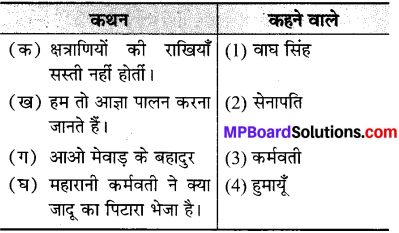
निम्नलिखित की सही जोड़ियाँ बनाइए
MP Board Class 7th Hindi Bhasha Bharti विविध प्रश्नावली 1 1
उत्तर-
(क) → (3), (ख) → (1), (ग) → (4), (घ) → (2).

प्रश्न 8.
निम्नलिखित शब्दों को वाक्य में प्रयोग कीजिए-
वैमनस्य, तोपखाना, पश्चाताप, वरदान, आज्ञापालन, पिटारा।
उत्तर-
(क) वैमनस्य-हमें वैमनस्य की भावना से बचना चाहिए।
(ख) तोपखाना-अंग्रेजों की सेना में कई समृद्ध तोपखाना थे।
(ग) पश्चाताप-उसे अपनी गलती पर बाद में काफी पश्चाताप हुआ।
(घ) वरदान-अच्छी शिक्षा देना वरदान के समान है।
(ङ) आज्ञापालन-राम अपने पिता दशरथ के आज्ञापालन में सहर्ष वनवास को चले गये।
(च) पिटारा-जादूगर के जादू के पिटारे में बहुत से खेल हैं।

MP Board Solutions

प्रश्न 9.
निम्नलिखित शब्दों की वर्तनी शुद्ध कीजिए-
सस्कृति, प्रतिविम्व, परयटक, वेभव, स्त्रजन, हसना, प्रान।
उत्तर-
अशुद्ध शब्द शुद्ध शब्द
सस्कृति – संस्कृति
प्रतिविम्व – प्रतिबिम्ब
परयटक – पर्यटक
वेभव – वैभव
स्त्रजन – सृजन
हसना – हँसना
प्रान – प्राण

प्रश्न 10.
निम्नलिखित वाक्यों को कोष्ठक में दिए निर्देशानुसार बदलिए
(क) मामाजी वाराणसी पहुँचे। (निषेधात्मक)
(ख) राम ने गंगा में डुबकी लगाई। (प्रश्नवाचक)
(ग) क्या लड़का कपड़े लेकर भाग गया? (साधारण वाक्य)
(घ) आपने यह क्या कर डाला? (विस्मयादिबोधक)
उत्तर-
(क) मामाजी वाराणसी नहीं पहुँचे।
(ख) क्या राम ने गंगा में डुबकी लगाई?
(ग) लड़का कपड़े लेकर भाग गया।
(घ) अरे ! आपने यह क्या कर डाला।

प्रश्न 11.
निम्नलिखित शब्दों के बहुवचन रूप लिखिए-
राखी, धागा, भाई, पताका, सपूत, शत्रु, लड़की।
उत्तर-
एकवचन – बहुवचन
राखी – राखियाँ
धागा – धागे
भाई – भाइयों
पताका – पताकाओं
सपूत – सपूतों
शत्रु – शत्रुओं
लड़की – लड़कियाँ

प्रश्न 12.
निम्नलिखित सामासिक पदों में तत्पुरुष समास छाँटिए
सेनापति, माता-पिता, चौराहा, यथाशक्ति,वीरव्रत, महारानी, रसोईघर।
उत्तर-
सेनापति, वीरव्रत, रसोईघर।

प्रश्न 13.
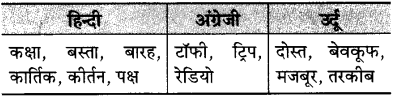
निम्नलिखित शब्दों में से हिन्दी, अंग्रेजी तथा उर्दू के शब्द छाँटकर तालिका में लिखिए-
दोस्त, टॉफी, कक्षा, बस्ता, ट्रिप, बेवकूफ, बारह, कार्तिक, मजबूर, तरकीब, कीर्तन, रेडियो, पक्ष।
उत्तर-
MP Board Class 7th Hindi Bhasha Bharti विविध प्रश्नावली 1 2

प्रश्न 14.
निम्नलिखित गद्यांश में विराम चिह्नों का उचित प्रयोग कीजिए-
मैं मुन्ना आपने पहचाना नहीं मुझे हाँ मुन्ना भूल गये आप मामाजी खैर कोई बात नहीं इतने साल भी तो हो गये तुम यहाँ कैसे
उत्तर-
मैं मुन्ना, आपने पहचाना नहीं मुझे? हाँ मुन्ना। भूल गये आप मामाजी? खैर, कोई बात नहीं। इतने साल भी तो हो गये। तुम यहाँ कैसे?

प्रश्न 15.
नीचे दिए गए उपसर्ग’योग’ शब्द में लगाकर नए शब्द बनाइए-
प्र, वि, अभि, उप, सह, सु।
उत्तर-

  • प्र + योग = प्रयोग,
  • वि + योग = वियोग,
  • अभि + योग = अभियोग,
  • उप + योग = उपयोग,
  • सह + योग = सहयोग,
  • सु + योग = सुयोग।

प्रश्न 16.
निम्नलिखित शब्दों के हिन्दी शब्द लिखिए-
खिदमत, सौगात, पैगाम, मुताबिक, हिफाजत, कुर्बानी, खौफ।
उत्तर-

  • उर्दू शब्द – हिन्दी शब्द
  • खिदमत – आवभगत
  • सौगात – उपहार
  • पैगाम – सन्देश
  • मुताबिक – अनुसार
  • हिफाजत – सुरक्षा
  • कुर्बानी – बलिदान
  • खौफ – डर

MP Board Solutions

प्रश्न 17.
“दादी की घड़ी” पाठ का सारांश लिखिए।
उत्तर-
दादी ने दीपू को अपने और करीब लाते हुए प्यार से समझाया कि भला तकिया भी कहीं बोलता है जो दूसरों को जगा देगा ? वास्तव में असली अलार्म तो मनुष्य का दिल होता है। जब कभी हमें अवश्य एवं निश्चित समय पर सुबह उठना होता है, तो वह हमारा दिल ही है, जो हमें अभीष्ट समय पर अपने आप उठा देता है। अलार्म घड़ी की आवाज को तो हम चाहें तो बन्द भी कर सकते हैं, किन्तु दिल की आवाज को बन्द नहीं किया जा सकता है। यह तो हमें उठाकर ही शान्त होती है। दिलरूपी घड़ी का रहस्य जानकर दीपू प्रसन्न हुआ।
MP Board Class 7th Hindi Solutions

MP Board Class 6th Maths Solutions Chapter 3 Playing With Numbers Ex 3.6

MP Board Class 6th Maths Solutions Chapter 3 Playing With Numbers Ex 3.6

Question 1.
Find the HCF of the following numbers :
(a) 18, 48
(c) 18, 60
(e) 36, 84
(g) 70, 105, 175
(i) 18,54,81
Solution:
(a) The prime factorisation of 18 and
48 are; 18 = 2 × 3 × 3
48 = 2 × 2 × 2 × 2 × 3
∴ HCF (18, 48) = 2 × 3 = 6

(b) The prime factorisation of 30 and 42 are; 30 = 2 × 3 × 5
42 = 2 × 3 × 7
∴ HCF (30, 42) = 2 * 3 = 6

(c) The prime factorisation of 18 and 60 are; 18 = 2 × 3 × 3
60 = 2 × 2 × 3 × 5
∴ HCF (18, 60) = 2 × 3 = 6

(d) The prime factorisation of 27 and 63 are; 27 = 3 × 3 × 3
63 = 3 × 3 × 7
HCF (27, 63) = 3 × 3 = 9

(e) The prime factorisation of 36 and 84 are; 36 = 2 × 2 × 3 × 3
84 = 2 × 2 × 3 × 7
HCF (36, 84) = 2 × 2 × 3 = 12

(f) The prime factorisation of 34 and 102 are; 34 = 2 × 17
102 = 2 × 3 × 17
HCF (34, 102) = 2 × 17 = 34

(g) The prime factorisation of 70, 105 and 175 are; 70 = 2 × 5 × 7
105 = 3 × 5 × 7
175 = 5 × 5 × 7
HCF (70, 105, 175) = 5 × 7 = 35

(h) The prime factorisation of 91, 112 and 49 are; 91 = 7 × 13
112 = 2 × 2 × 2 × 2 × 7
49 = 7 × 7
∴ HCF (91, 112, 49) = 7

(i) The prime factorisation of 18, 54 and 81 are; 18 = 2 × 3 × 3
54 = 2 × 3 × 3 × 3
81 = 3 × 3 × 3 × 3
HCF (18, 54, 81) = 3 × 3 = 9

(j) The prime factorisation of 12, 45 and 75 are; 12 = 2 × 2 × 3
45 = 3 × 3 × 5
75 = 3 × 5 × 5
∴ HCF (12, 45, 75) = 3

MP Board Class 6th Maths Solutions Chapter 3 Playing With Numbers Ex 3.6

Question 2.
What is the HCF of two consecutive
(a) numbers?
(b) even numbers?
(c) odd numbers?
Solution:
(a) HCF of two consecutive numbers is 1.
(b) HCF of two consecutive even numbers is 2.
(c) HCF of two consecutive odd numbers is 1.

MP Board Class 6th Maths Solutions Chapter 3 Playing With Numbers Ex 3.6

Question 3.
HCF of co-prime numbers 4 and 15 was found as follows by factorisation :
4 = 2 × 2 and 15 = 3 × 5 since there is no common prime factor, so HCF of 4 and 15 is 0. Is the answer correct? If not, what is the correct HCF?
Solution:
No. The correct HCF of 4 and 15 is 1.

MP Board Class 6th Maths Solutions

MP Board Class 6th Maths Solutions Chapter 13 Symmetry Ex 13.1

MP Board Class 6th Maths Solutions Chapter 13 Symmetry Ex 13.1

Question 1.
List any four symmetrical objects from your home or school.
Solution:
Notebook. Blackboard, Glass, Inkpot.

Question 2.
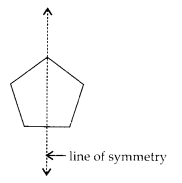
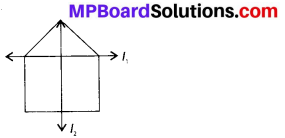
For the given figure, which one is the mirror line, l1, or l2?
MP Board Class 6th Maths Solutions Chapter 13 Symmetry Ex 13.1 1
Solution:
l2 is the mirror line as both sides of the line are symmetric.

MP Board Class 6th Maths Solutions Chapter 13 Symmetry Ex 13.1

Question 3.
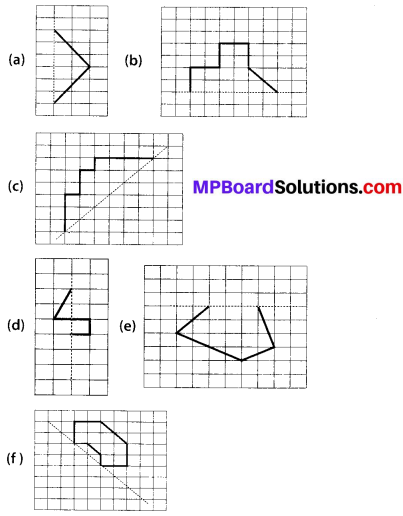
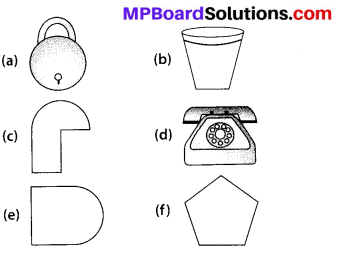
Identify the shapes given below. Check whether they are symmetric or not. Draw the line of symmetry as well.
MP Board Class 6th Maths Solutions Chapter 13 Symmetry Ex 13.1 2
Solution:
(a) Symmetric
MP Board Class 6th Maths Solutions Chapter 13 Symmetry Ex 13.1 3

(b) Symmetric
MP Board Class 6th Maths Solutions Chapter 13 Symmetry Ex 13.1 4

(c) Not Symmetric
(d) Symmetric
MP Board Class 6th Maths Solutions Chapter 13 Symmetry Ex 13.1 5

(e) Symmetric
MP Board Class 6th Maths Solutions Chapter 13 Symmetry Ex 13.1 6

(f) Symmetric
MP Board Class 6th Maths Solutions Chapter 13 Symmetry Ex 13.1 7

MP Board Class 6th Maths Solutions Chapter 13 Symmetry Ex 13.1

Question 4.
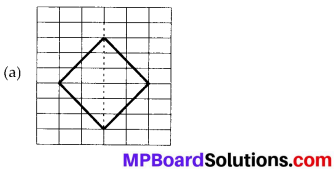
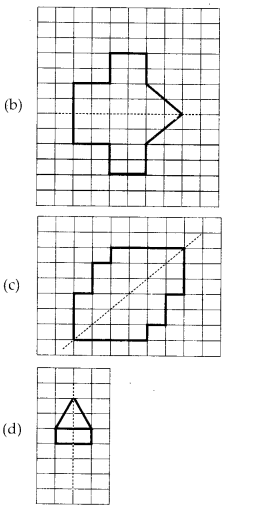
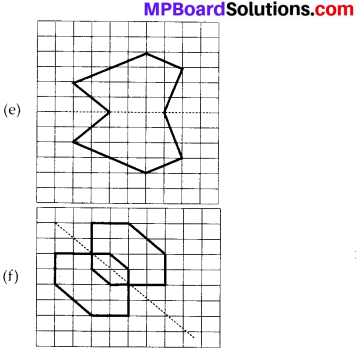
Copy the following on a squared paper. A square paper is what you would have used in your arithmetic notebook in earlier classes. Then complete them such that the dotted line is the line of symmetry.
MP Board Class 6th Maths Solutions Chapter 13 Symmetry Ex 13.1 8
Solution:
MP Board Class 6th Maths Solutions Chapter 13 Symmetry Ex 13.1 9
MP Board Class 6th Maths Solutions Chapter 13 Symmetry Ex 13.1 10
MP Board Class 6th Maths Solutions Chapter 13 Symmetry Ex 13.1 11

MP Board Class 6th Maths Solutions Chapter 13 Symmetry Ex 13.1

Question 5.
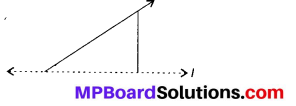
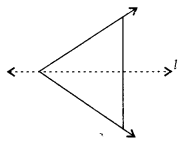
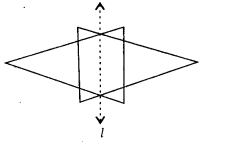
In thefigure, l is the line of symmetry. Complete the diagram to make it symmetric.
MP Board Class 6th Maths Solutions Chapter 13 Symmetry Ex 13.1 12
Solution:
MP Board Class 6th Maths Solutions Chapter 13 Symmetry Ex 13.1 13

Question 6.
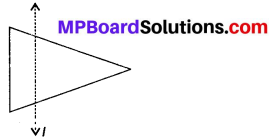
In the figure, l is the line of symmetry. Draw the image of the triangle and complete the diagram so that it becomes symmetric.
MP Board Class 6th Maths Solutions Chapter 13 Symmetry Ex 13.1 14
Solution:
MP Board Class 6th Maths Solutions Chapter 13 Symmetry Ex 13.1 15

MP Board Class 6th Maths Solutions

MP Board Class 6th Maths Solutions Chapter 3 Playing With Numbers Ex 3.5

MP Board Class 6th Maths Solutions Chapter 3 Playing With Numbers Ex 3.5

Question 1.
Which of the following statements are true?
(a) If a number is divisible by 3, it must be divisible by 9.
(b) If a number is divisible by 9, it must be divisible by 3.
(c) A number is divisible by 18, if it is divisible by both 3 and 6.
(d) If a number is divisible by 9 and 10 both, then it must be divisible by 90.
(e) If two numbers are co-primes, at least one of them must be prime.
(f) All numbers which are divisible by 4 must also be divisible by 8.
(g) All numbers which are divisible by 8 must also be divisible by 4.
(h) If a number exactly divides two numbers separately, it must exactly divide their sum.
(i) If a number exactly divides the sum of two numbers, it must exactly divide the two numbers separately.
Solution:
Statements (b), (d), (g) and (h) are true.

MP Board Class 6th Maths Solutions Chapter 3 Playing With Numbers Ex 3.5

Question 2.
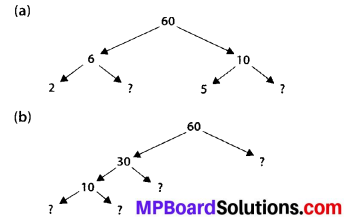
Here are two different factor trees for 60. Write the missing numbers.
MP Board Class 6th Maths Solutions Chapter 3 Playing With Numbers Ex 3.5 1
Solution:
Factors of 60 are 1, 2, 3, 4, 5, 6,10,12,15, 20, 30, 60.
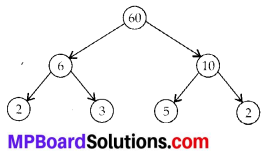
(a) Since 6 = 2 × 3 and 10 = 5 × 2
∴ The missing numbers are 3 and 2.
MP Board Class 6th Maths Solutions Chapter 3 Playing With Numbers Ex 3.5 2

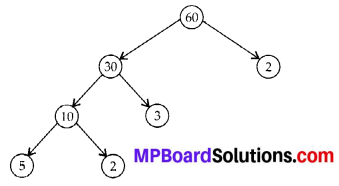
(b) Since, 60 = 30 × 2, 30 = 10 × 3, and 10 = 5 × 2
MP Board Class 6th Maths Solutions Chapter 3 Playing With Numbers Ex 3.5 3

Question 4.
Write the greatest 4-digit number and express it in terms of its prime factors.
Solution:
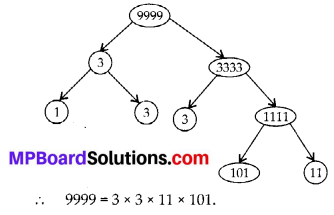
The greatest four digit number is 9999.
MP Board Class 6th Maths Solutions Chapter 3 Playing With Numbers Ex 3.5 4

Question 5.
Write the smallest 5-digit number and express it in the form of its prime factors.
Solution:
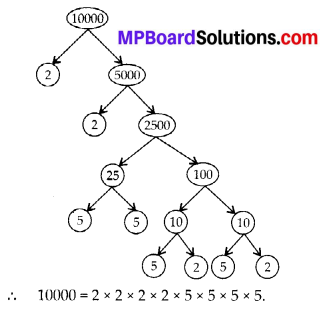
The smallest five digit number is 10000.
MP Board Class 6th Maths Solutions Chapter 3 Playing With Numbers Ex 3.5 5

Question 6.
Find all the prime factors of 1729 and arrange them in ascending order. Now state the relation, if any; between two consecutive prime factors.
Solution:
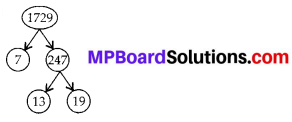
MP Board Class 6th Maths Solutions Chapter 3 Playing With Numbers Ex 3.5 6
∴ 1729 = 7 × 13 × 19.
The difference of two consecutive prime factors is 6. (∵ 13 – 7 = 6 and 19 – 13 = 6)

MP Board Class 6th Maths Solutions Chapter 3 Playing With Numbers Ex 3.5

Question 7.
The product of three consecutive numbers is always divisible by 6. Verify this statement with the help of some examples.
Solution:
Among the three consecutive numbers, there must be atleast one even number and one multiple of 3. Thus, the product must be divisible by 6.
For example :
(i) 2 × 3 × 4 = 24
(ii) 4 × 5 × 6 = 120,
where both 24 and 120 are divisible by 6.

MP Board Class 6th Maths Solutions Chapter 3 Playing With Numbers Ex 3.5

Question 8.
The sum of two consecutive odd numbers is divisible by 4. Verify this statement with the help of some examples.
Solution:
The sum of two consecutive odd numbers is divisible by 4.
For example : 3 + 5 = 8 and 8 is divisible by 4.
5 + 7 = 12 and 12 is divisible by 4.
7 + 9 = 16 and 16 is divisible by 4.
9 + 11 = 20 and 20 is divisible by 4.

Question 9.
In which of the following expressions, prime factorisation has been done?
(a) 24 = 2 × 3 × 4
(b) 56 = 7 × 2 × 2 × 2
(c) 70 = 2 × 5 × 7
(d) 54 = 2 × 3 × 9
Solution:
In expressions (b) and (c), prime factorisation has been done.

MP Board Class 6th Maths Solutions Chapter 3 Playing With Numbers Ex 3.5

Question 10.
Determine if 25110 is divisible by 45.
[Hint: 5 and 9 are co-prime numbers. Test the divisibility of the number by 5 and 9],
Solution:
The prime factorisation of 45 = 5 × 9
25110 is divisible by 5 as ‘0’ is at its unit place.
25110 is divisible by 9 as sum of digits (i.e., 9) is divisible by 9.
Therefore, the number 25110 must be divisible by 5 × 9 = 45

Question 11.
18 is divisible by both 2 and 3. It is also divisible by 2 × 3 = 6. Similarly, a number is divisible by both 4 and 6. Can we say that the number must also be divisible by 4 × 6 = 24? If not, give an example to justify your answer.
Solution:
No. The number 12 is divisible by both 6 and 4, but 12 is not divisible by 24.
∴ A number divisible by both 4 and ( may or may not be divisible by 4 × 6 = 24.

MP Board Class 6th Maths Solutions Chapter 3 Playing With Numbers Ex 3.5

Question 12.
I am the smallest number, having four different prime factors. Can you find me?
Solution:
Since, 2 × 3 × 5 × 7 = 210
∴ 210 is the smallest number, having 4
different prime factors i.e., 2, 3, 5 and 7.

MP Board Class 6th Maths Solutions

MP Board Class 8th Hindi Bhasha Bharti महत्त्वपूर्ण पाठों के सारांश

MP Board Class 8th Hindi Bhasha Bharti Solutions महत्त्वपूर्ण पाठों के सारांश

1. आत्मविश्वास

जीवन में सफलता प्राप्त करने का एक शक्तिशाली मन्त्र है-आत्मविश्वास। जीवन के प्रत्येक पग पर हमें अनेक कठिनाइयों का सामना करना पड़ता है। वही मनुष्य जीवन में सफलता प्राप्त करता है, जिसे अपनी शक्ति एवं प्रयासों में पूर्ण विश्वास होता है।

अपने सद्प्रयासों और शक्तियों में विश्वास ही हमारे विरोध आत्महीनता, कायरता और कुसंस्कार उसकी शक्ति और मनोबल को आधा करके असफलता की ओर ले जाते हैं। मनुष्य में परिस्थितिजन्य भय उसे आत्मविश्वासहीन कर देता है। अपनी क्षमता पर विश्वास हमारे लिए सफलता को निश्चित करता है। केवल इस शर्त पर कि हमारे अन्दर अपनी क्षमता और सफलता में अखण्ड विश्वास हो। हमारे अन्दर भय, शंका और अधीरता से विश्वास डिग जाता है।

मनुष्य को सदैव ऐसे व्यक्तियों की संगति से दूर रहना वे सदैव असफल होने के भय से आक्रान्त रहते हैं। अपने आत्मगौरव और आत्मविश्वास की भावना को खण्डित होने से बचाए रखना चाहिए। मनुष्य किसी भी काम को हाथ में लेने से यह अनुभव करता है कि वह अवश्य सफल होगा, तो इससे बड़ा मन्त्र कोई नहीं है। जो व्यक्ति सफलता और विजय प्राप्त करने के प्रतिकूल (विरुद्ध) भाव रखता है, उसे सफलता कभी भी मिल ही नहीं सकती।

मनुष्य के विचार श्रेष्ठ हैं, सफलता के हैं, सौभाग्य के हैं, तो उसे सफलता, सौभाग्य और श्रेष्ठता आगे ही बढ़ाती जायेगी। निराश और निष्क्रिय व्यक्ति निठल्ले बैठकर सफल और श्रेष्ठ कार्य करने वाले व्यक्तियों को कोसते रहते हैं। हमारे सद्प्रयास सदैव सुख के द्वार को खोलते रहते हैं। खतरों से खेलने वाले व्यक्तियों के गले में ही विजयमाला पड़ती है।

MP Board Solutions

2. प्राण जाएँ पर वृक्ष न जाएँ

प्रस्तुत पाठ में पर्यावरण की रक्षा का महत्व समझाया गया है। पर्यावरण की शुद्धता को बनाए रखने में पेड़ों का बड़ा महत्व है। पेड़ों में अपने जैसा ही जीव होता है। अत: उनकी सुरक्षा अपने प्राण देकर भी करनी चाहिए। यही इस पाठ का मूल भाव है। साथ ही पर्यावरण की रक्षा के प्रति छात्रों में जागरूकता पैदा करना इस पाठ का मूल ध्येय है।

सम्पूर्ण विश्व चिन्ता में डूबा हुआ है क्योंकि वृक्षों की लगातार कटाई ने पर्यावरण को बिगाड़ दिया है। इसलिए सभी देशों की सरकारों ने वृक्षों के काटने पर रोक लगा दी है। आज से 500 वर्ष पूर्व सन् 1485 ई. में भगवान जम्भेश्वर ने विश्नोई समाज की स्थापना की। उन्होंने 29 नियमों का पालन करने का उपदेश दिया। इन्हीं नियमों में से वृक्षों की रक्षा और सभी जीवों पर दया करना एक मुख्य नियम था। इस नियम का पालन करना ही विश्नोई समाज की आन, बान, शान व पहचान है।

अमृतादेवी विश्नोई ने तथा 362 अन्य विश्नोइयों ने वृक्षों को काटे जाने से बचाने के लिए अपने आपको शहीद कर दिया। जोधपुर के राजा अभय सिंह ने अपने महल के निर्माण के लिए खेजड़ली गाँव से पेड़ काटकर लाने का आदेश अपने सिपाहियों को दे दिया। उन्होंने वहाँ जाकर विश्नोइयों के विरोध को अनदेखा कर दिया। अनेक विश्नोई पेड़ों से लिपट गए। वे पेड़ों को काटने से बचाने के लिए अपना बलिदान देने को तत्पर हो गए। वे नारा लगा रहे थे, “सिर साँटे पर रूख रहे।” अमृता देवी के बलिदान से प्रेरित 362 विश्नोई नर-नारी स्वयं कट गए पर एक भी वृक्ष नहीं कटने दिया।

इस समाचार को सुनकर राजा अभयसिंह दुःखी हुए और खेजड़ली ग्राम आए। अपनी सेना के कुकृत्य के लिए क्षमा माँगी। ताम्रपत्र पर आज्ञा जारी की गई कि कोई भी व्यक्ति पेड़ नहीं काटेगा। यदि काटेगा तो वह राजदण्ड का भागी होगा। इसी तरह हरिणों की रक्षा के लिए अनेक विश्नोइयों ने अपना बलिदान कर दिया। सन् 1996 के अक्टूबर महीने में राजस्थान के चुरू जिले में हरिणों की रक्षा करते हुए श्री निहालचन्द विश्नोई शहीद हो गए। भारत सरकार ने उन्हें मरणोपरान्त शौर्यचक्र से सम्मानित किया। गैर-सैनिक निहालचन्द को यह सम्मान प्राप्त हुआ। मूक हरिण भी अपने रक्षकों को अच्छी तरह पहचानते हैं। विश्नोइयों के आगे-पीछे हरिण बकरियों की तरह घूमते हैं।

वृक्षों और जीवों की रक्षा करने का संकल्प तथा नए वृक्ष लगाने और उनकी रक्षा करना ही शहीद विश्नोइयों के प्रति हमारी सच्ची श्रद्धा होगी।

भारत सरकार ने शहीद अमृता देवी तथा 362 अन्य शहीदों की स्मृति में राष्ट्रीय पर्यावरण पुरस्कार प्रस्तावित किए हैं। मध्य प्रदेश सरकार ने वन सम्वर्द्धन के लिए प्रत्येक ग्राम पंचायत अथवा किसी भी संस्था को एक लाख रुपये का पुरस्कार प्रस्तावित किया है। साथ ही अमृता देवी विश्नोई के नाम से दो व्यक्तिगत पुरस्कार भी चलाए हैं। ये सभी पुरस्कार उसे दिए जाते हैं जो वन सम्बर्द्धन और जीव रक्षा में उत्कृष्ट कार्य करता है।

MP Board Solutions

3. पथिक से

एक पथिक अपने लक्ष्य को प्राप्त करने की ओर उस दिशा में आगे बढ़ता है लेकिन लक्ष्य प्राप्ति का मार्ग अनेक बाधाओं रूपी काँटों से भरा होता है। इसके अतिरिक्त लक्ष्य मार्ग में – अनेक आकर्षक वस्तुएँ भी होती हैं, जिन्हें हम प्रकृति के विविध उपादान कह सकते हैं। इन उपादानों में सुहावने दृश्य, नदियाँ, झरने, पहाड़ और वन उस पथिक को आकर्षित कर सकते हैं। उनका सौन्दर्य एकदम अनुपम होता है। इस सौन्दर्य से प्रभावित होकर वह यात्री (पथिक) यात्रा-पथ पर आगे बढ़ने की अपेक्षा रुक जाता है।

साधारण यात्रा की जो दशा होती है, वही दशा जीवन-यात्रा की भी होती है। सांसारिक समस्याएँ मनुष्य को अपने कर्त्तव्य से विमुख बना देती हैं। दुःख, शोक और हताशा उसे कर्त्तव्य के प्रति उदासीन कर देते हैं। कवि डॉ. शिवमंगल सिंह ‘सुमन’ – अपनी इस कविता के माध्यम से जीवन-पथ के बने पथिक को : सचेत करते हैं और सद्परामर्श भी देते हैं कि इन सभी बाधाओं का साहस से और स्व-विवेक शक्ति से सामना करना चाहिए। इस प्रकार निरन्तर ही अपने कर्तव्य मार्ग पर आगे ही आगे बढ़ते 1 जाना चाहिए। अपनी कल्पनाओं को साकार करते जाना चाहिए।

जीवन-पथ की विफलताएँ तुम्हें अपने मार्ग से भटका न दें। उस विफलता के समय में अपने लोग भी पराये हो जाते हैं। घोर निराशा छा सकती है। उस अकेले पथिक को उचित मार्ग से – भटकाकर हताश न कर दें।
रणक्षेत्र की ओर जाने वाले जीवन-पथ पर अग्रसर होने की रणभेरी बज चुकी है अर्थात् कर्त्तव्य पालन का समुचित समय आगे आ चुका है। इस अवसर पर प्रेम और आकर्षण का कुमकुम तुम्हें कर्त्तव्य से विमुख न बना दे और अपने मार्ग से विमुख मत हो जाना। असमंजस की दशा में अपने कर्तव्य-पथ से मत भटक जाना। यही कविता का सार है।

4. युद्ध-गीता

राम को केन्द्र में रखकर अनेक ग्रन्थों की रचना की गई है। इन कविताओं में आदि कवि वाल्मीकि सबसे पहले हैं। कालिदास और भवभूति भी इसी परम्परा के पालन करने वाले कवि रहे हैं। गोस्वामी तुलसीदास ने भी ‘रामचरितमानस’, ‘कवितावली, ‘गीतावली’ आदि ग्रन्थों की रचना करके इसी परम्परा का पालन किया है। इसके सन्दर्भ में यह बात कही जा सकती है कि भूत, भविष्य और वर्तमान तथा देशकाल की सभी सीमाएँ समाप्त हो जाती हैं।

देखिए, लंका-युद्ध श्रीराम और रावण के बीच लड़ा जा रहा है। रावण युद्ध करने के लिए अपने रथ पर आरूढ़ होकर चला आ रहा है। उसकी सेना भी शक्तिशाली है और विशाल है। उसके युद्ध सम्बन्धी साधन भी अपार हैं। दूसरे उसने युद्ध की तैयारी भी ठीक तरह से की हुई है।

विभीषण राम का मित्र है। वह अपने भाई रावण की दोषपूर्ण नीतियों के कारण उससे विमुख होकर राम से आ मिला है। वह मन में बहुत अधिक आशंकित है और विचार करता है कि राम के पास ऐसे कोई भी साधन नहीं हैं, जिनकी सहायता से वे रावण को पराजित कर पायेंगे। अपनी इस शंका को संशय को, विभीषण राम के सम्मुख रखता है। राम भी उसकी शंकाओं का समाधान करते हैं।

वे कहते हैं कि धर्म के कुछ आधारभूत तत्व होते हैं; ये तत्व हैं-शौर्य, धैर्य, सत्य, शील, साहस, यम-नियम, दम, दया तथा परोपकार। धर्म के इन आधारभूत तत्वों का सन्दर्भ देते हुए श्रीराम कहते हैं कि सद्गुण रूपी धर्मरथ पर चढ़कर ही हम अपने आन्तरिक और बाहरी शत्रुओं पर विजय प्राप्त कर सकते हैं। तुलसीदास द्वारा राम के मुख से वर्णित धर्मरथ के रूपक को श्रीमद्भगवद्गीता के युद्ध सूत्रों द्वारा भी प्रतिपादित किया गया है। राम के धर्मरथ के उपांग-शौर्य और धैर्य (दो पहिए), सत्य और शील (ध्वजा-पताका), बल, विवेक, दम, परोपकार (चार घोड़े), क्षमा, दया, समता रस्से (डोरी), ईशभजन (सारथी), वैराग्य, सन्तोष, दान, बुद्धि, विज्ञान [युद्ध के हथियार (आयुध)], निर्मल और अचलमन (तरकश) हैं। यम-नियम और संयम (बाण) हैं।

ब्राह्मणों और गुरुओं की पूजा ही (कवच) है। कौरवों की विशाल सेना, युद्ध सामग्री आदि को देखकर अर्जुन भी अपनी आशंकाओं को भगवान श्रीकृष्ण के सम्मुख कहते हैं। श्रीकृष्ण उस कायर बने अर्जुन को अपने कौशल से । उत्साहित कर देते हैं और युद्ध में विजयी होते हैं। ठीक इसी तरह राम भी विभीषण को आश्वस्त कर देते हैं कि वे (राम) अवश्य । ही रावण पर विजय प्राप्त कर सकेंगे।

MP Board Class 8th Hindi Solutions

MP Board Class 7th Maths Solutions Chapter 10 Practical Geometry Ex 10.5

MP Board Class 7th Maths Solutions Chapter 10 Practical Geometry Ex 10.5

Question 1.
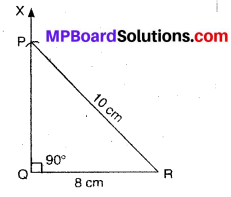
Construct the right angled ∆PQR, where m ∠Q = 90°, QR = 8 cm and PR 10 cm.
Solution:
Steps of Construction :
MP Board Class 7th Maths Solutions Chapter 10 Practical Geometry Ex 10.3 1
1. Draw a line segment QR = 8 cm.
2. Draw ∠RQX = 90°.
3. .With centre R and radius 10 cm (= PR = Hypotenuse), draw an arc to intersect ray QX at P.
4. Join PR.
Then, PQR is the required right angled triangle.

MP Board Class 7th Maths Solutions Chapter 10 Practical Geometry Ex 10.5

Question 2.
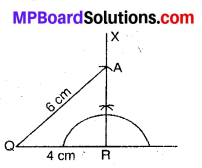
Construct a right-angled triangle whose hypotenuse is 6 cm long and one of the legs is 4 cm long.
Solution:
Steps of Construction :
MP Board Class 7th Maths Solutions Chapter 10 Practical Geometry Ex 10.5 2
1. Draw a line segment QR of length 4 cm.
2. Draw ∠QRX = 90°.
3. With Q as centre and radius 6 cm (= hypotenuse) draw an arc intersecting QX at P.
4. Join PQ.
Then, PQR is the required right-angled triangle.

Question 3.
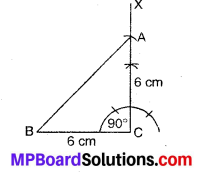
Construct an isosceles right-angled triangle ABC, where m ∠ACB = 90° and AC = 6 cm.
Solution:
Steps of Construction :
MP Board Class 7th Maths Solutions Chapter 10 Practical Geometry Ex 10.5 3
1. Draw a line segment BC = 6 cm.
2. At C, draw an angle BCX = 90°
3. From ray CX, cut off CA = 6 cm.
4. Join AB.
Then, ABC is the required an isosceles right-angled triangle.

MP Board Class 7th Maths Solutions

MP Board Class 7th Maths Solutions Chapter 10 Practical Geometry Ex 10.4

MP Board Class 7th Maths Solutions Chapter 10 Practical Geometry Ex 10.4

Question 1.
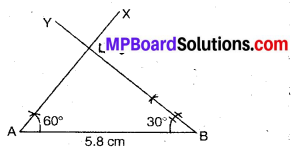
Construct ∆ABC, given m ∠A = 60°, m ∠B = 30° and AB = 5.8 cm.
Solution:
Steps of Construction :
MP Board Class 7th Maths Solutions Chapter 10 Practical Geometry Ex 10.4 1
1. Draw a line segment AB if 5.8 cm length.
2: Draw ∠BAX = 60°.
3. Draw ∠ABY = 30°.
4. Let AX and BY intersect at A.
Then, ABC is the required triangle.

MP Board Class 7th Maths Solutions Chapter 10 Practical Geometry Ex 10.4

Question 2.
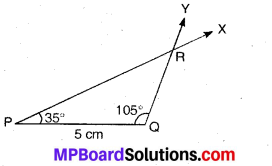
Construct ∆PQR if PQ = 5 cm, m ∠PQR = 105° m ∠QRP = 40°.
Solution:
MP Board Class 7th Maths Solutions Chapter 10 Practical Geometry Ex 10.4 2
Here, ∠Q, ∠R and the side PQ are given. But to draw. We know that,
∠P + ∠Q + ∠R = 180° (∵ Sum of the angles of a triangle is 180°)
or ∠P + 105° + 40° = 180°
or ∠P = 180° – 145° = 35°
Thus, we have PQ = 5 cm,
∠P = 35° and ∠Q = 105°.
Steps of Construction :
1. Draw a line segment PQ if 5 cm length.
2: Draw ∠QPX = 35°.
3. Draw ∠PQY = 105°.
4. Let PX and QY intersect at R.
Then, PQR is the required triangle.

Question 3.
Examine whether you can construct ∆DEF such that EF = 7.2 cm, m ∠E = 110° and m ∠F = 80°. Justify your answer.
Solution:
Given, m∠E = 110° and m∠F = 80°
Since, m ∠E + m∠E = 110° + 80° = 190° > 180°
Thus, the ∆DEF cannot be drawn.

MP Board Class 7th Maths Solutions

MP Board Class 6th Maths Solutions Chapter 3 Playing With Numbers Ex 3.4

MP Board Class 6th Maths Solutions Chapter 3 Playing With Numbers Ex 3.4

Question 1.
Find the common factors of:
(a) 20 and 28
(b) 15 and 25
(c) 35 and 50
(d) 56 and 120
Solution:
(a) Factors of 20 are 1, 2, 4, 5, 10 and 20
Factors of 28 are 1, 2, 4, 7,14 and 28
∴ Common factors of 20 and 28 are 1, 2 and 4

(b) Factors of 15 are 1, 3, 5 and 15
Factors of 25 are 1, 5 and 25
∴ Common factors of 15 and 25 are 1 and 5

(c) Factors of 35 are 1, 5, 7 and 35
Factors of 50 are 1, 2, 5, 10, 25 and 50
∴ Common factors of 35 and 50 are 1 and 5

(d) Factors of 56 are 1, 2, 4, 7, 8, 14, 28 and 56
Factors of 120 are 1, 2, 3, 4, 5, 6, 8, 10, 12, 15, 20, 24, 30, 40, 60 and 120
∴ Common factors of 56 and 120 are 1, 2, 4 and 8

MP Board Class 6th Maths Solutions Chapter 3 Playing With Numbers Ex 3.4

Question 2.
Find the common factors of:
(a) 4, 8 and 12
(b) 5,15 and 25
Solution:
(a) Factors of 4 are 1, 2 and 4 Factors of 8 are 1, 2, 4 and 8 Factors of 12 are 1, 2, 3, 4, 6 and 12
∴ Common factors of 4, 8 and 12 are 1, 2 and 4

(b) Factors of 5 are 1 and 5 Factors of 15 are 1, 3, 5 and 15
Factors of 25 are 1, 5 and 25 .-. Common factors of 5, 15 and 25 are 1 and 5

MP Board Class 6th Maths Solutions Chapter 3 Playing With Numbers Ex 3.4

Question 3.
Find first three common multiples of:
(a) 6 and 8
(b) 12 and 18
Solution:
(a) Multiples of 6 are 6, 12, 18, 24, 30, 36, 42, 48, 54, 60, 66, 72,
Multiples of 8 are 8, 16, 24, 32, 40, 48, 56, 64, 72,
∴ First three common multiples of 6 and 8 are 24, 48 and 72

(b) Multiples of 12 are 12, 24, 36, 48, 60, 72, 84, 96, 108, 120,
Multiples of 18 are 18, 36, 54, 72, 90, 108, 126,
∴ First three common multiples of 12 and 18 are 36, 72 and 108

MP Board Class 6th Maths Solutions Chapter 3 Playing With Numbers Ex 3.4

Question 4.
Write ail the numbers less than 100 which are common multiples of 3 and 4.
Solution:
Multiples of 3 are 3, 6, 9, 12, 15, 18, 21, 24, 27, 30, 33, 36, 39, 42, 45, 48, 51, 54, 57, 60, 63, 66, 69, 72, 75, 78, 81, 84, 87, 90, 93, 96, 99,
Multiples of 4 are 4, 8, 12,16, 20, 24, 28, 32, 36, 40, 44, 48, 52, 56, 60, 64, 68, 72, 76, 80, 84, 88, 92, 96, 100
Common multiples of 3 and 4 which are less than 100 are 12, 24, 36, 48, 60, 72, 84 and 96

MP Board Class 6th Maths Solutions Chapter 3 Playing With Numbers Ex 3.4

Question 5.
Which of the following numbers are co-prime?
(a) 18 and 35
(b) 15 and 37
(c) 30 and 415
(d) 17 and 68
(e) 216 and 215
(f) 81 and 16
Solution:
(a) Factors of 18 are 1, 2, 3, 6, 9 and 18
Factors of 35 are 1, 5, 7 and 35 Common factor of 18 and 35 is 1 Since, both have only one common factor, i.e., 1.
Therefore, 18 and 35 are co-prime numbers.

(b) Factors of 15 are 1, 3, 5 and 15
Factors of 37 are 1 and 37 Common factor of 15 and 37 is 1
Since, both have only one common factor, i.e., 1. Therefore, 15 and 37 are co-prime numbers.

(c) Factors of 30 are 1, 2, 3, 5, 6, 10, 15 and 30
Factors of 415 are 1, 5, , 83 and 415
Common factors of 30 and 415 are 1 and 5
Since, both have more than one common factor. Therefore, 30 and 415 are not co-prime numbers.

(d) Factors of 17 are 1 and 17
Factors of 68 are 1, 2, 4, 17, 34 and 68 Common factors of 17 and 68 are 1 and 17
Since, both have more than one common factor. Therefore, 17 and 68 are not co-prime numbers.

(e) Factors of 216 are 1, 2, 3, 4, 6, 8, 9, 12, 18, 24, 27, 36, 54, 72, 108 and 216
Factors of 215 are 1, 5, 43 and 215 Common factor of 216 and 215 is 1 Since, both have only one common factor, i.c., 1. Therefore, 216 and 215 are co-prime numbers.

(f) Factors of 81 are 1, 3, 9, 27 and 81 Factors of 16 are 1, 2, 4, 8 and 16 Common factor of 81 and 16 is 1 Since, both have only one common factor, i.e., 1. Therefore, 81 and 16 are co-prime numbers.

Question 6.
A number is divisible by both 5 and 12. By which other number will that number be always divisible?
Solution:
Since 5 × 12 = 60. The number divisible by both 5 and 12, must also be divisible by 60.

MP Board Class 6th Maths Solutions Chapter 3 Playing With Numbers Ex 3.4

Question 7.
A number is divisible by 12. By what other numbers will that number be divisible?
Solution:
Factors of 12 are 1, 2, 3, 4, 6 and 12.
Therefore, the number divisible by 12, will also be divisible by 1, 2, 3, 4 and 6.

MP Board Class 6th Maths Solutions

MP Board Class 7th Maths Solutions Chapter 10 Practical Geometry Ex 10.3

MP Board Class 7th Maths Solutions Chapter 10 Practical Geometry Ex 10.3

Question 1.
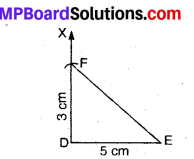
Construct ∆DEF such that DE = 5 cm, DF = 3 cm and m ∠EDF = 90°.
Solution:
Steps of Construction :
MP Board Class 7th Maths Solutions Chapter 10 Practical Geometry Ex 10.3 1

1. Draw a line segment DE = 5 cm.
2. At Q, draw an angle EDX = 90°.
3. From ray DX, cut off DF = 3 cm.
4. Join EF.
Then, DEF is the required triangle.

MP Board Class 7th Maths Solutions Chapter 10 Practical Geometry Ex 10.3

Question 2.
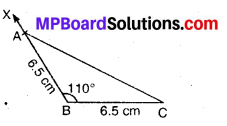
Construct an isosceles triangle in which the lengths of each of its equal sides is 6.5 cm and the angle between them is 110°.
Solution:
Steps of Construction :
MP Board Class 7th Maths Solutions Chapter 10 Practical Geometry Ex 10.3 2
1. Draw a line segment BC = 6.5 cm.
2. At B draw an ∠CBX =110°.
3. From ray BX, cut off BA = 6.5 cm.
4. Join AC.
Then, ABC is the required isosceles triangle.

Question 3.
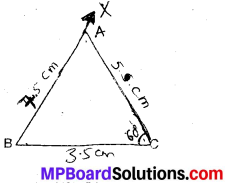
Construct ∆ABC with BC = 7.5 cm, AC = 5 cm and m∠C = 60°?
Solution:
Steps of Construction :
MP Board Class 7th Maths Solutions Chapter 10 Practical Geometry Ex 10.3 3
1. Draw a line segment BC = 7.5 cm.
2. At C, draw ∠BCX = 60°.
3. From ray .CX, cut off CA = 5 cm.
4. Join AB.
Then, ABC is the required triangle.

MP Board Class 7th Maths Solutions

MP Board Class 6th Maths Solutions Chapter 3 Playing With Numbers Ex 3.3

MP Board Class 6th Maths Solutions Chapter 3 Playing With Numbers Ex 3.3

Question 1.
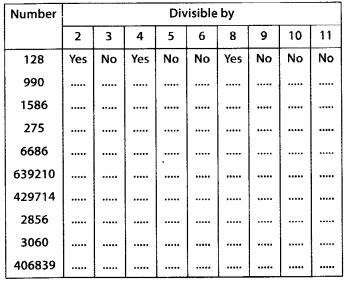
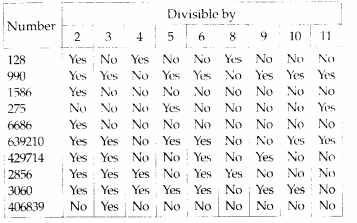
Using divisibility tests, determine which of the following numbers are divisible by 2; by 3; by 4; by 5; by 6; by 8; by 9; by 10; by 11 (say, yes or no):
MP Board Class 6th Maths Solutions Chapter 3 Playing With Numbers Ex 3.3 1
Solution:
MP Board Class 6th Maths Solutions Chapter 3 Playing With Numbers Ex 3.3 2

MP Board Class 6th Maths Solutions Chapter 3 Playing With Numbers Ex 3.3

Question 2.
Using divisibility tests, determine which of the following numbers are divisible by 4; by 8:
(a) 572
(b) 726352
(c) 5500
(d) 6000
(e) 12159
(f) 14560
(g) 21084
(h) 31795072
(i) 1700
(j) 2150
Solution:
(a) 572 is divisible by 4 as its last two digits are divisible by 4, but it is not divisible
by 8 as its last three digits are not divisible by 8.
(b) 726352 is divisible by 4 as its last two digits are divisible by 4 and it is also divisible by 8 as its last three digits are divisible by 8.
(c) 5500 is divisible by 4 as its last two digits are divisible by 4, but it is not divisible by 8 as its last three digits are not divisible by 8.
(d) 6000 is divisible by 4 as its last two digits are divisible by 4 and it is also divisible by 8 as its last three digits are divisible by 8.
(e) 12159 is not divisible by 4 and 8 as it is an odd number.
(f) 14560 is divisible by 4 as its last two digits are divisible by 4 and it is also divisible by 8 as its last three digits are divisible by 8.
(g) 21084 is divisible by 4 as its last two digits are divisible by 4, but it is not divisible by 8 as its last three digits are not divisible by 8.
(h) 31795072 is divisible by 4 as its last two digits are divisible by 4 and it is also divisible by 8 as its last three digits are divisible by 8.
(i) 1700 is divisible by 4 as its last two digits are divisible by 4, but it is not divisible by 8 as its last three digits are not divisible by 8.
(j) 2150 is not divisible by 4 as its last two digits are not divisible by 4 and it is not divisible by 8 as its last three digits are not divisible by 8.

MP Board Class 6th Maths Solutions Chapter 3 Playing With Numbers Ex 3.3

Question 3.
Using divisibility tests, determine which of following numbers are divisible by 6:
(a) 297144
(c) 4335
(e) 901352
(f) 438750
(g) 1790184
(h) 12583
(i) 639210
(j) 17852
Solution:
(a) 297144 is divisible by 2 as its ones place is an even number place is an even number and it is also divisible by 3 as sum of its digits (= 27) is divisible by 3.
Since, the number is divisible by both 2 and 3. Therefore, it is also divisible by 6.

(b) 1258 is divisible by 2 as its ones place is an even number, but it is not divisible by 3 as sum of its digits (= 16) is not divisible by 3.
Since, the number is not divisible by both 2 and 3. Therefore, it is not divisible by 6.

(c) 4335 is not divisible by 2 as its ones place is not an even number, but it is divisible by 3 as sum of its digits (= 15) is divisible by 3.
Since, the number is not divisible by both 2 and 3. Therefore, it is not divisible by 6.

(d) 61233 is not divisible by 2 as its ones place is not an even number, but it is divisible by 3 as sum of its digits (= 15) is divisible by 3.
Since, the number is not divisible by both 2 and 3. Therefore, it is not divisible by 6.

(e) 901352 is divisible by 2 as its ones place is an even number, but it is not divisible by 3 as sum of its digits (= 20) is not divisible by 3.
Since, the number is not divisible by both 2 and 3. Therefore, it is not divisible by 6.

(f) 438750 is divisible by 2 as its ones place
is an even number and it is also divisible by 3 as sum of its digits (= 27) is divisible by 3.
Since, the number is divisible by both 2 and 3. Therefore, it is also divisible by 6.

(g) 1790184 is divisible by 2 as its ones place is an even number and it is also divisible by 3 as sum of its digits (= 30) is divisible by 3.
Since, the number is divisible by both 2 and 3. Therefore, it is also divisible by 6.

(h) 12583 is not divisible by 2 as its ones place is not an even number and it is also not divisible by 3 as sum of its digits (= 19) is not divisible by 3.
Since, the number is not divisible by both 2 and 3. Therefore, it is not divisible by 6.

(i) 639210 is divisible by 2 as its ones place is an even number and it is also divisible by 3 as sum of its digits (= 21) is divisible by 3.
Since, the number is divisible by both 2 and 3. Therefore, it is divisible by 6.

(j) 17852 is divisible by 2 as its ones place is an even number, but it is not divisible by 3 as sum of its digits (= 23) is not divisible by 3.
Since, the number is not divisible by both 2 and 3. Therefore, it is not divisible by 6.

MP Board Class 6th Maths Solutions Chapter 3 Playing With Numbers Ex 3.3

Question 4.
Using divisibility tests, determine which of the following numbers are divisible by 11:
(a) 5445
(b) 10824
(c) 7138965
(d) 70169308
(e) 10000001
(f) 901153
Solution:
(a) In 5445, sum of the digits at odd places = 5 + 4 = 9
Sum of the digits at even places = 4 + 5 = 9
Difference of both sums = 9 – 9 = 0
Since the difference is 0. Therefore, the number is divisible by 11.

(b) In 10824, sum of the digits at odd places = 4 + 8 + 1 = 13
Sum of the digits at even places = 2 + 0 = 2
Difference of both sums = 13 – 2 = 11
Since the difference is divisible by 11.
Therefore, the number is divisible by 11.

(c) In 7138965, sum of the digits at odd places = 5 + 9 + 3 + 7 = 24
Sum of the digits at even places = 6 + 8 + 1 = 15
Difference of both sums = 24 – 15 = 9
Since the difference is neither 0 nor divisible by 11. Therefore, the number is not divisible by 11.

(d) In 70169308, sum of the digits at odd places = 8 + 3 + 6 + 0 = 17
Sum of tire digits at even places = 0 + 9 + 1 + 7 = 17
Difference of both sums = 17 – 17 = 0
Since the difference is 0. Therefore, the number is divisible by 11.

(e) In 10000001, sum of the digits at odd places = 1 + 0 + 0 + 0 = 1
Sum of the digits at even places =0 + 0 + 0 + 1 = 1
Difference of both sums = 1 – 1 = 0
Since the difference is 0. Therefore, the number is divisible by 11.

(f) In 901153, sum of the digits at odd places =3 + 1 + 0 = 4
Sum of the digits at even places = 5 + 1 + 9 = 15
Difference of both sums = 15 – 4 = 11
Since the difference is 11. Therefore, the number is divisible by 11.

Question 5.
Write the smallest digit and the greatest digit in the blank space of each of the following numbers so that the number formed is divisible by 3:
(a) _6724
(b) 4765 _2
Solution:
We know that a number is divisible by 3 if the sum of all digits is divisible by 3.
(a) The smallest digit will be 2.
∴ The number formed is 26724 and
2 + 6 + 7 + 2 + 4 = 21, which is divisible by 3.
And the greatest digit will be 8.
∴ The number formed is 86724 and
8 + 6 + 7 + 2 + 4 = 27, which is divisible by 3.

(b) The smallest digit will be 0.
∴ The number formed is 476502 and
4 + 7 + 6 + 5 + 0 + 2 = 24, which is divisible by 3.
And the greatest digit will be 9.
∴ The number formed is 476592 and
4 + 7 + 6 + 5 + 9 + 2 = 33, which is divisible by 3.

MP Board Class 6th Maths Solutions Chapter 3 Playing With Numbers Ex 3.3

Question 6.
Write a digit in the blank space of each of the following numbers so that the number formed is divisible by 11 :
(a) 92 _ 389
(b) 8 _ 9484
Solution:
(a) We know that a number is divisible by 11 if the difference of the sum of the digits at odd places and that of even places is either 0 or divisible by 11.
The number formed is 928389
Sum of digits at odd places = 9 + 3 + 2 = 14
Sum of digits at even places = 8 + 8 + 9 = 25
Their difference = 25 – 14 = 11, which is divisible by 11.

(b) We know that a number is divisible by 11 if the difference of the sum of the digits at odd places and that of even places is either 0 or divisible by 11.
The number formed is 869484 Sum of digits at odd places = 4 + 4 + 6 = 14
Sum of digits at even places = 8 + 9 + 8 = 25
Their difference = 25 – 14 = 11, which is divisible by 11.

MP Board Class 6th Maths Solutions