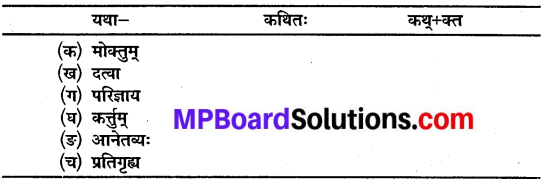
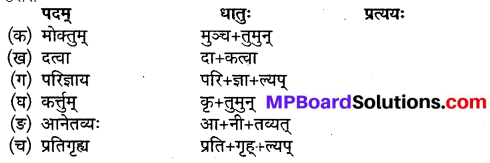
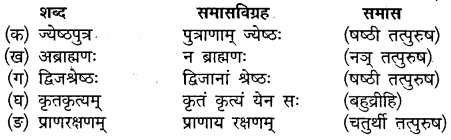
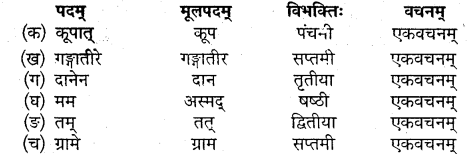
MP Board Class 10th General English The Spring Blossom Solutions Chapter 3 Salutation to the Nation

Are you seeking for the Madhya Pradesh Board Solutions 10th General English The Spring Blossom Solutions Chapter 3 Salutation to the Nation Questions and Answers PDF? If yes, then read this entire page. Here, we are giving a direct link to download MP Board Class 10th English Solutions Questions and Answers PDF which contains the chapter wise questions, solutions, and grammar topics. You can also get the shortcuts to solve the grammar related questions on this page.

MP Board Class 10th General English The Spring Blossom Solutions Chapter 3 Salutation to the Nation

For the sake of students we have gathered the complete 10th General English The Spring Blossom Solutions Chapter 3 Salutation to the Nation Questions and Answers can provided in pdf Pattern. Refer the chapter wise MP Board Class 10th English Solutions Questions and Answers Topics and start the preparation. You can estimate the importance of each chapter, find important English grammar concepts which are having more weightage. Concentrate on the important grammar topics from Madhya Pradesh Board Solutions for 10th English Chapter 3 Salutation to the Nation Questions and Answers PDF, prepare well for the exam.

Salutation to the Nation Textual Exercises

Word Power

A. Use the following words in your own sentences.
(निम्न शाब्दों से वाक्य बनाइए)
Answer:
treacherous – The treacherous acts of Raj created a barrier in our friendship.
jovial mood – Our class teacher was in jovial mood today.
reluctant – Mohan was reluctant to go to his friend’s birthday party.
embrace – When Ram stood first in the class his father embraced him.
flock – A large flock gathered at the accident spot.

B. Give one word for the following expressions.
(एक शब्द दीजिए)
Answer:

  1. a room for one or more prisoners in a prison or police station. – dungeon
  2. the act of killing somebody especially · as a legal punishment. – execution
  3. a person who suffers very much or is killed because of their religious political beliefs. – martyr
  4. a word or phrase that is easy to remember, used by politicians, advertisers etc. in order to attract people’s attention. – slogan

How Much Have I Understood?

A. Answer the following questions. (One or two sentences)
(निम्न प्रश्नों के उत्तर एक या दो वाक्यों में दीजिए।)

Salutation To The Nation MP Board Question 1.
Who is known as Shaheed-e-Azam?
(हू इज़ नोन एज़ शहीद-ए-आजम?)
शहीद-ए-आजम के नाम से कौन जाना जाता है?
Answer:
Bhagat Singh is known as Shaheed-eAzam.
(भगतसिंह इज़ नोन एज़ शहीद-ए-आजम।)
भगतसिंह को शहीद-ए-आजम के नाम से जाना जाता है।

Salutation To The Nation Questions And Answers MP Board Question 2.
Name three patriots who sacrificed their lives for the freedom of motherland, same day at Lahore.
(नेम थ्री पेट्रिअट्स हू सैक्रिफाइस्ड देअर लाइव्स फॉर द फ्रीडम ऑफ मदरलैण्ड, सेम डे एट लाहौर.)
तीन क्रान्तिकारियों के नाम लिखिए जिन्होंने मातृभूमि की आजादी के लिए एक साथ लाहौर में आत्मबलिदान दिया।
Answer:
Bhagat Singh, Sukhdev and Rajguru were the three patriots who sacrificed their lives for the freedom of motherland, same day at Lahore.
(भगतसिंह, सुखदेव एण्ड राजगुरु वर दी थ्री पेट्रिअट्स हू सैक्रिफाइस्ड देअर लाइव्स फॉर द फ्रीडम ऑफ मदरलैण्ड, सेम डे एट लाहौर.)
भगतसिंह, सुखदेव व राजगुरु तीन क्रान्तिकारी थे जिन्होंने अपनी मातृभूमि की आजादी के लिए एक साथ लाहौर में आत्मबलिदान दिया।

Class 10 English Chapter 3 Salutation To The Nation MP Board Question 3.
Bhagat Singh said, “One revolutionary is meeting another revolutionary”. Who was the other revolutionary?
(भगतसिंह सेड, “वन रिवॉल्यूशनरी इज़ मीटिंग एनदर रिवॉल्यूशनरी।” हू वॉज़ द अदर रिवॉल्यूशनरी?)
भगतसिंह ने कहा, “एक क्रान्तिकारी दूसरे क्रान्तिकारी से मुलाकात कर रहा है।” दूसरा क्रान्तिकारी कौन था?
Answer:
The other revolutionary was Lenin, whose biography Bhagat Singh was reading.
(द अदर रिवॉल्यूशनरी वॉज़ लेनिन, हूज़ बायोग्राफी भगत सिंह वॉज़ रीडिंग.)
दूसरा क्रान्तिकारी लेनिन था, जिसकी आत्मकथा भगत सिंह पढ़ रहे थे।

Mp Board Class 10 English Chapter 3 Salutation To The Nation Question 4.
What slogans were raised by the three revolutionaries?
(व्हॉट स्लोगन्स वर रेज्ड बाइ द थ्री रिवॉल्यूशनरीज़?)
तीनों क्रान्तिकारियों द्वारा क्या नारे लगाये गये?
Answer:
The three revolutionaries raised the slogan, ‘Inqualab Zindabad, Samrajyavad Murdabad’.
(द थ्री रिवॉल्यूशनरीज़ रेज्ड द स्लोगन, ‘इंकलाब जिन्दाबाद, साम्राज्यवाद मुर्दाबाद’।)
तीनों क्रान्तिकारियों ने नारा लगाया, ‘इंकलाब जिन्दाबाद, साम्राज्यवाद मुर्दाबाद।’

Salutation To The Nation Class 10 MP Board Question 5.
What did the Britishers do with the bodies of the three revolutionaries?
(व्हॉट डिड द ब्रिटिशर्स डू विद द बॉडीज़ ऑफ द थ्री रिवॉल्यूशनरीज़?)
अंग्रेजों ने तीनों क्रान्तिकारियों के शरीर के साथ क्या किया?
Answer:
The Britishers mercilessly chopped off the bodies of the three revolutionaries, filled them in the sacks and carried them to the bank of the river Sutlej at Ferozpur. Kerosene was spilled over them and set ablaze in the most cruel manner.
(द ब्रिटिशर्स मसीलेसली चॉप्ड ऑफ द बॉडीज़ ऑफ द थ्री रिवॉल्यूशनरीज़, फिल्ड् देम इन द सैक्स एण्ड कैरिड देम टू द बैंक ऑफ द रिवर सतलज एट फिरोजपुर कैरोसीन वॉज़ स्पिल्ड् ओवर देम एण्ड सेट अब्लेज़ इन द मोस्ट क्रूअल मैनर।)
अंग्रेजों ने तीनों क्रान्तिकारियों के मृत शरीरों को काटकर, बोरों में भरा व फिरोजपुर में सतलज नदी के तट पर ले गए। उन पर मिट्टी का तेल छिड़ककर अत्यन्त क्रूरतापूर्वक जलाया।

Lesson 3 Salutation To The Nation MP Board Question 6.
What did Mahatma Gandhi say on the death of Bhagat Singh?
(व्हॉट डिड महात्मा गाँधी से ऑन द डेथ ऑफ भगत सिंह?)
महात्मा गाँधी ने भगतसिंह की मृत्यु पर क्या कहा?
Answer:
Mahatma Gandhi on the death of Bhagat Singh said, “It has increased our power for winning freedom for which Bhagat Singh and his comrades died.”
(महात्मा गाँधी ऑन द डेथ ऑफ भगतसिंह सेड, “इट हैज़ इंक्रीप्ड अवर पावर फॉर विनिंग फ्रीडम फॉर व्हिच भगत सिंह एण्ड हिज़ कॉमरेड्स डाइड।”)
महात्मा गाँधी ने भगतसिंह की मृत्यु पर कहा, “भगत सिंह व उनके साथियों की मृत्यु ने हमारी स्वतन्त्रता पाने की क्षमता को बढ़ा दिया है।”

Mp Board Class 10 English Chapter 3  Question 7.
What did Bhagat Singh say to the Deputy Commissioner of Lahore?
(व्हॉट डिड भगतसिंह से टू द डैप्यूटी कमिश्नर ऑफ लाहौर?)
भगतसिंह ने लाहौर के डैप्यूटी कमिश्नर से क्या कहा?
Answer:
Bhagat Singh said to the Deputy Commissioner that he was fortunate to be able to see how Indian revolutionaries can embrace death with pleasure for the sake of their supreme ideal.
(भगतसिंह टू द डैप्यूटी कमिश्नर दैट ही वॉज़ फॉरच्यूनेट टू बी एबल टू सी हाउ इण्डियन रिवॉल्यूशनरीज़ कैन एम्बेस डेथ विद प्लैज़र फॉर द सेक ऑफ देअर सुप्रीम आइडियल.)
भगतसिंह ने डैप्यूटी कमिश्नर से कहा कि वह सौभाग्यशाली है कि वह देख पा रहा है कि किस प्रकार भारतीय क्रान्तिकारी खुशी-खुशी अपनी मातृभूमि के लिए मृत्यु को गले लगा सकते हैं।

B. Answer the following questions. (Three or four sentences)
(निम्न प्रश्नों के उत्तर तीन या चार वाक्यों में दीजिए।)

Bhagat Singh Called The Magistrate Answer MP Board Question 1.
What did the three revolutionaries do while going towards the place of execution?
(व्हॉट डिड द थ्री रिवॉल्यूशनरीज़ डू व्हाइल गोइंग टुवर्ड्स। द प्लेस ऑफ एग्जीक्यूशन?)
तीनों क्रान्तिकारियों ने फाँसी के तख्ने तक जाते हुए क्या किया?
Answer:
The three revolutionaries sang patriotic songs and moved towards the place of execution steadily and stood boldly. They raised the slogan, “Inqualab Zindabad, Samrajyavad Murdabad’.
(द थ्री रिवॉल्यूशनरीज़ सँग पैट्रिऑटिक साँग्स एण्ड मूव्ड टुवर्ड्स द प्लेस ऑफ एग्जीक्यूशन स्टैडिली एण्ड स्टुड बोल्डली। दे रेज्ड द स्लोगन, ‘इंकलाब जिन्दाबाद, साम्राज्यवाद मुर्दाबाद.)
तीनों क्रान्तिकारी निर्भीकता से देशप्रेम के गीत गाते हुए फाँसी के तख्ते की तरफ बढ़े। उन्होंने नारा लगाया, ‘इंकलाब जिन्दाबाद, साम्राज्यवाद मुर्दाबाद।’

Mp Board Class 10th English Chapter 3 Question 2.
Describe how the three revolutionaries embraced death for the cause of India’s freedom.
(डिस्क्राइब हाउ द थ्री रिवॉल्यूशनरीज़ एम्ब्रेस्ड डेथ फॉर द कॉज़ ऑफ इण्डियाज़ फ्रीडम.)
तीनों क्रान्तिकारियों ने भारत की स्वतन्त्रता के लिए किस प्रकार मृत्यु को गले लगाया इसका वर्णन करो।
Answer:
The three revolutionaries refused to get executed with their faces covered, wear the cap and get handcuffed. They walked along singing patriotic songs in a jovial mood. They raised the slogan, ‘Inqualab zindabad, Samrajyavad Murdabad’ loudly, pulled the hangman’s rope, kissed it and put it round their necks and faced death boldly.

(द थ्री रिवॉल्यूशनरीज़ रिफ्यूज्ड टू गेट एग्जीक्यूटिड विद देयर फेसेस कवर्ड, वेयर द कैप एण्ड गेट हैण्डकपड। दे वॉक्ड अलौग सिंगिंग पेट्रिऑटिक साँग्स इन अ जोविअल मूड। दे रेज्ड द स्लोगन, ‘इंकलाब ज़िन्दाबाद, साम्राज्यवाद मुर्दाबाद’ लाऊड्ली, पुल्ड् द हैंगमैन्स रोप, किस्ड् इट एण्ड पुट इट राउण्ड देयर नेक्स एण्ड फेस्ट डेथ बोल्डली.)

तीनों क्रान्तिकारियों ने मुँह ढंककर व बेड़ियाँ लगवाकर फाँसी लगवाने से मना कर दिया। वे खुशी होकर देशप्रेम के गीत गाते हुए फाँसी के तख्ते की तरफ बढ़े। उन्होंने नारा लगाया, ‘इंकलाब जिन्दाबाद, साम्राज्यवाद मुर्दाबाद’, फाँसी की रस्सी खींची, उसे चूमा व अपनी गर्दन में लपेटकर निर्भीकता से मृत्यु को गले लगाया।

Question 3.
How did Bhagat Singh’s parents react at the execution of their beloved son?
(हाउ डिड भगतसिंह ‘स् पेरेन्ट्स रिएक्ट एट द एग्जीक्यूशन ऑफ देयर बिलवड सन?)
भगतसिंह के माता-पिता ने अपने पुत्र की फाँसी पर क्या प्रतिक्रिया जताई?
Answer:
Bhagat Singh’s parents reacted boldly at the execution of their beloved son. His father, Sardar Kishan Singh drove away the crowd from the place of execution and went alone with a few people to fetch his dead body. He did not want that other innocent people may revolt and be shot dead along with his son.

(भगतसिंह ‘स् पेरेन्ट्स रिएक्टिड बोल्डलि एट द एग्जीक्यूशन ऑफ देयर बिलव्ड सन। हिज़ फादर, सरदार किशन सिंह ड्रोव अवे द क्राऊड फ्रॉम द प्लेस ऑफ एग्जीक्यूशन एण्ड वेन्ट् अलोन विद अ फ्यू पीपल टू फेच हिज़ डेड बॉडी। ही डिड नॉट वॉन्ट् दैट अदर इनोसेन्ट पीप्ल् मे रिवोल्ट एण्ड बी शॉट डेड अलाँग विद हिज़ सन।)

भगतसिंह के माता-पिता ने अपने प्रिय पुत्र की फाँसी पर निर्भीक प्रतिक्रिया जताई। उनके पिता, सरदार किशन सिंह भीड़ को फाँसी की जगह से दूर ले गए और कुछ ही लोगों के साथ उसका शव लेने गए। वे नहीं चाहते थे कि दूसरे मासूम लोग जोश में आयें व अपनी जान गँवाएँ।

Question 4.
What did Sardar Kishan Singh do to avoid any untoward incident?
(व्हॉट डिड सरदार किशन सिंह डू टू एवॉइड एनी अनटुवर्ड इन्सीडेन्ट?)
सरदार किशन सिंह ने किसी अनचाही घटना से बचने के लिए क्या किया?
Answer:
Sardar Kishan Singh drove away the crowd from the place of execution to avoid any untoward incident. He also went to fetch his son’s dead body only with a few people.
(सरदार किशन सिंह ड्रोव अबे द क्राऊड फ्रॉम द प्लेस ऑफ एग्जीक्यूशन टू एवॉइड. एनी अनटुवर्ड इन्सीडेन्ट ही ऑल्सो वेन्ट टू फेच हिज़ सन्स डेड बॉडी ओनलि विद अ फ्यू पीप्ल.)
सरदार किशन सिंह किसी अनचाही घटना से बचने के लिए भीड़ को फाँसी की जगह से दूर ले गए। वे अपने पुत्र के शव को लेने भी कुछ ही व्यक्तियों के साथ गए।

Question 5.
What did the village people do when they heard the news of Bhagat Singh’s execution?
(व्हॉट डिड द विलेज पीपल ड्र व्हेन दे हर्ड द न्यूज़ ऑफ भगतसिंह’ स् एग्जीक्यूशन?)
गाँव के लोगों ने भगतसिंह की मृत्यु की खबर सुनने पर क्या किया?
Answer:
When the village people heard that Bhagat Singh’s dead body has been chopped and burnt in a heartless manner by the Britishers they reached the place in the neighbouring village with torches. The English officers threw the shreds of the bodies in the river water and ran away. The humble villagers gathered the shreds of the half burnt bodies from the river and performed the last rites with full devotion and love.

(व्हेन द विलेज पीप्ल् हर्ड दैट भगतसिंह’स् डेड बॉडी हैज़ बीन चॉप्ड् एण्ड बर्ट इन अ हार्टलेस मैनर बाइ द ब्रिटिशर्स दे रीच् द प्लेस इन द नेबरिंग विलेज विद टॉर्चेस. द इंग्लिश ऑफिसर्स श्रू द श्रेड्स् ऑफ द बॉडीज़ इन द रिवर वॉटर एण्ड रैन अवे. दहम्बल विलेजर्स गैदर्ड द श्रेड्स् ऑफ द हाफ बर्ट बॉडीज़ फ्रॉम द रिवर एण्ड परफॉर्ड द लास्ट राइट्स विद फुल डिवोशन एण्ड लव.)

जब गाँव वालों ने सुना कि भगतसिंह का शव अंग्रेजों द्वारा पास के गाँव में क्रूरता से काटकर जलाया गया है तो वह वहाँ लालटेन लेकर पहुँच गये। अंग्रेजों ने उन्हें देखकर शव के टुकड़े नदी में फेंक दिये व भाग गये। गाँव वालों ने नदी में से उनके शरीर के अधजले टुकड़े एकत्रित किये व उनका पूर्ण श्रद्धा व प्रेम से अन्तिम संस्कार किया।

Question 6.
How did Mahatma Gandhi and Pandit Jawaharlal Nehru pay tribute to Shaheed-eAzam?
(हाउ डिड महात्मा गाँधी एण्ड पण्डित जवाहरलाल नेहरू पे ट्रिब्यूट टू शहीद-ए-आज़म?)
महात्मा गाँधी व पं. जवाहरलाल नेहरू ने शहीद-ए-आज़म को किस प्रकार श्रद्धांजलि दी?
Answer:
Mahatma Gandhi in his tribute to Bhagat Singh said, “It has increased our power for winning freedom for which Bhagat Singh and his comrades died”. Pandit Jawaharlal Nehru said, “Their magnificent courage and sacrifice has been an inspiration to the youth of India.”

(महात्मा गाँधी इन हिज़ ट्रिब्यूट टू भगतसिंह सेड, “इट हैज़ इंक्रीज्ड् आवर पावर फॉर विनिंग फ्रीडम फॉर व्हिच भगत सिंह एण्ड हिज़ कॉमरेड्स डाइड” पण्डित जवाहरलाल नेहरू सेड, “देयर मैग्नीफिसेन्ट करेज एण्ड सैक्रिफाइस हैज़ बीन एन इन्स्पिरेशन टू द यूथ ऑफ इण्डिया.”)

महात्मा गाँधी ने भगतसिंह को अपनी श्रद्धांजलि में कहा कि, “भगतसिंह व उनके साथियों की मृत्यु ने हमारी स्वतन्त्रता प्राप्ति की क्षमता को बढ़ा दिया है।” पण्डित जवाहरलाल नेहरू ने कहा, “उनकी बहादुरी व बलिदान ने भारत के युवाओं को प्रेरणा दी है।”

Question 7.
We got the freedom after a lot of struggle and many sacrifices. What should we do to maintain the freedom of our nation?
(वी गॉट द फ्रीडम आफ्टर अ लॉट ऑफ़ स्ट्रगल एण्ड मैनी सैक्रिफाइसेस। व्हॉट शुड वी डू टू मेन्टेन द फ्रीडम ऑफ अवर नेशन?)
हमें काफी संषर्घ व बलिदान के बाद स्वतन्त्रता मिली है। हमें अपनी स्वतन्त्रता को बरकरार रखने के लिए क्या करना चाहिए?
Answer:
We have got freedom after a lot of struggle and many sacrifices. We should maintain it by serving our country and being honest in our deeds. By being good citizens and contributing in its progress we can remain independent.
(वी हैव गॉट फ्रीडम आफ्टर अ लॉट ऑफ स्ट्रगल एण्ड मैनी सैक्रिफाइसेस वी शुड मेन्टेन इट बाइ सर्विंग आवर कण्ट्री एण्ड बीइंग ऑनेस्ट इन आवर डीड्स् बाइ बीइंग गुड सिटीजन्स एण्ड कॉन्ट्रिब्यूटिंग इन इट्स् प्रोग्रेस वी कैन रिमेन इन्डिपेन्डेन्ट.)
हमें बहुत संघर्ष के पश्चात् आज़ादी मिली है। हम उसे अपने देश की सेवा करके, अपने कार्यों में ईमानदार रहकर, अच्छे नागरिक बनकर व उसके विकास में योगदान देकर बरकरार रख सकते हैं।

C. Choose the correct alternative and fill in the blanks.
(रिक्त स्थान भरो।)

1. Rajguru and Sukhdev refused to…………
(i) go to the gallows
(ii) get their faces covered
(iii) be hanged
(iv) to come out of their cells.
Answer:
(ii) get their faces covered

2. Bhagat Singh called the magistrate ………
(i) unfortunate
(ii) fortunate
(iii) lucky
(iv) unlucky.
Answer:
(ii) fortunate

3. The Britishers took the dead bodies of the revolutionaries to the bank of the river …………
(i) Sutlej
(ii) Ganga
(iii) Yamuna
(iv) Narmada
Answer:
(i) Sutlej

4. By offering his supreme sacrifice to his motherland Bhagat Singh became a symbol of ………..
(i) progress
(ii) love
(iii) patriotism
(iv) kindness.
Answer:
(iii) patriotism

Language Practice

A. Fill in the blanks with past continuous form of the verbs given in brackets.
(रिक्त स्थान भरो।)

  1. The revolutionaries ………. (sing) a patriotic song.
  2. The crowd ……… (raise) loud slogAnswer:
  3. Bhagat Singh ………. (stand) between Rajguru and Sukhdev.
  4. Sardar Kishan Singh ………… (deliver) his speech.
  5. The people ………… (not, move) from their place.

Answer:

  1. were singing
  2. was raising
  3. was standing
  4. was delivering
  5. were not moving.

B. Combine the pairs of sentences using past perfect tense to express the earlier action or event.
(निम्न वाक्यों को जोड़े।)

1. (a) The sun rose.
(b) I woke up some time later.
Answer:
When I woke up, the sun had already rose.

2. (a) The fire burnt down all the huts.
(b) The fire brigade arrived later.
Answer:
When the fire brigade arrived, the fire had already burnt down all the huts.

3. (a) I did not see him for many years.
(b) I did not recognize him at once.
Answer:
I did not recognize him at once since I had not seen him for many years.

4. (a) The match began at 10 a.m.
(b) The spectators packed the stadium at 9 a.m.
Answer:
When the match began the spectators had already packed the stadium.

5. (a) The teacher said they could go home.
(b) They did not complete the assignment.
Answer:
Since they did not complete the assignment, the teacher asked them to go home.

C. Fill in the blanks using correct form of the verbs.
(रिक्त स्थान भरो।)

  1. By the time, the doctor …………. (arrive), the patient ……… (die).
  2. We ………….. (understand) the poem after the teacher ………… (explain).
  3. When we ……… (reach) the cinema hall, the film …….. (begin).
  4. Mother ………… (make) tea when we ………… (wake) up
  5. I thought you ………… (submit) your application by the due date.

Answer:

  1. arrived, had died
  2. understood, had explained
  3. reached, had begun
  4. made, woke
  5. had submitted.

Listening Time

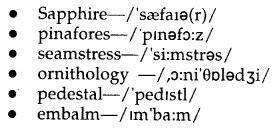
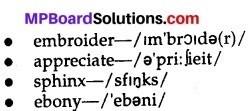
The teacher will read out the following words and students will repeat them :
(निम्न शब्दों को पढ़ो।)
Answer:
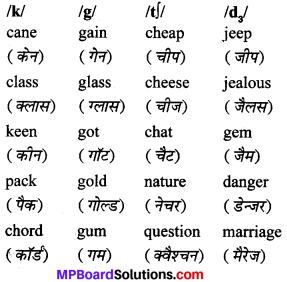
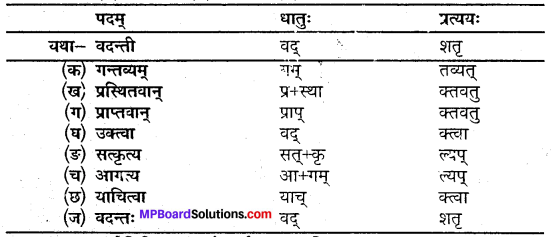
MP Board Class 10th General English The Spring Blossom Solutions Chapter 3 Salutation to the Nation 1

Speaking Time

Frame sentences on seeing the pictures given in the text carefully.
(पुस्तक में दी गई तस्वीरों को देखकर वाक्य बनाइए।)
Answer:
Students can frame the sentences as follows:

  1. Rajesh is waking up at 6 o’clock in the morning.
  2. He is brushing his teeth.
  3. His mother is serving him breakfast.
  4. He is then going to school.
  5. The teacher is teaching him mathematics in the school.
  6. He is playing football in the games period.
  7. He is playing flute under the tree after the school.
  8. He is taking dinner with his father.
  9. He is then watching T. V.
  10. Mother is giving him milk to drink.
  11. He is brushing his teeth at night.
  12. He is going to bed at night.

Writing Time

Write a message to your mother. You can’t wait till 3 p.m. as you have to go to play a match. You are Shantanu.
(अपनी मॉं के नाम सन्देश लिखो)
Answer:
11 December, 2007

Ma, Got your message. I am sorry I won’t be able to wait till 3 p.m. as I have to go to play a football match. I will be back by 6 p.m. Bye.

Shantanu

Things to do

A. Collect the pictures of some martyrs and write about them in the given format.
(कुछ शहीदों के चित्र एकत्रित करो व उनके विषय में दिए गए प्रकार से लिखो।)
Answer:
Students may themselves find the pictures of some martyrs and collect information about them.(छात्र स्वयं करें।)

B. Collect some patriotic slogans:
(कुछ क्रान्तिकारी नारे लिखो।)
Answer:
Students should do it themselves.
(छात्र स्वयं करें।)

Salutation to the Nation Difficult Word Meanings 

Dungeon (डन्जन)-a dark underground room used as a prison (अन्धकारपूर्ण तहखाना जो कारागार के रूप में काम अता है); Hurl (हले)-to throw something/ somebody violently in a particular direction (जोर से कुछ फेंकना); Jovial (जोविअल)- very cheerful and friendly (प्रसन्नचित); Reluctant (रिलक्टेन्ट)hesitating before doing something because you do not want to do it or because you are not sure that it is the right thing to do (कोई कार्य करने को अनिच्छुक); Untoward (अनटुवर्ड)-unusual and unexpected and usually unpleasant (अप्रत्याशित, दुर्भाग्यपूर्ण); Gallows (गैलोज़)-a structure on which people (criminals) are killed by hanging (फाँसी देने का लकड़ी का ढांचा); Embrace (एम्बेस)- to put your arms around somebody as a sign of love or friendship; to accept something (here death) with enthusiasm (गले लगाना); Delirious (डेलिरिअस)-in an excited state – and not able to think or speak clearly (अत्यन्त उत्तेजित व प्रसन्न); Budge (बज)-to move slightly (धीरे से चलना); Treacherous (ट्रेचरस) – that cannot be trusted (अविश्वसनीय); Sack (सैक)-a large bag (एक बड़ा थैला); Flock (फ्लॉक)-to go or gather together somewhere in large numbers (व्यक्तियों का बहुत बड़ा झुण्ड); Shred (श्रेड)-a small thin piece that has been torn or cut from something (कपड़े का दुकड़ा)

Salutation to the Nation Summary, Pronunciation & Translation

Bhagat Singh was busy reading the biography of Lenin. In fact, he had just read a few pages when the door of the dungeon opened and let in a jail officer.

“Sardarji, please be ready, we have been ordered to carry out the execution,” said the officer.

Bhagat Singh was reading the book; he told the officer without raising his eyes from the book, “Wait, one revolutionary is meeting another revolutionary.”

The officer was stunned by the tone of Bhagat Singh’s voice and stood still.

(भगतसिंह वॉज़ विज़ी रीडिंग द बायोग्राफी ऑफ लेनिन. इन फैक्ट, ही हैड जस्ट रेड : अ फियु पेजिस व्हेन द डोर ऑफ द डन्जिअन ओपन्ड ऐण्ड लेट इन अ जेल ऑफिसर.

“सरदारजी, प्लीज बी रेडी, बी हैव बीन ऑर्डर्ड टू कैरी आऊट द एक्जिक्यूशन” सेड द ऑफिसर.

भगतसिंह वॉज़ रीडिंग द बुक; ही टोल्ड द ऑफिसर विदाऊट रेजिंग हिज़ आईज, फ्रॉम द बुक, “वेट, वन रिवोल्युशनरी इज़ मीटिंग एनदर रिवोल्युशनरी।”

द ऑफिसर वॉज़ स्टन्ड बाई द टोन ऑफ भगतसिंहज़ वॉयस एण्ड स्टुड स्टिल.)

अनुवाद :
भगतसिंह लेनिन की जीवनी पढ़ने में व्यस्त थे। असल में उन्होंने बस कुछ ही पृष्ठ पढ़े थे जब काल कोठरी का दरवाजा खुला और जेल अधिकारी अन्दर आया।

“सरदारजी, कृपया तैयार हो जाइए। हमें आदेश मिला है कि आपको फाँसी दे दी जाए” अधिकारी ने कहा।

भगतसिंह जीवनी पढ़ रहे थे; उन्होंने बिना आँखें उठाए (अधिकारी की तरफ देखे बिना) अधिकारी से कहा, “रुको, अभी एक क्रान्तिकारी दूसरे क्रान्तिकारी से मिल रहा है।”

अधिकारी उनके लहजे से अवाक रह गया और चुपचाप खड़ा हो गया।

Bhagat Singh resumed reading the book. All of a sudden he hurled the book in the air, stood forth and said, “Let’s go!”

Rajguru and Sukhdev also came out of their cells. They had refused to get their faces covered, wear the cap and get handcuffed.

The three revolutionaries walked along singing a patriotic song in a jovial mood and were followed by the jail officials on all sides.

(भगतसिंह रिज्यूम्ड रीडिंग द बुक. ऑल ऑफ अ सडन ही हल्ड द बुक इन द एयर, स्टुड फॉर्थ ऐण्ड सेड, “लैट्स गो!”

राजगुरु ऐण्ड सुखदेव ऑल्सो केम आऊट ऑफ देयर सेल्स दे हैड रिफ्यूज्ड टू गैट देयर फेसिस कवर्ड, वीयर द कैप ऐण्ड गैट हैण्डकपड.

द थ्री रिवोल्युशनरीज़ वॉक्ड अलौंग सिंगिंग अ पैट्रियोटिक सॉन्ग इन अ जोवियल मूड ऐण्ड वर फौलोड बाई द जेल ऑफिशियल्स ऑन ऑल साइड्स.)

अनुवाद :
भगतसिंह पुनः पुस्तक पढ़ने लगे। अचानक उन्होंने पुस्तक को हवा में उछाल दिया, झटके से खड़े हुए और बोले “चलो चलें!”

राजगुरु और सुखदेव भी अपनी-अपनी कोठरियों से बाहर आ गए। उन्होंने अपने चेहरों को ढकने, टोपी पहनने और हाथों में हथकड़ियाँ डलवाने से इन्कार कर दिया था।

तीनों क्रान्तिकारी बड़े प्रसन्नचित्त अन्दाज़ में देशभक्ति का गीत गाते हुए चल रहे थे और उनके पीछे-पीछे जेल अधिकारी चल रहे थे उनको घेरे में लिए हुए।

A huge crowd had assembled at the gate consisting of photographers, reporters, the public and the members of Bhagat Singh’s family.

The crowd was becoming unmanageable, loud slogans were being raised both inside and outside the jail. Bhagat Singh’s father, Sardar Kishan Singh, realized that the police might fire at or lathi-charge the people any moment and many innocent people would die.

(अ यूज क्राऊड हैड असेम्बल्ड ऐट द गेट कन्सिसटिंग। ऑफ फोटोग्राफर्स, रिपोर्टर्स, द पब्लिक ऐण्ड द मेम्बर्स ऑफ। भगतसिंहज़ फैमिली.

दक्राऊड वॉज़ विकमिंग अनमैनेजेबल, लाऊड स्लोगन्स वर बीईंग रेज्ड बोथ इन्साईड ऐण्ड आऊटसाईड द जेल.भगतसिंहज़ फादर, सरदार किशन सिंह, रियलाईज्ड दैट द पुलिस माईट फायर ऐट और लाठी-चार्ज द पीपल ऐनी मोमेण्ट एण्ड मैनी एनोसेण्ट पीपल वुड डाई.)

अनुवाद :
जेल (कारागार) के द्वार पर विशाल भीड़ जमा हो चुकी थी। फोटोग्राफर, रिपोर्टर, भगतसिंह के परिवार के लोग तथा आम जनता के लोग।

भीड़ को संभाल पाना मुश्किल होता जा रहा था। ऊँची आवाज़ में नारे लग रहे थे जेल के अन्दर भी और बाहर भी। भगतसिंह के पिताजी सरदार किशन सिंह जी को यह एहसास हो गया कि पुलिस किसी भी वक्त गोली चला सकती है अथवा लाठी चार्ज कर सकती है और बहुत से बेकसूर लोग मारे जाएँगे।

He aksed his wife, “Let us go, lest some misfortune should befall the harmless, innocent people.”

Bhagat Singh’s mother was reluctant to leave place but she had to give in to her husband’s plea.

Sardar Kishan Singh managed to drive away the crowd a little further from the gate to avoid some untoward incident and started delivering a speech to divert their mind from the gallows.

(ही आस्क्ड हिज़ वाईफ़ “लैट अस गो, लेस्ट सम मिस्फॉरचून शुड बिफॉल द हार्मलैस, इनोसेण्ट पीपल.”

भगतसिंहज़ मदर वॉज़ रिलक्टैण्ट टू लीव द प्लेस बट शी हैड टू गिव इन टू हर हस्बैण्ड्स प्ली.

सरदार किशन सिंह मैनेज्ड टू ड्राईव अवे द क्राऊड अ लिटल फर्दर फ्रॉम द गेट टू अवॉइड सब अन्टुवर्ड इन्सिडेण्ट ऐण्ड स्टार्टिड डेलिवरिंग अ स्पीच टू डाईवर्ट देयर माईन्ड फ्रॉम द गैलोज़.)

अनुवाद :
उन्होंने अपनी पत्नी से कहा “हमें चले जाना चाहिए इससे पहले कि निरीह बेकसूर लोगों पर दुर्भाग्य टूट पड़े।”

भगतसिंह की माँ वहाँ से जाना नहीं चाहती थीं परन्तु अन्ततोगत्वा उन्होंने अपने पति की दलील मान ली।

सरदार किशन सिंह जी भीड़ को जेल के दरवाजे से थोड़ा अलग ले जाने में सफल हो गए। किसी प्रकार की अप्रिय घटना न हो तथा लोगों का ध्यान फाँसी से हटाने के लिए उन्होंने एक भाषण देना शुरू किया।

The wardon proceeded towards the platform with the three valiant revolutionaries. The Deputy Commissioner of Lahore was surprised and terrified to see that the convicts were not shackled. Bhagat Singh read the fear in his eyes and said, “Well, Mr. Magistrate, you are fortunate to be able to see how Indian revolutionaries can embrace death with pleasure for the sake of their supreme ideal.”

Bhagat Singh, along with Sukhdev and Rajguru, climbed the stairs of the platform steadily and stood boldly.

Bhagat Singh stood in the centre with Sukhdev on his left and Rajguru on his right.

(द वार्डन प्रोसीडिड टुवर्ड्स द प्लैटफॉर्म विद द थ्री वैलियण्ट रिवॉल्युशनरीज़. द डेप्युटि कमिश्नर ऑफ लाहौर वॉज़ सरप्राईज्ड ऐण्ड टेरिफाईड टू सी दैट कन्विक्ट्स वर नॉट शैकल्ड. भगतसिंह रेड द फीयर इन हिज़ आईज़ ऐण्ड सेड, “वैल मिस्टर मैजिस्ट्रेट, यू आर फॉरचुनेट टू बी एबल टू सी हाऊ इण्डियन रिवॉल्युशनरीज़ कैन एम्ब्रेस डेथ विद प्लेज़र फॉर द सेक ऑफ देयर सुप्रीम आईडियल.”

भगत सिंह, अलॉन्ग विद सुखदेव एण्ड राजगुरु, क्लाइम्बड द स्टेअर्स ऑफ द प्लैटफॉर्म स्टेडिली ऐण्ड स्टुड बोल्डली।

भगतसिंह स्टुड इन द सेण्टर विद सुखदेव ऑन हिज़ लेफ्ट ऐण्ड राजगुरू ऑन हिज़ राईट.)

अनुवाद :
जेलर तीनों बहादुर क्रान्तिकारियों के साथ फाँसी के लिए बने चबूतरे की तरफ बढ़ने लगा। लाहौर के उपायुक्त (डिप्टी कमिश्नर) तीनों को हथकड़ी के बिना देखकर हैरान और भयभीत थे। भगतसिंह ने उनकी आँखों में डर देख लिया और कहा “मैजिस्ट्रेट महोदय आप बहुत भाग्यशाली हैं क्योंकि आप यह देख पा रहे हैं कि कैसे भारतीय क्रान्तिकारी अपने उच्चतम आदर्शों की खातिर खुशी-खुशी मौत को गले लगा सकते हैं।”

सुखदेव और राजगुरु के साथ भगतसिंह चबूतरे की सीड़ियाँ सधे कदमों के साथ चढ़ गए और तीनों निडर भाव से खड़े हो गए।

भगतसिंह बीच में खड़े हुए, उनकी बायीं ओर सुखदेव और दाहिनी तरफ राजगुरु।

They raised the slogan ‘Inqualab Zindabad, Samrajyavad Murdabad’ in a loud, clear and distinct voice, pulled the hangman’s rope, kissed it and put it round their necks. Bhagat Singh told the hangman, “Now you may set it right, if you please.”

The hangman, who must have been a very tough man, was moved to the core of his heart. He set the rope around the necks of the noble and brave young men with tears welling in his eyes and turned the spindle.

(दे रेज्ड द स्लोगन ‘इन्कलाब जिन्दाबाद, साम्राज्यवाद मुर्दाबाद’ इन अ लाऊड, क्लीयर ऐण्ड डिस्टिंक्ट वॉयस, पुल्ड द हैंगमैन्स रोप, किस्ड इट ऐण्ड पुट इट राऊण्ड देयर नेक्स. भगतसिंह टोल्ड द हैंगमैन, “नाऊ यू मे सेट इट राईट, इफ यू प्लीज़.”

द हैंगमैन, हू मस्ट हैव बीन अ वेरी टफ मैन, वॉज़ मूव्ड टू द कोर ऑफ हिज़ हार्ट. ही सेट द रोप अराऊण्ड द नेक्स ऑफ द नोबल ऐण्ड ब्रेव यंग मेन विद टीयर्स वेलिंग इन हिज़ आईज़ ऐण्ड टन्ड द स्पिन्डल)

अनुवाद :
उन्होंने ऊँची, साफ और स्पष्ट आवाज़ में नारा लगाया ‘इन्कलाब ज़िन्दाबाद, साम्राज्यवाद मुर्दाबाद’फिर जल्लाद के हाथ से फांसी का फंदा लेकर उनको चूमा और अपने-अपने गलों में डाल लिया। भगतसिंह ने जल्लाद से कहा “अब तुम इन फंदों को सही कर सकते हो यदि उचित समझो तो।”

जल्लाद जो कि एक सख्त कठोर व्यक्ति रहा होगा विचलित और द्रवित हो उठा। अश्रुपूरित नेत्रों से उसने तीनों बहादुर युवाओं के गलों में पड़े फंदों को सही किया और तख्ता सरकाने वाली तकली को घुमा दिया।

The board fell and the three revolutionaries offered their homage to their motherland with their lives at 7.33 in the evening.

Sardar Kishan Singh was on the verge of losing his nerve. He continued delivering his speech in a delirious manner, when the milkman ran towards them and gave the dreaded news that the execution was over.

(द बोर्ड फेल ऐण्ड द थ्री रिवोल्युशनरीज़ ऑफर्ड देयर होमेज टू देयर मदरलैण्ड विद देयर लाईव्स ऐट 7.33 (सेवन थर्टी थ्री) इन द ईवनिंग.

सरदार, किशन सिंह वॉज़ ऑन द वर्ज ऑफ लूजिंग हिज़ नर्व. ही कन्टिन्यूड डेलिवरिंग हिज़ स्पीच इन अ डेलिरियस मैनर, व्हेन द मिल्कमैन रैन टुवर्ड्स देम ऐण्ड गेव द ड्रैडिड न्यूज़ दैट द एक्ज़िक्यूशन वॉज़ ओवर।)

अनुवाद :
फाँसी का तख्ता सरक गया और तीनों क्रान्तिकारियों ने अपनी मातृभूमि को अपनी अन्तिम श्रद्धान्जलि अपने जीवन के रूप में शाम सात बजकर तैतीस मिनट पर प्रदान की।

सरदार किशन सिंह जी अपना धैर्य और मानसिक सन्तुलन खोने के कगार पर थे। वे बिल्कुल उन्मादी अवस्था में लगातार भाषण दिए जा रहे थे, जब दूधवाला दौड़कर उनको फाँसी हो चुकी है यह खबर देने आया।

Sardar Kishan Singh announced to the crowd, “Bhagat Singh has been executed. I am going to fetch his body. None of you should budge from here. I don’t wish that in taking away the body of Bhagat Singh I shall have to take away many more.”

Sardar Kishan Singh went ahead with a heavy heart with a few people and knocked at the gate. The gate of the jail was not opened. Continuous knocking went unheeded.

The police officers were heard laughing loudly inside the gate.

Someone came and whispered, informing them that the bodies had been taken away through another gate.

(सरदार किशन सिंह अनाऊन्सड टू द क्राऊड, “भगत सिंह हैज़ बीन एक्जिक्यूटिड. आई ऐम गोईंग टू फेच हिज़ बॉडी. नन ऑफ यू शुड बज फ्रॉम हिअर. आई डोण्ट विश दैट इन टेकिंग अवे द बॉडी ऑफ भगतसिंह आई शैल हैव टू टेक अवे मैनी मोर.”

सरदार किशन सिंह वेण्ट अहेड विद अ हैवी हार्ट विद अ फ्यू पीपल ऐण्ड नॉक्ड ऐट द गेट. द गेट ऑफ द जेल वॉज़ नॉट ओपन्ड. कन्टिन्यूअस नॉकिंग वेण्ट अनहीडिड.

द पुलिस ऑफिसर्स वर हर्ड लाफिंग लाऊड्ली इन्साइड द गेट।

समवन केम ऐण्ड ह्विस्पर्ड, इन्फॉर्मिंग देम दैट द बॉडीज़ हैड बीन टेकन अवे श्रू ऐनदर गेट.)

अनुवाद :
सरदार किशन सिंह जी ने भीड़ को सम्बोधित कर कहा “भगतसिंह को फाँसी दे दी गई है। मैं उनके पार्थिव शरीर को लेने जा रहा हूँ। आप लोगों में से कोई भी यहाँ से हिलना नहीं चाहिए। मैं नहीं चाहता कि भगतसिंह के शव के साथ मुझे और भी शवों को अपने साथ ले जाना पड़े।”

सरदार किशन सिंह जी कुछ लोगों के साथ लेकर भारी हृदय से आगे बढ़े और जेल के दरवाजे पर जाकर दस्तक दी। जेल का दरवाज़ा नहीं खुला। लगातार खटखटाना बेकार गया।

पुलिस अधिकारियों के जेल के अन्दर से ज़ोर-ज़ोर से हँसने की आवाज़ आ रही थी।

कोई आया 3 धीमी आवाज़ में बुदबुदाकर यह सूचना दी कि शवों को दूसरे द्वार से ले जाया जा चुका है।

The British were bent upon their treacherous way. The bodies of the valiant leaders were mercilessly chopped off, filled in the sacks and carried away to the bank of the river Sutlej at Ferozepur through a back gate. The last rites were to be performed by a Sikh granthi and a Hindu pandit.

The sacks containing the parts of the bodies were taken off the truck. Kerosene was spilled over them and set ablaze in the most cruel and heartless manner.

When the news reached the neighbouring village, the people flocked to the sacred spot carrying torches with them.

The English officers saw the approaching crowd and threw away the half burnt shreds of the bodies into the river-water, sat in the truck and sped away to save their lives.

(द ब्रिटिश वर बेन्ट अपॉन देयर ट्रैचरस वे. द बॉडीज़ ऑफ द वैलिएण्ट लीडर्स वर मरसिलैसली चॉप्ड ऑफ, फिल्ड इन द सैक्स ऐण्ड कैरिड अवे टू द बैंक ऑफ द रिवर सतलज ऐट फिरोज़पुर श्रू अ बैक गेट. द लॉस्ट राईट्स वर टू बी परफॉर्ड बाई अ सिक्ख ग्रन्थी ऐण्ड अ हिन्दु पण्डित।

द सैक्स कन्टेनिंग द पार्ट्स ऑफ द बॉडीज़ वर टेकन ऑफ द ट्रक. केरोसिन वॉज़ स्पिल्ड ओवर देम ऐण्ड सेट अब्लेज़ इन द मोस्ट क्रूएल ऐण्ड हार्टलैस मैनर.

व्हेन द न्यूज़ रीच्ड द नेबरिंग विलेज, द पीपल फ्लॉक्ड टू द सेकरेड स्पॉट कैरीईंग टॉर्चेस विद दैम.

द इंग्लिश ऑफिसर्स सॉद अप्रोचिंग क्राऊड ऐण्ड थ्रियु अवे द हाफ बर्ट ग्रैड्स ऑफ द बॉडीज़ इन्टू द रिवर-वॉटर, सैट इन द ट्रक ऐण्ड स्पेड अवे टू सेव देयर लाईव्ज.)

अनुवाद :
अंग्रेज़ पूरी तरह से अमानवीय कपटपूर्ण तरीकों पर उतरे हुए थे। उन बहादुर क्रान्तिकारी योद्धाओं के शवों के निर्ममतापूर्वक टुकड़े किए गए, फिर बोरों में भरकर पिछले दरवाजे से फिरोज़पुर में सतलज नदी के घाट पर ले जाया गया। अन्तिम क्रिया एक सिक्ख ग्रन्थी व एक हिन्दू पण्डित द्वारा की जानी थी।

शवों के टुकड़ों वाले बोरों को ट्रक से उतारा गया। उन पर मिट्टी का तेल छिड़का गया और अत्यन्त क्रूर एवं निर्मम तरीके से आग लगा दी गई।

जब “यह खबर पास के गाँव में पहुँची तो लोग हाथों में मशालें ले-लेकर उस पवित्र स्थल की तरफ आने लगे।

अंग्रेज़ अफसरों ने आती हुई भीड़ को देखकर अधजले शवों के टुकड़ों को नदी में फेंक दिया और ट्रक में बैठकर अपनी जान बचाने को भाग लिए।

The humble villagers gathered the shreds of the half burnt bodies from the river and performed the last rites with full devotion and love.

In this way the great martyr Bhagat Singh happily embraced death to liberate his motherland and became immortal in the hearts of Indians. He was 24 when he was executed. He became a legendary hero for the masses. Innumerable songs were composed about him, and the youth throughout the country made him their ideal. He became a symbol of bravery and inspired the people to free India.

(द हम्बल विलेजर्स गैदर्ड द शैड्स ऑफ द हाफ बर्ट बॉडीज़ फ्रॉम द रिवर ऐण्ड परफॉर्ड द लास्ट राईट्स विद फुल डिवोशन ऐण्ड लव.

इन दिस वे द ग्रेट मार्टर भगत सिंह हैप्पिली ऐम्ब्रेस्ड डेथ टू लिबरेट हिज़ मदरलैण्ड ऐण्ड बिकेम इम्मॉर्टल इन द हार्ट्स ऑफ इण्डियन्स. ही वॉज़ ट्वेन्टी फोर व्हेन ही वॉज़ ऐक्जिक्यूटिड. ही बिकेम अ लेजेण्डरी हीरो फॉर द मासिस इन्नयुमिरेबल सॉन्ग्स वर कम्पोज्ड अबाऊट हिम, ऐण्ड द यूथ श्रूआऊट द कंट्री मेड हिम देयर आइडीयल ही बिकेम अ सिम्बल ऑफ ब्रेवरी ऐण्ड इन्स्पायर्ड द पीपल टू फ्री इण्डिया.)

अनुवाद :
सरल हृदयी गाँव वालों ने नदी में अधजले शवों के टुकड़ों को निकालकर इकट्ठा किया और पूर्ण श्रद्धा व प्रेम के साथ उनकी अन्त्येष्टि की।

इस तरह महान शहीद भगतसिंह ने मातृभूमि को दासता से मुक्त कराने के लिए हँसते-हँसते मौत को गले लगा लिया और भारतीयों के हृदयों में अमर हो गये। वह केवल चौबीस वर्ष के थे जब उनको फाँसी दी गई। वह आम जनता के लिए एक प्रसिद्ध नायक बन गए। उनकी यशगाथा का बखान करने वाले अनेक गीत रचे गए और सम्पूर्ण देश के युवाओं ने उन्हें अपना आदर्श मान लिया। वह बहादुरी का प्रतीक बन गए और लोगों को भारत को आज़ाद कराने के लिए प्रेरित किया।

Bhagat Singh is justly remembered as ‘Shaheede-Azam’ by his grateful countrymen for making the supremę sacrifice. He infused life into the youth and became their hero. “It has increased our power for winning freedom for which Bhagat Singh and his comrades died,” said Mahatma Gandhi: “Their magnificent courage and sacrifice has been an-inspiration to the youth of India,” said Pandit Jawaharlal Nehru, the then president of the Indian National Congress, in his tribute, “These valiant young men died so that India may live.”

(भगतसिंह इज़ जस्टलि रिमेम्बर्ड ऐज़ ‘शहीद-ए-आजम’ बाई हिज़ ग्रेटफुल कंट्रीमेन फॉर मेकिंग द सुप्रीम सैक्रिफाईस. ही इन्फ्यूज्ड लाईफ इन्टू द यूथ ऐण्ड बिकेम देयर हीरो “इट हैज़ इन्क्रीज्ड आवर पावर फॉर विनिंग फ्रीडम फॉर व्हिच, भगतसिंह ऐण्ड हिज़ कॉमरेड्स डाईड,” सेड महात्मा गाँधी. “देयर मैग्निफिसेन्ट करेज एण्ड सेक्रिफाईस हैज बीन ऐन इन्सपिरेशन ट्र द यूथ ऑफ इण्डिया,” सेड पण्डित जवाहरलाल नेहरु, द देन प्रेसीडेण्ट ऑफ द इण्डियन नेशनल कांग्रेस, इन हिज़ ट्रिब्यूट, “दीज़ वैलिएण्ट यंग मैन डाईड सो दैट इण्डिया मे लिव.”)

अनुवाद :
भगतसिंह को उनके सर्वोच्च त्याग के कारण ‘शहीद-ए-आज़म’ के रूप में याद किया जाता है। उन्होंने भारत के युवाओं में जीवन का संचरण किया और उनके आदर्श बन गए। महात्मा गांधी ने कहा “भगतसिंह और उनके साथियों की शहादत ने आज़ादी हासिल करने की हमारी शक्ति को बढ़ा दिया है।” पण्डित जवाहरलाल नेहरू जो उस समय भारतीय राष्ट्रीय कांग्रेस के अध्यक्ष थे ने कहा, ” उनकी बेमिसाल बहादुरी और त्याग भारतीय युवाओं के लिए प्रेरणा का स्रोत है। ये बहादुर युवा इसलिए मरे ताकि भारत ज़िन्दा रहे।”

Hope that the above shaped information regarding the Madhya Pradesh Board Solutions for 10th English Chapter 3 Salutation to the Nation Questions and Answers is useful for making your preparation effective. View our website regularly to get other subjects solutions.
MP Board Class 10th Social Science Solutions Chapter 10 Contribution of Madhya Pradesh in Freedom Struggle

In this article, we will share MP Board Class 10th Social Science Book Solutions Chapter 10 Contribution of Madhya Pradesh in Freedom Struggle Pdf, These solutions are solved subject experts from the latest edition books.

MP Board Class 10th Social Science Solutions Chapter 10 Contribution of Madhya Pradesh in Freedom Struggle

MP Board Class 10th Social Science Text Book Exercise

Objective Type Questions

Mp Board Class 10th Social Science Chapter 10 Question 1.
Multiple Choice Questions:
(Choose the correct answer from the following)

Students can also download MP Board 10th Model Papers to help you to revise the complete Syllabus and score more marks in your examinations.

Contribution Of Madhya Pradesh In Freedom Movement MP Board Class 10 Question (a)
Which freedom fighter of Madhya Pradesh had the honour of becoming President of India:
(a) Dr. Shankar Dayal Sharma
(b) Pt. Sunderlal
(c) Pt. Dwarika Prasad Mishra
(d) Pt. Shambhunath Shukla.
Answer:
(a) Dr. Shankar Dayal Sharma

Contribution Of Mp In Freedom Movement MP Board Class 10 Question (b)
After which freedom fighter’s name, Bhopal University has been named:
(a) Seth Govinddas
(b) Barkatullah
(c) Harisingh Gaud
(d) Rani Durgavati.
Answer:
(b) Barkatullah

Class 10th Social Science Chapter 10 MP Board Question (c)
From which city of Madhya Pradesh the ‘Jhanda Satyagraha’ begin: (MP Board 2010)
(a) Indore
(b) Sagar
(c) Jabalpur
(d) Bhopal.
Answer:
(c) Jabalpur

Class 10 Social Science Chapter 10 MP Board Question 2.
Fill in the blanks:

  1. ……………………. (name) lived in village Dhimarpura by the name Harishankar Bhramachari.
  2. Rani Avantibai was queen of Ramgarh of ………………….. district.
  3. Rani Laxmibai captured Gwalior with the help of ……………………. (name).

Answer:

  1. Chandrashekhar Azad
  2. Manda
  3. Tatya Tope

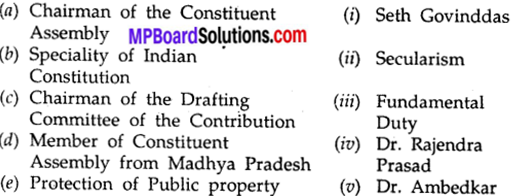
Contribution Of Madhya Pradesh In Freedom Struggle MP Board Class 10 Question 3.
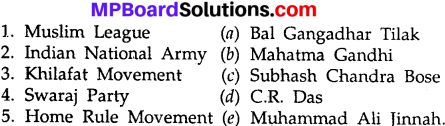
Match the column:
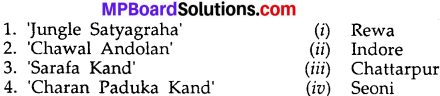
Mp Board Class 10th Social Science Chapter 10
Answer:

  1. (iv)
  2. (i)
  3. (ii)
  4. (iii)

MP Board Class 10th Social Science Very Short Answer Type Questions

Class 10 Social Science Mp Board  Question 1.
Where was Chandrashekhar Azad born?
Answer:
Village Bhabhra of Jhabua District.

Contribution Of Mp In Freedom Struggle MP Board Class 10 Question 2.
Name the places of organisations set up in Madhya Pradesh?
Answer:
‘Gurukul’ 1929 (Satna), Hindustani Seva Dal 1931, Charkha Sangh (Rewa), Gwalior Rajya Seva Sangh and Harijan Sevak Sangh 1935 (Gwalior), Lok Sevak Sangh 1939, (Khargone), Gram Seva Kutir 1935 (Sendhwa), Seva Samiti (Betul). Seva Samiti (Betul), Seva Mandal (Ratlam) Jnyan Prakash Mandal (Indore) etc.

Mp Board Solution Class 10 Social Science Question 3.
Which freedom fighter’s name (soldier) of Indian National Army was associated with Shivpur?
Answer:
Colonel Gurbax Singh Dhillon.

MP Board Class 10th Social Science Short Answer Type Questions

Question 1.
Name the newspapers published from Madhya Pradesh to arouse awemess for national awakening? (MP Board 2012)
Answer:
During that period many newspaper like Karmaveer, Ankush, Subodh Sindhu, Nyaya Sudha, Arya Vaibhav, Lokmat, Praja Mandat Patrika, Sarswati Vilas, Saptahik Awaz and Subaha Watan were published, which raised voice against the oppressive and unjust policies of the British. This helped in arousing nationalist feelings.

Question 2.
In what way the people of Madhya Pradesh made their contribution in the Civil Disobedience Movement?
Answer:
The people of Madhya Pradesh made their contribution in the Civil Disobedience Movement in several ways. Some of the main movements are as:

  1. The forest struggle (satyagraha) of Turia Jungle.
  2. Jungle Satyagraha of Ghodadongri.
  3. The Firing Incidence of Charanpaduka.

During the freedom movement many political and social service institutions were set up; their ways of working and policies, though different, their contribution in the movement was remarkable. Thus contribution of the people of Madhya Pradesh was memorable.

Question 3.
What was Jungle Satyagraha? (MP Board 2013)
Answer:
When in 1930 Gandhiji marched to Dandi and led the ‘Namak Satyagraha’, at the time the Congress workers of Seoni, under the leadership of Durga Shankar Mehta carried out the ‘Jungle Satyagraha’. About 9 – 10 kms from Seoni, a movement to cut grass from the Government Sandalwood Gardens, was started.

In continuation of the above movement another movement to cut grass in the jungles of Turia 28 kms from Seoni. It was planned to enter Turia jungle on 9th October, 1930. The police and range officers insulted the freedom fighters and the public who had assembled there in support of the freedom fighters.

The Deputy Commissioner, Seoni ordered police to open fire on them to ‘teach a lesson’. On the spot four tribals viz. Guddobai, Ramabai, Bemabai and Birju Gond died. This incidence is a proof of the fact that the freedom movement spread even among the tribals. The bodies of these martyrs were not handed over to their families.

Question 4.
How did ‘Jhanda Satyagraha’ take place? Explain?
Answer:
During the freedom movement, tricolour with spinning wheal (charkha) in the centre was having the status of national flag. During 1923 an incident with regard to its honour occurred that the whole nation stood for it and even the British administration had to recognize that fact.

This incidence has gone in the history of freedom struggle and is known as ’Jhanda Satyagraha’. The Congress party constituted a committee under the leadership of Hakim Ajmal Khan to assess the extent of mental preparedness of the people in favour of the Non – Cooperation Movement.

The Jabalpur Congress Committee decided to honour Mr. Khan and hoist the tricolour on the building of Jabalpur Municipality. The British Government took this act of honouring Mr. Khan as an insult of the British rule and ordered the police to not only remove the flag but insult is by crushing it under feet. Consequently the people were extremely annoyed. They agitated and this agitation became a national agitation only after few months.

MP Board Class 10th Social Science Long Answer Type Questions

Question 1.
Describe the contribution of freedom fighters of Madhya Pradesh in the freedom struggle of 1857?
Answer:
From every part of Madhya Pradesh fighters took part in the freedom struggle. There was hardly any area where freedom fighters were not there. Everyone from almost all the areas of Madhya Pradesh took part in the struggle. Only because of these people that we are breathing in free atmosphere. Although freedom fighters did not confine themselves to a specific area; they considered the nation above everything.

Central character of struggle for freedom of 1857 was Rani Laxmi Bai, who belonged to Jhansi, fought her important battle in Madhya Pradesh posed challenge to British and won the war. She caputred the Gwalior fort with the help of Tatya Tope. When English capton Hughes approached Gwalior fort, she fought bravely and on 18th June, 1858 near Gwalior she sacrificed her life in the Baba Gangadas Bag.

Tatya Tope, the great, fighter of first freedom struggle helped Rani Laxmi Bai to capture Gwalior. Even after the death of Rani Laxmi Bai, Tatya Tope continued guerilla fighting with the British for two years in Madhya Pradesh and other parts of India. A friend betrayed Tatya Tope and he was imprisoned and later hanged in Shivpuri. Some other main freedom fighters were Virangana Rani Avantibai, Raja Bakhtawar Singh, Raja Shankar Singh and Raghunath Shah, Thakur Ranmat Singh, etc.

Question 2.
What impact ‘Civil Disobedience Movement’ and ‘Quit India Movement’ had on Madhya Pradesh?
Answer:
The trible district Betul was also a centre of freedom struggle and the tribals here also participated in the freedom movement. After the ‘Jungle Movement’ of 1930 the tribal freedom fighters also took the reigns of the freedom movement in their hands under the leadership of Ganjan Singh Korku of Banjari Dhal.

When the police reached Banjari Dhal to arrest Shri Ganjan Singh the local tribals strongly opposed. The police opened fire and in the firing Koma Gond died and became a martyr. Ganjan Singh however escaped. In a place named Jambada a crowd gathered to free the arrested tribals, police opened fire on the crowd, Ramu and Makdu Gond died and became martyrs.

In August 1942 a new chapter in the freedom struggle of India was added, popularly known as ‘Quit India Movement’. The All India Congress Committee passed are solution, in the meeting of Indian Congress Committee held on 8th August, 1942 in Bombay. On the 9th August many big leaders including Mahatma Gandhi were arrested.

In this situation, many big leaders of Madhya Pradesh like Pt. Ravi Shankar Shukla, Dwarka Prasad Mishra returned to Madhya Pradesh to fight against such oppressive activities of the British Rule. People organised themselves in every village, tehsil and town, thus a beginning of the struggle was made. In Betul the struggle assumed serious form and the police opened fire.

In places like Mandla, Sagar, Hosharigabad, Chhindwara Jabalpur etc. people attacked Government offices and burnt Government records, railway, postal and transport services were disrupted. The police took recourse to oppression were disrupted. Seth Govindas was arrested in Jabalpur. As a consequence of this the struggle gathered momentum. The people participated in the struggle with great enthusiasm in places like Khandwa, Khargone, Narsinghpur, Damoh, Balaghat etc.

Question 3.
Write notes on:

  1. Barkatullah Bhopali
  2. Chandrashekhar Azad
  3. Tantya Bhil
  4. Kunwar Chain Singh
  5. Virangana Avantibai
  6. Thakur Ranmat Singh.

1. Barkatullah Bhopali:
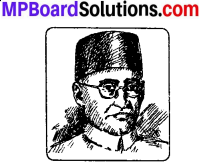
Mohammad Barkatullah continuously made efforts of Independence of India, while living in foreign countries. He was made the Prime Minister of the interim Government of India set up in Kabul. Political activities started in Bhopal from the year 1934.

In this very year publication of two weekly papers were started viz. ‘Subahe Watan’ in Urdu by Shakir Ali Khan and ‘Praja Pukar’ by the Hindu Mahasabha of Bhopal State. In 1938 the Hindu and Muslim population together, set up ‘Praja Mandal’.
Contribution Of Madhya Pradesh In Freedom Movement MP Board Class 10

2. The Great Martyr Chandrashekhar Azad:
He was born in village Bhabhra of Jhabua district (Madhya Pradesh). He joined the Non-cooperation Movement in the early age of 14 years. When he was arrested he told in the court of law, ‘Azad’ as his name, ‘Independence’ as father’s name and ‘Prison’ as his address. Since then suffix ‘Azad’ added to his name.

For the Britishers, Azad’s name was the synonym for terror. The credit or arousing a sense of patriotism and prepare people foi armed revolution and preparing a generation of revolutionaries goes to Azad. Between the year 1926 to 1931, Azad was associated in almost all the revolutionary activities and associated himself in about 100 incidences of fight against the Britishers and became General Officer in Command of the Indian Socialist Republican Party.

He set up his headquarters in a village named Dhimarpura on the Bank of the river Satar in Jhansi. During day hours he used to narrate the story of Lord Ram, arrange for meals for the people and from there used to direct revolutionary activities in Jhansi.

He somehow reached Allahabad, hiding himself from the police and on 27 February, 1931, he was sitting in the Alfred Park. The police rounded him there at 10 a.m. in the morning. Firing started from both the sides, when only one bullet was left in his pistol he shot himself by firing a bullet neaiythe ear.
Contribution Of Mp In Freedom Movement MP Board Class 10

3. Tantya Bhil:
After the freedom struggle of 1857 Tantya Bhil became a symbol of terror for the Britishers. Dopia and Bijamija, his associates were also his partners in the Revolutionary activities. For years they were living amongst the local people and at the same time conducted revolutionary activities as a result of which they became a big challenge for the Britishers. Tantya Bhil was arrested under a conspiracy and was hanged in the year 1886. Tantya is a hero even today among Bhils.
Class 10th Social Science Chapter 10 MP Board

4. Kunwar Chain Singh:
Prince Chain Singh of Narsinghgarh was insulted by political Agent Maddoc of Sehore Cantonment. Hence Chain Singh started agitation against the British. In 1824 there was a fierce battle between Chain Singh and the British on a sport which is presently known as Tehsil Chouraha. Chain Singh and handful of brave soldiers sacrificed their lives while fighting with British soldiers in Sehore’s Dussehra Bagh.

5. Virangana Rani Avantibai:
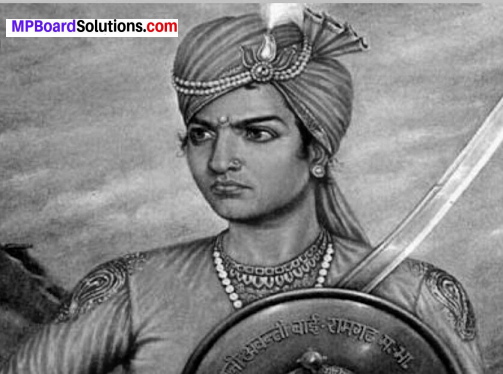
The queen of Ramgarh of Mandla district also showed extra ordinary love for her motherland and fought bravely. Ramgarh is a small town in Mandla district. In 1850 after the death of Raja Lakshman Singh his only son Vikramjeet Singh was declaired mentally sick and unfit to rule.

British Government took the regions of administration in their hands and appointed their officer. The royal family was sanctioned annual subsistence allowance. Rani Avantibai (Wife of Raja Laxman Singh) of Ramgarh was very able and intelligent lady who wanted to rule the state in her son’s name but at the time the ’policy of annexation’ (Hadap Neeti) was being strictly implemented.

Rani Avantibai opposed this, fought with the officer who was appointed by the Britisher there and took the reigns of administration in her hands. She contacted the thakurs and malguzars of the district and sought their cooperation. Many Zamindars promised to lend their support.

The Rani used to lead her soldiers in battlefield in soldier’s uniform. In April 1858, the Britishers attacked Ramgarh, the Rani assessed her strength and vacated the fort and went into the adjoining forests. From there she constantly attacked the Britishers but one of these attacks proved to fatal.

When she saw that she is surrounded and will be surely caught, this brave lady instead of courting arrest, got down from the horse, seized sword from her body – guard and pierced it in-her chest and laid her life bravely for her motherland.
Class 10 Social Science Chapter 10 MP Board

6. Thakur Ranmat Singh:
Thakur Ranmat Singh of village Manakhari of Satna district also gave tough fight to the Britishers in the struggle of 1857. The Thakur was unhappy with the activities of the political Agent Maddoc and decided to fight with Britishers. He along with his companions organised an army in the jungles of Chitrakoot and attacked the Residency in Nagod. The resident fleed.

Thakur Ranmat Singh attacked the Naogaon cantonment also, after a few days and a British platoon of Barodha was killed. A prize of Rs. 2000 was declared on the Thakur. After fighting with the Britishers for a long times, he was arrested by the Britishers on day when he was resting in his friend’s house, he was caught unaware and was hanged in the year 1859.

MP Board Class 10th Social Science Additional Important Questions

Objective Type Questions

Question 1.
Multiple Choice Questions:
(Choose the correct answer from the following)
Question (a)
Bundela revolt was started in the period of:
(a) 1740 – 1742
(b) 1840 – 1842
(c) 1892 – 1897
(d) 1940 – 1942.
Answer:
(b) 1840 – 1842

Question (b)
Jhanda Satyagraha was started in the year of:
(a) 1920
(b) 1921
(c) 1922
(d) 1923.
Answer:
(d) 1923.

Question (c)
Chandrashekhar Azad was bom at:
(a) District Jhabua
(b) District Mandsour
(c) District Harda
(d) District Bhopal (MP Board 2009)
Answer:
(a) District Jhabua

Question (d)
Who fought with British by Guerilla system?
(a) Raja Laxman Singh
(b) Bakntawar Singh
(c) Tatya Tope
(d) Ganjan Sing Korku
Answer:
(c) Tatya Tope

Question 2.
Fill in the blanks:

  1. Namak Satyagrah was started by …………………….
  2. Jungle Satyagrah was the satyagrah of …………………….

Answer:

  1. Mahatma Gandhi
  2. Triblals.

Question 3.
True and False type questions.

  1. Chandrashekhar Azad was bom in Sagar district.
  2. In Madhya Pradesh, Quit India Movement was started under the leadership of Mahatma Gandhi.

Answer:

  1. False
  2. False.

Question 4.
Match the Column:
Contribution Of Madhya Pradesh In Freedom Struggle MP Board Class 10
Answer:

  1. (d)
  2. (a)
  3. (b)
  4. (c)

Answer in One – Two Words or One Sentence

Question 1.
What is known as Jalianwala Bagh of M.P.? (MP Board 2009)
Answer:
The firing incidence of Charanpaduka on 14th January 1931.

Question 2.
Who were killed in firing of Madhya Pradesh’s Jalianwala Bagh?
Answer:
Seth Sunderlal, Dharamdas Khirwa, Chirku, Halke Kurmi, Ramlal Kurmi and Raghuraj Singh.

Question 3.
Write the name of queen of Ramagarh of Mandla District? (MP Board 2009)
Answer:
Gondwana queen, Rani Durgavati shah Maravi ruled Mandla province and fought against Akbar in her valiant effort to save her.

Question 4.
What slogan was given by Gandhiji on 8th August 1942?
Answer:
Do or Die.

Question 5.
When was a meeting organised at Talak Bhoomi Talaliya in Jabalpur?
Answer:
On 9th August 1942.

Question 6.
Write the name of main revolutionaries of Jaipur?
Answer:
Raja Shankar Singh and Raghunath Shah.

Question 7.
Name the main centre of revolt?
Answer:
The main centre of revolt were Gwalior, Bhopal and Indore.

MP Board Class 10th Social Science Very Short Answer Type Questions

Question 1.
What do you mean by Bundela revolt?
Answer:
Bundela, Rajput, Gond and Lodhi rulers and landlords revolted against the British and fought against the British rule in Narmada Sagar region of Buridelkhand.

Question 2.
Why did Prince Chain Singh started revolt against the Britishers?
Answer:
Prince Chain Singh of Narsinghgarh was insulted by political Agent Maddoc of Sehore Cantonment. Hence Chain Singh started agitation against the British. In 1824 there was a fierce battle between Chain Singh and the British on a sport which is presently known as Tehsil Chouraha.

Question 3.
Who was the hero of 1857 from Indore?
Answer:
In the freedom struggle of 1857 Sadat Khan and Bhagirath Silawat of Indore played an important role. They gave tough fight to the Britishers but were caught and hanged in Indore. Their sacrifice is also worth mentioning.

Question 4.
Who did plan to loot of Punjab Mail?
Answer:
Three freedom fighters Veer Yashwant Singh, Devnarayan Tiwari and Dalpatrao prepared a plan to loot the rifles and other belonging of the officers who travelled by Pubjab Mail.

MP Board Class 10th Social Science Short Answer Type Questions

Question 1.
What do you mean by Bundela Movement?
Answer:
In the land of Madhya Pradesh second flame of revolt flickered in 1840-1842 when in Narmada Sagar region of Bundelkhand. Bundela, Rajput, Gond and Lodhi rulers and landlords revolted against the British and fought against the British rule. Dhillan Shah of Madanpur, Hirde Shah of Heerapur, Raja Parinit of Jaitpur, Rao Basant Singh of Chirgaon and Deewan Bundela of Jheejhaon were heroes of this agitation, but because of lack of unity and power of British army the revolt could not succeed.

Question 2.
What were the main centres of 1857 in Madhya Pradesh?
Answer:
There was mass intolerance in public and in 1857 the feeling became widespread. Like other parts of India there were many small Riyasats in Madhya Pradesh of the rulers and Nababs were faithful to British but the soldiers of their army after hearing the news of revolt, were eager to help their fellow soldiers.

Main centre of revolt were Gwalior, Bhopal and Indore. The places where the flame of revolt flared were Sagar, Jabalpur, Narsinghpur, Hoshangabad, Nangaon, Gwalior, Jhansi, Shivpuri, Bhopal, Neemuch, Indore, Mahidpur, Mandsaur etc.

Question 3.
When did the Gwalior – Goa conspiracy take place?
Answer:
Gwalior was the seat of the revolutionaries. Gendalal and Chandrashekhar Azad were hiding in various parts of Gwalior. In 1930 an organisation was set up in Gwalior for boycott of foreign textiles. The Gwalior – Goa conspiracy took place in 1932. Under this movement arms were brought from foreign countries and were being made available to the revolutionaries. Those who were punished in this regard were Balkrishna Sharma, Girdharilal the main.

MP Board Class 10th Social Science Long Answer Type Questions

Question 1.
Describe the contribution of Madhya Pradesh in the national movement?
Answer:
All sections of the population of Madhya Pradesh actively participated in the national movement. The tribals played their role, the ruling families and their subjects also participated in the struggle. The peasants also made their contribution in their own way. Thus people of all sections participated in the ‘Non – cooperation movement’, ‘Civil Disobedience’, Salt Movement’, ‘Jungle Satyagrah’ and the movement of 1942.

The centre of activities of the great revolutionary, Chandrashekhar Azad was Orcha. The Red Army of Maganlal Bagdi took lead as an armed revolutionary. The people of Madhya Pradesh participated in the non cooperation movement and took part in the activities like movement against in the activities like movement against consumption of liquor, Tilak Swaraj fund, boycott of foreign cloth, boycott of Government schools and establishment of national educational institutions, handloom industry etc.

The advocates abandoned their practice. Those advocates who went to courts wore Gandhi caps. District committees ignored Government orders and hoisted national flag. The police arrested all the leaders. Pandit Sunderlal was tried in the court of law and imprisoned for six months. All the members of Jabalpur Municipality the leaders Second batch comprising Premchandra, Sitaram Jadhav, Chhigelal Swarnkar and Todermal hoisted flag on the town hall. The ‘Jhanda Movement’ spread in other parts of India including Nagpur.

Question 2.
Discuss the role of Bhils in 1857?
Answer:
The Bhils of Malwa and Nimad area were freedom lovers. To supress them the Britishers had formed an army called the Malwa Bhil Cops. Khajya and Bhima were working in the army in the capacity of ’Nayak1. Against the oppressive policy of the Britishers these two soldiers increased their activities of opposition (associating with the 1857 Freedom Struggle).

Worried by their activities the Britishers launched a campaign to arrest them, Khajya was killed in 1860 (by deception) while Bhima continued his struggle. He was also arrested in 1867. Besides these, the role of Rao Khalak Singh Daua of Sevdha (Datia), Daulat Singh of Raghogarh (Dewas) Waris Mohammad Khan of Bhopal, Nawab Adil Mohammad Khan of Ambapani (Bhopal) and Phajil Mohammad Khan Sohagpur (Shahdol), Garrul Singh etc. was also important in the freedom struggle of 1857.

MP Board Class 10th Hindi Vasanti Solutions Chapter 9 बरखा गीत

In this article, we will share MP Board Class 10th Hindi Book Solutions Chapter 9 बरखा गीत (रमानाथ अवस्थी) Pdf, These solutions are solved subject experts from latest edition books.

MP Board Class 10th Hindi Vasanti Solutions Chapter 9 बरखा गीत (रमानाथ अवस्थी)

बरखा गीत पाठ्य-पुस्तक के प्रश्नोत्तर

बरखा गीत लघु-उत्तरीय प्रश्नोत्तर

क्लास 10th हिंदी बुक MP Board Chapter 9 प्रश्न 1.
वर्षा के आगमन पर धरती में क्या-क्या परिवर्तन होता है?
उत्तर-
वर्षा के आगमन पर मुरझाई धरती हरी हो जाती है। खाली गगरी भर जाती है। आकाश में बादल छा जाते हैं। झूले पर कजली लहराने लगती है।

क्लास 10th हिंदी MP Board Chapter 9 प्रश्न 2.
पीड़ा दुलारने वाला किसे कहा गया है?
उत्तर-
पीड़ा दुलारने वाला घनश्याम को कहा गया है।

बरखा गीत दीर्घ-उत्तरीय प्रश्नोत्तर

Class 10th Subject Hindi MP Board Chapter 9 प्रश्न 1.
वर्षा की प्रतीक्षा सभी प्राणियों को क्यों रहती है?
उत्तर-
वर्षा की प्रतीक्षा सभी प्राणियों को रहती है। यह इसलिए कि उससे नया जीवन मिलता है। नीसरता सरसता में बदल जाती है। चारों ओर आनंद और सुख का वातावरण फैल जाता है।

Mp Board Hindi Chapter 9 Class 10th प्रश्न 2.
गीत में कवि ने वियोगजन्य पीड़ा को किस प्रकार चित्रित किया है?
उत्तर-
गीत में कवि ने वियोगजन्य पीड़ा को इस प्रकार चित्रित किया है बरखा के भय से डरी-डरी बजती है दूर कहीं बाँसुरी जागी फिर से सोई पीड़ा फिर विकल हुई कोई मीरा जो पीड़ा को दुलरा सकता,
ऐसा घनश्याम नहीं आया।

चैप्टर 9 MP Board Class 10th प्रश्न 3.
‘जागी फिर से सोई पीड़ा’ से कवि का क्या आशय है?
उत्तर-
‘जागी फिर से सोई पीड़ा’ से कवि का आशय है-कवि का वियोग स्थाई है। यह इसलिए उसकी पीड़ा का प्रेम करने वाला अभी तक कोई घनश्याम उसके पास नहीं आया है।

बरखा गीत भाषा-अनुशीलन

प्रश्न 1.
निम्नलिखित शब्दों के पर्यायवाची शब्द लिखिए।
पेड़, अम्बर, प्रहरी, वादल।
उत्तर-
पेड़ – वृक्ष, तरु
अम्बर – गगन, आसमान
प्रहरी – पहरेदार, रक्षक
बादल – जलद, नीरद।

प्रश्न 2. निम्नलिखित शब्दों के समास-विग्रह कीजिए
घनश्याम, मधुवन, बरखागीत, पीताम्बर।
उत्तर-
शब्द – समास-विग्रह
घनश्याम – घन के समान श्याम
मधुवन – मधु है जो वन
बरखागीत – बरखा का गीत
पीताम्बर – पीत है अम्बर (वस्त्र) जिसका।

प्रश्न 3.
‘बादल टूटे, बरसा जीवन’ पंक्ति का भाव-सौंदर्य स्पष्ट कीजिए।
उत्तर-
‘बादल टूटे, बरसा जीवन’ काव्य-पंक्ति की भाव-योजना सरस और स्वाभाविक है। वर्षा के आने पर चारों ओर ऐसा उल्लास छा जाता है, मानो जीवन बरस रहा है। इससे भावों का आकर्षण स्पष्ट झलक रहा है।

प्रश्न 4.
निम्नलिखित तद्भव शब्दों के तत्सम रूप लिखिए-
बरखा, रीति, धरती, दिन, बाँसुरी।
उत्तर-
तद्भव शब्द – तत्सम रूप
बरखा – वर्षा
रीति – रिक्त
धरती – धरा
दिन – दिवस
बाँसुरी – बंशी।

बरखा गीत योग्यता-विस्तार

प्रश्न 1.
ऋतु-वर्णन से संबंधित अन्य कवियों की रचनाओं का संकलन कर कक्षा में सुनाइए।

प्रश्न 2.
छः ऋतुओं के नाम क्रमानुसार लिखिए और जो भी ऋतु आपको पसंद है, उसका वर्णन अपने शब्दों में कीजिए।
उत्तर-
उपर्युक्त प्रश्नों को छात्र/छात्रा अपने अध्यापक/अध्यापिका की सहायता से हल करें।

बरखा गीत परीक्षोपयोगी अतिरिक्त प्रश्नोत्तर

बरखा गीत अर्थग्रहण संबंधी प्रश्नोत्तर

प्रश्न 1.
‘बरखा गीत’ कविता का प्रतिपाद्य लिखिए।
उत्तर-
प्रस्तुत गीत में कवि ने वर्षा-वर्णन के संदर्भ में अपनी अनुभूति को ही विस्तार दिया है। हमेशा ही एक अपूर्णता का भाव गीतकार के अंतर्मन में क्रियाशील है। इस अपूर्णता को वर्षा का उल्लास और वर्षा की प्रकृति-संवेदना भी पूर्ण नहीं कर पाती है। वर्षा ने यद्यपि पृथ्वी को हरा-भरा बना दिया, मरुस्थल भी वर्षा से गीला हुआ, वृक्षों के पल्लवों में सघनता आई, बांसुरी ने तान छेड़ी, लेकिन इससे कवि की वेदना को विराम नहीं मिल पाया है। वर्षा के आगमन के बीच वियोगजन्य अनुभूतियों का प्रभावशाली वर्णन इस गीत को विरुद्ध अनुभूतियों के संयोगपरक सौंदर्य में बदल देता है।

प्रश्न 2.
वर्षा आगमन से पहले धरती कैसी थी?
उत्तर-
वर्षा आगमन से पहले धरती की दशा दुखद थी। गर्मी और प्यास से लोग आकुल-व्याकुल थे। धरती मुरझा गई थी। गागर खाली पड़ी हुई थी। आसमान बिल्कुल साफ था।

प्रश्न 3. वर्षा के आगमन से धरती में होने वाले परिवर्तनों को कवि ने किन पंक्तियों में चित्रित किया है?
उत्तर-
वर्षा के आगमन से धरती में होने वाले परिवर्तनों को कवि ने निम्नलिखित पंक्तियों में चित्रित किया है-
बादल टूटे, बरसा जीवन
भीगा मरुस्थल, महका मधुवन।
पेड़ों की छाँह हुई गहरी,
इसका साथी दिनका प्रहरी॥

प्रश्न 4.
रिक्त स्थानों की पूर्ति दिए गए विकल्पों में से उचित शब्दों के चयन से कीजिए।
1. वर्षा के अभाव में धरती ……………… हुई थी। (हरी, मुरझाई)
2. वर्षा के आगमन से ……………… पर बादल छा जाते हैं। (धरती, आकाश)
3. पीड़ा को दुलरा सकता है ………………। (प्रेमी, घनश्याम)
4. वर्षा के भय ……………… डरी-डरी है। (पीड़ा, बँसुरी)
5. झूले पर ……………… लहरा रही है। (बच्ची, कजली)
उत्तर-
1. मुरझाई,
2. आकाश,
3. घनश्याम,
4. बंसुरी,
5. कजली।

प्रश्न 5.
दिए गए कथनों के लिए सही विकल्प चुनिए।
1. बरखा गीत में है
1. वियोग का चित्रण,
2. संयोग का चित्रण,
3. संयोग-वियोग का चित्रण,
4. वर्षा का चित्रण।
उत्तर-
4. वर्षा का चित्रण।

2. प्राकृतिक उल्लास के बीच कवि की वेदना है-
1. अधिक बढ़ी हुई,
2. ज्यों का त्यों,
3. बदली हुई,
4. नई।
उत्तर-
2. ज्यों का त्यों,

3. वर्षा के अभाव में रहता है
1. अपूर्णता का भाव,
2. पूर्णता का भाव,
3. अपूर्णता-पूर्णता का भाव,
4. उपर्युक्त कोई नहीं।
उत्तर-
1. अपूर्णता का भाव,

4. बरखा गीत में अनुभूति है-
1. समाज की,
2. मनुष्य,
3. पशु-पक्षी की,
4. ईश्वर,
5. कवि की।
उत्तर-
5. कवि की।

5. रमानाथ अवस्थी का जन्म हुआ था
1. 1920 में,
2. 1924 में,
3. 1932 में,
4. 1933 में।
उत्तर-
2. 1924 में,

प्रश्न 4.
सही जोड़ी मिलाइए
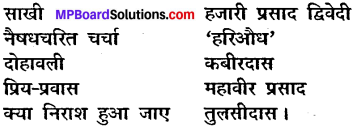
कालिदास की समालोचना – कबीरदास
गीतांजलि – जैनेन्द्र कुमार
रमैनी – महावीर प्रसाद द्विवेदी
वैदेही बनवास – रवीन्द्रनाथ ठाकुर
अपना-अपना भाग्य – ‘हरिऔध’।
उत्तर-
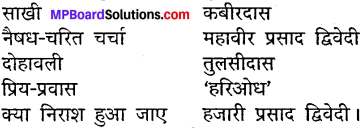
कालिदास की समालोचना – महावीर प्रसाद द्विवेदी
गीतांजलि – रवीन्द्रनाथ ठाकुर
रमैनी – कबीरदास
वैदेही वनवास – ‘हरिऔध’
अपना-अपना भाग्य – जैनेन्द्र कुमार।

प्रश्न 5.
निम्नलिखित वाक्य सत्य हैं या असत्य? वाक्य के आगे लिखिए।
1. मरुस्थल वर्षा में गीला हो जाता है।
2. वर्षा से मनुष्य में नहीं प्रकृति में उल्लास होता है।
3. बरखा गीत लयात्मक है।
4. वर्षाकाल में पेड़ों के पल्लव गिर जाते हैं।
5. वर्षा के आगमन से वियोगियों की पीड़ा बढ़ जाती है।
उत्तर-
1. सत्य,
2. असत्य,
3. सत्य,
4. असत्य,
5. सत्य।

प्रश्न 6.
निम्नलिखित कथनों का उत्तर एक शब्द में दीजिए।
1. किसकी प्यास समझने वाला बादल नहीं आया?
2. आसमान पर क्या बौराई?
3. किसके टूटने से जीवन बरस गया?
4. फिर से कौन विकल हुई है?
5. पीड़ा को कौन दुलरा सकता है?
उत्तर-
1. कवि की,
2. बादल,
3. बादल के,
4. मीरा,
5. घनश्याम।

बरखा गीत लघु-उत्तरीय प्रश्नोत्तर

प्रश्न 1.
कवि के लिए कौन-सा गीत अनगाया है?
उत्तर-
कवि के लिए उसके मन पर लहराने वाला गीत अनगाया है।

प्रश्न 2.
कवि को किस बादल की प्रतीक्षा है?
उत्तर-
कवि को उसकी प्यास समझने वाले बादल की प्रतीक्षा है।

प्रश्न 3.
मीरा फिर विकल क्यों हुई?
उत्तर-
मीरा फिर विकल हुई। यह इसलिए उसकी सोई हुई पीड़ा फिर से जाग गई थी।

बरखा गीत कवि-परिचय

जीवन-परिचय-कविवर रमानाथ अवस्थी का आधुनिक हिंदी के नवगीतकारों अधिक उल्लेखनीय स्थान है। आपका जन्म उत्तर-प्रदेश के फतेहपुर जिला में 8 नवंबर, सन् 1924 को हुआ था। आपने अपनी शिक्षा प्राप्ति के दौरान गीत-रचना संसार में प्रवेश कर लिया था। धीरे-धीरे आप आधुनिक हिंदी गीत-रचना की एक अधिक मजबूत कड़ी के रूप में बनकर साहित्यकाश पर छा गए। इस तरह आपका नाम राष्ट्रीय स्तर के मंचीय कवियों में बड़े ही आदर के साथ लिया जाता है। अगर हम आपके रचनाओं के विषय में चर्चा करें, तो हम यह अवश्य कह सकते हैं कि आपके गीतों में न केवल प्रकृति का मनमोहक दृश्य है, अपितु उनमें सामाजिक, वास्तविकता और मानवीय संवेदनाओं का उफनता हुआ सागर भी है।

रचनाएँ-रमानाथ अवस्थी की निम्नलिखित रचनाएँ हैं’रात और सहनाई’, ‘आग और पराग’ ‘बंदन करना द्वार’ आदि हैं।

भाव पक्ष-कविवर रमानाथ अवस्थी की कविताओं का भाव पक्ष सरल-सरस और स्वाभाविक है। उसमें यथार्थ और विश्वसनीयता का भरपूर भण्डार है। उनका भावपक्ष जाना-पहचाना और सुपरिचित है। इसलिए उसमें कल्पना की उड़ान नहीं है, अपितु यथार्थ का सपाट मैदान है।

कला पक्ष-कविवर रमानाथ अवस्थी की कलापक्षीय विशेषताएँ आकर्षक हैं। उसमें कलागत श्रेष्ठता सर्वत्र देखी जा सकती है। इस दृष्टि से आपका कला पक्ष सरल और प्रचलित शब्दों पर आधारित भाषा से पुष्ट है। प्रभायता के लिए चित्रात्मकता और भावात्मकता जैसी शैलियों को प्रस्तुत करने का प्रयास काबिले तारीफ़ है।

साहित्य में स्थान-हिदी के नवगीतकारों में कविवर रमानाथ अवस्थी अधिक चर्चित हैं। हिंदी साहित्य सम्मेलन इलाहाबाद द्वारा सन् 1900 में इन्हें ‘साहित्य महोपाध्याय’ की उपाधि से विभूषित किया गया। हिंदी की नवपीढ़ी पर आपकी कविताओं का व्यापक और स्थायी प्रभाव है।

बरखा गीत कविता का सारांश

प्रस्तुत कविता गीत काव्य पद्धति पर आधारित भावपूर्ण कविता है। इसमें ग्रामीण वातावरण के अंतर्गत वर्षाकालीन दशा का चित्रण है। वर्षा का स्वरूप, स्थित, दिशा और उसके प्रभाव को दर्शाने का प्रयास किया गया है। वर्षा से मुरझाई धरती हरी हो जाती है। खाली गगरी भर जाती है। आकाश पर बादल दौड़ने लगते हैं। झूलों पर कजली लहराने लगती है। वर्षा से मरुस्थल सरस हो गया। मधुवन महक उठा। पेड़ों की छाँह गहरा गई। इससे कहीं दूर बाँसुरी की जो ध्वनि सुनाई दे रही है, उससे सोई हुई पीड़ा जग जाती है। मानो कोई फिर से मीरा व्याकुल होने लगी है लेकिन अफ़सोस है कि उस पीड़ा को दुलारने वाला कोई कृष्ण नहीं आ रहा है।

बरखा गीत संदर्भ-प्रसंग सहित व्याख्या

जो मेरी प्यास समझ पाता,
वह बादल अभी नहीं आया।
मुरझाई धरती हरी हुई,
रीती गागरियाँ भरी हुई,
अम्बर पर बौराई बदली,
झूले पर लहराई कजली,
जो मेरे मन पर लहराता,
वह गीत अभी तक अनगाया।

शब्दार्थ-रीति-खाली। अम्बर-आकाश।

संदर्भ-प्रस्तुत पद्यांश हमारी पाठ्य-पुस्तक ‘हिंदी सामान्य’ में संकलित कवि श्री रमानाथ अवस्थी विरचित ‘बरखा गीत’ कविता से है।

प्रसंग-प्रस्तुत पद्यांश में कवि ने वर्षा होने से पहले की दशा-दिशा का चित्र खींचते हुए कहा है कि

व्याख्या-अब तक मैं जिस प्रकार से प्यासा रहा, उस प्यास को बुझाने वाला अभी तक कोई बादल दिखाई नहीं दे रहा है। हम देख रहे हैं कि इस समय सारी धरती रुखी-सूखी पड़ी है। ठंडे जल की गगरी इस समय खाली पड़ी हुई दिखाई दे रही है। आकाश पर बादल पूरी तरह से उमड़ते हुए दिखाई दे रहे हैं। चारों ओर कजली की बहार झूले पर दिखाई दे रही है। इस प्रकार मेरे पर लहराने वाला जो सुंदर गीत है, वह अभी तक अनगाया ही रह गया है।

विशेष-
1. भाषा बिल्कुल सरल और सपाट है।
2. वर्षा के स्वरूप और उसके अभाव के प्रभाव को रेखांकित किया गया है।

सौंदर्य-बोध पर आधारित प्रश्नोत्तर भाव-सौंदर्य

प्रश्न 1.
उपर्युक्त पद्यांश का भाव-सौंदर्य स्पष्ट कीजिए।
उत्तर-
उपर्युक्त पद्यांश का भाव-सौंदर्य वर्षा अभाव के स्वरूप पर आधारित है। वर्षा के बिना चारों ओर बेजान की स्थिति हो गई है। धरती मुरझाई हुई है। गगरी खाली पड़ी है। इस प्रकार के दृश्यों का यथार्थपूर्ण चित्रांकन भावों को सजीव और वास्तविक बनाने के लिए सटीक रूप में है। शिल्प-सौंदर्य

प्रश्न 1.
उपर्युक्त पद्यांश के शिल्प-सौंदर्य पर प्रकार डालिए।
उत्तर-
उपर्युक्त पद्यांश का शिल्प-सौंदर्य अत्यधिक सरल, सपाट, प्रचलित और आम शब्दों से तैयार भाषा पर आधारित है। इसके लिए चित्रमयी शैली मन को छू रही है। लय और संगीत का अच्छा तालमेल दिखाई दे रहा है।

विषय-वस्तु पर आधारित प्रश्नोत्तर

प्रश्न 1.
उपर्युक्त पद्यांश का भाव स्पष्ट कीजिए।
उत्तर-
उपर्युक्त पद्यांश का मुख्य भाव वर्षा के अभाव से उत्पन्न हुई दशा और दिशा को सामने रखना है। इसके माध्यम से कवि ने वर्षा की आवश्यकता को सुखद दशा की प्राप्ति का एक साधन बतलाने का प्रयास किया है।

2. बादल टूटे, बरसा जीवन,
भीगा मरुथल, महका मधुवन,
पेड़ों की छाँह हुई गहरी,
इसका साथी दिन का प्रहरी,
जो मेरा साथी बन पाता,
वह रूप कहीं है भरमाया।

शब्दार्थ-मरुथल-रेगिस्तान प्रहरी,-पहरेवाला।

संदर्भ-पूर्ववत्।

प्रसंग-प्रस्तुत पद्यांश में कवि ने वर्षा के बाद की स्थिति का चित्र खींचते हुए कहा है कि-

व्याख्या-वर्षा होने पर आकाश में उमड़ते हुए बादल अब बरसने लगे। इससे ऐसा लगने लगा है कि मानो जीवन ही बरस गया है। उजाड़, सूखा और निर्जीव रेगिस्तान भी सरस हो गया है। मधुवन की उदासी कट गई है। वह अब महकने लगा है। पेड़ों के पत्ते और फूल-फल अधिक हो गए हैं। इससे पेड़ों की छाया भी बड़ी गहरी होने लगी है। अब तो इसका साथ देने वाला दिन का प्रहरी सूरज ही है। मेरा साथी बन पायेगा, उसका स्वरूप और अधिक भ्रम में डालने वाला है।

विशेष-
1. वर्षा के बाद की दशा और दिशा का वर्णन है।
2. स्वभावोक्ति अलंकार है।

सौंदर्य-बोध पर आधारित प्रश्नोत्तर भाव-सौंदर्य

प्रश्न 1.
उपर्युक्त पद्यांश के भाव-सौंदर्य पर प्रकाश डालिए।
उत्तर-
उपर्युक्त पद्यांश के भाव वर्षा के बाद के स्वरूप को दर्शा रहा है। वर्षा होने से नीरसता और उदासी की स्थिति का नामोनिशान नहीं रह जाता है। उसके स्थान पर सरसता का साम्राज्य स्थापित हो जाता है। ऐसी दशा के अनुकूल भावों की योजना बड़ी ही सटीक और उपयुक्त रूप में है।

शिल्प-सौंदर्य

प्रश्न 1.
उपर्युक्त पद्यांश के शिल्प-सौंदर्य पर प्रकाश डालिए।
उत्तर-
उपर्युक्त पद्यांश की शिल्प-योजना सरल और सपाट शब्दों की है। ये शब्द आम प्रचलित और सुपरिचित हैं। इनसे बनी हुई भाषा बोधगम्य और हृदयस्पर्शी है। शैली-विधान लयात्मक और संगीतात्मक दोनों ही है।

विषय-वस्तु पर आधारित प्रश्नोत्तर

प्रश्न 1.
उपर्युक्त पद्यांश का आशय स्पष्ट कीजिए।
उत्तर-
उपर्युक्त पद्यांश के द्वारा कवि ने यह आशय व्यक्त करना चाहा है कि सूखे की दुखद स्थिति बीत गई तो वर्षा की सुखद स्थिति आई है। दूसरे शब्दों में, दुख के बाद सुख आता है। इससे दुख का घाव भर जाता है और सुख का संसार संवरने-बढ़ने लगता है।

3. बरखा के भय की डरी-डरी,
बजती है दूर कहीं बँसुरी,
जागी फिर से सोई पीड़ा,
फिर विकल हुई कोई मीरा,
जो पीड़ा को दुलरा सकता,
ऐसा घनश्याम नहीं आया।

शब्दार्थ-बरखा-वर्षा। विकल-व्याकुल। घनश्याम-काले बादल, श्रीकृष्ण। दुलरा-स्नेह-प्रेम करना।

संदर्भ-पूर्ववत्।

प्रसंग-प्रस्तुत पद्यांश में कवि ने वर्षा के सुखद वातावरण के बावजूद अपनी पीड़ा के शांत न होने का चित्र खींचते हुए कहा है कि

व्याख्या-वर्षा के भयंकर रूप को समझकर कहीं दूर पड़ी बांसुरी अब खुलकर नहीं बज रही है। वह तो वर्षा से डरकर रुक-रुककर बज रही है। इससे सोई पीड़ा अब जाग गई है। इस तरह मानो श्रीकृष्ण की वंशी की ध्वनि सुनकर व्याकुल और अस्थिर हो गई है। अफसोस की बात यह है कि जो व्याकुल कर देने वाली पीड़ा को सहलाने वाला है। वह घनश्याम अभी तक नहीं आया है।

विशेष-
1. वियोग शृंगार रस का प्रवाह है।
2. ‘डरी-डरी’ में पुनरुक्ति प्रकाश अलंकार है।

सौंदर्य-बोध पर आधारित प्रश्नोत्तर भाव-सौंदर्य

प्रश्न 1.
उपर्युक्त पद्यांश का भाव-सौंदर्य लिखिए।
उत्तर-
उपर्युक्त पद्यांश की भाव-योजना मार्मिक है। उसमें हृदय की कसक और अस्थिरता साफ झलक रही है। इस तरह भावों की निरंतरता है। इसके साथ क्रमबद्धता है। ये सभी स्वाभाविक और सहज हैं।

शिल्प-सौंदर्य
प्रश्न 1.
उपर्युक्त पद्यांश के शिल्प-सौंदर्य पर प्रकाश डालिए।
उत्तर-
उपर्युक्त पद्यांश का शिल्प-सौंदर्य सरल और सहज शब्दों पर आधारित भाषा-शैली है। भाषा की शब्दावली तद्भव प्रधान शब्दों की है जिसे वियोग शृंगार रस में डूबोकर चित्रात्मक शैली से चमकाने का प्रयास किया गया है। इसे प्रभावशाली बनाने के लिए पुनरुक्ति प्रकाश अलंकार (डरी-डरी) को लिया गया है।

विषय-वस्तु पर आधारित प्रश्नोत्तर

प्रश्न 1.
उपर्युक्त पद्यांश का मुख्य भाव लिखिए।
उत्तर-
उपर्युक्त पद्यांश में वियोगावस्था का चित्रांकन किया गया है। इसे स्वाभाविक और विश्वसनीय रूप में रखने का प्रयास करके प्रेरक रूप दिया गया है। वियोग पीड़ित मनोदशा को वियोगभोगी ही समझ सकता है, इस ओर भी अप्रत्यक्ष संकेत है, इसे अस्वीकार नहीं किया जा सकता है।

MP Board Class 10th Sanskrit Solutions Chapter 7 विश्वभारतीयम्

MP Board Class 10th Sanskrit Solutions Durva Chapter 7 विश्वभारतीयम् (संवादः) (सङ्कलितः)

MP Board Class 10th Sanskrit Chapter 7 पाठ्यपुस्तक के प्रश्न

कक्षा 10 संस्कृत पाठ 7 MP Board प्रश्न 1.
एकपदेन उत्तरं लिखत-(एक पद में उत्तर लिखिए-)।
(क) ‘संस्कृतभाषा भारतीयभाषाभ्यः गङ्गानदी अस्ति’ इति कः उक्तवान्?’ (संस्कृतभाषा भारतीय भाषाओं के लिए गंगा नदी है।’ यह किसने कहा?)
उत्तर:
महात्मागान्धिः (महात्मा गांधी ने)

(ख) भारतस्य प्रथमप्रधानमन्त्री कः आसीत्? (भारत का पहला प्रधानमन्त्री कौन था?)
उत्तर:
पं. जवाहरलाल नेहरूः (पं. जवाहरलाल नेहरू)

(ग) वैयाकरणेषु पूर्णः सर्वमान्यश्च कः? (वैयाकरणों में पूर्ण व सर्वमान्य कौन है?)
उत्तर:
पाणिनिः (पाणिनि)

(घ) भारतीयैकता साधकं किम्? (भारतीय एकता का साधक कौन है?)
उत्तर:
संस्कृतम् (संस्कृत)

(ङ) संस्कृतं कस्याः भाषायाः अपेक्षया अधिक समृद्धम्? (संस्कृत किस भाषा की अपेक्षा अधिक समृद्ध है?)
उत्तर:
लैटिन भाषायाः (लैटिन भाषा की)

Class 10 Sanskrit Chapter 7 MP Board प्रश्न 2.
एकवाक्येन उत्तरं लिखत- (एक वाक्य में उत्तर लिखिए-)
(क) संस्कृतभाषा कस्य पोषणं करोति? (संस्कृत भाषा किसका पोषण करती है?)
उत्तर:
संस्कृतभाषा विश्वबन्धुत्वस्व पोषणं करोति। (संस्कृत भाषा विश्वबन्धुत्व का पोषण करती है।)

(ख) सर्वप्राचीना भाषा का अस्ति? (सबसे पुरानी भाषा कौन-सी है?)
उत्तर:
सर्वप्राचीना भाषा संस्कृतभाषा अस्ति। (सबसे पुरानी भाषा संस्कृत है।)

(ग) श्रीमाता संस्कृतविषये किं कथयति? (श्रीमाता संस्कृत के विषय में क्या कहती हैं?)
उत्तर:
श्रीमाता संस्कृतविषये कथयति यत्-“संस्कृतमेवराष्ट्रभाषा भवितुम् अर्हति इति।”

(श्रीमाता ने संस्कृत के विषय पर कहा कि, “संस्कृत ही राष्ट्रभाषा बनने योग्य है।)

(घ) मैक्समूलरः संस्कतविषये किमुक्तवान्? (मैक्समूलर ने संस्कृत के विषय में क्या कहा?)
उत्तर:
मैक्समूलरः संस्कृतविषये उक्तवान् यत्-“संस्कृतं विश्वस्य महत्तमा भाषा अस्ति।” इति। (मैक्समूलर ने संस्कृत के विषय पर कहा कि, ‘संस्कृत विश्व की सबसे महत्वपूर्ण भाषा है।)

(ङ) अस्माकं सर्वेषां जननी का? (हम सब की जननी कौन है?)
उत्तर:
अस्माकं सर्वेषां जननी भारतमाता अस्ति। (हम सबकी जननी भारतमाता है।)

Mp Board Class 10 Sanskrit Chapter 7 प्रश्न 3.
अधोलिखितप्रश्नानाम् उत्तराणि लिखत-(नीचे लिखे प्रश्नों के उत्तर लिखिए)
(क) संस्कृतविषये विवेकानन्देन किं कथितम्? (संस्कृत विषय पर विवेकानन्द ने क्या कहा?)
उत्तर:
संस्कृतविषये विवेकानन्देन कथितम्- “संस्कृतम् अनिवार्यतया शिक्षणीयम्, तोहि तस्योच्चारणध्वनिरेव राष्ट्रियभावम् आत्मगौरवम् उदात्तभावञ्च जनयति। किन्तु अस्माभिः सर्वैरपि भारतीयैः संस्कृतस्य प्रसारे प्रचारे च प्रयत्नः न क्रियते इति खेदस्य विषयः।’

(संस्कृत के विषय पर विवेकानन्द ने कहा, “संस्कृत अनिवार्य रूप से पढ़नी चाहिए, क्योंकि उसकी उच्चारण ध्वनि से ही राष्ट्रीय भाव, आत्मगौरव और उदात्तभाव उत्पन्न होता है। किन्तु हम सभी भारतीयों के द्वारा संस्कृत के प्रसार और प्रचार में प्रयत्न नहीं किया जाता, यह दुख का विषय है।”)

(ख) वेबरमहोदयेन संस्कृतविषये किमुक्तम्? लिखत। (वेबर महोदय ने संस्कृत के विषय पर क्या कहा? लिखो।)
उत्तर:
वेबरमहोदयेन संस्कृतविषये उक्तम्- “सम्प्रति सम्पूर्ण विश्वे पाणिनिरेव वैयाकरणेषु पूर्णः सर्वमान्यश्चास्ति। दर्शने व्याकरणे च प्रामाणिकतायाम् उर्वरतायाञ्च भारतीयाः उच्चतमस्थले प्रतिष्ठिताः।

(वेबर महोदय ने संस्कृत के विषय में कहा, “अब पूरे विश्व में पाणिनी ही वैयाकरणों में पूर्ण व सर्वमान्य है। दर्शन में और व्याकरण में प्रामाणिकता और उर्वरता में भारतीयों का सबसे ऊँचा स्थान है।”)

(ग) एच.एच. विल्सनमहोदयः संस्कृतविषये किम् उक्तवान्?
(एच.एच. विल्सनमहोदय ने संस्कृत के विषय पर क्या कहा?)
उत्तर:
च.एच. विल्सन महोदयः संस्कृतविषये उक्तवान्-“न जाने अत्र संस्कृते किं तन्माधुर्यं विद्यते, येन वयम् वैदेशिकाः सर्वदैव समुन्मत्ता।”

(एच.एच. विल्सन महोदय ने संस्कृत के विषय पर कहा, “नहीं जानता कि इस संस्कृत में कौन-सा माधुर्य है, जिससे हम विदेशी हमेशा ही उन्मत्त होते हैं।”)

Mp Board Class 10th Sanskrit Chapter 7 प्रश्न 4.
उचितशब्देन रिक्तस्थानापूर्तिं कुरुत (दिए गए शब्दों से रिक्त स्थान भरिए-)
(क) भारतीयैकता………….संस्कृतम। (बाधक/साधक)
(ख) ………….वैदेशिकः विद्वान् अस्ति। (मैक्समूलरः/अरविन्दः)
(ग) ………….सम्पोषकं संस्कृतम्। (देशत्व/विश्वबन्धुत्व)
(घ) संस्कृतभाषा प्राचीनर्वाचीनयोर्मध्ये………….अस्ति। (सेतुः/केतुः)
(ङ) संस्कृतराहित्यं मानवजातेः कृते………….अस्ति। (अमूल्यधनम्/मूल्यधनम्)
उत्तर:
(क) साधकं
(ख) मैक्समूलरः
(ग) विश्वबन्धुत्व
(घ) सेतुः
(ङ) अमूल्यधनम्

Class 10th Sanskrit Chapter 7 MP Board प्रश्न 5.
यथायोग्यं योजयत-(कस्य कः कथनांशः अस्ति) (उचित क्रम से जोडिए-) (कौन-सा कथन किसका है?)
Class 10 Sanskrit Chapter 7 Solutions
उत्तर:
(क) 5
(ख) 3
(ग) 4
(घ) 2
(ङ) 1

Sanskrit Class 10 Chapter 7 Mp Board प्रश्न 6.
शुद्धवाक्यानां समक्षम् ‘आम्’ अशुद्धवाक्यानां समक्षं ‘न’ इति लिखत (शुद्ध वाक्यों के सामने ‘आम्’ और अशुद्ध वाक्यों के सामने ‘न’ लिखिए-)
(क) संस्कृतं विश्वस्य महत्तमा भाषा अस्ति।
(ख) संस्कृतस्य व्याकरणं सर्वमान्यं न अस्ति।
(ग) संस्कृतभाषायाः अपेक्षा ग्रीकभाषा अधिकपूर्णा वर्तते।
(घ) संस्कृतमाधुर्यं वैदेशिकैः अपि अनुभूतम्।
(ङ) भारतीयैकतार्थं संस्कृतम् आवश्यकम् अस्ति।
उत्तर:
(क) आम्
(ख) न
(ग) न
(घ) आम्
(ङ) आम्

Sanskrit Class 10th Chapter 7 MP Board प्रश्न 7.
निम्नलिखितशब्दानां मूलशब्दं विभक्तिं वचनं च लिखत (नीचे लिखे शब्दों के मूलशब्द, विभक्ति व वचन लिखिए-)
Chapter 7 Sanskrit Class 10 Mp Board
उत्तर:
कक्षा दसवीं संस्कृत पाठ 7 MP Board

Sanskrit Chapter 7 Class 10 Mp Board प्रश्न 8.
क्रियापदानां धातुं, लकारं, पुरुषं, वचनं च लिखत (क्रियापदों के धातु, लकार, पुरुष और वचन लिखिए।)
MP Board Class 10th Sanskrit Solutions Chapter 7 विश्वभारतीयम् img 6
उत्तर:
Chapter 7 Sanskrit Class 10 Mp Board

Sanskrit Class 10 Chapter 7 प्रश्न 9.
अधोलिखितपदानां सन्धिविच्छेदं कृत्वा सन्धिनाम लिखत। (नीचे लिखे पदों के सन्धि विच्छेद कर सन्धि का नाम लिखिए।)
Sanskrit Class 10 Chapter 7 Solutions
उत्तर:
Class 10th Sanskrit Chapter 7 Solution

Class 10 Sanskrit Chapter 7 Question Answer प्रश्न 10.
अव्ययैः वाक्यनिर्माणं कुरुत
(अव्ययों से वाक्य बनाइए।)
यथा- एव संस्कृतभाषा एवं देववाणी अस्ति।
उत्तर:
शब्द – वाक्य
(क) यदि-यदि सः न आगमिष्यति तर्हि किं?
(यदि वह न आया तो क्या होगा?

(ख) विना-अहं त्वाम् विना न गमिष्यामि।
(मैं तुम्हारे बिना नहीं जाऊँगी।)

(ग) यत्-सः कथयति यत्- ‘अहं कार्यं न करोमि।’
(वह कहता है कि-“मैं काम नहीं करता हूँ।”)

(घ) च-रामः श्यामः च आपणं गच्छतः।
(राम और श्याम बाजार जाते हैं)

(ङ) कृते-अहं तव कृते कार्यं करोमि।
(मैं तुम्हारे लिए काम कर रहा हूँ।)

योग्यताविस्तार –

संस्कृतभाषाविषये अन्ये के के विद्वांसः किं किमुक्तवन्तः अन्विष्य लिखत।
संस्कृतभाषा के विषय पर अन्य कौन-से विद्वान क्या कहते हैं, ढूँढ़ कर लिखो।

‘संस्कृतभाषा’ इति विषयमगधृत्य निबन्धं लिखत।
‘संस्कृत भाषा’ इस विषय के आधार पर निबन्ध लिखो।

विश्वभारतीयम्  पाठ का सार

प्रस्तुत पाठ में सरकत भाषा की महत्ता बताते हुए अनेक राजनेताओं, देशी व विदेशी साहित्यकारों के संस्कत के विषय में मतों का वर्णन किया गया है। सभी ने संस्कृत भाषा का स्थान सव भाषाओं में सर्वोच्च बताते हुए उसे सम्मानीय भाषा कहा है तथा संस्कृत भाषा को सब भाषाओं की जननी स्वीकार किया है।

विश्वभारतीयम् पाठ का अनुवाद

1. आचार्यः-भोः छात्राः! ध्यानेन श्रृण्वन्तु। वयं संस्कृतं पठामः, लिखामः, वदामः, किञ्चिन्महत्त्वमपि जानीमः। किन्तु संस्कृतस्य विषये भारतीयाः वैदेशिकाः विद्वान्सः किं कथयन्ति भवन्तः जानन्ति वा?
सर्वे छात्राः-आचार्य! न जानीमः।

आचार्य :
तर्हि अद्य संस्कृतविषये मूर्धन्यविदुषां प्रसिद्धराजनेतृणां वैदेशिकानां विचाराणां। चर्चा कुर्मः।

दिशा :
आचार्य! के के भारतीयाः विद्वान्सः संस्कृतविषये उक्तवन्तः?

आचार्य :
नैके विद्वान्सः, राजनेतारः, साहित्यकारश्च संस्कृतस्य महत्त्वं प्रतिपादितवन्तः। भारतीयेषु महात्मागान्धि, पं जवाहरलालनेहरू- महर्षिअरविन्दस्वामिविवेकानन्दप्रभृतयः, तथा च वैदेशिकेषु मैक्समूलर- मैक्डानल-वेबर, विलियम-बॉप-हीरेन प्रभृतयः उल्लेखनीयाः।

शब्दार्थ :
शृण्वन्तु-सुनो-listen; मूर्धन्य-महान-top ranking, विदुषाम्-विद्वानों के-learned people, नैके-अनेक-many, प्रभृतपः-इत्यादि-etcetera.

अनुवाद :
आचार्य-छात्रो! ध्यान से सुनो। हम संस्कृत पढ़ते हैं, लिखते हैं, बोलते हैं, थोड़ा महत्व भी जानते हैं। किन्तु संस्कृत के विषय पर भारतीय व विदेशी विद्वान, क्या कहते हैं, जानते हो या नहीं?

सभी छात्र-आचार्य! नहीं जानते।

आचार्य :
तो आज संस्कृत विषय पर महान विद्वानों के प्रसिद्ध राजनेताओं के और विदेशियों के विचारों की चर्चा करते हैं।

दिशा :
आचार्य! कौन-से भारतीय विद्वानों ने संस्कृत के विषय पर कहा है?

आचार्य :
अनेक विद्वान्, राजनेता और साहित्यकारों ने संस्कृत के महत्व को बताया है। भारतीयों में महात्मा गांधी, पं. जवाहरलात नेहरू, महर्षि अरविन्द, स्वामी विवेकानन्द इत्यादि और वैसे ही विदेशियों में मैक्समूलर, मैक्डानल, वेबर, विलियम, बॉप, हीरेन इत्यादि प्रमुख हैं।

English :
The teacher refers to top ranking scholars and lovers of Sanskrit.

Many Indian scholars, political leaders and literary persons loved Sanskrit. Many foreign scholars are also noteworthy.

2. मृदुलः-आचार्य! महात्मागांधिः संस्कृतविषये किमुक्तवान्?
आचार्य :
महात्मागान्धिः अवदत्-“यत् संस्कृतम् अस्माकं भारतीयभाषाभ्यः गङ्गा : नदी अस्ति। अहं चिन्तयामि यदि संस्कृतगङ्गा शुष्का भवेत् तर्हि सर्वाः अपि भाषाः सारहीनाः स्युः।”

प्रत्युष :
स्वामिविवेकानन्दः किमुक्तवान्?

आचार्य :
विवेकानन्दः उक्तवान् यत् “संस्कृतम् अनिवार्यतया शिक्षणीयम्, यतोहि तस्योच्चारणध्वनिरेव राष्ट्रियभावम् आत्मगौरवम् उदात्तभावञ्च जनयति। किन्तु अस्माभिः सर्वैरपि भारतीयैः संस्कृतस्य प्रसारे प्रचारे च प्रयत्नः न क्रियते इति खेदस्य विषयः।”

अनिकेत :
भारतस्य प्रथमप्रधानमन्त्री पं. जवाहरलालनेहरूः अपि संस्कृतभक्तः इति श्रूयते। असौ संस्कृतभाषाविषये किं चिन्तयति?

शब्दार्थाः :
शुष्का-सूखी-dry, सारहीनाः-साररहित- meaningless.

अनुवाद :
मृदुल-आचार्य! महात्मा गान्धी ने संस्कृत के विषय में क्या कहा?

आचार्य :
महात्मा गान्धी ने कहा- ‘संस्कृत हमारी भारतीय भाषाओं के लिए गङ्गा नदी है। मैं सोचता हूँ कि यदि संस्कृत रूपी गङ्गा सूख जाए तो सारी भाषाएँ भी ‘सारहीन हो जाएंगी।
प्रत्यूष-स्वामी विवेकानन्द ने क्या कहा?

आचार्य :
विवेकानन्द ने कहा कि-“संस्कृत अनिवार्य रूप से सीखनी चाहिए, क्योंकि उसकी उच्चारण ध्वनि से ही राष्ट्रीय भाव, आत्मगौरव और उदात्त (ऊँचा) भाव उत्पन्न होता है। किन्तु हम सब भारतीयों के द्वारा संस्कृत का प्रसार और प्रचार का प्रयत्न नहीं किया जा रहा, यह दुख का विषय है।

अनिकेत :
भारत के प्रथम प्रधानमंत्री पं. जवाहरलाल नेहरू भी संस्कृत के भक्त थे, ऐसा सुना है। वे संस्कृत भाषा के विषय पर क्या सोचते हैं?

English :
Gandhi calied Sanskrit as Ganga or the source of all the Indian languages. Swami Vivekananda pitied that Sanskrit is neglected which arouses national sentiments.

Pt. Nehru’s views about Sanskrit.

3. आचार्यः :
संस्कृतसन्दर्भे एकदा पं. नेहरूः उक्तवान् यत्-“यदि कश्चित् मां पृच्छेत् यत् भारतस्य उदात्ततमकोषः कः? अथवा भारतस्य सर्वश्रेष्ठा सम्पत्तिः का? तर्हि अहं तु कथयिष्यागि संस्कृतभाषा अथवा संस्कृतवाङमयम् एव। अहं विश्वसिमि यावत् संस्कृतभाषा जीवति, जीवने प्रभवति तावत भारतराष्ट्रस्य मूलभूता एकता स्थास्यत्येव।”

रजतः :
अन्येषां साहित्यकाराणां विषयेऽपि ज्ञातुम् इच्छामि।

आचार्यः :
आम्! अहं संक्षेपेण वदामि-साहित्यकारः राजनेता डॉ. सम्पूर्णानन्दः अवोचत् यत्-‘संस्कृतमेव अस्य देशस्य राष्ट्रभाषा भवितव्या ।संस्कृते अमूल्यरत्नानि सन्ति। संस्कृतं न केवलं जीवितानाम् अपितु दिवङ्गतानां कृतेऽपि सञ्जीवनी अस्ति।’ इति।

अपि च साहित्ये घुमक्कड़धर्मस्य प्रस्तावकः साहित्यकारः राहुलसांस्कृत्यायनोऽपि उक्तवान् यत्-“अस्मत्प्राचीनतमा वाणी संस्कृतरूपेण अधुनाऽपि विद्यमाना। तत्त्वतः यथा हिन्दीकथासाहित्यादिनाम् अध्ययनं भवति तथा संस्कृतग्रन्थानाम् अपि अध्ययनमध्यापनञ्च सर्वत्र भवेत्।”

शब्दार्थाः :
वाङमयम-वाणी, भाषा-language;विश्वसिमि-विश्वास करता हूँ-believe, दिवङ्गतानाम्-मरे हुए लोगों का-of the dead.

अनुवाद :
आचार्य-संस्कृत के सन्दर्भ में एक बार पं. नेहरू ने कहा कि, “यदि कोई मुझे पूछे कि भारत का सबसे ऊँचा/बड़ा खजाना क्या है? या भारत की सर्वश्रेष्ठ सम्पत्ति क्या है? तो मैं कहूँगा संस्कृत भाषा या संस्कृत वाणी। मैं विश्वास करता हूँ कि जब तक संस्कृत भाषा जीवित है, जीवन चल रहा है, तब तक भारत राष्ट्र की मूलभूत एकता स्थित है।

रजत :
अन्य साहित्यकारों के विषय में भी जानना चाहता हूँ।

आचार्य :
हाँ! मैं संक्षेप में बताता हूँ-साहित्यकार राजनेता डॉ. संपूर्णानन्द ने कहा कि, “संस्कृत ही इस देश की राष्ट्रभाषा होनी चाहिए। संस्कृत में बहुमूल्य रत्न हैं। संस्कृत न केवल जीवित लोगों को अपितु मरे हुए लोगों के लिए भी संजीवनी है।।

और साहित्य में घुमक्कड़ धर्म के प्रवर्तक साहित्यकार राहुल सांस्कृत्यायन ने भी कहा-“यह सबसे पुरानी भाषा। वाणी संस्कृत रूप में अब भी विद्यमान है। तत्व के जैसे हिन्दी कथा साहित्यादि का अध्ययन होता है वैसे ही संस्कृत ग्रन्थों का भी अध्ययन और अध्यापन सब जगह होना चाहिए।”

English :
Nehru-Sanskrit is the noblest treasure of India-It is the basis of national integrity. Dr. Sampooranananda-Sanskrit enshrines precious jewels-It gives life to all. Rahul SanskrityayanaSanskrit should be invariably taught everywhere like Hindi as it is our oldest language.

4. गिरिराजः :
महर्षेः अरविन्दस्य संस्कृतविषये कोऽभिप्रायः?
आचार्यः :
महर्षिः प्राह “सरलसंस्कृतमेव भारतराष्ट्रस्य राष्ट्रभाषा भवेत्।” अयमेव भावः श्रीमातु कथनेऽपि दृश्यते सा “संस्कृतमेवराष्ट्रभाषाभवितुम् अर्हति।” इत्युक्तवती। अन्येऽपि प्रसिद्धाः नायकाः संस्कृतस्य प्रशसां कृतवन्तः महनीयतां च स्वीकृतवन्तः। यथा-प्रथमः राष्ट्रपतिः डॉ. राजेन्द्रप्रसादः कथितवान् यत् ‘संस्कृतसाहित्यं न केवलं भारतस्य कृते अपितु मानवजातेः कृते अमूल्यधनम् अस्ति।’

पङ्कजः :
आचार्य! अन्यधर्मावलम्बिनः अपि संस्कृतस्य प्रशंसकाः खलु?

आचार्यः :
आम्! प्रसिद्धः मुस्लिमविचारकः बदरुद्दीनतय्यबमहोदयः उक्तवान् यत् ‘मम मते प्रत्येकम् अपि हिन्दुः, मुस्लिमः भारतीयो वा संस्कृतज्ञो भवेदिति।’

अन्यच्च प्रसिद्धः न्यायवेत्तां मु अली छागला उक्तवान् यत्” ममेच्छा यत् मातृभाषया सह संस्कृतशिक्षा अनिवार्या भवेत्।’ संस्कृतभाषा प्राचीनार्वाचीनयोर्मध्ये सेतुरस्तीति।

शब्दार्थाः :
महनीयताम्-महानता को-greatness, ममेच्छा-मेरी इच्छा-my wish, प्राचीनार्वाचीनयोर्मध्ये-पुराने और नए के बीच-between old and new, सेतुरस्ति-पुल हैं-bridge, धर्मावलम्बितः-धर्म को मानने वाले-religious persons.

अनुवाद :
गिरिराज-महर्षि अरविन्द का संस्कृत विषय पर क्या अभिप्राय है?

आचार्य :
महर्षि ने कहा-“सरल संस्कृत ही भारतराष्ट्र की राष्ट्रभाषा होनी चाहिए।” यही भाव श्री माता के कथन में भी दिखाई देता है, वह ‘संस्कृत ही राष्ट्रभाषा होने योग्य है” कहती थी। अन्य प्रसिद्ध नायक भी संस्कृत की प्रशंसा करते हुए उसकी महानता को मानते हैं। जैसे-प्रथम राष्ट्रपति डॉ. राजेन्द्र प्रसाद ने कहा, “संस्कृत साहित्य न केवल भारत के लिए बल्कि मानव जाति के लिए अमूल्य धन है।”

पङ्कज :
आचार्य! अन्य धर्मानुयायी भी संस्कृत के प्रशंसक होंगे?

आचार्य :
हाँ! प्रसिद्ध भुस्लिम विचारक बदरुद्दीनतय्यबमहोदय ने कहा- “मेरे विचार में प्रत्येक हिन्दू व मुस्लिग जो भारतीय हो संस्कृत को जानने वाला हो।”

और अन्य प्रसिद्ध न्यायमूर्ति मु. अली छागला ने कहा-“मेरी इच्छा है कि मातृभाषा के साथ संस्कृतशिक्षा अनिवार्य हो।” संस्कृत भाषा प्राचीन और नवीन के बीच पुल है।

English :
Maharishi Aurovindo and Shri Mata-Sanskrit should be the national language of India.

Dr. Rajendra Prasad-Sanskrit literature is a precious treasure not only for India but for the entire humanity.

Badruddin Tayyabji-Every Indian should learn Sanskrit. Mohd Ali Chhagla-Sanskrit is bridge between the old and the new.

5. सलीमः-आचार्य! संस्कृतविषये भारतीयानां मन्तव्यम् अवगतम्। अधुना वैदेशिकानां विषयेऽपि ज्ञातुम् इच्छामि।

आचार्यः :
साधूक्तं त्वया। इदानीमहं वैदेशिकविदुषां संस्कृतविषयकं मन्तव्यं बोधयामि। ‘विलड्यूरन्ट’ विख्यातः पाश्चात्यसमीक्षकः सः उक्तवान् यत् भारतम् अस्माकं जातेः जन्मभूमिः, तथा संस्कृतं यूरोपीयभाषाणां जननी अस्ति। संस्कृतमेव अस्माकं दर्शनस्य जननी, अरबदेशात् प्राप्तस्य गणितस्य जननी, ईसाईधर्मे समाहितानां बौद्धादर्शानां जननी, ग्रामीणसभुदायेन स्वायत्तशासनस्य तथा गणतन्त्रस्य जननी एवं प्रकारेण भारतमाता नानाविधरूपेषु अस्माकं सर्वेषां जननी अस्ति। जॉनः–वैदेशिकेषु मैक्समूलरमहोदयः विख्यातः। तेन किमुक्तम?

शब्दार्थाः :
मन्तव्यम्-विचार-view, अवगतम्-जान लिए-known, साधूक्तम्ठीक/बहुत अच्छा कहा-well spoken, पाश्चात्यसमीक्षकः-पश्चिमी देश के समीक्षकreviewers of western countries, विख्यातः-प्रसिद्ध-famous.

अनुवाद :
सलीम-आचार्य! संस्कृत विषय पर भारतीयों के विचार जान लिए। अब विदेशियों के विषय में भी जानना चाहता हूँ।

आचार्य :
तुम्हारे द्वारा सही कहा गया है। अब मैं विदेशी विद्वानों के संस्कृत विषयक विचारों को बताता हूँ। ‘विलड्यूरन्ट’ प्रसिद्ध पाश्चात्य समीक्षक, उसने कहा कि भारत हमारी जाति की जन्मभूमि है तथा संस्कृत यूरोपीय भाषाओं की जननी है। संस्कृत ही हमारे दर्शन की जननी है, अरब देश से प्राप्त गणित की जननी है। ईसाई धर्म में समाहित बौद्ध दर्शनों की जननी है, ग्रामीण समुदाय द्वारा स्वायत्तशासन की व गणतन्त्र की जननी है। इस प्रकार से भारतमाता अनेक प्रकार के रूपों में हम सबकी जननी है।

जॉन-विदेशियों में मैक्समूलर महोदय प्रसिद्ध हैं। उन्होंने क्या कहा?

English :
Wildurant-India is the birth place of our race and Sanskrit is the mother of all European languages and our philosophy. It is the mother of Arabic Mathematics–Mother of Buddhistic, philosophy-mother of autonomous and republic rule-Hence Mother India is ‘Mother of all’ in one way or the other.

6. आचार्यः-मैक्समूलरः उक्तवान् यत्-“संस्कृतं विश्वस्य महत्तमा भाषा अस्ति।” एवमपि प्राध्यापकः बॉप उक्तवान् यत्-‘संस्कृतमेव सम्पूर्णविश्वस्य एका भाषा आसीत् कदाचित् इति।” करतारसिंह-इतरेषामपि वैदेशिकविचारकाणाम् अभिप्रायः अपि ज्ञातव्यः खलु?

आचार्यः :
सत्यमेव! जानन्तु। विद्वान मैक्डानल उक्तवान् यत्-“वयं योरोपीयाः अद्यावधि स्ववर्णमालाम् अपि पूर्णीकर्तुं न समर्थाः परं भारतीयानां भाषा तथा भाषाविज्ञानं न केवल पूर्णम् अपितु वैज्ञानिकम् अस्ति।’ अन्यच्च विलियमजोन्समहोदयः उक्तवान् यत्-“संस्कृतस्य रचना आश्चर्यकारिणी अस्ति। इयं ग्रीकभाषायाः अपेक्षया अधिकपूर्णा, लैटिनभाषायाः अपेक्षया अधिका समृद्धा तथा च उभयोः तुलनायाम् अति परिष्कृता वर्तते।” मनीषः-केनापि अन्येन पाश्चात्यविद्वषाम् अपि संस्कृतविषये किमपि उक्तम्?

शब्दार्थाः :
ज्ञातव्यः-जानना चाहिए-should be known, अद्यावधि-आज के समय तक-up till the modern age, इतरेषामपि-दूसरों का भी-of others also, स्ववर्णमालाम्-अपनी वर्णमाला को-Own Letters (alphabet), पूर्णीकर्तुम-पूरा करने के लिए-to complete.

अनुवाद :
आचार्य-मैक्समूलर ने कहा कि-संस्कृत विश्व की महत्वपूर्ण भाषा है। ऐसे ही प्राध्यापक बॉप ने कहा कि, “संस्कृत ही कभी पूरे विश्व की एकमात्र भाषा थी।”
करतारसिंह-दूसरे विदेशियों के विचारों का अभिप्रायः भी जानना चाहिए?

आचार्य :
सत्य ही है। जानते हो। विद्वान् मैक्डानल ने कहा कि, “हम सब यूरोपीय आज तक अपनी वर्णमाला भी पूरा करने में समर्थ नहीं हो पाए, पर भारतीयों की भाषा तथा भाषाविज्ञान न केवल पूरा है, बल्कि वैज्ञानिक है।” और अन्य, विलियमजोन्स महोदय ने कहा कि, “संस्कृत की रचना आश्चर्यचकित करने वालो है। यह ग्रीकभाषा की अपेक्षा अधिक पूर्ण, लैटिन भाषा की अपेक्षा अधिक समृद्ध और दोनों की तुलना में अधिक परिष्कृत है।
मनीष-और किन पाश्चात्य विद्वानों ने भी संस्कृत के विषय पर कुछ कहा?

English :
Max Muller, “Sanskrit is important language of the world, Bopp, ‘Sanskrit was the only language of entire world sometimes.
Macdonell, Sanskrit and philology are both perfect and scientific.
William Jones-The structure of Sanskrit is wonder striking. It is perfect, prosperous and refined.

7. आचार्यः-आम्! वेबर महोदयेन कथितं यत्-‘सम्प्रति सम्पूर्ण विश्वे पाणिनिरेव वैयाकरणेषु पूर्णः सर्वमान्यश्चास्ति। दर्शने व्याकरणे च प्रामाणिकतायाम् उर्वरतायाञ्च भारतीयाः उच्चतमस्थले प्रतिष्ठिताः।’ तथा च एच.एच. विल्सन् महोदयेन कथितम् यत् –
न जाने विद्यते कं तन्माधुर्यमत्र संस्कृते।
सर्वदैव समुन्मत्ता येन वैदेशिका वयम्॥

सर्वे छात्राः-आचार्य! वयम् आनन्दिताः, संस्कृतं प्रति विश्वप्रसिद्धानां विदुषाम् अभिमतं श्रुत्वा, संस्कृतस्य वैश्विक महत्त्वं च ज्ञात्वा। उच्यते हि
भारतीयैकता साधकं संस्कृतम्।
विश्वबन्धुत्वसम्पोषकं संस्कृतम्॥
(सर्वे मिलित्वा श्लोकस्य सस्वरगायनं कुर्वन्ति)

शब्दार्थाः :
सम्प्रति-अब-now, समुन्मत्ता-उन्मत्ता को-Craziness, infatuation.

अनुवाद :
आचार्य-हाँ! वेबर महोदय ने कहा कि-अब पूरे संसार में पाणिनि ही वैयाकरणों में पूर्ण और सर्वमान्य है। दर्शन में और व्याकरण में प्रामाणिकता और उर्वरता में भारतीयता सबसे ऊँचे स्थान पर स्थित है। और एच.एच. विल्सन महोदय ने कहा कि –
नहीं जानते कि इस संस्कृत में कौन-सा माधुर्य है, जिससे हम विदेशी हमेशा ही उन्मत्त होते हैं।
सभी छात्र-आचार्य! हम सब प्रसन्न हुए, संस्कृत के प्रति विश्वप्रसिद्ध विद्वानों के विचार सुनकर और संस्कृत का वैश्विक महत्व जानकर।।

भारतीय एकता का साधक है संस्कृत।
विश्व बन्धुत्व की सम्पोषक है संस्कृत॥
(सब मिलकर श्लोक का ऊँचे स्वर में गायन करते हैं।)

English :
Weber : Panini alone is a perfect and well-known grammarian in the world. Indians are top ranking in philosophy and grammar.

H.H. Wilson : ‘Sanskrit enshrines charming sweetness even for foreigners’.

Sanskrit enjoys world-wide importance since it strengthens national integrity and worldly friendlness.

MP Board Class 10th Sanskrit Solutions

MP Board Class 10th Social Science Solutions Chapter 12 Indian Constitution

In this article, we will share MP Board Class 10th Social Science Book Solutions Chapter 12 Indian Constitution Pdf, These solutions are solved subject experts from the latest edition books.

MP Board Class 10th Social Science Solutions Chapter 12 Indian Constitution

MP Board Class 10th Social Science Chapter 12 Text book Exercises

Objective Type Questions

Mp Board Class 10th Social Science Chapter 12 Question 1.
Multiple Choice Questions
(Choose the correct answer from the following)

Chapter 12 Social Science Class 10 Question (i)
The constitution is –
(a) Form of government
(b) Government of country
(c) Documents of rules
(d) Fundamental Rights and laws
Answer:
(c) Documents of rules

Indian Constitution Class 10 Mp Board Question (ii)
Which of the following is not a speciality of the Indian constitution –
(a) Parliamentary form of government
(b) Federal Government
(c) Free and impartial Judiciary
(d) Unwritten Constitution
Answer:
(d) Unwritten Constitution

Indian Constitution Class 10 Question (iii)
How many Fundamental duties have been indicated in the Constitution –
(a) 5
(b) 14
(c) 18
(d) 10
Answer:
(a) 5

MP Board Solutions

Class 10 Social Science Chapter 12 Question 2.
Fill in the blanks: (MP Board 2011, 2013)

  1. Chairman of the Constituent Assembly was …………
  2. Dr.B.R. Ambedkar was chairman of constitutional ………..
  3. The newly drafted Constitution was adopted by the constituent assembly on …………
  4. The right of equality is one of the ……………. describe in the Constitution.

Answer:

  1. Rajendra Prasad
  2. Drafting Committee
  3. 26 Nov 1949
  4. Rights

Social Science Class 10 Chapter 12 Question 3.
Match the coloumn:
Mp Board Class 10th Social Science Chapter 12
Answer:

(a) (iv)
(b) (ii)
(c) (v)
(d) (i)
(e) (iii).

MP Board Class 10th Social Science Chapter 12 Very Short Answer Type Questions

Indian Constitution 10th Class Chapter 12 Question 1.
What is a constitution?
Answer:
Constitution may be said to be a document which contains laws, rules and regulations for proper governemnt of a country.

The Constitution Of India Class 10 Chapter 12 Question 2.
Who is the protector of Fundamental Rights in India?
Answer:
Supreme Court (Judiciary).

Define Constitution Class 10 Chapter 12 Question 3.
When fundamental duties were added in the Constitution?
Answer:
According to the 42th Amendment in 1976 the fundamental duties were added in the Constitution of India.

Mp Board Class 8 Social Science Chapter 12 Question 4.
In whose guidance the Independence Bill was drafted?
Answer:
Lok Manya Bal Gangadhar Tilak.

MP Board Class 10th Social Science Chapter 12 Short Answer Type Questions

10th Social Science Match The Following Chapter 12 Question 1.
What is the importance of Constitution? (MP Board 2010)
Answer:
Constitution is needed for properly running the government and clearly defining the roles and functions of the legislature, judiciary and administration so also for ensuring a balance and coordination amongst them. In the absence of Constitution there is a strong possibility of conflicts between different organs of the Government and at times even a situation of anarchy may arise Fundamental rights and duties of citizens are also specified in the Constitution. It can be said that Constitution is the very base of Government.

MP Board Solutions

Mp Board Class 8 Social Science Solution Chapter 12 Question 2.
Write an introductory note on Constituent Assembly?
Or
Give the introduction of Constitution Assembly? (MP Board 2009)
Answer:
The formation of Constituent Assembly was the result of the ‘Swaraj Bill’ prepared under the directions of Lokmanya Bal Gangadhar Tilak in 1895, the statement of Mahatma Gandhi on 5 January, 1922 that, “Indian Constitution shall be as per the wishes of the people of India”, the National Convention of February 1924 under the Chairmanship of Tej Bahadur Sapru and the demand in the Patna Convention of Swaraj Dal in May 1934.

The members of the Constituent Assembly could not be elected directly by adult franchise therefore as a practical solution provincial Assemblies were utilised as election bodies.

Question 3.
Who were the prominent members of the Constituent Assembly from Madhya Pradesh?
Answer:
Important members of the Constituent Assembly from the existing provinces viz. Central Province a Berar, Central India region (Bhopal, Gwalior, Indore and Rewa) were Pandit Ravishankar Shukla, Seth Govind Das, Hari Vishnu Kamat, Ghanshyam Singh Gucch, Gopikrishan Vijayvargiya, Radhavallabh Vijayvargiya and Thakur Lai Singh.

Question 4.
What do you understand by Directive Principales of the State Policy?
Or
What do you mean by Directive Principles of State Policy? Write. (MP Board 2009)
Answer:
Directive Principles of the State Policy:
In the fourth part of the Constitution, fundamental principles of Governance have been described, these are known as directive principles. The principles are guidelines for political, social and economic programmes for modem democracy. Although these principles cannot be directed by any court to be enforced but they are fundamental in the good Governance of the country. Through these directive principles an attempt has been made to set up a welfare state in India.

Question 5.
What is importance of Preamble in the Constitution?
Answer:
In the Preamble of the Constitution the framers of the Constitution have incorporated the objectives of the Constitution, so also values and ideals. This is called the essence or spirit of the Constitutions, it is the resolve and feelings of the framers of the Constitution.

In the very beginning of the Preamble it has been indicated that the Constitution has been framed as per the wishes of the people and ultimate powers vest in the people. It has been stated that India shall be sovereign, democratic republic. As per the 42nd Constitutional amendment; India was declared as a socialist and secular state.

Question 6.
Explain the meaning of Socialist and Secular. (MP Board 2009, 2013)
Answer:
Socialism and Secular:
By a socialist state is meant that the Indian economy shall be based on socialistic pattern of society. Minimum basic needs of every Indian shall be fulfilled. Socialism as per the Indian conditions shall be adopted. The ideal of secularism has been cherished in the Constitution. It means that the state shall protect the interests of all religious beliefs but will not have any particular religion as state religion. The state shall not discriminate citizens on the basis of religion. Every citizen is free to follow its religion and beliefs.

MP Board Class 10th Social Science Chapter 12 Additional Important Questions

Objective Type Questions

Question 1.
Multiple Choice Questions:
Choose the correct answer from the following

Question (i)
Cabinet Mission Plan came to India in –
(a) 1942
(b) 1944
(c) 1946
(d) 1948.
Answer:
(b) 1944

Question (ii)
Indian Constitution is divided into –
(a) 20 Parts
(b) 21 Parts
(c) 22 Parts
(d) 23 Parts.
Answer:
(c) 22 Parts

Question (iii)
How many articles are there in Indian constitution –
(a) 320
(b) 345
(c) 370
(d) 395
Answer:
(d) 395

Question 1.
Fill in the blanks:

  1. The first draft on Constitution was submitted to the President of the Constituent Assembly on …………..
  2. The first meeting of Constituent Assembly was held on 9 December………….

Answer:

  1. 21 February, 1948
  2. 1946

Question 3.
True and False type questions:

  1. The demand for Constituent Assembly was related with National Movement.
  2. Indian Constitution had 395 Articles at the time of final submission.
  3. Supreme Court is the protector of fundamental rights? (MP Board 2009)
  4. Dr. Rajendra Prasad was the Chairman of the Drafting Committee of Constitution? (MP Board 2009)

Answer:

  1. True
  2. True
  3. True
  4. False

Answer in One – Two Words or One Sentence:

Question 1.
What did the citizens obtain by enjoying fundamental rights?
Answer:
The citizens can live independent and progressive life by enjoying fundamental rights.

Question 2.
How has Abraham Lincoln defined democracy?
Answer:
Abraham Lincoln defined democracy, as that it is government of the people, by the people and for the people.

Question 3.
When was the first meeting of the Constituent Assembly held?
Answer:
First meeting of the Constituent Assembly was held on 9 December, 1946.

Question 4.
Who was elected the Chairman for first meeting of the Constituent Assembly?
Answer:
Dr. Sacchidanand Sinha.

MP Board Solutions

Question 5.
When was new constitation passed and adopted?
Answer:
The new constitution was passed and adopted on 26 November, 1949.

Question 6.
Which plan is the basis of Indian constitution.
Answer:
By 42nd Amendment (1976).

MP Board Class 10th Social Science Chapter 12 Very Short Answer Type Questions

Question 1.
What is Universal adult franchise?
Answer:
The Constitution has given the right to vote to all its adult citizens. By adult franchise is meant that every adult citizen has a right to vote on attainment of a definite age. In the Constitution this right is given to all citizens who attain the age of 18 years, irrespective of their religion, race, caste, sex or place of the person.

Question 2.
What do you mean by a soverign state?
Answer:
The country will decide its own foreign and domestic policies. It is not under any foreign rule and it can have its own policies of behaviour at the international level.

Question 3.
When did the new constitution was adopted?
Answer:
The new Constitution was passed and adopted on 26 November, 1949. Certain provisions of the Constitution in respect of citizenship, election and interim Parliament were adopted with immediate effect and remaining provisions became effective from 26 January, 1950, which was called as the date of promulgation of the Constitution.

Question 4.
What did Dr. B.R Ambedkar say about the Constitution of India?
Answer:
Dr. B.R. Ambedkar said about the Indian Constitution:
It is the bulkiest in the world. Here people of different religions and classes live. Detailed description of all this is given in the constitution of the country.

Question 5.
Explain the right of speech and freedom of expression?
Answer:
The right to freed on grants certain freedoms to the Indians. One such freedom is right to state one’s views and express them. But this freedom is to be exercised within the framework of public order, decency, sovereignty etc.

Question 6.
Explain the right to constitutional remedies?
Answer:
Right to constitutional remedies is one of the important fundamental rights. According to this right, the courts are required to protect the fundamental rights from any encroachment. For this, the courts have the power to issue writs. Habeas Corpus, Prohibition, Quo Warranto, Mandamus, Certiorari.

Question 7.
Why Fundamental Rights are incorporated in the Indian Constitution?
Answer:
The incorporation of fundamental rights in the Constitution is a matter of great significance. This shows that how important and sacred fundamental rights have been considered and how they are thought to be so Fundamental that they have been incorporated in the Constitution.

Question 8.
Why the Indian citizen should follow the Fundamental Duties?
Answer:
The Indian citizen follows and should follow fundamental duties because –

  1. Duties constitute part of the constitution and as such possess legal states.
  2. They have to enjoy rights and hence should follow duties.

MP Board Class 10th Social Science Chapter 12 Short Answer Type Questions

Question 1.
Explain the right to equality?
Answer:
Right to equality has been explained in Articles 14, 15, 16, 17 and 18. The kind of equality in the constitution is given as under –

  1. Equality before law and equal protection of law.
  2. Prohibition of discrimination on grounds of caste, creed, colour, sex, region or any one of them.
  3. Equal opportunities to all, based only on qualifications.
  4. Abolition of untouchability.
  5. Abolition of all title except academic and military.

Question 2.
What rights are received from the right against exploitation?
Answer:
The following rights are received from the right against exploitation –

  1. Prohibition of bonded labour.
  2. Prohibition of Adivasis system.
  3. Prohibition of employment of children below the age of 14 in any hazardous beings.
  4. Prohibition of trafficing in human beings.

Question 3.
Distinguish between Fundamental Rights and Directive Principles?
Answer:

  1. The Fundamental Rights are enforceable while the Directive Principles are not enforceable.
  2. The Fundamental Rights are in the form of injustiction on the state while the Directive Principles are in the form of directives to the state.
  3. The Fundamental Rights are rights of the citizens the Directive Principles are the duties of the state.
  4. The Fundamental Rights lay the foundations of political democracy while the Directive Principles, of economic democracy.
  5. The Fundamental Rights are, by and large, negative whereas the Directive Principles are positive in character.

Question 4.
What do you mean by the Federal Form of Government?
Answer:
Federal Form of Government As per the First Schedule of the Constitution, India is a federation of States. Thus federal form of Government has been set up in India. The powers of Government are not Centralized at one place and are divided between the Center and the States and both have independence in their respective jurisdictions.

The Constitution is written and rigid to a considerable extent and it is supreme. The Supreme Court is the protector of the Constitution. Supreme Court has also the powers to interpret the Constitutional provisions and decide Constitutional disputes arising between the Center and the States.

Question 5.
Discribe the salient features of Indian Constitution?
Answer:
Salient Features of Indian Constitution are:

  1. Written and the largest Constitution.
  2. Mix of rigidity flexibility.
  3. Sovereign Republic.
  4. Socialist and secular republic.
  5. Parliamentary system.
  6. Federal system.
  7. Free and impartial judiciary.
  8. Fundamental rights and basic duties.
  9. Directive principles of state policy.
  10. Universal adult franchise.

Question 6.
Indian Constitution is the matrix of flexibility and rigidity. Explain?
Answer:
A Constitution is termed as rigid or flexible on the basis of the procedure adopted for its amendment. If the constitution can be adopted by a simple procedure followed for framing simple laws it is termed as flexible but if a special procedure is needed for amendment then it is termed as rigid or inflexible.

There are three procedures of amendments in the Indian Constitution. Certain provisions can be amended by a simple majority, some provisions can be amended by specific majority and certain important ones can only be amended by specific majority and consent of atleast 50 per cent number of states. Thus it is a mix of flexibility and rigidity.

Question 7.
How many types of Constitution can be there?
Answer:
The fathers of Indian Constitution consulted and took useful provisions from Constitutions of several countries. The directive principles have been taken from the Constitution of Ireland. The idea of Fundamental Rights has been taken from the Constitution of United States of America. The concept of Federation of states (Federal form of Government) is taken from Canadian Constitution.

MP Board Class 10th Social Science Chapter 12 Long Answer Type Questions

Question 1.
Describe the characteristics of the Fundamental Rights and Duties in Indian Constitution? (MP Board 2011, 2013)
Or
Describe the fundamental duties of citizen of India? (MP Board 2009)
Or
Describe the fundamental rights and citizen? (MP Board 2009)
Answer:
The Fundamental Rights are as follows:

  1. Right to equality.
  2. Right to freedom.
  3. Right against exploitation.
  4. Right to freedom of religion.
  5. Cultural and educational rights.

Fundamental Rights and Duties:
For alround development of the citizens, fundamental rights are essential. There is a provision for fundamental righjts for the citizens. In case they are violated, a citizen has the right to approach the High Court or Supreme Court. During the period of Emergency these Fundamental Rights can be suspended.

The provision of Fundamental Duties of the citizens have been added in the Constitution by an amendment (42nd Amendment of the Constitution, 1976). Ten fundamental duties have been specified in the Constitution.

Fundamental Duties:
It shall be the duty of every citizen of India.

1. To abide by the Constitution and respect its ideals and institutions, the National Flag and the National Anthem.

2. To cherish and follow the noble ideals which inspired our national struggle for freedom.

3. To uphold and protect the sovereignty, unity and integrity of India.

4. To defend the country and render national service when called upon to do so.

5. To promote harmony and spirit of common brotherhood amongst all the people of India transcending religious, linguistic and regional or sectional diversities, to renounce practices derogatory to the dignity of women.

6. To value and preserve the rich heritage of our composite culture.

7. To protect and improve the natural environment including forest, lakes, rivers and wildlife and to have compassion for living creatures.

8. To develop the scientific temper, humanism and the spirit of inquiry and reform.

9. To safeguard public property and to abjure violence.

10. To strive towards excellence in all spheres of individual and collective activity so that the nation constantly rises to higher levels of endeavor and achievement.

Question 2.
Discuss any four features of the Indian Constitution?
Or
Describe the main features of Indian constitution? (MP Board 2009)
Or
Describe the Parliamentary and Federal System of the Government?(MP Board 2009)
Or
Write any five features of Indian constitution? (MP Board 2009)

Answer:
The constitution of India is the lengthiest constitution. Accordingly it possesses certain important features. Some of these can be discussed as under:

1. Federal Form of Government:
The Constitution does possess all the formal requisites of a federation written constitution, rigidity of the constitution, decentralisation, powerful judiciary. But it can change into a unitary system during emergency.

2. Parliamentary System:
The Present of India is constitutional head whereas the council of Ministers is the real. All the ministers are collectively responsible in the Lok Sabha. The ministers work as a team they swim, and sink together.

3. Abolition of Untouchability:
The constitution abolishes untouchability. Untouchability is declared against law and against the constitution.

4. Universal Adult Franchise:
The universal adult franchise has been guaranteed by the constitution. Every citizen, irrespective of any caste, creed, colour or sex, has the right to vote and participate in administration.

Question 3.
Mention some of the Directive Principles of State Policy?
Answer:

  1. The state would prohibit concentration of material and natural resources in the hands of the few.
  2. Public assistance to the poor, the aged and the helpless.
  3. Right to work and to education.
  4. Equal wages for equal work, for both men and women.
  5. Organising and empowering the Village Panchayats to make them units of self – government.
  6. Promoting cottage and small scale industries in the rural, areas.
  7. Enacting prohibition.
  8. Prohibiting the slaughter of the cows and those animals which give milk.
  9. Organising agriculture on scientific lines and promoting animal husbandry.
  10. Providing free and compulsory education to the children below 14 years within a period of ten years.
  11. Uniform civil code for the whole country.
  12. Separation of executive from judiciary.
  13. Protection of monuments of national importance.
  14. Promoting world peace and security, cooperation and arbitration.
  15. Giving economic and educational assistance to Scheduled Castes and Scheduled Tribes and other weaker sections of the society.

Question 4.
Explain briefly to the Drafting Committee for the preparation of Indian Constitution?
Answer:
Drafting Committee:
Drafting of the Constitution was not an easy task, therefore different sub committees were formed to facilitate drafting of the Constitution. 10 sub – committees were relating to matters of procedure and 8 sub – committees related to matters of facts. Important sub – committees were Rules, Business and Drafting Committee, Steering Committee, Committee on Fundamental Rights Union Powers Committee, Minority Rights Sub-committee, etc.

To give final shape to the reports and suggestions of the above sub – committees a drafting Committee under the chairmanship of Dr. Bhimrao Ambedkar was formed. Other members of this Committee were N. Gopalswami Ayangar, Aladi Krishna Swami Aiyyar, Sayyad Mohammad Sadullah, K.M. Munshi. B.L. Mittra and D.P. Khaitan subsequently B.L. Mittra and D.P. Khaitan were replaced by N. Madhavan Rao and T.T. Krishnamachari. The Draft Constitution was submitted to the President of the Constituent Assembly on 21 February, 1948. Thereafter detailed discussions were held in the Constituent Assembly.

Question 2.
Discuss the cultural base of Indian Constitution.
Answer:
The framers of the Constitution were aware of the fact that the life of the people of a country is closely associated with the culture and rich heritage of the country the identity of a country is not on the basis of political organisation or beliefs but on the basis of the culture, traditions, beliefs and feelings of nationality.

Indian Constitution is not merely a political document but much more than that. It contains the culture and National Values in it. In the manuscript of the Constitution, the rice cultural and national heritage of the country has been depicted through representative pictures. These pictures depict the traditions from Mohan – jodaro and Vedic period to the period of Freedom Movement.

These pictures are of the bull seal of Mohan – jodaro period, Lord Ram returning with Sita in the ‘Pushpak Viman’ after victory of Lanka, preaching of Gita by Sri Krishan to Arjuna, Lord Buddha, Mahavir Swami, Akbar and in the background Mughal architecture, Shivaji, Guru Govind Singh, Tipu Sultan, the historical Dandi March of Mahatma Gandhi, the Himalayas the Indian ocean etc.

MP Board Class 10th Hindi Vasanti Solutions Chapter 6 सूखी डाली

In this article, we will share MP Board Class 10th Hindi Book Solutions Chapter 1 6 सूखी डाली (उपेन्द्रनाथ ‘अश्क’) Pdf, These solutions are solved subject experts from latest edition books.

MP Board Class 10th Hindi Vasanti Solutions Chapter 6 सूखी डाली (उपेन्द्रनाथ ‘अश्क’)

सूखी डाली पाठ्य-पुस्तक के प्रश्नोत्तर

सूखी डाली लघु-उत्तरीय प्रश्नोत्तर

सूखी डाली प्रश्न उत्तर MP Board Class 10th Hindi प्रश्न 1.
अक्षय वट की डाली सूख जाने से एकांकीकार का क्या आशय है? स्पष्ट कीजिए।
उत्तर-
अक्षय वट की डाली सूख जाने से एकांकीकार का आशय है-परिवार के अभिभावक का प्रभुत्व समाप्त हो जाना। ऐसा होने से परिवार का टूटना तय हो जाना होता है।

Sukhi Dali Questions And Answers In Hindi प्रश्न 2.
किस कारण से दादा जी पेड़ से किसी डाली का अलग हो जाना पसंद नहीं करते?
उत्तर-
चूंकि दादा जी परिवार के अभिभावक हैं। वे परिवार को एक विशाल और सुखद पेड़ के रूप में देखते हैं। वे परिवार के एक-एक सदस्य को पेड़ की एक-एक डाली के रूप में देखते-समझते हैं। इस प्रकार एक अभिभावक की इस सोच के कारण दादा जी पेड़ से किसी डाली का अलग हो जाना पसंद नहीं करते।

सूखी डाली प्रश्‍न उत्तर MP Board Class 10th Hindi प्रश्न 3.
संयुक्त परिवार का प्रतीक प्रस्तुत एकांकी में किसे बताया गया है और क्यों?
उत्तर-
संयुक्त परिवार का प्रतीक एकांकी में विशाल वटवृक्ष को बताया गया है। यह इसलिए कि जिस प्रकार वटवृक्ष की छाया स्थायी, शीतल और सुखद होती है, उसी प्रकार संयुक्त परिवार के मुखिया का संरक्षण सुख और शान्ति बनाए रखता है।

सूखी डाली दीर्घ-उत्तरीय प्रश्नोत्तर

Class 10 Hindi Chapter 6 Question Answer Mp Board प्रश्न 1.
‘सूखी-डाली’ एकांकी का केंद्रीय भाव स्पष्ट कीजिए।
उत्तर-
पारिवारिक पृष्ठभूमि पर लिखे गए इस एकांकी में एकांकीकार ने पारिवारिक अंतर्द्वन्द्व को प्रभावी अभिव्यक्ति दी है। इस एकांकी में वटवृक्ष को परिवार के अभिभावक का प्रतीक बनाकर प्रस्तुत किया गया है। एकांकी में इस तथ्य को बड़े प्रभावी ढंग से निरूपित किया गया है कि जिस प्रकार वटवृक्ष की छाया स्थाई, शीतल और सुखद होती है, उसी प्रकार संयुक्त परिवार में परिवार के मुखिया का संरक्षण सुख और शांति बनाए रखता है।

Chapter 6 Hindi Class 10 Mp Board प्रश्न 2.
‘यदि दादा मूलराज न होते तो परिवार टूट जाता’ इस कथन से आप कहाँ तक सहमत हैं? पर्याप्त कारण बताते हुए स्पष्ट कीजिए।
उत्तर-
‘यदि दादा मूलराज न होते तो परिवार टूट जाता’ इस कथन से हम पूरी तरह सहमत हैं। वह इसलिए कि दादा मूलराज संयुक्त परिवार के अभिभावक हैं। वे अपने संयुक्त परिवार को उसी प्रकार सुख और शांति प्रदान कर रहे हैं, जिस प्रकार विशाल वटवृक्ष अपने आश्रितों को आनंद और सुख प्रदान करता है। इसलिए यदि दादा मूलराज न होते तो परिवार टूट जाता।

सूखी डाली उपेन्द्रनाथ अश्क Pdf MP Board Class 10th Hindi प्रश्न 3.
“कुटुम्ब एक महान् वृक्ष है। छोटी-बड़ी सभी डालियाँ उसकी छाया को बढ़ाती हैं।” इस कथन की सोदाहरण व्याख्या कीजिए।
उत्तर-
“कुटुम्ब एक महान वृक्ष है। छोटी-बड़ी सभी डालियाँ उसकी छाया को बढ़ाती हैं।”
उपर्युक्त कथन की सत्यता है। कुटुम्ब का अर्थ संयुक्त परिवार से है तो वह सचमुच में एक महान वटवृक्ष के समान है। उसके हरेक सदस्य एक महान् वटवृक्ष की डालियों के समान हैं जिनसे सुख और शांति का वातावरण बना रहता है। अगर ये न होते तो कुटुम्ब बिखर जाता और कहीं का न रह जाता। चारों ओर अंशांति और दुख की लपटें उठने लगतीं। इस आधार पर यह कहना बिल्कुल ही सत्य है कि कुटुम्ब एक महान वृक्ष है। छोटी-बड़ी सभी डालियाँ उसकी छाया बढ़ाती हैं।

सूखी डाली एकांकी Pdf MP Board Class 10th Hindi प्रश्न 4.
समय की माँग के अनुसार पारिवारिक मान्यताओं को दादा जी किस प्रकार स्वीकृति देते हैं? स्पष्ट कीजिए।
उत्तर-
समय की माँग के अनुसार परिवर्तित पारिवारिक मान्यताओं को दादा जी विशाल वटवृक्ष के रूप में स्वीकृति देते हैं। इस स्वीकृति के द्वारा वे परिवर्तित पारिवारिक मान्यताओं को महत्त्व देते हैं और इस पर दृढ़ भी रहते हैं। इसलिए वे दृढ़तापूर्वक समझाते हुए इंदु से कहते भी हैं।

“बेटा यह कुटुम्ब एक महान् वृक्ष है। हम सब इसकी डालियाँ हैं। डालियों ही में पेड़ है और डालियाँ छोटी हों चाहे बड़ी, सब उसकी छाया को बढ़ाती हैं। मैं नहीं चाहता, कोई डाली इससे टूटकर पृथक् हो जाए। तुम सदैव मेरा कहा मानते रहे हो। बस यही बात मैं कहना चाहता हूँ… यदि मैंने सुन लिया-किसी ने छोटी बहू का निरादर किया है, उसकी हँसी उड़ायी है या उसका समय नष्ट किया है तो इस घर में मेरा नाता सदा के लिए टूट जाएगा… अब तुम सब जा सकते हो।”

सूखी डाली भाषा अनुशीलन

सूखी डाली एकांकी कहानी Pdf MP Board Class 10th Hindi प्रश्न 1.
निम्नलिखित शब्दों की संधि कीजिएस्व+इच्छा, जगत्+ईश, ज्ञान+अर्जन, सुर+इंद्र, परम+आत्मा।
उत्तर-
सूखी डाली प्रश्न उत्तर MP Board Class 10th Hindi

एकांकी संचय – सूखी डाली Workbook Answers प्रश्न 2.
निम्नलिखित शब्दों में से देशज और आगत शब्द छाँटिएमोढ़े, गँवार, औसुर, कुटुम्ब, गुसलखाना, गोदाम, खलल, मारोमार, झाड़न।
उत्तर-
देशज शब्द-गँवार, औसुर, कुटुम्ब, गुसलखाना, झाड़न। आगत शब्द-मोढ़े, गुसलखाना, खलल, मारोमार।।

सूखी डाली एकांकी की समीक्षा Pdf MP Board Class 10th Hindi प्रश्न 3.
निम्नलिखित मुहावरों/लोकोक्तियों का वाक्यों में प्रयोग कीजिए
दो घड़ी न टिकना, जली-कटी बातें करना, गजभर की जबान होना, लोटपोट होना, अपना-सा मुँह लेकर रह जाना।
उत्तर-
Sukhi Dali Questions And Answers In Hindi

Sukhi Daali Question Answers MP Board Class 10th Hindi प्रश्न 5.
उचित विराम चिहों का प्रयोग कीजिए।
ईश्वर की अपार कृपा से हमारे घर सुशिक्षित सुसंस्कृत बहू आई है तो क्या हम अपनी मूर्खता से उसे परेशान कर देंगे तुम जाओ बेटा किसी प्रकार की चिंता को मन में स्थान न दो।
उत्तर-
“ईश्वर की अपार कृपा से हमारे घर सुशिक्षित बहू आई है, तो क्या हम अपनी मूर्खता से उसे परेशान कर देंगे? तुम जाओ बेटा! किसी प्रकार की चिंता को मन में स्थान न दो।”

Sukhi Dali Ka Kendriya Bhav Spasht Kijiye MP Board प्रश्न 5.
निम्नलिखित वाक्यों को शुद्ध कीजिए।
(क) बड़ी भाभी बुद्धिमान है।
(ख) मेरी केवल मात्र आकांक्षा है कि सब डालियाँ साथ-साथ बढ़ें।
(ग) इस बात की तनिक थोड़ी भी चिंता न करो।।
उत्तर-
सूखी डाली प्रश्‍न उत्तर MP Board Class 10th Hindi

सूखी डाली योग्यता-विस्तार

Sukhi Dali नाटक के प्रश्न उत्तर Pdf MP Board प्रश्न 1.
“संयुक्त परिवार में ही सुख-शांति संभव है” विषय पर वाद-विवाद प्रतियोगिता आयोजित कीजिए।

Class 10 Hindi Chapter 6 Mp Board प्रश्न 2.
रामायण काल और वर्तमान भारत के पारिवारिक संबंधों के स्वरूप में क्या अंतर दिखाई देता है।

Sukhi Dali Ka Kendriya Bhav Likhiye MP Board प्रश्न 3.
यदि आपको ‘एकल परिवार’ में रहना पड़ा तो वृद्ध माता-पिता की सेवा के लिए क्या उपाय करेंगे।
उत्तर-
उपर्युक्त प्रश्नों को छात्र/छात्रा अपने अध्यापक/अध्यापिका की सहायता से हल करें।

सूखी डाली परीक्षोपयोगी अतिरिक्त प्रश्नोत्तर

सूखी डाली अर्थग्रहण संबंधी प्रश्नोत्तर

प्रश्न 1.
“यदि कोई शिकायत भी हो, तो उसे वहीं मिटा देना चाहिए।” दादा जी ने ऐसा क्यों कहा?
उत्तर-
“यदि कोई शिकायत भी हो, तो उसे वहीं मिटा देना चाहिए।” दादा जी ने ऐसा इसलिए कहा कि हल्की-सी खरोंच भी यदि उस पर तत्काल दवाई न लगा दी जाए, बढ़कर एक बड़ा घाव बन जाती है और वही घाव नासूर हो जाता है। फिर लाख मरहम लगाओ, ठीक नहीं होता।

प्रश्न 2.
“महानता किसी से मनवाई नहीं जा सकती।” अपने इस कथन की पुष्टि में दादा जी ने क्या कहा?
उत्तर-
“महानता किसी से मनवाई नहीं जा सकती।” अपने इस कथन की पुष्टि में दादा जी ने कहा- “महानता किसी से मनवाई नहीं जा सकती, अपने व्यवहार से अनुभव कराई जा सकती है। वृक्ष आकाश को छूने पर भी अपने महानता का सिक्का हमारे दिलों पर उस समय तक नहीं बैठा सकता, जब तक वृक्ष अपनी शाखाओं में वह ऐसे पत्ते नहीं लाता, जिनकी शीतल-सुखद छाया मन के सारे ताप को हर ले और जिसके फूलों का भीनी-भीनी सुगंध-हमारे प्राणों में पलक भर दे।

प्रश्न 3.
बेला का मन घर में क्यों नहीं लगता था? दादा जी के पूछने पर परेश ने क्या कहा?
उत्तर-
बेला का मन घर में नहीं लगता था। दादा जी के पूछने पर परेश ने कहा-उसे कोई भी पसंद नहीं करता। सब उसकी निंदा करते हैं। अभी मेरे पास पास माँ, बड़ी ताई, मँझली ताई, बड़ी भाभी, मँझली भाभी, इंदु, रजवा-सब आई थी। सब उसकी शिकायत करती थीं-तानें देती थीं कि तू उसके हाथ बिक गया है, तू उसे कुछ नहीं समझाता और इधर वह उन सबसे दुखी है, कहती है-सब मेरा अपमान करती हैं, सब मेरी हँसी उड़ाती हैं। मेरा समय नष्ट करती हैं। मैं ऐसा महसूस करती हूँ, जैसे मैं परायों में आ गई हूँ। अपना एक भी मुझे दिखाई नहीं देता।

प्रश्न 2.
रिक्त स्थानों की पूर्ति दिए गए विकल्पों में से चुनकर लिखिए।
1. सूखी डाली ………………………… है। (नाटक, एकांकी)
2. अभिवावक ………………………… के समान है। (वटवृक्ष, अक्षयवट)
3. बड़ा घाव ………………………… बन जाता है। (लाइलाज, नासूर)
4. शीतल-सुखद छाया हमारे मन के सारे ………………………… को हर लेती है। (पाप, ताप)
5. डालियाँ के टूटने पर वृक्ष ………………………… रह जाता है। (नंगा, लूंठ)
उत्तर-
1. एकांकी,
2. वटवृक्ष,
3. नासूर,
4. ताप,
5. ह्ठ

प्रश्न 3.
दिए गए कथनों के लिए सही विकल्प चुनकर लिखिए

1. उपेंद्रनाथ अश्क का जन्म हुआ था
1. 1810 में,
2. 1910 में,
3. 1903 में
4. 1903
उत्तर-
(2) 1910 में,

2. परिवार के अभिवावक का प्रतीक है
1. दादा,
2. परेश,
3. वटवृक्ष,
4. विशाल वृक्ष
उत्तर-
(3) वटवृक्ष

3. दादा जी की आयु है
1. 60 वर्ष,
2. 65 वर्ष,
3. 70 वर्ष,
4. 72 वर्ष।
उत्तर-
(4) 72 वर्ष,

4. अपनी अलग गृहस्थी बसाना चाहती है-
1. बेला,
2. बड़ी भाभी,
3. इंदु,
4. पारो।
उत्तर-
(1) बेला,

5. कोई बड़ा होता है
1. दर्जे से,
2. उम्र से,
3. योग्यता से,
4. स्थान से।
उत्तर-
(3) योग्यता से।

प्रश्न 4.
सही जोड़े मिलाइए।
Class 10 Hindi Chapter 6 Question Answer Mp Board
उत्तर-
Chapter 6 Hindi Class 10 Mp Board

प्रश्न 5.
निम्नलिखित वाक्य सत्य हैं या असत्य? वाक्य के आगे लिखिए।
1. ‘सूखी डाली’ एक नाटक है।
2. दादा जी हमेशा हुक्का गुड़गुड़ाते रहते हैं।
3. दादा जी पुराने नौकरों के हक में नहीं हैं।
4. हम सब एक महान पेड़ की डालियाँ हैं।
5. बेला को लगता है कि वह जैसे अपरिचितों में आ गई है।
उत्तर-
1. असत्य,
2. सत्य,
3. असत्य,
4. सत्य,
5. सत्य।

प्रश्न 6.
निम्नलिखित कथनों के लिए सही विकल्प चुनिए

1. ‘सूखी डाली’ में किस समाज का चित्रण है?
1. मध्यवर्गीय
2. निम्नवर्गीय
3. उच्च वर्गीय
4. सभी।
उत्तर-
(1) मध्यवर्गीय,

2. “उसे हमसे, हमारे पड़ोस से हमारी हर बात से घृणा है।” यह किसने कहा?
1. इंदु ने,
2. रजवा ने,
3. बड़ी बहू ने,
3. मँझली बहू ने,
5. छोटी भाभी ने।
उत्तर-
(3) बड़ी बहू ने,

3. “हमारे बुर्जुग तो जंगलों में घूमा करते थे, तो क्या हम भी उनका अनुकरण करें।” यह कथन किसका है?
1. बड़ी बहू का,
2. बड़ी भाभी का,
3. इंदु का,
4. मँझली बहू का।
उत्तर-
(4) मँझली बहू का,

4. हमारा यह परिवार बरगद के महान् पेड़ की भाँति है।” यह किसने कहा?
1. दादा जी ने,
2. परेश ने,
3. इंदु ने,
4. कर्मचंद ने।
उत्तर-
(1) दादा जी ने,

5. आजादी चाहती है। कौन?
1. मँझली भाभी,
2. बड़ी बहू,
3. छोटी भाभी,
4. बेला।
उत्तर-
(4) बेला

सूखी डाली लघु-उत्तरीय प्रश्नोत्तर

प्रश्न 1.
बेला का मन लगाने के लिए दादा जी ने क्या कहा?
उत्तर-
बेला का मन लगाने के लिए दादा जी ने कहा-“हमें उसका मन लगाना चाहिए। वह एक बड़े घर से आई है। अपने पिता की इकलौती बेटी है। कभी नाते-रिश्तेदारों में रही नहीं। इस भीड़-भाड़ से वह घबराती होगी। इतने कोलाहल से वह ऊब जाती होगी। हम सब मिलकर इस घर में उसका मन लगाएँगे।”

प्रश्न 2.
हुक्के के लंबे कश किस बात के साक्षी हैं?
उत्तर-
हुक्के के लंबे कश इस बात के साक्षी हैं कि दादा जी हुक्का पीने के साथ-साथ सोच भी रहे हैं।

प्रश्न 3. दादा जी पुराने नौकरों के हक में क्यों हैं?
उत्तर-
दादा जी पुराने नौकरों के हक में हैं। यह इसलिए कि वे दयानतदार होते हैं और विश्वसनीय।

प्रश्न 4.
घृणा दूर करने के लिए दादा जी ने क्या सुझाव दिए?
उत्तर-
घृणा दूर करने के लिए दादा जी ने इस प्रकार सुझाव दिए-“बड़प्पन बाहर की वस्तु नहीं-बड़प्पन तो मन का होना चाहिए। और फिर बेटा, घृणा को घृणा से नहीं मिटाया जा सकता। बहू तभी पृथक् होना चाहेगी जब उसे घृणा के बदले घृणा दी जाएगी। लेकिन यदि उसे घृणा के बदले स्नेह मिले तो उसकी सारी घृणा धुंधली पड़कर लुप्त हो जाएगी।”

सूखी डाली लेखक-परिचय

जीवन-परिचय-कथाकार और नाटककार-एकांकीकार के रूप में उपेंद्रनाथ ‘अश्क’ अत्यधिक लोकचर्चित हैं। आपका जन्म 14 दिसंबर, सन् 1910 ई. में जालंधर में हुआ
था। आपने नाटक और एकांकी के अतिरिक्त गद्य की अन्य विद्याओं-संस्मरण और आलोचना के क्षेत्र में भी उल्लेखनीय कार्य किया है।

श्री उपेंद्रनाथ ‘अश्क’ का मुख्य रूप से सामाजिक क्षेत्र में ही योगदान रहा। इसके लिए आपने अपने नाटकों में मध्यवर्गीय चेतना और मनोवृत्ति को प्रमुख स्थान दिया है। इसका मुख्य कारण है-रचनाकारं का मध्यमवर्गीय होना। आपने अपने सच्चे जीवनाधारों पर जीवंत समाज के संघर्षों और उलझनों से ग्रस्त पात्रों के माध्यम से सामाजिक समस्याओं के विभिन्न स्वरूपों को सामने लाने का सफल प्रयास किया है।

रचनाएँ-‘देवताओं की छाया में’, ‘चरवाहे’, ‘पक्का गाना’, ‘पर्दा उठाओ, पर्दा गिराओ’, ‘अंधी गली’, ‘साहब को जुकाम है, ‘सूखी डाली’, ‘अधिकार का रक्षक’, ‘लक्ष्मी का स्वागत’, ‘पापी’, ‘जोंक’, ‘पच्चीस श्रेष्ठ एकांकी’, आदि आपके सुप्रसिद्ध एकांकी-संग्रह हैं।

भाषा-शैली-श्री उपेंद्रनाथ ‘अश्क’ की भाषा हिंदी उर्दू की शब्दावली से परिपुष्ट प्रचलित भाषा है। उसमें आवश्यकतानुसार अंग्रेजी शब्दों के भी प्रवेश हुए हैं। इस प्रकार की भाषा से तैयार हुए वाक्य गठन छोटे-छोटे तो हैं, लेकिन अर्थपूर्ण हैं। पात्रानुकूल भाषा की सफल व्यवस्था आपकी रचनाओं की एक खास विशेषता है। एक उदाहरण देखिए

“आप कभी घर के अंदर आएँ भी। आपके लिए तो जैसे घर के अंदर आना पाप करने के बराबर है। खाना इसी कमरे में खाओ, टेलीफोन सिरहाने रखकर इसी कमरे में सोओ, सारा दिन मिलने वालों का तांता लगा रहे। न हो तो कुछ लिखते रहो, लिखो न तो पढ़ते रहो, पढ़ो न तो बैठे सोचते रहो। आखिर हमें कुछ कहना हो, तो किस समय कहें?” .

आपकी शैली की विविधता सर्वत्र दिखाई देती है। इस आधार पर आपकी शैली प्रसंगानुसार अलग-अलग रूपों में प्रयुक्त हुई है। नाटकीयता और रोचकता आपकी शैलीगत प्रमुख विशेषताएँ हैं। भावात्मकता, सरसता, प्रवाहमयता, बोधगम्यता, हृदयस्पर्शिता आदि आपकी शैली की चुनी हुई विशेषताएँ हैं।

साहित्य में स्थान-श्री उपेंद्रनाथ ‘अश्क’ का साहित्यिक महत्त्व बहुत अधिक है। एकांकीकर के रूप में तो आप सिद्धहस्त रचनाकार के रूप में लोकप्रिय हैं। इसी प्रकार आप नाटककार के रूप में प्रतिष्ठित रचनाकार के रूप में प्रसिद्ध हैं। आपकी अपनी एकांकियों की तरह अपने नाटकों का कवच मध्यवर्गीय समाज की कमजोरियाँ रही हैं। इसके साथ ही मध्यवर्गीय सीमाएँ और जर्जर परंपराएँ भी रहीं हैं, जिन्हें आपने एक-एक करके सामने रखा है। निःसंदेह आपका हिंदी नाटककारों और एकांकीकारों में लब्धप्रतिष्ठित स्थान है।

सूखी डाली एकांकी का सारांश
श्री उपेंद्रनाथ ‘अश्क’ लिखित एकांकी ‘सूखी डाली’ एक पारिवारिक-सामाजिक एकांकी है। इसमें पारिवारिक जीवन में स्वाभाविक रूप से उभरते हुए द्वंद्वों का प्रभावशाली चित्रण किया गया है। इस एकांकी में वटवृक्ष का चित्रण प्रतीकात्मक है। उसे अभिवावक रूप में ही चित्रित किया गया है। इसके द्वारा एकांकीकार ने यह सिद्ध करने का प्रयास किया है कि संयुक्त परिवार में अभिभावक की भूमिका सुखद, आनंददायक और प्रगति

विधायक एक ऐसे वटवृक्ष की तरह होती है, जिसकी छाया स्थाई रूप से शीतल, शांतिमयी और मनमोहक होती है।

सूखी डाली संदर्भ-प्रसंग सहित व्याख्या

1. यदि कोई शिकायत थी तो उसे वहीं मिटा देना चाहिए था। हल्की-सी खरोंच भी, यदि उसे पर तत्काल दवाई न लगा दी जाए, बढ़कर एक बड़ा घाव बन जाती है और वही घाव नासूर हो जाता है, फिर लाख मरहम लगाओ, ठीक नहीं होता।

शब्दार्थ-शिकायत-दोष। नासूर-पुराना घाव।

संदर्भ-प्रस्तुत गद्यांश हमारी पाठ्य-पुस्तक ‘हिंदी सामान्य’ में संकलित श्री उपेंद्रनाथ ‘अश्क’ लिखित एकांकी ‘सूखी डाली’ से है।

प्रसंग-इस गद्यांश में एकांकीकार ने एकांकी के सर्वप्रमुख पात्र दादा के कथन को प्रस्तुत किया है। दादा ने कर्मचंद को समझाते हुए कहा

व्याख्या-कि उन्हें तो अब तक किसी ने यह नहीं बतलाया कि परेश को नहीं, अपितु छोटी बहु को ही कष्ट है। फिर भी अब ध्यान देना आवश्यक है कि शिकायत चाहे किसी प्रकार की हो, उसे बढ़ने नहीं देना चाहिए। अगर इस ओर ध्यान न दिया गया तो फल दुखद ही होगा। हम सभी यह जानते हैं कि छोटी-सी और मामूली-सी खरोच का इलाज न किया जाए तो वह बढ़कर पुराने घाव का रूप ले लेती है। उस समय उसका इलाज चाहे कितना भी क्यों न किया जाए, वह जल्दी ठीक नहीं होता है।

विशेष-
1. किसी प्रकार की कमी को शुरू में दूर करने का सुझाव किया गया है।
2. वाक्य-गठन सरल है।

अर्थग्रहण संबंधी प्रश्नोत्तर

प्रश्न 1.
कोई शिकायत उसी समय क्यों मिटा देनी चाहिए?
उत्तर-
कोई शिकायत उसी समय मिटा देनी चाहिए। यह इसलिए वह और बड़ा न हो जाए, जिसे दूर करना मुश्किल हो जाए।

विषय-वस्तु पर आधारित बोध प्रश्नोत्तर

प्रश्न 1. उपर्युक्त गद्यांश का आशय स्पष्ट कीजिए।
उत्तर-
उपर्युक्त गद्यांश में इस तथ्य पर प्रकाश डाला गया है कि किसी प्रकार की शिकायत को बढ़ने नहीं देना चाहिए। उसे शुरू में दबा देना चाहिए; अन्यथा वह काबू से बाहर हो जाएगी।

2. महानता भी बेटा, किसी से मनवायी नहीं जा सकती, अपने व्यवहार से अनुभव करायी जा सकती है। वृक्ष आकाश को छूने पर भी अपनी महानता का सिक्का हमारे दिलों पर उस समय तक नहीं बैठा सकता, जब तक अपनी शाखाओं में वह ऐसे पत्ते नहीं लाता, जिनकी शीतल-सुखद छाया मन के सारे ताप को हर ले और जिसके फूलों को भीनी-भीनी सुगंध हमारे प्राणों में पुलक भर दे।

संदर्भ-पूर्ववत्।

प्रसंग-प्रस्तुत गद्यांश में एकांकीकार ने कर्मचंद के प्रति दादा के कथन को व्यक्त किया है। दादा ने कर्मचंद को समझाते हुए कहा

व्याख्या-बेटा! कर्मचंद! अपने बड़प्पन को किसी के ऊपर थोपा नहीं जा सकता है। इसे तो अपने सद्व्यवहार से ही दूसरों पर रखा जा सकता है। इसे हम यों समझ सकते हैं कि कोई बड़ा पेड़ आकाश को छू भले ही ले, लेकिन वह अपनी इस महानता और बड़प्पन का अहसास हमें तब तक नहीं करा सकता है, जब तक अपनी डालियों और पत्तों की शीतल, सुखद, रोचक और मोहक छाया से हमारे तन-मन के ताप को दूर न कर दे। अपनी सुगंधभरी फूलों की छुवन से हमें आनंदित न कर दे।

विशेष
1. भाषा-शैली सजीव है।
2. यह गद्यांश उपदेशात्मक है।

अर्थग्रहण संबंधी प्रश्नोत्तर

प्रश्न 1.
महानता प्रभावशाली कब होती है? उत्तर-महानता सद्व्यवहार से प्रभावशाली होती है। प्रश्न 2. विशाल पेड़ की उपयोगिता कब होती है?
उत्तर-
विशाल पेड़ की उपयोगिता तब होती है, जब वह अपनी शीतल छाया से अपने आश्रित के ताप को दूर कर अपने सुगंधित फूलों से प्राणों को पुलकित कर दे।

विषय-वस्तु पर आधारित बोध प्रश्नोत्तर

प्रश्न 1.
उपर्युक्त गद्यांश का भाव लिखिए।
उत्तर-
उपर्युक्त गद्यांश में महानता को सद्व्यवहार के द्वारा अनुभव कराने की सीख न केवल ज्ञानवर्द्धक है, अपितु प्रेरक भी है। इसे विशाल वृक्ष की उपयोगिता के स्वरूप के माध्यम से समझाया गया है। इस प्रकार प्रस्तुत गद्यांश का भाव जीवन की सार्थकता-उपयोगिता को सामने लाने का ही मुख्य रूप से है।

3. अब तुम जाओ और देखो फिर मुझे शिकायत का अवसर न मिले (गला भर.आता है।) यही मेरी आकांक्षा है कि सब डालियाँ साथ-साथ बढ़ें, फले-फूलें, जीवन की सुखद, शीतल वायु के परस में झूमें और सरसाएँ! पेड़ से अलग होने वाली डाली की कल्पना ही मुझे सिहरा देती है।

शब्दार्थ-अवसर-मौका। शीतल-ठंडा। परस-स्पर्श। सरसाएँ-लहराएँ।

संदर्भ-पूर्ववत्।

प्रसंग-प्रस्तुत गद्यांश में एकांकीकार ने इन्दु प्रति दादा के कथन को व्यक्त किया है। दादा ने इंदु को समझाते हुए कहा कि

व्याख्या-अब इस समय तुम यहाँ चले जाओ। इसके साथ ही अव यह भी ध्यान रखना कि मुझे अब फिर किसी प्रकार की शिकायत करने की जरूरत न पड़े। यहीं मैं चाहता हूँ। यही मेरी हार्दिक इच्छा है कि मेरा परिवार एक विशाल पेड़ की तरह बढ़े, फूले और फले। उसकी डाल-डाल पर घने पत्ते हों। वे सुखद और आनंददायक ‘हवा के द्वारा पूरे परिवार को स्पर्श करता रहे। इसका एक-एक सदस्य एक-दूसरे से अभिन्न रूप से जुड़ा रहे। इसके विपरीत एक-एक सदस्य का अलग मत रखना और अलग रहने की बात सोचकर मैं काँप उठता हूँ।

विशेष 1.
संयुक्त परिवार की तुलना एक विशाल और सुखद पेड़ से की गई है।
2. यह गद्यांश उत्साहवर्द्धक और ज्ञानवर्द्धक है।

अर्थग्रहण संबंधी प्रश्नोत्तर

प्रश्न 1.
दादा की शिकायत क्या थी?
उत्तर-
दादा की शिकायत थी कि पूरा परिवार बिखरने न पाए। परिवार के एक-एक.. सदस्य का परस्पर यथोचित प्यार-सम्मान बना रहना चाहिए। किसी का उपहास करना ठीक नहीं।

विषय-वस्तु पर आधारित बोध प्रश्नोत्तर

प्रश्न 1.
उपर्युक्त गद्यांश का अभिप्राय लिखिए।
उत्तर-
उपर्युक्त गद्यांश में संयुक्त परिवार का महत्वांकन रखने का प्रयास सार्थक है। परिवार को एक विशाल और सुखद पेड़ के रूप चित्रित कर उसकी उपयोगिता को प्रेरक रूप में स्पष्ट किया गया है। इन सब विशेषताओं से यह गद्यांश अभिप्रायपूर्ण होकर महत्त्वपूर्ण बन गया है।

MP Board Class 10th Social Science Solutions Chapter 9 Freedom Movement and Related Events

In this article, we will share MP Board Class 10th Social Science Book Solutions Chapter 9 Freedom Movement and Related Events Pdf, These solutions are solved subject experts from the latest edition books.

MP Board Class 10th Social Science Solutions Chapter 9 Freedom Movement and Related Events

MP Board Class 10th Social Science Text Book Exercise

Objective Type Questions

Mp Board Class 10th Social Science Chapter 9 Question 1.
Multiple Choice Questions:
(Choose the correct answer from the following)

Question (a)
Main objective of division of Bengal was? (MPBord 2011)
(a) To establish administrative system in Bengal
(b) To suppress nationalist feelings
(c) To promote nationalist feelings
(d) None of the above.
Answer:
(b) To suppress nationalist feelings

Question (b)
Congress was split in? (MP Bord 2011)
(a) Nagpur session
(b) Surat session
(c) Lahor session
(d) Mumbai session.
Answer:
(b) Surat session

Question (c)
Why did Gandhiji support ‘Khilafat Movement’?
(a) Because of Khalifa favoured freedom struggle of India
(b) Because Gandhiji wanted support of the Muslims against the Britishers.
(c) Because the Khalifa loved Indian civilisation.
(d) Because Turky supported India’s freedom.
Answer:
(b) Because Gandhiji wanted support of the Muslims against the Britishers.

Question (d)
The objective of the Rowlett Act was?
(a) To declare illegal all strikes.
(b) To supress the volunteers of the movement.
(c) To establish equality among all.
(d) All the above.
Answer:
(d) All the above.

Question (e)
Which programme is not there in the Civil Disobedience Movement?
(a) The people of the country should prepare salt.
(b) To burn foreign cloth.
(c) To violate laws through violent means.
(d) Picketing before the liquor shops.
Answer:
(a) The people of the country should prepare salt.

Question (f)
Who did found the Forward Block? (MP Bord 2009, 2011)
(a) Bhagat Singh
(b) Ras Bihari Bose
(c) Chandrashekhar Azad
(d) Subhash Chandra Bose.
Answer:
(d) Subhash Chandra Bose.

Question (g)
In July 1947 the British Parliament passed the Indian Independent Act, according to which following two independent countries came into being? (MP Bord 2011, 2013)
(a) India – Bangladesh
(b) India – Pakistan
(c) India – Srilanka
(d) India – Nepal.
Answer:
(d) India – Nepal.

Chapter 9 Social Science Class 10 Question 2.
Fill in the blanks:

  1. In 1905 Bengal, ……………………. , Orissa were included in the Bengal Province.
  2. The call (slogan) for ‘Do or Die’ was given in ………………….. movement.
  3. In 1928 the revolutionaries formed ………………………
  4. At the time of independence of India …………………….. was the viceroy. (MP Board 2009)
  5. Under the leadership of the merger of …………………….. princely states was done.

Answer:

  1. Bihar
  2. Quit India
  3. Hindustan Republican Association
  4. ilord Mount Batton
  5. Sardar Patel.

MP Board Class 10th Social Science Very Short Answer Type Questions

Class 10th Social Science Chapter 9 Question 1.
Why was the partition of Bengal cancelled?
Answer:
Due to aggressive movement of Indians the partition of Bengal cancelled.

Class 10 Social Science Chapter 9 Question 2.
Why was the ‘Non – cooperation Movement’ abruptly suspended?
Answer:
In February 1922, Gandhiji decided to launch a movement to not to pay tax in Bardoli district. But on 4th February in a place called Chouri – Choura in UttarPradesh, the people got frenzied and burnt a Police Station. 22 police men died in the incident. Gandhi shocked with the event and decided abruptly to suspend the movement.

Freedom Movement Class 10 Question 3.
What were the objectives of the ‘Khilafat’ and ‘Non – cooperation Movement?
Answer:
Mohammed Ali and Shoakat Ali of India started Khilafat movement programme to achieve Swaraj. Congress adopted a new programme of ‘Non – cooperation’ in 1920, in the leadership of Ghandhiji. Protest against Jalianwallah Bagh Massacre, Rollet Act, breach of promise from British Government and achieving Swaraj were the main objectives of Non – cooperation movement.

Mp Board Sst Solution Class 10 Question 4.
Which places were freed by the Azad Hind Army from the Britishers by attacking them?
Answer:
Ramu, Kohima, Polem and Tiddim were freed by the Azad Hind Army from the Britishers.

MP Board Class 10th Social Science Short Answer Type Questions

Mp Board Class 10 Social Science Chapter 9 Question 1.
What were the objectives of the British Government behind partition of Bengal?
Or
What was the aim of partition of Bangal? Write? (MP Board 2009)
Answer:
The most imprudent decision taken in the regime of Lord Curzon was the partition of Bengal. Bihar, Assam and Orissa were also included in Bengal. Lord Curzon was of the opininon that, it was difficult to provide effective rule by only one Lieutenant Governer from the administrative point of view. In order to justify his view, he made a plan to divide Bengal into two parts.

Freedom Movement 10th Class Notes Question 2.
Division of Congress proved to be fatal from the point of view of Indian National Movement? Explain?
Answer:
After the incident of Surat, the moderates and aggressive nationalists were forced to think of a common agenda but, many leaders did not agree upon concluding the differences and, finally there was a divide in Congress. This divide in Congress is known as “Divide of Surat”.

This event proved to be potentially damaging for the national movement. British Government considered it as their Victory. Infact “Surat Divide” harbingered a new chapter in the freedom movement. A new consciousness was taking place not only in the select few people of middle class.

Freedom Movement 10th Class Textbook Question 3.
What is the importance of Lahore session of 1929 in the history of freedom struggle?
Answer:
A Congress convention started in Lahore in December 1929. Pandit Jawaharlal Nehru was the president of the convention. He declared that “there is only one. aim before us and that is of total independence.” In this convention, Congress accepted the proposal of Total independence, on the mid night of 31st December, 1929, Congress President, in front of a huge crowd, hoisted the flag of “Total independence” on the bank of river Ravi. Congress took the decision of observing 26th January, 1930 as the total independence day. Thus independence day was celebrated with zeal and enthusiasm, in all over the country.

Freedom Movement Class 10 Notes Question 4.
What were the reasons of conducting Civil Disobedience Movement? (MP Board 2009)
Answer:
In December 1929, in the Lahore convention, the working committee of Congress got the approval to start the “Civil Disobedience Movement”. The viceroy, Lord Irwin had refused to, accept the proposal of total independence but, Gandhiji was still hopeful about an agreement. He declared that if demands were not met, the Civil Disobedience Movement will be started.

Gandhiji wanted that Government should consider the reduction in the rate of exchange, reduction of land revenue, should force total ban on drinking liquor, should give licences to keep guns, withdrawal on tax on salt, release political prisoners who refrain from violence, keep control on Secret Service Department, 50% reduction in military expenses and reduce the import of cloth. Since Viceroy rejected all the demands, Gandhiji started Civil Disobedience Movement, as per plan.

Freedom Movement Class 10 Notes Pdf Question 5.
How was ‘Quit India Movement’ different from the initial movements launched by Gandhiji? (MP Board 2009)
Answer:
’’Quit India Movement” was literally a Mass Movement. This was truly a self – inspired and self – driven mass movement, which was the result of intense desire of Indians to gain freedom.

On the night of 8th of August “Quit India” proposal was passed in Bombay with majority. On this occasion Gandhiji said, “Each and every individual should consider himself a free individual. He/she should, in order to achieve the freedom in reality try hard and be prepared to lay the life”. Ghandhiji said “I am not going to accept anything less than total independence, we shall either do or die.”

Class 10 Social Science Mp Board Solution Question 6.
Which methods Gandhiji advised to adopt during the freedom movement?
Answer:
Ghandhiji led a very simple life. He talked to people in a language which they would understand. That’s why soon he was called “Mahatma”. Gandhiji incorporated highest, moral values in the freedom movement and succeeded in converting it into a mass movement.

His life was based on principles of truth and non – violence. For all the political problems, he provided a solution which was in conformity with truth and non – violence. He also reiterated that means were more important to achieve an objective. The methodology which he employed to struggle against the British Rule is called ‘Satyagrah’.

Class 10 Sst Solution Mp Board Question 7.
Explain the importance of revolutionary movements in the history of India?
Answer:
The revolutionary movement started in the 20th century had spared its roots in many parts of India. The Government strictly suppressed their activities, hundreds of revolutionaries were hanged and many more were sent to jail. Although gradually the revolutionary movement slowed down but it has gone in the History of Freedom Struggle as very important chapter.

Indian people hold them in very high regard because these revolutionaries had no selfish motive behind their actions. They were setting an example of sacrifice and selflessness before the youth. Whenever a revolutionary was hanged people used to be sad and angry and a sense of patriotism was arousing in them. This promoted public awakening. The Indian National Army and the Navy revolt also have a place of significance in the history of freedom struggle.

Sst Solution Class 10 Mp Board Question 8.
What was the objective of the Cabinet Mission? To what extent it succeeded in its mission? (MP Board 2009, Set D)
Answer:
Cabinet Mission (1946) came to India to grant independence to the India. The Cabinet Mission proposed the formation of a Union of India with four zonal provinces, with their own constitution and autonomy except in areas. Cabinet Mission also proposed the formation of a constitution making body elected by the provincial legislatures on the basis of communal electorates. Congress accepted the Cabinet Mission proposals to avoid delay in independence.

The Recommendation of the Cabinet Mission:

1. There should be a federation of India comprising both from Indian States and British India. Matters like foreign affairs, defence and communications should be dealt with this federation at the central level.

2. It proposed the formation of a constitution making body not elected by the people but the provincial legislature.

3. An interim government of all the parties should be set up in the centre pending the completion of the constitution.

MP Board Class 10th Social Science Long Answer Type Questions

National Movement In India Class 9 Notes Question 1.
What is the meaning of Quit India Movement and when did it start? Write the importance of this movement in the history of Indian Independence?
Answer:
There are many reasons for starting of this movement. India was not willing to be take part in the Second World War but, was forced to join without any consent. The economy of the country worsened, the running expenditure went up threefolds. Profiteering and exploitation continued. In such a dire condition, Congress decided to start non-cooperation movement.

Even before the movement started, on the night of 9th August, 1942, Government arrested leaders like Mahatma Gandhi, Moulana Azacl, Sardar Patel, Jawaharlal Nehru, Sarojini Naidu and other members of working committee and sent them to Pune. This hastened action on the part of Government started off the movement, without any effort. The mob came on road. There were strikes, demonstrations and public meetings all over the country. Bombay, Ahmedabad, Pune, Delhi, Kanpur, Allahabad, Varanasi, Jabalpur, Patna, even in the smaller towns and districts, people organized themselves for the struggle.

The importance of Quit India movement is that, this made Freedom for the country an instant demand of national movement. The movement was successful on one account that British Government realised that the demand for freedom by Indians can not be ignored for a long time. Because of this movement, the international opinion was formed against England. That’s why, after the movement ended, the only question to be addressed was of transfer of government.

Question 2.
What do you know about the revolutionaries? What methods did they adopt against the British Administration?
Answer:
The revolutionaries believed that political rights cannot be achieved through non – violent and constitutional means. The revolutionaries were of the view that independence and self – rule can be got by violence and threats to the British Rule. To achieve these objectives, the revolutionaries formed secret organisations of revolutionaries imparted them military training, collected arms and ammunition and propagated revolutionary ideology through newspapers and other means.

In Uttar Pradesh and Delhi, Rasbehari Bose and Shachindra Sanyal organised the revolutionaries. In 1912 a bomb was hurled at the Viceroy in Delhi but he narrowly escaped. The revolutionaries who were arrested were tried in ’Delhi Conspiracy’ case. Several revolutionaries were hanged.

During those days the active revolutionaries in Maharashtra were Shyamji Krishna Verma, Vasudev Balwant Phadke, Chafekar brothers and Savarkar brothers. Revolutionary feelings gathered momentum in Punjab in 1907. Here Shri Parmanand and Lala Hardayal and other leadersled the revolutionaries. In 1909 Madanlal Dhingra killed Sir Villiam Curzon Bailey and Anant Kanhere killed the sessions Judge Mr. Jackson in Nasik.

The revolutionaries needed money to carry out their activities and therefore planned to loot Government treasuries on 9th August, 1925 they stopped a train at a place called ‘Kakori’ near Lucknow and looted the Government money. In Punjab, Bhagat Singh organised ‘Naujawan Bharat Sabha’. This organisation was set up to arouse partition among the youths.

The British Government wanted to pass ‘Public Safety Bill’. To prevent , the passing of this Bill the revolutionaries planned to throw a bomb in the Central Assembly. Sardar Bhagat Singh and Batukeshwar Dutt were entrusted ‘this work. When this bill was being discussed in the assembly on 9th August, 1929 Bhagat Singh hurled a bomb in the assembly.

Question 3.
Why was the Indian National Army set up? Write about its contribution in the freedom struggle of India? (MP Board 2009)
Answer:
Popularly known as Indian National Army was formed by Netaji Subhash Chandra Bose in 1940 A.D. It consisted of the Indian soldiers and officers captured by the Japanese in Burma. The purpose of organising such an army was to liberate India from British Rule.

On October 1943, Netaji proclaimed the setting up of the provisional Government of Free India. In 1944, some units of INA moved close to the Indian borders. The attack was repulsed but the INA did strengthen the anti – imperialist struggle in India.

Subhash Chandra Bose was associated with the Indian Independence League. In this work he got cooperation from the famous revolutionary Rashbehari Bose. In the year 1943, in the capacity of Commander of the Indian National Army he formed fin interim Government of Independent India in Singapore and took oath to fight for achieving Independence till the last drop of the blood.

Subhash Chandra Bose started war on the Indo – Burrna border. In February 1944 Indian National Army launched another attack and freed Ramu, Kohima Palem, Tiddim areas from the possession of the British. In April 1944 the Indian National Army surrounded Imphal but due to heavy rains and shortage of supplies it had to withdraw from there. Unfortunately the position of Germany and Japan weakened and from May 1944 the position of the Indian National Army went on becoming weak due to adverse circumstance and shortage of supplies.

Question 4.
How background for formation of Pakistan was created by the action of the Muslim – League? Explain.
Answer:
In the beginning of the 20th Century the feelings of communalism became strong. One section, of the Muslims started feeling Congress to be anti – Muslim. The British rulers also viewed the Congress movements as anti – British. Therefore they wanted to promote an anti – Congress organisation.

Looking to the indications of the British rulers a delegation of the Muslims under the leadership of Agakhan met the Viceroy of India Lord Minto in October 1906 and put fourth certain demands through a memorandum.

Main objectives of the Muslim League were:

  • To arouse a sense of devotion towards the British Raj amongst the Muslims of India.
  • To put forth demand before the Britishers for the political rights and interests of Muslims.
  • Without jeopardising the interests of the league, keep good relations with other communities.

In the elections of 1937 Congress got good success but the Muslim League fared badly. The relations between the Congress and the League became bitter after the elections. The working committee of the Muslim League in its meeting of 20 March, 1938 alleged that the Congress is doing injustices and victimising the Muslims.

Congress was helpless before the obstinate attitude of Jinnah. Later on the Muslim League claimed that Muslims are not a Community but a nation and they have right to self – decision. Muslim League observed 22 December, 1939 as ‘Liberation Day’.

Demand for Pakistan by the League:
The idea of a separate nation, Pakistan did not occur to the Muslim leaders abruptly; it gr a dully developed in their minds In the Allahabad Convention of the Muslim League in 1930, Dr. Mohammad Iqbal mooted the idea of formation of Pakistan.

The idea of a separate nation of Pakistan was due to the feelings for ‘All Muslims’. According to the English encyclopedia, the idea of Pakistan was the brain child of Punjabi of muslim Rahmat Ali. Earlier a nationalist Mr. Jinnah ultimately became communal and in October 1938 he demanded two nations.

In 1941, the Muslim League in its Madras convention, made formation of Pakistan as its important objectives. In 1942, the Crip’s Mission by supporting the claim of Pakistan added fuel to the fire. Thus, the Congress had to try for unanimity on the issue of partition of India.

Question 5.
Under what circumstances partition of India was made? Why did Congress accept the partition?
Answer:
The factors which were responsible for partition of India were, helplessness of the Interim Government and the Congress serious communal riots, obstinacy of Muslim League and the British diplomacy. The plan presented by Mountbatten comprised partition of India into two parts viz.

India and Pakistan and transfer of powers to take place on 15th August, 1947. In the plan, policy regarding Punjab, Bengal, Sindh, Assam and Baluchistan was also made clear. Congress consented to the Mountbatten Plan. Muslim League wanted whole of Bengal, Assam, North – West Frontier province to be merged in Pakistan but had to yield to the pressure of Mountbatten and accepted his freedom.

After ariving the Crips Mission in India 22nd March, 1942 and had discussions with the leaders of all the prominent political parties. The proposal of Crips were in two parts: proposal to be made applicable during the war and post – war proposals.

Congress was not satisfied with these proposals because it proposed giving independence within the colonial rule and the demand of the Congress was total independence. The League was not satisfied because nothing was mentioned clearly about its demand for separate Pakistan:

Further, the Cabinet Mission (1946) submitted a plan in which a mention was made about the picture of India that will emerge after granting independence to India. The plan was mainly in two parts: Short term plan of establishment of interim Government and long term plan of formulation of the Constitution.

On 2nd September, 1946 the Interim Government under the leadership of Jawaharlal Nehru was sworn in. The League joined the interim Government but started putting hindrances in the smooth working of the Government.

Mountbatten Plan and Partition of India:
On 23 March, 1947 Lord Mountbatten took over as new Governor General of India in place of Lord Wavel. The British Government had fully authorised him to operationalise the plan of transfer of power to the Indians through the interim Legislative Assembly constituted under the Cabinet Mission.

The Congress did not want partition but the League was
not willing to accept any thing less than partition. Therefore to avert further communal bitterness, Congress agreed for partition.

Project Work

Question 1.
Collect pictures of Indian National Movement and prepare an album for the school?
Answer:
Do yourself with the help of your teacher.

Question 2.
Draw a line of period between 1905 to 1922 and show important events of the freedom struggle there in?
Answer:
Do yourself with the help of your teacher.

Question 3.
Organise an exhibitoin on the ‘The Histroy of Freedom Movement’ with the help of your teachers, guardians and colleagues and include in it the pictures of leaders, events related with them and reports from newspapers.
Answer:
Do yourself with the help of your teacher.

MP Board Class 10th Social Science Additional Important Questions

Objective Type Questions

Question 1.
Multiple Choice Questions:
(Choose the correct answer from the following)

Question (a)
The slogan ‘Inqalab Zindabad’ was given by:
(a) Chandrashekhar Azad
(b) Bhagat Singh
(c) Batukeshwar Dutt
(d) Rajendra Lahiri.
Answer:
(b) Bhagat Singh

Question (b)
Who was the Prime Minister of Britain during the World War II:
(a) Glad Stone
(b) Churchill
(c) Ataly
(d) Walpole.
Answer:
(b) Churchill

Question (c)
Muslim League was formed in:
(a) 1904
(b) 1905
(c) 1906
(d) 1907.
Answer:
(c) 1906

Question (d)
Indians were given to the right of formation of constituent assembly under the provisions of:
(a) Crips Mission
(b) Cabinet Mission
(c) Uevel Plan Mission Cabinet
(d) Shimla Pact.
Answer:
(b) Cabinet Mission

Question (e)
Who shot dead the Governor of Punjab O’Dyre?
(a) Bhagat Singh
(b) Chandrashekar Azad
(c) Udham Singh
(d) Mangal Pandey (MP Board 2009)
Answer:
(c) Udham Singh

Question (f)
Who divide Bengal into two parts:
(a) Lord Curbon
(b) Lord Rippon
(c) William Bentinck
(d) Queen Victoria
Answer:
(a) Lord Curbon

Question 2.
Fill in the blanks:

  1. Khudiran Bose was related to the Muzaffarpur Bomb case in ……………………..
  2. ……………………… was known as the Frontier Gandhi.
  3. ………………….. visited India on 17th Novemeber, 1921.
  4. Kasturba Gandhi, the wife of Gandhiji died in
  5. In 1942 ……………………. Mission came in India. (MP Board 2009)
  6. The slogan of Jai Hind was given by …………………… (MP Board 2009)
  7. Mohammedan Anglo Oriental College was established by …………………….. (MP Board 2009)
  8. People protested against portition of Bengal through demonstration on roads with changing the ………………………. Poem. (MP Board 2012)

Answer:

  1. 1908
  2. Khan Abdul Gaffar Khan
  3. Prince of Wales
  4. 1944
  5. Crips
  6. Netaji Subhash Chandra Bose
  7. Sir Sayyad Ahmed Khan
  8. Vande Mataram.

Question 3.
True and False type questions:

  1. Mohammad Ali was the leader of Khilafat Movement
  2. Partition of Congress took place in 1907 at Surat.
  3. Communal award was declared in 1935.
  4. ‘Do or Die’ the slogen was given by Bhagat Singh.
  5. First World War ended in 1920. (MP Board 2009)
  6. Congress conference of Lahore was held in December, 1929. (MP Board 2009)
  7. Second World War started on 3 September, 1939. (MP Board 2009)
  8. Muslim League was established in 1906. (MP Board 2009)
  9. Subhash Chandra Bose became the President of Congress in 1938. (MP Board 2009)
  10. India did not become Independent on 15 August, 1947. (MP Board 2009)
  11. The proposal of Total Independence was passed in Lahore convention in 1929.(MP Board 2009)
  12. Ras Behari Bose founded the “Forward Block”. (MP Board 2009)

Answer:

  1. True
  2. True
  3. False
  4. False
  5. True
  6. True
  7. True
  8. True
  9. True
  10. False
  11. True
  12. False.

Question 4.
Match the column:
MP Board Class 10th Social Science Solutions Chapter 9 Freedom Movement and Related Events img 1
Answer:

  1. (e)
  2. (c)
  3. (b)
  4. (d)
  5. (a)

Answer in One – Two Words or One Sentence

Question 1.
When and by whom the partition of Bengal was made?
Answer:
The partition of Bengal was made in 1905 by Lord Curzon. Q.l. When was Rowlett Act applied? (MP Board 2009)

Question 2.
In which year Forward Block organisation was established by Subhash Chandra Bose?
Answer:
In 1939.

Question 3.
Name two revolutionaries who were associated with the Lahore conspiracy case of 1929?
Answer:
Chandrashekhar and Bhagat Singh.

Question 4.
Name any three places associated with the Indian National Movement?
Answer:
Bombay, Surat and Lahore.

Question 5.
When was the Gandhi – Irwin pact signed?
Answer:
In March, 1931.

Question 6.
When did Cripp’s mission arrive in India? (MP Board 2012)
Answer:
22nd March 1947.

Question 7.
What is the importance of Quit India movemnt?
Answer:
The importance of Quit India movement is that this made freedom for the country an instant demand.

Question 8.
When was first meeting of constitutional Assembly held? (MP Board 2009)
Answer:
In the mid – night of 14-15 August, 1947 a special session of the Constituent Assembly was held in Delhi.

Question 9.
When did Kasturba die?
Answer:
On 23rd February, 1944.

Question 10.
When did Gandhiji start fast for 3 weeks?
Answer:
On 10th February,, 1943.

Question 11.
Who did organise “Swaraj Dal”?
Answer:
Swaraj Dal was organised by Chittaranjan Das.

Question 12.
Who did establish Mohammedan Anglo – oriental College in Aligarh?
Answer:
Sir Sayyad Ahmed Khan.

Question 13.
Who founded the forword block? (MP Board 2013)
Answer:
Subhash Chandra Bose.

MP Board Class 10th Social Science Very Short Answer Type Questions

Question 1.
Which important resolution was passed in the Lahore session of the Congress?
Answer:
The Lahore session of the Congress passed the ‘purna swaraj’ or complete independence revolution and a pledge to be taken on January 20, 1930 for making all efforts to obtain independence.

Question 2.
Mention the two chief features of the Gandhi – Irwin pact?
Answer:

  1. The British government promised to release all political prisoners except those charged with acts of violence.
  2. The Congress agreed to participate in the Second Round Table conference which had been called to consider a scheme for a new constitution of India.

Question 3.
What is Communalism?
Answer:
Communalism means that the interest of different religious communities are separate and different from one – another. It also implies that interests of one community are antagonistic to the other.

Question 4.
By whom was Congress Khilafat Swarajya Party or Swarajya Party formed?
Answer:
The Congress Khilafat Swarajya Party or Swarajya Party was formed by the people like Motilal Nehru and C.R. Das after the withdrawal of the non-cooperation movement by Garrdhiji.

Question 5.
Why did Gandhiji called off the Non – Cooperation Movement in 1922?
Or
Why did the non – cooperation movement suddenly come to an end in 1922?
Answer:
Gandhiji called off the Non – Cooperation Movement because an angry mob had attacked and set on fire to a police station at Chauri Chaura (U.P.) killing 22 policemen. This act of violence was against Gandhiji’s belief of Ahimsa.

Question 6.
State any two decisions made as the Lahore session of the Indian National Congress in 1929?
Answer:

  1. The Indian National Congress declared at its Lahore session in 1929 the attainment of complete independence as its aim.
  2. Launching of a Civil Disobedience Movement under the leadership of Mahatma Gandhi.

MP Board Class 10th Social Science Short Answer Type Questions

Question 1.
Where is Jallianwala Bagh situated? What for is it known?
Answer:
Jallianwala Bagh is in Amritsar. General Dyer of British Government had orderd the shooting of innocent people who had gathered for the meeting, being held to resist the arrest of its two leaders. Children, women and old people were also present there. Hence it is known for Jallianwala Bagh massacre.

Question 2.
Write a short note on the Lucknow Pact of 1916?
Answer:
Lucknow’Pact is an expression of Hindu-Muslim unity. As the Pact brought Hindu and Muslims on a common platform. The Indian National Congress and the Muslim League unitedly made the demand of self – government ‘swaraj’ to the British Government. So the Lucknow Pact enjoys great importance, in the Histroy of freedom movement as both the communities had decided to move unitedly for ‘Swaraj’.

Question 3.
Explain briefly the defects of the Montford reforms?
Answer:
Defects in the Chelmsford – Montague Reforms:

  1. The introduction of ‘diarchy’ or dual government system in Province was not good but it was totally defective.
  2. The franchise was only allowed to rich people and it was based on property which very few people could fulfill.
  3. To make separate electorates possible on the basis of Communalism, Sikhs, Scheduled Castes, Anglo – Indians, European were separated.
  4. The central and provincial legislative councils have been more powers but still Viceroy and Governors could reject any bill passed by councils.

Question 4.
When and why was the Simon Commission sent in India? Why the Indians opposed it?
Answer:
The Simon Commission was sent to India in 1928. The Commission was sent to examine the working of the Act of 1919, especially the dyarchy part. The Indians opposed the Commission because it was wholly constituted by the English. The Indians had no hope that it would make a favourable report, in their favours.

Question 5.
When and where was the slogan of complete independence adopted?
Answer:
The National Congress held a historic session in Lahore in 1929 under the chairmanship of Jawaharlal Nehru. It was in this session, a resolution declaring Purna Swaraj (Complete Independence) was mooted, passed and adopted. This Congress session also announced the launching of a civil disobedience movement.

MP Board Class 10th Social Science Long Answer Type Questions

Question 1.
What do you know about revolutionaries?
Answer:
Due to the reactionary policy of the British Rule, Revolutionary nationalism started in India from the last decade of the 19th century. After the partition of Bengal, revolutionary feelings developed amongst Indians. The revolution aries believed that political rights cannot be achieved through non – violent and constitutional means. The revolutionaries were of the view that independence and self rule can be got by voilence and threats to the British rule.

They wanted to free the motherland from the shackles of foreign rule as early as possible. Ter achieve these objectives the revolution aries formed secret organisation and imparted them military training, collected arms and ammunitions and propagted revolutionary ideology through newspaper and other means.To achieve these objectives the revolutionaries set up communities for follow up in Bengal. These committees oriented the yout’s about India’s history . and culture and aroused feeling for freedom in them.

Question 2.
Which national and international events after World War I made India’s struggle for independence a mass movement?
Answer:
The Home Rule League Movements launched by Annie Besant and Bal Gangadhar Tilak and the emergence of Gandhiji on the chess – board of Indian politics were such national events which made India’s struggle for independence a mass and country – wide movement.

Similarly, the rise of fascist powers in Italy, Germany and Japan also led the Congress and the Indian leaders feel that if they had to face the mighty English, they would have to make the freedom movement a mass movemnet and not only of the middle class educated Indians. Gandhiji launched various movements with this aim in view.

Such movements were Non – co – operation Movement (1920 – 1922), the Civil Disobedience Movement (1930 – 1934), the Individual. Satyagraha (1940), Quit Indian Movement’ (1942). By launching these; movements,, Gadhiji made the nationalist movement a Congress movement and the Congress movement a mass movement.

Question 3.
What did the slogan ‘Swaraj’ mean? How was the slogan of complete independence different from it?
Answer:
’Self – Government’ was the meaning given to the term Swaraj. It did not mean complete independence from the foreign rule. But it meant that Indian people should have a system of government as was prevailing in the self – governed colonies of Britishers.

The difference between swaraj and complete independence is that the swaraj was self – government within the perview of the foreign rule but complete independence means freedom from all internal and external control. The slogan of complete independence was adopted by the Congress in its session at Madras, while the team ‘swaraj’ was used by Dada Bhai Naoroji in 1906 in his presidential speech at Calcutta.

Question 4.
What is Independence of India Act ? Write its main provisions? (MP Board 2009)
Answer:
Independence of India Act 1947:
As per the plan of Mountbatten, the Government prepared the draft of ‘Independence of India Act’ and sent to the Congress and the League for consent. After acceptance the British Government passed the Bill and it became an Act on 18th July, 1947.

Main provisions of the Act:
The Act had 20 sections and 2 schedules. Main provisions of the Act were:

  1. India was to be divided into two sovereign states India and Pakistan. The responsibilities of the Government of India were to be handed over to Indian leaders.
  2. As per the Act there would be a Governor General to be appointed by the Emperor of Britain in each of the sovereign states India and Pakistan.
  3. Borders of both the sovereign states were decided. It was stated in it that Bengal, Punjab and Assam were to be divided and their borders were to be, demarcated.
  4. Legislative Assemblies of both the states will have the right to formulate their constitution. Pending formulation of the constitutions by both the states, the states shall be governed as per the provisions of the Government of India Act.
  5. The post of Secretary of India was to be abolished and in its place a Secretary of the common wealth shall be appointed.

No Act passed by the British Parliament after 15th August, 1947 was to be applicable to India. Thus India got independence from the British Control after the Independence Act became operational. Indian independence was the dawn of a new era and the Indians were to decide their own fate.

MP Board Class 10th English The Rainbow Solutions Chapter 2 The Happy Prince

Are you seeking for the Madhya Pradesh Board Solutions 10th English Chapter 2 The Happy Prince Questions and Answers PDF? If yes, then read this entire page. Here, we are giving a direct link to download MP Board Class 10th English Solutions Questions and Answers PDF which contains the chapter wise questions, solutions, and grammar topics. You can also get the shortcuts to solve the grammar related questions on this page.

MP Board Class 10th English The Rainbow Solutions Chapter 2 The Happy Prince (Oscar Wilde)

For the sake of students we have gathered the complete 10th English Chapter 2 The Happy Prince Questions and Answers can provided in pdf Pattern. Refer the chapter wise MP Board Class 10th English Solutions Questions and Answers Topics and start the preparation. You can estimate the importance of each chapter, find important English grammar concepts which are having more weightage. Concentrate on the important grammar topics from Madhya Pradesh Board Solutions for 10th English Chapter 2 The Happy Prince Questions and Answers PDF, prepare well for the exam.

The Happy Prince Textbook Exercises

The Happy Prince Vocabulary

1. Make a list of words ending in -logy. example: Ornithology
Answer:
List of words ending in -logy
Anthropology – Physiology
Biology – Radiology
Cardiology – Venerology
Dermatology – Zoology
Geology – Gynecology
Microbiology – Ophthalmology
Pathology – Pharmacology

II. (a) Collect the synonyms of the following words by consulting a dictionary:
admire, happy, famous, lovely, see, walk, slumber.
Answer:
Words – Synonyms
Admire – praise, appreciate, esteem
Happy – pleased, delighted contented, felicitous
Famous – renowned, distinguished, noted
Lovely – pleasant, pretty, charming, enchanting
See – look, behold, view Walk wander, stroll, tread, move
Slumber – repose, nap, sleep

(b) Collect the antonyms of the following words by consulting a dictionary:
love, friend, beautiful, precious, day.
Answer:
Words – Antonyms
Love – hatred, contempt
Friend – enemy, foe, adversary
Beautiful – ugly, obnoxious, vulgar,
Precious – cheap, inferior
Day – night

III. English spelling is not phonetic, as there are many silent letters in English words,
e.g.: know, column
Now select such words from the lesson and pronounce them.
Answer:
Bridge, white watch man etc.

The Happy Prince Comprehension

A. Answer the following questions in about 25 words.

The Happy Prince Class 10 Question Answer Question 1.
What made the Swallow stay behind, even after his friends had gone away to Egypt?
Answer:
The swallow was in love with the most beautiful reed. He was deeply attracted by her slender waist. The reed also responded to his love. His courtship (love-affair) lasted all through the summer. Therefore he stayed behind even after his friends had gone away to Egypt.

Mp Board Class 10 English Chapter 2 Question 2.
What was the statue of the Happy Prince adorned with?
Answer:
The statue of the Happy Prince was gracefully adorned. It was gilded (covered) all over with thin leaves of fine gold. He had two bright sapphires for his eyes. A large red ruby glowed on his sword-hilt.

Class 10 English Chapter 2 The Happy Prince Question Answer MP Board Question 3.
How did the people admire the beauty of the statue of the Happy Prince?
Answer:
The people admired the beauty of the statue of Happy Prince in the following ways: One of the Town, Councillors said, “The Happy Prince is as beautiful as a weathercock.” The charity children said, ‘The Happy Prince looks just like an angel.”

Mp Board Class 10 English Workbook Solutions Chapter 2 Question 4.
Where did the swallow put up at night?
Answer:
One night, a little swallow flew over the city. All day long he flew. He got tired at night and flew down. The town had gone to sleep. He sat at the statue. He decided to put up at night there. He spent the night just between the feet of the Happy Prince. It was like a golden bedroom.

The Happy Prince Questions And Answers Class 10 MP Board Question 5.
When the third drop of water fell, the swallow looked up. What did he see?
Answer:
Two large drops of water fell on the swallow. He called it a curious thing because there was no cloud in the sky. Soon the third drop of water fell. The swallow looked up. He saw the eyes of the Happy Prince filled with tears and tears were running down his golden cheeks.

Happy Prince Chapter Class 10 MP Board Question 6.
Why was the Happy Prince weeping?
Answer:
When the Happy Prince was alive, he had not known what tears were. He lived in the palace where life was sorrow free. The courtiers called him the Happy Prince. When the Happy Prince died, they set him very high. Now he was able to see the ugliness and miseries of the city. Therefore, he was weeping.

Class 10 English Chapter 2 Mp Board Question 7.
Why did the Happy Prince not know the sufferings of his people?
Answer:
When the Happy Prince was alive, he used to live in the palace. There were no sorrows and sufferings in the lives of the people living there. He led a joyful life. He had no contact with his people. Therefore, he did not know about their sufferings. Everything around him was beautiful.

Class 10 English Chapter 2 The Happy Prince MP Board Question 8.
To whom did the Happy Prince give the ruby and why?
Answer:
There was a seamstress, far away in a little street. Her little son lay ill in the bed. He was suffering from fever. He was asking for oranges. He was crying because his mother could not afford to give him anything but river water. Seeing her miseries the Happy Prince gave her the ruby.

Mp Board Class 10 English Chapter 2 The Happy Prince Question 9.
What were the Happy Prince’s eyes made of? What did he do with them?
(M.P. Board 2011)
Answer:
The Happy Prince’s eyes were made of two bright sapphires. He gave one sapphire to a playwright. He was feeling cold and was hungry. He gave the other sapphire to a little match- girl. She had let her matches fall in a gutter and was crying

Class 10th English Chapter 2 Mp Board Question 10.
‘He is little better than a beggar’, said the Mayor, looking at the statue. Why did he say so?
Answer:
The Mayor looked at the statue. The leaden heart of the Happy Prince had broken into two. Its golden leaves were stripped off. His eye had gone. His sword was looking ugly. It was neither beautiful nor useful. It was so shabby that the Mayor said, “He is little better than a beggar.

Class 10 English The Happy Prince Question Answer MP Board Question 11.
What happened to the statue of the Happy Prince at last? (M.P. Board 2017)
Ans.
The Mayor and the Town Councillors saw the ugly statue. They got it pulled down as it was no longer useful. Then they melted the statue in a furnace. It was decided that the Mayor’s statue should be made out of its metal. The broken lead heart did not melt in furnace. Hence it was thrown in a dust-heap.

The Happy Prince Class 10 MP Board Question 12.
Did the Swallow go to Egypt? Give reason. (M.P. Board 2009, 2016)
Answer:
The swallow did not go to Egypt. He had resolved to stay with the Happy Prince for-ever because he had gone blind. He would not leave the Happy Prince out of his deep love and regard for him. Moreover, he had lost his strength to fly and died at the feet of the Happy Prince.

Mp Board Class 10th English Chapter 2 Question 13.
What were the two most precious things in the city that the angel brought to God?
Answer:
The angels brought two things from the city to God. They were the leaden heart of the Happy Prince and the dead swallow. They had done something good for the poor and the needy. Both the angel and God considered them as most precious things (for haven).

B. Answer the following questions in about 50 words

Question 1.
How did the Happy Prince compensate his ignorance of his people’s sufferings?
Answer:
The Happy Prince used to live in a palace while he was alive. Sorrow was not allowed to enter his palace. Therefore, he was ignorant of the people’s sufferings. He never cared to ask about what lay beyond the garden wall. He lived and died in pleasure and happiness. He compensated his ignorance. He said that he got the first view of misery and suffering in the city after his death. He was set up so high as a statue. Now he could see misery and ugliness of the city around him.

Question 2.
The Swallow narrated to the Happy Prince the things he had seen in the city. Re-narrate it in your own words.
Answer:
The Happy Prince asked the swallow to fly over his city and tell him what he saw there. The swallow saw the rich making merry in their beautiful houses while the beggars were sitting at the gates. He saw the white faces of hungry children in dark lanes. He saw two hungry little boys shivering with cold. They were lying in each other’s arms under the archway of a bridge to keep themselves warm. The watchman drove them out into the rain. The swallow flew back and narrated to the Happy Prince what he had seen.

Question 3.
How was the Swallow instrumental in lessening the miseries of the people?
Answer:
The Happy Prince (statue) saw all the ugliness and misery of his city. He found a helpmate in the swallow. The swallow followed the orders of the Happy Prince. First, The Happy Prince told him (swallow) to take a ruby from his sword-hilt and give it to the seamstress. The seamstress with the help of the ruby bought oranges for her son suffering from fever. Then he sent a sapphire to a playwright. The playwright removed his cold and hunger with it. Later, he sent a sapphire to a match girl. She exchanged it with money. It stopped her from crying and saved her from being beaten by her father. In this way, the swallow proved instrumental in lessening the miseries of the people.

Question 4.
“The story of the Happy Prince is an indirect criticism” of the insensitivity, selfishness and shallow thinking of men, Critically analyse this statement quoting examples from the story. (M.P. Board 2012)
Answer:
The swallow saw the rich people living in luxury. They were least bothered about the beggars sitting at their gates. Poor children lived in dark streets. Their faces were white due to starvation. Nobody showed any concern for them. It was raining but the watchman drove away two little boys who had found shelter under the archway of the bridge. Nobody helped the poor seamstress, the playwright and the little matchgirl. It justifies the statement that the story of the Happy Prince is an indirect criticism of the insensitivity, selfishness and shallow thinking of men.

The Happy Prince Grammar

A. Study the following sentences.

1. He is as beautiful as a weathercock.
2. I am glad there is someone in the world who is quite happy.
3. He looks just like an angel.
4. How do you know?
5. Who are you?

The underlined verbs are in Simple Present Tense. Now put the verbs given in brackets into the Simple Present Tense.

Question 1.
He (determined) to fly away.
Answer:
He determines to fly away.

Question 2.
I (lived) in the palace of Sans-souci.
Answer:
I live in the palace of Sans-souci.

Question 3.
My courtiers (called) me Happy Prince.
Answer:
My courtiers call me Happy Prince.

Question 4.
The Happy Prince (looked) so sad that the little swallow (was) sorry.
Answer:
The Happy Prince looks so sad that the little swallow is sorry.

Question 5.
The Swallow (flew) away with the great ruby in his beak over the roofs of the town.
Answer:
The swallow flies away with the great ruby in his beak over the roofs of the town.

B. Study the following sentences:

1. The Mathematical Master frowned and looked very severe.
2. One night there flew over the city a little Swallow.
3. Then another drop fell.
4. Ah! What did he see?
5. I played with my companions in the garden.

The underlined verbs are in Simple Past Tense.
Now, put the verbs given in brackets into Simple Past Tense.

Question 1.
I (come) of a family famous for its agility.
Answer:
I came of a family famous for its agility.

Question 2.
It (is) very cold here.
Answer:
It was very cold here.

Question 3.
What (is) the use of a staute if it (can) not keep the rain off?
Answer:
What was the use of a statue if it could not keep the rain off?

Question 4.
I (do) not think I (like) boys.
Answer:
I did not think I liked boys.

Question 5.
I (come) to bid you good-bye.
Answer:
I came to bid you good-bye.

C. Study the following sentences.

1. “Shall I love you?” said the swallow.
2. “Will you come away with me?” He said finally to her.
3. “I will wait with you one night longer”, said the Swallow.
4. I will stay with you always.
5. The ruby shall be redder than a red rose.

The underlined verb are in Simple Future Tense.
Now, put the verb given in brackets into the Simple Future Tense.

Question 1.
There (is) no Mystery so great as Misery.
Answer:
There will be no mystery so great as misery.

Question 2.
In Egypt the sun (is) warm on the green palm trees.
Answer:
In Egypt the sun will be warm on the green palm trees.

Question 3.
She (has) no shoes or stockings.
Answer:
She will have no shoes or stockings.

Question 4.
You (tell) me of marvellous things.
Answer:
You will tell me of marvellous things.

Question 5.
Happy Prince (praises) me.
Answer:
Happy Prince will praise me.

Speaking Skill

Think of something nice that you did for someone or that someone did for you. Narrate your experience in the classroom.
You may start as directed below:
(The teacher is busy with the class. A student comes at the door.)
Student-May I come in, Sir?
Teacher-What is this Vishal? Why are you coming so late today?
Vishal-I’m sorry, Sir. Actually when I was coming to school I saw one poor boy meeting with an accident. So ….
Answer:
The teacher is busy with the class. A student comes at the door.
Student: May I come in, Sir?
Teacher-What is this Vishal? Why are you coming so late today?
Vishal.-I’m sorry, Sir. Actually when I was coming to school I saw one poor boy meeting with an accident. So I desired to help him.
Teacher–How did you help him?
Student—I gave him first aid.
Teacher–How long did you stay with him? What happened then?
Student-I stayed there for about ten minutes, Sir. His leg did not stop bleeding.
Teacher-What did you do then?
Student—Then I took him to the DDU Hospital. I got him admitted there.
Teacher-You did a noble deed. You deserve all praise.

Writing Skill

Question 1.
‘God loves those who love others’, Justify. (50 words)
Answer:
God loves those who love others—The swallow did not accompany other swallows to Egypt. He stayed behind as long as the reed responded to his love. Then he found another object of love. He loved the Happy Prince so much that he left the idea of going to Egypt. His service and sacrifice bore fruit after his death. The divine angel took him to heaven. God made him sing in his own garden of Paradise. Abou Ben Adam’s name was placed on the top of the list of those loved by God. It was because he loved others.

Question 2.
You are the secretary of the students’ welfare association of your school. Write down the aims and objectives of the association. (150 words)
Answer:
Aims and objectives of welfare association-As the secretary of my school’s students’ welfare association, I shall look all the benefits of the students. I shall see that there is sufficient furniture in the staffroom as well as the classrooms. The rooms should be airy and wellventilated. The rooms are always kept clean. The blackboard is quite big and duly painted. The teachers are allotted separate cabins to meet the students and check the note-books.

The playground is spacious and there is sufficient games material. There is a reading room inside the library. There is a large collection of useful books. There is a big hall to hold functions. It has a raised platform and lecture stand. Periodical lectures are arranged in the school. Teachers are sufficient in number. They are highly qualified and experienced. Strict discipline is maintained. There is provision for clean and fresh water. The toilets are cleaned everyday. Poor students are exempted from payment of fees and get free books and clothes. Talented students are duly honoured.

Think It Over

Question 1.
The things that make us really happy cannot be bought. They are available free of cost. One can buy the most comfortable bed, but sound sleep cannot be bought.
One can buy the most delicious food, but appetite cannot be bought.
One can buy the costliest medicines, but health cannot be bought. Think and increase the list.
Answer:
One can buy the most splendid house but peace cannot be bought.
One can buy the costliest jewellery but faith cannot be bought.
One can buy the costliest car but happiness and ease cannot be bought.
One can buy the best of juice but thirst cannot be bought.

Question 2.
The real happiness lies in making others happy. Think and quote one example.
Answer:
It was lunch time. I went to the public park with my tiffin. An old man came there. He begged some money from me. He told me that he had not eaten any food for two days. Good sense prevailed upon me. I gave my tiffin to him. He blessed me a hundred times. The kind act done by me left me happier.

Things To Do

Read at least one newspaper everyday. Select the news which highlights certain human values, such as honesty, patriotism, compassion, sympathy, kindness, righteousness etc. Make a collection of cuttings or photocopies of such news items. Read them frequently so that you may quote them whenever required.
Share your collection with your friends.
Answer:
Do yourself.

The Happy Prince Additional Important Questions

A. Read the passages and answer the following questions:
1. “I have a golden bedroom,” he said softly to himself as he looked round, and he prepared to go to sleep but just as he was putting his head under his wing a large drop of water fell on him. “What a curious thing!” he cried; “there is not a single cloud in the sky, the stars are quite clear and bright and yet it is raining. The climate in the north of Europe is really dreadful. The Reed used to like the rain, but that was merely her selfishness.” (Page 5)

Question:
(a) Find a word opposite in meaning to ‘delightful’.
(b) Give the main form of the word ‘prepared’.
(c) Give a word similar in meaning to ‘strange’.
(d) What is golden bedroom for the swallow?
Answers:
(a) dreadful
(b) preparation
(c) curious
(d) The Happy Prince’s feet are the golden bedroom for the swallow.

2. “The boy is so thirsty, and the mother so sad.” “I don’t think I like boys,” answered the Swallow. “Last summer, when I was staying on the river, there were two rude boys, the miller’s sons, who were always throwing stones at me. They never hit me, of course; we swallows fly far too well for that, and besides, I come of a family famous for its agility; but still, it was a mark of disrespect.” (Page 7)

Questions:
(a) Find a word opposite in meaning to ‘strange’.
(b) Give noun form of the word ‘thirsty’.
(c) Give one word used for ‘in addition to’ in the passage.
(d) Why was the mother sad?
Answers:
(a) famous
(b) thirst
(c) besides
(d) The mother was sad because she couldn’t buy orange for her ailing son.

I. Match the following:
1. The Happy Prince – (a) furnace
2. Swallow rested – (b) with town Councillors
3. Swallow wanted to go to – (c) at the Prince’s feet
4. The broken lead heart – (d) covered with golden leaves did not melt
5. Mayor came – (e) Egypt.
Answer:
1. (d), 2. (c), 3. (e), 4. (a), 5. (b).

II. Pick up the correct choice:
(i) The Happy Prince is written by:
A. R.K. Laxman
B. R.K. Narayan
C. Oscar Wilde
D. M.K. Gandhi.
Answer:
(C) Oscar Wilde

(ii) A. Statue of a prince – (stood/stand) in the city centre.
B. One night a swallow happened to rest ………….. (at/on) the Prince’s feet.
C. The statue could neither be melted ……………… (or/nor) broken.
D. The little swallow grew …………..(old and old/older and older)
E. The swallow…………(fly/flew) back to the Happy Prince, and told him what he had done.
Answer:
A. stood
B. at
C. nor
D. older and older
E. flew

III. Write ‘True’ or ‘False’:
1. The statue of the Happy Prince stood in a museum.
2. The swallow’s tears fell on the prince’s feet.
3. The Prince asked the swallow to take out the ruby from his sword hilt and give it to a seamstress.
4. The swallow wanted to go to Hongkong.
5. God asked the angel to send the little bird and the Happy Prince to heaven.
Answer:

  1. False
  2. False
  3. True
  4. False
  5. True.

IV. Fill in the following blanks:
1. For …………. the Happy Prince had two bright sapphires.
2. A red ……………. glowed on the Happy Prince’s sword-hilt.
3. How wonderful the ……………… are and how wonderful is the power of
4. A young man is trying to finish a play for the ……………… of the Theatre.
5. The swallow swooped past the ……….. and slipped the jewel into the palm of her hand.
Answer:

  1. eyes
  2. ruby
  3. stars; love
  4. Director
  5. match-girl.

B. Short Answer Type Questions (In about 25 words)

Question 1.
How did the sapphire help the playwright?
Answer:
The Happy Prince sent a sapphire to the playwright. He was shivering with cold and was hungry. He sold the sapphire to a jeweller. He would buy foodstuff with the money and fill his belly. He would buy firewood, get rid of cold and finish his play which was lying incomplete.

Question 2.
Give a short description of the playwright.
Answer:
The playwriglit was a young man. He lived in a garret. His hair were brown and crisp and his lips were red. He had large and dreamy eyes. He was faint with hunger. He was too cold to finish the play for the Director of the Theatre.

Question 3.
Give a brief description of the seamstress.
Answer:
The poor seamstress lived in a house in a little street. Her face was thin and warm. She had rough red hands pricked by the needle. She earned too little to buy oranges for her ailing son.

Question 4.
Why did the swallow want to go to Egypt? Why did he stay behind?
Answer:
All of the swallow’s friends had gone to Egypt. It was cold here but warm in Egypt. Therefore he also wanted to go there. Initially he stayed behind out of his passionate love for a reed. Then he engaged himself in the service of the Happy Prince. He saw him getting blind and resolved to stay behind with him.

Question 5.
Why did the swallow not like boys?
Answer:
The Happy Prince wanted to send a ruby through the swallow to a boy. He was thirsty and his mother was sad. The swallow replied that he hated boys. He cited his past experience. Once he was staying on the river. Two rude boys always threw stones at him. It was a mark of disrespect for him.

Question 6.
What did the swallow view while he flew over the roofs of the town?
Answer:
The swallow wanted to send a ruby to a thirsty boy. He flew over the roofs of a town. He passed the cathedral tower. He saw the white marble angels sculptured there. He heard the sound of dancing in a palace. He saw Queen’s maid-of-honour on the balcony with her lover. The boy and his mother (the seamstress) lived beyond the river.

Question 7.
What important things did the Happy Prince tell the swallow? When did he tell them?
Answer:
The Happy Prince told the swallow that of all the marvellous things in the world, the most marvellous thing is the people’s suffering. There was no mystery so great as misery. He told this when he had gone blind and the swallow had decided to act as his eyes.

Question 8.
The swallow told the Happy Prince about the poor and hungry children? What was the reaction of the Happy Prince to it? Why?
Answer:
The swallow told the Happy Prince about the plight of the hungry children. The Happy Prince was shocked. He asked the swallow to take off the gold over his body leaf by leaf and give that to the poor. It would help them a great deal. The living beings always think that gold can make them happy.

Question 9.
What happened when the little swallow fell down dead?
Answer:
The little swallow kissed the Happy Prince on the lips. Soon after he fell down dead. The very same moment, a curious crack sounded inside the statue. It seemed as if something had broken into two. It was nothing else than the Happy Prince’s lead heart.

C. Long Answer Type Questions (In about 50 words)

Question 1.
Give a brief character-sketch of the Happy Prince.
Answer:
When the Happy Prince was alive, he lived in a palace. He led a happy and pleasant life. Sorrow was not allowed to enter his palace. On his death, his statue was set on a tall pillar in the city. He had a ruby on his sword-hilt. His eyes were of sapphire. His body was covered with leaves of gold. Now he could view the sufferings of men, women and children from the tall pillar. He was deeply moved. He vowed to help the poor. With the help of the swallow he helped the seamstress, a playwright and a matchgirl with the ruby and sapphires. He sent his gold leaves to the hungry children. His heart broke when the swallow was dead. He himself became ugly in serving the suffering humanity. He deserves all praise. The Mayor called him ugly and useless but God gave him a place in his city of gold.

Question 2.
Give a brief character-sketch of the swallow.
Answer:
The swallow was a bird but had a human heart. He loved the reed passionately. He was aggrieved when she deserted him. He flew over the city and sought shelter at the feet of a statue. He got soaked but spent the night there. His heart melted when he saw tears in the Happy Prince’s (statue’s) eyes. He befriended the statue and engaged himself in his service. He followed his orders to the letter. He sacrificed his comforts. He felt cold but did not show any desire to reach Egypt and enjoy its warmth. He was true to his word. He was faithful and sincere. He deserves all praise. He could feel most of what a human heart experiences.

The Happy Prince Introduction

In this story, the author describes the miserable condition of the poor and the helpless. At the same time, he describes the selfish and inhuman behaviour of the rich. The author, through his story, conveys his message of love and compassion for the poor and the needy. One should have faith in good actions because only this will bring peace and happiness.

The Happy Prince Summary in English

The statue of a Happy Prince stood on a tall column in the city centre. It was covered with golden leaves. Two sapphires were fitted in his eyes and ruby glowed in his sword hilt. The prince looked around and viewed the pathetic plight of the poor.

A little swallow flew over the city one night. His friends had already gone to Egypt. He stayed back for he was in love with the most beautiful Reed. His courtship lasted all through the summer. But there were no Reeds when autumn came. All the swallows flew away.

The lonely swallow came and sat on the statue. He longed to spend the night there. A large drop of water fell over him as he was going to sleep. The swallow was amazed since there was no cloud. The swallow decided to fly away when another drop of water fell over him. He looked at the statue when the third drop of water fell down. He found the Happy Prince weeping.

The statue told the swallow that he didn’t know what tears were when he was alive. Now he sat quite high and could view the miseries of the city. The Happy Prince told the swallow about a seamstress. She was embroidering flowers on the satin gown of the Queen’s maids-of honour. Her son was suffering from fever. The Happy Prince asked the swallow to pick the ruby from his sword hilt and give that to her.

The swallow flew to the woman’s house and put the ruby near her thimble. He also fanned the boy’s forehead. Feeling a bit better the boy sank into a deep slumber. The swallow’s good action made him feel warmer though it was cold. The Happy Prince asked him to stay there one more night. He told him about a playwright who was too cold to write and finish his play for the Director of the Theatre. He was feeling hungry also. He asked the swallow to pluck one sapphire from his eye and give that to the playwright. The swallow did accordingly.

The playwright became happy to see the sapphire. It would enable him to finish the play. The swallow returned to the Happy Prince to bid him good bye. The Happy Prince again requested him to stay for another night.

The Happy Prince told the swallow about a little match girl in the square below. Her matches had fallen in the gutter. Her father would punish her if she returned home without money. Therefore, she was crying. He asked the swallow to fly to her and give her a sapphire from his eye. The swallow placed the sapphire into the little girl’s hand. Then he flew back to the Happy Prince who had gone blind. The swallow promised to stay with him forever. The Happy Prince asked him to fly over the city and tell him what he saw. The swallow told the Happy Prince about the hungry children and the poor people. As desired by the Happy Prince, the swallow took leaf after leaf of the fine gold over his body and gave them to the needy and helpless. As a result, the children played and the poor laughed.

Then winter set in and snow and frost appeared. The poor little swallow grew colder and colder but kept staying with the Happy Prince. However, he felt that his death was near. The swallow asked the Happy Prince to let him kiss his hand. The Prince asked him to kiss on the lips before going to Egypt. The swallow apprised him that he was going to the house of Death. Just then, he fell down dead.
Then a crack appeared inside the statue. The heart of the Happy Prince broke into two. The dead swallow lay on his feet. The Mayor and the Town Councillors happened to pass that way, the next morning. They declared that the Happy Prince was no longer beautiful and useful. They ordered to destroy it melting in fire.

The broken heart of the Happy Prince did not melt in the furnace. The Mayor declared that his own statue must be made with metal. The town Councillors disagreed and started quarrelling among themselves.

The broken lead heart was thrown away in the dust-heap near the swallow. God asked one of His Angels to bring him the two most precious things in the city. The Angel obeyed. God said that the little bird would sing for Him forever in the Garden of Paradise. The Happy Prince would praise him forever in the city of gold.

The Happy Prince Summary in Hindi

नगर के बीच, एक ऊँचे स्तम्भ पर हैप्पी प्रिंस का बुत था। वह सुनहरे पत्तों से ढका हुआ था। उसकी आँखों के स्थान पर दो बड़े नीलम लगे हुए थे और उसकी तलवार के ऊपर एक मरकत मणि चमक रहा था। प्रिंस ने चारों तरफ नजर डाली और निर्धनों की दयनीय दशा देखी। . एक रात एक छोटा अबाबील शहर के ऊपर से उड़ा। उसके मित्र पहले ही मिस्र में पहुंच गए थे। वह पीछे ठहरा रहा क्योंकि वह एक सर्वाधिक सुन्दर नरसल से प्यार करता था। समूची गर्मियों में उसका प्रेम चलता रहा। पतझड़ आने पर कोई नरसल नहीं रही। सभी अबाबील उड़ गये।

अकेला अबाबील आया और बुत के ऊपर बैठ गया। वह वहाँ रात बिताना चाहता था। ज्यों ही वह सोने वाला था त्यों ही पानी की एक बड़ी बूंद उसके ऊपर गिरी। अबाबील को हैरानी हुई क्योंकि बादल नहीं थे। जब उसके ऊपर पानी की दूसरी बूंद गिरी तो अबाबील ने उड़ने का निर्णय लिया। जब तीसरी बूंद गिरी तो उसने बुत की तरफ देखा। उस ने हैप्पी प्रिंस को रोते हुए देखा।

बुत ने अबालील को बताया कि जब तक वह जीवित था उसे आँसुओं के बारे में कुछ पता नहीं था। अब वह काफी ऊँचाई पर स्थित है और उसे नगर का दुख दिखाई पड़ रहा है। हैप्पी प्रिंस ने अबाबील को एक दर्जिन के बारे में बताया। वह रानी की दासियों के साटिन के गाउनों पर फूलों की कढ़ाई कर रही थी। उसका बेटा ज्वर से पीड़ित था। हैप्पी प्रिंस ने अबाबील से कहा कि उसकी तलवार की मूठ से मरकत मणि निकालकर उसे दे दे। ___अबाबील उड़कर उस महिला के घर गया और उसने उसके अंगुस्ताने के पास मरकत मणि रख दी। उसने लड़के के माथे पर हवा भी की। थोड़ा बेहतर महसूस करता हुआ बालक गहरी नींद में सो गया हालाँकि ठण्ड थी परन्तु अबाबील के नेक काम के कारण उसने गर्मी महसूस की। हैप्पी प्रिंस ने अबाबील से एक रात और ठहरने के लिए कहा। उसने एक नाटककार के बारे में उसे बताया जो इतनी ठण्ड महसूस कर रहा था कि रंगमंच के निर्देशक के लिए लिखे जाने वाले अपने नाटक को समाप्त नहीं कर पा रहा था। उसे भूख भी लग रही थी। उस ने अबाबील से कहा कि उस की आँख से एक नीलम निकाल ले और उसे नाटककार को दे आए। अबाबील ने उसकी इच्छानुसार काम किया।

नीलम को देखकर नाटककार प्रसन्न हो गया। यह उसे नाटक को समाप्त करने में सशक्त बनाएगा। अबाबील हैप्पी प्रिंस के पास उसे अलविदा कहने के लिए लौट आया। हैप्पी प्रिंस ने एक रात और ठहरने के लिए उससे प्रार्थना की। हैप्पी प्रिंस ने अबाबील को नीचे आँगन में माचिस बनाने वाली एक छोटी लड़की के बारे में बताया। उसकी माचिसें नाले में गिर गई थीं। यदि वह खाली हाथों घर लौटेगी तो उसके पिता उसे दण्ड देंगे। इसलिए वह रो रही थी। उसने अबाबील से कहा कि उड़कर उसके पास जाए और उस की आँख का नीलम उसे दे आए। अबाबील ने छोटी लड़की के हाथ में नीलम रख दिया। अबाबील लौटकर हैप्पी प्रिंस के पास आया जो अंधा हो चुका था। अबाबील ने हमेशा उसके साथ ठहरने का वचन दिया।

हैप्पी प्रिंस ने उसे कहा कि वह नगर के ऊपर उड़े और उसे बताए कि उसने क्या देखा है। अबाबील ने भूखे बच्चों और निर्धन व्यक्तियों के बारे में हैप्पी प्रिंस को बताया। हैप्पी प्रिंस की इच्छानुसार उसने उसके शरीर से सुन्दर सोने के सारे पत्ते निकाल लिये और उन्हें उनके लिए दे दिया। बच्चे खेलने लगे और निर्धन लोग हँसने लगे।

फिर सर्दी शुरू हो गई और बर्फ तना कोहरा पड़ने लगे। बेचारे छोटे अबाबील को अधिक सर्दी लगने लगी परन्तु वह वहीं ठहरा रहा। परन्तु उसने महसूस किया कि उसकी मृत्यु नजदीक है। अबाबील ने हैप्पी प्रिंस से कहा कि उसे उसका हाथ चूमने दे। हैप्पी प्रिंस ने मिस्र में जाने से पहले उसे उसके होठों का चुम्बन लेने के लिए कहा। अबाबील ने उसे बताया कि वह मृत्यु के दरबार में जा रहा है। तभी वह गिरकर मर गया।

फिर बुत के भीतर एक दरार आ गयी। हैप्पी प्रिंस का हृदय टूटकर दो टुकड़ों में हो गया। मरा हुआ अबाबील उसके कदमों में पड़ा था। अगली प्रातः महापौर तथा नगर पार्षद उधर से गुजरे। उन्होंने घोषणा की कि हैप्पी प्रिंस अब न तो सुन्दर है और न ही लाभकारी। उसने उसे आग में गलाकर खत्म करने का आदेश दिया। हैप्पी प्रिंस का टूटा हुआ हृदय भट्ठी में नहीं पिघला। महापौर ने घोषणा की कि उस (हैप्पी प्रिंस) की धातु से उसका अपना बुत बनाया जाए। नगर पार्षद इस बात पर असहमत हो गए और एक-दूसरे के साथ लड़ने लगे।

टूटे हुए हृदय को अबाबील के पास धूल-मिट्टी में फेंक दिया गया। परमात्मा ने अपने देवदूतों में से एक देवता को नगर में से दो सर्वाधिक बहुमूल्य वस्तुएँ लाने को कहा। देवदूत ने आज्ञा का पालन किया। परमात्मा ने कहा कि छोटा पक्षी स्वर्ग के उद्यान में सदा उसके लिए गाएगा। हैप्पी प्रिंस उसके सोने के शहर में सदैव उसकी प्रशंसा करेगा।

The Happy Prince Word-Meanings
MP Board Class 10th English The Rainbow Solutions Chapter 2 The Happy Prince 1
MP Board Class 10th English The Rainbow Solutions Chapter 2 The Happy Prince 2

The Happy Prince Some Important Pronunciations
MP Board Class 10th English The Rainbow Solutions Chapter 2 The Happy Prince 3
MP Board Class 10th English The Rainbow Solutions Chapter 2 The Happy Prince 4

Hope that the above shaped information regarding the Madhya Pradesh Board Solutions for 10th English Chapter 2 The Happy Prince Questions and Answers is useful for making your preparation effective. View our website regularly to get other subjects solutions.
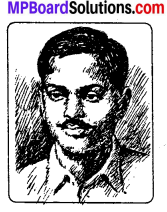
MP Board Class 10th Sanskrit Solutions Chapter 5 कुटुम्बानुरक्तिः

MP Board Class 10th Sanskrit Solutions Durva Chapter 5 कुटुम्बानुरक्तिः (नाट्यांशः) (मध्यमव्यायोगात्)

MP Board Class 10th Sanskrit Chapter 5 पाठ्यपुस्तक के प्रश्न

कक्षा 10 संस्कृत पाठ 5 MP Board प्रश्न 1.
एकपदेन उत्तरं लिखत-(एक पद में उत्तर लिखिए-)।
(क) घटोत्कचः कया आज्ञप्तः? (घटोत्कच ने किससे आज्ञा ली?)
उत्तर:
जनन्या (माता से)

(ख) किमहमब्राह्मणः इति कः उक्तवान्? (‘क्या मैं ब्राह्मण नहीं यह किसने कहा?)
उत्तर:
वृद्धः (बूढ़े व्यक्ति ने)

(ग) पुरुषादः कः आसीत्? (मनुष्य को खाने वाला कौन था?)
उत्तर:
घटोत्कचः (घटोत्कच)।

(घ) कुलं का रक्षितुमिच्छति? (कुल को कौन बचाना चाहती है?)
उत्तर;
ब्राह्मणी (ब्राह्मण की पत्नी)

(ङ) ज्येष्ठः पितृसमः इति कैः उक्तम्? (बड़ा भाई पिता के समान है-यह किसने कहा?)
उत्तर:
ब्रह्मवादिभिः (ब्रह्मज्ञों द्वारा)

You can download MP Board 10th sanskrit solution to help you to revise complete syllabus and score more marks in your examinations.
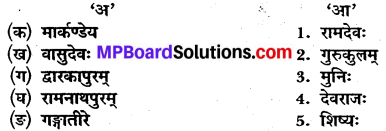
Mp Board Class 10 Sanskrit Chapter 5 प्रश्न 2.
एकवाक्येन उत्तरं लिखत- (एक वाक्य में उत्तर लिखिए-)
(क) ब्राह्मणपरिवारः केन समासादितः? (ब्राह्मण परिवार किसके द्वारा पकड़ा गया?)
उत्तर:
ब्राह्मणपरिवारः घटोत्कचेन समासादितः। (ब्राह्मण परिवार घटोत्कच के द्वारा पकड़ा गया।)

(ख) सुतापेक्षी कः आसीत्? (पुत्र की अपेक्षा वाला कौन था?)
उत्तर:
सुतापेक्षी वृद्धः आसीत्। (पुत्र की अपेक्षा वाला बूढ़ा व्यक्ति था।)

(ग) पितॄणां सुसम्प्रियः कः भवति? (पिता को सबसे प्यारा कौन होता है?)
उत्तर:
पितृणां सुसम्प्रियः ज्येष्ठः श्रेष्ठः भवति।। (पिता को सबसे प्यारा बड़ा तथा श्रेष्ठ बेटा होता है।)

(घ) घटोत्कचः कति पुत्रान् विसर्जयितुं कथयति? (घटोत्कच कितने पुत्रों को छोड़ने के लिए कहता है?)
उत्तर:
घटोत्कचः एकं पुत्रं विसर्जयितुं कथयति। (घटोत्कच एक पुत्र को छोड़ने के लिए कहता है।)

(ङ) घटोत्कचः अन्ते किं कथयति? (घटोत्कच अन्त में क्या कहता है?)
उत्तर:
घटोत्कचः अन्ते कथयति-‘अहो स्वजनवात्सल्यम्। (घटोत्कच ने अन्त में कहा-‘वाह, अपने लोगों के प्रति कितना स्नेह ।’)

Chapter 5 Sanskrit Class 10 Mp Board प्रश्न 3.
अधोलिखितप्रश्नानाम् उत्तराणि लिखत-(नीचे लिखे प्रश्नों के उत्तर लिखिए)

(क) ब्राह्मणी वृद्धं किं कथयति? (ब्राह्मणी वृद्ध से क्या कहती है?)
उत्तर:
ब्राह्मणी वृद्धं कथयति-“पतिमात्रधर्मिणी पतिव्रतेति नाम गृहीतफलेनैतेन शरीरेणार्यं कलं च रक्षितमिच्छामि।”

(ब्राह्मणी ने बूढ़े व्यक्ति को कहा-पति के धर्म का पालन करने वाली मैं पतिव्रता हूँ। गृहीत फल वाले इस शरीर से आर्य, स्वामी तथा कुल की रक्षा करना चाहती हूँ।)

(ख) द्वितीयः पुत्र स्वभ्रातरं किं कथयति? (दूसरे पुत्र ने अपने भाई से क्या कहा?)
उत्तर:
द्वितीयः पुत्रः स्वभ्रातरं कथयति-“कुले, लोके पितृणां च ज्येष्ठः श्रेष्ठः सुसंप्रियः ततः गुरुवृत्तिम् अनुस्मरन् अहमेव यास्यामि।”

(दूसरे पुत्र ने अपने भाई से कहा-इस संसार में, कुल में पिता का ज्येष्ठ पुत्र से अधिक स्नेह होता है। अतः पूर्वजों के आदर्श को निभाते हुए मैं ही जाऊँगा।)

(ग) तृतीयः पुत्रः स्वभ्रातरौ किं कथयति? (तीसरे पुत्र ने अपने भाइयों को क्या कहा?)
उत्तर:
तृतीयः पुत्रः स्वभ्रातरौ कथयति-“ब्रह्मवादिभिः ज्येष्ठो भ्राता पितृसमः कथितः ततः गुरुणां प्राणरक्षणं कर्तुम् अहम् अर्हः अस्मि।

(तीसरे पुत्र ने दोनों भाइयों से कहा- “ब्राह्मणों द्वारा बड़ा भाई पिता समान कहा गया है, तो बड़ों के प्राणों की रक्षा करने के लिए मैं योग्य हूँ।”)

Class 10 Sanskrit Chapter 5 MP Board प्रश्न 4.
प्रदत्तशब्दैः रिक्तस्थानानि पूयरत-(दिए गए शब्दों से रिक्त स्थान भरिए-)
(परिणामेन, पतिव्रतेति, बलाबलं, श्रेष्ठः, पितृसमः)
(क) पतिमात्रधर्मिणी………….नाम।
(ख) ज्येष्ठः ……………कुले लोके।
(ग) कृतकृत्यं शरीरं मे…………….जर्जरम्।
(घ) ज्येष्ठो भ्राता………!
(ङ) ……….परिज्ञाय पुत्रमेकं विसर्जय।
उत्तर:
(क) पतिव्रतेति
(ख) श्रेष्ठः
(ग) परिणामेन
(घ) पितृसमः
(ङ) बलाबलं

Class 10th Sanskrit Chapter 5 MP Board प्रश्न 5.
यथायोग्यं योजयत-(उचित क्रम से जोडिए-)
Mp Board Class 10th Sanskrit Chapter 5
उत्तर:
(क) 4
(ख) 3
(ग) 1
(घ) 5
(ङ) 2

Sanskrit Class 10 Chapter 5 Mp Board प्रश्न 6.
शुद्धवाक्यानां समक्षम् ‘आम्’ अशुद्धवाक्यानां समक्षं ‘न’ इति लिखत–
(शुद्ध वाक्यों के सामने ‘आम्’ और अशुद्ध वाक्यों के सामने ‘न’ लिखिए-)
(क) घटीत्कचः जनन्या आज्ञप्तः।।
(ख) किमहमब्राह्मणः इति प्रथमः पुत्रः कथयति।
(ग) कुले लोके च अनुजः श्रेष्ठः भवति।
(घ) ज्येष्ठो भ्राता पितृसमः इति ब्रह्मवादिभिः कथितः।
(ङ) ब्राह्मणी पतिमात्रधर्मिणी आसीत्।
उत्तर:
(क) आम्
(ख) न
(ग) न
(घ) आम्
(ङ) आम्।

Sanskrit Chapter 5 Class 10 Mp Board प्रश्न 7.
अधोलिखित शब्दानां मूलशब्दं विभक्तिं वचनं च लिखत-
(नीचे लिखे शब्दों के मूलशब्द, विभक्ति व वचन लिखिए-)
Class 10 Sanskrit Chapter 5 Solutions
(क) गुरुणाम्
(ख) तया
(ग) पल्या
(घ) भवन्तम्
(ङ) पितृणाम्
उत्तर:
Class 10 Sanskrit Chapter 5 Mp Board

Class 10 Sanskrit Chapter 5 Question Answer प्रश्न 8.
निम्नलिखितक्रियापदानां धातुं लकारं पुरुषं वचनं च लिखत
(नीचे लिखे क्रियापदों के धातु, लकार, पुरुष और वचन लिखिए।)
Sanskrit Chapter 5 Class 10
उत्तर:
Sanskrit Class 10 Chapter 5 Pdf

Chapter 5 Sanskrit Class 10  प्रश्न 9.
उदाहरणानुसारं धातुं प्रत्ययं च पृथक् कुरुत
(उदाहरण के अनुसार धातु और प्रत्यय अलग कीजिए-)
Class 10th Sanskrit Chapter 5 Solution
उत्तर:
Sanskrit Class 10 Chapter 5 In Hindi

Sanskrit Class 10th Chapter 5 प्रश्न 10.
अधोलिखितसमासानां विग्रहं कृत्वा समासनाम लिखत
(नीचे लिखे समासों के विग्रह कर समास का नाम लिखिए।)
उत्तर:
Class 10th Sanskrit Chapter 5 Question Answer

योग्यताविस्तार –

संस्कृतभाषायां रूपकाणां दश भेदाः भवन्ति। ते च, नाटकम्, प्रकरणम्, भाणः, प्रहसनम्, डिमः, व्यायोगः, समवकारः, वीथी, अङ्कः, ईहामृगः। संस्कृत भाषा में रूपक के दस भेद होते हैं। वे हैं-नाटक, प्रकरण, भाण, प्रहसन, डिम, व्यायोगह, समवकार, वीथी, अङ्क, ईहामृग।

नाट्यांशस्य सामूहिकम् अभिनयं कुरुत। (नाट्यांश का सामूहिक अभिनय कीजिए।)

कुटुम्बानुरक्तिः पाठ का सार

प्रस्तुत पाठ महाकवि भास द्वारा रचित ‘मध्ययव्यायोगः’ नामक ग्रन्थ का एक अंश है। इस पाठ में घटोत्कच जब बलि के लिए एक ब्राह्मण परिवार को पकड़ता है, तब उस परिवार के सभी सदस्य अपने परिवार वालों के अन्य सदस्यों को छुड़ाने के लिए अपने प्राण देने के लिए आगे बढ़ते हैं। इस प्रकार अपने परिवार के प्रति समर्पण व प्रेम भाव इस पाठ में दर्शाया गया है।

कुटुम्बानुरक्तिः  पाठ का अनुवाद

1. वृद्धः-हन्त निराशाः स्मः। भवतु पुत्र व्यपाश्रयिष्ये तावदेनम्।
प्रथमः (पुत्रः)-अलमलं परिश्रमेण।
वृद्धः-पुत्र! निर्वेदप्रत्यर्थिनी खलु प्रार्थना। भवतु पश्यामस्तावत्। भो भोः पुरुष! अस्त्वस्माकं मोक्षः?
घटोत्कचः-मोक्षोऽस्ति समयतः।
वृद्धः-कः समयः।

घटोत्कच :
अस्ति मे तत्रभवती जननी। तयाऽहमाज्ञप्तः। पुत्र! ममोपवासनिसर्गार्थमस्मिन्वनप्रदेशे कश्चिन्मानुषः प्रतिगृह्यानेतव्य इति। ततो मयाऽऽसादितो भवान्।।

शब्दार्था :
व्यपाश्रयिष्ये-निवेदन करते हैं-appeal, submit; निर्वेदप्रत्यर्थिनी-मुक्ति की याचना-appeal for freedom, मोक्षः-मुक्ति-freedom, समयतः-शर्त पर/से–on one condition, निसर्गार्थम्-पूर्ति के लिए-for the perfection, प्रतिगृह्यानेतव्य-पकड़कर लाओ-catch and bring, आसादितः-पकड़ा है-have caught.

अनुवाद :
वृद्ध पुरुष-हाय! हम निराश हो गये हैं। अच्छा पुत्र, तब निवेदन करते हैं। प्रथम पुरुष-अधिक परिश्रम मत करो।
वृद्ध-पुत्र, मुक्ति के लिए प्रार्थना करनी पड़ेगी। ठीक है, तब देखते हैं। हे पुरुष! हमें छोड़ दो।
घटोत्कच-एक शर्त पर छोड़ सकता हूँ।
वृद्ध-कैसी शर्त?

घटोत्कच :
मेरी आदरणीय माता है। उनके द्वारा मुझे आज्ञा दी गई है। पुत्र! मेरे उपवास की पूर्ति के लिए इस वन प्रदेश से कोई मनुष्य पकड़कर लाओ। इसलिए मेरे द्वारा आपको पकड़ा गया है।

English :
The old man asked Ghatotkach to leave him and his sons. Ghatotk. ch told them that he has been ordered by his mother to bring some man for perfection of her fast.

2. घटोत्कचः- पत्न्या चारित्रशालिन्या द्विपुत्रो मोक्षमिच्छसि।
बलाबलं परिज्ञाय पुत्रमेकं विसर्जय।।1॥

अन्वय :
(हे वृद्धः!) चारित्रशालिन्या पत्न्या (सह) द्विपुत्रः मोक्षम् इच्छसि (तर्हि) बलावलं परिज्ञाय एकं पुत्रं विसर्जय।

शब्दार्था :
बलाबलम्-प्रिय और अप्रिय-dear or not dear, परिज्ञाय-जानकरconsidering

अनुवाद :
हे वृद्ध ! चरित्रशाली पत्नी के साथ दो पुत्रों की मुक्ति चाहते हो, तो प्रिय और अप्रिय जानकर एक पुत्र को छोड़ दो।

English :
Consider the merits and demerits-leave one of the sons.

3. वृद्धः-हे भो राक्षसापसद! किमहमब्राह्मणः।
ब्राह्मणः श्रुतवान्वृद्धः पुत्रं शीलगुणान्वितम्।
पुरुषादस्य दत्त्वाहं कथं निवृत्तिमाप्नुयाम्॥2॥

अन्वय :
(अहम्) वृद्धः ब्राह्मणः श्रुतवान् शीलगुणान्वितं पुत्रं पुरुषादस्य दत्वा क्थं निर्वृत्तिम् आप्नुयाम्।

शब्दार्था :
राक्षसापसद-नीच राक्षस-Mean demon; श्रुतवान्-शास्त्रज्ञ-having knowledge of scriptures, पुरुषादस्य-मनुष्य को खाने के लिए-to be eaten by man, निर्वृत्तिम्-शान्ति को-peace.

अनुवाद :
(वृद्धः-अरे, नीच राक्षस! क्या मैं ब्राह्मण नहीं हूँ (अर्थात् नीच हूँ।) मैं बूढ़ा ब्राह्मण अपने शास्त्रज्ञ, शील व गुणों से युक्त पुत्र को मनुष्य को खाने के लिए देकर कैसे शान्ति प्राप्त करूँगा।

English :
I am not so mean. How can I seek peace by leaving my learned and virtuous son to be eaten.

4. घटोत्कच :
यद्यर्थितो द्विजश्रेष्ठ! पुत्रमेकं न मुञ्चसि।
सकुटुम्बः क्षणेनैव विनाशमुपयास्यसि॥3॥

अन्वय :
द्विजश्रेष्ठः ! यदि अर्थितः एकं पुत्रं न मुञ्चसि (तर्हि) सकुटुम्बः क्षणेनैव विनाशम् उपयास्यसि।

शब्दार्था :
अर्थितः-धन के लिए/प्रार्थना किए जाने पर-for money, on our words, मुञ्चसि-छोड़ते हो-leave, उपयास्यसि-प्राप्त हो जाओगे-will attain.

अनुवाद :
घटोत्कच कहता है-हे ब्राह्मण श्रेष्ठ! यदि धन के कारण (हमारे कहने से) एक पुत्र को नहीं छोड़ते हो, तो कुटुम्ब सहित क्षण भर में ही विनाश को प्राप्त हो जाओगे।

English :
If you fail to leave one of the sons, you will soon be destroyed along with your family.

5. वृद्धः-एष एव मे निश्चयः
कृतकृत्यं शरीरं मे परिणामेन जर्जरम्।
राक्षसाम्नौ सुतापेक्षी होष्यामि विधिसंस्कृतम्॥4॥

अन्वय :
सुतापेक्षी (अहम्) परिणामेन जर्जरं विधिसंस्कृतं कृतकृत्यं मे वृद्धस्य शरीरं राक्षसाम्नौ होष्यामि।

शब्दार्था :
सुतापेक्षी-पुत्र की अपेक्षा वाला- expectation of boy, विधिसंस्कृतम्अनुष्ठानों द्वारा पवित्र-purified by observance of sacraments, कृतकृत्यम्-जिसके द्वारा समस्त कार्य पूर्ण कर लिए गए हों-who has finished all the activities.

अनुवाद :
वृद्धः-यह ही मेरा निश्चय है। पुत्र की अपेक्षा वाले, वृद्धावस्था के कारण थके हुए, अनुष्ठानों के कारण पवित्र, सभी कार्यों को पूर्ण करने वाले अपने बूढ़े शरीर की मैं राक्षस की अग्नि में आहुति दे दूंगा।

English :
The old man said, “My old and exhausted body will be burnt in the fire of the demon” for the sake of my son.

6. ब्राह्मणी-आर्य, वा मैवम्। पतिमात्रधर्मिणी पतिव्रतेति नाम। गृहीतफलेनैतेन शरीरेणार्यं कुलं च रक्षितुमिच्छामि।
घटोत्कचः-भवति! न खलु स्त्रीजनोऽभिमतस्तत्रभवत्या।
वृद्धः-अनुगमिष्यामि भवन्तम्।
घटोत्कचः-आः वृद्धस्त्वमपसर।
प्रथमः (पुत्र)-भोस्तात-ब्रवीमि खलु तावत्किञ्चित्।
वृद्धः-ब्रूहि, ब्रूहि शीघ्रम्।
शब्दार्थाः-अपसर-दूर हटो-keepaside, ब्रूहि-कहो-say, अभिमतः-उचित-proper.

अनुवाद :
ब्राह्मणी-ऐसा मत कहो।मैं केवल पति के धर्म का पालन करने वाली पतिव्रता हूँ। इस फल प्राप्त किए हुए शरीर के द्वारा आर्य और कुल की रक्षा करना चाहती हूँ।

घटोत्कच-देवी! उनके आदेश के अनुसार स्त्री नहीं चाहिए।
वृद्ध-तुम्हारे साथ मैं चलूँगा।
घटोत्कच-तुम वृद्ध हो, तुम दूर हटो।
प्रथम (पुत्र)-हे पिता! तो मैं कुछ कहूँ।
वृद्ध-कहो, शीघ्र कहो।

English :
The Brahmin woman and the old man offered themselves to save the family. Ghatotkach asked them to keep aside. The first son desired to say something.

7. प्रथमः (पुत्र)- मम प्राणैर्गुरुप्राणानिच्छामि परिरक्षितम्।
रक्षणार्थ कुलस्यास्य मोक्तुमर्हति मां भवान॥5॥

अन्वय :
(अहं प्रथमः पुत्रः) मम प्राणैः गुरुप्राणान् परिरक्षितुम इच्छामि (अतः) भवान् अस्य कुलस्य रक्षणार्थं मां मोक्तुम अर्हति।

शब्दार्था :
परिरक्षितुम्-रक्षा करने के लिए-toprotect, गुरु-(पूर्वजों) बड़ों के-of the elderly people.

अनुवाद :
(मैं, पहला पुत्र) अपने प्राणों के द्वारा बड़ों के प्राणों की रक्षा करना चाहता हूँ। इसलिए आप इस कुल की रक्षा के लिए मुझे छोड़ दीजिए।

English :
The first son desired that he should be left to protect the lives of the elderly people in the family.

8. द्वितीयः (पुत्रः) आर्य! मा मैवम् ।
ज्येष्ठः श्रेष्ठ कुले लोके पितृणां च सुसंप्रियः।
ततोऽहमेव यास्यामि गुरुवृत्तिमनुस्मरन॥6॥

अन्वय :
(भो जनक!) कुले, लोके पितॄणां च ज्येष्ठः श्रेष्ठः सुसंप्रियः (भवति) ततः गुरुवृत्तिम् अनुस्मरन् अहमेव यास्यामि।।

शब्दार्था :
सुसंप्रियः-अच्छा व प्यारा-mostloving,गुरुवृत्तिम्-पूर्वजों के आदर्श को-the ideals of the ancestors, अनुस्मरन्-चलाते हुए, याद करते हुए-following, recalling, यास्यामि-जाऊँगा-shall go.

अनुवाद :
दूसरा (पुत्र)-आर्य! ऐसा मत कहो।
हे पिता! इस संसार में, कुल में सबसे बड़ा व श्रेष्ठ ही माता-पिता को अच्छा व प्यारा लगता है। तब पूर्वजों के आदर्श का अनुकरण करते हुए मैं ही जाऊँगा।

English :
Second son : Being the elder, the better and the more loving son, I would go in accordance with the ancestral practice.

9. तृतीयः (पुत्रः)-आर्य! मा मैवम्।
ज्येष्ठो भ्राता पितृसमः कथितो ब्रह्मवादिभिः।
ततोऽहं कर्तुमस्म्य) गुरुणां प्राणरक्षणम्॥7॥
घटोत्कचः-अहो स्वजनवात्सल्यम्।
(इति निष्क्रान्ताः सर्वे)

अन्वयः-ज्येष्ठः भ्राता ब्रह्मवादिभिः पितृसमः कथितः ततः गुरुणां प्राणरक्षणं कर्तुम् अहम् अर्हः अस्मि।

शब्दार्था :
पितृसमः-पिता के समान-like a father, ब्रह्मवादिभिः-ब्रह्मज्ञों ने-by the brahmins, अर्हः-योग्य-capable, वात्सल्यम्-प्रेम-affection.

अनुवाद :
तृतीय (पुत्र) – आर्य! ऐता मत कहो।
ब्रह्मज्ञों के अनुसार बड़े भाई को पिता के समान कहा गया है। तो बड़ों की प्राणरक्षा करने के लिए मैं योग्य हूँ।
घटोत्कच-वाह! अपने लोगों के लिए कितना स्नेह।
(सब निकल जाते हैं)

English :
Eldest son is like a father-Hence Iam capable of saving my elderly people-filial affection praised (appreciated)

MP Board Class 10th Sanskrit Solutions

MP Board Class 10th Sanskrit Solutions Chapter 6 यशः शरीरम्

MP Board Class 10th Sanskrit Solutions Durva Chapter 6 यशः शरीरम् (कथा) (सङ्कलिता)

MP Board Class 10th Sanskrit Chapter 6 पाठ्यपुस्तक के प्रश्न

कक्षा 10 संस्कृत पाठ 6 MP Board प्रश्न 1.
एकपदेन उत्तरं लिखत-(एक पद में उत्तर लिखिए-)।
(क) मार्कण्डेयः नाम ऋषिः कुत्र वसति स्म? (मार्कण्डेय ऋषि कहाँ रहते थे?)
उत्तर:
गङ्गातीरे (गङ्गा के किनारे)

(ख) वासुदेवः कस्य प्रियशिष्यः आसीत्? (वासुदेव किसका प्रिय शिष्य था?)
उत्तर:
मार्कण्डेयस्य (मार्कण्डेय का)।

(ग) वासुदेवः प्रथमं कस्य गृहं प्रति प्रस्थितः? (वासुदेव पहले किसके घर गया?)
उत्तर:
देवराजस्य (देवराज के)

(घ) रामदेवः कस्मिन् ग्रामे वसति स्म? (रामदेव किस गाँव में रहता था?)
उत्तर:
रामनाथपुरे (रामनाथ पुर में)

(ङ) जनाः प्रतिदिनं कं स्मरन्ति स्म? (लोग प्रतिदिन किसको याद करते थे?)
उत्तर:
रामदेवम् (रामदेव को)

You can download MP Board 10th sanskrit solution to help you to revise complete syllabus and score more marks in your examinations.
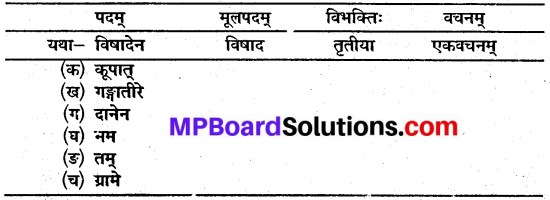
Class 10 Sanskrit Chapter 6 MP Board प्रश्न 2.
एकवाक्येन उत्तरं लिखत- (एक वाक्य में उत्तर लिखिए-)
(क) कः मृतोऽपि जीवति? (कौन मरकर भी जीवित है?)
उत्तर:
यः समाजहितं चिन्तयति सः मृतोऽपि जीवति।।
(जो समाज के हित की सोचता है, वह मरकर भी जीवित है।)

(ख) कः जीवन्नपि मृतः एव? (कौन जीते हुए भी मृत है?)
उत्तर:
यः स्वार्थमात्रं चिन्तयति सः जीवन्नपि मृतः एव।
(जो केवल अपने विषय में सोचता है, वह जीवित होकर भी मृत है।)

(ग) देवालये किं प्रचलति स्म? (मंदिर में क्या चल रहा था?)
उत्तर:
देवालये प्रसादत्वेन भोजनवितरणं प्रचलति स्म। (मंदिर में प्रसाद के रूप में भोजन बँट रहा था।)

(घ) जलं दत्वा माता किम् अपृच्छत? (जल देकर माता ने क्या पूछा?)
उत्तर:
जलं दत्वा माता अपृच्छत्-भवता कुत्र गम्यते?” इति। (जल देकर माता ने पूछा- “आप कहाँ जा रहे हैं?)

(ङ) भोजनपरिवेषकाः किं कृतवन्तः? (भोजन परोसने वालों ने क्या किया?)
उत्तर:
भोजनपरिवेषकाः वासुदेवाय अन्नं पायसादिकं न परिविष्टवन्तः। (भोजन परोसने वालों ने वासुदेव के लिए अन्न-खीर आदि नहीं परोसा।)

Mp Board Class 10 Sanskrit Chapter 6 प्रश्न 3.
अधोलिखितप्रश्नानाम् उत्तराणि लिखत-(नीचे लिखे प्रश्नों के उत्तर लिखिए।)
(क) कोपेन देवराजः किम् उक्तवान् ? (क्रोध में देवराज ने त्म्या कहा?)
उत्तर:
कोपेन देवराजः उक्तवान्–“किं धनं याचयितुम् आगतं भवता? मया कस्मैचित् किमपि न दीयते। मम विश्रान्तिः नाशिता भवता। निर्गम्यताम इतः” इति।

(क्रोध में देवराज ने कहा-“क्या तुम धन माँगने आए हो? मैं किसी को कुछ नहीं दूंगा। मेरा आराम भंग कर दिया तुमने। चले जाओ यहाँ से।”)

(ख) पुत्रः वासुदेवं विषादेन किमुक्तवान् ? (पुत्र ने वासुदेव को दुख से क्या कहा?)
उत्तर:
पुत्रः वासुदेवं विषादेन उक्तवान्-“मम पिता विंशति वर्षेभ्यः पूर्वम् एव दिवं गतः। इदानीं लोके तस्य स्मृतिमात्रम् अस्ति।” इति।

(पुत्र ने वासुदेव को दुख से कहा-“मेरे पिता 20 वर्ष पहले ही स्वर्ग चले गए। अब संसार में उनकी केवल याद ही है।”)

(ग) यदा वासुदेवस्य अध्ययनं समाप्तं तदा गुरुः तमाहूय किमवदत्? (जब वासुदेव का अध्ययन समाप्त हो गया, तब गुरु ने उसे बुलाकर क्या कहा?)
उत्तर:
यदा वासुदेवस्य अध्ययनं समाप्तं तदा गुरुः तमाहूय अवदत्-“शिष्य! अधुना भवान सर्वविद्यापारङ्गतः अस्ति। अतः इतः परं स्वग्रामं गन्तुम् अर्हति भवान्। गमनात् पूर्वं भवता द्वारकापुरस्य देवराजस्य गृहं दृष्ट्वा आगन्तव्यम्। किन्तु गृहस्यान्तः न गन्तव्यम्’ इति।

(जब वासुदेव का अध्ययन समाप्त हुआ तब गुरु ने उसे बुलाकर कहा, शिष्य! अब तुम समस्त विद्याओं में निपुण हो। अब तुम यहाँ से अपने गाँव जाने योग्य हो। जाने से पूर्व तुम द्वारकापुर के देवराज के घर जाकर देखकर आओ। पर घर के अन्दर नहीं जाना।”)

Sanskrit Class 10 Chapter 6 Mp Board प्रश्न 4.
प्रदत्तशब्दैः रिक्तस्थानानि पूयरत
(दिए गए शब्दों से रिक्त स्थान भरिए-)
(बहवः, भोजनम्, मध्येमार्गम्, रामदेवस्य, देवालयम्)
(क) तत्र प्रसादत्वेन ………………. प्रचलति स्म।
(ख) वासुदेवः कञ्चित्………………. अपश्यत।
(ग) मया……………….जीवनम् एव अनुसरणीयम्।
(घ) गुरुकुले……………….शिष्याः आसन्।
(ङ) …………….तेन सोमपुरं प्राप्तम्।
उत्तर:
(क) भोजनम्
(ख) देवालयम्
(ग) रामदेवस्य
(घ) बहवः
(ङ) मध्येमार्गम्।

Class 10th Sanskrit Chapter 6 MP Board प्रश्न 5.
यथायोग्यं योजयत-(उचित क्रम से मिलाइए-)
कक्षा 10 संस्कृत पाठ 6 MP Board
उत्तर:
(क) 3
(ख) 5
(ग) 4
(घ) 1
(ङ) 2

Chapter 6 Sanskrit Class 10 Mp Board प्रश्न 6.
शुद्धवाक्यानां समक्षम् “आम्” अशुद्धवाक्यानां समक्ष “न” इति लिखत
(शुद्ध वाक्यों के सामने ‘आम्’ और अशुद्ध वाक्यों के सामने ‘न’ लिखिए-)
(क) गुरुकुले बहवः शिष्याः आसन्।
(ख) मध्येमागं तेन रत्नपुर प्राप्तम्।।
(ग) ग्रामे सर्वे देवराजं सगौरवं स्मरन्ति स्म।
(घ) रामदेवः प्रातः स्मरणीयः आसीत्।
(ङ) रामदेवस्य गृहं वैभवोपेतम् आसीत्।
उत्तर:
(क) आम्
(ख) न
(ग) न
(घ) आम्
(ङ) न।।

Sanskrit Class 10 Chapter 6  प्रश्न 7.
अधोलिखितपदानां विभक्तिं वचनं च लिखत
(नीचे लिखे पदों की विभक्ति व वचन लिखिए।)
Class 10 Sanskrit Chapter 6 MP Board
उत्तर:
Mp Board Class 10 Sanskrit Chapter 6

Class 10 Sanskrit Chapter 6 Solutions MP Board प्रश्न 8.
उदाहरणानुसारं पदानां प्रकृतिं प्रत्ययं च पृथक्कुरुत
(उदाहरणानुसार पदों की प्रकृति व प्रत्यय अलग करके लिखिए-)
(क) गन्तव्यम्
(ख) प्रस्थितवान्
(ग) प्राप्तवान्
(घ) उक्त्वा
(ङ) सत्कृत्व
(च) आगत्य
(छ) यात्विा
(ज) वदन्दः
उत्तर:
Sanskrit Class 10 Chapter 6 Mp Board

Sanskrit Class 10th Chapter 6 MP Board प्रश्न 9.
अधोलिखितशब्दानां पर्यायशब्दान् लिखत।
(नीचे लिखे शब्दों के पर्यायवाची शब्द लिखिए।)
(क) मुनिः
(ख) युक्कः
(ग) अम्ब
(घ) बुभुक्षितः।
उत्तर:
Class 10th Sanskrit Chapter 6 MP Board

Class 10 Sanskrit Chapter 6 Question Answer MP Board प्रश्न 10.
अधोलिखितवाक्यानां कथानुसारेण क्रमसंयोजनं कुरुत
(नीचे लिखे वाक्यों को कथा के अनुसार क्रम से लिखिए।)
(क) ततः वासुदेवः रामनाथपुरं प्राप्य रामदेवस्य गृहम् अगच्छत्।
(ख) गङ्गातीरे मार्कण्डेयः नाम कश्चन मुनिः वसति स्म।
(ग) मया रामदेवस्य जीवनम् एव अनुसरणीयम्
(घ) किञ्चिदने गतः वासुदेवः किञ्चित् देवालयम् अपश्यत्।
(ङ) शिष्यः अनन्तरं रामनाथपुरं प्रति प्रस्थितवान्।
(च) वासुदेवः तस्य प्रियशिष्यः आसीत्।
उत्तर:
(क) गङ्गातीरे मार्कण्डेयः नाम कश्चन मुनिः वसति स्म।
(ख) वासुदेवः तस्य प्रियशिष्यः आसीत्।
(ग) किञ्चिदग्रे गतः वासुदेवः किञ्चित् देवालयम् अपश्यत्।
(घ) शिष्यः अनन्तरं रामनाथपुरं प्रति प्रस्थितवान्।
(ङ) ततः वासुदेवः रामनाथपुरं प्राप्य रामदेवस्य गृहम् अगच्छत्।
(च) मया रामदेवस्य जीवनम् एव अनुसरणीयम्।

Mp Board Class 10th Sanskrit Chapter 6 प्रश्न 11.
प्रदत्तं चित्रम् अवलम्ब्य पञ्चवाक्यानि रचयत।
(दिए गए चित्र को देखकर पाँच वाक्य बनाइए।)
Chapter 6 Sanskrit Class 10 Mp Board
उत्तर:
(क) अस्मिन् चित्रे द्वे स्त्रियौ स्तः।
(ख) ते वार्तालापं कुरुतः।
(ग) गवेषणेन बालकः पश्यति।
(घ) आकाशे वायुयानं गच्छति।।
(ङ) द्वे स्त्रियौ गृहात् बहिः तिष्ठतः।

योग्यताविस्तार –

संस्कृतसाहित्यस्य अन्याः कथाः अन्विष्य पठत।
(संस्कृत साहित्य की अन्य कथाएँ ढूँढ़कर पढ़ो।)

अन्ये ये महापुरुषाः यशः शरीरेण ख्याताः सन्ति तेषां जीवनवृत्तान्तं कथारूपेण लिखत।
(अन्य जो महापुरुष यशरूपी शरीर से प्रसिद्ध हैं, उनके जीवन-वृत्तान्त को कथा रूप में लिखो।)

यशः शरीरम् पाठ का सार

प्रस्तुत पाठ में यश की महत्ता को एक कथा के माध्यम से सिद्ध किया गया है। इस पाठ में दो विशेष पात्रो का वर्णन है जिनमें से एक धनी होते हुए भी जीवित होने पर अपयश के कारण मृत के समान व घृणित है, तथा दूसरा जीवित न होने पर भी यश रूप शरीर से लोगों के हृदयों में जीवित है। अतः मनुष्य को सदा यश-प्राप्ति के लिए अच्छे कार्य करने चाहिएं।

यशः शरीरम् पाठ का अनुवाद

1. गङ्गातीरे मार्कण्डेयः नाम कश्चन मुनिः वसति स्म। तस्य गुरुकुले बहवः शिष्याः आसन्। वासुदेवः तस्य प्रिय शिष्यः। तस्य द्वादशवर्षात्मकम् अध्ययनं यदा समाप्तं तदा गुरुः तम् आहूय अवदत्-“शिष्य! अधुना भवान् सर्वविद्यापारङ्गतः अस्ति। अतः इतः परं स्वग्रामं गन्तुम् अर्हति भवान्। गमनात् पूर्वं भवता द्वारकापुरस्य देवराजस्य गृहं दृष्ट्वा आगन्तव्यम्। किन्तु गृहस्यान्तः न गन्तव्यम्” इति।।

वासुदेवः तस्मिन् एव दिने द्वारकापुरं प्रति प्रस्थितवान्। दिनत्रयात्मकस्य प्रयाणस्य अनन्तरं तं ग्रामं प्राप्य सः ग्रामद्वारे स्थितान् जनान् अपृच्छत्-“देवराजस्य गृहं कुत्र?” इति। “वृथा किमर्थं गम्यते तत्र?” इति उपेक्षया वदन्तः ते देवराजगृहस्थलं सूचितवन्तः। अग्रे गतः सः कूपात् जलम् उद्धरन्तीं महिला याचित्वा जलं प्राप्य तत् पिबन् ताम् अपृच्छत्-“देवराजगृहं कुत्र?” “तस्य पापिनः नाम किमर्थं मम पुरतः उच्चारयति भवान्?” इति वदन्ती सा महिला ततः निरगच्छत् एव।

शब्दार्था :
आहूय-बुलाकर-caling; सर्वविद्यापारङ्गतः-समस्त विद्याओं में निपुण-skilled in all types of learning; प्रस्थितवान्-गया-started, वृथा-व्यर्थ में-in vain, वदन्तः-बोलते हुए-speaking, उद्धरन्तीम्-निकालती हुई को-drawing.

अनुवाद :
गङ्गा के किनारे मार्कण्डेय नाम के कोई मुनि रहते थे। उनके गुरुकुल में बहुत सारे शिष्य थे। वासुदेव उनका प्रिय शिष्य था। उसका बारह वर्ष तक का अध्ययन जब समाप्त हुआ, तब गुरु ने उसको बुलाकर कहा-“शिष्य! अब आप समस्त विद्याओं में निपुण हो गए हो। इसलिए यहाँ से दूर अपने गाँव में जाने योग्य हो गए हो । जाने से पहले तुम्हारे द्वारा द्वारकापुर के देवराज के घर को देखकर आना होगा। पर घर के अन्दर मत जाना।”

वासुदेव उसी दिन ही द्वारकापुर की ओर चला गया। तीन दिन की यात्रा के बाद उस गाँव में पहुँचकर उस गाँव के द्वार पर खड़े लोगों से पूछा-“देवराज का घर कहाँ है?” “व्यर्थ में वहाँ क्यों जा रहे हो?” इस प्रकार गुस्से में बोलते हुए उन्होंने देवराज का घर बता दिया। आगे जाते हुए उसने कुएँ से जल निकालती हुई महिला से माँगकर जल लेकर व पीकर उससे पूछा-“देवराज का घर कहाँ है?” “उस पापी का नाम मेरे सामने क्यों बोला, आपने?” ऐसा कहते हुए वह महिला वहाँ से चली ही गई।

English :
Vasudev learnt all subjects. Directed by Guru Markandeya to locate the house of Devraj at Dwakrapur-went to the village and learnt that Devraj was an evil-minded person.
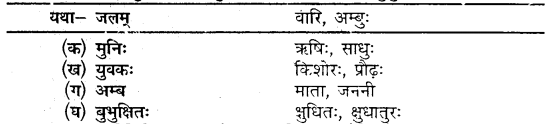
2. किञ्चिदग्रेगतः वासुदेवः कञ्चित् देवालयम् अपश्यत्। तत्र प्रसादत्वेन भोजनवितरणं प्रचलति स्म। नितरां बुभुक्षितः वासुदेवः जनानां पङ्क्तौ उपाविशत्। भोजनसमये स्वपार्श्वे उपविष्टवन्तं कञ्चित् जनम् अपृच्छत् वासुदेवः-“देवराजः किं धनिक?” इति। तदा सः पार्श्वस्थः जनः-“धिक् भवन्तम्। भोजनकाले तस्य पापिनः नाम स्मारितम्” इति वदन् भोजनं परित्यज्य उत्थितः एव। एतत् दृष्ट्वा परिवेषकाः वासुदेवाय अन्नं पायसादिकं न परिविष्टवन्तः एव। अपूर्णोदरः एव सः ततः उत्थितवान्।

शब्दार्था :
प्रसादत्वेन–प्रसाद के रूप में-as; नितराम्-बहुत अधिक-excessively, extremely; बुभुक्षितः-भूखा-hungry,स्वपार्श्वे अपने पास में-near him, उपविष्टवन्तः-बैठे हुए-sitting, धिक-धिक्कार है-fie, वदन-बोलते हुए-saying,परित्यज्य-छोड़कर-leaving, परिवेषकाः-खाना परोसने वाले-servers of food, पायसादिकम्-खीर इत्यादि-porridge etc, परिविष्टवन्तः-परोसा-served, अपूर्णोदरः-खाली पेट-empty bellied.

अनुवाद :
कुछ आगे जाने पर वासुदेव ने एक मन्दिर देखा। वहाँ प्रसाद के रूप में भोजन बँट रहा था। बहुत अधिक भूखा वासुदेव लोगों की पंक्ति में बैठ गया। भोजन के समय अपने पास में बैठे किसी व्यक्ति से वासुदेव ने पूछा-“देवराज क्या धनी है?’ तब पास में बैठा वह व्यक्ति बोला, “आपको धिक्कार है। भोजन के समय उस पापी का नाम याद किया।” ऐसा कहते हुए भोजन छोड़कर उठ ही गया। यह देखकर खाना परोसने वालों ने वासुदेव के लिए अन्न खीर आदि परोसा ही नहीं। खाली पेट ही वह वहाँ से उठ गया।

English :
Vasudev reached a temple-sat in the line to receive ‘Prasad’-asked somebody about Devraj-The fellow cursed him and stood up ‘Vasudev also remained hungry-Prasad was net served to him.”

3. दूरात् एव देवराजस्य गृहं दृष्ट्वा प्रत्यागतः सः दिनद्वयस्य अनन्तरं गुरुकुलं प्राप्तवान्। गुरुः तं पुनः अवदत्-‘रामनाथपुरं गत्वा रामदेवस्य गृहं ज्ञात्वा आगन्तव्यम्” इति। शिष्यः अनन्तरदिने एव रामनाथपुरं प्रति प्रस्थितवान्। मध्येमागं तेन सोमपुरं प्राप्तम्। तत्र स्वगृहस्य पुरतः उपविष्टां काञ्चित् मातरम् अवदत् सः-“अम्ब! किञ्चित् जल ददातु” इति।

जलं दत्वा माता अपृच्छत्-“भवता कुत्र गम्यते?” इति।
‘रामदेवस्य गृहं प्रति’ इति अवदत् वासुदेवः।

“अहो, प्रातः स्मरणीयः सः” इति उक्त्वा सा माता वासुदेवं सस्नेहम् अन्तः नीत्वा भोजनादिकं दत्वा सत्कृतवती। ततः निर्गतः वासुदेवः रामनाथपुरं प्राप्य ‘रामदेवस्य गृहं कुत्र?’ इति कञ्चित् अपृच्छत् । सः अपि सत्कृत्य स्वयम् आगत्य रामदेवगृहं प्रादर्शयत् । दूरात् एव तत् दृष्टवा वासुदेवः गुरुकुलं प्रत्यगच्छत्।

शब्दार्था :
प्रत्यागतः-लौट आया-returned, ज्ञात्वा-जानकर-knowing; मध्येमार्गम्-रास्ते के बीच में-on the way; पुरतः-सामने-in front of; नीत्वा-ले जाकर-taking; सत्कृत्य-सत्कार करके-honouring, welcoming, प्रादर्शयत्-दिखाया-showed.

अनुवाद :
दूर से ही देवराज का घर देखकर वह लौट आया। वह दो दिन बाद गुरुकुल पहुँचा। गुरु ने उसे फिर कहा-रामनाथपुर जाकर रामदेव का घर जानकर आओ।” शिष्य दूसरे दिन ही रामनाथपुर की ओर चला गया। रास्ते के बीच में वह सोमपुर पहुंचा। वह अपने घर के सामने बैठी हुई किसी माता (वृद्ध स्त्री) से बोला-“माता! थोड़ा जल दे दो।”
जल देकर माता ने पूछा-“आप कहाँ जा रहे हो?
“रामदेव के घर की ओर।” वासुदेव बोला।

“वाह, वह प्रातः याद करने योग्य है।” ऐसा कहकर उस माता ने वासुदेव को प्रेम से अन्दर ले जाकर भोजन आदि देकर सत्कार किया ! वहाँ से निकल कर वासुदेव रामनाथ पुर पहुँचकर ‘रामदेव का घर कहाँ है?” किसी से पूछा। उसने भी सत्कार करके स्वयं आकर रामदेव का घर दिखाया। दूर से ही वह देखकर वासुदेव गुरुकुल लौट आया।

English :
Vasudev was again directed to learn about Ramdev’s house at Ramnathpur. Vasudev left for the place-Reached Sompur on the way. Asked a woman about Ramdev. She welcomed him-Reached Ramnathpur-Somebody greeted him and showed Ramdev’s house-Viewing the house from a distance Vasudev returned to the Gurukul.

5. दिनद्वयस्य अनन्तरं गुरुः अकथयत्-‘वासुदेव! भवान् इतः स्वगृह गन्तुम् अर्हति। गमनात् पूर्वं भवता देवराज-रामदेवयोः पूर्णः परिचयः प्राप्तव्यः” इति। एतम् आदेशं पालयन् वासुदेवः पुनरपि द्वारकापुरं प्राप्य देवराजस्य गृहम् अगच्छत्। वैभवोपेतं गृहं तत्। द्वाररक्षकः तस्य प्रवेशं निषिद्धवान्। बहुधा प्रार्थना यदा कृता तदा सः अन्तः गत्वा देवराजं वासुदेवागमनं निवेदितवान्। कोपेन एव बहिः आगत्य देवराजः-“किं धनं याचितुम् आगतं भवता? मया कस्मैचित् किमपि न दीयते । मम विश्रान्तिः नाशिता भवता। निर्गम्यताम् इतः” इति तर्जयित्वा तं प्रेषितवान्।

शब्दार्था :
वैभवोपेतम्-वैभव, विशालता से युक्त को-grand, splendid, निषिद्धवान्-रोका-refused, checked; निर्गम्यताम्-निकल जाओ-go away, तर्जयित्वा-डाँटकर-scolding, snubbing.

अनुवाद :
दो दिन बाद गुरु ने कहा-“वासुदेव! तुम यहाँ से अपने घर जाने योग्य हो.। जाने से पहले तुम देवराज व रामदेव का पूरा परिचय प्राप्त करना।”

इस आदेश को पालते हुए वासुदेव फिर द्वारकापुर पहुँचकर देवराज के घर गया। उसका घर विशालता से युक्त था। द्वारपाल ने उसे अन्दर जाने से रोका। बहुत प्रार्थना जब की तब उसने अन्दर जाकर देवराज को वासुदेव के आने की बात बताई। क्रोध में ही बाहर आकर देवराज ने-“क्या तुम धन माँगने आए हो? मैं किसी को कुछ नहीं दूंगा। मेरे आराम को भंग कर दिया तुमने। यहाँ से चले जाओ।” डाँटकर उसे निकाल (भेज) दिया।

English :
Guru asked Vasudev to gather detailed information about Devraj and Ramdev. Vasudev was not allowed to enter Devraj’s building. Devraj came out-called him a beggar-turned him awaysnubbed him also for robbing him of his rest.

7. ततः वासुदेवः रामनाथपुरं प्राप्य रामदेवस्य गृहम् अगच्छत्। पर्णेः निर्मितं प्राचीनं गृहं तत्। कश्चन् युवकः तं सादरं स्वागतीकृत्य पानीयभोजनादिभिः तं सत्कृत्य विश्रान्त्यर्थं व्यवस्थाम् अकरोत्। विश्रान्तेः अनन्तरं सः ‘अहं रामदेवस्य पुत्रः’ इति स्वपरिचयम् उक्त्वा आगमनकारणम् अपृच्छत्। यदा वासुदेवः रामदेवस्य दर्शनेच्छा प्राकटयत् तदा पुत्रः एक भावचित्रं प्रदर्श्य-“मम पिता विंशति वर्षेभ्यः पूर्वम् एव दिवं गतः। इदानीं तस्य स्मृतिमात्रम् अस्ति लोके” इति विषादेन अवदत्। रामदेवः ग्रामस्य विकासाय देवालय-चिकित्सालय-विद्यालय-ग्रन्थालय-धर्मशालोद्यानानि यानि कारितवान तत्सर्वम अपश्यत् वासुदेवः। ग्रामे सर्वे रामदेवं सगौरवं स्मरन्ति स्म।

‘देवराजे जीवति सति अपि कोऽपि तस्मिन् आदरवान् न । रामदेवः तु विंशतिवर्षेभ्यः पूर्वम् एव दिवं गतः चेदपि जनाः प्रतिदिनं तं स्मरन्ति । यः समाजहितं चिन्तयति सः मृतोऽपि जीवति। यः स्वार्धमात्रं चिन्तयति सः तु जीवन्नपि मृतः एव’ इति अवगतवान् वासुदेवःमया रामदेवस्य जीवनम् एव अनुसरणीयम्’ इति सङ्कल्प्य स्वग्रामम् अगच्छत्।

शब्दार्था :
पर्णैः-पत्तों से-leaves, दर्शनेच्छाम्-देखने की इच्छा को-adesire to see, भावचित्रम्-छायाचित्र को-photo, प्रदर्श्य-दिखाकर-showing, विषादेन-दुःख से-with grief.

अनुवाद :
तब वासुदेव रामनाथपुर पहुँचकर रामदेव के घर गया। वह पत्तों का बना पुराना घर था। किसी युवक ने उसका आदर सहित स्वागत कर, पानी भोजन आदि से उसका सत्कार कर आराम करने की व्यवस्था की। आराम करने के बाद उसने, “मैं रामदेव का पुत्र हूँ।” ऐसा अपना परिचय देकर आने का कारण पूछा। जब वसुदेव ने रामदेव को देखने की इच्छा प्रकट की तब पुत्र ने एक छायाचित्र दिखाकर– “मेरे पिता बीस वर्ष पहले ही स्वर्ग चले गए। अब इस संसार में उनकी केवल स्मृति ही रह गई है।” दुःख से कहा। रामदेव ने गाँव के विकास के लिए जो मंदिर-चिकित्सालयविद्यालय-ग्रन्थालय-धर्मशाला, उद्यान आदि बनवाये, वह सब वासुदेव ने देखे। गाँव में रामदेव को गर्व से याद करते थे।

“देवराज जीवित होते हुए भी कोई उसका आदर नहीं करता। रामदेव तो बीस वर्ष पूर्व ही स्वर्ग चले गए, फिर भी लोग उन्हें प्रतिदिन याद करते हैं। जो समाज के हित की सोचता है, वह मरकर भी जीवित है। जो स्वार्थ की ही सोचता है, वह तो जीवित होते हुए भी मृत ही है।” यह जानकर वासुदेव, “मेरे द्वारा रामदेव के जीवन का ही अनुसरण करना चाहिए,” यह सङ्कल्प कर अपने गाँव को चला गया।

English :
Vasudev then reached Ramnathpur. Ramdev’s son greeted him-served food and drink Ramdev had built a temple, a dispensary, a school, a library and an inn before his death. All the villagers remembered him with honour, Vasudev learnt the difference between a selfish and egoistic richman and a poor social workerVasudev resolved to follow Ramdev’s path of social service.

MP Board Class 10th Sanskrit Solutions